MODEL PORTFOLIO
THE GIST
NEWS AND FEATURES
Global Philippines Fine Living
INSIGHTS
INVESTMENT STRATEGY
Economy Stocks Bonds Currencies
THE BASICS
Investment Tips Explainers Retirement
WEBINARS
2024 Mid-Year Economi Briefing, economic growth in the Philippines
2024 Mid-Year Economic Briefing: Navigating the Easing Cycle
June 21, 2024
Investing with Love
Investing with Love: A Mother’s Guide to Putting Money to Work
May 15, 2024
retirement-ss-3
Investor Series: An Introduction to Estate Planning
September 1, 2023
View All Webinars
DOWNLOADS
grocery-2-aa
Inflation Update: Target breached
DOWNLOAD
Container ship carrying container boxes import export dock with quay crane. Business commercial trade global cargo freight shipping logistic and transportation worldwide oversea concept. Generative AI
Economic Updates
Philippines Trade Update: Wider deficit on strong imports
DOWNLOAD
Frick collection with palm trees 
Economic Updates
Policy Rate Updates: Policy rate updates to reassure 
DOWNLOAD
View all Reports
Metrobank.com.ph How To Sign Up
Follow us on our platforms.

How may we help you?

TOP SEARCHES
  • Where to put my investments
  • Reports about the pandemic and economy
  • Metrobank
  • Webinars
  • Economy
TRENDING ARTICLES
  • Investing for Beginners: Following your PATH
  • On government debt thresholds: How much is too much?
  • Philippines Stock Market Outlook for 2022
  • Deficit spending remains unabated

Login

Access Exclusive Content
Login to Wealth Manager
Visit us at metrobank.com.ph How To Sign Up
Access Exclusive Content Login to Wealth Manager
Search
MODEL PORTFOLIO THE GIST
NEWS AND FEATURES
Global Philippines Fine Living
INSIGHTS
INVESTMENT STRATEGY
Economy Stocks Bonds Currencies
THE BASICS
Investment Tips Explainers Retirement
WEBINARS
2024 Mid-Year Economi Briefing, economic growth in the Philippines
2024 Mid-Year Economic Briefing: Navigating the Easing Cycle
June 21, 2024
Investing with Love
Investing with Love: A Mother’s Guide to Putting Money to Work
May 15, 2024
retirement-ss-3
Investor Series: An Introduction to Estate Planning
September 1, 2023
View All Webinars
DOWNLOADS
grocery-2-aa
Inflation Update: Target breached
April 7, 2026 DOWNLOAD
Container ship carrying container boxes import export dock with quay crane. Business commercial trade global cargo freight shipping logistic and transportation worldwide oversea concept. Generative AI
Economic Updates
Philippines Trade Update: Wider deficit on strong imports
March 27, 2026 DOWNLOAD
Frick collection with palm trees 
Economic Updates
Policy Rate Updates: Policy rate updates to reassure 
March 26, 2026 DOWNLOAD
View all Reports

Archives: Reuters Articles

Philippines raises $621 million via 2032 T-bond re-issue; yield down

MANILA, July 19 (Reuters) – Following are the results of the Philippine Bureau of the Treasury’s (BTr) auction of re-issued 2032 T-bonds on Tuesday:

* BTr fully awards 35 billion pesos ($621.23 million) offer

* Tenders total 123.318 billion pesos

* Average yield 6.865% vs previous avg rate 7.145%

* Bonds were originally issued on June 23

* Details are on the BTr’s website www.treasury.gov.ph

(USD 1 = 56.34 Philippine pesos)

(Reporting by Enrico Dela Cruz; Editing by Ed Davies)

Oil prices rise on tight supply worries, soft dollar supports

Oil prices rise on tight supply worries, soft dollar supports

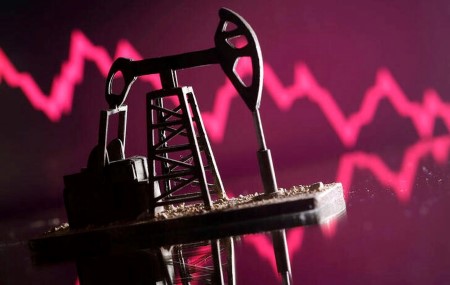
July 19 (Reuters) – Oil rose slightly on Tuesday, paring earlier losses and after soaring by more than USD 5 barrel in the previous session, amid concerns about tight supply.

Brent crude futures for September settlement gained 17 cents to USD 106.51 a barrel by 0645 GMT. The contract rose 5.1% on Monday, the biggest percentage gain since April 12.

WTI crude futures for August delivery rose by 36 cent to USD 102.96 a barrel. The contract climbed 5.1% on Monday and the largest percentage gain since May 11.

The August WTI contract expires on Wednesday and the more actively traded September future was at USD 99.74 a barrel, up 32 cents.

Oil prices have been whipsawed between concerns about supply as Western sanctions on Russian crude and fuel supplies over the Ukraine conflict have disrupted trade flows to refiners and end-users and rising worries that central bank efforts to tame surging inflation may trigger a recession that would cut future fuel demand.

The underlying supply/demand imbalance is as tight as ever,” said Jeffrey Halley, senior market analyst at OANDA, in a note. “Oil prices may have peaked, but they certainly don’t look like they’re going materially lower from here unless we get a huge surprise from OPEC+.”

US President Joe Biden visited top oil exporter Saudi Arabia last week, hoping to strike a deal on an oil production boost to tame fuel prices.

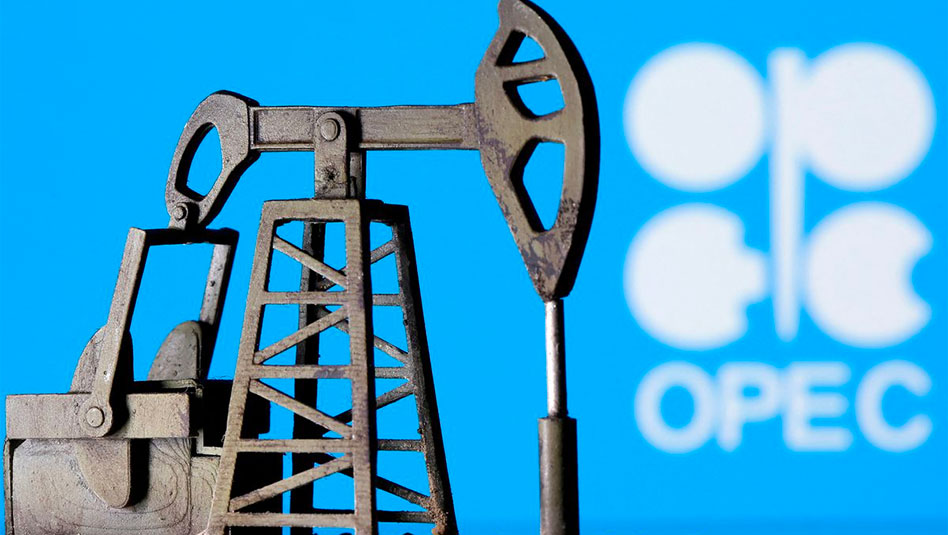
However, officials from Saudi Arabia, the de facto leader of the Organization of the Petroleum Exporting Countries (OPEC), did not give clear assurances an output increase was secured.

Warren Patterson, head of Commodities Strategy at ING, said in a note that the market has had time to digest President Biden’s visit with a conclusion that it is unlikely that OPEC and its allies including Russia, known as OPEC+, will increase output more aggressively than planned in the short term.

Oil prices were backed by a softer US dollar on Tuesday, which stood around a one-week low level, making greenback-dominated oil slightly cheaper for buyers holding other currencies.

“A weaker USD provided support to the market, along with the broader commodities complex,” ING’s Patterson said.

The forecast of oil inventories in the US, the world’s biggest oil consumer, was that crude and distillate supplies may have risen last week while gasoline stockpiles likely fell, according to a preliminary Reuters poll.

(Reporting by Stephanie Kelly and Muyu Xu; Editing by Christian Schmollinger)

Gold trapped in tight range as central bank meetings loom

Gold trapped in tight range as central bank meetings loom

July 19 (Reuters) – Gold steadied on Tuesday, supported by a pullback in the US dollar, although prices were stuck in a tight range as investors refrained from making big bets ahead of key central bank meetings.

Spot gold held its ground at USD 1,708.35 per ounce, as of 0726 GMT. US gold futures eased 0.3% to USD 1,704.80.

The dollar was down 0.5% against its rivals, making greenback-priced bullion less expensive for buyers holding other currencies.

“Gold remains in a comatose state, unable to sustain gains above USD 1,720 and unable to rally even as the US dollar fell overnight,” OANDA senior analyst Jeffrey Halley said.

“That keeps the technical picture for gold very negative. It has an initial support at USD 1,700, but a sustained break and a couple of daily closes below USD 1,675 signal a much larger fall is in play.”

Offering some respite to gold, expectations for a 100-basis-point rate hike by the Federal Reserve at its policy meeting next week stood at about 30%, according to CME’s FedWatch Tool after reaching as high as 80% last week.

Market participants are now anticipating a 75-basis-point hike by the Fed at its July 26-27 meeting. The European Central Bank and the Bank of Japan both are meeting on Thursday, with the ECB widely expected to deliver a 25-basis-point hike.

Although gold is seen as an inflation hedge, higher interest rates raise the opportunity cost of holding bullion, which yields no interest.

Meanwhile, SPDR Gold Trust GLD, the world’s largest gold-backed exchange-traded fund, said its holdings fell 0.5% to 1,009.06 tonnes on Monday, its lowest since late-January.

Elsewhere, spot silver rose 0.4% to USD 18.75 per ounce and platinum slipped 0.1% to USD 862, while palladium climbed 1.3% to USD 1,878.13.

(Reporting by Brijesh Patel in Bengaluru; Editing by Subhranshu Sahu and Sherry Jacob-Phillips)

Dollar pauses below two-decade peak as markets ponder Fed path

Dollar pauses below two-decade peak as markets ponder Fed path

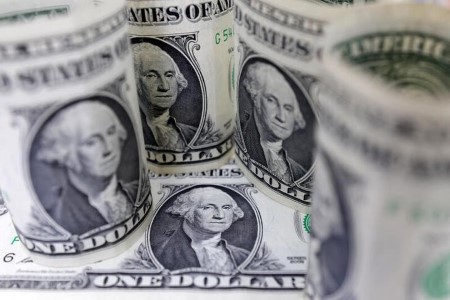
TOKYO, July 19 (Reuters) – The US dollar hovered on Tuesday just above a one-week low reached overnight versus major peers as markets reduced the odds of a percentage-point Federal Reserve rate hike this month.

Bets for supersized easing ramped up last week after data showed US inflation, already at a four-decade high, continued to accelerate in June. But some Federal Reserve officials were quick to throw cold water on such talk, and figures from Friday showed a easing of consumer inflation expectations to the lowest in a year.

Traders in futures contracts tied to the Fed’s short-term federal funds policy rate, who had been leaning toward a full-percentage-point rise in interest rates, shifted their bets firmly in favor of a 0.75-percentage-point increase at the upcoming meeting, with the odds last seen at about 81%.

The dollar index – which gauges the greenback against six counterparts – was flat at 107.47. That was off Monday’s low of 106.88 but also well back from the high of 109.29 last week, a level not seen since September 2002.

The euro, which is the most heavily weighted currency in the dollar index, slipped 0.08% to USD 1.01355, but that came after putting on around 0.6% overnight for a second day of strong gains.

The common currency slid as low as USD 0.9952 on Thursday for the first time since December 2002, pressured by uncertainty about a potential energy supply crunch in the euro zone.

Traders are biting their nails ahead of Thursday, when gas is supposed to resume flowing through the Nord Stream pipe from Russia to Germany after a shutdown for scheduled maintenance.

Russia’s Gazprom declared force majeure on gas supplies to Europe to at least one major customer, in a letter dated July 14 and seen by Reuters on Monday.

Despite the uncertainty, the European Central Bank is poised to raise interest rates on Thursday for the first time in more than a decade. It has telegraphed a 25 basis-point move, but heated inflation has some traders punting for a half-point hike.

“The balance of risks is tilted to a weaker EUR (whereas) the path of least resistance for the USD is to continue trending higher because of the poor global growth outlook,” Commonwealth Bank of Australia analyst Carol Kong wrote in a client note, referring to the dollar’s role as a safe haven.

Elsewhere, the yen hovered near a 24-year low ahead of a Bank of Japan policy decision on Thursday, with the central bank committing repeatedly in recent days to continued ultra-easy settings.

The dollar was little changed at 138.135 yen, not too far from Thursday’s peak at 139.38, a level not seen since September 1998.

The risk-sensitive Australian dollar slipped 0.06% to USD 0.6809, after climbing to a one-week high at USD 0.6853 on Monday, from as low as USD 0.66825 on Thursday, the weakest in more than two years.

Sterling eased 0.13% to USD 1.1935, pulling away from Monday’s one-week high of USD 1.2032. It slumped to USD 1.1761 on Thursday for the first time since March 2020 as Britain faces an acrimonious and divisive contest to replace ousted prime minister Boris Johnson.

(Reporting by Kevin Buckland; Editing by Shri Navaratnam)


Gold subdued as firmer US dollar, yields dent appeal

Gold subdued as firmer US dollar, yields dent appeal

July 19 (Reuters) – Gold edged lower on Tuesday as an uptick in the US dollar and bond yields weighed on bullion’s appeal, with investors awaiting more cues on the Federal Reserve’s rate-hike path.

FUNDAMENTALS

* Spot gold was down 0.2% to USD 1,706.25 per ounce by 0103 GMT. US gold futures fell 0.3% to USD 1,705.30.

* The dollar was up 0.1% against its rivals, making greenback-priced bullion more expensive for buyers holding other currencies.

* US Treasury yields rose as upbeat economic data released last week and a quiet period from the Federal Reserve set the stage for risk taking.

* Expectations for a 100-basis-point rate hike by the Fed at its policy meeting next week stood at about 31%, according to CME’s FedWatch Tool after reaching as high as 80% last week.

* On Friday, Fed officials signalled they would likely stick with a 75-basis-point interest rate increase at their upcoming policy meeting, though a recent high inflation reading could still warrant larger increases than anticipated later in the year.

* Although gold is seen as an inflation hedge, higher interest rates and bond yields raise the opportunity cost of holding bullion, which yields no interest.

* Data showed US home builder sentiment plummeted in July to its lowest level since the early months of the coronavirus pandemic, as high inflation and the steepest borrowing costs in more than a decade brought customer traffic to a near standstill.

* SPDR Gold Trust GLD, the world’s largest gold-backed exchange-traded fund, said its holdings fell 0.5% to 1,009.06 tonnes on Monday from 1,014.28 tonnes on Friday.

* Spot silver eased 0.1% to USD 18.66 per ounce, platinum slipped 0.2% to USD 860.88, and palladium climbed 0.6% to USD 1,865.83.

DATA/EVENTS (GMT)

0600 UK Claimant Count Unem Chng June

0600 UK ILO Unemployment Rate May

0900 EU HICP Final MM, YY June

1230 US Housing Starts Number June

(Reporting by Brijesh Patel in Bengaluru; Editing by Subhranshu Sahu)

RPT-COLUMN-Oil positions steady after heavy hedge fund selling ends: Kemp

RPT-COLUMN-Oil positions steady after heavy hedge fund selling ends: Kemp

Repeats item published on Monday without changes to text.

By John Kemp

LONDON, July 18 (Reuters) – Investors purchased small volumes of petroleum last week, after exceptionally heavy sales the week before, squaring up short positions after an unusually sudden and steep pull back in prices on recession fears.

Hedge funds and other money managers purchased the equivalent of 8 million barrels in the six most important petroleum futures and options contracts in the week to July 12 (https://tmsnrt.rs/3IMzULY).

That came after cumulative sales of 201 million barrels over the previous four weeks, culminating in sales of 110 million in the week to July 5, according to ICE Futures Europe and the U.S. Commodity Futures Trading Commission.

The most recent week saw a reduction in both bullish long positions (-19 million barrels) and bearish short ones (-27 million) as portfolio managers reduced risk exposure after exceptional volatility.

The disproportionately large reduction in short positions implies some profit-taking after prices dropped almost $25 per barrel over the previous four weeks in response to heightened fears about a recession dampening oil demand.

Inflation is running far above target across North America and Western Europe, making it likely the major central banks will continue tightening monetary policy into the early stages of a cyclical downturn, hitting oil demand.

The most recent week saw purchases of NYMEX and ICE WTI (+15 million) but sales of Brent (-3 million) and European gas oil (-5 million) and only minor changes in U.S. gasoline (+1 million) and diesel (+0.2 million).

The combined position in middle distillates (diesel and gas oil) has fallen in each of the last four weeks by a total of 21 million barrels, or 38%, since June 14.

Distillates are the most cyclically sensitive part of the oil market, and positions, prices and crack spreads have all fallen sharply as traders anticipate a significant slowdown in the business cycle or even a recession.

Related columns:

– Oil dumped by hedge funds on heightened recession risk (Reuters, July 11) nL1N2YS0QL

– Global diesel demand starts to slacken as economy falters (Reuters, July 8) nL1N2YP158

– Oil bulls retreat as economic outlook darkens (Reuters, July 4) nL1N2YL0LN

– Funds sell oil at fastest rate for 15 weeks as economic outlook worsens (Reuters, June 27) nL1N2YE0OZ

John Kemp is a Reuters market analyst. The views expressed are his own

(Editing by Bernadette Baum)

((john.kemp@thomsonreuters.com))

Oil prices fall, taking a breather from massive surge

Oil prices fall, taking a breather from massive surge

July 19 (Reuters) – Oil prices fell on Tuesday, taking a breather after surging more than USD 5 a barrel in the previous session as a plunging dollar supported buying interest and on expectations the US Federal Reserve’s interest rate hike may be less than thought.

Brent crude futures for September settlement fell 69 cents to USD 105.58 a barrel by 0036 GMT. The contract rose 5.1% on Monday, the biggest percentage gain since April 12.

WTI crude futures for August delivery fell 65 cents to USD 101.95 a barrel. The contract climbed 5.1% on Monday and the largest percentage gain since May 11.

The August WTI contract expires on Wednesday and the more actively traded September future was at USD 98.79 a barrel, down 63 cents.

Both benchmarks recorded weekly declines of more than 5% last week.

Oil prices have been whipsawed between concerns about supply as Western sanctions on Russian crude and fuel supplies have disrupted trade flows to refiners and end-users and rising worries that central bank efforts to tame surging inflation may trigger a recession that would cut future fuel demand.

Two US Federal Reserve officials indicated last week that the central bank would likely only raise interest rates by 75 basis points at its July 26-27 meeting.

A lower hike may mean less of a economic crunch that would reduce fuel demand.

(Reporting by Stephanie Kelly; Editing by Christian Schmollinger)

White House expects OPEC+ oil production hike after Middle East trip

White House expects OPEC+ oil production hike after Middle East trip

WASHINGTON, July 18 (Reuters) – The White House on said Monday it anticipates major oil producers in the OPEC+ alliance to increase crude production following President Joe Biden’s trip to the Middle East.

“We will measure success in the next couple of weeks,” said White House spokesperson Karine Jean-Pierre at a press briefing. “We anticipate [it] to be an increase in production, but it’s going to take the next couple of weeks, and that will be up to OPEC+.”

Biden traveled to Saudi Arabia last week where he met with that country’s leadership and other members of the Gulf Cooperation Council in the oil-rich Middle East.

The Biden administration has come under pressure to cut gas prices and other consumer costs ahead of the Nov. 8 mid-term elections where his Democratic Party is seeking to retain control of Congress.

Oil prices rocketed to their highest levels since 2008, climbing above USD 139 a barrel in March, after the United States and Europe imposed sanctions on Russia over its invasion of Ukraine, which Moscow calls a “special military operation.” Prices have slipped since then.

OPEC+, which includes both Saudi Arabia and Russia, meets next on Aug. 3.

(Reporting by Jeff Mason and Trevor Hunnicutt; Editing by Leslie Adler and Sam Holmes)

Japan, China cut holdings of US Treasuries to multi-year lows -data

Japan, China cut holdings of US Treasuries to multi-year lows -data

NEW YORK, July 18 (Reuters) – Japan and China pared back holdings of US Treasuries in May to multi-year lows, data from the US Treasury department showed on Monday.

Japan’s holdings fell to USD 1.212 trillion, the lowest since January 2020, when the country’s stash of Treasuries was USD 1.211 trillion. In April, Japan’s holdings were at USD 1.218 trillion.

China’s hoard of US government debt dropped as well to USD 980.8 billion in May, still the lowest since May 2010 when its holdings were at USD 843.7 billion, data showed. In April, China had USD 1.003 trillion in Treasuries.

The world’s second largest economy has reduced holdings Treasuries for six straight months.

Although China and Japan sold Treasuries in May, US Treasury yields slid. The benchmark 10-year Treasury yield started the month of May at 2.996%, down about 15 basis points to 2.844% by the end of the month.

Overall, foreign holdings of Treasuries slid to USD 7.421 trillion in May, the lowest since May 2021, from USD 7.455 trillion in April.

“It’s another month of selling by foreign investors. But it seems like the selling is starting to slow because in May, the move higher in interest rates faded a little bit,” said Gennadiy Goldberg, senior rates strategist at TD Securities in New York.

“Japan and China were selling which is real a continuation of recent trends. We got another month of selling from Japan, but if you look at the pace, there was certainly a deceleration. Nothing like we saw in March at the end of Japan’s fiscal year.”

On a transaction basis, US Treasuries saw net foreign inflows of USD 99.84 billion in May, the largest since March 2021, from outflows of USD 1.153 billion in April.

The Federal Reserve raised benchmark interest rates by 50 basis points in May and in June lifted rates by a hefty 75 basis points to curb stubbornly strong inflation.

Investors have priced in another 75 basis point rate hike at the Fed meeting later this month.

In other asset classes, foreigners sold US equities in May for a fifth straight month amounting to USD 9.15 billion, from outflows of USD 7.04 billion in April. The S&P 500 has been down nearly 20% since the beginning of the year.

US corporate bonds posted inflows in May of USD 4.46 billion, compared with inflows of USD 22.5 billion the previous month. Foreigners were net buyers of US corporate bonds for five straight months.

The data also showed US residents once again reduced their holdings of long-term foreign securities, with net sales of USD 22.8 billion in May from sales of USD 36.7 billion in April.

(Reporting by Gertrude Chavez-Dreyfuss; Editing by Jonathan Oatis and Sam Holmes)

US yields rise but off highs as stocks end lower

NEW YORK, July 18 (Reuters) – US bond yields rose on Monday as upbeat economic data last week and a quiet period from the Federal Reserve set the stage for risk taking, but ended below session highs as stocks sold off into the close.

US economic data on Friday showed stronger-than-expected retail sales, an uptick in consumer sentiment and lower inflation expectations.

Markets had all but priced in a 100 basis points rate hike during the Fed’s upcoming meeting, but the US central bank on Friday signaled a 75 basis points increase that would mirror its June decision.

Jim Barnes, director of fixed income at Bryn Mawr Trust, said the early gains in stocks pressured bond prices lower, as did the idea that the Fed wouldn’t raise a full percentage point. “As we entered into the quiet period, the Fed seems to be leaning more towards 75 basis points than to 100 basis points,” he said.

But stocks were volatile in afternoon trading, with the Dow industrials up over 350 points at the session high but dropping over 500 points to close down more than 200, after a report said Apple was preparing for an economic downturn.

“We had a reversal with the Dow plunging and bond yields were lower as a result,” said Tom di Galoma, managing director at Seaport Global Holdings.

“It seems to be we are reversing to lower yields rather than higher yields due to the fact that we might be approaching a recession as we get closer to the (Northern Hemisphere) fall.”

The two-year US Treasury yield, which typically moves in step with interest rate expectations, was up 3.7 basis points at 3.172%.

The yield on 10-year Treasury notes was up 5.7 basis points at 2.987%.

The yield on the 30-year Treasury bond was up 6.2 basis points at 3.156%.

The gap between yields on two- and 10-year Treasury notes, seen as an indicator of economic expectations, was at -18.8 basis points.

The breakeven rate on five-year US Treasury Inflation-Protected Securities (TIPS) was last at 2.66%, after closing at 2.614% on Friday.

(Reporting by Rodrigo Campos; Editing by Richard Chang and Jonathan Oatis)

Posts navigation

Older posts
Newer posts

Recent Posts

  • Metrobank US-Iran Risk Index: Fragile ceasefire 
  • Investment Ideas: April 10, 2026 
  • Metrobank US-Iran Risk Index: A new hope
  • A guide for your peso bond portfolio amid higher for longer rates
  • Investment Ideas: April 8, 2026

Recent Comments

No comments to show.

Archives

  • April 2026
  • March 2026
  • February 2026
  • January 2026
  • December 2025
  • November 2025
  • October 2025
  • September 2025
  • August 2025
  • July 2025
  • June 2025
  • May 2025
  • April 2025
  • March 2025
  • February 2025
  • January 2025
  • December 2024
  • November 2024
  • October 2024
  • September 2024
  • August 2024
  • July 2024
  • June 2024
  • May 2024
  • April 2024
  • March 2024
  • February 2024
  • January 2024
  • December 2023
  • November 2023
  • October 2023
  • September 2023
  • August 2023
  • July 2023
  • June 2023
  • May 2023
  • April 2023
  • March 2023
  • February 2023
  • January 2023
  • December 2022
  • November 2022
  • October 2022
  • September 2022
  • August 2022
  • July 2022
  • June 2022
  • May 2022
  • March 2022
  • December 2021
  • October 2021

Categories

  • Bonds
  • BusinessWorld
  • Currencies
  • Economy
  • Equities
  • Estate Planning
  • Explainer
  • Featured Insight
  • Fine Living
  • How To
  • Investment Tips
  • Markets
  • Portfolio Picks
  • Rates & Bonds
  • Retirement
  • Reuters
  • Spotlight
  • Stocks
  • Uncategorized

You are leaving Metrobank Wealth Insights

Please be aware that the external site policies may differ from our website Terms And Conditions and Privacy Policy. The next site will be opened in a new browser window or tab.

Cancel Proceed
Get in Touch

For inquiries, please call our Metrobank Contact Center at (02) 88-700-700 (domestic toll-free 1-800-1888-5775) or send an e-mail to customercare@metrobank.com.ph

Metrobank is regulated by the Bangko Sentral ng Pilipinas
Website: https://www.bsp.gov.ph

Quick Links
The Gist Webinars Wealth Manager Explainers
Markets
Currencies Rates & Bonds Equities Economy
Wealth
Investment Tips Fine Living Retirement
Portfolio Picks
Bonds Stocks
Others
Contact Us Privacy Notice Terms of Use
© 2026 Metrobank. All rights reserved.

Access this content:

If you are an existing investor, log in first to your Metrobank Wealth Manager account. ​

If you wish to start your wealth journey with us, click the “How To Sign Up” button. ​

Login HOW TO SIGN UP