



MODEL PORTFOLIO
THE GIST
NEWS AND FEATURES
Global Philippines Fine Living
INSIGHTS
INVESTMENT STRATEGY
Economy Stocks Bonds Currencies
THE BASICS
Investment Tips Explainers Retirement
WEBINARS
2024 Mid-Year Economi Briefing, economic growth in the Philippines
2024 Mid-Year Economic Briefing: Navigating the Easing Cycle
June 21, 2024
Investing with Love
Investing with Love: A Mother’s Guide to Putting Money to Work
May 15, 2024
retirement-ss-3
Investor Series: An Introduction to Estate Planning
September 1, 2023
View All Webinars
DOWNLOADS
grocery-2-aa
Inflation Update: Target breached
DOWNLOAD
Container ship carrying container boxes import export dock with quay crane. Business commercial trade global cargo freight shipping logistic and transportation worldwide oversea concept. Generative AI
Economic Updates
Philippines Trade Update: Wider deficit on strong imports
DOWNLOAD
Frick collection with palm trees 
Economic Updates
Policy Rate Updates: Policy rate updates to reassure 
DOWNLOAD
View all Reports
Metrobank.com.ph How To Sign Up
Follow us on our platforms.

How may we help you?

TOP SEARCHES
  • Where to put my investments
  • Reports about the pandemic and economy
  • Metrobank
  • Webinars
  • Economy
TRENDING ARTICLES
  • Investing for Beginners: Following your PATH
  • On government debt thresholds: How much is too much?
  • Philippines Stock Market Outlook for 2022
  • Deficit spending remains unabated

Login

Access Exclusive Content
Login to Wealth Manager
Visit us at metrobank.com.ph How To Sign Up
Access Exclusive Content Login to Wealth Manager
Search
MODEL PORTFOLIO THE GIST
NEWS AND FEATURES
Global Philippines Fine Living
INSIGHTS
INVESTMENT STRATEGY
Economy Stocks Bonds Currencies
THE BASICS
Investment Tips Explainers Retirement
WEBINARS
2024 Mid-Year Economi Briefing, economic growth in the Philippines
2024 Mid-Year Economic Briefing: Navigating the Easing Cycle
June 21, 2024
Investing with Love
Investing with Love: A Mother’s Guide to Putting Money to Work
May 15, 2024
retirement-ss-3
Investor Series: An Introduction to Estate Planning
September 1, 2023
View All Webinars
DOWNLOADS
grocery-2-aa
Inflation Update: Target breached
April 7, 2026 DOWNLOAD
Container ship carrying container boxes import export dock with quay crane. Business commercial trade global cargo freight shipping logistic and transportation worldwide oversea concept. Generative AI
Economic Updates
Philippines Trade Update: Wider deficit on strong imports
March 27, 2026 DOWNLOAD
Frick collection with palm trees 
Economic Updates
Policy Rate Updates: Policy rate updates to reassure 
March 26, 2026 DOWNLOAD
View all Reports

Archives: Reuters Articles

Oil prices ease ahead of US inventory data

Oil prices ease ahead of US inventory data

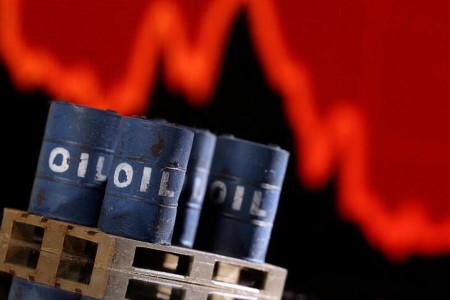
July 20 (Reuters) – Oil prices edged down on Wednesday, pressured by global central bank efforts to tame inflation and ahead of expected builds in US crude inventories as product demand weakens.

Brent crude prices for September fell 37 cents, or 0.3%, to USD 106.98 a barrel by 0340 GMT, while US West Texas Intermediate (WTI) crude for August slipped 69 cents, or 0.7%, to USD 103.53 per barrel. The WTI contract will expire later on Wednesday.

The more active September WTI contract was at USD 100.24 a barrel, down 50 cents.

Oil prices whipsawed in the previous session, caught in a tug-of-war between supply fears due to Western sanctions on Russia and pressures on indications from central bankers that they will raise interest rates to combat inflation.

Both contracts settled about 1% higher on Tuesday on tight supplies globally which have also kept the prompt Brent intermonth spreads in wide backwardation at about USD 4.40 a barrel. Front-month prices are higher than those in future months in a backwardated market, indicating tight supplies.

On Friday, open interest in New York Mercantile Exchange futures fell to their lowest since September 2015 as investors cut risky assets like commodities, worried that the Federal Reserve will keep raising US interest rates.

“People have been switching out of Delta 1 products – just being long the futures or long via the index – into options because of the sharp pullback,” Stephen Innes, managing partner at SPI Asset Management, said in a note.

“They have changed from being completely exposed to the downside to exploring it via options, tending towards buying calls, call spreads, and selling puts.”

In the United States, crude stocks rose by about 1.9 million barrels for the week ended July 15, according to market sources citing American Petroleum Institute figures on Tuesday. That was close to the forecast for a rise of 1.4 million barrels in a Reuters poll.

Official weekly crude and fuel inventory data from the US Energy Information Administration (EIA) is expected on Wednesday at 1530 GMT and traders are watching out for implied demand.

The US 3:2:1 and gasoline crack spreads – measures of refining profit margins – both fell to their lowest since April on Tuesday, indicating weaker fuel demand.

(Reporting by Florence Tan in Singapore and Laura Sanicola in New York; Editing by Shri Navaratnam)


Gold eases as dollar dip offers no respite from rate-hike fears

Gold eases as dollar dip offers no respite from rate-hike fears

July 20 (Reuters) – Gold edged lower on Wednesday as pressure from aggressive monetary policy worries and higher bond yields outweighed relief stemming from a pullback in the dollar.

Spot gold dipped 0.3% to USD 1,706.85 per ounce by 0610 GMT. US gold futures also fell 0.3% to USD 1,706.00.

The dollar eased for a fourth straight session, though it stayed at elevated levels, making greenback-priced bullion less expensive for buyers holding other currencies.

Gold seems to be the odd person out, not participating in any broader relief rally on a lower dollar, said Stephen Innes, managing partner at SPI Asset Management, adding that central banks’ front-loaded rate hikes are clearly tarnishing bullion’s appeal.

European Central Bank (ECB) policymakers are considering raising rates by a larger-than-expected 50 basis points at their meeting on Thursday to tame record-high inflation, two sources with direct knowledge of the discussion told Reuters.

Since the dollar is reacting to a (possibly) more aggressive rate hike by the ECB, gold isn’t getting the bounce one would typically expect via a softer greenback, Innes said.

Although gold is seen as an inflation hedge, higher interest rates and bond yields raise the opportunity cost of holding bullion, which yields no interest.

Benchmark US 10-year Treasury yields steadied after two sessions of gains.

Spot gold may retest a resistance at USD 1,721 per ounce, a break above which could lead to a gain into USD 1,728-USD 1,739 range, according to Reuters’ technical analyst Wang Tao.

Meanwhile, Asian shares extended a global rally as strong US corporate earnings and the expected resumption of Russian gas supplies to Europe helped lift sentiment and ease fears of a recession.

Spot silver was little changed at USD 18.74 per ounce, platinum was flat at USD 874.61, and palladium gained 0.5% to USD 1,884.66.

(Reporting by Bharat Govind Gautam in Bengaluru; editing by Uttaresh.V)

China says US is ‘maker of security risks’ after Taiwan Strait sailing

BEIJING, July 20 (Reuters) – The United States is a “maker of security risks” in the Taiwan Strait with its frequent provocations there, China’s military said on Wednesday after another US warship sailed through the sensitive waterway.

The US Navy’s 7th Fleet said the destroyer USS Benfold conducted a “routine” Taiwan Strait transit through international waters “in accordance with international law”.

The United States has been carrying out such voyages about once a month, angering China, which views them as a sign of support for Taiwan, the democratically governed island that Beijing views as Chinese territory.

The People’s Liberation Army’s Eastern Theatre Command said in a statement that its forces had followed the ship throughout and “warned” it.

“The frequent provocations and showing off by the United States fully demonstrate that the United States is a destroyer of peace and stability in the Taiwan Strait and a maker of security risks in the Taiwan Strait,” it said in a statement.

“Theatre forces remain on high alert at all times and resolutely defend national sovereignty and territorial integrity.”

The US Navy said the ship “transited through a corridor in the Strait that is beyond the territorial sea of any coastal State”.

“The ship’s transit through the Taiwan Strait demonstrates the United States’ commitment to a free and open Indo-Pacific.”

Taiwan’s Defence Ministry said the US ship sailed north through the strait, and that the situation in the waterway was “as normal”.

The Benfold has been operating in the disputed South China Sea, where it has carried out two “Freedom of Navigation Operations” in the past week.

(Reporting by Beijing Newsroom; Additional reporting by Ben Blanchard in Taipei; Writing by Bernard Orr; Editing by Neil Fullick and Raju Gopalakrishnan)

Stocks jump as US earnings pick up, dollar falls for third session

Stocks jump as US earnings pick up, dollar falls for third session

NEW YORK, July 19 (Reuters) – A global gauge of stocks notched its biggest one-day percentage gain in nearly a month on Tuesday and the dollar weakened for a third straight day as expectations grew for the European Central Bank to enact a bigger rate hike than expected this week.

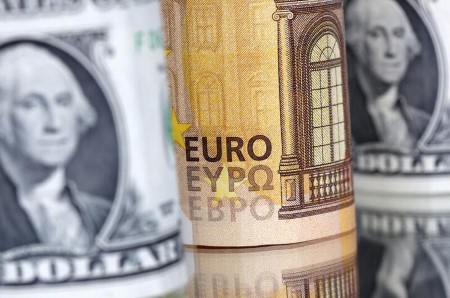
A Reuters report that the ECB was weighing a 50-basis-point rate hike at its Thursday meeting, double the hike many market participants had priced in, helped put the euro on track for its biggest one-day percentage gain in nearly two months.

Easing expectations that the US Federal Reserve would resort to a 100-basis-point hike at its meeting next week put the dollar on track for its third straight session of declines after touching a two-decade high last week.

The dollar index fell 0.661%, with the euro up 0.81% at USD 1.0223.

“We are now seeing a subtle but meaningful shift in the outlook for trans-Atlantic monetary policy, and that’s proving a good thing for the euro,” said Joe Manimbo, senior market analyst, at Western Union Business Solutions in Washington.

Wall Street stocks rallied broadly, joining their European counterparts, with each of the 11 major S&P sectors climbing as the US corporate earnings season heats up.

But Johnson & Johnson (JNJ) shares fell 1.46% after posting results that beat expectations but cut its full-year outlook, citing a stronger dollar.

“You’ve seen expectations for the Fed raising 100 basis points next week come back to 75 basis points. The dollar has weakened a little bit as the ECB is maybe talking about moving rates higher by 50 basis points as opposed to 25 basis points,” said Anthony Saglimbene, global market strategist at Ameriprise Financial in Troy, Michigan.

“It’s not a surprise that with the dollar coming off, the stock market is performing a little bit better. If recession odds drop over the next couple of months then I would expect the dollar to decline and that would be a tailwind for multinational profits.”

The Dow Jones Industrial Average rose 754.44 points, or 2.43%, to 31,827.05 the S&P 500 gained 105.72 points, or 2.76%, at 3,936.57 and the Nasdaq Composite added 353.10 points, or 3.11%, at 11,713.15.

The Nasdaq notched its biggest one-day percentage gain since June 24 while the S&P 500 closed at its highest level since June 9.

Of the 48 S&P 500 companies that have reported earnings through Tuesday morning, 89.2% have topped expectations, according to Refinitiv data, compared with an 81% beat rate over the past four quarters.

US economic data showed the effect of the Fed’s hiking policy, as new US home-building activity fell to a nine-month low in June and permits for new construction projects slipped in a rising mortgage rate environment.

The pan-European STOXX 600 index rose 1.38% and MSCI’s gauge of stocks across the globe gained 2.05%. The MSCI index scored its biggest one-day percentage gain since June 24.

The STOXX 600 closed at its highest since June 9, after a report that Russian gas flows to Europe through the Nord Stream 1 pipeline would be restarting on time eased concerns about a regional energy supply crunch.

Benchmark 10-year notes last fell 17/32 in price to yield 3.0209%, from 2.96% late on Monday.

Along with the ECB, the Bank of Japan is also scheduled to meet on Thursday, though the extremely dovish central bank is expected to maintain its stance.

Crude prices erased early losses to move higher in volatile trading, a day after settling about 5% higher, as the market weighed the possibility of a recession that could weigh on demand against tight supplies.

US crude settled up 1.58% at 104.22 per barrel and Brent settled at USD 107.35, up 1.02% on the day.

(Additional reporting by Saqib Iqbal Ahmed; editing by Jonathan Oatis, Mark Heinrich and Richard Chang)

US yields rise as stocks rally

US yields rise as stocks rally

NEW YORK, July 19 (Reuters) – US bond yields rose on Tuesday as prices were pressured lower by upbeat sentiment toward equities, with the 10-year Treasury yield hovering near 3% throughout the session.

The S&P 500 touched its highest level since June 28 as second-quarter earnings continued to roll in.

“Pretty much since US markets opened this morning it’s been a one-way ride higher in stocks and lower in bond (prices),” said Guy Le Bas, chief fixed income strategist at Janney in Philadelphia.

“Sentiment is awfully bombed out in the risk markets,” he added. “If everybody’s miserable, there’s only one thing that can happen,” he said of the uptick in risk sentiment.

Wall Street’s so-called fear gauge was near its lowest in five weeks.

The two-year US Treasury yield, which typically moves in step with interest rate expectations, was up 6.7 basis points at 3.227%.

Traders have priced in a near 77% probability of a 75 basis point rate hike at the end of next week’s Federal Reserve policy committee meeting.

The yield on 10-year Treasury notes was up 5 basis points to 3.010%. The yield on the 30-year Treasury bond was up 3.6 basis points to 3.171%.

The two- and 10-year Treasury notes spread, seen as an indicator of economic expectations, was at -21.9 basis points and has ended the session in the negative, or inverted, since July 5.

The breakeven rate on five-year US Treasury Inflation-Protected Securities (TIPS) was last at 2.701%, after closing at 2.659% on Monday.

The US dollar five years forward inflation-linked swap, seen by some as a better gauge of inflation expectations due to possible distortions caused by the Fed’s quantitative easing, was last at 2.435%.

(Reporting by Rodrigo Campos; editing by Jonathan Oatis and Mark Heinrich)

Dollar eases as ECB rate hike hopes boost euro

Dollar eases as ECB rate hike hopes boost euro

NEW YORK, July 19 (Reuters) – The dollar slipped against the euro for a third straight session on Tuesday, following a Reuters story that European Central Bank policymakers are considering raising interest rates by a bigger-than-expected 50 basis points at their meeting on Thursday to tame record-high inflation.

The rebound in the euro, which sent it further away from the sub-parity levels of last week, coincided with falling expectations for an aggressive 100 basis points hike from the U.S. Federal Reserve this month, which knocked the dollar.

“Currencies continue to revolve around expectations for central bank policy,” said Joe Manimbo, senior market analyst, at Western Union Business Solutions in Washington.

“We are now seeing a subtle but meaningful shift in the outlook for trans-Atlantic monetary policy, and that’s proving a good thing for the euro,” Manimbo said.

The euro rose to as high as $1.0269, up 1.2% on the day and its strongest since July 6 as money markets priced in a 60% chance of a 50 basis points hike on Thursday, up from 25% on Monday. It was last up 0.87% at $1.0229.

The euro has rebounded after slipping below $1.0000 last week, its first foray below parity since 2002.

“If (European Central Bank President Christine) Lagarde doesn’t deliver, or doesn’t deliver as much as traders are hoping for, parity is likely to be taken out lastingly,” Action economics’ Natascha Gewaltig said in a note.

Investors were also keeping an eye on political drama in Rome with the Italian government mired in uncertainty over whether Mario Draghi will continue as prime minister.

Against a basket of currencies, the dollar was 0.7% lower at 106.7. The index remains close to the two-decade high of 109.29 touched last week.

Analysts are reluctant to turn bullish on the euro, however, given ongoing concerns about supplies of natural gas and the hit to its economy and how hawkish the ECB can really be.

“In our view, this bounce is likely to prove short-lived and should provide better entry levels for short euro positions,” said Dominic Bunning, head of European FX research at HSBC.

Traders are also preparing to see whether Russian gas on Thursday resumes flowing through the Nord Stream pipe to Germany after a shutdown for scheduled maintenance.

Russian gas flows via the Nord Stream 1 pipeline are seen restarting on time on Thursday after the completion of scheduled maintenance, two sources familiar with the export plans told Reuters.

Elsewhere the Australian dollar rose 1.2% to $0.6898 after Reserve Bank of Australia policymakers said they saw the need for more policy tightening on top of recent hikes.

Sterling gained 0.273% to $1.1986, helped by the dollar’s broad weakness.

In cryptocurrencies, bitcoin rose about 5% to a fresh one-month high of $23,476.89, shaking off the weakness that has engulfed it in recent weeks.

(Reporting by Saqib Iqbal Ahmed in NEW YORK, Tommy Wilkes in LONDON; Additional reporting by Kevin Buckland in Tokyo; Editing by Angus MacSwan)

Gold gains on dollar retreat, focus on central bank cues

Gold gains on dollar retreat, focus on central bank cues

July 19 (Reuters) – Gold inched higher on Tuesday, helped by a pullback in the dollar, as investors braced for cues on the pace of interest rate hikes from major central banks this month.

Spot gold was up 0.1% at USD 1,710.13 per ounce by 2:12 p.m. EDT (1812 GMT). US gold futures settled mostly unchanged at USD 1,710.70.

The dollar index was down 0.7%, making bullion cheaper for overseas buyers.

“A pullback in the dollar is alleviating some of the pressure we have seen across the commodity complex and gold,” said David Meger, director of metals trading at High Ridge Futures.

“As global central banks around the world begin to raise interest rates to stave off inflation. We see headwinds for non-interest bearing gold as investors opt for other asset classes, and this is the logic pressuring gold lately.”

In recent weeks, gold has not been able to live up to its safe-haven status despite recession worries. Bullion has declined more than USD 350 from the USD 2,000 an ounce level it scaled in early March, due to the US Federal Reserve’s aggressive rate hike plans and the dollar’s recent rally.

The Fed is scheduled to meet on July 26-27, when it is expected to raise rates by 75 bps.

Meanwhile, ECB policymakers will discuss whether to raise interest rates by 25 or 50 points at their meeting on Thursday to tame record-high inflation, two sources with direct knowledge of the discussion told Reuters.

“Silver is benefiting from a continued rise in Chinese interest for the white metal. However, reports that major Chinese banks will suspend investors from taking new positions in gold and silver by August are blurring the outlook for this signal,” TD Securities said in a note.

Spot silver rose 0.4% to USD 18.74 per ounce.

Platinum gained 1.1% to USD 871.97, while palladium added 1% to USD 1,872.66.

(Reporting by Ashitha Shivaprasad in Bengaluru; Editing by Amy Caren Daniel and Krishna Chandra Eluri)

US sustainable funds returned to inflows in June – report

US sustainable funds returned to inflows in June – report

July 19 (Reuters) – Investors resumed deposits into US sustainable funds last month, marking a return to the norm after net withdrawals in May broke a three-year streak of monthly inflows, researcher Morningstar said on Monday.

Sustainable mutual funds and ETFs, including those using environmental, social and governance (ESG) factors, notched a “modest” USD 528 million of net new deposits in June after shedding USD 3.2 billion the month prior, according to Morningstar’s latest figures.

“Investors may have turned back to ESG and renewable energy, thinking that the worst of the downturn was already priced in,” said Alyssa Stankiewicz, Morningstar’s associate director of sustainability research.

Investors’ ESG commitments have been tested this year by the onset of a bear market, driven by rising interest rates and concerns over a potential recession, as well as underperformance by US sustainable funds.

Indeed, the positive flows in June could not reverse a marked slowdown in momentum for sustainable funds during the first half of the year.

Sustainable funds attracted USD 9.0 billion in net new deposits during the six months ended June 30, far below the USD 39.4 billion they gathered during the same period in 2021, according to Morningstar.

Most sustainable funds are equity funds, which have also experienced inconsistent flows this year amid stock market volatility.

US equity funds gathered USD 14.8 billion in net new deposits in June, their fourth month of inflows this year, according to Morningstar.

Investors pulled USD 61 billion overall from US long-term mutual funds and ETFs last month. It was their third consecutive month of outflows, the research firm said.

(Reporting by Cole Horton; Editing by Sam Holmes)

EUR/USD in eye of a storm that could become hurricane

EUR/USD in eye of a storm that could become hurricane

July 19 (Reuters) – The EUR/USD is consolidating a massive sell-off after reaching parity just before the Federal Reserve hikes interest rates substantially on July 27. Should the European Central Bank not match its U.S. counterpart the pair is likely to fall further below parity and with traders badly prepared for that the pace of losses could rapidly accelerate.

EUR/USD has fallen 1.2135-0.9952 EBS since the Federal Reserve signaled a taper at its June meeting in 2021. Speculators have since rarely ventured short and bets on a drop remain negligible, representing no restraint on the decline. Economists have consistently predicted a rally and still are, and there is scarcity of option expiries under 0.9900, suggesting traders are ill-prepared for a deeper drop.

The one-year forward swap has widened from around 90 points in June 2021 to 280 today and if ECB sticks to its plans and only hikes by 25bps this month the interest rate divide will soon widen weighing EUR/USD.

With the Fed shrinking its balance sheet while the ECB’s continues to grow, EUR/USD could soon reach the next tech downside target for the move inspired by the Fed at 0.9688, and could fall well below that by year-end.

(Jeremy Boulton is a Reuters market analyst. The views expressed are his own, Editing by Ed Osmond)

Philippines mulls fertiliser deals with China, Russia, others

MANILA, July 19 (Reuters) – The Philippines is looking to strike import deals with some of the world’s biggest fertilizer suppliers, including China and Russia, to help lower costs and increase food production amid high inflation, the government said on Tuesday.

President Ferdinand Marcos Jr. plans to reach out to China, Russia, Indonesia, United Arab Emirates and Malaysia to secure fertilizer supplies at favorable prices, according to a statement issued by his office.

Marcos has vowed to boost agricultural output over the next six months, saying he wants the Southeast Asian country to reduce its reliance on food imports and avoid being hit hard by a food crisis looming over the world.

Agriculture officials have warned of higher local prices of rice, the country’s staple food, in the coming months partly due to surging costs of fertilizer, supplies of which have been disrupted by the Russia-Ukraine war. The Philippines imports most of its fertilizer needs.

Partly driven by higher costs of some food items, Philippine inflation averaged 4.4% in the first half of this year, above the official 2%-4% target band, with the June rate of 6.1% being the highest in nearly four years.

Marcos said he was looking to formally inform all five countries of his plan to buy a certain volume.

The Philippines uses 2.5 million tonnes of fertilizers every year, according to the Fertilizer and Pesticide Authority.

(Reporting by Enrico Dela Cruz; Editing by Kanupriya Kapoor)

Posts navigation

Older posts
Newer posts

Recent Posts

  • Metrobank US-Iran Risk Index: Fragile ceasefire 
  • Investment Ideas: April 10, 2026 
  • Metrobank US-Iran Risk Index: A new hope
  • A guide for your peso bond portfolio amid higher for longer rates
  • Investment Ideas: April 8, 2026

Recent Comments

No comments to show.

Archives

  • April 2026
  • March 2026
  • February 2026
  • January 2026
  • December 2025
  • November 2025
  • October 2025
  • September 2025
  • August 2025
  • July 2025
  • June 2025
  • May 2025
  • April 2025
  • March 2025
  • February 2025
  • January 2025
  • December 2024
  • November 2024
  • October 2024
  • September 2024
  • August 2024
  • July 2024
  • June 2024
  • May 2024
  • April 2024
  • March 2024
  • February 2024
  • January 2024
  • December 2023
  • November 2023
  • October 2023
  • September 2023
  • August 2023
  • July 2023
  • June 2023
  • May 2023
  • April 2023
  • March 2023
  • February 2023
  • January 2023
  • December 2022
  • November 2022
  • October 2022
  • September 2022
  • August 2022
  • July 2022
  • June 2022
  • May 2022
  • March 2022
  • December 2021
  • October 2021

Categories

  • Bonds
  • BusinessWorld
  • Currencies
  • Economy
  • Equities
  • Estate Planning
  • Explainer
  • Featured Insight
  • Fine Living
  • How To
  • Investment Tips
  • Markets
  • Portfolio Picks
  • Rates & Bonds
  • Retirement
  • Reuters
  • Spotlight
  • Stocks
  • Uncategorized

You are leaving Metrobank Wealth Insights

Please be aware that the external site policies may differ from our website Terms And Conditions and Privacy Policy. The next site will be opened in a new browser window or tab.

Cancel Proceed
Get in Touch

For inquiries, please call our Metrobank Contact Center at (02) 88-700-700 (domestic toll-free 1-800-1888-5775) or send an e-mail to customercare@metrobank.com.ph

Metrobank is regulated by the Bangko Sentral ng Pilipinas
Website: https://www.bsp.gov.ph

Quick Links
The Gist Webinars Wealth Manager Explainers
Markets
Currencies Rates & Bonds Equities Economy
Wealth
Investment Tips Fine Living Retirement
Portfolio Picks
Bonds Stocks
Others
Contact Us Privacy Notice Terms of Use
© 2026 Metrobank. All rights reserved.

Access this content:

If you are an existing investor, log in first to your Metrobank Wealth Manager account. ​

If you wish to start your wealth journey with us, click the “How To Sign Up” button. ​

Login HOW TO SIGN UP