



MODEL PORTFOLIO
THE GIST
NEWS AND FEATURES
Global Philippines Fine Living
INSIGHTS
INVESTMENT STRATEGY
Economy Stocks Bonds Currencies
THE BASICS
Investment Tips Explainers Retirement
WEBINARS
2024 Mid-Year Economi Briefing, economic growth in the Philippines
2024 Mid-Year Economic Briefing: Navigating the Easing Cycle
June 21, 2024
Investing with Love
Investing with Love: A Mother’s Guide to Putting Money to Work
May 15, 2024
retirement-ss-3
Investor Series: An Introduction to Estate Planning
September 1, 2023
View All Webinars
DOWNLOADS
grocery-2-aa
Inflation Update: Target breached
DOWNLOAD
Container ship carrying container boxes import export dock with quay crane. Business commercial trade global cargo freight shipping logistic and transportation worldwide oversea concept. Generative AI
Economic Updates
Philippines Trade Update: Wider deficit on strong imports
DOWNLOAD
Frick collection with palm trees 
Economic Updates
Policy Rate Updates: Policy rate updates to reassure 
DOWNLOAD
View all Reports
Metrobank.com.ph How To Sign Up
Follow us on our platforms.

How may we help you?

TOP SEARCHES
  • Where to put my investments
  • Reports about the pandemic and economy
  • Metrobank
  • Webinars
  • Economy
TRENDING ARTICLES
  • Investing for Beginners: Following your PATH
  • On government debt thresholds: How much is too much?
  • Philippines Stock Market Outlook for 2022
  • Deficit spending remains unabated

Login

Access Exclusive Content
Login to Wealth Manager
Visit us at metrobank.com.ph How To Sign Up
Access Exclusive Content Login to Wealth Manager
Search
MODEL PORTFOLIO THE GIST
NEWS AND FEATURES
Global Philippines Fine Living
INSIGHTS
INVESTMENT STRATEGY
Economy Stocks Bonds Currencies
THE BASICS
Investment Tips Explainers Retirement
WEBINARS
2024 Mid-Year Economi Briefing, economic growth in the Philippines
2024 Mid-Year Economic Briefing: Navigating the Easing Cycle
June 21, 2024
Investing with Love
Investing with Love: A Mother’s Guide to Putting Money to Work
May 15, 2024
retirement-ss-3
Investor Series: An Introduction to Estate Planning
September 1, 2023
View All Webinars
DOWNLOADS
grocery-2-aa
Inflation Update: Target breached
April 7, 2026 DOWNLOAD
Container ship carrying container boxes import export dock with quay crane. Business commercial trade global cargo freight shipping logistic and transportation worldwide oversea concept. Generative AI
Economic Updates
Philippines Trade Update: Wider deficit on strong imports
March 27, 2026 DOWNLOAD
Frick collection with palm trees 
Economic Updates
Policy Rate Updates: Policy rate updates to reassure 
March 26, 2026 DOWNLOAD
View all Reports

Archives: Reuters Articles

Shares stroll higher on June hike hiatus hopes

SYDNEY/LONDON (Reuters) – Shares rose and the dollar firmed on Monday as investors bet the Federal Reserve would pause its rate hikes this month after a mostly encouraging US jobs report, while oil prices jumped after Saudi Arabia pledged big output cuts.

The benchmark European STOXX index climbed 0.18% in early trading, led by gains in the oil & gas sector index and echoing a 0.2% gain in MSCI’s broadest index of Asia-Pacific shares outside Japan.

Japan’s Nikkei surged 2.1% to stand above 32,000 for the first time since July 1990.

The dollar also firmed against major peers after data on Friday showed payrolls in the public and private sector far outstripping forecasts, while wage pressures eased and the unemployment rate climbed off a 53-year low.

That in turn stoked hopes the Fed could pause its program of rate hikes at the June 13-14 meeting, albeit likely resuming in July.

On Monday, oil prices, which have recently come under pressure amid heightened concerns about China’s slowing economy, rose after Saudi Arabia announced it would cut its output to 9 million barrels per day in July, from around 10 million bpd in May, the biggest reduction in years.

Brent oil rose 2% to USD 77.81 a barrel by 0815 GMT, giving up some of its earlier gains to as high as USD 78.73, while US crude climbed 2.36% to USD 73.4 a barrel, after hitting a session high of USD 75.06.

“With Saudi Arabia protecting oil prices from sliding too low … we think oil markets are now more prone to a shortfall later this year,” said Vivek Dhar, a mining and energy commodities strategist at Commonwealth Bank of Australia.

“We think Brent futures will rise to USD 85 by Q4 2023 even with a tepid demand recovery in China factored in.”

US economy

Data on Friday showed the US economy added 339,000 jobs last month, higher than most estimates, but moderating wage growth and a rising jobless rate led markets to continue to bet on no change in Fed rates this month, with a 75% chance priced in for that, according to CME FedWatch tool.

However, there is about a 70% probability that Fed funds rates would reach 5.25-5.5% or beyond at the policy meeting in July, if U.S. inflation remains elevated. Conversely, markets now see little chance of a rate cut by the end of this year.

Treasury yields continued to climb on Monday. Yields on US two-year Treasuries rose 3 basis points to 4.5389%, on top of a surge of 16.2 bp on Friday, and 10-year yields also climbed 4 bps to 3.7351%, after a rise of 8 bps on Friday.

Fitch Ratings said the United States’ “AAA” credit rating would remain on negative watch, despite the debt agreement.

The US dollar was at 104.2 against its major peers on Monday, after gaining 0.5% on Friday on the jobs report. The greenback also rose 0.1% on the Japanese yen to 140.03 while the euro eased 0.1% to USD 0.1070.

Central banks from Australia and Canada will meet this week. Markets see a sizeable chance – about 40% – that the RBA could surprise with a quarter-point hike on Tuesday, after a minimum wage hike that economists feared could further stoke inflationary pressures.

The Bank of Canada will meet on Wednesday. A majority of economists polled by Reuters expect the BOC to keep interest rates on hold at 4.5% for the rest of the year although the risk of one more rate rise remains high.

(Editing by Himani Sarkar, Sam Holmes, Kim Coghill and Ed Osmond)

Gold slips as firmer dollar offsets bets on Fed pause

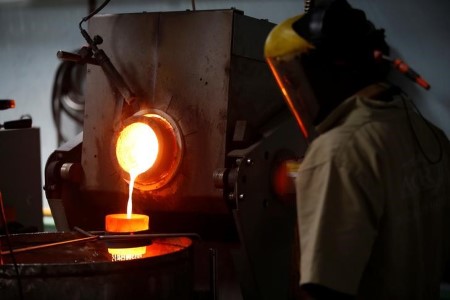
REUTERS – Gold prices slipped on Monday as the dollar firmed after a strong US payrolls report, overshadowing support from prospects that the Federal Reserve would pause its rate hikes this month.

Spot gold was down 0.4% at USD 1,939.19 per ounce, as of 0803 GMT, hovering near its lowest levels since May 30. US gold futures shed 0.8% to USD 1,954.40.

Gold prices dropped more than 1% on Friday after data showed US nonfarm payrolls rose by 339,000 jobs last month, exceeding a 190,000 forecast by economists polled by Reuters. But the unemployment rate surged to a seven-month high of 3.7% from a 53-year low of 3.4% in April.

The higher unemployment reading prompted markets to price in a 79.3% chance of the Fed leaving interest rates unchanged at its June 13-14 meeting, according to the CME FedWatch Tool.

“Money markets continue to favour a pause (as did comments from Fed vice chair nominee Philip Jefferson), so it may limit the downside for gold even if it has lost some safe-haven flows from debt-ceiling concerns… The question now is whether (gold) will break support at USD 1,934 to bring USD 1,900 into focus,” City Index senior market analyst Matt Simpson said.

Non-interest-bearing bullion tends to become less attractive in a high-interest rate environment.

The U.S. House of Representatives last week passed a bill to suspend the USD 31.4 trillion debt ceiling and averted a first-ever default.

The dollar index rose 0.2%, making greenback-priced bullion less affordable for overseas buyers.

Most Asian stock markets extended a global rally on Monday, while oil prices jumped after Saudi Arabia pledged big output cuts.

According to Reuters technical analyst Wang Tao, gold might revisit its May 30 low of USD 1,931.76.

Spot silver lost 0.8% at USD 23.40 per ounce, platinum edged up 0.1% to USD 1,004.66 per ounce and palladium gained 1% to USD 1,434.61.

(Reporting by Kavya Guduru in Bengaluru; Editing by Sherry Jacob-Phillips, Rashmi Aich and Sohini Goswami)

Oil jumps 2% on Saudi plan to deepen output cuts from July

REUTERS–Oil prices jumped more than USD 1 a barrel on Monday after the world’s top exporter Saudi Arabia pledged to cut production by another 1 million barrels per day from July, counteracting macroeconomic headwinds that have depressed markets.

Brent crude futures LCOc1 were at USD 77.64 a barrel, up USD 1.51, or 2%, at 0014 GMT after earlier hitting a session-high of USD 78.73 a barrel.

US West Texas Intermediate crude climbed USD 1.41, or 2%, to USD 73.15 a barrel, after touching an intraday high of USD 75.06 a barrel.

Both contracts extended gains after rising more than 2% on Friday as the Saudi energy ministry said on Sunday its output would drop to 9 million barrels per day (bpd) in July from around 10 million bpd in May, the kingdom’s biggest reduction in years.

The voluntary cut pledged by Saudi is on top of a broader deal by the Organization of the Petroleum Exporting Countries and their allies including Russia to limit supply into 2024 as the group seeks to boost flagging oil prices.

The group, known as OPEC+, pumps around 40% of the world’s crude and has in place cuts of 3.66 million bpd, amounting to 3.6% of global demand.

“The move by Saudi Arabia is likely to come as a surprise, considering the most recent change to quotas had only been in effect for a month,” ANZ analysts said in a note.

“The oil market now looks like it will be even tighter in the second half of the year.”

Consultancy Rystad Energy said the additional cut by Saudi is likely to deepen the market deficit to more than 3 million bpd in July, which could push prices higher in the coming weeks.

Goldman Sachs analysts said the meeting was “moderately bullish” for oil markets and could boost December 2023 Brent prices by USD 1-6 a barrel depending on how long Saudi Arabia maintains output at 9 million bpd over the next six months.

However many of these reductions will have little real impact as the group lowered the targets for Russia, Nigeria and Angola to bring them into line with their actual production levels.

By contrast, the United Arab Emirates was allowed to raise output targets by around 200,000 bpd to 3.22 million bpd.

“UAE has been allowed to expand output, at the expense of African nations, which had their unused quotas lowered under the new agreement,” ANZ said.

In the United States, the number of operating oil rigs slumped by 15 to 555 last week, their lowest since April 2022, Baker Hughes Co said in its weekly report on Friday.

Drilling has slowed since December due to weaker prices, higher costs and as companies divert spending to repaying shareholders.

(Reporting by Florence Tan; editing by Diane Craft and Sonali Paul)

Oil rises on Saudi plan to deepen output cuts from July

Oil rises on Saudi plan to deepen output cuts from July

NEW YORK, June 5 (Reuters) – Oil prices rose on Monday after the world’s top exporter Saudi Arabia pledged to cut production by a further 1 million barrels per day (bpd) from July to counter macroeconomic headwinds that have depressed markets.

Brent crude futures settled up 58 cents at USD 76.71 a barrel, after touching a session high of USD 78.73.

US West Texas Intermediate crude gained by 41 cents to USD 72.15 after hitting an intraday high of USD 75.06.

Both contracts extended gains of more than 2% on Friday.

The Saudi energy ministry said the kingdom’s output would drop to 9 million bpd in July from about 10 million bpd in May. The voluntary cut, Saudi Arabia’s biggest in years, is on top of a broader deal by the Organization of the Petroleum Exporting Countries (OPEC) and allies including Russia to limit supply into 2024 as OPEC+ seeks to boost flagging oil prices.

Fatih Birol, head of the International Energy Agency (IEA), said that the chance of higher oil prices had increased sharply after the new OPEC+ deal.

OPEC+ pumps about 40% of the world’s crude and has cut its output target by a total of 3.66 million bpd, amounting to 3.6% of global demand.

“The market is still trying to assess the impact of what the Saudi production cut actually means,” said Phil Flynn, an analyst at Price Futures Group. “Oil seems to be taking the news as very bullish, and it is.”

SEB analyst Bjarne Schieldrop said the market reaction on Monday was relatively muted after the previous cut by OPEC+ failed to prop up prices for long.

Consultancy Rystad Energy said the additional Saudi cut is likely to deepen the market deficit to more than 3 million bpd in July, which could push prices higher in the coming weeks.

Goldman Sachs analysts said the output deal was “moderately bullish” for oil markets and could boost December 2023 Brent prices by between USD 1 and USD 6 a barrel depending on how long Saudi Arabia maintains output at 9 million bpd.

“The immediate market impact of this Saudi cut is likely lower, as drawing inventories takes time, and the market likely already put some meaningful probability on a cut today,” the bank’s analysts added.

Saudi Arabia raised prices of its flagship crude Arab Light to Asian buyers in July to a six-month high, following its output cut pledge.

Many of the OPEC+ reductions will have little real impact as lower targets for Russia, Nigeria, and Angola bring them into line with their actual production levels. In contrast, the United Arab Emirates (UAE) was allowed to raise output targets by 200,000 bpd to 3.22 million bpd to reflect its larger production capacity.

(Reporting by Stephanie Kelly; additional reporting by Noah Browning, Florence Tan, and Emily Chow; Editing by David Goodman, Will Dunham, Alexander Smith, and David Gregorio)


Asian shares extend global rally; oil prices jump on Saudi cuts

REUTERS — Asian shares extended a global rally on Monday on optimism the Federal Reserve would pause its rate hikes this month after a mixed US jobs report, while oil jumped as Saudi Arabia pledged big output cuts in July.

Brent oil jumped USD 1.82, or 2.4%, to USD 77.95 a barrel, while US crude  climbed USD 1.77, or 2.4%, to USD 73.51. Oil prices have recently come under pressure amid heightened concerns about China’s slowing economic recovery.

Oil rose as Saudi Arabia announced it would cut its output to 9 million barrels per day in July, from around 10 million bpd in May, the biggest reduction in years, while a broader OPEC+ deal to limit supply into 2024 also underpinned futures.

“With Saudi Arabia protecting oil prices from sliding too low … we think oil markets are now more prone to a shortfall later this year,” said Vivek Dhar, a mining and energy commodities strategist at Commonwealth Bank of Australia.

“We think Brent futures will rise to USD US85/bbl by Q4 2023 even with a tepid demand recovery in China factored in.”

On Monday, Japan’s Nikkei surged 1% to a 33-year high, Australia’s resources-heavy shares gained 1% and South Korea’s KOSPI rose 0.5%.

S&P 500 futures dipped 0.1% and Nasdaq futures dropped 0.3% in Asian hours, after a strong rally on Friday, driven by a mixed US jobs report, a resolution to the debt-ceiling issue and the prospect of a US rate pause this month.

The tech-heavy Nasdaq rose 1% on Friday and posted its sixth-straight week of gains that marked its best winning streak since January 2020, while the Dow Jones gained 2%, and the S&P 500 added 1.45%.

Data on Friday showed US economy added 339,000 jobs last month, higher than most estimates, bolstering expectations of Fed hikes in July, with markets tipping a 50% chance for that.

However, moderating wage growth and rising jobless rate in Friday’s jobs report argued for a case of pause in June.

Markets are still leaning towards a rate pause from the Fed at the next policy meeting, but have priced out almost any chance of a rate cut by the end of this year.

Yields on US two-year Treasuries surged 16.2 basis points on Friday to 4.503% and ten-years rose 8 bps to 3.6903%, in part driven by Fitch Ratings saying the US’ “AAA” credit rating would remain on negative watch, despite the debt agreement.

That in turn helped the dollar gain 0.5% on Friday and stay elevated at 104.16 against its peers early on Monday. The greenback jumped 0.8% on Japanese yen to 139.94 while the euro eased 0.5% to USD 1.0706.

The Australian dollar was an outperformer against a strong greenback, up 0.5% to USD 0.6605, on bets that the Reserve Bank of Australia will have to raise rates higher and for longer on domestic wage pressures.

The RBA will hold a policy meeting on Tuesday. In the wake of a strong increase in the minimum wages for the next financial year, markets are now split on whether it would hold rates steady or hike it further to 4.1%.

The Bank of Canada will meet on Wednesday. A majority of economists polled by Reuters expect the BOC to keep interest rates on hold at 4.5% for the rest of the year but the risk of one more rate hike was high.

(Editing by Himani Sarkar)

Asia security summit kicks off amid US-China tensions

SINGAPORE, June 2 (Reuters) – Asia’s top security meeting opened on Friday, with intensifying competition between the United States and China expected to dominate a weekend of high-level speeches, backroom military dealings and delicate diplomacy.

The Shangri-La Dialogue, which attracts senior military officers, diplomats, weapons makers and security analysts from around the globe, is taking place June 2-4 in Singapore.

Australian Prime Minister Anthony Albanese will deliver the keynote address on Friday evening, before US Defence Secretary Lloyd Austin and China’s new Defence Minister Li Shangfu are expected to trade barbs in speeches over the weekend.

The relationship between the US and China is at its lowest point in decades, as the two superpowers remain deeply divided over everything from the sovereignty of Taiwan to cyber espionage and territorial disputes in the South China Sea.

Hopes that the summit in Singapore could be a chance to mend ties between Washington and Beijing were dealt a blow last week when Li declined an offer to meet with Austin.

Li, who was named China’s new defence minister in March, was sanctioned by the US in 2018 over weapons purchases from Russia.

Albanese’s speech comes as Australia tries to strike a delicate balance between its strong ties to the US and its often tense relationship with China, which buys the bulk of its valuable iron ore and is its biggest trading partner.

A deal announced in March to buy US nuclear-powered submarines threatens to strain Australia’s fragile ties with Beijing, which has been critical of the plan.

Australia is due to spend AUD 368 billion (USD 250 billion) over three decades on the submarine programme, part of a broader security pact with the US and Britain known as AUKUS.

Australia is also part of the Five Eyes intelligence collection and sharing network, along with the US, Britain, Canada and New Zealand – a grouping that Chinese officials say is part of the West’s lingering “cold war mentality” and an attempt to contain its rise.

Since being elected in May 2022, the Albanese Labor government has sought closer ties with ASEAN countries. Australia’s defence chief has said that as great power competition in the region persists, his country is focused on deterring conflict and deepening engagement with partners, including Pacific island and South East Asian nations.

(Reporting by Joe Brock. Additional reporting by Kirsty Needham. Editing by Gerry Doyle)

Oil prices rise after US debt deal, all eyes on OPEC meeting

LONDON, June 2 (Reuters) – Oil prices rose on Friday after a US debt ceiling deal averted a default in the world’s biggest oil consumer, while attention turned to a meeting of OPEC ministers and their allies at the weekend.

Brent crude futures LCOc1 rose 77 cents, or 1% to USD 75.05 a barrel by 0806 GMT, while US West Texas Intermediate crude (WTI) CLc1 was up 69 cents, or 1%, at USD 70.79. Both contracts were headed for their first weekly loss in three weeks.

Markets were reassured by a bipartisan deal to suspend the limit on the US government’s USD 31.4 billion debt ceiling, which staved off a sovereign default that would have rocked global financial markets.

Earlier signals of a potential pause in rate hikes by the Federal Reserve also provided support to oil prices, not least by weighing on the US dollar, making oil cheaper for holders of other currencies.

Investor attention is now fixed on the June 4 meeting of the Organization of the Petroleum Exporting Countries and allies including Russia, collectively called OPEC+.

OPEC+ in April announced a surprise cut of 1.16 million barrels per day in April, but the gains from that move have since been retraced and prices are below pre-cut levels.

But signals on any fresh cut have been varied, with Reuters reporting and bank analysts indicating that further output cuts are unlikely.

On the demand side, the US Institute for Supply Management (ISM) said its manufacturing PMI fell to 46.9 last month, the seventh-straight month that the PMI stayed below 50, indicating a contraction in activity.

Manufacturing data out of China painted a mixed picture. Thursday’s better-than-expected Caixin/S&P Global China manufacturing PMI contrasted with the previous day’s official government data that reported factory activity in May had contracted to the lowest level in five months.

(Reporting by Shadia Nasralla; Additional reporting by Andrew Hayley; Editing by Susan Fenton)

Gold set for biggest weekly gain since April

Gold prices were set on Friday for their biggest weekly gain in nearly two months, as a softer dollar and hopes for a pause in the Federal Reserve’s tightening campaign bolstered bullion’s appeal.

Spot gold was little changed at USD 1,977.31 per ounce by 0726 GMT. US gold futures GCcv1 steadied at USD 1,994.50.

Bullion has gained 1.6% so far this week, heading for its best week since the week ended April 7.

Current gold market sentiment remains constructive, and prices could move a little higher from here as the Fed is expected to stay on hold in June, said Edward Meir, a metals analyst at Marex.

Philadelphia Fed President Patrick Harker said on Thursday US central bankers should not raise interest rates at their next meeting, even though high inflation is coming down at a “disappointingly slow” pace.

Markets now see a 71.5% chance of rates remaining unchanged in June. Gold, which does not yield any interest of its own, loses appeal when interest rates rise.

The dollar index dipped to a one-week low, making gold less expensive for buyers holding other currencies.

Meanwhile, the US Senate passed bipartisan legislation backed by President Joe Biden that lifts the government’s USD 31.4 trillion debt ceiling, averting what would have been a historic, first-ever default.

On the data front, investors will keep a tab on the US Labor Department’s non-farm payrolls (NFP) report due at 1230 GMT.

The figures could again sway “market opinion with regards to what the FOMC does next week”, said Tim Waterer, chief market analyst at KCM Trade.

A strong labor market print could see a bounce-back in the dollar, which would not help gold, Waterer added.

Spot silver ticked down 0.1% to USD 23.8783 per ounce, but headed for a weekly gain.

Platinum rose 0.8% to USD 1,013.90, and palladium advanced 0.3% to USD 1,398.30 – both set for weekly losses.

(Reporting by Arundhati Sarkar in Bengaluru; Editing by Subhranshu Sahu and Susan Fenton)

Finishing the week with a flurry

Finishing the week with a flurry

June 2 (Reuters) – Asian markets are looking for a positive end to the week on Friday following a solid rally on Wall Street the day before, as the US debt ceiling vote passed its first congressional hurdle and hopes rose that the US economy will achieve a ‘soft landing’.

South Korean inflation for May is the main regional economic indicator on the calendar, and the won could also get a jolt from revised first-quarter GDP growth figures. Otherwise, Friday’s impetus looks set to come from Thursday’s ‘Goldilocks’ trading on US markets.

A batch of indicators suggested US inflationary pressures are cooling, which could allow the Fed to pause its rate-hiking cycle later this month, while other data showed the labor market remains strong.

A win-win for risky assets.

A weaker dollar and lower Treasury yields also helped fuel the surge in US stocks, with the Nasdaq and tech sector once again the highest fliers. The Nasdaq is on track for a sixth straight weekly gain, which would be its best run since 2019.

Contrast that with China, where purchasing managers’ index reports for May were mixed, broader economic data is weak, the central bank is expected to ease policy soon, and investors are pulling their money out of the country.

Little wonder the yuan is sliding further below 7.00 per dollar to fresh 2023 lows on a near daily basis.

The dollar’s strength against the yuan on Thursday is telling because it was not replicated across Asia. The Indian rupee registered its biggest rise in three months after PMI data showed factory activity in India grew last month at the fastest pace in two and a half years.

This follows Wednesday’s surprisingly strong GDP data.

The Australian dollar had its best day in six weeks, and the Japanese yen rose for a fourth consecutive session – its longest winning streak since November.

Global markets on Friday will take their cue from the US employment report for May but its release comes after Asian markets close, leaving Korean CPI and revised GDP as potentially the main market-moving economic indicators.

Annual inflation is expected to ease to 3.30% from 3.70% in April, which would be the lowest since October 2021.

Here are three key developments that could provide more direction to markets on Friday:

– South Korea CPI inflation (May)

– South Korea GDP (Q1, revised)

– Japan monetary base (May)

(By Jamie McGeever)


Gold climbs as rate hike bets ebb after weaker US data

Gold climbs as rate hike bets ebb after weaker US data

June 1 (Reuters) – Gold hit a more than one-week peak on Thursday, as the dollar tumbled after weaker US economic data on expectations of the Federal Reserve skipping an interest rate hike at its June policy meeting.

Spot gold was up 0.7% at USD 1,976.81 per ounce by 1:45 p.m. EDT (1745 GMT), after rising 1.1% to its highest since May 24. US gold futures settled 0.7% higher at USD 1,995.50.

US manufacturing contracted for a seventh straight month in May as new orders continued to plummet, while the number of new US jobless claims increased modestly last week.

The dollar slipped, making bullion cheaper for holders of other currencies, while 10-year Treasury yields hit a two-week low.

“The Fed wouldn’t want to put in this much work and then just basically talk rates back down from where they are. I think they want to keep them elevated,” said Daniel Pavilonis, senior market strategist, RJO Futures.

Philadelphia Fed chief Patrick Harker said barring any surprise in the economic data, he preferred holding rates steady in June. Other Fed officials, including the vice chair-designate, also pointed towards a rate hike “skip”.

Markets saw a 75% chance of rates remaining unchanged in June.

Gold, which does not yield any interest of its own, loses appeal when interest rates rise.

“There’s some kind of safe-haven demand supporting gold because of uncertainty regarding the debt ceiling bill,” said Commerzbank analyst Carsten Fritsch.

The US Senate will stay in session until it passes the bill, Democratic Majority Leader Chuck Schumer said, with just four days left to pass the measure and avert a catastrophic default.

Spot silver rose 1.7% to a two-week high at USD 23.88 per ounce, while palladium was 2% higher at USD 1,389.78.

Platinum gained 1.2% to USD 1,004.93, after hitting a seven-week low.

(Reporting by Deep Vakil and Seher Dareen in Bengaluru; Editing by Susan Fenton, Rashmi Aich and Shilpi Majumdar)


Posts navigation

Older posts
Newer posts

Recent Posts

  • Metrobank US-Iran Risk Index: A new hope
  • A guide for your peso bond portfolio amid higher for longer rates
  • Investment Ideas: April 8, 2026
  • Inflation Update: The case to tighten
  • Investment Ideas: April 7, 2026

Recent Comments

No comments to show.

Archives

  • April 2026
  • March 2026
  • February 2026
  • January 2026
  • December 2025
  • November 2025
  • October 2025
  • September 2025
  • August 2025
  • July 2025
  • June 2025
  • May 2025
  • April 2025
  • March 2025
  • February 2025
  • January 2025
  • December 2024
  • November 2024
  • October 2024
  • September 2024
  • August 2024
  • July 2024
  • June 2024
  • May 2024
  • April 2024
  • March 2024
  • February 2024
  • January 2024
  • December 2023
  • November 2023
  • October 2023
  • September 2023
  • August 2023
  • July 2023
  • June 2023
  • May 2023
  • April 2023
  • March 2023
  • February 2023
  • January 2023
  • December 2022
  • November 2022
  • October 2022
  • September 2022
  • August 2022
  • July 2022
  • June 2022
  • May 2022
  • March 2022
  • December 2021
  • October 2021

Categories

  • Bonds
  • BusinessWorld
  • Currencies
  • Economy
  • Equities
  • Estate Planning
  • Explainer
  • Featured Insight
  • Fine Living
  • How To
  • Investment Tips
  • Markets
  • Portfolio Picks
  • Rates & Bonds
  • Retirement
  • Reuters
  • Spotlight
  • Stocks
  • Uncategorized

You are leaving Metrobank Wealth Insights

Please be aware that the external site policies may differ from our website Terms And Conditions and Privacy Policy. The next site will be opened in a new browser window or tab.

Cancel Proceed
Get in Touch

For inquiries, please call our Metrobank Contact Center at (02) 88-700-700 (domestic toll-free 1-800-1888-5775) or send an e-mail to customercare@metrobank.com.ph

Metrobank is regulated by the Bangko Sentral ng Pilipinas
Website: https://www.bsp.gov.ph

Quick Links
The Gist Webinars Wealth Manager Explainers
Markets
Currencies Rates & Bonds Equities Economy
Wealth
Investment Tips Fine Living Retirement
Portfolio Picks
Bonds Stocks
Others
Contact Us Privacy Notice Terms of Use
© 2026 Metrobank. All rights reserved.

Access this content:

If you are an existing investor, log in first to your Metrobank Wealth Manager account. ​

If you wish to start your wealth journey with us, click the “How To Sign Up” button. ​

Login HOW TO SIGN UP