




MODEL PORTFOLIO
THE GIST
NEWS AND FEATURES
Global Philippines Fine Living
INSIGHTS
INVESTMENT STRATEGY
Economy Stocks Bonds Currencies
THE BASICS
Investment Tips Explainers Retirement
WEBINARS
2024 Mid-Year Economi Briefing, economic growth in the Philippines
2024 Mid-Year Economic Briefing: Navigating the Easing Cycle
June 21, 2024
Investing with Love
Investing with Love: A Mother’s Guide to Putting Money to Work
May 15, 2024
retirement-ss-3
Investor Series: An Introduction to Estate Planning
September 1, 2023
View All Webinars
DOWNLOADS
Container ship carrying container boxes import export dock with quay crane. Business commercial trade global cargo freight shipping logistic and transportation worldwide oversea concept. Generative AI
Economic Updates
Philippines Trade Update: Wider deficit on strong imports
DOWNLOAD
Frick collection with palm trees 
Economic Updates
Policy Rate Updates: Policy rate updates to reassure 
DOWNLOAD
Man using his smartphone
Reports
Fed to cut just once 
DOWNLOAD
View all Reports
Metrobank.com.ph How To Sign Up
Follow us on our platforms.

How may we help you?

TOP SEARCHES
  • Where to put my investments
  • Reports about the pandemic and economy
  • Metrobank
  • Webinars
  • Economy
TRENDING ARTICLES
  • Investing for Beginners: Following your PATH
  • On government debt thresholds: How much is too much?
  • Philippines Stock Market Outlook for 2022
  • Deficit spending remains unabated

Login

Access Exclusive Content
Login to Wealth Manager
Visit us at metrobank.com.ph How To Sign Up
Access Exclusive Content Login to Wealth Manager
Search
MODEL PORTFOLIO THE GIST
NEWS AND FEATURES
Global Philippines Fine Living
INSIGHTS
INVESTMENT STRATEGY
Economy Stocks Bonds Currencies
THE BASICS
Investment Tips Explainers Retirement
WEBINARS
2024 Mid-Year Economi Briefing, economic growth in the Philippines
2024 Mid-Year Economic Briefing: Navigating the Easing Cycle
June 21, 2024
Investing with Love
Investing with Love: A Mother’s Guide to Putting Money to Work
May 15, 2024
retirement-ss-3
Investor Series: An Introduction to Estate Planning
September 1, 2023
View All Webinars
DOWNLOADS
Container ship carrying container boxes import export dock with quay crane. Business commercial trade global cargo freight shipping logistic and transportation worldwide oversea concept. Generative AI
Economic Updates
Philippines Trade Update: Wider deficit on strong imports
March 27, 2026 DOWNLOAD
Frick collection with palm trees 
Economic Updates
Policy Rate Updates: Policy rate updates to reassure 
March 26, 2026 DOWNLOAD
Man using his smartphone
Reports
Fed to cut just once 
March 19, 2026 DOWNLOAD
View all Reports

Archives: Reuters Articles

June starts on a nervous note

June starts on a nervous note

June 1 (Reuters) – A batch of purchasing managers index reports from across the Asia-Pacific region will offer local markets direction on Thursday, with investors likely to be in a cautious mood following Wednesday’s global market moves.

If the PMI data on Thursday from Japan, Australia, India, South Korea, and others are as gloomy as China’s official PMI figures were on Wednesday, markets are in for a torrid start to the new month.

Official data showed factory activity in China shrank faster than expected in May, at its fastest rate in five months, while service sector activity expanded at the slowest pace in four months.

The Caixin manufacturing PMI report on Thursday is also expected to show manufacturing activity shrank in May, but at the same pace as in April. Barring a huge upside surprise, China’s economy appears to be sputtering and the pressure on local assets is growing.

The dollar edged up to a fresh six-month high against the yuan on Wednesday, with speculation mounting that locals are joining overseas investors in seeking to get their money out of Chinese markets.

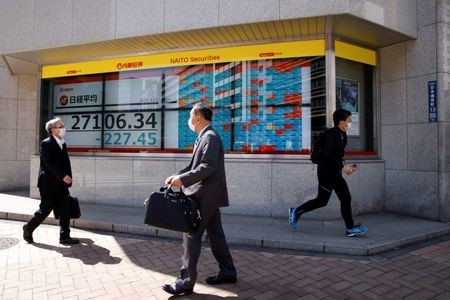
Other Asian markets also start the new month on the defensive – the MSCI Asia ex-Japan index slumped 1.2% on Wednesday for its biggest daily loss in over a month, while the Japanese Nikkei’s 1.4% fall was its steepest in almost two months.

Back in China, Tesla and Twitter chief Elon Musk continues his visit, and is expected to travel to the Tesla plant in Shanghai to meet with staff, sources say.

Meanwhile, economic weakness in China is weighing on oil prices. Remarkably, Brent crude oil is now more than 40% cheaper today than it was a year ago, adding to the downward pressure on global inflation.

Figures this week show that eurozone inflation pressures are easing, but this ‘good news’ is struggling to support risk appetite – until the US debt ceiling deal is approved by both Houses of Congress, nervousness will linger, while worries over the economic impact of the Fed’s rate hiking campaign are never too far from the surface.

Dovish remarks from Fed Governor Philip Jefferson and Philadelphia Fed President Patrick Harker on Wednesday helped lower US bond yields and implied rate expectations. But it is the May employment report on Friday that will be pivotal to whether the Fed raises rates another 25 basis points, as traders mostly expect, or not.

Here are three key developments that could provide more direction to markets on Thursday:

– PMI data – China, Japan, Australia, India (May)

– South Korea trade (May, prelim)

– Eurozone inflation (May, flash estimate)

(By Jamie McGeever)

 

Gold firms set for monthly loss on dollar strength, Fed’s rate hike bets

Gold firms set for monthly loss on dollar strength, Fed’s rate hike bets

May 31 (Reuters) – Gold firmed on Wednesday supported by lower Treasury yields but the dollar’s strength, with more interest rate hikes in the offing and optimism about a US debt deal, kept bullion on course for its first monthly dip in three.

Spot gold was up 0.4% at USD 1,966.89 per ounce by 1418 EDT (1818 GMT) on weaker-than-expected Chicago Purchasing Managers’ Index (PMI) data, before paring some gains on stronger US jobs data.

It has lost nearly 1.1% this month and over USD 100 from near-record highs scaled earlier in May.

US gold futures settled 0.3% higher at USD 1,982.10.

“We’ve had kind of a push-pull effect,” amid support from lower yields and pressure from the dollar, said David Meger, director of metals trading, High Ridge Futures.

“With the job’s data relatively strong, concerns about the possibility of further rate hikes would obviously have a tendency to pressure gold… and yet on the other side, we have the PMI data pulling in the opposite direction.”

The dollar index headed for a monthly gain, making bullion less attractive to overseas buyers.

Any decision by the Fed to hold its benchmark overnight interest rate steady should not be taken to mean the US central bank is done tightening monetary policy, Fed Governor Philip Jefferson said.

High interest rates dim the appeal for zero-yield gold.

But key support around USD 1,950 could fuel momentum trade to push gold back to USD 2,000, said Edward Moya, senior market analyst at OANDA.

Traders also focused on developments around the US debt ceiling, with the US House of Representatives due to vote on a bill to lift the limit.

Silver rose 1.5% to USD 23.56 per ounce, platinum fell 1.6% to USD 998.31, while palladium slipped 2.5% to USD 1,366.29. All three were set for a monthly drop.

Russia’s Nornickel saw the global palladium market swinging to a surplus in 2024 from a deficit in 2023 as recycling outpaces a demand recovery.

(Reporting by Ashitha Shivaprasad in Bengaluru; Editing by Rashmi Aich, Aurora Ellis and Shilpi Majumdar)


Dollar uptrend against yen revived by JOLTS, but 141 key on close

Dollar uptrend against yen revived by JOLTS, but 141 key on close

May 31 (Reuters) – USD/JPY rallied on Wednesday away from support with the help of an unexpected surge in April US job openings that sent Treasury yields higher, but key resistance by 141 looms ahead of Friday’s key payrolls report.

If the May employment report shows demand for labor remaining strong and the Fed likely to hike rates in June, USD/JPY could make a run for Nov. 21 and 22 highs at 142.25 by the 61.8% Fibo of the dive from 2022’s 32-year peak to this year’s lows at 142.50.

Some caution is warranted about overly bullish expectations because prices and spec long positioning are both a bit overstretched. And 2-year Treasury-JGB yield spreads are 60bp lower than they were when USD/JPY hit its March pre-bank crisis highs, while the recent rebound in Fed rate pricing and Treasury yields look limited by expectations of deep rate cuts into 2024.

The May Chicago PMI index dive to 40.4 versus 47.0 forecast and April’s 48.6 and other weak manufacturing reports leave it to the service sector for growth. Also, excess pandemic savings are less than a quarter of their peak and financial conditions are tightening.

Yen weakness may also trigger renewed Japanese intervention.

(Randolph Donney is a Reuters market analyst. The views expressed are his own.)


Back to data watching, with US debt bill on track

Back to data watching, with US debt bill on track

With the U.S. debt ceiling bill clearing an important procedural hurdle en route to a vote in the House of Representatives on Wednesday, markets are back in data-watching mode for now.

Unfortunately, there’s little respite on that front given disappointing economic activity and persistently elevated inflation data out of Asia.

China’s official PMIs indicated a faster-than-expected contraction in manufacturing activity and slower growth in services in May. That followed consistently weak economic releases for April, suggesting the post-COVID reopening bounce has run out of steam.

Forecast-beating Australian consumer prices, released at exactly the same time, appeared to back up Reserve Bank of Australia Governor Philip Lowe’s earlier warning that risks to inflation are on the upside, keeping rate hike bets alive.

The Aussie dollar’s volatile reaction sums up the mood – the risk-sensitive currency bounced initially on the CPI release before more than reversing its gains due to the bleak Chinese data.

********

Asian stock markets fell and even U.S. equity futures turned negative despite the debt ceiling reprieve, while China’s yuan promptly skidded to fresh six-month lows, giving the U.S. dollar a broad boost.

News of a North Korean satellite launch and intensifying fighting in Ukraine only added to the grim backdrop.

Europe’s calendar is likely to be dominated by national CPI releases from France, Germany, and Italy for May ahead of Thursday’s flash euro zone inflation number. Italy’s first-quarter GDP and the European Central Bank’s biannual Financial Stability Review are also due.

In the U.S., the Federal Reserve’s Beige Book will be of interest and a number of Fed officials are also scheduled to speak. But much of the focus will, of course, be on the House debate over the debt ceiling bill.

(Sonali Desai)

*****

European Futures fall as China’s factories falter 

European futures are in negative territory as China’s weak factory activity figures offered the latest evidence that recovery in the world’s second-biggest economy is faltering.

Data showed China’s manufacturing activity PMI fell to 48.2 for May, contracting even faster than expected.

On a brighter note, there are signs inflation is easing in Germany. Data from the country’s most populous state, North Rhine-Westphalia, showed inflation cooled in May. Nationwide inflation data is due at 1200 GMT.

Also on focus today, legislation brokered by President Joe Biden and House Speaker Kevin McCarthy to lift the USD 31.4 trillion U.S. debt ceiling and achieve new federal spending cuts passed an important hurdle late on Tuesday, advancing to the full House of Representatives for debate and an expected vote on passage on Wednesday. The House Rules Committee voted 7-6 to approve the rules allowing debate by the full chamber.]

(Joice Alves)

*****

Oil falls further as weak China data offsets US debt ceiling progress

Oil falls further as weak China data offsets US debt ceiling progress

May 31 (Reuters) – Oil prices extended losses early on Wednesday as worries of slowing demand from top oil importer China after the release of weaker-than-expected economic data outweighed some positive progress on the U.S. debt ceiling bill.

Brent crude futures for August delivery LCOc2 slipped 15 cents to USD 73.56 a barrel by 0656 GMT, while U.S. West Texas Intermediate crude (WTI) CLc1 fell 14 cents to USD 69.32 a barrel, with earlier gains reversed after China manufacturing data was released. Both benchmarks fell by more than 4% on Tuesday.

Brent’s July contract LCOc1, which expires on Wednesday, and the U.S. benchmark were on track for monthly declines of more than 7% and 9%, respectively.

China’s manufacturing activity contracted faster than expected in May on weakening demand, with the official manufacturing purchasing managers’ index (PMI) down to 48.8 from 49.2 in April. The outcome lagged a forecast of 49.4.

“With China’s industrial output and fixed-asset investment growing more slowly than expected last month, markets are worried that China’s commodity demand is weakening more quickly than anticipated,” said Vivek Dhar, director of commodities research at Commonwealth Bank of Australia.

“The current pessimism surrounding China’s commodity demand stands in contrast to the optimism at the beginning of this year,” he added.

In the U.S., trader sentiment remained cautious despite legislation brokered by President Joe Biden and House Speaker Kevin McCarthy to lift the USD 31.4 trillion U.S. debt ceiling and achieve new federal spending cuts passed an important hurdle late on Tuesday, advancing to the full House of Representatives for debate and an expected vote on passage on Wednesday.

“Depending on how the voting goes on through the rest of the week, we can expect bullish or bearish impact likewise on the oil market, but traders will be cautious ahead of newsflow,” said Suvro Sakar, DBS Bank’s lead energy analyst.

The debt deadline nearly coincides with the June 4 meeting of OPEC+ – the Organization of the Petroleum Exporting Countries and allies including Russia. Market participants had mixed views on whether the group would increase output cuts as a slump in prices weighs on the market.

Saudi Arabian Energy Minister Abdulaziz bin Salman last week warned short sellers betting oil prices would fall to “watch out” in a possible signal that OPEC+ may cut output.

However, comments from Russian oil officials and sources, including Deputy Prime Minister Alexander Novak, indicate the world’s third-largest oil producer is leaning toward leaving output unchanged.

“As far as the OPEC+ meeting, again the market has no clear idea on what surprises may be in store this time around, but mostly ‘no change’ is priced in at the moment,” Sakar said.

If Brent prices decline again towards USD 70 per barrel, OPEC may be forced to look at ways to further support the market, he added.

Izumi Serita, general manager of Cosmo Oil’s crude oil and tanker department, said she expected OPEC+ would keep the current output reduction, but the group might weigh in on demand weakness given oil futures are around the levels at which voluntary cuts were triggered last month.

In April, Saudi Arabia and other members of OPEC+ announced further oil output cuts of around 1.2 million barrels per day (bpd), bringing the total volume of cuts by OPEC+ to 3.66 million bpd, according to Reuters calculations.

Meantime, Saudi oil giant Saudi Aramco 2222.SE may further slash the official selling prices for all crude grades to Asia in July by USD 1 a barrel, the lowest since November 2021, a Reuters poll showed.

(Reporting by Stephanie Kelly and Trixie Yap, additional reporting by Yuka Obayashi; Editing by Himani Sarkar and Jamie Freed)

Oil settles lower on weak China data, stronger US dollar

Oil settles lower on weak China data, stronger US dollar

May 31 (Reuters) – Oil prices settled lower on Wednesday, pressured by a stronger US dollar and weak data from top oil importer China that fed demand fears.

Brent crude futures for August delivery settled down USD 1.11 to USD 72.60 a barrel. US West Texas Intermediate crude (WTI) settled down USD 1.37, or 2%, to USD 68.09.

At their session lows, both benchmarks were down more than USD 2 to multi-week lows. On Tuesday, both fell more than 4%.

Oil prices tumbled after Chinese data showed manufacturing activity contracted faster than expected in May, as weakening demand cut the official manufacturing purchasing managers’ index (PMI) down to 48.8 from 49.2 in April, lagging a forecast of 49.4.

The dollar index, which measures the US unit against six major peers, saw support from cooling European inflation and progress on a bipartisan US debt ceiling bill, which will advance to the House of Representatives for debate.

House passage would send the bill to the Senate, where debate could stretch to the weekend, as a June 5 deadline loomed.

A stronger dollar makes oil more expensive for buyers holding other currencies.

US data showed job openings unexpectedly rose in April, pointing to persistent strength in the labor market that could push the Federal Reserve to raise interest rates in June.

“We have weaker-than-expected Chinese data, the debt limit situation, two years of flat spending, and likely another rate hike next month weighing on markets,” said Bob Yawger, director of energy futures at Mizuho.

Traders will watch the upcoming June 4 meeting of OPEC+ – the Organization of the Petroleum Exporting Countries and allies including Russia. Mixed signals by major producers on further production cuts have sparked volatility in oil prices, yet banks HSBC and Goldman Sachs and analysts do not expect OPEC+ to announce further cuts at this meeting.

HSBC said stronger oil demand from China and the West from the summer onwards will trigger a supply deficit in the second half.

“The most likely action is inaction,” said PVM oil market analyst Stephen Brennock, regarding the OPEC+ decision.

In the US, field production of crude oil rose in March to 12.696 million barrels per day, the highest since March 2020, when the coronavirus pandemic began to decimate global energy demand, Energy Information Administration data showed.

US crude oil and gasoline stockpiles were seen falling last week, while distillate inventories likely increased, a preliminary Reuters poll showed on Tuesday.

The poll was conducted ahead of reports from the American Petroleum Institute, an industry group, due at 4:30 p.m. EDT (2030 GMT) on Wednesday.

(Additional reporting by Rowena Edwards in London, Trixie Yap in Singapore, Stephanie Kelly in New York, and Yuka Obayashi in Tokyo; Editing by David Evans, Emelia Sithole-Matarise, Lisa Shumaker, and David Gregorio)


All eyes on China’s PMIs

All eyes on China’s PMIs

May 31 (Reuters) – Asian market focus on Wednesday turns to Chinese purchasing managers index figures, which will give the first insight into factory and service sector activity in the world’s second-largest economy in May.

Japanese retail sales, South Korean retail sales, industrial output, and service sector growth, as well as Australian CPI inflation and credit growth reports – all for April – will be released too, potentially giving these currencies a steer.

The flurry of Asian economic indicators comes against the global backdrop of optimism that the tentative agreement in Washington over the U.S. debt ceiling will be passed in both Houses of Congress.

Relief at the 11th-hour deal to avoid what would be a catastrophic default gave most markets a lift on Tuesday. This was reflected most in the fall in ultra-short-dated U.S. bills, which fell back in line with the current Fed policy rate and implied near-term market rates.

But it’s cautious relief and optimism. Until the 99-page bill officially passes, there remains the outside chance that it won’t, even though the voting mathematics strongly suggests it will.

Wall Street ended mixed on Tuesday, even though tech and the Nasdaq rose after another jump in Nvdia shares briefly put the chipmaker into the rare club of companies valued at $1 trillion.

Asian markets on Wednesday might also get some relief from the dollar’s slip on Tuesday in line with U.S. bond yields. But it’s a mixed bag for Asian currencies.

Japan’s yen rebounded after the country’s top currency diplomat said authorities are closely watching currency moves and won’t rule out any options. The meeting of officials from the Treasury, central bank and financial watchdog came as the yen slid to a six-month low through 140.00 per dollar.

U.S. futures market positioning data shows that hedge funds are holding their largest net short yen position since October last year. Taking that and Tokyo’s warning on FX together, the yen’s rebound could continue this week.

A catalyst for a similar snap higher in the Chinese yuan, however, does not appear to be on the immediate horizon. Chinese blue chip stocks and Hong Kong tech stocks closed up on Tuesday, but not before printing fresh six-month lows.

China’s PMI figures for May are expected to show another contraction in manufacturing activity. Service sector activity has been expanding since January, however, and it will be the extent to which that accelerates or slows that markets will be most attuned to.

China’s post-lockdown economic recovery has fallen far short of investors’ and policymakers’ expectations. The PMI figures will show if that trend is continuing or not.

Here are three key developments that could provide more direction to markets on Wednesday:

– China PMIs (May)

– Australia CPI inflation (April)

– Japan retails sales (April)

(By Jamie McGeever)

Gold rebounds as debt deal optimism weighs on dollar, yields

Gold rebounds as debt deal optimism weighs on dollar, yields

May 30 (Reuters) – Gold bounced back from early losses on Tuesday, as the dollar pulled back and Treasury yields slid on wider market optimism about the U.S. debt ceiling deal.

Spot gold rose 0.8% to $1,958.80 per ounce by 2:30 p.m. EDT (1830 GMT), after hitting its lowest since March 17 earlier. U.S. gold futures settled 0.7% higher at $1,958.00.

The dollar eased from 10-week highs, making bullion cheaper for holders of other currencies, while benchmark 10-year Treasury yields hit a one-week low.

Along with these positive elements, “you could also see some fund managers squaring up positions at the end of the month, taking profits on their short positions and buying back”, said Jim Wyckoff, senior analyst at Kitco Metals.

“In the near term, gold prices are going to trade sideways to lower until we see a fresh catalyst.”

Returning from a long U.S. weekend, traders were also assessing Friday’s surprise strong U.S. economic data that bolstered the case for further monetary policy tightening to curb inflation.

While earlier worries on the U.S. debt deal had supported prices, repricing of the Federal Reserve’s rate hike path was keeping gold pressured, Saxo Bank’s head of commodity strategy Ole Hansen said.

Zero-yield gold tends to lose appeal in a high-interest rate environment.

Traders now see the Fed as more likely to hike rates next month than leave them unchanged, with the debt deal seen easing some of the economic risks that could have kept the central bank on the sidelines.

The deal faces its first test in Congress, with both Democratic President Joe Biden and top congressional Republican Kevin McCarthy expecting enough votes to pass it into law.

Silver fell 0.1% to $23.17 per ounce, platinum XPT= was down 0.6% at $1,018.44 and palladium slipped 0.6% to $1,406.82.

(Reporting by Deep Vakil, Seher Dareen and Rahul Paswan in Bengaluru; editing by Susan Fenton, Jason Neely, Rashmi Aich, and Shilpi Majumdar)

Cost of insuring against US default contracts further on debt bill hopes

Cost of insuring against US default contracts further on debt bill hopes

LONDON/NEW YORK, May 30 (Reuters) – The cost of insuring exposure to a U.S. debt default fell further on Tuesday, reflecting investor optimism over a tentative deal by U.S. lawmakers to raise the $31.4 trillion debt ceiling.

Trading picked up on Tuesday after much of Europe and the United States were closed on Monday for holidays.

In mid-morning trading, the U.S. one-year credit default swap (CDS)- a market-based gauge of the risk of default – narrowed to 53 basis points (bps) from 133 bps at Monday’s close, data from S&P Global Market Intelligence showed on Tuesday.

U.S. five-year CDS fell to 41 bps from 56 bps at Monday’s close, the data showed.

A crucial first test comes on Tuesday, when the House Rules Committee takes up the debt ceiling bill, in a necessary first step before a vote in the full House.

Both Democratic President Joe Biden and the top Republican in the House, Speaker Kevin McCarthy, were confident that they will get enough votes to pass it into law before June 5, when the U.S. Treasury Department says it will not have enough money to cover its obligations.

Some investors though remained apprehensive about the debt limit agreement, as some of the proposed bill’s provisions could undermine economic growth.

On the other hand, the U.S. Treasury’s expected issuance binge to build up its cash buffer will likely reduce market liquidity sharply, which could push short-term interest rates higher.

“We suspect these fears are likely overdone,” wrote Karl Schamotta, chief market strategist at Corpay in Toronto.

“Although there are some procedural landmines ahead that could impact the final wording, the impact on spending associated with the so-called ‘Fiscal Responsibility Act’ should be almost unnoticeable from a macroeconomic standpoint, leaving the government’s biggest outlays essentially unchanged,” Schamotta said.

With respect to the U.S. government’s expected flood of supply after the debt ceiling bill is passed, Schamotta noted that Treasury officials “are well-practiced in slow-walking issuance or otherwise minimizing disruption around funding surges.”

(Reporting by Dhara Ranasinghe in London and Gertrude Chavez-Dreyfuss in New York; Editing by Karin Strohecker and Mark Porter)

In the Market: Amid the calm, the Fed brews the next storm

In the Market: Amid the calm, the Fed brews the next storm

May 29 (Reuters) – Having navigated the financial crisis of 2008, Neel Kashkari worries about systemic risks. But now, as a U.S. monetary policymaker, he worries even more about inflation.

“I think if I had to err, I would err on being a little bit too aggressive in terms of bringing inflation down,” the president of the Federal Reserve Bank of Minneapolis told Reuters last week.

Surprised by the persistence of inflation in the face of the fastest rate hike cycle since the 1980s, Kashkari and some other Fed officials have turned up the heat again in recent days, with a hawkish outlook on interest rates.

In doing so, they may also be inadvertently setting the stage for the next market crisis and Fed intervention, in turn, undercutting the bank’s policy tightening to fight inflation.

So the Fed’s attempt to guide the economy to a so-called “soft landing” while preserving financial stability is instead increasing the odds that it will either be a crash landing or a longer, more turbulent glide path to the ground.

“They’re a little bit in a situation where they’re damned if they do, and damned if they don’t,” said Raghuram Rajan, the former Indian central bank governor and finance professor at Chicago Booth. “If they do raise short-term policy rates, clearly, at some point, something more breaks.”

The probability of a soft landing? “Very small,” Rajan said.

The Fed declined to comment.

Over the past year rapidly rising interest rates after more than a decade of ultra-cheap money have exposed risky bets and bad business models.

Stress has flared up in different parts of the global financial system, from the bursting of the crypto bubble a year ago to turbulence in the U.S. regional banking sector in March.

While it is not clear where the next storm would hit markets, the potential sources of vulnerability are many, from commercial real estate to money market funds.

THREADING A NEEDLE

Markets have settled down since the worst of the banking upheaval receded. Signs that the economy remains resilient also have more investors betting the Fed could bring inflation down without causing too much economic pain or instability.

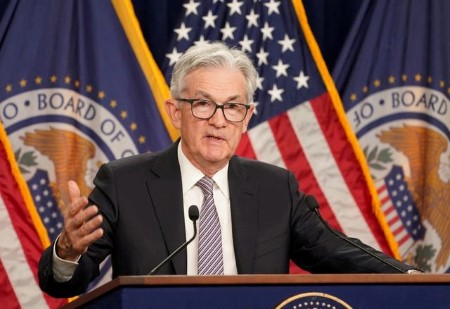
Earlier this month, Chairman Jay Powell said the Fed’s monetary policy and financial stability tools were “working well together,” allowing it to support banks and pursue price stability.

But several people in the market believe not only is the regional banking sector still under stress, multiple other risks to financial stability also remain.

Tighter monetary policy could well cause them to blow up or worsen the impact of other shocks, such as debt ceiling negotiations. Those flare ups could force more interventions, partially offsetting tighter policy.

“The Fed has no desire to conduct monetary policy through financial crises,” said Wendy Edelberg, director of The Hamilton Project at the Brookings Institution. “And so they have to thread a needle if they see their actions creating crises. Then they need to mitigate that.”

MANY RISKS

In the aftermath of the run on Silicon Valley Bank (SVB) in March, the Fed had to step in with tens of billions of dollars of emergency support to the banking system. Some argue that in effect countered its moves to tighten policy.

“The market is confused as to whether the Fed is tightening or easing,” said James Tabacchi, chief executive of broker-dealer South Street Securities. “We try to follow what they’re going to do. And right now, the market doesn’t know which Fed to follow.”

Systemic shocks could come from both known and unexpected avenues. In its most recent financial stability report earlier this month, the Fed listed several areas of concern, including life insurance and some types of bond and loan funds.

The Minneapolis Fed’s Kashkari pointed to private markets, where although many experts expect risk to be limited, lack of transparency means that officials do not fully understand the extent of debt-fueled bets that have been taken. It is also not always clear how financial institutions are interconnected.

“There’s a lot of complexity out there that we don’t have great visibility into,” Kashkari said. “That unfortunately may not get revealed until there is a real problem.”

(Reporting by Paritosh Bansal; Editing by Anna Driver)

Posts navigation

Older posts
Newer posts

Recent Posts

  • Peso GS Weekly: Risk relief drives curve‑wide rally
  • Metrobank US-Iran Risk Index: Dire straits
  • Investment Ideas: April 6, 2026
  • Investment Ideas: April 1, 2026
  • Metrobank US-Iran Risk Index: Signals of an end

Recent Comments

No comments to show.

Archives

  • April 2026
  • March 2026
  • February 2026
  • January 2026
  • December 2025
  • November 2025
  • October 2025
  • September 2025
  • August 2025
  • July 2025
  • June 2025
  • May 2025
  • April 2025
  • March 2025
  • February 2025
  • January 2025
  • December 2024
  • November 2024
  • October 2024
  • September 2024
  • August 2024
  • July 2024
  • June 2024
  • May 2024
  • April 2024
  • March 2024
  • February 2024
  • January 2024
  • December 2023
  • November 2023
  • October 2023
  • September 2023
  • August 2023
  • July 2023
  • June 2023
  • May 2023
  • April 2023
  • March 2023
  • February 2023
  • January 2023
  • December 2022
  • November 2022
  • October 2022
  • September 2022
  • August 2022
  • July 2022
  • June 2022
  • May 2022
  • March 2022
  • December 2021
  • October 2021

Categories

  • Bonds
  • BusinessWorld
  • Currencies
  • Economy
  • Equities
  • Estate Planning
  • Explainer
  • Featured Insight
  • Fine Living
  • How To
  • Investment Tips
  • Markets
  • Portfolio Picks
  • Rates & Bonds
  • Retirement
  • Reuters
  • Spotlight
  • Stocks
  • Uncategorized

You are leaving Metrobank Wealth Insights

Please be aware that the external site policies may differ from our website Terms And Conditions and Privacy Policy. The next site will be opened in a new browser window or tab.

Cancel Proceed
Get in Touch

For inquiries, please call our Metrobank Contact Center at (02) 88-700-700 (domestic toll-free 1-800-1888-5775) or send an e-mail to customercare@metrobank.com.ph

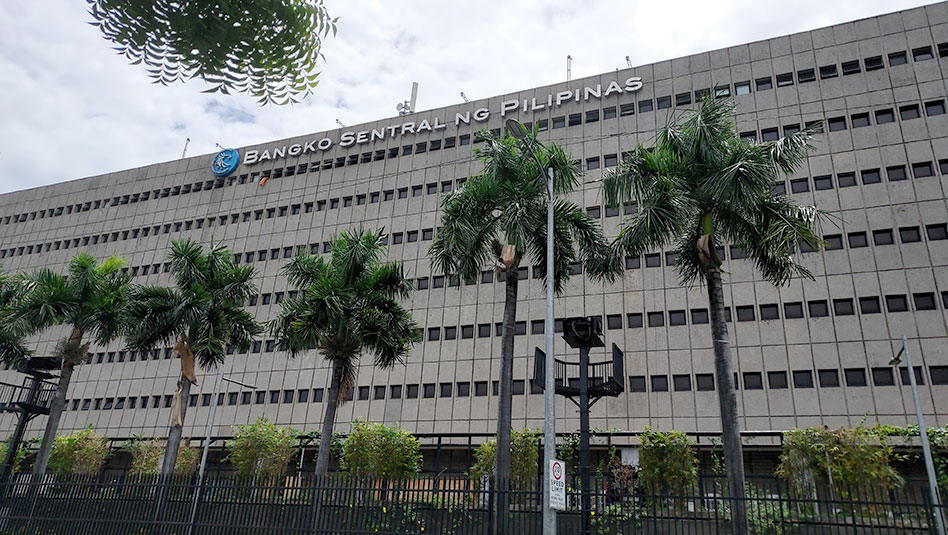
Metrobank is regulated by the Bangko Sentral ng Pilipinas
Website: https://www.bsp.gov.ph

Quick Links
The Gist Webinars Wealth Manager Explainers
Markets
Currencies Rates & Bonds Equities Economy
Wealth
Investment Tips Fine Living Retirement
Portfolio Picks
Bonds Stocks
Others
Contact Us Privacy Notice Terms of Use
© 2026 Metrobank. All rights reserved.

Access this content:

If you are an existing investor, log in first to your Metrobank Wealth Manager account. ​

If you wish to start your wealth journey with us, click the “How To Sign Up” button. ​

Login HOW TO SIGN UP