MODEL PORTFOLIO
THE GIST
NEWS AND FEATURES
Global Philippines Fine Living
INSIGHTS
INVESTMENT STRATEGY
Economy Stocks Bonds Currencies
THE BASICS
Investment Tips Explainers Retirement
WEBINARS
2024 Mid-Year Economi Briefing, economic growth in the Philippines
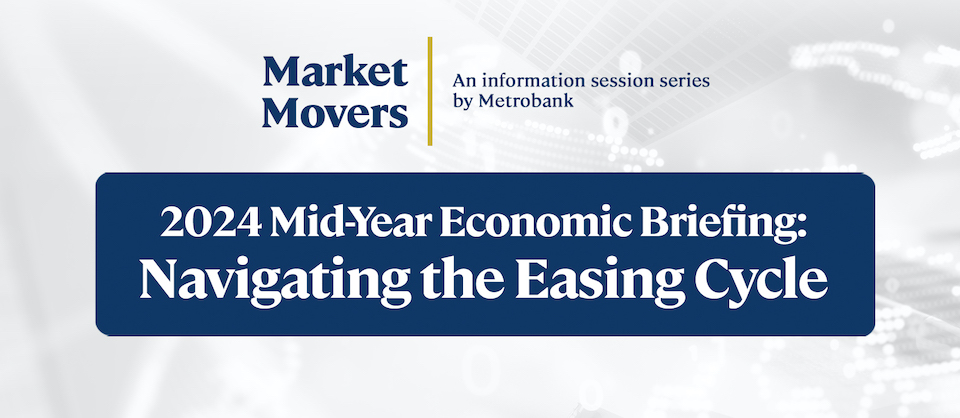
2024 Mid-Year Economic Briefing: Navigating the Easing Cycle
June 21, 2024
Investing with Love
Investing with Love: A Mother’s Guide to Putting Money to Work
May 15, 2024
retirement-ss-3
Investor Series: An Introduction to Estate Planning
September 1, 2023
View All Webinars
DOWNLOADS
Container ship carrying container boxes import export dock with quay crane. Business commercial trade global cargo freight shipping logistic and transportation worldwide oversea concept. Generative AI
Economic Updates
Philippines Trade Update: Wider deficit on strong imports
DOWNLOAD
Frick collection with palm trees 
Economic Updates
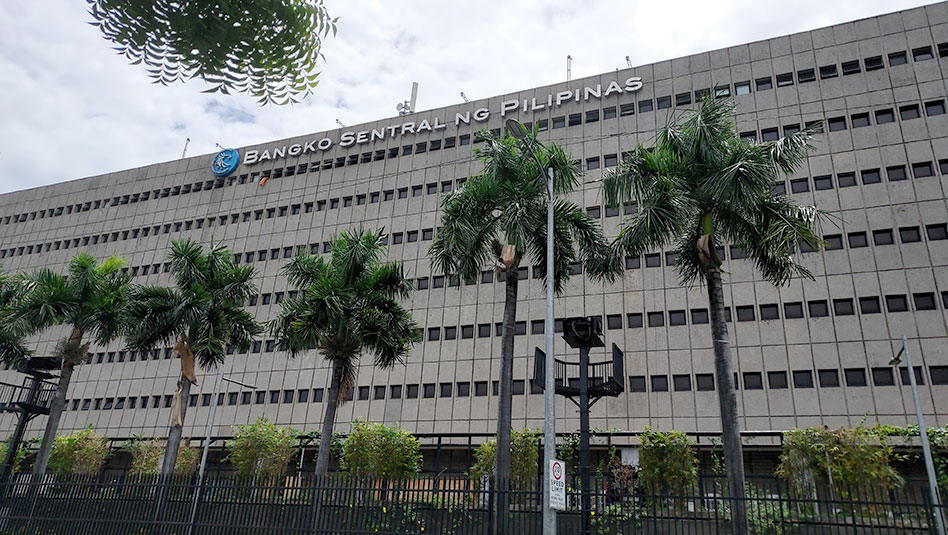
Policy Rate Updates: Policy rate updates to reassure 
DOWNLOAD
Man using his smartphone
Reports
Fed to cut just once 
DOWNLOAD
View all Reports
Metrobank.com.ph How To Sign Up
Follow us on our platforms.

How may we help you?

TOP SEARCHES
  • Where to put my investments
  • Reports about the pandemic and economy
  • Metrobank
  • Webinars
  • Economy
TRENDING ARTICLES
  • Investing for Beginners: Following your PATH
  • On government debt thresholds: How much is too much?
  • Philippines Stock Market Outlook for 2022
  • Deficit spending remains unabated

Login

Access Exclusive Content
Login to Wealth Manager
Visit us at metrobank.com.ph How To Sign Up
Access Exclusive Content Login to Wealth Manager
Search
MODEL PORTFOLIO THE GIST
NEWS AND FEATURES
Global Philippines Fine Living
INSIGHTS
INVESTMENT STRATEGY
Economy Stocks Bonds Currencies
THE BASICS
Investment Tips Explainers Retirement
WEBINARS
2024 Mid-Year Economi Briefing, economic growth in the Philippines
2024 Mid-Year Economic Briefing: Navigating the Easing Cycle
June 21, 2024
Investing with Love
Investing with Love: A Mother’s Guide to Putting Money to Work
May 15, 2024
retirement-ss-3
Investor Series: An Introduction to Estate Planning
September 1, 2023
View All Webinars
DOWNLOADS
Container ship carrying container boxes import export dock with quay crane. Business commercial trade global cargo freight shipping logistic and transportation worldwide oversea concept. Generative AI
Economic Updates
Philippines Trade Update: Wider deficit on strong imports
March 27, 2026 DOWNLOAD
Frick collection with palm trees 
Economic Updates
Policy Rate Updates: Policy rate updates to reassure 
March 26, 2026 DOWNLOAD
Man using his smartphone
Reports
Fed to cut just once 
March 19, 2026 DOWNLOAD
View all Reports

Archives: Business World Article

More private sector investments seen needed in hotels to sustain Philippine tourism growth

More private sector investments seen needed in hotels to sustain Philippine tourism growth

The private sector needs to invest more in hotel accommodations to support the growth of the country’s tourism industry, according to real estate brokerage company Leechiu Property Consultants, Inc. (LPC).

“To sustain the growth in the Philippine tourism industry, there’s a pressing need for greater private sector investment in additional hotel accommodations. Initiating these investments within the next year is critical to fortify international tourism beyond 2027,” the company said in a statement over the weekend.

According to LPC, about 15,000 new hotel rooms are expected to be delivered within the next five years, primarily located in Metro Manila.

It added that more hotel projects are likely to be announced in the coming months or years in line with the Department of Tourism’s (DoT) target of 12 million international arrivals by 2028.

DoT figures showed that the country logged 4.005 million international arrivals as of Sept. 29, nearing its full-year 2023 target of 4.8 million foreign visitors.

Of the total international arrivals, 91.58% or 3.67 million were foreign visitors while the remaining 8.42% or 337,426 were overseas Filipinos.

Meanwhile, LPC projected that Panglao Island in Bohol could surpass Boracay Island as the country’s premier tourism destination.

“In 2019, Panglao reached an impressive 1,581,904 visitors, coming close to Boracay’s 2,034,599 arrivals during the same period. Given these promising figures, it’s becoming increasingly likely that Panglao Island could surpass Boracay Island as the Philippines’ premier tourism destination,” LPC said.

Alfred Lay, Leechiu director for hotel, tourism, and leisure, said one advantage that Panglao has over Boracay is its larger size and capacity limits.

He added that ongoing developments in Panglao could increase land values in the area. Some of these are the proposed 50-hectare Panglao Shores project, the upcoming JW Marriott Hotel, the Cebu-Bohol bridge, and large-scale energy initiatives aimed at meeting Bohol’s surging energy requirements.

“These developments have had a significant impact on land values, with Alona Beachfront properties now priced at approximately PHP 80,000 to PHP 120,000 per square meter, approaching the land values in Boracay’s white beach area,” Mr. Lay said.

LPC projected that tourist arrivals, flight capacity, and hotel occupancy rates across the global tourism industry could return to pre-pandemic levels by next year.

“Industry stakeholders should look out for certain trends that can greatly impact the Philippines in the coming year, including the relaxation of visa restrictions, persistent high airfares driven by escalating aviation fuel costs, ongoing inflation, a high-interest rate environment that may leave consumers with diminished purchasing power, and the return of business travel and MICE (meetings, incentives, conferences, and exhibitions) events,” LPC said. — Revin Mikhael D. Ochave

T-bill, bond rates may climb to track secondary mart, US yields

T-bill, bond rates may climb to track secondary mart, US yields

Rates of Treasury bills and bonds on offer this week could climb further due to an increase in US yields following hawkish signals from the US Federal Reserve.

The government will auction off PHP 15 billion in Treasury bills (T-bills) on Monday, or PHP 5 billion each in 91-, 182- and 364-day papers.

On Tuesday, it will offer PHP 30 billion in reissued 10-year Treasury bonds (T-bonds) with a remaining life of nine years and 10 months.

T-bill and bond yields may track the increases seen at the secondary market on Friday amid elevated global crude oil prices due to worries that the Israel-Palestine war may escalate, Rizal Commercial Banking Corp. Chief Economist Michael L. Ricafort said in a Viber message.

At the secondary market on Friday, the 91-, 182-, and 364-day T-bills went up by 13.93 basis points (bps), 1.96 bps, and 15.33 bps week on week to end at 6.0104%, 6.1654%, and 6.4618%, respectively, based on PHP Bloomberg Valuation Service Reference Rates data published on the Philippine Dealing System’s website.

The 10-year bond rose by 6.42 bps week on week to yield 6.6170%.

Yields rose last week following the increase in benchmark US Treasury rates due to hawkish signals from US Federal Reserve Chair Jerome H. Powell, Mr. Ricafort added.

On Thursday, the 10-year US Treasury yield briefly crossed 5% following hawkish remarks by Mr. Powell, while the Middle East conflict kept investors jittery, Reuters reported.

Speaking at the Economic Club of New York on Thursday, Mr. Powell said the US economy’s strength and continued tight labor markets could require tougher borrowing conditions to control inflation.

The Fed kept its key rate unchanged at the 5.25% to 5.5% range at its meeting last month.

It has hiked rates by a cumulative 525 bps since it began its tightening cycle in March last year.

The Federal Open Market Committee will next meet on Oct. 31 to Nov. 1 to review policy.

T-bill and T-bond rates could rise due to expectations that inflation could remain above the central bank’s 2-4% target next year, a trader said in an e-mail. The trader sees the 10-year bond’s yield ranging from 6.875% to 7.0%.

Minutes of the Bangko Sentral ng Pilipinas’ Sept. 21 meeting released last week said the Philippines may miss its 2-4% annual inflation target for a third straight year in 2024.

Last week, the Bureau of the Treasury (BTr) raised just P11.947 billion via its offering of T-bills, short of the P15-billion program, even as total bids reached P19.371 billion.

Broken down, the Treasury borrowed only PHP 3.637 billion via the 91-day T-bills, below the PHP 5-billion offer, even as tenders for the tenor reached PHP 5.137 billion. The average rate of the three-month paper rose by 18.4 bps to 5.99%. Accepted rates ranged from 5.85% to 6.10%

The government raised just PHP 3.31 billion from the 182-day securities, short of the P5-billion program, despite bids for the tenor reaching P6.52 billion. The average rate for the six-month T-bill was at 6.207%, up by 9.2 bps, with accepted rates at 6.125% to 6.25%.

Meanwhile, the BTr made a full PHP 5-billion award of the 364-day debt papers as demand for the tenor reached PHp 7.714 billion. The average rate of the one-year T-bill rose by 8.3 bps to 6.388%. Accepted yields were from 6.325% to 6.438%.

On the other hand, the reissued 10-year bonds to be offered on Tuesday were last auctioned off on Sept. 19, where the government raised the planned PHP 30 billion, with the papers fetching an average rate of 6.42%.

The BTr wants to raise PHP 150 billion from the domestic market this month, or PHP 60 billion via T-bills and PHP 90 billion via T-bonds.

The government borrows from local and foreign sources to help fund its budget deficit, which is capped at 6.1% of gross domestic product this year. — Aaron Michael C. Sy with Reuters

Yields on government debt go up to track global rates

Yields on government debt go up to track global rates

Yields on local government securities (GS) traded at the secondary market climbed last week to track the rise in US Treasury rates due to the conflict in the Middle East and bets on the US Federal Reserve’s next move.

GS yields, which move opposite to prices, went up by an average of 8.25 basis points (bps) week on week, based on PHP Bloomberg Valuation Service Reference Rates as of Oct. 20 published on the Philippine Dealing System’s website.

Rates increased almost across the board, except for 25-year Treasury bonds (T-bonds), which slipped by 0.12 bp to fetch 6.5318%.

Yields at the short end of the curve went up, with the 91-, 182- and 364-day Treasury bills rising by 13.93 bps, 1.96 bps and 15.33 bps, respectively, to 6.0104%, 6.1654% and 6.4618%.

At the belly of the curve, yields on the two-, three-, four-, five-, and seven-year T-bonds likewise rose by 5.38 bps (to 6.3839%), 5.79 bps (6.4409%), 8 bps (6.502%), 10,37% (6.5631%) and 11.11 bps (6.6233%), respectively.

At the long end, the 10- and 20-year debt papers saw their yield go up by 6.42 bps (6.617%) and 12.63 bps (6.6737%), respectively.

Total GS volume traded last week surged to PHP 13.53 billion from PHP 3.99 billion a week earlier.

Last week’s yield movements were driven by the rising US Treasury yields amid hawkish Fed remarks, analysts said.

“This affected sentiment for local GS, which also followed the same trend with other countries albeit to a lesser degree. Bangko Sentral ng Pilipinas (BSP) may need to follow the action of the Fed as inflation locally is also still elevated and the geopolitical conflict in the Middle East is pressuring oil prices to move higher,” Security Bank Corp. Chief Investment Officer for Trust and Asset Management Group Noel S. Reyes said in an e-mail.

On Thursday, the 10-year US Treasury yield briefly crossed 5% following hawkish remarks by Federal Reserve Chair Jerome H. Powell, while the Middle East conflict kept investors jittery, Reuters reported.

Speaking at the Economic Club of New York on Thursday, Mr. Powell said the US economy’s strength and continued tight labor markets could require tougher borrowing conditions to control inflation.

Atlanta Fed President Raphael Bostic told CNBC that while inflation remained too high, it is falling amid mounting evidence of an economic slowdown, and that could open the door to a softer monetary policy late next year.

BofA Global Research said it now expects the US central bank to deliver a 25-basis-point rate hike in December instead of November.

Traders see a near 99% chance the Fed will keep benchmark rates unchanged in November, while their bets for a pause in December stood at around 79%, according to CME’s FedWatch Tool.

Meanwhile, Philippine headline inflation stood at 6.1% in September, up from 5.3% in August.

This brought the nine-month average to 6.6%, higher than the Bangko Sentral ng Pilipinas’ (BSP) 5.8% forecast and 2-4% target for the year

The Monetary Board has kept the policy rate at a near 16-year high of 6.25% at its last four meetings. It raised borrowing costs by 425 bps from May 2022 to March 2023 to help bring down inflation.

BSP Governor Eli M. Remolona, Jr. earlier said the Monetary Board could consider hiking borrowing costs by 25 bps in their Nov. 16 review amid rising inflation.

“Local bond yields took their cue from global bond yields, which were on the uptick due to the outlook for global inflation,” ING Bank N.V. Manila Senior Economist Nicholas Antonio T. Mapa said in an e-mail.

Jonathan L. Ravelas, senior adviser at Reyes Tacandong & Co., likewise said in a Viber message that the yield movements were influenced by the movement in 10-year US Treasury yields.

“It hit its highest levels since 2007 close to 5%, domestic yield followed suit still driven by the hawkish pause and higher rates for longer,” Mr. Ravelas said.

For this week, he said yields could move sideways or higher as the market awaits the release of October inflation data.

For his part, Mr. Reyes said that GS yield movements will depend on US economic data releases.

“This will dictate price action but granted that it is an end of month week, some bottom-fishing may arise, cushioning any further bouts of further higher yield swings. We are near the peak of terminal policy rates also by the BSP and could entice such movement,” he said.

“This week should be more of the same, with geopolitical developments taking center stage,” Mr. Mapa added. — Lourdes O. Pilar with Reuters

Investors to remain cautious as war continues

Investors to remain cautious as war continues

Investors are expected to remain cautious and stay on the sidelines this week as they continue to monitor developments in the Middle East and how they will affect the global economy.

The benchmark Philippine Stock Exchange index (PSEi) went down by 76.26 points or 1.22% to close at 6,142.90 on Friday, while the broader all shares index shed 36.37 points or 1.08% to end at 3,329.42.

Week on week, the PSEi fell by 13.33 points or 1.97% from its close of 6,266.34 on Oct. 13.

“The failure of the index to hold above the important 6,150 support level last Friday will shift the tone of trading towards caution this week,” China Bank Capital Corp. Managing Director Juan Paolo E. Colet said in a Viber message.

“Increasing US Treasury yields and the volatile Israel-Hamas conflict have dampened risk sentiment as investors wrestle with tight monetary policy, upward oil price pressure, and geopolitical tension,” Mr. Colet added.

The market is expected to be in a generally cautious mood due to the war, online brokerage 2TradeAsia.com likewise said.

“As geopolitical tensions increase, confidence in future fundamentals decrease — and so do asset prices. After all, risk aversion is the human tendency to switch to more certain outcomes to avoid loss,” 2TradeAsia.com said in a report.

The war has compelled investors “to reevaluate their strategies and shift their focus from riskier assets to safer investments,” Globalinks Securities and Stocks, Inc. Head of Sales Trading Toby Allan C. Arce said in a Viber message.

Israel pounded southern Gaza with air strikes early on Sunday and said it would intensify its attacks in the enclave’s north, as Washington pledged more air defences to the Mideast in response to recent attacks on US troops in the region, Reuters reported.

Palestinian media reported at least 11 Palestinians were killed in an Israeli strike in the southern Gaza city of Khan Younis, and that Israel was striking the southern city of Rafah.

The strikes came hours after Israeli military spokesperson Rear Admiral Daniel Hagari called on Gazans to move south out of harm’s way.

Israel started its “total siege” of Gaza after an Oct. 7 cross-border attack on southern Israel by militants of the Islamist movement Hamas killed 1,400 people, mainly civilians, in a shock rampage that has traumatized Israel.

Meanwhile, inflation concerns at home could affect this week’s trading, Mr. Arce added.

Minutes of the Bangko Sentral ng Pilipinas’ Sept. 21 meeting released last week said the Philippines may miss its 2-4% annual inflation target for a third straight year in 2024.

For this week, online brokerage 2TradeAsia.com placed the PSEi’s support at 6,000 and resistance at 6,300, while Mr. Arce put support at 6,142 and resistance at 6,261-6,300. — SJT with Reuters

BoP deficit narrows in Sept.

BoP deficit narrows in Sept.

The Philippines’ overall balance of payments (BoP) position narrowed significantly to USD 414 million in September from the USD 2.34-billion gap in the same month a year ago, the central bank said.

Data released by the Bangko Sentral ng Pilipinas (BSP) on Thursday showed the country’s BoP position remained in deficit for a sixth straight month in September. It was also the widest deficit since the USD 606-billion gap in June. 

Month on month, the BoP deficit widened from the US D57-million deficit in August.

Philippines: Balance of Payments Position“The BoP deficit in September 2023 reflected net outflows arising mainly from the National Government’s (NG) payments of its foreign currency debt obligations,” the central bank said in a statement.

The BoP measures the country’s transactions with the rest of the world at a given time. A deficit means more funds fled the economy than what went in, while a surplus shows that more money entered the Philippines.

For the nine-month period, the Philippines’ BoP position swung to a surplus of USD 1.74 billion from the USD 7.83-billion deficit in the same period in 2022.

“This development reflected mainly the improvement in the balance of trade and the higher net inflows from personal remittances, trade in services, and foreign borrowings by the NG,” the BSP said.

Latest data from the local statistics agency showed the country’s trade deficit stood at USD 4.13 billion in August, narrower than the USD 4.2-billion gap a month prior and the USD 6.03-billion deficit a year earlier.

Year to date, the trade deficit shrank to USD 36.31 billion from the $41.86-billion gap during the same period in 2022.

“Given that the current account is likely in deficit due to the sizable trade deficit, financial account inflows, most likely tied to government issuances of bonds, likely pushed the BoP into a surplus (in the January-to-September period),” ING Bank N.V. Manila Senior Economist Nicholas Antonio T. Mapa said in an e-mail.    

The government raised $1.26 billion from the retail dollar bond offering in late September.

“The retail dollar bond issuance during the month helped bring the deficit to USD 414 million, offsetting the trade deficit,” Mr. Mapa added.

At its end-September position, the BoP reflected a final gross international reserve level of USD 98.1 billion, 1.5% lower than USD 99.6 billion as of end-August.

The dollar reserves were enough to cover 5.7 times the country’s short-term external debt based on original maturity and 3.6 times based on residual maturity.

It is also equivalent to 7.3 months’ worth of imports of goods and payments of services and primary income.

An ample level of foreign exchange buffers safeguards an economy from market volatility and is an assurance of the country’s capability to pay debts in the event of an economic downturn.

“The BoP may remain in deficit for the rest of the year given our expectation for the current account to stay in the red,” Mr. Mapa said.

In the second quarter, the current account deficit reached USD 3.6 billion, or equivalent to -3.4% of gross domestic product (GDP), which was lower than the USD 8-billion shortfall a year ago.

This brought the current account deficit in the first semester to $8.2 billion (-4% of GDP), a 32.2% reduction from the $12.1-billion deficit (-6.1% of GDP) recorded in the same period last year.

“There is a planned Sukuk issuance but we’ve yet to hear more details on the timing,” Mr. Mapa said.

The government is planning to launch Sukuk bonds by end-November. It is targeting to raise around $1 billion from the Islamic bonds, which will have a minimum denomination of at least USD 200,000.

The BSP expects the country’s BoP position to end the year at a USD 127-million deficit (0% of GDP). — Keisha B. Ta-asan

Marcos says Maharlika fund will start operating by yearend

Marcos says Maharlika fund will start operating by yearend

The Philippines’ first sovereign wealth fund will start operating by yearend, President Ferdinand R. Marcos, Jr. said on Thursday after suspending it supposedly to improve its organizational structure.

“The organization of the Maharlika fund proceeds apace,” he said before leaving for Saudi Arabia, where he is expected to promote the fund. 

“We have found more improvements we can make, specifically to the organizational structure of the Maharlika fund,” he added, amid criticisms that the wealth fund threatens the financial stability of two state banks.

Mr. Marcos said the concept of the Maharlika Investment Fund (MIF) “remains a good one” and therefore, “we are still committed to having it operational before the end of the year.”

The Oct. 12 memorandum ordering the suspension of the MIF law’s implementing rules and regulations (IRR) was addressed to the Bureau of the Treasury as well as the heads of the Land Bank of the Philippines (LANDBANK) and the Development Bank of the Philippines (DBP).

The President insisted that the suspension must not be seen as “a judgment of the rightness or wrongness of the Maharlika fund.”

“On the contrary, we are just finding ways to make it as close to perfect and ideal as possible, and that is what we have done,” Mr. Marcos said, adding that he consulted economic managers and other people who would be involved in the fund’s operations.

“Their inputs had been very important and that is why we are now going to utilize them to make it a better organization.”

In a statement, Budget Secretary Amenah F. Pangandaman said the economic team will work closely with the President “to prudently review all provisions line by line and make sure that all things are in order.”

“We will also take this opportunity to engage in more multi-stakeholder groundwork in preparation for the launch of the MIF.”

Damage to credibility
If the issue is just a matter of improving the organizational structure of the investment fund, “why suspend the whole of Maharlika,” Action for Economic Reforms coordinator Filomeno S. Sta. Ana III said in a Facebook Messenger chat.

“This shows an utter failure of communication. Or it shows the confusion in Malacañang,” he said. “This further damages the leadership’s credibility.”

Mr. Sta. Ana noted that the Philippine government’s credibility matters most for investors.

Enrico P. Villanueva, a senior lecturer at the University of the Philippines Los Baños, expressed doubt if the MIF could start operations before yearend when there’s only just two and a half months to go.

“Making a new fund operational in that limited time period is implausible. The IRR revision may take at least two weeks or even more than two months depending on how serious the administration is in making the rules better,” he said via Messenger chat.

Earlier, observers said the suspension of the IRR may be aimed at allowing the President to have greater say on the choice of the Maharlika Investment Corp.’s top executives.

“Whether the President and the MIF proponents like it or not, the directive — to suspend the implementation of the IRR is an admission that something is wrong or amiss with the MIF — certainly in the IRR, and likely even in the law itself,” Mr. Villanueva said.

For GlobalSource Partners Country Analyst Diwa C. Guinigundo, the problem is not the fund’s organizational structure “but the whole concept of putting up a sovereign investment fund when we have chronic fiscal deficit and rising public debt.”

“It’s a missed opportunity for the President to rectify this piece of bad legislation,” he said in a Viber message. “With this very tentative mode of formulating and executing public policy, it would be difficult to inspire investment confidence and market support.”

Terry L. Ridon, a public investment analyst and convenor of think tank InfraWatch, said the IRR suspension should pave the way for the government to assess the performance of the LANDBANK and DBP which have remitted their contributions to the MIF.

“If the banks’ performance flounders in the next few months to at most a year, the government should reassess whether it should dive quickly into MIF investment or focus on strengthening the performance of government banks instead,” he said via Messenger chat. 

The suspension of the Maharlika fund’s implementation came amid concerns on the financial stability of LANDBANK and DBP, which were required to contribute P50 billion and P25 billion, respectively, to the fund’s startup money.

After remitting their contributions, the two banks sought regulatory relief from the central bank’s capitalization requirements.

Earlier this month, Foreign Affairs Assistant Secretary Daniel R. Espiritu said Mr. Marcos is expected to promote the Maharlika fund during his meetings with investors on the sidelines of his participation in the first-ever summit between Southeast Asian and Gulf leaders today (Oct. 20).

Mr. Marcos, in his pre-departure speech, said his government was “encouraged by the reaction of our friends in the Middle East and for that matter around the world to the fund.”

“We’re very encouraged that we are going down the right path.”

Bayan Muna Chairman Neri J. Colmenares said that following the suspension of the MIF law’s IRR, the High Court should “see that the chief executive himself is now hesitant of his pet project and that there is indeed no need for its certification of urgency.”

“The Office of the President’s reason for stopping the MIF’s implementation is to “further study the plan” — meaning it was rushed and half-baked,” he said in a Thursday statement. “We urge the Supreme Court to decide on our petition against the constitutionality of the railroaded passage of the Maharlika law and forever prohibit this presidential abuse of the power to railroad legislative proceedings.”

Gary Ador Dionisio, dean of the De La Salle – College of Saint Benilde School of Diplomacy and Governance, said the government has failed to prove that it is capable of protecting public money. 

“MIF is unnecessary and untenable to protect taxpayers’ money,” he said via Messenger chat. “A weak institution like the Philippines will always be prone to oligarchic interest.” — By Kyle Aristophere T. Atienza, Reporter


Economists hike inflation projection for this year

Economists hike inflation projection for this year

Private sector economists raised their inflation outlook for this year through 2025 due to recent supply-side shocks, although they still expect inflation to return to the 2-4% target range in 2024 and 2025, the Bangko Sentral ng Pilipinas (BSP) said.

Based on the results of the BSP’s survey of external forecasters in September, the average inflation forecast of analysts for 2023 went up to 5.9% from just 5.5% in the August survey.

Economists’ mean inflation forecast for 2024 and 2025 also climbed to 3.7% (from 3.5% previously) and 3.5% (from 3.4%), respectively.

The analysts’ forecasts are slightly above the central bank’s projections. The BSP sees average inflation at 5.8% this year, before easing to 3.5% in 2024 and 3.4% in 2025.

“Analysts expect inflation to accelerate anew due to recent supply-side shocks domestically and overseas,” the BSP said in the highlights of the Sept. 21 Monetary Board meeting.

“They also anticipate further upside risks to the inflation outlook, due mainly to supply disruptions, particularly from the adverse impact of weather disturbances and trade restrictions,” it added.

At its Sept. 21 meeting, the Monetary Board kept the key interest rate unchanged at a near 16-year high of 6.25%. This was after hiking borrowing costs by 425 basis points from May 2022 to March 2023.

“The Monetary Board deemed it appropriate to maintain prevailing monetary policy settings while emphasizing the BSP’s focus on resuming monetary policy tightening action to respond to emerging upside risks to the inflation outlook and potential second-round effects that could dislodge inflation expectations,” the BSP said. 

The central bank’s policy-making body also called for more non-monetary interventions such as the temporary reduction of import tariffs and timely arrival of imported commodities.

“The BSP also continues to prioritize the restoration of inflation towards a target-consistent path over the medium term, in line with its primary mandate to ensure price stability,” it said.

However, the risks to the inflation outlook are on the upside, which could cause inflation to breach the 2-4% target next year, the central bank said.

“The potential impact of higher transport charges is among the major risks to the inflation outlook given the fare increase petitions filed by transport groups in August 2023 due to elevated oil prices,” the BSP said. 

The Land Transportation Franchising and Regulatory Board had approved the P1 provisional jeepney fare increases nationwide, raising the minimum fare to P13 starting Oct. 8. For modern jeepneys, the new minimum fare would be P15.

“Other key upside risks to the inflation outlook are the impact of El Niño weather conditions on food prices and utility rates, higher-than-expected minimum wage adjustments, and higher domestic prices of key food items facing ongoing supply constraints,” the BSP said.

BSP Governor Eli M. Remolona, Jr. earlier said that the Monetary Board may resume its monetary tightening at its next policy-setting meeting on Nov. 16 if risks to the inflation outlook persist.

Mr. Remolona also hinted at an off-cycle rate hike, but he said the BSP still needs to review the latest data before coming up with a decision. — Keisha B. Ta-asan

PH unlikely to hit 2024 growth goal

PH unlikely to hit 2024 growth goal

The Philippines is unlikely to hit its 6.5-8% gross domestic product (GDP) growth target in 2024, due to high borrowing costs and increasingly gloomy trade outlook.

“We are expecting Philippine economic growth to accelerate from 5.3% in 2023 to 6.2% in 2024. That is still less optimistic than the government’s projections of 6.5-8%,” BMI Asia Country Risk Analyst Shi Cheng Low said in an e-mail.

He noted the dimmer trade outlook and elevated interest rates to tame rising inflation are two major headwinds to the economy’s expansion next year.

“We think that the trade cycle downturn has further to run. Growth in both the US and Mainland China, the Philippines’ two largest partners, is set to slow next year, which will limit any recovery in exports,” Mr. Low said.

Mr. Low said in a webinar on Tuesday that the US economy may enter a shallow recession in the second and third quarter of 2024, while China’s economic growth may slow to 4.7% in 2024 from 5.2% this year.

The Development Budget Coordination Committee projects goods exports and imports to grow by 1% and 2%, respectively, this year. Exports growth is expected to stabilize at 6% in 2024 to 2028, while imports are expected to grow by 8% annually during the same period.

Mr. Low said the Bangko Sentral ng Pilipinas (BSP) will also likely maintain its hawkish stance during the first half of 2024, as inflation remains elevated.

“Increasing price pressures will prompt the central bank to resume its tightening cycle. We now think that a hike of 25 basis points (bps) is possible in the November meeting,” he said.

BSP Governor Eli M. Remolona, Jr. earlier said the Monetary Board is considering another 25-bp rate hike on Nov. 16, and even hinted at an off-cycle rate hike if price pressures persist.

“Still, we think the tightening cycle will have not much further to run beyond that,” Mr. Low said.

The BSP has kept the key interest rate at a near 16-year high of 6.25% for the last four meetings. To curb inflation, it has hiked borrowing costs by 425 bps from May 2022 to March 2023.

BMI expects Philippine inflation to average around 3.6% next year, well within the 2-4% target band of the BSP, but a tad higher than the central bank’s 3.5% forecast for 2024.

“But we note that risks are skewed to the upside due to the El Niño phenomenon and the Hamas-Israel conflict being potential sources of upside price volatility,” Mr. Low said.

Meanwhile, Security Bank Corp. Chief Economist Robert Dan J. Roces said while another rate hike can be effective in stabilizing prices and support the local currency against the dollar, it may slow down economic growth and burden borrowers with higher debt costs. 

“Balancing inflation control and economic growth is a complex task that calls for a multi-faceted approach. In addition to rate hikes, government authorities could consider supply-side policies, fiscal stimulus, and foreign exchange interventions among other measures,” he said in a Viber message.

Mr. Roces said a cautious approach that avoids further monetary tightening could be “more prudent” in dealing with inflation, given the risks to economic growth. 

“The BSP will be very wary of over tightening especially as investment weakness has been very apparent in the latest growth data,” BMI’s Mr. Low said.

The Philippine economy grew by an annual 4.3% in the second quarter, the slowest in over two years. It was weaker than the 6.4% growth in the first quarter.

For the first semester, GDP growth averaged 5.3%.

Gross capital formation dipped by 0.04% in the second quarter, a reversal of the 12.6% growth in the first quarter and 17.2% in the second quarter of 2022.

Third-quarter GDP data will be released on Nov. 9.

“As for rate cuts, we expect it to materialize in the second half of 2024, similar to our projections for the Fed. This means that interest rates will be kept at multi-year highs for a prolonged time,” Mr. Low said.

At its meeting last month, the US Federal Reserve kept its own policy rates unchanged at 5.25-5.5%. — By Keisha B. Ta-asan, Reporter

Peso weakens due to worries over Middle East war

Peso weakens due to worries over Middle East war

The peso weakened anew against the dollar on Thursday due to lingering worries over the war in the Middle East.

The local currency closed at PHP 56.87 versus the dollar on Thursday, weakening by 17 centavos from Wednesday’s PHP 56.70 finish, data from the Bankers Association of the Philippines’ website showed.

The local unit opened Thursday’s session weaker at PHP 56.87 per dollar. Its intraday best was at PHP 56.83, while its worst showing was at PHP 56.90 against the greenback.

Dollars traded rose to USD 990.3 million on Thursday from the USD 877.5 million on Wednesday.

The peso dropped against the dollar on Thursday amid increased worries over the Israel-Hamas conflict and higher US Treasury yields, Rizal Commercial Banking Corp. Chief Economist Michael L. Ricafort said in a Viber message.

“The peso weakened amid downbeat investor sentiment from the lingering worries due to the Israel-Hamas conflict,” a trader likewise said in an e-mail.

The peso also tracked the weakness seen in the region but was in the “middle of the pack,” ING Bank N.V. Manila Senior Economist Nicholas Antonio T. Mapa noted in a Viber message.

The dollar generally strengthened on Thursday after US Treasury yields gained overnight, he added.

For Friday, the trader said the peso could weaken further due to potentially hawkish remarks from US Federal Reserve Chair Jerome H. Powell overnight.

The trader sees the peso moving between PHP 56.80 and PHP 57 per dollar on Thursday, while Mr. Ricafort expects it to range from PHP 56.75 to PHP 56.95. — AMCS

Local shares drop further as conflict continues

Local shares drop further as conflict continues

Philippine shares dropped further on Thursday as the conflict in the Middle East raged on and ahead of the speech of US Federal Reserve Chair Jerome H. Powell overnight.

The Philippine Stock Exchange index went down by 49.11 points or 0.78% to close at 6,219.16 on Thursday, while the broader all shares index declined by 19.61 points or 0.57% to end at 3,365.79.

“The index fell in today’s session due to heightened cautiousness and risk-off sentiment among investors following fresh developments in the Middle East, as well as the resurgence of the sell-off in bond markets overnight,” China Bank Securities Corp. Research Director Rastine Mackie D. Mercado said in an e-mail on Thursday.

“Trading opened and stayed in the red territory for the whole session as the aforementioned headwinds weighed on sentiment. The ongoing tension in the Middle East kept many on the sidelines as well,” Philstocks Financial, Inc. Research and Engagement Officer Mikhail Philippe Q. Plopenio likewise said in a Viber message.

Egypt agreed to reopen its border crossing with the Gaza Strip to allow aid to reach Palestinians, the US said, as the humanitarian crisis worsened for the 2.3 million people trapped in the enclave and anti-Israel protests flared across the Middle East, Reuters reported.

Selling pressure continued amid a rise in US Treasury yields and as oil prices exceeded the USD 90-per-barrel mark again amid the war in the Middle East, Unicapital Securities, Inc. Senior Equity Research Analyst Carlos Angelo O. Temporal said.

The yield on 10-year Treasury notes was up 6.4 basis points to 4.966%, touching its highest since mid-2007, Reuters reported.

US crude eased 0.16% to USD 88.18 per barrel and Brent was at USD 91.11, down 0.43% on the day.

“Selling pressure ramped up through the day, as investors likely trimmed exposures ahead of a speech by Fed chair Powell later tonight. For tomorrow, we are likely to see reactive moves to overnight developments,” Mr. Mercado added.

Fed Chair Jerome Powell will take the podium in New York on Thursday with his colleagues at the US central bank in apparent agreement to hold interest rates unchanged at their next meeting in two weeks.

At home, almost all sectoral indices dropped on Thursday. Financials went down by 28.47 points or 1.58% to 1,770.99; services fell by 20.84 points or 1.35% to 1,520.26; industrials dropped by 91.34 points or 1.02% to 8,824.68; mining and oil declined by 22.80 points or 0.21% to 10,830.69; and holding firms decreased by 10.41 points or 0.17% to 5,897.06.

Meanwhile, property climbed by 3.81 points or 0.14% to 2,656.40.

Value turnover went down to PHP 4.24 billion on Thursday with 575.68 million shares changing hands from the PHP 5.12 billion with 1.12 billion issues seen on Wednesday.

Decliners outnumbered advancers, 117 versus 50, while 53 shares closed unchanged.

Net foreign selling climbed to PHP 524.69 million on Thursday from PHP 32.59 million the previous day. — SJT with Reuters

Posts navigation

Older posts
Newer posts

Recent Posts

  • Investment Ideas: April 1, 2026
  • Metrobank US-Iran Risk Index: Signals of an end
  • Eye on Earnings: Demand for connection supports telcos
  • Inflation Preview: March madness
  • Investment Ideas: March 31, 2026

Recent Comments

No comments to show.

Archives

  • April 2026
  • March 2026
  • February 2026
  • January 2026
  • December 2025
  • November 2025
  • October 2025
  • September 2025
  • August 2025
  • July 2025
  • June 2025
  • May 2025
  • April 2025
  • March 2025
  • February 2025
  • January 2025
  • December 2024
  • November 2024
  • October 2024
  • September 2024
  • August 2024
  • July 2024
  • June 2024
  • May 2024
  • April 2024
  • March 2024
  • February 2024
  • January 2024
  • December 2023
  • November 2023
  • October 2023
  • September 2023
  • August 2023
  • July 2023
  • June 2023
  • May 2023
  • April 2023
  • March 2023
  • February 2023
  • January 2023
  • December 2022
  • November 2022
  • October 2022
  • September 2022
  • August 2022
  • July 2022
  • June 2022
  • May 2022
  • March 2022
  • December 2021
  • October 2021

Categories

  • Bonds
  • BusinessWorld
  • Currencies
  • Economy
  • Equities
  • Estate Planning
  • Explainer
  • Featured Insight
  • Fine Living
  • How To
  • Investment Tips
  • Markets
  • Portfolio Picks
  • Rates & Bonds
  • Retirement
  • Reuters
  • Spotlight
  • Stocks
  • Uncategorized

You are leaving Metrobank Wealth Insights

Please be aware that the external site policies may differ from our website Terms And Conditions and Privacy Policy. The next site will be opened in a new browser window or tab.

Cancel Proceed
Get in Touch

For inquiries, please call our Metrobank Contact Center at (02) 88-700-700 (domestic toll-free 1-800-1888-5775) or send an e-mail to customercare@metrobank.com.ph

Metrobank is regulated by the Bangko Sentral ng Pilipinas
Website: https://www.bsp.gov.ph

Quick Links
The Gist Webinars Wealth Manager Explainers
Markets
Currencies Rates & Bonds Equities Economy
Wealth
Investment Tips Fine Living Retirement
Portfolio Picks
Bonds Stocks
Others
Contact Us Privacy Notice Terms of Use
© 2026 Metrobank. All rights reserved.

Access this content:

If you are an existing investor, log in first to your Metrobank Wealth Manager account. ​

If you wish to start your wealth journey with us, click the “How To Sign Up” button. ​

Login HOW TO SIGN UP