MODEL PORTFOLIO
THE GIST
NEWS AND FEATURES
Global Philippines Fine Living
INSIGHTS
INVESTMENT STRATEGY
Economy Stocks Bonds Currencies
THE BASICS
Investment Tips Explainers Retirement
WEBINARS
2024 Mid-Year Economi Briefing, economic growth in the Philippines
2024 Mid-Year Economic Briefing: Navigating the Easing Cycle
June 21, 2024
Investing with Love
Investing with Love: A Mother’s Guide to Putting Money to Work
May 15, 2024
retirement-ss-3
Investor Series: An Introduction to Estate Planning
September 1, 2023
View All Webinars
DOWNLOADS
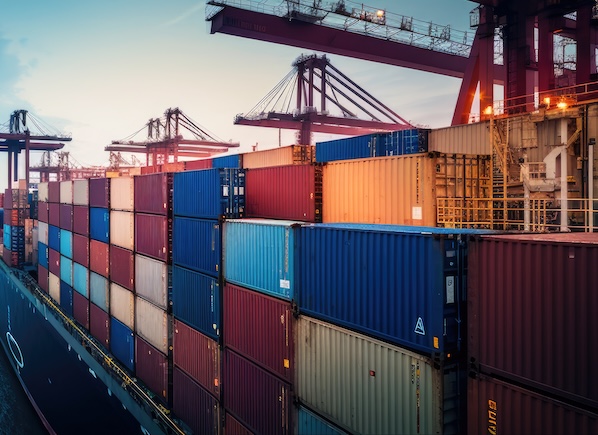
Container ship carrying container boxes import export dock with quay crane. Business commercial trade global cargo freight shipping logistic and transportation worldwide oversea concept. Generative AI
Economic Updates
Philippines Trade Update: Wider deficit on strong imports
DOWNLOAD
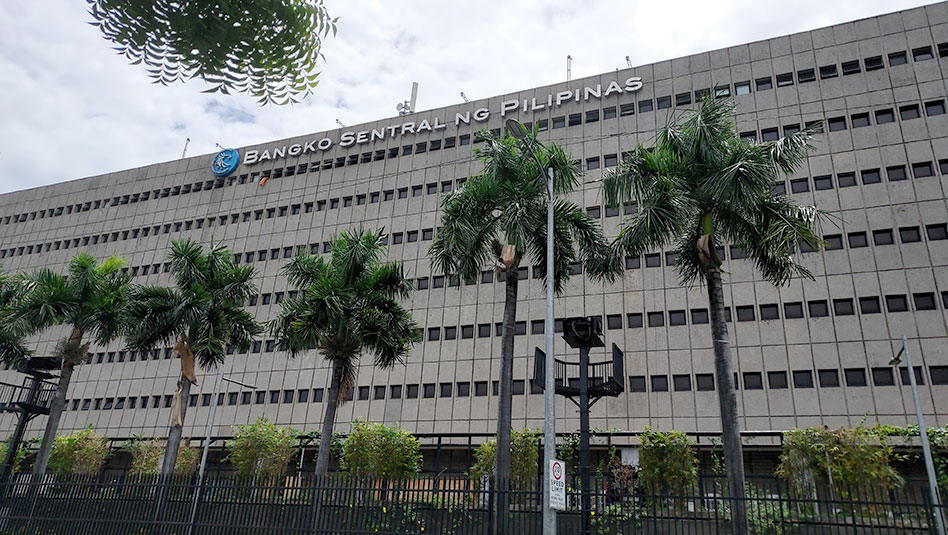
Frick collection with palm trees 
Economic Updates
Policy Rate Updates: Policy rate updates to reassure 
DOWNLOAD
Man using his smartphone
Reports
Fed to cut just once 
DOWNLOAD
View all Reports
Metrobank.com.ph How To Sign Up
Follow us on our platforms.

How may we help you?

TOP SEARCHES
  • Where to put my investments
  • Reports about the pandemic and economy
  • Metrobank
  • Webinars
  • Economy
TRENDING ARTICLES
  • Investing for Beginners: Following your PATH
  • On government debt thresholds: How much is too much?
  • Philippines Stock Market Outlook for 2022
  • Deficit spending remains unabated

Login

Access Exclusive Content
Login to Wealth Manager
Visit us at metrobank.com.ph How To Sign Up
Access Exclusive Content Login to Wealth Manager
Search
MODEL PORTFOLIO THE GIST
NEWS AND FEATURES
Global Philippines Fine Living
INSIGHTS
INVESTMENT STRATEGY
Economy Stocks Bonds Currencies
THE BASICS
Investment Tips Explainers Retirement
WEBINARS
2024 Mid-Year Economi Briefing, economic growth in the Philippines
2024 Mid-Year Economic Briefing: Navigating the Easing Cycle
June 21, 2024
Investing with Love
Investing with Love: A Mother’s Guide to Putting Money to Work
May 15, 2024
retirement-ss-3
Investor Series: An Introduction to Estate Planning
September 1, 2023
View All Webinars
DOWNLOADS
Container ship carrying container boxes import export dock with quay crane. Business commercial trade global cargo freight shipping logistic and transportation worldwide oversea concept. Generative AI
Economic Updates
Philippines Trade Update: Wider deficit on strong imports
March 27, 2026 DOWNLOAD
Frick collection with palm trees 
Economic Updates
Policy Rate Updates: Policy rate updates to reassure 
March 26, 2026 DOWNLOAD
Man using his smartphone
Reports
Fed to cut just once 
March 19, 2026 DOWNLOAD
View all Reports

Archives: Business World Article

Stocks drop further as market waits for catalysts

Stocks drop further as market waits for catalysts

PHILIPPINE SHARES dropped further on Tuesday due to a lack of positive catalysts and the continuing conflict in the Middle East.

The Philippine Stock Exchange index (PSEi) went down by 48.72 points or 0.8% to close at 6,039.72 on Tuesday, while the broader all shares index shed 18.37 points or 0.55% to end at 3,284.69.

“The local bourse dropped… as many investors are staying on the sidelines while waiting for a positive catalyst. So far, concerns regarding the Israel-Hamas conflict, high interest rates, and elevated inflation continue to exert downward pressure on sentiment,” Philstocks Financial, Inc. Research Analyst Claire T. Alviar said in a Viber message.

“The local market posted another steep downtick despite the reprieve in the US bond sell-off, which we think underscores investors’ heightened risk-off appetite,” China Bank Securities Corp. Research Associate Lance U. Soledad said in a Viber message.

Israel’s military intensified its assault on Hamas militants in Gaza, as the United States and other global powers called for aid to continue flowing into the besieged strip to prevent an already grave humanitarian crisis from worsening, Reuters reported.

Israel’s military said it had hit more than 400 militant targets in Gaza overnight and killed dozens of Hamas fighters, including three deputy battalion commanders.

Meanwhile, the yield on the benchmark 10-year US Treasury note briefly rose above 5% on Monday before quickly declining. In Asian hours, the yield was up 1 basis point to 4.848% on Tuesday.

The runup in yields on the 10-year Treasury note, seen as a safe haven in times of economic uncertainty and a benchmark for borrowing costs around the world, has been driven by investors pricing in stronger US growth as well as the need for more bonds to be issued to fund higher government spending.

Philippine shares were “dragged by mounting concerns about the state of the broader economy,” Regina Capital Development Corp. Head of Sales Luis A. Limlingan said in a Viber message.

“On the economic front, traders await latest data about the services and manufacturing sectors,” Mr. Limlingan added.

All sectoral indices dropped on Tuesday. Services fell by 19.81 points or 1.32% to 1,477.22; property shed 22.10 points or 0.85% to 2,572.41; holding firms declined by 46.37 points or 0.79% to 5,782.40; mining and oil went down by 77.64 points or 0.77% to 9,950.73; financials dropped by 6.43 points or 0.37% to 1,712.20; and industrials decreased by 25.88 points or 0.29% to 8,638.32.

Value turnover went down to P2.57 billion on Tuesday with 275.90 million shares changing hands from the P3.30 billion with 551.51 million issues seen on Monday.

Decliners outnumbered advancers, 100 versus 72, while 57 shares closed unchanged.

Net foreign selling went down to P633.34 million on Tuesday from P777.62 million on Monday. — SJT with Reuters

Infrastructure spending surges 66% in August

Infrastructure spending surges 66% in August

State infrastructure spending surged by 65.8% in August as the government ramped up the implementation of projects, the Department of Budget and Management (DBM) said.

In its latest National Government (NG) disbursement report, the DBM said infrastructure and other capital outlays jumped to PHP 122.1 billion in August from PHP 73.7 billion in the same month a year ago.

Month on month, infrastructure spending also rose by 10% from PHP 111 billion in July.

“This was largely attributed to the disbursements made by the Department of Public Works and Highways (DPWH) for its completed projects nationwide, such as national roads and bridges, infrastructure projects, flood control projects, convergence programs, and payment of right-of-way claims,” the DBM said.

Capital expenditures for the month also included the health facilities enhancement program of the Department of Health.

The DBM also cited payments made by development partners for the Department of Transportation’s (DoTr) railway projects, such as the Malolos-Clark Railway Project and the South Commuter Railway Project.

“The increase, however, was partly tempered by lower capital outlay disbursements posted in the Department of National Defense, largely due to the timing of releases for their Revised Armed Forces of the Philippines Modernization Program (RAFPMP),” the DBM said.

It noted that “big-ticket releases” are scheduled for the fourth quarter this year, unlike last year when significant disbursements were made in August.

In the first eight months, infrastructure spending climbed by 19.2% to PHP 740.3 billion from PHP 621.2 billion a year ago.

The Budget department attributed this to DPWH’s “robust spending performance.” It cited the accelerated project implementation for roads and bridges, closer monitoring of construction work, and expedited processing of billings by implementing offices.

“The direct payments made by foreign creditors of the DoTr for their foreign-assisted rail transport projects also contributed to the higher infrastructure and other capital outlays for the period,” the DBM added.

Meanwhile, infrastructure disbursements in the January-August period went up by 12.1% to PHP 876.6 billion from PHP 781.7 billion a year earlier.

These included estimated NG infrastructure disbursements and infrastructure components of subsidy and equity to government-owned and -controlled corporations and transfers to local government units.

Rizal Commercial Banking Corp. Chief Economist Michael L. Ricafort said in a Viber message that the higher infrastructure spending was due to the “commitment to ramp up government spending for the rest of 2023 after some underspending earlier this year to help support faster economic growth and recovery.”

“Furthermore, the base effects were already lower after the election-related spending earlier in 2022, thereby mathematically leading to faster year-on-year growth,” Mr. Ricafort added.

The Philippines’ gross domestic product (GDP) grew by 4.3% in the second quarter, the slowest in over two years. This was partially attributed to slow state spending, which contracted by 7.1%.

Government agencies have been tasked to come up with catch-up spending plans amid the low budget utilization in the first half.

The Department of Finance earlier said it is working with agencies to address challenges to spending, including procurement, implementation and payment issues.

This year, the government plans to spend 5.3% of GDP on infrastructure, equivalent to PHP 1.29 trillion. — Luisa Maria Jacinta C. Jocson

Governments urged to impose a 2% minimum wealth tax on billionaires

Governments urged to impose a 2% minimum wealth tax on billionaires

Governments should impose a global minimum tax on billionaires, which could raise as much as USD 250 billion annually, according to a report by the EU Tax Observatory.

A 2% minimum wealth tax could generate as much as USD 17.3 billion (around PHP 983 billion) from 260 billionaires in South and Southeast Asia alone, the EU Tax Observatory said in the Global Tax Evasion Report 2024 released on Monday.

The 260 billionaires in South and Southeast Asia have a combined wealth of USD 991 billion and have paid around USD 2.5 billion in personal tax annually.

The EU Tax Observatory noted that tax evasion “including gray-zone evasion at the border of legality” is increasingly happening domestically.

Globally, billionaires have had “very low” personal effective tax rates ranging from 0% to 0.5% of their wealth, due to the frequent use of shell companies to avoid income taxes, it added.

“When expressed as a fraction of income and considering all taxes paid at all levels of government beyond personal taxes (including corporate taxes, consumption taxes, payroll taxes, etc.), the effective tax rates of billionaires appear significantly lower than those of all other groups of the population,” it added.

It also cited studies that showed that around 25% of global offshore financial wealth remains untaxed.

The EU Tax Observatory, an independent research laboratory, proposed a global minimum tax on billionaires, equal to 2% of their wealth which could raise nearly USD 250 billion from less than 3,000 individuals annually.

“Under this assumption, global billionaires pay around USD 44 billion in personal taxes today, about 0.35% of their wealth. A minimum tax that would bring their personal tax payments to 2% of wealth would thus add the equivalent of 1.65% of their wealth in tax. This minimum tax would generate USD 214 billion in government revenue globally,” it added.

In the Philippines, different versions of a wealth tax have been proposed in recent years.

Last year, the Makabayan bloc filed House Bill No. 258, which seeks to impose a 1-3% tax on the “super-rich” or people with net value of taxable assets exceeding P1 billion. It estimated the tax would raise PHP 236.7 billion annually from the 50 richest Filipinos.

ACT Teachers Party-list Representative and Deputy Minority Leader France L. Castro, who is one of the bill’s authors, said that the government should not hesitate to tax wealthy individuals.

“I think that the super-rich in the Philippines would themselves like to help the country, where they made their billions, to prosper and to assist in uplifting the lives of Filipinos if given the chance,” Ms. Castro said in a statement sent through Viber.

Meanwhile, Eleanor L. Roque, tax principal of P&A Grant Thornton, warned of the “unintended consequences” of a billionaire’s tax.

“I think only very few countries in the world impose a wealth tax. Wealthy individuals have shifted tax residences to escape wealth tax,” she said in a Viber message.

Philippine Chamber of Commerce and Industry (PCCI) President George T. Barcelon also said a wealth tax would be difficult to implement.

“I believe people in that category are already taxed, they have corresponding taxes from their companies, or they are taxed from their dividends. (The tax) would be an added layer. I think people would try to circumvent that by splitting their holdings to their heirs or other people, so they won’t be part of the billionaire’s (bracket),” he said in a phone call.

Ateneo de Manila University economics professor Leonardo A. Lanzona also noted that the wealth tax may not be as effective in the Philippines as most billionaires “engage in tax planning and mitigation strategies to legally reduce their tax liabilities.”

“This can include using trusts, tax-efficient investments, and other financial instruments. They may also decide not to reveal their wealth fully and engage in tax evasion. Hence, for wealth taxes to work, the necessary institutional reforms are needed to ensure that these billionaires pay their taxes truthfully,” he said in an e-mail.

PCCI’s Mr. Barcelon also noted that there would be a need to clarify what constitutes a “billionaire.”

“A billionaire in terms of peso, that’s quite small. It depends on what currency you’re talking about. A billionaire in (terms of) US dollar is quite big,” he said in mixed English and Filipino.

On the other hand, the billionaire’s tax could also be a means to address inequality, Mr. Lanzona said.

“As far as tax revenues go, the country is already scraping the bottom of the barrel through indirect taxes such as the value-added taxes and sin taxes. Imposing progressive wealth taxes offers an alternative source of revenue which is critical at the time when most of our loans are maturing in the short term,” he said.

A study by think tank Ibon Foundation earlier this year showed that a wealth tax on the country’s billionaires can generate P468.8 billion annually. — By Luisa Maria Jacinta C. Jocson, Reporter

More Filipinos turn to solar panels as energy costs bite

More Filipinos turn to solar panels as energy costs bite

Jennelyn Valencia-Burgos, 33, is among many Filipinos who have installed solar panels on her roof to ease costs in a country with the most expensive power rates in Southeast Asia.

Ms. Burgos, who spent PHP 65,000 (USD 1,145) on her solar panels, said her monthly electricity bill used to cost as much as PHP 1,000 a month. Now, there are months when she doesn’t have to pay for power.

“It’s worth it, especially if you have several panels,” she said in a Facebook Messenger chat. “Yes, it’s expensive, but it will really save you money.”

The Philippines relies heavily on imported coal, most of it from Indonesia and Australia, exposing its electricity system to political unrest, price volatility and the risk of unfavorable foreign exchange rates.

There’s a push for renewable energy and solar energy is expected to drive the Philippines’ renewable energy growth in the next decade, according to a report from Fitch Solutions Country Risk and Industry Research.

The country aims to increase the share of renewable energy in its power mix to 35% by 2030 and 50% by 2040 from 22% now.

Household use of solar panels is being pushed to ease the effects of rising electricity prices. Solar rooftops are expected to help households especially during the summer months when power supply is tight.

Early this year, the Luzon power grid was placed under red and yellow alerts, with more than 300,000 customers in Metro Manila and nearby provinces experiencing brownouts after transmission lines tripped, forcing two power plants to shut down.

Another measure being pushed by the Department of Energy (DoE) is the net metering program, which allows household consumers with renewable energy facilities such as solar power to use electricity when needed while contributing their output to the grid.

Net metering, which allowed consumers to earn credit for their power export, was the first policy mechanism of the Philippine Renewable Energy Act of 2008 that was first implemented. The program is open to users with a capacity of as much as 100 kilowatts (kW).

There were 6,665 net metering customers at the end of last year with an installed capacity of 40,075 kilowatts peak (kWp), according to Ferdinand O. Geluz, Manila Electric Co. first vice-president and chief commercial officer.

The Energy Regulatory Commission (ERC) has said net metering protects consumers from rising electricity prices.

To qualify, a consumer must apply with a distribution utility for evaluation, inspection, completion and commissioning, but the application process varies from local government to local government.

To install a solar photovoltaic (PV) system with net metering, a customer needs a solar PV panel that absorbs light, and a DC/AC inverter that converts the panel’s direct current output to alternating current, which can then be fed into a commercial electrical grid or used off grid.

Compliance hurdles
Senator Sherwin T. Gatchalian, vice-chairman of the Senate Energy Committee, has proposed to remove the 100-kW cap for net metering to encourage more Filipinos to invest in renewable energy.

The Energy Regulatory Commission last year approved the use of renewable energy of as much as 1 megawatt (MW).

“Last year, we issued the regulatory framework for distributed energy resources or DERs that already allows the installation of up to 1-megawatt (MW) RE installations for a customer’s own use,” ERC Chairperson and Chief Executive Officer Monalisa C. Dimalanta said in a Viber message.

“This 1-MW cap will be reviewed after one to two years to see if there is demand to increase the cap,” she said.

This would allow the regulator to unlock the ability of large consumers to choose and provide themselves with renewable energy, Ms. Dimalanta said, “while managing the impact on remaining captive customers of distribution utilities.”

She added that current procedures are already enough and streamlined and that the challenge in solar rooftop utilization now lies within local government units.

Ms. Dimalanta noted that on the regulatory side for residential consumers, the procedure is already clear and streamlined.

“It is now a matter of implementation to make sure it is seamless from the national agency to the distribution utility to the local government unit,” she said. “The remaining challenges are information dissemination and access to financing.”

Solar PV installations are not yet widespread in the Philippines mainly due to lack of awareness among homeowners, according to the Institute for Climate and Sustainable Cities (ICSC).

“Many consumers are not yet aware of the potential cost savings attributed to solar energy on their rooftop,” Jephraim C. Manansala, ICSC chief data scientist said in a Viber message.

Some Filipinos hesitate to have a solar PV system because they don’t know how to maintain and operate it, he said. “Others may also be unsure about which type of solar PV system to utilize — whether a grid-tied or a hybrid system.

Many homeowners also find the permitting process difficult. “Some local government units have a streamlined process for solar PV installations, while others are not yet prepared for this,” Mr. Manansala said.

Some solar panel installations fail to comply with the requirements of the distribution utility and are not monitored by the government, he added.

“Regulatory oversight including monitoring by distribution utilities and the government, or installation compliance requirements for renewable energy certificate meters may be challenging for some consumers, leaving them disincentivized to register and install solar PV systems,” Mr. Manansala said.

“Addressing these challenges will require collaboration between diverse stakeholders including government agencies, distribution utilities and consumers,” he added. — Ashley Erika O. Jose, Reporter


Yields on Treasury bills climb across the board

Yields on Treasury bills climb across the board

The government made a partial award of the Treasury bills (T-bills) it auctioned off on Monday as rates climbed across the board amid growing tightening bets due to the war in the Middle East.

The Bureau of the Treasury (BTr) raised PHP 14.26 billion via the T-bills it auctioned off on Monday, a tad short of the PHP 15-billion program, even as total bids reached PHP 23.359 billion.

Broken down, the Treasury made a full PHP 5-billion award of the 91-day T-bills, with tenders for the tenor reaching PHP 7.804 billion. The three-month paper was quoted at an average rate of 6.149%, 15.9 basis points (bps) above the 5.99% seen for a partial award last week. Accepted rates ranged from 6.04% to 6.249%.

The government likewise raised PHP 5 billion as planned via the 364-day debt papers as bids reached PHP 10.095 billion. The average rate of the one-year T-bill rose by 9.1 bps to 6.479% from the 6.388% quoted for last week’s offer. Accepted yields were from 6.4% to 6.525%.

On the other hand, the government borrowed only PHP 4.26 billion through the 182-day securities, short of the PHP 5-billion program, despite bids for the paper reaching PHP 5.46 billion. The average rate for the six-month T-bill stood at 6.33%, up by 12.3 bps from the 6.207% seen last week, with accepted yields ranging from 6.245% to 6.399%.

“Treasury bill average auction yields were again mostly higher for the fifth straight week, similar to the weekly rise in the comparable short-term PHP BVAL (Bloomberg Valuation Service) yields,” Rizal Commercial Banking Corp. Chief Economist Michael L. Ricafort said in a Viber message.

At the secondary market on Friday, the 91-, 182-, and 364-day T-bills went up by 13.93 bps, 1.96 bps, and 15.33 bps week on week to end at 6.0104%, 6.1654%, and 6.4618%, respectively, based on PHP BVAL Reference Rates data published on the Philippine Dealing System’s website.

Before Monday’s auction, the 91-, 182- and 364-day T-bills were quoted at 6.01%, 6.165%, and 6.462% respectively, PHP BVAL Reference Rates data provided by the Treasury showed.

The ongoing conflict between Israel and Palestine and its impact on global oil prices pose upside risks to inflation, which could lead to further tightening by the Bangko Sentral ng Pilipinas (BSP) and the US Federal Reserve, Mr. Ricafort added.

“The higher T-bill rates reflected growing expectations of a potential BSP rate hike amid domestic price pressures. The massive bids continue to indicate strong investor demand for higher-yielding bills as the domestic yield curve remains flat,” a trader likewise said in an e-mail. 

Speaking at the Economic Club of New York on Thursday, Fed Chair Jerome H. Powell said the US economy’s strength and continued tight labor markets could require tougher borrowing conditions to control inflation, Reuters reported.

The Fed kept its key rate unchanged at the 5.25% to 5.5% range at its meeting last month.

It has hiked rates by a cumulative 525 bps since it began its tightening cycle in March last year.

The Federal Open Market Committee will next meet on Oct. 31 to Nov. 1 to review policy.

Meanwhile, the Philippine central bank is open to raising its policy rate by 25 bps during their meeting next month after inflation picked up for a second month in a row in September, BSP Governor Eli M. Remolona, Jr. said earlier this month.

Mr. Remolona said he “would not rule out” a 25-bp increase at the Monetary Board’s Nov. 16 meeting, adding there is still room for monetary tightening as the economy remains strong.

The Monetary Board has kept the policy rate at a near 16-year high of 6.25% at its last four meetings. It raised borrowing costs by 425 bps from May 2022 to March 2023 to help bring down inflation.

On Tuesday, the BTr will offer PHP 30 billion in reissued 10-year Treasury bonds  (T-bonds) with a remaining life of nine years and 10 months.

The Treasury wants to raise PHP 150 billion from the domestic market this month, or PHP 60 billion via T-bills and PHP 90 billion via T-bonds.

The government borrows from local and foreign sources to help fund its budget deficit, which is capped at 6.1% of gross domestic product this year. — M.J.B. Poliarco

Peso steady vs dollar

Peso steady vs dollar

The peso closed unchanged against the dollar on Monday amid the ongoing war in the Middle East and expectations of monetary tightening at home.

The local currency closed at PHP 56.84 versus the greenback on Monday, steady from Friday’s finish, data from the Bankers Association of the Philippines’ website showed.

The peso opened Monday’s session stronger at PHP 56.75 per dollar. Its intraday best was at PHP 56.72, while its weakest showing was at PHP 56.87 against the greenback.

Dollars traded rose to USD 950.5 million on Monday from USD 912.27 million on Friday.

“The dollar slightly corrected lower versus major global currencies after some mixed developments related to the Israel-Hamas war lately,” Rizal Commercial Banking Corp. Chief Economist Michael L. Ricafort said in a Viber message.

Japan’s yen weakened briefly on Monday to the 150-per-dollar level, as elevated US Treasury yields kept the dollar supported across the board but without pushing it too much higher, Reuters reported.

Investors are waiting for several events this week, including the European Central Bank meeting, and the release of US gross domestic product data and the US Federal Reserve’s preferred inflation gauge.

Besides that, the risk of Israel’s war on the Islamist group Hamas becoming a wider regional conflict is keeping markets on edge, as Israeli airstrikes battered Gaza early on Monday, and the United States dispatched more military assets to the region.

The dollar index firmed a fraction to 106.23, with the euro down 0.1% at PHP 1.0586.

“The peso closed unchanged today as market participants weigh on the possibility of a BSP (Bangko Sentral ng Pilipinas) rate hike before yearend,” a trader said in an e-mail.

The central bank may hike its policy rate by 25 basis points (bps) during their Nov. 16 meeting after inflation picked up for a second month in a row in September, BSP Governor Eli M. Remolona, Jr. said earlier this month.

The Monetary Board has kept the policy rate at a near 16-year high of 6.25% at its last four meetings. It raised borrowing costs by 425 bps from May 2022 to March 2023 to help bring down inflation.

For Tuesday, Mr. Ricafort sees the peso ranging from PHP 56.75 to PHP 56.95 per dollar, while the trader expects it to move between PHP 56.70 and PHP 56.90. — MJBP with Reuters

PSEi sinks to 6,000 level amid escalating conflict

PSEi sinks to 6,000 level amid escalating conflict

The main index fell to the 6,000 level on Monday due to weak trading as investors remained on the sidelines amid the continuing conflict in the Middle East.

The Philippine Stock Exchange index (PSEi) went down by 54.46 points or 0.88% to close at 6,088.44 on Monday, while the broader all shares index dropped by 26.36 points or 0.79% to end at 3,303.06.

“The PSEi ended lower for the fourth consecutive trading day as the escalating Israel-Hamas war, with both Iran and the United States now being dragged into the picture, has continued to keep investors on the sidelines,” Unicapital Securities, Inc. Senior Equity Research Analyst Carlos Angelo O. Temporal said in a Viber message.

“The ongoing conflict between Hamas and Israel has introduced geopolitical uncertainties, leading to cautious trading among investors. These tensions have also contributed to instability in oil prices, as the region plays a significant role in global energy markets,” Seedbox Securities, Inc. Equity Trader Jayniel Carl S. Manuel likewise said in an e-mail.

Israel bombarded Gaza with more air strikes on Monday ahead of an anticipated ground operation into the besieged Palestinian enclave as the United Nations warned that civilians were running out of places to seek shelter, Reuters reported.

In signs that the conflict was spreading, Israeli aircraft also struck southern Lebanon overnight and Israeli troops clashed with Palestinians in occupied West Bank, residents said.

Health authorities in Gaza said at least 4,600 people have died in Israel’s two-week bombardment after an assault on Oct. 7 by Hamas militants on southern Israeli communities in which 1,400 people were killed and 212 taken as hostages.

The Philippines’ Department of Foreign Affairs (DFA) has now placed Lebanon under crisis warning Alert Level 3 for the voluntary repatriation of Filipinos there.

The DFA earlier placed Gaza under Alert Level 4, making the evacuation of Filipinos in the area mandatory.

Market sentiment was also affected by bets of further tightening by the Bangko Sentral ng Pilipinas and the US Federal Reserve due to inflation risks posed by the war in the Middle East, Philstocks Financial, Inc. Research Analyst Claire T. Alviar said in a Viber message.

All sectoral indices dropped on Monday. Financials fell by 30.33 points or 1.73% to 1,718.63; mining and oil declined by 146.74 points or 1.44% to 10,028.37; industrials went down by 82.41 points or 0.94% to 8,664.20; holding firms dropped by 41.54 points or 0.7% to 5,828.77; services sank by 9.70 points or 0.64% to 1,497.03; and property decreased by 7.86 points or 0.3% to 2,594.51.

Value turnover went down to PHP 3.30 billion on Monday with 551.51 million shares changing hands from the PHP 4.01 billion with 627.07 million issues seen on Friday.

Decliners outnumbered advancers, 123 versus 50, while 55 shares closed unchanged.

Net foreign selling climbed to PHP 777.62 million on Monday from PHP 704.73 million on Friday. — SJT with Reuters

Another rate hike may be needed to fight inflation

Another rate hike may be needed to fight inflation

The Bangko Sentral ng Pilipinas (BSP) may be compelled to resume monetary tightening next month to mitigate inflationary pressures, although a likely pause by the US Federal Reserve could ease the pressure on the BSP to hike further, analysts said. 

Jonathan L. Ravelas, senior adviser at Reyes Tacandong & Co., said there are more upside risks to inflation such as rising oil prices due to heightened geopolitical tensions in the Middle East.

“(We) may need more (rate) hikes to suppress inflation,” he said in a Viber message.   

GlobalSource Partners Country Analyst Diwa C. Guinigundo said inflation’s upward trend may continue after the spike seen in August and September, as well as higher electricity rates, transport fares, and wages.

“On top of that, the latest forecasts of the BSP for the next two years are uncomfortably above the midpoint of the official (2-4%) inflation target, something that could upset inflation expectations,” he said in a Viber message.

“With the BSP’s suggestive forward guidance, it looks like the BSP is set to resume tightening monetary policy. To me, that is most appropriate,” he added.

BSP Governor Eli M. Remolona, Jr. earlier said he is not ruling out a 25-basis-point (bp) rate hike at its Nov. 16 meeting, after inflation accelerated for a second straight month in September to 6.1%.

September marked the 18th straight month that inflation exceeded the central bank’s 2-4% target. Year to date, inflation averaged 6.6%.   

The BSP sees average inflation at 5.8% this year, before declining to 3.5% in 2024 and 3.4% in 2025.   

Mr. Remolona has also hinted at the possibility of an off-cycle rate hike, but the BSP still needs to review the latest data before making a policy decision.

China Banking Corp. Chief Economist Domini S. Velasquez said they have raised their average inflation forecast to 5.9% for 2023, slightly higher than the BSP’s projection.

“We do think there is an increasing chance that BSP will hike its policy rate if the Fed hikes once more to keep interest rate differentials stable,” Ms. Velasquez said.   

The US Federal Reserve’s next policy meeting is scheduled for Nov. 2. The Fed earlier signaled it would keep rates higher for longer, even as it kept the target Fed fund rate unchanged at 5.25-5.5% last month.   

“However, we maintain our base scenario that there is less of a need to hike interest rates further given that the BSP has probably done enough with the cumulative rate hikes previously. Moreover, most of the recent shocks are supply side in nature,” Ms. Velasquez said.   

The Monetary Board has kept the key interest rate unchanged at a near 16-year high of 6.25%. This was after hiking borrowing costs by 425 basis points from May 2022 to March 2023.   

University of the Philippines Los Baños Senior Lecturer of Economics Enrico P. Villanueva said the BSP would consider a rate hike if the October inflation is considerably faster.

“The BSP is also conscious of growth impact and should consider lags in impact of previous rate hikes,” he said in a text message.   

The statistics agency will release the October inflation data on Nov. 7, and the third-quarter GDP data on Nov. 9.   

To mitigate the volatility in the foreign exchange market and manage dollar reserves more efficiently, Mr. Ravelas said the BSP can use advanced data analytics and artificial intelligence. This would help reduce currency risks and stabilize exchange rates.   

At a press briefing on Friday, Richard Yorke, head of global corporate and investment banking for Asia Pacific at MUFG Bank, said it may be the end of the tightening cycle in the United States.

“We are waiting for the light at the end of the tunnel in terms of how far interest rates will rise. It looks like we’re getting to the end of the rising cycle. So, we are seeing a slow pick up in terms of confidence (from our clients) in making (investment) decisions,” he said.   

However, Marie Diana Lynn Coronel-Singson, deputy country head at MUFG in Manila, said growth and inflation remain major concerns in the Philippines.   

“Historically, the BSP has somehow followed more or less how the Fed moves. But the BSP will have to look at a lot of factors in the Philippines,” she said.   

But despite a tighter interest rate environment, the MUFG executives said they still see strong economic growth in the Philippines amid new investment initiatives and business opportunities in the country.   

Mr. Guinigundo said that resuming monetary tightening could compromise economic growth.   

“Monetary policy can manage demand pressure which remains strong as the economy continues to grow. This is indicated by the elevated reading on core inflation,” he said.   

Core inflation, which excludes volatile prices of food and fuel, further eased to 5.9% year on year in September, lower than 6.1% seen in August. Year to date, core inflation averaged 7.2%.   

Meanwhile, the Philippine economy grew by 4.3% in the second quarter, much weaker than 6.4% in the first quarter and 7.5% in the second quarter a year ago.

In the first half, GDP growth averaged 5.3%, still below the government’s 6-7% target for 2023. — By Keisha B. Ta-asan, Reporter

Gross borrowings fall in August

Gross borrowings fall in August

The National Government (NG) gross borrowings dropped by 6.96% to PHP 124.056 billion in August, the Bureau of the Treasury (BTr) said.     

Data from the BTr showed that gross borrowings in August were lower than PHP 133.338 billion in the same month in 2022.

Month on month, gross borrowings slipped by 5.97% from PHP 131.937 billion in July.

In August, domestic borrowings accounted for almost all or 94.6% of total gross borrowings.

Gross domestic debt declined by 11.09% to PHP 117.374 billion during the month from PHP 132.021 billion a year ago.

Broken down, this was made up of PHP 110.235 billion in fixed-rate Treasury bonds and PHP 7.139 billion in Treasury bills.

Meanwhile, gross external debt grew fivefold to PHP 6.682 billion in August from PHP 1.317 billion in the previous year. External borrowings were entirely composed of new project loans.

In the January-to-August period, the NG’s gross debt jumped by 21.76% to P1.68 trillion from PHP 1.38 trillion in the same period last year.

Domestic debt accounted for the bulk or 76.5% of total gross borrowings in the first eight months. Gross domestic borrowings increased by 23.37% to PHP 1.28 trillion from PHP 1.04 trillion.

This consisted of PHP 904.76 billion in fixed-rate Treasury bonds, P283.763 billion in retail Treasury bonds, and PHP 95.842 billion in Treasury bills.

As of end-August, external debt stood at PHP 394.562 billion, up by 16.81% from PHP 337.794 billion in the same period a year ago.

This was composed of PHP 163.607 billion in global bonds, PHP 145.059 billion in program loans, and PHP 85.869 billion in new project loans.

ING Bank N.V. Manila Senior Economist Nicholas Antonio T. Mapa in a Viber message said that the lower gross borrowings in August was due to “less pressure” to borrow amid normalizing revenue streams.  

“As the economic reopening narrative fundamentally increased, the government tax revenue collections helped narrow the budget deficit and reduced the need for additional borrowings,” Rizal Commercial Banking Corp. Chief Economist Michael L. Ricafort said in a Viber message.

However, Mr. Ricafort noted risk factors such as elevated interest rates could drive up borrowing costs.

The Bangko Sentral ng Pilipinas (BSP) has raised its policy rate by 425 basis points (bps) from May 2022 to March 2023. This brought the key interest rate to a near 16-year high of 6.25%.

BSP Governor Eli M. Remolona, Jr. has given a signal of the possibility of another 25-bp rate hike at its November meeting, which would bring the benchmark rate to 6.5%.

This year, the National Government has set its borrowing program at PHP 2.207 trillion, consisting of PHP 1.654 trillion from domestic sources and PHP 553.5 billion from foreign creditors. — Luisa Maria Jacinta C. Jocson

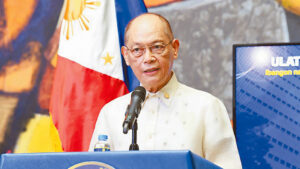
Diokno tells Saudi investors Maharlika fund prioritizes safety, transparency

Diokno tells Saudi investors Maharlika fund prioritizes safety, transparency

Finance Secretary Benjamin E. Diokno on Thursday invited Saudi investors to consider opportunities in the Philippines’ Maharlika Investment Fund (MIF) and Islamic finance, assuring them of the safety, transparency, and responsible management of their investments.

“Safeguarding the fund and your investments is a top priority,” Mr. Diokno told top Saudi business leaders during a roundtable meeting in Riyadh, Saudi Arabia.

President Ferdinand R. Marcos, Jr. expects the country’s first sovereign wealth fund to start operating by yearend, describing it on Thursday as still “a good one” after suspending it to supposedly improve its organizational structure.

Mr. Diokno said financial reporting will follow international standards.

“The Maharlika Investment Fund is founded on the Santiago Principles reflecting appropriate governance and accountability mechanisms and the conduct of sound and prudent investment practices by sovereign wealth funds,” he told Saudi investors.

“There will be three layers of audit based on law, by an internal auditor, a third-party external auditor, and a supreme audit agency independent of the government,” he added.

The MIF aims to boost the country’s growth. It is expected to help speed up the execution of some 197 key infrastructure projects valued at about USD 153 billion.

“The infrastructure flagship projects focus on upgrading physical and digital connectivity, transport, agriculture, health, energy, water, and climate resilience,” Mr. Diokno said. “These projects offer high rates of return and large socioeconomic impact.”

For his part, House Speaker Martin G. Romualdez floated opportunities for funding infrastructure projects in the Bangsamoro Autonomous Region in Muslim Mindanao.

These projects include a PHP 10.19 billion hydromechanical and electro-mechanical rehabilitation of hydroelectric power plants in Lanao del Norte and the Mindanao Railway Project.

Appealing to their support for fellow Muslims, Mr. Diokno also sought investment from Saudi business leaders for the Philippines’ Islamic financing sector.

Last month, Mr. Diokno said that the government would issue $1 billion worth of “sukuk” or Sharia-compliant bonds before yearend, which will usher in the Philippines’ expansion towards Islamic financing. — M.J.B. Poliarco

Posts navigation

Older posts
Newer posts

Recent Posts

  • Investment Ideas: April 1, 2026
  • Metrobank US-Iran Risk Index: Signals of an end
  • Eye on Earnings: Demand for connection supports telcos
  • Inflation Preview: March madness
  • Investment Ideas: March 31, 2026

Recent Comments

No comments to show.

Archives

  • April 2026
  • March 2026
  • February 2026
  • January 2026
  • December 2025
  • November 2025
  • October 2025
  • September 2025
  • August 2025
  • July 2025
  • June 2025
  • May 2025
  • April 2025
  • March 2025
  • February 2025
  • January 2025
  • December 2024
  • November 2024
  • October 2024
  • September 2024
  • August 2024
  • July 2024
  • June 2024
  • May 2024
  • April 2024
  • March 2024
  • February 2024
  • January 2024
  • December 2023
  • November 2023
  • October 2023
  • September 2023
  • August 2023
  • July 2023
  • June 2023
  • May 2023
  • April 2023
  • March 2023
  • February 2023
  • January 2023
  • December 2022
  • November 2022
  • October 2022
  • September 2022
  • August 2022
  • July 2022
  • June 2022
  • May 2022
  • March 2022
  • December 2021
  • October 2021

Categories

  • Bonds
  • BusinessWorld
  • Currencies
  • Economy
  • Equities
  • Estate Planning
  • Explainer
  • Featured Insight
  • Fine Living
  • How To
  • Investment Tips
  • Markets
  • Portfolio Picks
  • Rates & Bonds
  • Retirement
  • Reuters
  • Spotlight
  • Stocks
  • Uncategorized

You are leaving Metrobank Wealth Insights

Please be aware that the external site policies may differ from our website Terms And Conditions and Privacy Policy. The next site will be opened in a new browser window or tab.

Cancel Proceed
Get in Touch

For inquiries, please call our Metrobank Contact Center at (02) 88-700-700 (domestic toll-free 1-800-1888-5775) or send an e-mail to customercare@metrobank.com.ph

Metrobank is regulated by the Bangko Sentral ng Pilipinas
Website: https://www.bsp.gov.ph

Quick Links
The Gist Webinars Wealth Manager Explainers
Markets
Currencies Rates & Bonds Equities Economy
Wealth
Investment Tips Fine Living Retirement
Portfolio Picks
Bonds Stocks
Others
Contact Us Privacy Notice Terms of Use
© 2026 Metrobank. All rights reserved.

Access this content:

If you are an existing investor, log in first to your Metrobank Wealth Manager account. ​

If you wish to start your wealth journey with us, click the “How To Sign Up” button. ​

Login HOW TO SIGN UP