MODEL PORTFOLIO
THE GIST
NEWS AND FEATURES
Global Philippines Fine Living
INSIGHTS
INVESTMENT STRATEGY
Economy Stocks Bonds Currencies
THE BASICS
Investment Tips Explainers Retirement
WEBINARS
2024 Mid-Year Economi Briefing, economic growth in the Philippines
2024 Mid-Year Economic Briefing: Navigating the Easing Cycle
June 21, 2024
Investing with Love
Investing with Love: A Mother’s Guide to Putting Money to Work
May 15, 2024
retirement-ss-3
Investor Series: An Introduction to Estate Planning
September 1, 2023
View All Webinars
DOWNLOADS
Container ship carrying container boxes import export dock with quay crane. Business commercial trade global cargo freight shipping logistic and transportation worldwide oversea concept. Generative AI
Economic Updates
Philippines Trade Update: Wider deficit on strong imports
DOWNLOAD
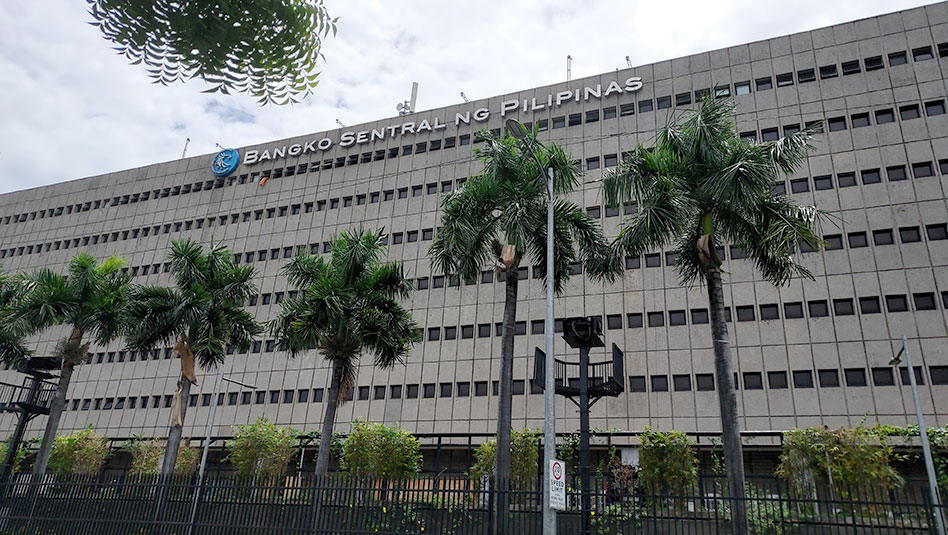
Frick collection with palm trees 
Economic Updates
Policy Rate Updates: Policy rate updates to reassure 
DOWNLOAD
Man using his smartphone
Reports
Fed to cut just once 
DOWNLOAD
View all Reports
Metrobank.com.ph How To Sign Up
Follow us on our platforms.

How may we help you?

TOP SEARCHES
  • Where to put my investments
  • Reports about the pandemic and economy
  • Metrobank
  • Webinars
  • Economy
TRENDING ARTICLES
  • Investing for Beginners: Following your PATH
  • On government debt thresholds: How much is too much?
  • Philippines Stock Market Outlook for 2022
  • Deficit spending remains unabated

Login

Access Exclusive Content
Login to Wealth Manager
Visit us at metrobank.com.ph How To Sign Up
Access Exclusive Content Login to Wealth Manager
Search
MODEL PORTFOLIO THE GIST
NEWS AND FEATURES
Global Philippines Fine Living
INSIGHTS
INVESTMENT STRATEGY
Economy Stocks Bonds Currencies
THE BASICS
Investment Tips Explainers Retirement
WEBINARS
2024 Mid-Year Economi Briefing, economic growth in the Philippines
2024 Mid-Year Economic Briefing: Navigating the Easing Cycle
June 21, 2024
Investing with Love
Investing with Love: A Mother’s Guide to Putting Money to Work
May 15, 2024
retirement-ss-3
Investor Series: An Introduction to Estate Planning
September 1, 2023
View All Webinars
DOWNLOADS
Container ship carrying container boxes import export dock with quay crane. Business commercial trade global cargo freight shipping logistic and transportation worldwide oversea concept. Generative AI
Economic Updates
Philippines Trade Update: Wider deficit on strong imports
March 27, 2026 DOWNLOAD
Frick collection with palm trees 
Economic Updates
Policy Rate Updates: Policy rate updates to reassure 
March 26, 2026 DOWNLOAD
Man using his smartphone
Reports
Fed to cut just once 
March 19, 2026 DOWNLOAD
View all Reports

Archives: Business World Article

Banks seen to maintain profitability until 2025

Banks seen to maintain profitability until 2025

Philippines lenders will likely maintain their profitability until 2025 even as economic growth is expected to ease, according to S&P Global Ratings. 

The profitability of Philippine banks will “hold up” for the next three years despite slower gross domestic product (GDP), the debt watcher said in an Oct. 18 report written by Nikita Anand, associate director at S&P Global Ratings.

Philippine banks’ return on average assets will likely stay at around the 1.4-1.6% levels until 2025, it said.

The Philippine banking industry recorded a higher net profit in the first half of the year as the cumulative net income grew by 27.7% to P182.76 billion from P143.12 billion in the same period in 2022, data from the Bangko Sentral ng Pilipinas (BSP) showed.

Other measures of profitability, such as return on assets (RoA) and return on equity (RoE), also improved in the first quarter of the year.

The banking industry’s RoA stood at 1.5% in the January-to-March period, higher than the 1.2% recorded in the comparable year-ago period.

Meanwhile, RoE inched up to 12.6% from 9.6% in the first quarter of 2022.

Credit losses among Philippine banks will stay flat for the next three years, while strong deposits from households will provide stable funding, S&P Global Ratings noted.

Latest data from the BSP showed the banking sector’s gross nonperforming loan (NPL) ratio slipped to 3.42% as of end-August from 3.43% at end-July and from 3.53% in the same month last year.

The NPL ratio in August was the lowest in four months or since 3.41% in April.      

Bad loans declined by 5.9% year on year to P442.9 billion as of end-August. However, it was 0.6% higher than P440.1 billion seen at end-July.

The debt watcher also maintained its stable credit outlook for Asia-Pacific financial institutions, including Philippine banks. 

The debt watcher sees the Philippine economy growing by just 5.2% this year, below the government’s target of 6-7% for 2023 and slower than the 7.6% GDP expansion in 2022.

S&P sees Philippine growth at 6.1% in 2024 and at 6.2% in 2025. — Keisha B. Ta-asan

Policy moves draw investors back to China market

Policy moves draw investors back to China market

SHANGHAI/SINGAPORE — Investors are making a tentative return to China’s beaten-down stock markets as the government opened the stimulus taps, including pressing a national fund for support, but they remain mindful the economy and sentiment are still fragile.

China’s benchmark CSI300 Index staged a moderate rebound from 4-1/2-year lows this week, after state fund Central Huijin Investment started buying exchange-traded funds (ETFs) on Monday, adding substance to the central bank’s pledge over the weekend to fend off financial risks.

Investors were also excited by Tuesday’s approval of an additional one trillion yuan (USD 136.76 billion) of sovereign bond issuance.

Drawing investors back into China’s USD 10.5-trillion stock market, particularly the foreign buyers that have fled in droves this year, would stem further slides in a market which fell to its lowest since 2019 earlier this week.

The policy efforts could also halt capital outflows and ease the yuan’s depreciation and a stronger market could help fund a rejuvenation of the world’s second-largest economy.

The fiscal stimulus “is injecting some confidence to an extremely pessimistic market that saw no hope in the economy,” said Huang Yan, fund manager of Shanghai QiuYang Capital Co.

QiuYang added some positions this week for short-term bets, but remained defensive as “the market needs time to find bottom,” Huang said.

Still, the rebound in China stocks was modest and trading remained thin, underlining Beijing’s challenge in reviving confidence dented by a stop-go economic recovery, a deepening property crisis, and heightened geopolitical tensions.

Huang is also wary of another selloff since further falls in stock prices could force leveraged investors to sell when they face margin calls.

The CSI300 index is down 18% from its peak this year in January while China’s currency is down nearly 6% so far in 2023.

This weekend the government gave a clear sign of market support when People’s Bank of China Governor Pan Gongsheng said China would prevent risk contagion in the stock, bond and foreign exchange markets, and ensure stability.

“China’s central government is endorsing the stock market,” said Qi Wang, chief investment officer of UOB Kay Hian’s wealth management division in Hong Kong.

“We see tactical opportunities” over the next few months, he said, citing some improvements in China’s economy, the Sino-US relationship, and fresh stimulus. But “I dare not say we are already at the bottom.”

Enlisting Huijin underscored the Chinese government’s seriousness about propping up the market after earlier piecemeal measures such as a cut in the stamp duty, reductions in trading fees, short-selling restrictions and curbs on share sales by listed companies’ large shareholders.

That support showed in markets this week as several ETFs, including the PB CSI 300 ETF and E Fund CSI300 Index ETF saw heavy inflows after Huijin announced its purchases in a statement, adding it would continue to do so.

China Asset Management Co. (AMC) said Huijin bought an estimated 10 billion yuan (USD 1.37 billion) of ETFs on Monday, and continuous buying would “effectively ease liquidity shortage and help stabilise markets.”

Huijin last bought ETFs during the 2015 stock market crash, and during the money market liquidity crunch in 2013. “The Shanghai stock indices were higher by more than 20% in three months both times,” analysts at Singapore’s United Overseas Bank wrote.

Even without the policy moves, some overseas investors are slowly coming back to Chinese stocks.

UK-based M&G Investments, which manages about USD 385 billion for individual and profession investors, is adding to its Chinese investments and likes sectors including automotive, renewable and shipping, said Fabiana Fedeli, M&G’s global CIO for equities, multi-asset, and sustainability.

“We do find opportunities in China, and opportunity is created by the fact that this market has been unloved for some time,” Fedeli said.

Still, China’s stock markets have to overcome earlier heavy selling from foreigners, burnt by Xi’s previous crackdowns on internet companies and other sectors, and its earlier stringent zero-COVID policy.

Goldman Sachs estimates forex outflows from China rose to USD 75 billion in September, 80% higher than in August and the biggest monthly amount since 2016. — Reuters

Peso sinks as dollar climbs before US Q3 GDP data

Peso sinks as dollar climbs before US Q3 GDP data

The peso sank on Thursday ahead of the release of US gross domestic product (GDP) data for the third quarter and as the dollar rebounded versus other global currencies.

The local currency closed at PHP 56.96 versus the dollar on Thursday, weakening by 11 centavos from its PHP 56.85 finish on Wednesday, data from the Bankers Association of the Philippines’ website showed.

The local unit opened the session weaker at PHP 56.93 against the greenback. Its intraday best was at PHP 56.90, while its weakest showing was at PHP 56.975 versus the dollar.

Dollars traded went up to USD 1.08 billion on Thursday from USD 909.7 million on Wednesday.

“The peso weakened ahead of a likely strong third-quarter US GDP growth report overnight,” a trader said in an e-mail.

The US Commerce department was expected to release its estimate for third-quarter GDP overnight.

The peso declined as the dollar was stronger against major global currencies, Rizal Commercial Banking Corp. Chief Economist Michael L. Ricafort said in a Viber message.

The dollar was buoyant on Thursday, hovering at a near three-week high as Treasury yields rose and appetite for riskier currencies dimmed, while the yen briefly surged after breaching 150.50 per dollar, keeping traders jittery about intervention, Reuters reported.

“Nevertheless, the peso exchange rate still somewhat stabilized and supported versus the dollar on possible intervention towards the P56.99 high, as signaled and reiterated by some local monetary authorities since August 2023… in an effort to stabilize the peso exchange rate,” Mr. Ricafort said.

For Friday, the peso may recover after the Bangko Sentral ng Pilipinas’ (BSP) off-cycle hike announced on Thursday, the trader said.

The BSP on Thursday hiked its policy rate by 25 basis points (bps) to 6.5% in an off-cycle move in a bid to anchor inflation expectations.

This was the BSP’s first policy adjustment since March and brought total increases since May 2022 to 350 bps.

For Friday, Mr. Ricafort sees the peso moving between PHP 56.80 and PHP 56.98, while the trader gave a forecast range of PHP 56.70 to PHP 56.90. — L.M.J.C. Jocson with Reuters

September budget gap widens

September budget gap widens

THE NATIONAL Government’s (NG) budget gap ballooned in September as revenues declined and expenditures rose, the Bureau of the Treasury (BTr) said.

Data from the BTr on Wednesday showed that the fiscal deficit widened by 39.6% to PHP 250.9 billion from PHP 179.8 billion a year ago.

“The fiscal outturn for the period was underpinned by an 8.06% year-over-year acceleration in expenditures coupled with an 11.57% decrease in government receipts,” the Treasury said.

In September, revenues fell by 11.57% to PHP 255.4 billion from PHP 288.8 billion a year earlier.

The bulk of revenues came from taxes, which dropped by 8.43% year on year to PHP 233.5 billion.

The Bureau of Internal Revenue (BIR) collected PHP 152.2 billion, slumping by 12.36% from PHP 173.6 billion a year ago. Collections by the Bureau of Customs (BoC) dipped by 0.47% to PHP 78.9 billion.

Meanwhile, nontax revenues fell by 35.22% to PHP 21.9 billion as revenues from other offices plunged by 47.34% to PHP 14 billion.

“The downturn (in revenues from other offices) was due to the base effect of last year’s one-off inflows from the return of PHP 7.3 billion in unutilized funds of the Unconditional Cash Transfer Program and the PHP 2.6-billion Philippine Charity Sweepstakes Office mandatory contribution to the Universal Health Care Program,” the BTr said.

BTr income rose by 8.79% to PHP 7.9 billion from PHP 7.3 billion a year ago due to “higher interest earnings on NG deposits and NG share from Philippine Amusement and Gaming Corp. (PAGCOR) income.”

On the other hand, government expenditures jumped by 8.06% to PHP 506.3 billion in September from PHP 468.8 billion a year ago.

The BTr attributed this to health and social protection programs, as well as public works projects.

Primary spending, which refers to spending net of interest payments, increased by 6.42% to PHP 434.9 billion. Interest payments jumped by 19.28% to PHP 71.4 billion.

“There was a stark pickup in spending versus a steep drop in revenues. Despite the acceleration in spending, we believe the economy is still in much need of support,” ING Bank N.V. Manila Senior Economist Nicholas Antonio T. Mapa said in a Viber message.

Rizal Commercial Banking Corp. Chief Economist Michael L. Ricafort said persistent inflation could have slowed spending. Inflation accelerated for a second straight month in September, rising to 6.1% from 5.3% in August.

“The budget deficit also widened after government expenditures grew faster amid some catch-up spending by the National Government, especially on infrastructure, after some underspending earlier in 2023 that partly slowed down economic growth; as well as higher interest rates and a weaker peso exchange rate since 2022 that increased the debt servicing costs of the National Government,” he added.

NINE-MONTH DEFICIT

In the first nine months, the NG’s budget deficit narrowed by 2.89% to PHP 983.5 billion from PHP 1.01 trillion a year ago. This was 11% lower than the PHP 1.106-trillion program for the January-to-September period.

“The year-to-date NG deficit figure is only 66% of the PHP 1.5-trillion full-year program due to higher revenue and lower expenditure performance than programmed for the period,” the BTr added.

Government revenues rose by 6.79% to PHP 2.84 trillion in the January-to-September period. This was also 2.98% higher than the PHP 2.76-trillion revenue program.

As of end-September, revenue collections already accounted for 76.1% of the PHP 3.7-trillion full-year program.

Tax revenues increased by 6.38% to PHP 2.54 trillion, although 2.09% lower than its PHP 2.6-trillion program for the period.

Collections from the BIR rose by 7.25% to P1.86 trillion, but 3.89% lower than its PHP 1.93-trillion target.

Customs revenues went up by 3.43% to P660.4 billion, also exceeding its PHP 644.2-billion program by 2.52%.

Meanwhile, nontax revenues rose by 10.47% to PHP 296.5 billion, nearly double its PHP 160.1-billion target for the nine-month period.

BTr income climbed by 21.84% to P158 billion, nearly triple its PHP 53.7-billion program due to higher receipts from dividend remittances, interest income from its managed funds, and the NG’s share from profits of PAGCOR and Manila International Airport Authority.

Revenues from other offices slipped by 0.16% to PHP 138.5 billion, but 30% above the PHP 106.5-billion target.

For the nine months ending September, state spending rose by 4.12% to PHP 3.82 trillion from PHP 3.67 trillion a year ago. It missed its nine-month PHP 3.86-trillion target by 1.06%.

“The robust disbursement performance for the third quarter helped trim down government underspending to PHP 40.9 billion or 1.06% of the program for the first nine months of the year. This compares with the PHP 170.5-billion underspending recorded during the first semester, representing 6.6% of the program for the period,” the BTr said.

The weaker-than-expected 4.3% gross domestic product (GDP) growth in the second quarter was partially attributed to the contraction in government spending. This prompted the Finance department to order agencies to come up with catch-up spending plans.

In the third quarter alone, the BTr said disbursements reached PHP 1.4 trillion, up by 11.12% from a year ago. It also exceeded its program for the period by 10.13% “on account of the continued acceleration of infrastructure expenditures.”

For the nine-month period, primary expenditures went up by 2.78% to PHP 3.36 trillion, while interest payments jumped by 15.04% to PHP 460.1 billion.

Mr. Ricafort said the narrower deficit in the nine-month period was due to continued economic reopening and increased business operations, which contributed to higher tax collections.

This year, the government has set a budget deficit ceiling of PHP 1.499 trillion, equivalent to 6.1% of the gross domestic product. The program consists of PHP 3.729 trillion in revenues and PHP 5.228 trillion in disbursements. – Luisa Maria Jacinta C. Jocson, Reporter


‘Monetary policy cure’ not needed to address inflation — Balisacan

‘Monetary policy cure’ not needed to address inflation — Balisacan

FURTHER RATE HIKES may not be necessary to address rising consumer prices, as inflation remains driven by supply-side factors, according to National Economic and Development Authority (NEDA) Secretary Arsenio M. Balisacan.

“I am not a member of the Monetary Board, and I respect their wisdom, but I think the source of inflation is more supply side and not the demand side, which requires a monetary policy cure,” Mr. Balisacan told reporters on the sidelines of the 12th Arangkada Forum on Wednesday.

This was after BSP Governor Eli M. Remolona, Jr. on Tuesday said the Monetary Board was considering an off-cycle rate hike as early as today (Thursday), amid upside risks to inflation. Its regular policy-setting meeting is scheduled for Nov. 16.

The BSP has maintained a hawkish stance in recent months, even as it kept the benchmark interest rate at a near 16-year high of 6.25% at its last four straight meetings.

Mr. Remolona earlier signaled a possible 25-bp rate hike, saying high interest rates have not affected economic growth prospects.

However, Mr. Balisacan said high interest rates could have long-term effects on the economy and discourage new investments. “That’s why we have to be very careful,” he added.

Mr. Balisacan is hopeful that October inflation would ease from the 6.1% print in September.

“I would be very surprised if rice inflation will (still) have (the same) rate that we saw in September, because the harvest season (has started),” he said. “World prices have declined a bit in the past couple of weeks, so that should have tempered the pressure for upward prices.”

Mr. Balisacan also said retail rice prices have adjusted quickly to market conditions following the lifting of the rice price ceiling earlier this month.

“With current availability of supplies and timely arrival of imports, I think that we should see less of those (price) pressures,” he said.

While global rice prices have been declining in recent weeks, prices remain elevated. The impact of the El Niño phenomenon on production is still considered an upside risk to inflation.

“At least for the Philippines, our agriculture people are telling us that there’s good production and recovery from the recent floods and typhoons. (We will) likely have a good harvest, and harvest is now ongoing, so that might reduce the pressure on domestic prices,” he said.

The NEDA chief noted that domestic oil prices are also at risk of rising again.

“We hope that these problems in the Middle East will not spill to the wider areas that could affect supply chain, particularly to the prices of oil. But so far, I think these increases will not be as (bad) hopefully,” he said.

Fuel retailers on Tuesday raised pump prices by PHP 0.95 for gasoline and by PHP 1.30 a liter for diesel. Year-to-date price adjustments as of Oct. 24 stood at PHP 13.75 a liter for gasoline, PHP 11.70 a liter for diesel, and PHP 6.24 a liter for kerosene.

But even with further rate hikes, Mr. Balisacan is optimistic that the Philippines can achieve its 6-7% gross domestic product (GDP) growth target.

“We are upbeat in the development community. The multilateral institutions are upbeat on the prospects of the Philippines for 2023 and 2024 and we want to ensure that optimism remains,” he said.

“That’s why we’re saying we have to work harder to get the investment climate as favorable as possible.”

The Philippine economy expanded by 4.3% in the second quarter, its slowest growth in over two years. For the first half, GDP averaged 5.3%, lower than the government’s 6-7% target.

However, Mr. Balisacan said inflation, government underspending, and geopolitical conflicts are risks to growth prospects.

“Inflation reduces households’ purchasing power and puts upward pressure on wages and interest rates, potentially dampening investment and growth prospects. Second is public underspending, which leads to gaps or delays in implementing programs and projects,” he said.

“Geopolitical conflicts in many regions are a third factor that may result in supply bottlenecks and financial shocks,” he said.

Mr. Balisacan said that the Development Budget Coordination Committee will hold a special meeting soon, but there would be a regular meeting after the local statistics agency releases the third-quarter GDP data on Nov. 9.

“Then we should be able to examine if our assumptions are on point,” he added.

Meanwhile, Nomura Chief ASEAN (Association of Southeast Asian Nations) Economist Euben Paracuelles said the BSP may hike by 25 bps to 6.5% at its Nov. 16 meeting.

“A weakening in FX (foreign exchange) would only add to the impetus for BSP to hike and raise the risk of further hikes than in our baseline if balance of payments pressures persist due to heightened external risks,” he said in a note.

Mr. Paracuelles noted emerging shocks such as the El Niño weather event and rising oil prices amid geopolitical tensions could add risks to the inflation outlook.

“When these risks materialize, we think BSP will likely tighten further, fearing that absent a decisive response, inflation expectations could become unanchored,” he said. — Keisha B. Ta-asan

Gov’t to borrow PHP 225B from local mart in November

Gov’t to borrow PHP 225B from local mart in November

THE NATIONAL Government (NG) plans to borrow PHP 225 billion from the domestic market in November, the Bureau of the Treasury (BTr) said.

The BTr released on Wednesday its borrowing plan for next month which is 50% higher than the PHP 150-billion program in October.

It will also be 58.8% more than the actual PHP 141.641 billion raised by the government this month.

In November, the BTr plans to borrow PHP 75 billion in Treasury bills (T-bills) and PHP 150 billion in Treasury bonds (T-bonds).

The government will offer PHP 5 billion worth of 91-day, 182-day and 364-day T-bills on Oct. 31, Nov. 6, 13, 20, and 28.

For next week, the T-bill auction is scheduled for Oct. 31 (Tuesday) after Oct. 30 (Monday) was declared a holiday for the Barangay and Sangguniang Kabataan Elections.

The T-bill auction will also be held on Nov. 28 (Tuesday), since Nov. 27 (Monday) was declared a holiday. Proclamation No. 90 moved the Bonifacio Day holiday to Nov. 27 from Nov. 30 (Thursday).

For the long-term tenors, the BTr will auction off PHP 30 billion in five-year bonds on Oct. 31, seven-year debt on Nov. 7 and 10-year bonds on Nov. 14.

It will also offer PHP 30 billion in 15-year bonds on Nov. 21 and six-year bonds on Nov. 28.

ING Bank N.V. Manila Senior Economist Nicholas Antonio T. Mapa said there are more planned borrowings in November since there are more auction dates compared with October.

“With the government indicating it would be spending to support sagging economic growth, the BTr appears to be ensuring funding for such spending,” he said in a Viber message.

The BTr scheduled fewer auction dates in October as it also launched its retail dollar bond offer. The government raised $1.26 billion from its first retail dollar bond offer under the Marcos administration.

Rizal Commercial Banking Corp. Chief Economist Michael L. Ricafort said the government had frontloaded the borrowing requirements before the seasonal lull in borrowings in December.

Higher interest rates and bond yields since July would justify the hedging of the government’s borrowing requirements, he said.

The gross domestic borrowing program this year is set at PHP 1.654 trillion, composed of PHP 54.1 billion in T-bills and PHP 1.6 trillion in fixed-rate T-bonds.

The government borrows from local and external sources to help fund a budget deficit capped at 6.1% of the gross domestic product this year. – Keisha B. Ta-asan, Reporter

Term deposit rates mixed

Term deposit rates mixed

YIELDS on the central bank’s term deposit facility were mixed on Wednesday following hawkish signals from the Bangko Sentral ng Pilipinas (BSP) chief.

Demand for the BSP’s term deposit facility (TDF) reached PHP 303.317 billion on Wednesday, below the PHP 380-billion offer and the PHP 393.161 billion in bids for the same offer volume at last week’s auction.

Broken down, bids for the seven-day papers amounted to PHP 187.412 billion, lower than the PHP 220 billion auctioned off by the BSP as well as the PHP 236.753 billion in tenders seen in the previous auction.

Banks asked for yields ranging from 6.4099% to 6.459%, a slightly lower band compared with the 6.41% to 6.455% seen a week ago. The average rate of the one-week term deposits inched down by 0.42 basis points (bp) to 6.4315% from 6.4357% previously.

Meanwhile, the 14-day term deposits attracted tenders amounting to P115.905 billion, lower than the P160-billion offer and P156.408 billion in bids recorded on Oct. 18.

Accepted rates for the tenor ranged from 6.418% to 6.48%, a slimmer margin versus the 6.4% to 6.48% seen last week. This caused the average rate of the two-week papers to inch up by 0.07 bp to 6.449% from 6.4483% in the prior auction.

The BSP has not auctioned off 28-day term deposits for three years to give way to its weekly offering of securities with the same tenor.

The term deposits and the 28-day bills are used by the BSP to mop up excess liquidity in the financial system and to better guide market rates.

TDF yields were mixed on Wednesday as the central bank chief said the Monetary Board may deliver an off-cycle rate hike as early as Thursday amid upside risks to inflation, Rizal Commercial Banking Corp. Chief Economist Michael L. Ricafort said in a Viber message.

BSP Governor Eli M. Remolona, Jr. on Tuesday said the Monetary Board is considering hiking benchmark rates this week or next — before its scheduled policy meeting on Nov. 16 — to help anchor inflation expectations.

The BSP has been in a “hawkish pause” at its last four meetings, keeping its policy rate at a near 16-year high of 6.25% after it raised borrowing costs by 425 bps from May 2022 to March 2023 to help tame inflation.

Mr. Remolona earlier said they could hike benchmark rates by 25 bps at their November meeting if price pressures persist.

Headline inflation accelerated to 6.1% in September from 5.3% in August. This brought the nine-month average to 6.6%, well above the BSP’s 2-4% target and 5.8% full-year forecast.

National Economic and Development Authority Secretary Arsenio M. Balisacan on Wednesday said inflation remains driven by supply-side factors and does not warrant further monetary tightening.

“I am not a member of the Monetary Board, and I respect their wisdom, but I think the source of inflation is more supply-side and not the demand-side, which requires monetary policy cure,” Mr. Balisacan said. — Keisha B. Ta-asan

Peso weakens as budget gap widens

Peso weakens as budget gap widens

THE PESO weakened against the greenback on Wednesday as the government reported a wider budget deficit in September.

The local unit closed at PHP 56.85 per dollar on Wednesday, down by nine centavos from its PHP 56.76 finish on Tuesday, based on data from the Bankers Association of the Philippines.

The peso opened the session slightly stronger at PHP 56.75 per dollar, which was also its intraday best. Its weakest showing was at PHP 56.875 against the greenback.

Dollars exchanged went down to USD 909.7 million on Wednesday from USD 1.06 billion on Tuesday.

The peso weakened following the release of September fiscal balance data, Rizal Commercial Banking Corp. Chief Economist Michael L. Ricafort said in a Viber message.

Data from the Bureau of the Treasury released on Wednesday showed the budget deficit widened by 39.6% to PHP 250.9 billion in September from PHP 179.8 billion in the same month a year ago.

In the first nine months, the government’s budget deficit narrowed by 2.89% to P983.5 billion from PHP 1.01 trillion in the same period a year ago.

Mr. Ricafort said concerns over inflation risks amid the conflict in the Middle East also led to the depreciation of the peso against the dollar.

Still, the peso remains “stable” against the dollar amid recent hawkish signals from the Bangko Sentral ng Pilipinas (BSP) chief, he added.

BSP Governor Eli M. Remolona, Jr. on Tuesday said the Monetary Board is considering an off-cycle rate increase this week or next, before their scheduled policy meeting on Nov. 16, to anchor inflation expectations.

The central bank has maintained a hawkish stance in recent months and has kept the benchmark interest rate at a near 16-year high of 6.25% since March after it raised borrowing costs by 425 basis points from May 2022 to March 2023 to tame inflation.

“The peso weakened amid global growth concerns following the downbeat European manufacturing PMI (purchasing managers’ index) reports,” a trader said in a Viber message.

For Thursday, the peso may decline further against the dollar ahead of a likely strong third-quarter US economic growth report.

Mr. Ricafort and the trader gave a forecast range of PHP 56.75 to PHP 56.95 per dollar for Thursday. — Keisha B. Ta-asan

PSEi rebounds on rate hike hints, Wall Street rise

PSEi rebounds on rate hike hints, Wall Street rise

PHILIPPINE SHARES rebounded on Wednesday after the Bangko Sentral ng Pilipinas (BSP) chief hinted at an off-cycle rate hike as early as this week and amid strong earnings of US firms.

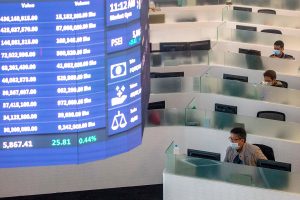
The Philippine Stock Exchange index (PSEi) went up by 14.78 points or 0.24% to close at 6,054.50 on Wednesday, while the broader all-shares index climbed by 4.14 points or 0.12% to end at 3,288.83.

“Shares on the Philippine Stock Exchange ended their five-day losing streak after the Philippine central bank signaled it may raise its key interest rate as early as this week, while investors cheered the approval of a trillion-yuan sovereign bond issue as a harbinger of stimulus,” Globalinks Securities and Stocks, Inc. Head of Sales Trading Toby Allan C. Arce said in a Viber message.

The central bank may hike benchmark rates this week or next to help stem growing price pressures, BSP Governor Eli M. Remolona, Jr. said on Tuesday.

The Monetary Board raised borrowing costs by 425 basis points from May 2022 to March 2023 before holding its policy rate steady at a near 16-year high of 6.25% in its last four meetings.

The BSP is scheduled to hold its next policy meeting on Nov. 16, barring an off-cycle move.

Meanwhile, sentiment improved as Wall Street closed higher following the strong third-quarter earnings of big US firms, Regina Capital Development Corp. Head of Sales Luis A. Limlingan said in a Viber message.

Wall Street ended higher on Tuesday as a spate of solid corporate earnings and upbeat forecasts stoked investor risk appetite and sparked a broad rally, Reuters reported.

Third-quarter earnings season has shifted into high gear, and this week nearly a third of the companies in the S&P 500 are expected to post results.

Indeed, of the 118 S&P 500 companies that have reported so far, 81% have beaten analysts’ expectations, according to LSEG.

The Dow Jones Industrial Average rose 204.97 points or 0.62% to 33,141.38; the S&P 500 gained 30.64 points or 0.73% to 4,247.68; and the Nasdaq Composite added 121.55 points or 0.93% to 13,139.88.

At home, sectoral indices were split on Wednesday. Financials climbed by 11.25 points or 0.65% to 1,723.45; holding firms increased by 33.53 points or 0.58% to 5,815.93; and industrials went up by 15.89 points or 0.18% to 8,654.21.

Meanwhile, services fell by 6.36 points or 0.43% to 1,470.86; property declined by 10.86 points or 0.42% to 2,561.55; and mining and oil dropped by 16.80 points or 0.16% to 9,933.93.

Value turnover went up to PHP 3.63 billion on Wednesday with 977.71 million shares changing hands from the PHP 2.57 billion with 275.90 million issues seen on Tuesday.

Decliners narrowly outnumbered advancers, 83 versus 80, while 51 shares closed unchanged.

Net foreign buying stood at P20.08 million on Wednesday versus the PHP 633.34 million in net selling seen on Tuesday. — SJT with Reuters

Philippines’ supply-side inflation needs no monetary response — NEDA

Philippines’ supply-side inflation needs no monetary response — NEDA

Inflation in the Philippines is driven by supply-side factors, and does not warrant a monetary policy response, National Economic and Development Authority (NEDA) Secretary Arsenio M. Balisacan said on Wednesday.

“I think that the source of inflation is the supply side and not demand side that requires a monetary policy cure,” Mr. Balisacan told reporters.

Mr. Balisacan said he is hopeful of improving inflation numbers in the coming months, and that third-quarter economic growth was likely better versus a year ago as the government addresses underspending.

Mr. Balisacan, who is not a member of the central bank’s policymaking monetary board, earlier this month said raising interest rates further ” can hurt ” the economy and consumers.

The Philippine central bank is considering an off-cycle hike in its benchmark rate, as early as Thursday, before its regular rate-setting meeting on Nov. 16, to anchor inflation expectations. — Reuters

Posts navigation

Older posts
Newer posts

Recent Posts

  • Investment Ideas: April 1, 2026
  • Metrobank US-Iran Risk Index: Signals of an end
  • Eye on Earnings: Demand for connection supports telcos
  • Inflation Preview: March madness
  • Investment Ideas: March 31, 2026

Recent Comments

No comments to show.

Archives

  • April 2026
  • March 2026
  • February 2026
  • January 2026
  • December 2025
  • November 2025
  • October 2025
  • September 2025
  • August 2025
  • July 2025
  • June 2025
  • May 2025
  • April 2025
  • March 2025
  • February 2025
  • January 2025
  • December 2024
  • November 2024
  • October 2024
  • September 2024
  • August 2024
  • July 2024
  • June 2024
  • May 2024
  • April 2024
  • March 2024
  • February 2024
  • January 2024
  • December 2023
  • November 2023
  • October 2023
  • September 2023
  • August 2023
  • July 2023
  • June 2023
  • May 2023
  • April 2023
  • March 2023
  • February 2023
  • January 2023
  • December 2022
  • November 2022
  • October 2022
  • September 2022
  • August 2022
  • July 2022
  • June 2022
  • May 2022
  • March 2022
  • December 2021
  • October 2021

Categories

  • Bonds
  • BusinessWorld
  • Currencies
  • Economy
  • Equities
  • Estate Planning
  • Explainer
  • Featured Insight
  • Fine Living
  • How To
  • Investment Tips
  • Markets
  • Portfolio Picks
  • Rates & Bonds
  • Retirement
  • Reuters
  • Spotlight
  • Stocks
  • Uncategorized

You are leaving Metrobank Wealth Insights

Please be aware that the external site policies may differ from our website Terms And Conditions and Privacy Policy. The next site will be opened in a new browser window or tab.

Cancel Proceed
Get in Touch

For inquiries, please call our Metrobank Contact Center at (02) 88-700-700 (domestic toll-free 1-800-1888-5775) or send an e-mail to customercare@metrobank.com.ph

Metrobank is regulated by the Bangko Sentral ng Pilipinas
Website: https://www.bsp.gov.ph

Quick Links
The Gist Webinars Wealth Manager Explainers
Markets
Currencies Rates & Bonds Equities Economy
Wealth
Investment Tips Fine Living Retirement
Portfolio Picks
Bonds Stocks
Others
Contact Us Privacy Notice Terms of Use
© 2026 Metrobank. All rights reserved.

Access this content:

If you are an existing investor, log in first to your Metrobank Wealth Manager account. ​

If you wish to start your wealth journey with us, click the “How To Sign Up” button. ​

Login HOW TO SIGN UP