




MODEL PORTFOLIO
THE GIST
NEWS AND FEATURES
Global Philippines Fine Living
INSIGHTS
INVESTMENT STRATEGY
Economy Stocks Bonds Currencies
THE BASICS
Investment Tips Explainers Retirement
WEBINARS
2024 Mid-Year Economi Briefing, economic growth in the Philippines
2024 Mid-Year Economic Briefing: Navigating the Easing Cycle
June 21, 2024
Investing with Love
Investing with Love: A Mother’s Guide to Putting Money to Work
May 15, 2024
retirement-ss-3
Investor Series: An Introduction to Estate Planning
September 1, 2023
View All Webinars
DOWNLOADS
Façade of the Bangko Sentral ng Pilipinas along Roxas Boulevard
Economic Updates
January Economic Update: Growth slows, prices rise 
DOWNLOAD
Shopping mall establishments at night
Inflation Update: Up, up, and away?
DOWNLOAD
bonds-ss-1
Economic Updates
Quarterly Economic Growth Release: Growth takes on a slower pace
DOWNLOAD
View all Reports
Metrobank.com.ph How To Sign Up
Follow us on our platforms.

How may we help you?

TOP SEARCHES
  • Where to put my investments
  • Reports about the pandemic and economy
  • Metrobank
  • Webinars
  • Economy
TRENDING ARTICLES
  • Investing for Beginners: Following your PATH
  • On government debt thresholds: How much is too much?
  • Philippines Stock Market Outlook for 2022
  • Deficit spending remains unabated

Login

Access Exclusive Content
Login to Wealth Manager
Visit us at metrobank.com.ph How To Sign Up
Access Exclusive Content Login to Wealth Manager
Search
MODEL PORTFOLIO THE GIST
NEWS AND FEATURES
Global Philippines Fine Living
INSIGHTS
INVESTMENT STRATEGY
Economy Stocks Bonds Currencies
THE BASICS
Investment Tips Explainers Retirement
WEBINARS
2024 Mid-Year Economi Briefing, economic growth in the Philippines
2024 Mid-Year Economic Briefing: Navigating the Easing Cycle
June 21, 2024
Investing with Love
Investing with Love: A Mother’s Guide to Putting Money to Work
May 15, 2024
retirement-ss-3
Investor Series: An Introduction to Estate Planning
September 1, 2023
View All Webinars
DOWNLOADS
Façade of the Bangko Sentral ng Pilipinas along Roxas Boulevard
Economic Updates
January Economic Update: Growth slows, prices rise 
February 6, 2026 DOWNLOAD
Shopping mall establishments at night
Inflation Update: Up, up, and away?
February 5, 2026 DOWNLOAD
bonds-ss-1
Economic Updates
Quarterly Economic Growth Release: Growth takes on a slower pace
January 29, 2026 DOWNLOAD
View all Reports

Archives: Reuters Articles

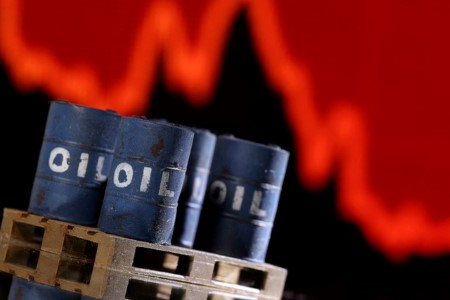
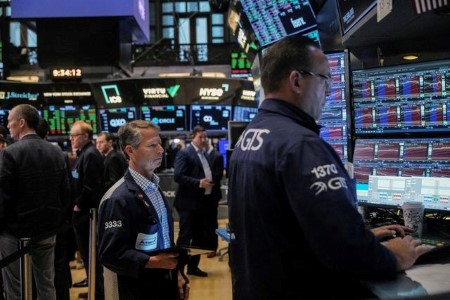
Stocks, oil sell off as Israel strikes Iran

SINGAPORE – Israel has begun carrying out strikes on Iran, two US officials said, adding there was no US assistance or involvement in the operation. The officials, who spoke on condition of anonymity, declined to provide further information.

Financial markets reacted, with US stock futures down more than 1%, oil prices jumping and US Treasury prices up.

QUOTES:

KARL SCHAMOTTA, CHIEF MARKET STRATEGIST, CORPAY, TORONTO:

“Traders are scurrying for safety as reports of a strike on Iran cross the wires, but details on the scale and magnitude of the attack remain scarce and moves have been relatively limited thus far.”

CHARU CHANANA, CHIEF INVESTMENT STRATEGIST, SAXO, SINGAPORE:

“The geopolitical escalation adds another layer of uncertainty to already fragile sentiment.

“The key question now is whether this marks a brief flare-up or the beginning of broader regional escalation. If the situation de-escalates quickly, markets may retrace some of the initial moves. But if tensions rise — particularly with any threat to oil supply routes — the risk-off mood could persist, keeping upward pressure on crude and haven assets.”

(Reporting by Reuters markets team)


US yields continue slide after worsening labor data

US yields continue slide after worsening labor data

US Treasury yields on Thursday were lower for the fourth straight session as markets absorbed economic data pointing to a worsening labor market and a moderate uptick in wholesale inflation.

A USD 22 billion auction of 30-year bonds also revealed strong demand, helping allay concerns that foreign investors could shift away from the US market over the expanding federal deficit. A Wednesday auction of 10-year Treasuries likewise pointed to healthy uptake from buyers.

According to the Labor Department, total insured unemployment, or all people receiving benefits, overshot expectations to rise to 1.956 million workers, the highest level in nearly four years.

Meanwhile, the annual reading of the Producer Price Index ticked one tenth higher to 2.6%, in line with expectations, even though a closely watched “core” reading, which excludes volatile food and fuel categories, was cooler than the prior month’s print.

Lou Brien, market strategist at DRW Trading, said investors likely were reacting to labor market weakness and believed consumer price increases from President Donald Trump’s trade wars were in the pipeline even if they had yet to materialize.

“There are many details in the labor market that have shown weakness for a long time,” he said. “I think the move higher in the continuing claims and the weekly claims is starting to confirm some of that weakness.”

“We’re still anticipating there’s gonna be some kind of a jump in prices. We keep thinking that month after month and nothing happens, but I don’t think that thought has left the market.”

Chinese authorities on Thursday affirmed a trade deal reached this week with Washington, though specifics remain unclear.

In Thursday’s 30-year auction, bonds sold at a high yield of 4.844%, more than a basis point below where the market put the yield at the close of bidding. Overall demand was 2.43 times the amount of debt on offer, in line with its recent average.

“It was a very, very solid auction,” said Jan Nevruzi, US rates strategist at TD Securities in New York. “The end user demand was pretty high, above recent averages, and it stopped through after a pretty substantial rally on the day.”

The yield on the benchmark US 10-year Treasury note was last down 5.3 basis points to 4.361%. The yield on the 30-year bond fell 6.3 basis points to 4.846%.

A closely watched part of the US Treasury yield curve measuring the gap between yields on two- and 10-year Treasury notes, seen as an indicator of economic expectations, was at a positive 44.7 basis points.

The two-year US Treasury yield, which typically moves in step with interest rate expectations, fell 3.3 basis points to 3.912%.

The breakeven rate on five-year US Treasury Inflation-Protected Securities (TIPS) was last at 2.295% after closing at 2.313% on June 11.

The 10-year TIPS breakeven rate was last at 2.274%, indicating the market sees inflation averaging about 2.3% a year for the next decade.

The US dollar 5 years forward inflation-linked swap, seen by some as a better gauge of inflation expectations due to possible distortions caused by the Fed’s quantitative easing, was last at 2.433%.

(Reporting by Douglas Gillison, Editing by Nick Zieminski)


China, Hong Kong stocks fall as initial Sino-US trade optimism wanes

HONG KONG – Stocks in China and Hong Kong traded lower on Thursday, led by declines in the tech sector, as markets struggled to sustain the positive momentum from the Sino-US trade talks that lacked concrete details.

China’s blue-chip CSI 300 Index closed about 0.1% lower after wavering through the day, slipping from the three-week high touched on Wednesday.

Hong Kong’s Hang Seng index lost 1.4% at close to pull back from the nearly three-month high hit in the previous session.

Tech shares led losses in onshore and offshore markets. The CSI Semiconductor Index shed 1.5%, while the Hang Seng Tech Index dropped 2.2%.

Among major losers, chipmaker SMIC fell 2% to a one-week low. Alibaba 9988.HK weakened 3.2% and EV-maker Xpeng slid 6.7%.

The CSI Rare Earth Index closed flat after slipping nearly 1% in the morning session and continued to hover near its seven-month high.

A trade truce between the world’s two biggest economies was back on track, U.S President Donald Trump said, a day after negotiators from Washington and Beijing agreed on a framework to ease bilateral retaliatory tariffs.

Under the agreement, Beijing will lift export curbs on rare earth minerals and the US will restore Chinese students’ access to its universities, Trump said on Truth Social.

Yet the terms remain subject to final approvals, with details notably absent. The 55% tariffs on Chinese imports will also stay, US Commerce Secretary Howard Lutnick said.

“We still don’t know if what Trump says will actually happen. It’s disappointing that the tariffs rates were not dialled down at all and tech curbs on China were not even mentioned,” said Jason Chan, senior investment strategist at Bank of East Asia, Hong Kong.

The talks left key issues, like chip exports, unaddressed, leaving room for conflicts in the future, and no one knows for how long the current truce will last, he added.

Chinese markets have been struggling to recover from trade shocks for the past two months after Trump announced sweeping tariffs on April 2 that threatened the global trade system.

The CSI 300 Index has barely eked out any gains since then, while the Hang Seng Index has climbed 3.5%, but the two are underperforming the nearly 10% bounce in the MSCI World Index.

The market is less sensitive to trade talks and investors are shifting focus to economic fundamentals, Wang Zhuo, partner at Zhuozhu Investment, said.

“The key for China now is to bolster manufacturers’ confidence and break the deflationary trend.”

(Reporting by Jiaxing Li in Hong Kong and Samuel Shen in Shanghai; Editing by Sumana Nandy, Sherry Jacob-Phillips, and Jamie Freed)


Dollar keeps losing market share but euro is no winner either: ECB study

Dollar keeps losing market share but euro is no winner either: ECB study

FRANKFURT – The dollar continued to lose market share last year as the world’s dominant currency but mostly smaller rivals and gold benefited rather than the euro, which aspires to fill any void left by receding confidence in the greenback, an ECB report showed.

Investors have sold off dollar assets since April because of erratic US economic policy and ECB President Christine Lagarde said this was an opportunity for the euro to become the dollar’s alternative, provided the 20-nation bloc would finally push ahead with key integration steps.

But figures predating this most recent turmoil suggest that the euro is not becoming more popular, and besides the Japanese yen, non-traditional currencies may be benefiting.

In 2024 alone, the dollar lost 2 percentage points in its share in global foreign exchange holdings and while the euro made small gains, the yen and the Canadian dollar were the big winners, the ECB said on Wednesday.

Although the dollar still has a 58% market share in global foreign exchange reserves, this is down by 10 percentage points in the past decade. Meanwhile, the euro’s share has hovered just below 20%.

Another big winner last year was gold, with central banks increasing their stock by more than 1,000 tonnes, a record pace and double the annual level seen in the previous decade, the ECB said.

“Survey data suggest that two-thirds of central banks invested in gold for purposes of diversification, while two-fifths did so as protection against geopolitical risk,” the ECB said.

When all foreign reserves are added together, gold at 20% accounted for a bigger share than the euro, which stood at 16%, the ECB added.

However, there have been some signs since April that euro assets may finally be benefiting.

US yields have increased but the dollar has weakened sharply against the euro, a highly unusual correlation, which appears to suggest that investors are questioning the dollar’s status as the world’s premier asset.

These market moves indicate that investors are demanding a higher risk premium to hold US assets and remain uncertain about debt sustainability given Washington’s fiscal path.

There has also been a steady stream of US firms issuing debt in euros, often called reverse Yankee Bonds, and the euro did increase its share last year in foreign currency-denominated bond issuance.

The euro zone, however, lacks critical financial infrastructure to take meaningful share from the dollar, economists warn.

It lacks a truly liquid, large-scale safe asset since debt is issued by each country, leaving the bloc’s debt market fragmented.

Its banking system is also fragmented and the EU lacks a capital market union with harmonised rules and large, cross-border players. Moreover, Europe also lacks military defence capabilities to provide the sort of geopolitical assurance reserve managers demand.

(Reporting by Balazs Koranyi; Editing by Kim Coghill)


Euro zone yields mixed before US data, markets await details on US-China deal

Euro zone yields mixed before US data, markets await details on US-China deal

Euro zone government bond yields were mixed on Wednesday as investors awaited US consumer price index data later in the session and details of the outcome of trade talks between the US and China.

US and Chinese officials agreed on a framework to put their trade truce back on track while offering little sign of a durable resolution to longstanding trade differences.

The Consumer Price Index report from the Labor Department on Wednesday could show the CPI less the volatile food and energy components rising by the most in four months.

Germany’s 10-year yield, the euro area’s benchmark, was up 0.5 basis points (bps) at 2.54%.

Money markets fully priced in a European Central Bank rate cut of 25 bps by December and an around 60% chance of the same move in September.

Two-year German yields rose 0.5 bps to 1.86%, while 30-year yields were flat at 3.00%.

Italian 10-year yields rose 2.5 bps to 3.48%, leaving the gap between German and Italian yields at 88.5 bps. The spread hit 86.70 bps on Tuesday its lowest level since February 2021.

(Reporting by Stefano Rebaudo, Editing by Andrew Heavens)


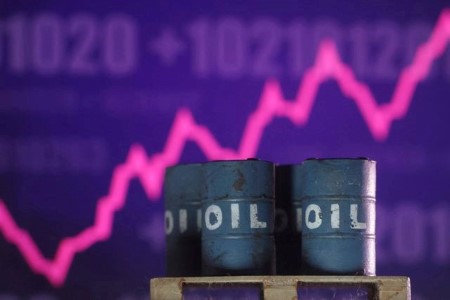
Oil steady near 7-week high as investors await details on US-China trade talks

Oil steady near 7-week high as investors await details on US-China trade talks

LONDON – Oil prices edged up towards a seven-week high on Wednesday as markets assessed the outcome of US-China trade talks, yet to be reviewed by US President Donald Trump.

Brent crude futures were up 9 cents, or 0.1%, to USD 66.96 a barrel at 0802 GMT, while US West Texas Intermediate crude was up 18 cents, or 0.3%, to USD 65.16.

US and Chinese officials agreed on a framework to put their trade truce back on track and resolve China’s export restrictions on rare earth minerals and magnets, US Commerce Secretary Howard Lutnick said on Tuesday at the conclusion of two days of intense negotiations in London. The two countries are the world’s largest economies and oil consumers.

Trade-related downside risk in oil has been temporarily removed, although the market reaction has been tepid as it is not clear how economic growth and global oil demand will be affected, said PVM analyst Tamas Varga.

“… I think it removes some downside risks, particularly to the Chinese economy and steadies the ship for the US economy – both of which should be supportive for crude oil demand and the price,” said Tony Sycamore, a market analyst for IG.

On the supply side, OPEC+ plans to increase oil production by 411,000 barrels per day in July as it looks to unwind production cuts for a fourth straight month.

“Greater oil demand within OPEC+ economies – most notably Saudi Arabia – could offset additional supply from the group over the coming months and support oil prices,” said Capital Economics’ analyst Hamad Hussain in a note.

Later on Wednesday, markets will be focusing on the weekly US oil inventories report from the Energy Information Administration, the statistical arm of the US Department of Energy. EIA/S

US crude oil stocks fell by 370,000 barrels last week, according to market sources who cited American Petroleum Institute figures on Tuesday.

(Reporting by Enes Tunagur in London and Katya Golubkova in Tokyo. Editing by Christian Schmollinger and Mark Potter)


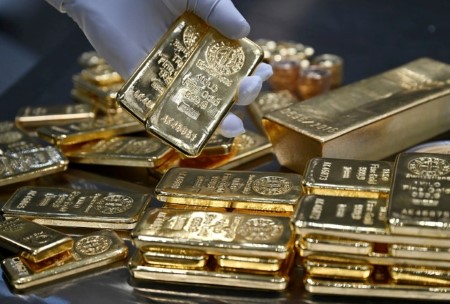
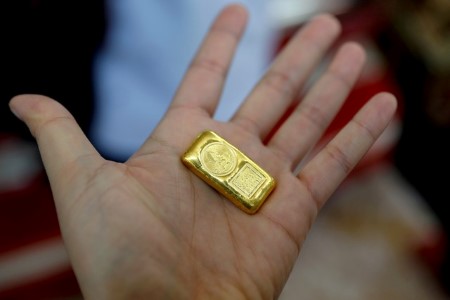
Gold prices steady as US-China trade talks unfold in London

Gold prices steady as US-China trade talks unfold in London

Gold prices remained steady on Tuesday as investors monitored ongoing US-China trade discussions in London aimed at easing a trade dispute between the world’s two top economies.

FUNDAMENTALS

* Spot gold edged down 0.2% to USD 3,322.07 an ounce, as of 0032 GMT. US gold futures fell 0.4% to USD 3,341.90.

* High-level trade talks between the US and Chinese officials are extending into a second day, with discussions encompassing issues ranging from tariffs to rare earth restrictions. The dispute has raised fears of supply chain disruptions and slower global economic growth.

* US President Donald Trump said his administration was “doing well” in the negotiations and noted positive reports from the talks. Last month, both sides agreed to a temporary pause in tariffs, offering some relief to financial markets.

* China’s export growth slowed to a three-month low in May as US tariffs slammed shipments, while factory-gate deflation deepened to its worst level in two years, heaping pressure on the world’s second-largest economy on both the domestic and external fronts.

* Meanwhile, Americans’ anxiety about the future path of inflation eased in May, as they also grew more upbeat about the state of their personal finances, according to a report released on Monday by the New York Federal Reserve.

* Investors are also awaiting US inflation data on Wednesday that may adjust expectations for the timing of any rate cuts by the Fed.

* Safe-haven gold becomes more attractive during periods of geopolitical and economic uncertainty. It also tends to thrive in a low-interest rate environment as it is a non-yielding asset.

* Elsewhere, spot silver was unchanged at USD 36.72 per ounce, platinum fell 0.1% to USD 1,218.49, while palladium was up 0.2% to USD 1,076.22.

DATA/EVENTS (GMT)
0600 UK ILO unemployment rate April
0600 UK Claimant Count Unem Chng May
0600 UK HMRC Payrolls Change May

(Reporting by Anmol Choubey in Bengaluru; Editing by Rashmi Aich)


Japan to consider buying back some super-long government bonds, sources say

Japan to consider buying back some super-long government bonds, sources say

TOKYO – Japan is considering buying back some super-long government bonds issued in the past at low interest rates, two sources with direct knowledge of the plan said on Monday, underscoring its focus on reining in any abrupt rises in bond yields.

The move would come on top of an expected government plan to trim issuance of super-long bonds — such as those with 20-, 30- or 40-year maturities — in the wake of sharp rises in their yields.

Yields on super-long Japanese government bonds rose to record levels last month due to dwindling demand from traditional buyers such as life insurers, and global market jitters over steadily rising debt levels. The 30-year JGB yield reached as high as 3.185% on May 21.

In Japan, such bonds were also sold off as Prime Minister Shigeru Ishiba faced political pressure for tax cuts and higher spending ahead of an upper house poll in July, policies that could add to the country’s already huge public debt.

JGB yields fell after the report on possible buybacks on market relief the government might take action to address an over-supply of super-long bonds.

Of 172.3 trillion yen (USD 1.2 trillion) in scheduled sales of JGBs to the market in the current fiscal year through March, over 24 trillion yen would be in super-long bonds, with maturities of 20- to 40-years.

The Ministry of Finance, which oversees the government’s debt issuance, will reach a final decision on buybacks after holding meetings with bond market participants on June 20 and June 23, the sources said.

Buying back super-long JGBs would require budget approval and will likely take time, they said.

“Reducing new issuance of super-long JGBs alone probably won’t fix the problem of over-supply, so this would be a move in the right direction,” said Mari Iwashita, executive rates strategist at Nomura Securities.

The yield on Japan’s benchmark 10-year government note flipped after the report from an earlier rise to be down 0.5 basis points at 1.45% as of 0836 GMT. The 30-year bond yield trimmed an advance of as much as 4.5 bps to be up 1.5 bps at 2.89%.

The volatility in the JGB market has turned investors’ attention to whether the Ministry of Finance and Bank of Japan could take measures to tame rises in super-long yields.

Sources have told Reuters the BOJ will probably maintain its current bond-tapering programme running through March but consider slowing the pace of tapering from the next fiscal year. A final decision will be made at the BOJ’s next policy meeting on June 16-17, the sources said.

BOJ Governor Kazuo Ueda has said the central bank will be vigilant to the risk large swings in super-long bond yields could affect shorter-term borrowing costs and have a bigger impact on the economy.

Yields on government bonds with the longest maturities have risen sharply not just in Japan but also in the United States, where a credit downgrade from Moody’s and President Donald Trump’s tax-cut bill have helped cause investors to demand better returns on their bond holdings.

(USD 1 = 144.0300 yen)

(Reporting by Takaya Yamaguchi; additional reporting by Kevin Buckland and Makiko Yamazaki; Writing by Leika Kihara; Editing by David Goodman and Toby Chopra)


Oil prices hit multi-week highs amid US-China trade talks

Oil prices hit multi-week highs amid US-China trade talks

NEW YORK – Oil prices hit multi-week highs on Monday, buoyed by a weaker US dollar, while investors awaited news from US-China trade talks in London in hopes a deal could boost the global economic outlook and subsequently fuel demand.

Brent crude futures settled 57 cents higher, or 0.9%, to USD 67.04 a barrel. During the session, the benchmark rose to USD 67.19 a barrel, the highest since April 28.

US West Texas Intermediate crude rose 71 cents, or 1.1%, to USD 65.29. The contract reached USD 65.38 a barrel during the session, the highest since April 4.

A weaker US dollar gave some support to oil prices, as the dollar index dropped 0.3%, making oil cheaper for holders of other currencies.

Last week, Brent rose 4% and WTI gained 6.2% as the prospect of a US-China trade deal boosted risk appetite for some investors.

“Much of this advance appears technically driven and such rallies can easily subside without new bullish headlines,” analysts at energy advisory firm Ritterbusch and Associates said in a note. “Much attention will be given to the ongoing US-China trade talks.”

US President Donald Trump and China’s leader Xi Jinping spoke by telephone on Thursday before US and Chinese officials met in London on Monday to calm trade tensions between the two nations.

A trade deal between the United States and China could support the global economic outlook and in turn boost demand for commodities including oil.

Monday’s talks could dampen the impact on prices of Chinese data releases, IG market analyst Tony Sycamore said.

Chinese export growth slowed to a three-month low in May as US tariffs curbed shipments while factory gate deflation deepened to its worst in two years, heaping pressure on the world’s second-largest economy at home and abroad.

“Bad timing for crude oil, which was testing the top of the range and knocking on the door of a technical break above USD 65,” Sycamore said, referring to WTI prices.

The data also showed that China’s crude oil imports declined in May to the lowest daily rate in four months as state-owned and independent refiners began planned maintenance.

The prospect of a potential China-US trade deal outweighed concern over the price impact from increased output by the OPEC+ group of oil producers next month.

The Organization of the Petroleum Exporting Countries’ oil output rose in May by less than the volume planned, a Reuters survey found, as Iraq made further cuts to compensate for earlier pumping above target and Saudi Arabia and the United Arab Emirates made smaller hikes than allowed.

OPEC pumped 26.75 million barrels per day last month, up 150,000 bpd from April’s total, the survey showed on Monday, with Saudi Arabia making the largest increase.

(Reporting by Stephanie Kelly in New York, Robert Harvey in London, Florence Tan in Singapore, and Colleen Howe in Beijing; Additional reporting by Ahmad Ghaddar in London; Editing by David Goodman, David Evans, Barbara Lewis, Rod Nickel, and David Gregorio)


Looming US Treasury debt auctions an important sentiment test

Looming US Treasury debt auctions an important sentiment test

NEW YORK – US Treasury auctions of notes and bonds this week are even more in focus than usual as tests of market sentiment on US assets, and while investors look like keen buyers of short and medium-term debt, appetite at the long end is more dicey.

These once-routine auctions have become a focus for investors as a gauge of demand, both foreign and domestic, with the July 9 deadline for the 90-day pause on reciprocal tariffs fast approaching.

Aside from bills, the US Treasury will sell a total of USD 119 billion in three- and 10-year notes, as well as 30-year bonds. The latter will be closely watched for signs that bond investors are putting their foot down and rejecting countries with huge fiscal deficits and mountains of debt.

“We are now in an environment where investors are looking at…demand that could be dropping at a time when supply seems to be on the precipice of rising further,” said Zachary Griffiths, head of investment grade and macro strategy at CreditSights in Charlotte.

Bond vigilantes, seemingly back with a vengeance, have questioned fiscal profligacy around the world amid concerns US President Donald Trump’s trade war and tax cuts will fuel inflation, while the tariffs will additionally curb global growth and force governments to spend more.

At the same time, last month’s US credit rating downgrade by Moody’s is a stark reminder that the world’s largest economy is courting disaster with a USD 36 trillion debt pile.

On Tuesday, the Treasury will sell USD 58 billion in three-year notes, followed by USD 39 billion in 10-year debt on Wednesday, and USD 22 billion in 30-year bonds on Thursday. Overall, analysts expect these auctions to go smoothly.

“The trend in these auctions has been reassuring so far,” said Guneet Dhingra, head of US rates strategy at BNP Paribas, in New York. “Largely the auction numbers suggest that there has been no meaningful dent in both foreign and domestic demand.”

Last month’s three-year note auction showed solid results. Indirect bids, which include foreign central banks, took in 62% of the total issuance, lower than April’s numbers, but roughly in line with the average for the last 12 auctions.

Offshore investors, particularly foreign official buyers, typically gravitate toward shorter-term Treasuries, specifically those with maturities of less than five years, according to the latest US Treasury survey.

Jay Barry, head of global rates strategy at J.P. Morgan, wrote in a research note that foreign official institutions’ focus on the front end suggested that any rotation away from Treasuries “could be realized through letting holdings run off and not reinvesting, rather than selling securities outright.”

US 10-YEAR SUPPLY VS CPI

In the case of the 10-year note auction on Wednesday, the outcome is a little trickier to forecast, analysts said, given that it comes on the same day as the release of the US consumer price index data. However, based on auction statistics, there will be no shortage of buyers for the 10-year, analysts said.

Last month’s 10-year auction showed a sturdy outcome. Indirect bids took in about 76% of the total issue, higher than the 12-auction average of 72%.

“The primary driver of a buyer’s strike was thought to be the trade war and stepping back from the Treasury market,” Ben Jeffery, vice president, interest rates trading, at BMO Capital Markets, said in a podcast on Friday.

“Now…the opposite argument might be true, and that is: why would one preemptively pull back from the Treasury market, rather than demonstrate ongoing sponsorship for Treasuries as a negotiating tool? We have yet to see any clear evidence of foreign sponsorship pulling back from Treasuries.”

The US 30-year bond auction, meanwhile, could go either way and some analysts said they would not be surprised if it comes out weaker than expected given the spate of poor long-dated sales globally. That has led to the surge in yields on the back end, particularly US 30-year bonds, which hit 5.16% last month, the highest since October 2023.

“The 30-year is the poster child for all the market’s fiscal concerns,” said BNP’s Dhingra. “But if you look at the statistics available until April, you can see that the 30-year bond auction numbers have seen pretty stable demand from dealers.”

But last month’s 30-year auction was not well-received, picking up a yield that was higher than the expected rate at the bid deadline, suggesting investors demanded a premium to purchase the bond. Indirect bids were marginally lower than the 12-auction average. The 30-year bond also did not fare well at the April auction.

“Demand from foreign investors for 30-year bonds has probably plateaued,” said CreditSights’ Griffiths.

(Reporting by Gertrude Chavez-Dreyfuss; Editing by Alden Bentley and Andrea Ricci)


Posts navigation

Older posts
Newer posts

Recent Posts

  • Lock in higher yields with the new 10-year treasury bond 
  • Investment Ideas: February 12, 2026 
  • BSP Preview: Supporting growth in a pinch
  • Investment Ideas: February 11, 2026 
  • The view of fewer Fed cuts and the peso’s move

Recent Comments

No comments to show.

Archives

  • February 2026
  • January 2026
  • December 2025
  • November 2025
  • October 2025
  • September 2025
  • August 2025
  • July 2025
  • June 2025
  • May 2025
  • April 2025
  • March 2025
  • February 2025
  • January 2025
  • December 2024
  • November 2024
  • October 2024
  • September 2024
  • August 2024
  • July 2024
  • June 2024
  • May 2024
  • April 2024
  • March 2024
  • February 2024
  • January 2024
  • December 2023
  • November 2023
  • October 2023
  • September 2023
  • August 2023
  • July 2023
  • June 2023
  • May 2023
  • April 2023
  • March 2023
  • February 2023
  • January 2023
  • December 2022
  • November 2022
  • October 2022
  • September 2022
  • August 2022
  • July 2022
  • June 2022
  • May 2022
  • March 2022
  • December 2021
  • October 2021

Categories

  • Bonds
  • BusinessWorld
  • Currencies
  • Economy
  • Equities
  • Estate Planning
  • Explainer
  • Featured Insight
  • Fine Living
  • How To
  • Investment Tips
  • Markets
  • Portfolio Picks
  • Rates & Bonds
  • Retirement
  • Reuters
  • Spotlight
  • Stocks
  • Uncategorized

You are leaving Metrobank Wealth Insights

Please be aware that the external site policies may differ from our website Terms And Conditions and Privacy Policy. The next site will be opened in a new browser window or tab.

Cancel Proceed
Get in Touch

For inquiries, please call our Metrobank Contact Center at (02) 88-700-700 (domestic toll-free 1-800-1888-5775) or send an e-mail to customercare@metrobank.com.ph

Metrobank is regulated by the Bangko Sentral ng Pilipinas
Website: https://www.bsp.gov.ph

Quick Links
The Gist Webinars Wealth Manager Explainers
Markets
Currencies Rates & Bonds Equities Economy
Wealth
Investment Tips Fine Living Retirement
Portfolio Picks
Bonds Stocks
Others
Contact Us Privacy Statement Terms of Use
© 2025 Metrobank. All rights reserved.

Access this content:

If you are an existing investor, log in first to your Metrobank Wealth Manager account. ​

If you wish to start your wealth journey with us, click the “How To Sign Up” button. ​

Login HOW TO SIGN UP