





MODEL PORTFOLIO
THE GIST
NEWS AND FEATURES
Global Philippines Fine Living
INSIGHTS
INVESTMENT STRATEGY
Economy Stocks Bonds Currencies
THE BASICS
Investment Tips Explainers Retirement
WEBINARS
2024 Mid-Year Economi Briefing, economic growth in the Philippines
2024 Mid-Year Economic Briefing: Navigating the Easing Cycle
June 21, 2024
Investing with Love
Investing with Love: A Mother’s Guide to Putting Money to Work
May 15, 2024
retirement-ss-3
Investor Series: An Introduction to Estate Planning
September 1, 2023
View All Webinars
DOWNLOADS
grocery-2-aa
Inflation Update: Target breached
DOWNLOAD
Container ship carrying container boxes import export dock with quay crane. Business commercial trade global cargo freight shipping logistic and transportation worldwide oversea concept. Generative AI
Economic Updates
Philippines Trade Update: Wider deficit on strong imports
DOWNLOAD
Frick collection with palm trees 
Economic Updates
Policy Rate Updates: Policy rate updates to reassure 
DOWNLOAD
View all Reports
Metrobank.com.ph How To Sign Up
Follow us on our platforms.

How may we help you?

TOP SEARCHES
  • Where to put my investments
  • Reports about the pandemic and economy
  • Metrobank
  • Webinars
  • Economy
TRENDING ARTICLES
  • Investing for Beginners: Following your PATH
  • On government debt thresholds: How much is too much?
  • Philippines Stock Market Outlook for 2022
  • Deficit spending remains unabated

Login

Access Exclusive Content
Login to Wealth Manager
Visit us at metrobank.com.ph How To Sign Up
Access Exclusive Content Login to Wealth Manager
Search
MODEL PORTFOLIO THE GIST
NEWS AND FEATURES
Global Philippines Fine Living
INSIGHTS
INVESTMENT STRATEGY
Economy Stocks Bonds Currencies
THE BASICS
Investment Tips Explainers Retirement
WEBINARS
2024 Mid-Year Economi Briefing, economic growth in the Philippines
2024 Mid-Year Economic Briefing: Navigating the Easing Cycle
June 21, 2024
Investing with Love
Investing with Love: A Mother’s Guide to Putting Money to Work
May 15, 2024
retirement-ss-3
Investor Series: An Introduction to Estate Planning
September 1, 2023
View All Webinars
DOWNLOADS
grocery-2-aa
Inflation Update: Target breached
April 7, 2026 DOWNLOAD
Container ship carrying container boxes import export dock with quay crane. Business commercial trade global cargo freight shipping logistic and transportation worldwide oversea concept. Generative AI
Economic Updates
Philippines Trade Update: Wider deficit on strong imports
March 27, 2026 DOWNLOAD
Frick collection with palm trees 
Economic Updates
Policy Rate Updates: Policy rate updates to reassure 
March 26, 2026 DOWNLOAD
View all Reports

Archives: Reuters Articles

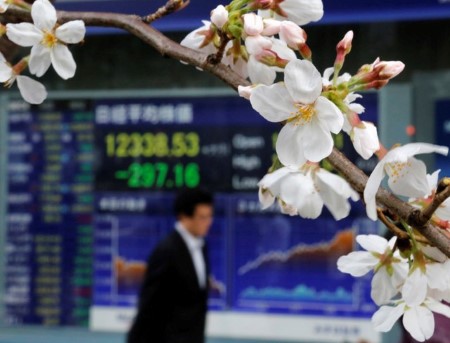
Japanese shares end lower on stronger yen, worries about financial system

Japanese shares end lower on stronger yen, worries about financial system

TOKYO, March 24 (Reuters) – Japanese shares ended lower on Friday, as a stronger yen raised concerns about denting domestic companies’ earnings, while investors continued to remain concerned about a wider banking crisis.

The Nikkei index slipped 0.13% to close at 27,385.25 and lost 0.19% for the week.

The broader Topix edged down 0.10% to 1,955.32 and posted a 0.2% weekly loss.

“The stronger yen was the reason for the decline in the market today, while investors are still assessing the turmoil in the banking sector,” said Shoichi Arisawa, general manager of the investment research department at IwaiCosmo Securities.

The yen touched a six-week high against the dollar on Friday as traders continue to evaluate the US Federal Reserve’s hints of a pause to interest rate hikes.

Risk appetite has been hurt after the failure of US-based Silicon Valley Bank and Swiss lender Credit Suisse’s liquidity issues raised concerns about a global financial crisis.

Toyota Motor Corp. fell 0.17% and Honda Motor Co Ltd lost 0.62%.

Uniqlo owner Fast Retailing lost 1.01% to drag the Nikkei down the most. Medical equipment maker Terumo Corp slipped 2.79% and robot maker Fanuc Corp fell 0.76%.

Oil explorers fell 1.27% to become the worst performers among the 33 industry sub-indexes on the Tokyo Stock Exchange after oil prices fell.

Financials were weak, with the banking index slipping 0.77% and insurance index losing 0.93%.

Insurer Tokio Marine Holdings Inc fell the most among the top 30 core Topix companies, with a 1.19% drop, followed by Mitsubishi UFJ Financial Group, which lost 1.10%.

Chipmaking equipment maker Tokyo Electron gained 1.83% to provide the biggest support to the Nikkei index. Silicon-wafer maker Shin-Etsu Chemical rose 2.23%.

Toshiba Corp jumped 4.2% after its board accepted a buyout offer from a group led by private equity firm Japan Industrial Partners.

Of the Nikkei components, 69 stocks rose and 149 fell, while seven stocks were flat.

(Reporting by Junko Fujita; Editing by Varun H K and Sonia Cheema)

 

Foreigners make record weekly Japanese bond buys after BOJ maintains policy

TOKYO, March 24 (Reuters) – Foreign investors made a record weekly purchase of Japanese government bonds last week, after the Bank of Japan (BOJ) maintained its ultra loose policy.

Data from Japan’s Ministry of Finance showed that foreign investors bought a net 4.096 trillion yen (USD 31.44 billion) worth of Japanese government bonds (JGB) with maturities of more than one year in the week ended March 18 – the largest amount since the ministry began publishing data in 2005.

Investors also bought safe-haven debt amid worries about a possible banking crisis after a failure of US Silicon Valley Bank and Swiss lender Credit Suisse’s liquidity issues.

The BOJ maintained ultra-low interest rates and held off from making changes to its controversial bond yield control policy at its monetary policy meeting on March 10, defying some expectations of a policy tweak.

JGB yields began falling sharply after the BOJ’s decision, and extended the declines as Silicon Valley Bank’s meltdown and Credit Suisse’s woes drove a flight to safe-haven debt.

Japan’s benchmark 10-year JGB yield, which was hovering at 0.5%, the top end of the BOJ’s policy band, before the BOJ’s policy meeting, fell to as low as 0.240% on March 14.

The BOJ meeting was the last one chaired by current Governor Haruhiko Kuroda before a change in the leadership. Kuroda’s second, five-year term ends on April 8.

With inflation exceeding the BOJ’s target, incoming governor Kazuo Ueda faces the challenge of phasing out the bank’s controversial bond yield control policy.

“The record amount of JGB buying underscores investors’ bet on the policy change,” said Kazuhiko Sano, a strategist at Tokai Tokyo Securities.

“They needed to rush to buy back JGBs to cover their short positions.”

Meanwhile, foreigners withdrew a net 2.38 trillion yen out of Japanese equities, marking their biggest weekly net selling since at least 2018, data from Japanese exchanges shows.

Japanese investors on the other hand purchased a net 3.34 billion yen worth of long-term overseas bonds, the most since March 2020. They also accumulated 118.2 billion yen worth of foreign equities.

(Reporting by Junko Fujita in Tokyo and Gaurav Dogra in Bengaluru; Editing by Rashmi Aich and Nivedita Bhattacharjee)

Banks queue round the block at Fed discount window

It’s been a slow day in Asian markets, no doubt with everyone tired and emotional after another rough week.

Japan’s flash PMI edged up to a still-contractionary 48.6, while services fared a bit better at 54.2. Analysts suspect a recession is still likely, but that’s hardly a novelty for Japan.

Presumably, European and US PMIs will have more bearing for monetary policy and markets.

Japanese CPI growth slowed to 3.3% year-on-year as expected thanks to government subsidies on energy, but inflation ex-food and energy climbed to its highest since 1982 at 3.5%.

Normally that might add to pressure for the BOJ to water down its yield curve control, but it’s also less of a burning issue given the recent plunge in global bond yields.

It was notable that US two-year Treasuries kept almost all of their massive gains with yields at 3.82%, having fallen an astonishing 126 basis points in 11 sessions and crushed a host of short positions in the process.

The whole yield curve from one month to 30 years is now below the overnight Fed rate, which is something you see only once in a very blue moon. While the 2-10 curve has dis-inverted markedly, that’s not a sign recession is less likely. Rather, history shows the curve steepens like this just before recession arrives, as short-term yields dive in anticipation of rate cuts.

Fed futures are currently 65% for no hike in May and 85% for a rate cut in July, a U-turn that the Fed is surely hoping to avoid. And it would be extremely unlikely were it just down to inflation and the economy. But there’s the banks.

Treasury Secretary Janet Yellen on Thursday tried to reassure markets that they would backstop depositors in a crisis, and it looks like there are bidders for some chunks of Silicon Valley Bank.

Yet the strains are showing in the Fed books as borrowing at its discount window as of Wednesday was a hefty USD $110.2 billion. Lending from the Fed’s new Bank Term Funding Program ballooned to USD 53.7 billion, suggesting some institutions simply can’t borrow anywhere else.

Even loans to foreign central banks surged to USD 60 billion, implying the supply of dollars through the interbank system is too expensive or just not available for some offshore banks. The Fed really is the lender of last resort.

The ECB is expected to reassure European Union leaders on Friday that euro zone banks are safe, while also pushing them to adopt a full EU deposit insurance scheme.

Key developments that could influence markets on Friday:

– Global PMIs, UK retail sales

– ECB President Lagarde is at the European Council meeting

– Bundesbank President Nagel speaks on inflation and the labour market, so expect fire and brimstone

– Federal Reserve Bank of St. Louis President Bullard gives a cosy fireside chat on the US economy and monetary policy

(Wayne Cole)

PH central bank focusing on inflation; exchange rate not a problem

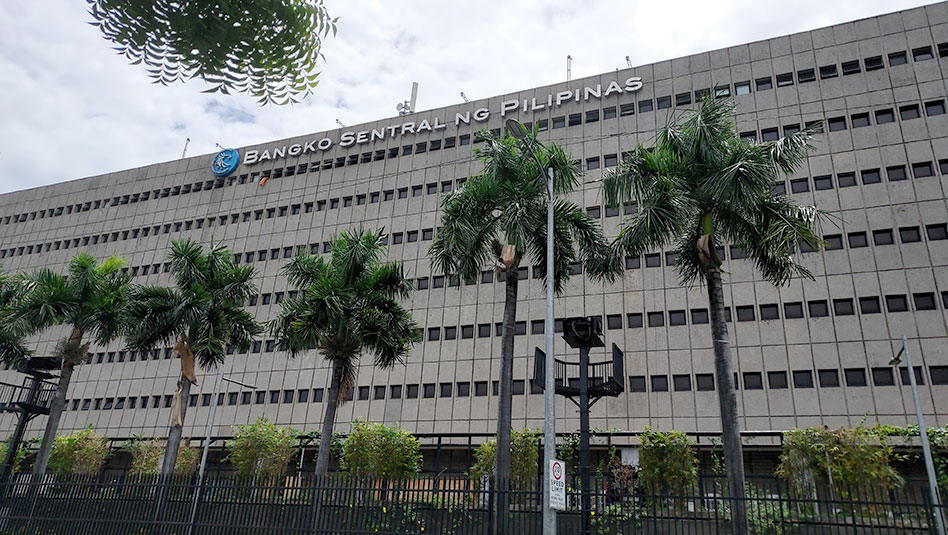
MANILA, March 24 (Reuters) – The Philippine central bank can focus on fighting inflation as the peso is not a problem, its governor said on Friday.

Robust foreign exchange inflows are supporting the peso, Bangko Sentral ng Pilipinas (BSP) Governor Felipe Medalla said in a speech at a thrift bankers’ event.

The BSP will do everything in its power to bring inflation below 4% next year, he said.

The central bank expects inflation to average 6.0% in 2023 and 2.9% in 2024.

(Reporting by Neil Jerome Morales; Editing by Kanupriya Kapoor)

Oil settles down on worries over European banks, US crude reserve

Oil settles down on worries over European banks, US crude reserve

March 24 (Reuters) – Oil prices settled lower on Friday as European banking shares fell and after US Energy Secretary Jennifer Granholm said refilling the country’s Strategic Petroleum Reserve (SPR) may take several years, dampening demand prospects.

Brent crude settled down 92 cents, or 1.2%, to USD 74.99. West Texas Intermediate US crude futures fell 70 cents, or 1%, to USD 69.26 a barrel.

Both benchmarks rose this week as banking sector turmoil eased. Brent futures rose 2.8% in the week while US crude futures rose 3.8%. Last week, both benchmarks posted their biggest declines in months.

“We’re riding along macroeconoic headwinds, and there’s a newfound correlation with equities” said John Kilduff, partner at Again Capital LLC in New York.

Banking stocks slid in Europe with Deutsche Bank and UBS Group slammed by worries that the worst problems in the sector since the 2008 financial crisis could persist.

US Treasury Secretary Janet Yellen convened an unscheduled meeting of the Financial Stability Oversight Council on Friday morning.

The dollar rose 0.6% against other currencies, which also pressured oil, making crude more expensive to holders of other currencies.

The White House said in October it would buy back oil for the SPR when prices were at or below about USD 67-USD 72 per barrel.

On Thursday, Granholm told lawmakers it would be difficult to take advantage of low prices this year to add to stockpiles, which are at their lowest level since 1983 following sales directed by President Joe Biden last year.

Oil drew some support from strong demand expectations from China. Goldman Sachs said commodities demand was surging in the world’s biggest oil importer, with oil demand topping 16 million bpd.

Russian Deputy Prime Minister Alexander Novak said a previously announced cut of 500,000 barrels per day (bpd) in Russia’s oil production would be from an output level of 10.2 million bpd in February, the RIA Novosti news agency reported.

That means Russia aims to produce 9.7 million bpd between March and June, according to Novak, a much smaller output cut than Moscow previously indicated.


(Additional reporting by Ahmad Ghaddar in London; Yuka Obayashi in Tokyo and Trixie Yap in Singapore; Editing by Marguerita Choy, Louise Heavens and David Gregorio)


Gold eases in tight range as traders gauge firm dollar, Fed rate pause

March 24 (Reuters) – Gold prices edged lower but traded in a relatively tight range on Friday as the dollar steadied, while investors assessed the US central bank’s hints at a potential pause in its rate-hike trajectory.

Spot gold was down 0.1% at USD 1,991.03 per ounce, as of 0558 GMT, after two sessions of sharp gains. US gold futures also dipped 0.1% to USD 1,993.80.

Non-yielding bullion, which becomes more attractive in a low-interest-rate environment, gained 2% after the Federal Reserve signaled it might pause further rate increases after the recent collapse of two US banks, and pointed to just one more rate hike this year.

“However, the Fed also mentioned it would not look to cut interest rates this year,” said Brian Lan, managing director at Singapore-based dealer GoldSilver Central.

Lan noted some profit-taking at play, and added, “gold prices would look to consolidate, unless there’s any big news.”

The dollar index steadied off seven-week lows, making bullion expensive for overseas buyers.

The Bank of England on Thursday raised interest rates for the 11th time in a row. The Swiss National Bank raised rates by 50 basis points and said UBS’s takeover of Credit Suisse had averted a financial disaster.

“The key focus is still on the banking crisis in the U.S., they’re looking at whether there’s further contagion to that effect,” GoldSilver’s Lan said.

Gold shot over the USD 2,000-level to a one-year peak earlier this week on safe-haven demand, but has since pulled back from those levels, although financial system uncertainties remain.

US Treasury Secretary Janet Yellen on Thursday sought to reassure jittery investors that American bank deposits were safe and promised policymakers had more firepower to battle any crisis.

“An increase in net long positions by speculators has been driven by both new longs and short covering. The inflows into gold-backed ETFs have risen sharply in recent weeks,” ANZ said in a note.

Spot silver was flat at USD 23.12 per ounce and platinum was also listless at USD 984.35, while palladium fell 0.4% to USD 1,425.25.

(Reporting by Kavya Guduru in Bengaluru; Editing by Subhranshu Sahu and Sherry Jacob-Phillips)

Philippines, China to use diplomacy to address maritime issues

MANILA, March 24 (Reuters) – Maritime issues between the Philippines and China remain a “serious concern”, a Philippine official said on Friday, as the countries pledged to use diplomacy to resolve differences peacefully during high-level talks.

The Philippines hosted this week the first in-person meeting between diplomats from the countries since before the pandemic, amid a flare-up in tensions over what Manila described as China’s “aggressive activities” in the South China Sea.

“Both our countries’ leaders agreed that maritime issues should be addressed through diplomacy and dialogue and never through coercion and intimidation,” Philippine foreign ministry undersecretary Theresa Lazaro said at the opening of bilateral talks on the South China Sea.

The discussions come two months after President Ferdinand Marcos Jr’s state visit to China, where President Xi Jinping said he was ready to manage maritime issues “cordially” with Manila.

“Maritime issues are an important part of China-Philippines relations that should not be ignored,” China’s Vice Foreign Minister Sun Weidong said.

Beijing, which claims large parts of the South China Sea, including some areas in Philippine waters, has expressed concern over an increasing US military presence in its neighbour, accusing Washington of increasing regional tensions.

“The two sides agreed to manage and control differences and properly handle emergencies at sea through friendly consultations,” the Chinese foreign ministry said in a statement after Sun’s visit.

Last month, Marcos granted the United States expanded access to military bases, amid China’s growing assertiveness in the South China Sea and towards self-ruled Taiwan.

The agreement has been seen as a sign of a rekindling of ties between Manila and its former colonial master, which soured under his predecessor, Rodrigo Duterte.

Last month, the Philippines accused China’s coast guard of using a laser against one of its vessels supporting a resupply mission for troops in the disputed Spratly islands. Marcos later summoned the Chinese ambassador to relay his concern over the intensity and frequency of China’s activities in the area.

(Reporting by Karen Lema and Neil Jerome Morales; Additional reporting by Ryan Woo in Beijing; Editing by Ed Davies and Jonathan Oatis)


Japan CPI a distraction amid thickening global fog

Japan CPI a distraction amid thickening global fog

March 24 (Reuters) – Asian markets round off the week with Japanese inflation and PMI data likely to be the main local drivers on Friday, offering direction that is unlikely to come from yet another choppy day in US markets on Thursday.

Wall Street rose – although ended up off its highs – but bank stocks slumped to the lowest since 2020; key parts of the US yield curve steepened, but the three month/10-year segment is its flattest and most inverted since 1981; market-based inflation expectations fell, but so did Fed rate expectations.

Rates markets are now pricing in around 100 basis points of Fed easing this year, something Fed Chair Jerome Powell said on Wednesday is definitely not the central bank’s base case scenario.

The uncertainty is rooted in what impact the banking crisis will have on US credit conditions in the coming months, and by extension on economic activity and inflation. As Powell stated baldly on Wednesday: “We simply don’t know.”

Treasury Secretary Janet Yellen did know that she had a second chance on Thursday to soothe concerns among investors and the wider public about whether authorities will move towards guaranteeing all bank deposits.

She told a House committee she is prepared to take further actions to ensure bank deposits are safe, a day after telling a Senate committee blanket insurance was not on the agenda. It might not be on a par with Powell’s assurances – bank stocks still fell – but perhaps sentiment will improve on Friday.

So Asia opens on Friday to firmer world stocks, lower yields, mix US yield curves, higher global rates after the UK and Swiss hikes – but a growing sense that the world policy peak is in sight – a rising dollar, and a notably stronger yen.

Japanese annual core inflation in February is expected to have fallen sharply to 3.1% from a 41-year high of 4.2% the month before, thanks to government subsidies for gas and electricity bills to cushion rising living costs.

But many economists say broader price pressures remain strong throughout the economy, which could force the Bank of Japan to phase out or scrap its yield curve control policy soon.

Here are three key developments that could provide more direction to markets on Friday:

– Japan consumer price inflation (February)

– Japan flash PMIs (March)

– Australia flash PMIs (March)

(By Jamie McGeever)


US recap: EUR/USD hit third highest 2023 peak as Fed pricing adjusted

US recap: EUR/USD hit third highest 2023 peak as Fed pricing adjusted

March 23 (Reuters) – The dollar index was modestly lower in late trade on Thursday after recovering from earlier post-Fed losses that had pushed EUR/USD to its 1.0930 high on EBS near this year’s 1.1034 peak.

The Fed’s dovish 25bp rate hike Wednesday in contrast to the ECB’s bolder 50bp increase on March 16, amid banking sector stress spurred on by US failures, sent 2-year bund-Treasury yield spreads to their highest in over a year before a 9bp pullback on Thursday tugged EUR/USD well off its highs.

Wednesday’s Fed hike was overshadowed by concerns that banks would tighten credit to safeguard liquidity and reduce risk.

That could amplify the impact of aggressive tightening delivered over the last year, the true economic impact of which may yet to be realized.

The market now prices at most one more 25bp Fed hike in May before steady cuts into 2024. The spreads between the current Fed funds rate and 2-year Treasury yields surged above 1%, the level that forced the Fed to begin reversing rate hiking cycles during the global financial crisis and dot-com collapses.

Sterling rose 0.2%, unable to make a new high following the BoE’s dovish 25bp rate hike, as 2-year gilts-Treasury yield spreads fell 12bp and European bank stocks fell faster than US banks.

The bigger issue for sterling is the sense the BoE is averse to much more than another 25bp hike, despite UK inflation remaining at double-digit levels as US inflation has retreated from 9.1% last June to 6% in February.

USD/JPY fell 0.64% as 2-year Treasury-JGB yields spreads dove and the haven yen attracted broader bids with risk-off flows rebounding. Prices were caught by this year’s uptrend off January and February lows, but daily and weekly charts point to this year’s lows being at risk.

(Editing by Burton Frierson; Randolph Donney is a Reuters market analyst. The views expressed are his own.)


Gold climbs as Fed hints at rate-hike pause

Gold climbs as Fed hints at rate-hike pause

March 23 (Reuters) – Gold prices extended gains to a second straight session on Thursday, boosted by a slide in Treasury yields after the US Federal Reserve signaled an end to its monetary tightening cycle might be on the cards.

Spot gold rose 1.2% to USD 1,993.09 per ounce by 2:59 p.m. ET (1859 GMT), while US gold futures jumped 2.4% to settle at USD 1,995.90.

The Fed raised rates by a quarter of a percentage point on Wednesday but highlighted that it was on the verge of pausing.

If they truly do pause, that’s a green light for the gold market, with it being a quintessential hedge against inflation, said David Meger, director of metals trading at High Ridge Futures, adding that “it’s likely that inflation would remain elevated if they’re unable to raise rates any further”.

Gold hit a one-year high on Monday, breaching the key USD 2,000 level on safe-haven demand. However, it later ceded some ground as banking sector jitters subsided following the rescue of Credit Suisse.

The outlook still remains positive if the Fed pauses or the banking crisis carries on, analysts say.

Wall Street bank Goldman Sachs hiked its 12-month gold price target to USD 2,050 an ounce from USD 1,950, describing it as the best hedge against financial risks.

“A combination of inflation still being at lofty levels, safe haven alternative investment demand, and the weaker dollar – all of these are significant driving factors behind gold’s recent move,” Meger added.

The dollar spent much of the session near early-February lows, making gold cheaper for holders of other currencies. Benchmark US government bond yields eased and improved zero-yield bullion’s allure.

In other metals, spot silver dipped 0.3% to USD 22.95 per ounce and platinum was up 0.3% at USD 980.67, while palladium fell 1.6% to USD 1,427.17.

(Reporting by Seher Dareen in Bengaluru; Additional reporting by Bharat Govind Gautam; Editing by Christina Fincher and Shounak Dasgupta)


Posts navigation

Older posts
Newer posts

Recent Posts

  • Inflation Update: The case to tighten
  • Investment Ideas: April 7, 2026
  • Metrobank US-Iran Risk Index: Deadline approaching
  • Peso GS Weekly: Risk relief drives curve‑wide rally
  • Metrobank US-Iran Risk Index: Dire straits

Recent Comments

No comments to show.

Archives

  • April 2026
  • March 2026
  • February 2026
  • January 2026
  • December 2025
  • November 2025
  • October 2025
  • September 2025
  • August 2025
  • July 2025
  • June 2025
  • May 2025
  • April 2025
  • March 2025
  • February 2025
  • January 2025
  • December 2024
  • November 2024
  • October 2024
  • September 2024
  • August 2024
  • July 2024
  • June 2024
  • May 2024
  • April 2024
  • March 2024
  • February 2024
  • January 2024
  • December 2023
  • November 2023
  • October 2023
  • September 2023
  • August 2023
  • July 2023
  • June 2023
  • May 2023
  • April 2023
  • March 2023
  • February 2023
  • January 2023
  • December 2022
  • November 2022
  • October 2022
  • September 2022
  • August 2022
  • July 2022
  • June 2022
  • May 2022
  • March 2022
  • December 2021
  • October 2021

Categories

  • Bonds
  • BusinessWorld
  • Currencies
  • Economy
  • Equities
  • Estate Planning
  • Explainer
  • Featured Insight
  • Fine Living
  • How To
  • Investment Tips
  • Markets
  • Portfolio Picks
  • Rates & Bonds
  • Retirement
  • Reuters
  • Spotlight
  • Stocks
  • Uncategorized

You are leaving Metrobank Wealth Insights

Please be aware that the external site policies may differ from our website Terms And Conditions and Privacy Policy. The next site will be opened in a new browser window or tab.

Cancel Proceed
Get in Touch

For inquiries, please call our Metrobank Contact Center at (02) 88-700-700 (domestic toll-free 1-800-1888-5775) or send an e-mail to customercare@metrobank.com.ph

Metrobank is regulated by the Bangko Sentral ng Pilipinas
Website: https://www.bsp.gov.ph

Quick Links
The Gist Webinars Wealth Manager Explainers
Markets
Currencies Rates & Bonds Equities Economy
Wealth
Investment Tips Fine Living Retirement
Portfolio Picks
Bonds Stocks
Others
Contact Us Privacy Notice Terms of Use
© 2026 Metrobank. All rights reserved.

Access this content:

If you are an existing investor, log in first to your Metrobank Wealth Manager account. ​

If you wish to start your wealth journey with us, click the “How To Sign Up” button. ​

Login HOW TO SIGN UP