MODEL PORTFOLIO
THE GIST
NEWS AND FEATURES
Global Philippines Fine Living
INSIGHTS
INVESTMENT STRATEGY
Economy Stocks Bonds Currencies
THE BASICS
Investment Tips Explainers Retirement
WEBINARS
2024 Mid-Year Economi Briefing, economic growth in the Philippines
2024 Mid-Year Economic Briefing: Navigating the Easing Cycle
June 21, 2024
Investing with Love
Investing with Love: A Mother’s Guide to Putting Money to Work
May 15, 2024
retirement-ss-3
Investor Series: An Introduction to Estate Planning
September 1, 2023
View All Webinars
DOWNLOADS
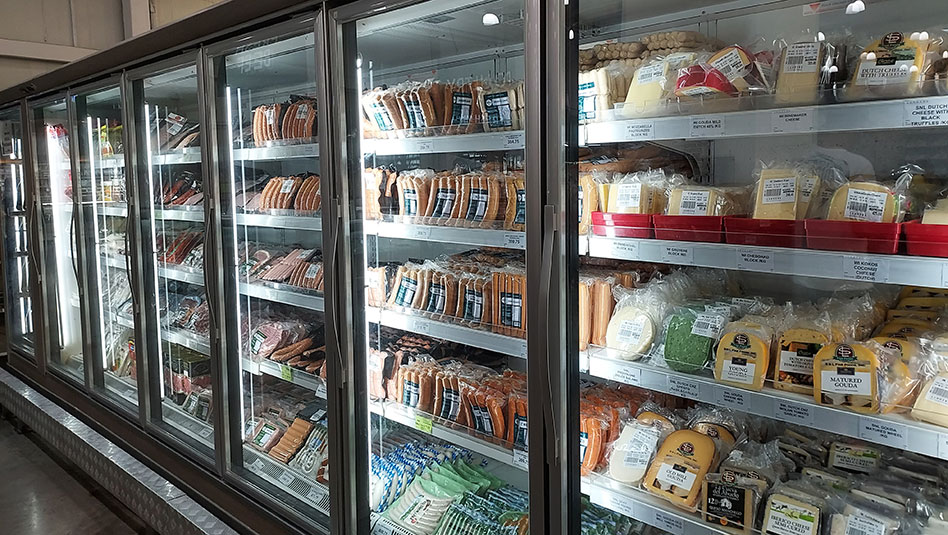
grocery-2-aa
Inflation Update: Target breached
DOWNLOAD
Container ship carrying container boxes import export dock with quay crane. Business commercial trade global cargo freight shipping logistic and transportation worldwide oversea concept. Generative AI
Economic Updates
Philippines Trade Update: Wider deficit on strong imports
DOWNLOAD
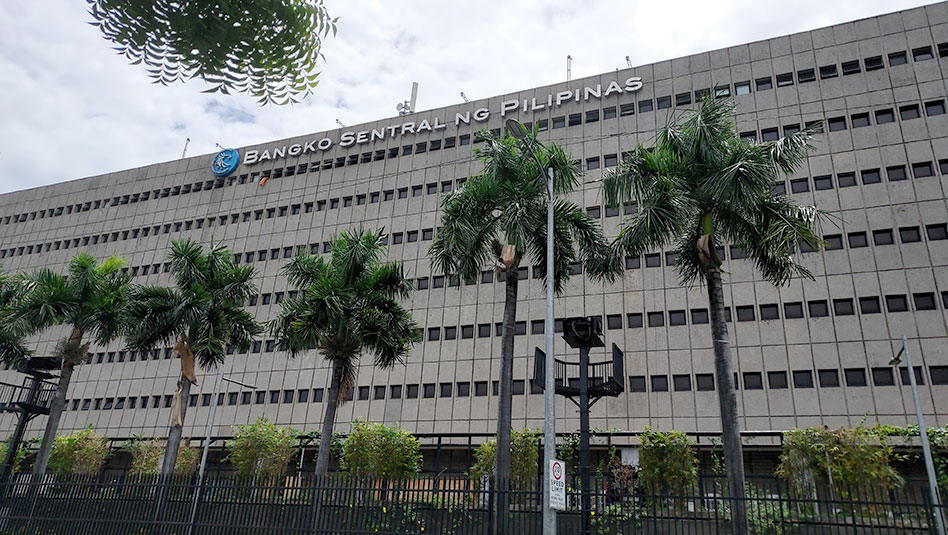
Frick collection with palm trees 
Economic Updates
Policy Rate Updates: Policy rate updates to reassure 
DOWNLOAD
View all Reports
Metrobank.com.ph How To Sign Up
Follow us on our platforms.

How may we help you?

TOP SEARCHES
  • Where to put my investments
  • Reports about the pandemic and economy
  • Metrobank
  • Webinars
  • Economy
TRENDING ARTICLES
  • Investing for Beginners: Following your PATH
  • On government debt thresholds: How much is too much?
  • Philippines Stock Market Outlook for 2022
  • Deficit spending remains unabated

Login

Access Exclusive Content
Login to Wealth Manager
Visit us at metrobank.com.ph How To Sign Up
Access Exclusive Content Login to Wealth Manager
Search
MODEL PORTFOLIO THE GIST
NEWS AND FEATURES
Global Philippines Fine Living
INSIGHTS
INVESTMENT STRATEGY
Economy Stocks Bonds Currencies
THE BASICS
Investment Tips Explainers Retirement
WEBINARS
2024 Mid-Year Economi Briefing, economic growth in the Philippines
2024 Mid-Year Economic Briefing: Navigating the Easing Cycle
June 21, 2024
Investing with Love
Investing with Love: A Mother’s Guide to Putting Money to Work
May 15, 2024
retirement-ss-3
Investor Series: An Introduction to Estate Planning
September 1, 2023
View All Webinars
DOWNLOADS
grocery-2-aa
Inflation Update: Target breached
April 7, 2026 DOWNLOAD
Container ship carrying container boxes import export dock with quay crane. Business commercial trade global cargo freight shipping logistic and transportation worldwide oversea concept. Generative AI
Economic Updates
Philippines Trade Update: Wider deficit on strong imports
March 27, 2026 DOWNLOAD
Frick collection with palm trees 
Economic Updates
Policy Rate Updates: Policy rate updates to reassure 
March 26, 2026 DOWNLOAD
View all Reports

Archives: Reuters Articles

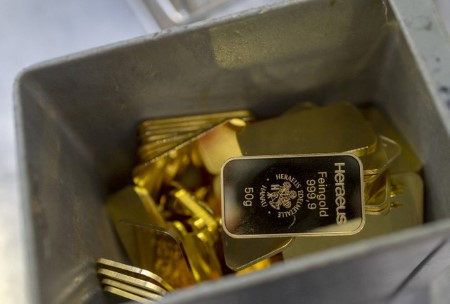
Gold heads for quarterly fall as more rate hikes loom

Gold heads for quarterly fall as more rate hikes loom

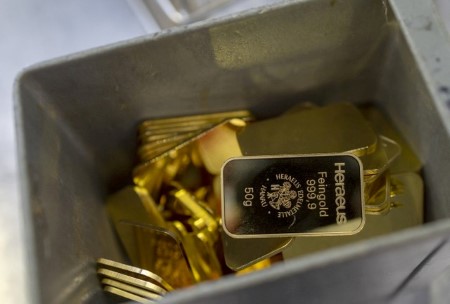
June 30 (Reuters) – Gold was bound for its first quarterly decline in three, squeezed by expectations for more US interest rate hikes, while moderate inflation prints provided some support on Friday.

Spot gold rose 0.5% to USD 1,917.94 per ounce by 01:46 p.m. EDT (1746 GMT). US gold futures settled 0.6% higher at USD 1,929.40.

Prices have shed 2.5% this quarter, dropping from levels just shy of all-time highs at USD 2,072 in May, caused by nervousness about the health of the US banking sector, to below USD 1,900 on Thursday.

The banking crisis “brought the 10-year yield lower because it was thought that the Fed was going to have to stop raising rates … that all got thrown out the door with the last rate hike (pressuring gold),” said Daniel Pavilonis, senior market strategist, RJO Futures.

The dollar index and 10-year Treasury yields were both set to gain this quarter, eroding gold’s appeal for investors holding other currencies.

US consumer spending stagnated in May, while the Fed’s preferred personal consumption expenditures index rose at a year-on-year pace of 3.8%, easing from April’s 4.3% pace.

Gold prices rose after the data, as traders bet the Fed was slightly less locked in to a July interest rate hike, trimming its chances to 84% from nearly 90% earlier.

Rate hikes lift bond yields and in turn raise the opportunity cost of holding non-yielding bullion.

“In the short term, the prospect for more US rate hikes combined with rising US real yields to or near cycle highs may pose a continued challenge to gold,” Saxo Bank head of commodity strategy Ole Hansen said in a note.

Silver rose 0.8% to USD 22.73 per ounce. Platinum gained 0.6% to USD 899.27 but was set for its biggest monthly decline in two years.

Palladium fell 0.1% to USD 1,227.79, and was headed for its third quarterly fall.

(Reporting by Deep Vakil in Bengaluru; editing by David Evans, Shinjini Ganguli and Barbara Lewis)


Cautious optimism drives inflows to US equity funds amid positive growth outlook

Cautious optimism drives inflows to US equity funds amid positive growth outlook

June 30 (Reuters) – US equity funds attracted inflows during the week ending June 28, buoyed by positive growth expectations as robust economic indicators eased concerns about higher borrowing costs.

Investors purchased US equity funds of a net USD 2.1 billion after disposing of about USD 16.5 billion worth of funds in the previous week, data from Refinitiv Lipper showed.

Investor sentiment improved as reports revealed an increase in new orders for key US-manufactured capital goods, a rise in sales of new single-family homes in May, and a surge in US consumer confidence to a near 1-1/2 year high in June.

Consequently, US growth funds witnessed inflows of USD 1.1 billion, rebounding from the USD 3.1 billion outflows reported the previous week. Additionally, value funds attracted USD 428 million in investments.

Breaking down the data by size, US large-cap, multi-cap, and small-cap equity funds experienced net inflows of USD 6.1 billion, USD 1 billion, and USD 121 million, respectively. However, mid-cap funds faced outflows of USD 536 million.

On the sector front, US sectoral funds encountered net outflows of USD 1.47 billion, with materials and consumer staples witnessing USD 518 million and USD 326 million in net selling, respectively.

In contrast, US bond funds registered their first weekly outflow in three weeks, with net selling amounting to USD 2.37 billion. Specifically, US taxable bond funds saw outflows of USD 2.19 billion, while municipal bond funds recorded net selling of USD 289 million.

US short/intermediate government & treasury and inflation-protected funds experienced net outflows of USD 1.53 billion and USD 262 million, respectively. However, short/intermediate investment-grade funds attracted inflows worth USD 472 million.

Meanwhile, US money market funds sustained outflows for a third consecutive week, with withdrawals totaling USD 6.48 billion.

(Reporting by Gaurav Dogra and Patturaja Murugaboopathyin Bengaluru; Editing by Chizu Nomiyama)


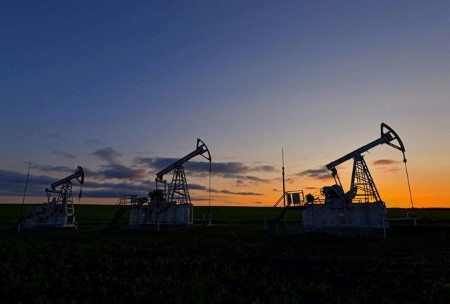
Oil settles higher but posts fourth straight quarterly decline

Oil settles higher but posts fourth straight quarterly decline

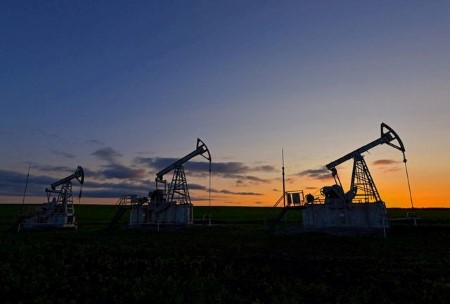
June 30 (Reuters) – Oil prices settled higher on Friday but posted their fourth straight quarterly loss as investors worried that sluggish global economic activity could crimp fuel demand.

Benchmark Brent crude futures for August delivery which expires on Friday, settled up 56 cents, or 0.8%, at USD 74.90. In the three months to the end of June, the contract finished down 6%.

US West Texas Intermediate crude (WTI) settled up 78 cents, or 1.1% at USD 70.64 a barrel. It posted its second straight quarterly drop, down about 6.5% in the latest three months.

Prices have been under pressure from rising interest rates in key economies and a slower-than-expected recovery in Chinese manufacturing and consumption.

Signs of strengthening US economic activity and sharp declines in US oil inventories last week offered some support.

For the day, crude was bolstered by a US Commerce Department report showing annual inflation rising last month at its slowest pace in two years.

Signs of moderating inflation “could hold the Federal Reserve off rising interest rates again,” said John Kilduff, partner at Again Capital LLC in New York.

The market was also supported by upward revisions in demand for crude oil and refined products in the United States.

Demand for crude and petroleum products fell slightly to 20.446 million bpd in April but remained seasonally strong, EIA data showed.

Prices also drew support from Saudi Arabia’s plans to cut output by a further 1 million barrels per day in July in addition to a broader OPEC+ deal to limit supply into 2024.

“Despite the announcements of two fresh rounds of cuts from OPEC+/Saudi Arabia, crude prices have largely remained below USD 80 a barrel as the market has been driven less by fundamentals and more by macroeconomic concerns,” HSBC analysts said in a note.

“We think this will continue to be the case for part of the summer, although the deep deficit of around 2.3 million barrels forecast for 2H23 should help to spur some upwards price momentum.”

A Reuters survey of 37 economists and analysts showed oil prices will struggle for traction this year as global economic headwinds linger.

US energy firms this week cut the number of oil and natural gas rigs operating for a ninth week in a row for the first time since July 2020, energy services firm Baker Hughes said on Friday.

(Additional reporting by Ron Bousso in London, Arathy Somasekhar in Houston, and Muyu Xu in Singapore; editing by Robert Birsel, Jason Neely, David Evans, Louise Heavens, and David Gregorio)


What would Japanese intervention to boost the weak yen look like?

What would Japanese intervention to boost the weak yen look like?

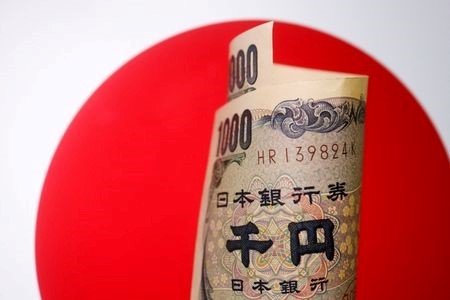
TOKYO, June 29 (Reuters) – Japanese authorities are facing renewed pressure to combat a continued yen fall driven by market expectations that the Bank of Japan will keep interest rates ultra-low, even as other central banks tighten monetary policy to curb inflation.

Aside from verbal intervention, Japan’s government has several options to stem what it considers excessive yen falls. Among them is to intervene directly in the currency market, buying large amounts of yen, usually selling dollars for the Japanese currency.

Below are details on how yen-buying intervention could work, the likelihood of this happening and challenges of such a move:

LAST YEN-BUYING INTERVENTION?

Japan bought yen in September, its first foray into the market to boost its currency since 1998, after a Bank of Japan (BOJ) decision to maintain an ultra-loose policy drove the yen as low as 145 per dollar. It intervened again in October after the yen plunged to a 32-year low of 151.94.

WHY STEP IN?

Yen-buying intervention is rare. Far more often the Ministry of Finance has sold yen to prevent its rise from hurting the export-reliant economy by making Japanese goods less competitive overseas.

But yen weakness is now seen as problematic, with Japanese firms having shifted production overseas and the economy heavily reliant on imports for goods ranging from fuel and raw materials to machinery parts.

WHAT HAPPENS FIRST?

When Japanese authorities escalate their verbal warnings to say they “stand ready to act decisively” against speculative moves, that is a sign intervention may be imminent.

A rate check by the BOJ, a practice in which central bank officials call dealers and ask for the price of buying or selling yen, is seen by traders as a possible precursor to intervention.

LINE IN THE SAND?

Authorities say they look at the speed of yen falls, rather than levels, and whether the moves are driven by speculators, in deciding whether to step in.

Market players, however, see the first threshold at 145 yen to the dollar, where Japan last intervened. If the dollar breaks above that, 150 yen could be the next line in the sand, analysts say.

WHAT TRIGGER?

The decision is highly political. When public anger over the weak yen and a subsequent rise in the cost of living is high, that puts pressure on the administration to respond. This was the case when Tokyo intervened last year.

But while inflation remains above the BOJ’s 2% target, public pressure has declined as fuel and global commodity prices have fallen from last year’s peaks.

If the pace of yen declines accelerates and draws the ire of media and public, the chance of intervention would rise again.

The decision would not be easy. Intervention is costly and could easily fail, given that even a large burst of yen buying would pale next to the USD 7.5 trillion that change hands daily in the foreign exchange market.

HOW WOULD IT WORK?

When Japan intervenes to stem yen rises, the Ministry of Finance issues short-term bills, raising yen it then sells to weaken the Japanese currency.

To support the yen, however, the authorities must tap Japan’s foreign reserves for dollars to sell for yen.

In either case, the finance minister issues the order to intervene, and the BOJ executes the order as the ministry’s agent.

CHALLENGES?

Yen-buying intervention is more difficult than yen-selling.

While Japan holds nearly USD 1.3 trillion in foreign reserves, they could be substantially eroded if Tokyo repeatedly spent huge for yen.

That means there are limits to how long Japan could keep defending the yen, unlike for yen-selling intervention – where Japan can essentially print yen by issuing bills.

Japanese authorities also consider it important to seek the support of Group of Seven partners, notably the United States if the intervention involves the dollar.

Washington gave tacit approval when Japan intervened last year, reflecting recent close bilateral relations.

But stepping in repeatedly would be difficult, as Washington traditionally opposes intervention except in cases of extreme market volatility.

(Reporting by Leika Kihara; Additional reporting by Tetsushi Kajimoto and Kentaro Sugiyama; Editing by William Mallard)


 

China, Japan data bring curtain down on H1

China, Japan data bring curtain down on H1

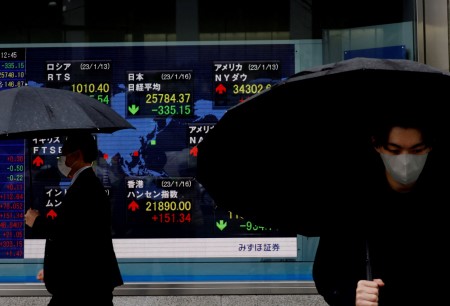
June 30 (Reuters) – Asian markets bring an eventful first half of the year to a close on Friday with investors bracing for a raft of top-tier economic data, particularly from China and Japan, and digesting yet another leg-up in global interest rate expectations.

China’s purchasing managers index reports will give a first glimpse into how the factory and services sectors in the region’s largest economy fared in June, while Tokyo inflation is likely to be the most important of a batch of indicators from Japan that also includes unemployment and industrial output.

Key releases from South Korea, Asia’s fourth largest economy, include retail sales, industrial output, and service sector growth for May.

The Chinese PMIs will come under particularly strong scrutiny. Contracting activity in manufacturing is being offset by expansion in services, but overall growth is weak, and authorities are coming under pressure to step in with substantial monetary or fiscal stimulus. Or both.

The yuan is at a seven-month low and sliding toward a fresh 15-year trough against the dollar, trade with the rest of the world is falling, inflation is evaporating, and growth forecasts are being slashed.

The pick of Japan’s indicators looks like being Tokyo consumer inflation excluding fresh food prices for June, and what that might signal for monetary policy. Economists anticipate a tick up in the annual rate to 3.3% from 3.2%.

The Bank of Japan, like its Chinese counterpart, is swimming against the global tide of tighter policy, the main reason why the yen is also at a seven-month low against the dollar and fueling BOJ intervention speculation.

In fact, the yen is close to a 50-year low on a real effective exchange rate basis. With stocks hovering around 33-year highs and base rates still negative, financial conditions in Japan are the loosest since 1997, according to Goldman Sachs.

Goldman’s emerging markets financial conditions index is the lowest in 16 months, which stands in contrast to developed economies where rates, bond yields borrowing costs of all stripes are rising sharply.

The US two-year yield jumped 15 basis points on Thursday, its biggest rise in a month, and traders are now pricing in at least one more quarter point rate hike this year. Fed Chair Jerome Powell this week indicated he thinks two will be delivered.

The good news is rate expectations are being ramped up because the economy is strong. Thursday’s US data were unambiguously positive – a chunky upward revision to Q1 GDP growth and the biggest fall in weekly jobless claims since 2021 point to ‘no landing’, never mind a ‘soft landing’

But growth and earnings will suffer at some point. The US yield curve on Thursday inverted further to within a few basis points of the 40-year low seen in March. This is a warning sign that investors think something, somewhere, at some future point, will ‘break’.

Here are key developments that could provide more direction to markets on Friday:

– China PMIs (June)

– Japan – Tokyo inflation (June)

– US PCE inflation (May)

(By Jamie McGeever.)


Gold stabilizes after strong US data drags bullion below USD 1,900/oz

Gold stabilizes after strong US data drags bullion below USD 1,900/oz

June 29 (Reuters) – Gold regained some ground on Thursday as traders took advantage of a brief dip below the key psychological USD 1,900 level that was driven by a volley of robust US economic readings.

Spot gold edged up 0.1% at USD 1,908.4 per ounce by 1:52 p.m. EDT (1752 GMT). US gold futures settled 0.2% lower at USD 1,917.90.

Prices fell under USD 1,900 for the first time since mid-March after the data as the dollar index firmed 0.4%, making bullion less attractive for overseas buyers. Benchmark 10-year Treasury yields rose.

“We’ve seen prices move down from USD 2,000 to USD 1,900 and that in itself is going to bring about some bargain hunting,” said David Meger, director of metals trading at High Ridge Futures.

US jobless claims fell last week by the most in 20 months, pointing to labor market strength that also helped prop up gross domestic product in the first quarter.

“It was a one-two punch taking gold another leg lower … and then the hawkish central banks haven’t helped out at all,” said Phillip Streible, chief market strategist at Blue Line Futures in Chicago.

Federal Reserve Chair Jerome Powell said most of the central bank’s policymakers expect they would need to raise interest rates at least twice more by year-end with US inflation well above the 2% goal and a labor market that’s still very tight.

While gold is considered an inflation hedge, rising rates dull non-yielding bullion’s appeal, with current rate expectations putting it on course to end the quarter in negative territory for the first time since September 2022.

Traders awaited May’s personal consumption expenditure data, the Fed’s favored inflation gauge, on Friday.

Silver fell 0.6% to USD 22.59 per ounce, while platinum dropped 1.6% to USD 896.55, an eight-month low.

Palladium dipped 1.6% to USD 1,228.50, hovering near its lowest since December 2018.

(Reporting by Deep Vakil in Bengaluru; Editing by Conor Humphries, Shilpi Majumdar and Maju Samuel)


Gold falls for third session as Powell reaffirms hawkish stance

Gold prices fell for a third-straight session on Thursday, trading near a key support level of USD 1,900 as global central bankers including Federal Reserve Chair Jerome Powell double down on their hawkish policy messages.

Spot gold was little changed at USD 1,906.45 per ounce by 0817 GMT, lingering near its lowest since mid-March. US gold futures GCcv1 fell 0.4% to USD 1,914.70.

Powell reiterated on Wednesday that more rate rises likely lie ahead for the central bank, and did not rule out a boost in the cost of borrowing at a policy meeting scheduled for the end of July.

The US dollar index held firm, keeping gold under pressure.

The overall scenario for gold and precious metals remains challenging, with both Powell and European Central Bank President Christine Lagarde preparing markets for more rate hikes, Carlo Alberto De Casa, external analyst at Kinesis Money.

Despite this, the support zone of USD 1,900 has so far proven to be solid, and many traders see growing chances of recession in 2024, De Casa added.

While gold is considered a hedge against inflation, rising interest rates dull non-yielding bullion’s appeal.

Bullion has dropped about 3% so far in June and looks set to end the quarter in negative territory for the first time since September 2022, as traders pushed back expectations for an end to the rate hike cycle.

Powell’s hawkish remarks reinforced interest rates going higher for longer, with a greater opportunity cost of holding gold dimming the appeal of the metal, said OCBC FX strategist Christopher Wong.

Market participants are now awaiting initial U.S. jobless claims and final first-quarter GDP numbers due later in the day, along with personal consumption expenditure (PCE) data for May on Friday.

Spot silver rose 0.3% to USD 22.776 per ounce, platinum climbed 0.7% to USD 917.46.

Palladium  fell 0.1% to USD 1,247.86, but was holding above Wednesday’s 4-1/2-year low of USD 1,208.50.

(Reporting by Seher Dareen and Swati Verma in Bengaluru; Editing by Subhranshu Sahu, Rashmi Aich and Emelia Sithole-Matarise)

China stocks drop as weak recovery, lack of strong stimulus weigh

SHANGHAI – China and Hong Kong stocks closed lower on Thursday, as traders maintained a cautious stance on signs of weak recovery in the world’s second-largest economy and a lack of strong stimulus.

** China’s blue-chip CSI300 Index declined 0.5% and the Shanghai Composite Index slipped 0.2% at close.

** Hong Kong’s benchmark Hang Seng Index dropped 1.2%, and the Hang Seng China Enterprises Index was down 1.5%.

** Other Asian shares fell after global central banks reaffirmed their resolve to beat inflation, warning rates may need to rise further.

** Real estate developers in China lost 1.8%, as a lack of strong support measures for the sector disappointed investors.

** “There’s no indication they will abandon their fundamentally hawkish stance towards property, which they (policymakers) believe is in long-term decline,” said Gavekal Dragonomics analysts in a note.

** Shares of tourism companies fell 2.4%, while the food & beverage sector declined 1.5%.

** Data on Wednesday showed annual profits at China’s industrial firms extended a double-digit decline in the first five months as softening demand squeezed margins, reinforcing hopes of more policy support to bolster a stuttering post-COVID economic recovery.

** A Reuters poll showed on Thursday that China’s factory activity likely contracted for a third straight month in June, albeit at a marginally slower pace.

** Foreign investors sold a net 7.6 billion yuan (USD 1.05 billion) of Chinese shares on the day.

** US Treasury Secretary Janet Yellen said she hoped to travel to China to reestablish contact with Beijing, acknowledging there were disagreements between the two countries, MSNBC reported on Wednesday.

** The United States and China agreed to consider expanding commercial flights between the two countries to improve people-to-people contact.

** Tech giants listed in Hong Kong slumped 1.7%.

(Reporting by Shanghai Newsroom; Editing by Subhranshu Sahu and Sherry Jacob-Phillips)

Dollar hits 7-month high vs yen on policy split; Sweden’s crown touches record low

LONDON – The US dollar touched a more than seven-month high against the yen on Thursday after the heads of the respective central banks reaffirmed the divergence in policy, while Sweden’s crown hit a record low after the Riksbank modestly raised its policy rate.

Federal Reserve Chair Jerome Powell – speaking on a panel with European Central Bank President Christine Lagarde, Bank of Japan Governor Kazuo Ueda and Bank of England Governor Andrew Bailey – noted that two rate rises were likely this year, and did not rule out the possibility of a hike in July.

By contrast, Ueda reiterated that “there’s still some distance to go” in sustainably achieving 2% inflation accompanied by sufficient wage growth, the conditions the BOJ has set for considering an exit from ultra-easy stimulus.

The dollar’s surge of as much as 11.6% since late March to reach 144.71 yen for the first time since Nov. 10 has prompted increased verbal warnings from Japanese government officials this week that the move may have been too rapid.

The ministry of finance and BOJ intervened in the currency market last autumn when the dollar strengthened beyond 145 yen.

The dollar was last down 0.1% at 144.24.

“The playbook of verbal intervention is consistent with intervention happening soon and if it gets above 145 we could quite easily get to see them intervene again,” said ING global head of markets Chris Turner.

“Last year they were bailed out by US rates, inflation and the dollar all turning lower but this time around there’s a risk they might get sucked into a longer campaign if inflation proves sticky.”

The US dollar index – which measures the currency against six major peers, including the yen, euro and sterling – was flat at 102.94.

Sweden’s crown briefly hit a record low of 11.829 per euro after Sweden’s Riksbank raised its key interest rate and increased its pace of bond sales, or quantitative tightening (QT). The crown was last little changed at 11.77 per euro.

“They’re expressing confidence that a faster rate of QT is going to deliver a stronger crown and I think that’s a bit unproven,” ING’s Turner said.

“One of the arguments of providing government bonds back to the open market is that they can improve liquidity and deliver higher bond yields but the crown hasn’t really bought into that just yet.”

The euro was little changed at USD 1.0908, after mixed inflation data from German states and Spain ahead of tomorrow’s euro areawide figure.

Consumer prices in North Rhine Westphalia, Germany’s most populous state, rose 6.2% on an annual basis in June, up from 5.7% in May.

Meanwhile, Spain’s 12-month inflation fell to 1.9%, the lowest since March 2021 but above the 1.7% expected by economists polled by Reuters.

The Chinese yuan weakened toward a seven-month trough despite the People’s Bank of China (PBOC) setting a much stronger than expected official rate, in the latest signal of its discomfort at the pace of recent declines.

The dollar added 0.1% to 7.2479 yuan in the offshore market, taking it close to the previous day’s 7-1/2-month low of 7.2694.

The PBOC set the midpoint rate at 7.2208, in what analysts at Citi called “the most forceful sign yet of official discomfort at the pace of yuan depreciation,” although adding they are “doubtful this will prevent more upside, as it has proven ineffective over time in the past.”

Elsewhere, the Australian dollar rose 0.4% to USD 0.6625 after stronger than expected retail sales data, regaining some composure following Wednesday’s 1.27% tumble.

(Reporting by Samuel Indyk and Kevin Buckland Editing by Shri Navaratnam, Mark Potter and Emelia Sithole-Matarise)

UPDATE 8-Oil settles higher, trade choppy as tight supply vie with rate hike fear

UPDATE 8-Oil settles higher, trade choppy as tight supply vie with rate hike fear

Rate hike expectations boost fears of slow economic growth

Weak economic data in China weighs on sentiment

Updates with settlement price, adds details on Fed rate hikes

By Arathy Somasekhar

HOUSTON, June 29 (Reuters) – Oil prices settled higher on Thursday after flip flopping during the session, supported by a bigger draw than expected in U.S. crude inventories but pressured by fears that rising interest rates could dent global economic growth.

Brent crude futures LCOc1 rose 31 cents, or 0.4%, to $74.34 a barrel. U.S. West Texas Intermediate (WTI) crude futures CLc1 rose 30 cents, or 0.4%, to $69.86 a barrel.

On Wednesday, both benchmarks gained about 3% after the U.S. Energy Information Administration (EIA) said crude inventories dropped by 9.6 million barrels in the week ended June 23, far exceeding the 1.8-million barrel draw analysts had forecast in a Reuters poll.

“Crude traders remain torn between rising interest rates with fears of a global recession against elevated travel demand and shrinking crude supplies,” said Dennis Kissler, senior vice president of trading at BOK Financial.

Investors were concerned about rising interest rates and economic growth after Federal Reserve Chair Jerome Powell reiterated that he expects the moderate pace of interest rate decisions to continue in the coming months.

The number of Americans filing new claims for unemployment benefits fell last week by the most in 20 months, offering an upbeat picture of the labor market that could encourage the Fed to keep raising interest rates.

However, Atlanta Fed President Raphael Bostic reiterated his belief that moderating inflation should keep the central bank from raising its short-term rate target again.

European Central Bank President Christine Lagarde has cemented expectations for a ninth consecutive rise in euro zone rates in July.

Financial stability risk in the European Union remains at a “severe” level and the downturn in the housing market could become even more broad-based, she added.

Adding to pressure, annual profits at industrial firms in China, the world’s second-biggest oil consumer, extended a double-digit decline in the first five months as softening demand squeezed margins.

“The lack of prospects for fuel demand growth has limited the gain in oil prices, even with supply curbs by oil producers,” said Tetsu Emori, CEO of Emori Fund Management Inc.

Given falling prices, Saudi Arabia this month pledged to sharply cut its output in July, adding to a broader OPEC+ deal to limit supply into 2024.

(Additional reporting by Ahmad Ghaddar in London,Yuka Obayashi; editing by Jason Neely, David Evans, Barbara Lewis, David Gregorio and Deepa Babington)

((Ahmad.Ghaddar@thomsonreuters.com; +442075424435; Reuters Messaging: ahmad.ghaddar.thomsonreuters.com@reuters.net))

Posts navigation

Older posts
Newer posts

Recent Posts

  • Metrobank US-Iran Risk Index: Fragile ceasefire 
  • Investment Ideas: April 10, 2026 
  • Metrobank US-Iran Risk Index: A new hope
  • A guide for your peso bond portfolio amid higher for longer rates
  • Investment Ideas: April 8, 2026

Recent Comments

No comments to show.

Archives

  • April 2026
  • March 2026
  • February 2026
  • January 2026
  • December 2025
  • November 2025
  • October 2025
  • September 2025
  • August 2025
  • July 2025
  • June 2025
  • May 2025
  • April 2025
  • March 2025
  • February 2025
  • January 2025
  • December 2024
  • November 2024
  • October 2024
  • September 2024
  • August 2024
  • July 2024
  • June 2024
  • May 2024
  • April 2024
  • March 2024
  • February 2024
  • January 2024
  • December 2023
  • November 2023
  • October 2023
  • September 2023
  • August 2023
  • July 2023
  • June 2023
  • May 2023
  • April 2023
  • March 2023
  • February 2023
  • January 2023
  • December 2022
  • November 2022
  • October 2022
  • September 2022
  • August 2022
  • July 2022
  • June 2022
  • May 2022
  • March 2022
  • December 2021
  • October 2021

Categories

  • Bonds
  • BusinessWorld
  • Currencies
  • Economy
  • Equities
  • Estate Planning
  • Explainer
  • Featured Insight
  • Fine Living
  • How To
  • Investment Tips
  • Markets
  • Portfolio Picks
  • Rates & Bonds
  • Retirement
  • Reuters
  • Spotlight
  • Stocks
  • Uncategorized

You are leaving Metrobank Wealth Insights

Please be aware that the external site policies may differ from our website Terms And Conditions and Privacy Policy. The next site will be opened in a new browser window or tab.

Cancel Proceed
Get in Touch

For inquiries, please call our Metrobank Contact Center at (02) 88-700-700 (domestic toll-free 1-800-1888-5775) or send an e-mail to customercare@metrobank.com.ph

Metrobank is regulated by the Bangko Sentral ng Pilipinas
Website: https://www.bsp.gov.ph

Quick Links
The Gist Webinars Wealth Manager Explainers
Markets
Currencies Rates & Bonds Equities Economy
Wealth
Investment Tips Fine Living Retirement
Portfolio Picks
Bonds Stocks
Others
Contact Us Privacy Notice Terms of Use
© 2026 Metrobank. All rights reserved.

Access this content:

If you are an existing investor, log in first to your Metrobank Wealth Manager account. ​

If you wish to start your wealth journey with us, click the “How To Sign Up” button. ​

Login HOW TO SIGN UP