


MODEL PORTFOLIO
THE GIST
NEWS AND FEATURES
Global Philippines Fine Living
INSIGHTS
INVESTMENT STRATEGY
Economy Stocks Bonds Currencies
THE BASICS
Investment Tips Explainers Retirement
WEBINARS
2024 Mid-Year Economi Briefing, economic growth in the Philippines
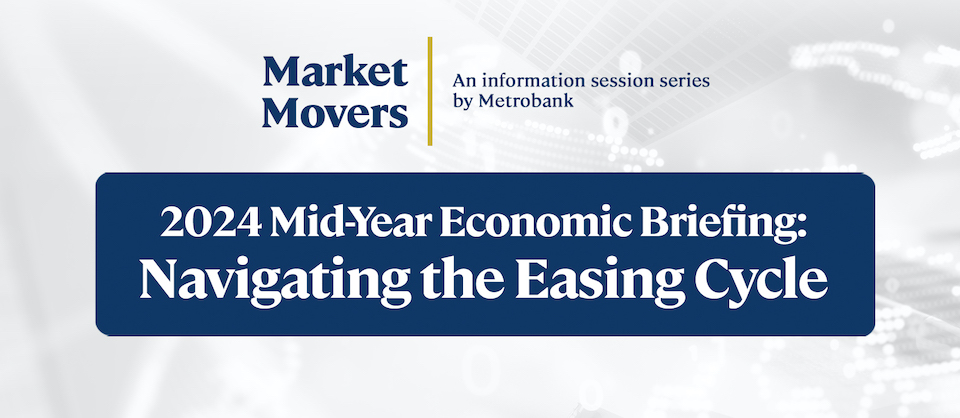
2024 Mid-Year Economic Briefing: Navigating the Easing Cycle
June 21, 2024
Investing with Love
Investing with Love: A Mother’s Guide to Putting Money to Work
May 15, 2024
retirement-ss-3
Investor Series: An Introduction to Estate Planning
September 1, 2023
View All Webinars
DOWNLOADS
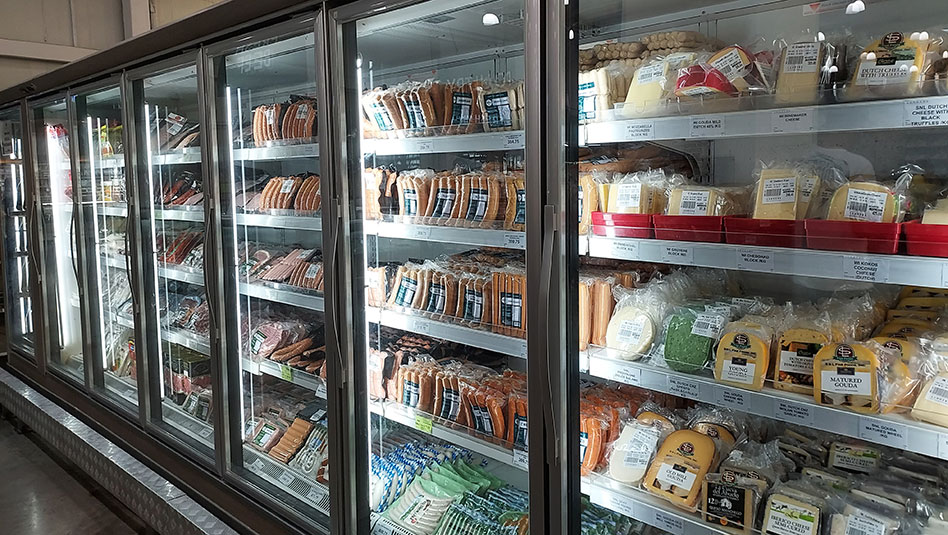
grocery-2-aa
Inflation Update: Target breached
DOWNLOAD
Container ship carrying container boxes import export dock with quay crane. Business commercial trade global cargo freight shipping logistic and transportation worldwide oversea concept. Generative AI
Economic Updates
Philippines Trade Update: Wider deficit on strong imports
DOWNLOAD
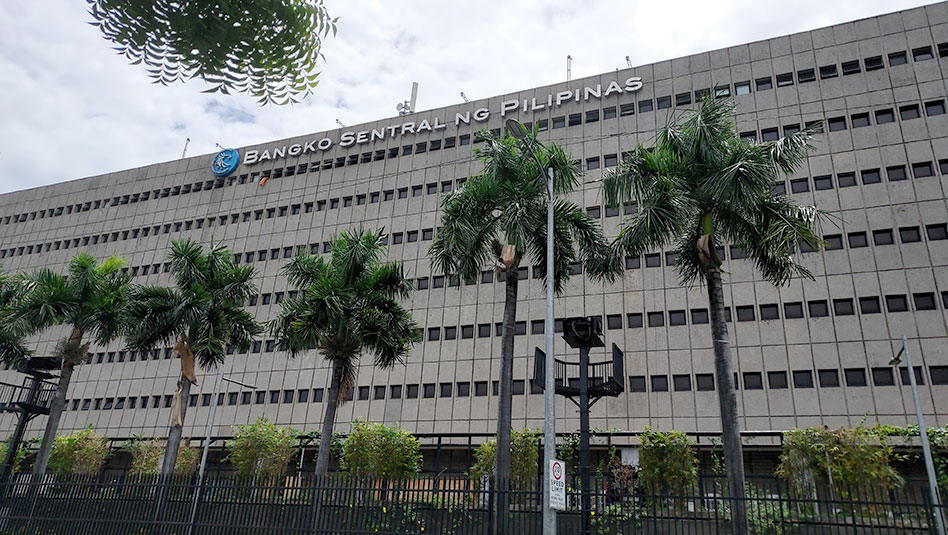
Frick collection with palm trees 
Economic Updates
Policy Rate Updates: Policy rate updates to reassure 
DOWNLOAD
View all Reports
Metrobank.com.ph How To Sign Up
Follow us on our platforms.

How may we help you?

TOP SEARCHES
  • Where to put my investments
  • Reports about the pandemic and economy
  • Metrobank
  • Webinars
  • Economy
TRENDING ARTICLES
  • Investing for Beginners: Following your PATH
  • On government debt thresholds: How much is too much?
  • Philippines Stock Market Outlook for 2022
  • Deficit spending remains unabated

Login

Access Exclusive Content
Login to Wealth Manager
Visit us at metrobank.com.ph How To Sign Up
Access Exclusive Content Login to Wealth Manager
Search
MODEL PORTFOLIO THE GIST
NEWS AND FEATURES
Global Philippines Fine Living
INSIGHTS
INVESTMENT STRATEGY
Economy Stocks Bonds Currencies
THE BASICS
Investment Tips Explainers Retirement
WEBINARS
2024 Mid-Year Economi Briefing, economic growth in the Philippines
2024 Mid-Year Economic Briefing: Navigating the Easing Cycle
June 21, 2024
Investing with Love
Investing with Love: A Mother’s Guide to Putting Money to Work
May 15, 2024
retirement-ss-3
Investor Series: An Introduction to Estate Planning
September 1, 2023
View All Webinars
DOWNLOADS
grocery-2-aa
Inflation Update: Target breached
April 7, 2026 DOWNLOAD
Container ship carrying container boxes import export dock with quay crane. Business commercial trade global cargo freight shipping logistic and transportation worldwide oversea concept. Generative AI
Economic Updates
Philippines Trade Update: Wider deficit on strong imports
March 27, 2026 DOWNLOAD
Frick collection with palm trees 
Economic Updates
Policy Rate Updates: Policy rate updates to reassure 
March 26, 2026 DOWNLOAD
View all Reports

Archives: Business World Article

Electronics exports seen to fall flat

Electronics exports seen to fall flat

The semiconductor and Electronics Industries in the Philippines Foundation, Inc. (SEIPI) said on Wednesday it now expects electronics exports to be flat after seeing a sharp decline in the first semester.

“We have revised our growth forecast from 5% for the year to flat, zero because realistically we’re down 7% (in the first six months). But we see a recovery in the third and fourth quarters. So that’s why we’re aiming for at least flat,” SEIPI President Danilo C. Lachica told reporters on Wednesday.

SEIPI data showed total electronics exports dropped by 7% to USD 21.19 billion in the January-to-June period from USD 22.78 billion in the same period in 2022.

Six sectors showed a decline in exports in the first half. This was led by automotive electronics which plunged 70.4% to USD 18.7 million, followed by office equipment (-44%), electronic data processing (-32.2%), telecommunication (-25.8%), semiconductor components/devices (-4.4%), and control and instrumentation (-0.9%).

On the other hand, some sectors recorded an improvement in exports, such as communication/radar (23.4%), medical/industrial instrumentation (20.1%), and consumer electronics (17.4%).

Mr. Lachica attributed the exports decline mainly due to geopolitical tensions, such as the US-China trade war.

“In the last quarter or so, we’ve been clobbered in terms of our electronics exports. In fact, at one point, we were 15% down compared to last year,” he said, noting that exports recovered in June.

Data from SEIPI showed that total electronics exports rose by 11.8% to USD 4.25 billion in the month of June.

Four sectors reported year-on-year growth led by medical/industrial instrumentation (34.9%), semiconductor components/devices (22.3%), communication/radar (19.6%), and consumer electronics (8.4%).

On the other hand, five sectors posted declines in June, namely automotive electronics (-54%), office equipment (-36.4%), telecommunication (-29.9%), electronic data processing (-29.2%), and control and instrumentation (-12.5%).

Mr. Lachica said SEIPI is still hopeful of a recovery in electronics exports in the second half.

“The demand is still there. We are hoping that the Thanksgiving demand and the Christmas demand will propel the recovery of the industry,” he said.

For the rest of the year, SEIPI expects most of its exports to go to neighboring countries, particularly in China and Hong Kong.

Mr. Lachica noted that the Netherlands replaced Germany as the top destination of Philippine electronics exports.

“In Europe, the biggest destination is now the Netherlands followed by Germany,” he said. — Justine Irish D. Tabile
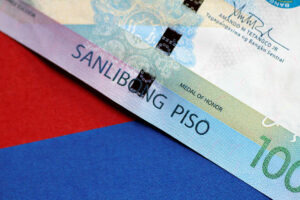
Inflationary pressures remain elevated in PH

Inflationary pressures remain elevated in PH

Inflationary pressures in the Philippines remain one of the highest in Asia as food prices continue to rise, according to Nomura Global Markets Research.

Nomura Global Markets Research in a note dated Aug. 30 said the Philippines recorded the second-highest aggregate score of 103.3 in its ranking of inflationary pressures in Asia.

Singapore faces the highest inflationary pressures with a score of 104.

In Nomura’s scorecard, the Philippines is the only emerging market in Asia that still faces elevated risks to inflation.

“(This is) because of the (country’s) higher vulnerability to supply-side inflationary shocks that have spilled over more broadly and will likely unwind only gradually, in our view,” Nomura said.

Headline inflation slowed for a sixth straight month to 4.7% in July but marked the 16th straight month it exceeded the central bank’s 2-4% target.

Inflation averaged 6.8% in the first seven months of the year, still above the central bank’s revised 5.6% full-year forecast.

Nomura noted inflationary pressures were most under control in Indonesia (96.5) and Thailand (96.8).

“Philippines appears most exposed to higher food prices, especially rice (which has an 8.9% weighting in its consumer price index basket). Higher food prices could result in higher headline inflation and a wider current account deficit, as it resorts to importation,” Nomura said. 

Rice inflation rose to 4.2% in July from 3.6% in June.

According to Nomura, the bar for all Asian central banks to resume rate hikes is “quite high.”

The BSP earlier this month extended its policy hold for a third straight meeting, keeping the benchmark interest rate at a near 16-year high of 6.25%.

“However, we expect the BSP to leave policy rates unchanged, taking comfort from the sharp drop in core inflation momentum and also due to the weakening growth outlook,” it said.

Nomura expects the BSP to cut rates starting March 2024.

Meanwhile, the Philippine central bank may be “encouraged” to start its policy easing if inflation falls within the 2-4% target range this year, Moody’s Analytics said.

Moody’s Analytics in a report dated Aug. 29 said Asian central banks are “walking on a tightrope” this year as inflation further decelerates but policy movements in the US and in Europe hinder them from cutting down borrowing costs.

“In economies that have slowed recently and where inflation has rapidly moderated, such as in the Philippines and South Korea, central banks may be encouraged to lower their policy rates as soon as inflation reaches their target range,” Moody’s said.

The BSP expects inflation to return to the 2-4% target band in the fourth quarter this year.

“On the other hand, they must watch the policy rate of the US and Europe so as not to allow interest rate gaps to rise further, risking volatility in foreign exchange rates — as seen in recent weeks in Southeast Asia as the yield on the US 10-year bond has risen,” Moody’s said.

The peso closed at PHP 56.725 against the dollar on Wednesday, up by 2.50 centavos from its previous close. Year to date, the peso depreciated by 1.71% or 97 centavos from its PHP 55.755 close on December 29.

“We expect central banks in Asia-Pacific to hold their policy interest rates steady at least through the end of this year, and probably longer, depending upon the stability of domestic demand and their respective currencies and how quickly external demand improves from China and from the European and North American economies,” Moody’s added. 

BSP Governor Eli M. Remolona, Jr. earlier said the Philippine central bank remains hawkish, and rate cuts are far off as inflation is still elevated.

The BSP will hold its next policy meeting on September 21. — Keisha B. Ta-asan

Maharlika fund allowed to invest in JVs, infrastructure projects

Maharlika fund allowed to invest in JVs, infrastructure projects

The Maharlika Investment Corp. (MIC), which will manage the country’s first sovereign wealth fund, can invest in joint ventures (JVs), infrastructure projects, and sustainable development programs, as well as extend loans.

Under the implementing rules and regulations of Republic Act No. 11954 or the Maharlika Investment Fund (MIF) law, the MIC can invest in joint ventures or co-investments, mergers and acquisitions; and mutual and exchange-traded funds invested in underlying assets.

The MIC can also invest in real estate and infrastructure projects. However, investments in infrastructure projects should be “directed towards the fulfillment of national priorities such as the national infrastructure program of the Department of Public Works and Highways and other infrastructure agencies, the inclusive innovation industry strategy of the Department of Trade and Industry, and the public investment programs of the National Economic and Development Authority.”

Investments in real estate should also be limited to “high-impact projects, those contained in the Strategic Investment Priority Plan, as well as other projects that are approved by the appropriate approving body to ensure that these are in line with the socioeconomic development program of the government.”

The MIC can also pour funds into health, education, research and innovation projects, as well as sustainable development programs.

It can extend “loans and guarantees to, or participation into joint ventures or consortiums with Filipino and foreign investors, whether in the majority or minority position in commercial, industrial, mining, agricultural, housing, energy, and other enterprises, which may be necessary or contributory to the economic development of the country, or important to the public interest.”

The board of directors must also make sure that allowable investments are in line with the “principle of sustainability.”

The MIC is also authorized to invest in cash, foreign currencies, metals, and other tradable commodities; fixed-income instruments issued by sovereigns, quasi-sovereigns and supranationals; domestic and foreign corporate bonds; listed or unlisted equities, whether common, preferred, or hybrids; and Islamic investments, such as Sukuk bonds.

Board directors
Meanwhile, the list of nominees for the MIC’s president and chief executive officer (CEO), regular directors, and independent directors must be presented to the President by October.

“The solicitation of nominees and applications, for purposes of initial appointment, may be made immediately upon the publication of the IRR, the closing date of which shall not exceed 15 days from the effectivity of the IRR,” it said. The IRR will take effect on Sept. 12.

Under the rules, the MIC president and CEO must have an advanced degree (MBA, MA, MSc, PhD) in finance, economics, business administration, or any related field from a reputable university.

The MIC president and CEO must also show “exceptional experience and expertise in corporate management, financial planning strategy, strategic planning and vision, market and business development, budget development,” and have work experience in a finance or investment-related field for at least 10 years.

A minimum of 10 years in a senior leadership role in a “reputable financial institution or public or private sector organization” is also required.

The president and CEO will direct and supervise the operations and internal administration of the MIC. They will also be charged with the risk management, financial performance, human resources, as well as the accounting and legal affairs of the MIC.

Meanwhile, regular directors must be Filipino citizens, at least 35 years old and must be of “good moral standing and reputation, of recognized probity and independence and have substantial experience and expertise in corporate governance and administration, investment in financial assets, and/or management of investments in the global and local markets.”

The independent directors must have “probity, competence, expertise and experience in finance, economics, investments, business management, or law, and are highly capable to contribute to the attainment of the objectives and purposes of the MIF.”

Both regular and independent directors are required to have a master’s degree in finance, economics, business administration. They must also have at least 10 years of experience in finance, investments, economics, business, or any related field. — Luisa Maria Jacinta C. Jocson

Stakeholders’ comment sought on proposed eSECURE platform  

Stakeholders’ comment sought on proposed eSECURE platform  

The Securities and Exchange Commission (SEC) is seeking comments from stakeholders on a proposed memorandum circular covering its electronic SEC universal registration environment (eSECURE) platform.

The eSECURE is a platform that allows users to manage their SEC account and online transactions in one place, the commission said in the proposed circular posted on Aug. 29.

“The eSECURE creates a digital passport of an individual which grants the user access to the different online services provided by the commission,” it said.

According to the proposed circular, individuals seeking to use eSECURE are required to create an account to improve the security of online transactions with the commission. 

The SEC added that a credentialing process or electronic know-your-customer (eKYC) is needed for sensitive and critical services where verification and establishment of the user’s identity is required.

“It enables risk-based credentialing procedure. At the basic level, it implements repeatable eKYC to determine authenticity of identity and establish reachability of persons transacting online with the Commission. At higher levels, other identity verification methods such as courier-based customer visit and remote retail on-customer-premise biometrics capture may be implemented,” the SEC said.

The SEC added that a PHP 400 fee will be charged for initiating the credentialing process for the first time, while a P100 fee will be paid when the user initiates another credentialing process due to information changes, and a PHP 250 fee will be paid for the renewal of the credentialing account.

Once an account is created, the user will have access to online services such as the SEC electronic simplified processing of an application for company registration, one-day submission and e-registration of companies, automated certification examination system, and electronic SEC education, analysis, and research computing hub.

Other services that could be accessed by the user include the SEC application program interface marketplace. SEC electronic registry application for market participants, SEC eFAST alternative submission environment, SEC amendment system, SEC appointment system, and SEC iMessage.

“The commission reserves the right to cancel any account, without prior notice, which has been found to have violated any of the terms of service or to have engaged in the conduct of inappropriate activities using the eSECURE account,” the SEC said.

It said a canceled account will no longer be allowed to log in and use the online services of the commission. An account can no longer be reactivated once it is canceled,” it added.

Comments on the proposed draft circular may be submitted to the SEC on or before Sept. 8. — Revin Mikhael D. Ochave

Yields on term deposits decline as markets expect policy easing

Yields on term deposits decline as markets expect policy easing

Yields on the Bangko Sentral ng Pilipinas’ (BSP) term deposits dropped on Wednesday amid lower US Treasury rates and expectations of monetary policy easing next year.

Demand for the BSP’s term deposit facility (TDF) amounted to PHP 279.725 billion on Wednesday, lower than the PHP 280-billion offer and the PHP 318.596 billion in tenders seen a week earlier for the same amount on the auction block.

BSP Deputy Governor Francisco G. Dakila, Jr. said in a statement on Wednesday that the market preferred the shorter tenor in the central bank’s term deposit facility this week.

“Only the 7-day tenor was oversubscribed, with the respective bid-to-cover ratios for the 7-day and 14-day tenors at 1.0664x and 0.9092x,” Mr. Dakila said.

The seven-day term deposits fetched bids amounting to PHP 170.616 billion, surpassing the PHP 160 billion auctioned off by the BSP but below the PHP 179.347 billion in tenders logged the previous week.

Accepted rates for the tenor ranged from 6.56% to 6.6%, a tad wider than the 6.578% to 6.6% band logged a week ago. This caused the average rate of the one-week deposits to slip by 0.34 basis point (bp) to 6.5902% from 6.5936% previously.

Meanwhile, demand for the two-week deposits amounted to P109.109 billion, below the P120-billion offer as well as the P139.249 billion in bids seen in the previous auction.

Banks asked for yields from 6.57% to 6.62%, slightly wider than the 6.5780% to 6.61% range seen last week. This caused the average rate of the paper to dip by 0.16 bp to 6.5984% from the 6.6% quoted on Aug. 23.

The BSP has not auctioned off 28-day term deposits for more than two years to give way to its weekly offerings of securities with the same tenor.

The term deposits and the 28-day bills are used by the central bank to mop up excess liquidity in the financial system and to better guide market rates.

“The results of today’s TDF auction reflected market participants’ lingering preference for the shorter tenor amid the need to attend to client requirements,” Mr. Dakila said.

“Looking ahead, the BSP’s monetary operations will continue to be guided by its assessment of prevailing liquidity conditions and market developments,” he added.

TDF yields were slightly lower on Wednesday as US Treasury yields slumped on Tuesday, Rizal Commercial Banking Corp. Chief Economist Michael L. Ricafort said in a Viber message.

The two-year US Treasury yield went down by 18 bps to 4.871% on Tuesday, before recovering to around 4.91% in Asian trading hours, Reuters reported.

The 10-year yield inched up to 4.1354% from Tuesday’s low of 4.106%.

TDF yields were lower as market players expect the Monetary Board to cut policy rates in the first quarter of 2024, Mr. Ricafort added.

BSP Governor Eli M. Remolona, Jr. earlier said the central bank remains hawkish, and rate cuts are far off as inflation is still elevated.

The Monetary Board kept benchmark interest rates steady for a third straight meeting this month, leaving its key policy rate unchanged at a near 16-year high of 6.25%.

The central bank raised borrowing costs by 425 bps from May 2022 to March 2023 to tame inflation.

The BSP will hold its next policy meeting on Sept. 21. — Keisha B. Ta-asan with Reuters

Gov’t fully awards reissued T-bonds

Gov’t fully awards reissued T-bonds

The government made a full award of the reissued 10-year Treasury bonds (T-bonds) it auctioned off on Wednesday at a lower average rate as the Bangko Sentral ng Pilipinas (BSP) is expected to keep borrowing costs steady for the rest of the year.

The Bureau of the Treasury (BTr) raised PHP 30 billion as planned from the reissued 10-year bonds on Wednesday, with total bids for the offer reaching PHP 54.542 billion.

The bonds, which have a remaining life of five years and four months, were awarded at an average rate of 6.22%, with accepted yields ranging from 6.15% to 6.25%.

The average rate of the reissued bonds was 54 basis points (bps) lower than the 6.76% quoted for the papers when they were last offered on July 12, 2022. It was likewise 65.5 bps below the 6.875% coupon for the series.

The average rate was also 3.7 bps lower than the 6.257% quoted for the five-year bond and 3.4 bps below the 6.254% seen for the same bond series at the secondary market before Wednesday’s auction, based on PHP Bloomberg Valuation Service (BVAL) Reference Rates data provided by the Treasury.

“The Auction Committee fully awarded the reissued 10-year Treasury Bonds at today’s auction. With a remaining term of five years and four months, the reissued bonds (FXTN 10-64) fetched an average rate of 6.22%, lower than the original coupon rate of 6.875% set on its original issuance in January 2019 and current secondary market benchmark rates,” the BTr said in a statement on Wednesday.

“The auction attracted PHP 54.5 billion in total tenders, 1.8 times the PHP 30 billion offer. With its decision, the committee raised the full program of PHP 30 billion, bringing the total outstanding volume for the series to PHP 325 billion,” it added.

The bonds were awarded at a lower average rate amid “expectations of steady BSP policy rates in the near-term,” a trader said in an e-mail.

BSP Governor Eli M. Remolona, Jr. last week said the central bank’s stance remains hawkish, with rate cuts unlikely for the rest of the year, as inflation is still elevated.

The Monetary Board kept benchmark interest rates steady for a third straight meeting this month, but said it is prepared to resume tightening if needed amid risks to inflation.

The BSP this month left its overnight reverse repurchase rate unchanged at a near 16-year high of 6.25%. Interest rates on the overnight deposit and lending facilities were maintained at 5.75% and 6.75%, respectively. 

The central bank raised borrowing costs by 425 bps from May 2022 to March 2023 to tame inflation.

The Monetary Board will hold its next policy meeting on Sept. 21.

T-bond rates also tracked the drop in benchmark US Treasury yields, Rizal Commercial Banking Corp. Chief Economist Michael L. Ricafort said in a Viber message.

US Treasury yields retreated after a sharp fall in US job openings increased the likelihood of a US Federal Reserve rate hike pause, Reuters reported.

Benchmark 10-year notes last rose 24/32 in price to yield 4.1178%, down from 4.212% late on Monday.

The Fed raised borrowing costs by 25 bps last month, bringing its target rate to a range between 5.25% and 5.5%.

It has hiked rates by a cumulative 525 bps since it began its tightening cycle in March last year.

The US central bank will hold its next policy review on Sept. 19-20.

Wednesday’s T-bond offering was the last for the month. The BTr raised PHP 110.235 billion from the long tenors, short of the PHP 150-billion program.

The government borrows from local and foreign sources to help fund its budget deficit, which is capped at 6.1% of gross domestic product this year. — A.M.C. Sy with Reuters

BSP looks to expand banks’ credit reporting

BSP looks to expand banks’ credit reporting

The central bank is looking to implement the Comprehensive Credit and Equity Exposures Report (COCREE) among all lenders by next year.

The Bangko Sentral ng Pilipinas said in a proposed circular that the COCREE will cover universal and commercial banks (U/KBs), thrift banks, rural banks, cooperative banks, nonbank financial institutions with quasi-banking functions (NBQB), trust corporations, as well as digital banks.

The latest version of the reporting requirement will be referred to as COCREE 2.0. The 2021 COCREE only covered U/KBs and their subsidiaries, as well as digital banks.

The central bank is also looking to expand its data requirements to strengthen its surveillance and analysis of emerging risks in the financial system.

The draft circular will amend section 173 of the Manual of Regulations for Banks and section 172-Q of the Manual of Regulations for Non-Bank Financial Institutions.

Stakeholders are given until Sept. 19 to submit feedback on the draft circular to the BSP.

“The Comprehensive Credit and Equity Exposures Report (COCREE) is designed to capture granular borrower/counterparty information for all credit and equity exposures of BSP-Supervised Financial Institutions (BSFIs),” the central bank said.

U/KBs, their subsidiaries, and digital banks are expected to comply with the enhanced credit reporting system starting January 2024.

Standalone thrift banks, NBQBs, and trust corporations will use COCREE 2.0 in February next year, while rural and cooperative lenders will adopt the reporting standard by March 2024.

The COCREE 2.0 will be electronically submitted by banks monthly, within 15 banking days after the end of the reference month.

“The electronic submission of the COCREE 2.0 shall conform with the prescribed submission procedures and guidelines covering the required format structure, line-item instructions, validation rules and appropriate technology for reporting, among others,” the BSP said.

The COCREE 2.0 will also be considered a category A-1 report.

The central bank said BSFIs can test the submission of the COCREE 2.0 by the fourth quarter to prepare for the live implementation in 2024.

Penalties for reporting violations will not be imposed during the pilot, but it will be strictly enforced after the grace period following the live implementation.

The 2021 COCREE will no longer be used upon live implementation of the COCREE 2.0. — K.B. Ta-asan

PSEi climbs as soft US data boost Fed pause bets

PSEi climbs as soft US data boost Fed pause bets

Philippine shares climbed on Wednesday following the release of soft US economic data, which could lead the US Federal Reserve to pause its tightening cycle again next month.

The Philippine Stock Exchange index (PSEi) went up by 70.29 points or 1.12% to close at 6,295.29 on Wednesday, while the broader all shares index rose by 27.57 points or 0.82% to end at 3,382.19.

“The PSEi continued to climb today as sentiment found a lift from the lower-than-expected US job openings and consumer confidence, reinforcing prospects of a tightening pause from the US Fed at their September meeting,” China Bank Securities Corp. Research Director Rastine Mackie D. Mercado said in an e-mail on Wednesday.

“Sentiment was buoyed by the bigger than expected drop in US job openings and consumer confidence, with investors speculating that this could ease the pressure on the Federal Reserve to hike interest rates,” China Bank Capital Corp. Managing Director Juan Paolo E. Colet likewise said in a Viber message.

US job openings dropped to a near two-and-a-half-year low last month amid a slowing labor market, which fanned bets that the Fed would keep borrowing costs steady in September.

The Job Openings and Labor Turnover Survey released on Tuesday showed job openings dropped by 338,000 to 8.827 million on the last day of July, the lowest since March 2021.

Meanwhile, a survey from the Conference Board showed consumers’ perceptions of the labor market cooled in August.

“Despite upbeat price action over the past two trading days, we remain wary of a possible uptick in volatility and selling pressure [on Thursday] given the upcoming effectivity date of the MSCI rebalancing (Sept. 1), and likely profit taking following the oversold rally,” Mr. Mercado said.

“The PSEi may try to move above 6,300 as part of the market’s current rebound from oversold conditions, but selling pressure is expected to build as we approach the major resistance at 6,375,” Mr. Colet added.

Most sectoral indices rose on Wednesday, except for property, which dropped by 0.10 point to 2,598.27.

Meanwhile, holding firms went up by 136.22 points or 2.32% to 5,998.92; industrials increased by 107.68 points or 1.23% to 8,858.97; financials jumped by 8.20 points or 0.44% to 1,855.93; mining and oil climbed by 33.51 points or 0.33% to 10,082.30; and services rose by 2.58 points or 0.16% to 1,532.27.

Value turnover went down to PHP 3.97 billion on Wednesday with 672.71 million shares changing hands from the PHP 5.63 billion with 395.06 million issues seen on Tuesday.

Advancers outnumbered decliners, 90 to 82, while 62 names closed unchanged.

Net foreign selling went up to PHP 375.70 million on Wednesday from PHP 219.17 million on Tuesday.

For the rest of the week, Mr. Mercado put the PSEi’s support at 6,150 and resistance at 6,370. — S.J. Talavera

PH economic growth seen to further slow

PH economic growth seen to further slow

Philippine economic growth is likely to further slow this year and in 2024, amid “strong” external headwinds and the end of “revenge spending,” GlobalSource Partners said in a report.

GlobalSource said it cut its Philippine gross domestic product (GDP) forecast to 5.2% for this year from 5.5% previously. It also slashed its GDP forecast for 2024 to 5% from 5.8% previously.

Both projections are below the government’s 6-7% target this year and the 6.5-8% goal in 2024.

“Economic growth is slackening. On one hand, multiple headwinds continue to buffet the economy — from weak external growth and tight global financial conditions to volatile commodity prices and high local inflation,” GlobalSource analysts Romeo L. Bernardo and Maria Christine Tang said in a report dated Aug. 28.

“On the other hand, the tailwind from post-pandemic revenge spending is losing force and, here as elsewhere, the expected swift recovery of Chinese tourism is not happening,” it added.

The Philippine economy expanded by a weaker-than-expected 4.3% in the second quarter, its slowest growth in over two years.

For the first half, GDP growth averaged 5.3%. The economy would have to grow by 6.6% in the second half to hit the government’s target.

GlobalSource said the Philippine economy will continue to face “strong” headwinds going into 2024, amid a slowdown in major trading partners, relatively tight financial conditions and fiscal constraints

“Although we expect monetary easing to start next year, the absence of new growth drivers beyond remittances and service exports compels a significant reduction in our (2024) GDP growth forecast from 5.8% to 5%,” GlobalSource said.

An economic rebound will depend on the government’s ability to implement its catch-up plan for spending. The weak second-quarter growth was partly blamed on the 7.1% contraction in government spending.

“We think that under the supervision of economic managers, spending will improve, although not fully and perhaps with potential costs to spending quality,” it added.

Other risks to the Philippine outlook include a potential recession in the US, a sudden spike in inflation due to food supply issues, geopolitical tensions and other shocks, GlobalSource said.

It kept its inflation forecast for this year at 5.5%, while lowering the 2024 projection to 3.3% from 3.5% previously.

Inflation averaged 6.8% in the first seven months of the year, still above the central bank’s revised 5.6% full-year forecast.

GlobalSource expects the Bangko Sentral ng Pilipinas (BSP) to start cutting rates next year, “possibly leading to more upbeat sentiment.”

The BSP earlier this month extended its policy pause for a third straight meeting, keeping its benchmark interest rate at a near 16-year high of 6.25%.

“The odds of a rate hike will be higher if the sharp currency depreciation comes alongside higher-than-expected headline inflation, reflecting currently high crude oil prices and exacerbated by spikes in prices of key food items, notably rice, and higher-than-expected wage increases,” it said.

However, GlobalSource said the current rate pause is likely to extend through the end of 2023. It noted the BSP is awaiting more definite signals from the US Federal Reserve that it is ending its tightening cycle and beginning its rate cuts.

“Ahead of any Fed cut, the BSP may also consider another cut in banks’ reserve requirement ratio (RRR) if the inflation outlook turns benign. BSP Governor Eli M. Remolona reportedly said that he would like to see the RRR eventually fall to 5% from the current 9.5%,” it added.

In June, the BSP cut the RRR for big banks and nonbank financial institutions with quasi-banking functions by 250 basis points (bps) to 9.5%.

It also reduced the ratio for digital banks by 200 bps to 6% and by 100 bps for thrift banks, and rural and cooperative banks to 2% and 1%, respectively. — Luisa Maria Jacinta C. Jocson

Gov’t makes full award of T-bill offering at mostly lower rates

Gov’t makes full award of T-bill offering at mostly lower rates

The government made a full award of the Treasury bills (T-bills) it offered on Tuesday at mostly lower rates as the Bangko Sentral ng Pilipinas (BSP) is expected to keep borrowing costs steady despite hawkish signals from the US Federal Reserve.

The Bureau of the Treasury (BTr) raised PHP 15 billion as planned via the T-bills it auctioned off on Tuesday as total bids reached PHP 49.125 billion or more than thrice the amount on offer.

Broken down, the Treasury made a full PHP 5-billion award of the 91-day T-bills as tenders for the tenor reached PHP 18.625 billion. The three-month paper was quoted at an average rate of 5.573%, 9.8 basis points (bps) below the 5.671% seen last week, with accepted rates ranging from 5.56% to 5.62%.

The government also raised PHP 5 billion as planned from the 182-day securities as bids for the tenor reached PHP 13.46 billion. The average rate for the six-month T-bill was at 5.993%, inching up by 0.7 bp from the 5.986% seen last week, with accepted rates at 5.95% to 6.038%.

Lastly, the BTr borrowed the programmed PHP 5 billion via the 364-day debt papers as demand stood at PHP 17.04 billion. The average rate of the one-year T-bill went down by 3.7 bp to 6.297% from the 6.334% quoted last week. Accepted yields were from 6.25% to 6.325%.

At the secondary market before Tuesday’s auction, the 91-, 182- and 364-day T-bills were quoted at 5.7522%, 5.9993%, and 6.3043%, respectively, based on PHP Bloomberg Valuation Reference Rates data provided by the Treasury.

“The Auction Committee fully awarded bids for Treasury bills (T-bills) at today’s auction. The 91-, 182-, and 364-day T-bills fetched average rates of 5.573%, 5.993% and 6.297%, respectively, all lower than the prevailing secondary market rates,” the BTr said in a statement on Tuesday.

“The auction was 3.3 times oversubscribed with total bids reaching PHP 49.1 billion. With its decision, the Committee raised the full program of PHP 15 billion for the auction,” it added.

The T-bills fetched lower rates amid “local views that the BSP will likely continue holding domestic policy rates despite views of more Fed rate hikes,” a trader said in an e-mail.

BSP Governor Eli M. Remolona, Jr. last week said the central bank’s stance remains hawkish, with rate cuts not on its radar, as inflation is still elevated.

The Monetary Board kept benchmark interest rates steady for a third straight meeting this month, but said it is prepared to resume tightening if needed amid risks to inflation.

The BSP this month left its overnight reverse repurchase rate unchanged at a near 16-year high of 6.25%. Interest rates on the overnight deposit and lending facilities were maintained at 5.75% and 6.75%, respectively.

The central bank raised borrowing costs by 425 bps from May 2022 to March 2023 to tame inflation.

The Monetary Board will hold its next policy meeting on Sept. 21.

Meanwhile, the US central bank may need to hike interest rates further to bring inflation down, Fed Chair Jerome H. Powell said on Friday.

The Fed raised borrowing costs by 25 bps last month, bringing its target interest rate to a range between 5.25% and 5.5%.

It has hiked rates by a cumulative 525 bps since it began its tightening cycle in March last year.

The Federal Open Market Committee will meet on Sept. 19-20 to review policy.

“T-bill auction yields also eased after global crude oil prices [were] still among one-month lows recently,”  Rizal Commercial Banking Corp. Chief Economist Michael L. Ricafort said in a Viber message.

Brent crude settled six cents lower at USD 84.42 a barrel, after touching a session high of over USD 85 earlier in the day. US West Texas Intermediate crude was 27 cents, or 0.3%, higher at USD 80.10, Reuters reported.

On Friday, crude posted a second week of losses after Mr. Powell said the US central bank may need to raise rates further to cool stubborn inflation.

Tuesday’s T-bill offering was the last for the month. The BTr has raised PHP 53.935 billion out of the PHP 75-billion program for the short-tenored papers.

On Wednesday, the BTr will offer PHP 30 billion in reissued 10-year Treasury bonds with a remaining life of five years and four months.

The Treasury wants to raise PHP 225 billion from the domestic market this month.

The government borrows from local and foreign sources to help fund its budget deficit, which is capped at 6.1% of gross domestic product this year. — A.M.C. Sy with Reuters

Posts navigation

Older posts
Newer posts

Recent Posts

  • Peso GS Weekly: Geopolitics drive a volatile curve
  • Ask Your Advisor: Can my portfolio survive a market crash?
  • Stock Market Weekly: Middle East stalemate weighs on market 
  • Investment Ideas: April 13, 2026 
  • Metrobank US-Iran Risk Index: Fragile ceasefire 

Recent Comments

No comments to show.

Archives

  • April 2026
  • March 2026
  • February 2026
  • January 2026
  • December 2025
  • November 2025
  • October 2025
  • September 2025
  • August 2025
  • July 2025
  • June 2025
  • May 2025
  • April 2025
  • March 2025
  • February 2025
  • January 2025
  • December 2024
  • November 2024
  • October 2024
  • September 2024
  • August 2024
  • July 2024
  • June 2024
  • May 2024
  • April 2024
  • March 2024
  • February 2024
  • January 2024
  • December 2023
  • November 2023
  • October 2023
  • September 2023
  • August 2023
  • July 2023
  • June 2023
  • May 2023
  • April 2023
  • March 2023
  • February 2023
  • January 2023
  • December 2022
  • November 2022
  • October 2022
  • September 2022
  • August 2022
  • July 2022
  • June 2022
  • May 2022
  • March 2022
  • December 2021
  • October 2021

Categories

  • Bonds
  • BusinessWorld
  • Currencies
  • Economy
  • Equities
  • Estate Planning
  • Explainer
  • Featured Insight
  • Fine Living
  • How To
  • Investment Tips
  • Markets
  • Portfolio Picks
  • Rates & Bonds
  • Retirement
  • Reuters
  • Spotlight
  • Stocks
  • Uncategorized

You are leaving Metrobank Wealth Insights

Please be aware that the external site policies may differ from our website Terms And Conditions and Privacy Policy. The next site will be opened in a new browser window or tab.

Cancel Proceed
Get in Touch

For inquiries, please call our Metrobank Contact Center at (02) 88-700-700 (domestic toll-free 1-800-1888-5775) or send an e-mail to customercare@metrobank.com.ph

Metrobank is regulated by the Bangko Sentral ng Pilipinas
Website: https://www.bsp.gov.ph

Quick Links
The Gist Webinars Wealth Manager Explainers
Markets
Currencies Rates & Bonds Equities Economy
Wealth
Investment Tips Fine Living Retirement
Portfolio Picks
Bonds Stocks
Others
Contact Us Privacy Notice Terms of Use
© 2026 Metrobank. All rights reserved.

Access this content:

If you are an existing investor, log in first to your Metrobank Wealth Manager account. ​

If you wish to start your wealth journey with us, click the “How To Sign Up” button. ​

Login HOW TO SIGN UP