




MODEL PORTFOLIO
THE GIST
NEWS AND FEATURES
Global Philippines Fine Living
INSIGHTS
INVESTMENT STRATEGY
Economy Stocks Bonds Currencies
THE BASICS
Investment Tips Explainers Retirement
WEBINARS
2024 Mid-Year Economi Briefing, economic growth in the Philippines
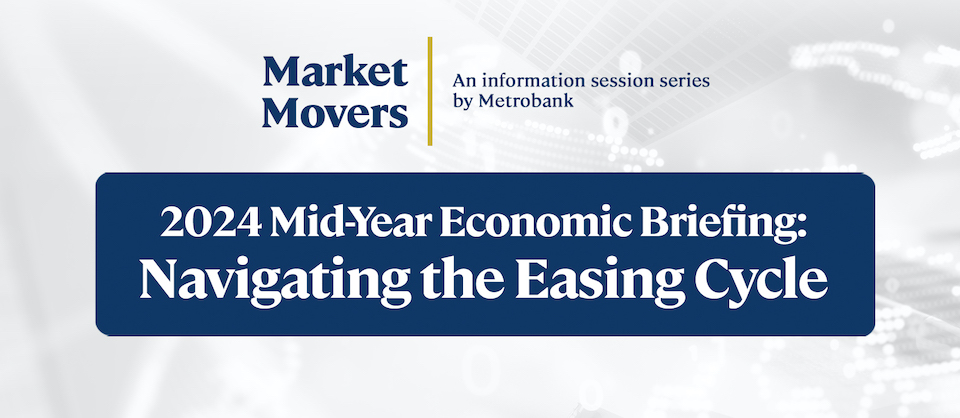
2024 Mid-Year Economic Briefing: Navigating the Easing Cycle
June 21, 2024
Investing with Love
Investing with Love: A Mother’s Guide to Putting Money to Work
May 15, 2024
retirement-ss-3
Investor Series: An Introduction to Estate Planning
September 1, 2023
View All Webinars
DOWNLOADS
Container ship carrying container boxes import export dock with quay crane. Business commercial trade global cargo freight shipping logistic and transportation worldwide oversea concept. Generative AI
Economic Updates
Philippines Trade Update: Wider deficit on strong imports
DOWNLOAD
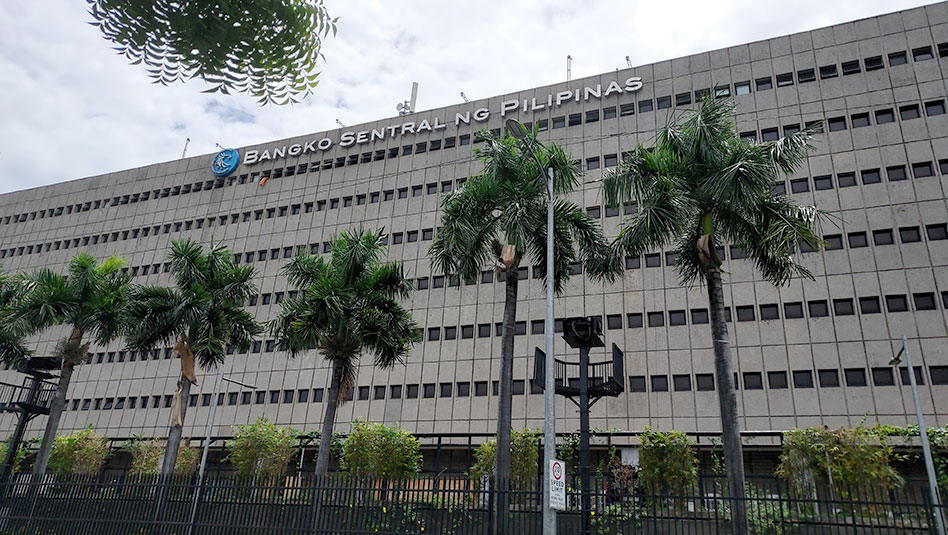
Frick collection with palm trees 
Economic Updates
Policy Rate Updates: Policy rate updates to reassure 
DOWNLOAD
Man using his smartphone
Reports
Fed to cut just once 
DOWNLOAD
View all Reports
Metrobank.com.ph How To Sign Up
Follow us on our platforms.

How may we help you?

TOP SEARCHES
  • Where to put my investments
  • Reports about the pandemic and economy
  • Metrobank
  • Webinars
  • Economy
TRENDING ARTICLES
  • Investing for Beginners: Following your PATH
  • On government debt thresholds: How much is too much?
  • Philippines Stock Market Outlook for 2022
  • Deficit spending remains unabated

Login

Access Exclusive Content
Login to Wealth Manager
Visit us at metrobank.com.ph How To Sign Up
Access Exclusive Content Login to Wealth Manager
Search
MODEL PORTFOLIO THE GIST
NEWS AND FEATURES
Global Philippines Fine Living
INSIGHTS
INVESTMENT STRATEGY
Economy Stocks Bonds Currencies
THE BASICS
Investment Tips Explainers Retirement
WEBINARS
2024 Mid-Year Economi Briefing, economic growth in the Philippines
2024 Mid-Year Economic Briefing: Navigating the Easing Cycle
June 21, 2024
Investing with Love
Investing with Love: A Mother’s Guide to Putting Money to Work
May 15, 2024
retirement-ss-3
Investor Series: An Introduction to Estate Planning
September 1, 2023
View All Webinars
DOWNLOADS
Container ship carrying container boxes import export dock with quay crane. Business commercial trade global cargo freight shipping logistic and transportation worldwide oversea concept. Generative AI
Economic Updates
Philippines Trade Update: Wider deficit on strong imports
March 27, 2026 DOWNLOAD
Frick collection with palm trees 
Economic Updates
Policy Rate Updates: Policy rate updates to reassure 
March 26, 2026 DOWNLOAD
Man using his smartphone
Reports
Fed to cut just once 
March 19, 2026 DOWNLOAD
View all Reports

Archives: Business World Article

Stock market listing still a challenge, say analysts

Stock market listing still a challenge, say analysts

Initial public offerings (IPOs) remain challenging at this time given the volatilities of the local market, analysts said, as they highlighted expansion prospects and strong revenues as among the main drivers of investor appetite.

Their comments are in response to news that Metro Pacific Investments Corp. (MPIC) is planning to list its tollways unit on the stock market.

“It would be challenging to do an IPO in the local equities market until we see risk sentiments improve. Perhaps the best time to list would be from mid-2024 or in 2025,” China Bank Capital Corp. Managing Director Juan Paolo E. Colet said in a Viber message over the weekend.

MPIC is expected to be no longer part of the Philippine Stock Exchange index (PSEi) starting Sept. 26 as its public float is set to fall below the required level. Its voluntary delisting is expected next month.

After its voluntary delisting, MPIC is expected to work on listing Metro Pacific Tollways Corp. (MPTC) on the stock exchange.

“MPTC would be a very attractive IPO candidate. They have a strong cash-generating business and a visible path for long-term growth,” Mr. Colet said.

He said investors would see the company as a healthy dividend stock and demographic play.

“They could do a straight IPO of MPTC or, alternatively, list their tollway portfolio as a real estate investment trust (REIT), which would be the first of its kind in the Philippines,” Mr. Colet said.

In a good market, MPTC could achieve an IPO valuation of up to PHP 150 billion, he added.

The tollways unit of MPIC also has a significant potential for growth, Mr. Colet said, adding that its investments in Indonesia and Vietnam are catalysts for further expansion overseas.

“We think this is in line with the wider plan to list MPIC’s major business units and unlock their value,” China Bank Securities Corp. Research Director Rastine Mackie D. Mercado said in an e-mail.

MPIC’s plan to list its tollways unit would be an opportunity for investors to gain exposure to other businesses of the company, Mr. Mercado said.

“Particularly for its tollways business, investors are likely to find the recurring income of the business as its key value proposition. This also makes it a prime candidate as a REIT listing,” he said. Mr. Mercado said that with its potential as a REIT candidate, the other factors that could drive investors’ appetite are how its yield would compare to other income instruments and the company’s expansion plans. 

“We think that the conclusion to the Fed (Federal Reserve) and the BSP’s (Bangko Sentral ng Pilipinas) rate hike cycles and possible rate cuts late next year are key catalysts for improving market conditions and trading liquidity — paving the way for re-energized appetite for IPOs,” Mr. Mercado said. MPIC is one of three Philippine units of Hong Kong-based First Pacific Co. Ltd., the others being Philex Mining Corp. and PLDT Inc.

Hastings Holdings, Inc., a unit of PLDT Beneficial Trust Fund subsidiary MediaQuest Holdings, Inc., has an interest in BusinessWorld through the Philippine Star Group, which it controls. — Ashley Erika O. Jose

T-bill, bond rates expected to move sideways

T-bill, bond rates expected to move sideways

Rates of Treasury bills (T-bills) and bonds on offer this week could trade sideways after the Bangko Sentral ng Pilipinas (BSP) signaled the possibility of resuming its tightening cycle.

The Bureau of the Treasury (BTr) on Monday will auction off PHP 15 billion in T-bills or PHP 5 billion each in 91-, 182- and 364-day papers.

On Tuesday, it will offer PHP 30 billion in reissued three-year Treasury bonds (T-bonds) with a remaining life of two years and 11 months.

Rizal Commercial Banking Corp. Chief Economist Michael L. Ricafort said in a Viber message that T-bill and bond yields may decline amid signals from the Bangko Sentral ng Pilipinas (BSP) on a possible policy rate hike in November.

At the secondary market on Friday, the 91-, 182-, and 364-day T-bills went down by 1.23 bps, 1.97 bps, and 6.76 bps week on week to end at 5.6102%, 5.9444%, and 6.0960%, respectively, based on PHP BVAL Reference Rates data published on the Philippine Dealing System’s website.

The three-year bonds likewise inched down by 1.59 bps to 6.2072% on Friday.

“Trading will likely move sideways until the end of the month. More pain will likely come during the October auctions,” a trader said in an email.

The trader also noted that the reissued three-year bonds might be rejected this week as market players could demand higher rates.

In an interview with Bloomberg TV, BSP Governor Eli M. Remolona said that the central bank may resume monetary tightening at its next meeting on Nov. 16 and hinted at the possibility of future rate hikes.

“It immediately triggered players to unwind positions as it was already an indication that they can hike more after November — beyond what was initially signaled yesterday in the MB (Monetary Board),” the trader said.

The Monetary Board on Thursday maintained its policy rate at 6.25% for a fourth straight meeting, as expected by 14 economists in a BusinessWorld poll last week.

Interest rates on the overnight deposit and lending facilities were also left unchanged at 5.75% and 6.75%, respectively.

From May 2022 to March 2023, the BSP has raised borrowing costs by 425 bps.

Last week, the BTr raised PHP 15 billion as planned via the T-bills as total bids reached PHP 55.665 billion, or more than thrice the amount on offer.

Broken down, the Treasury made a full PHP 5-billion award of the 91-day T-bills as tenders for the tenor reached PHP 16.37 billion. The average rate of the three-month paper went down by 2.3 bps to 5.552%, with accepted rates ranging from 5.53% to 5.568%.

The government also raised PHP 5 billion as planned from the 182-day securities as bids for the tenor reached PHP 17.792 billion. The average rate for the six-month T-bill was at 5.939%, down by 2.1 bps from the previous week, with accepted rates at 5.9% to 5.953%.

Lastly, the BTr borrowed the programmed PHP 5 billion via the 364-day debt papers as demand for the tenor stood at PHP 21.503 billion. The average rate of the one-year T-bill inched down by 11.7 bps to 6.073%. Accepted yields were from 6.04% to 6.08%.

Meanwhile, the reissued three-year bonds to be offered on Tuesday were last auctioned off on Sept. 5, where the government raised just PHP 21.187 billion of the PHP 30 billion program for a coupon rate of 6.25% and an average rate of 6.222%.

The Treasury wants to raise PHP 180 billion from the domestic market this month, or PHP 60 billion via T-bills and PHP 120 billion via T-bonds.

The government borrows from local and foreign sources to help fund its budget deficit, which is capped at 6.1% of gross domestic product this year. — Luisa Maria Jacinta C. Jocson

Peso rebound seen after BSP policy stance

Peso rebound seen after BSP policy stance

The peso may rebound against the US dollar this week on hawkish remarks from the Bangko Sentral ng Pilipinas (BSP) chief following the policy hold on Thursday. 

The local unit closed at PHP 56.795 per dollar on Friday, strengthening by six centavos from its PHP 56.855 finish on Thursday, based on Bankers Association of the Philippines data.

The peso also appreciated by two centavos from its PHP 56.815-a-dollar finish a week earlier. Year to date, the peso has weakened by 1.8% or PHP 1.04 from its PHP 55.755 close on Dec. 29, 2022.

The local currency opened Friday’s session at PHP 56.85 against the dollar. Its weakest showing was at PHP 56.90, while its intraday best was at PHP 56.765 versus the greenback.

Dollars exchanged increased to USD 994.31 million on Friday from USD 815.28 million on Thursday.

The Rizal Commercial Banking Corp. Chief Economist Michael L. Ricafort said in a Viber message that the peso strengthened versus the dollar on Friday after hawkish signals from the BSP governor.

In an interview with Bloomberg TV on Friday morning, BSP Governor Eli M. Remolona said a possible rate hike at the next policy review on Nov. 16 may not be the last amid risks to inflation.

“We’re not convinced it would be the last one. It won’t be the last hike in the cycle,” he said. “We’re still in a hawkish stance.”

The Monetary Board maintained key interest rates for a fourth straight meeting on Sept. 21 but signaled it might resume tightening this year if inflation pressures persist.

The BSP kept its key benchmark rate at 6.25%, the highest in nearly 16 years. Interest rates on the overnight deposit and lending facilities were also left unchanged at 5.75% and 6.75%, respectively.

The Monetary Board hiked interest rates by 425 basis points (bps) from May 2022 to March 2023.

“If the inflation numbers had been just a bit worse, we might have gone for a hike this time. Nonetheless, the vote was unanimous, but the numbers were pretty close between hiking and not hiking,” Mr. Remolona said.

August inflation unexpectedly rose to 5.3% from 4.7% in July, bringing the year-to-date average to 6.6%, still above the central bank’s 2-4% target and the revised 5.8% forecast for the year.

Last week, the BSP also raised its average inflation forecast for 2023 to 5.8% (from 5.6%) and to 3.5% (from 3.3%) for 2024. It kept its 2025 forecast at 3.4%.

For this week, Security Bank Corp. Chief Economist Robert Dan J. Roces in an interview said the peso will “consolidate” as the market will continue to react to the hawkish remarks of the BSP governor.

According to Mr. Remolona, the impact of the BSP’s aggressive monetary tightening may continue up to the first half of next year.

“We’ll still see the rates, the previous hikes weighing on economic activity in the Philippines. The lags are long,” he said. “Another hike would mean falling below potential. But that’s a price we may have to pay if inflation is too high.”

Meanwhile, the BSP chief is not concerned about the depreciation of the peso, which almost touched the P57-to-a-dollar level on Thursday.

“Currency weakness has been a factor but not that much of a factor. The weakness seems not to come from the difference in policy rates between us and the US. It comes more from uncertainty about the economic outlook,” Mr. Remolona said.

He said that the movements in the foreign exchange market were not that sharp.

“Usually, small movements don’t affect expectations of inflation in the Philippines. Once they become very sharp then it begins to affect expectations and that is what we worry about. But so far it has not been the case,” he said.

The US Federal Reserve signaled it would keep rates higher for longer, even as it opted to keep the target Fed fund rate unchanged at 5.25-5.5% at its meeting last week. 

In a note, MUFG Senior Currency Analyst Michael Wan said they have raised their peso forecasts against the dollar for this year and 2024. 

The peso is now seen to end the year at PHP 57.30 (from PHP 56.70 previously) versus the greenback, before weakening further to PHP 57.50 (from PHP 55.20) in the next 12 months, along with some underperformance of other Asian currencies. 

“Our forecast change reflects a stronger pickup in oil prices than we assumed, while the US Dollar and US rates have also been higher than our forecasts,” Mr. Wan said.  

He also said the BSP may only start cutting policy rates in the second half of 2024 amid risks to inflation and to the peso.

For this week, Mr. Ricafort gave a forecast range of PHP 56.55 to PHP 56.95 versus the greenback, while Mr. Roces expects the local unit to move within PHP 56.58 to PHP 56.90 per dollar. — Keisha B. Ta-asan

Impact of PH monetary policy tightening to be felt until next year — BSP chief

Impact of PH monetary policy tightening to be felt until next year — BSP chief

The economic impact of monetary policy tightening by the Philippine central bank will have a long lag and be felt into next year, Bangko Sentral ng Pilipinas (BSP) Governor Eli M. Remolona said on Friday.

“The effects of tightening will continue for about three quarters up to the first half of next year. We’ll still see the previous hikes weighing on economic activity in the Philippines. The lags are long,” Mr. Remolona said during an interview with Bloomberg TV.

The BSP kept its key interest rate steady for a fourth straight policy meeting on Thursday, while signaling its readiness to resume tightening monetary policy at its next meeting in November if inflation pressures persist.

The Philippine economy grew at its slowest pace in nearly 12 years in the second quarter as high inflation and a series of interest rates hikes hurt consumer demand.

Mr. Remolona, at the same time, ruled out a rate cut anytime soon.

“Output numbers have to be pretty bad and inflation numbers to be pretty low for us to consider rate cuts next year,” he said. — Reuters

BSP extends pause on rate hikes

BSP extends pause on rate hikes

The Bangko Sentral ng Pilipinas (BSP) maintained key interest rates for a fourth straight meeting on Thursday but signaled it might resume tightening at its next meeting in November if inflation pressures persist.

The Monetary Board kept its target reverse repurchase (RRP) rate at 6.25%, as expected by 14 of 17 analysts at a BusinessWorld poll last week.

Interest rates on the overnight deposit and lending facilities were also left unchanged at 5.75% and 6.75%, respectively.

“The Monetary Board deemed it appropriate to maintain its pause amid the emerging upside risks to the inflation outlook,” BSP Governor Eli M. Remolona, Jr. said in a press briefing. 

“Looking ahead, the BSP stands ready to resume its tightening actions in the face of upside risks and potential second-round effects that could dislodge inflation expectations.”

Mr. Remolona said the Monetary Board might hike borrowing costs at its policy review on Nov. 16 should inflationary pressures persist. 

“A rate hike is on the table in November. How big it will be will depend on the data, (or) how bad the data are with respect to inflation,” he said.

The BSP has raised borrowing costs by 425 basis points (bps) from May 2022 to March 2023 to tame inflation.

New forecast
Meanwhile, the BSP raised its average inflation forecast for 2023 to 5.8% (from 5.6%) and to 3.5% (from 3.3%) for 2024. It kept its 2025 forecast unchanged at 3.4%.

Mr. Remolona said the hike in the inflation projections this year and 2024 reflect “spillovers from weather disturbances, rising global crude oil prices and the recent depreciation of the peso.”

BSP Senior Assistant Governor Iluminada T. Sicat said the adjustments were due to the faster-than-expected August inflation, and a higher “nowcast” print for September.   

Headline inflation unexpectedly rose for the first time in seven months to 5.3% in August from 4.7% in July. Inflation averaged 6.6% in the eight-month period.

Despite the higher forecasts, Mr. Remolona said inflation is still projected to return to the 2-4% target by November in the absence of further supply-side shocks.

“While food and transport prices continue to drive headline inflation, core inflation has moderated further, implying an easing in underlying pressures. In addition, inflation expectations remain anchored to the target range over the policy horizon,” he said. 

Food inflation accelerated to 8.2% in August from 6.3% in July, while transport inflation rose to 0.2% in August from -4.7% in the previous month.

On the other hand, core inflation, which excludes volatile prices of food and fuel, further eased to 6.1% year on year in August.

“The balance of risks to the inflation outlook remains skewed toward the upside. The major upside risks to the inflation outlook are the potential impact of further adjustments in transport fares and electricity rates,” Mr. Remolona said.

Transport groups have filed petitions for a fare increase amid the continued increase in pump prices since mid-July.

Meanwhile, the decision of the US Federal Reserve will have a minimal impact on the Philippines, the BSP chief said.

The US Federal Reserve signaled it would keep rates higher for longer, even as it opted to keep the target Fed fund rate unchanged at 5.25-5.5% at its meeting on Thursday.

“Next year, instead of a total 100-bp (basis point) reduction, it looks like only a 50-bp reduction in the Fed fund target. So that means next year, maybe [there will be] a stronger dollar because it’s a more hawkish stance next year,” Mr. Remolona said.

The local currency closed at PHP 56.855 a dollar on Thursday, depreciating by 4.50 centavos from Wednesday’s PHP 56.81 finish. Year to date, the peso has depreciated by 1.9% or PHP 1.1 from the PHP 55.755 close on Dec. 29, 2022.

Higher for longer
Meanwhile, Mr. Remolona said he does not see any policy easing this year and in the first six months of 2024.

“Rate cuts this year, [and in] 2023, are off the table. But rate hikes are not off the table,” he said. 

“For now, we see a kind of balance between demand and supply. We’re close to the right level for interest rates. Whether there will be a cut next year will depend on bad news when it comes to output,” he added.

Makoto Tsuchiya, assistant economist at Oxford Economics, said the BSP might stay on hold at the remaining meetings this year, before it starts policy easing in the first quarter of 2024.

“Despite the pickup in August inflation, we still expect headline inflation to settle within BSP’s 2-4% target by the end of the year, which should ready the ground for the first cut early next year,” he said. 

Mr. Tsuchiya said that while the peso could further weaken later this year, it would “unlikely to materially affect monetary policy operations.”

ING Bank N.V. Manila Senior Economist Nicholas Antonio T. Mapa said the BSP would continue to balance the growth momentum and inflation.

“The only exception to this scenario would be a rate hike by the Federal Reserve, which could prod the BSP to follow with a rate hike to maintain the modest 75-bps interest rate differential with the Fed,” he said.

Meanwhile, Pantheon Macroeconomics Chief Emerging Asia Economist Miguel Chanco said the BSP might cut policy rates by 25 bps in November.

“Admittedly, the risks to this call are skewed to the upside, given the rebuilding of noncore price pressures at the margin. Nevertheless, our forecast is predicated on the likely more urgent need to take pressure off the economy, which we think is in the middle of a shallow technical recession,” he said.

“Pantheon’s base case is that the Fed is done hiking and that inflation in the Philippines should return to the target range in October, opening the door for the start of easing,” he added.

The Philippine economy expanded by 4.3% in the second quarter, the slowest in two years. For the first half, economic growth averaged 5.3%, below the government’s 6-7% target. — Keisha B. Ta-asan, Reporter

NEDA Board prepares EO to expedite flagship projects

NEDA Board prepares EO to expedite flagship projects

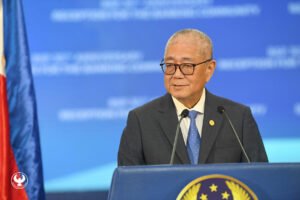
The National Economic and Development Authority (NEDA) Board has given the go signal for an executive order (EO) that will expedite the processing of requirements for flagship infrastructure projects, Secretary Arsenio M. Balisacan said.

At a Palace briefing on Thursday, Mr. Balisacan said the order would “enable the expeditious processing of licenses, clearances, permits, certifications and authorizations for the IFP (infrastructure flagship projects).”

“The primary goal of this proposed EO is to minimize if not eliminate delays in the implementation of IFPs,” he said.

Mr. Balisacan said the Office of the Executive Secretary would still have to check the draft EO for “technicalities,” but he expects it to be issued “very soon.”

Under the order, all government agencies and concerned offices would be required to streamline the procedures and requirements for the flagship projects.

“The simplified requirements will be applicable to both pending and new applications within the NEDA Board approved list of IFPs, as well as any additions to the updated IFP list,” he added.

There are 197 approved flagship projects worth P8.71 trillion. By the end of this year, 12 of these are expected to be completed.

The order would also promote the automation of databases for more efficient data-sharing among agencies, as well as facilitate electronic application submissions.

Meanwhile, Mr. Balisacan said the NEDA Board approved the inclusion of the Department of Environment and Natural Resources (DENR) and Department of Information and Communications Technology (DICT) to the NEDA Board Committee on Infrastructure as integral members.

The NEDA Board also confirmed the updated framework for the proposed National Government-Local Government Unit cost-sharing schemes for infrastructure projects. 

“This aims to delineate the roles of the National Government and the LGUs, particularly in resource-poor areas or where resources may be needed to carry out the devolved functions and shared between the National Government and LGUs,” Mr. Balisacan said.

The NEDA Board also endorsed the proposal to cut tariffs on gypsum and anhydrite, inputs commonly used for construction materials, to 0% from 3%.

“It is worth noting that natural gypsum and anhydrite are not produced locally. These raw materials are used in the production of plasterboard and cement, which are commonly used in construction,” Mr. Balisacan said.

“With the reduction in tariffs, we anticipate a decrease in production costs and an improvement in the industry’s competitiveness as we ramp up our infrastructure drive,” he added. — Luisa Maria Jacinta C. Jocson

Businesses see PH as key entry to Southeast Asia

Businesses see PH as key entry to Southeast Asia

Businesses see the Philippines as a key target for entering the Southeast Asian market due to competitive wages and the opportunity to develop and test new products and solutions, a study issued by HSBC Bank plc said.

Of the 3,509 businesses surveyed in the study, 21% of those without a current Philippine presence said they plan to enter the market over the next two years.

The Philippines ranked third in Southeast Asia, along with Indonesia and Malaysia, at 25%.

Meanwhile, 19% of those already active in the Philippines said they plan to prioritize expanding their operations in the country over the next two years.

The businesses also expect sales in the region to grow by 23.2% over the next 12 months, higher than the 20.1% forecast from last year’s survey.

“These findings confirm what we have been seeing from our own customers: that businesses around the world are increasingly confident about scaling up in Southeast Asia, especially the Philippines,” HSBC Philippines President and Chief Executive Officer Sandeep Uppal said in a statement.

“We are on fertile ground and as excited as our clients about the growth prospects of the Philippines and in Southeast Asia and focused on connecting local and international businesses in this dynamic region to opportunities across the globe,” he added.

“Competitive wage prices and the opportunity to develop and test new products and solutions ranked equally as the key drivers for business expansion, with 28% of firms with operations in the Philippines selecting each attribute,” the study said.

The foreign companies also cited a supportive government and regulatory environment (27%), increasing domestic consumer income/wealth (27%), and growing digital economy (26%).

However, only 29% of the firms with exposure in the country “expect substantially increased economic growth through technology in the coming 10 years” due to a lack of skilled personnel to drive implementation.

The study also showed that 31% of the surveyed firms saw macro-economic issues and cultural differences as the top challenges in conducting business.

The report mentioned economic challenges such as inflation and high interest rates and cultural issues such as language and ways of doing business.

“The top sustainability concerns for businesses operating in the Philippines remain unchanged from our 2022 survey, with 40% selecting tackling climate change and improving human rights as the most important issues to address,” HSBC said.

Less than half, or 45% of businesses with operations in the Philippines are reviewing the sustainability credentials of their suppliers, making this the top priority on the sustainability agenda.

Both nature-positive supply chains and reviewing the use of energy, plastic and water resources (43%) are also a focus of the respondents.

In terms of policy, 27% of the respondents said there is a lack of subsidies or government support, while 28% said new regulations on carbon reduction could impact their business.

“Our survey demonstrates that international businesses are accelerating their growth in the ASEAN region. To do so, they are embracing M&A (mergers and acquisition) activity, expanding into new markets, and investing heavily in technological innovation. The Philippines appeals to international businesses on both the supply and demand side making it one of the top new destinations in the region for those planning market expansion,” the report said.

The study was conducted from July 25 to Aug. 2, surveying firms from major markets including China, India, the United Kingdom, France, Germany, the US, Australia, Hong Kong, the United Arab Emirates, Saudi Arabia, Bahrain, Qatar, Oman, and Kuwait. — Aaron Michael C. Sy

Peso declines on hawkish BSP signals

Peso declines on hawkish BSP signals

The peso depreciated against the dollar on Thursday after hawkish signals from the Bangko Sentral ng Pilipinas (BSP).

The local currency closed at PHP 56.855 versus the dollar on Thursday, weakening by 4.50 centavos from Wednesday’s PHP 56.81 finish, data from the Bankers Association of the Philippines’ website showed.

The local unit opened Thursday’s session weaker at PHP 56.90 per dollar. Its intraday best was at PHP 56.82, while its worst showing was at PHP 56.95 against the greenback.

Dollars traded went down to USD 815.28 million on Thursday from the USD 835.5 million on Wednesday.

The peso inched down on Thursday after the BSP hinted at a potential rate hike at its November meeting and raised its inflation forecasts for this year and the next, Rizal Commercial Banking Corp. Chief Economist Michael L. Ricafort said in a Viber message.

BSP Governor Eli M. Remolona, Jr. said after their policy meeting on Thursday that a rate increase will be “on the table” in the Monetary Board’s Nov. 16 review, with the magnitude of the hike to be based on data.

The Monetary Board on Thursday kept its policy rate at 6.25% for a fourth straight meeting, as expected by 14 economists in a BusinessWorld poll last week.

Interest rates on the overnight deposit and lending facilities were also left unchanged at 5.75% and 6.75%, respectively.

The BSP has raised borrowing costs by 425 basis points from May 2022 to March 2023 to tame inflation.

On Thursday, the central bank raised its average inflation forecast for 2023 to 5.8% from 5.6% previously, and to 3.5% from 3.3% for 2024.

Meanwhile, the BSP kept its 2025 inflation forecast unchanged at 3.4%.

Headline inflation rose for the first time in seven months to 5.3% in August from 4.7% in July. Year to date, inflation averaged 6.6%, well above the BSP’s 2-4% target.

The peso was also dragged down by the US dollar reaching a six-month high, Mr. Ricafort added.

The dollar hit a 6-1/2-month high on Thursday after the US Federal Reserve signaled policy would remain restrictive for longer, even after holding rates steady, Reuters reported.

The dollar index, which measures the currency against a basket of rivals, rose as high as 105.68, its strongest since early March, before settling slightly lower at 105.45.

The Fed met market expectations at its monetary policy meeting on Wednesday, holding interest rates steady at the 5.25%-5.5% range.

The US central bank, however, stiffened a hawkish monetary policy stance that its officials increasingly believe can succeed in lowering inflation without wrecking the economy or leading to large job losses.

For Friday, Mr. Ricafort sees the peso ranging from PHP 56.75 to PHP 56.95 per dollar. — AMCS with Reuters

Lawmaker calls for relaxation of biofuel requirement to ease oil prices   

Lawmaker calls for relaxation of biofuel requirement to ease oil prices   

The government should provide PHP 5.19 billion in fuel subsidies to the transport, farm and fisheries sectors in the next three months to avert runaway inflation that could hit 6.2% this year amid spiraling global crude prices, the chairman of the House of Representatives Ways and Means Committee said.

In a memo to House Speaker Ferdinand Martin G. Romualdez, Albay Rep. Jose Ma. Clemente S. Salceda also proposed the reduction of the biofuel requirement for gasoline to 5% to reduce prices by as much as PHP 1.03 a liter.

To address the spike in pump prices, he said the government should implement fuel discounts for the transport, farm and fisheries sectors to prevent second-round effects.

“An increase in fuel prices, however, would have second-round effects on inflation. Historically, a PHP 10 increase in fuel prices results in a one-percentage-point increase in overall consumer price index (CPI),” he added.

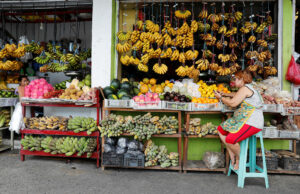
Inflation quickened for the first time in seven months to 5.3% in August, due to rising fuel and food costs.

If fuel and rice prices continue to increase, Mr. Salceda noted inflation could average 6.2% this year. This would be higher than the Bangko Sentral ng Pilipinas’ 5.6% full-year projection.

Mr. Salceda estimated that PHP 907 million would be needed to provide fuel discounts for 180,000 jeepneys or PHP 5,040 per driver until the end of the year. He also proposed giving a subsidy of PHP 2,800 per hectare for farmers, which would require a PHP 3.36-billion budget; and a subsidy of PHP 420 for a fisherman, which would need a PHP 924-million budget.

Mr. Salceda, who is also chair of the Ways and Means Committee, said the funds for the fuel subsidies could come from value-added tax (VAT) collection from diesel and gasoline, which are projected to be at least PHP 9.3 billion higher than its target.

The Commission on Elections also said it would exempt the distribution of fuel subsidy from the spending ban currently in place for the village and youth council election, Chairman George Erwin M. Garcia told reporters.

At the same time, Mr. Salceda suggested that the National Biofuels Board lower domestic bioethanol additive requirement to 5% from the current 10% under the Biofuels Law.

“The additive makes pump price more expensive because current domestic bioethanol is PHP 84.11 per liter, above the gasoline pump price. Relaxing the requirement could also increase mileage, as bioethanol contains 30% less energy than pure gasoline. The reduction will result in an outright reduction of per liter price by PHP 1.03, and total savings (due to mileage) of PHP 3.05 per liter,” he said.

The lawmaker also proposed a flexible excise tax regime for fuel products.

“Automatic reduction of excise tax by PHP 3 when the 3-month average Means of Platts Singapore (MOPS) index of prices exceeds USD 80 and increases the excise tax by PHP 2 when the same is lower than USD 45,” Mr. Salceda said.

House leaders have proposed the temporary suspension of fuel taxes to address rising pump prices.

However, Mr. Salceda said that suspending fuel excise taxes can only be done if Congress amends the Tax Reform for Acceleration and Inclusion law.

Finance Secretary Benjamin E. Diokno on Tuesday warned that the government may lose up to PHP 37 billion in revenues in the fourth quarter if it suspended collection of VAT and excise tax on petroleum products.

“Removing — or even simply suspending — taxes invariably raises disposable income. Cutting taxes puts more money in everyone’s pocket, enabling them to buy more goods and services, ultimately stimulating the economy,” Terry L. Ridon, convenor of think tank InfraWatch PH, said in a statement. — Beatriz Marie D. Cruz

PSEi up on bargain hunting, central bank decisions

PSEi up on bargain hunting, central bank decisions

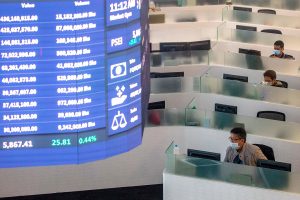
PHILIPPINE SHARES rebounded on Thursday as investors bought cheap stocks and as both the US Federal Reserve and Bangko Sentral ng Pilipinas (BSP) kept benchmark rates steady.

The benchmark Philippine Stock Exchange index (PSEi) went up by 53.67 points or 0.88% to end at 6,094.71 on Thursday, while the broader all shares index rose by 22.41 points or 0.68% to close at 3,294.07.

“Shares on the Philippine Stock Exchange advanced as investors hunted for bargains following four days of declines, shrugging off the prospect of higher US interest rates that crimped the appeal of risk-driven assets elsewhere globally, with focus turned to the Philippine central bank’s rate decision,” Globalinks Securities and Stocks, Inc. Senior Trader Mark V. Santarina said in a Viber message.

“People were picking and choosing what they wanted to look at, which was obviously more on the positive side, so sentiment today leaned more towards the green end,” he added.

Philstocks Financial, Inc. Research and Engagement Officer Mikhail Philippe Q. Plopenio likewise said in a Viber message that the PSEi climbed on bargain hunting after four days of decline.

“The anticipated pause from the Federal Reserve was also cheered by many as it raised bets that the Bangko Sentral ng Pilipinas will keep policy rates unchanged as well in their meeting this Thursday afternoon. The local bourse opened and stayed in the green territory for the whole session as bargain hunters prevailed,” Mr. Plopenio added.

The US Federal Reserve held interest rates steady on Wednesday but stiffened a hawkish monetary policy stance that its officials increasingly believe can succeed in lowering inflation without wrecking the economy or leading to large job losses, Reuters reported.

Central bank officials held the benchmark overnight interest rate in the current 5.25%-5.5% range, but sketched a stricter policy path moving forward in an inflation fight they now see lasting into 2026.

Meanwhile, the BSP on Thursday kept its policy rate at 6.25% for a fourth straight meeting, as expected by 14 economists in a BusinessWorld poll last week.

Interest rates on the overnight deposit and lending facilities were also left unchanged at 5.75% and 6.75%, respectively.

The majority of sectoral indices climbed on Thursday. Property rose by 60.56 points or 2.45% to 2,530.63; financials went up by 18.81 points or 1.06% to 1,778.98; industrials increased by 56.71 points or 0.65% to 8,757.87; and holding firms climbed by 12.48 points or 0.21% to 5,760.26.

Meanwhile, mining and oil dropped by 83.40 points or 0.79% to 10,371.39; and services went down by 0.64 point or 0.04% to 1,487.56.

Value turnover went up to P5.97 billion on Thursday with 621.99 million shares changing hands from the P5.26 billion with 542.64 million issues seen on Wednesday.

Decliners narrowly outnumbered advancers, 89 versus 84, while 51 names closed unchanged.

Net foreign selling went down to P597.98 million on Thursday from P1.02 billion on Wednesday. — SJT with Reuters

Posts navigation

Older posts
Newer posts

Recent Posts

  • Investment Ideas: April 1, 2026
  • Metrobank US-Iran Risk Index: Signals of an end
  • Eye on Earnings: Demand for connection supports telcos
  • Inflation Preview: March madness
  • Investment Ideas: March 31, 2026

Recent Comments

No comments to show.

Archives

  • April 2026
  • March 2026
  • February 2026
  • January 2026
  • December 2025
  • November 2025
  • October 2025
  • September 2025
  • August 2025
  • July 2025
  • June 2025
  • May 2025
  • April 2025
  • March 2025
  • February 2025
  • January 2025
  • December 2024
  • November 2024
  • October 2024
  • September 2024
  • August 2024
  • July 2024
  • June 2024
  • May 2024
  • April 2024
  • March 2024
  • February 2024
  • January 2024
  • December 2023
  • November 2023
  • October 2023
  • September 2023
  • August 2023
  • July 2023
  • June 2023
  • May 2023
  • April 2023
  • March 2023
  • February 2023
  • January 2023
  • December 2022
  • November 2022
  • October 2022
  • September 2022
  • August 2022
  • July 2022
  • June 2022
  • May 2022
  • March 2022
  • December 2021
  • October 2021

Categories

  • Bonds
  • BusinessWorld
  • Currencies
  • Economy
  • Equities
  • Estate Planning
  • Explainer
  • Featured Insight
  • Fine Living
  • How To
  • Investment Tips
  • Markets
  • Portfolio Picks
  • Rates & Bonds
  • Retirement
  • Reuters
  • Spotlight
  • Stocks
  • Uncategorized

You are leaving Metrobank Wealth Insights

Please be aware that the external site policies may differ from our website Terms And Conditions and Privacy Policy. The next site will be opened in a new browser window or tab.

Cancel Proceed
Get in Touch

For inquiries, please call our Metrobank Contact Center at (02) 88-700-700 (domestic toll-free 1-800-1888-5775) or send an e-mail to customercare@metrobank.com.ph

Metrobank is regulated by the Bangko Sentral ng Pilipinas
Website: https://www.bsp.gov.ph

Quick Links
The Gist Webinars Wealth Manager Explainers
Markets
Currencies Rates & Bonds Equities Economy
Wealth
Investment Tips Fine Living Retirement
Portfolio Picks
Bonds Stocks
Others
Contact Us Privacy Notice Terms of Use
© 2026 Metrobank. All rights reserved.

Access this content:

If you are an existing investor, log in first to your Metrobank Wealth Manager account. ​

If you wish to start your wealth journey with us, click the “How To Sign Up” button. ​

Login HOW TO SIGN UP