



MODEL PORTFOLIO
THE GIST
NEWS AND FEATURES
Global Philippines Fine Living
INSIGHTS
INVESTMENT STRATEGY
Economy Stocks Bonds Currencies
THE BASICS
Investment Tips Explainers Retirement
WEBINARS
2024 Mid-Year Economi Briefing, economic growth in the Philippines
2024 Mid-Year Economic Briefing: Navigating the Easing Cycle
June 21, 2024
Investing with Love
Investing with Love: A Mother’s Guide to Putting Money to Work
May 15, 2024
retirement-ss-3
Investor Series: An Introduction to Estate Planning
September 1, 2023
View All Webinars
DOWNLOADS
Container ship carrying container boxes import export dock with quay crane. Business commercial trade global cargo freight shipping logistic and transportation worldwide oversea concept. Generative AI
Economic Updates
Philippines Trade Update: Wider deficit on strong imports
DOWNLOAD
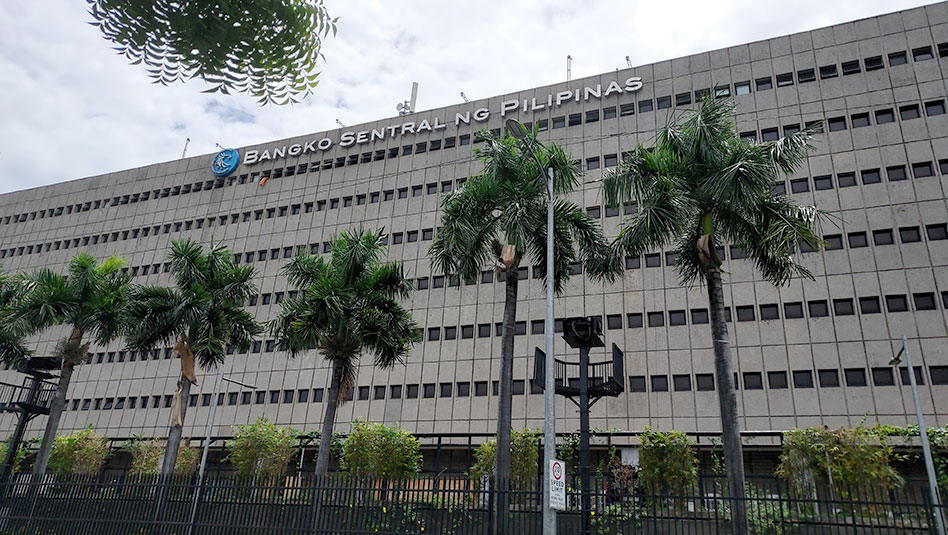
Frick collection with palm trees 
Economic Updates
Policy Rate Updates: Policy rate updates to reassure 
DOWNLOAD
Man using his smartphone
Reports
Fed to cut just once 
DOWNLOAD
View all Reports
Metrobank.com.ph How To Sign Up
Follow us on our platforms.

How may we help you?

TOP SEARCHES
  • Where to put my investments
  • Reports about the pandemic and economy
  • Metrobank
  • Webinars
  • Economy
TRENDING ARTICLES
  • Investing for Beginners: Following your PATH
  • On government debt thresholds: How much is too much?
  • Philippines Stock Market Outlook for 2022
  • Deficit spending remains unabated

Login

Access Exclusive Content
Login to Wealth Manager
Visit us at metrobank.com.ph How To Sign Up
Access Exclusive Content Login to Wealth Manager
Search
MODEL PORTFOLIO THE GIST
NEWS AND FEATURES
Global Philippines Fine Living
INSIGHTS
INVESTMENT STRATEGY
Economy Stocks Bonds Currencies
THE BASICS
Investment Tips Explainers Retirement
WEBINARS
2024 Mid-Year Economi Briefing, economic growth in the Philippines
2024 Mid-Year Economic Briefing: Navigating the Easing Cycle
June 21, 2024
Investing with Love
Investing with Love: A Mother’s Guide to Putting Money to Work
May 15, 2024
retirement-ss-3
Investor Series: An Introduction to Estate Planning
September 1, 2023
View All Webinars
DOWNLOADS
Container ship carrying container boxes import export dock with quay crane. Business commercial trade global cargo freight shipping logistic and transportation worldwide oversea concept. Generative AI
Economic Updates
Philippines Trade Update: Wider deficit on strong imports
March 27, 2026 DOWNLOAD
Frick collection with palm trees 
Economic Updates
Policy Rate Updates: Policy rate updates to reassure 
March 26, 2026 DOWNLOAD
Man using his smartphone
Reports
Fed to cut just once 
March 19, 2026 DOWNLOAD
View all Reports

Archives: Business World Article

DoF warns VAT rate cut could slash PHP 1-T in revenue and risk credit rating downgrade

DoF warns VAT rate cut could slash PHP 1-T in revenue and risk credit rating downgrade

The Department of Finance (DoF) expressed “strong reservations” regarding a proposal to lower the value-added tax (VAT) rate, warning it could cost the government more than PHP 1 trillion in foregone revenues through 2030 and undermine its fiscal consolidation efforts.

In a position paper submitted to the House of Representatives dated Oct. 22, the DoF said House Bill (HB) No. 4302, which proposes to cut the VAT rate to 10% from the current 12%, would lead to substantial revenue losses over the next five years.

A copy of the position paper, which was signed by then-Finance Secretary Ralph G. Recto, was obtained by BusinessWorld on Thursday.

“The estimated impact of the proposed VAT rate reduction is at an annual average of PHP 339 billion from 2026 to 2030… This proposal will translate to a higher fiscal deficit and derail the administration’s fiscal consolidation efforts and plan,” the DoF said.

“Introducing this proposal at this time would risk fiscal stability, equity and growth.”

Based on DoF estimates, the revenue impact of the proposed VAT rate reduction would reach a total of PHP 1.694 trillion from 2026 to 2030. This includes PHP 1.11 trillion in foregone revenues for the Bureau of Internal Revenue and PHP 583.6 billion for the Bureau of Customs.

The DoF said reducing the VAT rate to 10% will increase the deficit by one percentage point of gross domestic product annually.

“The proposal will result in credit rating downgrades, which in turn increase our borrowing costs due to higher interest rates,” it said.

The proposed measure will also compromise debt sustainability, the DoF said.

“Lowering the VAT rate and losing a steady stream of government revenues of around PHP 339 billion yearly would significantly slow down the pace of reduction in the debt ratio planned by the government, leaving the country more vulnerable to fiscal shocks,” it said.

The Philippines has imposed VAT on most goods and services since 1988, including essentials such as food and fuel. Raised to 12% from 10% in 2005, it has become a key revenue source, though critics have argued it disproportionately burdens working-class Filipinos.

The DoF said VAT is an important revenue source for the government, accounting for around 26.5% of total tax take and 29.9% of government revenues.

“VAT, as a consumption tax, grows in tandem with the economy, making it one of the most predictable sources of government revenue and, at the same time, one of the most difficult to evade,” the DoF said.

Batangas Rep. Leandro Antonio L. Leviste filed HB No. 4302 in September seeking to lower the VAT rate, arguing the current tax system is “regressive” and should be reduced to make taxation more progressive.

The DoF said the current VAT system is “relatively neutral and slightly progressive” as most of the goods and services purchased and consumed by poorer households are already not subject to VAT.

“The proposed reduction of VAT will benefit higher-income households who have a larger share in formal consumption,” it said, explaining that lower‑income families tend to have only “small shares” of spending subject to the tax. “The richer households will substantially benefit more than the poorer households.”

While the Philippines has the highest VAT rate in Southeast Asia, the DoF said that a reduction in the rate will not automatically make the VAT system more competitive. It noted the Philippines has the lowest VAT efficiency in the region as it provides a significant number of VAT zero-ratings or exemptions to some sectors.

The DoF said the bill is not an “anti-inflation tool” and won’t automatically lower consumer prices.

It also noted that the bill’s provision giving the President the authority to temporarily return the VAT rate to 12% will disrupt the National Government’s fiscal program.

“The proposal will erode revenue stability and predictability… Making (the VAT) rate dependent on the yearly deficit projection of the Development Budget Coordination Committee would mean uncertainty for revenue and cash programming, budget planning and investors’ decisions,” it said.

“The proposed VAT rate increase based on the deficit target breach would also mean business and consumers facing unpredictable tax burdens, higher compliance costs and deterring long-term investments,” it added.  — Kenneth Christiane L. Basilio, Reporter

Digital VAT collection nears PHP 7 billion — BIR

Digital VAT collection nears PHP 7 billion — BIR

The Philippine government has collected almost PHP 7 billion from a 12% value-added tax (VAT) on digital services, the Department of Finance said, providing a lift to revenue intake at a time when slower growth and a corruption probe are weighing on collections.

The Bureau of Internal Revenue (BIR) has raised PHP 6.57 billion since the digital VAT took effect in June, based on a document obtained by BusinessWorld.

Of the total, the BIR collected PHP 2.78 billion from nonresident digital service providers as of Oct. 23. 

Meanwhile, final withholding VAT from business-to-business transactions reached PHP 3.79 billion as of Sept. 25 — almost entirely from foreign platforms — with PHP 3.77 billion remitted by private withholding agents and PHP 5.85 million by government agencies,

Under the law, a 12% VAT is now imposed on nonresident digital platforms such as Netflix, Spotify, Amazon and Lazada.

“It likely reflects higher digital consumption in e-commerce, streaming, and online services, improved compliance from platforms now formally registered with the BIR, and tighter monitoring of cross-border service providers,” John Paolo R. Rivera, a senior research fellow at the Philippine Institute for Development Studies, said in a Viber message.

Mr. Rivera noted the tax haul shows the digital economy is becoming a meaningful source of government revenue and is now being treated on par with traditional industries.

“The shift toward cashless payments and online transactions also made digital activity more traceable,” he said.

Former BIR Commissioner Romeo D. Lumagui, Jr. earlier projected the agency will collect PHP 10 billion in VAT from digital services this year, well above the initial PHP 3.62‑billion target.

For 2026, the Marcos administration seeks to collect a PHP 21.37-billion revenue from digital VAT. It is targeting PHP 22.81 billion in digital VAT collection in 2027 and PHP 23.41 billion in 2028.

Analysts said the BIR is on track to reach PHP 10‑billion digital VAT target this year, buoyed by rising technology spending and increasing compliance by nonresident platforms.

Eleanor L. Roque, a tax principal of P&A Grant Thornton, said the BIR has already collected PHP 6.57 billion in the early stages, making the PHP 10-billion target “easily achievable.”

“I think there are still nonresident digital service providers who are still going through the compliance process. There are companies that are still waiting for some clarification on whether they are covered,” she said in a Viber message to BusinessWorld on Thursday.   

Ms. Roque noted that initial “birth pains” such as VAT portal delays were quickly addressed by the agency.

“The digital economy may post slower income growth as a result of taxes they paid for the government. However, the industry is still poised for large growth due to higher activity and spending on technology,” Reinielle Matt M. Erece of Oikonomia Advisory and Research, Inc. said in a Viber message.

Mr. Rivera also added that hitting the PHP 10‑billion goal is “still possible.”

“Strong holiday e-commerce activity could lift collections, but hitting the target will depend on sustained platform compliance and continued digital spending despite recent economic headwinds,” he said. — Aubrey Rose A. Inosante, Reporter

Peso dips on hawkish Fed minutes

Peso dips on hawkish Fed minutes

The Philippine peso weakened against the dollar on Thursday after minutes from the US Federal Reserve’s last policy meeting dampened expectations of an interest rate cut next month.

It closed at PHP 59.065 a dollar, down 13 centavos from Wednesday’s PHP 58.935, based on Bankers Association of the Philippines data posted on its website. It opened at PHP 59, its intraday best, and fell to a low of PHP 59.11. Dollar turnover slipped to USD 1.08 billion from USD 1.39 billion on Wednesday.

“The dollar-peso closed higher, trading sideways but tracking dollar strength following the release of hawkish Fed minutes,” a trader said by phone. “Players trimmed expectations of a December rate cut.”

Another market participant noted that the Fed minutes showed officials were divided over the October policy meeting and raised doubts about the likelihood of a rate cut in December.

The minutes also highlighted concerns over persistent inflation and the need to maintain flexibility in the US central bank’s policy stance, analysts said.

The dollar rose as high as ¥157.78 towards the end of the Asia session, its strongest since January.

The yen’s latest decline began after Finance Minister Satsuki Katayama said there had been no specific discussion about foreign exchange at a meeting with Bank of Japan Governor Kazuo Ueda.

The yen managed to find some stability as European trading got under way, with the dollar up 0.1% at JPY 157.36. But Japan’s currency has still depreciated by about 6% since Prime Minister Sanae Takaichi was elected leader of the ruling party last month.

That move has come in spite of rising Japanese bond yields, as markets are uneasy about the scale of borrowing needed to fund Ms. Takaichi’s stimulus plans.

“You must either believe that there’s a ‘Sell Japan’ narrative going on, or you take the view that these relationships are no longer stable,” said Vishnu Varathan, Mizuho’s head of research in Asia, referring to how the yen has fallen even while the US-Japan interest rate gap has narrowed.

Having sunk past JPY 157 per dollar to near where it began the year, traders now figure Japanese authorities may intervene somewhere around the 160 mark, or if there are any more sudden moves. Chief Cabinet Secretary Minoru Kihara said moves were sharp, one-sided and concerning on Thursday.

The second trader said the peso could appreciate on Friday due to a potentially weak US labor report overnight.

The first trader sees the peso moving from PHP 58.90 to PHP 59.20 a dollar, while the second trader expects it to range from PHP 58.90 to PHP 59.15.

The Fed cut borrowing costs twice this year as part of an easing cycle that started in September 2024, bringing the benchmark rate to 3.75%-4%. Investors had bet on a possible December cut, but the new minutes have prompted a reassessment. — Aaron Michael C. Sy

PSEi climbs on foreign buying, US tariff optimism

PSEi climbs on foreign buying, US tariff optimism

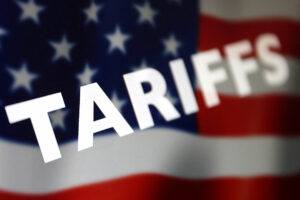
The Philippine Stock Exchange index (PSEi) advanced on Thursday, fueled by foreign buying and optimism over the US exemption of most Philippine agricultural exports from reciprocal tariffs.

The main index rose 2.01% or 117.1 points to close at 5,930.81, while the broader all-share index gained 2.55% or 83.18 points to 3,335.02, marking a second straight day of gains.

“Our local bourse leaped bounds in the latter half of the trading day as foreign buyers supported quality names, maintaining the upward momentum from [Wednesday],” AP Securities, Inc. said in a market note.

“The local market extended its rally as investors continued bargain hunting, backed by optimism toward the exemption of most Philippine agricultural exports from US tariffs and hopes that the Bangko Sentral ng Pilipinas will deliver another rate cut in December,” Japhet Louis O. Tantiangco, research manager at Philstocks Financial, Inc., said in a Viber message.

The US exemption, effective Nov. 13 under President Donald J. Trump’s latest executive order, lifts the 19% reciprocal tariff on selected Philippine agricultural products, including bananas, coconuts, coffee, pineapples and beef.

Most Philippine goods have faced the levy since August. Trade Secretary Ma. Cristina A. Roque has said the exemption would help maintain the competitiveness of Filipino exports in the US market.

“The positive cues from Wall Street also helped in Thursday’s session,” Mr. Tantiangco added.

Most sectoral indexes ended higher. Property surged 2.82% to 2,178.56; financials climbed 2.63% to 1,983.07; holding firms gained 1.38% to 4,597.19; industrials rose 1.21% to 8,621.59; and services edged up 1.13% to 2,389.60. Mining and oil was the only decliner, slipping 0.48% to 12,703.42.

Market breadth was positive, with 96 advancers versus 72 decliners, while 66 stocks were unchanged.

Value turnover jumped to PHP 15.69 billion on 1.74 billion shares, up from PHP 6.23 billion on 886.24 million shares on Wednesday. Net foreign buying surged to PHP 7.42 billion, reversing Wednesday’s net selling of PHP 915.4 million. — Alexandria Grace C. Magno

Philippines still seeking lower US tariff 

Philippines still seeking lower US tariff 

Global trade has “responded well” to Washington’s broader relaxation of tariffs, though uncertainty still hangs over the outlook as Manila continues to negotiate the lowering of the 19% reciprocal duty on its exports, the Department of Economy, Planning, and Development (DEPDev) said.

“I think that the global trade in many countries has responded well to the improvement,” DEPDev Secretary Arsenio M. Balisacan told reporters on the sidelines of a Senate hearing on Nov. 18.

“But still, it does not mean that uncertainty has disappeared. It’s still out there.”

The Philippines continues to press for a lower reciprocal tariff even after most of its agricultural exports were exempted under US President Donald J. Trump’s latest executive order, Mr. Balisacan said.

Other goods from the Philippines are still slapped with a 19% reciprocal tariff when they enter the US. However, Mr. Trump’s latest executive order exempted hundreds of agricultural products from the reciprocal tariffs starting Nov. 13.

The Department of Trade and Industry earlier said the latest order meant that over USD 1 billion worth of Philippine agricultural exports are now exempted from the 19% US reciprocal tariff.

Key agricultural exports exempted from the reciprocal tariff include coconut (copra) oil, both crude and other than crude; fruit juices; processed pineapples; desiccated coconuts; prepared or preserved coconuts; bananas, other than pulp; dried guavas, mangoes, and mangosteens; frozen tuna fillets; rice wafer products; and confectionery products.

Mr. Balisacan said the tariff exemption will boost productivity of coconut farmers, as well as strengthen their export capacity. 

Executive Secretary and former Finance chief Ralph G. Recto said the tariff exemptions mark a positive step for Philippine exports and agriculture, adding they could help drive economic growth.

“It’s positive for us. I think President Trump realized that imposing tariffs on agriculture is inflationary, so he removed them. That’s good for us,” he said on the sidelines of a Senate hearing on Nov. 18.

‘Export more’

Meanwhile, the Department of Agriculture (DA) is ready to support Philippine farmers in expanding their exports to the US.

“The path is clear. Now people can plan, invest, and expand. So, that’s good. As far as the DA is concerned, we have to start planting more… so that we can export more to the US,” Agriculture Secretary Francisco P. Tiu Laurel, Jr. told reporters on the sidelines of the 3rd Philippine Hydro Summit on Wednesday.

Mr. Laurel said the US order has helped calm the anxiety of Philippine exporters of coconuts, bananas and pineapples.

The Agriculture chief said that the 19% US reciprocal tariff, which was implemented starting August, had earlier created uncertainty for the industry.

“But now, everything is clear… The President’s directive was to support all of our export products. And that will be our banner programs for next year,” Mr. Laurel said.

The Philippine Exporters Confederation, Inc. (Philexport) said the exemption of Philippine exports such as coconuts, pineapples, bananas, and mangoes from the 19% US reciprocal tariffs is expected to “improve demand, stabilize prices, and directly benefit exporters, farmers, and rural communities across the Philippines.”

“This is a positive outcome of our sustained collaboration and engagements with key stakeholders and partners to convey the need for certain exemptions and maintain the competitiveness of Philippine exports, especially those products not locally produced in the US,” Sergio R. Ortiz-Luis, Jr., Philexport president and chief executive officer, said.

Philippine Chamber of Commerce and Industry President Enunina V. Mangio said the exemptions provide “much-needed relief to exporters, help safeguard jobs, and strengthen the competitiveness of Philippine products.”

For his part, University of Asia and the Pacific Associate Professor George N. Manzano said the Philippines should continue negotiations with the US for a lower reciprocal tariff.

“However, we are still not better off compared to the period before President Trump introduced those reciprocal tariffs. So, the Philippines should continue negotiating for a reduction of the 19% reciprocal tariff,” he said in a Viber message.

Mr. Manzano noted that the removal of reciprocal tariff does not mean Philippine exports are duty-free, as the original Most Favored Nation tariff will still be applied.

If the US extends the tariff rollback to all trading partners, the Philippines’ relative competitiveness would remain unchanged, he added.

“This US tariff exemption is a game-changer for Philippine exporters. Over USD 1 billion worth of goods — led by coconuts, coffee, cocoa, and processed fruits  —will now enter the US duty-free,” Jonathan L. Ravelas, a senior adviser at Reyes Tacandong & Co., said in a Viber message to BusinessWorld on Wednesday.

He also said the tariff break may offer a chance to scale up value‑added products of farmers and agri‑businesses.

“My advice? Move fast, ensure quality, and lock in supply reliability — this window won’t stay open forever,” he said.

For his part, Foundation for Economic Freedom President Calixto V. Chikiamco said the exemption is “self‑serving,” and would favor the US more than the Philippines.

“It’s meant to lower food prices in the US since affordability has become a hot political issue,” he said in a Viber message on Wednesday.

Meanwhile, Ivan Tan, director and lead analyst for Southeast Asia at S&P Global Ratings, said while the tariff exemption is “good,” the Philippines will unlikely see a significant impact as goods remain a small component of the country’s exports.

“I think the impact will be quite mild,” he said in a webinar on Wednesday. “To start with, the dependence of the Philippines’ economy on export… is low. It’s quite small.”

S&P Global has said the US tariff policies could pose downside risks to economies and financial markets in the Asia-Pacific region.

“There is a high degree of unpredictability around US policy implementation and possible responses — specifically about tariffs — and the potential effect on economies, supply chains, and credit conditions,” it said in its recent Global Banks Outlook 2026 report. — Aubrey Rose A. Inosante, Sheldeen Joy Talavera and Katherine K. Chan

Customs not giving up on 2025 goal as imports fall

Customs not giving up on 2025 goal as imports fall

The Bureau of Customs (BoC) is holding the line on its PHP 958.7-billion revenue goal for 2025 despite a sharp drop in imports and fewer working days in October that slowed collections, a stance that keeps pressure on the agency as the government grapples with weaker fiscal inflows.

Customs Commissioner Ariel F. Nepomuceno said the bureau is not giving up on the full-year target even after the total volume of imports fell by 3% or about P80 billion last month, denting duties and taxes.

“I don’t want to give up because we’re already at 98% efficiency,” he told reporters on the sidelines of a Senate plenary debate on the 2026 budget on Nov. 17. “We can still do it if we can in November [and] December.”

The BoC collects taxes and duties from all goods imported to the Philippines.

The Department of Finance earlier warned that Customs, one of the country’s revenue-generating agencies, may miss its full-year targets this year amid slower global trade due to US President Donald J. Trump’s tariff policies.

“We could have hit the target this October if there had been one more working day. Compared to last year, there were more working days… due to the storms,” he said.

The Philippines was battered by back‑to‑back storms, including typhoons Tino and Uwan, which shut businesses, ravaged cities and forced class suspensions in October.

The latest data from the Treasury showed that Customs revenue collection inched up by 1.59% to PHP 701.7 billion in the first nine months, accounting for 73.12% of the full-year target.

Customs has yet to release a breakdown of its October collections.

Despite this, Mr. Nepomuceno said Customs is banking on petroleum imports to help offset weaker revenues as the extension of the rice import ban and slower trade weigh on collections.

“But we’re trying to check if there are other sources that can compensate (for the slower revenues). Like petroleum products, probably we can generate more revenues from that, given that the ban for rice importation has been extended,” he said.

Mr. Nepomuceno warned that foregone revenues from the rice import freeze, expected to last until mid-January, could reach over PHP 6 billion.

He also noted that Customs seized PHP 3.6 billion worth of smuggled goods between July and September.

“The new team accounted for about 50% of total apprehensions in just 90 days. So, there is a sense of hope that we can improve further until we fully digitalize,” he said.

Customs earlier reported the BoC is also looking to enter into a public and private partnership to fully digitalize its operations.

Rizal Commercial Banking Corp. Chief Economist Michael L. Ricafort said the BoC can still meet its PHP 958.7‑billion revenue goal for 2025 if import volumes rebound.

“Imports could increase as more exporting countries diversify exports away from the US and more for countries like the Philippines amid Trump’s higher tariffs, trade wars, and protectionist policies,” he said in a Viber message. — Aubrey Rose A. Inosante, Reporter

Peso edges up versus dollar ahead of US labor data

Peso edges up versus dollar ahead of US labor data

The Philippine peso inched higher against the dollar on Wednesday as investors positioned ahead of September US labor data, which could influence expectations for another interest rate cut by the US Federal Reserve.

It closed at PHP 58.935 a dollar, up five centavos from Tuesday’s PHP 58.985, based on Bankers Association of the Philippines data posted on its website. It opened at PHP 58.95, swinging between PHP 58.82 and PHP 58.955 during the session.

Dollar turnover reached USD 1.39 billion, slightly below Tuesday’s USD 1.46 billion.

“The peso continued to gain on expectations of continued weakness in the soon-to-be-released September US labor report,” a trader said in an e-mailed reply to questions.

Investors are closely watching the Fed as it begins receiving updated economic data from the recently reopened federal government.

Policymakers are seeking clarity for their debate on whether to cut rates at the December meeting, just over three weeks away. However, the timeline for the release of employment, inflation, retail spending and growth data remains uncertain.

The Bureau of Labor Statistics said the delayed September employment report would be published on Thursday, while some October data might be skipped entirely, and November reports could face delays after the mid-month government shutdown.

The Fed last month lowered borrowing costs by 25 basis points, bringing its policy rate to 3.75-4%, the second cut this year. Since its easing cycle began in September 2024, total reductions have reached 150 bps, fueling market bets on additional easing.

The peso also drew support from signals of intervention by the Bangko Sentral ng Pilipinas (BSP), Michael L. Ricafort, chief economist at Rizal Commercial Banking Corp., said in a Viber message.

BSP Governor Eli M. Remolona, Jr. said the central bank has been active in the foreign exchange market, but only to temper any prolonged depreciation that could affect inflation.

Looking ahead, the peso may face mixed pressures. A weak US jobs report could reinforce expectations of further Fed rate cuts, supporting the peso, while global volatility could offset some gains.

The trader expects the peso to trade from PHP 58.80 to PHP 59.05 a dollar on Thursday, a range echoed by Mr. Ricafort, reflecting continued caution amid uncertain US data and central bank interventions. — A.M.C. Sy

PSEi climbs as BSP signals possible rate cut

PSEi climbs as BSP signals possible rate cut

Philippine stocks rose on Wednesday, bolstered by bargain-hunting and optimism that the Bangko Sentral ng Pilipinas (BSP) could cut policy rates in December, a move investors hope will support growth amid slowing domestic demand.

The Philippine Stock Exchange index (PSEi) added 0.99% or 57.05 points to close at 5,813.71, while the broader all-share index gained 0.62% or 20.29 points to 3,251.84.

“The local bourse ended higher, still driven by bargain-hunting,” Luis A. Limlingan, head of sales at Regina Capital Development Corp., said in a Viber message. “Moreover, investor sentiment improved after the BSP signaled the possibility of another rate cut by the end of the year. This expectation continued to support buying activity in today’s session.”

BSP Governor Eli M. Remolona, Jr. on Tuesday said a reduction at the Monetary Board’s Dec. 11 meeting is possible, likely in a modest 25-basis-point (bp) step.

The central bank has lowered borrowing costs by 175 bps since August 2024, bringing the benchmark rate to 4.75%, its lowest in over three years.

Cuts have been prompted by slowing economic growth, subdued inflation and weaker investor confidence following the flood control corruption scandal that dented business sentiment and domestic consumption.

“The market continued its slow climb, now at its short-term resistance as investors supported local equities, while waiting for Nvidia Corp. earnings, which could offer a glimpse of US equities’ future,” AP Securities, Inc. said in a market note.

US stocks fell, with major indexes dipping below a key technical level for the first time since April, amid caution ahead of retail and semiconductor earnings and a delayed job report.

Back home, most domestic sectoral indexes advanced. Financials rose 1.77% to 1,932.09; industrials jumped 1.55% to 8,517.88; holding firms gained 1.13% to 4,534.39; property added 0.43% to 2,118.71; and services edged up 0.07% to 2,362.88. Mining and oil fell 0.47% to 12,765.5.

Market breadth was positive with 112 advancers versus 61 decliners, while 67 stocks were unchanged.

Value turnover dipped slightly to PHP 6.23 billion on 886.24 million shares, down from PHP 6.67 billion on 1.15 billion shares on Tuesday. Net foreign selling eased to PHP 915.4 million from PHP 1.31 billion.

The PSEi’s modest rebound reflects growing investor optimism that further monetary easing could lower borrowing costs, support domestic consumption and stabilize business sentiment, even as uncertainties linger over global markets and domestic corruption issues continue to weigh on confidence. — Alexandria Grace C. Magno

BSP: Rate cut ‘possible’ in December

BSP: Rate cut ‘possible’ in December

The Bangko Sentral ng Pilipinas (BSP) could cut policy rates again at its December meeting, its governor said on Tuesday.

“I would say it’s possible,” BSP Governor Eli M. Remolona, Jr. told reporters when asked about the likelihood of rate cuts at the Monetary Board’s Dec. 11 meeting.

However, he ruled out a jumbo cut, noting that the next rate cut will likely be another “baby step” or by 25 basis points (bps).

The Monetary Board delivered a 25-bp cut at its Oct. 9 meeting, bringing the benchmark policy rate to an over three-year low of 4.75%, as both its economic outlook and investor confidence weakened amid the flood control corruption scandal. 

It has so far lowered borrowing costs by a total of 175 bps since it began its easing cycle in August 2024.

Another rate cut at the Monetary Board’s last meeting this year on Dec. 11 would mark its fifth consecutive cut since April.

Mr. Remolona said they are still considering whether the weaker-than-expected third-quarter gross domestic product (GDP) growth was due to a slowdown in demand or supply.

“Kung supply side, wala kaming magagawa (If it’s from the supply side, we can’t do anything),” he told reporters on the sidelines of the Financial Education Stakeholders’ Congress 2025 on Tuesday. “So, how much is demand?… We’ll have to figure out how much is demand and how much is supply.”

In the third quarter, the Philippine economy grew by 4%, the slowest growth in over four years, as a corruption scandal weighed on government spending and dampened investor and consumer confidence.

For the nine-month period, GDP growth averaged 5%, below the government’s 5.5-6.5% target for the year.

Meanwhile, the central bank chief said the Monetary Board is still deciding if they would trim banks’ reserve requirement ratio (RRR).

“Pinag-iisipan pa ’yun… Inaayos pa namin ’yung liquidity sa system kung gaano karami, kung sobra-sobra. Kasi pag binaba mo yung reserve requirement dadami pa ’yung liquidity (That is still being considered… We are still fixing the liquidity in the system (to see) how much there is, if it’s excessive. Because if you lower the reserve requirement, liquidity will increase further),” Mr. Remolona said.

In February, the BSP cut universal and commercial banks and nonbank financial institutions with quasi-banking functions’ RRR by 200 bps to 5%. Digital banks’ RRR was reduced by 150 bps to 2.5%, while thrift banks’ RRR was lowered by 100 bps to 0%.

The RRR cuts took effect in the week of March 28.

Also, Mr. Remolona said they are not worried about the peso’s recent movement but noted that they have been intervening a bit in the foreign exchange market.

“Konti lang, para hindi lang magulo masyado (Just a little, so it’s not too messy),” he said.

The BSP chief earlier said they would only intervene if the peso depreciates so sharply that it would become inflationary.

On Tuesday, the local unit weakened to PHP 58.985 against the dollar, slipping by 5.4 centavos from its PHP 58.931 finish on Monday, data from the Bankers Association of the Philippines showed.

On Nov. 12, the peso slumped to a record low of PHP 59.17 versus the greenback. — Katherine K. Chan

DBCC seen to trim growth goals

DBCC seen to trim growth goals

The sharp slowdown in government spending tied to the widening flood control corruption scandal is pushing the Philippines to cut its medium-term growth goals, with the Development Budget Coordination Committee (DBCC) likely to trim its 2026 target to 5-6%, Executive Secretary and former Finance Secretary Ralph G. Recto said. 

“Realistically, for next year, it will be from 5-6%. Because we’re coming from a low base,” Mr. Recto told reporters on the sidelines of a Senate hearing on Nov. 17.

“(The growth) will take some time, maybe a quarter, before we can go back to the regular growth rate,” he added.

In June, the DBCC tempered its growth forecast to 5.5-6.5% for 2025 and 6-7% for 2026-2028, mainly due to “heightened global uncertainties” arising from the Middle East conflict and US tariffs.

However, in the first nine months of the year, gross domestic product (GDP) growth only averaged 5% after the weaker-than-expected 4% growth in the third quarter, reflecting the slowdown in public spending and household consumption.

“Our fundamentals are okay. The only thing is to regain the trust and confidence of our consumers, of our businessmen, and the only way we can do that is to show accountability,” he said.

Mr. Recto, who was appointed by President Ferdinand R. Marcos, Jr. as executive secretary on Monday, also hinted that the DBCC could reset growth targets through 2030, as the economy is now expected to grow by 4.7-5.2% in 2025.

The DBCC is set to review its macroeconomic assumptions and targets at a meeting in December, he said.

For his part, Economy Secretary Arsenio M. Balisacan said the DBCC may keep its 6-7% growth target for 2026.

“I think 6% to 7% should be doable next year. But of course, that assumes that we can really address the issues that have faced us and confronted us,” he told reporters on Nov. 17.

Mr. Balisacan said he is hoping for at least 5% GDP growth in the fourth quarter, buoyed by favorable external trade.

“I would not mind our economy slowing down in one quarter, two quarters. As long as that will lead to a stronger economy in the medium term,” he said.

Meanwhile, Mr. Recto said the DBCC may have to stick to its P4.52-trillion revenue target this year, even as growth slows.

“Revenues will get affected a bit. But we’ve already taken care of that for the year. Our deficit will be on target. So, what we will miss is the growth rate, unfortunately. But moving forward, everything will be upside,” he said.

Mr. Recto said the Philippines is still on track to trim the fiscal deficit to 5.5% of GDP this year.

“We’re on target. Whatever our deficit goal is for the year, including debt, we are not borrowing beyond that,” he said.

Corruption cost

The Philippine growth outlook is now being clouded by a corruption scandal involving government officials and lawmakers who have allegedly colluded with private contractors to receive billions of kickbacks from projects.

According to the Department of Finance (DoF), the economic impact of corruption related to the Department of Public Works and Highways (DPWH) flood control projects could have reached between P145.4 billion and P407 billion from 2023 to 2025. This assumes that between 25% and 70% of the DPWH project costs were lost to corruption.

“Given the lower GDP with corruption, there is a foregone employment ranging from 327,000 to 914,000 jobs, for the same period,” the DoF said.

“On average, GDP could have been PHP 48.4 [billion] to PHP 135.7 billion higher every year while generating 95,000 to 266,000 additional jobs annually from 2023 to 2025 if the flood control budget had been properly and fully implemented and utilized (i.e., no corruption),” the DoF said. — Aubrey Rose A. Inosante

Posts navigation

Older posts
Newer posts

Recent Posts

  • Investment Ideas: April 1, 2026
  • Metrobank US-Iran Risk Index: Signals of an end
  • Eye on Earnings: Demand for connection supports telcos
  • Inflation Preview: March madness
  • Investment Ideas: March 31, 2026

Recent Comments

No comments to show.

Archives

  • April 2026
  • March 2026
  • February 2026
  • January 2026
  • December 2025
  • November 2025
  • October 2025
  • September 2025
  • August 2025
  • July 2025
  • June 2025
  • May 2025
  • April 2025
  • March 2025
  • February 2025
  • January 2025
  • December 2024
  • November 2024
  • October 2024
  • September 2024
  • August 2024
  • July 2024
  • June 2024
  • May 2024
  • April 2024
  • March 2024
  • February 2024
  • January 2024
  • December 2023
  • November 2023
  • October 2023
  • September 2023
  • August 2023
  • July 2023
  • June 2023
  • May 2023
  • April 2023
  • March 2023
  • February 2023
  • January 2023
  • December 2022
  • November 2022
  • October 2022
  • September 2022
  • August 2022
  • July 2022
  • June 2022
  • May 2022
  • March 2022
  • December 2021
  • October 2021

Categories

  • Bonds
  • BusinessWorld
  • Currencies
  • Economy
  • Equities
  • Estate Planning
  • Explainer
  • Featured Insight
  • Fine Living
  • How To
  • Investment Tips
  • Markets
  • Portfolio Picks
  • Rates & Bonds
  • Retirement
  • Reuters
  • Spotlight
  • Stocks
  • Uncategorized

You are leaving Metrobank Wealth Insights

Please be aware that the external site policies may differ from our website Terms And Conditions and Privacy Policy. The next site will be opened in a new browser window or tab.

Cancel Proceed
Get in Touch

For inquiries, please call our Metrobank Contact Center at (02) 88-700-700 (domestic toll-free 1-800-1888-5775) or send an e-mail to customercare@metrobank.com.ph

Metrobank is regulated by the Bangko Sentral ng Pilipinas
Website: https://www.bsp.gov.ph

Quick Links
The Gist Webinars Wealth Manager Explainers
Markets
Currencies Rates & Bonds Equities Economy
Wealth
Investment Tips Fine Living Retirement
Portfolio Picks
Bonds Stocks
Others
Contact Us Privacy Notice Terms of Use
© 2026 Metrobank. All rights reserved.

Access this content:

If you are an existing investor, log in first to your Metrobank Wealth Manager account. ​

If you wish to start your wealth journey with us, click the “How To Sign Up” button. ​

Login HOW TO SIGN UP