MODEL PORTFOLIO
THE GIST
NEWS AND FEATURES
Global Philippines Fine Living
INSIGHTS
INVESTMENT STRATEGY
Economy Stocks Bonds Currencies
THE BASICS
Investment Tips Explainers Retirement
WEBINARS
2024 Mid-Year Economi Briefing, economic growth in the Philippines
2024 Mid-Year Economic Briefing: Navigating the Easing Cycle
June 21, 2024
Investing with Love
Investing with Love: A Mother’s Guide to Putting Money to Work
May 15, 2024
retirement-ss-3
Investor Series: An Introduction to Estate Planning
September 1, 2023
View All Webinars
DOWNLOADS
Container ship carrying container boxes import export dock with quay crane. Business commercial trade global cargo freight shipping logistic and transportation worldwide oversea concept. Generative AI
Economic Updates
Philippines Trade Update: Wider deficit on strong imports
DOWNLOAD
Frick collection with palm trees 
Economic Updates
Policy Rate Updates: Policy rate updates to reassure 
DOWNLOAD
Man using his smartphone
Reports
Fed to cut just once 
DOWNLOAD
View all Reports
Metrobank.com.ph How To Sign Up
Follow us on our platforms.

How may we help you?

TOP SEARCHES
  • Where to put my investments
  • Reports about the pandemic and economy
  • Metrobank
  • Webinars
  • Economy
TRENDING ARTICLES
  • Investing for Beginners: Following your PATH
  • On government debt thresholds: How much is too much?
  • Philippines Stock Market Outlook for 2022
  • Deficit spending remains unabated

Login

Access Exclusive Content
Login to Wealth Manager
Visit us at metrobank.com.ph How To Sign Up
Access Exclusive Content Login to Wealth Manager
Search
MODEL PORTFOLIO THE GIST
NEWS AND FEATURES
Global Philippines Fine Living
INSIGHTS
INVESTMENT STRATEGY
Economy Stocks Bonds Currencies
THE BASICS
Investment Tips Explainers Retirement
WEBINARS
2024 Mid-Year Economi Briefing, economic growth in the Philippines
2024 Mid-Year Economic Briefing: Navigating the Easing Cycle
June 21, 2024
Investing with Love
Investing with Love: A Mother’s Guide to Putting Money to Work
May 15, 2024
retirement-ss-3
Investor Series: An Introduction to Estate Planning
September 1, 2023
View All Webinars
DOWNLOADS
Container ship carrying container boxes import export dock with quay crane. Business commercial trade global cargo freight shipping logistic and transportation worldwide oversea concept. Generative AI
Economic Updates
Philippines Trade Update: Wider deficit on strong imports
March 27, 2026 DOWNLOAD
Frick collection with palm trees 
Economic Updates
Policy Rate Updates: Policy rate updates to reassure 
March 26, 2026 DOWNLOAD
Man using his smartphone
Reports
Fed to cut just once 
March 19, 2026 DOWNLOAD
View all Reports

Archives: Business World Article

Peso gains as weak US data boost Fed cut bets

Peso gains as weak US data boost Fed cut bets

The peso climbed against the dollar on Wednesday as weak US data fueled bets of a US Federal Reserve cut next month.

The local unit rose by seven centavos to close at PHP 58.84 per dollar from its PHP 58.91 finish on Tuesday, Bankers Association of the Philippines data showed.

The peso opened Wednesday’s session stronger at PHP 58.83 against the greenback. It rose to as high as PHP 58.75, while its worst showing was at PHP 58.875 versus the dollar.

Dollars traded fell to USD 944 million from USD 1.169 billion on Tuesday.

“The dollar-peso closed higher as the market responded to US retail sales released overnight, coupled with comments from various Fed officials favoring a rate cut in December,” a trader said in a phone interview.

The peso also followed the yen’s sideways movement on Wednesday as signals from the Bank of Japan of a possible rate hike next month offset the pressure from possible intervention in the foreign exchange market by the Japanese government, Rizal Commercial Banking Corp. Chief Economist Michael L. Ricafort said in a Viber message.

For Thursday, the trader sees the peso trading at PHP 58.65 to PHP 58.95 per dollar, while Mr. Ricafort expects it to move between PHP 58.75 and PHP 58.95.

In the broader market, the dollar eased on Wednesday after benign US economic data reinforced expectations of a December rate cut, and as investors wagered that the leading candidate for the next Federal Reserve chair may guide policy in a more dovish direction, Reuters reported.

Data on Tuesday showed US retail sales rose less than expected in September while producer prices were in line with expectations.

US consumer confidence also sagged in November as households worried about jobs and their financial situation.

All of that left traders adding to bets of a Fed cut next month, with markets now pricing in an 85% chance of a 25-basis-point move, according to the CME FedWatch tool.

The yen was supported on Wednesday by expectations the Bank of Japan (BoJ) could deliver a rate hike as soon as December.

The BoJ is preparing markets for a possible interest rate hike as soon as next month, sources told Reuters, reviving previous hawkish language as worries about sharp yen declines return and political pressure for the bank to keep rates low fades.

The yen initially rose on the back of the reports, before paring some of those gains over the course of the trading session. It was last marginally lower at JPY 156.07 per dollar, having earlier hit an intraday high of JPY 155.66.

The Japanese currency has come under pressure from mounting worries about the country’s worsening fiscal position and a central bank that has been cautious over further rate hikes, with traders on alert to the risk of an intervention from Tokyo to stem the yen’s decline.

Some analysts have said the US Thanksgiving holiday on Thursday could open a possible window for authorities to step in. — A.M.C. Sy with Reuters

Stocks end higher as markets eye BSP, Fed cuts

Stocks end higher as markets eye BSP, Fed cuts

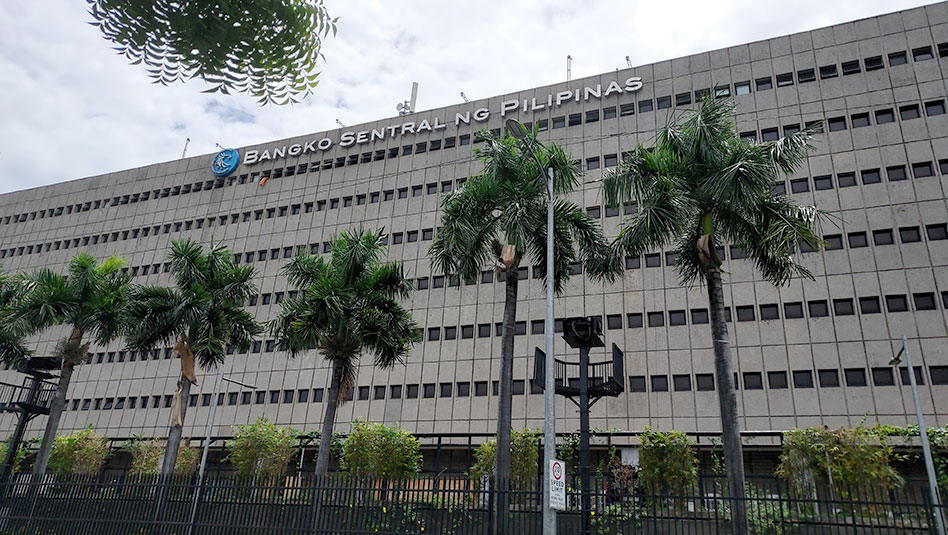
Stocks rebounded on Wednesday as investors bought cheap shares and amid bets on further monetary policy easing by both the Bangko Sentral ng Pilipinas (BSP) and the US Federal Reserve at their meetings next month.

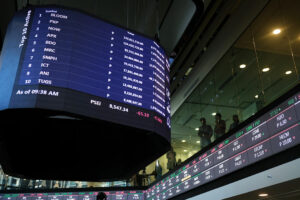
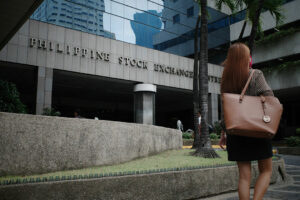
The bellwether Philippine Stock Exchange index (PSEi) rose by 0.47% or 28.53 points to close at 6,004.70, while the broader all shares index decreased by 0.78% or 28.17 points to 3,546.65.

“The local market bounced back as investors hunted for bargains. Rate cut hopes for the BSP and the Fed in their December meeting were seen as the main reason for the positive sentiment today,” Philstocks Financial, Inc. Research Manager Japhet Louis O. Tantiangco said in a Viber message.

“Our main index treaded within a range before ending up higher as the case for a December US Fed cut got stronger after registering softer US retail sales data and consumer confidence sinking to a seven-month low,” AP Securities, Inc. said in a market note.

Last week, BSP Governor Eli M. Remolona, Jr. said they could deliver a fifth straight 25-basis-point (bp) cut at the Monetary Board’s Dec. 11 meeting to help provide economic stimulus following the weak growth seen last quarter as a corruption scandal involving government infrastructure projects has weakened consumer and investor confidence.

The central bank has lowered borrowing costs by a total of 175 bps since it began its easing cycle in August 2024, with the policy rate now at an over three-year low of 4.75%.

Meanwhile, Asian stocks rose on Wednesday, chasing gains on Wall Street as weaker-than-expected economic data spurred expectations that the US Federal Reserve will cut interest rates at its policy meeting next month, Reuters reported.

The prints firmed up expectations that the Fed will ease policy soon and prompted speculation that some emerging market Asian central banks could follow.

Fed funds futures are pricing an implied 80.7% probability of a 25-bp cut at the US central bank’s next meeting on Dec. 10, compared to even odds a week ago, according to the CME Group’s FedWatch tool.

Back home, most sectoral indices closed higher on Wednesday. Property rose by 1.31% or 28.64 points to 2,210.76; financials increased by 1.24% or 24.79 points to 2,023.55; services went up by 0.84% or 20.18 points to 2,409.96; mining and oil climbed by 0.09% or 12.73 points to 13,353.68; and industrials edged up by 0.07% or 6.31 points to 8,622.02. Meanwhile, holding firms declined by 1.31% or 62.29 points to 4,678.15.

Advancers and decliners were split at 89 apiece, while 66 names were unchanged.

Value turnover went up to PHP 12.25 billion on Wednesday with 1.19 billion shares traded from the PHP 9.51 billion with 1.17 billion issues exchanged on Tuesday.

Net foreign buying was at PHP 2.38 billion on Wednesday, a turnaround from the PHP 2.98 billion in net selling on Tuesday. — Alexandria Grace C. Magno with Reuters

Top businessmen seek clarity amid flood issue

Top businessmen seek clarity amid flood issue

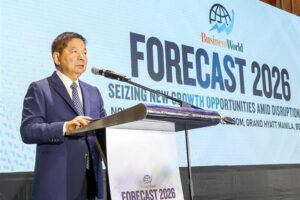
Top Philippine business leaders said investor confidence could still recover despite the drag from a multibillion-peso flood control corruption scandal but stressed that the government should restore credibility and provide a clearer policy direction to sustain investment momentum.

“At times like this, what matters most for markets and businesses is not the noise around us, but the strength of our institutions and the steadiness of our long-term fundamentals,” SM Investments Corp. Chairman Amando M. Tetangco, Jr. said in his keynote address at BusinessWorld Forecast 2026.

Mr. Tetangco, a former Bangko Sentral ng Pilipinas governor, said the graft scandal, which has eroded sentiment and contributed to slower growth and weaker household spending, should be confronted with fairness and transparency.

“In this environment, investors and consumers look for clarity — clarity of direction, policy consistency and disciplined execution,” he said. “Credibility is the foundation of trust, and trust is the foundation of confidence.”

He added that the country’s institutions remain stable and that the Philippines’ macroeconomic strengths continue to “prevail over instability.” Filipinos’ resilience, he said, has been a consistent source of stability through past economic cycles.

Mr. Tetangco said strengthening the Philippines’ appeal as an investment destination would require lowering power costs, diversifying the energy mix, improving predictability in the permitting process and upgrading ports and logistics.

Despite softer third-quarter growth and a series of downgraded forecasts from multilateral institutions, he described the 2026 outlook as “constructive.” He said expansion would be supported by firm domestic consumption, public infrastructure spending and a gradual pickup in private capital expenditure as borrowing costs ease.

BDO Capital & Investment Corp. President Eduardo V. Francisco said executives remain committed to investing in the Philippines even as they wait for stronger government action.

“We have to continue to invest,” he told the BusinessWorld forum. “We have to continue to consume because there’s really a slowdown in government investments… That way, the government will see the need to build the infrastructure to support it.”

Mr. Francisco said his confidence is steadily improving, adding that sustained private sector activity is key to reinforcing the growth momentum amid lingering uncertainty.

“From the micro side, from the bank side, low growth is still there,” he said. “It’s slowed down a bit, but it’s strong… People are going to the malls, sales are improving. It’s going to be a better Christmas for everyone.”

Andrew Jeffries, Asian Development Bank (ADB) country director for the Philippines, said the economy is likely to expand faster in 2026, driven in part by a rebound in public infrastructure spending, though the timing and pace of recovery remain uncertain.

“It’s more of a factor of internal events and actions and proactive positive change rather than external events that could propel that even toward higher growth or stay around that area,” he told the forum, citing the resilience of Filipino households and the “very promising” underlying fundamentals of the economy.

He added that the ADB would continue to engage with the Philippine government, extending technical and financial support to projects while emphasizing strong oversight, adherence to procedural procurement standards and audited project-level financial statements.

Private sector leaders echoed the view that recovery is possible, “as long as we’re united and we stand on common values and principles,” Divina Law founder and Managing Partner Nilo T. Divina said.

‘Sinister form of disruption’

Metrobank Chief Economist Nicholas Antonio T. Mapa said that sustained growth would require policy discipline.

“Once again, always go back to the fundamentals,” he told the forum. “Go back to the basics. We’re going to find our stride again, and we’re bound to get back in the economic boom phase.”

“Growth goes to 6% assuming this is next year or the year after,” he added, urging the government to maintain price stability and an appropriate monetary policy stance.

The Philippine economy expanded 5% in the first nine months after a slowdown in the third quarter. Executive Secretary and former Finance Secretary Ralph G. Recto had signaled that the country would likely miss its 5.5-6.5% growth target for the year, citing bad weather and a drag on government spending linked to the flood control probe.

Business leaders highlighted the broader economic risks posed by corruption, beyond the immediate fiscal impact.

Miguel G. Belmonte, president and chief executive officer at BusinessWorld Publishing Corp., said companies face a “sinister form of disruption” that, compounded by political volatility, has weakened the peso, dragged down the stock market and eroded business confidence.

“The embezzlement of public funds cannot be tolerated any longer,” he told the forum. “Transparency is an economic necessity because investors respond to clarity and trustworthy leadership.”

He added that rebuilding confidence would require technological or institutional reform. “Outside of our own corruption crisis, which trumps all other disruptions in shock value, the global environment continues to shift in ways none of us can fully predict.”

Meanwhile, Finance Assistant Secretary Neil Adrian S. Cabiles said the government is taking steps to mitigate risks to growth. Measures include a spending catch-up plan, governance reforms, labor market adaptation programs and enhanced disaster risk management.

“We will still see that the Philippines really has very sound economic fundamentals,” he said. “The Philippines still has promising trajectory, except that it has the issues we have right now.” — Aubrey Rose A. Inosante, Reporter


Philippine semiconductor exports set for 5% growth next year

Philippine semiconductor exports set for 5% growth next year

The Philippines’ semiconductor and electronics sector is poised for a modest rebound next year, with exports projected to rise 5% as demand for advanced technologies continues to climb, the Semiconductor and Electronics Industries in the Philippines Foundation, Inc. (SEIPI) said.

Danilo C. Lachica, SEIPI president, said growth would be driven by emerging tech, including artificial intelligence (AI), electric vehicles, the internet of things and data centers.

“It will be driven by the usual driver — advanced technologies. It’s the demand for chips for these applications,” he told BusinessWorld Forecast 2026 on Tuesday.

The outlook reflects a revision for 2025, with exports now expected to expand 5% to 7% from earlier projections of flat growth.

Electronics exports reached USD 36.32 billion in the first nine months, contributing about 58% of the country’s total commodity exports. “We’re probably going to grow at a modest 5-7%, which will bring us to about USD 45 [billion] to USD 47 billion of exports,” Mr. Lachica said.

SEIPI’s earlier conservative forecast accounted for potential disruptions from US reciprocal tariffs, but the zero-percent tariff on key electronic components has largely preserved competitiveness. “We were hedging our bets, but not much has happened,” he said in mixed English and Filipino.

Top export destinations remain Hong Kong, the US, China, Japan and Taiwan. Mr. Lachica noted that Hong Kong functions as a hub for exports destined for North America, Europe and other regions.

While the sector’s momentum remains strong, growth is vulnerable to policy shifts in the US. If the US removes the exemptions currently under challenge at the Supreme Court, it could impact SEIPI’s 5% projection for next year, he said.

Beyond export projections, SEIPI is pressing for greater recognition of the semiconductor and electronics sector in national and regional economic agendas.

Mr. Lachica expressed concern that the Philippines’ chairmanship of the Association of Southeast Asian Nations (ASEAN) in 2026 has so far omitted the industry from priority economic drivers.

“Surprisingly, the first draft I saw did not include semiconductor electronics, albeit being the biggest export value generator,” he pointed out.

He said attracting foreign investment requires not just policy focus but proof of a supportive ecosystem.

“The ecosystem has to be developed. You have to show first that you’re worthy of the investment. Without the proof of concept, without the ecosystem, it’s wishful thinking,” he said, highlighting the need for infrastructure, supply-chain capabilities and skilled talent.

Mr. Lachica called for “drastic changes” to ensure the Philippines retains its competitive position in the global semiconductor market. Inclusion in ASEAN’s agenda, he said, would provide an opportunity to present a coherent national strategy and showcase the country’s readiness to investors. — Justine Irish D. Tabile, Reporter

Philippine digital economy on track to hit USD 36B in 2025

Philippine digital economy on track to hit USD 36B in 2025

The Philippines’ digital economy is set to hit USD 36 billion in gross merchandise value (GMV) this year, supported by rapid adoption of e-commerce, transport and delivery services, digital finance and artificial intelligence (AI), according to a report by Google, Temasek Holdings and Bain & Company.

“The Philippines is a digital powerhouse, sustaining its double-digit growth and firmly on track to hit USD 36 billion in GMV by 2025,” Google Philippines Country Manager Prep B. Palacios told a news briefing on Tuesday.

“This momentum is not a temporary spike; it’s a sustained, systemic transformation, a convergence of innovative platforms, a tech-positive regulatory environment and our uniquely AI-curious Filipino consumers with real spending power,” he added.

The report projected that the country’s overall digital economy could reach USD 70 billion to USD 140 billion in GMV by 2030, slightly lower than last year’s forecast of USD 80 billion to USD 150 billion.

E-commerce alone is expected to contribute USD 50 billion, while transport and food services could hit USD 7 billion, online travel USD 8 billion and online media another USD 8 billion by the end of the decade.

Digital payments will remain a key growth driver, with digital financial services projected to expand to USD 200 billion to USD 300 billion in gross transaction value (GTV) by 2030, according to the report. Across Southeast Asia, the digital economy is expected to surpass USD 300 billion in GMV by the end of the decade, fueled by continued digital adoption and monetization strategies.

Charles Benedict Aquino, a partner at Bain, highlighted the resilience of the Filipino market. “The Philippines has shown itself to be resilient, that is the key message we are really seeing,” he told the briefing.

This year, the country’s e-commerce sector is expected to reach USD 24 billion, up 20% from last year. Online travel is projected to grow 33% to USD 4 billion, while online media will hit USD 5 billion and transport and food services USD 4 billion.

Ronald B. Gustilo, national campaigner for Digital Pinoys, said strong performance across these sectors reflects growing trust in digital platforms among both consumers and businesses.

“The Philippines’ digital economy continues to expand, driven by strong growth in e-commerce, transport and delivery services, and the rapid adoption of digital financial tools,” he said in a Viber message. –

Experts noted that the growth potential remains particularly strong in rural and underserved areas as mobile and data connectivity improves. “Logistics will be a requirement and also a growing business,” Michael L. Ricafort, chief economist at Rizal Commercial Banking Corp., said via Viber.

John Paolo R. Rivera, a senior research fellow at the Philippine Institute for Development Studies, said infrastructure gaps, cyberthreats, uneven logistics, regulatory uncertainty and low digital literacy among small businesses could slow digital adoption.

“Overall, growth prospects remain strong, but the digital ecosystem needs better safeguards, faster infrastructure rollout and more support for small businesses to fully realize its potential,” he said.

Cybersecurity was flagged as a pressing concern. Mr. Gustilo warned that phishing and AI-enabled scams could undermine consumer confidence and slow adoption, urging both the government and industry to treat cybersecurity as critical infrastructure.

“Protecting Filipinos online is essential if we want the country’s digital economy to reach its full potential,” he added.

The Department of Information and Communications Technology (DICT) seeks to increase the digital economy’s share of the economy to 12.5% by 2028, fast-tracking digital infrastructure projects and attracting hyperscalers to operate in the country. Data center capacity is projected to reach 1.5 gigawatts by 2028, supported by both foreign and domestic operators.

The digital economy contributed 8.5% of GDP in 2024, little changed from 8.6% in 2023, though it remains below the 2021 peak of 9.2%. Bain’s Mr. Aquino noted that expansion of the digital economy depends in part on continued growth in data center capacity and robust digital infrastructure rollout. — Ashley Erika O. Jose, Reporter

Peso weakens further to track yen’s drop

Peso weakens further to track yen’s drop

The peso dropped further against the dollar on Tuesday to follow the yen’s decline as markets expect the Japanese government to support its falling currency.

The local unit closed at PHP 58.91 per dollar, weakening by four centavos from its PPHP 58.87 finish on Monday, Bankers Association of the Philippines data showed.

The peso opened the session lower at PHP 58.93 against the greenback. Its intraday best was at PHP 58.84, while its worst showing was at PHP 58.935 versus the dollar. Dollars traded inched up to USD 1.169 billion on Tuesday from USD 1.167 billion on Monday.

The peso dropped “with the US dollar/Japanese yen still among 10-month highs recently at ¥156 levels after the latest stimulus plan as the new prime minister is expected to adopt pro-growth policies,” Rizal Commercial Banking Corp. Chief Economist Michael L. Ricafort said in a Viber message.

“The dollar-peso closed a tad higher, trading at a narrow range amid lack of market movers,” a trader said in a phone interview.

For Wednesday, the trader sees the peso moving between PHP 58.80 and PHP 59.10 per dollar, while Mr. Ricafort expects it to range from PHP 58.80 to PHP 59.05.

The Japanese yen remained on intervention watch on Tuesday, Reuters reported.

Despite the greenback’s slight weakness this week, the Japanese yen has been on the defensive, trading at JPY 156.70 per dollar, not far from the 10-month low of JPY 157.90 that it touched last week.

Traders have been waiting for signs of government intervention to support the Japanese currency, which has weakened by nearly ¥10 since the start of October after fiscal dove Sanae Takaichi took over as Japan’s prime minister.

Verbal jawboning from government officials has failed to stem yen weakness. Market analysts believe an official intervention, similar to moves last year and in 2022, could be on the cards. — A.M.C. Sy with Reuters

Index snaps four-day rally on growth concerns

Index snaps four-day rally on growth concerns

The main index snapped its four-day climb on Tuesday as investors took profits and reacted to downgraded 2025 growth forecasts by S&P Global Ratings and the ASEAN+3 Macroeconomic Research Office (AMRO).

The bellwether Philippine Stock Exchange index (PSEi) declined by 0.75% or 45.42 points to close at 5,976.17, while the broader all shares index increased by 1.12% or 39.64 points to 3,574.82.

The PSEi fell below the 6,000 line anew after closing at a one-month high of 6,021.59 on Monday. It opened Tuesday’s trading only slightly lower at 6,016.92 and even reached an intraday high of 6,066.18, but selling pressure caused the index to close at the session’s low.

“Today’s sideways movement ended in the negative territory as investors took profits from the local market’s preceding four-day rally. The trimmed economic growth projections for the Philippines this 2025 by S&P Global Ratings and ASEAN+3 Macroeconomic Research Office added to the negative sentiment,” Philstocks Financial, Inc. Research Manager Japhet Louis O. Tantiangco said in a Viber message.

“The local index declined as profit taking from the last sessions took place. Sentiment was also likely weighed down by a lower growth outlook amid ongoing trade pressures. These factors collectively pressured the market throughout today’s session,” Regina Capital Development Corp. Head of Sales Luis A. Limlingan likewise said in a Viber message.

In a report dated Nov. 23, S&P Global cut its Philippine gross domestic product (GDP) growth projection to 4.8% this year from its earlier projection of 5.6%, below the government’s 5.5-6.5% target.

At the same time, AMRO in its latest Annual Consultation Report lowered its GDP growth forecast for the Philippines to 5.2% this year from 5.6% previously.

In the third quarter, the Philippine economy expanded at its slowest pace in over four years at 4%, amid a slump in state spending and consumption due to the corruption scandal. This brought the nine-month average to 5%.

Most sectoral indices declined on Tuesday. Property slumped by 2.54% or 56.88 points to 2,182.12; industrials decreased by 1.7% or 149.70 points to 8,615.71; services went down by 0.42% or 10.11 points to 2,389.78; and holding firms fell by 0.16% or 7.98 points to 4,740.44.

Meanwhile, mining and oil surged by 5.7% or 719.81 points to 13,340.95, and financials went up by 0.46% or 9.31 points to 1,998.76.

“Bank of the Philippine Islands was the day’s top index gainer, climbing 3.54% to PHP 117. Manila Electric Co. was the worst index performer for the day, dropping 4.85% to PHP 588,” Mr. Tantiangco said.

Decliners outnumbered advancers, 93 to 89, while 66 names were unchanged.

Value turnover went down to PHP 9.51 billion on Tuesday with 1.17 billion shares traded from the PHP 13.69 billion with 846.2 million issues exchanged on Monday.

Net foreign selling ballooned to PHP 2.98 billion on Tuesday from PHP 815.91 million on Monday. — Alexandria Grace C. Magno

BSP to stick with a range for inflation target

BSP to stick with a range for inflation target

PANGLAO, Bohol — The Bangko Sentral ng Pilipinas (BSP) said it plans to continue setting a range for its inflation target amid potential risks of having a precise goal.

“So, as you know, our current target is 3% plus or minus 1%. Our recent inflation rates are actually even below that range, doing 1.7%…” BSP Governor Eli M. Remolona, Jr. said at a press briefing after a central banking symposium held here on Monday. “I think this is consistent with Governor Sethaput’s advice that we shouldn’t focus too much on the precise number.”

This, after former Bank of Thailand Governor Sethaput Suthiwartnarueput said during the symposium that central banks should have a more flexible inflation targeting framework.

“I would argue that we need to make that inflation targeting framework even more flexible,” Mr. Suthiwartnarueput said. “And why is that? Again, I think given the challenges that we face, we’re likely to face larger and longer deviations from inflation targeting.”

“And so the idea of trying to use very specific numerical targets, I think, is quite uncomfortable,” he added.

Earlier this year, Mr. Remolona said the BSP was eyeing to set a point target for inflation to mirror inflation targeting frameworks of foreign central banks such as the US Federal Reserve.

Currently, the BSP targets full-year headline inflation to settle between 2% to 4%.

“I think we would follow (Mr. Suthiwartnarueput’s) advice and not be too concerned about the precise numerical number,” Mr. Remolona said.

He also noted that the central banks’ inflation expectations are “more or less anchored.”

However, he added that they are developing a mechanism to precisely measure the degree of anchoring.

RRR cut

Meanwhile, the BSP chief said it could trim large banks’ reserve requirement ratio (RRR) but it is not rushing to do so.

“I would say it’s on the table but there’s no urgency in adjusting it,” he said.

Mr. Remolona noted that the current 5% RRR is “pretty low” but any further easing would depend on whether the BSP could successfully manage liquidity in the market.

He added that he is unsure when they would deliver an RRR cut, adding that it would depend on the Monetary Board.

The Monetary Board last reduced universal and commercial banks and non-bank financial institutions with quasi-banking functions’ RRR by 200 bps to 5% on Feb. 21, which took effect in the week of March 28.

It likewise reduced digital banks’ by 150 bps to 2.5%, while thrift banks’ RRR was lowered by 100 bps to 0%. — Katherine K. Chan

Peso slips vs the dollar on possible yen intervention

Peso slips vs the dollar on possible yen intervention

The peso slipped against the dollar on Monday to track the sideways movement among regional currencies led by the yen amid signals of more proactive intervention from Japanese Prime Minister Sanae Takaichi’s administration.

The local unit closed at PHP 58.87 per dollar, inching down by 1.5 centavos from its PHP 58.855 finish on Friday, Bankers Association of the Philippines data showed.

The peso opened the session slightly stronger at PHP 58.83 against the greenback, which was also its intraday best. Its worst showing was at PHP 59.02 versus the dollar.

Dollars traded fell to USD 1.17 billion on Monday from USD 1.68 billion on Friday.

The peso followed the yen’s range-bound movement amid signals of foreign exchange intervention from the Japanese government, Rizal Commercial Banking Corp. Chief Economist Michael L. Ricafort said in a Viber message.

“The dollar-peso traded sideways but closed a bit higher on lack of fresh catalysts,” a trader said in a phone interview.

For Tuesday, the trader sees the peso moving between PHP 58.80 and PHP 59.10 per dollar, while Mr. Ricafort expects it to range from PHP 58.75 to PHP 59.

The dollar was steady and traders wary on Monday as intervention risks swirled around the yen, Reuters reported.

A holiday in Tokyo lightened trade in the Asia day and left the yen on hold at JPY 156.53 per dollar.

Japan’s currency has been sliding on a combination of its low interest rates and looser fiscal policies, but it bounced from 10-month lows late last week when Finance Minister Satsuki Katayama ramped up verbal warnings of official yen buying.

Traders see intervention looming somewhere between JPY 158 and JPY 162 per dollar, with Thanksgiving-thinned trade later in the week a possible window for authorities to step in.

“We do not rule out a move as early as Friday, London/New York hours, ahead of ¥160 and if it happens the move lower can be sharp especially if liquidity is thin,” said OCBC strategists Frances Cheung and Christopher Wong in a note.

Japan can actively intervene in the currency market to mitigate the negative economic impact of a weak yen, Takuji Aida, a private sector member of a key government panel, said in a television program on NHK on Sunday. — A.M.C. Sy with Reuters

PSEi back above 6,000 mark on rate cut hopes

PSEi back above 6,000 mark on rate cut hopes

Philippine stocks closed above the 6,000 mark for the first time in a month as investors took advantage of bargains and with sentiment getting a boost from expectations of further monetary policy support from the Bangko Sentral ng Pilipinas (BSP).

The bellwether Philippine Stock Exchange index (PSEi) rose by 0.4% or 24.46 points to close at 6,021.59, while the broader all shares index increased by 3.41% or 116.66 points to 3,535.18.

This was the PSEi’s best finish in a month or since it closed at 6,053.96 on Oct. 23, which was also the last time it ended above the 6,000 line.

“The local bourse closed higher, lifted by a late-session buying surge that helped sustain the market’s upward momentum,” Regina Capital Development Corp. Head of Sales Luis A. Limlingan said in a Viber message.

“Investor sentiment improved amid growing expectations of another policy rate cut before the year ends, despite the peso depreciating against the US dollar. This also stems from inflation remaining below the BSP’s target range, providing room for further monetary easing,” he added.

Last week, BSP Governor Eli M. Remolona, Jr. said they could deliver a fifth straight 25-basis-point (bp) cut at the Monetary Board’s Dec. 11 meeting to help provide economic stimulus following the weak growth seen last quarter as a corruption scandal involving government infrastructure projects has weakened consumer and investor confidence.

The central bank has lowered borrowing costs by a total of 175 bps since it began its easing cycle in August 2024, with the policy rate now at an over three-year low of 4.75%.

Philippine gross domestic product (GDP) grew by 4% in the third quarter, the slowest in over four years. This brought the nine-month average to 5%, below the government’s 5.5-6.5% GDP growth target for the year.

Continued bargain hunting activities and opportunities for bottom-fishing and discounts following the market’s recent slide helped lift the market on Monday, Rizal Commercial Banking Corp. Chief Economist Michael L. Ricafort added in a Viber message.

Majority of sectoral indices ended higher on Monday. Industrials climbed by 1.32% or 114.86 points to 8,765.41; property increased by 1.27% or 28.11 points to 2,239; holding firms went up by 1.08% or 50.98 points to 4,748.42; and mining and oil rose by 0.65% or 82.03 points to 12,621.14.

Meanwhile, services declined by 0.21% or 5.19 points to 2,399.89 and financials shed 0.14% or 2.79 points to end at 1,989.45.

Market breadth was positive as advancers outnumbered decliners, 109 to 72, while 64 names were unchanged.

Value turnover surged to PHP 13.69 billion on Monday with 846.2 million shares traded from the PHP 9.15 billion with 1.67 billion issues exchanged on Friday.

Net foreign selling went down to PHP 815.91 million on Monday from PHP 1.97 billion on Friday. — Alexandria Grace C. Magno

Posts navigation

Older posts
Newer posts

Recent Posts

  • Peso GS Weekly: Risk relief drives curve‑wide rally
  • Metrobank US-Iran Risk Index: Dire straits
  • Investment Ideas: April 6, 2026
  • Investment Ideas: April 1, 2026
  • Metrobank US-Iran Risk Index: Signals of an end

Recent Comments

No comments to show.

Archives

  • April 2026
  • March 2026
  • February 2026
  • January 2026
  • December 2025
  • November 2025
  • October 2025
  • September 2025
  • August 2025
  • July 2025
  • June 2025
  • May 2025
  • April 2025
  • March 2025
  • February 2025
  • January 2025
  • December 2024
  • November 2024
  • October 2024
  • September 2024
  • August 2024
  • July 2024
  • June 2024
  • May 2024
  • April 2024
  • March 2024
  • February 2024
  • January 2024
  • December 2023
  • November 2023
  • October 2023
  • September 2023
  • August 2023
  • July 2023
  • June 2023
  • May 2023
  • April 2023
  • March 2023
  • February 2023
  • January 2023
  • December 2022
  • November 2022
  • October 2022
  • September 2022
  • August 2022
  • July 2022
  • June 2022
  • May 2022
  • March 2022
  • December 2021
  • October 2021

Categories

  • Bonds
  • BusinessWorld
  • Currencies
  • Economy
  • Equities
  • Estate Planning
  • Explainer
  • Featured Insight
  • Fine Living
  • How To
  • Investment Tips
  • Markets
  • Portfolio Picks
  • Rates & Bonds
  • Retirement
  • Reuters
  • Spotlight
  • Stocks
  • Uncategorized

You are leaving Metrobank Wealth Insights

Please be aware that the external site policies may differ from our website Terms And Conditions and Privacy Policy. The next site will be opened in a new browser window or tab.

Cancel Proceed
Get in Touch

For inquiries, please call our Metrobank Contact Center at (02) 88-700-700 (domestic toll-free 1-800-1888-5775) or send an e-mail to customercare@metrobank.com.ph

Metrobank is regulated by the Bangko Sentral ng Pilipinas
Website: https://www.bsp.gov.ph

Quick Links
The Gist Webinars Wealth Manager Explainers
Markets
Currencies Rates & Bonds Equities Economy
Wealth
Investment Tips Fine Living Retirement
Portfolio Picks
Bonds Stocks
Others
Contact Us Privacy Notice Terms of Use
© 2026 Metrobank. All rights reserved.

Access this content:

If you are an existing investor, log in first to your Metrobank Wealth Manager account. ​

If you wish to start your wealth journey with us, click the “How To Sign Up” button. ​

Login HOW TO SIGN UP