


MODEL PORTFOLIO
THE GIST
NEWS AND FEATURES
Global Philippines Fine Living
INSIGHTS
INVESTMENT STRATEGY
Economy Stocks Bonds Currencies
THE BASICS
Investment Tips Explainers Retirement
WEBINARS
2024 Mid-Year Economi Briefing, economic growth in the Philippines
2024 Mid-Year Economic Briefing: Navigating the Easing Cycle
June 21, 2024
Investing with Love
Investing with Love: A Mother’s Guide to Putting Money to Work
May 15, 2024
retirement-ss-3
Investor Series: An Introduction to Estate Planning
September 1, 2023
View All Webinars
DOWNLOADS
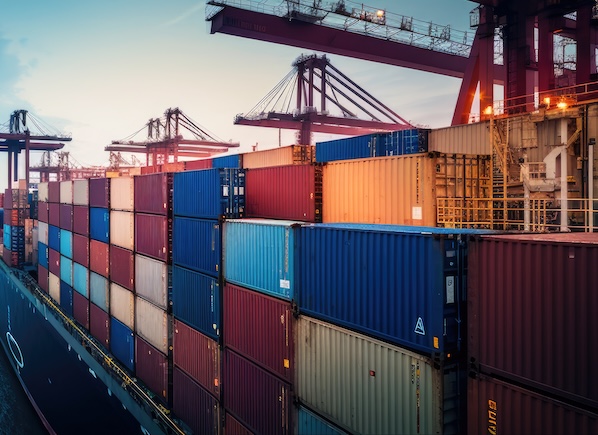
Container ship carrying container boxes import export dock with quay crane. Business commercial trade global cargo freight shipping logistic and transportation worldwide oversea concept. Generative AI
Economic Updates
Philippines Trade Update: Wider deficit on strong imports
DOWNLOAD
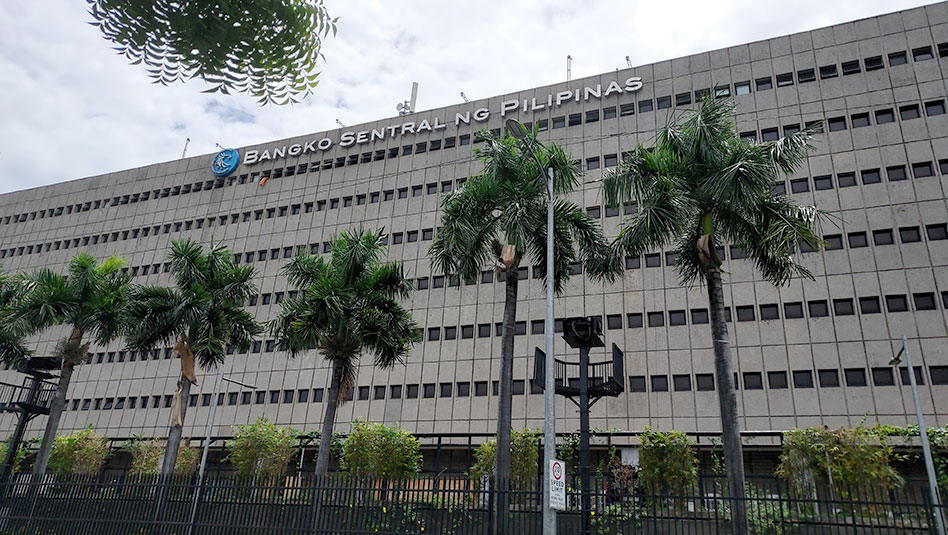
Frick collection with palm trees 
Economic Updates
Policy Rate Updates: Policy rate updates to reassure 
DOWNLOAD
Man using his smartphone
Reports
Fed to cut just once 
DOWNLOAD
View all Reports
Metrobank.com.ph How To Sign Up
Follow us on our platforms.

How may we help you?

TOP SEARCHES
  • Where to put my investments
  • Reports about the pandemic and economy
  • Metrobank
  • Webinars
  • Economy
TRENDING ARTICLES
  • Investing for Beginners: Following your PATH
  • On government debt thresholds: How much is too much?
  • Philippines Stock Market Outlook for 2022
  • Deficit spending remains unabated

Login

Access Exclusive Content
Login to Wealth Manager
Visit us at metrobank.com.ph How To Sign Up
Access Exclusive Content Login to Wealth Manager
Search
MODEL PORTFOLIO THE GIST
NEWS AND FEATURES
Global Philippines Fine Living
INSIGHTS
INVESTMENT STRATEGY
Economy Stocks Bonds Currencies
THE BASICS
Investment Tips Explainers Retirement
WEBINARS
2024 Mid-Year Economi Briefing, economic growth in the Philippines
2024 Mid-Year Economic Briefing: Navigating the Easing Cycle
June 21, 2024
Investing with Love
Investing with Love: A Mother’s Guide to Putting Money to Work
May 15, 2024
retirement-ss-3
Investor Series: An Introduction to Estate Planning
September 1, 2023
View All Webinars
DOWNLOADS
Container ship carrying container boxes import export dock with quay crane. Business commercial trade global cargo freight shipping logistic and transportation worldwide oversea concept. Generative AI
Economic Updates
Philippines Trade Update: Wider deficit on strong imports
March 27, 2026 DOWNLOAD
Frick collection with palm trees 
Economic Updates
Policy Rate Updates: Policy rate updates to reassure 
March 26, 2026 DOWNLOAD
Man using his smartphone
Reports
Fed to cut just once 
March 19, 2026 DOWNLOAD
View all Reports

Archives: Business World Article

BSP open to 25-bp hike in November

BSP open to 25-bp hike in November

The Bangko Sentral ng Pilipinas (BSP) is open to increasing its key policy rate by 25 basis points (bps) at its meeting on Nov. 16, its governor said on Wednesday, after inflation accelerated for a second straight month in September.

BSP Governor Eli M. Remolona, Jr. told reporters higher borrowing costs have not affected Philippine economic growth, which may indicate there is still room for monetary tightening.

“I would not rule out a 25-basis-point rate hike,” he said.

The BSP has kept the benchmark interest rate at a near 16-year high of 6.25% at its last four meetings. It hiked borrowing costs by 425 bps from May 2022 to March 2023 to tame red-hot inflation.

Mr. Remolona said he is “not sure” if headline inflation would return to the 2-4% target within the year due to the “significant spike” in September.

“The core number went down a little bit, so that’s encouraging. For us, the core number is what reflects monetary policy. But the headline number could affect expectations and then we have to worry,” he said.

Headline inflation accelerated to 6.1% in September from 5.3% in August. This marked the 18th straight month that inflation exceeded the central bank’s 2-4% target.

In September, core inflation eased to 5.9% from 6.1% in August, but still faster than 5% a year earlier.

Year to date, inflation has averaged 6.6%, higher than 5.1% a year ago and still above the BSP’s revised 5.8% forecast for 2023. Year to date, core inflation has averaged 7.2%.

“The upside risk that we feared, some of them have materialized already. One thing we were worried about is transport fare hikes and that has happened. I wouldn’t say that we’re done with the tightening,” Mr. Remolona said.

The Land Transportation Franchising and Regulatory Board has approved a PHP 1 provisional jeepney fare increase nationwide, which took effect on Oct. 8. The minimum fares for traditional and modern jeepneys are now PHP 13 and PHP 15, respectively.

“So far, we think it hasn’t really affected our growth prospects. We’re watching that very, very carefully,” Mr. Remolona said.

“We try not to affect growth prospects, what we try to do is relieve pressure from the demand side that is leading to inflation without affecting the growth prospects,” he added.

The Philippine economy grew by 4.3% in the second quarter, its slowest expansion in more than two years, mainly due to weaker consumption and a drop in government spending.

For the first half, GDP growth averaged 5.3%. The economy has to expand by 6.6% in the second half to meet the government’s 6-7% target.

Third-quarter GDP data will be released on Nov. 9.

Meanwhile, Security Bank Corp. Chief Economist Robert Dan J. Roces in a Viber message said it is unlikely that inflation would return to the BSP’s 2-4% target range by the end of the year.

Security Bank has raised its inflation forecast this year to 6.1% from 5.6%.

“This sets the risk for the BSP to potentially hike interest rates, possibly before the next scheduled meeting on Nov. 16. A rate hike could aim to dampen inflation but might also slow down economic activity, but we do not think an off-cycle hike will take place,” he said.

Mr. Roces noted that “critical decision points” for the central bank at its next meeting will be the foreign exchange scenario, the US Federal Reserve’s next policy meeting, October inflation data, and third-quarter GDP data.

“As such we retain our 6.25% policy rate outlook for end-of-year 2023 yet recognizing the upside risks,” he added.

Risk to stability
Meanwhile, Mr. Remolona said the Philippine banking system is “in very good shape.”

“When you look at the usual regulatory measures, capital, liquidity, these things are well above (regulatory requirements). Even so, that doesn’t ensure that there is no systemic risk,” he said.

The BSP chief noted some major corporations have elevated debt levels, which may pose a risk to the country’s financial stability.

“There’s some risk that some of them may not be able to pay off their loans. But so far, it’s very manageable. It’s something that we’re watching,” he said.

“We’re also making sure that should there be a need by the banks for emergency liquidity, we will be in a position to provide the emergency liquidity. Although we don’t see any need at the moment for [it],” he said.

The Philippines is in discussion with foreign central banks that are part of the Executive Meeting of East Asia Pacific when it comes to financial stability, the BSP chief said. — Keisha B. Ta-asan

PH keeps close eye on oil amid possible supply disruption

PH keeps close eye on oil amid possible supply disruption

The government is keeping a close eye on potential spillovers from the Israel-Hamas conflict and its impact on the Philippine economy, Bangko Sentral ng Pilipinas (BSP) Governor Eli M. Remolona, Jr. said on Wednesday.

In a press chat with reporters, Mr. Remolona said the conflict has not “really affected” oil prices yet.

“The effects on oil prices have been minimal, but it may have spillover effects on global growth, for example, so that’s what we’re monitoring,” he said in mixed English and Filipino.

“In the past, something like this would have caused oil prices to spike, but so far it has not. The peso hasn’t really depreciated so far because of this. So, so far, so good. But of course, we’re watching. We’re watching developments. It’s a global phenomenon, by the way, so it’s not specific to us,” he added.

Oil edged higher on Wednesday as investors grappled with the prospect of supply disruptions due to the Middle East turmoil, Reuters reported.

Brent crude rose by 25 cents or 0.3% to USD 87.90 a barrel by 5:50 a.m. GMT. US West Texas Intermediate (WTI) crude rose by 24 cents or 0.3% to USD 86.21 a barrel.

Brent and WTI surged by more than USD 3.50 on Monday as the military clashes raised fears that the conflict could spread beyond Gaza but settled lower in Tuesday’s session.

Israel produces very little crude oil, but markets are worried that the conflict could escalate and disrupt Middle East supply, worsening an expected deficit for the rest of the year.

Monetary Board (MB) member Bruce J. Tolentino said “any intensification” of tensions in the Middle East could result in higher crude prices.

“As global crude prices move up, so will the prices of refined (petroleum) products in the Philippines. So, this is a crucial upside risk to monitor in the near term,” he said in a text message.

Another spike in global oil prices may stoke inflation, which the BSP is expecting to return to the 2-4% target in the fourth quarter.

Headline inflation accelerated for a second straight month in September amid higher food and transport costs. Inflation quickened to 6.1% in September, bringing the nine-month average to 6.6%. The BSP last month raised its full-year forecast to 5.8% from 5.6%.

GlobalSource Partners Country Analyst and former BSP Deputy Governor Diwa C. Guinigundo said signals so far indicate that the Israel-Hamas conflict might last longer than initially expected.

“Given the extent of the damage and death in Israel and with the firm declaration of war by (Prime Minister Benjamin Netanyahu), there is some basis to say the hostilities might be prolonged,” he said in a text message.

Mr. Guinigundo said that oil prices could surge if other oil-producing nations are drawn into the conflict.

“If (Saudi Arabia) and OPEC+ oil cutbacks are maintained, this could further exacerbate the instability in oil prices and the world economy,” he said.

“Supply chains might be affected and that could have a more extensive impact. Of course, it’s difficult to quantify all these assertions,” he added.

Top oil exporter Saudi Arabia said on Tuesday it is working with regional and international partners to prevent the escalation of the situation in Gaza and neighboring areas, and reaffirmed it supports efforts to stabilize oil markets.

“In the actual geopolitical context, crude oil could further rise toward the USD 90-USD 100 per barrel range but a rise beyond the $100 level is unlikely with the morose global economic outlook,” said Ipek Ozkardeskaya, senior analyst at Swissquote Bank, in a note. — Luisa Maria Jacinta C. Jocson with Reuters and Keisha B. Ta-asan

Yields on central bank’s term deposits inch lower

Yields on central bank’s term deposits inch lower

Yields on the Bangko Sentral ng Pilipinas’ (BSP) term deposits dropped on Wednesday following less hawkish signals from central banks.

Demand for the BSP’s term deposit facility (TDF) amounted to PHP 375.538 billion on Wednesday, below the PHP 400-billion offer as well as the PHP 443.4 billion in tenders seen a week earlier for a PHP 380-billion offering.

Broken down, the seven-day term deposits fetched bids amounting to PHP 218.879 billion, short of the PHP 220 billion auctioned off by the BSP. It was also lower than the PHP 241.415 billion in tenders logged the previous week for a PHP 210-billion offer.

Accepted rates for the tenor ranged from 6.4% to 6.465%, a tad narrower than the 6.4% to 6.469% band logged a week ago. This caused the average rate of the one-week deposits to slip by 0.7 basis point (bp) to 6.4312% from 6.4382% previously.

Meanwhile, demand for the two-week deposits amounted to PHP 156.659 billion, below the PHP 180-billion offer and the PHP 201.985 billion seen in the previous auction.

Banks asked for yields from 6.4% to 6.478%, a tad higher than the 6.4% to 6.475% range seen last week. This caused the average rate of the paper to dip by 0.85 bp to 6.4458% from the 6.4543% quoted on Oct. 4.

The BSP has not auctioned off 28-day term deposits for three years to give way to its weekly offerings of securities with the same tenor.

The term deposits and the 28-day bills are used by the central bank to mop up excess liquidity in the financial system and to better guide market rates.

“The TDF auction yields were marginally lower week on week, partly due to reduced hawkish signals from the BSP and monetary officials recently,” Rizal Commercial Banking Corp. Chief Economist Michael L. Ricafort said in a Viber message.

Mr. Ricafort said some officials from the US Federal Reserve have signaled a possible pause in monetary tightening, while the BSP chief said the Monetary Board may fire off a 25-bp rate hike in their November meeting, a tad less hawkish than his earlier hints about an off-cycle increase being on the table.

BSP Governor Eli M. Remolona, Jr. on Wednesday said the Monetary Board is open to hike borrowing costs by 25 bps on their Nov. 16 review following the release of data showing faster-than-expected September inflation.

Headline inflation accelerated for a second straight month to 6.1% in September from 5.3% in August. This brought the nine-month inflation average to 6.6%, still higher than the BSP’s 5.8% forecast and 2-4% target.

The Monetary Board has kept the benchmark interest rate at 6.25% for four straight meetings after it hiked borrowing costs by 425 bps from May 2022 to March 2023 to help tame inflation.

“The Israel-Hamas war led to some fund shifts to the safest assets such as US or local government bonds, as is the tendency whenever there are geopolitical uncertainties or risks,” Mr. Ricafort said. — K.B. Ta-asan

Peso rises as BSP hints at rate hike

Peso rises as BSP hints at rate hike

The peso appreciated against the dollar on Wednesday after Bangko Sentral ng Pilipinas (BSP) Governor Eli M. Remolona, Jr. said they could hike benchmark rates next month.

The local currency closed at PHP 56.755 versus the dollar on Wednesday, strengthening by 6.50 centavos from Tuesday’s PHP 56.82 finish, data from the Bankers Association of the Philippines’ website showed.

The local unit opened Wednesday’s session at PHP 56.75 per dollar. Its intraday best was at P56.705, while its weakest showing was at PHP 56.777 against the greenback.

Dollars traded went up to USD 1.19 billion on Wednesday from the USD 1.05 billion on Tuesday.

The peso strengthened against the dollar on Wednesday after the central bank chief signaled that a 25-basis-point (bp) rate hike could be on the table at their Nov. 16 meeting, Rizal Commercial Banking Corp. Chief Economist Michael L. Ricafort said in a Viber message.

“The peso strengthened after BSP Governor Remolona hinted at a further policy rate hike before yearend,” a trader likewise said in an e-mail.

Mr. Remonola on Wednesday said the Monetary Board is open to hiking borrowing costs by 25 bps in their Nov. 16 review following the release of data showing faster-than-expected September inflation.

The Monetary Board has kept the benchmark interest rate at 6.25% for four straight meetings after it hiked borrowing costs by 425 bps from May 2022 to March 2023 to help tame inflation.

The peso was also supported by the recent downward correction in the dollar due to dovish signals from US Federal Reserve officials, Mr. Ricafort added.

The dollar was largely rangebound on Wednesday, though remained weighed down by dovish US Federal Reserve comments, as traders awaited the central bank’s policy meeting minutes due later in the day for more clues on its interest rate outlook, Reuters reported.

A slew of Fed officials have signaled in recent days that the US central bank may not need to tighten monetary policy much further than initially thought.

Atlanta Fed Bank President Raphael Bostic said on Tuesday the central bank did not need to raise borrowing costs any further, and Minneapolis Fed President Neel Kashkari followed with similar remarks later in the day.

The greenback sat near a two-week low against a basket of currencies on Wednesday and last stood at 105.80.

For Thursday, the trader said peso could depreciate due to expectations of an uptick in US consumer inflation.

The trader sees the peso moving between PHP 56.65 and PHP 56.90 per dollar on Thursday, while Mr. Ricafort expects it to range from PHP 56.65 to PHP 56.85. — AMCS with Reuters

PSEi declines on last-minute selling before US CPI

PSEi declines on last-minute selling before US CPI

Philippine shares dropped on Wednesday due to last-minute selling as investors await the release of US consumer inflation data.

The Philippine Stock Exchange index (PSEi) went down by 10.11 points or 0.16% to end at 6,253.96 on Wednesday, while the broader all shares index rose by 1.82 points or 0.05% to 3,384.45.

“After spending much of the day in positive territory, the index closed lower again today due to a surge of market-on-close selling. Today’s initial strength could be tied to market optimism given overnight pronouncements from some US Fed officials indicating that US policy rates may have already peaked,” China Bank Securities Corp. Research Director Rastine Mackie D. Mercado said in an e-mail on Wednesday.

Several Fed official have noted that recent rises in longer-term yields may help do their inflation-fighting work, Reuters reported.

Atlanta Fed President Raphael Bostic was applauded when he told a room full of bankers in Nashville on Tuesday: “I actually don’t think we need to increase rates anymore.”

“We think that selling pressure at the close was likely driven by continued risk aversion amongst investors as they chose to take profit and limit exposures ahead of key US data releases,” Mr. Mercado added.

September US consumer price index (CPI) data will be released on Oct. 12, Thursday.

In August, US CPI stood at 0.6% month on month and at 3.7% annually.

Seedbox Securities, Inc. Equity Trader Jayniel Carl S. Manuel said in an e-mail that a potential pause in US interest rate hikes “has introduced an element of unpredictability, influencing international capital flows and risk perception.”

The geopolitical conflict in the Middle East also affected market sentiment, Mr. Manuel added.

“The ongoing conflict in the Middle East between Israel and Hamas has injected geopolitical uncertainty into the equation, impacting investor sentiment and contributing to the market’s downward trajectory,” he added.

The majority of sectoral indices declined on Wednesday. Mining and oil fell by 90.25 points or 0.81% to 10,983.83; financials dropped by 10.88 points or 0.59% to 1,808.11; industrials went down by 37.93 points or 0.42% to 8,869.95; and services decreased by 1.47 points or 0.09% to 1,518.64.

Meanwhile, property rose by 5.83 points or 0.22% to 2,621.94 and holding firms climbed by 8.63 points or 0.14% to 5,942.97.

Value turnover went up to PHP 10.70 billion on Wednesday with 2.02 billion shares changing hands from the PHP 4.54 billion with 688.96 million shares seen on Tuesday.

Advancers outnumbered decliners, 100 versus 93, while 46 shares closed unchanged.

Net foreign selling went down to PHP 160.31 million on Wednesday from PHP 275.32 million on Tuesday. — SJT with Reuters

Gov’t fully awards T-bond offer

Gov’t fully awards T-bond offer

The government fully awarded the reissued Treasury bonds (T-bonds) it offered on Tuesday at a higher average yield as the market expects the Bangko Sentral ng Pilipinas (BSP) to hike borrowing costs next month.

The Bureau of the Treasury (BTr) raised PHP 30 billion as planned via the reissued 10-year bonds it auctioned off on Tuesday as total bids reached PHP 40.828 billion, higher than the offered volume.

The bonds, which have a remaining life of five years and three months, were awarded at an average rate of 6.512%, with accepted yields ranging from 6.35% to 6.625%.

The average rate of the reissued bonds was 29.2 basis points (bps) higher than the 6.22% quoted for the papers when they were last offered on Aug. 30. However, this was 35.3 bps below the 6.875% coupon for the series.

The average yield was also 6.3 bps above the 6.459% quoted for the five-year bond and 11.7 bps higher than 6.405% seen for 10-year bonds maturing on Jan. 10, 2029 traded at the secondary market before Tuesday’s auction, based on PHP Bloomberg Valuation Service Reference Rates data provided by the Treasury.

“The Auction Committee fully awarded the reissued 10-year Treasury Bonds at today’s auction. With a remaining term of five years and three months, the reissued bonds (FXTN 10-64) fetched an average rate of 6.512%,” the BTr said in a statement on Tuesday.

“The auction was 1.4 times oversubscribed with total tenders reaching PHP 40.8 billion. With its decision, the committee raised the full program of PHP 30 billion, bringing the total outstanding volume for the series to PHP 355 billion,” it added.

T-bond yields were at the higher end of market expectations as investors expect the BSP to hike benchmark interest rates, a trader said in a phone interview.

Higher September headline inflation has heightened bets of further tightening from the BSP’s policy-setting Monetary Board at their Nov. 16 review.

The BSP has kept its policy rate at 6.25% for four straight meetings after it hiked borrowing costs by 425 basis points from May last year to March this year to tame inflation.

Headline inflation quickened to 6.1% in September from 5.3% in August, data released last week showed.

For the first nine months, the consumer price index averaged 6.6%, well above the BSP’s 5.8% forecast and 2-4% target for the year.

Following the data release, the BSP said it “stands ready to resume monetary policy tightening as necessary to prevent the renewed broadening of price pressures.”

“The higher awarded T-bill rates today reflected renewed inflationary concerns from the recent spike in global crude prices following the outbreak of the Israeli-Palestinian conflict,” a second trader said in an e-mail on Tuesday.

The conflict in the Middle East has led to a flight to safe-haven instruments like US Treasuries, causing their yields to rise, Rizal Commercial Banking Corp. Chief Economist Michael L. Ricafort said in a Viber message.

The BTr wants to raise PHP 150 billion from the domestic market this month, or PHP 60 billion via Treasury bills and PHP 90 billion via T-bonds.

The government borrows from local and foreign sources to help fund its budget deficit, which is capped at 6.1% of gross domestic product this year. — AMCS

Trade gap narrows to USD4.13B in August

Trade gap narrows to USD4.13B in August

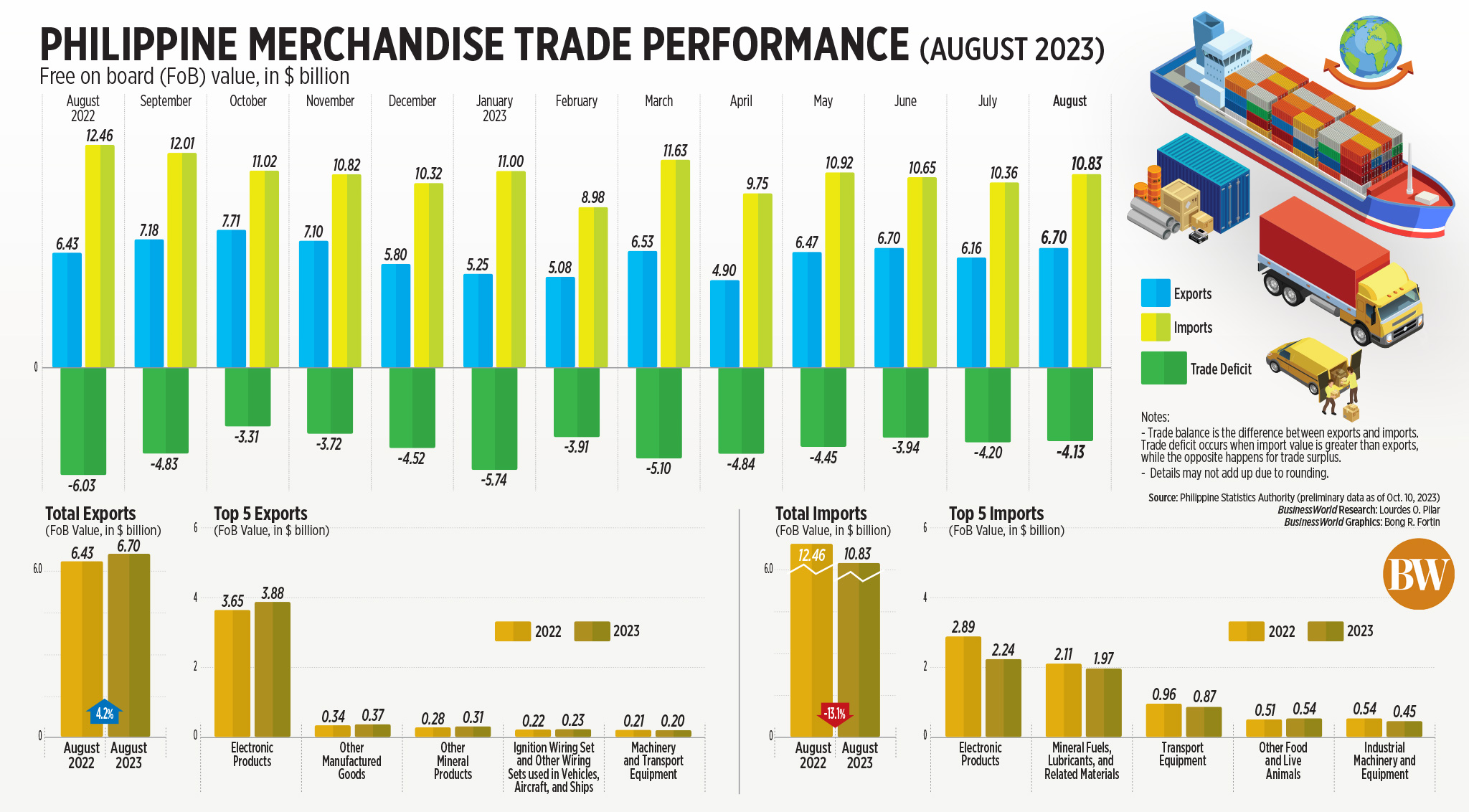
 The Philippines’ trade-in-goods deficit for August narrowed to its lowest level in two months, as an increase in exports offset the continued decline in imports.

Preliminary data from the Philippine Statistics Authority (PSA) showed the trade-in-goods balance — the difference between exports and imports — stood at a USD 4.13-billion deficit in August, narrower than the USD 4.2-billion gap in the previous month and the USD 6.03-billion deficit in August last year.

This was the narrowest trade gap in two months or since the USD 3.94-billion deficit in June.

Philippine Merchandise Trade Performance (August 2023)

For the first eight months, the trade deficit slimmed down to USD 36.31 billion from the USD 41.86-billion gap during the same period a year ago.

Total sales of outbound goods jumped by 4.2% year on year to USD 6.7 billion in August, a turnaround from the revised 1.7% contraction in the same month in 2022. The 4.2% export growth was the fastest in nine months or since 13.1% in November 2022.

By value, export receipts in August marked the highest level in two months or since USD 6.703 billion in June.

In the eight months to August, exports fell by 6.6% to USD 47.81 billion.

Meanwhile, the country’s merchandise imports contracted by 13.1% year on year to USD 10.83 billion in August, a reversal from the 26.4% growth in August 2022.

The import bill in August was at the highest level in three months or since USD 10.92 billion in May this year.

In the January-to-August period, imports dropped by 9.6% to USD 84.12 billion.

“The main drivers of August exports were manufacturing goods including electronics as well as minerals. We estimate they also improved sequentially, signaling some improvement in external demand for the Philippines’ goods,” Makoto Tsuchiya, assistant economist at Oxford Economics, said in an e-mail.

Mr. Tsuchiya noted the decline in imports is still broad-based, reflecting the softness in domestic demand.

“The seasonally adjusted trend shows imports are declining but less intensely compared to the year-on-year growth, which means the imports might be close to bottoming out soon at least in the sequential term,” he added.

Manufactured goods, which accounted for 81.8% of total August exports, rose by 3.6% to USD 5.48 billion.

Electronic products, which made up more than half of the total exports in August, jumped by 6.1% to USD 3.88 billion.

Almost half of total exports came from semiconductors, which jumped by 14% to USD 3.12 billion.

The United States remained as the main destination of local goods in August, with export value reaching USD 1.1 billion or a 16.4% share of the total export receipts. Exports to Japan were valued at USD 918 million, followed by Hong Kong with USD 871 million and China with USD 838 million.

Meanwhile, imports of raw materials and intermediate goods, which made up 35.6% of the total imports in August, declined by 18.9% to USD 3.86 billion.

Imports of capital goods, likewise, contracted by 19.3% to USD 2.73 billion in August.

On the other hand, mineral fuels, lubricants and related materials, increased by 18.2% to USD 1.97 billion, while consumer goods grew by 20.6% to USD 2.24 billion.

China was the main source of imported goods in August with a 22.4% share or USD 2.43 billion of the total bill. Imports from Indonesia reached USD 977 million, followed by Japan with USD 787 million, South Korea with USD 777 million and United States with $752 million.

ING Bank N.V. Manila Senior Economist Nicholas Antonio T. Mapa expects the conflict between Israel and Palestinian Islamist group Hamas to send global energy prices soaring, which would drive up the country’s import bill.

“Global growth could also slow, which would slow demand for Philippine exports, either directly or indirectly,” he said in an e-mail.

Despite the exports growth, Mr. Mapa said he does not expect a sustained pickup in exports in the coming months.

“Exports will be hard pressed to hit the -4% target for this year given that year-to-date (YTD) exports are down by more than 6%,” he said.

“Meanwhile, imports will also not likely hit the forecast of -3% this year given the YTD drop of 9.6% for inbound shipments and our expectations that imports will remain soft on contracting demand for capital goods and raw materials given fast fading capital formation due to elevated borrowing costs.”

Mr. Mapa was referring to the Bangko Sentral ng Pilipinas’ forecasts for exports and imports.

Philippine Exporters Confederation, Inc. President Sergio R. Ortiz-Luis, Jr. said improvements in the supply chain helped drive export growth in August.

“[Export] orders increased slightly because of the improved supply chain… [the growth of orders] is continuous, not on a big level but it will improve,” he said in a phone interview.

The Development Budget Coordination Committee is projecting a 1% growth for exports and 2% for imports this year. — Mariedel Irish U. Catilogo

FDI net inflows jump to 3-month high in July   

FDI net inflows jump to 3-month high in July   

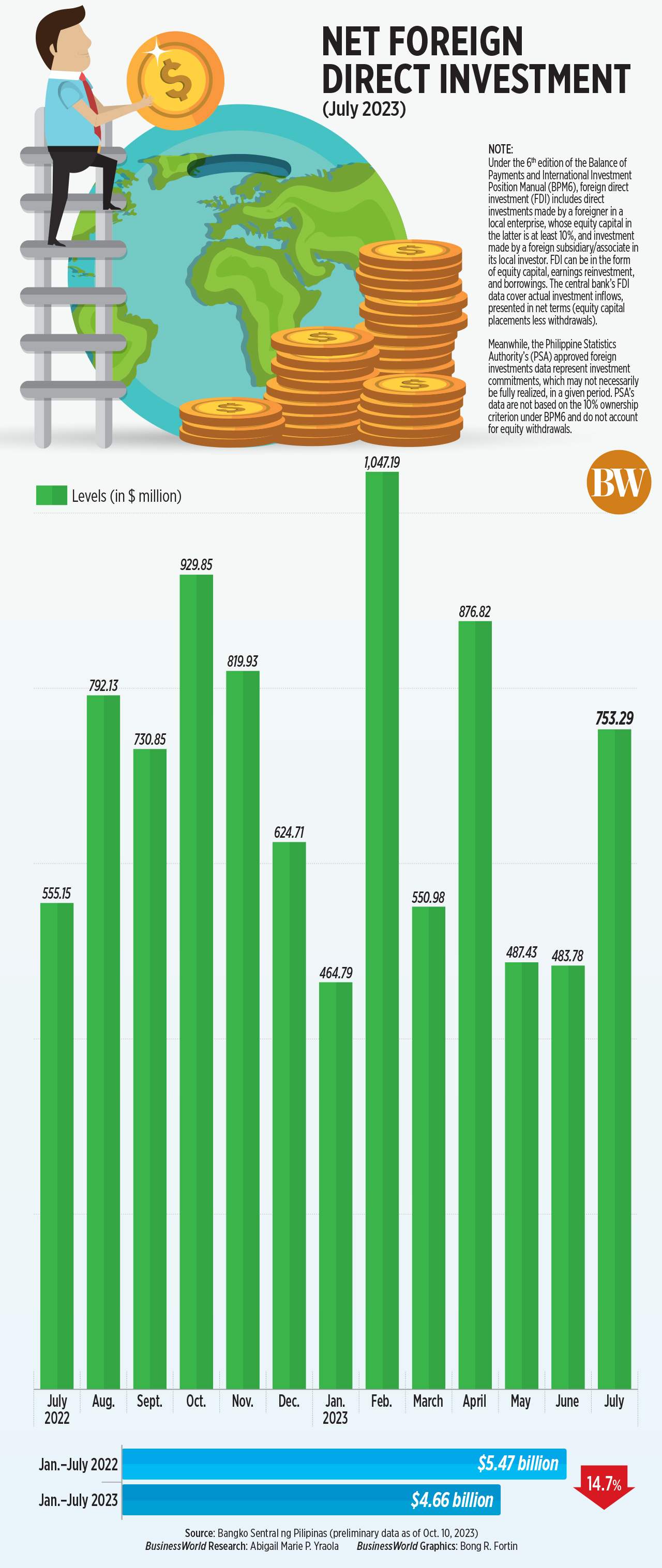
Net inflows of foreign direct investments (FDI) rose to its highest level in three months in July, amid improved investor sentiment.

Data released by the Bangko Sentral ng Pilipinas (BSP) on Tuesday showed FDI net inflows jumped by 35.7% to USD 753 million in July from USD 555 million in the same month a year earlier. It also rose by 55.6% from the USD 484-million inflows seen in June.

The July FDI inflows were the highest in three months or since USD 877 million in April.

Net Foreign Direct Investment“The jump in FDI inflows was likely due to positive risk sentiment which encouraged investments in emerging markets like the Philippines,” China Banking Corp. Chief Economist Domini S. Velasquez said in a Viber message.

Ms. Velasquez said market players had expected the US Federal Reserve to be nearing the end of its tightening cycle in July due to weaker US inflation and US jobs data.

The US Federal Reserve hiked its own policy rates by 25 basis points (bps) to 5.25-5.5% at its July 25-26 meeting. It has raised borrowing costs by a total of 525 bps since March 2022.

“Additionally, the launch of green lanes for strategic investments and the signing of the Maharlika Investment Fund could have also encouraged inflows,” she said.

President Ferdinand R. Marcos, Jr. signed Executive Order No. 18 in February, which aims to expedite, streamline, and automate government processes for strategic investments to attract more foreign investors.

In July, Mr. Marcos signed into law Republic Act No. 11954, which created the Philippines’ first sovereign wealth fund. The MIF is expected to be operational by yearend.

The BSP attributed the increase in FDI net inflows in July to nonresidents’ net investments in debt instruments more than doubling to USD 575 million from USD 276 million a year earlier.

However, equity and investment fund shares fell by 36.1% to USD 179 million in July from USD 279 million in the same month last year.

In July, reinvestment of earnings slid by 20.1% to USD 114 million from USD 142 million a year ago.

Equity inflows other than reinvestment of earnings dropped by 52.6% year on year to USD 65 million. This, as placements plummeted by 47.6% to USD 81 million, while withdrawals went down by 9.1% to USD 16 million.

For the first seven months of 2023, FDI inflows decreased by 14.7% to USD 4.66 billion from USD 5.47 billion in the same period last year.

Broken down, investments in debt instruments dropped by 15.2% to USD 3.28 billion in the January-to-July period.

Equity and investment fund shares went down by 13.6% to USD 1.38 billion as of July. Reinvestment of earnings declined by 13.1% to USD 573 million in the seven-month period.

Investments in equity capital other than reinvestment of earnings slipped by 14% to USD 808 million. Placements dipped by 4% to USD 1.004 billion, while withdrawals surged by 83% to USD 196 million.

“In the near term, the prevailing risk-off sentiment may dissuade investments in the Philippines. On a positive note, enacted legislations and reforms should help improve investor sentiment in the country,” Ms. Velasquez said. 

She cited recent laws such as the Retail Trade Liberalization Act, the Public Service Act, and the Regional Comprehensive Economic Partnership.

“We expect FDI inflows to be better in 2024 in line with a global economic recovery,” she added.

Last month, the BSP lowered its full-year projection for FDI net inflows to USD 8 billion from USD 9 billion previously. FDI net inflows are also projected to reach USD 10.5 billion in 2024. — Keisha B. Ta-asan

IMF still sees PH as one of region’s strongest economies this year

IMF still sees PH as one of region’s strongest economies this year

The International Monetary Fund (IMF) expects the Philippine economy to remain one of the strongest performers in the region this year, despite its outlook of slower global economic growth

In its latest World Economic Outlook (WEO), the IMF expects the Philippines’ gross domestic product (GDP) to grow by 5.3% this year, below the 6-7% target of the government. This is also slower than the 7.6% GDP expansion in 2022.

The multilateral lender’s 2023 growth outlook for the Philippines is the second fastest among emerging and developing Asia, just behind India (6.3%).

It is ahead of China and Indonesia (both at 5%), Vietnam (4.7%), Malaysia (4%), and Thailand (2.7%).

Emerging and developing Asia’s growth is expected to average 5.2% this year from 5.3% previously. The region’s growth is seen to slow to 4.8% in 2024 from 5% previously.

The IMF said that growth prospects for emerging markets and developing economies will remain weak this year.

“Global activity bottomed out at the end of last year while inflation — both headline and underlying (core) — is gradually being brought under control,” the IMF said.

“But a full recovery toward pre-pandemic trends appears increasingly out of reach, especially in emerging markets and developing economies,” it added.

The IMF’s 5.3% forecast for the Philippines this year also makes it the fastest among five Association of Southeast Asian Nations (ASEAN) member countries.

The ASEAN-5 region is projected to grow by 4.2% this year and 4.5% next year.

Based on the WEO, the IMF projects 5.9% GDP growth for the Philippines in 2024, although this was already revised to 6% last week after the conclusion of the Article IV consultation mission to Manila.

This would still make the Philippines the second-fastest growing economy in emerging and developing Asia, after India (6.3%). The Philippines is also seen to be the fastest in ASEAN-5 next year, followed by Indonesia (5%) and Malaysia (4.3%).

IMF Representative to the Philippines Ragnar Gudmundsson said the multilateral lender’s latest projections for the Philippines were finalized during the Article IV mission, as the forecasts in the WEO update were done before the consultations.

“Our views on monetary policy are still in line with those shared last week,” he said in an e-mail. “Essentially, we made small adjustments to our projections based on our discussions and the latest data we received in the context of the mission.”

IMF Mission Chief to the Philippines Shanaka Jayanath Peiris earlier said the main downside risk to the IMF’s growth outlook for the Philippines is persistent inflation, which could prompt the central bank to resume monetary tightening.

The IMF expects Philippine inflation to rise to about 6% this year before declining to 3.5% in 2024. The BSP sees inflation averaging 5.8% this year and 3.5% in 2024.

The BSP has kept the key interest rate at a near 16-year high of 6.25% since March.

Mr. Peiris had said that a “higher-for-longer” policy rate path may be necessary until inflation falls within the target range. 

The IMF projects Philippine inflation to return to the 2-4% target by the first quarter of next year.

Meanwhile, the IMF expects global growth to slow to 3% this year, as the global economy continues to recover “slowly” from the pandemic, Russia’s invasion of Ukraine and the cost-of-living crisis. It also trimmed its 2024 outlook to 2.9%, from 3% previously.

“Yet growth remains slow and uneven, with growing global divergences. The global economy is limping along, not sprinting,” the IMF said.

The IMF expects global inflation to rise to 6.9% this year, but ease to 5.8% in 2024. Inflation is not expected to return to target until 2025 in most economies around the world. — Keisha B. Ta-asan

Banks’ assets rise at end-August

Banks’ assets rise at end-August

The total assets of the Philippine banking industry continued to rise year on year at end-August amid a sustained growth in loans and deposits.

Preliminary data from the Bangko Sentral ng Pilipinas (BSP) showed banks’ assets grew by 8.6% to PHP 23.46 trillion as of August from PHP 21.59 trillion in the same period a year ago.

Banks’ assets are mainly supported by deposits, loans, and investments. These include cash and due from banks as well as interbank loans receivable (IBL) and reverse repurchase (RRP), net of allowances for credit losses.

“The latest asset growth of banks is largely consistent with the growth in loans,” Rizal Commercial Banking Corp. Chief Economist Michael L. Ricafort said in a Viber message.

However, lending growth has slowed amid higher interest rates, which made borrowing more expensive, he said.

The banking industry’s total loan portfolio inclusive of IBL and RRP increased by 9.5% to PHP 12.51 trillion as of end-August from PHP 11.42 trillion in the comparable year-ago period, BSP data showed.

Net investments, or financial assets and equity investments in subsidiaries, went up by 11% to PHP 6.95 trillion from PHP 6.26 trillion a year ago. 

Cash and due from banks declined by 7.2% to PHP 2.55 trillion in the first eight months of 2023 from PHP 2.75 trillion in the same period in 2022.

Net real and other properties acquired (ROPA) went up by 6.07% to PHP 106.88 billion from PHP 100.76 billion last year.

Other assets stood at PHP 1.35 trillion, 27% higher than the PHP 1.06 trillion last year.

Meanwhile, the banking system’s total liabilities increased by 8.3% to PHP 20.52 trillion as of end-August from PHP 18.93 trillion in the comparable year-ago period.

“Asset growth is also partly supported by the continued increase in banks’ earnings that are added to banks’ capitalization and more funds available for lending and other investments,” Mr. Ricafort said.

“Some banks also got new capital infusion from investors, thereby having more funds for lending and other investments, leading to the continued growth in loans and total assets,” he added.

By banking group, universal and commercial banks held P22 trillion of the industry’s total assets as of end-August, while the thrift banks had PHP HP 987.55 billion.

Total assets of rural and cooperative banks stood at P385 billion as of end-June.

BDO Unibank, Inc. had the largest assets among Philippine banks with PHP 3.98 trillion in the first semester. It was followed by Land Bank of the Philippines with PHP 3.03 trillion, and Bank of the Philippine Islands with PHP 2.66 trillion.

Others in the top 10 banks in terms of asset size were Metropolitan Bank and Trust Co., China Banking Corp., Rizal Commercial Banking Corp., Philippine National Bank, Union Bank of the Philippines, Development Bank of the Philippines, and Security Bank Corp. 

The Monetary Board has kept the target RRP rate at 6.25% after it raised borrowing costs by 425 basis points from May 2022 to March 2023.

BSP Governor Eli M. Remolona, Jr. earlier said the Monetary Board may resume monetary tightening at its next meeting on Nov. 16 if inflation pressures persist. — K.B. Ta-asan

Posts navigation

Older posts
Newer posts

Recent Posts

  • Investment Ideas: April 1, 2026
  • Metrobank US-Iran Risk Index: Signals of an end
  • Eye on Earnings: Demand for connection supports telcos
  • Inflation Preview: March madness
  • Investment Ideas: March 31, 2026

Recent Comments

No comments to show.

Archives

  • April 2026
  • March 2026
  • February 2026
  • January 2026
  • December 2025
  • November 2025
  • October 2025
  • September 2025
  • August 2025
  • July 2025
  • June 2025
  • May 2025
  • April 2025
  • March 2025
  • February 2025
  • January 2025
  • December 2024
  • November 2024
  • October 2024
  • September 2024
  • August 2024
  • July 2024
  • June 2024
  • May 2024
  • April 2024
  • March 2024
  • February 2024
  • January 2024
  • December 2023
  • November 2023
  • October 2023
  • September 2023
  • August 2023
  • July 2023
  • June 2023
  • May 2023
  • April 2023
  • March 2023
  • February 2023
  • January 2023
  • December 2022
  • November 2022
  • October 2022
  • September 2022
  • August 2022
  • July 2022
  • June 2022
  • May 2022
  • March 2022
  • December 2021
  • October 2021

Categories

  • Bonds
  • BusinessWorld
  • Currencies
  • Economy
  • Equities
  • Estate Planning
  • Explainer
  • Featured Insight
  • Fine Living
  • How To
  • Investment Tips
  • Markets
  • Portfolio Picks
  • Rates & Bonds
  • Retirement
  • Reuters
  • Spotlight
  • Stocks
  • Uncategorized

You are leaving Metrobank Wealth Insights

Please be aware that the external site policies may differ from our website Terms And Conditions and Privacy Policy. The next site will be opened in a new browser window or tab.

Cancel Proceed
Get in Touch

For inquiries, please call our Metrobank Contact Center at (02) 88-700-700 (domestic toll-free 1-800-1888-5775) or send an e-mail to customercare@metrobank.com.ph

Metrobank is regulated by the Bangko Sentral ng Pilipinas
Website: https://www.bsp.gov.ph

Quick Links
The Gist Webinars Wealth Manager Explainers
Markets
Currencies Rates & Bonds Equities Economy
Wealth
Investment Tips Fine Living Retirement
Portfolio Picks
Bonds Stocks
Others
Contact Us Privacy Notice Terms of Use
© 2026 Metrobank. All rights reserved.

Access this content:

If you are an existing investor, log in first to your Metrobank Wealth Manager account. ​

If you wish to start your wealth journey with us, click the “How To Sign Up” button. ​

Login HOW TO SIGN UP