



MODEL PORTFOLIO
THE GIST
NEWS AND FEATURES
Global Philippines Fine Living
INSIGHTS
INVESTMENT STRATEGY
Economy Stocks Bonds Currencies
THE BASICS
Investment Tips Explainers Retirement
WEBINARS
2024 Mid-Year Economi Briefing, economic growth in the Philippines
2024 Mid-Year Economic Briefing: Navigating the Easing Cycle
June 21, 2024
Investing with Love
Investing with Love: A Mother’s Guide to Putting Money to Work
May 15, 2024
retirement-ss-3
Investor Series: An Introduction to Estate Planning
September 1, 2023
View All Webinars
DOWNLOADS
Container ship carrying container boxes import export dock with quay crane. Business commercial trade global cargo freight shipping logistic and transportation worldwide oversea concept. Generative AI
Economic Updates
Philippines Trade Update: Wider deficit on strong imports
DOWNLOAD
Frick collection with palm trees 
Economic Updates
Policy Rate Updates: Policy rate updates to reassure 
DOWNLOAD
Man using his smartphone
Reports
Fed to cut just once 
DOWNLOAD
View all Reports
Metrobank.com.ph How To Sign Up
Follow us on our platforms.

How may we help you?

TOP SEARCHES
  • Where to put my investments
  • Reports about the pandemic and economy
  • Metrobank
  • Webinars
  • Economy
TRENDING ARTICLES
  • Investing for Beginners: Following your PATH
  • On government debt thresholds: How much is too much?
  • Philippines Stock Market Outlook for 2022
  • Deficit spending remains unabated

Login

Access Exclusive Content
Login to Wealth Manager
Visit us at metrobank.com.ph How To Sign Up
Access Exclusive Content Login to Wealth Manager
Search
MODEL PORTFOLIO THE GIST
NEWS AND FEATURES
Global Philippines Fine Living
INSIGHTS
INVESTMENT STRATEGY
Economy Stocks Bonds Currencies
THE BASICS
Investment Tips Explainers Retirement
WEBINARS
2024 Mid-Year Economi Briefing, economic growth in the Philippines
2024 Mid-Year Economic Briefing: Navigating the Easing Cycle
June 21, 2024
Investing with Love
Investing with Love: A Mother’s Guide to Putting Money to Work
May 15, 2024
retirement-ss-3
Investor Series: An Introduction to Estate Planning
September 1, 2023
View All Webinars
DOWNLOADS
Container ship carrying container boxes import export dock with quay crane. Business commercial trade global cargo freight shipping logistic and transportation worldwide oversea concept. Generative AI
Economic Updates
Philippines Trade Update: Wider deficit on strong imports
March 27, 2026 DOWNLOAD
Frick collection with palm trees 
Economic Updates
Policy Rate Updates: Policy rate updates to reassure 
March 26, 2026 DOWNLOAD
Man using his smartphone
Reports
Fed to cut just once 
March 19, 2026 DOWNLOAD
View all Reports

Archives: Business World Article

Yields on gov’t securities climb amid BSP bets

Yields on gov’t securities climb amid BSP bets

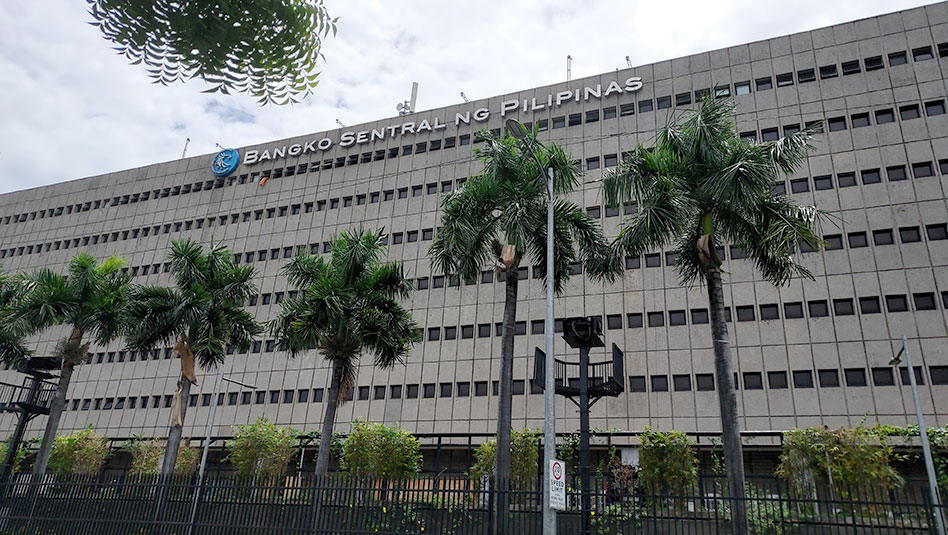
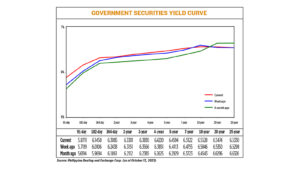
Yields on government securities (GS) traded in the secondary market climbed last week after the Bangko Sentral ng Pilipinas (BSP) hinted at a rate hike in their meeting next month.

GS yields, which move opposite to prices, climbed by 4.60 basis points (bps) on average week on week, based on PHP Bloomberg Valuation Service Reference Rates as of Oct. 13 published on the Philippine Dealing System’s website.

Rates mostly increased across the board, with yields on the 91-, 182- and 364-day Treasury bills (T-bills) rising by 15.92 bps, 13.52 bps and 6.47 bps to 5.8711%, 6.1458%, and 6.3085%, respectively.

The belly of the curve went up as rates of the two-, three-, four-, five-, and seven-year Treasury bonds (T-bonds) climbed by 1.50 bps (6.3301%), 2.64 bps (6.3830%), 3.69 bps (6.422%), 4.81 bps (6.4594%), and 3.67 bps (6.5122%), respectively.

At the long end, rates were mixed as the 20-, and 25-year debt papers inched up by 1.24 bps (6.5474%) and 0.32 bps (6.533%), respectively, while the 10-year debt paper fell by 3.18 bps to yield 6.5528%.

On Friday, total GS volume traded fell to PHP 3.99 billion from PHP 10.59 billion a week earlier.

Last week’s yield movements were mostly due to expectations of a BSP rate hike in November, analysts said.

“Government bond yields increased after BSP Governor Remolona hinted on a possible rate hike before the year ends,” a bond trader said in an e-mail.

BSP Governor Eli M. Remolona, Jr. last week said the Monetary Board is open to hiking borrowing costs by 25 bps in their Nov. 16 review following the release of data showing faster-than-expected September inflation.

Headline inflation accelerated for a second straight month to 6.1% in September from 5.3% in August. This brought the nine-month inflation average to 6.6%, still higher than the BSP’s 5.8% forecast and 2-4% target.

The Monetary Board has kept the benchmark interest rate at 6.25% for four straight meetings after it hiked borrowing costs by 425 bps from May 2022 to March 2023 to help tame inflation.

The potential BSP hike has been priced in gradually in local yields for the past few weeks, Alessandra P. Araullo, chief investment officer at ATRAM Trust Corp., said in a Viber message.

“[This,] as we saw the front end to the belly of the curve inched higher by 6-19 bps after the previous monetary policy meeting,” Ms. Araullo said in a Viber message.

Some investors, however, still expect inflation to go down significantly by yearend, she added.

“This divide managed to cap the upward movement in yields from the previous days after opportunistic buying emerged,” Ms. Araullo said.

The bond trader added that the “upside was limited from some safe-haven demand from the outbreak of the Israel-Palestine war.”

The death toll in the Gaza Strip and the West Bank reached 2,383 Palestinians dead and 10,814 injured on Sunday morning, according to Palestinian health ministry sources, Reuters reported.

In Gaza, the death toll climbed to 2,329 Palestinians killed and 9,714 wounded, while in the West Bank, 54 were recorded dead and 1,100 wounded since the conflict between Hamas and Israel started on Oct. 7.

Ms. Araullo added that local market activity was driven by the bond auction last week.

“Week on week, local yields on the long end were lower by 2-7 basis points as buying emerged from local investors betting on a more dovish US central bank,” she said.

The Bureau of the Treasury (BTr) raised PHP 30 billion as planned via the reissued 10-year bonds it auctioned off last week as total bids reached PHP 40.828 billion, higher than the offered volume.

The bonds, which have a remaining life of five years and three months, were awarded at an average rate of 6.512%, with accepted yields ranging from 6.35% to 6.625%

For this week, Ms. Araullo said the market could remain cautious amid still-elevated inflation in the US, which could cause the Federal Reserve to keep rates higher for longer.

“Yield movement is likely to remain rangebound until further data releases imply that local prices managed to show signs of easing,” she added.

“Yields might correct to the downside as the potentially weaker US retail sales and softer Chinese economic growth report might bolster views of a near-term downside in global activity,” the bond trader said. — A.M.P. Yraola with Reuters

Peso to move sideways

Peso to move sideways

The peso could continue to trade at the PHP 56 level this week as September US consumer inflation data fueled bets of another rate hike from the US Federal Reserve within the year.

The local unit closed at PHP 56.811 per dollar on Friday, weakening by 15.1 centavos from its PHP 56.66 finish on Thursday, data from the Bankers Association of the Philippines showed.

Week on week, the peso also weakened by 19.1 centavos from its PHP 56.62 per dollar finish on Oct. 6.

The local currency opened Friday’s session at PHP 56.77 against the dollar, which was also its intraday best. Its weakest showing was at PHP 56.86 versus the greenback.

Dollars exchanged went down to USD 911.12 million on Friday from USD 1.25 billion on Thursday.

The peso weakened against the dollar on Friday after the release of faster-than-expected US consumer price index (CPI) data raised expectations of another 25-basis-point (bp) hike from the Fed within the year, Rizal Commercial Banking Corp. Chief Economist Michael L. Ricafort said in a Viber message.

For this week, Mr. Ricafort sees the peso ranging from PHP 56.55 to PHP 56.95 per dollar as the CPI data and Fed expectations continue to drive trading.

US consumer prices increased in September amid a surprise surge in rental costs, but a steady moderation in underlying inflation pressures supported financial market expectations that the Federal Reserve would not raise interest rates next month, Reuters reported.

The consumer price index increased by 0.4% last month. The CPI soared by 0.6% in August, which was the largest gain in 14 months.

In the 12 months through September, the CPI advanced 3.7% after rising by the same margin in August. Year-on-year consumer prices have come down from a peak of 9.1% in June 2022. Economists polled by Reuters had forecast the CPI would gain 0.3% on the month and 3.6% on a year-on-year basis.

The Fed kept its benchmark rate unchanged at the 5.25% to 5.5% range at its Sept. 19-20 meeting.

It has hiked rates by a cumulative 525 bps since it began its tightening cycle in March last year.

The Federal Open Market Committee will hold its next policy meeting from Oct. 31 to Nov. 1.

The consumer inflation data also led to higher US Treasury yields and a generally stronger dollar on Friday, Mr. Ricafort said.

US Treasury yields rose and the dollar strengthened while global stock markets fell on Thursday after data showed US consumer prices increased more than expected in September

That helped to underpin some views in the market that US interest rates may need to remain high for longer.

An auction of US 30-year bonds showing poor demand also sent Treasury yields higher. In afternoon trading, US benchmark 10-year yields were last up 10.2 bps at 4.699%, after hitting two-week lows of 4.53% earlier in the session.

In the foreign exchange market, the dollar index, a measure of the US currency against six others, jumped by 0.85% to 106.550 in its biggest single-day gain since March 15. The dollar rose more than 1% against sterling, and the Australian and New Zealand dollars. — with Reuters

Weak trading likely amid tightening concerns

Weak trading likely amid tightening concerns

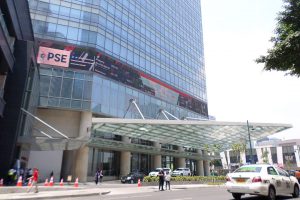
TRADING at the stock market could be weak in the coming days amid concerns over possible tightening by the Bangko Sentral ng Pilipinas (BSP) and the US Federal Reserve.

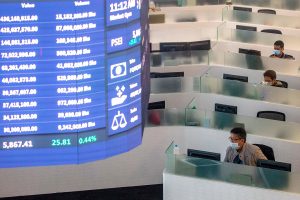
The benchmark Philippine Stock Exchange index (PSEi) went up by 3.28 points or 0.05% to close at 6,266.34 on Friday, while the broader all shares index added 1.16 points or 0.03% to end at 3,384.57.

Week on week, the PSEi inched up by 6.39 points or 0.1% from its close of 6,259.95 on Oct. 6.

“[Last] week’s relative resiliency leads us to believe that the market may stage a rally in the coming week, especially as key risk-off events have already passed,” China Bank Securities Corp. Research Director Rastine Mackie D. Mercado said in an e-mail. 

Bargain-hunting could continue and cause the market to move sideways, Philstocks Financial, Inc. Senior Research Analyst Japhet Louis O. Tantiangco said in a Viber message.

“However, we may not yet see a strong rally amid lingering worries. Concerns over a possible resumption of the Federal Reserve and the BSP’s monetary tightening amid the inflation picture at home and in the US may weigh on sentiment,” Mr. Tantiangco said.

BSP Governor Eli M. Remolona, Jr. last week said the Monetary Board is open to hiking borrowing costs by 25 basis points (bps) in their Nov. 16 review following the release of data showing faster-than-expected September inflation.

Headline inflation accelerated for a second straight month to 6.1% in September from 5.3% in August. This brought the nine-month inflation average to 6.6%, still higher than the BSP’s 5.8% forecast and 2-4% target.

The Monetary Board has kept the benchmark interest rate at 6.25% for four straight meetings after it hiked borrowing costs by 425 bps from May 2022 to March 2023 to help tame inflation.

Meanwhile, US consumer prices increased in September amid a surprise surge in rental costs, but a steady moderation in underlying inflation pressures supported financial market expectations that the Federal Reserve would not raise interest rates next month, Reuters reported.

The consumer price index (CPI) increased 0.4% last month. The CPI soared 0.6% in August, which was the largest gain in 14 months.

In the 12 months through September, the CPI advanced 3.7% after rising by the same margin in August.

The analysts said investors are expected to monitor the release of the August cash remittances data on Monday and balance of payments data on Thursday.

“Investors will also keep an eye on the intensifying Israel-Hamas war, as any expansion of the conflict could impact oil prices. In addition, market participants will keep track of movements in US bond yields given the growing influence of this data point on how the Federal Reserve thinks about policy rates,” China Bank Capital Corp. Managing Director Juan Paolo E. Colet added in a Viber message.

For this week, he placed the PSEi’s support and resistance between 6,150 and 6,420. — SJT with Reuters

SEC willing to tweak fee hike plan

SEC willing to tweak fee hike plan

The Securities and Exchange Commission (SEC) is open to amending its proposal to increase its fees and charges, after a meeting with two business groups that have raised objections.

SEC officials, led by chairperson Emilio B. Aquino, on Thursday met with representatives of the Philippine Chamber of Commerce and Industry (PCCI) and the Federation of Filipino Chinese Chambers of Commerce and Industry, Inc. (FFCCCII) to discuss the controversial plan to raise its fees and charges.

“Yes (we are open to changes)… That’s the reason why we are exposing these drafts because we’re open to suggestions. But of course, on our side, we’ll have to make a case on why we came up with the proposal,” he said during a media roundtable in Makati City.

Mr. Aquino said the SEC is not pushing the plan to increase its fees since the Commission is currently focused on its amnesty program for corporations which ends on Nov. 6. The SEC’s amnesty program offers a reprieve from the fines and penalties imposed on the late or nonfiling of companies’ general information sheet, annual financial statements, and noncompliance.

“This is just a proposal. That is why we are eliciting all sorts of comments from all sides. Part of our vision is to be customer-centric… We’re not doing this on our own. I think we have met all the requirements there are for these increases,” he said.

SEC Commissioner McJill Bryant T. Fernandez told reporters that another meeting with the leaders of the business groups will be scheduled in two weeks to further discuss their concerns.

“The proposal from their end was to convene another meeting with the principals of all these business groups and we welcome that. We are devoting time to sit down with them. The entire Commission is open to meet them and discuss point by point,” he said.

In a letter to the SEC dated Oct. 2, several business groups and associations criticized the regulator’s proposal to increase its fees and charges, calling it “anti-business” and “unnecessary.”

Mr. Fernandez said that during Thursday’s meeting, the representatives from PCCI and FFCCCII apologized for the language and contents of the letter.

“They have conveyed apologies in terms of the manner that the letter was constructed,” he added. 

Mr. Fernandez said the SEC and business groups are looking at issuing a joint statement once the matter is resolved.

At the same time, SEC Commissioner Kelvin Lester K. Lee said the commission could justify its proposal to hike its fees and charges, since it is backed by data from market studies.

The SEC earlier said the current rates have not been adjusted since 2017 and were based on a 2014 proposal.

“Bottom line, I think we can make a very good case for justifying the direction we’re going because it’s done very well. We have to laud our technical team who has worked on this for an excessively long time,” Mr. Lee said.

However, PCCI President George T. Barcelon said businesses should have been consulted on the proposed hike in SEC fees and charges.

“We can see the point of the SEC that they have not increased the charges ever since I believe it was 2014. But having said that, one of the concerns of the business sector is that the jump is quite high, the increase is quite high,” Mr. Barcelon said at a media briefing on Thursday.

He said that the SEC and the private sector are willing to discuss the matter and come up with a compromise.

“It is not yet a closed book, so this is something that we’d like to have a say on because we also compare the rates charged by other countries since we are trying to be competitive in foreign investments,” Mr. Barcelon said.

The business groups had objected to “unreasonable, if not ‘obscene’ fees and charges,” such as the proposal to charge corporate issuers one-fourth of 1% of total indebtedness when creating bonded indebtedness.

“Using 2022 numbers, SEC’s fees would amount to PHP 1.27 billion on the total bond issuances of PHP 508 billion for that year,” the groups said.

The business groups also opposed the proposed fee on the total transactions cleared and settled in the previous year by Securities Clearing Corp. of the Philippines and Philippine Depository Trust Corp. at 0.1 basis point (bp) and 0.05 bp, respectively.

Based on the transactions in 2022, the groups said this would mean PHP 14.51 million and PHP 7.25 million in additional friction cost for stock market investors.

According to the business groups, the current fee collections of the SEC far exceed the cost of its operations.

The business groups also noted the SEC’s proposal to impose “unconscionable” increases on fees may discourage new investments in the country.

“The increased cost of doing business will also hurt small and medium enterprises covered by SEC due to the ripple effects of the fee increases,” they added.

Aside from the PCCI and FFCCCII, the letter to the SEC was also signed by the Management Association of the Philippines, Philippine Retailers Association, Philippine Franchise Association, Chamber of Thrift Banks, Philippine Exporters Confederation, Inc., Employers Confederation of the Philippines, Philippine Association of Legitimate Service Contractors, Stratbase ADR Institute for Strategic and International Studies, and Philippine Food Processors and Exporters Organization, Inc. — Revin Mikhael D. Ochave and Justine Irish D. Tabile

Further rate hikes may have limited impact on inflation — analysts

Further rate hikes may have limited impact on inflation — analysts

Further rate hikes by the Bangko Sentral ng Pilipinas (BSP) may have limited impact on inflation and would likely slow economic growth, analysts said.

Nicholas Antonio T. Mapa, senior economist at ING Bank N.V. Manila, said another rate hike at this point will not likely impact inflation in a “substantial” way.

“What rate hikes will be effective in carrying out would be a broad-based slowdown in growth momentum,” he said in a note.

BSP Governor Eli M. Remolona, Jr. on Wednesday said he is not ruling out a 25-basis-point (bp) increase at the Monetary Board’s next policy review on Nov. 16.

The BSP has kept the key interest rate at a near 16-year high of 6.25% at its last four meetings. Another 25-bp rate hike will bring the benchmark rate to 6.5%.

Last week, National Economic and Development Authority Secretary Arsenio M. Balisacan warned that further monetary tightening could hurt the economy and consumers who are already struggling from high inflation.

Mr. Mapa noted higher borrowing costs would affect bank lending, which is linked to capital formation and gross domestic product (GDP) expansion.

“We believe the net result of additional tightening would be much slower growth, with only a modest impact on inflation but only after growth slides to multi-year lows,” he said.

ING Bank lowered its Philippine growth forecast to 4.7% (from 4.8% previously) for this year and to 4.5% (from 4.7%) for 2024. Both estimates are below the government’s 6-7% and 6.5-8% target for 2023 and 2024, respectively.

In an e-mail, University of Asia and the Pacific Senior Economist Cid L. Terosa said rate hikes will be effective in quelling inflation only if inflation is demand-driven, noting that the current inflation is driven by supply constraints and geopolitical tensions.

“In the Philippines, businesses and investments are more sensitive to interest rate hikes than consumers. Hence, the net effect of rate hikes on economic growth in the Philippines tends to be negative. It appears that the negative impact of interest rate hikes and inflation rate on economic growth in the Philippines can extend over the long term,” Mr. Terosa said.

Headline inflation accelerated for a second straight month to 6.1% in September from 5.3% in August as food and transport costs surged. September marked the 18th straight month that inflation exceeded the central bank’s 2-4% target. Year to date, inflation averaged 6.6%.

Further tightening
ING’s Mr. Mapa said the BSP will likely resume monetary tightening only to secure the inflation path in 2024, as market players are not pricing in a rate hike by the US Federal Reserve and the peso remains steady against the dollar.

“With 2023 winding down, any rate hike today would only have an impact on the 2024 inflation outlook.  We believe Mr. Remolona will pull the trigger on a rate hike in the near term, possibly after the October inflation report, a potential Fed rate hike or at the November BSP policy meeting,” he said.

Any rate hike would demonstrate the BSP’s commitment to fight inflation, anchor inflation expectations and tame second-round effects by “snuffing out” pressures from the demand side, Mr. Mapa said.

Mr. Terosa said the continued rise in prices may still prompt the Philippine central bank to hike rates, Mr. Terosa said.

“Aside from rate hikes, the government should explore solutions that will ensure stability in the production and supply of key commodities,” he added.

Meanwhile, DBS Bank Senior Economist Radhika Rao said rising prices of food and fuel can “unhinge” inflationary expectations.

“Our base case is for a pause till yearend but the odds of an inter-meeting hike or at the scheduled review has increased after the September inflation release as well as pipeline risks of further adverse weather pushing by food inflation,” she said.

“The FOMC (Federal Open Market Committee) review in early-November might also sway the timing and likelihood of further tightening by the BSP,” she added.

The US Federal Reserve opted to keep the target Fed funds rate unchanged at 5.25-5.5% at its meeting last month. The FOMC is scheduled to meet from Oct. 31 to Nov. 1 to discuss policy. — Keisha B. Ta-asan, Reporter

Diokno says Philippines to be ‘less affected’ by China’s economic slowdown

Diokno says Philippines to be ‘less affected’ by China’s economic slowdown

The Philippine economy is seen to be “less affected” by the economic slowdown in China, Finance Secretary Benjamin E. Diokno said.

“The Philippines is expected to be less affected by China’s slower economic growth given that the potential slowdown in exports could be partially mitigated by the demand from our large domestic market,” he said during the ASEAN Roundtable at the World Bank-International Monetary Fund (IMF) Annual Meetings in Marrakech, Morocco on Oct. 11.

However, Mr. Diokno noted that a slowing China economy could “dampen global trade and put downward pressure on the Philippines’ goods and service exports.”

In August, total exports jumped by 4.2% year on year to USD 6.7 billion. The United States was the main destination of Philippine exports during the month, with export value reaching USD 1.1 billion, followed by Japan with USD 918 million. Exports to Hong Kong and China stood at USD 871 million and USD 838 million, respectively.

“Sharp swings in market sentiment and risk premia could trigger a sudden tightening of financial conditions, capital outflows, and depreciation of the peso. Intensification of geopolitical tensions and fragmentation could disrupt supply chains and investment,” he added.

Mr. Diokno said the Association of Southeast Asian Nations (ASEAN)+3 region will face both indirect and direct risks from China’s property crisis.

“We note that financial systems in the ASEAN+3 region could be exposed to risks arising from China’s property sector through three main channels: directly, through any lending to the sector; indirectly, from their exposures to other financial systems that are involved with that sector; and indirectly, from lending to their own domestic economy that may be hard hit by developments in China,” he said.

The IMF projected China to grow 5% in 2023 but slow to 4.2% in 2024, slower than previously estimated due to the property crisis and weak external demand.

‘Fastest-growing economy’
While the Philippines is projected to be the fastest-growing economy in the ASEAN region this year, the outlook is still clouded by external headwinds.

“Growth in the Philippines has proven remarkably resilient over the past couple of years. After a strong rebound in 2022, the economy continues to perform well, even if it is losing momentum,” Fred Neumann, HSBC chief Asia economist and co-head of Global Research Asia, said in an e-mail.

“At the same time, the relative outperformance of the Philippine economy needs to be kept in perspective: relative to its potential, growth is currently falling short. That’s because of cyclical headwinds like higher interest rates, both locally and globally,” he added.

Multilateral lenders and institutions like the International Monetary Fund, the World Bank, the Asian Development Bank, and AMRO have downgraded their 2023 growth forecasts for the Philippines. Their estimates are below the Philippine government’s 6-7% GDP growth target but are projected to outperform economies in Southeast Asia and the Asia-Pacific regions.

“One reason why the Philippines is outperforming many peers in the region is that it is less exposed to the global manufacturing cycle: unlike other economies, which are more dependent on manufacturing exports,” Mr. Neumann said.

The Philippine economy is driven mainly by consumption. Household spending accounts for three-fourths of the economic growth.

HSBC expects Philippine GDP to average 4.8% this year and 5.2% in 2024.

“There is considerable uncertainty around these forecasts, of course, as we have little visibility yet on what third-quarter performance was. We forecast growth of 4.7% year on year for the third quarter,” Mr. Neumann said.

Pantheon Chief Emerging Asia Economist Miguel Chanco said their outlook for Philippine growth is still on the “high side” but not among the strongest in the region.

“We expect 4.5% in 2023 and 4% in 2024, which puts the Philippines more in the middle of the pack, rather than one of ASEAN’s clear regional outperformers, which was the case pre-COVID-19, alongside the likes of Vietnam,” he said in an e-mail.

“Certainly, the economy’s structural growth prospects remain solid, but there’s no denying that it’s in the middle now of a cyclical growth slowdown, which will have a bearing on its regional position.”

ING Bank N.V. Manila Senior Economist Nicholas Antonio T. Mapa said the Philippines is unlikely to post the fastest growth in the region.

“It would be good (if) the Philippines was the fastest-growing economy, however, given significant headwinds, both domestic and international will likely mean we see growth slipping to 4.8% for the year,” he said in an e-mail.

Pantheon’s Mr. Chanco also noted that the government’s 6-7% goal was “never in reach.”

“Our current forecast for third-quarter GDP growth is south of 2% year on year, which implies a technical recession in quarter-on-quarter terms. Private consumption, the economy’s main driver, is clearly wobbling, as it has fewer legs to stand on this year, versus last,” he said.

ING Bank’s Mr. Mapa said that growth may not even reach the lower end of the target for this year and 2024.

“The combination of moderating consumption due to fast-fading revenge spending and elevated borrowing costs will likely force growth to slow. We have yet to feel the brunt of Bangko Sentral ng Pilipinas (BSP) policy increases yet and we have already seen the negative impact on growth momentum,” he added.

The BSP has kept its benchmark interest rate at a near 16-year high of 6.25% since March to tame inflation.

HSBC’s Mr. Neumann noted that elevated inflation and high interest rates would weigh on household spending this year and in 2024, “though even then the Philippines will likely remain an outperformer in the region.”

To support growth, Mr. Neumann said that the country must focus on boosting foreign investments to “expand the manufacturing sector’s connectivity with regional supply chains.”

“If the Philippines can attract a greater share of regional supply chain manufacturing, boosting goods exports, growth would accelerate sustainably,” he added.

The Philippine Statistics Authority is scheduled to release third-quarter GDP data on Nov. 9. — Luisa Maria Jacinta C. Jocson, Reporter

PEZA ties up with JICA, Japan firm for renewable projects

PEZA ties up with JICA, Japan firm for renewable projects

The Philippine Economic Zone Authority (PEZA) signed a partnership agreement with Japan International Cooperation Agency (JICA) and Japanese-led Advantec Philippines, Inc. for future renewable energy projects.

“The tie-up is part of JICA’s Public-Private Partnership (PPP) promotion program that utilizes Japanese innovations in implementing development cooperation projects,” JICA said in a press release.

Under the partnership, Advantec will introduce its solar power technology in the Pampanga Economic Zone with an annual energy yield of 3.6 million kilowatts.

The project is also seen to potentially reduce approximately 1,200 tons of carbon dioxide annually.

“JICA has been actively undertaking its PPP promotion program that encourages more business deployment of Japanese companies in the Philippines,” JICA Chief Representative Takema Sakamoto said in a statement.

“These Japanese companies introduce unique and advanced technologies and business models that are geared towards sustainable development. JICA keeps on supporting Filipino friends in line with the co-benefit approach,” Mr. Sakamoto said.

For the initial stage of the cooperation, Advantec will conduct a feasibility study to determine the viability of the solar power technology operation in the economic zone and how it fits into Philippine laws and regulations.

The study also aims to identify what PEZA rooftops or land areas will be used for the pilot project sites.

“Such partnership is powerful to also give potential renewable energy investors ideas on the best pathways to participate in the Philippine renewable energy landscape,” JICA said.

PEZA Director General Tereso O. Panga said that the memorandum of understanding signed on Thursday is in support of President Ferdinand R. Marcos, Jr.’s directive to promote clean and green production, energy efficiency, and the use of renewable energy sources.

In his second State of the Nation Address, Mr. Marcos announced that the Philippines is aiming to achieve a 35% renewable energy share in the power mix by 2030 and 50% by 2040.

Mr. Panga said that Advantec’s primary objective “is to establish and execute numerous solar power facilities initially within the Pampanga Economic Zone, with the aim of supplying generated electricity to PEZA and its locators operating within the zones.”

He added that PEZA will assist Advantec, particularly in securing the documentary requirements with the government, identifying suitable land areas, and facilitating the registration of solar photovoltaics.

“All these efforts shall be in accordance with the provision of the Corporate Recovery and Tax Incentives for Enterprises Law and the Renewable Energy Act of 2008,” Mr. Panga said. — Justine Irish D. Tabile

Financial sector ‘highly vulnerable’ to climate risks

Financial sector ‘highly vulnerable’ to climate risks

The Philippines financial sector is “highly vulnerable” to climate risks, the World Bank said.

“Financial institutions operating in the Philippines face high operational risks from natural disasters,” the World Bank said in a background paper for its Country Climate and Development Report.

“The Bangko Sentral ng Pilipinas (BSP) reports that in the aftermath of storms and natural disasters, banks are faced with severe disruptions of operations resulting from damage to infrastructure and branches,” it added.

Natural disasters also affect the “soundness of financial institutions and stability of the overall financial system,” the World Bank said.

Citing data from AIR Worldwide, the World Bank said typhoons alone cause losses in public and private assets equivalent to 0.71% of gross domestic product annually.

“Typhoons could increase market risks in the Philippines’ financial sector, where banks hold sizeable investment portfolios, totaling 20% of total assets as of end-December 2018,” it added.

The occurrence and size of a typhoon “significantly” impacted nonperforming loan (NPL) ratios in the Philippines, it added.

World Bank data showed that for a 1% rise in the typhoon damage ratio, the NPL ratio would rise by 0.66% in the same year on average.

“During interviews with BSP and banks, it was reported that rural and agricultural exposure, and therewith rural and cooperative banks, are most significantly affected by the impacts of typhoons. In contrast to universal banks, these banks predominantly operate in the regions and hold sizeable exposures in loans for the agricultural sector (17.5%).”

The insurance sector also faces “increasing underwriting risks” due to climate issues, the World Bank added.

“Large scale disasters can affect an insurer’s ability to pay out claims. During interviews, industry stakeholders reported difficulties following large typhoons,” it said.

“The aftermath of Yolanda showed that the sector was significantly affected by claims as a result of typhoon damages, even though catastrophe insurance penetration is low. Yolanda also affected the micro insurance sector, which paid out over P500 million in claims,” it added.

The financial sector is vulnerable to both physical risks and transition risks due to climate change, the World Bank said.

“Physical risks are already highly material for the Philippine financial sector. Typhoons, floods, droughts, as well as geological events like earthquakes and volcanic eruptions, can affect — and in fact are already affecting — credit, market, operational and underwriter risks, therewith threatening the profitability and solvency of banks and insurers,” the World Bank said.

To mitigate these risks, the government should strengthen post-disaster mechanisms and scaling up financial risk management of public assets., it said.

The government should also prepare for the increasing cost of climate disasters, it added. — LMJCJ

Peso strengthens on dovish Fed minutes

Peso strengthens on dovish Fed minutes

The peso appreciated further against the dollar on Thursday following dovish signals from minutes of the US Federal Reserve’s meeting last month.

The local currency closed at PHP 56.66 versus the dollar on Thursday, strengthening by 9.5 centavos from Wednesday’s PHP 56.755 finish, data from the Bankers Association of the Philippines’ website showed.

The local unit opened Thursday’s session stronger at PHP 56.70 per dollar. Its intraday best was at PHP 56.66, while its weakest showing was at PHP 56.80 against the greenback.

Dollars traded went up to USD 1.25 billion on Thursday from the USD 1.19 billion on Wednesday.

The peso strengthened on Thursday amid dovish signals from the US central bank, as seen in the minutes of its Sept. 19-20 meeting, Rizal Commercial Banking Corp. Chief Economist Michael L. Ricafort said in a Viber message.

A growing sense of uncertainty around the path of the US economy, with volatile data and tightening financial markets posing risks to growth, pushed Federal Reserve policy makers into a newly cautious stance last month, a position reaffirmed by top US central bank officials in a series of statements this week, Reuters reported.

Minutes of the Fed’s Sept. 19-20 meeting showed policy makers wrestling with risks they agreed were no longer just about inflation, with world energy and food markets perhaps threatening a new surge in prices, but slowing global growth, labor strikes and tightening financial markets possibly clamping down on the economy in unexpected, and job-killing ways.

The point was amplified by comments this week from top Fed officials who noted that the recent rise in US Treasury yields may well take the place of further increases in the policy rate, serving to slow the economy, and inflation, beyond any further central bank action.

The US central bank agreed at its meeting last month to hold rates steady even as a 12-7 majority indicated in new projections that one more hike might be needed by the end of the year to ensure inflation returns to the Fed’s 2% goal.

Investors since that meeting have steadily discounted the likelihood of any further hikes. After the release of the minutes on Wednesday, they gave a less than 10% chance of an increase in the policy rate at the Oct. 31-Nov. 1 meeting and a roughly 26% chance at the Dec. 12-13 session, according to CME Group’s FedWatch Tool.

The peso was also supported by the continued easing of global crude oil prices on Thursday, Mr. Ricafort said.

For Friday, Mr. Ricafort sees the peso ranging from PHP 56.55 to PHP 56.75 per dollar. — with Reuters

PSEi inches up on dovish Fed ahead of US data

PSEi inches up on dovish Fed ahead of US data

The benchmark index rose on Thursday, but last-minute selling trimmed gains as investors were cautious before the release of US inflation data and amid dovish comments from US Federal Reserve officials.

The Philippine Stock Exchange index (PSEi) went up by 9.10 points or 0.14% to end at 6,263.06 on Thursday. Meanwhile, the broader all shares index dropped by 1.04 points or 0.03% to 3,383.41.

“The trading session opened in the red before going green for the rest of the day. Heavy selling at the last minute trimmed gains before the session’s close as investors took caution ahead of the release of the US’ September inflation figures,” Philstocks Financial, Inc. Research and Engagement Officer Mikhail Philippe Q. Plopenio said.

September US consumer price index (CPI) data were set to be released overnight.

In August, US CPI stood at 0.6% month on month and at 3.7% annually.

“Stocks inched upward as some Federal Reserve officials offered dovish remarks overnight. Some of these officials expressed the view that further rate hikes might not be necessary given that rates are already too high,” AB Capital Securities, Inc. Vice-President Jovis L. Vistan said in a Viber message.

Fed officials pointed to uncertainties around the economy, oil prices and financial markets as supporting “the case for proceeding carefully in determining the extent of additional policy firming that may be appropriate,” the minutes of its September meeting showed, Reuters reported.

“The market seems to be shrugging off recent BSP’s (Bangko Sentral ng Pilipinas) statements of a potential rate hike this November as this is likely priced in already following the hotter-than-expected Philippine inflation report last week,” Mr. Vistan.

BSP Governor Eli M. Remolona, Jr. on Wednesday said the Monetary Board is open to hiking borrowing costs by 25 bps in their Nov. 16 review following the release of data showing faster-than-expected September inflation.

The Monetary Board has kept the benchmark interest rate at 6.25% for four straight meetings after it hiked borrowing costs by 425 basis points from May 2022 to March 2023 to help tame inflation.

Most of the sectoral indices dropped on Thursday. Services fell by 2.86 points or 0.18% to 1,515.78; mining and oil declined by 18.85 points or 0.17% to 10,964.98; industrials slipped by 13.50 points or 0.15% to 8,856.45; and financials decreased by 1.64 points or 0.09% to 1,806.47.

Meanwhile, property rose by 20.87 points or 0.79% to 2,642.81 and holding firms went up by 16.03 points or 0.27% to 5,959.

Value turnover went down to PHP 3.21 billion on Thursday with 886.88 million shares changing hands from the PHP 10.70 billion with 2.02 billion issues on Wednesday.

Advancers narrowly outnumbered decliners, 89 versus 86, while 49 shares closed unchanged.

Net foreign buying stood at PHP 19.62 billion on Thursday versus the PHP 160.31 million in net selling on Wednesday. — SJT with Reuters

Posts navigation

Older posts
Newer posts

Recent Posts

  • Investment Ideas: April 1, 2026
  • Metrobank US-Iran Risk Index: Signals of an end
  • Eye on Earnings: Demand for connection supports telcos
  • Inflation Preview: March madness
  • Investment Ideas: March 31, 2026

Recent Comments

No comments to show.

Archives

  • April 2026
  • March 2026
  • February 2026
  • January 2026
  • December 2025
  • November 2025
  • October 2025
  • September 2025
  • August 2025
  • July 2025
  • June 2025
  • May 2025
  • April 2025
  • March 2025
  • February 2025
  • January 2025
  • December 2024
  • November 2024
  • October 2024
  • September 2024
  • August 2024
  • July 2024
  • June 2024
  • May 2024
  • April 2024
  • March 2024
  • February 2024
  • January 2024
  • December 2023
  • November 2023
  • October 2023
  • September 2023
  • August 2023
  • July 2023
  • June 2023
  • May 2023
  • April 2023
  • March 2023
  • February 2023
  • January 2023
  • December 2022
  • November 2022
  • October 2022
  • September 2022
  • August 2022
  • July 2022
  • June 2022
  • May 2022
  • March 2022
  • December 2021
  • October 2021

Categories

  • Bonds
  • BusinessWorld
  • Currencies
  • Economy
  • Equities
  • Estate Planning
  • Explainer
  • Featured Insight
  • Fine Living
  • How To
  • Investment Tips
  • Markets
  • Portfolio Picks
  • Rates & Bonds
  • Retirement
  • Reuters
  • Spotlight
  • Stocks
  • Uncategorized

You are leaving Metrobank Wealth Insights

Please be aware that the external site policies may differ from our website Terms And Conditions and Privacy Policy. The next site will be opened in a new browser window or tab.

Cancel Proceed
Get in Touch

For inquiries, please call our Metrobank Contact Center at (02) 88-700-700 (domestic toll-free 1-800-1888-5775) or send an e-mail to customercare@metrobank.com.ph

Metrobank is regulated by the Bangko Sentral ng Pilipinas
Website: https://www.bsp.gov.ph

Quick Links
The Gist Webinars Wealth Manager Explainers
Markets
Currencies Rates & Bonds Equities Economy
Wealth
Investment Tips Fine Living Retirement
Portfolio Picks
Bonds Stocks
Others
Contact Us Privacy Notice Terms of Use
© 2026 Metrobank. All rights reserved.

Access this content:

If you are an existing investor, log in first to your Metrobank Wealth Manager account. ​

If you wish to start your wealth journey with us, click the “How To Sign Up” button. ​

Login HOW TO SIGN UP