MODEL PORTFOLIO
THE GIST
NEWS AND FEATURES
Global Philippines Fine Living
INSIGHTS
INVESTMENT STRATEGY
Economy Stocks Bonds Currencies
THE BASICS
Investment Tips Explainers Retirement
WEBINARS
2024 Mid-Year Economi Briefing, economic growth in the Philippines
2024 Mid-Year Economic Briefing: Navigating the Easing Cycle
June 21, 2024
Investing with Love
Investing with Love: A Mother’s Guide to Putting Money to Work
May 15, 2024
retirement-ss-3
Investor Series: An Introduction to Estate Planning
September 1, 2023
View All Webinars
DOWNLOADS
Container ship carrying container boxes import export dock with quay crane. Business commercial trade global cargo freight shipping logistic and transportation worldwide oversea concept. Generative AI
Economic Updates
Philippines Trade Update: Wider deficit on strong imports
DOWNLOAD
Frick collection with palm trees 
Economic Updates
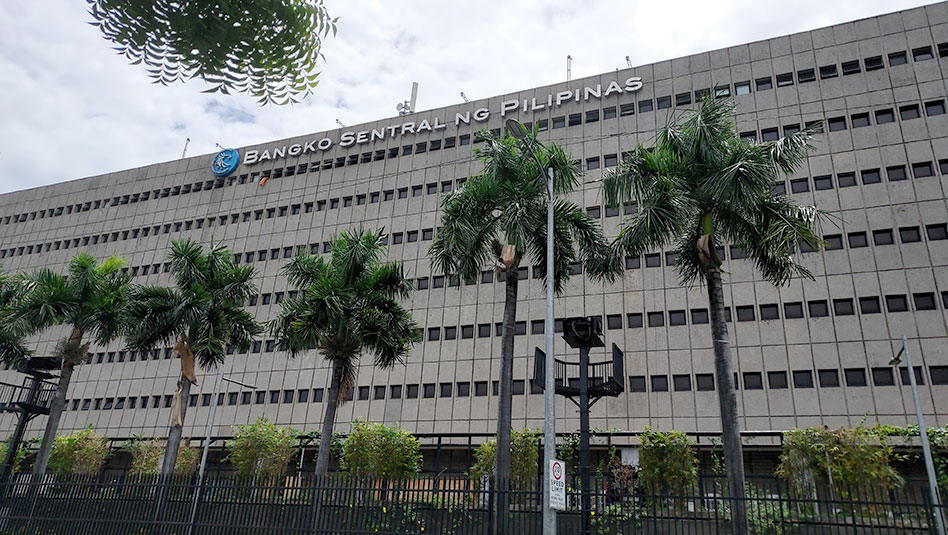
Policy Rate Updates: Policy rate updates to reassure 
DOWNLOAD
Man using his smartphone
Reports
Fed to cut just once 
DOWNLOAD
View all Reports
Metrobank.com.ph How To Sign Up
Follow us on our platforms.

How may we help you?

TOP SEARCHES
  • Where to put my investments
  • Reports about the pandemic and economy
  • Metrobank
  • Webinars
  • Economy
TRENDING ARTICLES
  • Investing for Beginners: Following your PATH
  • On government debt thresholds: How much is too much?
  • Philippines Stock Market Outlook for 2022
  • Deficit spending remains unabated

Login

Access Exclusive Content
Login to Wealth Manager
Visit us at metrobank.com.ph How To Sign Up
Access Exclusive Content Login to Wealth Manager
Search
MODEL PORTFOLIO THE GIST
NEWS AND FEATURES
Global Philippines Fine Living
INSIGHTS
INVESTMENT STRATEGY
Economy Stocks Bonds Currencies
THE BASICS
Investment Tips Explainers Retirement
WEBINARS
2024 Mid-Year Economi Briefing, economic growth in the Philippines
2024 Mid-Year Economic Briefing: Navigating the Easing Cycle
June 21, 2024
Investing with Love
Investing with Love: A Mother’s Guide to Putting Money to Work
May 15, 2024
retirement-ss-3
Investor Series: An Introduction to Estate Planning
September 1, 2023
View All Webinars
DOWNLOADS
Container ship carrying container boxes import export dock with quay crane. Business commercial trade global cargo freight shipping logistic and transportation worldwide oversea concept. Generative AI
Economic Updates
Philippines Trade Update: Wider deficit on strong imports
March 27, 2026 DOWNLOAD
Frick collection with palm trees 
Economic Updates
Policy Rate Updates: Policy rate updates to reassure 
March 26, 2026 DOWNLOAD
Man using his smartphone
Reports
Fed to cut just once 
March 19, 2026 DOWNLOAD
View all Reports

Archives: Business World Article

Peso to trade at PHP57 until late next year

Peso to trade at PHP57 until late next year

The peso may trade at the PHP 57-per-dollar level until 2024 amid continued upside risks to prices and with the central bank keeping rates elevated, MUFG Global Markets Research said.

“We forecast gradual weakness in peso against the US dollar at PHP 57.30 in three months and PHP 57.50 in 12 months, implying some FX (foreign exchange) underperformance through 2024,” it said in a report.

It expects the peso to end at PHP 57.50 a dollar in the first quarter of next year and stay at that level until the third quarter.

The peso closed at PHP 56.73 per dollar on Tuesday. Year to date, the peso has weakened by 97.5 centavos or 1.71% against the dollar from its PHP 55.755 close on Dec. 29, 2022.

“Risks to our peso forecasts come from oil, rice and the US dollar,” MUFG Global Markets Research said. “The central bank raised its 2024 inflation forecast to 4.7% (from 3.5%), while also saying indicators point to second-round effects to inflation broadening, even as demand is moderating.”

Headline inflation rose for a second straight month to 6.1% in September. Year to date, inflation averaged 6.6%, well above the Bangko Sentral ng Pilipinas’ (BSP) 2-4% target.

“The BSP raised its key policy rate by 25 bps (basis points) in an off-cycle announcement… The Philippine central bank move also follows on from Bank Indonesia’s recent surprise rate hike to stem currency weakness, highlighting the increasing spillover impact of dollar strength and higher US yields on Asian central banks,” MUFG Global Markets Research said. 

Last week’s off-cycle move by the BSP brought the policy rate to a 16-year high of 6.5%.

The central bank has increased rates by 450 bps since May 2022.

The BSP could hike again in the near term if supply shocks materialize, MUFG Global Markets Research said. It expects the BSP to begin its easing cycle in the fourth quarter next year.

Philippine economic growth is slowing compared with other Asian countries, but inflation remains sticky, putting pressure on the local currency, said MUFG Global Markets Research.

“As such, the policy trade-offs are becoming more difficult,” it added. — AMCS

FATF ‘gray list’ inclusion seen to hurt PH

FATF ‘gray list’ inclusion seen to hurt PH

The Philippines’ continued inclusion in the Financial Action Task Force’s (FATF) “gray list” of jurisdictions under increased monitoring for “dirty money” risks may affect remittance fees, borrowing costs and investments, an official from the Philippine Amusement and Gaming Corp. (PAGCOR) said.

Overseas Filipino workers (OFWs) will be the first to be affected by the country’s continued inclusion in the gray list, Dave Fermin J. Sevilla, assistant vice-president of PAGCOR’s Anti-Money Laundering Supervision and Enforcement Department, said in an interview with One News PH on Wednesday.

“As long as we are in the gray list, banks and other institutions will tighten their (anti-money laundering controls) for Filipinos. Sanctions and transaction fees for OFWs may increase,” he said in mixed English and Filipino. 

“Even in the casino industry, our customers coming from abroad may be reduced because we are still in the gray list,” he added.

The FATF is also an intergovernmental organization that crafts and promotes policies and standards to help combat financial crime.

It said in a report released on Saturday that the Philippines remains part of its gray list of jurisdictions under increased monitoring for dirty money risks after failing to address strategic deficiencies against money laundering, terrorist financing and proliferation financing.

After a three-day plenary session in Singapore, the dirty money watchdog said the Philippines still needs to address five out of the 18 deficiencies in anti-money laundering/combating the financing of terrorism (AML/CFT) controls.

The Philippines should continue to demonstrate effective risk-based supervision of designated nonfinancial business and professions (DNFBPs) and ensure that supervisors are using the proper AML/CFT controls to mitigate risks associated with casino junkets, the FATF said.

It should also enhance and streamline law enforcement agencies’ access to beneficial ownership information and ensure accurate and up-to-date information and increase investigation and prosecution of cases related to money laundering and proliferation financing.

The Philippines has been on the FATF’s gray list since June 2021.

Government officials earlier said they hope the Philippines can exit the gray list by January 2024.

According to Mr. Sevilla, banks are required to do strict customer due diligence on clients from high-risk jurisdictions as identified by the FATF, or those included in its gray and black lists.

“Unfortunately, Filipinos are subjected to that. Banks need to check and monitor our transactions, which leads to higher fees because more resources are being used,” he said. “And as long as we continue in the gray list, the charges for remittances may continue to increase and our OFWs would have a harder time.”

Companies in the Philippines that want to secure foreign loans could also face higher interest rates and charges, Mr. Sevilla said.

The country’s attractiveness as an investment destination will likewise take a hit if it remains on the FATF’s gray list, he added.

“Why would you invest in a country that is gray-listed? The FATF and the APG (Asia-Pacific Group) encourages investors to put their money in safe countries, or countries that has good AML/CTF systems,” he said.

The APG on Money Laundering is an intergovernmental organization with 42 member jurisdictions. It aims to ensure that individual members effectively implement the international standards against money laundering, terrorist financing and proliferation financing. 

For PAGCOR, the FATF and the APG want the Philippines to demonstrate effective and intensive monitoring of covered entities for money laundering risks, he said.

“We are now intensifying the monitoring of all our gaming licenses… We always check our big casinos and we have always had people stationed there. Then we also check the smaller stations. For POGOs (Philippine Offshore Gaming Operators) or internet gaming licenses, we have new rules that require more intensive monitoring of the weaknesses identified by the AMLC,” Mr. Sevilla said.

“We have also identified areas in the sector that can be used for money laundering, and we try to mitigate these weaknesses with new rules and regulations,” he added.

President Ferdinand R. Marcos, Jr. has given government agencies until Nov. 30 to address deficiencies in their anti-money laundering strategies in hopes that the Philippines could exit the FATF’s gray list by January. — K.B. Ta-asan

Stocks may rise as Fed keeps target rate steady

Stocks may rise as Fed keeps target rate steady

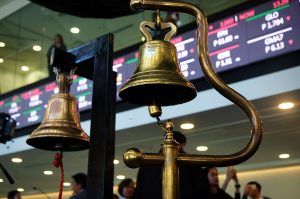
LOCAL SHARES may climb when trading resumes on Friday after the US Federal Reserve kept borrowing costs steady and amid expectations that Philippine inflation slowed last month.

The Philippine Stock Exchange index (PSEi) went up by 11.79 points or 0.19% to close at 5,973.78 on Tuesday, while the broader all shares index rose by 7.70 points or 0.23% to end at 3,254.17.

The market was closed for public holidays on Nov. 1-2.

“The first trading day of November could see a positive reactive move after the Federal Reserve kept interest rates steady and Chairman Jerome Powell’s remarks after the policy decision were less hawkish than expected,” China Bank Capital Corp. Managing Director Juan Paolo E. Colet said in a Viber message.

“This coming Friday, the local market may digest the latest developments in the US’ monetary policy. In particular, investors are expected to weigh the Federal Reserve’s latest decision wherein policy rates are kept unchanged against concerns that a policy rate hike by the Fed in the near future is still possible,” Philstocks Financial, Inc. Senior Research Analyst Japhet Louis O. Tantiangco likewise said in a Viber message.

The Federal Reserve held interest rates steady on Wednesday as policy makers struggled to determine whether financial conditions may be tight enough already to control inflation, or whether an economy that continues to outperform expectations may need still more restraint, Reuters reported.

Fed Chair Jerome Powell said the situation remained something of a riddle, with US central bank officials willing to raise rates again if progress on inflation stalls, wary that a rise in market-based interest rates may begin to weigh on the economy in a significant way, and trying not to disrupt, any more than necessary, an ongoing dynamic of steady job and wage growth.

In a press conference after the end of a two-day policy meeting, Mr. Powell said the better course of action for now, given the uncertainties, was to maintain the Fed’s benchmark overnight interest rate in the current 5.25%-5.5% range, and see how job and price data evolve between now and the next policy meeting in December.

Market sentiment could get a boost from expectations that Philippine inflation slowed in October, Mr. Tantiangco added.

Headline inflation may have eased to 5.1-5.9% in October as prices of fuel and key food items dropped, the Bangko Sentral ng Pilipinas said late Tuesday.   

If realized, October inflation would be slower than 6.1% in September and 7.7% a year earlier.

The Philippine Statistics Authority will release October consumer price index data on Nov. 7.

However, lingering concerns over the conflict in the Middle East could affect trading, Seedbox Securities, Inc. Equity Trader Jayniel Carl S. Manuel said in an e-mail.

Philstocks Financial’s Mr. Tantiangco said the PSEi could test the 6,000 level on Friday. — SJT with Reuters

Slower October inflation likely to ease pressure on BSP to tighten policy

Slower October inflation likely to ease pressure on BSP to tighten policy

Head inflation may ease to 5.3% in October, which would put less pressure for the Bangko Sentral ng Pilipinas (BSP) to further tighten monetary policy, according to Pantheon Macroeconomics.   

However, Bank of the Philippine Islands (BPI) said another rate hike cannot be ruled out at the Monetary Board’s Nov. 16 meeting if the October print was faster than expected and the peso further depreciates against the US dollar.

In a note dated Oct. 30, Pantheon Macroeconomics Chief Emerging Asia Economist Miguel Chanco and Senior Asia Economist Moorthy Krshnan said Philippine inflation may still return to the 2-4% target band by the end of the year.

“Indeed, we expect inflation for October to fall to 5.3%, from September’s four-month high of 6.1%, as the reversal of the August surge in rice prices finally filters through; it should have in the last report,” the UK-based think tank said.

With easing October inflation, Pantheon Macroeconomics sees no rate action from the BSP at its last two meetings for this year.

“We are maintaining our end-2024 rate forecast of 5.5% too, implying a more pronounced unwinding of one of the region’s most aggressive rate-hiking cycles, which could start as early as February, if our relatively benign outlook for inflation and downbeat view on growth prove accurate,” it said.   

The BSP last week hiked its key policy interest rate by 25 basis points (bps) to a fresh 16-year high of 6.5% in an off-cycle move. This has brought the cumulative rate hikes to 450 bps since May 2022.   

Meanwhile, BPI Lead Economist Emilio S. Neri, Jr. said another rate increase is still possible on Nov. 16 since it would be based on the upcoming inflation data as well as the peso-dollar exchange rate.

“An inflation print significantly higher than 6.1% might trigger another rate hike in that meeting. Aside from this, the central bank may also consider a rate hike if the exchange rate breaches the P57 level and moves closer to P58,” he said.

The Philippine central bank is scheduled to release its October inflation forecast today (Tuesday) while the local statistics agency will release the inflation data on Nov. 7.   

Inflation quickened for a second straight month to 6.1% in September. It also marked the 18th consecutive month inflation was above the BSP’s 2-4% target range. This brought the nine-month average inflation to 6.6%.

DBS Bank Senior Economist Radhika Rao said the off-cycle rate hike was a preemptive move ahead of the release of October inflation, “which is expected to show another jump on the back of high food and fuel prices.”   

“The door remains open for a follow-up hike this quarter if conditions warrant. We pencil in another increase this quarter, followed by a prolonged pause into the first half of 2024,” she said in a note.   

BSP Governor Eli M. Remolona, Jr. on Friday said there is a “good chance” the BSP will not hike at its meeting on Nov. 16, as he expects October inflation to ease.

The central bank currently sees full-year inflation at 5.8% for 2023, before declining to 3.5% in 2024 and 3.4% in 2025. But officials said the BSP will be revising its inflation forecasts on Nov. 16.    

BPI’s Mr. Neri said market players should not downplay the effectiveness of a rate hike in taming inflation.   

“Monetary policy continues to have a role in managing inflation even if the cause is mostly on the supply side. Inflation driven by supply may eventually lead to second-round effects, which the BSP aims to counter with its rate hikes,” he said.   

The BSP’s credibility as an inflation-targeting central bank is another reason why a rate hike was necessary, despite high consumer prices being mostly driven by supply-side issues.   

“The rate hike is a statement from the BSP that it is determined to bring inflation back to its target. Inflation expectations may shoot up further if the market doesn’t see any action from the BSP. It might hurt the BSP’s credibility and make it more difficult to bring down inflation,” Mr. Neri said.   

He noted the peso may continue to depreciate against the US dollar even after the rate increase, as market players consider substantial imports, global financial market developments, and the central banks’ future policy moves.

He noted that remittances during the holiday season may offset some of the pressure, but the movements of the local currency for the rest of 2023 would largely depend on what the US Federal Reserve does.   

“Once the Fed is done hiking, the peso may strengthen as markets will likely assess the possibility of rate cuts. If a recession in the US happens, the Fed may cut its rates and the BSP will likely follow,” he said.

The US Federal Reserve kept its own policy rates at 5.25-5.5% last month — its highest level in 22 years. From March 2022 to July 2023, the Fed has raised a total of 525 bps.   

The local unit closed at P56.955 per dollar on Friday, gaining half a centavo from its P56.96 finish on Thursday, based on Bankers Association of the Philippines data.   

“But in this situation, the appreciation of the local currency will likely be smaller compared to other currencies given the still substantial current account deficit of the Philippines this year and in 2024,” Mr. Neri added.   

In the second quarter, the current account deficit reached $3.6 billion, equivalent to -3.4% of gross domestic product (GDP). This brought the current account deficit at $8.2 billion (-4% of GDP) in the first semester.   

The BSP projects the current account deficit to reach $11.1 billion this year (-2.5% of GDP). — Keisha B. Ta-asan, Reporter

PSE index seen to close at 6,500 level by end of 2023

PSE index seen to close at 6,500 level by end of 2023

The benchmark Philippine Stock Exchange index (PSEi) could close the year at 6,500, if economic activity improves, a market expert said.

“If the market could reach the 6,300 to 6,500 level. I would be happy,” BDO Capital and Investment Corp. President Eduardo V. Francisco said during a BusinessWorld roundtable discussion last week.

This would be around 1-4% lower than the PSEi’s 6,566.39 close on the last trading day of 2022.

The PSEi closed at 5,961.99 on Oct. 27, 0.94% lower than the previous day. The benchmark index has declined by 9% since the beginning of 2023.

Mr. Francisco said investors could turn positive on stocks if the gross domestic product (GDP) growth picks up in the third quarter and inflation eases.

“If we have 6% growth for the gross domestic product in the third quarter, plus inflation goes down and we can control that, then (market) optimism will increase,” he said.

The third-quarter GDP data is scheduled to be released on Nov. 9.

The Philippine economy grew by 4.3% in the second quarter, the slowest in two years. In the first half, GDP growth averaged 5.3%.

Economic managers have said GDP has to expand by at least 6.6% in the second half to reach the 6-7% target for this year.

Headline inflation accelerated for a second straight month to 6.1% in September, which also marked the 18th consecutive month inflation was above the Bangko Sentral ng Pilipinas’ (BSP) 2-4% target range. This brought nine-month average inflation to 6.6%, still above the BSP’s 5.8% forecast for 2023.

Last week the BSP resumed monetary tightening in an off-cycle move, amid increasing inflation risks. It cited the need for “urgent monetary action to prevent supply-side price pressures from inducing additional second-round effects and further dislodging inflation expectations.”

Meanwhile, Mr. Francisco said that it would be difficult for the local market to hit the 7,000 level before the year ends.

“The 7,000 level is very hard to attain… The volumes are very low. The foreigners are not here. They have been selling. The locals, in fairness to them, they have been the ones supporting the market. But there is not much good news and there is not much movement,” he said.    

Mr. Francisco said he does not see any major movements in the stock market towards the end of the year.

As of end-September, PSE data showed that the average daily value traded declined by 9.6% to PHP 6.6 billion, while total market capitalization rose by 0.9% to PHP 16.7 trillion.

Foreign investors have sold a net PHP 43.8 billion worth of Philippine stocks as of end-September. The rise in US interest rates over the past year has made emerging market equities less attractive to foreign investors.

“I think even without the foreigners, the (local) stock market will be stronger,” he said. — R.M.D.Ochave

BSP likely to pause at next meeting

BSP likely to pause at next meeting

The Philippine central bank is more likely to keep its key policy rate unchanged than hike by 25 basis points (bps) at its Nov. 16 meeting, its governor said.

Bangko Sentral ng Pilipinas (BSP) Governor Eli M. Remolona, Jr. said on Friday that while a rate hike is always possible, upcoming economic data would still dictate its next policy move.   

“I’m not really sure if a 25-bp hike would be justified. There’s a good chance we won’t hike. There’s a good chance we will pause. There’s a chance we might hike but 50 bps is a bit of a stretch,” he told reporters.    

The Monetary Board resumed tightening monetary policy as it delivered a 25-bp rate hike in an off-cycle move last Thursday. This brought the key interest rate to a fresh 16-year high of 6.5%.

Rates on the overnight deposit and lending facilities were also raised by 25 bps to 6% and 7%, respectively. The BSP’s first policy move in seven months brought the cumulative rate increases since May 2022 to 450 bps.

Mr. Remolona said a “really bad” development on inflation may prompt the Monetary Board to hike rates by 50 bps at its Nov. 16 meeting, but he does not expect that to happen.   

“We’re actually expecting inflation to go down (in October) but not as much as we used to expect. The whole path is elevated, the trajectory looks the same (from before) but it’s now a higher path,” he said in mixed English and Filipino.   

Headline inflation quickened to 6.1% in September from 5.3% in August, marking the 18th straight month that inflation exceeded the central bank’s 2-4% target. Year to date, inflation averaged 6.6%. 

The BSP sees average inflation at 5.8% for 2023, before easing to 3.5% in 2024 and 3.4% in 2025. However, officials said the BSP will be revising its inflation forecasts on Nov. 16.   

Mr. Remolona also noted that inflation may ease to within the 2-4% target “very briefly” in the first quarter of 2024, due to base effects. Inflation peaked at 8.7% in January this year.

However, from March to July, he noted inflation is likely to be above the 2-4% target band.   

Aris Dacanay, economist for Association of Southeast Asian Nations (ASEAN) at HSBC Global Research, said the BSP will likely keep borrowing costs steady at the Monetary Board’s two remaining policy-setting meetings on Nov. 16 and Dec. 14.

“After all, core inflation is still treading downwards, which means the BSP’s tight monetary stance is already in the works,” he said in a note.   

In September, core inflation eased to 5.9% from 6.1% in August. However, it was still faster than 5% a year earlier. Year to date, core inflation averaged 7.2%.   

“Since the off-cycle hike is preemptive in nature, we don’t think the BSP will hike interest rates at its November rate-setting meeting, even if the Fed hikes in November (not HSBC’s base case scenario),” Mr. Dacanay said.   

“Nonetheless, the BSP maintained a very hawkish tone and will likely continue doing so — mentioning its openness to resume tightening if inflation continues to be sticky. And the risk of inflation is very much to the upside,” he said.   

Mr. Dacanay added that if Executive Order No. 10, which temporarily lowers the tariff rates for key commodity items, will not be extended beyond Dec. 31 this year, it could add 1.4 percentage points to overall inflation.   

“That said, our baseline forecast is for headline inflation to breach the BSP’s 2-4% target band in the second quarter of 2024. We don’t think core inflation will follow, but if it does — and the risk is there — then there is a risk that the BSP continues its tightening cycle even further,” he said. 

Citi economist for the Philippines Nalin Chutchotitham also sees the Monetary Board keeping policy rates unchanged for the rest of the year and will likely be maintained at the current level through the first half of next year.   

“But we see risks of further rate hikes should October CPI (consumer price index) and third-quarter GDP (gross domestic product) suggest there is a need for the BSP to further tighten monetary policy in order to put the brakes on domestic demand and thus demand-pull price pressures,” she said.   

The local statistics agency will release October inflation data on Nov. 7 (Tuesday), while third-quarter GDP data will be released on Nov. 9 (Thursday).   

“We believe the BSP’s decision to hike by 25 bps (on Thursday), and not 50 bps, suggests that the BSP still has some reservations and is keeping options open, especially if third-quarter GDP disappoints again,” Ms. Chutchotitham added.   

Meanwhile, ANZ Research Chief Economist Sanjay Mathur and economist Debalika Sarkar in a note said the BSP may deliver another 25-bp rate increase to 6.75% before the year ends.

ANZ ruled out any chance of policy easing from the BSP in 2024, as inflation is seen to remain elevated through the first half of next year.   

Following the BSP’s off-cycle move, BMI Country Risk & Industry Research raised its year-end inflation forecast to 4.7% in 2023 from 4% previously. It now sees next year’s inflation to average 4%, from 3.6%, previously.

“With headline inflation expected to stay higher for longer and the BSP’s still hawkish slant, we now expect policy rates to be hiked once more by 25 bps in November,” BMI said in a note.   

However, further monetary tightening “will do little” to help mitigate inflation as the increase in consumer prices were largely supply-side driven.   

“We think that inflation will stay elevated until policies aimed at quelling supply-side constraints are implemented. This feeds into our forecast for inflation to average 4% in 2024,” it said. — Keisha B. Ta-asan, Reporter

Rates of Treasury bills, bonds may climb

Rates of Treasury bills, bonds may climb

Rates of Treasury bills and bonds on offer this week could rise after the Bangko Sentral ng Pilipinas (BSP) delivered an off-cycle rate hike last week and amid fears of further tightening next month.

The Bureau of the Treasury (BTr) will auction off PHP 15 billion in Treasury bills (T-bills) on Tuesday, or PHP 5 billion each in 89-, 179- and 362-day papers.

The T-bill tenors were adjusted from the usual 91-, 182- and 364-day maturities due to this week’s holidays.

It will also offer PHP 30 billion in reissued 10-year Treasury bonds (T-bonds) with a remaining life of five years and two months.

T-bill and bond yields could inch up after the central bank raised borrowing costs last week, Rizal Commercial Banking Corp. Chief Economist Michael L. Ricafort said in a Viber message.

Market players will also remain defensive due to the possibility of another rate hike at the BSP’s Nov. 16 meeting, a trader said in an e-mail.

The BSP on Thursday raised benchmark interest rates by 25 basis points (bps) before a scheduled review as it seeks to anchor inflation expectations, bringing its policy rate to 6.5%.

The move came ahead of the Monetary Board’s scheduled meeting on Nov. 16. BSP Governor Eli M. Remolona, Jr. said next month’s review will push through and another rate increase could be on the table as they will have new data to consider by then.

This was the first hike since March and brought total increases since May 2022 to 450 bps. The BSP held rates steady in its last four meetings before the hike.

The trader added that the market will also monitor the BSP’s inflation forecast for October scheduled to be released on Tuesday.

Yields could also be affected by signals from the BSP and US Federal Reserve, a trader said in an e-mail.

The Fed will hold a meeting from Oct. 31 to Nov. 1, where markets expect them to hold rates at 5.25-5.5% but give signals about the future path of monetary policy.

At the secondary market on Monday, the 91-, 182-, and 364-day T-bills went up by 26.2 bps, 6.69 bps, and 31.5 bps week on week to end at 5.9325%, 6.1067%, and 6.2509%, respectively, based on PHP Bloomberg Valuation Service Reference Rates data published on the Philippine Dealing System’s website.

The 10-year bond’s rate also rose by 30.86 bps week on week to yield 6.9405%.

Last week, the BTr raised PHP 14.26 billion via the T-bills, just below the PHP 15-billion program, even as total bids reached PHP 23.359 billion.

Broken down, the Treasury borrowed PHP 5 billion as planned via the 91-day T-bills with tenders for the tenor reaching PHP 7.804 billion. The three-month paper was quoted at an average rate of 6.149%, up by 15.9 bps. Accepted rates ranged from 6.04% to 6.249%

The government likewise made a full PHP 5-billion award of the 364-day securities, with bids for the tenor reaching PHP 10.095 billion. The average rate of the one-year T-bill rose by 9.1 bps to 6.479%. Accepted yields were from 6.4% to 6.525%.

On the other hand, the BTr only awarded PHP 4.26 billion in 182-day papers, below the PHP 5-billion plan, despite demand for the tenor reaching PHP 5.46 billion. The average rate for the six-month T-bill rose by 12.3 bps to 6.33%, with accepted yields from 6.245% to 6.399%.

Meanwhile, the reissued 10-year bonds to be offered on Tuesday were last auctioned off on Oct. 10 where the government raised PHP 30 billion as planned. The papers fetched an average rate of 6.512%.

The government plans to borrow PHP 225 billion from the domestic market in November or PHP 75 billion via T-bills and PHP 150 billion via T-bonds.

The government borrows from local and foreign sources to help fund its budget deficit, which is capped at 6.1% of gross domestic product this year. — Luisa Maria Jacinta C. Jocson

PSEi sinks to 5,900 level after BSP tightening

PSEi sinks to 5,900 level after BSP tightening

The main index sank to the 5,900 level on Friday after the Bangko Sentral ng Pilipinas (BSP) delivered an off-cycle rate hike and ahead of the shortened trading week.

The benchmark Philippine Stock Exchange index (PSEi) went down by 56.50 points or 0.93% to close at 5,961.99 on Friday, while the broader all shares index shed 19.55 points or 0.59% to end at 3,246.47.

Week on week, the PSEi likewise fell by 180.91 points or 2.95% from its close of 6,142.90 on Oct. 20.

“The PSEi experienced another weekly decline, briefly dipping below the 6,000 level, after the unexpected off-cycle rate hike by the central bank, pushing its policy rate to 6.5%,” Globalinks Securities and Stocks, Inc. Senior Trader Mark V. Santarina said in a Viber message.

The BSP on Thursday raised benchmark interest rates by 25 basis points (bps) before a scheduled review as it seeks to anchor inflation expectations, bringing its policy rate to 6.5%.

The move came ahead of the Monetary Board’s scheduled meeting on Nov. 16. BSP Governor Eli M. Remolona, Jr. said next month’s review will push through and another rate increase could be on the table as they will have new data to consider by then.

Thursday’s move was the first hike since March and brought total increases since May 2022 to 450 bps. The BSP held rates steady in its last four meetings before the hike.

“[Last] week’s break of the 6,000 psychological support zone is likely an aftereffect of a very short trading [this] week — expect participation to resume after the three-day trading break,” online brokerage 2TradeAsia.com said in a report on Friday.

Philippine financial markets will be closed for public holidays on Oct. 30, Nov. 1, and Nov. 2.

The PSEi ended the week lower as investors “digested a slew of corporate earnings releases locally,” Regina Capital Development Corp. Head of Sales Luis A. Limlingan said in a Viber message.

Several listed firms released their third quarter results last week, including Bank of the Philippine Islands, Metropolitan Bank & Trust Co., and Robinsons Retail Holdings, Inc.

All sectoral indices fell on Friday. Holding firms dropped by 76.24 points or 1.31% to 5,722.15; property declined by 32.32 points or 1.27% to 2,513.41; industrials decreased 62.78 points or 0.73% to 8,533.89; services went down by 6.18 points or 0.42% to 1,451.32; mining and oil shed 21.07 points or 0.21% to 9,846.12; and financials lost 3.37 points or 0.19% to end at 1,705.71.

Value turnover went up to PHP 3.76 billion on Friday with 349.82 million shares changing hands from the PHP 3.06 billion with 428.34 million issues seen on Thursday.

Decliners outnumbered advancers, 93 versus 78, while 53 shares closed unchanged.

Net foreign selling went up to PHP 328.95 million on Friday from PHP 319.07 million on Thursday. — S.J. Talavera

BSP lifts key rate by 25 bps to 6.5%

BSP lifts key rate by 25 bps to 6.5%

The Bangko Sentral ng Pilipinas (BSP) on Thursday delivered an off-cycle 25-basis-point (bp) rate hike, as it warned inflation will remain above the 2-4% target range until the middle of 2024.

The Monetary Board raised its target repurchase rate to 6.5%, the highest in 16 years, or since the 7.5% seen in May 2007. Rates on the overnight deposit and lending facilities were also raised by 25 bps to 6% (from 5.75%) and 7% (from 6.75%), respectively. 

The BSP’s first policy move in seven months brought the cumulative rate increases since May 2022 to 450 bps.

“The Monetary Board recognized the need for this urgent monetary action to prevent supply-side price pressures from inducing additional second-round effects and further dislodging inflation expectations,” BSP Governor Eli M. Remolona, Jr. said at a press briefing on Thursday afternoon.   

The BSP’s off-cycle rate hike came ahead of its regular policy meeting scheduled on Nov. 16.

Mr. Remolona said further tightening may be considered at the next Monetary Board meeting.

“We will consider it if things are worse than we thought. We are hoping the data are nicer to us. But if not, then we will have to consider a further rate hike,” he said.

‘Tighter for longer’
Mr. Remolona said the decision to resume monetary tightening was based on the BSP’s latest baseline projections that “point to an elevated inflation path over the policy horizon as upside risks continue to manifest.”

He said that the staff risk-adjusted forecast for 2024 rose to 4.7% from 4.3% previously, well above the 2-4% target range.

“Looking ahead, the Monetary Board deems it necessary to keep monetary policy settings tighter for longer until inflationary expectations are better anchored and a sustained downward trend in inflation becomes evident,” Mr. Remolona said. 

Mr. Remolona, who took office in July, admitted the Monetary Board was a “little behind” in monetary tightening, and should have hiked policy rates at its September meeting.

“We did not look closely enough at expectations,” he said, particularly the BSP’s household expectations survey. “About 92% of consumers think that in the next 12 months inflation will be above 4%. It is similar for expectations by firms.”

Headline inflation rose for a second straight month to 6.1% in September from 5.3% in August. It marked the 18th straight month that inflation exceeded the central bank’s 2-4% target. Year to date, inflation averaged 6.6%.

Mr. Remolona said risks to the inflation outlook remain on the upside, as higher transport costs, electricity rates, oil prices, and wage adjustments may contribute to faster inflation.

On the other hand, weaker-than-expected global recovery and government measures to mitigate the impact of the El Niño weather event could temper inflationary pressures.

The BSP governor also noted that inflation is unlikely to return to the 2-4% target range this year. 

“In fact, I think from March to July next year, the headline inflation will be very likely above 4%. That’s what our model says,” he said, adding that inflation will start slowing down by July.

In assessing future policy moves, Mr. Remolona said the BSP will look at October inflation and the third-quarter gross domestic product (GDP) data.

He expects GDP growth to settle around 4.5% in the third quarter, slightly faster than the 4.3% growth in the second quarter.

Mr. Remolona reiterated that the aggressive tightening has not affected the Philippines’ growth prospects, but pent-up demand is waning.

“The country’s medium-term growth prospects remain largely intact. The Monetary Board is closely monitoring the impact of the increase in interest rates as these work their way through the economy,” he said.

Earlier, National Economic and Development Authority (NEDA) Secretary Arsenio M. Balisacan has repeatedly cautioned against further rate hikes, saying that it will have a long-term impact on the economy.

Analysts were not surprised by the Monetary Board’s move, which was telegraphed by Mr. Remolona earlier this week.

ING Bank N.V. Manila Senior Economist Nicholas Antonio T. Mapa said the market had been expecting further tightening by the BSP.

“We therefore expect at least one more rate hike from the BSP before the end of the year,” he said.

However, inflation will likely stay elevated until supply-side interventions are implemented.

“Against this backdrop of higher rates and inflation, economic growth appears to be slowing and we believe the full impact of previous BSP tightening will be felt by early 2024,” Mr. Mapa said.

ING Bank sees GDP at 4.7% this year and 4.5% in 2024, while inflation may average 6% in 2023 and 4% next year.

Capital Economics Emerging Asia Economist Shivaan Tandon said the 25-bp off-cycle move will provide support to the peso.

The local currency closed at P56.96 versus the dollar on Thursday, weakening by 11 centavos from P56.85 previously.

“As such this hike may end up being a one-off but that will depend on two things. The first is what happens to the exchange rate. Another rise in US yields and more pressure on the currency could prompt another hike. The second is the release of the upcoming inflation and Q3 GDP numbers,” he said. 

However, he said the BSP may refrain from further tightening as economic growth, which likely remained weak in the third quarter.

“Tight fiscal policy, the current high level of rice and fuel prices, and a likely weakening of global demand will continue to drag on activity in the near term,” Mr. Tandon said. 

“As a result, we think policy makers will tread with caution, unless signs emerge of a further step-up in inflation pressure. The currency will remain a focus of concern, but the central bank has other options to manage it in a sizable stock of foreign-currency reserves,” he added.

Meanwhile, Pantheon Macroeconomics Chief Emerging Asia Economist Miguel Chanco said the rate hike was “unnecessary” as inflation shocks have “reversed and are stabilizing.”

He noted that there is no evidence of second-round effects amid the ongoing slowdown in core inflation, which eased to 5.9% in September from 6.1% in August.

“We’re sticking to our view that the Board will hold at its scheduled rate meetings in November and December, a call that will only be bolstered if we’re right about a likely disappointing third-quarter GDP print and about the Fed holding fire for the rest of the year,” Mr. Chanco said.

He also sees the Philippines’ key rate at 5.5% by end of 2024, which implies a cut worth 100 bps from the Monetary Board, “which could start as early as the February meeting.”

After the Nov. 16 meeting, the BSP will next meet on Dec. 14 to discuss policy. — By Keisha B. Ta-asan, Reporter


PH economy seen to grow by 5.8% this year

PH economy seen to grow by 5.8% this year

First Metro Investment Corp. (FMIC) and the University of Asia and the Pacific (UA&P) expect the Philippine economy to grow by 5.8% this year, amid an improvement in macroeconomic indicators.

In its latest Market Call released on Thursday, the FMIC and UA&P said they raised the Philippine gross domestic product (GDP) forecast to 5.8% for this year from 5.5% previously.

However, this is still slightly below the government’s 6-7% target for the year.

FMIC and UA&P said they expect third-quarter GDP growth to average 5%, still within its earlier forecast of 5-5.2%.

Third-quarter GDP data will be released on Nov. 9.

“We see the cup half full rather than half empty as economic data show resilience of the economy. With the recovery of employment in August and likely until November, the manufacturing subsector has displayed elan together with accelerating output,” they said.

The unemployment rate fell to 4.4% in August, the lowest in three months.

FMIC and UA&P expect Philippine economic growth to be driven by government spending, which should “remain at a high trajectory and provide the main booster as consumers worry about inflation.”

The government has been ramping up spending in recent months after GDP expanded by a weaker-than-expected 4.3% in the April-to-June period.

A 7.1% contraction in government spending in the second quarter was partially blamed for the GDP outturn.

To address low budget utilization, government agencies have been ordered to create catch-up plans for spending. State spending rose by 4.12% to PHP 3.82 trillion as of end-September.

“Beneath ‘apparently weak’ spending growth in August, National Government (NG) spending on current operations and capital outlays soared by 24.7% following through the 28.9% vault in July. NG will continue to ramp up spending for the rest of the year,” they said.

FMIC and UA&P said they expect annual inflation to slow “significantly” in October amid easing Thai rice prices. It also noted that elevated crude oil prices would weaken global growth and demand.

Headline inflation soared to 6.1% in September, its fastest print in five months. It also marked the 18th straight month that inflation breached the central bank’s 2-4% target.

FMIC and UA&P said inflation will likely slow to below 5% by November, which would boost GDP growth in the fourth quarter.

While inflation is on a downtrend, FMIC and UA&P said it will “no longer go below 4% this year.”

“We think (inflation) will ease closer but above 4% by November, as international crude oil and rice prices appear toppish, even as the fourth quarter should benefit from (high) base effect,” it said.

For the full year, FMIC and UA&P see inflation averaging 6.1%, above the central bank’s revised 5.8% full-year forecast.

Inflation averaged 6.6% in the first nine months, higher than 5.1% a year ago

“While a certain pessimism has begun to grip fairly large swaths of people, including policy makers and investors, especially amid the boiling geopolitical — i.e., Hamas- Israel, Russia-Ukraine conflicts, and China’s aggressiveness in the East Asia and Southeast Asian region, we do not share such a cloudy view of the economy,” FMIC and UA&P said. — Luisa Maria Jacinta C. Jocson

Posts navigation

Older posts
Newer posts

Recent Posts

  • Investment Ideas: April 1, 2026
  • Metrobank US-Iran Risk Index: Signals of an end
  • Eye on Earnings: Demand for connection supports telcos
  • Inflation Preview: March madness
  • Investment Ideas: March 31, 2026

Recent Comments

No comments to show.

Archives

  • April 2026
  • March 2026
  • February 2026
  • January 2026
  • December 2025
  • November 2025
  • October 2025
  • September 2025
  • August 2025
  • July 2025
  • June 2025
  • May 2025
  • April 2025
  • March 2025
  • February 2025
  • January 2025
  • December 2024
  • November 2024
  • October 2024
  • September 2024
  • August 2024
  • July 2024
  • June 2024
  • May 2024
  • April 2024
  • March 2024
  • February 2024
  • January 2024
  • December 2023
  • November 2023
  • October 2023
  • September 2023
  • August 2023
  • July 2023
  • June 2023
  • May 2023
  • April 2023
  • March 2023
  • February 2023
  • January 2023
  • December 2022
  • November 2022
  • October 2022
  • September 2022
  • August 2022
  • July 2022
  • June 2022
  • May 2022
  • March 2022
  • December 2021
  • October 2021

Categories

  • Bonds
  • BusinessWorld
  • Currencies
  • Economy
  • Equities
  • Estate Planning
  • Explainer
  • Featured Insight
  • Fine Living
  • How To
  • Investment Tips
  • Markets
  • Portfolio Picks
  • Rates & Bonds
  • Retirement
  • Reuters
  • Spotlight
  • Stocks
  • Uncategorized

You are leaving Metrobank Wealth Insights

Please be aware that the external site policies may differ from our website Terms And Conditions and Privacy Policy. The next site will be opened in a new browser window or tab.

Cancel Proceed
Get in Touch

For inquiries, please call our Metrobank Contact Center at (02) 88-700-700 (domestic toll-free 1-800-1888-5775) or send an e-mail to customercare@metrobank.com.ph

Metrobank is regulated by the Bangko Sentral ng Pilipinas
Website: https://www.bsp.gov.ph

Quick Links
The Gist Webinars Wealth Manager Explainers
Markets
Currencies Rates & Bonds Equities Economy
Wealth
Investment Tips Fine Living Retirement
Portfolio Picks
Bonds Stocks
Others
Contact Us Privacy Notice Terms of Use
© 2026 Metrobank. All rights reserved.

Access this content:

If you are an existing investor, log in first to your Metrobank Wealth Manager account. ​

If you wish to start your wealth journey with us, click the “How To Sign Up” button. ​

Login HOW TO SIGN UP