



MODEL PORTFOLIO
THE GIST
NEWS AND FEATURES
Global Philippines Fine Living
INSIGHTS
INVESTMENT STRATEGY
Economy Stocks Bonds Currencies
THE BASICS
Investment Tips Explainers Retirement
WEBINARS
2024 Mid-Year Economi Briefing, economic growth in the Philippines
2024 Mid-Year Economic Briefing: Navigating the Easing Cycle
June 21, 2024
Investing with Love
Investing with Love: A Mother’s Guide to Putting Money to Work
May 15, 2024
retirement-ss-3
Investor Series: An Introduction to Estate Planning
September 1, 2023
View All Webinars
DOWNLOADS
grocery-2-aa
Inflation Update: Target breached
DOWNLOAD
Container ship carrying container boxes import export dock with quay crane. Business commercial trade global cargo freight shipping logistic and transportation worldwide oversea concept. Generative AI
Economic Updates
Philippines Trade Update: Wider deficit on strong imports
DOWNLOAD
Frick collection with palm trees 
Economic Updates
Policy Rate Updates: Policy rate updates to reassure 
DOWNLOAD
View all Reports
Metrobank.com.ph How To Sign Up
Follow us on our platforms.

How may we help you?

TOP SEARCHES
  • Where to put my investments
  • Reports about the pandemic and economy
  • Metrobank
  • Webinars
  • Economy
TRENDING ARTICLES
  • Investing for Beginners: Following your PATH
  • On government debt thresholds: How much is too much?
  • Philippines Stock Market Outlook for 2022
  • Deficit spending remains unabated

Login

Access Exclusive Content
Login to Wealth Manager
Visit us at metrobank.com.ph How To Sign Up
Access Exclusive Content Login to Wealth Manager
Search
MODEL PORTFOLIO THE GIST
NEWS AND FEATURES
Global Philippines Fine Living
INSIGHTS
INVESTMENT STRATEGY
Economy Stocks Bonds Currencies
THE BASICS
Investment Tips Explainers Retirement
WEBINARS
2024 Mid-Year Economi Briefing, economic growth in the Philippines
2024 Mid-Year Economic Briefing: Navigating the Easing Cycle
June 21, 2024
Investing with Love
Investing with Love: A Mother’s Guide to Putting Money to Work
May 15, 2024
retirement-ss-3
Investor Series: An Introduction to Estate Planning
September 1, 2023
View All Webinars
DOWNLOADS
grocery-2-aa
Inflation Update: Target breached
April 7, 2026 DOWNLOAD
Container ship carrying container boxes import export dock with quay crane. Business commercial trade global cargo freight shipping logistic and transportation worldwide oversea concept. Generative AI
Economic Updates
Philippines Trade Update: Wider deficit on strong imports
March 27, 2026 DOWNLOAD
Frick collection with palm trees 
Economic Updates
Policy Rate Updates: Policy rate updates to reassure 
March 26, 2026 DOWNLOAD
View all Reports

Archives: Business World Article

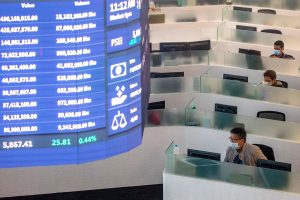
Stocks extend rally on strong remittance outlook

Stocks extend rally on strong remittance outlook

Philippine stocks extended their rally to a third straight day on Wednesday amid a strong outlook for overseas Filipino remittances this year, which could boost the economy.

The Philippine Stock Exchange index (PSEi) increased by 58.08 points or 0.87% to end at 6,679.96 on Wednesday, while the broader all shares index rose by 17.88 points or 0.51% to close at 3,511.44.

“The positive outlook for Philippine remittances, expected to grow by 3% this year despite overseas concerns, contributed to boosting market sentiment,” Philstocks Financial, Inc. Research Analyst Claire T. Alviar said in a Viber message.

“The local bourse extended its gains, rising by 58.08 points to 6,679.96 lifted by the foreign investors, registering a net inflow of PHP 341.09 million,” Ms. Alviar added. 

The BSP expects remittance growth of 3% in 2023 and 2024.

For January to November, cash remittances coursed through banks rose by 2.8% to USD 30.211 billion from USD 29.38 billion a year ago, latest data from the Bangko Sentral ng Pilipinas (BSP) showed.

The World Bank in its latest Migration and Development brief projected remittance flows to expand by 5% to USD 42 billion this year.

Remittances account for 10% of the Philippines’ gross domestic product (GDP), the World Bank said.

“The market is up on hopes for accelerating quarterly gross domestic product growth, with the fourth quarter 2023 data out next week and downtrending January inflation, likely inching down to mid-target,” First Metro Investment Corp. Head of Research Cristina S. Ulang added in a Viber message. 

Fourth quarter and full-year 2023 Philippine GDP data will be released on Jan. 31.

Meanwhile, on Monday, BSP Governor Eli M. Remolona said inflation is projected to slow further in January from the 3.9% print in December due to base effects, which could also drive inflation down in February or March.

Inflation peaked at 8.7% in January last year as food prices soared. It has since come down to a 22-month low in December.    

For 2023, inflation averaged 6%, slightly higher than 5.8% in 2022. This marked the second straight year that inflation breached the BSP’s 2-4% target.

The majority of sectoral indices ended higher on Wednesday, except for mining and oil, which fell by 87.68 points or 0.93% to 9,290.29. 

Financials climbed by 27.64 points or 1.48 points to 1,884.15; property improved by 24.36 points or 0.84% to 2,915.02; holding firms went up by 46.93 points or 0.74% to 6,370.33; services increased by 8.78 points or 0.54% to 1,626.41; and industrials rose by 31.61 points or 0.34% to 9,122.38.

Value turnover rose to PHP 5.64 billion on Wednesday with 343.17 million issues switching hands from the PHP 4.76 billion with 775.59 million shares seen the previous day. 

Advancers edged out decliners, 90 against 86, while 65 names closed unchanged.

Net foreign buying stood at PHP 341.09 million on Wednesday versus the PHP 421.62 million in net selling seen on Tuesday. — R.M.D. Ochave
Rates to stay sufficiently tight — BSP

Rates to stay sufficiently tight — BSP

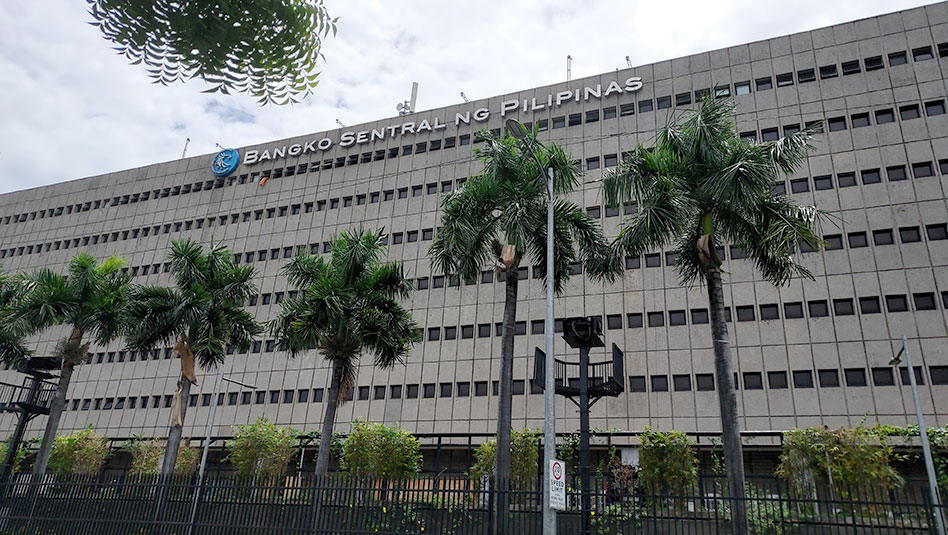
The Bangko Sentral ng Pilipinas (BSP) is unlikely to cut borrowing costs at its meeting next month, as rates need to be sufficiently tight amid evolving risks to inflation, its governor said late Monday.   

In a gathering with newspaper editors, BSP Governor Eli M. Remolona, Jr. said a rate cut is unlikely on Feb. 15, the Monetary Board’s first policy review this year, noting the risk-adjusted inflation forecast in 2024 is still above the 2-4% target.   

“At this point, a rate cut is not likely (on) Feb. 15,” Mr. Remolona said in mixed English and Filipino, adding that the “numbers we are seeing” show the need to keep policy settings sufficiently tight for some time.   

The Monetary Board hiked borrowing costs by 450 basis points (bps) from May 2022 to October 2023, bringing the key interest rate to a 16-year high of 6.5% to tame inflation.

At the December meeting, the BSP’s risk-adjusted inflation forecast stood at 4.2% this year and 3.4% for 2025.   

Meanwhile, the BSP’s average inflation baseline forecast is 3.7% for 2024 and 3.2% for next year.   

Rising tensions in the Red Sea and a prolonged El Niño weather episode are upside risks that are included in the risk-adjusted forecast, BSP Deputy Governor Francisco G. Dakila, Jr. said.

Houthi militants have continued to attack commercial shipping vessels traveling through the lower Red Sea since November last year.   

Mr. Dakila noted El Niño is now expected to continue through the second quarter, instead of the first quarter as expected.

The state weather agency expects El Niño to persist until May this year. Earlier estimates by the BSP also showed that the dry weather event could raise inflation by 0.02 percentage point.

Mr. Remolona said inflation is projected to slow in January from 3.9% in December due to base effects, which could also drive inflation down in February or March.

Inflation peaked at 8.7% in January last year as food prices soared. It has since come down to a 22-month low in December.   

For 2023, inflation averaged 6%, slightly higher than 5.8% in 2022. This marked the second straight year that inflation breached the BSP’s 2-4% target. 

Security Bank Corp. Chief Economist Robert Dan J. Roces said that despite base effects, inflation might remain elevated in the coming months due to external risks. 

“The BSP will (and should) maintain a tight monetary policy stance in the medium term to stabilize prices,” he said.   

He added that El Niño could lead to droughts and agricultural price hikes, which could push up inflation. Disruptions in the Red Sea may also increase import costs.   

However, a weaker global demand could lead to lower commodity prices and dampen domestic demand. An improvement in the supply chain might also drive input costs lower, which could put a downward pressure on inflation, Mr. Roces added.

CHINA SLOWDOWN
The projected economic slowdown in China could dampen the Philippines’ growth outlook this year, according to Mr. Remolona.

“I’m more optimistic about the Philippine economy, but less about the global (economy),” he said.

“China is a concern… It looks like a long slowdown, not a temporary slowdown,” he said, adding that market players now see the Chinese economy expanding by about 5% in 2023 from earlier projections of 10%.

Mr. Remolona noted that China is one of the Philippines’ major trading partners and a good source of investments.   

The Philippines should diversify its trade and investment partners, he added.   

Mr. Roces said a slowing Chinese economy could impact the economy via trade, investments and tourism. The Philippines needs diversification strategies to mitigate its impact.

“Reduced demand for Philippine exports, especially electronics, garments and agricultural products would shrink the country’s economic pie. This slowdown could also disrupt supply chains, causing production bottlenecks and price hikes across various industries,” he said.   

Based on data from the local statistics agency, the United States was the top destination of locally made products in November with a 16% share worth USD 1.14 billion. It was followed by Japan (13.2% share worth USD 938.3 million) and China (12.3% share valued at USD 876.27 million).   

Meanwhile, China remained the Philippines’ main source of imported goods with a value of USD 2.6 billion, accounting for 24% of the total. 

“A potential decrease in Chinese foreign direct investment (FDI), which is crucial for infrastructure and tourism, could hamper economic growth and job creation. Capital flight from the region due to the slowdown might weaken the peso, further boosting import costs and fueling inflation,” Mr. Roces said.   

Central bank data showed FDI inflows from China fell by 19.1% to USD 12.53 million as of October 2023 from USD 15.49 million a year ago.    

Meanwhile, fewer Chinese tourists visiting the Philippines would affect local businesses and the hospitality industry, Mr. Roces said.   

“I agree with BSP Governor Remolona’s assessment that the Philippines should diversify its trade and investment partners to mitigate the risks associated with a slowdown in China,” he said.   

“Diversification could involve focusing on other regional markets like Southeast Asia or the United States, developing domestic industries and attracting investments from diverse sources,” he added. — By Keisha B. Ta-asan, Reporter

House panel greenlights changes to CREATE law

House panel greenlights changes to CREATE law

A House of Representatives panel on Tuesday restored the local tax on both local and foreign companies under proposed changes to the Corporate Recovery and Tax Incentives for Enterprises (CREATE) Act, as requested by Philippine President Ferdinand R. Marcos, Jr., according to the Ways and Means Committee chairman.

Under the report approved by the committee on Tuesday, corporations will now have to pay 2% local tax — from the original 1.5% proposal — on top of a 20% income tax.

Albay Rep. Jose Ma. Clemente S. Salceda, who heads the ways and means committee chairman, told a hearing the President had asked them to restore the local tax “in lieu of all local taxes to be collected by investment promotion agencies for concerned local government units.”

House Bill (HB) No. 9794, also known as CREATE MORE (CREATE to Maximize Opportunities for Reinvigorating the Economy), seeks to amend Republic Act (RA) No. 11534 or the CREATE law. The measure will be sent to the plenary soon for debates.

Eleanor L. Roque, tax principal at P&A Grant Thornton, said lawmakers should ensure that the local business tax rate for companies with incentives should be lower than the regular rate for companies without incentives.

“If you look at the local business tax rate based on the Local Government Code, the rate varies  from 0.375% to 2%, so lawmakers should compare the rates to arrive at a logical incentive rate,” she said in a Viber message.

The Ways and Means Committee also introduced several changes to the committee report, such as value-added tax (VAT) exemptions for enterprises whose total sales are solely for export, and including a list of local tax exemptions following the imposition of a registered business enterprises’ local tax.

Another amendment is to turn the Fiscal Incentives Review Board (FIRB) into a review and monitoring body for investment promotion agencies (IPA).

The bill seeks to limit the FIRB’s power to approve or deny incentives, and to reinstate the power to grant tax incentives to IPAs.

Lawmakers also agreed to incorporate the Organization for Economic Co-Operation and Development’s (OECD) Base Erosion Profit Shifting (BEPS) framework for multinational enterprises in the CREATE MORE bill.

“Under the current OECD, the US, Japan, Korea, China and Singapore are major investors… They’re already implementing the 15% global minimum tax so if they are given an income tax holiday and they don’t pay anything, when they return to their home country, they will have to pay the 15% [global minimum tax,] so our income tax holiday is useless,” Mr. Salceda told the committee.

Finance Assistant Secretary Juvy C. Danofrata said the Philippines would “lose out” if it does not recognize the 15% global minimum tax implemented in OECD countries.

“If we don’t make amendments to our tax system, what will happen is if we give an income tax holiday to a multinational that is also paying its taxes in other countries, the tax that we don’t collect will eventually be paid in the other country,”  she said in mixed English and Filipino.

The CREATE MORE bill seeks to impose a 20% corporate income tax on local and foreign corporations under the enhanced deduction income tax regime.

“The incentive really for the enhanced deduction is to encourage them to get more employees to invest more because there’s also an incentive on the capital investment,” Ms. Danofrata told the committee.

Under the bill, domestic and export companies, including those inside ecozones and freeports, will be entitled to duty exemptions, VAT exemption on imports, and VAT zero-rating for local purchases.

Enterprises would also be entitled to a 200% additional deduction for power costs during the income tax holiday period. They may also enjoy a 100% additional deduction in expenses for trade fairs, missions or exhibitions.

VAT incentives for companies that enjoy incentives before the enactment of CREATE will be extended from 10 to 12 years, if there is no tax refund or credit granted. They may also enjoy duty incentives for the remainder of the 10-year transitory period.

“We gave two more years because the BIR (Bureau of Internal Revenue) has been coming up with all RMCs (revenue memorandum circulars) that of course negate the benefits that accrue to those that we have provided incentives to but went through a transition,” Mr. Salceda said.

The bill also allows the information technology and business process outsourcing sector to “conduct business under alternative work arrangements.”

The bill also seeks to include the Bangsamoro Board of Investments and the Bangsamoro Economic Zone Authority under the list of investment promotion agencies.

Mr. Salceda said the bill also proposes to grant an income tax holiday to domestic market enterprises in creative industries listed under RA 11904 or the Philippine Creative Industries Development Act “for as long as they have at least a minimum of $500 million.”

Filomeno S. Sta. Ana III, coordinator of Action for Economic Reforms, said issues with the CREATE law could be fixed under its implementing rules and regulations.

“Sure it has imperfections, but its flaws can be corrected through implementing rules and regulations and other administrative measures. We should not forget that CREATE lowered the corporate income taxes for all business enterprises,” he said in a Viber message.

He earlier said a looming fiscal crisis due to a “generous tax incentive system” could “block the new flow of investments and thus impede growth and employment.” — By Beatriz Marie D. Cruz, Reporter

Renewable energy projects rose by 26% in 2023  — DoE

Renewable energy projects rose by 26% in 2023  — DoE

Renewable energy (RE) commercial projects with awarded service contracts increased by 26% in 2023, led by solar technology, according to the Department of Energy (DoE).

Data from the DoE released on Tuesday showed that RE projects totaled 1,220 last year with a potential capacity of 134,813.79 megawatts (MW), higher than the 965 recorded in 2022 with a capacity of 80,396.61 MW.

Of the total, there are 434 solar projects in the country with 28,913.78 MW potential capacity. This was followed by 428 hydropower projects with 18,902.96 MW and 252 wind power projects with 85,692.964 MW.

There are also 58 biomass projects with 206.88 MW; 39 geothermal projects with 1,063.20 MW; and nine ocean energy projects with 34 MW.

Terry L. Ridon, a public investment analyst and convenor of think tank InfraWatch PH, attributed the increase in RE projects to a “better business climate under the current administration, the commitment of the Energy department to a better energy mix in the medium-term, and the relatively lower costs of building RE facilities compared to legacy facilities like coal and gas plants.”

“This is a step in the right direction as this significantly contributes to our climate commitments, and balances our reliance on coal and gas technologies,” he said in a Viber message.

He added that this momentum towards RE should prompt the government to further streamline permitting processes, particularly in local government units, to expedite the establishment of RE facilities.

As of the end of 2022, RE accounted for about 22% of the Philippines’ energy mix, with coal-fired power plants providing nearly 60%. 

Looking ahead, the government aims to increase the share of renewables to 35% by 2030 and 50% by 2040. — Sheldeen Joy Talavera

Treasury fully awards fresh 10-year T-bonds

Treasury fully awards fresh 10-year T-bonds

The government made a full award of the new 10-year Treasury bonds (T-bonds) it offered on Tuesday amid bets on the next policy moves of the Bangko Sentral ng Pilipinas (BSP) and the US Federal Reserve.

The Bureau of the Treasury (BTr) raised PHP 30 billion as planned from the fresh 10-year bonds it auctioned off on Tuesday as total bids reached PHp 102.233 billion or more than thrice the amount on offer.

The bonds were awarded at a coupon rate of 6.25%. Accepted yields ranged from 6.1% to 6.25% for an average rate of 6.218%.

The coupon fetched for the tenor was 0.2 basis point (bp) higher than the 6.248% quoted for the 10-year bond at the secondary market prior to the auction, based on PHP Bloomberg Valuation Service Reference Rates data provided by the Treasury.

To accommodate the strong demand seen for the offering, the BTr held a tap facility auction on Tuesday to raise an additional P5 billion from the papers.

“The higher T-bond rates at today’s auction reflected recent comments from BSP Governor Remolona and from various Fed officials over prospects of delayed policy rate cuts this year,” a trader said in an e-mail on Tuesday.

However, the average rate fetched for the bonds was lower than the 6.224% seen for the reissued 10-year notes awarded on Dec. 5, 2023 as inflation is seen easing towards the BSP’s 2-4% goal this year, Rizal Commercial Banking Corp. Chief Economist Michael L. Ricafort noted in a Viber message.

BSP Governor Eli M. Remolona, Jr. said over the weekend that the central bank is unlikely to begin easing benchmark interest rates within the first half amid lingering upside risks to inflation.

The Monetary Board raised borrowing costs by 450 bps from May 2022 to October 2023, bringing the policy rate to a 16-year high of 6.5%.

The BSP expects headline inflation to average 3.7% this year, slower than 6% seen in 2023.

The central bank will hold its first policy meeting for this year on Feb. 15.

Meanwhile, a steady stream of Fed officials, starting with Governor Christopher Waller on Tuesday, have pushed back on market expectations the central bank will embark on a path of fast reductions to interest rates. Mr. Waller said the Fed should proceed “methodically and carefully” until it is clear lower inflation will be sustained, Reuters reported.

On Friday, Chicago Fed President Austan Goolsbee said weeks more of inflation data need to be in hand before any decision could be made to cut interest rates.

In addition, Federal Reserve Bank of San Francisco President Mary Daly said there is still a lot of work left to do on inflation and it is premature to think rate cuts are around the corner.

Expectations for a cut from the Fed in March of at least 25 bps have dipped below 50% according to CME’s FedWatch Tool, with traders now targeting May as the likely month for a rate cut announcement.

The US central bank raised borrowing costs by a total of 525 bps from March 2022 to July 2023 to the 5.25-5.5% range.

It will hold its first meeting for the year on Jan. 30-31.

The government wants to raise PHP 195 billion from the domestic market this month, or PHP 75 billion via Treasury bills and PHP 120 billion through T-bonds.

The BTr borrows from local and foreign sources to help fund its budget deficit, which is capped at 5.1% of gross domestic product this year. — AMCS with Reuters

Peso rebounds on rate cut bets

Peso rebounds on rate cut bets

The peso rebounded against the dollar on Tuesday on expectations of rate cuts from the Bangko Sentral ng Pilipinas (BSP) and the US Federal Reserve later this year.

The local unit closed at PHP 56.155 per dollar on Tuesday, strengthening by 17.5 centavos from its PHP 56.33 finish on Monday, based on Bankers Association of the Philippines data.

The peso opened Tuesday’s session weaker at PHP 56.35 against the dollar. Its intraday best was at PHP 56.10, while its weakest showing was at PHP 56.435 versus the greenback.

Dollars exchanged went down to USD 1.397 billion on Tuesday from USD 1.71 billion on Monday.

“The peso recovered amid prospects of delayed policy rate cuts from the Bangko Sentral [ng Pilipinas] this year,” a trader said in an e-mail.

The BSP is unlikely to begin its easing cycle in the first half of the year amid upside risks to inflation, Mr. Remolona said to reporters over the weekend.

The Monetary Board raised benchmark borrowing costs by a cumulative 450 basis points (bps) from May 2022 to October 2023, bringing the policy rate to a 16-year high of 6.5%.

The central bank will hold its first policy meeting for this year on Feb. 15.

The peso was also supported by a weaker dollar recently amid expectations of a delayed rate cut by the US central bank, Rizal Commercial Banking Corp. Chief Economist Michael L. Ricafort said in a Viber message.

The US central bank hiked the fed funds rate by 525 bps from March 2022 to July 2023 to the 5.25-5.5% range.

For Wednesday, the trader said the peso could strengthen further ahead of a likely softer US gross domestic product report.

The trader sees the peso moving between PHP 55.95 and PHP 56.20 per dollar on Wednesday, while Mr. Ricafort expects it to range from PHP 56.05 to PHP 56.25. — AMCS

PH shares climb, take cue from Wall Street

PH shares climb, take cue from Wall Street

Philippine shares rose further on Tuesday amid positive investor sentiment following the increase in US markets overnight and improved economic prospects.

The bellwether Philippine Stock Exchange index (PSEi) climbed by 38.41 points or 0.58% to close at 6,621.88 on Tuesday, while the broader all shares index rose by 13.74 points or 0.39% to end at 3,493.56.

“This Tuesday, the local market rose by 38.41 points to 6,621.88 as investors took positive cues from Wall Street overnight. This is amid the record runs of both the S&P 500 and the Dow Jones Industrial Average. The optimism kept the local bourse in the green territory for the whole session,” Philstocks Financial, Inc. Research and Engagement Officer Mikhail Philippe Q. Plopenio said in a Viber message.

“With today’s performance, the main index is back above the 6,600 level after a brief correction from the past few days,” he added.

The benchmark S&P 500 scaled a fresh record-high after closing at a record on Friday for the first time in two years, confirming it was in a bull market, Reuters reported.

The Dow Jones Industrial Average rose 138.01 points or 0.36% to 38,001.81; the S&P 500 gained 10.62 points or 0.22% to 4,850.43; and the Nasdaq composite gained 49.32 points or 0.32% to 15,360.29.

“The PSEi again corrected higher for the second straight day … after US stock markets again mostly posted new record highs… and the latest positive outlook of the local BPO (business process outsourcing) industry association,” Rizal Commercial Banking Corp. Chief Economist Michael L. Ricafort said in a Viber message.

The IT and Business Process Association of the Philippines (IBPAP) on Monday said that it hopes to exceed the two-million mark in BPO industry headcount by 2025.

IBPAP President Jack Madrid said the association’s members ended 2023 with 1.7 million direct jobs, up 8% year on year, and generated over USD 35 billion in revenue.

The industry is targeting 7-8% growth in headcount and USD 39 billion in revenue for this year.

All sectoral indices closed higher on Tuesday. Property surged by 31.04 points or 1.08% to 2,890.66; financials climbed by 19.32 points or 1.05% to 1,856.51; services increased by 7.31 points or 0.45% to 1,617.63; industrials went up by 24.26 points or 0.26% to 9,090.77; mining and oil rose by 15.86 points or 0.16% to 9,377.97; and holding firms improved by 6.1 points or 0.09% to 6,323.40.

“Among the index members, Monde Nissin Corp. was at the top, climbing 3.01% to PHP 8.55. Converge ICT Solutions, Inc. lost the most, dropping 1.81% to P8.68,” Mr. Plopenio said.

Value turnover climbed to PHP 4.76 billion on Tuesday with 775.59 million issues changing hands from the PHP 4.56 billion with 301.17 million shares traded on Monday. 

Advancers outnumbered decliners, 100 to 88, while 49 issues closed unchanged.

Net foreign selling stood at PHP 421.62 million on Tuesday versus the PHP 97.27 million in net buying logged the prior day. — RMDO with Reuters

Philippines inflation remains an ‘urgent’ concern – finance minister

Philippines inflation remains an ‘urgent’ concern – finance minister

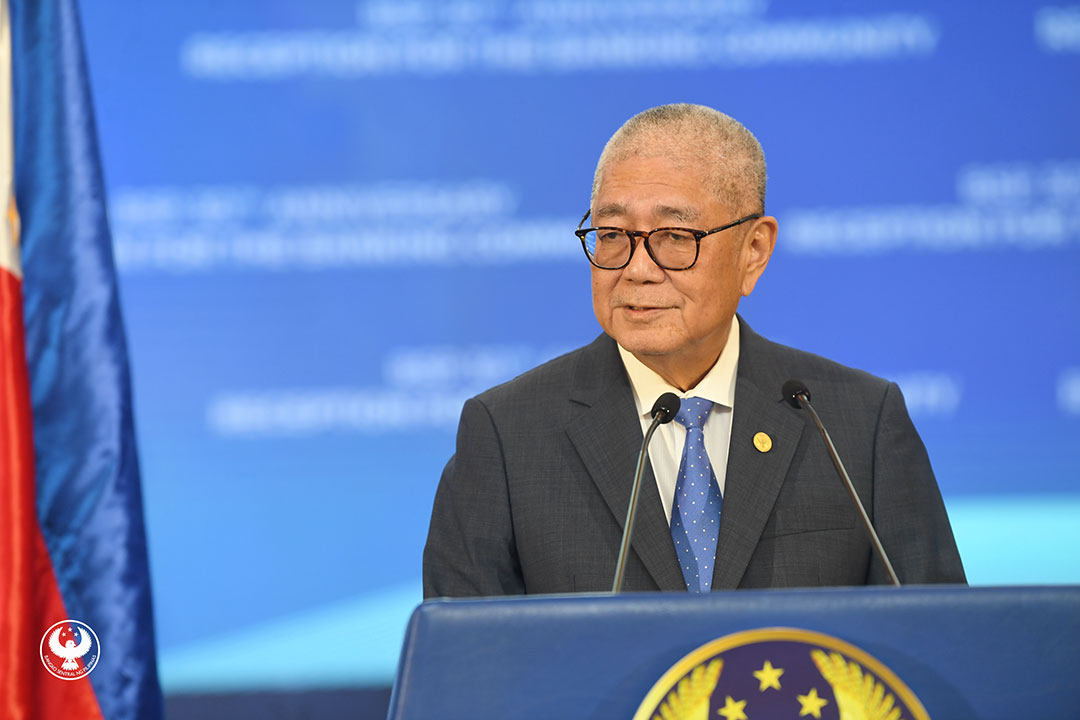
Philippine Finance Secretary Ralph G. Recto said on Wednesday inflation remains a “most urgent concern” and must be kept under control.

Mr. Recto, who took on the financial portfolio on Jan. 15, is the government’s representative to the seven-member policymaking monetary board of the Bangko Sentral ng Pilipinas, which will meet for the first time this year on Feb. 15 to review the direction of policy rates.

Headline inflation in December returned to target at 3.9%, but average inflation for 2023 was 6%, well above the central bank’s 2% to 4% target.

“It is imperative that we find ways and means to r25`educe inflation,” Mr. Recto told a news conference. “I support what the monetary board is doing. Like I said, it’s data driven.”

The central bank kept its benchmark rate steady at 6.5% in the final two meetings of last year, after hiking rates by a total of 450 basis points since May 2022 to rein in inflation.

Mr. Recto said the possibility of oil prices and transport costs going up is there given escalating geopolitical tensions.

“The central bank will look at all these data and make the appropriate decisions going forward. We recognize that there are external threats,” he said.

Bangko Sentral ng Pilipinas Governor Eli M. Remolona Jr. said on Monday monetary policy would have to remain sufficiently tight given the inflation numbers, making a rate cut at its meeting next month unlikely. — Reuters

DoF chief joins BSP’s Monetary Board

DoF chief joins BSP’s Monetary Board

NEWLY APPOINTED Finance Secretary Ralph G. Recto took his oath as a member of the Monetary Board on Monday, the Philippine central bank said, taking the last seat in the seven-member policy-making body.

Mr. Recto is expected to prioritize inflation while pushing stable economic growth, analysts said.

“He is responsible for National Government debt and taxes,” Jonathan L. Ravelas, senior adviser at professional service firm Reyes Tacandong & Co., said in a Viber message. “He ensures that growth continues by providing inputs to the Monetary Board to help support and stabilize growth.”

Mr. Recto, a former lawmaker who was appointed Finance chief last week, will represent President Ferdinand R. Marcos, Jr.’s Cabinet at the Bangko Sentral ng Pilipinas’ (BSP) highest policy-making body.

The Monetary Board is headed by Governor Eli M. Remolona, Jr., who led Mr. Recto’s oath-taking at the central bank office in Manila, the BSP said in a statement.

The board also has five full-time members from the private sector, namely Benjamin E. Diokno, V. Bruce J. Tolentino, Anita Linda R. Aquino, Romeo L. Bernardo, and Rosalia V. de Leon.

Mr. Diokno is Mr. Recto’s predecessor at the Finance department and Ms. De Leon used to be the national treasurer.

Ms. Aquino held key positions at Standard Chartered Bank Manila, Rizal Commercial Banking Corp., Citicorp Investment Bank in Singapore, and Citibank N.A. Manila.

Mr. Tolentino was the deputy director-general of the International Rice Research Institute, served as chief economist and country representative at The Asia Foundation, and was senior economic policy adviser at the Asian Development Bank (ADB).

Meanwhile, Mr. Bernardo was an analyst for the Philippines at GlobalSource Partners. He used to be a Finance undersecretary and an alternate executive director at the ADB.

Mr. Recto would give the Monetary Board a clear perspective on how monetary policy and banking regulation can support economic growth, China Bank Capital Corp. Managing Director Juan Paolo E. Colet said in a Viber message.

“Immediate priorities should include forming a view on when to cut the policy rate and taking the necessary steps to remove the Philippines from the Financial Action Task Force’s (FATF) ‘gray list,’” he added.

Before his appointment to the Finance department on Jan. 15, Mr. Recto served as Batangas representative and was a deputy speaker of the House of Representatives.

He was a senator for three terms and held key positions including as a minority leader. He pushed higher value-added taxes (VAT) in the Senate in the early 2000.

Luis A. Limlingan, head of sales at Regina Capital Development Corp., said the central bank is already doing a good job in keeping prices stable.

“It will depend on current economic conditions but generally, Mr. Recto should try to help the economy get back to a lower inflationary environment with tools at his disposal,” he said in a Viber message.

The Monetary Board raised borrowing costs by 450 basis points from May 2022 to October 2023. This brought the key interest rate to 6.5%, the highest in 16 years.

Despite the high interest rate environment, the Philippine economy expanded by 5.9% in the third quarter, faster than 4.3% in the second quarter.

For the nine months ended September, economic growth averaged 5.5%, below the government’s 6-7% full-year goal.

Mr. Remolona earlier said it is unlikely for the BSP to start easing policy rates in the first half given the risks to inflation.

The central bank sees inflation easing to 3.7% this year and to 3.2% in 2025. Inflation in 2023 was 6%, breaching the 2-4% target for the second straight year.

The BSP will hold its first policy meeting this year on Feb. 15.

The FATF has kept the Philippines under a “gray list” of countries under increased monitoring for money laundering and terrorism financing risks since June 2021.

Government officials expect the Philippines to get out of the gray list in October after failing to meet the January deadline. – Keisha B. Ta-asan, Reporter

Philippines should fix broadband ‘duopoly’ — WB

Philippines should fix broadband ‘duopoly’ — WB

THE GOVERNMENT should address barriers to efficient broadband infrastructure to help bridge the widening digital divide in the Philippines, where the market remains a duopoly, according to the World Bank (WB).

“The broadband market in the Philippines is an effective duopoly with two large telcos,” it said in a policy note discussing reforms to promote competition and increase investment in broadband infrastructure. “Globe and PLDT Inc./Smart [Communications, Inc.] are vertically integrated.”

“They own international connectivity, backbone, middle- and last-mile networks and have the majority subscriber share,” it pointed out. “Over 500 providers acting as retailers rely on wholesale infrastructure, either from the duopoly or market challengers.”

PLDT had PHP 205 billion in revenue in 2022, while Globe had PHP 175 billion, the multilateral lender said in its report. Converge ICT Solutions, Inc., a late third player, only had PHP 34 billion.

PLDT and Globe said they were both working on a response to the World Bank study when sought for comment in separate Viber and Facebook Messenger chats.

“Laws on connectivity have remained unchanged despite vast technological advancements, evolving business models, and widening access gap,” the World Bank said.

Among the Association of Southeast Asian Nations (ASEAN), the Philippines is the least favorable on policy environment for affordable broadband, and among the slowest in the world in promoting reforms to make it more affordable, it added.

The World Bank cited data showing household penetration for fixed broadband in the Philippines at 33% in 2022. The cost of fixed broadband was more than four times more expensive than Malaysia and Vietnam and more than double the ASEAN average, it said.

For mobile broadband — considered the driver of consumer adoption of e-commerce, financial inclusion, disaster response, and agriculture practices — active subscribers in 2022 were 70 per 100 inhabitants, the lowest among large ASEAN economies, it added.

Poor internet access and lack of digital infrastructure also affect crucial industries such as the service sector.

For example, the information technology and business process outsourcing industry, which creates jobs and drives the growth in service exports, remained constrained in a few locations, the World Bank said.

Unfortunately, the Philippines has been the last investment destination among major ASEAN economies for “hyper-scaler cloud service providers” such as Amazon and Google, it added.

“The cost of inaction — loss of growth opportunity, people remaining unequipped for future jobs and widening of the digital divide — is too high for the Philippines,” the lender said.

“Unaddressed, weak internet might derail the country’s achieving upper middle-income status in the coming years and its aspiration for a prosperous middle-class society by 2040,” it added.

The World Bank said the country’s internet connectivity lags behind its ASEAN peers in terms of affordability, speed, and access, creating an “uneven landscape for digital participation.”

“Access to broadband is fundamental to participating in a country’s digital transformation,” it said. “However, the digital divide in the Philippines is rapidly expanding. In the least populated areas and remote islands, progress in household internet penetration over the last 10 years has only been a third of progress made in populated urban centers.”

‘BINDING CONSTRAINTS’

In 2022, the Philippines invested 0.44% of its gross domestic product (GDP) in broadband infrastructure, compared with the majority of developing countries that have invested at least 1% of their GDP in telecommunication infrastructure for at least a year.

The bank also estimated that the investment gap in the Philippines is about USD 2 billion (PHP 112.8 billion) yearly.

“Binding constraints to competition and investment in the Philippine broadband infrastructure are interrelated, with cumulative effects of policy actions (or inactions) reinforcing the market structure and operators’ conduct,” it said.

“Recent economic reforms such as the removal of foreign ownership restrictions in 2022 and the introduction of the competition law in 2015 have not significantly altered the market dynamics in the broadband sector under the prevailing legal system,” it added.

The World Bank cited barriers to market entry and investment, an unlevel playing field, and the lack of an infrastructure-sharing policy framework, among other things.

It called for reforms in broadband infrastructure policies to encourage investment and competition.

“Interrelated policy and regulatory barriers underlying poor internet in the Philippines require a comprehensive package of reforms,” the lender said. “An outdated franchising and licensing regime and rigid and nontransparent spectrum management have discouraged connectivity infrastructure deployment and efficient resource reallocation.”

The World Bank said there is rich literature citing global evidence on the impact of reforms on broadband infrastructure investment and performance, including through the liberalization of foreign investments.

The government also plays a crucial role in bridging the digital divide by channeling its resources to the poor, the multilateral lender said.

“The government can complement pro-competition policy reforms with direct public investments in justifiable, efficient, and sustainable ways,” it said.

“As the government prioritizes digitalization with a view toward benefiting all Filipinos, updating policy to promote competition, encourage investment, and upgrade broadband infrastructure is urgent and necessary,” it added.

Hastings Holdings, Inc., a unit of PLDT Beneficial Trust Fund subsidiary MediaQuest Holdings, Inc., has a majority stake in BusinessWorld through the Philippine Star Group, which it controls. – Luisa Maria Jacinta C. Jocson, Reporter

Posts navigation

Older posts
Newer posts

Recent Posts

  • Peso GS Weekly: Geopolitics drive a volatile curve
  • Ask Your Advisor: Can my portfolio survive a market crash?
  • Stock Market Weekly: Middle East stalemate weighs on market 
  • Investment Ideas: April 13, 2026 
  • Metrobank US-Iran Risk Index: Fragile ceasefire 

Recent Comments

No comments to show.

Archives

  • April 2026
  • March 2026
  • February 2026
  • January 2026
  • December 2025
  • November 2025
  • October 2025
  • September 2025
  • August 2025
  • July 2025
  • June 2025
  • May 2025
  • April 2025
  • March 2025
  • February 2025
  • January 2025
  • December 2024
  • November 2024
  • October 2024
  • September 2024
  • August 2024
  • July 2024
  • June 2024
  • May 2024
  • April 2024
  • March 2024
  • February 2024
  • January 2024
  • December 2023
  • November 2023
  • October 2023
  • September 2023
  • August 2023
  • July 2023
  • June 2023
  • May 2023
  • April 2023
  • March 2023
  • February 2023
  • January 2023
  • December 2022
  • November 2022
  • October 2022
  • September 2022
  • August 2022
  • July 2022
  • June 2022
  • May 2022
  • March 2022
  • December 2021
  • October 2021

Categories

  • Bonds
  • BusinessWorld
  • Currencies
  • Economy
  • Equities
  • Estate Planning
  • Explainer
  • Featured Insight
  • Fine Living
  • How To
  • Investment Tips
  • Markets
  • Portfolio Picks
  • Rates & Bonds
  • Retirement
  • Reuters
  • Spotlight
  • Stocks
  • Uncategorized

You are leaving Metrobank Wealth Insights

Please be aware that the external site policies may differ from our website Terms And Conditions and Privacy Policy. The next site will be opened in a new browser window or tab.

Cancel Proceed
Get in Touch

For inquiries, please call our Metrobank Contact Center at (02) 88-700-700 (domestic toll-free 1-800-1888-5775) or send an e-mail to customercare@metrobank.com.ph

Metrobank is regulated by the Bangko Sentral ng Pilipinas
Website: https://www.bsp.gov.ph

Quick Links
The Gist Webinars Wealth Manager Explainers
Markets
Currencies Rates & Bonds Equities Economy
Wealth
Investment Tips Fine Living Retirement
Portfolio Picks
Bonds Stocks
Others
Contact Us Privacy Notice Terms of Use
© 2026 Metrobank. All rights reserved.

Access this content:

If you are an existing investor, log in first to your Metrobank Wealth Manager account. ​

If you wish to start your wealth journey with us, click the “How To Sign Up” button. ​

Login HOW TO SIGN UP