MODEL PORTFOLIO
THE GIST
NEWS AND FEATURES
Global Philippines Fine Living
INSIGHTS
INVESTMENT STRATEGY
Economy Stocks Bonds Currencies
THE BASICS
Investment Tips Explainers Retirement
WEBINARS
2024 Mid-Year Economi Briefing, economic growth in the Philippines
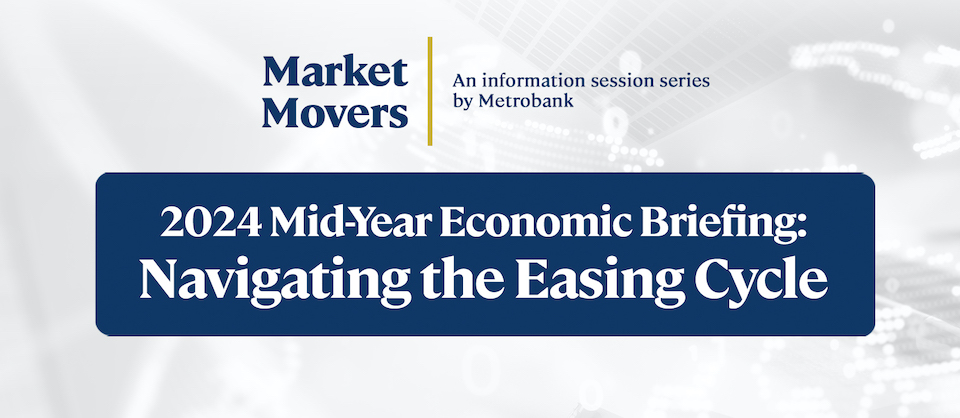
2024 Mid-Year Economic Briefing: Navigating the Easing Cycle
June 21, 2024
Investing with Love
Investing with Love: A Mother’s Guide to Putting Money to Work
May 15, 2024
retirement-ss-3
Investor Series: An Introduction to Estate Planning
September 1, 2023
View All Webinars
DOWNLOADS
grocery-2-aa
Economic Updates
Inflation Update: Target breached
DOWNLOAD
Container ship carrying container boxes import export dock with quay crane. Business commercial trade global cargo freight shipping logistic and transportation worldwide oversea concept. Generative AI
Economic Updates
Philippines Trade Update: Wider deficit on strong imports
DOWNLOAD
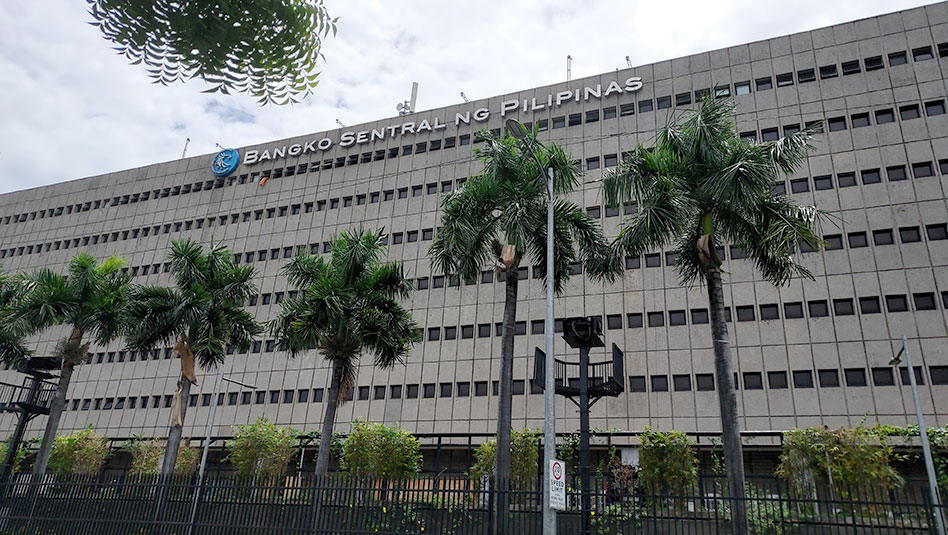
Frick collection with palm trees 
Economic Updates
Policy Rate Updates: Policy rate updates to reassure 
DOWNLOAD
View all Reports
Metrobank.com.ph How To Sign Up
Follow us on our platforms.

How may we help you?

TOP SEARCHES
  • Where to put my investments
  • Reports about the pandemic and economy
  • Metrobank
  • Webinars
  • Economy
TRENDING ARTICLES
  • Investing for Beginners: Following your PATH
  • On government debt thresholds: How much is too much?
  • Philippines Stock Market Outlook for 2022
  • Deficit spending remains unabated

Login

Access Exclusive Content
Login to Wealth Manager
Visit us at metrobank.com.ph How To Sign Up
Access Exclusive Content Login to Wealth Manager
Search
MODEL PORTFOLIO THE GIST
NEWS AND FEATURES
Global Philippines Fine Living
INSIGHTS
INVESTMENT STRATEGY
Economy Stocks Bonds Currencies
THE BASICS
Investment Tips Explainers Retirement
WEBINARS
2024 Mid-Year Economi Briefing, economic growth in the Philippines
2024 Mid-Year Economic Briefing: Navigating the Easing Cycle
June 21, 2024
Investing with Love
Investing with Love: A Mother’s Guide to Putting Money to Work
May 15, 2024
retirement-ss-3
Investor Series: An Introduction to Estate Planning
September 1, 2023
View All Webinars
DOWNLOADS
grocery-2-aa
Economic Updates
Inflation Update: Target breached
April 7, 2026 DOWNLOAD
Container ship carrying container boxes import export dock with quay crane. Business commercial trade global cargo freight shipping logistic and transportation worldwide oversea concept. Generative AI
Economic Updates
Philippines Trade Update: Wider deficit on strong imports
March 27, 2026 DOWNLOAD
Frick collection with palm trees 
Economic Updates
Policy Rate Updates: Policy rate updates to reassure 
March 26, 2026 DOWNLOAD
View all Reports

Archives: Business World Article

Q3 GDP growth revised to 6%

Q3 GDP growth revised to 6%

The Philippine economy expanded by 6% in the third quarter, slightly faster than initially reported, according to the Philippine Statistics Authority (PSA).

The PSA upwardly revised the country’s gross domestic product (GDP) growth rate to 6% from the 5.9% reported in November last year.

This brought the growth in the first three quarters to 5.6% from 5.5% initial estimate.

The upward revision came ahead of the fourth-quarter and full-year 2023 release of GDP data today (Jan. 31).

Philippine GDP likely expanded by 5.7% in the fourth quarter, based on a BusinessWorld poll of 20 economists. If realized, this would be a tad slower than the third quarter’s revised pace and the 7.1% growth in the final three months of 2022.

The BusinessWorld poll yielded a 5.5% full-year estimate, falling below the government’s 6-7% target growth for 2023.

Should this materialize, it would be slower than the 7.6% growth recorded in 2022.

To meet the lower end of the government target, the Philippine economy should have expanded by at least 7.2% in the fourth quarter.

The PSA said that the main sources of upward revision of the third-quarter print were manufacturing (5.1% from 4.5%), financial and insurance activities (9.6% from 9.5%), and accommodation and food service activities (21% from 20%).

On the expenditure side, private consumption’s third-quarter growth was revised upwards to 5.1% from 5% previously. Government spending was maintained at 6.7%.

Meanwhile, the net primary income from the rest of the world was revised downwards to 111.6% from the preliminary 112.5%.

On the other hand, gross national income for the third quarter was kept at 12.1%.

National account revisions are based on approved revision policy, which is consistent with international standard practice, the PSA said. — Andrea C. Abestano

Gov’t fully awards reissued three-year T-bonds

Gov’t fully awards reissued three-year T-bonds

The government made a full award of the reissued Treasury bonds (T-bonds) it offered on Tuesday at a higher average rate ahead of the fourth-quarter and full-year gross domestic product (GDP) growth report.

The Bureau of the Treasury (BTr) raised PHP 30 billion as planned via the reissued three-year bonds it offered on Tuesday as total bids reached PHP 62.434 billion, or more than twice the amount on the auction block.

The bonds, which have a remaining life of two years and 11 months, were awarded at an average rate of 6.007%, with accepted yields ranging from 5.95% to 6.05%.

The average rate of the reissued bonds rose by 10.7 basis points (bps) from the 5.9% quoted for the papers when they were first offered on Jan. 3. It was likewise 0.7 bp above the 6% coupon for the series.

The average yield was 6.9 bps above the 5.938% seen for the same bond series but 0.4 bp lower than the 6.011% quoted for the three-year bond at the secondary market before Tuesday’s auction, based on PHP Bloomberg Valu-ation Service Reference Rates data provided by the Treasury.

“The higher rates reflected local optimism ahead of the Philippine GDP report tomorrow,” a trader said in an e-mail on Tuesday.

Economic growth may have slowed in the fourth quarter of 2023, putting the full-year average below the government’s target, analysts said.

Philippine GDP likely expanded by 5.7% in the October-to-December period in 2023, based on a median forecast of 20 economists polled by BusinessWorld, slower than the revised 6% growth in the third quarter and the 7.1% expansion in the same period in 2022.

The same poll showed GDP growth may have averaged 5.5% in 2023, missing the Development Budget Coordination Committee’s 6-7% target.

If realized, the estimate for 2023 would be below the 7.6% expansion in 2022 and the slowest since the 9.5% contraction in 2020.

The Philippine Statistics Authority will release fourth-quarter and full-year 2023 GDP data on Wednesday.

T-bond rates rose in line with secondary market levels amid expectations of policy easing by the US Federal Reserve this year, Rizal Commercial Banking Corp. Chief Economist Michael L. Ricafort added in a Viber message.

The US central bank raised borrowing costs by 525 bps from March 2022 to July 2023, bringing the fed funds rate to 5.25-5.5%.

This week, the Federal Open Market Committee is holding its first policy review for this year. Markets widely expect policy makers to keep rates steady for the fourth straight meeting.

The Fed in December surprised the market with its dovish tilt, projecting 75 bps of interest rate cuts in 2024, sparking a blistering year-end risk rally, with traders pricing in easing as early as March, Reuters reported.

But since then, a slate of strong economic data, sticky inflation and pushback from central bankers have led markets to significantly dial back their expectations.

Markets now expect a 47% chance of a Fed rate cut in March, the CME FedWatch tool showed, down from 88% a month earlier. They currently anticipate 134 bps of cuts in the year, compared with 160 bps of easing a month ear-lier.

The BTr plans to raise PHP 210 billion from the domestic market this month, or PHP 60 billion via T-bills and PHP 150 billion through T-bonds.

The government borrows from local and foreign sources to help fund its budget deficit, which is capped at 5.1% of gross domestic product this year or PHP 1.39 trillion. — A.M.C. Sy with Reuters

Peso weakens as oil prices rise

Peso weakens as oil prices rise

The peso declined against the dollar on Tuesday amid higher global oil prices due to the conflict in the Middle East and before the release of Philippine gross domestic product (GDP) data.

The local unit closed at PHP 56.401 per dollar on Tuesday, weakening by 13.1 centavos from its PHP 56.27 finish on Monday, Bankers Association of the Philippines data showed.

The peso opened Tuesday’s session slightly weaker at PHP 56.30 against the dollar. Its intraday best was at PHP 56.20, while its worst showing was at PHP 56.475 versus the greenback.

Dollars exchanged went up to USD 1.32 billion on Tuesday from USD 1.17 billion on Monday.

The peso corrected lower “as global crude oil prices hovered among two-month highs recently amid tensions at the Red Sea area that increased shipping costs and caused some shipping delays and also after the drone attack al-legedly by Iranian-back militias on a US base in Jordan,” Rizal Commercial Banking Corp. Chief Economist Michael L. Ricafort said in a Viber message.

The United States vowed to take “all necessary actions” to defend American forces after a drone attack killed three US troops in Jordan, Reuters reported.

US crude rose by 0.6% to USD 77.24 per barrel and Brent was at USD 82.78, up by 0.46% on the day.

“The peso weakened anew amid a potentially softer Eurozone GDP growth report tonight,” a trader said in an e-mail on Tuesday.

For Wednesday, the trader said the peso could recover against the dollar due to the release of Philippine GDP data for full-year 2023 and the fourth quarter.

“Stronger GDP data could support hawkish monetary policy stance as a matter of prudence amid higher global and local rice prices recently due to El Niño drought risks until the second quarter that could reduce palay output and could lead to some uptick in prices and overall inflation,” Mr. Ricafort said.

The trader expects the peso to move between PHP 56.25 and PHP 56.50 per dollar on Wednesday, while Mr. Ricafort sees it ranging from PHP 56.30 to PHP 56.50. — with Reuters

Shares drop further on profit taking ahead of GDP

Shares drop further on profit taking ahead of GDP

Philippine stocks dropped further on Tuesday due to profit-taking ahead of the release of fourth-quarter and full-year 2023 gross domestic product (GDP) data.

The Philippine Stock Exchange index (PSEi) dropped by 8.67 points or 0.13% to finish at 6,622.01 on Tuesday, while the broader all shares index closed unchanged at 3,487.71.

“This Tuesday, the local market dropped by 8.67 points to 6,622.01 due to last-minute profit taking as investors took a cautious stance ahead of the release of the Philippine fourth-quarter gross domestic product growth data [on Wednesday],” Philstocks Financial, Inc. Research and Engagement Officer Mikhail Philippe Q. Plopenio said in a Viber message.

Economic growth may have slowed in the fourth quarter of 2023, putting the full-year average below the government’s target, analysts said.

Philippine GDP likely expanded by 5.7% in the October-to-December period in 2023, based on a median forecast of 20 economists polled by BusinessWorld, slower than the revised 6% growth in the third quarter and the 7.1% expansion in the same period in 2022.

The same poll showed GDP growth may have averaged 5.5% in 2023, missing the Development Budget Coordination Committee’s 6-7% target.

If realized, the estimate for 2023 would be below the 7.6% expansion in 2022 and the slowest since the 9.5% contraction in 2020.

“Philippine shares traded flat as investors analyzed the latest corporate earnings with the US Federal Reserve policy meeting on the horizon. Later [on Tuesday], the data on housing, the labor market and consum-er confidence [were] expected to be released,” Regina Capital Development Corp. Head of Sales Luis A. Limlingan said in a Viber message.

“These numbers come as market participants finalize their expectations for Wednesday’s monetary policy announcement and subsequent press conference,” he added.

The Fed is widely expected to keep rates steady at 5.25-5.5% for the fourth straight meeting at this week’s meeting.

Back home, sectoral indices ended mixed on Tuesday. Mining and oil rose by 118.74 points or 1.3% to 9,241.94; services climbed by 8.82 points or 0.55% to 1,604.06; and holding firms increased by 33.36 points or 0.52% to 6,369.44.

On the other hand, financials retreated by 19.08 points or 1% to 1,871.59; industrials fell by 39.69 points or 0.44% to 8,975.64; and property declined by 6.11 points or 0.21% to 2,866.35.

Value turnover increased to PHP 4.48 billion on Tuesday with 550.64 million issues changing hands from the PHP 4.22 billion with 303.36 million shares seen on Monday.

Advancers and decliners were split at 91 each, while 47 names closed unchanged.

Net foreign selling stood at PHP 566.33 million on Tuesday versus the PHP 459.98 million in net buying logged on Monday. — R.M.D. Ochave

BIR clarifies small online sellers are exempt from withholding tax

BIR clarifies small online sellers are exempt from withholding tax

The Bureau of Internal Revenue (BIR) on Monday clarified that small online sellers are exempted from the payment of the creditable withholding tax imposed on online marketplaces but would still need to register their business.

“Small-scale online sellers are exempted from withholding tax. The BIR is sympathetic to small businesses in its approach to taxing online sellers/merchants,” BIR Commissioner Romeo D. Lumagui, Jr. said in a statement.

BIR Revenue Regulations No. 16-2023, which took effect on Jan. 11, imposes a withholding tax of 1% on one-half of the gross remittances by e-marketplace operators and digital financial service providers to the sellers or mer-chants for the goods and services paid or sold through their platforms or facilities.

The BIR said that the withholding tax is not imposed if the annual total gross remittances to an online seller for the past taxable year has not exceeded PHP 500,000; if the cumulative gross remittances to an online seller in a taxable year has not yet exceeded PHP 500,000 or if the seller is duly exempt from or subject to a lower income tax rate pursuant to any existing law or treaty.

“For those who are above the threshold of PHP 500,000 annual gross remittance, it is only fair that they will be subjected to withholding tax. We have to be fair to the retail sector and brick and mortar stores who are regularly pay-ing their taxes,” Mr. Lumagui said.

The tax covers marketplaces for online shopping, food delivery platforms, platforms to book lodging accommodations, and other similar online service or product marketplaces.

E-marketplace operators and digital financial service providers were given a 90-day transitory period to comply with the order.

The BIR in a separate circular said all online sellers and merchants need to register with the BIR and submit documentary requirements, even if their annual gross remittance is below the PHP 500,000 threshold.

The circular also noted that sellers and merchants are not allowed to receive payments through a personal account and instead must use a BIR-registered account.

“If you have a business, you have to register and pay your taxes. It doesn’t matter if it’s an actual store or an online store. It is your responsibility to pay taxes like everyone else,” Mr. Lumagui said.

In a press conference last week, Mr. Lumagui told reporters that the measure will help the BIR better gauge the impact of the digital economy.

“We gave the online platforms a grace period of 90 days. With that, we are still checking on which are already capable of complying… During our discussions with online platforms, they’re cooperative. With this development, we’re hoping to get the entire picture on online transactions,” he said.

In 2022, the digital economy contributed PHP 2.08 trillion or equivalent to 9.4% of the gross domestic product.

A report by Google, Temasek Holdings and Bain & Company showed that the Philippines’ digital economy is projected to reach as high as USD 150 billion by 2030.

The BIR also earlier clarified that the withholding tax is not a “new” tax as it is just a measure that will allow for an advance payment of income tax.

“The BIR has a friendly and approachable stance as regards the taxation of online sellers. We know that most of our online sellers do not have the intention to evade taxes. They just need guidance in the registration and pay-ment processes,” Mr. Lumagui said.

He also said the BIR is working to provide guidance to online sellers and online platforms on their tax obligations. — Luisa Maria Jacinta C. Jocson

Gov’t fully awards T-bill offering

Gov’t fully awards T-bill offering

The government made a full award of the Treasury bills (T-bills) it offered on Monday even as rates continued to rise amid hawkish signals from the Bangko Sentral ng Pilipinas (BSP) and before the release of 2023 Philip-pine gross domestic product (GDP) data.

The Bureau of the Treasury (BTr) raised PHP 15 billion as planned via its offering of T-bills on Monday as total bids reached PHP 38.137 billion, or more than twice the amount on the auction block.

Broken down, the Treasury made a full PHP 5-billion award of the 91-day T-bills as tenders for the tenor reached PHP 11.46 billion. The three-month paper was quoted at an average rate of 5.398%, 9.2 basis points (bps) higher than the 5.306% seen last week. Accepted rates ranged from 5.300% to 5.424%.

The government also raised PHP 5 billion as planned from the 182-day securities as bids stood at PHP 12.37 billion. The average rate for the six-month T-bill was at 5.81%, up by 4.4 bps from the 5.766% fetched last week, with accept-ed rates at 5.795% to 5.843%.

Lastly, the BTr borrowed the programmed PHP 5 billion via the 364-day debt paper as demand for the tenor totaled PHP 14.307 billion. The average rate of the one-year T-bill went up by 3.9 bps to 6.076% from the 6.037% quoted last week. Accepted yields were from 6.02% to 6.10%.

At the secondary market on Monday before the auction, the 91-, 182-, and 364-day T-bills were quoted at 5.422%, 5.7508%, and 6.0408%, respectively, based on PHP Bloomberg Valuation Service Reference Rates data provided by the BTr.

T-bill rates went up on Monday following hawkish signals from the central bank chief, Rizal Commercial Banking Corp. Chief Economist Michael L. Ricafort said in a Viber message.

“T-bill auction yields were higher ahead of the latest Philippine GDP data on Jan. 31, as a stronger GDP data could support hawkish monetary policy stance…,” Mr. Ricafort said.

“Awarded T-bill rates increased today amid growing prospects of delayed BSP policy rate cuts,” a trader said in an e-mail on Monday.

BSP Governor Eli M. Remolona, Jr. reiterated on Friday that a rate cut is unlikely within the first semester, and signaled that the Monetary Board could even increase rates if economic growth picked up in the last quarter of 2023.

The BSP hiked borrowing costs by 450 bps from May 2022 to October 2023, bringing the policy rate to a 16-year high of 6.5%.

Meanwhile, a BusinessWorld poll of 20 economists yielded a median estimate of 5.7% for fourth-quarter gross domestic product (GDP) growth.

If realized, this would be slower than the 5.9% growth in the third quarter and the 7.1% expansion in the same period in 2022.

For full-year economic expansion, the BusinessWorld poll yielded a median forecast of 5.5%, missing the Development Budget Coordination Committee’s 6-7% full-year target. This is also below the 7.6% expansion in 2022 and the slowest since the 9.5% contraction in 2020.

The Philippine Statistics Authority will release fourth-quarter and full-year 2023 GDP data on Wednesday.

Monday’s T-bill auction was the last one for January and brought the total amount raised from the short-tenored securities for the month to PHP 81 billion, higher than the PHP 75-billion program as the BTr held tap fa-cility auctions to accommodate strong demand for government debt.

Overall, the government raised PHP 211 billion via T-bills and Treasury bonds (T-bonds) in January, above the PHP 195-billion plan.

On Tuesday, the BTr will offer PHP 30 billion in reissued three-year T-bonds with a remaining life of two years and 11 months.

The auction is part of its February borrowing plan, under which it plans to raise PHP 210 billion from the domestic market, or PHP 60 billion via T-bills and PHP 150 billion through T-bonds.

The government borrows from local and foreign sources to help fund its budget deficit, which is capped at 5.1% of gross domestic product this year or PHP 1.39 trillion. — A.M.C. Sy

Digital payments may make up 67% of total retail transactions this year

Digital payments may make up 67% of total retail transactions this year

More than half of retail payments in the Philippines will be done digitally this year amid the growing adoption of online solutions, Filipino financial technology (fintech) firm Mochi said.

Mochi, a startup that specializes in invoicing and billing solutions, said in a statement on Monday that they see continued growth in digital payments this year.

“The projections of Philippine-based fintech startup Mochi suggest that 67% of retail payments in the country will be digital this 2024. This figure was derived from the 43% average year-on-year growth rate of digital retail pay-ments from 2019 to 2022 released by the Bangko Sentral ng Pilipinas (BSP) while considering the post-pandemic slowdown of said growth rate,” the company said.

The increased adoption of online payment solutions, the expansion of small and medium enterprises (SMEs), and the recovery in economic activity following the coronavirus pandemic will drive digital payments, Mochi said.

“Digital payments remained strong post-pandemic despite the slowdown,” Mochi Co-Founder and Chief Executive Officer Yroen Guaya Melgar was quoted as saying.

“With more than 90% of businesses in the Philippines being small businesses, it’s no wonder they’ve become champions of the digitization of financial services,” she said.

Based on latest data from the BSP, the share of online payments in the total volume of retail transactions in the country rose to 42.1% in 2022 from 30.3% a year earlier.

The total payment volume stood at 4.85 billion in 2022, with those done via digital platforms totaling 2.04 billion transactions. The top contributors for the increase in volume were merchant payments, person-to-person trans-fers, and salaries and wage payments.

According to central bank officials, the country was on track to meet its goal to have 50% of total retail transactions done digitally at end-2023. The next digital payments report of the BSP will be released in July this year.

However, the rise in online payments may also negatively affect SMEs as digitalization calls for these firms to be vigilant against fraud, miscalculations, and productivity bottlenecks, Mochi said.

“As an accounts receivable platform, Mochi is excited to help more SMEs manage the growing number of digital payments that they are receiving,” Ms. Melgar said.

“With digital invoice creation, integrated payment channels, and automated reminders, SMEs can be assured that the digital payments they are receiving will be more easily managed,” she added.

Under the Philippine Development Plan, the government wants 60-70% of retail payment transactions done online by 2028. — K.B. Ta-asan

Peso inches up on US PCE report

Peso inches up on US PCE report

The peso rose against the dollar on Monday as soft US inflation data supported expectations of policy easing by the US Federal Reserve this year.

The local unit closed at PHP 56.27 per dollar on Monday, strengthening by two centavos from its PHP 56.29 finish on Friday, Bankers Association of the Philippines data showed.

The peso opened Monday’s session weaker at PHP 56.40 against the dollar. Its intraday best was at PHP 56.26, while its worst showing was at PHP 56.54 versus the greenback.

Dollars exchanged went down to USD 1.17 billion on Monday from USD 1.38 billion on Friday.

“The peso appreciated as the softer-than-expected US PCE (personal consumption expenditures) inflation supported views of Fed policy rate cuts this year,” a trader said in an e-mail.

US prices rose marginally in December, keeping the annual increase in inflation below 3% for a third straight month, bolstering expectations that the Federal Reserve will start cutting interest rates this year, Reuters reported.

The PCE price index increased 0.2% last month after dropping 0.1% in November, the Commerce department’s Bureau of Economic Analysis said. Food prices rose 0.1% and the cost of energy products increased 0.3%

In the 12 months through December, the PCE price index advanced 2.6%, matching November’s gain. The inflation readings were in line with economists’ expectations.

Excluding the volatile food and energy components, the PCE price index climbed 0.2% after rising 0.1% in November. The so-called core PCE price index increased 2.9% year on year, the smallest gain since March 2021, after rising 3.2% in November.

The Fed tracks the PCE price measures for its 2% inflation target. Monthly inflation readings of 0.2% over time are necessary to bring inflation back to target.

The US central bank raised borrowing costs by a cumulative 525 basis points from March 2022 to July 2023 to the 5.25-5.5% range.

The peso was also supported by comments from the Bangko Sentral ng Pilipinas (BSP) chief that stronger gross domestic product (GDP) growth in the fourth quarter of 2023 could give them room to hike rates if needed, Rizal Commercial Banking Corp. Chief Economist Michael L. Ricafort said in a Viber message.

BSP Governor Eli M. Remolona, Jr. said on Friday that they are unlikely to ease their policy stance this semester and remain ready to deliver more rate hikes if needed, especially if data show economic growth picked up in the last quarter of 2023. The BSP hiked borrowing costs by 450 bps from May 2022 to October 2023, bringing the policy rate to a 16-year high of 6.5%.Fourth-quarter and full-year 2023 Philippine GDP data will be released on Wednesday.

For Tuesday, the trader said the peso could weaken anew ahead of the GDP data release. The trader sees the peso moving between PHP 56.15 and PHP 56.40 per dollar, while Mr. Ricafort expects it to range from PHP 56.20 to PHP 56.40. — AMCS with Reuters

Stocks retreat on hawkish BSP before GDP data

Stocks retreat on hawkish BSP before GDP data

Philippine shares dropped on Monday following hawkish comments from the Bangko Sentral ng Pilipinas (BSP) governor and ahead of the release of the latest Philippine gross domestic product (GDP) data.

The Philippine Stock Exchange index (PSEi) fell by 55.41 points or 0.82% to close at 6,630.68 on Monday, while the broader all shares index declined by 20.90 points or 0.59% to end at 3,487.71.

“The sentiment was further dampened by the statement of the Bangko Sentral ng Pilipinas, saying that a strong economic growth would give them more room to tighten their policies,” Philstocks Financial, Inc. Research Analyst Claire T. Alviar said in a Viber message.

“The local bourse took some gains from last week’s gain, dropping by 55.41 points while awaiting the release of the Philippine fourth-quarter gross domestic product growth data this week,” she added.

BSP Governor Eli M. Remolona, Jr. said during an annual reception for the banking community last week that they are unlikely to ease their policy stance this semester and remain ready to deliver more rate hikes if needed, es-pecially if data show economic growth picked up in the last quarter of 2023.

The BSP hiked borrowing costs by 450 bps from May 2022 to October 2023, bringing the policy rate to a 16-year high of 6.5%.

Meanwhile, fourth quarter and full-year 2023 Philippine GDP data will be released on Wednesday.

A BusinessWorld poll of 20 economists yielded a median estimate of 5.7% for fourth quarter GDP growth. If realized, this would be slower than the 5.9% expansion in the third quarter and the 7.1% growth in the same period in 2022.

For 2023, economic growth likely averaged 5.5%, the same poll showed, missing the government’s 6-7% target. This is also below the 7.6% expansion in 2022 and the slowest since the 9.5% contraction in 2020.

The PSEi declined ahead of the US Federal Reserve’s policy meeting, First Metro Investment Corp. Head of Research Cristina S. Ulang added in a Viber message.

The Fed is widely expected to keep benchmark rates at the 5.25-5.5% range for a fourth straight meeting during its Jan. 30-31 review.

All sectoral indices closed lower on Monday. Mining and oil sank by 122.03 points or 1.32% to 9,123.20; holding firms went down by 58.93 points or 0.92% to 6,336.08; property dropped by 25.72 points or 0.88% to 2,872.46; industrials decreased by 78.35 points or 0.86% to 9,015.33; financials retreated by 16.28 points or 0.85% to 1,890.67; and services lost 7.37 points or 0.46% to end at 1,595.24.

Value turnover fell to PHP 4.22 billion on Monday with 303.36 million issues changing hands from the PHP 13.58 billion with 2.88 billion shares seen on Friday.

Decliners beat advancers, 103 against 64, while 61 names closed unchanged.

Net foreign buying declined to PHP 459.98 million on Monday from the PHP 696.35 million seen on Friday. — R.M.D. Ochave

Bank chiefs optimistic on industry growth

Bank chiefs optimistic on industry growth

Top executives of Philippine banks see continued growth in the industry this year, as expected policy rate cuts from the Bangko Sentral ng Pilipinas (BSP) in the second half may spur consumer and loan demand.

“I think this is a good year for the banks,” Bank of the Philippine Islands (BPI) President and Chief Executive Officer (CEO) Jose Teodoro K. Limcaoco told reporters during the central bank’s Annual Reception for the Banking Community on Friday.

He noted the Philippines has a more positive economic outlook compared with the rest of the Association of Southeast Asian Nations (ASEAN) member countries.

“When you look at the forecasts, we have the highest forecast of GDP (gross domestic product) among the ASEAN economies,” Mr. Limcaoco said.

Multilateral institutions such as the World Bank and the ASEAN+3 Macroeconomic Research Office (AMRO) project the Philippines to grow by 5.8% and 6.3%, respectively, making it the fastest-growing economy in the region this year. However, both projections are below the Philippine government’s 6.5-7.5% GDP target for 2024.

“And since inflation is under control, it seems confidence is high in the banking sector. We’ve been beginning to see borrowers come back with interest,” Mr. Limcaoco said.

Headline inflation stood at 3.9% in December, which brought full-year inflation to 6% in 2023. This is the second straight year that inflation breached the BSP’s 2-4% target band.

Meanwhile, Rizal Commercial Banking Corp. (RCBC) President and CEO Eugene S. Acevedo said there should be better opportunities this year, especially as inflationary pressures have significantly diminished and the BSP is ex-pected to start easing policy.

“My opinion is not very different from the general opinion. We’re seeing roughly 100 basis points (bps) (worth of cuts) by the end of the year,” Mr. Acevedo told BusinessWorld.

He said the BSP may start cutting interest rates in the second semester or in the third quarter this year.

“What is more important is that there seems to be a consensus as to the direction and magnitude of the (rate) reduction,” he said.

The Philippine central bank has raised rates by a cumulative 450 bps from May 2022 to October 2023, bringing the benchmark rate to a 16-year high of 6.5%.

BSP Governor Eli M. Remolona, Jr. also earlier signaled that policy easing is likely within the year, but not in the first six months due to risks to the inflation outlook.

“I’m hopeful that we’re going to see an increase in the demand for banking services, especially in loans as interest rates are coming down,” RCBC’s Mr. Acevedo said.

Based on the latest data from the central bank, outstanding loans issued by big banks increased by 7% year on year to P11.4 trillion in November 2023.

According to Mr. Limcaoco, market players postponed most of their business and investment decisions and were waiting for borrowing costs to come down.

“Now, they have decided we need to borrow already, or they say, things might be coming down by the second half. We believe rates will come down in the second half,” he said.

The BPI president and CEO noted that despite high interest rates, consumer spending remains robust and strong, especially with credit card billings.

“When you look at credit losses, it’s very controllable. Nonperforming loans (NPLs) are very manageable. It looks like 2024 will be a good year,” Mr. Limcaoco added.

Separate BSP data showed banks’ NPL ratio stood at 3.41% in November, easing from 3.44% in October but still above 3.35% a year prior. It marked the lowest in two months or since 3.4% logged in September.

“Interest rates are on the way down. This will help the regular consumer. Our economy is one of the fastest growing in Southeast Asia, and this is going to be a great year,” Union Bank of the Philippines President and CEO Edwin R. Bautista told BusinessWorld.

The Monetary Board’s first policy review is on Feb. 15.

RISKS TO THE OUTLOOK

BPI’s Mr. Limcaoco said uncertainties surrounding the global economy and rising geopolitical risks may affect the growth outlook for the Philippines this year.

“The issues over the Suez Canal, that might cause some trade costs to rise, but really its political and there’s nothing we can do. We just sit and watch,” he said, referring to the series of attacks by Houthi rebels on civilian ships in the Red Sea that has disrupted global trade.

Metropolitan Bank & Trust Co. President and CEO Fabian S. Dee said he hopes the external shocks would not affect the Philippines that much.

“We now have such a good story,” he said in mixed English and Filipino. “Inflation is going down… I think we have a good year ahead of us. I just hope it’s quiet in the Middle East.”

Meanwhile, the BSP is expected to wait for future policy moves from the US Federal Reserve, East West Banking Corp. CEO Jerry G. Ngo said.

“I think the Fed (will cut) maybe in the second half this year,” he told BusinessWorld. “But the numbers are not clear either way. I think we need to get used to higher for longer.”

The US central bank hiked the Fed funds rate by 525 bps from March 2022 to July 2023, bringing its target Fed funds rate to the 5.25-5.5% range.

Mr. Ngo said the BSP will mirror the Fed’s policy rate cuts this year.

“We cannot be too detached because it affects the foreign exchange (FX) rates at the end of the day, and the FX rates are at a particular band also,” he said.

The peso hit an all-time low of P59 against the dollar in October 2022, as the US Fed and the BSP delivered aggressive interest rate hikes during that time.

The local unit closed at P56.27 per dollar on Monday, strengthening by two centavos from its P56.29 finish on Friday, Bankers Association of the Philippines data showed. — By Keisha B. Ta-asan and Aaron Michael C. Sy, Reporters


Posts navigation

Older posts
Newer posts

Recent Posts

  • Metrobank US-Iran Risk Index: Art of the deal
  • Investment Ideas: April 14, 2026 
  • Peso GS Weekly: Geopolitics drive a volatile curve
  • Ask Your Advisor: Can my portfolio survive a market crash?
  • Stock Market Weekly: Middle East stalemate weighs on market 

Recent Comments

No comments to show.

Archives

  • April 2026
  • March 2026
  • February 2026
  • January 2026
  • December 2025
  • November 2025
  • October 2025
  • September 2025
  • August 2025
  • July 2025
  • June 2025
  • May 2025
  • April 2025
  • March 2025
  • February 2025
  • January 2025
  • December 2024
  • November 2024
  • October 2024
  • September 2024
  • August 2024
  • July 2024
  • June 2024
  • May 2024
  • April 2024
  • March 2024
  • February 2024
  • January 2024
  • December 2023
  • November 2023
  • October 2023
  • September 2023
  • August 2023
  • July 2023
  • June 2023
  • May 2023
  • April 2023
  • March 2023
  • February 2023
  • January 2023
  • December 2022
  • November 2022
  • October 2022
  • September 2022
  • August 2022
  • July 2022
  • June 2022
  • May 2022
  • March 2022
  • December 2021
  • October 2021

Categories

  • Bonds
  • BusinessWorld
  • Currencies
  • Economy
  • Equities
  • Estate Planning
  • Explainer
  • Featured Insight
  • Fine Living
  • How To
  • Investment Tips
  • Markets
  • Portfolio Picks
  • Rates & Bonds
  • Retirement
  • Reuters
  • Spotlight
  • Stocks
  • Uncategorized

You are leaving Metrobank Wealth Insights

Please be aware that the external site policies may differ from our website Terms And Conditions and Privacy Policy. The next site will be opened in a new browser window or tab.

Cancel Proceed
Get in Touch

For inquiries, please call our Metrobank Contact Center at (02) 88-700-700 (domestic toll-free 1-800-1888-5775) or send an e-mail to customercare@metrobank.com.ph

Metrobank is regulated by the Bangko Sentral ng Pilipinas
Website: https://www.bsp.gov.ph

Quick Links
The Gist Webinars Wealth Manager Explainers
Markets
Currencies Rates & Bonds Equities Economy
Wealth
Investment Tips Fine Living Retirement
Portfolio Picks
Bonds Stocks
Others
Contact Us Privacy Notice Terms of Use
© 2026 Metrobank. All rights reserved.

Access this content:

If you are an existing investor, log in first to your Metrobank Wealth Manager account. ​

If you wish to start your wealth journey with us, click the “How To Sign Up” button. ​

Login HOW TO SIGN UP