MODEL PORTFOLIO
THE GIST
NEWS AND FEATURES
Global Philippines Fine Living
INSIGHTS
INVESTMENT STRATEGY
Economy Stocks Bonds Currencies
THE BASICS
Investment Tips Explainers Retirement
WEBINARS
2024 Mid-Year Economi Briefing, economic growth in the Philippines
2024 Mid-Year Economic Briefing: Navigating the Easing Cycle
June 21, 2024
Investing with Love
Investing with Love: A Mother’s Guide to Putting Money to Work
May 15, 2024
retirement-ss-3
Investor Series: An Introduction to Estate Planning
September 1, 2023
View All Webinars
DOWNLOADS
grocery-2-aa
Inflation Update: Target breached
DOWNLOAD
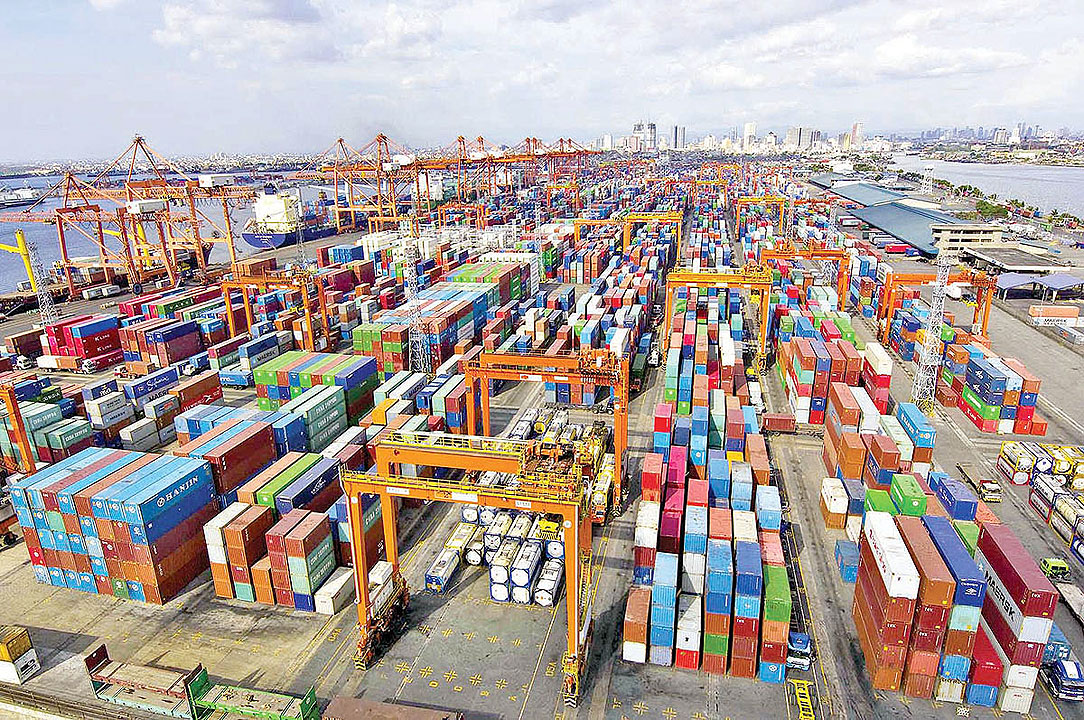
Container ship carrying container boxes import export dock with quay crane. Business commercial trade global cargo freight shipping logistic and transportation worldwide oversea concept. Generative AI
Economic Updates
Philippines Trade Update: Wider deficit on strong imports
DOWNLOAD
Frick collection with palm trees 
Economic Updates
Policy Rate Updates: Policy rate updates to reassure 
DOWNLOAD
View all Reports
Metrobank.com.ph How To Sign Up
Follow us on our platforms.

How may we help you?

TOP SEARCHES
  • Where to put my investments
  • Reports about the pandemic and economy
  • Metrobank
  • Webinars
  • Economy
TRENDING ARTICLES
  • Investing for Beginners: Following your PATH
  • On government debt thresholds: How much is too much?
  • Philippines Stock Market Outlook for 2022
  • Deficit spending remains unabated

Login

Access Exclusive Content
Login to Wealth Manager
Visit us at metrobank.com.ph How To Sign Up
Access Exclusive Content Login to Wealth Manager
Search
MODEL PORTFOLIO THE GIST
NEWS AND FEATURES
Global Philippines Fine Living
INSIGHTS
INVESTMENT STRATEGY
Economy Stocks Bonds Currencies
THE BASICS
Investment Tips Explainers Retirement
WEBINARS
2024 Mid-Year Economi Briefing, economic growth in the Philippines
2024 Mid-Year Economic Briefing: Navigating the Easing Cycle
June 21, 2024
Investing with Love
Investing with Love: A Mother’s Guide to Putting Money to Work
May 15, 2024
retirement-ss-3
Investor Series: An Introduction to Estate Planning
September 1, 2023
View All Webinars
DOWNLOADS
grocery-2-aa
Inflation Update: Target breached
April 7, 2026 DOWNLOAD
Container ship carrying container boxes import export dock with quay crane. Business commercial trade global cargo freight shipping logistic and transportation worldwide oversea concept. Generative AI
Economic Updates
Philippines Trade Update: Wider deficit on strong imports
March 27, 2026 DOWNLOAD
Frick collection with palm trees 
Economic Updates
Policy Rate Updates: Policy rate updates to reassure 
March 26, 2026 DOWNLOAD
View all Reports

Archives: Business World Article

Marcos appoints top banker to MB

Marcos appoints top banker to MB

President Ferdinand R. Marcos, Jr. has appointed banker Walter C. Wassmer to the Bangko Sentral ng Pilipinas’ (BSP) rate-setting body, according to a Palace statement.

Prior to his appointment, Mr. Wassmer was a consultant and non-executive director of Sy-led BDO Unibank, Inc., the country’s largest bank in terms of assets.

The announcement comes weeks after the resignation of two Monetary Board (MB) members who were embroiled in a scandal involving “ghost employees.”

A Bloomberg report earlier said Malacañang had accepted the resignation of MB members Anita Linda R. Aquino and V. Bruce J. Tolentino, effective June 30.

When asked whether Mr. Marcos has found a replacement for the remaining MB vacancy, Presidential Communications Office Secretary Cheloy Velicaria-Garafil said in a Viber message: “None for now.”

Mr. Wassmer and the other appointee will complete the unexpired terms of Ms. Aquino and Mr. Tolentino or until July 2026.

Mr. Wassmer is a seasoned banker, having held positions at BDO, Far East Bank and Trust Co. and Union Bank of the Philippines, Inc. (UnionBank).  He was also a senior board adviser at Lopez-led First Philippine Holdings Corp. from November 2022.

Mr. Wassmer was senior executive vice-president and head of institutional banking group at BDO from 1997 to 2022. He was chairman and officer-in-charge of BDO Elite Savings Bank, Inc.

He was also senior vice-president of the Far East Bank from 1986 to 1997; assistant vice-president of UnionBank from 1983 to 1986; and corporate account officer of the Bancom Finance Corp. from 1980 to 1982.

He has also held director positions in several companies, including BDO Finance Corp., MMPC Auto Financial Services Corp. and Mabuhay Vinyl Corp.

Mr. Wassmer holds a Bachelor of Science degree in Commerce from De La Salle University.

The Monetary Board exercises the powers and functions of the BSP including the conduct of monetary policy. It is composed of seven members including BSP Governor Eli M. Remolona, Jr.

The other MB members are Finance Secretary Ralph G. Recto, former BSP Governor and Finance Secretary Benjamin E. Diokno, former Finance Undersecretary Romeo L. Bernardo and former National Treasurer Rosalia V. de Leon.

The Monetary Board’s next meeting is scheduled for Aug. 15.

Mr. Remolona has said the BSP is still “on track towards reducing rates” despite risks to the inflation outlook. He earlier said that the central bank could cut rates by 25 basis points (bps) in the third quarter, and by another 25 bps in the fourth quarter. — Kyle Aristophere T. Atienza

PHL likely to be ‘big winner’ once India eases rice export restrictions

PHL likely to be ‘big winner’ once India eases rice export restrictions

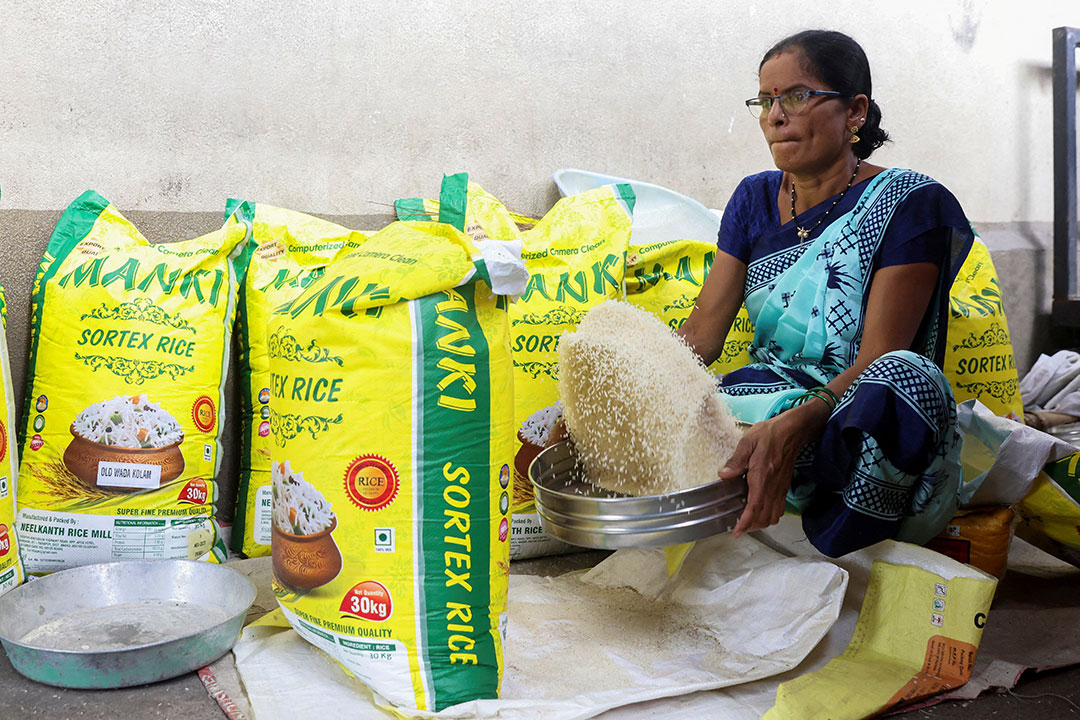
The Philippines is seen to benefit the most from an expected decline in global rice prices once India relaxes restrictions on rice exports, Nomura Global Markets Research said.

“We expect the Philippines to be the biggest winner in Asia, given the high share of rice in its consumer price index (CPI) basket, its dependence on rice imports, and recent rice import tariff reductions,” it said in a report.

“The Philippines will likely benefit most from falling international rice prices, via positive terms-of-trade effects and easing domestic food price inflation.”

Market participants are expecting India, the world’s largest exporter of white rice, to relax restrictions on rice exports soon. Last year, India suspended exports of non-basmati white rice amid concerns over domestic supply.

“Since India accounted for 35% of global rice exports in 2022, making it the top rice exporter in the world, its export restrictions pushed up global rice prices and hurt rice importing nations globally,” Nomura said.

“In our view, India is likely to gradually remove the restrictions on its rice exports in coming months,” it added.

Nomura said it sees “brighter” prospects for the Philippines, which is highly dependent on imported rice.

“Net rice imports accounted for 0.4% of its gross domestic product (GDP) in 2023, the highest in Asia. As such, lower global rice prices should have the most beneficial impact on the Philippines, followed by Indonesia,” it said.

The US Department of Agriculture (USDA) expects Philippine rice imports to hit 4.6 million metric tons (MMT) this year, higher than the Agriculture department’s 3.9 MMT projection.

As of June 27, the Philippines had imported 2.31 MMT of rice, latest data from the Bureau of Plant Industry showed.

“Without price controls or subsidies, the pass-through to domestic rice prices is also significant and swift, contributing to more downward pressures on headline inflation, which is already set to be impacted by the government’s announcement of a substantial rice import tariff reduction,” Nomura said.

President Ferdinand R. Marcos, Jr. last month signed Executive Order No. 62, which slashed tariffs on rice imports to 15% from 35%, until 2028.

The measure is expected to bring down retail rice prices by P6 to P7 per kilo, the Agriculture department said earlier.

Nomura noted the weight of rice in the Philippines’ CPI basket at 8.9%, which is “much higher” than its neighboring countries.

In June, rice inflation eased to 22.5% from 23% a month ago. This marked the third straight month of slower rice inflation.

Rice accounted for 45.2% of overall inflation, equivalent to 1.7 percentage points.

“Easing inflation would further support our view that BSP will start its easing cycle by October, although the risk of an earlier first rate cut (i.e., in August) is rising, given recent comments by Governor Remolona that BSP does not have to wait for the Fed,” Nomura added.

Roehlano M. Briones, a senior research fellow at the Philippine Institute for Development Studies, said rice prices could further decline if India eases its restrictions.

“The rice tariff cut is expected to reduce the price by about P7. (Prices can go) lower if India lifts restrictions,” he said in a Viber message.

The latest data from the Agriculture department showed that the average price of well-milled rice ranged from P48-55 per kilogram as of July 10, while regular milled rice was P45-52.

“There could be a further decline in import prices, but exporters to the Philippines could also adjust their prices upwards knowing that we have reduced our tariffs,” Raul Q. Montemayor, national manager of the Federation of Free Farmers, said in a Viber message.

“It remains to be seen whether rice retail prices will go down and benefit consumers,” he added.

Mr. Montemayor said that based on his computations, the margin between import and retail prices shrinks when import prices go up.

“Once import prices go down coupled with the lowered tariff rate, market intermediaries might just recoup the margins they lost and not pass on any benefit to consumers.” — Luisa Maria Jacinta C. Jocson

PHL banks’ total assets up 12.4% as of end-May

PHL banks’ total assets up 12.4% as of end-May

The Philippine banking industry’s total assets jumped by an annual 12.4% as of end-May, Bangko Sentral ng Pilipinas (BSP) data showed.

Banks’ combined assets increased to P25.62 trillion from P22.79 trillion a year ago, according to preliminary data.

Month on month, total assets inched up by 0.5% from P25.48 trillion as of end-April.

Banks’ assets are mainly supported by deposits, loans, and investments. These include cash and due from banks as well as interbank loans receivable (IBL) and reverse repurchase (RRP), net of allowances for credit losses.

The banking sector’s total loan portfolio inclusive of IBL and RRP climbed by 10.4% to P13.42 trillion as of end-May from P12.16 trillion in the previous year.

Net investments, or financial assets and equity investments in subsidiaries, increased by 11.3% to P7.47 trillion from P6.71 trillion a year ago.

Cash and due from banks stood at P2.69 trillion as of end-May, up by 2% from P2.64 trillion a year earlier.

Net real and other properties acquired increased by 7.2% to P108.19 billion from P100.93 billion a year ago.

Banks’ other assets surged by 63.4% to P1.93 trillion from P1.18 trillion a year earlier.

Meanwhile, the total liabilities of the banking system rose by 12.8% to P22.5 trillion from P19.95 trillion in the year-ago period.

Rizal Commercial Banking Corp. Chief Economist Michael L. Ricafort said the higher asset level as of end-May showed the banking sector’s strong growth.

“This is again more than twice faster than gross domestic product (GDP) growth, largely attributed to the sustained double-digit growth in the net income of banks, considered among the most profitable industries in the country,” he said in a Viber message.

Earlier data from the central bank showed that the banking industry’s net income had risen by 2.95% to P92.107 billion as of end-March.

This is also in line with faster loan growth in recent months, Mr. Ricafort said.

Bank lending grew by 9.6% to P11.91 trillion as of end-April, latest data from the BSP showed.

Mr. Ricafort also cited the continued recovery of the economy and business activities from the coronavirus disease 2019 (COVID-19) pandemic.

He said possible policy rate cuts would “further boost trading gains and other investment income of banks” in the coming months.

BSP Governor Eli M. Remolona, Jr. has said the central bank is on track to begin cutting rates by August, for a total of 50 basis points (bps) worth of cuts for 2024.

The Monetary Board is set to hold its next policy review on Aug. 15.

If the BSP begins policy easing in August, this would be the first rate cut in over three years or since the central bank last delivered a 25-bp cut in November 2020 amid the COVID-19 pandemic.

Market players are also anticipating the possibility of the US Federal Reserve cutting rates as early as the third quarter.

US Federal Reserve Chairman Jerome H. Powell told lawmakers that “more good data” would build the case for rate cuts. The odds of a rate cut in September are about 75% and will get the next cue from data later in the day that were expected to show easing US inflation, Reuters reported. – Luisa Maria Jacinta C. Jocson, Reporter

Peso extends rally before key US inflation report

Peso extends rally before key US inflation report

The peso continued to gain ground against the dollar on Thursday on expectations of slower US consumer inflation in June that would reinforce bets of a September rate cut by the US Federal Reserve.

The local unit closed at P58.305 per dollar on Thursday, strengthening by 1.5 centavos from its P58.32 finish on Wednesday, Bankers Association of the Philippines data showed.

This was a fresh one-month peak for the peso as this was its best finish since its P57.97-a-dollar close on May 28.

The peso opened Thursday’s session stronger at P58.24 per dollar, which was also its best showing intraday. Meanwhile, its lowest point for the session was at P58.34 against the greenback.

Dollars traded went down to $1.13 billion on Thursday from $1.16 billion on Wednesday.

The peso consolidated against the dollar before the release of the June US consumer price index (CPI) report overnight and on “strengthened bets of a Fed cut in September,” a trader said by phone.

“The peso improved for the seventh straight trading day ahead of the latest US CPI data that is expected to ease to 3.1% year-on-year in June 2024,” Rizal Commercial Banking Corp. Chief Economist Michael L. Ricafort said in a Viber message.

The local unit also rose after the recent signals from Fed Chair Jerome H. Powell supported recent market estimates of two rate cuts this year, he added.

The dollar dipped on Wednesday after Mr. Powell indicated that the US central bank is getting closer to cutting interest rates but wants to see further declines in inflation, Reuters reported.

The dollar index, which measures the US currency against six others including the euro and yen, was last down 0.07% at 105.05.

It comes before CPI data on Thursday is expected to show that headline prices eased on an annual basis in June. Economists polled by Reuters expected Thursday’s report to show that headline prices rose 0.1% on the month, while core prices gained 0.2%. That would put annual gains at 3.1% and 3.4%, respectively.

Mr. Powell said on Wednesday he was not ready to conclude that inflation is moving sustainably down to 2% though he has “some confidence of that.”

Traders now have around 73% odds for a rate cut by September, with a second cut also seen likely by December, according to the CME Group’s FedWatch Tool.

For Friday, the peso’s movement against the dollar will largely depend on the US CPI data, the trader said. The trader expects the peso to range from P58.20 and P58.50 versus the greenback on Friday, while Mr. Ricafort sees it moving from P58.20 to P58.40. — AMCS with Reuters

PHL posts USD 4.6-B trade deficit in May

PHL posts USD 4.6-B trade deficit in May

The Philippines’ trade gap widened slightly in May, as exports and imports contracted on an annual basis, the statistics agency said on Wednesday.

Preliminary data from the Philippine Statistics Authority (PSA) showed that the country’s trade-in-goods balance — the difference between exports and imports — stood at a USD 4.601-billion deficit in May, slightly wider than the USD 4.4-billion gap a year ago.

However, the May trade gap narrowed from the USD 4.73-billion deficit in April.

Philippine Merchandise Trade Performance (May 2024)

“The modest narrowing of the trade deficit was exactly in line with our expectations and was driven primarily by an unwinding of adverse export and import seasonal effects,” Pantheon Macroeconomics Chief Emerging Asia Economist Miguel Chanco said in an e-mailed note.

For the January-to-May period, the trade deficit shrank by 13.08% to $20.59 billion from the USD 23.69-billion gap a year ago.

The country’s balance of trade in goods has been in the red for 108 straight months (nine years) or since the USD 64.95-million surplus in May 2015.

PSA data showed the value of exports declined by 3.1% to USD 6.33 billion in May from USD 6.53 billion in the same month a year ago. Month on month, exports inched up by 0.6% from USD 6.29 billion in April.

Despite the drop, May saw the highest export value in seven months or since USD 6.52 billion in October 2023.

Year to date, exports grew by an annual 7.81% to USD 30.84 billion.

Rizal Commercial Banking Corp. Chief Economist Michael L. Ricafort said exports benefited from the weaker peso against the US dollar in May.

In mid-May, the peso sank to the P58-per-dollar level for the first time in 18 months or since November 2022. The peso closed at PHP 58.52 against the dollar as of end-May, depreciating by PHP 0.94 from its PHP 57.58 finish as of end-April.

Meanwhile, PSA data showed imports dipped by 0.03% to USD 10.929 billion in May from $10.93 billion a year ago, and by 0.8% from USD 11.02 billion in April.

For the first five months, imports fell by 1.66% to USD 51.43 billion.

“Imports were flat in year-on-year terms, and down only slightly in US dollars from April, resulting in a less favorable deficit than we had been hoping to see. However, the net result of no change in the deficit was in line with expectations and should have no substantial or lasting consequences for the Philippine peso,” Robert Carnell, regional head of research, Asia-Pacific at ING Economics, said in an e-mail.

The Development Budget Coordination Committee projects 5% and 2% growth in exports and imports, respectively, this year.

ELECTRONIC EXPORTS DECLINE
Manufactured products, which made up 80.3% of total exports, fell 3.5% to USD 5.08 billion in May from USD 5.27 billion last year, PSA said.

Exports of electronic goods, which accounted for more than half of manufactured products, declined by 5.1% to USD 3.56 billion in May from USD 3.75 billion a year ago. Semiconductor exports dropped by 13.3% to USD 2.75 billion in May.

“By major component, electronic exports, which make up the lion’s share of the Philippine export basket, were fractionally lower than the previous month, but nothing to be alarmed by. There were also some better figures for manufactured exports,” Mr. Carnell said.

Exports of mineral products, which accounted for 10% of total exports, declined by 8.4% to USD 633.63 million in May.

The United States was once again the top destination for Philippine-made goods, with exports valued at $1.08 billion or 17% of the total exports in May.

Hong Kong, which was the top exports destination in April, fell to second spot with exports valued at USD 904.79 million or 14.3% of the total in May. This was followed by Japan (USD 882.7 million or 13.9%) and China (USD 847.12 million or 13.4%).

“By country, exports to Mainland China remain weak, falling by 9.1% year on year, but imports to Hong Kong are holding up much better and these are probably destined for Mainland China too,” Mr. Carnell said.

Mr. Chanco noted that shipments to other markets were stable, if not up slightly month on month.

“Overall export momentum has ebbed in recent months, but the sturdy year-on-year performance of exports in Korea — a bigger player in semiconductors — suggests that Philippine export growth should bounce in the short run,” he said.

Philippine exports to South Korea stood at USD 265.23 million in May.

Meanwhile, PSA data showed imports of raw materials and intermediate goods, which accounted for 37% of the total imports, inched up by 0.6% to USD 4.09 billion in May.

Imports of capital goods, which had a share of 25.6%, fell by 11.5% to USD 2.8 billion, while imported consumer goods edged up by 0.4% to USD 2.14 billion.

In terms of import value, the top three commodity groups were electronic products (USD 2.15 billion); mineral fuels, lubricants and related materials (USD 1.85 billion); and transport equipment (USD 891.7 million).

In May, China was the main source of imported goods, which were valued at USD 2.73 billion or 25% of total imports.

This was followed by South Korea (USD 989.6 million or 9.1% of the total), Indonesia (USD 972.15 million or 8.9%), and the United States (USD 748.19 million or 6.8%). — Beatriz Marie D. Cruz

FDI net inflows fall to 10-month low in April

FDI net inflows fall to 10-month low in April

The Philippines’ foreign direct investment (FDI) net inflows slumped to a 10-month low in April, the Bangko Sentral ng Pilipinas (BSP) reported on Wednesday.

Preliminary data from the BSP showed that FDI net inflows fell by 36.9% to USD 556 million in April from $881 million in the same period a year ago.

This was the lowest level of monthly FDI inflows in 10 months or since USD 541 million in June 2023.

Net Foreign Direct Investment (April 2024)

Month on month, net inflows dropped by 19% from USD 686 million in March.

Data from the central bank showed that nonresidents’ net investments in debt instruments declined by 38.8% to USD 407 million in April from USD 665 million in the same month a year ago.

Net investments in debt instruments consist mainly of intercompany borrowing or lending between foreign direct investors and their subsidiaries or affiliates in the Philippines, according to the BSP.

Net investments in equity capital other than reinvestment of earnings plunged by 48.1% to USD 68 million in April from USD 132 million a year ago.

Broken down, equity capital placements slid by 47% to USD 84 million while withdrawals dropped by 41.7% to USD 16 million.

Reinvestment of earnings decreased by 4.2% to USD 81 million in April from USD 84 million a year ago.

Investments in equity and investment fund shares dropped by 30.9% to USD 149 million in April from USD 216 million in the same month in 2023.

By source, investments in equity capital placements were mainly from Japan (47%), followed by the United States (21%), Malaysia (11%) and Singapore (9%).

These were invested mostly in the manufacturing (36%), real estate (26%), wholesale and retail trade (13%) and financial and insurance (10%) sectors.

IMPROVED CONFIDENCE
In the January-April period, FDI net inflows jumped by 18.7% to USD 3.525 billion from USD 2.971 billion in the same period a year earlier.

“This improvement reflects investor confidence in the Philippine economy’s resilience amid global uncertainties,” the BSP said.

Central bank data showed foreign investments in debt instruments slipped by 1.4% to USD 2.237 billion in the four-month period from USD 2.268 billion a year ago.

Investments in equity and investment fund shares surged by 83.2% to USD 1.288 billion in the January-to-April period from USD 703 million last year.

Net foreign investments in equity capital more than doubled to USD 978 million in the four-month period, as placements surged by 126.8% to USD 1.213 billion while withdrawals went up by 65.2% to USD 235 million.

Reinvestment of earnings dipped by 0.1% to USD 310 million in the four-month period.

At end-April, the Netherlands accounted for the majority (63%) of overall net FDI inflows. This was followed by Japan (22%) and the United States (6%).

These were mostly invested in financial and insurance (67%), manufacturing (18%), and the real estate (7%) industries.

“Global economic uncertainty, characterized by inflation, mixed policy rate messaging, and geopolitical tensions, dampened investor confidence,” Security Bank Corp. Chief Economist Robert Dan J. Roces said in a Viber message.

Rizal Commercial Banking Corp. Chief Economist Michael L. Ricafort said that net FDI inflows dropped in April “at the height of risk aversion largely brought about by the geopolitical risks in view of the unprecedented direct attacks between Iran and Israel.”

Mr. Roces said that FDIs have slowed to below pre-pandemic levels due to rising prices and high interest rates.

The Monetary Board has kept policy rates at an over 17-year high of 6.5% since October 2023. Headline inflation quickened to 3.8% in April from 3.7% in March. The central bank expects inflation to average 3.3% this year.

“Sector-specific performance, likely influenced by a slowdown in manufacturing or services, could also have contributed to the decline,” Mr. Roces added.

For the coming months, Mr. Ricafort said that FDI inflows may improve as the BSP is widely expected to cut rates.

BSP Governor Eli M. Remolona, Jr. has said the central bank is on track to begin policy easing by August with a possible 25-basis-point (bp) cut. He earlier said the BSP can reduce rates by a total of 50 bps this year.

The central bank last cut policy rates in November 2020 when the benchmark rate was slashed by 25 bps to a record-low 2%. At that time, the economy was struggling with the coronavirus disease 2019 (COVID-19) pandemic and the aftermath of typhoons.

“Improving the business environment, promoting key sectors, and strengthening diplomatic relations will be crucial for attracting more FDI and stimulating economic growth, especially with better economic metrics emerging, and the BSP signaling an August rate cut,” Mr. Roces added.

The BSP expects to end the year with USD 9.5 billion in FDI net inflows.

In 2023, FDI net inflows fell by 6.6% to USD 8.9 billion from USD 9.5 billion in 2022. – Luisa Maria Jacinta C. Jocson, Reporter

Term deposit yields slip on BSP’s rate cut hints

Term deposit yields slip on BSP’s rate cut hints

Yields on the term deposits slipped on Wednesday as market players expect the Bangko Sentral ng Pilipinas (BSP) to begin its policy easing cycle as early as next month.

The central bank’s term deposit facility (TDF) attracted bids amounting to PHP 268.701 billion on Wednesday, above the PHP 250 billion on the auction block but lower than the PHP 321.657 billion seen a week ago for a PHP 230-billion offer.

Broken down, tenders for the seven-day papers reached PHP 134.407 billion, higher than the PHP 130 billion auctioned off by the central bank but lower than the PHP 159.459 billion in bids recorded the previous week.

Banks asked for yields ranging from 6.495% to 6.53%, marginally wider than the 6.495% to 6.525% band seen a week ago. This caused the average rate of the one-week deposits to inch down by 0.49 basis points (bp) to 6.5105% from 6.5154% the previous week.

Meanwhile, bids for the 14-day term deposits amounted to PHP 134.294 billion, lower than the PHP 120 billion on the auction block and the PHP 162.198 billion in tenders seen for the PHP 110-billion offer on July 3.

Accepted rates were from 6.535% to 6.569%, narrower than the 6.5245% to 6.575% margin recorded a week ago. With this, the average rate for the two-week deposits dropped by 1.35 bps to 6.5546% from 6.5681% logged in the prior auction.

The BSP has not auctioned off 28-day term deposits for more than three years to give way to its weekly offerings of securities with the same tenor.

The term deposits and the 28-day BSP bills are used by the central bank to mop up excess liquidity in the financial system and to better guide market rates.

TDF yields went down on Wednesday amid continued rate cut signals from the BSP, Rizal Commercial Banking Corp. Chief Economist Michael L. Ricafort said in a Viber message.

“The TDF auction yields were slightly lower week-on-week after local monetary officials recently reiterated a possible local policy rate cut as early as August 2024 and could even come ahead of a possible Fed rate cut,” Mr. Ricafort said in a Viber message.

BSP Governor Eli M. Remolona, Jr. last month said the Monetary Board may deliver its first rate cut in over three years at its Aug. 15 review — the only policy meeting scheduled in the third quarter — as they expect inflation to continue easing this semester.

The Monetary Board could reduce borrowing costs by 25 bps in the third quarter and by another 25 bps in the fourth quarter, he said.

Mr. Ricafort added that TDF yields were affected by “signals on additional National Government foreign bond sales… that could somewhat hedge and help reduce the need for more local borrowings.”

The government is looking to issue Japanese yen-denominated and US dollar-denominated bonds within the year, Finance Secretary Ralph G. Recto said on Monday. It plans to borrow USD 5 billion this year, of which USD 2 billion was raised from the issuance of global bonds last May. — Luisa Maria Jacinta C. Jocson

Peso may slide to PHP 59:USD 1 if BSP cuts early

Peso may slide to PHP 59:USD 1 if BSP cuts early

The peso may breach the PHP 59-per-dollar level if the Philippine central bank cuts rates as early as August, Fitch Solutions’ unit BMI said.

“In our view, we think that such an early cut remains out of the question, even if price pressures ease,” Shi Cheng Low, BMI Asia country risk analyst, said in a webinar on Tuesday.

If the Bangko Sentral ng Pilipinas (BSP) cuts in August, Mr. Low said this would mean that the central bank is “practically signaling that they are giving up currency stability in exchange for economic growth.”

An August rate cut could also lead to the peso breaching the PHP 59-per-dollar level and possibly even hitting the P60 mark, he added.

The peso had reached a record low of PHP 59 against the dollar in October 2022, prompting BSP intervention in the foreign exchange markets and a rate hike.

BMI said the biggest barrier to the BSP’s monetary easing is currency stability.

“The Philippine peso has emerged as one of the poorest performing currencies in the region. As such, the BSP will be extremely mindful of a preemptive return to policy easing for fear of exacerbating weakness in the already weak peso,” Mr. Low said.

The peso has been trading in the PHP 58-per-dollar range since May. The central bank has attributed the peso’s weakness to safe-haven demand for the dollar amid geopolitical tensions as well as hawkish signals by the US Federal Reserve.

“I think that currency stability will be the biggest constraint going forward and that will depend if the BSP is willing to give up on that to support the economy at least this year,” Mr. Low said.

BMI expects the BSP to only begin cutting rates in October this year for a total of 50 basis points (bps) for 2024 and 150 bps in 2025.

BSP Governor Eli M. Remolona, Jr. has said that the central bank can begin its easing cycle by August. While the BSP monitors the movements of the Fed, he has insisted its moves are independent of the US central bank.

“With the governor keeping the door open for monetary loosening in August, policy makers are holding a different view from us. They are signaling the peso weakness would not be the deciding factor to policy easing,” Mr. Low said.

“As such, the BSP could very well surprise us with a cut next month if inflationary pressures recede faster than we currently expect,” he added.

Mr. Low cited recent measures that would help further tame inflation, such as the recent executive order that slashes tariffs on rice imports.

“Our estimates show that the tariff cut can lower headline inflation by up to 1.3 percentage points over the coming months. This will, however, take some time before its full impact feeds through to rice prices,” he said.

President Ferdinand R. Marcos, Jr. last month issued an order slashing rice import tariffs to 15% from 35% until 2028 in a bid to bring down prices of the staple grain.

Meanwhile, Mr. Low also noted the impact of an August rate cut on the economy would be seen in the fourth quarter.

“If there’s a rate cut in August, then monetary transmission will go through and we’ll see some form of it or some impact of it materializing down maybe in the fourth quarter and we’ll see investment pick up once again, which obviously supports the Philippine economy.”

“But let’s just say if they cut in October, then it might be slightly too late for its impact to materialize this year at the very least,” he added.

The economy grew by 5.7% in the first quarter. The government is targeting 6-7% growth this year.

Second-quarter gross domestic product data will be released on Aug. 8. – Luisa Maria Jacinta C. Jocson, Reporter

PHL jobless rate hits 4-month high

PHL jobless rate hits 4-month high

The Philippine jobless rate climbed to a four-month high in May while the quality of jobs improved to its best level since 2005, the Philippine Statistics Authority (PSA) reported on Monday.

Preliminary data from the PSA’s Labor Force Survey (LFS) showed the unemployment rate inched up to 4.1% from 4% in April, as the labor force expanded. However, it was lower than the 4.3% recorded in May last year.

May saw the highest unemployment rate in four months or since the 4.5% print in January.

Philippine Labor Force Situation

This translated to 2.11 million unemployed Filipinos in May, up by 65,000 from 2.04 million in April.

Year on year, the number of jobless Filipinos went down by 61,000 from 2.17 million in May 2023.

In the first five months of the year, the unemployment rate averaged 4%, lower than the 4.6% average a year ago.

PSA Undersecretary and National Statistician Claire Dennis S. Mapa said the bigger labor force size was the main contributor to the rise in unemployment.

“One of the reasons why unemployment went up is the increase in participants in the labor market. Over half a million people joined the labor force but not all of them found employment,” he said in mixed English and Filipino during the press briefing on Monday.

PSA data showed that 50.97 million people became part of the labor force in May, growing by 575,000 from 50.4 million in April.

On an annual basis, the labor force increased by 544,000 from 50.43 million in May 2023.

This translated to a labor force participation rate (LFPR) of 64.8%, higher than 64.1% in the previous month, but lower than 65.3% a year ago. Year to date, the LFPR averaged 64%.

JOB QUALITY IMPROVES
Meanwhile, job quality in May improved as underemployment dropped to 9.9%, lower than 14.6% in April and the 11.7% reading in May last year.

May marked the lowest underemployment recorded since the start of the revised series almost two decades ago.

The number of underemployed Filipinos — those who want longer work hours or an additional job — stood at 4.82 million in May, falling by 2.22 million month on month and by 846,000 year on year.

As of end-May, the average underemployment rate was 12.3%.

“A substantial amount contributing to the decrease in underemployment came from those categorized visibly underemployed or those who work less than 40 hours per week. There were those among them that said they were working second jobs, so they were satisfied with working less than 40 hours at their primary jobs as a result,” Mr. Mapa said.

He also said that the decline in underemployment may be seen in certain subsectors such as wholesale and retail trade, agriculture and forestry, construction, manufacturing, other service activities, transportation and storage, and accommodation and food service activities.

“Notably, underemployment decreased dramatically in May, suggesting improved job quality and better skills matching despite the slight unemployment increase,” Robert Dan J. Roces, chief economist at Security Bank Corp., said in an e-mail.

The employment rate, on the other hand, inched down to 95.9% from 96% in April, but still higher than 95.7% in May 2023.

This was equivalent to 48.87 million employed Filipinos, up by 510,000 from 48.36 million in April, and 605,000 from 48.26 million in May last year.

The employment rate averaged 96% in the January-May period, up from 95.4% a year ago.

In May, the biggest monthly job loss was seen in accommodation and food service activities, which cut 322,000 jobs to bring the total to 2.43 million. Job losses were also seen in fishing and aquaculture (down 241,000 to 1.2 million) and administrative and support service activities (down 135,000 to 2.42 million).

Meanwhile, month-on-month job gains were recorded in agriculture and forestry (up 610,000 to 8.96 million), construction (up 391,000 to 5.09 million), and public administration and defense (up 309,000 to 3.13 million).

Year on year, agriculture and forestry shed 1.02 million jobs to bring the total to 10.17 million. Annual job losses were also seen in fishing and aquaculture (down 543,000 to 1.2 million) and arts, entertainment, and recreation (down 178,000 to 475,000).

On the other hand, construction posted the largest annual job gains, adding 745,000 jobs to 5.09 million. Significant job gains were also seen in administrative and support service activities (up 371,000 to 2.42 million) and manufacturing (up 347,000 to 3.85 million).

“The construction, administrative services, and manufacturing sectors showed strong growth, offsetting losses in other areas. Given these mixed signals, future unemployment trends are uncertain but may stabilize or decrease if positive sector growth continues,” Mr. Roces said.

He expects underemployment to continue to fluctuate, though “not as extremely” as the April-to-May shift.

“For the coming months, La Niña could cause business disruptions that could be a drag on employment data,” Michael L. Ricafort, chief economist at Rizal Commercial Banking Corp., said in an e-mail

Sentro ng mga Nagkakaisa at Progresibong Manggagawa Secretary-General Josua T. Mata said that the government’s job generation program is lacking.

“The government clings to an outdated belief that its role is merely to enable the private sector, resisting the idea of a robust public employment program that guarantees jobs for those who want to work,” he said in a Viber message. – Karis Kasarinlan Paolo D. Mendoza


Delayed easing to dampen growth — BSP chief

Delayed easing to dampen growth — BSP chief

The Bangko Sentral ng Pilipinas (BSP) said that it should not “wait too long” to begin policy easing as this would dampen economic growth, its top official said.

BSP Governor Eli M. Remolona, Jr. said on Monday that the central bank is trying to “strike a balance” between supply and demand to ensure stable prices.

“At this point, in the last mile, we’re almost there, but we have to be more careful than before. Because there’s a risk we might overdo it. There’s a risk we might cause unnecessary loss of output, and we want to minimize that risk,” he said at the Economic Journalists Association of the Philippines-San Miguel Corp. economic forum.

The BSP has kept policy rates at a 17-year high of 6.5% since October last year. It has raised rates by a cumulative 450 basis points (bps) from May 2022 to October 2023 in order to tame inflation.

The last time the BSP cut rates was in November 2020, when it delivered a 25-bp cut, bringing the key rate to 2% to support economic recovery amid the COVID-19 pandemic.

“When I said that we have to be cautious or we have to be careful, that basically means we have to not wait too long for easing because the longer we wait for easing, the more likely it is that we will cause a loss of output, which we don’t want,”  Mr. Remolona said.

“That’s basically where we stand. We’re not going to raise (rates).”

Gross domestic product (GDP) grew by a weaker-than-expected 5.7% in the first quarter, slower than 6.4% a year ago.

To meet the government’s 6-8% growth target, the GDP expansion should average 6.1% in the next three quarters.

Preliminary second-quarter GDP data will be released on Aug. 8, ahead of the Monetary Board’s next policy review on Aug. 15.

The BSP chief said they are still “on track towards reducing rates” despite risks to the inflation outlook. He earlier said that the central bank can cut by 25 bps in the third quarter, and by another 25 bps in the fourth quarter.

“The 3.7% (inflation) is better than expected, so there’s a bit more scope for easing, possibly in August,” he said.

Headline inflation eased to 3.7% in June from 3.9% in May. This also marked the seventh straight month that inflation settled within the BSP’s 2-4% target range.

Mr. Remolona said recent measures such as Executive Order (EO) No. 62 would help tame prices.

“The nonmonetary measures that the government has put in place, especially EO No. 62, are so helpful, because that will help us get to where we want to go, which is stable prices.”

The executive order, signed by President Ferdinand R. Marcos, Jr. last month, slashed tariffs on rice imports to 15% from 35% previously, until 2028. It is largely expected to bring down retail rice prices and overall inflation.

Mr. Remolona also reiterated that the BSP does not need to wait for the Fed before it begins cutting rates.

“I think the Fed is not the most important data among the numbers that we look at. It affects our exchange rate, as you saw, the exchange rate affects inflation, so that’s factored in, but it’s not a decisive factor,” he said.

PESO WEAKNESS
Meanwhile, Mr. Remolona said that the BSP monitors the peso to ensure it does not “depreciate too sharply,” citing its impact on trade.

“We don’t want too much volatility in the peso. We want the peso to move based on fundamentals. When there’s too much volatility, it’s bad for trade. It’s bad for both imports and exports. So, we want to make the movement of the peso smoother,” he said.

The peso has been trading at the P58-per-dollar range since it first sank to that level in May.

Mr. Remolona again said that the peso’s performance is a case of a “strong dollar” due to safe-haven demand.

“The dollar has become the single most important safe-haven currency. Whenever you have tensions around the world, the dollar is stronger. In fact, even if the uncertainty is in the US, it makes the dollar stronger,” he said, adding that other currencies have also depreciated against the US dollar.

He said that the US Federal Reserve’s latest signals have also impacted recent currency movements.

“The Fed has been saying it’s going to be higher for longer and that has weakened all the other currencies against the US dollar,” he said.

The Fed at its most recent policy meeting in June left interest rates unchanged at 5.25%-to-5.5%, and fresh projections from policy makers showed them dialing back expectations for rate cuts this year from three to just one, Reuters reported.

Financial markets and some policy makers, however, still expect the Fed to deliver two cuts of a quarter-point each by yearend.

RRR CUT
Meanwhile, the BSP governor also reiterated that they plan to lower the reserve requirement ratio (RRR), although the timing has yet to be decided.

“We have one of the highest reserve requirements in the region. It doesn’t make sense to me that we should be more strict. In fact, the ideal number is zero. It’s a matter of timing,” he said.

The BSP has already brought down the RRR for big banks to a single-digit level last year from a high of 20% in 2018.

In June 2023, the BSP slashed the ratio for big banks and nonbank financial institutions with quasi-banking functions by 250 bps to 9.5%.

“We don’t want to bring it down while we’re still at kind of a somewhat tight monetary policy,” he added.

Mr. Remolona earlier said he is seeking to bring down the RRR to as low as 5%. – Luisa Maria Jacinta C. Jocson, Reporter

Posts navigation

Older posts
Newer posts

Recent Posts

  • Peso GS Weekly: Geopolitics drive a volatile curve
  • Ask Your Advisor: Can my portfolio survive a market crash?
  • Stock Market Weekly: Middle East stalemate weighs on market 
  • Investment Ideas: April 13, 2026 
  • Metrobank US-Iran Risk Index: Fragile ceasefire 

Recent Comments

No comments to show.

Archives

  • April 2026
  • March 2026
  • February 2026
  • January 2026
  • December 2025
  • November 2025
  • October 2025
  • September 2025
  • August 2025
  • July 2025
  • June 2025
  • May 2025
  • April 2025
  • March 2025
  • February 2025
  • January 2025
  • December 2024
  • November 2024
  • October 2024
  • September 2024
  • August 2024
  • July 2024
  • June 2024
  • May 2024
  • April 2024
  • March 2024
  • February 2024
  • January 2024
  • December 2023
  • November 2023
  • October 2023
  • September 2023
  • August 2023
  • July 2023
  • June 2023
  • May 2023
  • April 2023
  • March 2023
  • February 2023
  • January 2023
  • December 2022
  • November 2022
  • October 2022
  • September 2022
  • August 2022
  • July 2022
  • June 2022
  • May 2022
  • March 2022
  • December 2021
  • October 2021

Categories

  • Bonds
  • BusinessWorld
  • Currencies
  • Economy
  • Equities
  • Estate Planning
  • Explainer
  • Featured Insight
  • Fine Living
  • How To
  • Investment Tips
  • Markets
  • Portfolio Picks
  • Rates & Bonds
  • Retirement
  • Reuters
  • Spotlight
  • Stocks
  • Uncategorized

You are leaving Metrobank Wealth Insights

Please be aware that the external site policies may differ from our website Terms And Conditions and Privacy Policy. The next site will be opened in a new browser window or tab.

Cancel Proceed
Get in Touch

For inquiries, please call our Metrobank Contact Center at (02) 88-700-700 (domestic toll-free 1-800-1888-5775) or send an e-mail to customercare@metrobank.com.ph

Metrobank is regulated by the Bangko Sentral ng Pilipinas
Website: https://www.bsp.gov.ph

Quick Links
The Gist Webinars Wealth Manager Explainers
Markets
Currencies Rates & Bonds Equities Economy
Wealth
Investment Tips Fine Living Retirement
Portfolio Picks
Bonds Stocks
Others
Contact Us Privacy Notice Terms of Use
© 2026 Metrobank. All rights reserved.

Access this content:

If you are an existing investor, log in first to your Metrobank Wealth Manager account. ​

If you wish to start your wealth journey with us, click the “How To Sign Up” button. ​

Login HOW TO SIGN UP