


MODEL PORTFOLIO
THE GIST
NEWS AND FEATURES
Global Philippines Fine Living
INSIGHTS
INVESTMENT STRATEGY
Economy Stocks Bonds Currencies
THE BASICS
Investment Tips Explainers Retirement
WEBINARS
2024 Mid-Year Economi Briefing, economic growth in the Philippines
2024 Mid-Year Economic Briefing: Navigating the Easing Cycle
June 21, 2024
Investing with Love
Investing with Love: A Mother’s Guide to Putting Money to Work
May 15, 2024
retirement-ss-3
Investor Series: An Introduction to Estate Planning
September 1, 2023
View All Webinars
DOWNLOADS
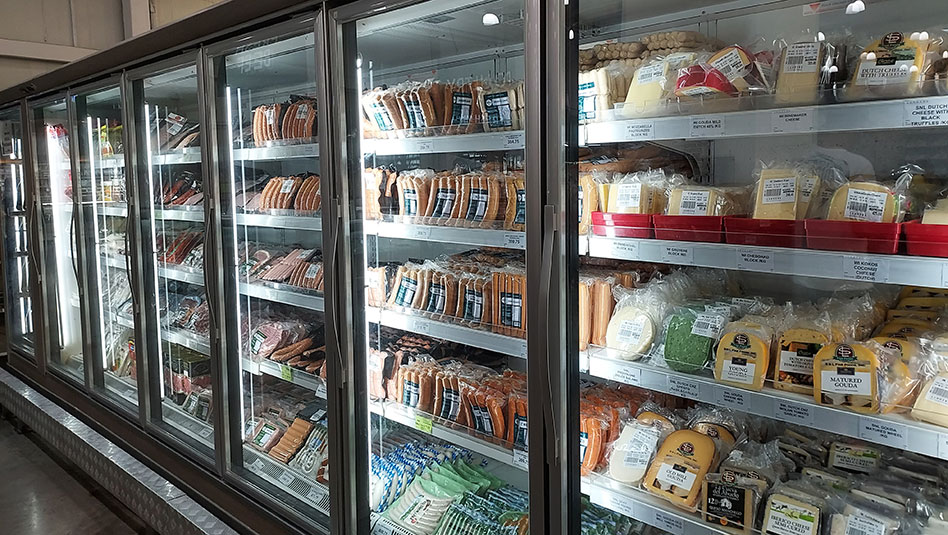
grocery-2-aa
Inflation Update: Target breached
DOWNLOAD
Container ship carrying container boxes import export dock with quay crane. Business commercial trade global cargo freight shipping logistic and transportation worldwide oversea concept. Generative AI
Economic Updates
Philippines Trade Update: Wider deficit on strong imports
DOWNLOAD
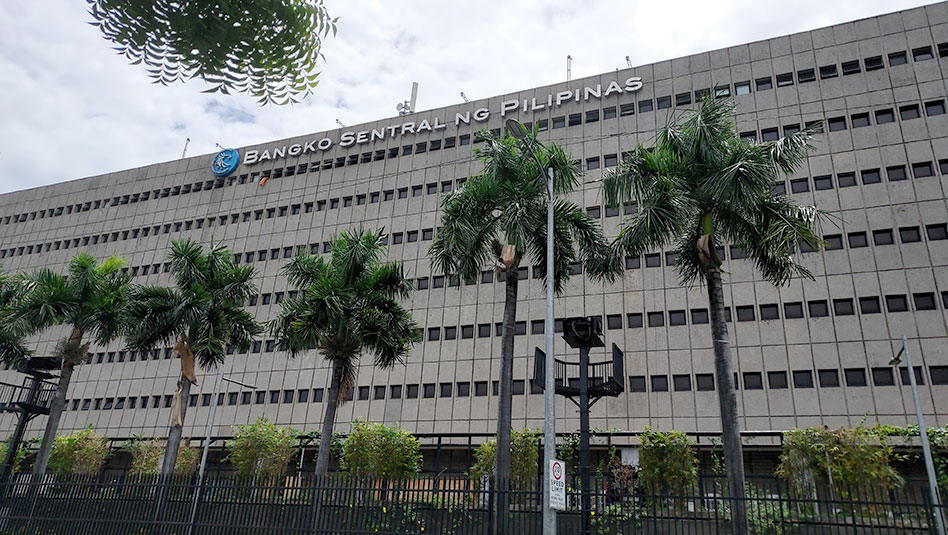
Frick collection with palm trees 
Economic Updates
Policy Rate Updates: Policy rate updates to reassure 
DOWNLOAD
View all Reports
Metrobank.com.ph How To Sign Up
Follow us on our platforms.

How may we help you?

TOP SEARCHES
  • Where to put my investments
  • Reports about the pandemic and economy
  • Metrobank
  • Webinars
  • Economy
TRENDING ARTICLES
  • Investing for Beginners: Following your PATH
  • On government debt thresholds: How much is too much?
  • Philippines Stock Market Outlook for 2022
  • Deficit spending remains unabated

Login

Access Exclusive Content
Login to Wealth Manager
Visit us at metrobank.com.ph How To Sign Up
Access Exclusive Content Login to Wealth Manager
Search
MODEL PORTFOLIO THE GIST
NEWS AND FEATURES
Global Philippines Fine Living
INSIGHTS
INVESTMENT STRATEGY
Economy Stocks Bonds Currencies
THE BASICS
Investment Tips Explainers Retirement
WEBINARS
2024 Mid-Year Economi Briefing, economic growth in the Philippines
2024 Mid-Year Economic Briefing: Navigating the Easing Cycle
June 21, 2024
Investing with Love
Investing with Love: A Mother’s Guide to Putting Money to Work
May 15, 2024
retirement-ss-3
Investor Series: An Introduction to Estate Planning
September 1, 2023
View All Webinars
DOWNLOADS
grocery-2-aa
Inflation Update: Target breached
April 7, 2026 DOWNLOAD
Container ship carrying container boxes import export dock with quay crane. Business commercial trade global cargo freight shipping logistic and transportation worldwide oversea concept. Generative AI
Economic Updates
Philippines Trade Update: Wider deficit on strong imports
March 27, 2026 DOWNLOAD
Frick collection with palm trees 
Economic Updates
Policy Rate Updates: Policy rate updates to reassure 
March 26, 2026 DOWNLOAD
View all Reports

Archives: Business World Article

PSEi hits over two-month high on rate cut view

PSEi hits over two-month high on rate cut view

Philippine shares ended higher on Monday, inching closer to the 6,700 mark, as positive sentiment overseas spilled over to the local market and amid growing monetary easing expectations here and abroad.

The Philippine Stock Exchange index (PSEi) rose by 0.61% or 41.14 points to close at 6,689.37 on Monday, while the broader all shares index gained by 0.5% or 18 points to finish at 3,594.22.

This was the PSEi’s best close in over two months or since it finished at 6,700.49 on April 30.

“The local bourse gained… due to the positive spillover from the US markets’ performance last Friday,” Philstocks Financial, Inc. Research Analyst Claire T. Alviar said in a Viber message.

Wall Street closed higher on Friday, with the S&P 500 and the Dow Jones Industrial Average hitting intraday record highs, on bets that the US Federal Reserve will cut interest rates in September, Reuters reported.

The S&P 500 climbed 0.55% to end the session at 5,615.35 points. The Nasdaq gained 0.63% at 18,398.45 points, while Dow Jones Industrial Average rose 0.62% to 40,000.90 points.

Data showed producer prices were slightly hotter-than-expected in June but that did little to change bets on the first rate cut in September. The report follows data showing a surprise fall in US consumer prices on Thursday.

Traders are betting on a 94% chance of a rate cut by September, up from 78% a week prior, according to CME Group’s FedWatch.

Ms. Alviar added that expectations of bets on the Bangko Sentral ng Pilipinas (BSP) monetary easing path also boosted Philippine stocks.

“Philippine shares made a challenge towards the 6,700 level, settling just a few points off, as investors await more data that will fuel expectations of rate cuts for both the BSP and Fed,” Regina Capital Development Corp. Head of Sales Luis A. Limlingan said in a Viber message.

BSP Governor Eli M. Remolona, Jr. last month said the Monetary Board may deliver its first rate cut in over three years at its Aug. 15 review as they expect inflation to continue easing this semester.

The BSP last month kept its policy rate at a 17-year high of 6.5% for a sixth straight meeting.

Majority of sectoral indices closed higher on Monday. Property surged by 1.9% or 49.58 points to 2,651.18; holding firms climbed by 1.73% or 98.89 points to 5,785.36; mining and oil rose by 1.07% or 91.75 points to 8,646.25; and industrials went up by 0.27% or 25.27 points to 9,156.50.

Meanwhile, services fell by 1.07% or 22.15 points to 2,046.62, and financials inched down by 0.08% or 1.65 points to 2,027.42.

Value turnover rose to PHP 5.22 billion on Monday with 460.5 million issues changing hands from the PHP 4.38 billion with 319.13 million shares traded on Friday.

Advancers overwhelmed decliners, 117 against 59, while 52 names closed unchanged.

Net foreign selling stood at PHP 46.18 million on Monday versus the PHP 257.15 million in net buying posted on Friday. — R.M.D. Ochave with Reuters

PEZA investments plunge in June

PEZA investments plunge in June

The Philippine Economic Zone Authority (PEZA) approved PHP 8.65 billion worth of projects in June, 73.4% lower than a year ago.

In a statement over the weekend, the investment promotion agency said the PEZA Board approved 25 new and expansion projects at its June 28 meeting, up from 22 projects a year ago.

These projects are expected to contribute USD 416 million in export value and 5,881 direct jobs.

However, the amount of PEZA-approved investments in June was 73.4% lower than the PHP 32.56 billion worth of investments approved in the same month last year.

Of the 25 projects, 22 are from locator companies and three are from economic zone (ecozone) developers, PEZA said.

“These locator companies comprise 11 export manufacturing projects, followed by six projects in information technology and business process management (IT-BPM), three in domestic markets, one in facilities development, and one in logistics services,” it added.

Calabarzon was still the top investment destination in June, accounting for 15 projects. The other investment destinations were the National Capital Region, Region III (Central Luzon), Region V (Bicol Region), Region VII (Central Visayas), and Region XII (Soccsksargen).

LOWER INVESTMENTS
For the first half, PEZA said it approved PHP 45.48 billion worth of investments, plunging by 43.6% from the PHP 80.59 billion worth of investments approved in the same period last year.

The PEZA approved 120 projects which are expected to create over 25,000 jobs and generate $1.61 billion in export value.

“The new projects approved recorded an 18% increase from 102 to 120, with projected direct employment reaching a remarkable 64% uptick from 15,424 to 25,259 this year,” PEZA said.

PEZA Director-General Tereso O. Panga said that the approval of the 120 projects signals confidence in the country’s business environment and economic potential.

“Creating more jobs for Filipinos signifies the agency’s proactive efforts in positioning the Philippines as a premier investment destination in Asia,” he said.

During the six-month period, PEZA said it approved five big-ticket projects worth PHP 31.36 billion.

In June, it approved two projects worth PHP 6.15 billion. A Malaysian company will set up a manufacturing and assembly facility for hair stylers, while a Japanese company will manufacture biomass fuel products, oxygen reducers, and activated charcoal made from coconut shells in General Santos City.

From January to June, the top investment sources were the Cayman Islands (PHP 8.86 billion), Japan (PHP 8.02 billion), Malaysia (PHP 4.53 billion), Hong Kong (PHP 1.62 billion), and Singapore (PHP 1.27 billion).

The electronic manufacturing services sector attracted the most investments, accounting for PHP 19.77 billion. This was followed by the ecozone development (PHP 16.21 billion), IT-BPM industry (PHP 2.89 billion), and automotive (PHP 1.04 billion).

“Eastern European countries are also quite interested in the Philippines, with visits from Ukrainian, Polish, and Russian delegations conducting inquiries and site visits preparatory to investing in the country,” PEZA said.

PEZA is hoping to approve between PHP 200 billion and PHP 250 billion worth of investments this year. If realized, this will be at least a 15% growth from the PHP 175.71 billion worth of investments approved in 2023. — Justine Irish D. Tabile

Debt service bill jumps in May

Debt service bill jumps in May

The National Government’s (NG) debt service bill jumped year on year in May due to a surge in interest payments, the Bureau of the Treasury (BTr) said.

Data from the Treasury bureau showed that debt payments rose by 40.64% to PHP 68.98 billion in May from PHP 49.05 billion in the same month a year ago.

Month on month, debt payments dropped by 57.34% from PHP 161.7 billion in April.

The debt service refers to payments made by the government on its domestic and foreign debt.

The bulk (88.57%) of May’s debt service bill went to interest payments.

Interest payments went up by 47.78% to PHP 61.1 billion in May from PHP 41.34 billion in the same month a year ago.

Interest paid on domestic debt increased by 56% to PHP 46.07 billion from PHP 29.53 billion a year ago.

Meanwhile, interest payments to foreign creditors grew by 27.18% to PHP 15.03 billion in May from PHP 11.82 billion a year ago.

On the other hand, principal payments inched up by 2.34% to PHP 7.88 billion from PHP 7.7 billion last year.

Month on month, amortization plunged by 92% from PHP 94.2 billion in April.

Broken down, amortization on domestic debt in May dropped by 96.8% to PHP 85 million from PHP 2.66 billion a year ago.

Principal payments on external debt increased by 54.51% to PHP 7.8 billion in May from PHP 5.05 billion last year.

FIVE MONTHS
In the first five months of the year, the NG’s debt service bill increased by 48% to PHP 1.22 trillion from P819.53 billion in the year-ago period.

Amortization payments climbed by 51.73% to PHP 895.13 billion in the first five months from PHP 589.95 billion a year ago.

Principal payments on domestic debt reached PHP 754.86 billion, while those on external debt amounted to PHP 140.27 billion.

Meanwhile, interest payments in the January-to-May period jumped by 40.08% to PHP 321.59 billion from PHP 229.57 billion a year prior.

Broken down, interest paid on domestic debt stood at PHP 231.38 billion, while interest payments for external debt reached PHP 90.21 billion.

Rizal Commercial Banking Corp. Chief Economist Michael L. Ricafort said the higher debt payments in May could be due to the elevated interest rates and weaker peso.

“The higher debt servicing bill of the NG could be attributed to higher interest rates that increased borrowing costs/financing costs,” he said via Facebook Messenger.

Mr. Ricafort said the weaker peso exchange rate increased the peso equivalent of external debt and debt servicing.

The peso closed at PHP 58.52 against the dollar as of end-May, depreciating by PHP 0.94 from its PHP 57.58 finish as of end-April.

The Bangko Sentral ng Pilipinas has kept the key policy rate at an over 17-year high of 6.5% since October 2023.

The higher debt payments could also reflect the wider budget deficit, Mr. Ricafort said.

The NG’s budget deficit in May widened 43.1% to PHP 174.9 billion amid strong spending over revenues, BTr said. In the first five months of the year, the budget gap ballooned by 24.06% to PHP 404.8 billion from PHP 326.3 billion a year ago.

“There could also be some payment of some multilateral foreign debts, as well as some maturity of some local government securities/debts,” Mr. Ricafort said.

As of end-May, the NG’s debt hit a record high PHP 15.35 trillion, with PHP 10.44 trillion coming from domestic sources and PHP 4.9 trillion from foreign sources. — Beatriz Marie D. Cruz

‘Larger-than-expected’ rate cuts likely — Nomura

‘Larger-than-expected’ rate cuts likely — Nomura

The Bangko Sentral ng Pilipinas (BPS) may deliver “larger-than-expected” rate cuts, with the possibility of up to 250 basis points (bps) worth of reductions until 2025, Nomura Global Markets Research said.

“Compared to our baseline, risks are skewed towards more easing in the Philippines and Thailand, less easing in India,” it said in a report.

In June, the Monetary Board kept its benchmark rate unchanged for a sixth straight meeting at 6.5%, the highest in over 17 years.

Nomura’s baseline forecast for the Philippines’ policy rate is at 5% at end-2025. However, its Modified Taylor Rule (MTR) estimates see the key rate slashed to as low as 4%.

According to the report, the MTR estimates to “quantify where Asian policy rates ‘should be.’”

Nomura’s baseline projection also anticipates the BSP to deliver a rate cut in October. It projects a total of 150 bps of cuts by the second quarter of 2025.

“However, the MTR suggests this would leave policy rates in restrictive territory, given an imminent fall in inflation to below the midpoint of the 2-4% target range, partly aided by lower rice prices.”

“The MTR suggests policy easing should begin in Q3 2024, with 250 bps of cumulative cuts to a terminal rate of 4% by Q2 2025,” it added.

BSP Governor Eli M. Remolona, Jr. has said that the central bank is on track to begin policy easing by August.

He said that the BSP could cut rates by up to 50 bps this year, with a 25-bp cut each in the third and fourth quarters.

The Monetary Board has raised rates by a cumulative 450 basis points (bps) from May 2022 to October 2023.

Nomura also noted the improved expectations of the US Federal Reserve cutting rates this year.

“The global backdrop has also become more conducive, with US core (consumer price index) inflation softening in June and setting the stage for the Fed to cut policy rates twice this year, in September and December, consistent with our US economics team’s baseline views,” it said.

US consumer prices fell for the first time in four years in June amid cheaper gasoline and moderating rents, firmly putting disinflation back on track and putting the Federal Reserve another step closer to cutting interest rates in September, Reuters reported.

Financial markets saw a roughly 85% chance of a rate cut at the Fed’s September meeting, compared with about a 70% chance seen before the report. Two rate cuts are anticipated this year.

Mr. Remolona earlier said that the BSP does not need to wait for the Fed before it begins cutting rates.

He said that while the BSP monitors the Fed’s moves, it is not a “decisive factor” in its own monetary decisions.

The Monetary Board’s (MB) next policy review is on Aug. 15. This is MB’s only meeting scheduled in the third quarter. It is also set to meet on Oct. 17 and Dec. 19, its last two meetings for the year. — Luisa Maria Jacinta C. Jocson

143 PPP projects in the pipeline — NEDA

143 PPP projects in the pipeline — NEDA

The government has 143 public-private partnership (PPP) projects valued at PHP 3.095 trillion in the pipeline as of July, with new projects centered on health and waste management, the National Economic and Development Authority (NEDA) said.

“The number of pipeline projects has grown over these past few months. As of early July, we have 205 PPP projects, including those in local government units, under implementation and 143 projects in the pipeline,” NEDA Secretary Arsenio M. Balisacan was quoted as saying in a statement.

Nine PPP projects amounting to P65 billion were added to the pipeline as of July.

“We are also encouraged to note that more and more social infrastructure projects in health, water and sanitation, as well as solid waste management, are in the pipeline,” Mr. Balisacan added.

The National Government leans on support from the private sector in shouldering its budgetary and infrastructure project implementation shortfalls. It has passed several policies over the past months that seek to create an enabling environment for infrastructure development.

Republic Act No. 11966 or the PPP Code, which took effect in December last year, sought to increase private sector participation in financing, operating, and maintaining infrastructure projects.

Under the Marcos administration’s “Build Better More” program, the government has 185 infrastructure flagship projects (IFP) valued at PHP 9.54 trillion in the pipeline.

Mr. Balisacan also said that 63 IFPs, including the Pasig-Marikina River channel improvement project, Central Luzon Link Expressway, and the Panguil Bay Bridge project, are currently underway.

The NEDA chief said 31 more IFPs have been approved for implementation, six are awaiting government approval, and 82 are in the preparation stage.

The government’s move to allow full foreign ownership in renewable energy projects as well as public utilities like telecommunications, domestic shipping, railways, subways, airlines, expressways, tollways and airports, is expected to increase foreign investments in infrastructure, Mr. Balisacan said.

To fast-track implementation of infrastructure projects, the NEDA chief said there is a need to streamline and enhance processes and speed up the acquisition of right of way.

In April, President Ferdinand R. Marcos, Jr. also signed Executive Order (EO) No. 59 to fast-track the processing of permits for infrastructure flagship projects.

“By expanding and upgrading our infrastructure, we aim to create enabling conditions for high-quality job creation for millions of Filipinos, raise the competitiveness of our local industries, diversify our growth drivers to strengthen economic resilience, and enhance regional connectivity by linking our leading and lagging regions,” Mr. Balisacan said.

Terry L. Ridon, a public investment analyst and convenor of think tank InfraWatch PH, said the pace of implementation of IFPs would depend on government agencies.

“With legislation and policy frameworks in place, faster infrastructure development will now be determined by capable leadership of infrastructure agencies,” he said in a Viber message.

“This leadership has not been apparent in the Transportation department with only one concluded PPP (Ninoy Aquino International Airport rehabilitation) by the President’s State of the Nation Address (in July.) The public is still waiting for its urgent action on the EDSA (Epifanio de los Santos Avenue) busway and MRT-3 (Metro Rail Transit Line 3) PPPs.”

In May, the PPP Center said that its evaluation of Megawide Construction Corp.’s unsolicited proposal for the EDSA busway system is nearing completion.

The Department of Transportation also said it is reviewing the terms of reference for the auction of MRT-3’s operations and maintenance contract by the first quarter of 2025.

Rizal Commercial Banking Corp. Chief Economist Michael L. Ricafort said the government has implemented several measures, including the establishment of “green lanes,” to attract more investors in the Philippines.

As of June 20, around PHP 2.32 trillion worth of projects, mostly in renewable energy, have been approved to go through the “green lane” system, the Board of Investments said earlier.

The government, through EO No. 18, established the “green lane” in all government agencies to speed up the approval and registration process for priority or strategic investments. — B.M.D.Cruz

T-bill, bond rates may drop on BSP easing hints

T-bill, bond rates may drop on BSP easing hints

Rats of Treasury bills (T-bills) and Treasury bonds (T-bonds) to be auctioned off this week may continue to decline after the Bangko Sentral ng Pilipinas (BSP) chief reiterated that they remain on track to cut borrowing costs for the first time in over three years as early as next month.

The Bureau of the Treasury (BTr) will auction off PHP 20 billion in T-bills on Monday, or PHP 6.5 billion each in 91- and 182-day papers and PHP 7 billion in 364-day debt.

On Tuesday, the government will offer PHP 30 billion in reissued 10-year T-bonds with a remaining life of nine years and six months.

Yields on the T-bills and T-bonds to be offered this week could track the broad drop in secondary market yields seen on Friday after Bangko Sentral ng Pilipinas (BSP) Governor Eli M. Remolona, Jr. reiterated the possibility of an August rate cut, Rizal Commercial Banking Corp. Chief Economist Michael L. Ricafort said in a Viber message.

Secondary market yields ended mostly lower on Friday on profit-taking after US Treasuries rallied following softer June US consumer inflation data, which bolstered expectations that the US Federal Reserve would kick off its own policy easing cycle by September.

The reissued 10-year bonds on offer this week could see strong demand and fetch yields ranging from 6.2% to 6.3%, the trader added.

At the secondary market on Friday, the rates of the 91-day and 364-day T-bills went down by 3.07 basis points (bps) and 3.68 bps week on week to end at 5.6845% and 6.0480%, respectively, based on PHP Bloomberg Valuation Service Reference Rates data published on the Philippine Dealing System’s website. Meanwhile, the 182-day T-bill’s yield went up by 1.7 bps week on week to 5.9839%.

On the other hand, the rate of 10-year bond dropped by 26.13 bps week on week to 6.2503%.

Last week, Mr. Remolona said the better-than-expected June inflation print gives them “a bit more scope for easing” in their Aug. 15 review.

Headline inflation eased to 3.7% in June from 3.9% in May. This was below the 3.9% median estimate in a BusinessWorld poll of 14 analysts. The June consumer price index (CPI) was within the BSP’s 3.4-4.2% forecast for the month, and also marked the seventh straight month that inflation settled within the central bank’s 2-4% annual target.

For the first six months, the CPI averaged 3.5%, slightly faster than the BSP’s 3.3% full-year forecast.

The BSP last month kept its policy rate at a 17-year high of 6.5% for a sixth straight meeting after raising interest rates by a cumulative 450 bps from May 2022 to October 2023.

Meanwhile, US consumer prices fell for the first time in four years in June amid cheaper gasoline and moderating rents, firmly putting disinflation back on track and drawing the Federal Reserve another step closer to cutting interest rates in September, Reuters reported.

The consumer price index dipped 0.1% last month, the first drop since May 2020, after being unchanged in May, the Labor department’s Bureau of Labor Statistics said.0.4% in May.

In the 12 months through June, the CPI climbed 3%, the smallest gain since June 2023. That followed a 3.3% advance in May. Economists polled by Reuters had forecast the CPI ticking up 0.1% and gaining 3.1% year on year.

Last week, the BTr raised PHP 20 billion as planned from the T-bills it auctioned off as total bids reached PHP 43.185 billion, or more than twice as much as the amount on offer.

Broken down, the Treasury borrowed PHP 6.5 billion as programmed from the 91-day T-bills as tenders for the tenor reached PHP 14.18 billion. The average rate for the three-month paper rose by 1.2 bps week on week to 5.698%. Accepted rates ranged from 5.65% to 5.724%.

The government likewise made a full PHP 6.5-billion award of the 182-day securities, with bids reaching PHP 15.56 billion. The average rate for the six-month T-bill stood at 5.968%, inching up by 0.9 bp from the previous week, with accepted rates at 5.92% to 5.995%.

Lastly, the Treasury raised the planned PHP 7 billion via the 364-day debt papers as demand for the tenor totaled PHP 13.445 billion. The average rate of the one-year debt increased by 2.3 bps to 6.073%. Accepted yields were from 6.03% to 6.095%.

Meanwhile, the reissued 10-year bonds to be offered on Tuesday were last auctioned off on June 11, where the government raised just PHP 26.225 billion out of its PHP 30-billion offer at an average rate of 6.754%, 50.4 bps above the 6.25% coupon rate.

The BTr wants to raise PHP 215 billion from the domestic market this month, or PHP 100 billion from T-bills and PHP 115 billion via T-bonds.

The government borrows from local and foreign sources to help fund its budget deficit, which is capped at PHP 1.48 trillion or 5.6% of gross domestic product for this year. — AMCS with Reuters

Marcos appoints top banker to MB

Marcos appoints top banker to MB

President Ferdinand R. Marcos, Jr. has appointed banker Walter C. Wassmer to the Bangko Sentral ng Pilipinas’ (BSP) rate-setting body, according to a Palace statement.

Prior to his appointment, Mr. Wassmer was a consultant and non-executive director of Sy-led BDO Unibank, Inc., the country’s largest bank in terms of assets.

The announcement comes weeks after the resignation of two Monetary Board (MB) members who were embroiled in a scandal involving “ghost employees.”

A Bloomberg report earlier said Malacañang had accepted the resignation of MB members Anita Linda R. Aquino and V. Bruce J. Tolentino, effective June 30.

When asked whether Mr. Marcos has found a replacement for the remaining MB vacancy, Presidential Communications Office Secretary Cheloy Velicaria-Garafil said in a Viber message: “None for now.”

Mr. Wassmer and the other appointee will complete the unexpired terms of Ms. Aquino and Mr. Tolentino or until July 2026.

Mr. Wassmer is a seasoned banker, having held positions at BDO, Far East Bank and Trust Co. and Union Bank of the Philippines, Inc. (UnionBank).  He was also a senior board adviser at Lopez-led First Philippine Holdings Corp. from November 2022.

Mr. Wassmer was senior executive vice-president and head of institutional banking group at BDO from 1997 to 2022. He was chairman and officer-in-charge of BDO Elite Savings Bank, Inc.

He was also senior vice-president of the Far East Bank from 1986 to 1997; assistant vice-president of UnionBank from 1983 to 1986; and corporate account officer of the Bancom Finance Corp. from 1980 to 1982.

He has also held director positions in several companies, including BDO Finance Corp., MMPC Auto Financial Services Corp. and Mabuhay Vinyl Corp.

Mr. Wassmer holds a Bachelor of Science degree in Commerce from De La Salle University.

The Monetary Board exercises the powers and functions of the BSP including the conduct of monetary policy. It is composed of seven members including BSP Governor Eli M. Remolona, Jr.

The other MB members are Finance Secretary Ralph G. Recto, former BSP Governor and Finance Secretary Benjamin E. Diokno, former Finance Undersecretary Romeo L. Bernardo and former National Treasurer Rosalia V. de Leon.

The Monetary Board’s next meeting is scheduled for Aug. 15.

Mr. Remolona has said the BSP is still “on track towards reducing rates” despite risks to the inflation outlook. He earlier said that the central bank could cut rates by 25 basis points (bps) in the third quarter, and by another 25 bps in the fourth quarter. — Kyle Aristophere T. Atienza

PHL likely to be ‘big winner’ once India eases rice export restrictions

PHL likely to be ‘big winner’ once India eases rice export restrictions

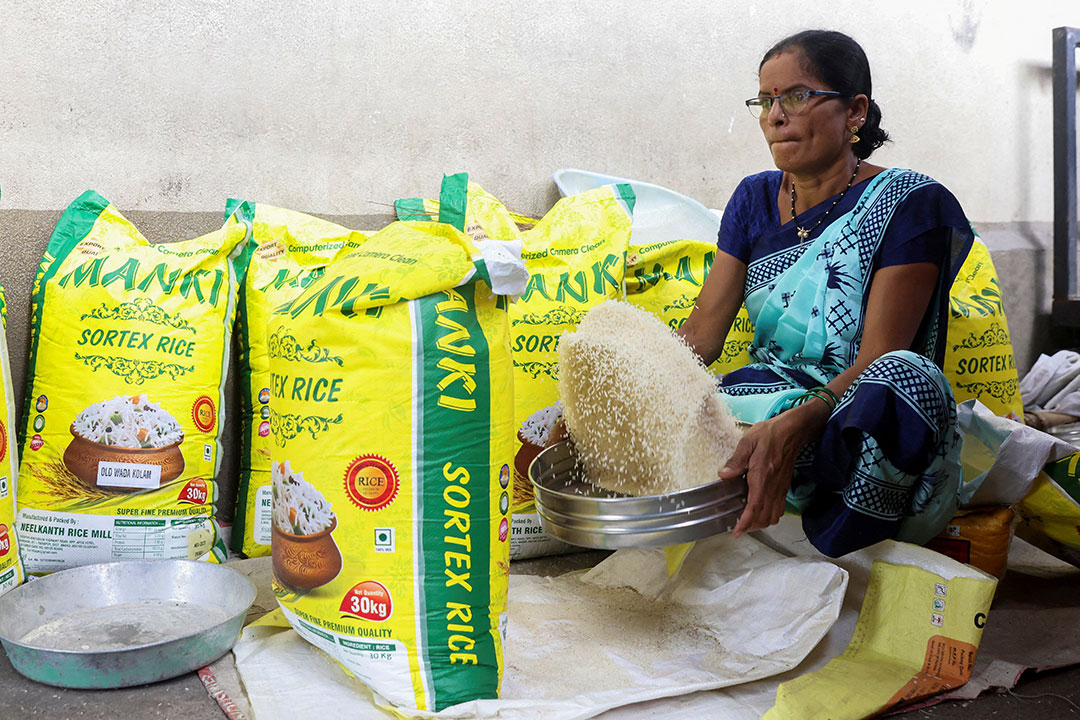
The Philippines is seen to benefit the most from an expected decline in global rice prices once India relaxes restrictions on rice exports, Nomura Global Markets Research said.

“We expect the Philippines to be the biggest winner in Asia, given the high share of rice in its consumer price index (CPI) basket, its dependence on rice imports, and recent rice import tariff reductions,” it said in a report.

“The Philippines will likely benefit most from falling international rice prices, via positive terms-of-trade effects and easing domestic food price inflation.”

Market participants are expecting India, the world’s largest exporter of white rice, to relax restrictions on rice exports soon. Last year, India suspended exports of non-basmati white rice amid concerns over domestic supply.

“Since India accounted for 35% of global rice exports in 2022, making it the top rice exporter in the world, its export restrictions pushed up global rice prices and hurt rice importing nations globally,” Nomura said.

“In our view, India is likely to gradually remove the restrictions on its rice exports in coming months,” it added.

Nomura said it sees “brighter” prospects for the Philippines, which is highly dependent on imported rice.

“Net rice imports accounted for 0.4% of its gross domestic product (GDP) in 2023, the highest in Asia. As such, lower global rice prices should have the most beneficial impact on the Philippines, followed by Indonesia,” it said.

The US Department of Agriculture (USDA) expects Philippine rice imports to hit 4.6 million metric tons (MMT) this year, higher than the Agriculture department’s 3.9 MMT projection.

As of June 27, the Philippines had imported 2.31 MMT of rice, latest data from the Bureau of Plant Industry showed.

“Without price controls or subsidies, the pass-through to domestic rice prices is also significant and swift, contributing to more downward pressures on headline inflation, which is already set to be impacted by the government’s announcement of a substantial rice import tariff reduction,” Nomura said.

President Ferdinand R. Marcos, Jr. last month signed Executive Order No. 62, which slashed tariffs on rice imports to 15% from 35%, until 2028.

The measure is expected to bring down retail rice prices by P6 to P7 per kilo, the Agriculture department said earlier.

Nomura noted the weight of rice in the Philippines’ CPI basket at 8.9%, which is “much higher” than its neighboring countries.

In June, rice inflation eased to 22.5% from 23% a month ago. This marked the third straight month of slower rice inflation.

Rice accounted for 45.2% of overall inflation, equivalent to 1.7 percentage points.

“Easing inflation would further support our view that BSP will start its easing cycle by October, although the risk of an earlier first rate cut (i.e., in August) is rising, given recent comments by Governor Remolona that BSP does not have to wait for the Fed,” Nomura added.

Roehlano M. Briones, a senior research fellow at the Philippine Institute for Development Studies, said rice prices could further decline if India eases its restrictions.

“The rice tariff cut is expected to reduce the price by about P7. (Prices can go) lower if India lifts restrictions,” he said in a Viber message.

The latest data from the Agriculture department showed that the average price of well-milled rice ranged from P48-55 per kilogram as of July 10, while regular milled rice was P45-52.

“There could be a further decline in import prices, but exporters to the Philippines could also adjust their prices upwards knowing that we have reduced our tariffs,” Raul Q. Montemayor, national manager of the Federation of Free Farmers, said in a Viber message.

“It remains to be seen whether rice retail prices will go down and benefit consumers,” he added.

Mr. Montemayor said that based on his computations, the margin between import and retail prices shrinks when import prices go up.

“Once import prices go down coupled with the lowered tariff rate, market intermediaries might just recoup the margins they lost and not pass on any benefit to consumers.” — Luisa Maria Jacinta C. Jocson

PHL banks’ total assets up 12.4% as of end-May

PHL banks’ total assets up 12.4% as of end-May

The Philippine banking industry’s total assets jumped by an annual 12.4% as of end-May, Bangko Sentral ng Pilipinas (BSP) data showed.

Banks’ combined assets increased to P25.62 trillion from P22.79 trillion a year ago, according to preliminary data.

Month on month, total assets inched up by 0.5% from P25.48 trillion as of end-April.

Banks’ assets are mainly supported by deposits, loans, and investments. These include cash and due from banks as well as interbank loans receivable (IBL) and reverse repurchase (RRP), net of allowances for credit losses.

The banking sector’s total loan portfolio inclusive of IBL and RRP climbed by 10.4% to P13.42 trillion as of end-May from P12.16 trillion in the previous year.

Net investments, or financial assets and equity investments in subsidiaries, increased by 11.3% to P7.47 trillion from P6.71 trillion a year ago.

Cash and due from banks stood at P2.69 trillion as of end-May, up by 2% from P2.64 trillion a year earlier.

Net real and other properties acquired increased by 7.2% to P108.19 billion from P100.93 billion a year ago.

Banks’ other assets surged by 63.4% to P1.93 trillion from P1.18 trillion a year earlier.

Meanwhile, the total liabilities of the banking system rose by 12.8% to P22.5 trillion from P19.95 trillion in the year-ago period.

Rizal Commercial Banking Corp. Chief Economist Michael L. Ricafort said the higher asset level as of end-May showed the banking sector’s strong growth.

“This is again more than twice faster than gross domestic product (GDP) growth, largely attributed to the sustained double-digit growth in the net income of banks, considered among the most profitable industries in the country,” he said in a Viber message.

Earlier data from the central bank showed that the banking industry’s net income had risen by 2.95% to P92.107 billion as of end-March.

This is also in line with faster loan growth in recent months, Mr. Ricafort said.

Bank lending grew by 9.6% to P11.91 trillion as of end-April, latest data from the BSP showed.

Mr. Ricafort also cited the continued recovery of the economy and business activities from the coronavirus disease 2019 (COVID-19) pandemic.

He said possible policy rate cuts would “further boost trading gains and other investment income of banks” in the coming months.

BSP Governor Eli M. Remolona, Jr. has said the central bank is on track to begin cutting rates by August, for a total of 50 basis points (bps) worth of cuts for 2024.

The Monetary Board is set to hold its next policy review on Aug. 15.

If the BSP begins policy easing in August, this would be the first rate cut in over three years or since the central bank last delivered a 25-bp cut in November 2020 amid the COVID-19 pandemic.

Market players are also anticipating the possibility of the US Federal Reserve cutting rates as early as the third quarter.

US Federal Reserve Chairman Jerome H. Powell told lawmakers that “more good data” would build the case for rate cuts. The odds of a rate cut in September are about 75% and will get the next cue from data later in the day that were expected to show easing US inflation, Reuters reported. – Luisa Maria Jacinta C. Jocson, Reporter

Peso extends rally before key US inflation report

Peso extends rally before key US inflation report

The peso continued to gain ground against the dollar on Thursday on expectations of slower US consumer inflation in June that would reinforce bets of a September rate cut by the US Federal Reserve.

The local unit closed at P58.305 per dollar on Thursday, strengthening by 1.5 centavos from its P58.32 finish on Wednesday, Bankers Association of the Philippines data showed.

This was a fresh one-month peak for the peso as this was its best finish since its P57.97-a-dollar close on May 28.

The peso opened Thursday’s session stronger at P58.24 per dollar, which was also its best showing intraday. Meanwhile, its lowest point for the session was at P58.34 against the greenback.

Dollars traded went down to $1.13 billion on Thursday from $1.16 billion on Wednesday.

The peso consolidated against the dollar before the release of the June US consumer price index (CPI) report overnight and on “strengthened bets of a Fed cut in September,” a trader said by phone.

“The peso improved for the seventh straight trading day ahead of the latest US CPI data that is expected to ease to 3.1% year-on-year in June 2024,” Rizal Commercial Banking Corp. Chief Economist Michael L. Ricafort said in a Viber message.

The local unit also rose after the recent signals from Fed Chair Jerome H. Powell supported recent market estimates of two rate cuts this year, he added.

The dollar dipped on Wednesday after Mr. Powell indicated that the US central bank is getting closer to cutting interest rates but wants to see further declines in inflation, Reuters reported.

The dollar index, which measures the US currency against six others including the euro and yen, was last down 0.07% at 105.05.

It comes before CPI data on Thursday is expected to show that headline prices eased on an annual basis in June. Economists polled by Reuters expected Thursday’s report to show that headline prices rose 0.1% on the month, while core prices gained 0.2%. That would put annual gains at 3.1% and 3.4%, respectively.

Mr. Powell said on Wednesday he was not ready to conclude that inflation is moving sustainably down to 2% though he has “some confidence of that.”

Traders now have around 73% odds for a rate cut by September, with a second cut also seen likely by December, according to the CME Group’s FedWatch Tool.

For Friday, the peso’s movement against the dollar will largely depend on the US CPI data, the trader said. The trader expects the peso to range from P58.20 and P58.50 versus the greenback on Friday, while Mr. Ricafort sees it moving from P58.20 to P58.40. — AMCS with Reuters

Posts navigation

Older posts
Newer posts

Recent Posts

  • Peso GS Weekly: Geopolitics drive a volatile curve
  • Ask Your Advisor: Can my portfolio survive a market crash?
  • Stock Market Weekly: Middle East stalemate weighs on market 
  • Investment Ideas: April 13, 2026 
  • Metrobank US-Iran Risk Index: Fragile ceasefire 

Recent Comments

No comments to show.

Archives

  • April 2026
  • March 2026
  • February 2026
  • January 2026
  • December 2025
  • November 2025
  • October 2025
  • September 2025
  • August 2025
  • July 2025
  • June 2025
  • May 2025
  • April 2025
  • March 2025
  • February 2025
  • January 2025
  • December 2024
  • November 2024
  • October 2024
  • September 2024
  • August 2024
  • July 2024
  • June 2024
  • May 2024
  • April 2024
  • March 2024
  • February 2024
  • January 2024
  • December 2023
  • November 2023
  • October 2023
  • September 2023
  • August 2023
  • July 2023
  • June 2023
  • May 2023
  • April 2023
  • March 2023
  • February 2023
  • January 2023
  • December 2022
  • November 2022
  • October 2022
  • September 2022
  • August 2022
  • July 2022
  • June 2022
  • May 2022
  • March 2022
  • December 2021
  • October 2021

Categories

  • Bonds
  • BusinessWorld
  • Currencies
  • Economy
  • Equities
  • Estate Planning
  • Explainer
  • Featured Insight
  • Fine Living
  • How To
  • Investment Tips
  • Markets
  • Portfolio Picks
  • Rates & Bonds
  • Retirement
  • Reuters
  • Spotlight
  • Stocks
  • Uncategorized

You are leaving Metrobank Wealth Insights

Please be aware that the external site policies may differ from our website Terms And Conditions and Privacy Policy. The next site will be opened in a new browser window or tab.

Cancel Proceed
Get in Touch

For inquiries, please call our Metrobank Contact Center at (02) 88-700-700 (domestic toll-free 1-800-1888-5775) or send an e-mail to customercare@metrobank.com.ph

Metrobank is regulated by the Bangko Sentral ng Pilipinas
Website: https://www.bsp.gov.ph

Quick Links
The Gist Webinars Wealth Manager Explainers
Markets
Currencies Rates & Bonds Equities Economy
Wealth
Investment Tips Fine Living Retirement
Portfolio Picks
Bonds Stocks
Others
Contact Us Privacy Notice Terms of Use
© 2026 Metrobank. All rights reserved.

Access this content:

If you are an existing investor, log in first to your Metrobank Wealth Manager account. ​

If you wish to start your wealth journey with us, click the “How To Sign Up” button. ​

Login HOW TO SIGN UP