



MODEL PORTFOLIO
THE GIST
NEWS AND FEATURES
Global Philippines Fine Living
INSIGHTS
INVESTMENT STRATEGY
Economy Stocks Bonds Currencies
THE BASICS
Investment Tips Explainers Retirement
WEBINARS
2024 Mid-Year Economi Briefing, economic growth in the Philippines
2024 Mid-Year Economic Briefing: Navigating the Easing Cycle
June 21, 2024
Investing with Love
Investing with Love: A Mother’s Guide to Putting Money to Work
May 15, 2024
retirement-ss-3
Investor Series: An Introduction to Estate Planning
September 1, 2023
View All Webinars
DOWNLOADS
Container ship carrying container boxes import export dock with quay crane. Business commercial trade global cargo freight shipping logistic and transportation worldwide oversea concept. Generative AI
Economic Updates
Philippines Trade Update: Wider deficit on strong imports
DOWNLOAD
Frick collection with palm trees 
Economic Updates
Policy Rate Updates: Policy rate updates to reassure 
DOWNLOAD
Man using his smartphone
Reports
Fed to cut just once 
DOWNLOAD
View all Reports
Metrobank.com.ph How To Sign Up
Follow us on our platforms.

How may we help you?

TOP SEARCHES
  • Where to put my investments
  • Reports about the pandemic and economy
  • Metrobank
  • Webinars
  • Economy
TRENDING ARTICLES
  • Investing for Beginners: Following your PATH
  • On government debt thresholds: How much is too much?
  • Philippines Stock Market Outlook for 2022
  • Deficit spending remains unabated

Login

Access Exclusive Content
Login to Wealth Manager
Visit us at metrobank.com.ph How To Sign Up
Access Exclusive Content Login to Wealth Manager
Search
MODEL PORTFOLIO THE GIST
NEWS AND FEATURES
Global Philippines Fine Living
INSIGHTS
INVESTMENT STRATEGY
Economy Stocks Bonds Currencies
THE BASICS
Investment Tips Explainers Retirement
WEBINARS
2024 Mid-Year Economi Briefing, economic growth in the Philippines
2024 Mid-Year Economic Briefing: Navigating the Easing Cycle
June 21, 2024
Investing with Love
Investing with Love: A Mother’s Guide to Putting Money to Work
May 15, 2024
retirement-ss-3
Investor Series: An Introduction to Estate Planning
September 1, 2023
View All Webinars
DOWNLOADS
Container ship carrying container boxes import export dock with quay crane. Business commercial trade global cargo freight shipping logistic and transportation worldwide oversea concept. Generative AI
Economic Updates
Philippines Trade Update: Wider deficit on strong imports
March 27, 2026 DOWNLOAD
Frick collection with palm trees 
Economic Updates
Policy Rate Updates: Policy rate updates to reassure 
March 26, 2026 DOWNLOAD
Man using his smartphone
Reports
Fed to cut just once 
March 19, 2026 DOWNLOAD
View all Reports

Archives: Reuters Articles

Dollar index jumps to two-decade high as traders await Fed rate move

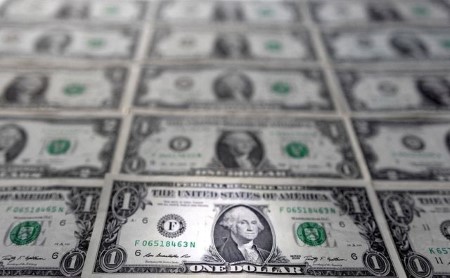
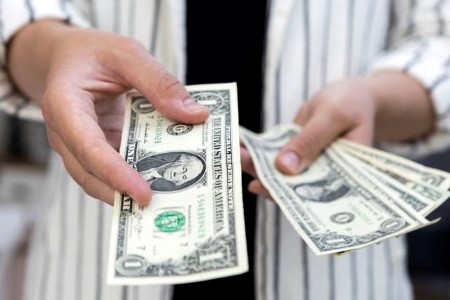
NEW YORK, June 14 (Reuters) – The dollar hit a fresh two-decade high against a basket of currencies on Tuesday, as traders braced for an aggressive rate hike from the US Federal Reserve this week to try to curb inflation.

Investors have been unsettled this week by rising expectations that the Fed will raise interest rates by more than forecast, sending the S&P 500 tumbling to confirm a bear market and intensified fears over the economic outlook.

There is a nearly 90% expectation for a 75-basis-point increase at the conclusion of a two-day meeting of the US central bank’s Federal Open Market Committee (FOMC) on Wednesday, according to Refinitiv’s Fedwatch Tool.

“It’s going to be very difficult for the Fed to out-hawk markets at this point, given the level of expectations going into tomorrow,” said Karl Schamotta, chief market strategist at business payments company Corpay.

The US Dollar Currency Index, which tracks its performance against six other major currencies, was up 0.3% at 105.42, after climbing as high as 105.46, its strongest since December 2002.

With inflation and growth-related concerns plaguing economies around the world, the greenback has benefited from safe-haven flows in recent weeks and months.

“The US dollar remains the best of a bad bunch in FX land,” said Michael Brown, head of market intelligence at payments firm Caxton in London.

“Today’s trade is a pretty classic pre-Fed calm, though I doubt it will last, with a hawkish Fed likely to provide the required catalyst for a further leg higher (for the dollar),” Brown said.

US producer prices increased solidly in May as the cost of gasoline surged, another sign of stubbornly high inflation that could force the Fed to raise rates aggressively.

With risk appetite weak, the Aussie was 0.81% lower against the greenback, while the kiwi was down 0.80%.

Against the yen, the dollar was about flat at 134.97 yen.

The Japanese currency’s weakness – it fell to its lowest level since 1998 against the dollar on Monday – has prompted comments by Japan’s top government spokesperson that Tokyo is concerned about its sharp fall and stands ready to “respond appropriately” if needed.

“Intervention remains exceedingly unlikely, given that it would be unilateral in nature. … It would not necessarily stem the tide in terms of where the yen is going ultimately,” Corpay’s Schamotta said.

Sterling fell 1.29% to USD 1.1978, its first dip below the USD 1.20 level since March 2020, after Scotland’s First Minister Nicola Sturgeon said she was set to share details on plans for a new independence referendum. British Prime Minister Boris Johnson and his Conservative Party, which is the opposition party in Scotland, is strongly against a referendum.

Bitcoin slipped to a new 18-month low, as major crypto lender Celsius Network’s freezing of withdrawals and the prospect of sharp US rate rises shook the volatile asset class. Bitcoin was last down 3.6% at USD 22,365.86.

(Reporting by Saqib Iqbal Ahmed; Editing by Susan Fenton and Jonathan Oatis)


US stocks’ bear market growl could beckon recession

US stocks’ bear market growl could beckon recession

NEW YORK, June 14 (Reuters) – The bear market in US stocks could be a prelude to even tougher times to come: a market swoon has often come hand-in-hand with recession.

Worries that a hawkish Federal Reserve will hurt US growth as it attempts to tame inflation has helped drive the benchmark S&P 500 to a more than 20% decline from its all-time high on Jan 3, a drop that many analysts define as a bear market.

If history is a guide, the market’s action may indicate a recession is in the wings. Nine of 12 bear markets that have occurred since 1948 have been accompanied by recessions, according to investment research firm CFRA. That recession could begin as early as August, history indicates, and there could be more downside in markets to come.

“The market anticipates recessions,” said Sam Stovall, CFRA’s chief investment strategist. “The market usually goes into a bear market mode if it believes that things are not going to be doing very well for the economy as a whole.”

Despite the tumble in stocks, the latest economic and corporate data show a mixed picture. The latest US monthly jobs report found employers hired more workers than expected in May, while S&P 500 earnings are expected to rise by nearly 10% this year.

On the flip side, the CPI report on Friday said consumer prices accelerated and resulted in the largest annual increase in nearly 40-1/2 years, while gasoline prices are at all-time highs and threatening consumer spending.

Fed Chairman Jerome Powell has pledged that the US central bank would ratchet interest rates as high as needed to kill a surge in inflation. Surging inflation data and fast-changing views in financial markets have opened the door to a larger-than-expected three-quarter-percentage point interest rate increase when Fed officials meet this week.

Warnings of an approaching recession have grown louder on Wall Street and in Corporate America. On Monday, Morgan Stanley CEO James Gorman said he thinks there is a roughly 50% chance that the US economy will enter a recession.

Another widely followed recession signal flashed on Monday, as it did in March, when a key part of the US Treasury yield curve inverted – a reliable indicator that a recession will follow.

CFRA found that bear markets on average start seven months before a recession begins. If that holds this time, the recession will begin in early August, seven months after the S&P 500 peaked on Jan 3.

A bear market accompanied by a recession could mean more pain for investors.

In 12 recessions since World War Two, the S&P 500 has contracted by a median of 24%, according to Goldman Sachs. Should such a decline occur this time, that would take the S&P 500 down to 3,650, nearly 3% below Monday’s closing level of 3,749.63.

Bespoke Investment Group analyzed 14 bear markets since World War Two, eight of which started within two years of a recession, and six where the next recession did not start for at least two years.

In the eight where the recession came within two years, the median decline of a bear market was steeper — about 35% for the S&P 500 versus 28.2% for bear markets when a recession did not come within that time period, according to Bespoke.

The eight recession-related bear markets were also longer generally, with a median length of 495 days compared to 198 days for the six other bear markets.

Not all bear markets have been linked with recessions. According to CFRA, three of 12 bears occurred without recessions, while three recessions were not preceded by bear markets.

The potentially good news for investors is that, according to LPL Research, once stocks reach the threshold of a decline of 20%, they tend to rebound over the next year. After officially marking a bear market, the S&P 500 rose by a median of 23.8% over the next year, according to LPL’s analysis of 10 bear markets since 1957.

The three instances in which stocks were lower were associated with “major recessions,” according to LPL.

This time, the environment is probably “more like a mid-cycle slowdown where the economy can catch its breath, the stock market can catch its breath after a huge rally,” said LPL’s chief market strategist Ryan Detrick.

“As uncomfortable as this year has been, this is still probably for a longer-term investor, a great opportunity,” Detrick said.

(Reporting by Lewis Krauskopf; editing by Megan Davies and Nick Zieminski)


Philippines sells re-issued 2029 T-bonds at higher yield of 6.740%

MANILA, June 14 (Reuters) – Following are the results of the Philippine Bureau of the Treasury’s (BTr) auction of re-issued 2029 T-bonds on Tuesday:

* BTr awards 19.551 billion pesos ($367.43 million) worth of T-bonds, below 35 billion pesos offer

* Tenders total 62.296 billion pesos

* Average yield at 6.740% vs previous average of 6.428%

* Bonds were originally issued on May 19

* Details are on BTr’s website www.treasury.gov.ph

($1 = 53.21 Philippine pesos)

(Reporting by Enrico Dela Cruz; Editing by Kanupriya Kapoor)

((enrico.delacruz@thomsonreuters.com))

S&P 500 confirms bear market as recession worry grows

S&P 500 confirms bear market as recession worry grows

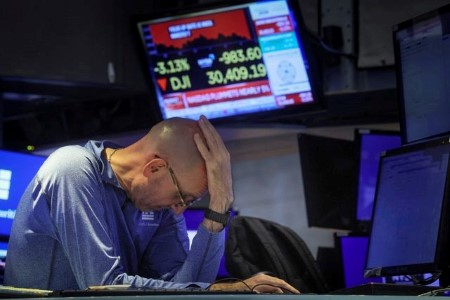
NEW YORK, June 13 (Reuters) – US equities tumbled on Monday, with the S&P 500 confirming it is in a bear market, as fears grow that the expected aggressive interest rate hikes by the Federal Reserve would push the economy into a recession.

The benchmark S&P index has fallen for four straight days, with the index now down more than 20% from its most recent record closing high to confirm a bear market began on Jan. 3, according to a commonly used definition.

All the major S&P sectors were sharply lower, with only about 10 components of the S&P 500 in positive territory on the day. Markets have been under pressure this year as climbing prices, including a jump in oil prices due in part to the war in Ukraine, have put the Fed on track to take strong actions to tighten its monetary policy, such as interest rate hike.

The Fed is scheduled to make its next policy announcement on Wednesday and investors will be highly focused on any clues for how aggressive the central bank intends to be in raising rates.

High-growth market heavyweights such as Apple Inc. (AAPL), Microsoft Corp. (MSFT) and Amazon.com Inc. (AMZN) were the biggest drags on the S&P 500, as the yield on the benchmark 10-year US Treasury note hit 3.44%, its highest level since April 2011. Growth stocks are more likely to see their earnings suffer in a rising rate environment.

A hotter-than-expected consumer price index (CPI) reading on Friday prompted traders to price in a total of 175 basis point (bps) in interest rate hikes by September.

Goldman Sachs late on Monday said it expects 75-basis-point increases in June and July. Expectations for a 75 basis point hike at the June meeting jumped to 96% late on Monday from 30% earlier in the day, according to CME’s Fedwatch Tool.

“The market had been trying to rally around the idea that inflation has peaked, and the Fed would not have to be more aggressive,” said Ross Mayfield, investment strategy analyst at Baird in Louisville, Kentucky.

“That story fell apart on Friday with the CPI report, showing broad inflation being entrenched everywhere you look.”

According to preliminary data, the S&P 500 lost 149.91 points, or 3.85%, to end at 3,750.95 points, while the Nasdaq Composite lost 526.82 points, or 4.65%, to 10,813.20. The Dow Jones Industrial Average fell 857.70 points, or 2.73%, to 30,535.09.

In addition, the two-year 10-year US Treasury yield curve briefly inverted for the first time since April, which many in the markets see as a reliable signal that a recession could come in the next year or two.

The Nasdaq Composite index, which suffered its fourth straight drop, confirmed it was in bear market territory on March 7 and has declined roughly 30% this year.

The CBOE Volatility index, also known as Wall Street’s fear gauge, spiked to its highest level since May. Still, many analysts view the level as subdued and could mean more selling pressure is in store.

“This is a market that does not look like it is capitulating as much as it is frustrated,” said Rob Haworth, senior investment strategist at US Bank Wealth Management in Seattle.

“Even with some of the securities being thrown out, it is just not deep enough, violent enough to see that people have taken positions off.

Cryptocurrency- and blockchain-related stocks, including Riot Blockchain (RIOT), Marathon Digital Holdings (MARA) and Coinbase Global (COIN), all plunged as bitcoin slumped more than 10% after major US cryptocurrency lending company Celsius Network froze withdrawals and transfers citing “extreme” conditions.

(Additional reporting by Lewis Krauskopf, Stephen Culp and Noel Randewich; Editing by Aurora Ellis)

Biden adviser Sullivan raised concerns with China over North Korea

WASHINGTON, June 13 (Reuters) – US national security adviser Jake Sullivan has raised concerns with China’s top diplomat Yang Jiechi over Beijing’s veto at the United Nations of a US-led push to impose more sanctions on North Korea, a senior US official said.

Washington has warned that North Korea’s first nuclear test since 2017 could happen at “any time”. China says it does not want to see that happen, which is partly why in May it vetoed a bid to impose new UN sanctions on Pyongyang over renewed ballistic missiles launches.

A senior US administration official told reporters during a briefing on a 4-1/2-hour meeting between Sullivan and Yang in Luxembourg on Monday that the United States believed Beijing and Washington could cooperate on the North Korea issue.

“Jake raised concerns, in particular, about the veto, which comes following a significant series of ballistic missile launches in violation of previous UN Security Council resolutions and the preparations … for potential nuclear tests,” the official said.

“Each side laid out their positions and the way we see the situation, and certainly Jake made very clear that we believe this is an area where the United States and China should be able to work together,” the official said.

US Secretary of State Antony Blinken said on Monday that Washington will maintain pressure on North Korea until Pyongyang changes course, following a meeting with his South Korean counterpart who urged China to persuade the North not to resume nuclear testing.

The Sullivan-Yang meeting follows a late May call between the two officials after which Sullivan said it was possible President Joe Biden and Chinese leader Xi Jinping could speak soon, though no such engagement has been announced.

The official said the United States and China were maintaining high-level communication, including a meeting between US Defense Secretary Lloyd Austin and his Chinese counterpart at a forum in Singapore on Friday.

“I’d expect to see additional potential meetings in the months ahead, but nothing specific planned at this time, the US official said when asked if a Xi-Biden meeting or call had been discussed.

The White House said in an earlier statement on the Luxembourg meeting that the United States sought to keep lines of communication open with Beijing to manage bilateral competition.

Relations between China and the United States are at their lowest point in decades, as the two countries spar over difference on Chinese-claimed Taiwan, China’s human rights record, and what Washington says is Beijing’s growing economic and military coercion around the world.

(Reporting by Michael Martina, Eric Beech, Andrea Shalal and Kanishka Singh in Washington; editing by Susan Heavey and Sandra Maler)


Signs Fed could get aggressive roil investors, send stocks tumbling

SINGAPORE/NEW YORK, June 13 (Reuters) – Rising expectations that the Federal Reserve will this week raise interest rates by more than previously forecast unsettled investors on Monday, sending the S&P 500 tumbling to confirm a bear market and intensifying fears over the economic outlook.

The Fed meets on Wednesday following data last week showing that US consumer prices rose at their fastest pace since 1981.

Citing a report on Monday in the Wall Street Journal, Goldman Sachs said it expects 75-basis-point increases in June and July, and then a 50-basis point hike in September.

Late on Monday, expectations for a 75 basis point hike at the June meeting jumped to 96% from 30% earlier in the day, according to CME’s Fedwatch Tool. A 75-basis-point hike would be the biggest since 1994.

“The May inflation data was so concerning that we think the Fed will react even more aggressively in moving rates ‘expeditiously’,” BNY Mellon strategist John Velis said on Monday. His note forecast a 75-basis-point hike, up from a 50 basis-point prediction.

Barclays and Jefferies have also forecast a 75-basis-point hike.

“US CPI surprised to the upside and continues to show broad and persistent price pressures,” Barclays analysts said in a Sunday note. “We think the Fed probably wants to surprise markets to re-establish its inflation-fighting credentials.”

The S&P 500 on Monday ended down more than 20% from its most recent closing high, confirming it was in a bear market. A key part of the Treasury yield curve inverted on fears that big Fed hikes would tip the economy into recession, and yields of benchmark 10-year Treasuries hit their highest levels since 2011.

“The markets are not waiting for Wednesday’s (Fed) meeting, they are going to front run them and that’s what is already happening in the markets today,” said Jim Paulsen, chief investment strategist at the Leuthold Group.

Other large investors on Wall Street said that while they do not see a 75-basis-point move as imminent, the probability of such a large rate hike in the next few months are rising.

Standard Chartered said that even a 100-basis point hike could not be precluded.

‘INCESSION’

Markets reacted with a sell-off in short-dated Treasuries along with futures tied to the Fed policy rate. Yields on the two-year Treasury note are at their highest since late 2007.

Bets on the US terminal rate – where the Fed funds rate may peak this cycle – continue to rise. On Monday, rates were priced to approach 4% in mid-2023, up almost one percentage point since end-May. Deutsche Bank said it now saw rates peaking at 4.125% in mid-2023.

In one sign of turmoil in the global fixed-income market, credit default swap indexes measuring the cost of insuring against European corporate bond defaults jumped on Monday to their highest since 2020.

US corporate bonds were also pummeled over the economic outlook and companies’ ability to repay their debt.

For Rabobank, the risk of “stagflation” – a period of weak growth and high inflation last seen in the 1970s – could give way to the threat of “incession”, a combination of inflation and recession, it said in a research note on Sunday.

The shape of the Treasury yield curve inversion, rising high-yield credit spreads, and the underperformance of cyclical stock market sectors, indicated rising concerns on the economic outlook, said Oliver Allen, an economist at Capital Economics.

“One interpretation is that investors are veering towards a view that the Fed will need to induce a recession if it is to bring inflation back to target,” he said in a note.

(Reporting by Tom Westbrook, Davide Barbuscia and David Randall; Additional reporting by Noel Randewich; Editing by Megan Davies, Tomasz Janowski and Lisa Shumaker)

Investors flee 2-year Treasuries on inflation shock

Investors flee 2-year Treasuries on inflation shock

SINGAPORE, June 13 (Reuters) – Short-dated US Treasuries dropped sharply in Asia on Monday as investors scrambled to price in an even steeper rate-hike path to tame inflation and worried that rapidly tightening financial conditions could severely dent the world’s biggest economy.

Two-year Treasury yields rose as far as 12.7 basis points (bps) to 3.1940%, the highest level since late 2007, extending selling after Friday’s hot inflation data. A holiday in Australia thinned trade and liquidity a little.

The flight from the short end leaves the two year yield up nearly 40 bps in two sessions and has futures pricing pointing to the Federal Reserve’s benchmark funds rate hitting 3% before the year’s end and topping 3.8% before the middle of 2023.

“There was a view that CPI had peaked. The numbers on Friday showed that it hasn’t peaked,” said Mitul Kotecha, a strategist at TD Securities in Singapore.

“There’s a realisation that the Fed is going to have to do more and put its foot on the pedal even more aggressively,” he said. “There is a risk that pushes the US and global economy into recession.”

That fear was reflected in a relatively steady 10-year yield at 3.1874%, narrowing the gap on the two-year yield to just 1.8 bps in a signal that investors expect the looming short-term hikes will hurt longer term growth.

Soaring food and energy prices drove the largest year-on-year gain in US consumer prices since 1981 last month, against an expectation for inflation to begin slowing down.

“We think the Fed probably wants to surprise markets to re-establish its inflation fighting credentials,” Barclays analysts said in a Sunday note, forecasting a 75-bp hike this week.

CME’s FedWatch tool showed a roughly 1/4 chance of a 75-bp hike when the Fed meets on Wednesday, which would be the biggest single-meeting hike since 1994.

Fed funds futures 0#FF: fell heavily on Monday, especially contracts for the early months of next year, to show markets pricing the Fed’s benchmark rate around 3.8% by May next year.

The selling also set other markets on edge, knocking S&P 500 futures ESc1 1.5% lower and lifting the US dollar to its strongest level on the yen since 1998.

(Reporting by Tom Westbrook; Editing by Shri Navaratnam)


Dollar rises as hot US inflation data seen keeping Fed hawkish

Dollar rises as hot US inflation data seen keeping Fed hawkish

NEW YORK, June 10 (Reuters) – The dollar climbed to a near four-week high against a basket of currencies on Friday, after data showed US consumer prices accelerated in May, strengthening expectations the Federal Reserve may have to continue with interest rate hikes through September to combat inflation.

In the 12 months through May, the CPI increased 8.6% after rising 8.3% in April. Economists had hoped that the annual CPI rate peaked in April.

The inflation report was published ahead of an anticipated second 50 basis points rate hike from the Fed next Wednesday. The US central bank is expected to raise its policy interest rate by an additional half a percentage point in July. It has hiked the overnight rate by 75 basis points since March.

“Inflation is now at a 40-year high with little evidence that it has peaked,” said John Doyle, vice president of dealing and trading at Monex USA.

“Stocks are extending losses on the expectation the Fed could find the scope to speed up rate hikes. The greenback is gaining on policy divergence and risk-off trading,” Doyle said.

The US Dollar Currency Index, which tracks the greenback against six other major currencies, was 0.8% higher at 104.16, its highest since May 17, and within sight of 105.01, the two-decade high touched in mid-May.

For the week, the index was up nearly 2%, its best weekly performance in 6 weeks.

The dollar was up 0.79% against the Swiss franc at 0.9881 francs after the US Treasury Department on Friday said Switzerland continued to exceed its thresholds for possible currency manipulation under a 2015 US trade law, but refrained from branding it a currency manipulator.

With the US inflation data knocking investors’ risk appetite, the risk-sensitive Australian dollar reversed direction to trade down 0.58% on the day.

Sterling fell 1.5% to USD 1.2315 and was set for a second consecutive week of declines as Britain’s gloomy economic outlook left investors on edge.

In cryptocurrencies, bitcoin slipped 3.7% to USD 28,984.33, as the world’s largest digital currency by market value continued to struggle to overcome a bout of selling pressure that has taken it below the USD 30,000 level in recent sessions.

(Reporting by Saqib Iqbal Ahmed; editing by David Evans and Chizu Nomiyama)


Wall Street unnerved as hot inflation sparks fears of more combative Fed policy

Wall Street unnerved as hot inflation sparks fears of more combative Fed policy

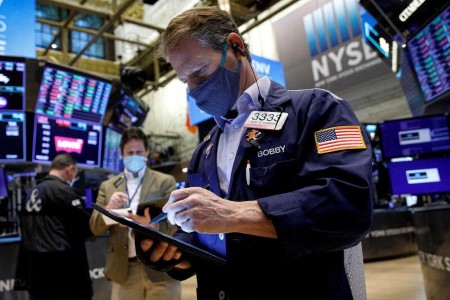
June 10 (Reuters) – US stock indexes slid on Friday as consumer prices rose more than expected in May, dashing hopes that inflation is peaking and fanning worries about more aggressive steps by the Federal Reserve to tame it.

All the 11 major S&P sectors traded lower. Communication services, technology and consumer discretionary sectors declined between 2.5% and 3.2%. Financials and banks lost 2.8%.

The Labor Department’s report showed US consumer price index (CPI) accelerated to 1% in May from 0.3% in April, while on an annual basis it surged 8.6% as gasoline prices hit a record high and the cost of services rose further.

Economists polled by Reuters had forecast the monthly CPI picking up 0.7%.

Core CPI prices, which exclude volatile food and energy products, climbed 6% after a 6.2% rise in April on an annual basis.

“What this likely does is change the calculus for what the Fed might do in September versus what they might do next week,” said Art Hogan, chief market strategist at National Securities, New York.

“By that I mean, you have most-assuredly a 50-basis points (bps) rate hike coming next week … but the wagering on September had been a 50-50 between a 25 bps to a 50 bps hike, and now this has definitely shifted to 50 bps.”

The US Federal Reserve’s policy meeting is due on June 14-15. Investors fear a tight labor market coupled with persistently high inflation could force the Fed to quicken the pace of its pandemic-era policy support withdrawal.

Money markets are now pricing in 50 bps rise in rates by the U.S central bank next week, July and September. A Reuters poll also found economists see no pause in rate rises until next year.

US stocks have sold off sharply this year amid heightened uncertainty around the outlook of Fed’s policy moves, a war in Ukraine, prolonged supply-chain snarls and pandemic-related lockdowns in China.

For the week, all the three major indexes are down between 4.2% and 5.2% as rate-sensitive growth stocks came under pressure from elevated Treasury yields.

At 10:04 a.m. ET, the Dow Jones Industrial Average was down 739.63 points, or 2.29%, at 31,533.16, the S&P 500 .SPX was down 101.07 points, or 2.52%, at 3,916.75, and the Nasdaq Composite was down 346.72 points, or 2.95%, at 11,407.51.

Microsoft Corp. (MSFT) and Apple Inc. (AAPL) dipped 3.6% and 3.3%, respectively, to weigh the most on all the three indexes.

Netflix Inc. (NFLX) slid 5.9% after Goldman Sachs downgraded the streaming giant’s stock to “sell” from “neutral” due to a possibly weaker macro environment.

The CBOE volatility index spiked to 28.41 points, its highest level since May 26.

Declining issues outnumbered advancers for a 10.03-to-1 ratio on the NYSE and for a 5.61-to-1 ratio on the Nasdaq.

The S&P index recorded one new 52-week highs and 38 new lows, while the Nasdaq recorded five new highs and 172 new lows.

(Reporting by Devik Jain, Mehnaz Yasmin and Shreyashi Sanyal in Bengaluru; Editing by Arun Koyyur)


European shares slip ahead of US inflation data

European shares slip ahead of US inflation data

June 10 (Reuters) – European shares on Friday extended losses to a fourth consecutive session, ahead of US inflation data that could spur more speculation about the Federal Reserve’s policy decision next week.

All sectors were trading in red with banks weighing the most in the pan-European STOXX 600 index, which lost 0.7% by 0704 GMT, on course to end the week about 2% lower.

The US Labor Department’s Consumer Price Index is expected to have accelerated to 0.7% last month from 0.3% in April. But when stripped of volatile food and energy products, it is seen cooling a nominal 0.1 percentage point to 0.5%.

The data is due at 1230 GMT on Friday, with growing bets that the US Fed will increase beyond the two 50 bps hike it plans for next week and July.

This comes a day after equities were hammered following the European Central Bank’s clues that it would deliver next month its first interest rate hike since 2011, and a potentially larger move in September.

Among individual stocks, GSK (GSK) jumped 2.4% after the drugmaker said its vaccine for respiratory syncytial virus was successful in a late-stage trial involving older adults.

(Reporting by Susan Mathew in Bengaluru; Editing by Sherry Jacob-Phillips)


Posts navigation

Older posts
Newer posts

Recent Posts

  • Peso GS Weekly: Risk relief drives curve‑wide rally
  • Metrobank US-Iran Risk Index: Dire straits
  • Investment Ideas: April 6, 2026
  • Investment Ideas: April 1, 2026
  • Metrobank US-Iran Risk Index: Signals of an end

Recent Comments

No comments to show.

Archives

  • April 2026
  • March 2026
  • February 2026
  • January 2026
  • December 2025
  • November 2025
  • October 2025
  • September 2025
  • August 2025
  • July 2025
  • June 2025
  • May 2025
  • April 2025
  • March 2025
  • February 2025
  • January 2025
  • December 2024
  • November 2024
  • October 2024
  • September 2024
  • August 2024
  • July 2024
  • June 2024
  • May 2024
  • April 2024
  • March 2024
  • February 2024
  • January 2024
  • December 2023
  • November 2023
  • October 2023
  • September 2023
  • August 2023
  • July 2023
  • June 2023
  • May 2023
  • April 2023
  • March 2023
  • February 2023
  • January 2023
  • December 2022
  • November 2022
  • October 2022
  • September 2022
  • August 2022
  • July 2022
  • June 2022
  • May 2022
  • March 2022
  • December 2021
  • October 2021

Categories

  • Bonds
  • BusinessWorld
  • Currencies
  • Economy
  • Equities
  • Estate Planning
  • Explainer
  • Featured Insight
  • Fine Living
  • How To
  • Investment Tips
  • Markets
  • Portfolio Picks
  • Rates & Bonds
  • Retirement
  • Reuters
  • Spotlight
  • Stocks
  • Uncategorized

You are leaving Metrobank Wealth Insights

Please be aware that the external site policies may differ from our website Terms And Conditions and Privacy Policy. The next site will be opened in a new browser window or tab.

Cancel Proceed
Get in Touch

For inquiries, please call our Metrobank Contact Center at (02) 88-700-700 (domestic toll-free 1-800-1888-5775) or send an e-mail to customercare@metrobank.com.ph

Metrobank is regulated by the Bangko Sentral ng Pilipinas
Website: https://www.bsp.gov.ph

Quick Links
The Gist Webinars Wealth Manager Explainers
Markets
Currencies Rates & Bonds Equities Economy
Wealth
Investment Tips Fine Living Retirement
Portfolio Picks
Bonds Stocks
Others
Contact Us Privacy Notice Terms of Use
© 2026 Metrobank. All rights reserved.

Access this content:

If you are an existing investor, log in first to your Metrobank Wealth Manager account. ​

If you wish to start your wealth journey with us, click the “How To Sign Up” button. ​

Login HOW TO SIGN UP