





MODEL PORTFOLIO
THE GIST
NEWS AND FEATURES
Global Philippines Fine Living
INSIGHTS
INVESTMENT STRATEGY
Economy Stocks Bonds Currencies
THE BASICS
Investment Tips Explainers Retirement
WEBINARS
2024 Mid-Year Economi Briefing, economic growth in the Philippines
2024 Mid-Year Economic Briefing: Navigating the Easing Cycle
June 21, 2024
Investing with Love
Investing with Love: A Mother’s Guide to Putting Money to Work
May 15, 2024
retirement-ss-3
Investor Series: An Introduction to Estate Planning
September 1, 2023
View All Webinars
DOWNLOADS
grocery-2-aa
Inflation Update: Target breached
DOWNLOAD
Container ship carrying container boxes import export dock with quay crane. Business commercial trade global cargo freight shipping logistic and transportation worldwide oversea concept. Generative AI
Economic Updates
Philippines Trade Update: Wider deficit on strong imports
DOWNLOAD
Frick collection with palm trees 
Economic Updates
Policy Rate Updates: Policy rate updates to reassure 
DOWNLOAD
View all Reports
Metrobank.com.ph How To Sign Up
Follow us on our platforms.

How may we help you?

TOP SEARCHES
  • Where to put my investments
  • Reports about the pandemic and economy
  • Metrobank
  • Webinars
  • Economy
TRENDING ARTICLES
  • Investing for Beginners: Following your PATH
  • On government debt thresholds: How much is too much?
  • Philippines Stock Market Outlook for 2022
  • Deficit spending remains unabated

Login

Access Exclusive Content
Login to Wealth Manager
Visit us at metrobank.com.ph How To Sign Up
Access Exclusive Content Login to Wealth Manager
Search
MODEL PORTFOLIO THE GIST
NEWS AND FEATURES
Global Philippines Fine Living
INSIGHTS
INVESTMENT STRATEGY
Economy Stocks Bonds Currencies
THE BASICS
Investment Tips Explainers Retirement
WEBINARS
2024 Mid-Year Economi Briefing, economic growth in the Philippines
2024 Mid-Year Economic Briefing: Navigating the Easing Cycle
June 21, 2024
Investing with Love
Investing with Love: A Mother’s Guide to Putting Money to Work
May 15, 2024
retirement-ss-3
Investor Series: An Introduction to Estate Planning
September 1, 2023
View All Webinars
DOWNLOADS
grocery-2-aa
Inflation Update: Target breached
April 7, 2026 DOWNLOAD
Container ship carrying container boxes import export dock with quay crane. Business commercial trade global cargo freight shipping logistic and transportation worldwide oversea concept. Generative AI
Economic Updates
Philippines Trade Update: Wider deficit on strong imports
March 27, 2026 DOWNLOAD
Frick collection with palm trees 
Economic Updates
Policy Rate Updates: Policy rate updates to reassure 
March 26, 2026 DOWNLOAD
View all Reports

Archives: Reuters Articles

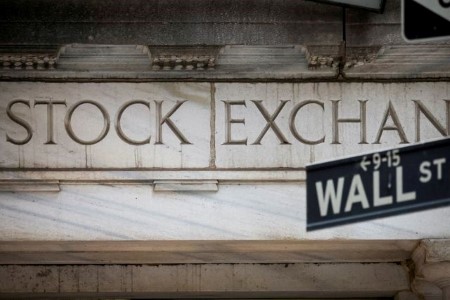
Wall Street slides as services data spooks investors about Fed rate hikes

Wall Street slides as services data spooks investors about Fed rate hikes

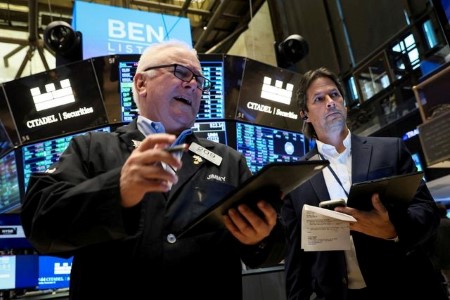
Dec 5 (Reuters) – US markets ended Monday lower, as investors spooked by better-than-expected data from the services sector re-evaluated whether the Federal Reserve could hike interest rates for longer, while shares of Tesla slid on reports of a production cut in China.

The electric-vehicle maker Tesla slumped 6.4% on plans to cut December output of the Model Y at its Shanghai plant by more than 20% from the previous month.

This weighed on the Nasdaq, where Tesla was one of the biggest fallers, pulling the tech-heavy index to its second straight decline.

Broadly, indexes suffered as data showed US services industry activity unexpectedly picked up in November, with employment rebounding, offering more evidence of underlying momentum in the economy.

The data came on the heels of a survey last week that showed stronger-than-expected job and wage growth in November, challenging hopes that the Fed might slow the pace and intensity of its rate hikes amid recent signs of ebbing inflation.

“Today is a bit of a response to Friday, because that jobs report, showing the economy was not slowing down that much, was contrary to the message which (Chair Jerome) Powell had delivered on Wednesday afternoon,” said Bernard Drury, CEO of Drury Capital, referencing comments made by the head of the Federal Reserve saying it was time to slow the pace of coming interest rate hikes.

“We’re back to inflation-fighting mode,” Drury added.

Investors see an 89% chance that the US central bank will increase interest rates by 50 basis points next week to 4.25%-4.50%, with the rates peaking at 4.984% in May 2023.

The rate-setting Federal Open Market Committee meets on Dec. 13-14, the final meeting in a volatile year, which saw the central bank attempt to arrest a multi-decade rise in inflation with record interest rate hikes.

The aggressive policy tightening has also triggered worries of an economic downturn, with JPMorgan, Citigroup and BlackRock among those that believe a recession is likely in 2023.

The Dow Jones Industrial Average fell 482.78 points, or 1.4%, to close at 33,947.1, the S&P 500 lost 72.86 points, or 1.79%, to end on 3,998.84, and the Nasdaq Composite dropped 221.56 points, or 1.93%, to finish on 11,239.94.

In other economic data this week, investors will also monitor weekly jobless claims, producer prices and the University of Michigan’s consumer sentiment survey for more clues on the health of the US economy.

Energy was among the biggest S&P sectoral losers, dropping 2.9%. It was weighed by US natural gas futures slumping more than 10% on Monday, as the outlook dimmed due to forecasts for milder weather and the delayed restart of the Freeport liquefied natural gas (LNG) export plant.

EQT Corp. (EQT), one of the largest US natural gas producers, was the steepest faller on the energy index, closing 7.2% lower.

Financials were also hit hard, slipping 2.5%. Although bank profits are typically boosted by rising interest rates, they are also sensitive to concerns about bad loans or slowing loan growth amid an economic downturn.

Meanwhile, apparel maker VF Corp. (VFC) dropped 11.2% – its largest one-day decline since March 2020 – after announcing the sudden retirement of CEO Steve Rendle. The firm, which owns names including outdoor wear brand The North Face and sneaker maker Vans, also cut its full-year sales and profit forecasts, blaming weaker-than-anticipated consumer demand.

Volume on US exchanges was 10.78 billion shares, compared with the 11.04 billion average for the full session over the last 20 trading days.

The S&P 500 posted six new 52-week highs and four new lows; the Nasdaq Composite recorded 105 new highs and 133 new lows.

(Reporting by Shubham Batra, Ankika Biswas, Johann M Cherian and Devik Jain in Bengaluru and David French in New York; Editing by Anil D’Silva, Shounak Dasgupta and Lisa Shumaker)
 

Dollar gains broadly as upbeat US data muddles Fed rate hike views

Dollar gains broadly as upbeat US data muddles Fed rate hike views

NEW YORK, Dec 5 (Reuters) – The dollar gained against the yen, the euro and the pound on Monday after data showed that US services industry activity unexpectedly picked up in November, prompting speculation the Federal Reserve may lift interest rates more than recently projected.

The Institute for Supply Management (ISM) said its non-manufacturing PMI increased to 56.5 last month from 54.4 in October, indicating that the services sector, which accounts for more than two-thirds of US economic activity, remained resilient in the face of rising interest rates. Economists polled by Reuters had forecast the non-manufacturing PMI slipping to 53.1.

The survey followed on the heels of stronger-than-expected job and wage growth data for November released last Friday. Consumer spending also accelerated in October.

The upbeat reports have raised optimism the economy could avoid recession next year, with growth just slowing sharply, while also spurring speculation about how high rates will rise.

“The ISM services PMI data highlighted a US economy that’s still showing some strength, despite tighter financial conditions,” said Priscilla Thiagamoorthy, an economist at BMO Capital Markets. “While that’s good news for the growth outlook, it’s not so great for the Fed trying to dampen demand and ease inflation.”

Fed Chair Jerome Powell said last week the US central bank could scale back the pace of its rate increases “as soon as December.”

The dollar climbed 1.68% against the yen to 136.615 yen, bouncing from Friday’s three-and-a-half month low of 133.62, while sterling, which had risen to a more than five-month high of USD 1.2345 in Asian trade Monday, was down 0.94% at USD 1.2178 at 2:15 p.m. EST (1915 GMT).

The euro slid 0.42% to USD 1.0494, having earlier climbed to USD 1.0585, its highest level since June 28.

The dollar index, which tracks the greenback against six peers, fell 1.4% last week, and 5% in November, its worst month since 2010.

But now speculation is growing that the Fed ‘pivot’ narrative has run its course.

“I think this issue about ‘peak inflation, peak rates, peak dollar’ – I think – is slowly turning into a ‘persistence of inflation, a persistence of higher-for-longer interest rates,” said Jane Foley, senior FX strategist at Rabobank.

The dollar’s aggregate positioning against G10 currencies is now neutral, and at the lowest levels since August 2021, according to ING calculations based on CFTC data.

ING also believes that dollar softening may have run its course for now, given the possibility of the Fed maintaining its hawkish narrative for longer, that relaxing China’s COVID restrictions could prove complicated, and that oil and gas prices could rise again.

The other major factor for markets on Monday was China, where several cities have been easing their COVID restrictions. Official messaging about how dangerous the virus is also has changed following recent, unprecedented protests against the government’s uncompromising “dynamic zero-COVID” strategy.

This boosted China’s yuan, and the dollar fell below 7.0 yuan in offshore trade for the first time since mid September, and was last at 6.9767.

(Reporting by John McCrank in New York and Alun John in London; Editing by Chizu Nomiyama, Susan Fenton and Andrea Ricci)


European shares slip on recession fears, China optimism limits losses

European shares slip on recession fears, China optimism limits losses

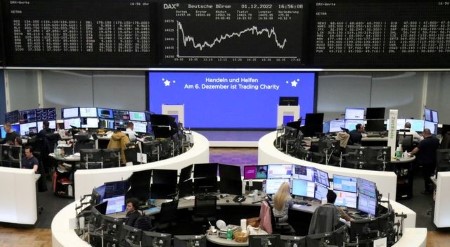
Dec 5 (Reuters) – European shares slipped on Monday after data showing a decline in euro zone business activity fanned recession fears, while hopes of easing of stringent COVID-19 curbs in China boosted miners and other China-exposed equities.

The region wide STOXX 600 closed 0.4% down.

The index had notched gains for the seventh straight week on Friday, helped by China-led optimism and easing worries over aggressive interest rate hikes.

Data on Monday showed euro zone business activity declined for a fifth month in November, suggesting the economy was sliding into a mild recession.

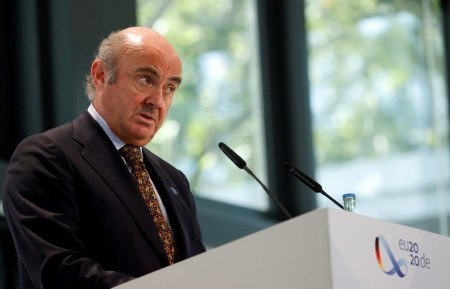
Governing council member Gabriel Makhlouf said the European Central Bank is likely to raise interest rates by 50 basis points (bps) next week on the way to potentially moving beyond a deposit rate of 3% amid ongoing inflationary concerns.

Most of the STOXX 600 sectors were in the red, with rate-sensitive technology stocks and consumer staples such as Nestle (NESN) and L’Oreal (OREP) being the biggest drag on the index.

“The ECB still has to be pretty strong, despite the fact that clearly activity in the euro zone is contracting a bit and it does look like Europe is on the cusp of a shallow recession,” said Danni Hewson, financial analyst at AJ Bell.

UK’s resource-heavy FTSE 100 was the only regional index in green, up 0.2%, helped by a jump in miners and China-exposed financials like Prudential.

“FTSE 100 is outperforming because of its make -,” added Hewson. “On balance, the expectation is that China will relax restrictions.”

Miners gained 0.6% as prices of base and precious metals rose with investors cheering the prospects of a broader policy shift in top consumer China in the wake of historic protests last month over COVID restrictions.

In company news, shares of Vodafone Group (VOD) slipped after the British mobile operator said Chief Executive Officer Nick Read would step down at the end of this year.

Credit Suisse (CSGN) gained 2.9%. Investors including Saudi Arabia’s crown prince and a US private-equity firm run by a former Barclays chief executive have shown interest in investing USD 1 billion or more in Credit Suisse’s new investment banking unit, the Wall Street Journal reported on Sunday.

(Reporting by Amruta Khandekar and Bansari Mayur Kamdar in Bengaluru; Editing by Vinay Dwivedi, Sherry Jacob-Phillips and Jonathan Oatis)


Philippines trims 2023 GDP growth target due to global risks

MANILA, Dec 5 (Reuters) – The Philippines on Monday lowered its economic growth target for 2023, taking into account an anticipated weakening in global activity, but retained its expansion goals for the succeeding five years.

The Southeast Asian nation’s economy is now expected to grow 6.0%-7.0% next year, a lower and narrower range compared with the previous official goal of 6.5%-8.0%, the inter-agency Development Budget Coordination Committee (DBCC) announced in a media briefing.

“It is the global slowdown that is affecting the adjustment,” Finance Secretary Benjamin Diokno said.

Last week, International Monetary Fund (IMF) Managing Director Kristalina Georgieva said the chance of
global growth falling below 2% next year was increasing due to the effects of the war in Ukraine and simultaneous slowdowns in Europe, China and the United States.

The DBCC, however, kept the growth target for 2024-2028 at 6.5%-8.0%.

For 2022, officials said the economy was on track to meet the growth goal of 6.5%-7.5%, faster than the 5.6% expansion in 2021, after the government removed nearly all COVID-19 restrictions and allowed more business activities to resume.

The government also revised its foreign exchange rate assumptions.

It expects the peso to trade against the U.S. dollar at 54-55 in 2022 compared with the previous assumption of 51-53, at 55-59 in 2023, and at 53-57 in 2024, compared with the previous forecast of 51-55 for 2023 onwards.

Trading around the 55 territory on Monday after plunging to a record low of 59 in recent weeks, the peso PHP= has recovered against the dollar thanks to a series of interest rate hikes by the Bangko Sentral ng Pilipinas (BSP) to match U.S. Federal Reserve’s aggressive tightening.

The BSP will likely hike rates at its Dec. 15 meeting by either 25 or 50 basis points, Governor Felipe Medalla said last week.

Meanwhile, economic officials, during the same briefing, supported the establishment of a
sovereign wealth fund, even as Medalla has voiced caution over the proposal, stressing the importance of transparency.

The Philippines’ bicameral legislature on Monday approved a record 5.268 trillion pesos (USD 94.4 billion) for the 2023 national budget, the first full-year spending plan under President Ferdinand Marcos Jr.


(USD 1 = 55.8050 Philippine pesos)


(Reporting by Neil Jerome Morales and Karen Lema; writing by Enrico Dela Cruz; Editing by Kanupriya Kapoor)

Bargains begin luring big banks back to China bets for 2023

Bargains begin luring big banks back to China bets for 2023

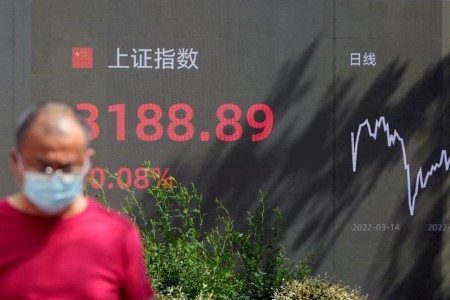
HONG KONG, Dec 5 (Reuters) – As Chinese assets whipsaw around hopes and fears over the country’s path out of the pandemic, big offshore investors are slowly leaving the sidelines as they plot a cautious return to one of the year’s worst-performing equity markets.

The drumbeat of bullish outlooks has grown a bit louder over recent weeks as analysts at Citi, Bank of America, and J.P. Morgan upgraded recommendations, and said re-opening can lift consumer-exposed stocks that have fallen to attractive prices.

Goldman Sachs forecasts 16% index returns for MSCI China and CSI300 next year and recommends an overweight allocation to China, while J.P.Morgan expects a 10% potential upside in MSCI China in 2023.

Morgan Stanley upgraded its recommendation to overweight on Monday with an increase in exposure to consumer stocks as reopening prospects improve. Bank of America Securities turned bullish in November, with its China equity strategist, Winnie Wu picking internet and financial stocks to lead the short-term rebound.

Overall, however, while consensus is building around economic recovery, there is hesitation over timing and weight of capital to allocate to China as the regulatory and political risks that have stalked its equity markets for the past couple of years remain.

“We would rather miss the first 10% gains, and wait until when we can see clearer, ongoing signs of policy pivot,” said Eva Lee, head of Greater China equities at UBS Global Wealth Management, the world’s biggest wealth manager by assets.

“We have experienced several rounds of policy back and forth in 2022,” she added, referring to both COVID and property policies. UBS Global Wealth Management recommends a market-neutral allocation to Chinese stocks.

There is some evidence that the first leg of an early recovery happened last week, with the Hang Seng .HSI up 6% and closing out its best month since 1998 with a 27% rise through November. The yuan posted its best week since 2005 on Friday.

Market participants say the asset moves so far – coming with COVID cases at record highs and only hints of a shift in authorities’ response – suggest light positioning in China that could lift markets if it were to solidify into steady inflows.

US institutional investors continue to reduce US-listed Chinese American Depositary Receipts (ADRs) so far in the fourth quarter with estimated outflows of USD 2.9 billion.

Short interest in ADRs was also up by 11% last month, Morgan Stanley data as of Nov. 29 shows. Societe Generale analysts downgraded their recommended China allocation from overweight to neutral.

ACCUMULATE ON WEAKNESS

China’s market weathered a perfect storm this year, with US-China tension threatening the US listings of Chinese companies, a credit crisis crunching the once-mighty real estate sector and COVID restrictions curtailing growth.

The CSI300 has lost 22% and the Hang Seng 20% so far this year, compared with a 16% loss for world stocks.

The policy response has been monetary easing, steadily increasing support for the property sector and the easing of some of the strict COVID rules. It is yet to win investors’ full approval, since unpredictable regulation and politics still hang over profitability, and domestic confidence remains fragile.

“Monetary easing has become ineffective, just like pushing a string,” said Chi Lo, senior strategist at BNP Paribas Asset Management. He is sticking with a preference for sectors that are likely to receive policy tailwinds.

“We continue to focus on the three key themes which are in line with China’s long-term growth target: technology and innovation, consumption upgrading and industry consolidation,” he said.

Goldman Sachs also recommends policy-aligned bets on sectors such as technology hardware and profitable state-owned businesses.

Politics aside, price and the prospect that rate hikes put a lid on US equities next year has also got money managers starting to weigh up the risk of missing out.

A 27% drop for the MSCI China index this year has left its price-to-earnings ratio at 9.55 against a 10-year average of 11.29.

“It’s now getting risky to be really underweight or short China as many of the hedge funds were,” said Sean Taylor, Asia-Pacific chief investment officer at asset manager DWS, which thinks there is scope for a 15-20% rally in China next year.

“Our view is to accumulate, on weakness, reopening beneficiaries, and particularly those driven by the consumer,” said Taylor.

(Reporting by Summer Zhen; Editing by Shri Navaratnam)


Oil falls over 3% after data raises Fed interest rate worries

Oil falls over 3% after data raises Fed interest rate worries

NEW YORK, Dec 5 (Reuters) – Oil prices fell over 3% on Monday, following US stock markets lower, after US service sector data raised worries that the Federal Reserve could continue its aggressive policy tightening path.

Brent crude futures settled down USD 2.89, or 3.4%%, at USD 82.68 a barrel. West Texas Intermediate crude (WTI) fell USD 3.05, or 3.8%, to USD 76.93 a barrel. Both benchmarks had earlier risen more than USD 2, before reversing direction.

During the session, WTI’s front-month contract began trading lower than prices in half a year, a market structure called contango, which implies oversupply.

US services industry activity unexpectedly picked up in November, with employment rebounding, offering more evidence of underlying momentum in the economy as it braces for an anticipated recession next year.

The news caused oil and stock markets to pare gains.

The data challenges hopes that the Fed might slow the pace and intensity of its rate hikes amid recent signs of ebbing inflation.

“Macro-economic jitters about the Fed and what they’re going to do on interest rates are taking over the market,” said Phil Flynn, an analyst at Price Futures group.

Supporting the market earlier, the Organization of the Petroleum Exporting Countries and allies including Russia, together called OPEC+, agreed on Sunday to stick to their October plan to cut output by 2 million barrels per day (bpd) from November through 2023.

“The decision … is not a surprise, given the uncertainty in the market over the impact of the Dec. 5 EU Russia crude oil import ban and the G7 price cap,” said Ann-Louise Hittle, vice president of consultancy Wood Mackenzie.

“In addition, the producers’ group faces downside risk from the potential for weakening global economic growth and China’s zero COVID policy.”

The Group of Seven (G7) countries and Australia last week agreed on a USD 60 a barrel price cap on seaborne Russian oil.

However, the price cap’s effect on the futures market during Monday’s session ran out of steam by the end of the day, said Andrew Lipow, president of Lipow Oil Associates in Houston.

“The market has realized that the EU is already banning the purchase of Russian oil with a few limited exemptions, and China and India are going to continue and purchase Russian crude oil, so the impact of the price cap will be mitigated,” Lipow said.

At the same time, in a positive sign for fuel demand in the world’s top oil importer, more Chinese cities eased COVID curbs over the weekend.

Business and manufacturing activity in China, the world’s second-largest economy, have been hit this year by strict measures to curb the spread of the coronavirus.

(Reporting by Stephanie Kelly in New York; Additional reporting by Noah Browning in London, Sonali Paul in Melbourne and Emily Chow in Singapore; Editing by Marguerita Choy and Matthew Lewis)


Gold retreats from near 4-month peak on positive US jobs data

Gold retreats from near 4-month peak on positive US jobs data

Dec 2 (Reuters) – Gold prices slipped on Friday, retreating from a near-four month high, after robust US jobs data fanned concerns that the Federal Reserve might stick with its aggressive monetary policy tightening.

Spot gold fell 0.4% to USD 1,794.96 per ounce by 2:21 p.m. ET (1921 GMT), after earlier hitting its highest since Aug. 10 at USD 1,804.46. US gold futures GCv1 settled down 0.3% at USD 1,809.6.

Data showed US employers hired more workers than expected in November and raised wages despite mounting worries of a recession.

“With the US jobs number coming in much stronger than expected… what we’re seeing is the concern that the Fed may need to go further with their expected interest rate hikes,” said David Meger, director of metals trading at High Ridge Future.

“You’re going to see pressure on most asset classes today, not just the precious metals complex.”

The dollar edged 0.1% higher against its rivals, while benchmark US Treasury yield rose.

Additionally, Chicago Fed President Charles Evans stated at an event that there could be “a slightly higher peak rate of the funds rate, even as we likely will step down” the pace of rate hikes from 75 bps.

Fed funds futures prices still implied a 75% chance of the central bank raising its policy rate by 50 basis points to a 4.25%-4.5% range in mid-December.

Gold is highly sensitive to rising US interest rates, as these increase the opportunity cost of holding non-yielding bullion.

Gold prices were still set for their second straight weekly rise, up 2.2% so far this week, as the dollar dipped after Fed Chair Jerome Powell’s dovish speech this week.

Other precious metals were set for weekly gains as well. Spot silver XAG= rose 1.5% to USD 23.11 per ounce, having hit its highest since May 5. Platinum dropped 2.6% to USD 1,014.25 and palladium was down 2.1% to USD 1,901.25.

(Reporting by Seher Dareen and Brijesh Patel in Bengaluru; Editing by Sriraj Kalluvila and Shailesh Kuber)


US equity funds register biggest weekly outflow in over five weeks

US equity funds register biggest weekly outflow in over five weeks

Dec 2 (Reuters) – US equity funds logged big outflows in the week to November 30 as investors booked profit after concerns over economic growth resurfaced due to protests in major Chinese cities against strict COVID-19 policies.

Investors were also cautious about the tech sector amid a hit to iPhone production in China.

According to data from Refinitiv Lipper, US equity funds saw outflows of USD 17.37 billion, the biggest amount for a week since June 15.

Data showed the S&P 500, Nasdaq Composite and Dow Jones Industrial Average .DJI all recorded two straight months of gains through November.

US equity growth and value funds both witnessed outflows for a second straight week, with disposals amounting to USD 6.8 billion and USD 1.76 billion, respectively.

By sector, investors exited tech, financials, and real estate funds worth USD 647 million, USD 231 million and USD 219 million, respectively.

Data for US bond funds showed investors withdrew USD 10.41 billion in a fourth straight week of net selling.

US investors sold taxable bond funds of USD 8.91 billion, marking a third straight week of outflow, while exiting USD 288 million out of municipal bond funds.

US general domestic taxable fixed income funds recorded outflows of USD 6.38 billion, the biggest for a week since at least Jan. 2021, while short/intermediate investment-grade, and high yield funds had net selling of USD 1.23 billion and USD 1.11 billion respectively.

Meanwhile, safer US money market funds received USD 26.95 billion, the biggest amount in four weeks, and government bond fund attracted USD 738 million.

(Reporting by Gaurav Dogra and Patturaja Murugaboopathy in Bengaluru)


ECB to start offloading debt to fight inflation

ECB to start offloading debt to fight inflation

FRANKFURT, Dec 2 (Reuters) – The European Central Bank is all but certain to start offloading some of its 5 trillion euro (USD 5.3 trillion) bond stash next year as it ramps up efforts to bring down record-high inflation in the euro zone.

Along with a continuing streak of interest rate increases, it hopes so-called quantitative tightening, or QT, will raise borrowing costs and thereby slow demand for goods and services across the 19 countries that use the euro.

The policy shift will be historic, after the ECB spent nearly a decade doing the exact opposite via multiple stimulus programmes that kept the euro zone economy afloat through sequential crises.

It also poses a challenge to governments that have relied on the ECB as a major lender for years, particularly in the bloc’s indebted south.

The ECB will lay out the “key principles” of the QT program on Dec 15, with kick-off expected in the first few months of 2023.

Here are the main questions investors are asking about the ECB’s plans.

WHAT IS QT AND HOW IS IT SUPPOSED TO WORK?

At a general level, quantitative tightening is supposed to be a mirror image of the quantitative easing (QE) policies that have dominated the past decade.

Under QE, the ECB drove down borrowing costs by buying government bonds, hoping this would spur banks and other investors to put their money to more fruitful use, such as financing companies.

Through quantitative tightening, the ECB will mop up the liquidity created by QE by shedding its bond holdings.

This should raise the cost of money and cool credit and investment.

WHAT WOULD IT LOOK LIKE IN PRACTICE?

The ECB has hinted that it doesn’t plan to sell its bonds but will instead simply stop replacing some of those that mature, as the US Federal Reserve did when it started its own QT programme earlier this year.

The Fed said it would only reinvest proceeds from maturing bonds exceeding a certain monthly threshold.

WILL THE ECB SIMPLY COPY THE FED?

Probably not, as monthly redemptions from the ECB’s Asset Purchase Program range from 17.8 billion euros next August to 52.7 billion euros in October.

That means it might need to use a percentage of redemptions as its yardstick or smooth reinvestments across several months, as it has done in the past.

But ECB policymakers have been adamant that they want QT to be predictable and gradual, so don’t expect too much variation.

The idea is to put it on autopilot so that policymakers will not have to make regular decisions on the pace of redemptions, ensuring interest rates will remain their key tool.

HOW MUCH MONEY ARE WE TALKING ABOUT HERE?

The ECB bought 3.3 trillion euros worth of assets under APP, most of which are government bonds.

These have an average maturity of just over seven years and analysts expect the ECB to reduce its portfolio by only 15-20 billion euros per month on average. That means it will take the ECB a long time to run down its balance sheet if it doesn’t sell assets.

The ECB also has a separate Pandemic Emergency Purchase Programme, worth 1.7 trillion euros. It has said it will keep reinvesting proceeds from that scheme until the end of 2024.

WHAT DOES IT MEAN FOR BORROWERS?

The ECB has been a major buyer of government bonds since 2015. For some months at the height of the pandemic, it was buying more sovereign debt than countries were issuing.

This is set to change under QT, forcing euro zone governments – most of which are still running deficits – to raise money from private investors.

UniCredit estimates the market will need to absorb an additional 500 billion euros’ worth of euro zone government bonds next year, the biggest increase since 2010.

SHOULD WE EXPECT MARKET TURMOIL?

Markets seem to have already priced in some QT, with yields on government bonds across the euro zone climbing to multi-year highs in September before a pullback in recent weeks.

Germany’s 10-year bonds are currently yielding 1.8% compared to minus 0.4% a year ago while similar bonds for highly indebted Italy are at 3.7%.

But the ECB has already provided a safety net for these countries, in the form of a scheme that would let it buy unlimited amounts of their bonds if the market seized up.

(USD 1 = 0.9497 euros)

(Reporting by Francesco Canepa; Editing by Catherine Evans)


Nikkei ends at 3-week low on yen strength

Nikkei ends at 3-week low on yen strength

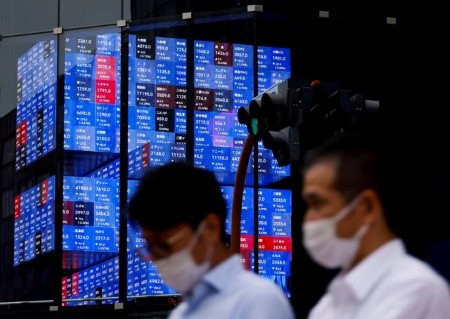
TOKYO, Dec 2 (Reuters) – Japan’s Nikkei index closed at its lowest in three weeks on Friday, led by declines in technology stocks, while the yen’s sharp gains hurt automakers.

Investors were also cautious ahead of key US monthly jobs data, which could offer cues on the Federal Reserve’s stance on interest rate hikes.

The Nikkei fell 1.59% to 27,777.90, its lowest close since Nov. 10, and posted a 1.59% weekly fall.

The Topix lost 1.64% to 1,953.98, after losing as much as 2.06%, a level that could trigger the Bank of Japan to step in the market. The index fell 1.64% for the week.

Japan’s shock win over Spain in the soccer World Cup overnight lifted shares of online broadcaster CyberAgent and British-style pub chain Hub.

CyberAgent — the social media and online ad company that is broadcasting all of the Qatar World Cup matches on its Ameba app — rose 3.95%, while Hub 3030.T jumped 7.03%.

“Many Japanese companies have their assumed dollar-yen rate set around 135, so additional yen strength has a very high probability of a becoming a drag on earnings,” Kazuo Kamitani, a strategist at Nomura, said in a conference call with journalists.

Investors globally will be closely watching Friday’s US non-farm payrolls for any further evidence of a peak in inflationary pressures to support Fed Chair Jerome Powell’s comments this week that it is time to slow rate hikes.

On the Nikkei, Mitsubishi Motors was the worst performer, sliding 5.91%. Nissan fell 2.98% and Toyota lost 1.38%.

The biggest drag was Uniqlo store operator Fast Retailing <9983.T), which shaved 48 points off the Nikkei with its 1.72% decline.

Mobile phone company KDDI lost 1.91%.

(Reporting by Kevin Buckland and Junko Fujita; Editing by William Mallard and Uttaresh.V)


Posts navigation

Older posts
Newer posts

Recent Posts

  • Metrobank US-Iran Risk Index: A new hope
  • A guide for your peso bond portfolio amid higher for longer rates
  • Investment Ideas: April 8, 2026
  • Inflation Update: The case to tighten
  • Investment Ideas: April 7, 2026

Recent Comments

No comments to show.

Archives

  • April 2026
  • March 2026
  • February 2026
  • January 2026
  • December 2025
  • November 2025
  • October 2025
  • September 2025
  • August 2025
  • July 2025
  • June 2025
  • May 2025
  • April 2025
  • March 2025
  • February 2025
  • January 2025
  • December 2024
  • November 2024
  • October 2024
  • September 2024
  • August 2024
  • July 2024
  • June 2024
  • May 2024
  • April 2024
  • March 2024
  • February 2024
  • January 2024
  • December 2023
  • November 2023
  • October 2023
  • September 2023
  • August 2023
  • July 2023
  • June 2023
  • May 2023
  • April 2023
  • March 2023
  • February 2023
  • January 2023
  • December 2022
  • November 2022
  • October 2022
  • September 2022
  • August 2022
  • July 2022
  • June 2022
  • May 2022
  • March 2022
  • December 2021
  • October 2021

Categories

  • Bonds
  • BusinessWorld
  • Currencies
  • Economy
  • Equities
  • Estate Planning
  • Explainer
  • Featured Insight
  • Fine Living
  • How To
  • Investment Tips
  • Markets
  • Portfolio Picks
  • Rates & Bonds
  • Retirement
  • Reuters
  • Spotlight
  • Stocks
  • Uncategorized

You are leaving Metrobank Wealth Insights

Please be aware that the external site policies may differ from our website Terms And Conditions and Privacy Policy. The next site will be opened in a new browser window or tab.

Cancel Proceed
Get in Touch

For inquiries, please call our Metrobank Contact Center at (02) 88-700-700 (domestic toll-free 1-800-1888-5775) or send an e-mail to customercare@metrobank.com.ph

Metrobank is regulated by the Bangko Sentral ng Pilipinas
Website: https://www.bsp.gov.ph

Quick Links
The Gist Webinars Wealth Manager Explainers
Markets
Currencies Rates & Bonds Equities Economy
Wealth
Investment Tips Fine Living Retirement
Portfolio Picks
Bonds Stocks
Others
Contact Us Privacy Notice Terms of Use
© 2026 Metrobank. All rights reserved.

Access this content:

If you are an existing investor, log in first to your Metrobank Wealth Manager account. ​

If you wish to start your wealth journey with us, click the “How To Sign Up” button. ​

Login HOW TO SIGN UP