





MODEL PORTFOLIO
THE GIST
NEWS AND FEATURES
Global Philippines Fine Living
INSIGHTS
INVESTMENT STRATEGY
Economy Stocks Bonds Currencies
THE BASICS
Investment Tips Explainers Retirement
WEBINARS
2024 Mid-Year Economi Briefing, economic growth in the Philippines
2024 Mid-Year Economic Briefing: Navigating the Easing Cycle
June 21, 2024
Investing with Love
Investing with Love: A Mother’s Guide to Putting Money to Work
May 15, 2024
retirement-ss-3
Investor Series: An Introduction to Estate Planning
September 1, 2023
View All Webinars
DOWNLOADS
Container ship carrying container boxes import export dock with quay crane. Business commercial trade global cargo freight shipping logistic and transportation worldwide oversea concept. Generative AI
Economic Updates
Philippines Trade Update: Wider deficit on strong imports
DOWNLOAD
Frick collection with palm trees 
Economic Updates
Policy Rate Updates: Policy rate updates to reassure 
DOWNLOAD
Man using his smartphone
Reports
Fed to cut just once 
DOWNLOAD
View all Reports
Metrobank.com.ph How To Sign Up
Follow us on our platforms.

How may we help you?

TOP SEARCHES
  • Where to put my investments
  • Reports about the pandemic and economy
  • Metrobank
  • Webinars
  • Economy
TRENDING ARTICLES
  • Investing for Beginners: Following your PATH
  • On government debt thresholds: How much is too much?
  • Philippines Stock Market Outlook for 2022
  • Deficit spending remains unabated

Login

Access Exclusive Content
Login to Wealth Manager
Visit us at metrobank.com.ph How To Sign Up
Access Exclusive Content Login to Wealth Manager
Search
MODEL PORTFOLIO THE GIST
NEWS AND FEATURES
Global Philippines Fine Living
INSIGHTS
INVESTMENT STRATEGY
Economy Stocks Bonds Currencies
THE BASICS
Investment Tips Explainers Retirement
WEBINARS
2024 Mid-Year Economi Briefing, economic growth in the Philippines
2024 Mid-Year Economic Briefing: Navigating the Easing Cycle
June 21, 2024
Investing with Love
Investing with Love: A Mother’s Guide to Putting Money to Work
May 15, 2024
retirement-ss-3
Investor Series: An Introduction to Estate Planning
September 1, 2023
View All Webinars
DOWNLOADS
Container ship carrying container boxes import export dock with quay crane. Business commercial trade global cargo freight shipping logistic and transportation worldwide oversea concept. Generative AI
Economic Updates
Philippines Trade Update: Wider deficit on strong imports
March 27, 2026 DOWNLOAD
Frick collection with palm trees 
Economic Updates
Policy Rate Updates: Policy rate updates to reassure 
March 26, 2026 DOWNLOAD
Man using his smartphone
Reports
Fed to cut just once 
March 19, 2026 DOWNLOAD
View all Reports

Archives: Reuters Articles

Gold rises as Fed slowdown hopes offset firm yields, dollar

Gold rises as Fed slowdown hopes offset firm yields, dollar

Dec 9 (Reuters) – Gold prices rose on Friday despite an uptick in the dollar and US bond yields as some investors still expect the Federal Reserve will slow the pace of rate hikes from early next year.

Spot gold rose 0.5% to USD 1,798.40 per ounce, as of 1907 GMT. US gold futures settled 0.5% higher at USD 1,810.70.

“The market seems to be focused on a light at the end of the tunnel, a point at which the Fed is done raising interest rates and based on that we’ve seen general support in gold,” said David Meger, director of metals trading at High Ridge Future.

A 50-basis-point rate hike is widely expected to be delivered by the Fed at its final meeting of 2022 scheduled on Dec. 13-14.

Rate hikes to fight soaring inflation raise the opportunity cost of holding zero-yield bullion.

How long this positive sentiment towards gold lasts will be dependent on how much the US central bank increases its benchmark rate by and the rhetoric of Fed Chair Jerome Powell at the post-meeting press conference, Kinesis Money analyst Rupert Rowling said in a note.

However, data showed US producer prices rose more than expected in November, adding to market uncertainty over the Fed policy outlook.

Following the data, the dollar edged up, making gold more expensive for overseas buyers, while yields on 10-year Treasury notes also gained.

Focus now shifts to the US Consumer Price Index data due on Dec. 13.

“If CPI runs hot, you might see a strong case for the Fed to deliver back-to-back half point rate increases before they pause, which might suggest gold might give back some of the gains its made over the past month,” Edward Moya, senior analyst with OANDA, said in a note.

Elsewhere, spot silver rose 1.8% to USD 23.48 per ounce, platinum climbed 2.1% to USD 1,024.00. Palladium gained 1.7% to USD 1,958.79.

(Reporting by Kavya Guduru in Bengaluru; Editing by Maju Samuel and Susan Fenton)


US diesel stocks start to normalise as economy slows: Kemp

US diesel stocks start to normalise as economy slows: Kemp

LONDON, Dec 9 (Reuters) – US inventories of diesel, heating oil and other distillate fuel oils are rising rapidly in response to slowing consumption and a delayed reaction to high prices.

US distillate fuel oil stocks increased by six million barrels over the seven days ending on Dec. 2, according to data from the US Energy Information Administration (EIA).

Distillate inventories have risen by a total of 13 million barrels over the eight weeks since Oct. 7 (“Weekly petroleum status report”, EIA, Dec. 7).

Distillate inventories have accumulated at a time of year when they would normally be depleting, a signal the market balance has shifted decisively.

Stocks depleted by an average of six million barrels over the same period in the ten years before the COVID-19 pandemic.

But in 2022, inventories have risen at the fastest seasonal rate since 2001, when the economy was in recession and transport had been extensively disrupted by the attack on the World Trade Centre.

Stocks are still 17 million barrels (-13% or -0.83 standard deviations) below the pre-pandemic five-year seasonal average, but the deficit has halved from 34 million barrels (-24% or -2.05 standard deviations) in early October.

In the past, increases in inventories at this time of year have been associated with high prices (2000 and 2005) or a slowdown in the business cycle (2001 and 2008) suppressing consumption.

There are signs the pattern is repeating. The volume of distillate supplied to the domestic market (a proxy for consumption) slowed to just 3.73 million barrels per day (bpd) in the four weeks to Dec. 2, the lowest since 2015.

In a sign of slowing demand from the freight sector, the number of intermodal containers hauled on US railroads in October was the lowest for the time of year since 2013, according to the US Bureau of Transportation Statistics.

Net distillate exports have slowed to around 1.0 million bpd from 1.4 million bpd in September, implying foreign consumption also slackened.

As the global business cycle decelerates, softening consumption of middle distillates in manufacturing and freight transport is starting to rebuild depleted inventories.

(John Kemp is a Reuters market analyst. The views expressed are his own; editing by Mark Potter)


Global equity funds record biggest weekly outflows in three months

Global equity funds record biggest weekly outflows in three months

Dec 9 (Reuters) – Outflows from global equity funds in the week ended Dec. 7 hit a three-month high on fears that interest rates could stay higher for longer than expected amid mounting worries about a recession next year.

According to Refinitiv Lipper data, investors offloaded a net USD 22.03 billion worth of global equity funds, marking their biggest weekly net selling since Sept. 7.

Reports showing an upbeat US services industry activity and higher-than-expected nonfarm payroll additions in November raised bets that the Federal Reserve will be more hawkish than expected.

Investors were also worried as the biggest US banks including Goldman Sachs, J.P. Morgan and Bank of America warned of a recession as inflation threatens consumer demand.

Investors sold a net USD 26.65 billion in US equity funds, although they purchased European and Asian equity funds worth USD 3.41 billion and USD 990 million, respectively.

Among equity sector funds, tech, financials, and consumer discretionary witnessed outflows of USD 1.04 billion, USD 702 million and USD 523 million, respectively.

Meanwhile, global bond funds attracted USD 8.54 billion in inflows after witnessing outflows for four weeks.

Corporate bond funds received USD 2.17 billion, and government bond funds drew USD 1.06 billion, the biggest weekly inflow in three weeks, while outflows from short- and mid-term bond funds eased to a 16-week low of USD 272 million.

Meanwhile, money market funds accumulated USD 62 billion in net buying, marking the biggest weekly inflow since Nov. 2.

In the commodities space, energy funds received about USD 87 million in a seventh successive week of net buying. Still precious metal funds recorded outflows of USD 357 million, the most in four weeks.

According to data available for 24,734 emerging market (EM) funds, equity funds saw outflows of 1.06 billion after two straight weeks of inflows, but investors purchased USD 1.35 billion worth of bond funds.

(Reporting by Gaurav Dogra and Patturaja Murugaboopathy in Bengaluru; Editing by Vinay Dwivedi)


China, HK stocks extend rally as Beijing eases COVID rules

China, HK stocks extend rally as Beijing eases COVID rules

SHANGHAI, Dec 9 (Reuters) – China and Hong Kong stocks rose on Friday as investors continued to bet on companies that stand to gain from China’s COVID policy pivot, driving up consumer and healthcare stocks.

Property shares surged on signs of fresh support by Chinese state banks, as well as developer Sunac China’s 1918.HK restructuring proposal.

China’s benchmark CSI300 Index gained 1% to a 12-week high, while the Shanghai Composite Index edged up 0.3%.

Hong Kong’s Hang Seng Index climbed 2.3%, as an index tracking mainland developers surged 10% to a four-month high.

Investors are growing optimistic about China’s recovery, as authorities dramatically loosened strict COVID-19 measures this week, slashing testing, quarantine and lockdown requirements.

The government also plans to boost vaccination, especially among the elderly, measures investors see as conducive to an eventual reopening of the economy.

“With a set reopening path, we believe Chinese equities will outperform the broad EM and global markets,” Morgan Stanley said in a note to clients on Friday.

“We believe execution follow-through and other factors would help lift market sentiment,” said the Wall Street bank, which upgraded Chinese equities earlier this week.

Reflecting increasing optimism toward China, the country’s stock market recorded USD 8.5 billion in foreign inflows in November, according to the latest data from the Institute of International Finance. That is a stark contrast to heavy outflows in the first half of this year.

Investors are looking beyond data showing lingering weakness in the economy, as China’s factory-gate prices recorded an annual fall for a second month in November while consumer inflation slowed.

Investors continue to pile into healthcare and consumer stocks, betting they will benefit from eased COVID rules.

Property shares extended their rally as more state banks vowed support to the struggling sector.

Sentiment was also aided by news that Sunac 1918.HK proposed a preliminary restructuring framework that includes a deleveraging plan to convert USD 3 billion-USD 4 billion of existing debt and certain shareholder loans into shares or equity-linked instruments.

(Reporting by Shanghai newsroom; Editing by Jacqueline Wong and Raissa Kasolowsky)


Philippines revises 2022, 2023 c/a projections

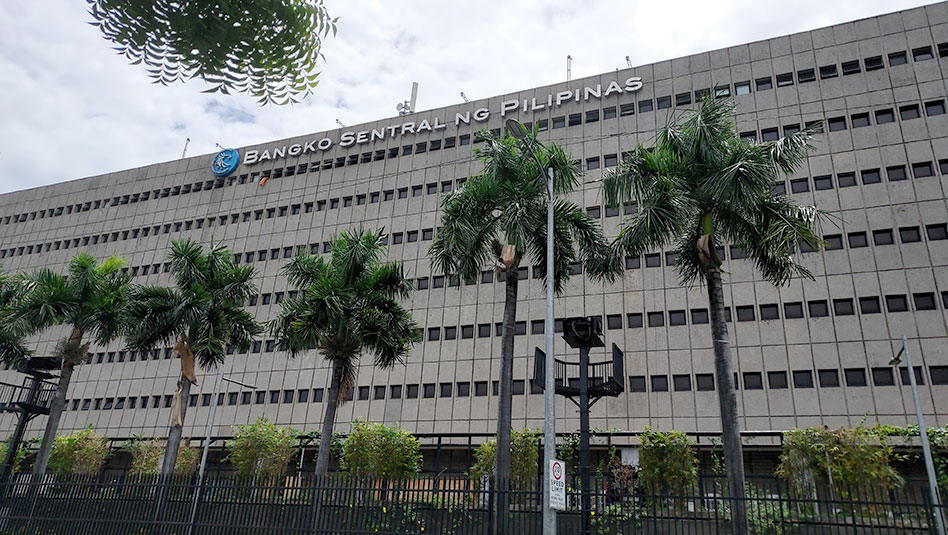
MANILA, Dec 9 (Reuters) – The Philippine central bank on Friday revised its current account projections for 2022 and 2023 to take into account the weaker global growth outlook, elevated inflation and the domestic economy’s pace of expansion.

The central bank now expects a current account deficit of USD 20.5 billion, or 5.1% of gross domestic product (GDP), this year, compared with its previous projection of USD 20.6 billion, or 5% of GDP.

For 2023, it expects a current account deficit of USD 19.9 billion, or 4.7% of GDP, compared with its earlier deficit forecast of USD 20.1 billion, or 4.5% of GDP.

The central bank said the revisions reflected intensifying external risks from a more subdued global growth outlook, persistent inflation pressures, the protracted Ukraine-Russia conflict, and supply chain disruptions.

Central bank officials also took into consideration the positive outlook for the Philippine economy which was on track to meet its growth target of 6.5%-7.5% this year, with the pace of expansion forecast to remain at least 6% next year.

The central bank revised its balance of payments (BOP) forecasts for both years, which are now expected to show a deficit of USD 11.2 billion in 2022 and USD 5.4 billion in 2023, wider than previous estimates.

Forecasts for gross international reserves were lowered to USD 93 billion for both 2022 and 2023, from the central bank’s previous estimate of USD 99 billion and USD 100 billion respectively.

Remittances from Filipinos working and living abroad were seen on track to grow 4.0% this year and next.

(Reporting by Neil Jerome Morales and Karen Lema; Editing by Ed Davies)


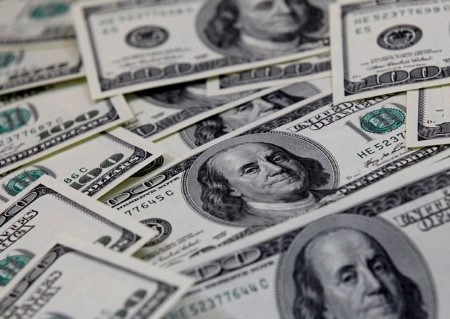
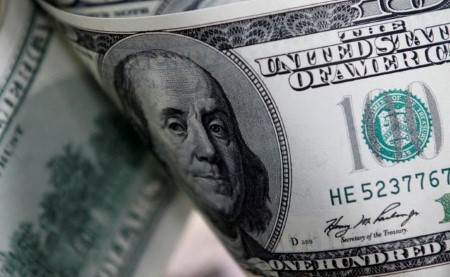
Dollar slips on recession fears; eyes on US CPI, central bank meetings

Dollar slips on recession fears; eyes on US CPI, central bank meetings

SINGAPORE, Dec 9 (Reuters) – The dollar retreated on Friday as worries over a slowdown in the United States mounted, with traders on guard ahead of a slew of central bank meetings next week, with the Federal Reserve taking centre stage.

Against the greenback, the euro rose 0.25% to USD 1.0581, edging toward its six-month peak hit at the start of the week and on track for a third straight week of gains.

Sterling firmed 0.27% and stood at USD 1.2274, not far off Monday’s six-month high of USD 1.2345. The Japanese yen jumped about 0.4% to 136.13.

The number of Americans filing new claims for jobless benefits increased moderately last week, data showed on Thursday, with the so-called continuing claims rising to a 10-month high in late November, adding to fears that the world’s largest economy may slide into recession next year.

“We’ve got a very awkward outlook the next year, which is playing into traders’ thought process. We’re looking…at much lower growth globally, lower growth out of the US as well,” said Jarrod Kerr, chief economist at Kiwibank.

The US dollar index fell 0.23% to 104.57, after slipping 0.3% overnight.

It has fallen nearly 7% this quarter, putting it on track for the largest quarterly decline since 2010.

“It’s (also) very much positioning at the moment,” Kerr added, ahead of the Fed’s policy meeting next week.

Money markets are pricing in a 93% chance that the Fed will raise rates by 50 basis points, with rates now seen peaking at just below 5% in May.

Closely-watched US inflation data is also due next week, with any downside surprise in November’s CPI likely to trigger another greenback selling spree.

Last month, the dollar dived after data showed that US consumer prices had risen less than expected in October.

Expectations that the Fed will scale back the pace of its interest rate hikes and that rates may not rise as high as previously feared have knocked the dollar more than 8% off its two-decade peak against a basket of currencies hit in September.

Yields on US Treasuries have also slumped, with the two-year yield, which typically reflects interest rate expectations, last at 4.2838%, away from its 15-year high of nearly 4.9% hit last month.

A closely watched part of the US Treasury yield curve, measuring the gap between yields on two- and 10-year Treasury notes was inverted at -83 bps.

An inversion of this yield curve is typically a precursor to recession.

The European Central Bank and the Bank of England will also announce their monetary policy decisions next week, with markets keenly watching for guidance on 2023’s outlook.

Elsewhere, the Aussie was up 0.26% at USD 0.67875, while the kiwi gained 0.42% to USD 0.6407.

The antipodean currencies have been beneficiaries of China’s recent easing of its stringent COVID restrictions, given that they are often used as liquid proxies for the Chinese yuan.

Against the dollar, the offshore yuan rose roughly 0.1% to 6.9541.

Optimism over China’s path to reopening has overshadowed the country’s recent dismal data releases. China’s factory-gate prices showed an annual fall for a second month in November while consumer inflation slowed, highlighting very weak demand.

“The China reopening theme is a big one, especially (coming) from a low base,” said Christopher Wong, a currency strategist at OCBC.

“Chinese assets were deeply oversold prior to the recent rebound. More reallocation back to RMB-assets will support RMB.”

(Editing by Jacqueline Wong and Kim Coghill)

Oil bounces on pipeline shutdown, but heads for weekly loss on demand woes

Oil bounces on pipeline shutdown, but heads for weekly loss on demand woes

Dec 9 (Reuters) – Oil prices bounced higher on Friday as closure of a major Canada-to-US crude pipeline disrupted supplies, but both benchmarks were headed for a weekly loss on worries over slowing global demand growth.

Brent crude futures were at USD 76.73 a barrel, up 58 cents, or 0.76%, at 0716 GMT, after dropping 1.3% on Thursday.

US West Texas Intermediate crude rose 52 cents, or 0.73%, to USD 71.98 a barrel, having settled 0.8% lower in the previous session.

News of an accident closing Canada’s TC Energy’s Keystone pipeline in the United States prompted a brief rally on Thursday, but prices finally eased as the market took a view that the closure would be brief. More than 14,000 barrels of crude oil spilled into a creek in Kansas, making it one of the largest crude spills in the United States in nearly a decade.

Previous spill-induced outages are typically rectified in about two weeks, RBC Capital analyst Robert Kwan said, although the latest outage may prove longer given that it involves a spill into a creek.

Oil prices are set to post their biggest weekly drop in months, since traders expect it will be some time before China easing its COVID controls feeds through to demand.

And surging infections will likely depress China’s economic growth in the next few months, bringing a rebound only later in 2023, economists said.

“The market lacks conviction in calling a bottom to crude despite the strong losing streak of the past several sessions,” said Vandana Hari, founder of oil market analysis provider Vanda Insights.

Thursday’s price slump despite two major crude supply disruptions is a bit bewildering, she said.

“It is likely exacerbated by thinning trading activity, wherein the few remaining actors are playing it safe by continuing to sell and steering clear of the long side.”

Also on the downside, the US economy is heading into a short and shallow recession over the coming year, according to economists polled by Reuters who unanimously expected the US Federal Reserve to go for a smaller 50 basis point interest rate hike on Dec. 14.

The European Central Bank will also likely lift its deposit rate by 50 basis points next week to 2.00%, another Reuters poll found, despite the euro zone economy almost certainly being in recession, as it battles inflation running at five times its target.


(Reporting by Florence Tan in Singapore and Mohi Narayan in New Delhi; Editing by Bradley Perrett, Stephen Coates and Tom Hogue)

Gold firms on dollar dip; spotlight on Fed policy decision

Gold firms on dollar dip; spotlight on Fed policy decision

Dec 9 (Reuters) – Gold firmed just below the key USD 1,800 level on Friday as the dollar eased, with caution ahead of US inflation data and the Federal Reserve’s policy decision due next week limiting overall moves.

Spot gold was up 0.3% at USD 1,794.49 per ounce, as of 0648 GMT, but fell 0.2% this week. US gold futures rose 0.3% to USD 1,807.10.

The dollar index was down 0.2%. A weaker dollar makes gold more attractive to buyers holding other currencies.

There’s a real chance of an upward move in gold heading into next week’s Fed meet and CPI data, said Clifford Bennett, chief economist at ACY Securities.

Investors now expect a 93% chance of a 50-basis point rate hike at the Fed’s policy meeting on Dec. 13-14. The US Consumer Price Index (CPI) report for November is due on Dec. 13.

If the Fed slows the pace as per expectations, along with a relatively moderate CPI print, “then dollar might weaken and all of a sudden you could see a perfect storm rushing over gold’s horizon,” Bennett added.

Lower interest rates tend to be beneficial for bullion as they decrease the opportunity cost of holding the non-yielding asset.

Traders will care to see what the Fed has to say about the trend of inflation and where rates could peak, Edward Moya, senior analyst with OANDA, said in a note.

“Gold looks like it will find a home around the USD 1,800 level, until we have further indications.”

The number of Americans filing new claims for jobless benefits increased moderately last week, pointing to a still-tight and strong labor market despite growing fears of a recession.

Spot silver edged 0.3% higher to USD 23.15, platinum rose 0.7% to USD 1,010.30. Palladium lost 0.5% to USD 1,918.01, but was headed for second straight weekly gain.


(Reporting by Ashitha Shivaprasad in Bengaluru; Editing by Rashmi Aich)

Tax-loss selling in battered US stocks could spur January snap-back

Tax-loss selling in battered US stocks could spur January snap-back

NEW YORK, Dec 7 (Reuters) – Investors who sell underperforming US stocks to lock in tax benefits before year-end may be adding to recent pressure on equities while sowing the seeds of a January rebound in some corners of the market.

With the S&P 500 down about 16% year-to-date and many individual stocks nursing even sharper losses, tax-loss harvesting – or investors selling assets with a loss in order to cancel out the income taxes they owe on realized gains elsewhere in their portfolios – may be a stronger than usual headwind to markets this year.

Yet some investors are betting a number of those beaten-down stocks and possibly the broader market could snap back in January, once the selling period is over.

“This is the first time that investors are looking at double-digit declines in about 13 years, and we’ve never seen this level of tax-loss selling before,” said Peter Essele, who oversees roughly USD 11 billion as in assets as head of portfolio management for Commonwealth Financial Network. “That could result in a pretty strong first couple of months as people start reentering long-term assets.”

S&P 500 stocks that are down 10% or more for the year – making them likely targets for tax-loss selling – have historically outperformed the broader index by 8.2 percentage points between November and the end of January during years in which the index fell more than 10%, analysts at BofA Global Research noted in a research report.

The firm identified 159 out of 338 stocks with a 10% or greater loss for the year in the S&P 500 that could bounce following tax selling, including Meta Platforms Inc. (META), Domino’s Pizza Inc. (DPZ), Home Depot Inc. (HD), and Amazon.com Inc. (AMZN). Shares of each company are down 1% or more for December, with Amazon leading the way with a roughly 8% decline.

DoubleLine founder Jeffrey Gundlach told CNBC on Wednesday that risk assets will likely rally in January once retail investors finish tax-loss selling. Strategists at Evercore wrote on Nov. 30 that they were “buyers of stocks whose 2022 Tax Loss selling pressure will soon abate.”

Investors appear to have already started selling underperforming shares. Private clients at BofA, for instance, sold nearly USD 1.4 billion of stocks in likely tax-motivated selling in November, up from roughly USD 800 million last year, and appear poised to continue that outsized rate of selling this month, the firm said.

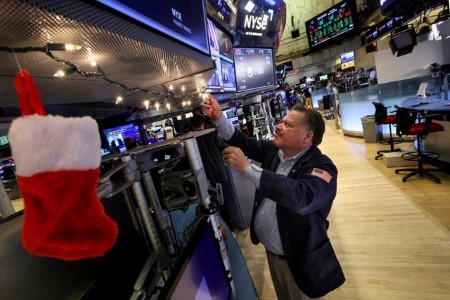
Vanda Research, which tracks the behavior of retail traders, wrote in a late-November research note that individual investors typically pull an average of approximately USD 1 billion on net from the shares of single US stocks during the last weeks of December and put their funds into ETFs that give exposure to broader markets, helping fuel so-called “Santa Claus rallies” at the end of the year.

Of course, macroeconomic concerns such as monetary policy and worries over a potential recession resulting from the Federal Reserve’s rapid interest rate hikes are likely to remain the main drivers of stock moves in 2023, potentially dwarfing the impact of seasonal flows, said Emily Rowland, co-chief investment strategist at John Hancock Investment Management.

“We wouldn’t want to overplay that trend as we move into more challenging waters next year,” she said.

(Reporting by David Randall; Editing by Ira Iosebashvili and Nick Zieminski)


Emerging markets November foreign inflows most since June 2021 – IIF

Emerging markets November foreign inflows most since June 2021 – IIF

Dec 8 (Reuters) – Foreigners dumped the most cash into emerging market portfolios in November than any month since June 2021 even as Chinese debt continues to see outflows, the Institute of International Finance (IIF) said on Thursday.

Overall, foreign investors added USD 37.4 billion to emerging market portfolios last month, with fixed income attracting USD 14.4 billion in the strongest monthly inflows so far this year.

Flows to Chinese equities also posted their largest monthly increase this year at USD 8.5 billion, but Chinese debt continued to see outflows that now total almost USD 77 billion in 2022.

“Non-resident investor flows to China have essentially ground to a halt, which is consistent with anecdotes we pick up from market participants who have become more attuned to geopolitical risk,” said IIF economist Jonathan Fortun in a report alongside the flows data.

China this week eased COVID-19 quarantine rules in a major policy adjustment which could reverse the flow of cash back into portfolios in the world’s second-largest economy.

Chinese stock indexes have had a rough year, and the low prices have enticed investors even before the new COVID rules. Shanghai stocks rose nearly 9% last month and are down 12% YTD while Hong Kong .HSI, down 17% so far in 2022, added 27% last month alone. The China MSCI index, priced in dollars, rose almost 30% in November.

The yuan CNY= gained 3% last month against the dollar but remains down near 9% this year, still on track for the largest yearly losses in almost three decades.

IIF regional data showed an inflow of USD 25.6 billion to Asia, while Latin America took in some USD 8.2 billion, the most since March, and emerging Europe another USD 3.2 billion. Africa and the Middle East took in USD 0.4 billion in the first positive reading since March.

(Reporting by Rodrigo Campos; Editing by Chizu Nomiyama)


Posts navigation

Older posts
Newer posts

Recent Posts

  • Investment Ideas: April 1, 2026
  • Metrobank US-Iran Risk Index: Signals of an end
  • Eye on Earnings: Demand for connection supports telcos
  • Inflation Preview: March madness
  • Investment Ideas: March 31, 2026

Recent Comments

No comments to show.

Archives

  • April 2026
  • March 2026
  • February 2026
  • January 2026
  • December 2025
  • November 2025
  • October 2025
  • September 2025
  • August 2025
  • July 2025
  • June 2025
  • May 2025
  • April 2025
  • March 2025
  • February 2025
  • January 2025
  • December 2024
  • November 2024
  • October 2024
  • September 2024
  • August 2024
  • July 2024
  • June 2024
  • May 2024
  • April 2024
  • March 2024
  • February 2024
  • January 2024
  • December 2023
  • November 2023
  • October 2023
  • September 2023
  • August 2023
  • July 2023
  • June 2023
  • May 2023
  • April 2023
  • March 2023
  • February 2023
  • January 2023
  • December 2022
  • November 2022
  • October 2022
  • September 2022
  • August 2022
  • July 2022
  • June 2022
  • May 2022
  • March 2022
  • December 2021
  • October 2021

Categories

  • Bonds
  • BusinessWorld
  • Currencies
  • Economy
  • Equities
  • Estate Planning
  • Explainer
  • Featured Insight
  • Fine Living
  • How To
  • Investment Tips
  • Markets
  • Portfolio Picks
  • Rates & Bonds
  • Retirement
  • Reuters
  • Spotlight
  • Stocks
  • Uncategorized

You are leaving Metrobank Wealth Insights

Please be aware that the external site policies may differ from our website Terms And Conditions and Privacy Policy. The next site will be opened in a new browser window or tab.

Cancel Proceed
Get in Touch

For inquiries, please call our Metrobank Contact Center at (02) 88-700-700 (domestic toll-free 1-800-1888-5775) or send an e-mail to customercare@metrobank.com.ph

Metrobank is regulated by the Bangko Sentral ng Pilipinas
Website: https://www.bsp.gov.ph

Quick Links
The Gist Webinars Wealth Manager Explainers
Markets
Currencies Rates & Bonds Equities Economy
Wealth
Investment Tips Fine Living Retirement
Portfolio Picks
Bonds Stocks
Others
Contact Us Privacy Notice Terms of Use
© 2026 Metrobank. All rights reserved.

Access this content:

If you are an existing investor, log in first to your Metrobank Wealth Manager account. ​

If you wish to start your wealth journey with us, click the “How To Sign Up” button. ​

Login HOW TO SIGN UP