





MODEL PORTFOLIO
THE GIST
NEWS AND FEATURES
Global Philippines Fine Living
INSIGHTS
INVESTMENT STRATEGY
Economy Stocks Bonds Currencies
THE BASICS
Investment Tips Explainers Retirement
WEBINARS
2024 Mid-Year Economi Briefing, economic growth in the Philippines
2024 Mid-Year Economic Briefing: Navigating the Easing Cycle
June 21, 2024
Investing with Love
Investing with Love: A Mother’s Guide to Putting Money to Work
May 15, 2024
retirement-ss-3
Investor Series: An Introduction to Estate Planning
September 1, 2023
View All Webinars
DOWNLOADS
Container ship carrying container boxes import export dock with quay crane. Business commercial trade global cargo freight shipping logistic and transportation worldwide oversea concept. Generative AI
Economic Updates
Philippines Trade Update: Wider deficit on strong imports
DOWNLOAD
Frick collection with palm trees 
Economic Updates
Policy Rate Updates: Policy rate updates to reassure 
DOWNLOAD
Man using his smartphone
Reports
Fed to cut just once 
DOWNLOAD
View all Reports
Metrobank.com.ph How To Sign Up
Follow us on our platforms.

How may we help you?

TOP SEARCHES
  • Where to put my investments
  • Reports about the pandemic and economy
  • Metrobank
  • Webinars
  • Economy
TRENDING ARTICLES
  • Investing for Beginners: Following your PATH
  • On government debt thresholds: How much is too much?
  • Philippines Stock Market Outlook for 2022
  • Deficit spending remains unabated

Login

Access Exclusive Content
Login to Wealth Manager
Visit us at metrobank.com.ph How To Sign Up
Access Exclusive Content Login to Wealth Manager
Search
MODEL PORTFOLIO THE GIST
NEWS AND FEATURES
Global Philippines Fine Living
INSIGHTS
INVESTMENT STRATEGY
Economy Stocks Bonds Currencies
THE BASICS
Investment Tips Explainers Retirement
WEBINARS
2024 Mid-Year Economi Briefing, economic growth in the Philippines
2024 Mid-Year Economic Briefing: Navigating the Easing Cycle
June 21, 2024
Investing with Love
Investing with Love: A Mother’s Guide to Putting Money to Work
May 15, 2024
retirement-ss-3
Investor Series: An Introduction to Estate Planning
September 1, 2023
View All Webinars
DOWNLOADS
Container ship carrying container boxes import export dock with quay crane. Business commercial trade global cargo freight shipping logistic and transportation worldwide oversea concept. Generative AI
Economic Updates
Philippines Trade Update: Wider deficit on strong imports
March 27, 2026 DOWNLOAD
Frick collection with palm trees 
Economic Updates
Policy Rate Updates: Policy rate updates to reassure 
March 26, 2026 DOWNLOAD
Man using his smartphone
Reports
Fed to cut just once 
March 19, 2026 DOWNLOAD
View all Reports

Archives: Reuters Articles

Philippines to boost onion imports to help inflation-hit consumers

Philippines to boost onion imports to help inflation-hit consumers

MANILA, Jan 10 (Reuters) – Philippine President Ferdinand Marcos Jr. has cleared the importation of up to 21,060 tonnes of onions, an agriculture official said on Tuesday, as the government seeks to address tight supply and stabilize soaring domestic prices.

Prices of onions, widely used in many local dishes, have more than quadrupled in about four months, contributing to double-digit food inflation seen in December.

The importation of yellow and red onions will help fill the supply gap until the peak of the local harvest beginning in February, said Rex Estoperez, a spokesperson at the Department of Agriculture.

Retail prices of the more widely-consumed red onions skyrocketed to as high as 700 pesos (USD 12.70) per kilogram in recent days in Manila markets, among the highest in the world, according to some economists.

Food prices helped push the consumer price index last month up 8.1% from a year earlier, the fastest rise in 14 years, bringing full-year average inflation to 5.8%, outside the central bank’s 2%-4% target range.

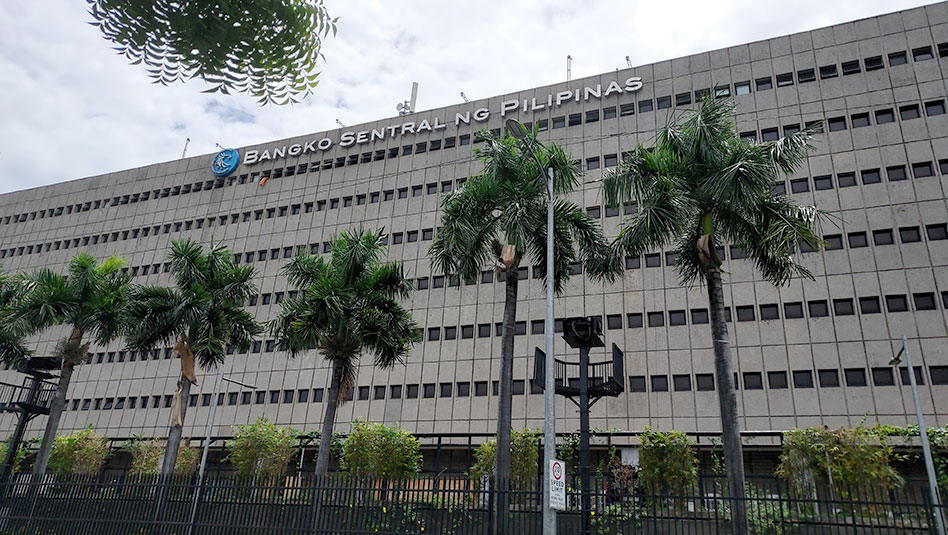
Bangko Sentral ng Pilipinas Governor Felipe Medalla on Tuesday signaled further interest rates hikes this year to bring inflation back within a target range of 2% to 4%.

Accredited importers could bring in cargoes in just seven days, Estoperez said, with authorities setting a period until Jan. 27 to ship in the entire volume.

The Philippines is a regular onion importer and usually buys from China and other Asian neighbors.

The government was expecting the local harvest to produce close to 20,000 tonnes of onions this month, compared with monthly domestic demand of about 22,000 tonnes.

“Even with that production I think we still really need to intervene in the market to help push the prices a little bit lower,” Mercedita Sombilla, agriculture undersecretary for planning, told Reuters.

(Reporting by Enrico Dela Cruz; Editing by Martin Petty and Ed Davies)
Asia shares dip on hawkish Fed remarks

Asia shares dip on hawkish Fed remarks

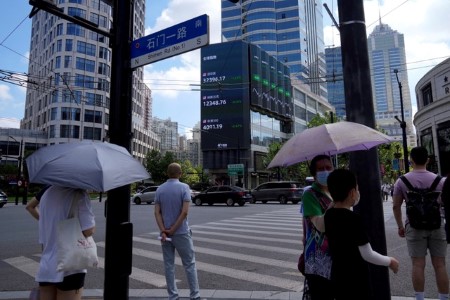
HONG KONG, Jan 10 (Reuters) – Asian shares fell on Tuesday, commodities shed recent gains from China’s reopening, and oil traded lower following hawkish comments from two US Federal Reserve officials overnight, with investors turning cautious ahead of key inflation data.

MSCI’s broadest index of Asia-Pacific shares outside Japan was down 0.17%.

“The main theme overnight was cautiousness in the equity space as stocks pared gains after hawkish comments from two Fed officials. Raphael Bostic and Mary Daly said the Fed would likely hike (interest) rates to above 5% and hold them there for some time,” Commerzbank said in a client note.

The S&P500 index began the week on a bullish tone with a more than 1.4% increase in early US trading on Monday before giving up all the gains to close a touch lower.

US treasury notes and the US dollar remained under pressure, with the yield on US 10-year notes edging higher on Tuesday by 2.23 basis point to 3.5393%, from 3.517% late on Monday.

The dollar index stayed flat.

“Sentiment may turn more cautious ahead of the US CPI (consumer price index) release on Thursday, dampening the ‘risk on’ trades initiated as a result of the optimism around China’s reopening,” Mizuho Bank said in a note.

If US consumer price data confirms the cooling seen in the most recent monthly jobs report, Atlanta Fed Bank President Bostic said he would have to take a quarter point increase “more seriously and to move in that direction”.

China stocks on Tuesday snapped a six-session winning streak, while Hong Kong shares jumped to a six-month high. However, any optimism may be short-lived, said Trinh Nguyen, emerging Asia economist at Natixis in Hong Kong.

“I think what would temper a lot of this optimism coming up is really the reality of this opening up. Even in Hong Kong, although it is officially open, the visa issuance has been rather slow,” Nguyen said.

China’s benchmark edged up from earlier losses to gain 0.15%, while losses of Hong Kong’s Hang Seng index narrowed to 0.15%.

Prices of most base metals fell on Tuesday from recent rallies driven by top consumer China’s reopening, as traders gauged the risks of a global economic downturn and weak consumption.

Three-month copper on the London Metal Exchange was down 0.8% at USD 8,786 a tonne, as of 0422 GMT. Copper prices hit their highest in more than six months on Monday, while zinc climbed 5% on Monday to its highest since Dec. 15

Japan’s Nikkei rose 0.35%, bucking the regional trend.

Core consumer prices in Tokyo, released on Tuesday, rose a faster-than-expected 4.0% in December from a year earlier, underpinning market expectations that the Bank of Japan may phase out its massive stimulus by tweaking its yield curve control policy.

In Australia, shares lost 0.28%.

Oil edged lower on Tuesday on expectations of further Fed rate hikes.

US crude fell 0.5% to USD 74.26 per barrel and Brent was at USD 79.20, down 0.56%.

Gold prices inched higher, adding 0.15% to USD 1,872.70 an ounce.

E-mini futures for the S&P 500 indicated a sluggish open with a 0.17% dip.


(Reporting by Selena Li; Editing by Muralikumar Anantharaman)

Dollar sluggish as Fed rate hike fears ebb; China reopening boosts optimism

Dollar sluggish as Fed rate hike fears ebb; China reopening boosts optimism

SINGAPORE, Jan 10 (Reuters) – The US dollar languished near a seven-month low against other major currencies on Tuesday, as investors took heart that the Federal Reserve may be nearing the end of its rate-hike cycle and as China’s reopening drove demand for riskier assets.

Markets have grown increasingly doubtful that the Fed will have to take interest rates above 5% to cool inflation, as effects of its aggressive rate increases last year have already been felt. Investors now expect rates to peak just under 5% by June.

Last week’s employment report showed that while the US economy added jobs at a solid clip in December, it also recorded a slowdown in wage growth.

The euro was last 0.07% higher at USD 1.0739, holding near the previous session’s seven-month peak of USD 1.07605 that came on the back of the dollar’s decline.

Sterling slid 0.08% to USD 1.21705, after similarly hitting a three-week top of USD 1.2209 on Monday and ending the session 0.73% higher.

Against a basket of currencies, the US dollar index fell 0.03% to 103.14, after tumbling 0.7% and touching a seven-month low of 102.93 in the previous session.

“The dollar’s big climb down has begun,” said George Saravelos, head of foreign exchange research at Deutsche Bank.

China’s rapid reopening of its borders following pandemic restrictions also provided another boost toward riskier assets away from the safe haven appeal of the greenback, with the risk-sensitive Australian dollar spiking at a more than four-month peak of USD 0.6950 in the previous session. It was last 0.03% higher at USD 0.69155.

The New Zealand dollar rose 0.13% to USD 0.6378, not far off Monday’s over three-week high of USD 0.6411. The two antipodean currencies are widely used as liquid proxies for China’s yuan.

The offshore yuan last bought 6.7755 per dollar, after hitting a near five-month top of 6.7590 earlier in the session.

“Hedge fund managers have turned slightly bearish USD following the full reopening in China,” said Tareck Horchani, head of prime brokerage dealing at Maybank Securities.

Elsewhere, Japan’s yen edged 0.1% higher to 131.73 per dollar, drawing support from a weakening greenback and the Bank of Japan’s (BOJ) surprise tweak to its yield curve policy late last year.

“What the BOJ did at the end of 2022 just indicates that Mr. Kuroda is trying to make the job easier for his successor,” Dong Chen, head of Asia macroeconomic research at Pictet Wealth Management, told reporters at an outlook briefing. BOJ Governor Haruhiko Kuroda will step down in April.

Brazil’s real snapped its three-day winning run in the previous session and last stood at 5.2546 per dollar after supporters of former President Jair Bolsonaro stormed the capital. It had yet to trade as of Asia hours on Tuesday.

Investors will now turn their attention to a speech by Fed Chair Jerome Powell later on Tuesday and to US inflation data on Thursday, which could give further clarity on the outlook of the Fed’s rate-hike path.


(Reporting by Rae Wee; Editing by Bradley Perrett and Christopher Cushing)

Oil slips on concerns higher interest rates to crimp demand

Oil slips on concerns higher interest rates to crimp demand

Jan 10 (Reuters) – Oil edged lower on Tuesday on expectations that further interest rate hikes in the United States, the world’s biggest oil user, will slow economic growth and limit fuel demand.

Brent futures for March fell 33 cents to USD 79.32 a barrel, a 0.4% drop, by 0719 GMT. US West Texas Intermediate crude dipped 29 cents, or 0.4%, to USD 74.34 per barrel.

Both benchmarks climbed 1% on Monday, after China, the world’s biggest oil importer and second-largest consumer, opened its borders over the weekend for the first time in three years.

Two United States Federal Reserve officials this week expected the Fed policy rate – now at 4.25% to 4.5% – to need to rise to a 5% to 5.25% range to bring higher inflation rates under control.

“(The expectation) is more hawkish than what markets are pricing at the moment (4.75-5% range),” said Yeap Jun Rong, Market Analyst at IG in a note, adding that the upcoming speech from Fed chair Jerome Powell later on Tuesday could mirror the hawkish tone with some pushback as well.

Fed policymakers said fresh inflation data out later this week will help them decide whether they can slow the pace of interest rate hikes at their upcoming meeting, to just a quarter point increase instead of the larger jumps they used for most of 2022.

China also issued a second batch of 2023 crude import quotas, according to sources and documents reviewed by Reuters on Monday, raising the total for this year by 20% from the same time last year.

But analysts warned that China’s demand revival may play limited role to drive up oil prices under the global economic downward pressure.

“The social vitality of major Chinese cities is rapidly recovering, and the restart of China’s demand is worth looking forward to. However, considering that the recovery of consumption is still at the expected stage, the oil price will most likely remain low and range-bound,” said analysts from Haitong Futures.

Separately, US crude oil stockpiles likely fell 2.4 million barrels, with distillate inventories also seen slightly down, a preliminary Reuters poll showed on Monday.

Industry group American Petroleum Institute is due to release data on US crude inventories at 4:30 p.m. EDT (2030 GMT) on Tuesday.

The Energy Information Administration, the statistical arm of the US Department of Energy, will release its own figures at 10:30 a.m. (1430 GMT) on Wednesday.


(Reporting by Arathy Somasekhar and Muyu Xu; Editing by Muralikumar Anantharaman and Christian Schmollinger)

Philippines sells USD 3 billion global bond in triple-tranche deal

MANILA, Jan 10 (Reuters) – The Philippines has raised USD 3 billion for this year’s budget financing via a triple-tranche global bond deal that drew strong investor interest, National Treasurer Rosalia De Leon said on Tuesday.

The latest global bond sale is the second such issue under the administration of President Ferdinand Marcos Jr., after a USD 2 billion deal last year.

The Southeast Asian country sold USD 500 million worth of 5.5-year bonds at 4.743%, USD 1.25 billion of 10.5-year bonds at 5.001%, and USD 1.25 billion of 25-year “sustainability” bonds at 5.50%, De Leon said.

“Due to a strong orderbook which peaked at around USD 28.2 billion for all tranches, we were able to compress price guidance by 50 bps (basis points), 50 bps, and 45 bps, respectively, while still upsizing the transaction from an initial target issue size of USD 2 billion,” she said.

BofA Securities, Deutsche Bank, Goldman Sachs, HSBC, Morgan Stanley, Standard Chartered Bank and UBS were tapped as joint lead managers and joint bookrunners.

(Reporting by Enrico Dela Cruz; Editing by Leslie Adler and Sam Holmes)

S&P 500 near flat as investors weigh chances of less aggressive rate hikes

S&P 500 near flat as investors weigh chances of less aggressive rate hikes

NEW YORK, Jan 9 (Reuters) – The S&P 500 index erased early gains to close nearly flat on Monday as expectations that the Federal Reserve will become less aggressive with its interest rate hikes were offset by lingering worries about inflation.

The Dow ended lower, and the Nasdaq Composite ended well off the day’s highs.

Investors are awaiting comments Tuesday from Fed Chair Jerome Powell, who some strategists expect could say more time is needed to show inflation is under control.

Money market bets were showing 77% odds of a 25-basis point hike in the Fed’s February policy meeting.

A consumer prices report due Thursday could be key for rate expectations, said Quincy Krosby, chief global strategist, LPL Financial in Charlotte, North Carolina. “The CPI report this week is going to be essential for fine-tuning the Fed funds futures market.”

Investors also may have sold some shares after recent strong market gains, said Paul Nolte, portfolio manager at Kingsview Investment Management in Chicago. “You’re seeing a little bit of profit-taking ahead of the CPI number due out this week.”

The technology sector .SPLRCT gained as Treasury yields fell. Consumer discretionary stocks also rose, with Amazon.com Inc. (AMZN) up 1.5% after Jefferies said it saw cost pressures easing for the e-commerce giant in the second half of the year.

Also, S&P 500 companies are about to kick off the fourth-quarter earnings period, with results from top US banks expected later this week.

The Dow Jones Industrial Average fell 112.96 points, or 0.34%, to 33,517.65, the S&P 500 lost 2.99 points, or 0.08%, to 3,892.09 and the Nasdaq Composite added 66.36 points, or 0.63%, to 10,635.65.

Shares of Broadcom Inc. (AVGO) fell in late trading to end down 2% after Bloomberg, citing people familiar with the matter, reported that Apple Inc. (AAPL) plans to drop a Broadcom chip in 2025 and use an in-house design instead.

Friday’s jobs report, which showed a moderation in wage increases, lifted hopes that the Fed might become less aggressive in its rate-hike push to reduce inflation.

Tesla Inc. (TSLA) shares rose 5.9% after the electric-vehicle maker indicated longer waiting times for some versions of the Model Y in China, signaling the recent price cuts could be stoking demand.

Macy’s Inc. (M) fell 7.7% and Lululemon Athletica Inc. (LULU) dropped 9.3% after both retailers issued disappointing holiday-quarter forecasts.

Volume on US exchanges was 11.35 billion shares, compared with the 10.90 billion average for the full session over the last 20 trading days.

Advancing issues outnumbered decliners on the NYSE by a 1.85-to-1 ratio; on Nasdaq, a 1.48-to-1 ratio favored advancers.

The S&P 500 posted 13 new 52-week highs and two new lows; the Nasdaq Composite recorded 129 new highs and 32 new lows.

(Additional reporting by Shubham Batra, Amruta Khandekar and Ankika Biswas in Bengaluru; Editing by Shounak Dasgupta and Richard Chang)


US Treasuries rally as market anticipates Fed pivot

US Treasuries rally as market anticipates Fed pivot

NEW YORK, Jan 9 (Reuters) – Treasury prices rallied further on Monday on expectations of a halt to rising interest rates, though the market faces a hawkish Federal Reserve that aims to see inflation slow a good deal more before it can pivot.

Fed Chair Jerome Powell may indicate more time is needed to show inflation is under control when he speaks on Tuesday. But consumer price data on Thursday could back the market’s view that inflation is on track toward the Fed’s 2% target.

Data on Friday showed US services activity contracted for the first time in more than 2-1/2 years in December, which gave both bonds and equities the green light to rally after labor market data showed wage growth rose less than expected.

“It’s a tug of war between the markets not believing the Fed can tighten policy and stay there for an extended period of time versus expectations of weakening inflation and weaker economic data allowing the Fed to ease at some point later this year,” said Andrzej Skiba, head of the BlueBay US fixed income team at RBC Global Asset Management in New York.

But Skiba said markets may have moved too quickly and too far, as the 10-year Treasury’s yield is below 3.6% and the Fed indicates the terminal rate will be above 5% this year:

“You could argue that quite a lot of good news on that front has been priced in.”

Atlanta Fed President Raphael Bostic reiterated on Monday that rates will have to stay high “well into 2024,” and said it is fair to say that the Fed is willing to overshoot.

The yield on 10-year Treasury notes fell 3.9 basis points to 3.532%, and the two-year’s yield, which often reflects interest rate expectations, fell 5.7 basis points to 4.204%. Yields move inversely to price.

The gap between yields on three-month bills and the benchmark 10-year note inverted further to a record -136.10 in early trading, and was last at -108.5. An inverted yield is consider a harbinger of recession.

The Fed is determined to tame inflation but signs of a weakening jobs market could make it hard for the US central bank to stay the course, said Jim Caron, chief fixed income strategist at Morgan Stanley Investment Management in New York.

“They need to kill inflation. They need to make sure it gets to target and stays anchored at target levels,” Caron said.

But the political narrative for the Fed will be difficult as Main Street starts to feel the pain of a slowing economy.

“Despite all the layoffs we’re hearing about in Corporate America, people are finding jobs – but they’re finding lesser quality, lower-paying jobs,” he said. “That’s a very important caveat that I don’t think the markets are really focusing on.”

The Treasury will sell USD 90 billion of debt this week, starting with USD 40 billion of three-year notes on Tuesday. On Wednesday, USD 32 billion of 10-year notes will be sold, and on Thursday, USD 18 billion of 30-year bonds.

The yield on the 30-year Treasury bond slid 2.6 basis points to 3.666%.

The breakeven rate on five-year US Treasury Inflation-Protected Securities (TIPS) was 2.22%.

The 10-year TIPS breakeven rate was last at 2.214%, indicating the market sees inflation averaging 2.2% a year for the next decade.

The US dollar 5 years forward inflation-linked swap, seen by some as a better gauge of inflation expectations due to possible distortions caused by the Fed’s quantitative easing, was last at 2.454%.

(Reporting by Herbert Lash; Editing by Lisa Shumaker and Kevin Liffey)


Dollar at 7-month low vs euro on slower Fed rate hike expectations

Dollar at 7-month low vs euro on slower Fed rate hike expectations

NEW YORK, Jan 9 (Reuters) – The US dollar on Monday slid to a seven-month low against the euro as traders bet recent economic data would prompt the Federal Reserve to slow the pace of interest rate hikes, while riskier currencies benefited from China reopening its borders.

The euro was up 0.96% at USD 1.0747 at 2:50 p.m. EST (1950 GMT), its highest level versus the greenback since June 9, adding to Friday’s 1.17% increase.

Sterling surged 0.87% to USD 1.21975 against the dollar, building on Friday’s 1.5% rally, while the Swiss franc jumped 0.82% to USD 0.92, its strongest since early March.

The moves continued the trend lower for the dollar, which in the final three months of 2022 posted its biggest quarterly loss in 12 years. That was driven mainly by investors’ belief that the Fed will not raise rates beyond 5%, from its current range of 4.25%-4.50%, as inflation and growth cool.

“There are a lot of people looking at the Fed funds futures and it seems we might get one rate hike in February and then possibly a rate cut at the end of the year and that’s, I think, paving the way for a lot of people to bet against the dollar,” said Edward Moya, senior markets analyst at Oanda.

Fed fund futures 0#FF: show investors believe the most likely outcome for the Fed’s February meeting is for a 25 basis- point increase.

“The consensus call is that at the end of the year the dollar will be much lower and a lot of people are trying to get ahead of that trade,” said Moya.

The Fed raised interest rates by 50 basis points last month after delivering four consecutive 75 basis-point hikes last year, but said it was likely to keep interest rates higher for longer to tame inflation.

Two separate reports on Friday painted a picture of an economy that is growing and adding jobs, but where overall activity is tilting into recession territory, prompting traders to sell the dollar against a range of currencies.

Friday’s monthly employment report showed a bigger-than-expected increase in the number of workers and a slowing in wage growth – welcome news for the US central bank.

A report from the Institute for Supply Management showed activity in the service sector contracted for the first time in 2-1/2 years in December.

The dollar index was at a 7-month low, last down 0.81% at 103.033. The index, which measures the greenback against six major currencies, tumbled 1.15% on Friday as investors shifted into riskier assets.

With US inflation data due on Thursday, the outlook for price pressures will be front-and-center for investors.

“The expectation with this week’s Consumer Price Index is for further easing of inflation pressures,” said Greg McBride, chief financial analyst at Bankrate. “Anything less than broad-based improvement will rattle investors’ nerves and keep the Fed active.”

Elsewhere, China continued to dismantle much of its strict zero-COVID rules around movement as it reopened its borders.

Optimism about a swift economic recovery sent China’s offshore yuan to five-month highs against the dollar on Monday.

The Australian dollar rose by 0.8% to USD 0.69305, hitting its highest level against the US currency since Aug. 30, while the kiwi was last up 0.45% at USD 0.6378.

(Reporting by John McCrank in New York and Amanda Cooper in London; Editing by Conor Humphries and Matthew Lewis)


Equities, bonds, ETFs drew in near-record amounts of cash in 2022: BlackRock

Equities, bonds, ETFs drew in near-record amounts of cash in 2022: BlackRock

LONDON, Jan 9 (Reuters) – Investors ploughed USD 867 billion into ETPs (exchange-traded products) in 2022, the second biggest inflow after 2021’s record USD 1.29 trillion, despite a hugely volatile market environment, data from BlackRock showed on Monday.

ETPs across asset classes recorded inflows, with equity ETPs enjoying bumper inflows despite plunging global stocks, while a shift to rates-driven investing was seen in bond ETPs flows, despite central banks around the world tightening financial conditions to temper inflation.

“If you look at the market context for 2022, on the surface you would expect that the flows would have been more muted, because stocks and bonds declined by double digits compared to 2021,” Karim Chedid, BlackRock’s EMEA head of investment strategy for its iShares unit, said.

“But we have seen the second-best year for ETF flows on record, only behind 2021. This shows the acceleration of ETFs as an investment vehicle of choice in 2022.”

Exchange-traded products include exchange-traded funds (ETFs), exchange-traded notes (ETNs), and other products. ETFs are traded like shares and track an index, either via an underlying asset, or by synthetically replicating the returns using derivatives.

Last year marked the third-largest inflow into fixed-income ETPs on record, with flows of USD 266 billion.

The figures closely track the record-breaking USD 280 billion and USD 269 billion inflows into bond ETPs of the previous two years, though allocations have shifted significantly according to BlackRock.

Within fixed income ETPs, rate ETPs drove 68% of overall inflows in 2022, over three times the corresponding level in 2021, with over 90% of that going into US products, BlackRock said in its report.

EQUITIES

But investors were picky about what they bought. Inflows into investment-grade credit ETPs reached USD 40.1 billion, while high-yield credit ETPs recorded outflows of USD 5.6 billion.

There were also outflows from inflation-linked bonds and emerging-market debt ETPs, which reached USD 14.6 billion and USD 9.2 billion, respectively.

Major equity indexes plunged in value in 2022 as Russia’s war in Ukraine caused an energy squeeze and triggered soaring inflation. The S&P 500 index lost almost a fifth of its value while Europe’s STOXX 600 ended the year down 13%.

Despite this, equity ETPs saw the second-highest yearly inflows on record, reaching USD 598 billion, although this was below the USD 1 trillion seen in 2021.

“Within equities, flows were positive but still defensively tilted; for instance the sectors that saw the largest demand were healthcare, tech and utilities with a significant preference for these vs cyclicals,” Chedid said.
The picture was less positive for commodities, which recorded net outflows of USD 9.5 billion, even though oil and gas prices soared for most of last year.

Meanwhile, investors set a record for the biggest inflow into emerging market (EM) equity ETPs, snapping up USD 110 billion, up from USD 90.4 billion in 2021, with Chinese equities accounting for USD 63.7 billion of that.

“From a macro perspective, it has to do with the fact that a lot of the EM central banks already hiked rates before and are fundamentally in a better place than previous rate hike cycles,” Chedid said.

“Finally, the tailwind from China reopening late in the year helped accelerate this trend,” he said.

(Reporting by Lucy Raitano; Editing by Amanda Cooper and Alison Williams)


Philippines mulls more onion imports amid inflation fears

MANILA, Jan 9 (Reuters) – The Philippines is looking into importing onions for immediate delivery to boost a tight supply and bring down exorbitant prices that have contributed to 14-year-high inflation, an agriculture official said on Monday.

Retail prices of red onions has skyrocketed to as high as 700 pesos (USD 12.70) per kilogram in recent days in Manila markets, possibly the most expensive in the world according to some economists.

That compares with 120 pesos to 170 pesos per kg about four months ago.

The plan to import emerged just days after the Department of Agriculture said it would not import onions as the local harvest season was about to begin and expected to peak in February onwards.

The Philippines is a regular onion importer and usually buys from China and other Asian neighbors.

“We don’t really have (enough) supply of onions,” Mercedita Sombilla, undersecretary for planning at the Department of Agriculture, told Reuters. “We were really trying to see whether we need to import a little bit.”

Monthly domestic demand for onions is about 22,000 tons, she said.

Philippine consumer prices soared to 8.1% in December from a year earlier PHCPI=ECI, the highest since 2008, largely driven by double-digit food inflation, which economists said is likely to prompt further monetary policy tightening this year.

Sombilla said there was about close to 20,000 tons of local onion harvest expected in January.

“Even with that production I think we still really need to intervene in the market to help push the prices a little bit lower,” she said.

(Reporting by Enrico Dela Cruz; Editing by Martin Petty)


Posts navigation

Older posts
Newer posts

Recent Posts

  • Investment Ideas: April 1, 2026
  • Metrobank US-Iran Risk Index: Signals of an end
  • Eye on Earnings: Demand for connection supports telcos
  • Inflation Preview: March madness
  • Investment Ideas: March 31, 2026

Recent Comments

No comments to show.

Archives

  • April 2026
  • March 2026
  • February 2026
  • January 2026
  • December 2025
  • November 2025
  • October 2025
  • September 2025
  • August 2025
  • July 2025
  • June 2025
  • May 2025
  • April 2025
  • March 2025
  • February 2025
  • January 2025
  • December 2024
  • November 2024
  • October 2024
  • September 2024
  • August 2024
  • July 2024
  • June 2024
  • May 2024
  • April 2024
  • March 2024
  • February 2024
  • January 2024
  • December 2023
  • November 2023
  • October 2023
  • September 2023
  • August 2023
  • July 2023
  • June 2023
  • May 2023
  • April 2023
  • March 2023
  • February 2023
  • January 2023
  • December 2022
  • November 2022
  • October 2022
  • September 2022
  • August 2022
  • July 2022
  • June 2022
  • May 2022
  • March 2022
  • December 2021
  • October 2021

Categories

  • Bonds
  • BusinessWorld
  • Currencies
  • Economy
  • Equities
  • Estate Planning
  • Explainer
  • Featured Insight
  • Fine Living
  • How To
  • Investment Tips
  • Markets
  • Portfolio Picks
  • Rates & Bonds
  • Retirement
  • Reuters
  • Spotlight
  • Stocks
  • Uncategorized

You are leaving Metrobank Wealth Insights

Please be aware that the external site policies may differ from our website Terms And Conditions and Privacy Policy. The next site will be opened in a new browser window or tab.

Cancel Proceed
Get in Touch

For inquiries, please call our Metrobank Contact Center at (02) 88-700-700 (domestic toll-free 1-800-1888-5775) or send an e-mail to customercare@metrobank.com.ph

Metrobank is regulated by the Bangko Sentral ng Pilipinas
Website: https://www.bsp.gov.ph

Quick Links
The Gist Webinars Wealth Manager Explainers
Markets
Currencies Rates & Bonds Equities Economy
Wealth
Investment Tips Fine Living Retirement
Portfolio Picks
Bonds Stocks
Others
Contact Us Privacy Notice Terms of Use
© 2026 Metrobank. All rights reserved.

Access this content:

If you are an existing investor, log in first to your Metrobank Wealth Manager account. ​

If you wish to start your wealth journey with us, click the “How To Sign Up” button. ​

Login HOW TO SIGN UP