




MODEL PORTFOLIO
THE GIST
NEWS AND FEATURES
Global Philippines Fine Living
INSIGHTS
INVESTMENT STRATEGY
Economy Stocks Bonds Currencies
THE BASICS
Investment Tips Explainers Retirement
WEBINARS
2024 Mid-Year Economi Briefing, economic growth in the Philippines
2024 Mid-Year Economic Briefing: Navigating the Easing Cycle
June 21, 2024
Investing with Love
Investing with Love: A Mother’s Guide to Putting Money to Work
May 15, 2024
retirement-ss-3
Investor Series: An Introduction to Estate Planning
September 1, 2023
View All Webinars
DOWNLOADS
Container ship carrying container boxes import export dock with quay crane. Business commercial trade global cargo freight shipping logistic and transportation worldwide oversea concept. Generative AI
Economic Updates
Philippines Trade Update: Wider deficit on strong imports
DOWNLOAD
Frick collection with palm trees 
Economic Updates
Policy Rate Updates: Policy rate updates to reassure 
DOWNLOAD
Man using his smartphone
Reports
Fed to cut just once 
DOWNLOAD
View all Reports
Metrobank.com.ph How To Sign Up
Follow us on our platforms.

How may we help you?

TOP SEARCHES
  • Where to put my investments
  • Reports about the pandemic and economy
  • Metrobank
  • Webinars
  • Economy
TRENDING ARTICLES
  • Investing for Beginners: Following your PATH
  • On government debt thresholds: How much is too much?
  • Philippines Stock Market Outlook for 2022
  • Deficit spending remains unabated

Login

Access Exclusive Content
Login to Wealth Manager
Visit us at metrobank.com.ph How To Sign Up
Access Exclusive Content Login to Wealth Manager
Search
MODEL PORTFOLIO THE GIST
NEWS AND FEATURES
Global Philippines Fine Living
INSIGHTS
INVESTMENT STRATEGY
Economy Stocks Bonds Currencies
THE BASICS
Investment Tips Explainers Retirement
WEBINARS
2024 Mid-Year Economi Briefing, economic growth in the Philippines
2024 Mid-Year Economic Briefing: Navigating the Easing Cycle
June 21, 2024
Investing with Love
Investing with Love: A Mother’s Guide to Putting Money to Work
May 15, 2024
retirement-ss-3
Investor Series: An Introduction to Estate Planning
September 1, 2023
View All Webinars
DOWNLOADS
Container ship carrying container boxes import export dock with quay crane. Business commercial trade global cargo freight shipping logistic and transportation worldwide oversea concept. Generative AI
Economic Updates
Philippines Trade Update: Wider deficit on strong imports
March 27, 2026 DOWNLOAD
Frick collection with palm trees 
Economic Updates
Policy Rate Updates: Policy rate updates to reassure 
March 26, 2026 DOWNLOAD
Man using his smartphone
Reports
Fed to cut just once 
March 19, 2026 DOWNLOAD
View all Reports

Archives: Reuters Articles

Asia share losses widen after weak China GDP data

Asia share losses widen after weak China GDP data

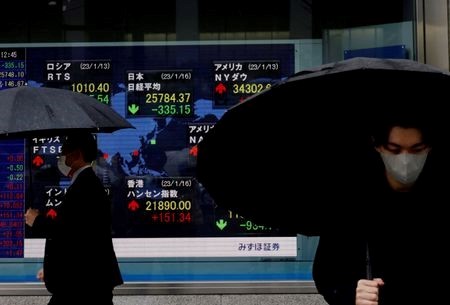
HONG KONG, Jan 17 (Reuters) – Asian share losses widened on Tuesday after China reported weak fourth-quarter economic data, although investor expectations for a strong rebound in the country remained high even as concerns increase that the global economy is heading for a recession.

London is set to open flat with FTSE futures up 0.02% at 0512 GMT. E-mini futures for the S&P 500 index were down 0.31% however, indicating a lower opening after Monday’s public holiday.

MSCI’s gauge of Asia Pacific stocks outside Japan increased its losses to stand down 0.65% at 0535 GMT.

Hong Kong’s Hang Seng Index dropped 1.22% and China’s benchmark CSI300 Index slid 0.27% following the China data and as invesotrs sold gains ahead of the Lunar New Year holiday starting on Jan. 21.

China’s economy grew 2.9% in the fourth quarter of 2022 from a year earlier, National Bureau of Statistics data showed on Tuesday, beating expectations but still underlining the toll exacted by a stringent “zero-COVID” policy.

Growth for 2022 of 3.0% was far below the official target of about 5.5%. Excluding a 2.2% expansion after COVID-19 first hit in 2020, it was the worst showing in nearly half a century.

“I think investors will look through the Q4 GDP prints and focus on 2023,” said Redmond Wong, Greater China market strategist at Saxo Markets Hong Kong.

“According to Chinese media, more than half of the 31 provinces and municipalities that have released 2023 work reports are targeting above 5.5% growth for 2023.”

Vishnu Varathan, head of economics & strategy with Mizuho Bank’s Asia & Oceania treasury department, said though that China’s comprehensive policy commitment to inspire bona fide private sector confidence still has some way to go.

“Until then, ‘China cheer’ may be an opportunistic bull trade that is subject to bouts of reality checks along the way,” Varathan said.

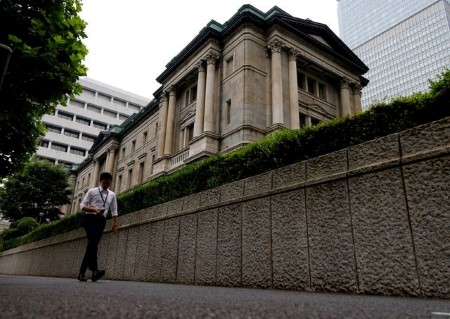
Japan’s Nikkei 225 rose 1.28%, following two sessions of heavy losses, as the yen’s relentless rise paused on the eve of a crucial Bank of Japan (BOJ) policy decision.

The BOJ is under pressure to change its interest rate policy as soon as Wednesday, after the central bank’s attempt to buy itself breathing room backfired, emboldening bond investors to test its resolve.

The dollar drifted off multi-month lows on Tuesday, while the yen was perched near seven-month highs against the currency.

Australia’s S&P/ASX 200 closed down 0.09%, after hitting a seven-month high on Monday.

European shares reached a near nine-month high on Monday, with the pan-European STOXX 600 closing up 0.5% at 454.6 – its highest level since April 2022 – as global equities continued to build on a New Year rally spurred by hopes of a rebound in China’s economy and an easing of price pressures in the United States and Europe.

“At the centre of the early 2023 financial market debate is how quickly inflation will fade, and whether or not major economies will be able to avoid hard landings,” ANZ analysts said in a research report on Tuesday.

“The drop in inflation in the US is encouraging, although the fly in the ointment is that this drop is largely coming from energy and goods prices,” the report said.

“Services inflation continues to increase on an annual basis in the US and will likely remain strong so long as the supply-demand mismatch in the labour market persists,” it said.

Two-thirds of private and public sector chief economists surveyed by the World Economic Forum in Davos expected a global recession this year, with some 18% considering it “extremely likely” – more than twice as many as in the previous survey conducted in September 2022.

US crude fell 0.69% to USD 79.32 a barrel, paring some morning losses, while Brent rebounded to gain 0.25% at USD 84.67 a barrel, still near their highest levels this month as easing COVID-19 restrictions in China raised hopes of a demand recovery in the world’s top crude importer.

Spot gold was down 0.34% at $1911.36 per ounce.


(Reporting by Kane Wu in Hong Kong; Editing by Gerry Doyle and Neil Fullick)
Oil mixed amid weak China economic data, hopes for better 2023

Oil mixed amid weak China economic data, hopes for better 2023

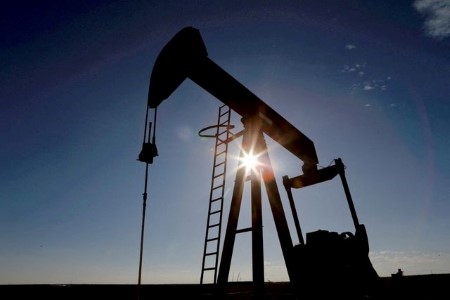
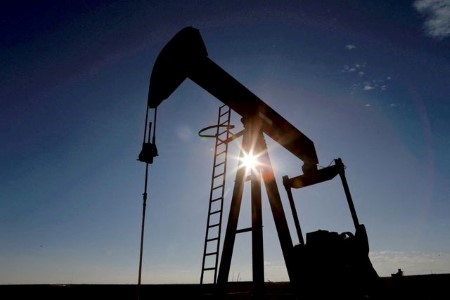
MELBOURNE, Jan 17 (Reuters) – Oil prices were mixed on Tuesday after China posted its weakest annual economic growth in nearly half a century, with its late-2022 U-turn in COVID-19 policy underpinning hopes of a recovery in the country’s fuel demand this year.

Brent crude futures edged up by 7 cents, or 0.1%, to USD 84.52 by 0727 GMT, recouping some of the 1% loss in the previous session.

US West Texas Intermediate (WTI) crude futures slid 73 cents, or 0.9%, to USD 79.15 from Friday’s close. There was no settlement on Monday because of the US public holiday for Martin Luther King Day.

“Brent crude has gained nearly 10% over the past 10 days as optimism over China’s reopening boosted sentiment. However, the outlook for the rest of the global economy is uncertain,” ANZ commodities analysts said in a client note.

ANZ also pointed to a jump in crude supply from Russia weighing on the market, with seaborne exports having risen to 3.8 million barrels per day last week, the highest level since April.

China’s gross domestic product expanded 3% in 2022, badly missing the official target of “around 5.5%” and marking the second-worst performance since 1976, as the last quarter was hit hard by stringent COVID curbs and a property market slump.

The poor economic data still beat analysts’ earlier forecasts as Beijing’s roll back of its zero-COVID policy in December shored up consumption.

Data released on Tuesday also showed China’s oil refinery output in 2022 had fallen 3.4% from a year earlier, its first annual decline since 2001, although daily December oil throughput rose to the second-highest level of 2022.

“With a stronger end to 2022 than we had expected, plus indications of stronger retail expenditure ahead, the outlook for GDP growth in 2023 has improved compared to our prior outlook,” ING Chief Economist, Greater China Iris Pang said in a note.

But Pang warned that China still faced considerable headwinds, including likely recessions in the United States and Europe this year.

In a bearish survey released at the annual World Economic Forum in Davos, two-thirds of private and public sector economists polled expected a global recession this year, with about 18% considering it “extremely likely”.

A survey of chief executives’ views by PwC was the gloomiest since the firm launched the poll a decade ago.

A rise in the dollar from seven-month lows also put pressure on oil prices, as a stronger greenback makes oil more expensive for those holding other currencies.


(Reporting by Sonali Paul in Melbourne and Muyu Xu in Singapore; Editing by Kenneth Maxwell, Bradley Perrett and Jamie Freed)

Gold rally takes a breather as dollar regains some ground

Gold rally takes a breather as dollar regains some ground

Jan 16 (Reuters) – Gold prices edged lower from a more than eight-month high on Monday, but held above the key USD 1,900 per ounce level on expectations that the US Federal Reserve will be less aggressive on raising interest rates.

Spot gold fell 0.3% to USD 1,914.16 per ounce by 1:47 p.m. ET (1847 GMT), after hitting its highest since late April at USD 1,929 in the session.

US gold futures fell 0.3% to USD 1,917.30.

The dollar edged up 0.2%, making gold a less attractive bet for those holding other currencies.

“The fact that gold has managed to surpass USD 1,915 in the last few days was a positive signal, and now gold is briefly consolidating,” said Carlo Alberto De Casa, an external analyst at Kinesis Money, adding the main trend remains positive for bullion as investors see smaller rate hikes from the Fed.

After sharp rate hikes in 2022, markets are now pricing in a 91% chance of a smaller 25-basis-point increase when the Fed announces its policy decision in February, after data last week showed U.S consumer prices unexpectedly fell in December.

Gold, which pays no interest, tends to benefit when interest rates are low as it reduces the opportunity cost of holding bullion.

Buying in top-consumer China normally picks up ahead of the Lunar New Year holidays, which run from Jan. 21.

“Gold prices still look set to retest the USD 2,000 an ounce level in the coming weeks,” Michael Hewson, chief markets analyst at CMC Markets, said in a note.

Spot silver was down 0.1% to USD 24.22 per ounce after hitting a near two-week peak.

“The growing adoption of green energy sources continues to favour fabrication demand for silver… Silver bar and coin demand continued to be high,” ANZ said in a note.

Platinum fell 0.2% to USD 1,062.47 while palladium XPD= dipped nearly 2% to USD 1,754.64.

(Reporting by Kavya Guduru and Seher Dareen in Bengaluru; Editing by Jon Boyle, Jason Neely and Andrea Ricci)


Davos 2023: The World Economic Forum explained

DAVOS, Switzerland, Jan 16 (Reuters) – The World Economic Forum (WEF) returns to its snowy winter residency in the Swiss Alps this week with a record attendance of business and government leaders.

Here’s the low-down on Davos.

WHAT HAPPENS AT THE WEF?

The WEF’s roots stretch back to 1971 when its founder Klaus Schwab invited executives from European companies to the then tiny ski resort of Davos, high in the Swiss Alps.

Schwab’s goal was to create a forum for policymakers and top corporate executives to address major global issues and learn best practices for leadership and management.

Delegates, some with sought-after white badges which given greater access, attend panels and speeches inside the Congress Centre from Tuesday through to Friday.

Much of the action, however, occurs outside. Bilateral meetings between heads of state and corporate chieftains take up much of their schedules.

On the main promenade of Davos, shop fronts and restaurants are taken over by companies and nations, becoming venues for parties and discussion panels that attract attendees and media.

The most exclusive gatherings often occur well off the main drag at dinner parties, fireside chats and cocktail receptions.

WHO IS ATTENDING DAVOS?

More than 600 CEOs will be in town, including Wall Street executives such as JP Morgan’s Jamie Dimon, David Solomon from Goldman Sachs and Morgan Stanley’s James Gorman.

With climate change top of the agenda, chiefs of major energy companies are back after a COVID-related hiatus.

Germany’s Chancellor Olaf Scholz, the presidents of Spain, South Korea, Poland and the Philippines are among 51 heads of state present. Another 56 finance ministers, 19 central bank governors, 30 trade ministers and 35 foreign ministers are also due to make the journey up into the mountains.

Idris Elba and Sabrina Dhowre Elba, cellist Yo-Yo Ma, Renee Fleming, wil.i.am and social media star Nas Daly are all attending.

The Russians are absent, but Ukraine, which dominated last year’s summit, has another high level delegation and several war-related sessions are on the agenda.

Others include IMF Managing Director Kristalina Georgieva, European Central Bank chief Christine Lagarde, NATO General Secretary Jens Stoltenberg, President of the European Commission Ursula von der Leyen and Chinese Vice-Premier Liu He.

World Health Organisation (WHO) chief Tedros Adhanom Ghebreyesus and central bankers such as India’s Raghuram Rajan are also on the list.

Unclear is whether climate activist Greta Thunberg will return to the slopes.

WHAT IS ON THE AGENDA?

This year’s theme, ‘Cooperation in a Fragmented World,’ is a nod to the tectonic shift in global markets and political relationships that has occurred since the pandemic.

The annual event was once regarded as a cheerleader for globalization. Now, the global elite will meet against a backdrop of protectionism, a war that has strained political alliances and deepening ideological divides.

Rising interest rates and a cost of living crisis also threaten to divert attention to matters back home for some.

Climate change topped the WEF’s survey of global risk and energy company executives will mix with climate activists and environment ministers at the forum.

Other themes will include the cost of living, a tight labour market, natural disasters and extreme weather events, how to prevent a global recession in 2023, the resurgence of COVID infections in many countries, an energy crunch and the looming first anniversary of Russia’s war in Ukraine.

The WEF is not without its detractors. In recent years, it has been criticized by activists and commentators as a talking shop for the jetset that just adds to global carbon emissions.

(Compiled by Siddarth K in Bengaluru; Editing by Leela de Kretser and Alexander Smith)

Dollar finds its footing near seven-month low, all eyes on yen

Dollar finds its footing near seven-month low, all eyes on yen

SINGAPORE/LONDON, Jan 16 (Reuters) – The dollar started the week on the back foot, hitting a seven-month low against a basket of major peers in Asian trade before steadying, with the yen in particular focus due to traders’ bets the Bank of Japan will tweak its yield control policy further.

The euro hit a fresh nine-month top of USD 1.0874 in early trade before retreating to last stand 0.16% lower at USD 1.0816, while the Australian dollar breached the key USD 0.7000 level for the first time since August, before dipping back to USD 0.6962.

Thanks also to early strength from sterling and the Japanese yen, the dollar index, which tracks the greenback against a basket of currencies, slumped to a seven-month trough of 101.77, extending its selloff from last week after data showed that U.S consumer prices fell for the first time in more than 2-1/2 years in December.

With decades-high inflation in the world’s largest economy showing signs of cooling, investors are now growing increasingly confident that the Fed is nearing the end of its rate-hike cycle, and that rates will not go as high as previously feared.

The Fed’s aggressive rate increases were a main driver of the dollar index’s 8% surge last year, before signs that inflation was peaking brought it back down.

The dollar has largely traded steady against most currencies since last week’s data.

“It’s too soon to imagine a significant dollar downtrend, we’ve had some dollar repricing certainly, but for broad-based dollar weakness you’ll need to really see Fed expectations roll over materially and the Fed potentially cutting rates at some point, and we are not at this point,” said Samy Chaar, chief economist at Lombard Odier.

Markets are now pricing in a 91% chance of a 25-basis-point increase when the Fed announces its policy decision in February, with a 9% chance of a 50-bp hike.

The dollar steadied in European trading, regaining ground against the pound GBP=D3 which was last down 0.3% at USD 1.2195.

MARKETS CHALLENGE BOJ

A particular focus for currency markets this week is the Japanese yen, due to speculation that the Bank of Japan will make further tweaks to, or fully abandon, its yield control policy at a meeting scheduled to conclude Wednesday.

The dollar slipped to a more than seven-month low on the yen in early trading, before recovering and was last at 128.4 yen, up 0.4%.

“I think the whole world will be focused on Wednesday … and probably the week in G10 (currencies) will be defined by what happens to the yen and yen crosses, out of that,” said Ray Attrill, head of FX strategy at National Australia Bank (NAB).

“I don’t think (the BOJ) has the luxury of time to say that they’re going to assess and wait until Q2 or Kuroda to see out his term without making any further changes.”

BOJ Governor Haruhiko Kuroda will step down in April.

Investors have been pressing for the BOJ to shift away from its ultra-easy monetary policy, which caused the yield on Japan’s benchmark 10-year government bonds to breach the central bank’s new ceiling for two sessions.

US markets are closed on Monday for a holiday, making for thin trading.

(Reporting by Rae Wee in Singapore and Alun John in London; Editing by Emelia Sithole-Matarise, Kirsten Donovan)


Philippines’ emergency onion imports unlikely to tackle soaring prices – officials

MANILA, Jan 16 (Reuters) – Philippine onion importers have applied for permits for just a quarter of the approved emergency purchase of up to 21,060 tons, which agriculture officials said may not bring down exorbitant prices that have added to soaring inflation.

The cost of onions, widely used in many local dishes, more than quadrupled in four months to hit as high as 700 pesos (USD 12.83) per kilogram in Manila markets in December, among the highest in the world and contributing to double-digit food inflation.

Food prices helped push the consumer price index last month up 8.1% from a year earlier, a 14-year high, with the central bank warning of continued pressure and signaling further interest rate hikes in the first half of 2023.

The Bureau of Plant Industry has cleared the importation of about 25% of the approved volume, which must be shipped in not later than Jan. 27, agriculture officials told a Senate hearing on Monday.

“Even if we import the entire approved volume, even that will not have a substantial impact on prices,” said Mercedita Sombilla, agriculture undersecretary for planning.

The Philippines had been hit by onion production shortfalls in recent months, as farmers were discouraged to boost planting due to competition with imported supply, according to farmers’ groups.

Government data showed prices have eased over the past two weeks, with the most widely consumed red onion selling at 350-550 pesos per kg as of Friday, still much higher than the 2022 low of 70 pesos in April.

President Ferdinand Marcos Jr, speaking to reporters on Sunday en route to Davos for the World Economic Forum, said the country was forced to import onions amid a wide gap between supply and demand.

He blamed the country’s long-running reliance on food importation, which discouraged local farmers, for the chronic domestic shortfalls involving many commodities, including the staple rice.

(Reporting by Enrico Dela Cruz; Editing by Martin Petty)


China, HK stocks rise on strong foreign inflows amid signs COVID peaked

China, HK stocks rise on strong foreign inflows amid signs COVID peaked

Jan 16 (Reuters) – China stocks jumped to a four-month high on Monday, aided by strong foreign inflows, while Hong Kong shares edged up as investors doubled down their bets on economic recovery after Chinese health officials said COVID-19 infections in the country had peaked.

** China’s blue-chip CSI300 Index ended the session up 1.6%, while the Shanghai Composite Index climbed 1%. Hong Kong’s Hang Seng Index HSI was 0.04% higher.

** Net foreign buying of China-listed stocks via Stock Connect hit a two-month high of 15.4 billion yuan (USD 2.29 billion) on Monday. Net buying so far this year has exceeded USD 9 billion as foreign funds snap up Chinese financials and consumer stocks, according to Goldman Sachs.

** Beijing said on Saturday nearly 60,000 people with COVID-19 had died in hospital since it abandoned its zero-COVID policy last month. But on the bright side, Chinese health officials said the number of patients visiting fever clinics and needing emergency treatment was steadily falling, and the number of severe cases had also peaked.

** “Overall, the latest data confirmed that the worst of China’s exit wave is behind us,” OCBC Bank wrote in a note on Monday.

** China also reported a sharp rise in travel ahead of the Lunar New Year holiday,while the Chinese gambling hub of Macau expected a Spring Festival boom in tourism.

** “Stars are aligning for a China/HK rebound in 2023 after a torrid 2022,” DBS wrote. “It won’t be a smooth ride. But 4Q22-1Q23 is likely the cyclical trough, in our view.”

** Chinese shares rose across the board.

** China’s food and beverage stocks jumped .CSI000815 on bets excessive savings during the pandemic will be unlocked.

** Chinese infrastructure stocks also rose sharply as local governments announced new spending plans for big projects and set bullish growth target for this year.

(USD 1 = 6.7290 Chinese yuan renminbi)

(Reporting by the Shanghai Newsroom; Editing by Nivedita Bhattacharjee)

Japanese yields top policy cap for 2nd day, defying massive BOJ buying

Japanese yields top policy cap for 2nd day, defying massive BOJ buying

TOKYO, Jan 16 (Reuters) – Japan’s 10-year government bond yield topped the Bank of Japan’s policy ceiling for a second straight trading session on Monday, despite a new wave of emergency bond-buying operations by the central bank.

The 10-year JGB yield jumped 1 basis point to 0.510% at the start of the session, exceeding the BOJ’s 0.5% cap.

The announcement of unlimited fixed-rate purchase operations in maturities up to 10 years and another 1.4 billion yen (USD 11 million) of unscheduled buying across the curve was slow to take effect on the yield, but by 0536 GMT had brought it back to 0.5%.

The BOJ will begin a two-day meeting on Tuesday, and speculators continue to pile on bets that Governor Haruhiko Kuroda and his team could be forced to tweak policy again. In December, the BOJ surprised markets by doubling the margin of tolerance for 10-year yields to 50 basis points either side of its 0% target.

While another widening of that band is seen as the most likely option should the BOJ move again, more extreme options include scrapping yield curve control (YCC) altogether, or even raising the negative overnight interest rate.

“The market is pricing in a chance of a hike in the short-term rate – not necessarily at this meeting, but in the next few meetings – and that’s the source of the yield spike,” said Naka Matsuzawa, chief Japan macro strategist at Nomura.

“That’s what the BOJ wants to fight against most. The BOJ is firmly against the notion of raising the short-term policy rate.”

Matsuzawa also highlighted the conundrum for speculators if the BOJ forgoes a change on Wednesday: with the next meeting not until March – the last of Kuroda’s career – can they continue to short the 10-year bond for so long when it has been the focus of the BOJ’s buying operations?

Monday’s rise in yields was dwarfed by the spike on Friday, when they hit the highest since mid-2105 at 0.545%, before being calmed by a record 5 trillion yen of buying by the BOJ.

Central bank policy makers have not spoken out about the market ructions because they in a blackout period before this week’s meeting. But Kuroda has insisted that the widening of the yield band was to correct market distortions, not the start of a stimulus exit.

Market participants say that functioning has actually deteriorated since then.

That puts BOJ officials in a predicament, because further tweaks could again backfire by stoking already red-hot speculation about a capitulation on decades-old ultra-easy policy.

Masayuki Kichikawa, chief macro strategist at Sumitomo Mitsui Asset Management, takes the contrarian view that a bold doubling again of the yield ceiling to 1% could actually lessen the pressure on the bond market.

“If the BOJ completely discards yield curve control, many people estimate JGB yields should stay around 0.9% to 1%,” he said.

“Of course, speculation would continue for a complete discarding of YCC, but the momentum of speculation would gradually become moderate,” he added. “The attack on the BOJ could become a little bit more moderate as time goes by.”

(USD 1 = 127.71 yen)

(Reporting by Kevin Buckland and Junko Fujita; Editing by Bradley Perrett)


Oil dips as China COVID case surge clouds fuel demand prospects

Oil dips as China COVID case surge clouds fuel demand prospects

SINGAPORE, Jan 16 (Reuters) – Oil prices eased on Monday, though held near 2023 highs, as rising numbers of COVID-19 cases in China clouded prospects for higher demand in at the world’s top crude importer as it reopens after ending strict anti-virus curbs.

Brent crude fell 62 cents, or 0.7%, to USD 84.66 a barrel by 0745 GMT, while US West Texas Intermediate crude was down 51 cents, or 0.6%, at USD 79.35 a barrel, amid thin trade during a US public holiday.

“Both benchmarks WTI and Brent eased on Monday morning as investors gauge that the rising number of COVID-infections (in China) might create hurdles in ways of returning to normalcy,” said Priyanka Sachdeva, market analyst at Phillip Nova.

“Caution definitely prevails in oil markets amid ambiguity of the rate hikes cycle by (the) Federal Reserve, surprise build-up in US crude oil inventories and whether the IEA (International Energy Agency) revises its outlook on oil prices and demand for the year,” Sachdeva said.

Both contracts rose more than 8% last week, the biggest weekly gains since October and that may have spurred some short-term selling to lock in the profits from the move higher.

“After the scale of the move last week, we could be seeing some profit taking,” said Warren Patterson, ING’s Head of Commodities Strategy, adding that thinner trading volumes would make any selling appear to be more pronounced.

While prices retreated after last week’s surge, they continued to hover near 2023 highs on Monday.

China’s crude imports rose 4% year-on-year in December, while an expected resurgence in travel for the Lunar New Year holiday at the end of the week is brightening the outlook for transportation fuels.

Traffic levels in China are continuing to rebound from record lows following the easing of COVID-19 restrictions, resulting in stronger demand for crude and oil products, ANZ analysts said in a note.

The rebound in domestic demand is expected to lead to a 40% drop in China’s exports of refined oil products in January from December’s figure, led by gasoline, trading sources and analysts said.

Meanwhile, the Organization of the Petroleum Exporting Countries and the International Energy Agency will release their monthly reports this week, closely watched by investors for global demand and supply outlooks.

Investors will also be watching for a key Bank of Japan (BOJ) meeting this week to determine if it would defend its super-sized stimulus policy.


(Reporting by Florence Tan and Jeslyn Lerh; Editing by Christian Schmollinger)

Oil holds in sight of recent highs on Chinese demand recovery hopes

Oil holds in sight of recent highs on Chinese demand recovery hopes

Jan 16 (Reuters) – Oil prices slipped on Monday but were holding near their highest levels this month as easing COVID restrictions in China raised hopes of a demand recovery in the world’s top crude importer.

Brent crude fell USD 1.08, or 1.3%, to USD 84.20 a barrel by 2041 GMT.

US West Texas Intermediate crude was down USD 1.01, or 1.3%, at USD 78.85 in thin trade on a US public holiday.

Both contracts rose more than 8% last week for the biggest weekly gains since October after China abandoned what remained of its zero-COVID policy by reopening its borders on Jan. 8.

China’s crude imports rose 4% year-on-year in December, and an expected resurgence in travel for the Lunar New Year holiday at the end of the week raised the outlook for demand for transportation fuels.

“The narrative that Chinese growth is going to add to demand is playing a very large part here. There could be as much as a million barrels per day of demand returning,” said Bart Melek, head of commodity market strategy at TD Securities.

Traffic levels in China are rebounding from record lows after the easing of COVID-19 restrictions, resulting in stronger demand for crude and oil products, ANZ analysts said in a note.

But reports over the weekend highlighting an increase in COVID-19 deaths tempered sentiment.

The United Arab Emirates’ energy minister, Suhail al-Mazrouei, said on Monday that oil markets were balanced.

“Brent may now be stabilizing in the USD 85-USD 90 range, with WTI just a little lower around USD 80-USD 85,” said Craig Erlam, a senior market analyst at OANDA.

The Organization of the Petroleum Exporting Countries (OPEC) and the International Energy Agency will release their monthly reports this week, watched closely for indications on the outlook for global demand and supply.

Investors will also keep an eye on the World Economic Forum in Davos, which opened on Monday, and a Bank of Japan meeting this week to determine if it will defend its super-sized stimulus policy.

(Reporting by Rowena Edwards in London and Nia Williams in British Columbia; Additional reporting by Florence Tan and Jeslyn Lerh in Singapore; Editing by Edmund Blair, David Goodman, Richard Chang and Leslie Adler)


Posts navigation

Older posts
Newer posts

Recent Posts

  • Peso GS Weekly: Risk relief drives curve‑wide rally
  • Metrobank US-Iran Risk Index: Dire straits
  • Investment Ideas: April 6, 2026
  • Investment Ideas: April 1, 2026
  • Metrobank US-Iran Risk Index: Signals of an end

Recent Comments

No comments to show.

Archives

  • April 2026
  • March 2026
  • February 2026
  • January 2026
  • December 2025
  • November 2025
  • October 2025
  • September 2025
  • August 2025
  • July 2025
  • June 2025
  • May 2025
  • April 2025
  • March 2025
  • February 2025
  • January 2025
  • December 2024
  • November 2024
  • October 2024
  • September 2024
  • August 2024
  • July 2024
  • June 2024
  • May 2024
  • April 2024
  • March 2024
  • February 2024
  • January 2024
  • December 2023
  • November 2023
  • October 2023
  • September 2023
  • August 2023
  • July 2023
  • June 2023
  • May 2023
  • April 2023
  • March 2023
  • February 2023
  • January 2023
  • December 2022
  • November 2022
  • October 2022
  • September 2022
  • August 2022
  • July 2022
  • June 2022
  • May 2022
  • March 2022
  • December 2021
  • October 2021

Categories

  • Bonds
  • BusinessWorld
  • Currencies
  • Economy
  • Equities
  • Estate Planning
  • Explainer
  • Featured Insight
  • Fine Living
  • How To
  • Investment Tips
  • Markets
  • Portfolio Picks
  • Rates & Bonds
  • Retirement
  • Reuters
  • Spotlight
  • Stocks
  • Uncategorized

You are leaving Metrobank Wealth Insights

Please be aware that the external site policies may differ from our website Terms And Conditions and Privacy Policy. The next site will be opened in a new browser window or tab.

Cancel Proceed
Get in Touch

For inquiries, please call our Metrobank Contact Center at (02) 88-700-700 (domestic toll-free 1-800-1888-5775) or send an e-mail to customercare@metrobank.com.ph

Metrobank is regulated by the Bangko Sentral ng Pilipinas
Website: https://www.bsp.gov.ph

Quick Links
The Gist Webinars Wealth Manager Explainers
Markets
Currencies Rates & Bonds Equities Economy
Wealth
Investment Tips Fine Living Retirement
Portfolio Picks
Bonds Stocks
Others
Contact Us Privacy Notice Terms of Use
© 2026 Metrobank. All rights reserved.

Access this content:

If you are an existing investor, log in first to your Metrobank Wealth Manager account. ​

If you wish to start your wealth journey with us, click the “How To Sign Up” button. ​

Login HOW TO SIGN UP