



MODEL PORTFOLIO
THE GIST
NEWS AND FEATURES
Global Philippines Fine Living
INSIGHTS
INVESTMENT STRATEGY
Economy Stocks Bonds Currencies
THE BASICS
Investment Tips Explainers Retirement
WEBINARS
2024 Mid-Year Economi Briefing, economic growth in the Philippines
2024 Mid-Year Economic Briefing: Navigating the Easing Cycle
June 21, 2024
Investing with Love
Investing with Love: A Mother’s Guide to Putting Money to Work
May 15, 2024
retirement-ss-3
Investor Series: An Introduction to Estate Planning
September 1, 2023
View All Webinars
DOWNLOADS
Container ship carrying container boxes import export dock with quay crane. Business commercial trade global cargo freight shipping logistic and transportation worldwide oversea concept. Generative AI
Economic Updates
Philippines Trade Update: Wider deficit on strong imports
DOWNLOAD
Frick collection with palm trees 
Economic Updates
Policy Rate Updates: Policy rate updates to reassure 
DOWNLOAD
Man using his smartphone
Reports
Fed to cut just once 
DOWNLOAD
View all Reports
Metrobank.com.ph How To Sign Up
Follow us on our platforms.

How may we help you?

TOP SEARCHES
  • Where to put my investments
  • Reports about the pandemic and economy
  • Metrobank
  • Webinars
  • Economy
TRENDING ARTICLES
  • Investing for Beginners: Following your PATH
  • On government debt thresholds: How much is too much?
  • Philippines Stock Market Outlook for 2022
  • Deficit spending remains unabated

Login

Access Exclusive Content
Login to Wealth Manager
Visit us at metrobank.com.ph How To Sign Up
Access Exclusive Content Login to Wealth Manager
Search
MODEL PORTFOLIO THE GIST
NEWS AND FEATURES
Global Philippines Fine Living
INSIGHTS
INVESTMENT STRATEGY
Economy Stocks Bonds Currencies
THE BASICS
Investment Tips Explainers Retirement
WEBINARS
2024 Mid-Year Economi Briefing, economic growth in the Philippines
2024 Mid-Year Economic Briefing: Navigating the Easing Cycle
June 21, 2024
Investing with Love
Investing with Love: A Mother’s Guide to Putting Money to Work
May 15, 2024
retirement-ss-3
Investor Series: An Introduction to Estate Planning
September 1, 2023
View All Webinars
DOWNLOADS
Container ship carrying container boxes import export dock with quay crane. Business commercial trade global cargo freight shipping logistic and transportation worldwide oversea concept. Generative AI
Economic Updates
Philippines Trade Update: Wider deficit on strong imports
March 27, 2026 DOWNLOAD
Frick collection with palm trees 
Economic Updates
Policy Rate Updates: Policy rate updates to reassure 
March 26, 2026 DOWNLOAD
Man using his smartphone
Reports
Fed to cut just once 
March 19, 2026 DOWNLOAD
View all Reports

Archives: Reuters Articles

NYSE glitch leads to busted trades, prompts investigation

NYSE glitch leads to busted trades, prompts investigation

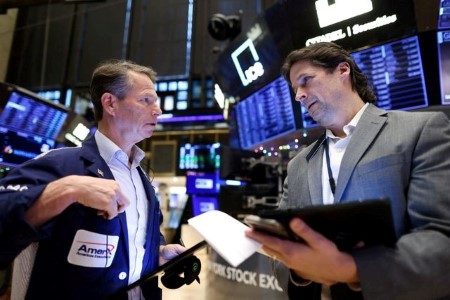
NEW YORK, Jan 24 (Reuters) – A glitch at the New York Stock Exchange prevented the opening auctions for a slew of stocks on Tuesday, prompting widespread trading halts, confusion over whether orders were being filled at correct prices, and trades in more than 250 securities being busted.

The NYSE, which is owned by Intercontinental Exchange Inc (ICE), said a “system issue” prevented the opening auctions in a subset of its listed securities. The stocks began trading without an opening print, causing erroneous prices that the exchange said will be declared null and void.

A spreadsheet released by the exchange showed 251 affected securities.

The glitch – the most recent in a series since the “flash crash” of 2010 – impacted stocks of major companies including ExxonMobil (XOM), 3M (MMM), Verizon (VZ), McDonald’s Corp (MCD), Wells Fargo (WFC) and WalMart (WMT). The companies did not immediately respond to a request for comment.

“What appears to have happened is a technical glitch where all of my opening orders on the NYSE autocancelled even though some of them should have been fulfilled,” said Dennis Dick, trader at Triple D Trading.

“They have corrected that now, but this is going to be a big mess to clean up.”

The US Securities and Exchange Commission said it was reviewing the issue.

The exact cost of the fallout from the glitch is unclear, but the cost to brokers and retail traders is likely to be in the eight-figure range, according to a person at a major brokerage who spoke on condition of anonymity because the matter is sensitive.

“Obviously, there were a lot of stocks that had major issues,” said Joe Saluzzi, co-manager of trading at Themis Trading in Chatham, New Jersey. “It’s a bit of a mess.”

Saluzzi said there was “zero failure tolerance” among traders for glitches at the key open and close of trading.

“This is a failure, there is no sugarcoating it,” said Saluzzi. “There are definitely people who are losing money today who are not happy.”

The opening auction gaffe comes as the SEC is considering routing most retail stock orders through auctions, with the aim of getting individual investors better prices.

“The SEC’s plan to make us all cool and groovy with consumer auctions leaves a lot to be desired,” said James Angel, a finance professor at Georgetown University.

“Auctions are a lot more complicated than it looks. Lots of things can go wrong,” said Angel, who helped work on Nasdaq Inc’s (NDAQ) auction process.

The NYSE-listed stocks trade on all 16 US stock exchanges, which use the NYSE’s prices.

Saluzzi said that having multiple exchanges does not help in a situation like this as the only place to trade an opening order on a New York Stock Exchange-listed stock is that exchange itself.

The NYSE is the only major US stock exchange that still uses a trading floor, along with electronic trading, a hybrid model the exchange says facilitates price discovery during market opens, closes, and during periods of trading imbalances or instability.

Technical errors at exchanges can erode market confidence.

“I had a few discretionary trades to place but chose to wait an additional 30 minutes or so after things seemed to normalize to be sure there were no issues,” said Seth Hickle, derivatives portfolio manager at Innovative Portfolios in Indianapolis, Indiana.

To hold exchanges accountable for such glitches, the SEC adopted a sweeping set of business continuity and disaster recovery rules called regulation system compliance and integrity (Reg SCI) in 2014.

In March 2018, the NYSE was the first exchange fined under Reg SCI. The USD 14 million fine partly related to a nearly four-hour trading halt in July 2015 that resulted from a flawed software rollout.

(Reporting by John McCrank, Chuck Mikolajczak, Carolina Mandl and Doyinsola Oladipo in New York, Douglas Gillison in Washington, and Medha Singh and Amruta Khandekar in Bengaluru; Editing by Megan Davies, Daniel Wallis and Rosalba O’Brien)


With music and gifts, Philippines welcomes back Chinese tourists

MANILA, Jan 24 (Reuters) – Filipinos in traditional attire on Tuesday played bamboo marimbas and handed out necklaces and gifts to their first Chinese visitors since before the pandemic, seeking to lure back tourists after China’s scrapping of its COVID-19 curbs.

Chinese travelers no longer need to quarantine on return home and holiday bookings have surged from what was the world’s largest outbound travel market in 2019.

“After three years I got to visit Manila again from China. It feels great, so many happy places,” said Anthony Lee, a 38-year-old Chinese businessman who was among about 200 passengers who arrived on the Xiamen Airlines flight to Manila, the first since 2020.

China was the Philippines’ second-largest tourism market, with 1.7 million visitors in 2019, government data showed.

Only 39,627 people from China visited last year, when the Philippines started relaxing its restrictions.

“I have not gone to any countries. I am very happy now,” said Atsushih Amemye, 28, after he passed through immigration.

The once USD 255 billion annual global spending by Chinese tourists ground to a virtual halt during the pandemic and left a hole in the Asian market.

The Philippines, known for its powdery white sand beaches and lush marine life, is targeting 4.8 million foreign tourists this year, after 2.6 million in 2022.

“We anticipate even more Chinese tourists to arrive, which will greatly help us in our effort to transform and recover the tourism industry,” Tourism Secretary Christina Garcia Frasco told reporters.

“Our intention is not only to regain our pre-pandemic numbers but to exceed it.”

(Reporting by Adrian Portugal; Writing by Neil Jerome Morales; Editing by Martin Petty and Timothy Heritage)


European shares slip as economic growth data fuels rate hike concerns

European shares slip as economic growth data fuels rate hike concerns

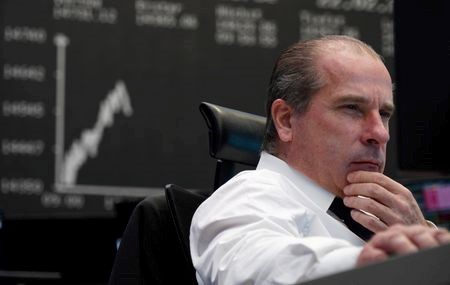
Jan 24 (Reuters) – European stocks fell on Tuesday as an improvement in economic activity in the euro zone spurred speculation the European Central Bank (ECB) might have more room to raise interest rates to tackle inflation.

The pan-European STOXX 600 index was down 0.2% at the close, but was off its session lows.

Data showed euro zone business activity made a surprise return to modest growth in January, adding to signs the downturn in the bloc may not be as deep as feared and that the currency union may escape recession.

Hopes of a milder recession in the euro zone and smaller interest rate increases from the Federal Reserve have buoyed European equities this year. The STOXX 600 has risen 6.7% so far in 2023, outperforming a 4.5% annual rise in the US benchmark S&P 500 index.

Euro zone government bond yields fell after the business activity data as investors tried to assess the ECB’s future monetary tightening path.

“The constant battle (is) growth versus rate hikes. If things are going well economically, which is good for stock markets, that also gives the ECB room to raise rates,” said Steve Sosnick, chief strategist at Interactive Brokers.

Sosnick also pointed to profit-taking playing a role in the day’s declines.

Although the ECB has been raising rates at its fastest pace on record, it has so far failed to bring inflation anywhere near its 2% target.

Hawkish comments from ECB policymakers have helped cement bets of 50 basis point interest rate rises at each of its next two meetings, with one scheduled next week.

The U.S economy also showed signs of improvement, with the downturn in the country’s business activity easing slightly in January even as it contracted for the seventh straight month.

Among STOXX 600 sectors, healthcare and energy stocks led declines, falling over 1% each.

Gains in financials limited losses as banks rose 0.6% while economically linked industrial stocks also climbed 0.9%.

On Tuesday, Logitech International (LOGN) gained 3.4% after the computer peripherals maker said it expects the downturn in spending by business customers which hit its third quarter sales to be temporary.

Swatch Group (UHR) rose 5.1% after the world’s biggest watchmaker said it expected a recovery in luxury demand from China.

Shares of Norwegian salmon farmers SalMar (SALM) and Mowi (MOWI) jumped 5.3% and 2.2%, respectively.

Traders pointed to a media report suggesting adjustments to the centre-left government’s salmon tax hike proposal, which has weighed on the sector.

(Reporting by Sruthi Shankar and Amruta Khandekar in Bengaluru; Editing by Savio D’Souza, Shinjini Ganguli and Andrea Ricci)


Oil falls USD 2/barrel on economic jitters

Oil falls USD 2/barrel on economic jitters

HOUSTON, Jan 24 (Reuters) – Crude oil prices slipped on Tuesday on concerns about a global economic slowdown and as preliminary data indicated a bigger than expected build in US oil inventories.

Brent futures for March delivery fell USD 2.06, or 2.3%, to USD 86.13 a barrel. US crude fell USD 1.49, or 1.8%, to USD 80.13 per barrel.

US business activity contracted in January for the seventh straight month, though the downturn moderated across both the manufacturing and services sectors for the first time since September and business confidence strengthened as the new year began.

The US economy “still could roll over and some energy traders are still sceptical on how quickly China’s crude demand will bounce back this quarter,” OANDA analyst Edward Moya said in a note.

Euro zone business activity made a surprise return to modest growth in January, S&P Global’s flash Composite Purchasing Managers’ Index (PMI) showed. Yet British private sector economic activity fell at its fastest rate in two years.

Economies in the six-member Gulf Cooperation Council (GCC) will grow this year at half the rate of 2022 as oil revenues take a hit from an expected mild global slowdown, according to the median view from a Reuters poll of economists.

Crude stocks rose by about 3.4 million barrels in the week ended Jan. 20, according to market sources citing American Petroleum Institute figures on Tuesday. That was triple the build of about 1 million forecast in a preliminary Reuters poll on Monday.

Official data from the US Energy Information Administration will be released at 10:30 a.m. (1530 GMT) on Wednesday.

Meanwhile, an OPEC+ panel is likely to endorse the producer group’s current oil output policy when it meets next week, five OPEC+ sources said on Tuesday, as hopes of higher Chinese demand driving an oil price rally are balanced by worries over inflation and a global economic slowdown

Bank JP Morgan raised its forecast for Chinese crude demand but maintained its projection for a 2023 price average of USD 90 a barrel for Brent crude.

“Absent any major geopolitical events, it would be difficult for oil prices to breach USD 100 in 2023 as there should be more supply than demand this year,” it said in an analyst note.

Crude oil prices in physical markets have started the year with a rally on increased buying from China after the relaxation of pandemic controls and on trader concern that sanctions on Russia could tighten supply.

US oilfield services firm Halliburton Co (HAL) said its shale oil-well fracking equipment remains fully booked with oil prices driving increased drilling.

Investors have also piled back into petroleum futures and options at the fastest rate for more than two years as concerns over a global business cycle downturn eased.

(Reporting by Arathy Somasekhar, Noah Browning; additional reporting by Mohi Narayan in New Dehi and Laura Sanicola; Editing by David Goodman, Mark Potter, David Gregorio and Deepa Babington)


Fed, ECB divergence should limit EUR/USD pull backs

Fed, ECB divergence should limit EUR/USD pull backs

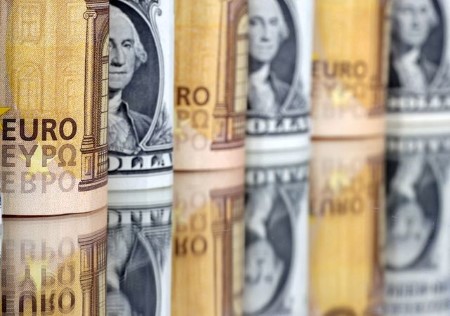
Jan 23 (Reuters) – EUR/USD struck a 9-month high on Monday before reversing lower with help from rising US rates and a buoyant dollar, but pull backs such as these are likely to be opportunities for bulls, supported by diverging Fed and ECB policy paths.

CFTC data indicate investors expect short-term US rates to decrease nL8N3470HM, which would lead to a steepening of the US 3-month/10-year spread.

Eurodollar and fed funds futures continue to price in Fed rate cuts in either Q3 or Q4 2023.

A Reuters poll indicates economists expect the ECB to hike 50bps at its next two meetings with hikes ending when the deposit rate reaches 3.25% in Q2 2023.

Euribor futures mirror the poll results but then price rate cuts in either Q3 2023 or Q1 2024.

Eurodollar and Euribor investors are pricing in much more aggressive rate cuts for the Fed than the ECB, which should help erode the dollar’s yield advantage over the euro and underpin EUR/USD.

Bullish technicals reinforce the rate influences and as long as current investor sentiment regarding central bank policies holds EUR/USD could rally.

(Christopher Romano is a Reuters market analyst. The views expressed are his own.)


Gold prices tick up as US dollar inches lower

Gold prices tick up as US dollar inches lower

Jan 23 (Reuters) – Gold prices reversed course to edge up on Monday as the dollar pared gains, while investors looked ahead to more US economic data amid expectations of a slower pace of interest rate hikes.

Spot gold fell 0.2% to USD 1,922.45 per ounce by 12:02 p.m. ET (1702 GMT). It climbed to its highest since April 2022 on Friday.

US gold futures settled little changed at USD 1,928.6.

“Bond yields ticked up slightly and the dollar has been going up here this morning – that’s just putting some pressure here on gold,” said Bob Haberkorn, senior market strategist at RJO Futures.

“A lot of people will start hopping in when we see some support around USD 1,950 to see the inevitable move towards USD 2,000.”

The dollar index was steady at 102.05, while gains in bullion were limited by benchmark yields being near session-highs.

Investors will be scanning the US fourth-quarter GDP report on Thursday before the Federal Reserve policy meeting on Jan. 31-Feb. 1.

Traders are pricing in a 98% chance that the central bank will raise rates by 25 basis points (bps) next month, after slowing its pace to 50 bps last month, following four straight 75-bp hikes.

Zero-yield bullion tends to do well in a lower interest rate environment.

Meanwhile, India is expected to slash the import duty on gold, which could lift retail sales by making the metal cheaper ahead of peak demand season.

Elsewhere, spot silver fell 2.1% to USD 23.45, platinum gained 0.4% to USD 1,047.42, while palladium was down 0.8% to USD 1,713.25.

Analysts at Goldman Sachs said in a note that supply disruptions have partially reversed for both palladium and platinum, leading to a small surplus, but that surplus could “easily disappear if the expected recovery in South African mine production fails to materialize”.

(Reporting by Seher Dareen in Bengaluru; Editing by Jane Merriman and Devika Syamnath)


Top hedge funds earned sharply less for clients in 2022, LCH data shows

Top hedge funds earned sharply less for clients in 2022, LCH data shows

Jan 23 (Reuters) – The 20 best performing hedge fund managers earned USD 22.4 billion for investors in 2022, marking their slimmest gains since 2016 as many firms, including Tiger Global Management, struggled with slumping financial markets, LCH Investments data show.

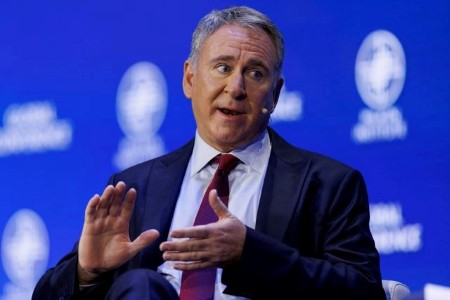
The top 20 managers, led by Ken Griffin’s Citadel, Bridgewater Associates and D.E. Shaw Group, made less than half of the USD 65.4 billion the group returned in 2021 when rising stock prices led to a record return. In comparison, they made USD 63.5 billion in 2020 and USD 59.3 billion in 2019.

Citadel’s gain of USD 16 billion last year was the largest annual gain ever made by a hedge fund manager, LCH said.

In 2022, when fears of rising interest rates and geopolitical uncertainty weighed on markets, investment firms that focused on trading strategies and bet on macroeconomic trends reaped gains. Those with strategies linked to market moves stumbled.

Rick Sopher, chairman of LCH, a fund of funds firm that tracks returns and is part of the Edmond de Rothschild Group, said 2022 was a year of “great divergence” in which several of the top 20 managers managed to make gains for their investors despite the significant falls in equity and bond markets.

Last year will mostly be remembered as a tough one, with the broader S&P 500 index losing 20% and blue chip hedge fund managers like Tiger Global and Third Point nursing losses. Overall, hedge funds lost USD 208 billion in 2022 for clients, marking the biggest single-year decline since 2008, when they lost USD 565 billion, LCH data showed.

Hedge funds, which were jointly managing USD 3.3 trillion on Dec. 31, 2022, according to eVestment data, often promise to outperform, especially when markets are stumbling.

There was a shakeup among the very best performers as Griffin’s Citadel moved into the top spot ahead of Bridgewater, which earned USD 6.2 billion.

D.E. Shaw, Millennium Management, Soros Fund Management, Elliott Management, and Viking Global Investors also ranked in the top 10.

Caxton Associates and Moore Capital, firms helped by macro trading in 2022, made it back onto the list, LCH said, while Tiger Global, whose founder Chase Coleman got his start at Julian Robertson’s Tiger Management, and Third Point dropped off the list.

Citadel, which was founded by Griffin in 1990, saw its flagship Wellington portfolio gain 38% last year while its fixed income fund was up 33%, according to a person familiar with the numbers.

(Reporting by Svea Herbst-Bayliss; editing by Paul Simao)


Philippines to bring inflation below 4% by Q3 – BSP chief

Jan 23 (Reuters) – Annual inflation at 14-year highs in the Philippines will likely ease to below 4% by the third quarter and then 2% by early next year, as aggressive tightening and supply-side intervention take root, its central bank governor said on Monday.

“We expect to be very successful in bringing down inflation,” Bangko Sentral ng Pilipinas Governor Felipe Medalla told an investment forum in Frankfurt.

Medalla said the high inflation was fuelled by supply shocks, so the government’s plan to speed up importation of certain commodities like onion and sugar, on top of tighter policy, should help tackle soaring prices.

President Ferdinand Marcos Jr, who is also agriculture minister, said he was determined to slow the pace of inflation, which last month quickened to a fresh 14-year high of 8.1%.

“What I lose sleep every night over is how to bring down inflation,” he said in interview shown on the Facebook page of state-controlled PTV.

Marcos recently approved the emergency importation of onions to address skyrocketing prices that have contributed to inflation but said it would take a while before the measure would have an impact.

Retail prices of onions surged to as high as 700 pesos (USD 12.83) per kilogram in recent days in Manila markets, among the highest in the world, according to some economists.

Food prices helped push the consumer price index last month up 8.1% from a year earlier, the fastest rise in 14 years, bringing full-year average inflation to 5.8%, outside the central bank’s 2%-4% target range.

BSP’s Medalla has signaled further interest rates hikes at the central bank’s first two policy meetings this year to bring inflation back within a target range of 2% to 4%.

The BSP, which raised its benchmark interest rate by a total of 350 basis points last year, will hold its first policy meeting of 2023 on Feb. 16.

(USD 1 = 54.5800 Philippine pesos)

(Reporting by Neil Jerome Morales and Karen Lema in Manila; Editing by Martin Petty)


Oil settles mixed after hitting 7-week high on strong China outlook

Oil settles mixed after hitting 7-week high on strong China outlook

NEW YORK, Jan 23 (Reuters) – Oil prices settled mixed on Monday, retreating as investors cashed in on a jump to a seven-week high on optimism about a possible recovery in demand of top oil importer China as the economy recovers this year from pandemic lockdowns.

Brent crude settled 56 cents higher at USD 88.19 a barrel. The session high was USD 89.09 a barrel, the highest since Dec. 1. US West Texas Intermediate (WTI) crude settled 2 cents lower at USD 81.62 a barrel, off the session high USD 82.64 a barrel, the highest since Dec. 5.

Prices pulled back at the end of the session as investors took profits, said Phil Flynn, analyst at Price Futures Group.

Still, the market wants to preserve long positions in case Chinese growth resumes, said Sukrit Vijayakar, director of Mumbai-based energy consultancy Trifecta.

Data shows a solid pick-up in travel in China after COVID-19 curbs were eased, ANZ commodity analysts said in a note, pointing out that road traffic congestion in the country’s 15 key cities so far this month is up 22% from a year ago.

Crude oil prices in much of the world’s physical markets have started the year with a rally as China has shown signs of more buying and traders have worried that sanctions on Russia could tighten supply.

“While the (China) reopening itself will no doubt prove to be complicated, particularly over the holiday season, early indications suggest there has been a rise in activity, meaning the economy could perform better,” said OANDA analyst Craig Erlam.

Brent is expected to move back into a range between USD 90 and USD 100 as the oil market tightens, Erlam said.

Demand for products has lifted the oil market and refining margins, Flynn said. The 3-2-1 crack spread, a proxy for refining margins, rose to USD 42.18 per barrel on Monday, the highest since October.

The European Union and Group of Seven (G7) coalition will cap prices of Russian refined products from Feb. 5, in addition to the price cap on Russian crude in place since December and an EU embargo on imports of Russian crude by sea.

The G7 has agreed to delay a review of the level of the price cap on Russian oil to March, a month later than originally planned, to provide time to assess the impact of the oil products price cap.

In India, crude oil imports rose to a five-month high in December, government data showed on Monday, as refiners stocked up discounted Russian fuel amid a steady increase in consumption in the country.

(Reporting by Stephanie Kelly in New York; additional reporting by Ron Bousso in London, Mohi Narayan in New Delhi and Sonali Paul in Melbourne; Editing by David Goodman, David Gregorio and Mark Potter)


Gold eases as dollar ticks up, but set for fifth weekly rise

Gold eases as dollar ticks up, but set for fifth weekly rise

Jan 20 (Reuters) – Gold prices edged lower on Friday as the dollar firmed, although hopes of slower rate hikes from the US Federal Reserve kept bullion on track for its fifth straight weekly gain.

Spot gold fell 0.2% to USD 1,928.06 per ounce by 1:49 p.m. ET (1849 GMT), after rising to its highest since April 22 at USD 1,937.49 earlier in the session. Prices are up 0.4% so far this week.

US gold futures settled up 0.2% at USD 1,928.2.

“The US dollar is finding some form of stability and in turn we could see gold prices heading lower into next week,” said Daniel Ghali, commodity strategist at TD Securities.

The dollar was steady against its rivals, making gold more expensive for holders of other currencies.

However, recent weak US economic readings and hawkish remarks from Fed policymakers fueled worries over a global slowdown and prompted investors to seek refuge in the safe-haven metal.

Commentary from Fed officials has pointed to a terminal rate above 5%, but traders still bet on rates peaking at 4.9% by June and see a 93.7% chance for a 25-basis-point rate hike in February.

Gold tends to gain when rate hike expectations recede, because lower rates reduce the opportunity cost of holding non-yielding bullion.

While there has been an accumulation of gold by various central banks and agencies, gold ETFs held by individuals have been decreasing. Were ETF buying to return, that would limit any overbought dip in the metal, said Caesar Bryan, portfolio manager of the Gabelli Gold Fund.

Elsewhere, silver rose 0.3% to USD 23.90 per ounce. Platinum gained 0.8% to USD 1,040.50, while palladium dipped 1.7% to USD 1,725.04, with both metals en route to a second consecutive weekly fall.

“When it comes to physical markets, platinum has received substantial amount of support from challenges in South Africa’s mining sector. We continue to expect platinum to outperform palladium,” Ghali added.

(Reporting by Seher Dareen in Bengaluru; Editing by Shailesh Kuber and Alistair Bell)


Posts navigation

Older posts
Newer posts

Recent Posts

  • Peso GS Weekly: Risk relief drives curve‑wide rally
  • Metrobank US-Iran Risk Index: Dire straits
  • Investment Ideas: April 6, 2026
  • Investment Ideas: April 1, 2026
  • Metrobank US-Iran Risk Index: Signals of an end

Recent Comments

No comments to show.

Archives

  • April 2026
  • March 2026
  • February 2026
  • January 2026
  • December 2025
  • November 2025
  • October 2025
  • September 2025
  • August 2025
  • July 2025
  • June 2025
  • May 2025
  • April 2025
  • March 2025
  • February 2025
  • January 2025
  • December 2024
  • November 2024
  • October 2024
  • September 2024
  • August 2024
  • July 2024
  • June 2024
  • May 2024
  • April 2024
  • March 2024
  • February 2024
  • January 2024
  • December 2023
  • November 2023
  • October 2023
  • September 2023
  • August 2023
  • July 2023
  • June 2023
  • May 2023
  • April 2023
  • March 2023
  • February 2023
  • January 2023
  • December 2022
  • November 2022
  • October 2022
  • September 2022
  • August 2022
  • July 2022
  • June 2022
  • May 2022
  • March 2022
  • December 2021
  • October 2021

Categories

  • Bonds
  • BusinessWorld
  • Currencies
  • Economy
  • Equities
  • Estate Planning
  • Explainer
  • Featured Insight
  • Fine Living
  • How To
  • Investment Tips
  • Markets
  • Portfolio Picks
  • Rates & Bonds
  • Retirement
  • Reuters
  • Spotlight
  • Stocks
  • Uncategorized

You are leaving Metrobank Wealth Insights

Please be aware that the external site policies may differ from our website Terms And Conditions and Privacy Policy. The next site will be opened in a new browser window or tab.

Cancel Proceed
Get in Touch

For inquiries, please call our Metrobank Contact Center at (02) 88-700-700 (domestic toll-free 1-800-1888-5775) or send an e-mail to customercare@metrobank.com.ph

Metrobank is regulated by the Bangko Sentral ng Pilipinas
Website: https://www.bsp.gov.ph

Quick Links
The Gist Webinars Wealth Manager Explainers
Markets
Currencies Rates & Bonds Equities Economy
Wealth
Investment Tips Fine Living Retirement
Portfolio Picks
Bonds Stocks
Others
Contact Us Privacy Notice Terms of Use
© 2026 Metrobank. All rights reserved.

Access this content:

If you are an existing investor, log in first to your Metrobank Wealth Manager account. ​

If you wish to start your wealth journey with us, click the “How To Sign Up” button. ​

Login HOW TO SIGN UP