MODEL PORTFOLIO
THE GIST
NEWS AND FEATURES
Global Philippines Fine Living
INSIGHTS
INVESTMENT STRATEGY
Economy Stocks Bonds Currencies
THE BASICS
Investment Tips Explainers Retirement
WEBINARS
2024 Mid-Year Economi Briefing, economic growth in the Philippines
2024 Mid-Year Economic Briefing: Navigating the Easing Cycle
June 21, 2024
Investing with Love
Investing with Love: A Mother’s Guide to Putting Money to Work
May 15, 2024
retirement-ss-3
Investor Series: An Introduction to Estate Planning
September 1, 2023
View All Webinars
DOWNLOADS
Container ship carrying container boxes import export dock with quay crane. Business commercial trade global cargo freight shipping logistic and transportation worldwide oversea concept. Generative AI
Economic Updates
Philippines Trade Update: Wider deficit on strong imports
DOWNLOAD
Frick collection with palm trees 
Economic Updates
Policy Rate Updates: Policy rate updates to reassure 
DOWNLOAD
Man using his smartphone
Reports
Fed to cut just once 
DOWNLOAD
View all Reports
Metrobank.com.ph How To Sign Up
Follow us on our platforms.

How may we help you?

TOP SEARCHES
  • Where to put my investments
  • Reports about the pandemic and economy
  • Metrobank
  • Webinars
  • Economy
TRENDING ARTICLES
  • Investing for Beginners: Following your PATH
  • On government debt thresholds: How much is too much?
  • Philippines Stock Market Outlook for 2022
  • Deficit spending remains unabated

Login

Access Exclusive Content
Login to Wealth Manager
Visit us at metrobank.com.ph How To Sign Up
Access Exclusive Content Login to Wealth Manager
Search
MODEL PORTFOLIO THE GIST
NEWS AND FEATURES
Global Philippines Fine Living
INSIGHTS
INVESTMENT STRATEGY
Economy Stocks Bonds Currencies
THE BASICS
Investment Tips Explainers Retirement
WEBINARS
2024 Mid-Year Economi Briefing, economic growth in the Philippines
2024 Mid-Year Economic Briefing: Navigating the Easing Cycle
June 21, 2024
Investing with Love
Investing with Love: A Mother’s Guide to Putting Money to Work
May 15, 2024
retirement-ss-3
Investor Series: An Introduction to Estate Planning
September 1, 2023
View All Webinars
DOWNLOADS
Container ship carrying container boxes import export dock with quay crane. Business commercial trade global cargo freight shipping logistic and transportation worldwide oversea concept. Generative AI
Economic Updates
Philippines Trade Update: Wider deficit on strong imports
March 27, 2026 DOWNLOAD
Frick collection with palm trees 
Economic Updates
Policy Rate Updates: Policy rate updates to reassure 
March 26, 2026 DOWNLOAD
Man using his smartphone
Reports
Fed to cut just once 
March 19, 2026 DOWNLOAD
View all Reports

Archives: Reuters Articles

S&P, Nasdaq futures fall on inflation worries after OPEC+ output cut

April 3 (Reuters) – Futures tracking the S&P 500 and the Nasdaq fell on Monday as soaring oil prices renewed worries of persistent inflationary pressures, while energy stocks surged at the start of the week.

Saudi Arabia and other OPEC+ oil producers announced further oil output cuts of around 1.16 million barrels per day, threatening an immediate rise in prices.

This comes just days after a slowdown in US price data boosted market optimism.

Oil prices jumped 5.4% on Monday, propelling over 3% gains in energy firms such as Exxon Mobil Corp and Chevron Corp in premarket trade.

“It can be expected to have an upwards impact on headline and core CPI … which potentially means a higher terminal rate for the Fed and rates remaining at an elevated level for longer than hitherto,” Stuart Cole, head macro economist at Equiti Capital, said.

An uptick in US Treasury yields pushed major technology stocks and other growth shares such as Apple Inc AAPL.O, Amazon.com Inc,  Microsoft Corp, and Alphabet Inc, down between 0.6% and 0.9%.

Traders’ bets of a 25-basis point rate hike in May stood at 58.7%, with odds of a pause at 41.3%, according to CME Group’s Fedwatch tool.

Among other major stocks, Tesla Inc dropped 2% after missing first-quarter deliveries estimates as a bleak economic outlook and rising competition weighed on the electric-vehicle maker’s sales.

At 5:09 a.m. ET, Dow e-minis were up 119 points, or 0.36%, S&P 500 e-minis were down 4 points, or 0.10%, and Nasdaq 100 e-minis were down 84.5 points, or 0.64%.

In the first quarter, that was marked by shockwaves from the collapse of two regional US banks, signs of trouble in some European banks and a repricing in interest rate expectations from the Fed, the S&P 500 jumped 7%, bouncing back from a near 20% drop in 2022. The Nasdaq recorded its strongest first-quarter jump of 17% since 2020.

Investors will closely monitor S&P Global and ISM manufacturing PMI data for March later in the day and much-awaited jobs reports this week.

Remarks by Federal Reserve Board Governor Lisa Cook on economic outlook and monetary policy are also expected later on Monday.

(Reporting by Ankika Biswas in Bengaluru; Additional reporting by Anjur Banerjee; Editing by Shounak Dasgupta)

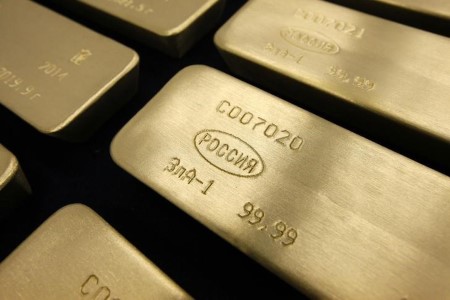
Gold prices pare losses on rate hike bets after OPEC+ cut

April 3 (Reuters) – Gold prices eased on Monday after OPEC+ made a surprise announcement of oil output cuts, sparking inflation concerns and raising bets on more central bank rate hikes.

Spot gold was 0.2% lower at USD 1,964.69 per ounce by 0924 GMT, having earlier slipped to its lowest in nearly a week at USD 1,949.54. US gold futures were also down 0.2% at USD 1,982.00.

A knee-jerk reaction to OPEC+ cutting production, with the dollar rising, was pushing gold lower but some bargain hunters were coming in around the USD 1960-USD 1965 level, StoneX analyst Rhona O’Connell said.

Given that energy is a “reasonably high component of inflationary forces,” there could be more rate hikes expected, which the market is pricing in, she added.

European shares rose as oil heavyweights rallied with higher crude prices, but gains were limited and U.S. and European bond yields rose on renewed inflation fears.

While gold is traditionally considered a hedge against inflation, higher interest rates to rein in rising price pressures tend to dim appeal for the asset since it pays no interest.

CME’s Fedwatch tool shows that markets see a 60.3% chance of the Fed hiking rates by a quarter point in May.

British manufacturers slipped deeper into decline in March but turned optimistic as cost pressures and supply chain problems eased, which could be viewed positively by the Bank of England before its next rate-hike decision in May.

Bullion rose by nearly 8% last quarter after the recent global banking turmoil drove bets that the Fed would tone down its rate hike approach.

“There are support zones placed at USD 1,935 and USD 1,920, while a recovery to USD 1,980 would denote strength,” said Carlo Alberto De Casa, external analyst at Kinesis Money, in a note.

Spot silver fell 1.3% to USD 23.75 per ounce, platinum was down 0.6% to USD 985.74 and palladium  gained 0.9% to USD 1,473.03.

(Reporting by Seher Dareen and Kavya Guduru in Bengaluru; Editing by Kirsten Donovan)

Oil importer Turkey’s shares near two-month low, Russian stocks gain

April 3 (Reuters) – Emerging market stocks were set to snap four sessions of gains on Monday, with Turkish shares near a two-month low as prices of oil surged after surprise OPEC+ output cuts, while crude exporter Russia’s stocks jumped.

The Organization of the Petroleum Exporting Countries and their allies including Russia announced further oil output cuts of around 1.16 million barrels per day, sending crude prices surging nearly 6%.

The move sparked worries that it could aggravate elevated levels of global inflation and dampened a rally sparked by a slowdown in US prices.

The MSCI’s index for EM stocks fell 0.3% after gaining 3.5% last quarter, while Turkey’s BIST 100 index slipped 1.3% hitting its lowest since early February. The lira  also dipped 0.2% against the dollar.

The Indian rupee, Thai baht, and the South Korean won all fell, with the won set for its worst day in almost a month.

“It’s not that favourable to emerging market currencies because it’s going to accelerate a return to those worries related to the upside risk on inflation,” said Sébastien Barbé, head of EM research & strategy at Credit Agricole CIB.

“The kind of relief that we have had in emerging markets, including in EMEA, its being eroded and we may have a little bit more of a defensive stance because some countries have an oil import bill which is quite significant.”

Russia’s benchmark rouble-denominated MOEX index rose 0.7%, hitting its highest level in seven months, while its dollar-based RTS index added 0.4%. The rouble also firmed against the dollar in Moscow trade.

Poland’s WIG 20 index  hit a three-week high after jumping as much as 1.8%, boosted by oil and gas services provider PKN Orlen PKN.WA rising as much as 4.5%.

Data showed Poland’s manufacturing decline accelerated a touch in March, while a deep contraction in the Czech Republic also continued as recovery was slow to take hold in central Europe.

International bonds  issued by oil exporters Angola and Nigeria jumped more than 1 cent.

Later in the day, Israel’s central bank is expected to raise short-term interest rates by a quarter-point to a 16-year high. The shekel ILS= was flat against the dollar.

(Reporting by Shreyashi Sanyal and Shashwat Chauhan in Bengaluru; Editing by Shounak Dasgupta)

Resilient US stocks failing to factor in recession, investors fear

Resilient US stocks failing to factor in recession, investors fear

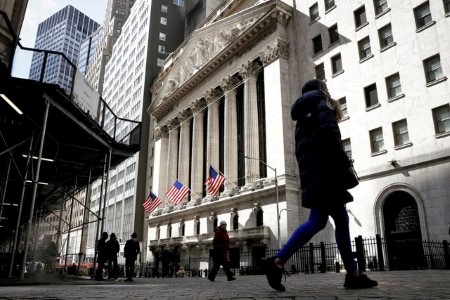
NEW YORK, March 31 (Reuters) – US stocks have soldiered on through a banking mess to notch solid first-quarter gains. Some investors say that performance could come under pressure if a widely expected recession hits.

The benchmark S&P 500 posted a 7% gain for the first quarter, which ended on Friday, rebounding after a nearly 20% drop in 2022. The Nasdaq Composite’s 16.8% first-quarter jump was its biggest quarterly rise since 2020.

Wary investors say those gains leave stocks more vulnerable to an economic downturn, which may have been brought closer by tumult in the banking sector following this month’s collapse of Silicon Valley Bank. Many point to equity valuations, which remain elevated by historical standards, while arguing that corporate earnings may have a long way to fall in the event of a recession.

“The answer is emphatically no, the market is not priced for a recession at all,” said Hans Olsen, chief investment officer at Fiduciary Trust Co, which is guarding against future market turbulence by holding higher than typical amounts of cash. For stocks, “it means that we could be in for some very nasty surprises over the coming quarters.”

To what degree equities have factored in a possible recession – and whether the economy will experience one – has been a point of contention on Wall Street. Strong data earlier in the year bolstered hopes that the US would suffer only a mild recession or avoid one altogether, despite a barrage of rate hikes from the Federal Reserve.

This month’s banking sector turbulence again revved up concerns, as some analysts argued the stress on lenders could pressure the economy just as the Fed’s monetary policy tightening is starting to bite.

That’s pushed investors to take a second look at key metrics such as corporate earnings. While estimates for profits are already downbeat for the coming quarters, some believe they may fall further if there is a recession.

“Given the events of the past few weeks, we think … equity markets are at greater risk of pricing in much lower estimates,” Morgan Stanley strategists said in a report earlier this week, noting that earnings estimates were 15-20% too high even “before the recent banking events.”

S&P 500 earnings for the first quarter are estimated to have fallen 5% from the prior year, followed by an expected 3.9% drop in the second quarter, Refinitiv data shows. During recessions, however, earnings tumble at a 24% annual rate on average, according to Ned Davis Research.

US companies will start reporting first-quarter results in the coming weeks.

HIGH VALUATIONS

Valuations for stocks overall are also high historically, with the S&P 500 trading at about 18 times forward earnings estimates compared to its long-term average P/E of 15.6 times, according to Refinitiv Datastream.

Nathan Shetty, head of multi-asset at Nuveen, believes current valuations show investors have yet to price in a recession.

“If the market was looking through this and saying, ‘ok recession is likely to occur,’ you would start to see those valuations start to come down a bit rather than being as elevated as they are,” he said.

Investors are looking to next week’s monthly payrolls report for a read on the strength of a labor market that has shown resiliency over the past year.

Some investors say stocks may have priced in a recession during last year’s steep decline, which saw the S&P 500 fall by as much as 25.4% from its all-time high to when it reached its October nadir.

Such a drop is broadly in line with historic data from Truist Advisory Services, showing the index has fallen an average of 29% during recessions since World War Two.

“Do we have to price in the same recession twice? Likely not, but that is not to say that the coast is clear yet,” said Angelo Kourkafas, an investment strategist at Edward Jones. Kourkafas believes stocks could face turbulence ahead but are unlikely to fall through their October lows.

Other variables could determine how markets react to an economic downturn, including its severity and length. Another is whether the Fed begins cutting rates when a downturn hits or keeps them elevated to finish off its fight against inflation.

Though the central bank’s outlook shows borrowing costs remaining around current levels by year end, investors in futures markets see rates falling in the second half of the year.

“Once the market gets visibility into the timing on those rate reductions, notwithstanding a recession, I don’t think that you are going to see a lot of downward movement in stocks,” said Tony Roth, chief investment officer for Wilmington Trust.

(Reporting by Lewis Krauskopf; Editing by Ira Iosebashvili and Deepa Babington)


Treasury yields drop as inflation moderates

Treasury yields drop as inflation moderates

NEW YORK, March 31 (Reuters) – Two-year US Treasury yields were on track to post the largest monthly drop since 2008 on Friday while 10-year yields keyed in on the biggest drop in three years, after data showed inflation moderated in February and as investors sought out bonds for quarter-end.

Treasury yields have stabilized following sharp drops after the collapse of Silicon Valley Bank and Signature Bank this month.

But investors remain wary of any renewed stress in the banking system as they also wait to see how tighter lending standards resulting from the recent bank failures will affect the economy.

Data on Friday showing that inflation cooled in February, though it remained high enough to possibly allow the Federal Reserve to raise interest rates one more time this year.

The data “show that maybe we are seeing some sort of a slowing of the economy, or some kind of relief in the pressure from inflation,” said Michael Lorizio, senior fixed income trader at Manulife Investment Management in Boston.

Fed funds futures traders see slightly higher odds that the Federal Reserve will raise interest rates by 25 basis points when it meets on May 2-3, rather than leave them unchanged.

“The number remains elevated far from their target, far from where they envision it ending the year, so I do think that if the overall tone is supportive of a rate hike, then their preference would be to hike 25 basis points in May,” Lorizio said.

“That being said … there is so much data between now and May 3, none of us really know what that data will look like or what’s next in terms of headlines coming out of the banking sector,” Lorizio added.

Boston Fed President Susan Collins said on Friday that wherever the US central bank stops with its interest rate rises, maintaining that level for some time will be critical in helping to lower high inflation back to the 2% target.

Hopes that the Fed is closer to the end of its hiking cycle have boosted demand for bonds, while month- and quarter-end rebalancing also played a role in Friday’s bond rally.

Benchmark 10-year yields fell 6 basis points on the day to 3.494%. They have fallen by 42 basis points this month, the largest fall since March 2020.

Two-year yields fell 3 basis points to 4.067%. They are down 73 basis points this month, the largest drop since Jan. 2008.

The yield curve between two-year and 10-year notes was last at minus 58 basis points.


March 31 Friday 3:00PM New York / 1900 GMT

Price Current Yield % Net Change (bps)
Three-month bills US3MT=RR 4.6475 4.7656 -0.048
Six-month bills US6MT=RR 4.695 4.8867 0.001
Two-year note US2YT=RR 99-163/256 4.0666 -0.032
Three-year note US3YT=RR 102-48/256 3.8325 -0.049
Five-year note US5YT=RR 100-12/256 3.6146 -0.048
Seven-year note US7YT=RR 100-94/256 3.5652 -0.050
10-year note US10YT=RR 100-12/256 3.494 -0.057
20-year bond US20YT=RR 100-176/256 3.825 -0.065
30-year bond US30YT=RR 98-216/256 3.689 -0.057
Be DOLLAR SWAP SPREADS
Last (bps) Net Change (bps)
US 2-year dollar swap spread 32.00 -1.00
US 3-year dollar swap spread 17.50 0.25
US 5-year dollar swap spread 5.75 0.25
US 10-year dollar swap spread -0.50 0.50
US 30-year dollar swap spread -44.50 1.50

(Reporting by Karen Brettell; Editing by Kirsten Donovan, Will Dunham and Jonathan Oatis)


Gold eases but remains on course for quarterly rise

Gold eases but remains on course for quarterly rise

March 31 (Reuters) – Gold prices were on track for a second straight quarterly rise on Friday, as growing bets that the US Federal Reserve will slow the pace of interest rate hikes drew investors to the metal.

Spot gold was down 0.6% at USD 1,968.25 per ounce by 2:26 p.m. EDT (1826 GMT), after prices moved as much as 0.4% higher following data that showed US consumer spending rose modestly in February. US gold futures settled down 0.6% at USD 1,986.2.

“Gold jumped quickly but modestly after the market-friendly PCE (personal consumption expenditures) report,” said Tai Wong, an independent metals trader based in New York.

“Bulls want a very strong close, ideally above USD 2,000, for quarter-end as a springboard to challenge the USD 2,070 all-time record, but the yellow metal looks a little tired.”

The dollar index, while down for the quarter, firmed on Friday, weighing on demand for the greenback-priced gold. USD/

Global stocks gained after the US data, latching onto hopes for a less challenging Fed interest rate regime. Gold, seen as a safe haven, loses value when investors have an appetite for riskier assets.

Last week, gold topped USD 2,000 after the sudden collapse of two US regional lenders drove bets that the US central bank might pause interest rate hikes to stem the risk of contagion in the global banking system.

Prices retreated after authorities initiated rescue measures, though they have gained about 7.8% so far this quarter.

“The mini-banking crisis has seen yields fall considerably and interest rate expectations pared significantly back, which has propelled gold higher,” said Craig Erlam, senior market analyst at OANDA.

Gold consumption in top hub China slowed this week as a steady rise in domestic prices started to bite, forcing dealers to offer discounts for the first time in months.

Spot silver rose 0.4% to USD 23.96 per ounce, platinum added 0.6% at USD 991.77, and palladium was largely unchanged at USD 1,464.77.

(Reporting by Bharat Govind Gautam, Ashitha Shivaprasad and Deep Vakil in Bengaluru; Editing by Jan Harvey, Krishna Chandra Eluri and Shilpi Majumdar)


China’s demand comeback to help oil weather banking crisis

China’s demand comeback to help oil weather banking crisis

March 31 (Reuters) – Oil will rebound after recent banking turmoil as demand from top consumer China is set to soar but worries around economic growth will keep both benchmarks hovering below USD 90 this year, a Reuters poll showed on Friday.

A survey of 45 economists and analysts forecast benchmark Brent crude would average USD 86.49 a barrel this year, down from February’s estimate of USD 89.23.

Brent is currently trading around USD 80, having been dragged to 15-month lows near USD 70 earlier this month on mounting worries over the stability of the banking sector. Those fears have since largely been allayed by institutional rescue measures for struggling banks.

“Fundamentals for the oil market do not seem to have changed meaningfully in light of bank runs in the US and the forced takeover of a Swiss bank,” said Suvro Sarkar, energy sector team lead at DBS Bank.

“The dip in oil prices is more of a blip at the moment, rather than a sustained move below USD 80 per barrel”.

Analysts forecast US crude to average USD 80.88 a barrel in 2023, down from the USD 83.94 consensus last month, but still above current trades of around USD 74.

Most analysts polled by Reuters expect oil prices to stay below USD 90 on fears of a recession in developed economies stemming from interest rate increases to bring down inflation.

Global oil demand is seen rising by about 1 million-2 million barrels per day (bpd) in 2023, with dips related to economic jitters or slowdowns in the West likely to be countered by increases from China, the world’s biggest oil importer.

“Oil demand in China should pick up a bit further over the year. And while US demand should slow, it won’t fall, even as the economy weakens under the weight of higher interest rates,” Capital Economics’ Bill Weatherburn said.

Along with China, prices will also hinge on potentially declining Russian oil production due to Western sanctions, with a combination of the two likely tightening global supplies, analysts said.

OPEC+, which comprises the Organization of the Petroleum Exporting Countries (OPEC) and allies led by Russia, is likely to stick to its deal on output cuts of 2 million bpd until the end of the year, which could add to upward price momentum, the poll showed.

(Reporting by Bharat Govind Gautam in Bengaluru; Additional reporting by Deep Vakil and Swati Verma; Editing by Noah Browning and Jan Harvey)


China rolls over USD 2B loan to Pakistan

ISLAMABAD, March 31 (Reuters) – Pakistan’s Finance Minister Ishaq Dar said on Friday that China has rolled over a USD 2 billion loan.

“I’m pleased to announce the Chinese rollover happened on 23 March,” he told the parliament.

(Reporting by Asif Shahzad; editing by Jason Neely)

Southeast Asian finance leaders discuss containing global risks

NUSA DUA, Indonesia, March 31 (Reuters) – Talks between Southeast Asian central bank governors and finance ministers entered their final day on Friday, with the leaders focused on strengthening the region’s resilience against global risks.

The gathering of finance leaders from the Association of Southeast Asian Nations (ASEAN) comes amid a backdrop of recent global banking turmoil after the collapse of Silicon Valley Bank and the bailout and takeover of Credit Suisse.

Finance Minister Sri Mulyani Indrawati of Indonesia, which is chairing ASEAN this year, said that even though the region was projected by international organisations to book positive growth this year, policymakers should regularly update policies to respond to fast-changing global dynamics.

“We all need to remain vigilant and to be prepared for some external challenges that may cause turbulence in our regional economies,” she said.

Indonesia’s central bank governor Perry Warjiyo called on the forum to boost the use of local currencies for settlements to reduce volatility and exposure to major currencies.

Officials at the meeting in Bali also proposed discussing ways to improve the connectivity of region’s payment systems, even though the relevant infrastructure in some ASEAN countries was not yet fully developed, Indonesia’s deputy central bank governor Dody Budi Waluyo said on Thursday.

They also discussed cryptocurrencies and central bank digital currencies, he added.

At a meeting on the sidelines of the event, the central bank governors of Indonesia and the Philippines said their banking systems were resilient and that stricter regulations were in place to prevent a repeat of the Asian financial crisis in the late 1990s.

(Reporting by Stefanno Sulaiman; additional reporting by Ananda Teresia in Jakarta. Editing by Ed Davies, Kanupriya Kapoor)

South Korean shares end quarter 11% higher

SEOUL, March 31 (Reuters) – Round-up of South Korean financial markets:

* South Korean shares rose 1% on Friday, buoyed by Wall Street’s overnight gains and China’s better-than-expected manufacturing data, ending the quarter with its best performance in over two years.

* The Korean won weakened, while the benchmark bond yield rose.

* The benchmark KOSPI ended up 23.70 points, or 0.97%, at 2,476.86, hitting the highest level since February 9.

* The KOSPI ended the week 2.56% higher, the month 2.65% higher, and the quarter 10.75% higher. It was the best quarterly performance since the last quarter of 2020.

* China’s manufacturing activity expanded at a slower pace in March, official data showed on Friday, which still beat expectations. The services sector expanded at the fastest pace in nearly 12 years.

* “The data added to hopes for an economic recovery in China and provided support to the local stock market as well,” said analyst Lee Kyoung-min at Daishin Securities.

* Technology giant Samsung Electronics rose 1.27%, but peer SK Hynix lost 0.23% and battery maker LG Energy Solution fell 0.68%.

* Hyundai Motor gained 1.82% and sister automaker Kia Corp jumped 2.02%, while steelmaker POSCO Holdings rallied 8.39% on hopes for benefits from the US Inflation Reduction Act.

* Korea Electric Power Corp dropped 4.66% after the government postponed its decision on new electricity prices for the second quarter.

* Of the total 937 issues traded, 482 shares rose.

* Foreigners were net buyers of shares worth 513.6 billion won (USD 394.83 million), scooped up 6.86 trillion won worth of local stocks in the first quarter – the biggest in 9-1/2 years.

* The won ended onshore trade at 1,301.9 per dollar, 0.22% lower than its previous close at 1,299.0.

* The currency ended the week down 0.58%, but rose 1.59% for the month. For the quarter, it lost 2.87%.

* The most liquid three-year Korean treasury bond yield rose by 2.4 basis points to 3.264%, while the benchmark 10-year yield rose by 2.7 basis points to 3.330%.

(Reporting by Jihoon Lee; Editing by Nivedita Bhattacharjee)

Posts navigation

Older posts
Newer posts

Recent Posts

  • Peso GS Weekly: Risk relief drives curve‑wide rally
  • Metrobank US-Iran Risk Index: Dire straits
  • Investment Ideas: April 6, 2026
  • Investment Ideas: April 1, 2026
  • Metrobank US-Iran Risk Index: Signals of an end

Recent Comments

No comments to show.

Archives

  • April 2026
  • March 2026
  • February 2026
  • January 2026
  • December 2025
  • November 2025
  • October 2025
  • September 2025
  • August 2025
  • July 2025
  • June 2025
  • May 2025
  • April 2025
  • March 2025
  • February 2025
  • January 2025
  • December 2024
  • November 2024
  • October 2024
  • September 2024
  • August 2024
  • July 2024
  • June 2024
  • May 2024
  • April 2024
  • March 2024
  • February 2024
  • January 2024
  • December 2023
  • November 2023
  • October 2023
  • September 2023
  • August 2023
  • July 2023
  • June 2023
  • May 2023
  • April 2023
  • March 2023
  • February 2023
  • January 2023
  • December 2022
  • November 2022
  • October 2022
  • September 2022
  • August 2022
  • July 2022
  • June 2022
  • May 2022
  • March 2022
  • December 2021
  • October 2021

Categories

  • Bonds
  • BusinessWorld
  • Currencies
  • Economy
  • Equities
  • Estate Planning
  • Explainer
  • Featured Insight
  • Fine Living
  • How To
  • Investment Tips
  • Markets
  • Portfolio Picks
  • Rates & Bonds
  • Retirement
  • Reuters
  • Spotlight
  • Stocks
  • Uncategorized

You are leaving Metrobank Wealth Insights

Please be aware that the external site policies may differ from our website Terms And Conditions and Privacy Policy. The next site will be opened in a new browser window or tab.

Cancel Proceed
Get in Touch

For inquiries, please call our Metrobank Contact Center at (02) 88-700-700 (domestic toll-free 1-800-1888-5775) or send an e-mail to customercare@metrobank.com.ph

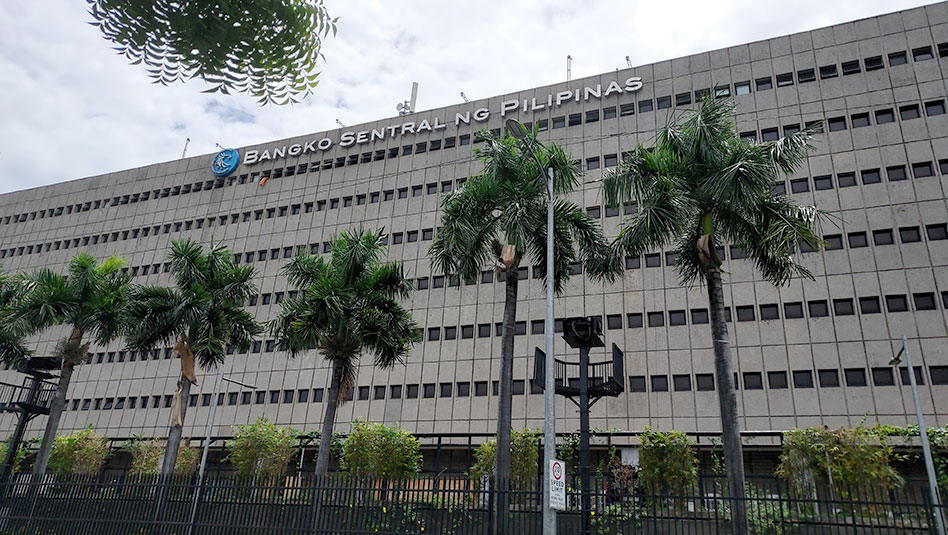
Metrobank is regulated by the Bangko Sentral ng Pilipinas
Website: https://www.bsp.gov.ph

Quick Links
The Gist Webinars Wealth Manager Explainers
Markets
Currencies Rates & Bonds Equities Economy
Wealth
Investment Tips Fine Living Retirement
Portfolio Picks
Bonds Stocks
Others
Contact Us Privacy Notice Terms of Use
© 2026 Metrobank. All rights reserved.

Access this content:

If you are an existing investor, log in first to your Metrobank Wealth Manager account. ​

If you wish to start your wealth journey with us, click the “How To Sign Up” button. ​

Login HOW TO SIGN UP