




MODEL PORTFOLIO
THE GIST
NEWS AND FEATURES
Global Philippines Fine Living
INSIGHTS
INVESTMENT STRATEGY
Economy Stocks Bonds Currencies
THE BASICS
Investment Tips Explainers Retirement
WEBINARS
2024 Mid-Year Economi Briefing, economic growth in the Philippines
2024 Mid-Year Economic Briefing: Navigating the Easing Cycle
June 21, 2024
Investing with Love
Investing with Love: A Mother’s Guide to Putting Money to Work
May 15, 2024
retirement-ss-3
Investor Series: An Introduction to Estate Planning
September 1, 2023
View All Webinars
DOWNLOADS
grocery-2-aa
Inflation Update: Target breached
DOWNLOAD
Container ship carrying container boxes import export dock with quay crane. Business commercial trade global cargo freight shipping logistic and transportation worldwide oversea concept. Generative AI
Economic Updates
Philippines Trade Update: Wider deficit on strong imports
DOWNLOAD
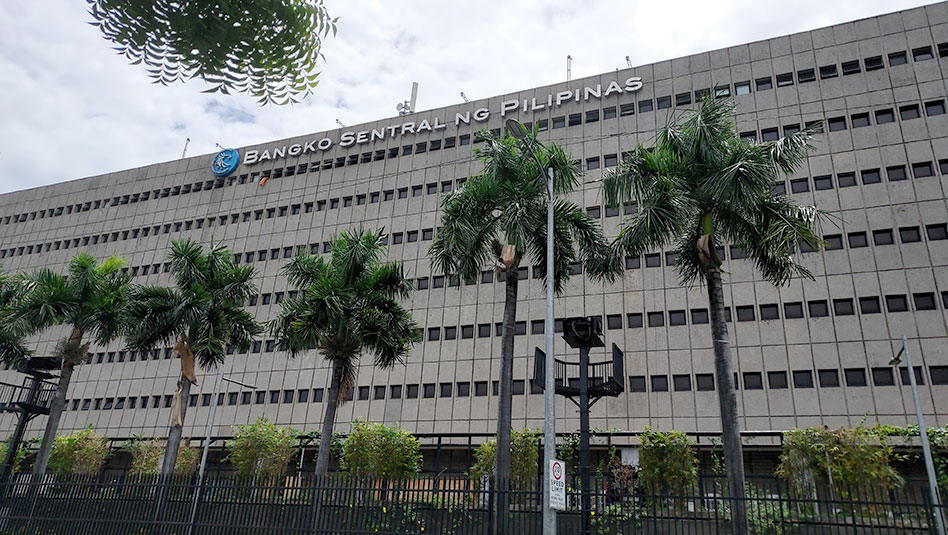
Frick collection with palm trees 
Economic Updates
Policy Rate Updates: Policy rate updates to reassure 
DOWNLOAD
View all Reports
Metrobank.com.ph How To Sign Up
Follow us on our platforms.

How may we help you?

TOP SEARCHES
  • Where to put my investments
  • Reports about the pandemic and economy
  • Metrobank
  • Webinars
  • Economy
TRENDING ARTICLES
  • Investing for Beginners: Following your PATH
  • On government debt thresholds: How much is too much?
  • Philippines Stock Market Outlook for 2022
  • Deficit spending remains unabated

Login

Access Exclusive Content
Login to Wealth Manager
Visit us at metrobank.com.ph How To Sign Up
Access Exclusive Content Login to Wealth Manager
Search
MODEL PORTFOLIO THE GIST
NEWS AND FEATURES
Global Philippines Fine Living
INSIGHTS
INVESTMENT STRATEGY
Economy Stocks Bonds Currencies
THE BASICS
Investment Tips Explainers Retirement
WEBINARS
2024 Mid-Year Economi Briefing, economic growth in the Philippines
2024 Mid-Year Economic Briefing: Navigating the Easing Cycle
June 21, 2024
Investing with Love
Investing with Love: A Mother’s Guide to Putting Money to Work
May 15, 2024
retirement-ss-3
Investor Series: An Introduction to Estate Planning
September 1, 2023
View All Webinars
DOWNLOADS
grocery-2-aa
Inflation Update: Target breached
April 7, 2026 DOWNLOAD
Container ship carrying container boxes import export dock with quay crane. Business commercial trade global cargo freight shipping logistic and transportation worldwide oversea concept. Generative AI
Economic Updates
Philippines Trade Update: Wider deficit on strong imports
March 27, 2026 DOWNLOAD
Frick collection with palm trees 
Economic Updates
Policy Rate Updates: Policy rate updates to reassure 
March 26, 2026 DOWNLOAD
View all Reports

Archives: Reuters Articles

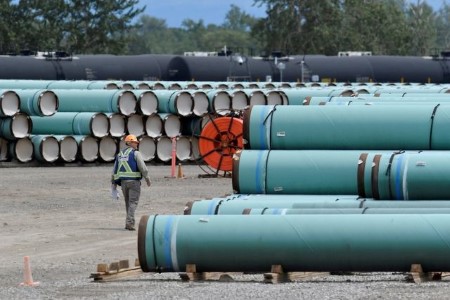
Oil dips as China demand fears offset tighter supply outlook

SINGAPORE – Oil prices slipped in Asian trade on Thursday as fears of a sluggish demand recovery in the world’s top crude importer China offset the prospect of tighter supply, with top exporters Saudi Arabia and Russia cutting output.

Brent crude futures LCOc1 dipped 21 cents, or 0.3%, to USD 76.44 a barrel at 0650 GMT, after settling higher 0.5% the previous day.

US West Texas Intermediate crude CLc1 fell 4 cents to USD 71.75 a barrel, after closing 2.9% higher in post-holiday trade on Wednesday to catch up with Brent’s gains earlier in the week.

“Despite calls for supply cuts over past months, oil prices have largely remained locked within a ranging pattern as lingering caution around the demand outlook continues to put a cap on the upside,” said Yeap Jun Rong, market strategist at IG.

“Near-term, a move above the key USD 80.00 level may be needed to provide some conviction for the bulls,” Yeap added.

Demand concerns lingered over China’s slow economic recovery after the lifting of pandemic restrictions, on top of global macroeconomic headwinds and interest rate hikes by central banks.

Weighing on the demand outlook, China’s services activity expanded at the slowest pace in five months in June, a private-sector survey showed on Wednesday, as weakening demand weighed on post-pandemic recovery momentum.

“The upside looks to be limited due to uncertainty over the pace of China’s economic growth and fuel demand recovery,” said Tatsufumi Okoshi, senior economist at Nomura Securities, predicting WTI would remain in a range of USD 65 to USD 75 a barrel going forward.

But Saudi Arabia’s supply curb announcement on Monday and expectations for a possible further reduction, along with a bigger-than-expected drop in U.S. crude stocks, provided some support to sentiment, Okoshi said.

US crude stocks fell by about 4.4 million barrels in the week ended June 30, while gasoline and distillate inventories rose, according to market sources citing American Petroleum Institute figures. Analysts had expected a drop in crude inventories of about 1 million barrels in a Reuters poll.

Government data on US inventories is due at 11:00 a.m. EDT (1500 GMT) on Thursday.

On Wednesday, Saudi energy minister Prince Abdulaziz bin Salman said that Russia-Saudi oil cooperation is still going strong as part of the OPEC+ alliance, which will do “whatever necessary” to support the market.

(Reporting by Yuka Obayashi in Tokyo and Jeslyn Lerh in Singapore; Editing by Sonali Paul)

Oil near flat as tighter supplies offset US rate hike risk

Oil near flat as tighter supplies offset US rate hike risk

NEW YORK, July 6 (Reuters) – Oil prices were near flat on Thursday as the market weighed tighter US crude supplies with the higher likelihood of a US interest rate hike that could dent energy demand.

Brent crude futures settled 13 cents lower at USD 76.52 a barrel, after a 0.5% gain the previous day.

US West Texas Intermediate crude gained 1 cent to USD 71.80 a barrel, after rising 2.9% in post-holiday trade on Wednesday to catch up with Brent’s gains earlier in the week.

The market has been expecting interest rates in the US and Europe to rise further to tame stubborn inflation. Fears of a global recession mounted after recent surveys showed slower factory and services activity in China and Europe.

Minutes released on Wednesday showed that a united US central bank agreed to hold rates steady at its June meeting to buy time and assess the need for further hikes, though most attendees expected they would eventually need to tighten further.

US interest rate futures on Thursday increased the probability of another US rate rise after news private payrolls surged last month.

“We know the Federal Reserve wants to see the labor market cool off,” said Phil Flynn, an analyst at Price Futures group. “The market is concerned that the Fed has to take the punch bowl away.”

Supporting prices were data from the Energy Information Administration that showed US crude stockpiles fell by more than expected last week.

Crude inventories fell by 1.5 million barrels in the last week to 452.2 million barrels, compared with analysts’ expectations in a Reuters poll for a 1 million-barrel drop. US gasoline and distillate inventories also dropped.

“While the inventories are supportive for oil prices today, the oil market is being dominated by fears of further rate increases,” said Andrew Lipow, president at Lipow Oil Associates in Houston. “This is coming at a time when OPEC+, especially Saudi Arabia and Russia, are reiterating their commitment to rein in production and exports, respectively.”

Top oil exporters Saudi Arabia and Russia announced a fresh round of output cuts for August. The total cuts now stand at more than five million barrels per day (bpd), equating to 5% of global oil output.

The cuts, along with a bigger-than-expected drop in US crude stocks, provided some support for prices.

OPEC is likely to maintain an upbeat view on oil demand growth for next year when it publishes its first outlook for 2024 this month, predicting a slowdown from this year but still an above-average increase, sources close to OPEC told Reuters.

OPEC ministers and executives from oil companies told a two-day conference in Vienna that governments needed to turn their attention from supply to demand.

Rather than pressuring oil producers to curb supply, which heads of global energy companies say serves only to increase prices, governments should shift the focus to limiting oil demand to reduce emissions, they said.

(Reporting by Stephanie Kelly in New York; additional reporting by Natalie Grover in London, Yuka Obayashi in Tokyo, and Jeslyn Lerh in Singapore; Editing by Mark Potter, David Holmes, David Gregorio, and Conor Humphries)


Dollar to stay firm on expectations of resilient US economy

Dollar to stay firm on expectations of resilient US economy

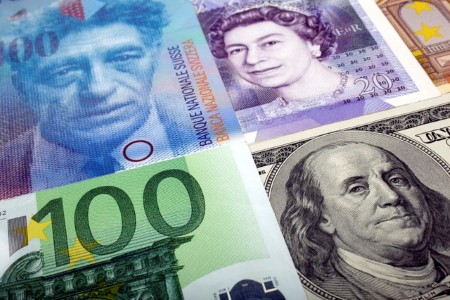
BENGALURU, July 6 (Reuters) – The US dollar will hold its ground against most major currencies for the rest of the year despite expectations of narrowing interest rate differentials as the US economy stays resilient, according to FX strategists polled by Reuters.

Although the greenback is still down around 0.5% against major currencies this year, it has gained nearly 1.3% over just the past week thanks to receding calls for a federal funds rate cut and wilting expectations for a US recession this year.

Several US Federal Reserve officials, including Chair Jerome Powell, have argued in favor of at least two more rate hikes, against market expectations of one more, which also helped underpin the currency.

The dollar will not give up those recent gains anytime soon, according to the June 30-July 5 poll of 80 FX strategists despite some major central banks, like the European Central Bank and Bank of England, set to keep raising rates for longer.

“The tightness of the US labor market may help the economy and the dollar in the very short term,” said Kit Juckes, chief FX strategist at Societe Generale. “Even if we see (interest) rate convergence, it seems unlikely a new major euro uptrend will start without stronger growth.”

Indeed, a majority of common contributors showed the dollar view against most major currencies for the coming six months has been either upgraded or kept unchanged from a month ago.

Meanwhile, net USD short positions have eased since hitting a two-year high in May, according to data from the Commodity Futures Trading Commission.

Recent data showed the world’s largest economy has remained stronger than expected and has fared better than the euro zone, which slid into a recession earlier this year.

“We see room for a dollar rebound in the near term. The US economy looks in better shape than Europe and Asia, which suggests ‘higher for longer’ is somewhat more credible coming from the Fed than most others,” said Jonas Goltermann, deputy chief markets economist at Capital Economics.

After rising over 2% in June, the euro, currently at USD 1.09, was expected to gain a little less than 1% and trade at USD 1.10 in six months.

Sterling, one of the best-performing G10 currencies this year, was forecast to change hands at USD 1.26, slightly lower than the current level of USD 1.27.

A double whammy of high interest rates and sticky inflation has already dragged on economic activity in Britain.

When asked how the dollar would perform against major currencies over the next three months, 45% of strategists, 27 of 60, said it would remain rangebound and 19 said it would strengthen. Only 14 said it would weaken.

“The dollar is getting a tailwind from the Fed … the current strength is on a repricing of the Fed (rate) higher,” said John Hardy, head of FX strategy at Saxo Bank.

“But at the same time, we have extremely strong global risk sentiment and liquidity and financial conditions are very easy. That normally associates with the dollar weakness. Those two things are balancing each other out.”

(Reporting by Indradip Ghosh and Shaloo Srivastava in Bengaluru; Polling by Sarupya Ganguly, Anitta Sunil, and Veronica Khongwir; Editing by Hari Kishan, Ross Finley, and Matthew Lewis)


Wall Street posts modest loss after Fed minutes

Wall Street posts modest loss after Fed minutes

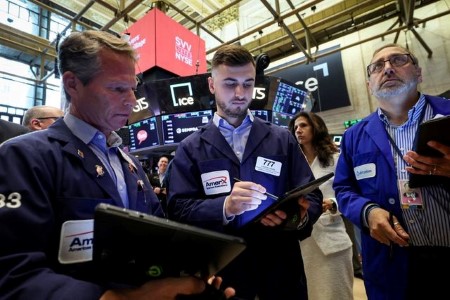
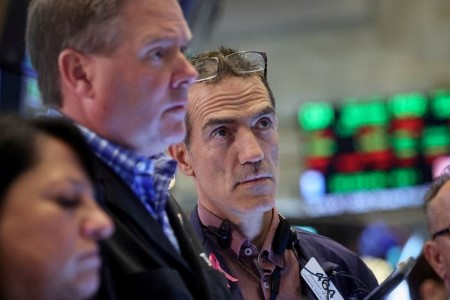
July 5 (Reuters) – Wall Street’s main indexes ended with modest declines on Wednesday as investors digested minutes from the US Federal Reserve’s latest meeting and braced for significant economic data in the days to come.

Minutes showed a united Fed agreed to hold interest rates steady at the June meeting as a way to buy time and assess whether further rate hikes would be needed.

Following the release of the anticipated minutes, investors still largely expected the central bank to raise rates at its next meeting later this month. Key economic data is due before the meeting, including the monthly US jobs report on Friday.

“The markets are in a wait-and-see for the economic data,” said Paul Nolte, senior wealth advisor and market strategist at Murphy & Sylvest Wealth Management. “Since the Fed is data dependent, so is the market.”

The Dow Jones Industrial Average fell 129.83 points, or 0.38%, to 34,288.64, the S&P 500 lost 8.77 points, or 0.20%, to 4,446.82 and the Nasdaq Composite dropped 25.12 points, or 0.18%, to 13,791.65.

Materials fell most among S&P 500 sectors, shedding 2.5%.

In data out on Wednesday, new orders for US-made goods increased less than expected in May, fanning fears of an economic slowdown. Meanwhile, China’s services activity expanded at the slowest pace in five months in June, according to a private-sector survey.

Chip stocks fell after China said it would control exports of some metals widely used in the semiconductor industry as tensions between Beijing and Washington rise over access to high-tech microchips.

The Philadelphia SE Semiconductor Index dropped 2.2%, while Intel INTC.O shares sank 3.3% and Texas Instruments (TXN) declined 1.8%.

Shares of Meta Platforms (META) rose 2.9% ahead of the expected release of the company’s Twitter-rival app, Threads, on Thursday.

Megacap stocks such as Meta have led the gains so far this year for major equity indexes, including the biggest first-half increase for the Nasdaq Composite in 40 years.

“We could see the largest stocks pull back, but the average stock catch up,” said Jack Ablin, chief investment officer at Cresset Capital. “We are looking for somewhat of a convergence.”

Shares of United Parcel Service (UPS) fell 2.1% after the Teamsters Union said UPS “walked away” from negotiations over a new contract, a claim the shipping giant denied.

Declining issues outnumbered advancing ones on the NYSE by a 2.29-to-1 ratio; on Nasdaq, a 1.84-to-1 ratio favored decliners.

The S&P 500 posted 18 new 52-week highs and one new low; the Nasdaq Composite recorded 55 new highs and 65 new lows.

About 10.3 billion shares changed hands in US exchanges, compared with the 11.1 billion daily average over the last 20 sessions.

(Reporting by Lewis Krauskopf and Sinead Carew in New York, Bansari Mayur Kamdar and Johann M Cherian in Bengaluru; Editing by Marguerita Choy and Vinay Dwivedi)


US yields higher after data, Fed minutes

US yields higher after data, Fed minutes

NEW YORK, July 5 (Reuters) – US Treasury yields were mostly higher on Wednesday after a softer-than-expected reading on US-made goods and the minutes from the Federal Reserve’s June policy meeting did little to alter expectations on the path of rate hikes.

Almost all Fed officials agreed to hold interest rates steady at the June meeting, the first pause after hikes at 10-straight meetings prior, according to the minutes, but most believed more rate hikes would be needed.

Expectations for a 25-basis-point hike from the Fed at its meeting on July 25-26 are at 88.7%, according to CME’s FedWatch Tool, up from 81.8% a week ago.

The yield on 10-year Treasury notes was up 7.9 basis points to 3.938%.

“The longer-term yields are mostly just catching up with the move higher that we’ve seen in the short end, but investors are still trying to digest what the Fed’s next move is,” said Jim Barnes, director of fixed income at Bryn Mawr Trust in Berwyn, Pennsylvania.

“The Fed all seems to be on the same team in terms of we are getting two more rate hikes this year, and so the market is kind of buying into that a little bit.”

Yield slowly advanced throughout the session after factory orders rose 0.3% in May, shy of the estimate of economists polled by Reuters for a 0.8% increase and matching the revised 0.3% rise in the prior month. The manufacturing sector has struggled under the Fed’s rapid rate hike cycle.

Investors will also gauge a flurry of data on the labor market over the next two days, which will help shape the Fed’s aggressiveness in tightening monetary policy.

The yield on the 30-year Treasury bond was up 6.5 basis points to 3.942%.

Federal Reserve Bank of New York President John Williams will speak later today in a moderated discussion at a Central Bank Research Association meeting.

A closely watched part of the US Treasury yield curve measuring the gap between yields on two- and 10-year Treasury notes, seen as an indicator of economic expectations, was at a negative 100.7 basis points after experiencing its deepest inversion in more than 40 years on Monday.

The two-year US Treasury yield, which typically moves in step with interest rate expectations, was up 0.2 basis point at 4.942%.

The breakeven rate on five-year US Treasury Inflation-Protected Securities (TIPS) was last at 2.24%, after closing at 2.247% on Monday, near its highest close in two months.

The 10-year TIPS breakeven rate was last at 2.258%, indicating the market sees inflation averaging 2.26% a year for the next decade.

(Reporting by Chuck Mikolajczak; Editing by Will Dunham and Nick Zieminski)


Gold slips as US dollar, yields rise after Fed minutes

Gold slips as US dollar, yields rise after Fed minutes

July 5 (Reuters) – Gold prices fell on Wednesday, weighed down by an uptick in the dollar and US Treasury yields after minutes from the Federal Reserve’s June policy meeting cemented expectations that rates will stay higher for longer.

Spot gold was down 0.5% at USD 1,916.49 per ounce by 02:32 p.m. EDT (1832 GMT). US gold futures settled 0.1% lower at USD 1,927.10.

“Gold slumps to day’s lows after Fed minutes showed that the ‘pause’ in June was simply the path of least dissent and almost the entire committee expected ultimately higher rates,” said Tai Wong, a New York-based independent metals trader.

“The upcoming JOLTS report and payrolls data will have a much greater impact, especially if they are weaker than expected.”

A united Fed agreed to hold interest rates steady at the June meeting, according to meeting minutes released on Wednesday, even as the vast bulk expected they would eventually need to tighten policy further.

Benchmark US 10-year Treasury yields jumped to a near four-month peak after the release, while the dollar rose 0.3% against its rivals.

Traders are pricing in an 89% chance of a 25-basis-point hike from the Fed in the July meeting after last month’s pause, per CME’s Fedwatch tool.

Gold is highly sensitive to rising US interest rates, as they increase the opportunity cost of holding non-yielding bullion.

Investors’ focus now shifts to the US Labor Department’s Job Openings and Labor Turnover Survey, or JOLTS, and ADP, jobless claims on Thursday before Friday’s non-farm payrolls report.

Traders also kept a close watch on updates about China’s export controls on semiconductor metals as it ramps up a tech fight with the United States ahead of US Treasury Secretary Janet Yellen Beijing visit.

Spot silver rose 0.8% to USD 23.12 per ounce, platinum eased 0.1% to USD 914.11 while palladium climbed 1% to USD 1,255.78.

(Reporting by Brijesh Patel in Bengaluru; Editing by Christina Fincher and Shailesh Kuber)


Chinese companies rush for hedging as market volatilities spike

SHANGHAI, July 5 (Reuters) – Chinese listed firms are embracing hedging at a record pace, according to consultancy data, as market volatility rises and China grows its derivative market.

During the April-June period, more than 120 China-listed companies in non-financial sectors unveiled plans for the first time to hedge risk using tools such as options and futures, the most for any quarter.

That brings the number of listed firms that announced hedging arrangements in the first half to more than 1,000, almost matching last year’s total of 1,133, according to risk-management consultancy D-Union.

“The popularity of hedging is due to rising uncertainties including foreign exchange risks,” said D-Union CEO Ma Weifeng.

He added that China’s more stringent disclosure rules around hedging could also contribute to the record quarterly number.

Forex hedging is popular among Chinese companies, according to D-Union, as regulators allow market forces to play a bigger role in deciding the yuan’s value.

The yuan broke the psychologically important 7-per-dollar level in May, then slumped more than 5% against the greenback in the second quarter amid China’s flagging post-COVID recovery.

Companies including Semiconductor Manufacturing Electronics (Shaoxing) Corp 688469.SS and liquor giant Luzhou Laojiao Co Ltd announced plans in the second quarter to hedge against forex risks.

Measures to develop China’s derivative market also boosted interest in hedging, Ma said.

China’s Futures and Derivatives Law took effect last August, while Shanghai and Shenzhen stock exchanges have also published new rules that set higher standards for hedging activity disclosures.

Electronics, basic chemicals, and electrical equipment were among the sectors that were most active in hedging during the second quarter, according to D-Union data.

For example, Sieyuan Electric Co Ltd, a manufacturer of power transmission equipment, said in June that it planned to use tools to hedge against volatility in the price of copper – a key ingredient of production.

(Reporting by Li Gu and Samuel Shen in Shanghai and Tom Westbrook in Singapore. Editing by Gerry Doyle)


Out-of-sync US stocks hide market risks

Out-of-sync US stocks hide market risks

NEW YORK, July 5 (Reuters) – US stocks’ tendency to move in sync has plunged to near-record lows, but what might seem like a stock picker’s dream may actually be a mirage, and investors may be in for a rude awakening.

S&P 500 correlation – a gauge of herd behavior, which measures how closely daily returns of index constituents align over a month – slipped to 0.22 at the end of June, close to the lowest since November 2021, according to data from S&P Dow Jones Indices. That means that many stocks are moving in different directions.

Investors expect stocks to move increasingly out of sync as shown by the Cboe 3-Month Implied Correlation Index, which measures the 3-month expected average correlation across the top 50 value-weighted S&P 500 stocks. The Index touched a record low of 17.59 on Wednesday.

That would typically lower risk and offer more opportunities for stock pickers. But with the bulk of the market’s gains being driven by a handful of mega cap names and a crowd of market bets on continued low correlation, investors may be relying on a false sense of calm.

“The risk metrics that look quiescent and favoring idiosyncrasy may in fact be a chimera much more vulnerable to a macro shock than implied currently,” said Arnim Holzer, global macro strategist at EAB Investment Group.

History suggests such narrow breadth can set the market up for a sudden surge of volatility.

“From these low levels of stock correlations, equity volatility has historically risen,” UBS strategists said in a note on Wednesday.

The Cboe Volatility Index, the so-called Wall Street ‘fear gauge,’ which recently closed at it lowest in nearly 3-1/2 years, has generally jumped by 10 points over the coming quarter when 1-year stock correlations have been at the current low levels, the strategists said.

The last time 3-month implied correlation got this low was in early 2018, just before the February 2018 urge in market volatility dubbed ‘Volmageddon.’

The low correlation now is in stark contrast to late last year when investors were laser-focused on macro factors including employment, growth, and inflation, leading stocks to move in sync.

This year, however, with the US Federal Reserve close to the end of its hiking cycle, economic data has lost some of its ability to sway stocks en masse.

Much of today’s low stock market correlation has to do with the gulf in performance between a handful of mega caps driving the benchmark index higher and the rest of the market.

While the S&P 500 has gained 16%, its equal-weight equivalent, which dilutes the impact of the largest companies in the index, has risen just 6%.

That leaves less room to pick winners.

“You have this view in the market that this is a stock picker’s market because correlation is low,” EAB Investment Group’s Holzer said.

“The problem is that this is not that environment,” he said.

For some investors, it also means thinking outside of large caps.

“Given the narrowness of the market so far this year, we suggest investors consider an S&P equal-weight strategy or US mid-caps for cash earmarked for US large caps,” said Jack Ablin, chief investment officer of Cresset Capital.

“History suggests the average stock will ‘catch up’ with the mega caps over the next 12 months,” Ablin said.

COILED MARKETS

One trade that has drawn investors in recent months is the so-called long dispersion trade – where traders sell index volatility while buying volatility on constituents – essentially betting on individual stocks not being strongly correlated, Kris Sidial, co-chief investment officer of volatility arbitrage fund the Ambrus Group.

This, in addition to general selling of volatility as markets skipped higher this year, has crushed volatility and correlations.

“It’s a big pile-on into short volatility and short correlation,” Sidial said.

But that also sets up the stage for a rapid upheaval when the calm breaks.

“When you have one side of the market that has piled into a trade, when that trade unwinds, it can be very rapid,” he said. said.

For investors, the pricing on index hedges that would guard against a big jump in volatility is more attractive than it has been for a while.

“Because correlations are so low, index options have gotten incredibly cheap,” said Daniel Kirsch, head of options at Piper Sandler said.

(Reporting by Saqib Iqbal Ahmed; Editing by Megan Davies and Nick Zieminski)


China dampens the mood again

China dampens the mood again

China’s faltering economic recovery has once again dominated activity in financial markets, dampening risk sentiment and giving the dollar a broad boost in relatively muted moves after the US July 4 holiday.

The private-sector Caixin/S&P Global services purchasing managers index hit a five-month low in June, reflecting growing vulnerability in a once resilient sector of the massive economy.

The data quickly reversed a day-old bounce in the Chinese yuan, which appeared on Tuesday to have finally paid heed to the central bank’s series of stronger-than-expected midpoint settings and other measures to slow its decline.

Beijing’s export curbs on two widely used metals in semiconductors and electric vehicles continued to dominate headlines, drawing strident commentary in the domestic press just before Treasury Secretary Janet Yellen’s visit to China.

Yet news that Tesla (TSLA) and its main Chinese rival BYD racked up record deliveries of China-made electric vehicles in the second quarter suggests that demand in at least one segment of the economy is alive and well.

The European and UK calendar is dominated by final services and composite PMIs for June, also expected to confirm a slowing in what has been a consumption-led economic recovery.

The US is due to release factory orders for May, but the focus will of course be on the minutes of the Federal Reserve’s June meeting, which resulted in a pause in tightening while adding two more rate hikes to the outlook.

Key developments that could influence markets on Wednesday:

Euro zone, UK final June services and composite PMIs, EZ May producer prices

ECB policymaker and French central bank head Francois Villeroy de Galhau speaks at a financial conference in Paris

US May factory orders, June FOMC minutes

(Reporting by Sonali Desai; Editing by Jacqueline Wong)


Oil drops as economic headwinds overshadow supply cuts

Oil drops as economic headwinds overshadow supply cuts

TOKYO/SINGAPORE, July 5 (Reuters) – Oil prices fell on Wednesday, reversing some gains made after Saudi Arabia and Russia announced they would extend and deepen output cuts into August, as concerns over a global economic slowdown weighed on market sentiment.

Brent crude was down 46 cents, or 0.6%, at USD 75.79 a barrel by 0418 GMT, after climbing USD 1.60 on Tuesday.

US West Texas Intermediate (WTI) crude CLc1 futures were at USD 70.87 a barrel, up USD 1.08, or 1.6%, from Monday’s close, having traded through a US holiday to mark Independence Day without a settlement.

“Oil prices came under pressure again due to lingering worries over a slowdown in the global economy and further hikes of interest rates in the United States and Europe,” said Tomomichi Akuta, senior economist at Mitsubishi UFJ Research and Consulting.

“The market will likely continue to move back and forth for some time, focusing on economic indicators in China and monetary policy by central banks,” he said, predicting Brent would trade around USD 75 a barrel.

A private-sector survey on Wednesday showed China’s services activity expanded at the slowest pace in five months in June, as weakening demand weighed on post-pandemic recovery momentum.

The market is also awaiting minutes from the June 13-14 meeting of the Federal Open Market Committee (FOMC) later on Wednesday for further clues on the US central bank’s outlook.

Production cuts announced by Saudi Arabia and Russia on Monday only briefly lifted the market, amid concerns about weak demand and further interest rate hikes, which could trigger an economic downturn and dampen fuel demand further.

Saudi Arabia, the world’s biggest crude exporter, on Monday said it would extend its voluntary output cut of 1 million barrels per day (bpd) to August, while Russia and Algeria volunteered to lower their August output and export levels by 500,000 bpd and 20,000 bpd, respectively.

OPEC+, a group comprising the Organization of the Petroleum Exporting Countries and allies including Russia that pumps around 40% of the world’s crude, has been cutting oil output since November in the face of flagging prices.

Investors remained concerned about oil demand, however, after business surveys showed a slump in global factory activity because of sluggish demand in China and in Europe.

Traders will be looking for demand cues from industry data on US crude and product inventories from the American Petroleum Institute later on Wednesday and government data on Thursday, both delayed by a day due to the US holiday.

US crude inventories were expected to fall by about 1.8 million barrels in the week to June 30, which would mark a third straight week of declines, four analysts polled by Reuters forecast.

“The trajectory of global oil stockpiles may soon become as relevant as OPEC+ supply cuts and macro headwinds given the International Energy Agency’s outlook for a tightening oil market in H2 2023,” analysts from Commonwealth Bank of Australia said in a note.

(Reporting by Yuka Obayashi in Tokyo and Muyu Xu in Singapore; Editing by Sonali Paul)
 

Posts navigation

Older posts
Newer posts

Recent Posts

  • Metrobank US-Iran Risk Index: Fragile ceasefire 
  • Investment Ideas: April 10, 2026 
  • Metrobank US-Iran Risk Index: A new hope
  • A guide for your peso bond portfolio amid higher for longer rates
  • Investment Ideas: April 8, 2026

Recent Comments

No comments to show.

Archives

  • April 2026
  • March 2026
  • February 2026
  • January 2026
  • December 2025
  • November 2025
  • October 2025
  • September 2025
  • August 2025
  • July 2025
  • June 2025
  • May 2025
  • April 2025
  • March 2025
  • February 2025
  • January 2025
  • December 2024
  • November 2024
  • October 2024
  • September 2024
  • August 2024
  • July 2024
  • June 2024
  • May 2024
  • April 2024
  • March 2024
  • February 2024
  • January 2024
  • December 2023
  • November 2023
  • October 2023
  • September 2023
  • August 2023
  • July 2023
  • June 2023
  • May 2023
  • April 2023
  • March 2023
  • February 2023
  • January 2023
  • December 2022
  • November 2022
  • October 2022
  • September 2022
  • August 2022
  • July 2022
  • June 2022
  • May 2022
  • March 2022
  • December 2021
  • October 2021

Categories

  • Bonds
  • BusinessWorld
  • Currencies
  • Economy
  • Equities
  • Estate Planning
  • Explainer
  • Featured Insight
  • Fine Living
  • How To
  • Investment Tips
  • Markets
  • Portfolio Picks
  • Rates & Bonds
  • Retirement
  • Reuters
  • Spotlight
  • Stocks
  • Uncategorized

You are leaving Metrobank Wealth Insights

Please be aware that the external site policies may differ from our website Terms And Conditions and Privacy Policy. The next site will be opened in a new browser window or tab.

Cancel Proceed
Get in Touch

For inquiries, please call our Metrobank Contact Center at (02) 88-700-700 (domestic toll-free 1-800-1888-5775) or send an e-mail to customercare@metrobank.com.ph

Metrobank is regulated by the Bangko Sentral ng Pilipinas
Website: https://www.bsp.gov.ph

Quick Links
The Gist Webinars Wealth Manager Explainers
Markets
Currencies Rates & Bonds Equities Economy
Wealth
Investment Tips Fine Living Retirement
Portfolio Picks
Bonds Stocks
Others
Contact Us Privacy Notice Terms of Use
© 2026 Metrobank. All rights reserved.

Access this content:

If you are an existing investor, log in first to your Metrobank Wealth Manager account. ​

If you wish to start your wealth journey with us, click the “How To Sign Up” button. ​

Login HOW TO SIGN UP