




MODEL PORTFOLIO
THE GIST
NEWS AND FEATURES
Global Philippines Fine Living
INSIGHTS
INVESTMENT STRATEGY
Economy Stocks Bonds Currencies
THE BASICS
Investment Tips Explainers Retirement
WEBINARS
2024 Mid-Year Economi Briefing, economic growth in the Philippines
2024 Mid-Year Economic Briefing: Navigating the Easing Cycle
June 21, 2024
Investing with Love
Investing with Love: A Mother’s Guide to Putting Money to Work
May 15, 2024
retirement-ss-3
Investor Series: An Introduction to Estate Planning
September 1, 2023
View All Webinars
DOWNLOADS
grocery-2-aa
Inflation Update: Target breached
DOWNLOAD
Container ship carrying container boxes import export dock with quay crane. Business commercial trade global cargo freight shipping logistic and transportation worldwide oversea concept. Generative AI
Economic Updates
Philippines Trade Update: Wider deficit on strong imports
DOWNLOAD
Frick collection with palm trees 
Economic Updates
Policy Rate Updates: Policy rate updates to reassure 
DOWNLOAD
View all Reports
Metrobank.com.ph How To Sign Up
Follow us on our platforms.

How may we help you?

TOP SEARCHES
  • Where to put my investments
  • Reports about the pandemic and economy
  • Metrobank
  • Webinars
  • Economy
TRENDING ARTICLES
  • Investing for Beginners: Following your PATH
  • On government debt thresholds: How much is too much?
  • Philippines Stock Market Outlook for 2022
  • Deficit spending remains unabated

Login

Access Exclusive Content
Login to Wealth Manager
Visit us at metrobank.com.ph How To Sign Up
Access Exclusive Content Login to Wealth Manager
Search
MODEL PORTFOLIO THE GIST
NEWS AND FEATURES
Global Philippines Fine Living
INSIGHTS
INVESTMENT STRATEGY
Economy Stocks Bonds Currencies
THE BASICS
Investment Tips Explainers Retirement
WEBINARS
2024 Mid-Year Economi Briefing, economic growth in the Philippines
2024 Mid-Year Economic Briefing: Navigating the Easing Cycle
June 21, 2024
Investing with Love
Investing with Love: A Mother’s Guide to Putting Money to Work
May 15, 2024
retirement-ss-3
Investor Series: An Introduction to Estate Planning
September 1, 2023
View All Webinars
DOWNLOADS
grocery-2-aa
Inflation Update: Target breached
April 7, 2026 DOWNLOAD
Container ship carrying container boxes import export dock with quay crane. Business commercial trade global cargo freight shipping logistic and transportation worldwide oversea concept. Generative AI
Economic Updates
Philippines Trade Update: Wider deficit on strong imports
March 27, 2026 DOWNLOAD
Frick collection with palm trees 
Economic Updates
Policy Rate Updates: Policy rate updates to reassure 
March 26, 2026 DOWNLOAD
View all Reports

Archives: Reuters Articles

Breaking point?

Breaking point?

Oct 4 – Another crushing selloff in US Treasuries, one of the biggest falls in world stocks this year, suspected currency market intervention from Japan, and political turmoil in Washington as House of Representatives speaker Kevin McCarthy was booted from his job.

It’s safe to say Tuesday was a volatile day across world markets. It’s probably also safe to say Asian markets will open on the defensive and investors will be running for cover on Wednesday.

The trouble is, with the apparently safest asset on the planet at the epicenter of the storm, there doesn’t appear to be anywhere obvious to take shelter.

The heavy selling across the US government bond curve accelerated on Tuesday after strong US jobs data, pushing the 10-year yield up to a new 16-year high of 4.80%. It is up almost 25 basis points in barely 48 hours.

The 2s/10s yield curve inversion is now only 35 basis points, the smallest this year, and the inflation-adjusted 10-year ‘real’ yield is up at 2.45%, the highest since 2008.

‘Bond King’ Bill Gross, formerly of PIMCO fame, tweeted that a 30-year mortgage rate of 7.7% “shuts down” the US housing market. Fears are growing that something somewhere in the investment universe will soon break, such is the blistering rise in bond yields.

But where can investors turn?

Gold? It fell only 0.2% on Tuesday but the fact it failed to rise at all in such a febrile ‘risk-off’ environment is telling. Gold is at a seven-month low and has fallen seven days in a row, its longest losing streak since 2018.

The Swiss franc? It weakened against the mighty dollar.

The Japanese yen? Yes, it rallied on Tuesday but only thanks to suspected intervention from Japanese authorities after briefly slipping below 150.00 per dollar.

The greenback snapped back almost three yen then settled around 149.00 yen at the close of US trading. A senior Japanese ministry of finance official declined to comment and the New York Fed did not respond to requests for comment.

Japanese stocks had already slumped to a four-month low before the yen’s sudden burst of strength. The Nikkei – and stocks across Asia – will likely fall further on Wednesday.

In this climate, the regional data and policy calendar is of much less significance. Purchasing managers index reports from Japan, Australia and South Korea will be released, and the Reserve Bank of New Zealand will announce its latest interest rate decision on Wednesday.

The RBNZ is widely seen holding its key interest rate at 5.50% – the highest in nearly 15 years – and keeping it there at least until March before lowering it shortly after.

Here are key developments that could provide more direction to markets on Wednesday:

– New Zealand interest rate decision

– US Fed’s Schmid, Bowman, Goolsbee all speak

– South Korea industrial output, retail sales (August)

(By Jamie McGeever; Editing by Josie Kao)
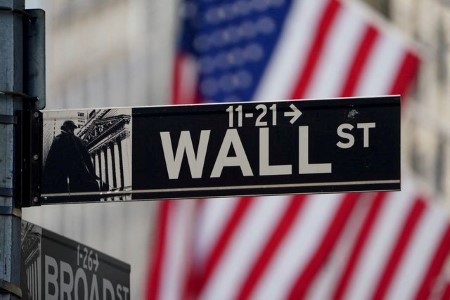
 

S&P 500 ends at lowest since June 1 as data fuels rate worries

S&P 500 ends at lowest since June 1 as data fuels rate worries

NEW YORK, Oct 3 – The S&P 500 index closed at its lowest level since June 1 on Tuesday as economic data underscored the view the Federal Reserve may need to keep interest rates high.

The Dow turned negative for the year for the first time since June and ended at its lowest level since May 31. The Nasdaq also closed at its lowest since May 31.

Data showed US job openings unexpectedly increased in August, fueling worries about a tight labor market ahead of Friday’s key US monthly jobs report.

Investors continue to closely watch benchmark Treasury yields, which hit 16-year highs on Tuesday.

“The scenario that most investors were assuming is the Fed would need to ultimately cut short-term rates, and we would return to a favorable interest rate environment,” said Rick Meckler, partner at Cherry Lane Investments, a family investment office in New Vernon, New Jersey.

“But investors are seeing a different scenario now – higher rates for longer.”

Higher borrowing costs are a negative for businesses and consumers.

All but one S&P 500 sector – utilities – were lower on the day, led by declines in consumer discretionary and technology. Growth companies tend to be among the hardest hit by rising yields.

The Dow Jones Industrial Average fell 430.97 points, or 1.29%, to 33,002.38, the S&P 500 lost 58.94 points, or 1.37%, at 4,229.45 and the Nasdaq Composite dropped 248.31 points, or 1.87%, to 13,059.47.

The CBOE volatility index, Wall Street’s “fear gauge,” hit its highest close since May 24.

Atlanta Fed President Raphael Bostic said there is no urgency for the central bank to raise its policy rate again, but it will likely be “a long time” before rate cuts are appropriate. Cleveland Fed President Loretta Mester said she is open to raising rates again, potentially at the bank’s next meeting.

Shares of Amazon.com (AMZN) and Microsoft (MSFT) dropped after Reuters reported British media regulator Ofcom will push for an antitrust investigation into the companies’ dominance of the UK cloud computing market.

Investors are getting ready for US companies in the coming weeks to begin reporting on the last quarter, with some hoping the results could provide some positive news again for the market.

While the Dow is down 0.4% for the year, the Nasdaq remains up about 25% since Dec. 31 after a rally driven by enthusiasm over artificial intelligence.

Volume on US exchanges was 11.16 billion shares, compared with the 10.57 billion average for the full session over the last 20 trading days.

Declining issues outnumbered advancers on the NYSE by a 5.61-to-1 ratio; on Nasdaq, a 3.52-to-1 ratio favored decliners.

The S&P 500 posted one new 52-week high and 63 new lows; the Nasdaq Composite recorded 15 new highs and 439 new lows.

(Reporting by Caroline Valetkevitch; additional reporting by Ankika Biswas and Shashwat Chauhan in Bengaluru; Editing by Vinay Dwivedi, Maju Samuel, and Richard Chang)


Gold at seven-month low as US dollar, yields extend rally

Gold at seven-month low as US dollar, yields extend rally

Oct 3 – Gold prices languished near a seven-month low on Tuesday, weighed down by a robust dollar and elevated bond yields as the likelihood of US interest rates staying higher for longer dominated sentiment.

Spot gold was down 0.1% at USD 1,825.09 per ounce at 1:49 p.m. EDT (1749 GMT), after hitting its lowest level since early March.

US gold futures settled 0.3% lower at USD 1,841.50 per ounce.

US job openings unexpectedly increased in August, pointing to tight labor market conditions that could compel the US Federal Reserve to raise interest rates next month.

“The JOLTS report has surprised the market as it raises prospects of another hike but also lowers expectation of a slowdown in the US economy, pressuring precious metals,” said Edward Moya, senior market analyst at OANDA.

Gold is considered a hedge against inflation and economic uncertainties. But higher interest rates raise the opportunity cost of holding bullion, which is priced in dollars and does not yield interest.

Gold prices briefly ticked up earlier in the session as the dollar sharply weakened against the yen, just moments after briefly rising above 150 for the first time since October 2022, signaling a possible intervention by the Bank of Japan.

“If the Bank of Japan intervenes, it could weaken the dollar in the short term and provide some support to the precious metals,” Moya added.

The market focus is now on September nonfarm payrolls data due on Friday.

“We reiterate our 12-month target of USD 1,725 per ounce and remain cautious on gold,” said Julius Baer analyst Carsten Menke.

Spot silver rose 0.6% to USD 21.20 per ounce. Platinum fell 0.7% to USD 871.40.

Palladium, primarily used by automakers, slipped 1.5% to USD 1,183.20, its lowest since late 2018.

“Palladium looks structurally challenged because demand is geared towards cars with an internal combustion engine,” BofA wrote in a note dated Oct. 2.

“Palladium may be the first casualty of the energy transition.”

(Reporting by Ashitha Shivaprasad in Bengaluru; editing by Christina Fincher and Alexander Smith)


Tech giants’ market cap dips on rising bond yields, AI caution

Tech giants’ market cap dips on rising bond yields, AI caution

Oct 3 – Global technology giants faced the biggest drop in their market capitalization in September, hit by a rise in US bond yields and waning enthusiasm over artificial intelligence (AI).

The market cap of Apple Inc (AAPL) shed about 9% to 2.67 trillion at the end of September, while Microsoft Corp (MSFT) and Alphabet Inc’s (GOOGL) market cap declined about 4% each to USD 2.3 trillion and USD 1.6 trillion, respectively.

US economic data released last month showed a tight labor market and a resilient economy, feeding concerns inflation levels would stay elevated and that the Federal Reserve would need to keep interest rates higher for an extended time to curb inflation.

Those worries pushed US 10-Treasury yields to hit a 16-year high last month, tarnishing the allure of riskier assets.

Tech stocks were particularly impacted, as the rise in Treasury yields, which are regarded as risk-free rates, diminished the value of the future cash flow of tech firms.

The market cap of Nvidia Corp, which benefitted from a boom in AI earlier this year, dropped nearly 12% to USD 1.07 trillion. Still, the company’s market cap has risen almost 200% this year.

Still, Goldman Sachs was optimistic about the outlook for mega-cap stocks, saying the consensus sales and earnings expectations for the largest US tech stocks have been upgraded since the start of August.

“The divergence between falling valuations and improving fundamentals represents an opportunity for investors: On a growth-adjusted basis, the mega caps trade at the largest discount to the median S&P 500 stock in over six years,” it said.

On the other hand, Exxon Mobil Corp (XOM) and UnitedHealth Group Inc (UNH) climbed about 6% each to USD 470.7 billion and USD 467 billion, respectively.

(Reporting By Patturaja Murugaboopathy and Gaurav Dogra in Bengaluru; Editing by Bernadette Baum)


European futures point to second day of losses

European shares look likely to fall for a second day on Tuesday, as investors grow uneasy about a rapid surge in long-term bond yields and continued dollar strength as they ponder the interest rate outlook in the United States.

Fed Governor Michelle Bowman said on Monday she was willing to support another rate hike if upcoming data shows progress on inflation is stalling or proceeding too slowly.

EuroSTOXX50 and FTSE futures fell 0.5% and 0.2%, while S&P contracts eased 0.1% following a flat day on Monday, when gains across tech offset a big drop in rate-sensitive utilities.

European corporate news was quiet as companies prepare for the fourth quarter earnings season.

Among the stocks to watch, Boohoo could come under heavy pressure after the British online fashion retailer warned a slower-than-expected recovery in sales would see revenue for the year fall by 12%-17%. Peers like Zalando could also take a hit.

UK baker Greggs instead kept its FY outlook as underlying sales rose in the third quarter and it won market share, while on a more upbeat note, Swiss construction chemicals maker Sika nudged up its sales growth target to 6-9% per year.

Finally, Thyssenkrupp was also one to watch. Its top shareholder expects involved stakeholders to soon decide on the future of the German conglomerate’s steel division, its head told a German newspaper.


Japan’s Nikkei slumps to 4-month low as US yield spike crushes sentiment

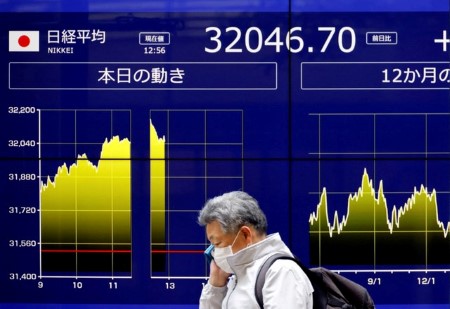
TOKYO, Oct 3 – Japan’s Nikkei share average slumped to a four-month low on Tuesday as sentiment soured amid higher US yields and the Federal Reserve’s pledge of an extended period of tight financial conditions.

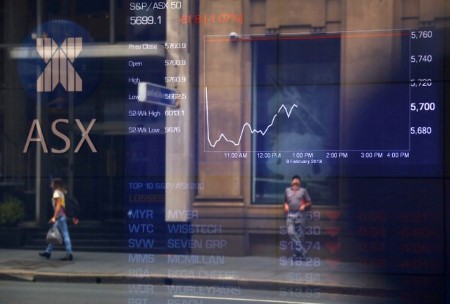
The Nikkei extended losses in the afternoon, dipping as low as 31,157.40 for the first time since June 1 before closing 1.64% lower at 31,237.94.

Of the index’s 225 components, 211 fell, with 11 gaining and three flat.

The broader Topix slipped about 1.68%.

The benchmark 10-year Treasury yield marched to a fresh 16-year peak above 4.7% overnight after Fed Governor Michelle Bowman and Fed Vice Chair for Supervision Michael Barr reiterated the higher-rates-for-longer refrain at separate events.

The rise in long-term US yields helped push the yen to the lowest in a year at close to 150 per dollar, but that failed to help lift Japanese exporter shares.

Toyota Motor sagged 3.05% and Mazda sank 6%.

“Normally yen weakness would be a reason for stocks to rise, particularly the exporters, because it boosts overseas profits,” said Nomura Securities strategist Maki Sawada.

“But because the background for the move is a rise in long-term yields, it’s a weight on the Nikkei.”

The promise of extended tight financial conditions also weighed on crude oil, which tumbled 2% overnight.

As a result, resource shares were the worst performers. Among the Tokyo Stock Exchange’s 33 industry groups, mining paced declines with a 6.26% plunge, followed by a 5.47% drop for oil and coal producers.

Refiner Inpex was the worst-performing Nikkei stock, sagging 6.49%. Peer ENEOS Holdings lost 5.86%, while JGC Holdings, an engineering company also involved in the oil business, dropped 5.79%.

Tech stocks provided some relief, helped partly by the Nasdaq’s outperformance overnight on Wall Street.

Online services providers LY Corp and Recruit Holdings rose 1.31% and 0.33% respectively, while Nintendo gained 0.49% and Sony Group added 0.45%.

(Reporting by Kevin Buckland; Editing by Sohini Goswami)

Oil rebounds from 3-week low, settles up despite stronger dollar

Oil rebounds from 3-week low, settles up despite stronger dollar

NEW YORK, Oct 3 – Oil prices recovered to settle slightly higher on Tuesday after sinking to three-week lows, pressured by a stronger US dollar and darkening global economic signals but supported by tightening crude supply.

Brent crude oil futures settled 21 cents higher at USD 90.92 a barrel, after falling to a session low of USD 89.50, the lowest since Sept. 8.

US West Texas Intermediate crude (WTI), settled up 41 cents at USD 89.23 per barrel. The session low was USD 87.76, the weakest since Sept. 12.

Prices sank early as the US dollar rose to a 10-month high against a basket of major peers after US job openings data pointed to a still-tight labor market that could prompt the Federal Reserve to raise interest rates next month.

“We have seen an incredible increase in the yields and the dollar and that’s raised concerns about demand going forward,” said Phil Flynn, an analyst at Price Futures Group.

Higher interest rates and a stronger dollar make oil more expensive for holders of other currencies, which could dampen oil demand.

Investors kept an eye on any supply updates following last month’s decision by Saudi Arabia and Russia to extend output cuts to the end of the year. The two countries belong to OPEC+, the Organization of the Petroleum Exporting Countries and allies.

The producer group is expected to keep output policy unchanged when it meets on Wednesday, keeping supplies tight.

Saudi Arabia is expected to raise its November official selling price of Arab Light crude to Asia for a fifth straight month, according to a Reuters survey.

Russia is setting no time frame for a fuel export ban it introduced last month, and which will remain in place as long as necessary to stabilize prices and address shortages on the domestic market, Interfax cited Deputy Prime Minister Alexander Novak as saying.

Talks to restart Iraqi oil exports via a crude oil pipeline that runs through Turkey are still ongoing, an Iraqi oil official told Reuters, a day after Turkey said operations would restart this week after nearly a six-month stoppage.

“In theory, under the terms of the OPEC+ deal, production (outside the Gulf Cooperation Council) should remain flat over Q4. However, Iraq’s compliance has been somewhat spotty in the past and export levels should be expected to rise, assuming the pipeline resumes operations as planned,” BMI Research analysts said.

Iraq, OPEC’s second-biggest producer, also said it would award 30 new oil and gas projects in its fifth and sixth licensing rounds.

In US supply, industry data showed crude stocks fell by about 4.2 million barrels in the week ended Sept. 29, according to market sources citing American Petroleum Institute figures on Tuesday.

US government data on stockpiles is due on Wednesday. Eight analysts polled by Reuters estimated on average that crude inventories fell by about 500,000 barrels in the week to Sept. 29.

(Reporting by Stephanie Kelly, Natalie Grover, Laura Sanicola and Trixie Yap, Editing by Marguerita Choy, Mark Potter, Paul Simao, and David Gregorio)


New quarter, same old market dynamics

New quarter, same old market dynamics

Oct 3 – Yet another surge in the dollar and US bond yields on Monday suggests the momentum in these assets – which set the tone for markets around the world – is not about to slow down just because the final quarter of the year is underway.

If anything, it is accelerating. Asian markets could be in for a rocky ride on Tuesday after the 10-year US Treasury yield leapt above 4.70% to its highest level since 2007 and the dollar spiked to its highest in almost a year.

Investors in Asia are also awaiting the Reserve Bank of Australia’s latest policy decision and guidance on Tuesday. But it is the relentless rise in US Treasury yields and the dollar that will set the tone across the region.

From an Asian FX perspective, these moves can quickly snowball. Higher US yields boost the dollar, which pushes Asian currencies lower, raising speculation that countries with particularly weak exchange rates might intervene by selling FX reserves, thereby pushing up US yields. Repeat to fade.

Japan is in or around this kind of territory. The dollar is a whisker from 150.00 yen – the yen is at its weakest in over 50 years on a real effective exchange rate basis – and Tokyo could intervene at any moment, potentially selling some of its huge stash of US Treasuries.

But the Bank of Japan is also fighting on the domestic bond market front, announcing on Monday that it will conduct extra bond-buying operations as the 10-year yield reached its highest in a decade at 0.78%.

A closely watched BOJ survey on Monday showed that Japan’s business sentiment improved in the third quarter, with big non-manufacturers’ mood brightening to levels not seen since 1991. This would strengthen the view that the BOJ is closer to ditching 30 years of ultra-loose monetary policy, hence the rise in domestic yields.

But the yen continues to slide, suggesting it is still being driven by US yields and the dollar side of the equation. Something has to give.

Australia’s central bank is expected to keep its key interest rate steady at 4.10% on Tuesday, according to a Reuters poll, but hike it to a peak of 4.35% by the end of this year as inflation remains above target.

All but two of 32 economists in a Sept. 27-28 poll expected the RBA to hold its official cash rate steady. The two outliers forecast a 25 basis-point hike.

Like nearly every currency in the world on Monday, the Aussie dollar got crushed under the wave of US dollar-buying, falling more than 1% to USD 0.6363. It was its steepest one-day fall in a month.

Here are key developments that could provide more direction to markets on Tuesday:

– Reserve Bank of Australia rate decision

– Australia, Japan services PMIs (September)

– South Korea manufacturing PMI (September)

(By Jamie McGeever; Editing by Deepa Babington)


S&P 500 ends near flat; utilities drop, focus on rate outlook

S&P 500 ends near flat; utilities drop, focus on rate outlook

NEW YORK, Oct 2 – The S&P 500 ended nearly flat on Monday with utilities falling sharply and investors weighing the likelihood the Federal Reserve will need to hold interest rates higher for longer.

The Nasdaq rose, and shares of Nvidia (NVDA) gained 2.9% after Goldman Sachs added the chipmaker to its conviction list of top stock picks.

Fed Governor Michelle Bowman said she remains willing to support another increase in the central bank’s policy interest rate at a future meeting if upcoming data shows progress on inflation is stalling or proceeding too slowly.

The US central bank said last month it may hike rates again as it struggles to bring inflation closer to its 2% annual target.

“We ended September with a market that was enveloped by uncertainty,” said Quincy Krosby, chief global strategist at LPL Financial in Charlotte, North Carolina. All three major indexes posted losses for September and the last quarter.

“Coming into this month, it’s a market that needs confirmation that earnings are working their way higher. And, what’s crucial for the market is to ascertain where the Fed is headed,” she said.

Investors continue to keep a close eye on rising Treasury yields, she said, but Monday’s advance in yields was tied to an agreement to avert a partial US government shutdown, which reduced demand for the debt before this week’s key jobs data.

Rate-sensitive utilities was the day’s worst-performing S&P sector, falling 4.7% in its biggest one-day percentage decline since April 2020.

Energy also fell sharply along with lower oil prices, while technology was up 1.3%.

The Dow Jones Industrial Average fell 74.15 points, or 0.22%, to 33,433.35, the S&P 500 gained 0.34 points, or 0.01%, at 4,288.39 and the Nasdaq Composite added 88.45 points, or 0.67%, at 13,307.77.

Tesla (TSLA) shares ended up 0.6% even as the electric vehicle maker missed market estimates for third-quarter deliveries.

Economic data showed US factory activity decreased at a shallower-than-expected pace in September, while US construction spending increased in August. Investors anxiously await the monthly US jobs report due on Friday.

S&P 500 companies begin to report third-quarter results later this month, with analysts expecting earnings to have risen 1.6% from the year-ago quarter after falling 2.8% in the second quarter, according LSEG IBES data Friday.

Among S&P utilities, shares of NextEra Energy (NEE) fell 9% and hit their lowest level in about 3-1/2 years.

Volume on US exchanges was 10.84 billion shares, compared with the 10.49 billion average for the full session over the last 20 trading days.

Declining issues outnumbered advancers on the NYSE by a 4.61-to-1 ratio; on Nasdaq, a 2.43-to-1 ratio favored decliners.

The S&P 500 posted two new 52-week highs and 52 new lows; the Nasdaq Composite recorded 24 new highs and 327 new lows.

(Reporting by Caroline Valetkevitch in New York; additional reporting by Shubham Batra and Shashwat Chauhan in Bengaluru; Editing by Vinay Dwivedi, Maju Samuel, and Richard Chang)


Strong earnings will reverse decline in megacap tech stocks: Goldman Sachs

Strong earnings will reverse decline in megacap tech stocks: Goldman Sachs

NEW YORK, Oct 2 – Strong upcoming earnings results could reverse the decline in mega-cap technology and growth stocks, which have been hammered by the rise in Treasury yields and are trading at their cheapest levels in six years by one measure, according to Goldman Sachs strategists.

The so-called Magnificent Seven group of megacap stocks -Apple, Microsoft, Amazon.com, Alphabet, Nvidia, Tesla, and Meta Platforms – have fallen 7% over the last two months, compared with a 3% decline in the broad S&P 500, as Treasury yields jumped more than 60 basis points to 16-year highs.

Those declines have pushed mega-cap forward price-to-earnings ratios down by a collective 20% over the last two months, leaving them trading at their largest discount to the market based on long-term growth since January 2017, Goldman Sachs said in a note dated Oct. 1. At the same time, the group is expected to post sales growth of 11% in the third quarter, compared with a 1% improvement for the S&P 500, the firm noted.

The mega caps in aggregate have beaten consensus sales growth expectations 81% of the time and have outperformed in two-thirds of earnings seasons since the fourth quarter of 2016, Goldman’s strategists said.

“The divergence between falling valuations and improving fundamentals represents an opportunity for investors,” they wrote.

The bullish call on tech stocks comes as investor sentiment for equities overall has flatlined, which historically has been a contrarian indicator of more gains ahead, Savita Subramanian, equity and quant strategist at BofA Global Research, wrote in a note Monday.

The average recommended allocation to equities in balanced funds remained unchanged at 53% in September, below the benchmark of 60%, Subramanian noted. Falling sentiment has historically been a signal of broad gains over the following 12 months, she noted.

The S&P 500 has dropped nearly 5% over the last 10 trading days but remains slightly more than 11% up since the start of the year.

“We expect the S&P 500 to rally into year-end, with more upside in the equal-weighted index,” Subramanian wrote.

(Reporting by David Randall; Editing by Ira Iosebashvili and Mark Potter)


Posts navigation

Older posts
Newer posts

Recent Posts

  • Metrobank US-Iran Risk Index: A new hope
  • A guide for your peso bond portfolio amid higher for longer rates
  • Investment Ideas: April 8, 2026
  • Inflation Update: The case to tighten
  • Investment Ideas: April 7, 2026

Recent Comments

No comments to show.

Archives

  • April 2026
  • March 2026
  • February 2026
  • January 2026
  • December 2025
  • November 2025
  • October 2025
  • September 2025
  • August 2025
  • July 2025
  • June 2025
  • May 2025
  • April 2025
  • March 2025
  • February 2025
  • January 2025
  • December 2024
  • November 2024
  • October 2024
  • September 2024
  • August 2024
  • July 2024
  • June 2024
  • May 2024
  • April 2024
  • March 2024
  • February 2024
  • January 2024
  • December 2023
  • November 2023
  • October 2023
  • September 2023
  • August 2023
  • July 2023
  • June 2023
  • May 2023
  • April 2023
  • March 2023
  • February 2023
  • January 2023
  • December 2022
  • November 2022
  • October 2022
  • September 2022
  • August 2022
  • July 2022
  • June 2022
  • May 2022
  • March 2022
  • December 2021
  • October 2021

Categories

  • Bonds
  • BusinessWorld
  • Currencies
  • Economy
  • Equities
  • Estate Planning
  • Explainer
  • Featured Insight
  • Fine Living
  • How To
  • Investment Tips
  • Markets
  • Portfolio Picks
  • Rates & Bonds
  • Retirement
  • Reuters
  • Spotlight
  • Stocks
  • Uncategorized

You are leaving Metrobank Wealth Insights

Please be aware that the external site policies may differ from our website Terms And Conditions and Privacy Policy. The next site will be opened in a new browser window or tab.

Cancel Proceed
Get in Touch

For inquiries, please call our Metrobank Contact Center at (02) 88-700-700 (domestic toll-free 1-800-1888-5775) or send an e-mail to customercare@metrobank.com.ph

Metrobank is regulated by the Bangko Sentral ng Pilipinas
Website: https://www.bsp.gov.ph

Quick Links
The Gist Webinars Wealth Manager Explainers
Markets
Currencies Rates & Bonds Equities Economy
Wealth
Investment Tips Fine Living Retirement
Portfolio Picks
Bonds Stocks
Others
Contact Us Privacy Notice Terms of Use
© 2026 Metrobank. All rights reserved.

Access this content:

If you are an existing investor, log in first to your Metrobank Wealth Manager account. ​

If you wish to start your wealth journey with us, click the “How To Sign Up” button. ​

Login HOW TO SIGN UP