






MODEL PORTFOLIO
THE GIST
NEWS AND FEATURES
Global Philippines Fine Living
INSIGHTS
INVESTMENT STRATEGY
Economy Stocks Bonds Currencies
THE BASICS
Investment Tips Explainers Retirement
WEBINARS
2024 Mid-Year Economi Briefing, economic growth in the Philippines
2024 Mid-Year Economic Briefing: Navigating the Easing Cycle
June 21, 2024
Investing with Love
Investing with Love: A Mother’s Guide to Putting Money to Work
May 15, 2024
retirement-ss-3
Investor Series: An Introduction to Estate Planning
September 1, 2023
View All Webinars
DOWNLOADS
Man using his smartphone
Reports
Fed to cut just once 
DOWNLOAD
Checkout counters at the supermarket
Economic Updates
February Economic Update: Cut to the chase 
DOWNLOAD
gas-station-banner
Economic Updates
Inflation Update: Nowhere but up 
DOWNLOAD
View all Reports
Metrobank.com.ph How To Sign Up
Follow us on our platforms.

How may we help you?

TOP SEARCHES
  • Where to put my investments
  • Reports about the pandemic and economy
  • Metrobank
  • Webinars
  • Economy
TRENDING ARTICLES
  • Investing for Beginners: Following your PATH
  • On government debt thresholds: How much is too much?
  • Philippines Stock Market Outlook for 2022
  • Deficit spending remains unabated

Login

Access Exclusive Content
Login to Wealth Manager
Visit us at metrobank.com.ph How To Sign Up
Access Exclusive Content Login to Wealth Manager
Search
MODEL PORTFOLIO THE GIST
NEWS AND FEATURES
Global Philippines Fine Living
INSIGHTS
INVESTMENT STRATEGY
Economy Stocks Bonds Currencies
THE BASICS
Investment Tips Explainers Retirement
WEBINARS
2024 Mid-Year Economi Briefing, economic growth in the Philippines
2024 Mid-Year Economic Briefing: Navigating the Easing Cycle
June 21, 2024
Investing with Love
Investing with Love: A Mother’s Guide to Putting Money to Work
May 15, 2024
retirement-ss-3
Investor Series: An Introduction to Estate Planning
September 1, 2023
View All Webinars
DOWNLOADS
Man using his smartphone
Reports
Fed to cut just once 
March 19, 2026 DOWNLOAD
Checkout counters at the supermarket
Economic Updates
February Economic Update: Cut to the chase 
March 10, 2026 DOWNLOAD
gas-station-banner
Economic Updates
Inflation Update: Nowhere but up 
March 5, 2026 DOWNLOAD
View all Reports

Archives: Reuters Articles

China to support renminbi stocks trading counter to increase access to Hong Kong equities

China to support renminbi stocks trading counter to increase access to Hong Kong equities

HONG KONG — China will support the inclusion of a renminbi counter under a stock connect scheme that would for the first time allow mainland investors to trade Hong Kong-listed stocks in yuan, the latest policy effort to strengthen ties between the two markets and boost the currency’s international status.

China Securities Regulatory Commission Vice Chairman Li Ming said on Tuesday mainland authorities were keen to expand the current range of offshore renminbi initiatives.

He told the Global Financial Leaders’ Investment Summit in Hong Kong the regulator supports mainland investors to trade on a renminbi stock transaction counter – launched in 2023 to investors in Hong Kong – via the mainland-Hong Kong stock connect program linking the two markets.

“We will support the futures market in Hong Kong enrich the management tools for offshore renminbi initiatives, and help Hong Kong to continuously foster its position as an international financial market,” Li said.

An expansion of the policy would allow investors greater access to companies such as e-commerce giant Alibaba, while deepening offshore yuan liquidity in the financial hub.

The Hong Kong Monetary Authority’s summit, now in its fourth year, has brought together leading Chinese regulators, policy makers and global banking bosses.

Earlier, People’s Bank of China Deputy Governor Lu Lei said China’s central bank would “appropriately calibrate the strength and pace of policy support, ensure the implementation and execution of various monetary policy tools, and fully unleash the effects of these policies”.

The PBOC last cut interest rates and banks’ reserve requirement ratio in May, in an effort to soften the economic damage caused by a trade war with the United States.

Analysts remain divided on whether the PBOC will take further easing measures such as cutting rates by year-end.

Chinese Vice Premier He Lifeng said on Tuesday he hopes Hong Kong will strengthen cooperation with mainland China’s economic and financial sectors which would allow the city to enhance its status as a global financial center.

“I hope Hong Kong can grasp the opportunities and proactively deepen its connection with the country’s development plans and enhance economic and financial cooperation with the mainland,” He said.

Hong Kong’s role as a global financial center was in question after COVID-19 restrictions closed its borders for almost three years and following the implementation of China-imposed national security laws in 2020.

The city’s capital markets have bounced back in 2025 after new share sales fell to the lowest point in almost a decade.

Hong Kong Chief Executive John Lee told the summit there have been 80 initial public offerings in the first 10 months of 2025, reflecting the city’s resilient capital markets.

Hong Kong has overtaken New York and Nasdaq to be the global top venue for new listings, excluding special purpose acquisition companies this year, Dealogic data showed, with a total of USD 26.8 billion raised so far, nearly tripling the listing value from the same period in 2024.

(Reporting by Selena Li, Kane Wu and Jiaxing Li in Hong Kong, and Kevin Yao in Beijing; Writing by Scott Murdoch; Editing by Christopher Cushing and Lincoln Feast.)

Gold steady as focus shifts to US private payroll data

Gold steady as focus shifts to US private payroll data

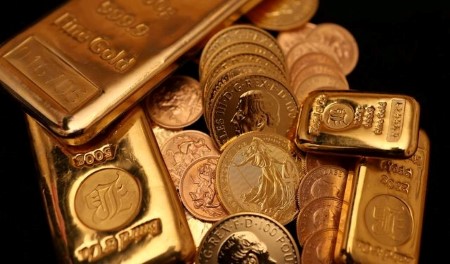
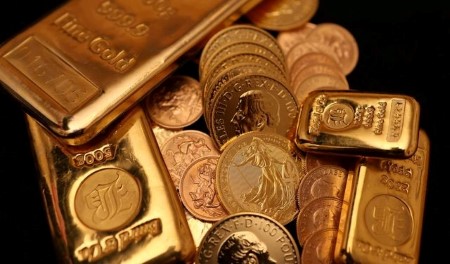
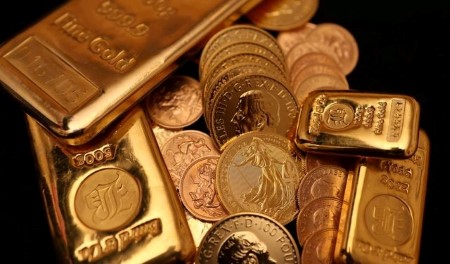
Gold prices held steady on Monday, hovering around USD 4,000 per ounce, as investors hunkered down for US private payroll data due this week to assess the chances of an additional US Federal Reserve interest rate cut this year.

Spot gold was little changed at USD 4,002.35 an ounce by 1:32 p.m. ET (1832 GMT). US gold futures for December delivery settled 0.4% higher at USD 4,014.

“Gold is in the process of carving out a trading range, maybe in the high 3000s to the mid-4000s… this is a kind of expected consolidation after such a big move,” said Marex analyst Edward Meir.

The metal, which has gained 53% this year, has dropped over 8% from a record high hit on October 20.

Investors are awaiting the release of ADP US employment data due on Wednesday and ISM PMIs this week, for cues on the Fed’s policy direction. The US government shutdown has halted the release of key economic data, including from the Bureau of Labor Statistics.

The central bank last week cut interest rates for the second time this year, but Chair Jerome Powell said another cut this year was “not a foregone conclusion”.

Traders are now pricing a 65.3% chance of a rate cut in December, down from a near certainty last week before the Fed meeting.

Non-yielding gold thrives when interest rates are low and in times of economic uncertainty.

“Gold’s pause still looks like a breather, not a breakdown. Seasonal softness, temporary Chinese policy noise, and a firmer dollar explain the short-term retreat, but none change the longer-term narrative,” said Ole Hansen, head of commodity strategy at Saxo Bank, in a note.

Meanwhile, China ended a long-standing tax exemption policy for some gold retailers on Saturday, potentially setting back a buying spree for the precious metal in the world’s biggest consumer market.

Elsewhere, spot silver fell 0.8% to USD 48.25 an ounce, platinum eased 0.2% at USD 1,564.30 and palladium gained 0.4% to USD 1,439.86.

(Reporting by Noel John and Pablo Sinha in Bengaluru; additional reporting by Kavya Balaraman; Editing by Leroy Leo and Vijay Kishore)


Oil prices steady despite OPEC+ plans to pause output increases

Oil prices steady despite OPEC+ plans to pause output increases

NEW YORK – Oil prices held steady on Monday as the market balanced the latest OPEC+ supply increase with the group’s plans to pause output increases in the first quarter of 2026 along with fears of an oil supply glut and weak factory data in Asia.

Brent crude futures rose 12 cents, or 0.2%, to settle at USD 64.89 a barrel. US West Texas Intermediate (WTI) crude rose 7 cents, or 0.1%, to settle at USD 61.05.

OPEC+, the Organization of the Petroleum Exporting Countries (OPEC) and allied producers, agreed on Sunday to raise output by a small 137,000 barrels per day (bpd) in December.

OPEC+ also agreed to pause increases in the first quarter of next year.

“Any negative price implications from OPEC’s furtherance of this quarter’s 137,000 bpd production increase were offset by the cartel’s suggested pause in output advances after the end of this year,” analysts at energy advisory firm Ritterbusch and Associates said in a note.

On Monday, Morgan Stanley raised its Brent crude forecast for the first half of 2026 to USD 60 a barrel from USD 57.50, citing the decision by OPEC+ to pause quota hikes in the first quarter of next year and recent US and EU sanctions on Russian oil assets.

Last month, the International Energy Agency said the global oil market faces a surplus next year of as much as 4 million bpd. OPEC expects global oil supply and demand to balance next year.

European oil CEOs at a conference in Abu Dhabi cautioned against being too bearish on oil.

Analysts at RBC, a Canadian bank, said Russia remains a supply wild card after US sanctions on Russian producers Rosneft and Lukoil and attacks on energy infrastructure.

Headwinds for Asia’s big manufacturing hubs persisted in October, business surveys showed on Monday. Asia is the world’s biggest oil-consuming region.

Chinese oil demand growth has slowed since 2020 as the country transitions to greener energy, oil major TotalEnergies CEO Patrick Pouyanne said on Monday. He said he remained optimistic long-term due to rising demand in India.

STRONG DOLLAR

A strong US dollar weighed on oil prices by making crude more expensive for buyers using other currencies. The dollar hovered at a three-month high against a basket of peers.

Federal Reserve officials kept pressing competing views of risks facing the US economy, and the debate should intensify ahead of the central bank’s next policy meeting in the absence of data suspended due to the federal government shutdown.

Federal Reserve Bank of Chicago President Austan Goolsbee said on Monday he’s in no hurry to cut interest rates again with inflation still too far above the central bank’s 2% target.

San Francisco Federal Reserve President Mary Daly on Monday said she supported the US central bank’s interest rate cut last week, and will want to sift through incoming data to assess if another reduction in borrowing costs is warranted at the December 9-10 meeting.

Lower interest rates can boost economic growth and oil demand by reducing costs for consumers.

US manufacturing contracted for an eighth straight month in October as new orders remained subdued, and suppliers were taking longer to deliver materials to factories against the backdrop of tariffs on imported goods.

President Donald Trump said the US military could deploy troops to Nigeria or carry out air strikes to stop what he called the killing of large numbers of Christians in the West African country, an OPEC member and Africa’s biggest oil producer.

(Reporting by Scott DiSavino in New York and Shadia Nasralla in London, additional reporting by Florence Tan in Singapore; Editing by David Goodman and David Gregorio)


Gold slips 1% on rate cut uncertainty, set for third monthly rise

Gold slips 1% on rate cut uncertainty, set for third monthly rise

Gold prices fell by 1% on Friday, weighed down by uncertainty over another US Federal Reserve interest rate cut this year, but the metal remained poised for a third straight monthly gain.

Spot gold fell 0.6% to USD 4,001.74 per ounce at 1:49 p.m. ET (1749 GMT) and was on track for a 3.7% gain this month.

US gold futures for December delivery settled 0.5% lower at USD 3,996.5 per ounce.

The dollar index held near a three-month high, making greenback-priced bullion more expensive for other currency holders.

Federal Reserve Bank of Cleveland President Beth Hammack said on Friday she had opposed the central bank cutting interest rates this week, adding that the Fed needs to maintain some restrictions to bring down inflation.

“Hammack is hammering gold as she becomes the third regional Fed President to publicly oppose further rate cuts at this stage, given elevated inflation. Hammack will be an FOMC voter in 2026 and shows the market was over-optimistic in pricing lower rates,” said Tai Wong, an independent metals trader.

The Fed cut interest rates on Wednesday, but hawkish remarks from Chair Jerome Powell mean markets are now pricing a 63% chance of an interest rate cut in December, down from over 90% earlier in the week, the CME FedWatch tool showed.

Gold loses its appeal when interest rates are higher, as it is a non-yielding asset. The metal has gained 53% this year, hitting a record high of USD 4,381.21 on October 20.

Morgan Stanley said on Friday it continues to see upside for gold on interest rate cuts, ETF inflows, central bank purchases and ongoing economic uncertainty. The bank expects gold to average USD 4,300 in the first half of 2026.

US President Donald Trump said on Thursday he would trim tariffs on China to 47% from 57% in exchange for Beijing cracking down on illicit fentanyl trade, resuming US soybean purchases and keeping rare earths exports flowing.

Elsewhere, spot silver fell 0.4% to USD 48.73 per ounce, platinum lost 1.7% to USD 1,583.41, and palladium fell 0.4% to USD 1,440.02.

(Reporting by Noel John and Pablo Sinha in Bengaluru; editing by Deepa Babington, Vijay Kishore, and Alexander Smith)


Investors piled into equity funds ahead of Fed rate cut, US-China trade deal

Investors piled into equity funds ahead of Fed rate cut, US-China trade deal

Global equity funds attracted massive investments in the week to October 29 ahead of an anticipated interest rate cut by the US Federal Reserve and a trade deal between US President Donald Trump and Chinese President Xi Jinping.

Investors accumulated a net USD 10.58 billion worth of global equity funds, extending their recent run of inflows into a sixth straight week, data from LSEG Lipper showed.

The Fed reduced interest rates by 25 basis points on Wednesday, thanks to easing inflationary pressure. The Fed Chair Jerome Powell, however, pushed back against another rate cut in December due to a lack of federal government data.

Trump on Thursday said he had agreed to reduce tariffs on Chinese imports in exchange for Beijing cracking down on the illicit fentanyl trade, resuming US soybean purchases and keeping rare earth exports flowing.

Asian equity funds witnessed the sharpest weekly inflow since January 2024 to the tune of USD 7.19 billion, with roughly USD 5.46 billion flowing into Japan.

US and European funds also secured USD 1.81 billion and USD 137 million inflows, respectively.

Sectoral funds had a mixed set of investments as tech and utilities saw inflows of USD 2.54 billion and USD 504 million, while investors ditched gold and precious metals equity funds of USD 1.51 billion.

Global bond funds recorded weekly inflows for the 28th straight week as these funds gained a net USD 11.84 billion in weekly inflows.

Investors pumped nearly USD 3.14 billion into euro-denominated bond funds, in line with the prior week’s USD 3.33 billion net purchase.

Government bond funds and high-yield bond funds also saw a significant USD 2.84 billion and USD 1.66 billion weekly net purchase.

Weekly net investments in money market funds, meanwhile, eased to USD 3.26 billion from USD 13.56 billion in the prior week.

Gold and precious metals commodity funds saw a net USD 4.17 billion weekly outflow, the first net sale in 10 weeks.

In emerging markets, investors snapped up equity funds to the tune of USD 2.23 billion, the most for a week since September 24, but they shed bond funds worth USD 437 million, data for a combined 28,822 funds showed.


(Reporting by Gaurav Dogra; Editing by Hugh Lawson)


Asia stocks wobble as Fed cuts, BOJ and Trump-Xi meeting in view

Asia stocks wobble as Fed cuts, BOJ and Trump-Xi meeting in view

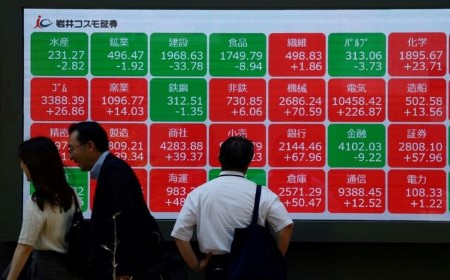
SINGAPORE – Asian stocks fluctuated between gains and losses early on Thursday after the Federal Reserve cut interest rates and as investors waited to see if US and Chinese leaders would thrash out a trade deal.

MSCI’s broadest index of Asia-Pacific shares outside Japan was last trading flat, while US S&P 500 e-mini futures edged 0.1% higher after stocks on Wall Street posted a slim loss to snap a four-day winning streak.

Global markets are in the midst of a string of central bank decisions that will give clues about the path ahead for interest rates as US President Trump’s administration imposes blanket tariffs on foreign imports.

Trump is due to meet Chinese leader Xi Jinping in South Korea later today. US negotiators have signaled they seek a return to a fragile trade war truce, but tensions remain high, and longer-term economic irritants will likely persist between the geopolitical rivals.

“After a fair bit of action in the first couple of days of this week, we’ll probably finish the central banking story with a bit of a whimper in the next 24 hours, with probably not much happening either from the BOJ or the ECB,” said Sally Auld, chief economist at National Australia Bank in Sydney in a podcast.

The Nikkei 225 opened 0.1% lower, ahead of a decision from the Bank of Japan later today at which the central bank is widely expected to keep interest rates steady.

Against the yen, the US dollar was last unchanged at 152.70 yen after remarks by US Treasury Secretary Scott Bessent calling for speedier rate hikes to avoid weakening the currency too much, which analysts said may affect the BOJ’s communication on the future pace of rate hikes.

The Federal Reserve cut interest rates on Wednesday by a quarter of a percentage point as expected, but the US central bank’s new policy statement included several references to the lack of official data during the ongoing federal government shutdown, and Fed Chair Jerome Powell told reporters later that policymakers are likely to become more cautious if it deprives them of further job and inflation reports.

Traders have slashed their forecasts of a 25-basis-point rate cut next month, which had been viewed as a near-certainty earlier. Fed funds futures now imply a 67.8% probability that the Fed will hold rates at its next meeting on December 10, compared with a 9.1% chance yesterday, according to the CME Group’s FedWatch tool.

The yield on the US 10-year Treasury bond was last trading around a three-week high of 4.0757%, up 1.77 basis points compared with a previous close of 4.058%.

The dollar index, which measures the greenback’s strength against a basket of six currencies, climbed to a two-week high of 99.131. Gold was last up 0.4% at USD 3,944.25 per ounce.

The euro was last unchanged at USD 1.16035 ahead of a policy decision by the European Central Bank later in the day at which it is expected to leave rates on hold for a third meeting in a row.

Elsewhere, corporate earnings season is fueling fresh anxiety among investors over the cost of the AI buildout, even as the US economy appears to remain in rude health, putting pressure on tech megacap stocks that account for the biggest weighting in the S&P 500 Index.

Meta on Wednesday forecast “notably larger” capital expenses next year as its revenues beat market estimates, while Microsoft’s spending on artificial intelligence infrastructure soared to a record of nearly USD 35 billion in the September quarter. Shares of both companies slumped.

However, rival tech giant and Google parent Alphabet bucked the trend, with shares rising in after-hours trading after it beat revenue expectations.

In energy markets, Brent crude was last unchanged at USD 64.92 per barrel.

(Reporting by Gregor Stuart Hunter; Editing by Kim Coghill)


Dollar gains as Fed cut bets recede; yen on guard

Dollar gains as Fed cut bets recede; yen on guard

SINGAPORE – The dollar nudged higher on Thursday as traders scaled back bets of a US rate cut in December following pushback from Federal Reserve Chair Jerome Powell, pinning the yen near an eight-month low ahead of the Bank of Japan’s (BOJ) rate decision.

The day was shaping up to be another busy one for markets with the BOJ’s policy announcement due and a highly anticipated meeting between US President Donald Trump and China’s leader Xi Jinping, where the two will seek to de-escalate their trade war.

Investors were still reeling from the aftermath of the Fed decision in the early Asian session, after the US central bank lowered rates by 25 basis points as expected and said it will end its balance sheet drawdown on December 1.

But Powell took the punch bowl away by saying a policy divide within the central bank and a lack of federal government data may put another rate cut out of reach this year.

That sent the dollar rising broadly, with sterling last trading at USD 1.3195 after falling to a 5-1/2-month low in the previous session.

The euro was nursing losses and rose 0.03% to USD 1.1604, after weakening 0.43% overnight.

“Clearly, the FOMC is divided on the policy outlook from here and with the government in shutdown still, I think Powell wants to approach policy more cautiously,” said Carol Kong, a currency strategist at Commonwealth Bank of Australia (CBA).

“We still expect a cut in December, but obviously with Powell’s cautious comments, the risk is that a rate cut is delayed to 2026.”

The market odds of the Fed delivering another quarter-point cut in December have eased to around 68%, having been nearly fully priced before Wednesday’s decision.

WAITING ON THE BOJ

The focus on Thursday turned to a policy decision from the BOJ. The central bank is seen keeping rates steady but is likely to reiterate its resolve to continue pushing up still-low borrowing costs.

Ahead of the outcome, the yen was languishing near an eight-month low against a resurgent dollar and last stood at 152.59.

It similarly held near an all-time low against the euro at 177.12.

“I think the most interesting thing to look out for is the vote. At the last meeting, two out of nine board members were in favour of a 25-basis-point rate hike. So it will be interesting to see how many officials are calling for a hike at this meeting,” said CBA’s Kong.

“We know that the BOJ tends to be more politically sensitive. So given the Takaichi administration has just been elected, and they are now compiling another economic package, I think the BOJ will stay cautious in the very near term.”

Some investors are betting that the election of Sanae Takaichi as Japan’s new prime minister could complicate the BOJ rate outlook, given she is an advocate of loose monetary policy.

Elsewhere, the Australian dollar was little changed at USD 0.6575, while the New Zealand dollar eased slightly to USD 0.5763.

Apart from the BOJ, investors will also have their eyes on an expected meeting between Trump and Xi, as fragile trade ties between the two nations continue to keep markets on edge.

“Given the positive remarks from both parties at the conclusion of the preliminary talks in Malaysia over the weekend, markets already expect that the ceiling for tariffs is in place as China likely backs down from its latest rare-earth controls announcement,” said Garrett Melson, a portfolio strategist at Natixis Investment Managers.

(Reporting by Rae Wee; Editing by Kim Coghill)

Dow ends down, S&P 500 flat as Powell says December rate cut far from assured

Dow ends down, S&P 500 flat as Powell says December rate cut far from assured

NEW YORK – The Dow ended lower and the S&P 500 finished flat on Wednesday after the Federal Reserve cut interest rates but Fed Chair Jerome Powell said another rate cut in December is far from assured.

The Nasdaq registered another record closing high, boosted by Nvidia after the AI chipmaker made history as the first company to reach USD 5 trillion in market value.

In earlier trading, stocks rose and then added to gains after the Fed cut interest rates by a quarter of a percentage point, as expected, and said it will restart limited purchases of Treasury securities.

Fed policymakers also noted the limits in their decision-making process due to the US federal government shutdown. The Fed lowered the overnight benchmark rate to a target range of 3.75% to 4.00%, the second time the US central bank eased this year.

After Powell spoke, traders pared bets on a December rate cut, giving it a 71% chance, down from 90%.

“Chairman Powell indicated that another rate cut is not a foregone conclusion,” said Oliver Pursche, senior vice president and advisor for Wealthspire Advisors in Westport, Connecticut.

“But no rate cut is ever a foregone conclusion. So, to me, that is not an inappropriate comment. The (Fed) is data dependent.”

Nvidia’s stock ended the session up 3% at USD 207.04, giving it a stock market value of USD 5.03 trillion. It has risen more than 50% this year, leading the artificial intelligence rally on Wall Street.

The Dow Jones Industrial Average fell 74.37 points, or 0.16%, to 47,632.00, the S&P 500 lost 0.30 points to 6,890.59 and the Nasdaq Composite gained 130.98 points, or 0.55%, to 23,958.47.

“The rate cut was expected. Powell’s remarks took some shine off the market,” said Michael Rosen, chief investment officer at Angeles Investments in Santa Monica, California. “But this is a temporary reaction. It is earnings that ultimately drive equities, and those earnings have been strong.”

The majority of US earnings results so far this reporting period have beaten analysts’ expectations. Of the 222 companies in the S&P 500 that have reported so far, some 84.2% have posted earnings above Wall Street estimates, according to data compiled by LSEG as of Wednesday. That is above the 77% average from the past four quarters.

Among Wednesday’s key results, Caterpillar reported a third-quarter profit that beat expectations, and its shares jumped 11.6%.

After the closing bell, shares of Meta Platforms, Microsoft, and Alphabet were mixed following quarterly reports by the three megacaps.

Shares of Meta Platforms were down more than 8% in extended trading, while Microsoft was down 1% and Alphabet was up about 5%.

Meta recorded a nearly USD 16 billion one-time charge that hurt third-quarter profits and said its capital expenditure next year would be “notably larger” than in 2025.

Strong AI demand helped Alphabet’s financial results, while Microsoft’s AI infrastructure spending soared to a record in the September quarter and deepened investor cost concerns.

Declining issues outnumbered advancers by a 2.16-to-1 ratio on the NYSE. There were 476 new highs and 170 new lows on the NYSE.

On the Nasdaq, 1,453 stocks rose and 3,306 fell as declining issues outnumbered advancers by a 2.28-to-1 ratio.

Volume on US exchanges was 20.71 billion shares, compared with the 21 billion average for the full session over the last 20 trading days.

(Reporting by Caroline Valetkevitch; additional reporting by Pranav Kashyap and Twesha Dikshit in Bengaluru and Laura Matthews in New York; Editing by Shinjini Ganguli, Krishna Chandra Eluri, and David Gregorio)


US yields edge lower as Fed rate decision looms

US yields edge lower as Fed rate decision looms

NEW YORK – US Treasury yields edged lower on Tuesday as markets remained in a holding pattern ahead of the Federal Reserve’s interest rate decision on Wednesday following a two-day policy meeting.

Data released on Tuesday, including ADP private payrolls and US consumer confidence, had little impact on yields overall.

The yield on the benchmark US 10-year Treasury note slipped 1.2 basis points to 3.981% in afternoon trading.

Markets are expected to remain sideways through the interest rate announcement by the policy-setting Federal Open Market Committee, said Subadra Rajappa, head of US rates strategy at Societe Generale in New York.

“The Fed will probably continue to be biased more towards its labor market mandate than inflation,” she added.

Investors expect a 25-basis point rate cut on Wednesday, and CME’s FedWatch tool puts the odds of another rate cut in December above 90%.

On Tuesday, US data showing private payrolls increased by an average of 14,250 jobs in the four weeks ending October 11 weighed modestly on yields. ADP said on Tuesday it would publish a weekly preliminary estimate of the ADP National Employment Report every Tuesday, effective October 28, based on its high-frequency data.

Even though the ADP data seemed to be positive, it was tempered by the layoff announcements by big companies such as Amazon and UPS, analysts said.

“High-profile layoff announcements highlight the risk of a potential higher unemployment rate since hirings have slowed,” said Vail Hartman, US rates strategist at BMO Capital Markets in New York.

US consumer confidence data also had little impact on Treasuries. The two-year US Treasury yield, which typically moves in step with interest rate expectations, was flat at 3.496%.

DATA AND SHUTDOWN IMPACT

Analysts will be closely watching for any Fed comments regarding the availability of economic data during the US government shutdown. While the release of key macroeconomic indicators was suspended throughout October, regional Federal Reserve banks may still have access to alternative data sources, said Rajappa of Societe Generale.

In any case, it will become more difficult to understand what is happening to the US economy, she said.

A closely watched part of the US Treasury yield curve measuring the gap between yields on two- and 10-year Treasury notes, seen as an indicator of economic expectations, hit 47.6 bps, the narrowest gap since September 12. The curve was last at 48.6 bps, compared with the 48.5 bps late on Monday.

The yield curve showed a bull flattening trend, in which rates on the long end are falling faster than those on the front end of the curve. This scenario often precedes a move by the Fed to cut interest rates.

Also on Tuesday, the Treasury auctioned USD 44 billion in seven-year notes, which showed soft results. The auction priced at 3.79%, higher than the expected rate at the bid deadline, which meant that investors wanted a premium to buy the note.

Post-auction, US seven-year yields were down 1.2 bps at 3.775% after the auction.

(Reporting by Tatiana Bautzer; Editing by Gertrude Chavez-Dreyfuss, Alison Williams, and Nick Zieminski)


Gold hits three-week low amid US-China trade progress

Gold hits three-week low amid US-China trade progress

Gold slipped to a three-week low on Tuesday as hopes for progress in US–China trade talks dimmed its safe-haven allure, while investors’ focus tipped over to the Federal Reserve’s interest rate decision this week.

Spot gold was down 0.4% at USD 3,964.35 per ounce as of 1:45 p.m. EDT (1745 GMT), after hitting its lowest level since October 6. US gold futures fell 0.9% to settle at USD 3,983.1 per ounce.

Gold, a traditional hedge during times of uncertainty and a non-yielding asset, has gained more than 51% this year, bolstered by ongoing geopolitical and trade tensions, as well as expected US interest rate cuts.

“The US-China trade tensions have really diminished, with a possible trade deal later this week after a summit meeting between Presidents Xi and Trump. That’s bearish for the safe-haven metals,” said Jim Wyckoff, senior analyst at Kitco Metals.

Top Chinese and US economic officials this weekend finalized the framework of a potential deal for President Donald Trump and Chinese President Xi Jinping to review at their meeting on Thursday.

Hopes of easing trade tensions have stoked optimism across global markets, with Wall Street’s main indexes opening at record highs on Tuesday.

Investors also await the outcome of the Fed’s two-day policy meeting on Wednesday. The US central bank is widely expected to cut interest rates by a quarter of a percentage point.

The safe-haven metal’s outlook, however, remains murky, with some analysts seeing continued highs, while others remain cautious.

The London Bullion Market Association’s annual gathering predicted prices at USD 4,980 per ounce over the next 12 months, while both Citi and Capital Economics lowered their gold price forecasts on Monday.

“The market has become overbought, which finally gave rise to this week’s correction,” Bank of America said in a note, adding that gold is approaching its bearish forecast of USD 3,800 per ounce in the fourth quarter.

Spot silver edged 0.7% higher at USD 47.21 per ounce, after touching its lowest price since September 26. Platinum was steady at USD 1,589.87, and palladium lost 0.1% to USD 1,401.63.

(Reporting by Anjana Anil and Pablo Sinha in Bengaluru; Editing by Alan Barona)


Posts navigation

Older posts
Newer posts

Recent Posts

  • Only one rate cut for the US Fed in 2026 
  • Metrobank US-Iran Risk Index: Faster inflation expected
  • Investment Ideas: March 19, 2026
  • Investment Ideas: March 18, 2026 
  • Metrobank US-Iran Risk Index: Mounting tensions

Recent Comments

No comments to show.

Archives

  • March 2026
  • February 2026
  • January 2026
  • December 2025
  • November 2025
  • October 2025
  • September 2025
  • August 2025
  • July 2025
  • June 2025
  • May 2025
  • April 2025
  • March 2025
  • February 2025
  • January 2025
  • December 2024
  • November 2024
  • October 2024
  • September 2024
  • August 2024
  • July 2024
  • June 2024
  • May 2024
  • April 2024
  • March 2024
  • February 2024
  • January 2024
  • December 2023
  • November 2023
  • October 2023
  • September 2023
  • August 2023
  • July 2023
  • June 2023
  • May 2023
  • April 2023
  • March 2023
  • February 2023
  • January 2023
  • December 2022
  • November 2022
  • October 2022
  • September 2022
  • August 2022
  • July 2022
  • June 2022
  • May 2022
  • March 2022
  • December 2021
  • October 2021

Categories

  • Bonds
  • BusinessWorld
  • Currencies
  • Economy
  • Equities
  • Estate Planning
  • Explainer
  • Featured Insight
  • Fine Living
  • How To
  • Investment Tips
  • Markets
  • Portfolio Picks
  • Rates & Bonds
  • Retirement
  • Reuters
  • Spotlight
  • Stocks
  • Uncategorized

You are leaving Metrobank Wealth Insights

Please be aware that the external site policies may differ from our website Terms And Conditions and Privacy Policy. The next site will be opened in a new browser window or tab.

Cancel Proceed
Get in Touch

For inquiries, please call our Metrobank Contact Center at (02) 88-700-700 (domestic toll-free 1-800-1888-5775) or send an e-mail to customercare@metrobank.com.ph

Metrobank is regulated by the Bangko Sentral ng Pilipinas
Website: https://www.bsp.gov.ph

Quick Links
The Gist Webinars Wealth Manager Explainers
Markets
Currencies Rates & Bonds Equities Economy
Wealth
Investment Tips Fine Living Retirement
Portfolio Picks
Bonds Stocks
Others
Contact Us Privacy Notice Terms of Use
© 2026 Metrobank. All rights reserved.

Access this content:

If you are an existing investor, log in first to your Metrobank Wealth Manager account. ​

If you wish to start your wealth journey with us, click the “How To Sign Up” button. ​

Login HOW TO SIGN UP