




MODEL PORTFOLIO
THE GIST
NEWS AND FEATURES
Global Philippines Fine Living
INSIGHTS
INVESTMENT STRATEGY
Economy Stocks Bonds Currencies
THE BASICS
Investment Tips Explainers Retirement
WEBINARS
2024 Mid-Year Economi Briefing, economic growth in the Philippines
2024 Mid-Year Economic Briefing: Navigating the Easing Cycle
June 21, 2024
Investing with Love
Investing with Love: A Mother’s Guide to Putting Money to Work
May 15, 2024
retirement-ss-3
Investor Series: An Introduction to Estate Planning
September 1, 2023
View All Webinars
DOWNLOADS
Container ship carrying container boxes import export dock with quay crane. Business commercial trade global cargo freight shipping logistic and transportation worldwide oversea concept. Generative AI
Economic Updates
Philippines Trade Update: Wider deficit on strong imports
DOWNLOAD
Frick collection with palm trees 
Economic Updates
Policy Rate Updates: Policy rate updates to reassure 
DOWNLOAD
Man using his smartphone
Reports
Fed to cut just once 
DOWNLOAD
View all Reports
Metrobank.com.ph How To Sign Up
Follow us on our platforms.

How may we help you?

TOP SEARCHES
  • Where to put my investments
  • Reports about the pandemic and economy
  • Metrobank
  • Webinars
  • Economy
TRENDING ARTICLES
  • Investing for Beginners: Following your PATH
  • On government debt thresholds: How much is too much?
  • Philippines Stock Market Outlook for 2022
  • Deficit spending remains unabated

Login

Access Exclusive Content
Login to Wealth Manager
Visit us at metrobank.com.ph How To Sign Up
Access Exclusive Content Login to Wealth Manager
Search
MODEL PORTFOLIO THE GIST
NEWS AND FEATURES
Global Philippines Fine Living
INSIGHTS
INVESTMENT STRATEGY
Economy Stocks Bonds Currencies
THE BASICS
Investment Tips Explainers Retirement
WEBINARS
2024 Mid-Year Economi Briefing, economic growth in the Philippines
2024 Mid-Year Economic Briefing: Navigating the Easing Cycle
June 21, 2024
Investing with Love
Investing with Love: A Mother’s Guide to Putting Money to Work
May 15, 2024
retirement-ss-3
Investor Series: An Introduction to Estate Planning
September 1, 2023
View All Webinars
DOWNLOADS
Container ship carrying container boxes import export dock with quay crane. Business commercial trade global cargo freight shipping logistic and transportation worldwide oversea concept. Generative AI
Economic Updates
Philippines Trade Update: Wider deficit on strong imports
March 27, 2026 DOWNLOAD
Frick collection with palm trees 
Economic Updates
Policy Rate Updates: Policy rate updates to reassure 
March 26, 2026 DOWNLOAD
Man using his smartphone
Reports
Fed to cut just once 
March 19, 2026 DOWNLOAD
View all Reports

Archives: Reuters Articles

Oil slips as investors weigh Fed rate decision

Oil slips as investors weigh Fed rate decision

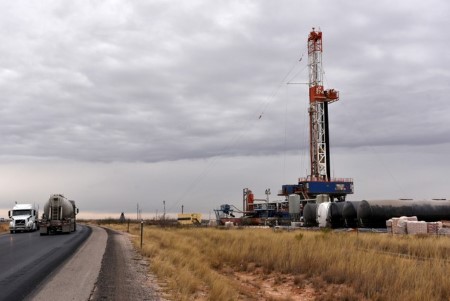
NEW YORK, March 20 – Oil prices fell on Wednesday as the US Federal Reserve held interest rate steady and demand concerns continue to weigh.

Brent crude futures for May settled down USD 1.43, or 1.64%, at USD 85.95 a barrel. US West Texas Intermediate futures for April delivery, which expire on Wednesday, ended USD 1.79, or 2.14%, lower at USD 81.68.

The more active May WTI contract settled down USD 1.46 at USD 81.27 a barrel.

Brent had settled at its highest since Oct. 31 in the previous session at USD 87.38 a barrel, while WTI hit its highest since Oct. 27 at USD 83.47.

On Wednesday, the Federal Reserve kept interest rates in the 5.25% to 5.50% range, but policymakers indicated they still expect to reduce them by three-quarters of a percentage point by the end of 2024.

The Fed’s rate decision was within expectations and the impact on oil markets was limited, said Andrew Lipow, president of Lipow Oil Associates. The US Energy Information Administration (EIA) said crude oil stockpiles fell unexpectedly last week as exports rose and refiners continued to increase activity.

The draw in crude oil inventories was due to higher refinery runs and strong crude oil exports, said Matt Smith, lead oil analyst at Kpler.

The American Petroleum Institute also reported crude oil and gasoline stockpiles fell last week, while distillate inventories rose, according to sources.

Elsewhere, Ukrainian attacks on Russian refining assets have helped propel crude prices higher as market participants assessed the impact on crude and fuel supply balances.

“If these disruptions are prolonged, it could eventually force Russian producers to reduce supply if they are unable to export all of this crude oil,” ING analyst Warren Patterson said.

(Reporting by Nicole Jao, Robert Harvey, Florence Tan and Shariq Khan; Editing by Ros Russell, David Gregorio, and Mark Potter)


 

Yen hurtles toward historic low, Fed in focus

Yen hurtles toward historic low, Fed in focus

March 20 (Reuters) – The central bank policy party rolls on into Wednesday with China and Indonesia under the spotlight in Asia ahead of the main event in Washington later in the day, as investors continue to digest the Bank of Japan’s historic rate hike the day before.

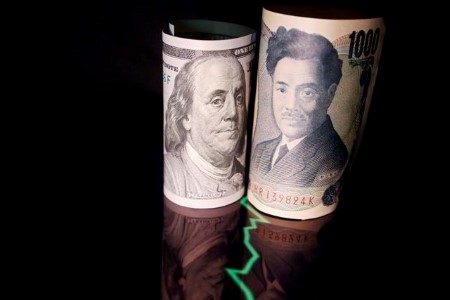
The yen fell to a four-month low on Tuesday, hurtling towards 151.00 per dollar as investors took the BOJ’s messaging to mean any further tightening will be gradual.

If so, rate and yield spreads will continue to support major currencies like the dollar at the expense of the yen. The “carry trade” dynamic could be underscored even more on Wednesday by the Federal Reserve’s policy statement, updated economic projections, and Chair Jerome Powell’s press conference.

The yen’s slide on Tuesday bucked the trend among major global currencies and pushed it back within sight of the recent multi-decade lows of around 152.00 per dollar.

The weak yen goes hand in glove with stronger Japanese stocks – the Nikkei 225 is back above 40,000 and within touching distance of its record high of 40,472 points from earlier this month. A new high on Wednesday?

Markets across the continent could open Wednesday in a buoyant mood and shrug off the previous day’s weakness, thanks to another rise on Wall Street and a fall in US bond yields.

Any upside could be limited, however, by investors’ reluctance to take on too much exposure ahead of the Fed. And although China’s economic surprises index is at a 10-month high, worries persist over the country’s property crisis.

This helps explain why 30-year Chinese government bond yields are down 40 basis points this year, recently hitting a record low of below 2.4% and coming within a whisker of dropping below 10-year yields, which also have hit 22-year troughs.

Analysts reckon the People’s Bank of China will leave its one- and five-year loan prime rates unchanged, after it left key bank lending rates on hold earlier this month.

Despite the deflationary pressures still stalking the economy, monetary policy has “pretty much reached the limits of what it can do … and so any further easing is likely to be modest,” according to Win Thin at BBH.

Bank Indonesia, meanwhile, is also expected to hold rates for a fifth month on Wednesday but cut in the second quarter of the year, according to a slim majority of economists in a Reuters poll.

With inflation within the target range of 1.5% to 3.5% since July and the economy showing signs of a slowdown, all 31 economists in the March 8-15 poll agreed the central bank’s next move would be a cut. The only issue is when.

Here are key developments that could provide more direction to markets on Wednesday:

– China LPR decision

– Indonesia monetary policy decision

– US Fed policy decision

(By Jamie McGeever; Editing by Lisa Shumaker)


US yields dip slightly as traders look to Fed meeting

US yields dip slightly as traders look to Fed meeting

March 19 – US Treasury yields ticked down on Tuesday from their near-February highs, as traders looked ahead to the Federal Reserve’s interest rate announcement on Wednesday for signs of its rate path for the rest of the year.

Benchmark 10-year notes’ yield fell to 4.306%, from Monday’s close of 4.340%. Yields had approached their February high of 4.354% on Monday.

The two-year yield ticked down to 4.693% from 4.736% on Monday.

The inversion in the yield curve between two-year and 10-year notes narrowed by 1 basis point to minus 40 basis points.

The market is focused on the Fed’s two-day meeting which ends on Wednesday with an interest rate announcement and Fed Chair Jerome Powell’s press conference. The central bank is expected to hold rates steady, but traders are awaiting its economic and interest rate projections for the rest of the year.

Last week’s consumer price index (CPI) and producer price index (PPI) figures for February exceeded forecasts, raising questions about the widely expected June start to the Fed’s rate cuts.

“There’s so much data, and especially this data at the beginning of the year,” said Michael Lorizio, senior fixed income trader at Manulife Investment Management.

“And because economists with tremendous amounts of experience and resources are saying there’s so much seasonality impacting these readings, I think we do need to see – and the Fed rightfully deserves to see – where things are trending before coming to any sort of major conclusions.”

Traders in Fed funds futures have increased their bets to 59.8% that the Fed will cut rates by June, from 54% on Monday, according to the CME Group’s FedWatch tool.

In this week’s light economic data calendar, February housing starts and building permits figures on Tuesday exceeded expectations.

The US Treasury Department on Tuesday held auctions for USD 75 billion in 42-day bills, USD 46 billion in 52-week bills, and USD 13 billion in 20-year bonds.

The 20-year bond auction sold with a high yield of 4.542% and a bid-to-cover ratio of 2.79, the highest since June.

“I think the market’s a bit oversold, and this 20-year auction certainly was a demonstration of that,” said Tom di Galoma, managing director and co-head of global rates trading at BTIG.

“It looks like institutional investors are jumping in with this rate backup,” he said.

The 20-year’s yield has ticked down to 4.556% after Tuesday’s auction, from 4.578% at Monday’s close.

(Reporting by Matt Tracy in Washington; Editing by Jonathan Oatis, Matthew Lewis, and Richard Chang)


Gold loses footing as US dollar rises; Fed in focus

Gold loses footing as US dollar rises; Fed in focus

March 19 – Gold prices retreated on Tuesday as the dollar strengthened a day before the Federal Reserve signals its interest rate stance at the end of the US central bank’s two-day policy meeting.

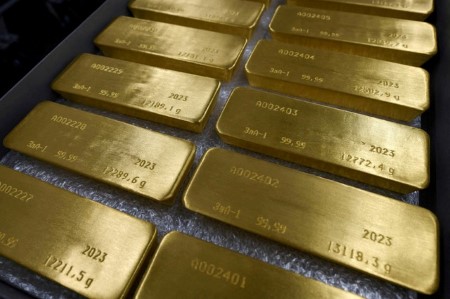
Spot gold fell 0.2% to USD 2,155.93 per ounce as of 2:18 p.m. EDT (1817 GMT), hovering close to the one-week low reached on Monday.

US gold futures settled 0.2% lower at USD 2,159.7.

The dollar gained 0.2%, having touched a more than two-week high earlier in the session, making gold more expensive for overseas buyers.

Gold is seeing “some exhaustion to the upside as the positions moved swiftly over the past week or two and now it’s taking a bit of a breather as the Fed pricing comes off a bit,” said Ryan McKay, commodity strategist at TD Securities.

“For now we’re not expecting a rally anytime soon. But at the same time, we’re not expecting a big sell-off either because the physical markets remain strong and positioning is still fairly bullish.”

Gold prices hit a record peak of USD 2,194.99 per ounce on March 8, but prices dipped nearly 1% last week after the release of hotter-than-expected February US consumer prices and producer prices reduced hopes of early Fed rate cuts due to the threat of persistent inflation.

Higher inflation prompts the Fed to keep interest rates elevated, weighing on non-yielding gold.

Although the Fed is widely expected to hold rates steady on Wednesday, the market is awaiting comments from Fed Chairman Jerome Powell afterwards for its latest rate outlook.

Meanwhile, the Bank of Japan (BOJ) ended eight years of negative interest rates and other remnants of its unorthodox policy.

Spot silver fell 0.5% to USD 24.91 per ounce, platinum lost 1.8% to USD 894.19, palladium slipped 3.8% to USD 992.50.

(Reporting by Anjana Anil in Bengaluru; Editing by Emelia Sithole-Matarise, Richard Chang, and Ravi Prakash Kumar)

Yen down with JGB yields, stocks rally after landmark BOJ stimulus exit

TOKYO, March 19 – The yen weakened, and Japanese government bond yields fell after the Bank of Japan on Tuesday announced an exit from years of ultra-easy monetary policies, marking an historic shift from a decades-long fight against deflation.

The Nikkei share average rose, reversing morning losses, following volatile trading immediately after the central bank said it was ending its negative interest rates policy and yield curve control (YCC), as well as dropping purchases of risky assets, including exchange-traded funds (ETFs).

The decision was widely expected after local and international media, including Reuters, had reported over the past week of a likely end to most or all of the BOJ’s stimulus program at this policy meeting.

That resulted in ‘sell-the-fact’ trade in Japanese markets, analysts said.

The yen, in particular, appeared to have fallen victim to that, with domestic rates still also extremely low compared with the United States. The dollar jumped 0.84% to 150.385 yen as of 0604 GMT.

The Nikkei finished the day up 0.66% at 40,003.60, recovering the psychological 40,000 mark for the first time since hitting an all-time high at 40,472.11 on March 7.

The 10-year JGB yield lost 3 basis points to 0.725%.

Some dovish undertones in the BOJ’s policy decision will keep bond yields under pressure, said Shoki Omori, chief Japan desk strategist at Mizuho Securities.

“Bond purchase amounts basically stay the same, which means the BOJ isn’t taking a hawkish stance,” cheering investors such as life insurers who need to buy bonds into Japan’s fiscal year-end this month, he said.

Omori also expects the yen to continue to fall.

“The yen remains a funding currency and is likely to keep being utilized for carry trades,” he said.

Tuesday’s policy shift ushered in the first-rate hike in Japan since 2007, but it still keeps rates stuck around zero.

BOJ Governor Haruhiko Ueda will explain the policy decision in a press conference scheduled for 0630 GMT.

In its policy statement, the bank said it will continue its JGB purchases at broadly the same amount as before, although it will scale back the maximum limit of its purchases.

The BOJ’s move to end its radical stimulus policies was in part helped by the biggest wage hikes in 33 years at annual negotiations with unions. Finance Minister Shunichi Suzuki said on Friday that Japan had emerged from decades of deflation.

A positive spiral of price hikes and wage increases as well as solid earnings drove a 19% surge in the Nikkei this year, far outpacing a 6.6% rise for the MSCI World Index.

“For the time being, I expect equity prices to increase, with the uncertainty gone surrounding the meeting,” said Norihiro Yamaguchi, senior economist at Oxford Economics in Tokyo.

(Reporting by Kevin Buckland; Editing by Jacqueline Wong and Shri Navaratnam)

Oil rises to multi-month highs on Russian supply concerns

Oil rises to multi-month highs on Russian supply concerns

NEW YORK, March 19 – Oil prices rose to multi-month highs for the second straight session on Tuesday as traders assessed how Ukraine’s recent attacks on Russian refineries would affect global petroleum supplies.

US West Texas Intermediate crude futures gained 75 cents, or 0.9%, to settle at USD 83.47 a barrel, the highest since Oct. 27. Global benchmark Brent crude settled 0.6% higher at USD 87.38 a barrel, the highest since Oct. 31.

Ukraine has stepped up attacks on Russian oil infrastructure this year, with at least seven refineries targeted by drones just this month. The attacks have shut down 7%, or around 370,500 barrels per day, of Russian refining capacity, Reuters calculations show.

While lower refining activity has led to an increase in Russian crude oil exports, it could also lead to crude oil production cuts as the country faces storage constraints, StoneX energy analyst Alex Hodes said.

Based on Hodes’ calculations, the attacks on Russian refineries could result in a decrease of around 350,000 bpd of global petroleum supplies and boost US crude prices by USD 3 per barrel.

Even if the attacks do not lead to a direct loss of Russian crude supply, there is still a spillover effect for oil prices from surging refined product margins, SEB Research analyst Bjarne Schieldrop wrote on Monday.

Oil gained support from declining crude exports from Saudi Arabia and Iraq, as well as signs of stronger demand and economic growth in China and the US.

US single-family homebuilding rebounded sharply in February, the Commerce Department reported. Homebuilding could boost economic growth, supporting oil demand.

“Oil demand data surprising on the positive side and the extension of the voluntary OPEC+ cuts until the end of June have supported prices,” UBS analyst Giovanni Staunovo said.

“Brent will likely trade in an USD 80-90 per barrel range this year, with an end-June forecast of USD 86 per barrel,” Staunovo added.

US crude oil stocks fell by 1.5 million barrels in the week ended March 15, market sources said citing American Petroleum Institute figures. A Reuters poll of analysts expected stocks to rise by about 10,000 barrels last week.

Official stockpile data from the US Energy Information Administration is due at 10:30 a.m. ET
(1430 GMT) on Wednesday.


(Reporting by Shariq Khan in New York, Noah Browning in London and Trixie Yap in Singapore; Additional reporting by Paul Carsten in London; Editing by Mark Potter, David Goodman, Will Dunham, and David Gregorio)


China property’s Enron damp squib may yet surprise

MELBOURNE/HONG KONG, March 19 – When is a USD 78 billion fraud nothing to worry about? Hong Kong’s benchmark Hang Seng Index lost 1% on Tuesday, as markets shrugged off a Chinese regulator’s findings that by booking sales early China Evergrande inflated revenue at its flagship unit by 564 billion yuan (USD 78 billion) over 2019 and 2020 – a whopping 65% of its top line over the period. But as the 2001 demise of Enron shows, the pain can be shared widely.

Evergrande is no stranger to being compared to the defunct U.S. power company, which used all manner of special-purpose vehicles and other tools to hide losses and seemingly boost income. Short seller Citron Research mentioned it in its 2012 report that called the now-bankrupt Chinese group “insolvent” and “fraudulent”; Andrew Left, the hedge fund’s founder, was banned from trading in the Hong Kong market for five years as a result.

One big difference, of course, is that Enron’s descent from market darling to bankruptcy only took a few months. Evergrande and peers like Country Garden have been under pressure since Beijing issued its three red lines in August 2020 to try to rein in the bubbly real-estate market. Moreover, in January a Hong Kong court ordered Evergrande to liquidate; founder Hui Ka Yan was detained last year on suspicion of unspecified crimes. So it’s understandable that investors might be blasé about the latest news.

There could be plenty more unpleasant surprises, though. First, the securities regulator has so far only targeted two years of Evergrande’s accounts. If the watchdog chooses to look further back, the alleged fraud could well be exponentially larger than Enron’s – a politically embarrassing scandal for Beijing at a time when foreign investors are already wary of China.

Auditors will probably be on the hook for some blame, too – in this case PricewaterhouseCoopers’s China affiliate. It quit last year as Evergrande’s accountant, and liquidators were already planning to sue the unit, the Financial Times reported last month. Enron’s collapse famously precipitated, along with the scandal at telecom company WorldCom, the demise of then-Big Five accounting firm Arthur Andersen. The Evergrande fiasco could accelerate the retreat of the Big Four in China. PwC’s mainland, Hong Kong and Macau operations boast over 800 partners.

Banks also may be in the firing line, as JPMorgan and Citi were for work done for Enron. China’s securities regulator has flagged that Evergrande bonds issued off the back of 2019 or 2020 earnings could be fraudulent, which bodes ill for the underwriters.

The latest findings may not change much at Evergrande. But investors are being too sanguine if they think the buck stops there.

CONTEXT NEWS

The China Securities Regulatory Commission on March 18 accused China Evergrande of committing financial fraud by inflating the sales of its flagship unit by a total of 564 billion yuan (USD 78 billion) over a two-year period.

The company did so, alleges the watchdog, by booking sales on its income statement before they were finalised. In 2019 the tactic boosted the top line by 214 billion yuan, representing around half its revenue that year. In 2020 it added a further 350 billion yuan using the same method, or almost 79% of that year’s total.

Because Evergrande relied on these financial statements to raise debt, the CSRC also accused the company of fraudulently issuing corporate bonds.

The regulator also barred founder Hui Ka Yan from the securities industry for life and fined him 47 million yuan.

(Editing by Robyn Mak and Katrina Hamlin)

Dollar up, yen steady as BOJ policy shift looms

Dollar up, yen steady as BOJ policy shift looms

NEW YORK/LONDON, March 18 – The dollar edged higher on Monday ahead of a slew of central bank meetings this week, with the Bank of Japan potentially set to end negative interest rates and the market waiting for the Federal Reserve’s latest projections for its rate cut plans.

In addition to Japan and the United States, central banks in Britain, Australia, Norway, Switzerland, Mexico, Taiwan, Brazil, and Indonesia are all due to meet this week.

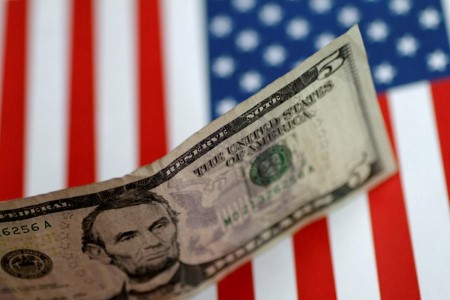
The dollar index, which measures the US currency against six other major currencies, rose 0.145% at 103.600. It has strengthened just over 2% this year as the US economy has fared better than expected, leading investors to rein in bets that the Fed will cut rates quickly and deeply this year.

Markets are now pricing in less than three cuts of 25 basis points each in 2024, down from almost double that at the year’s start, LSEG data shows. Futures show about a 51% chance of the first rate cut coming by June, also down sharply from earlier expectations, according to CME Group’s FedWatch Tool.

The yield on benchmark 10-year Treasury notes rose to a three-week high of 4.348%. The advance adds to dollar strength as the market sees rates staying higher for longer.

The focus on Wednesday will be on whether Fed policymakers change their projections, or dot plots, for the economy and rate cuts for this year and the next two. The Fed in December projected 75 basis points of easing in 2024.

“I think they’re going to stay with three cuts, but if they change, it’s more likely to be to two cuts, rather than four,” said Marc Chandler, chief market strategist at Bannockburn Global Forex in New York. “One thing that could surprise people would be that the median dot goes up for unemployment.”

The Japanese yen traded little changed, up 0.05% at 149.16 per dollar.

The yen has had a whirlwind few weeks, weakening to 150.88 to the dollar last month. It then rebounded to a one-month high of 146.48 at the start of March, on the back of stronger-than-expected economic data and rising bets that the BOJ is preparing to end eight years of negative interest rates.

Bigger-than-expected pay hikes by major Japanese firms have cemented expectations that the BOJ will exit ultra-loose monetary policy, potentially as soon as at its meeting on Tuesday.

“Recently there have been some signs and some statements from a few of the members of the Bank of Japan signaling that they feel this is a time to not maintain an accommodative financial environment,” said Juan Perez, director of trading at Monex USA in Washington. “But this week it’s really doubtful that they’re going to make a move. They would shock markets.”

April was more likely for the BOJ to exit its ultra-easy monetary policy as a jump in inflation could occur when Japanese subsidies for household energy end that month, Chandler said.

The euro last bought USD 1.0871, down 0.15% while the sterling was at USD 1.27245, down 0.12% ahead of the Bank of England meeting on Thursday when the central bank is expected to hold rates at 5.25%.

Australia’s central bank is due to meet on Tuesday and is widely expected to hold rates steady. The Australian dollar fell 0.05% against the US dollar to USD 0.656.

The US dollar rose 0.52% against the Swiss franc. Some investors think the Swiss National Bank could cut interest rates on Thursday, with inflation having long been within its 0-2% target range.

(Reporting by Herbert Lash, additional reporting by Harry Robertson in London and Ankur Banerjee in Singapore; Editing by Tomasz Janowski, Josie Kao, and Sharon Singleton)


US yields hit three-week highs ahead of Fed meeting

US yields hit three-week highs ahead of Fed meeting

March 18 – Benchmark 10-year US Treasury yields hit three-week highs on Monday as traders looked ahead to the Federal Reserve’s meeting this week for further clues on its rate path this year.

Benchmark 10-year notes’ yields reached 4.348%, up almost 5 basis points on the day and the highest since Feb. 23. The yields are approaching their February high of 4.354%.

Two-year yields touched 4.751%, their highest since Feb. 23. They reached 4.759% last month.

The inversion in the yield curve between two-year and 10-year notes narrowed by 2 basis points to minus 40 basis points.

Market focus is on the Fed’s two-day meeting on Tuesday and Wednesday. It is expected to hold rates steady, with the market’s attention on policymakers’ updated economic and interest rate projections.

“I think that the most important data point is going to be the Fed meeting, and what they show in the summary of economic projections to guide the market through their thoughts on Q1 data,” said Subadra Rajappa, head of US rates strategy at Societe Generale.

Yields rose each day last week following strong economic data reports. These include March 12’s report showing the consumer price index (CPI) rising 0.4% last month, driven largely by higher costs for gasoline and shelter. Thursday’s producer price index (PPI) also exceeded forecasts, rising 0.6% in February versus 0.3% expected.

Traders in Fed funds futures have since reduced bets that the Fed will cut rates by June to 54%, from 59% on Friday, according to the CME Group’s FedWatch tool.

“It seems like a lot of the street is moving towards fewer Fed cuts this year,” said Natalie Trevithick, head of investment grade credit strategy at asset manager Payden & Rygel. “It was questionable why we fell so dramatically in the fourth quarter when everything was so strong. So I think we just went too far too fast, and we’re retracing some of that here.”

The economic data calendar is light this week in lieu of the Fed’s two-day meeting. February housing starts and building permits figures will come on Tuesday, while last week’s initial jobless claims and US services and manufacturing purchasing managers’ index data will come on Thursday.

Last week’s strong data was reinforced on Monday by the National Association of Home Builders’ housing market index, which showed builder confidence rose in March for the fourth month in a row on strong buyer demand, reaching its highest level since July.

The US Treasury Department on Monday auctioned USD 76 billion in 13-week bills and USD 70 billion in 26-week bills. The 13-week auction met with a bid-to-cover ratio of 2.81 times, while the 26-week auction met with a bid-to-cover ratio of 2.76 times.

The Treasury will hold auctions on Tuesday for USD 75 billion in 42-day bills, USD 46 billion in 52-week bills, and USD 13 billion in 20-year bonds.

(Reporting by Matt Tracy; Editing by Richard Chang)


Gold regains ground as investors strap in for Fed policy meet

Gold regains ground as investors strap in for Fed policy meet

March 18 – Gold prices firmed after dipping to one-week lows on Monday as investors awaited a series of central bank meetings this week, including the US Federal Reserve’s policy decision on Wednesday, to pick up on clues on inflation and interest rates.

Spot gold was up 0.2% at USD 2,159.69 per ounce at 2:20 p.m. EDT (1820 GMT) after hitting its lowest level since March 7 earlier in the session. Bullion had hit a record high of USD 2,194.99 on March 8.

US gold futures settled 0.1% higher at USD 2,164.3.

“Gold is in anticipation of the interest rate decision on Wednesday, but also maybe the Bank of Japan’s interest rate decision tonight – it can show that globally inflation is rising and obviously gold is a global inflation hedge,” said Daniel Pavilonis, senior market strategist at RJO Futures.

Bullion fell about 1% last week after data showed that US consumer prices increased solidly in February and producer prices rose more than expected, indicating some stickiness in inflation.

Although gold is traditionally considered an inflation hedge, higher interest rates to rein in the elevated prices discourage investment in bullion since it pays no interest.

The Bank of Japan is expected to exit its ultra-dovish monetary policy at its two-day meeting ending on Tuesday.

The Bank of England will hold its meeting on Thursday and is expected to stay put on rates.

Markets also widely anticipate no change in interest rates at the end of Fed’s two-day policy meeting on Wednesday, but are pricing in a 53% chance of a rate cut in June.

“The changes in the dot plot, the expectations of the Fed funds, I think is going to play a role in whether or not gold will resume and continue its uptrend,” Pavilonis added.

Spot silver fell 0.4% to USD 25.06, platinum lost 1.8% to USD 916.19 per ounce and palladium dipped 4.2% to USD 1,031.73.

(Reporting by Anjana Anil in Bengaluru; Editing by Mark Potter, Josie Kao, and Ravi Prakash Kumar)


Posts navigation

Older posts
Newer posts

Recent Posts

  • Peso GS Weekly: Risk relief drives curve‑wide rally
  • Metrobank US-Iran Risk Index: Dire straits
  • Investment Ideas: April 6, 2026
  • Investment Ideas: April 1, 2026
  • Metrobank US-Iran Risk Index: Signals of an end

Recent Comments

No comments to show.

Archives

  • April 2026
  • March 2026
  • February 2026
  • January 2026
  • December 2025
  • November 2025
  • October 2025
  • September 2025
  • August 2025
  • July 2025
  • June 2025
  • May 2025
  • April 2025
  • March 2025
  • February 2025
  • January 2025
  • December 2024
  • November 2024
  • October 2024
  • September 2024
  • August 2024
  • July 2024
  • June 2024
  • May 2024
  • April 2024
  • March 2024
  • February 2024
  • January 2024
  • December 2023
  • November 2023
  • October 2023
  • September 2023
  • August 2023
  • July 2023
  • June 2023
  • May 2023
  • April 2023
  • March 2023
  • February 2023
  • January 2023
  • December 2022
  • November 2022
  • October 2022
  • September 2022
  • August 2022
  • July 2022
  • June 2022
  • May 2022
  • March 2022
  • December 2021
  • October 2021

Categories

  • Bonds
  • BusinessWorld
  • Currencies
  • Economy
  • Equities
  • Estate Planning
  • Explainer
  • Featured Insight
  • Fine Living
  • How To
  • Investment Tips
  • Markets
  • Portfolio Picks
  • Rates & Bonds
  • Retirement
  • Reuters
  • Spotlight
  • Stocks
  • Uncategorized

You are leaving Metrobank Wealth Insights

Please be aware that the external site policies may differ from our website Terms And Conditions and Privacy Policy. The next site will be opened in a new browser window or tab.

Cancel Proceed
Get in Touch

For inquiries, please call our Metrobank Contact Center at (02) 88-700-700 (domestic toll-free 1-800-1888-5775) or send an e-mail to customercare@metrobank.com.ph

Metrobank is regulated by the Bangko Sentral ng Pilipinas
Website: https://www.bsp.gov.ph

Quick Links
The Gist Webinars Wealth Manager Explainers
Markets
Currencies Rates & Bonds Equities Economy
Wealth
Investment Tips Fine Living Retirement
Portfolio Picks
Bonds Stocks
Others
Contact Us Privacy Notice Terms of Use
© 2026 Metrobank. All rights reserved.

Access this content:

If you are an existing investor, log in first to your Metrobank Wealth Manager account. ​

If you wish to start your wealth journey with us, click the “How To Sign Up” button. ​

Login HOW TO SIGN UP