


MODEL PORTFOLIO
THE GIST
NEWS AND FEATURES
Global Philippines Fine Living
INSIGHTS
INVESTMENT STRATEGY
Economy Stocks Bonds Currencies
THE BASICS
Investment Tips Explainers Retirement
WEBINARS
2024 Mid-Year Economi Briefing, economic growth in the Philippines
2024 Mid-Year Economic Briefing: Navigating the Easing Cycle
June 21, 2024
Investing with Love
Investing with Love: A Mother’s Guide to Putting Money to Work
May 15, 2024
retirement-ss-3
Investor Series: An Introduction to Estate Planning
September 1, 2023
View All Webinars
DOWNLOADS
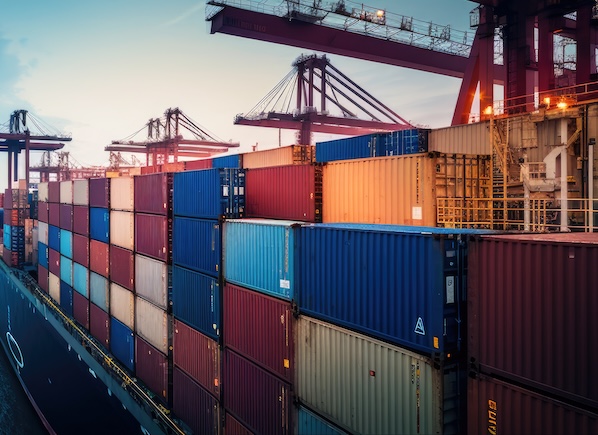
Container ship carrying container boxes import export dock with quay crane. Business commercial trade global cargo freight shipping logistic and transportation worldwide oversea concept. Generative AI
Economic Updates
Philippines Trade Update: Wider deficit on strong imports
DOWNLOAD
Frick collection with palm trees 
Economic Updates
Policy Rate Updates: Policy rate updates to reassure 
DOWNLOAD
Man using his smartphone
Reports
Fed to cut just once 
DOWNLOAD
View all Reports
Metrobank.com.ph How To Sign Up
Follow us on our platforms.

How may we help you?

TOP SEARCHES
  • Where to put my investments
  • Reports about the pandemic and economy
  • Metrobank
  • Webinars
  • Economy
TRENDING ARTICLES
  • Investing for Beginners: Following your PATH
  • On government debt thresholds: How much is too much?
  • Philippines Stock Market Outlook for 2022
  • Deficit spending remains unabated

Login

Access Exclusive Content
Login to Wealth Manager
Visit us at metrobank.com.ph How To Sign Up
Access Exclusive Content Login to Wealth Manager
Search
MODEL PORTFOLIO THE GIST
NEWS AND FEATURES
Global Philippines Fine Living
INSIGHTS
INVESTMENT STRATEGY
Economy Stocks Bonds Currencies
THE BASICS
Investment Tips Explainers Retirement
WEBINARS
2024 Mid-Year Economi Briefing, economic growth in the Philippines
2024 Mid-Year Economic Briefing: Navigating the Easing Cycle
June 21, 2024
Investing with Love
Investing with Love: A Mother’s Guide to Putting Money to Work
May 15, 2024
retirement-ss-3
Investor Series: An Introduction to Estate Planning
September 1, 2023
View All Webinars
DOWNLOADS
Container ship carrying container boxes import export dock with quay crane. Business commercial trade global cargo freight shipping logistic and transportation worldwide oversea concept. Generative AI
Economic Updates
Philippines Trade Update: Wider deficit on strong imports
March 27, 2026 DOWNLOAD
Frick collection with palm trees 
Economic Updates
Policy Rate Updates: Policy rate updates to reassure 
March 26, 2026 DOWNLOAD
Man using his smartphone
Reports
Fed to cut just once 
March 19, 2026 DOWNLOAD
View all Reports

Archives: Business World Article

Oil prices go up but bigger hikes likely next week

Oil prices go up but bigger hikes likely next week

Oil prices are set to further rise next week amid supply disruptions due to the escalating conflict in the Middle East, Energy Secretary Sharon S. Garin said.

This comes as fuel retailers announced pump price hikes of over PHP 1 per liter, which were scheduled to take effect on Tuesday.

Ms. Garin said fuel prices are really expected to spike due to the US-Iran conflict.

“Prices will really go up. I will not sugarcoat that. Even if you say that oil imports are arriving, prices will still rise because of that tension. The stress in the market will push the price higher until it stabilizes. So, we need to expect that,” she said in a radio interview on DZMM on Monday morning.

Seaoil Philippines, Inc., Shell Pilipinas Corp., Petron Corp., Chevron Philippines, Inc. (Caltex), Jetti Petroleum, Inc., and PTT Philippines Corp. announced an increase in gasoline prices by PHP 1.90 per liter, diesel by PHP 1.20 per liter, and kerosene by PHP 1.50 per liter, effective March 3.

PetroGazz Ventures Philippines Corp. and Cleanfuel will implement the same adjustments, except for kerosone, which they do not offer.

The upward adjustments marked the 10th consecutive week of increase for diesel and kerosene, and eight straight weeks for gasoline. Since January, per-liter prices of gasoline, diesel, and kerosene rose by PHP 6.70, PHP 9.40, and PHP 7.70, respectively.

Ms. Garin said the government is monitoring the situation as supply is crucial for the Philippines since it has no domestic production.

If the war lasts for a month, she said that pump prices may spike, and the country has to ensure there is enough supply by exploring other options.

The Philippines is a net importer of oil, making it vulnerable to swings in global oil prices.

The Department of Energy (DoE) on Monday called for an emergency meeting with oil companies to assess the situation and measures that may be implemented.

Rino E. Abad, director of the DoE-Oil Industry Management Bureau, said they have to observe the trend during the five-day trading this week to assess whether to implement a staggered approach should there be a big-time price hike next week.

“Just in case there will be a big-time adjustment next week, we will then discuss the staggered implementation,” Mr. Abad told reporters partly in Filipino.

He noted that most of the oil companies have nearly two months’ worth of existing inventory.

Currently, oil companies are required to maintain at least a 30-day inventory of crude oil and a 15-day inventory of finished petroleum products.

“We’ve yet to see any clarity on where the latest developments in the Middle East will lead to and for how long. Given the current situation, we expect high volatility in oil prices in the near term,” Jetti President Leo P. Bellas said in a Viber message.

Eugene Erik C. Lim, president and chief executive officer of Top Line Business Development Corp., said the current upward pressure on oil prices is a bit higher compared with the 12-day Iran-Israel war in June 2025.

Mr. Lim said the movement in oil prices moving forward will depend on how the conflict would drag on.

“I think the important thing right now is to understand that there’s always a knee-jerk activity or a knee-jerk reaction on the onset of the conflict,” he said in an interview on Money Talks with Cathy Yang on One News on Monday.

“So, the question now is, how long is the conflict to be resolved? Or basically… it can be easier for us to discuss in terms of pricing, but I think we have to check the world market in the next few days,” he added.

US President Donald J. Trump said that the conflict with Iran could go on for the next four weeks, according to Reuters, citing the report from Daily Mail newspaper.

Mr. Lim said that the company is conducting several hedging activities, such as entering into forward contracts, to manage financial and supply risks.

Fuel subsidies

At the same time, the Philippine government is prepared to release fuel subsidies to sectors that are most vulnerable to a spike in oil prices.

Mr. Abad said that the fuel subsidy program will be implemented should the one-month average of Dubai crude breach USD 80 per barrel. Last week, the price averaged around USD 70-71, he said.

Palace Press Officer Clarissa A. Castro said the Department of Transportation (DoTr) has allotted PHP 2.5 billion in fuel subsidies for transport workers from the 2025 national budget.

Once Dubai crude prices breach USD 80 per barrel, the DoTr can immediately start distribution to qualified beneficiaries, Ms. Castro said at a briefing, quoting Transportation Secretary Giovanni Z. Lopez.

The Department of Agriculture’s Office of the Secretary and the Bureau of Fisheries and Aquatic Resources have allotted PHP 25 million each for subsidies for farmers and fisherfolk.

Meanwhile, business groups expressed grave concern over the Middle East conflict, citing its impact on oil prices and remittance inflows.

In a statement, the Philippine Chamber of Commerce and Industry (PCCI) urged the government to explore alternative sources of oil amid fears of disruption in the Strait of Hormuz, where about 20% of the world’s oil and liquefied natural gas pass through.

“We likewise urge the Department of Energy to accelerate the development of renewable energy and domestic energy alternatives as a long-term structural solution to our energy vulnerability,” PCCI said.

Federation of Philippine Industries Chairperson Elizabeth H. Lee warned that if the crisis escalates or becomes prolonged, “inventories will be replenished at higher global prices — resulting in sustained upward pressure on domestic fuel costs.”

“The Middle East crisis is not just a distant conflict — it is an inflationary shock that could affect Philippine households and industries if tensions persist,” she said in a statement.

Rising oil costs will drive up transport costs and electricity generation costs, as well as affect domestic sectors like manufacturing, aviation, food processing, and tourism.

“Further, businesses will need to tighten their belts and actively manage financial risks. Quick, low hanging reforms that ease the cost of doing business and reduce the ‘hidden taxes’ on local manufacturers and small businesses can help cushion, at least in part, the impact of global pressures,” Ms. Lee said.

Leonardo A. Lanzona, Jr., an economics professor at the Ateneo de Manila University, said that if the conflict widens to include Saudi Arabia and the United Arab Emirates, where millions of migrant Filipino workers could face safety threats or forced repatriation, remittance inflows might be affected.

“[This could] deal a severe blow to the roughly USD 37 billion in annual remittances that sustain household consumption and support the peso,” he said.

A prolonged crisis would also weaken the local currency through global risk-off sentiment, raise shipping costs and put the central bank in a “difficult position” of balancing growth support against inflation pressures.

The PCCI also urged the Departments of Migrant Workers, Foreign Affairs, and the Overseas Workers Welfare Administration to ensure the safety of over two million overseas Filipino workers based in the Middle East. — Sheldeen Joy Talavera, Reporter with Beatriz Marie D. Cruz and Chloe Mari A. Hufana

Peso sinks back to PHP 58 level on Middle East conflict

Peso sinks back to PHP 58 level on Middle East conflict

The peso slid back to the PHP 58 level on Monday as the widening conflict in the Middle East drove safe-haven demand for the dollar and drove up oil prices, stoking inflation worries.

The local unit fell by 53.5 centavos to close at PHP 58.20 against the greenback from its PHP 57.665 finish on Friday, data from the Bankers Association of the Philippines showed.

This was its worst close in nearly three weeks or since Feb. 11’s PHP 58.29. This was also the peso’s largest single-day drop since Sept. 25, 2025, when it lost 63.9 centavos.

The currency opened Monday’s trading session weaker at PHP 57.85 per dollar, which was already its intraday high. Its worst showing for the day was its finish of PHP 58.20 versus the greenback.

Dollars traded jumped to USD 2.24 billion from USD 1.504 billion on Friday.

“The dollar-peso closed higher over the escalating war in the Middle East following the recent drone attacks,” the first trader said in a phone interview.

“The peso weakened significantly amid safe-haven demand by market participants following US’ offensive on Iran and the death of the Iranian Supreme Leader,” the second trader said in an e-mail.

For Tuesday, the first trader said the peso could weaken further and trade between PHP 58.10 and PHP 58.50, while the second trader sees it ranging from PHP 58.10 to PHP 58.35.

“The local currency might remain weak as the spike in global crude oil prices could also exert downward pressure on the peso,” the second trader said.

Oil prices surged, the dollar jumped and shares slid on Monday as military conflict in the Middle East looked set to last for weeks, threatening to upend a global economic recovery and perhaps reignite inflation, Reuters reported.

Brent jumped around 10% to USD 79.90 a barrel, though it had briefly topped $82.00 at one stage, while US crude climbed 8.2% to USD 72.64 per barrel. Safe-haven gold rose 2.6% to USD 5,413 an ounce.

Israel launched new airstrikes targeting Tehran and expanded its military campaign to include attacks on Iran-backed Hezbollah militants in Lebanon on Monday, as US President Donald J. Trump signaled the US-Israeli military assault on Iranian targets could continue for weeks.

Meanwhile, Iran’s state media said a new wave of missiles was being launched from central parts of Iran towards “enemy locations.”

All eyes were on the Strait of Hormuz, through which around a fifth of the world’s seaborne oil trade flows and 20% of its liquefied natural gas. While the vital waterway has not yet been blocked, marine tracking sites showed tankers piling up on either side of the strait, wary of attack or maybe unable to get insurance for the voyage.

A prolonged spike in oil prices would risk reigniting inflationary pressures globally, while also acting as a tax on business and consumers that could dampen demand.

In currency markets, the euro and pound were each down around 1% at USD 1.1704 and USD 1.3347 respectively.

The dollar was by far the biggest gainer, rallying even on safe havens such as the Swiss franc and Japanese yen. It climbed 0.6% on the Japanese yen and 0.5% on the Swiss franc to JPY 157 and 0.7733 francs.

The dollar’s traditional role as a global safe-haven currency had been challenged by erratic US policymaking. The energy moves were also relevant for currency markets given the US is a net energy exporter while both Europe and Japan rely heavily on imports. — Aaron Michael C. Sy with Reuters

PSEi plummets to 6,400 level amid Iran conflict

PSEi plummets to 6,400 level amid Iran conflict

Philippine stocks closed lower on Monday, with the main index sliding back to the 6,400 range as worries over the escalating conflict in the Middle East triggered a sell-off.

The Philippine Stock Exchange index (PSEi) decreased by 2.78% or 184.41 points to close at 6,426.83, while the broader all shares index went down by 2.01% or 73.38 points to end at 3,567.86.

This was the biggest single-day drop posted by the PSEi since it plunged by 4.3% or 261.34 points on April 7, 2025.

It was also the benchmark’s lowest close since Feb. 19’s 6,407.15.

“The local market plunged by the week’s open as investors digested the ongoing conflict between the US and Iran, which is expected to negatively affect the local economy mainly through higher oil prices,” Philstocks Financial, Inc. Research Manager Japhet Louis O. Tantiangco said in a Viber message.

“The local index closed sharply lower as escalating global conflict triggered a broad-based sell-off across sectors, dampening overall market sentiment,” Regina Capital Development Corp. Head of Sales Luis A. Limlingan said in a Viber message.

Oil prices surged 9% on Monday after shipping in the crucial Strait of Hormuz was disrupted by retaliatory Iranian attacks following initial bombing by Israel and the United States that killed Iranian Supreme Leader Ali Khamenei, Reuters reported.

A sustained exchange of counterattacks damaged tankers and sharply disrupted shipments in the Strait of Hormuz, a waterway between Iran and Oman that connects the Gulf to the Arabian Sea.

Most sectoral indices ended lower on Monday. Services slid by 4.11% or 117.20 points to 2,732.86; holding firms plunged by 2.74% or 143.04 points to 5,076.53; industrials retreated by 2.33% or 220.50 points to 9,228.59; financials dropped by 1.77% or 38.56 points to 2,129.64; and property decreased by 0.82% or 18.16 points to 2,176.56.

Mining and oil was the lone gainer, rising by 0.1% or 20.14 points to 19,943.29.

“Only the miners posted gains as investors went for precious metal related stocks amid geopolitical tensions offshore,” Mr. Tantiangco said.

“Risk-off sentiment prevailed throughout the session, with investors trimming exposure amid heightened geopolitical uncertainty, while some rotated into commodity-backed assets, such as gold and oil, which are traditionally viewed as defensive hedges during market stress,” Mr. Limlingan added.

Decliners overwhelmed advancers, 159 to 53, while 52 names closed unchanged.

Value turnover dropped to PHP 9.12 billion with 1.19 billion shares traded from the PHP 19.62 billion with 1.23 billion issues that changed hands on Friday.

Net foreign selling was at PHP 784.64 million, a reversal of the PHP 915.72 million in net buying recorded in the previous session. — Alexandria Grace C. Magno with Reuters

Oil price hikes loom after US attacks Iran

Oil price hikes loom after US attacks Iran

Local pump prices may spike after the US and Israel launched strikes on Iran, which may cause a major oil supply disruption in the Middle East, according to industry players and analysts.

“The latest developments are seen to push prices much higher, despite the hefty risk premiums that were already factored in, because of the latest developments in the Middle East,” Leo P. Bellas, president of Jetti Petroleum, Inc., told BusinessWorld.

On Saturday, the US and Israel launched a wave of attacks on Iran, which resulted in the death of the latter’s supreme leader Ayatollah Ali Khamenei, Reuters reported. 

In retaliation, Iran launched missiles and counterattacks against Israel and US bases across the Gulf region including Bahrain, Qatar, and the United Arab Emirates, which are oil-producing countries.

As a net importer of crude oil, the Philippines is vulnerable to global crude price swings, which are triggered by geopolitical tensions.

Initial estimates from the Department of Energy (DoE) on Friday showed a potential increase this week of around PHP 1.10 per liter in gasoline, PHP 0.50 per liter in diesel, and PHP 0.90 per liter in kerosene, based on the four-day trading of the Mean of Platts Singapore last week, a benchmark used for refined oil products.

Rodela I. Romero, an assistant director at the DoE-Oil Industry Management Bureau, said on Friday that reports of massive US military buildup in the Middle East had contributed to expectations of price hikes this week.

Jetti’s Mr. Bellas said that this week’s oil price hikes may be higher than initial estimates as “it can be influenced by the much larger freight and premium that will be used in the cost buildup.”

He added that oil-producing countries hosting US military bases may be affected as well from energy infrastructure damage from Iran’s counterattacks.

“Early market reactions suggest that the US-Israel-Iran tensions could put upward pressure on oil prices, especially if the Strait of Hormuz becomes less stable, affecting oil trade routes,” Brigitte Carmel C. Lim, senior vice-present and chief operating officer, at Top Line Business Development Corp., said via Viber.

Ms. Lim said that this may translate to higher prices in the near term in the Philippines since local pump prices tracks international benchmarks.

She said Top Line is managing the volatility by “maintaining adequate inventory levels complemented with our price hedging strategies to lock in prices as a buffer against sudden market fluctuations.”

Reuters reported that several tanker owners, oil majors and trading houses have suspended crude oil, fuel and liquefied natural gas shipments via the Strait of Hormuz, citing trading sources.

Tehran had also closed navigation in the Strait of Hormuz. Around 20% of global oil, including from Saudi Arabia, the United Arab Emirates, Iraq, Kuwait and Iran, passes through the strait.

“With (Hormuz) being a critical chokepoint that can easily debilitate oil resources, then we can expect spikes on oil prices if a way forward will not be devised,” Raphael J. Cortez, diplomacy lecturer at De La Salle-College of St. Benilde, said.

Former Albay Rep. Jose Maria Clemente “Joey” S. Salceda said President Ferdinand R. Marcos, Jr. should give the go signal for the fuel subsidy program before the next round of pump price hikes.

“Every week of delay means billions of pesos in additional costs that fall disproportionately on jeepney drivers, tricycle operators, farmers, and fisherfolk,” he said in a post on Substack.

Mr. Salceda also urged the Congress to suspend or reduce the excise tax on diesel and kerosene under the Tax Reform for Acceleration and Inclusion Law to provide immediate relief to the transport and agriculture sectors, which he deemed were most exposed to fuel price shocks.

Last week, gasoline prices increased by PHP 0.60 per liter, while diesel and kerosene went up by PHP 1.20 per liter each. Year-to-date, price increases stand at PHP 4.80 per liter for gasoline, PHP 8.20 per liter for diesel, and PHP 6.20 per liter for kerosene.

Spillover effect

Aside from higher oil prices, the US-Iran conflict could slow deployment of overseas Filipino workers (OFWs) to the Middle East, analysts said.

“The US-Israel-Iran war will have a serious negative impact on the Philippines, especially if it engulfs the entire Middle East and is more prolonged than the surgical strike against Venezuela’s Maduro,” Foundation for Economic Freedom President Calixto V. Chikiamco said in a Viber message.

“It will definitely raise oil prices and slow down the deployment of OFWs to the Middle East,” he added.

Mr. Chikiamco said that the event is also likely to impact the already shaken consumer confidence back home.

“It was already shattered by the public works scandal, and therefore (could) further slow down gross domestic product growth and increase unemployment,” he added.

Reyes Tacandong & Co. Senior Adviser Jonathan L. Ravelas said that the country should closely monitor oil prices, global risk sentiment, and foreign exchange.

“This is a major geopolitical escalation, and markets are reacting the usual way — higher oil, a stronger dollar, and more volatility. For the Philippines, the risk isn’t direct conflict but spillovers: higher fuel prices, imported inflation, and pressure on the peso,” he said in a Viber message.

“If tensions drag on, volatility stays; if there’s quick de‑escalation, markets can stabilize just as fast. It’s a global shock — but one we need to manage carefully at home,” he added.

Francis M. Esteban, who teaches international studies at the Far Eastern University, said that the ongoing conflict should prompt the Philippines to diversify energy sources.

“This might be an opportunity for us to further explore renewable sources of energy, and other sources such as the ones newly discovered in Malampaya,” he said in a Facebook chat.

Last month, the Philippine government announced that it had discovered natural gas at Malampaya East-1, located 5 kilometers east of the existing Malampaya gas field off Palawan province.

The discovery is seen to bolster the country’s domestic energy supply, amid rising power demands. — Sheldeen Joy Talavera, Reporter with Justine Irish D. Tabile and Adrian H. Halili

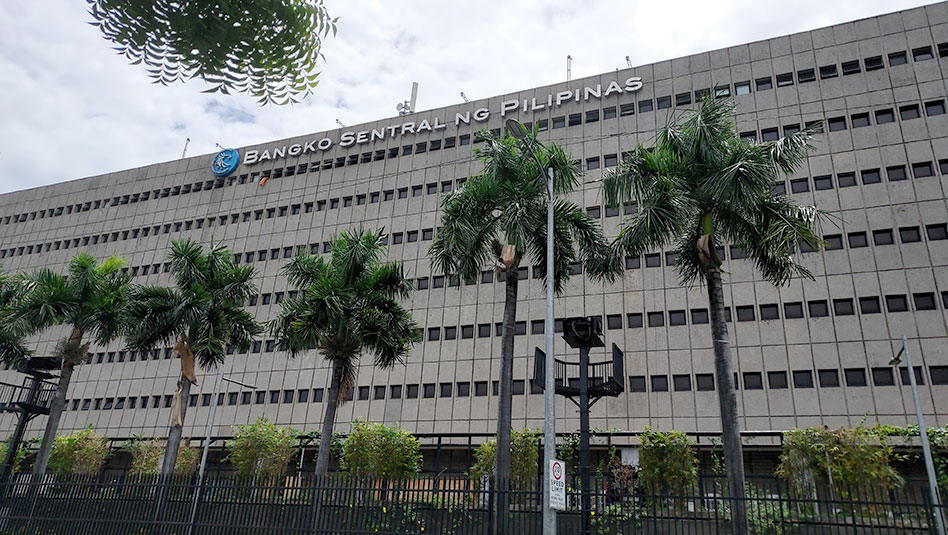
February inflation likely between 2.3% and 3.1% – central bank

Increased prices of rice, fish and fuel and higher electricity rates may have pushed up inflation in February, the Bangko Sentral ng Pilipinas (BSP) said on Friday.

Based on the central bank’s month-ahead forecast, the consumer price index likely accelerated to between 2.3% and 3.1% this month.

If realized, this would be faster than the 2% print in January and the 2.1% clip recorded in the same month last year

It would also mark the second straight month that inflation settled within the BSP’s 2%-4% target.

“Upward price pressures could stem from higher prices of rice and fish, elevated domestic petroleum prices, and increased electricity charges in Meralco (Manila Electric Co.)-serviced areas,” the BSP said.

“These pressures, however, may be partly offset by lower prices of vegetables, fruits, and meat, as well as peso appreciation.” — Katherine K. Chan

Gov’t targets USD 10.3 billion in ODA deals

Gov’t targets USD 10.3 billion in ODA deals

The government is aiming to sign this year 25 official development assistance (ODA) agreements amounting to USD 10.3 billion (PHP 593.382 billion) before the country reaches upper middle-income status by mid-2026.

Finance Secretary Frederick D. Go said there are 10 ODA loans from Japan, 10 pipeline loans from South Korea, and five loan deals from France lined up for this year.

“These total 25 ODA loan agreements with a total value of USD 10.3 billion,” he said on Thursday.

Mr. Go said the Philippines is expected to be classified as an upper middle-income country (UMIC) by the World Bank within the year.

“We will be less reliant on concessional loans once the country moves into an upper-middle class according to the World Bank. So, we will have to find other sources of financing,” Mr. Go said, adding that he expects the government to be more reliant on public-private-partnership projects.

The Philippines has remained in the lower middle-income bracket since 1987, despite posting a higher gross national income (GNI) per capita of USD 4,470 in 2024. This was only USD 26 shy of the World Bank’s adjusted GNI per capita requirement of USD 4,496-USD 13,935 for UMIC status.

The Washington-based lender is scheduled to release its updated annual country status thresholds in July.

Mr. Go added that the government is eyeing alternative financing sources for projects in infrastructure, climate change, energy, and agriculture.

The government is also in discussions with the Asian Infrastructure Investment Bank (AIIB) to fund two projects this year.

This includes the Luzon Digital Connectivity project under the Department of Information and Communications Technology (DICT) worth USD 500 million and “Metro Manila Sponge City” under the Metropolitan Manila Development Authority (MMDA) worth USD 150 million.

“So those are the two that they are looking at but not certain yet. We are still discussing with the AIIB, DICT, and MMDA. The cooperation with AIIB continues to be robust,” Mr. Go said.

Since the start of the Marcos administration, the Philippines and Japan have signed 12 financing deals worth ¥910.38 billion (about PHP 341.2 billion).

As of December last year, Japan accounted for USD 13.9 billion or 33.54% of the Philippines’ total ODA portfolio.

Japan is the Philippines’ largest ODA loan provider and third-largest source of ODA grants.

Meanwhile, Mr. Go said the government is still awaiting clarification from the US on the newly imposed global tariffs.

“What we are hopeful for and what we assume it to be is that if they apply the 15% tariffs on us, it will continue to apply on the goods that they were applying a 19% tariff on. So, our assumption is all the goods that were exempted before, which are the semiconductors and the major agricultural exports, will continue to be not included in the list of items to be subjected to the new 15% tariff,” he said.

The US on Tuesday started collecting a temporary 10% global import tariff, but said it was working to raise it to 15%.

The Trump administration’s new tariff policy comes after the US Supreme Court ruled that President Donald J. Trump had exceeded his authority when he imposed the reciprocal tariffs.

The ruling had invalidated the tariffs imposed by the Trump administration on China, Japan, South Korea, Taiwan and Association of Southeast Asian Nations economies. Most Philippine-made goods had faced a 19% US tariff. — Aaron Michael C. Sy


Philippine banks end 2025 with nearly PHP 30 trillion in assets

Philippine banks end 2025 with nearly PHP 30 trillion in assets

The Philippine banking sector finished 2025 with about PHP 30 trillion worth of assets as its total loan book and net investments continued to grow amid stable funding conditions, data from the Bangko Sentral ng Pilipinas (BSP) showed.

Banks’ combined assets stood at PHP 29.864 trillion by the end of last year, up 8.87% from the PHP 27.431 trillion posted a year prior.

Month on month, the industry’s assets went up by 3.98% from PHP 28.722 trillion at end-November.

This was the highest year-end level of banks’ assets, according to central bank data.

Banks’ assets are mainly supported by deposits, loans, and investments. These include cash and due from banks as well as interbank loans receivable (IBL) and reverse repurchase (RRP) net of allowances for credit losses.

At end-December, universal and commercial banks held most of the sector’s assets with PHP 27.881 trillion, 8.37% more than the PHP 25.726 trillion seen in 2024.

Meanwhile, the assets of thrift banks grew by 24.98% year on year to PHP 1.378 trillion from PHP 1.103 trillion.

Digital banks’ assets also jumped by 40.54% to PHP 165.352 billion from PHP 117.658 billion a year ago.

As of end-December, rural and cooperative banks had PHP 440.545 billion in assets, 9.17% lower than the PHP 485.027 billion posted in the previous year.

Based on BSP data, the banking industry’s total net loan portfolio inclusive of IBL and RRP reached PHP 16.607 trillion in 2025, climbing by 11.89% from PHP 14.843 trillion in 2024.

Net investments, or financial assets and equity investments in subsidiaries, rose by 10.51% to PHP 8.586 trillion from P7HP .77 trillion in the comparable year-ago period.

Meanwhile, banks’ net real and other properties acquired amounted to PHP 138.553 billion last year, up by 17.86% from the PHP 117.558 billion logged in 2024.

The sector’s other assets increased by 17.96% year on year to PHP 2.311 trillion at end-December from PHP 1.959 trillion a year earlier.

However, cash and due from banks fell by 18.99% to PHP 2.221 trillion at end-December from PHP 2.742 trillion in the prior year.

Central bank data also showed that the total liabilities of the banking system stood at PHP 26.194 trillion by end-2025, rising by 8.86% from PHP 24.061 trillion a year ago.

The bulk of banks’ liabilities in 2025 were deposits, which grew by 7.4% annually to PHP 21.882 trillion in the period from PHP 20.374 trillion in the previous year.

Broken down, peso-denominated deposits totaled PHP 18.217 trillion in 2025, while foreign currency deposits amounted to PHP 3.665 trillion.

SM Investments Corp. Group Economist Robert Dan J. Roces said stable domestic demand, moderating inflation and steady funding conditions drove local lenders’ assets growth last year.

“Loan demand improved as borrowing costs stabilized, while banks also increased investments in higher-yielding securities,” he said in a Viber message.

“Strong deposits, remittances, and sound capital buffers gave banks room to expand their balance sheets without taking on excessive risk,” Mr. Roces added.

In 2025, the Philippine central bank eased borrowing costs for five straight meetings following a pause in February, having cut a total of 125 basis points (bps) last year alone.

Its policy decisions brought the benchmark interest rate to an over three-year low of 4.5% as of end-December.

This helped bank lending post double-digit growth for most of 2025, except in December when it expanded by a near two-year low of 9.2%.

Further easing by the US Federal Reserve and the BSP, as well as increasing deposits and net earnings could accelerate banks’ assets growth this year, Rizal Commercial Banking Corp. Chief Economist Michael L. Ricafort said via Viber.

Currently, the policy rate stands at 4.25% following the Monetary Board’s latest reduction on Feb. 19, bringing its cumulative cuts to 225 bps since it began easing in August 2024.

BSP Governor Eli M. Remolona, Jr. left the door open to support domestic growth through monetary policy.

However, he said the policy path ahead is now less certain as they noted that monetary policy easing alone may not be enough to spur the economy.

The Monetary Board will hold its next rate setting meeting on April 23. — Katherine K. Chan

Peso weakens anew before US-Iran negotiations

Peso weakens anew before US-Iran negotiations

The peso dropped anew against the dollar on Thursday as markets turned cautious while waiting for news on the United States’ talks with Iran.

The local unit weakened by 9.8 centavos to close at PHP 57.608 against the greenback from its PHP 57.51 finish on Wednesday, data from the Bankers Association of the Philippines showed.

The peso opened Thursday’s trading session slightly weaker at PHP 57.555 per dollar. Its worst showing for the day was at PHP 57.64, while its intraday high was at PHP 57.47 versus the greenback.

Dollars traded went down to USD 1.415 billion from USD 1.768 billion on Wednesday.

“The dollar-peso closed higher but traded mostly sideways due to lack of catalysts. It was a relatively quiet market today amid risk-off sentiment ahead of talks between the Iran and US tonight,” a trader said in a phone interview.

The dollar was generally stronger on Thursday as players await clarity on new tariff rates after the US Supreme Court ruled the previous levies as unconstitutional, Rizal Commercial Banking Corp. Chief Economist Michael L. Ricafort said in a Viber message.

For Friday, the trader sees the peso moving between P5HP 7.40 and PHP 57.70 per dollar, while Mr. Ricafort expects it to range from PHP 57.50 to PHP 57.70.

Iran and the US hold the latest round of talks in Geneva on Thursday aimed at resolving their longstanding nuclear dispute and averting new US strikes on Iran following a large-scale military buildup, Reuters reported.

The two countries renewed negotiations this month, seeking to break a decades-long impasse over Tehran’s nuclear program, which Washington, other Western states and Israel believe is aimed at building nuclear arms. Tehran denies this.

US Special Envoy Steve Witkoff and US President Donald J. Trump’s son-in-law, Jared Kushner, will attend the indirect talks with Iran’s Foreign Minister Abbas Araqchi, a US official told Reuters. The meeting follows discussions in Geneva last week and will again be mediated by Oman’s Foreign Minister Badr Albusaidi.

Mr. Trump briefly laid out his case for a possible attack on Iran in his State of the Union speech on Tuesday, stressing that while he preferred a diplomatic solution, he would not allow Tehran to obtain a nuclear weapon.

He has deployed fighter jets, aircraft carrier strike groups as well as destroyers and cruisers in the region, hoping to pressure Iran into concessions. — Aaron Michael C. Sy with Reuters

Philippine stocks extend rally on positive sentiment

Philippine stocks extend rally on positive sentiment

Philippine stocks continued to rally on Thursday, with the main index logging its best close since December 2024, as buying sentiment was supported by positive earnings and a strong peso.

The Philippine Stock Exchange index (PSEi) increased by 0.08% or 5.59 points to close at 6,625.46, while the broader all shares index went up by 0.36% or 13.33 points to end at 3,653.71.

This was the PSEi’s highest finish in over 14 months or since it closed at 6,641.35 on Dec. 12, 2024.

The index opened Thursday’s session at 6,622.24, rising from Wednesday’s finish of 6,619.87 and already its low for the day. It posted an intraday high of 6,673.61.

“The PSEi extended its rally to a fifth consecutive session, finishing in positive territory despite late-session profit taking that trimmed earlier gains,” Regina Capital Development Corp. Head of Sales Luis A. Limlingan said in a Viber message. “The benchmark closed nearly flat but managed to sustain upward momentum, supported by upbeat earnings releases, a firmer local currency, continued buying interest across the board, and improved overall investor sentiment.”

“The local market extended its climb as optimistic expectations of fourth-quarter and full-year 2025 corporate results continue to bolster investors’ confidence,” Philstocks Financial, Inc. Research Manager Japhet Louis O. Tantiangco said in a Viber message.

He added that gains on Wall Street also spilled over to the local market.

Wall Street ended higher on Wednesday, extending its tech-led rally and touching two-week highs as worries over artificial intelligence (AI) disruption and costs took a back seat to renewed optimism over the nascent technology’s potential benefits, Reuters reported.

All three major US stock indexes advanced, with the Nasdaq, powered by chips, enjoying the largest percentage gain as markets near the end of a tumultuous month that was marked by concerns over massive investment in AI infrastructure and the extent to which it could disrupt myriad industries.

Back home, most sectoral indices closed higher on Thursday. Property jumped by 1.82% or 39.83 points to 2,228.59; mining and oil increased by 1.74% or 344.22 points to 20,038.66; holding firms went up by 0.46% or 23.72 points to 5,174.73; and industrials climbed by 0.24% or 22.96 points to 9,490.47.

Meanwhile, services declined by 0.81% or 23.36 points to 2,850.85, and financials edged down by 0.02% or 0.46 point to 2,186.45.

Advancers outnumbered decliners, 125 to 70, while 74 names closed unchanged.

Value turnover went down to PHP 8.05 billion on Thursday with 848.7 million shares traded from the PHP 9.998 billion with 1.32 billion issues that changed hands on Wednesday.

Net foreign buying decreased to PHP 1.05 billion from PHP 1.85 billion in the previous session. — Alexandria Grace C. Magno with Reuters

Marcos to accelerate reforms as growth falters

Marcos to accelerate reforms as growth falters

The administration of Philippine President Ferdinand R. Marcos, Jr. is accelerating structural reforms and diversifying trade ties to shield the economy from global volatility following sluggish economic growth last year.

During the Association of Southeast Asian Nations (ASEAN) Editors and Economic Opinion Leaders Forum in Makati City on Tuesday, Mr. Marcos said the government is pushing the bureaucracy to make it more responsive to policy shifts as external shocks, from geopolitics to supply chain disruptions, become more frequent.

Mr. Marcos cited trade negotiations with nontraditional partners such as Latin American nations, members of the European Union (EU) and Canada, among others.

The President framed the next phase of his administration around strengthening economic resilience after the pandemic and amid what he described as increasingly complex geopolitical tensions.

While the government had expected a more stable global environment after the pandemic, he said successive economic and political shocks have required a recalibration.

“One of the main things that we are striving for is to provide stability,” he said. “Whatever shocks come, we are more robust, we are resilient and we are able to adjust.”

That balancing act, preserving policy continuity while remaining agile, will define Manila’s economic strategy in the coming years, he added.

Halfway through his six-year term, Mr. Marcos said that embedding reforms deep enough to outlast political cycles will be key to turning short-term growth into a long-lasting one.

The Philippines’ gross domestic product (GDP) growth slowed to a post-pandemic low of 4.4% in 2025, after a graft scandal affected government spending, consumption and investor and consumer confidence.

The Marcos administration is now targeting GDP growth of 5-6% in 2026, 5.5-6.5% in 2027 and 6-7% in 2028. These new targets are slightly lower than the earlier 6-7% growth goal for 2026 to 2028.

“Flood control problems, scandal, whatever you want to call it, have certainly played a very large part in that,” Mr. Marcos said, referring to his exposé about anomalous flood control projects last July in his annual address to Congress.

“Unfortunately, it had to be done. It is one of those things where you just have to rip the band-aid off. There was no easy way to do it. And otherwise, then the old practices would continue and the Philippines would flatline.”

The President also blamed the Ukraine-Russia war and disruptions in global commodity markets, which have also affected the Philippines through higher food and energy prices.

“It is uncertainty that we are fighting with,” he noted.

John Paolo R. Rivera, a senior research fellow at the Philippine Institute for Development Studies, said the Philippines is “moderately sensitive” to global volatility but generally less trade-dependent than export-heavy peers such as Vietnam and Thailand.

“The main transmission channels of global volatility are oil prices (import dependence), exchange rate pass-through to inflation, and financial conditions (portfolio flows, risk-off episodes),” Mr. Rivera said via Viber.

Compared with regional peers that are more deeply integrated into global manufacturing supply chains, the Philippines faces smaller exposure to abrupt trade disruptions, he noted.

Mr. Rivera said the country’s defenses include international reserves, a flexible exchange rate, a predominantly domestic-currency public debt profile and resilient forex (foreign exchange) inflows from remittances and services.

Mr. Rivera said energy and logistics costs, limited export diversification and uneven infrastructure execution may hamper competitiveness and the economy’s recovery.

He said productivity gains and investment in infrastructure will be critical to sustaining long-term growth.

University of Asia and the Pacific Associate Professor George N. Manzano said the Philippines is an open economy but is less exposed to global trade shocks than more export-dependent ASEAN peers.

He noted the country’s trade as a share of GDP is smaller than in Singapore, Vietnam and Thailand, meaning external disruptions transmit with somewhat less intensity. — Chloe Mari A. Hufana, Reporter

Posts navigation

Older posts
Newer posts

Recent Posts

  • Peso GS Weekly: Risk relief drives curve‑wide rally
  • Metrobank US-Iran Risk Index: Dire straits
  • Investment Ideas: April 6, 2026
  • Investment Ideas: April 1, 2026
  • Metrobank US-Iran Risk Index: Signals of an end

Recent Comments

No comments to show.

Archives

  • April 2026
  • March 2026
  • February 2026
  • January 2026
  • December 2025
  • November 2025
  • October 2025
  • September 2025
  • August 2025
  • July 2025
  • June 2025
  • May 2025
  • April 2025
  • March 2025
  • February 2025
  • January 2025
  • December 2024
  • November 2024
  • October 2024
  • September 2024
  • August 2024
  • July 2024
  • June 2024
  • May 2024
  • April 2024
  • March 2024
  • February 2024
  • January 2024
  • December 2023
  • November 2023
  • October 2023
  • September 2023
  • August 2023
  • July 2023
  • June 2023
  • May 2023
  • April 2023
  • March 2023
  • February 2023
  • January 2023
  • December 2022
  • November 2022
  • October 2022
  • September 2022
  • August 2022
  • July 2022
  • June 2022
  • May 2022
  • March 2022
  • December 2021
  • October 2021

Categories

  • Bonds
  • BusinessWorld
  • Currencies
  • Economy
  • Equities
  • Estate Planning
  • Explainer
  • Featured Insight
  • Fine Living
  • How To
  • Investment Tips
  • Markets
  • Portfolio Picks
  • Rates & Bonds
  • Retirement
  • Reuters
  • Spotlight
  • Stocks
  • Uncategorized

You are leaving Metrobank Wealth Insights

Please be aware that the external site policies may differ from our website Terms And Conditions and Privacy Policy. The next site will be opened in a new browser window or tab.

Cancel Proceed
Get in Touch

For inquiries, please call our Metrobank Contact Center at (02) 88-700-700 (domestic toll-free 1-800-1888-5775) or send an e-mail to customercare@metrobank.com.ph

Metrobank is regulated by the Bangko Sentral ng Pilipinas
Website: https://www.bsp.gov.ph

Quick Links
The Gist Webinars Wealth Manager Explainers
Markets
Currencies Rates & Bonds Equities Economy
Wealth
Investment Tips Fine Living Retirement
Portfolio Picks
Bonds Stocks
Others
Contact Us Privacy Notice Terms of Use
© 2026 Metrobank. All rights reserved.

Access this content:

If you are an existing investor, log in first to your Metrobank Wealth Manager account. ​

If you wish to start your wealth journey with us, click the “How To Sign Up” button. ​

Login HOW TO SIGN UP