



MODEL PORTFOLIO
THE GIST
NEWS AND FEATURES
Global Philippines Fine Living
INSIGHTS
INVESTMENT STRATEGY
Economy Stocks Bonds Currencies
THE BASICS
Investment Tips Explainers Retirement
WEBINARS
2024 Mid-Year Economi Briefing, economic growth in the Philippines
2024 Mid-Year Economic Briefing: Navigating the Easing Cycle
June 21, 2024
Investing with Love
Investing with Love: A Mother’s Guide to Putting Money to Work
May 15, 2024
retirement-ss-3
Investor Series: An Introduction to Estate Planning
September 1, 2023
View All Webinars
DOWNLOADS
Man using his smartphone
Reports
Fed to cut just once 
DOWNLOAD
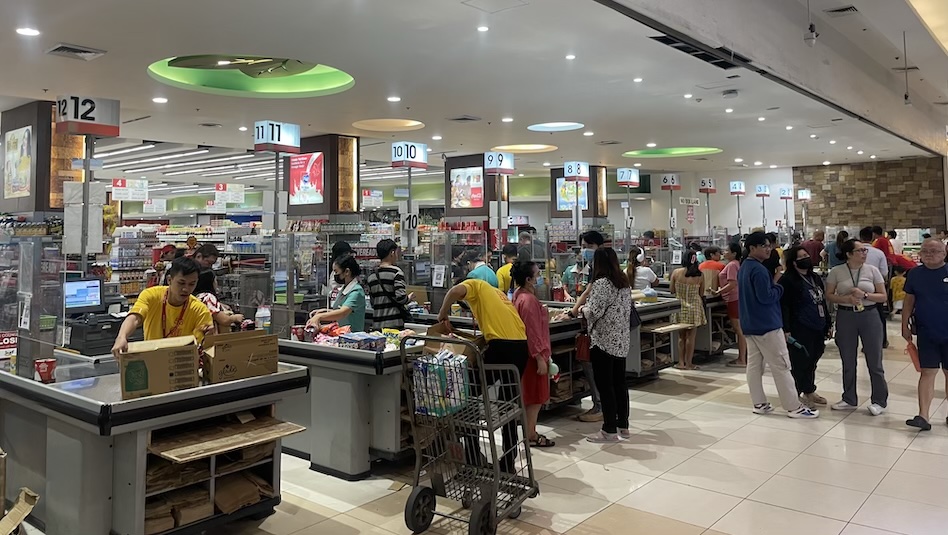
Checkout counters at the supermarket
Economic Updates
February Economic Update: Cut to the chase 
DOWNLOAD
gas-station-banner
Economic Updates
Inflation Update: Nowhere but up 
DOWNLOAD
View all Reports
Metrobank.com.ph How To Sign Up
Follow us on our platforms.

How may we help you?

TOP SEARCHES
  • Where to put my investments
  • Reports about the pandemic and economy
  • Metrobank
  • Webinars
  • Economy
TRENDING ARTICLES
  • Investing for Beginners: Following your PATH
  • On government debt thresholds: How much is too much?
  • Philippines Stock Market Outlook for 2022
  • Deficit spending remains unabated

Login

Access Exclusive Content
Login to Wealth Manager
Visit us at metrobank.com.ph How To Sign Up
Access Exclusive Content Login to Wealth Manager
Search
MODEL PORTFOLIO THE GIST
NEWS AND FEATURES
Global Philippines Fine Living
INSIGHTS
INVESTMENT STRATEGY
Economy Stocks Bonds Currencies
THE BASICS
Investment Tips Explainers Retirement
WEBINARS
2024 Mid-Year Economi Briefing, economic growth in the Philippines
2024 Mid-Year Economic Briefing: Navigating the Easing Cycle
June 21, 2024
Investing with Love
Investing with Love: A Mother’s Guide to Putting Money to Work
May 15, 2024
retirement-ss-3
Investor Series: An Introduction to Estate Planning
September 1, 2023
View All Webinars
DOWNLOADS
Man using his smartphone
Reports
Fed to cut just once 
March 19, 2026 DOWNLOAD
Checkout counters at the supermarket
Economic Updates
February Economic Update: Cut to the chase 
March 10, 2026 DOWNLOAD
gas-station-banner
Economic Updates
Inflation Update: Nowhere but up 
March 5, 2026 DOWNLOAD
View all Reports

Archives: Business World Article

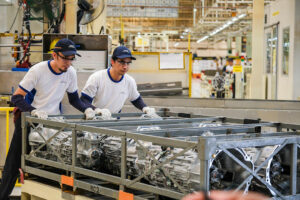
Philippine manufacturing growth hits 10-month high

Philippine manufacturing growth hits 10-month high

Manufacturing increased for a second straight month in May at its fastest pace in 10 months, driven by food products, the Philippine Statistics Authority (PSA) reported on Tuesday.

However, analysts said lingering uncertainty over US President Donald J. Trump’s planned reciprocal tariffs could dampen demand for locally made goods.

Manufacturing output, measured by the volume of production index (VoPI), climbed to 4.9% year on year in May, according to the preliminary results of the Monthly Integrated Survey of Selected Industries.

This was faster than 4.2% in the same month last year and 4.3% in April. It was also the quickest growth in 10 months or since 7.2% in July 2024.

Adjusting for seasonality factors, VoPI declined 2.9%, a steep fall from the 15% growth in the previous month.

The May VoPI reading brought average manufacturing output growth to 1.8% for the first five months, a tad faster than the 1.7% seen in the same period in 2024.

The PSA attributed the year-on-year acceleration in the VoPI to the faster manufacture of food products, which rose by 15.7% from April’s 11.2% and 3.1% in May last year. The food products index accounted for 18.7% of factory output.

This was followed by transport equipment, which recorded a 13.5% increase from 7.4% the month prior.

Average capacity utilization, or the extent to which industry resources are used in producing goods, averaged 76.9% in May. This was slightly higher than 76.7% in the previous month and 75.2% in May 2023.

“Manufacturing is slowly but surely growing. Hopefully, it will continue the trend,” Philippine Exporters Confederation, Inc. President Sergio R. Ortiz-Luis, Jr. said in a phone interview.

Reinielle Matt M. Erece, an economist at Oikonomia Advisory and Research, Inc., said strong domestic demand was the primary driver of manufacturing activity.

“Despite external factors and global trade tensions weighing down on exports, household demand continues to be strong and is one of the primary drivers of growth,” he said in an e-mail.

In May, the country’s trade deficit in goods further narrowed to a three-month low in May as exports grew while imports further declined. The trade deficit narrowed to USD 3.29 billion in May from the USD 4.73-billion gap in the same month last year, PSA data showed.

Exports grew for the fifth straight month in May by 15.1% to USD 7.29 billion. Meanwhile, imports fell for the second consecutive month in May by 4.4% to USD 10.58 billion.

Moving forward, Mr. Erece said Mr. Trump’s reciprocal tariffs could weigh on exports and factory activity.

“However, the country’s advantage of having relatively lower tariffs than other neighboring countries will be good for production,” he said. “In addition, if trade negotiations with the US become successful, these developments will further increase demand for produced goods by Philippine industries.”

Miguel Chanco, chief emerging Asia economist at Pantheon Macroeconomics, added that the delayed deadline for the Trump’s administration’s proposed higher tariffs is sparking renewed global trade uncertainty.

“[This] means that investments into new productive capacity are likely to remain mostly on the sidelines until the dust settles. Ultimately, this in turn means weaker output growth in the longer term,” Mr. Chanco said in an e-mail.

The Trump administration’s decision to extend a negotiating deadline for tariff rates is prolonging uncertainty and instability for countries, the executive director of the United Nations trade agency said on Tuesday, Reuters re-ported.

Mr. Trump on Monday ramped up his trade war, telling 14 nations, from powerhouse suppliers such as Japan and South Korea to minor trade players, that they now face sharply higher tariffs from a new deadline of Aug. 1 from July 9 previously.

Countries have been under pressure to conclude deals with the US after Mr. Trump unleashed a global trade war in April that roiled financial markets and sent policymakers scrambling to protect their economies.

The US has imposed a blanket 10% tariff rate on its trading partners as they negotiate the planned “reciprocal” levies, under which the Philippines could be slapped a 17% tariff, one of the lowest among Southeast Asian nations.

In comparison, the S&P Global Philippines Manufacturing Purchasing Managers’ Index (PMI) stood at 50.1 in May, dipping from 54.3 in April. A reading above 50 marks improvement for the manufacturing sector while anything below indicates deterioration.

The PMI is a leading indicator for future manufacturing activity, reflecting the raw materials ordered for future processing into manufactured goods. — Leigh Patrick Q. Batoon with Reuters
Bank lending expansion picks up to 11.3% — BSP

Bank lending expansion picks up to 11.3% — BSP

Bank lending growth picked up anew in May, driven by loans to businesses and consumers, the Bangko Sentral ng Pilipinas (BSP) said.

Preliminary BSP data released late on Monday showed that outstanding loans of universal and commercial banks increased by 11.3% year on year to PHP 13.37 trillion as of May from PHP 12.02 trillion in the same period in 2024.

This was faster than the 11.2% expansion in April. This comes as lending growth has slowed month on month since February.

“After adjusting for seasonal fluctuations, the outstanding loans increased by 0.9% in May compared with the previous month,” the BSP added.

Outstanding loans to residents rose by 11.8% year on year to PHP 13.05 trillion in May, a tad slower than the 11.9% growth posted in the previous month.

Meanwhile, loans to nonresidents declined by 6.6% year on year to PHP 323.83 billion that month following a 10% drop posted in April.

BSP data showed that outstanding loans to residents to fund business activities expanded by 10.2% to PHP 11.35 trillion in May, easing from the 10.3% growth a month prior.

“Loan growth eased slightly due to the slower expansion in lending to key industries such as: real estate activities (8.7%); wholesale and retail trade, and repair of motor vehicles and motorcycles (9.8%); and transportation and storage (14%),” the central bank said.

Loans for manufacturing activities fell by 3% year on year, it added.

Consumer loans to residents grew 23.7% to PHP 1.699 trillion in May, slowing from the 24% increase recorded a month prior.

These include credit card loans, which rose by 29.4%; motor vehicle loans, which went up by 18.2%; and salary-based general purpose consumption loans, which expanded by 8.7%.

“The BSP monitors bank loans because they are a key transmission channel of monetary policy. Looking ahead, the BSP will ensure that domestic liquidity and bank lending conditions remain aligned with its price and financial stability objectives,” the central bank said.

Rizal Commercial Banking Corp. Chief Economist Michael L. Ricafort said in a Viber message that the faster lending growth in May was likely a result of the lagged impact of the BSP’s rate cut cycle.

The Monetary Board has brought down benchmark interest rates by a cumulative 125 basis points (bps) since it started its easing cycle in August last year, with its latest move being a 25-bp reduction last month that brought the policy rate to 5.25%.

Money supply

Meanwhile, domestic liquidity (M3) grew 5.5% in May, slower than April’s 5.8% expansion.

M3 — which is considered the broadest measure of liquidity in an economy and include currencies in circulation, bank deposits, and other financial assets that are easily convertible to cash — increased to P18.35 trillion as of May from P17.4 trillion a year earlier.

Month on month, M3 inched up by 0.7% on a seasonally adjusted basis.

Central bank data showed that domestic claims grew by a slower 10.7% in May to PHP 20.88 trillion from 10.9% in April.

Claims on the private sector alone grew by 10.9% in May to PHP 13.43 trillion, easing from the revised 11.5% in the previous month.

This was “driven by the continued expansion in bank lending to nonfinancial private corporations and households,” the BSP said.

“Net claims on the central government increased by 9.1% from 9.3% (revised), driven by its higher borrowings,” it added.

Meanwhile, net foreign assets (NFA) in peso terms decreased by 4.6% in May from the 0.2% drop in April.

“The BSP’s NFA fell by 4.4% primarily due to the peso’s appreciation against the US dollar. Meanwhile, banks’ NFA declined largely on account of higher foreign currency-denominated bills payable,” the central bank said.

Mr. Ricafort said the slower money supply growth seen in May was likely partly due the BSP’s liquidity management efforts through its weekly auctions of term deposits and short-term securities, which are part of the tools it uses to better manage inflation and price expectations.

Still, these could have been offset by cuts to banks’ reserve requirement ratios, with the latest round implemented in April infusing some P300 billion in cash into the financial system. — Aaron Michael C. Sy

PSEi up on extended trade talks, rate cut bets

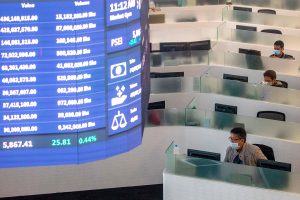
PSEi up on extended trade talks, rate cut bets

Local stocks rose for a second straight session on Tuesday, buoyed by extended talks between the US and trade partners including the Philippines, as well as expectations of a dovish policy stance from the Bangko Sentral ng Pilipinas (BSP).

The Philippine Stock Exchange Index (PSEi) added 0.13% or 8.36 points to close at 6,433.6. The broader all-share index rose 0.11% or 4.24 points to 3,784.17.

“The local market extended its rise as investors continued to cheer the extension of the US reciprocal tariff deadline to Aug. 1, giving the Philippines more time to strike a trade deal with the US,” Philstocks Financial, Inc. Research Manager Japhet Louis O. Tantiangco said in a Viber message.

On Monday, US President Donald J. Trump signed an executive order moving the effectivity of reciprocal tariffs to Aug. 1 from the original July 9 deadline.

Starting Aug. 1, the US will impose varying tariffs — 25% on Japan, South Korea, Tunisia, Malaysia and Kazakhstan; 30% on South Africa and Bosnia and Herzegovina; 32% on Indonesia; 35% on Serbia and Bangladesh; 36% on Cambodia and Thailand; and 40% on Laos and Myanmar.

Shares also rose as the market was lifted by expectations of another policy rate cut by the Philippine central bank.

“Local shares closed higher, lifted by dovish expectations on the Bangko Sentral ng Pilipinas’ policy stance following soft June inflation data,” said Luis A. Limlingan, head of sales at Regina Capital Development Corp.

June inflation accelerated slightly to 1.4% from 1.3% in May, but below 3.7% a year earlier.

The BSP has cut interest rates twice this year, with the policy rate now at 5.25% after the latest 25-basis-point reduction on June 19.

Sectoral performance was mixed. Services rose 0.77% to 2,130.23, while holding firms gained 0.65% to 5,638.9.

On the other hand, mining and oil slipped 0.43% to 9,199.7, financials dropped 0.35% to 2,265.98, property shed 0.26% to 2,422.64, and industrials edged down 0.01% to 9,116.95.

Universal Robina Corp. led index gainers with a 4.33% jump to P94. ACEN Corp. was the biggest decliner, falling 2.26% to PHP 2.60.

Trading value dropped to PHP 6.96 billion from PHP 7.8 billion on Monday. Winners beat losers 104 to 96, while 56 stocks were unchanged.

Net foreign selling stood at PHP 168.05 million, reversing the PHP 107.24 million net inflow on Monday. — Revin Mikhael D. Ochave

Marcos open to online gaming tax

Marcos open to online gaming tax

Philippine President Ferdinand R. Marcos, Jr. is open to taxing online gaming activities as well as proposals seeking to limit digital gambling to help curb the harms brought about by addiction, the Palace said on Monday.

“The DoF’s (Department of Finance) proposal to impose a tax to help restrict online gaming is for the welfare of Filipinos,” Palace Press Officer Clarissa A. Castro told reporters in Filipino during a news briefing. “The President is aware of the consequences of gambling addiction, and he will not oppose this proposal as long as it is supported by studies.”

“We want to limit this kind of gambling and those who are addicted to it. The President will not oppose proposals, including laws, that aim to do this… We will study any bills that will be passed by Congress to assess their impact on the economy and Filipinos’ welfare.”

Finance Secretary Ralph G. Recto last week said they will propose an online gaming tax and are also studying other policy options “to deter unimpeded and practically unrestricted access to gambling, particularly digital gambling platforms.”

These include imposing limits on playing time or cash-in to help prevent addiction, age restrictions, as well as displaying clear warnings about the risks of gambling, Mr. Recto said.

Ms. Castro said the government is also ramping up its crackdown on unlicensed and illegal online gaming sites.

Reinielle Matt M. Erece, an economist at Oikonomia Advisory and Research, Inc., said the DoF’s tax proposal is a “good way to increase government revenues.”

“The (online gambling) industry is growing quickly,” he said in a Viber message. “Whether it curbs gambling addiction is hard to answer, as it requires proper intervention and programs to promote responsible gaming.”

He added that an online gaming tax can serve as a barrier for new players while helping the government fund its programs.

Several lawmakers have filed bills seeking to curb online gambling amid its rising popularity among Filipinos.

On Monday, Senator Juan Miguel F. Zubiri said that he is seeking an outright ban on online gambling platforms, calling the rise of gambling addiction a “silent epidemic,” especially among the youth.

“The taxes earned are not worth the social cost. The lives of our countrymen are being ruined, families are fighting, crime is rising, and they are drowning in debt,” Mr. Zubiri said, adding that foregone revenues from the outright ban may reach P47 billion annually.

Senate Bill No. 142, or the Anti-Online Gambling Bill, seeks to ban online gambling on mobile gadgets. Internet service providers are also mandated to limit public access to online gambling platforms and applications.

It also seeks to prohibit electronic wallets and other digital payment systems from being used on online gaming platforms.

The Akbayan party-list also filed a bill in the House of Representatives that seeks to regulate online gaming sites.

“We cannot gamble away our youth’s future. Our children cannot become collateral in the jackpot dreams of gambling tycoons,” Party-list Rep. Jose Manuel “Chel” I. Diokno said in a statement.

House Bill No. 1351, or the Kontra E-Sugal bill, seeks to impose regulations for online gambling platforms, citing the need to safeguard public welfare, protect vulnerable groups, and ensure responsible gambling practices.

The bill wants to impose strict age verification protocols to prevent minors from accessing these platforms and limit advertising and promotion of digital gaming. It also seeks to impose a betting and loss limit.

Gross gaming revenue (GGR) rose by 27.44% to PHP 104.12 billion in the first quarter, the Philippine Amusement and Gaming Corp. earlier said, with electronic gaming out-earning physical casinos for the first time. Electronic businesses generated PHP 51.39 billion or 49.36% of GGR in the period. — Chloe Mari A. Hufana and Adrian H. Halili, Reporters

Digital payments post steady increase

Digital payments post steady increase

Digital payments in the Philippines posted steady growth last year, making up almost 60% of both the volume and value of total monthly retail transactions, the Bangko Sentral ng Pilipinas (BSP) reported on Monday.

The BSP’s 2024 Status of Digital Payments in the Philippines report released on Monday showed that the share of online payments in monthly retail transactions stood at 57.4% in terms of volume and 59% in value terms in 2024.

These are up from 52.8% and 55.3%, respectively, in 2023. The BSP said in its report that these were also higher than the 2024 target of 52-54% for digital payments set under the Philippine Development Plan 2023-2028.

Digital payments account for 57.4% of transaction volume in 2024

“This steady year-on-year growth reinforces the momentum built after surpassing the 2023 digitalization target of 50% for volume,” the central bank said.

“These figures reflect the continued shift toward digital channels and the growing trust of Filipinos in using digital financial services,” BSP Governor Eli M. Remolona, Jr. said in a message in the report.

“Beyond these headline figure lies our deeper challenge to ensure that digital payments are not just adopt but be integrated into the daily lives of every Filipino. We envision a future where digital becomes the default, not only because it is mandated but because the end users see real value in its convenience, security and the feeling of empowerment,” BSP Deputy Governor for the Payments and Currency Management Sector Mamerto E. Tangonan said in his own message.

Last year, the volume of digital payments was at 3.307 billion, higher than the 2.45 billion in non-digital transactions.

Meanwhile, the value of online transactions stood at USD 135.95 billion, more than the USD 94.54 billion in non-digital payments.

“Consistent with the previous year, merchant payments, person-to-person (P2P) transfers, and business-to-business (B2B) supplier payments remained key contributors to growth in digital payments,” the BSP said, with these three use cases collectively accounting for 93.2% of the total volume of digital transactions, equivalent to 3.082 billion transactions.

Merchant payments made up 66.4% or 2.196 billion of the monthly digital payment volume, up 29.1% year on year. In terms of value, merchant payments were at USD 28.8 billion.

P2P transfers comprised 20.6% of the total with 680.5 million digital transactions (worth USD 47.8 billion), rising by 34.7% from the prior year, which the central bank said was driven by broader access to transaction accounts.

Lastly, B2B or supplier payments had a 6.2% share with 205 million transactions (valued at USD 28.6 billion), up 28.1% year on year. The BSP said this reflects the impact of its digitalization initiatives in the business sector.

“The growing adoption of these contributors is evident through the increasing use of QR Ph P2M, InstaPay, and PESONet. More BSP-supervised institutions are joining QR Ph P2M, making it easier for Filipinos to pay by simply scanning or uploading QR codes at merchants nationwide,” the central bank said, noting that the number of merchants accepting QR Ph grew by 148.7% year on year in 2024.

“InstaPay also saw significant growth, with a 67.8% rise in transaction volume and 46.3% in value from 2023 to 2024, highlighting its popularity for fast, low-value P2P transfers. Meanwhile, the expansion of PESONet transactions, supported by the addition of a third daily settlement cycle in July 2024, has further boosted digital supplier payments, enhancing the efficiency of business transactions,” the BSP added.

Rizal Commercial Banking Corp. Chief Economist Michael L. Ricafort said in a Viber message that the increased use of e-wallets as consumers prefer more convenient payment options has also helped drive the rise in online transactions.

Share of digital payments rises to 59% in 2024

“E-wallets have also been integrated with online banking apps, further reducing the need to have cash or coins,” he said. “Furthermore, this also reflects the continued growth and increased adaptation of online business transactions, as well as increased use of delivery services, TNVS (transportation network vehicle service), and other online solutions that also make digital transactions more convenient.”

“The pandemic-induced shift in consumer behavior also had a lasting effect, with more Filipinos now preferring the convenience and safety of cashless transactions,” Philippine Institute for Development Studies Senior Research Fellow John Paolo R. Rivera added said in a Viber message.

Mr. Rivera said expanded merchant adoption of digital payment platforms and strong public-private collaboration through initiatives like QR Ph and the BSP’s Paleng-QR Ph program has propelled the growth of online transactions in the Philippines.

“This year, digital payments will likely continue to grow, fueled by the rollout of the National ID, expansion of digital infrastructure in rural areas, and stronger trust in fintech (financial technology) platforms. Continued BSP initiatives under the Digital Payments Transformation Roadmap will also play a key role in pushing usage toward the 70% target for retail transactions,” he said.

Mr. Ricafort added that digital transactions will likely continue to grow as financial literacy improves and amid rising incomes and savings.

“The BSP continues to pursue its vision of harnessing technology and finance not only to connect markets but also to ensure that every Filipino becomes part of the formal financial system,” Mr. Remolona said.

“In this light, we aim to foster an environment that empowers our regulated entities and fintech partners to leverage innovation in designing financial products that are not only accessible but also more responsive to the needs of consumers.”

Mr. Tangonan said the BSP will continue to support initiatives to advance innovation in the digital payments space while reinforcing safeguards against risks. “Ultimately, we want to ensure that progress does not come at the cost of consumer protection or systemic stability.”

These initiatives include Project Nexus, through which the Philippines, with India, Malaysia, Singapore and Thailand are working to establish a multilateral network to link their payment systems for cross-border transactions.

“We likewise aspire for a national retail payment system where one account is sufficient to meet all payment needs of a person in a secure and convenient manner, as supported by the full interoperability across BSP-supervised institutions’ platforms. This is more than just infrastructure; it is a blueprint of digital finance that is unified, intuitive, and centered around diverse payments needs,” Mr. Tangonan said.

The BSP is also pursuing policy initiatives related to designated payment system operators, clearing switch operations, and “reasonable” electronic fund transfer fees to make digital payments more affordable, accessible and attractive for consumers.

“The objective is to empower more users to participate in the digital economy, enhance financial inclusion, and drive economic growth,” the central bank said.

The BSP is targeting to achieve a 60-70% share of digital payments over total retail payments volume by 2028, in line with the Philippine Development Plan. — Aaron Michael C. Sy

Philippine-Korea deal to boost investments, trade

Philippine-Korea deal to boost investments, trade

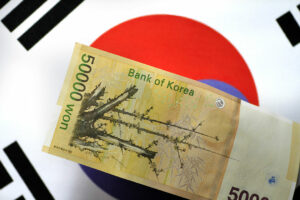
The Philippines’ free trade agreement (FTA) with South Korea is expected to continue encouraging Korean companies to make investments here and help bilateral trade rebound despite a challenging global environment, according to the Embassy of the Republic of Korea in the Philippines.

“Despite current fluctuations in Korea-Philippines trade, driven by geopolitical uncertainties and a downturn in global demand, the FTA is expected to significantly mitigate downward pressures,” Korean Embassy Commercial Attaché Taehyung Kim told BusinessWorld.

Philippine exports to South Korea declined by 20.1% year on year to USD 1.29 billion in the first five months of the year, data from the Philippine Statistics Authority showed.

Mr. Kim said he expects the FTA to help bilateral trade between the two countries recover once the global environment improves.

“With geopolitical uncertainties easing and global demand rebounding, we anticipate that the growth in Philippine exports to Korea, coupled with increased Korean investment, will positively impact trade between our two countries,” he said.

“In this evolving landscape, the Korea-Philippines FTA will play a crucial role by providing institutional stability for the mutually beneficial growth of both nations.”

Mr. Kim added that he has observed “a notable upward trend in investments from Korean companies into the Philippines.”

Citing data from the Philippine Economic Zone Authority (PEZA), he said, “Korea is the number one and most significant investor country for the first half of this year.”

“This surge in Korean investment is largely attributed to the Korea-Philippines FTA coming into effect, coupled with the Philippine government’s strong commitment to improving the investment climate,” said Mr. Kim.

In particular, he said that the government’s initiatives like the Corporate Recovery and Tax Incentives for Enterprises to Maximize Opportunities for Reinvigorating the Economy Act and the Luzon Economic Corridor have helped spur interest.

In the first semester, the PEZA approved 133 projects worth P72.36 billion, of which 14.87% came from South Korea.

PEZA Director-General Tereso O. Panga also said that increasing Korean investments can be partly attributed to the FTA.

“This agreement is anchored on expanding trade through enhanced market access, fostering robust economic cooperation, and attracting investments — particularly in key sectors such as critical minerals and supply-chain development,” Mr. Panga said in a Viber message.

“The Philippines stands to benefit from this FTA, which opens more opportunities for investors, increased market access, FDI (foreign direct investment) inflows, higher value-added production, and export diversification combined with deeper economic cooperation and innovation partnership,” he added.

Mr. Kim said the Philippines’ workforce, strategic location, and dynamic economy have helped attract Korean firms.

“Already, many Korean companies in sectors like semiconductors, auto parts, and apparel are achieving mutually beneficial growth here in the Philippines. Notably, last year also saw significant new investments from a Korean company in the shipbuilding sector,” he said.

“We expect Korean companies to continue bolstering reciprocal economic cooperation by contributing to the creation of quality jobs, revitalizing local economies, and advancing industrial structures within the Philippines.” — Justine Irish P. Tabile, Reporter

PSEi rises to 6,400 on rate cut bets, delayed tariffs

PSEi rises to 6,400 on rate cut bets, delayed tariffs

Philippine stocks advanced on Monday as investor sentiment was lifted by expectations of further local interest rate cuts and after the US delayed the implementation of its planned reciprocal tariffs to Aug. 1.

The bellwether Philippine Stock Exchange Index (PSEi) rose 0.46% or 29.67 points to 6,425.24, while the broader all-share index added 0.4% or 15.22 points to 3,779.93.

“The local market closed higher, backed by dovish expectations on the Bangko Sentral ng Pilipinas’ (BSP) policy outlook following June’s weak inflation print,” Philstocks Financial Inc. Research Manager Japhet Louis O. Tantiangco said in a Viber message.

“Investors also digested the US decision to move the reciprocal tariff implementation to Aug. 1 for those who have not struck a trade deal with the country yet,” he added.

On Friday, Finance Secretary Ralph G. Recto said lower-than-expected June inflation gives the central bank more room to continue its policy easing.

Inflation rose to 1.4% in June from 1.3% in May but slowed from 3.7% a year earlier.

Last month, the BSP delivered a second straight 25-basis-point cut, bringing the policy rate to 5.25%.

US President Donald J. Trump on Sunday said the higher tariff rates would take effect on Aug. 1 as the US was nearing several trade pacts.

Mr. Trump imposed a 10% baseline tariff on all US imports effective April 1 to “level the playing field” by automatically applying tariffs equal to what US exports face abroad. On April 9, tariff rates were adjusted to 11–50% for 57 countries. On April 10, it hiked China’s tariff to 125% after retaliation.

“Philippine shares closed slightly above the 6,420 level, ahead of upcoming employment and industrial data to be released today,” Luis A. Limlingan, head of sales at Regina Capital Development Corp., said in a Viber message.

Most of the market’s sectoral indices closed higher. Financials gained 0.87% or 19.82 points to 2,274.12, while services increased 0.79% or 16.67 points to 2,113.88.

Property went up 0.74% or 17.84 points to 2,429.03, while industrials climbed 0.46% or 42.29 points to 9,118.44.

On the other hand, mining and oil dropped 2.31% or 219.30 points to 9,239.67, while holding firms slipped 0.006% or 0.31 point to 5,601.96.

Puregold Price Club, Inc. was the top index gainer, climbing 3.27% to PHP 36.30, while Globe Telecom, Inc. was at the bottom, falling 3.87% to PHP 1,639, Mr. Tantiangco said.

Value turnover rose to PHP 7.8 billion with 911.7 million shares traded from PHP 6.62 billion covering 1.12 billion issues exchanged on Friday.

Losers beat winners 100 to 96, while 66 stocks were unchanged. Net foreign buying retreated to PHP 107.24 million from PHP 295.82 million on Friday. — Revin Mikhael D. Ochave

Benign inflation gives BSP room to cut

Benign inflation gives BSP room to cut

Below target June inflation gives the Bangko Sentral ng Pilipinas (BSP) room to continue its easing cycle this year, but unexpected price shocks and the US Federal Reserve’s rate path could affect this outlook.

Finance Secretary and Monetary Board member Ralph G. Recto said in a statement on Friday that the lower-than-expected June inflation print “provides more room for the BSP to further cut policy interest rates to help us further boost the spending power of Filipinos, drive in more investments, and grow the economy, especially amid rising global uncertainties.”

“With the outlook for inflation remaining favorable and recent guidance from the BSP leaning dovish, another rate cut in the coming months is possible,” Bank of the Philippine Islands Lead Economist Emilio S. Neri, Jr. said in a note.

Inflation picked up to 1.4% in June from 1.3% in May, the Philippine Statistics Authority reported on Friday.

Still, this was slower than the 3.7% clip in June last year and was within the central bank’s 1.1% to 1.9% forecast for the month. This was also just below the 1.5% median estimate in a BusinessWorld poll of 17 analysts.

June marked the fourth straight month that inflation settled below the BSP’s 2-4% annual target.

For the first six months, headline inflation averaged 1.8%, slightly higher than the central bank’s baseline forecast of 1.6%.

BSP Governor Eli M. Remolona, Jr. said on Thursday that the central bank has room for two more rate cuts this year amid moderating inflation and weak economic growth.

The Monetary Board on June 19 delivered a second straight 25-basis-point (bp) cut to bring the policy rate to 5.25%. It has now lowered benchmark interest rates by a cumulative 125 bps since it started its easing cycle in August last year.

Its remaining policy meetings this year are scheduled for Aug. 28, Oct. 9, and Dec. 11.   

Mr. Neri said the consumer price index is expected to stay below 2% in July and August amid easing rice prices.

Rice inflation contracted for the sixth straight month to 14.3% in June, the biggest drop since 1995. National Statistician Claire Dennis S. Mapa earlier said he expects rice prices will likely be negative until the end of the year.

“However, favorable base effects may start to fade by September, with inflation likely to return to 3% by November. This outlook excludes any supply shocks from the upcoming typhoon season. Inflation could be higher if a strong typhoon hits the agriculture sector,” Mr. Neri said.

Ten to 14 tropical cyclones are expected to enter the Philippine area of responsibility this year, according to the Philippine Atmospheric, Geophysical and Astronomical Services Administration.

Mr. Neri said the “biggest risk” to the further monetary easing by the BSP is uncertainty over the US Federal Reserve’s own rate cut cycle.

“It is still uncertain whether the Federal Reserve will cut rates this year, and US inflation data in the next two months will be crucial in determining the likelihood of a Fed cut in September,” he said.

“There’s a risk that tariffs have not been fully passed on to consumers as many US companies imported heavily before April to cushion the impact. If inflation in the US picks up, the Fed may delay the rate cuts, which could weaken the peso and limit the BSP’s room to maneuver.”

President Donald J. Trump has demanded immediate rate cuts, but Fed officials have said that with inflation risks rising there is no need to ease policy unless the job market begins to weaken in a significant way, Reuters reported.

New inflation data will be released in about two weeks, and Fed Chair Jerome H. Powell has said that if inflation does rise due to tariffs, it will likely begin happening this summer.

The Fed last month left its benchmark overnight interest rate in the 4.25%-4.5% range, where it has been since December. The decision has drawn fury from Mr. Trump, who feels that recent weak inflation means the central bank should be sharply reducing its policy rate. He has asked Mr. Powell to resign.

Mr. Powell, who has said he intends to serve out a term as chair that ends on May 15, on Tuesday last week reiterated the central bank’s plans to “wait and learn more” about how much tariffs push up on inflation before lowering rates again.

Rate futures show traders are back on board with that vision, with financial market bets pointing to a September start to rate cuts and a total of just two quarter-point reductions by yearend, not the three rate cuts that they had earlier favored.

Pantheon Macroeconomics Chief Emerging Asia Economist Miguel Chanco said they expect two more 25-bp cuts from the BSP before the year ends.

“Our 1.8% full-year average forecast for this remains appropriate, with risks tilted to the downside, and we expect to see this average rate rising to a still-modest 2.6% next year, comfortably within the BSP’s 2-to-4% target range,” he said in note.

For its part, Citigroup, Inc. said inflation is expected to remain below the central bank’s target until the first quarter of 2026 amid slowing external and domestic demand.

It said it expects the Monetary Board to deliver 25-bp cuts at its August and October reviews. It also sees another 25-bp reduction at the policy-setting body’s first meeting in 2026, which will likely be held in February.

Citigroup sees headline inflation averaging 1.7% this year.

“Our forecasted trajectory reflects easing year-on-year disinflation in food on rice prices, largely as base effects kick in from the second half of 2025, even as prices rise sequentially,” it said.

“We also expect steady or slightly higher inflation in services such as recreation and education. This, however, could be offset by increased disinflation from utilities and fuel prices, especially after the recent pullback in oil prices. Risks may be tilted to the downside, especially if food inflation continues to fall sequentially.”

Mr. Neri likewise said that inflation will stay manageable as long as Brent crude’s price stays below $85 per barrel.

“The recent ceasefire in the Middle East has led to a decline in oil prices, easing the impact on inflation,” he said. — Aubrey Rose A. Inosante with Reuters

Gov’t debt service bill climbs in May — BTr

Gov’t debt service bill climbs in May — BTr

The national government’s (NG) debt service bill climbed in May as it ramped up both principal and interest payments, data from the Bureau of the Treasury (BTr) showed.

Debt payments went up by 16.04% to PHP 80.05 billion in May from PHP 68.98 billion in the same month last year, latest Treasury data showed.

Month on month, however, the government’s debt service bill slumped by 71.5% from PHP 280.9 billion in April.

The bulk or 87.39% of debt payments in May was made up of interest payments, BTr data showed.

Interest payments stood at PHP 69.95 billion that month, rising by 14.5% from the PHP 61.1 billion recorded in the same month in 2024.

Broken down, interest paid for domestic debt went up by 13.54% to PHP 52.31 billion in May from PHP 46.07 billion in the same month last year.

Of this total, PHP 32.82 billion went to paying interest for fixed-rate Treasury bonds (T-bonds), PHP 16.87 billion for retail Treasury bonds (RTBs), and PHP 2.62 billion for Treasury bills (T-bills).

Meanwhile, interest payments for foreign borrowings increased by 17.42% to PHP 17.64 billion in May from PHP 15.03 billion a year prior.

On the other hand, amortization payments jumped by 28.04% year on year to PHP 10.09 billion in May from PHP 7.88 billion.

This came even as the government did not make any principal payments for domestic debt in May compared to the PHP 85 billion it spent in the same month a year ago.

Meanwhile, amortization paid on foreign debt increased by 29.43% to PHP 10.09 billion from PHP 7.8 billion in the same month in 2024.

“NG debt servicing increased year on year for the month of May 2025 partly due to higher matured government securities versus a year ago,” Michael L. Ricafort, chief economist at Rizal Commercial Banking Corp., said in a Viber message.

He added that still-elevated rates likely contributed to the higher interest payments that month.

“The maturity of T-bills, which saw high demand in the previous months, were the primary drivers for this month’s debt payments,” Reinielle Matt M. Erece, an economist at Oikonomia Advisory and Research, Inc., added.

The government has seen strong demand for its T-bill offerings in recent months as lingering uncertainty and global market volatility has caused investors to prefer short-term debt instruments.

First five months

Meanwhile, from January to May, the NG debt service bill stood at PHP 702.97 billion, slumping 42.22% from PHP 1.22 trillion in the same period last year.

Amortization payments stood at PHP 345.57 billion in the first five months, a 61.39% decline from PHP 895.13 billion in the comparable year-ago period.

This made up 50.84% of the five-month tally.

Broken down, principal payments on domestic debt sharply dropped by 77.43% to PHP 170.4 billion in the period from PHP 754.86 billion a year earlier.

In contrast, amortization for foreign borrowings climbed by 24.88% year on year to PHP 175.16 billion in the January-to-May period from PHP 140.27 billion.

Meanwhile, the government’s interest payments rose by 11.14% to PHP 357.4 billion in the period from PHP 321.59 billion a year ago.

Interest payments on domestic went down by 12.95% to PHP 261.34 billion in the first five months from PHP 231.38 billion previously. This was composed of PHP 178.94 billion in interest payments for fixed-rate T-bonds, PHP 60.08 billion for RTBs, PHP 18.7 billion for T-bills, and PHP 3.63 billion for other instruments.

Meanwhile, interest paid for external debt went up by 6.48% year on year to PHP 96.06 billion in the first five months from PHP 90.21 billion.

Mr. Ricafort said principal payments could increase in the coming months amid large maturities of T-bonds and RTBs, especially in August and September.

Still, the Bangko Sentral ng Pilipinas’ cumulative cuts since August 2024 worth 125 basis points and the relative strength of the peso against a struggling dollar could help reduce debt servicing costs, he said.

“We may continue to see higher debt payments as Philippine securities are becoming more attractive driven by better macroeconomic conditions and better credit rating, as well as government efforts to reduce the country’s debt,” Mr. Erece added.

For this year, the government’s debt service program is set at PHP 2.051 trillion, consisting of PHP 1.203 trillion in principal payments and P848.031 billion in interest payments, based on the 2025 Budget of Expenditures and Sources of Financing.

The NG debt stock hit a fresh high of PHP 16.92 trillion as of end-May. It is projected to hit PHP 17.35 trillion by yearend. — Aubrey Rose A. Inosante

Philippine exports seen uncompetitive after US-Vietnam deal

Philippine exports seen uncompetitive after US-Vietnam deal

Exports from the Philippines will have difficulty competing if the US restores its 17% reciprocal tariff rate, particularly after Vietnam was granted a favorable trade deal last week, the Foreign Buyers Association of the Philippines (FOBAP) said.

FOBAP President Robert M. Young said Vietnam struck a deal with the US that lowered its tariff to 20% from the 46% originally announced in early April.

“Presuming we have the 17% tariff … the latest Vietnam-US deal will definitely hinder our chances of competing in a price war,” Mr. Young said via Viber.

“To start with, even prior to Trump’s reciprocal tariff, Vietnam had a 10-15% lower free on board selling price compared to the Philippines,” he added.

He said Vietnam’s pricing advantage is due to its 50% lower wages and modern infrastructure.

“Realistically, there’s no contest between us. However, as FOBAP has been advocating, we, with the government, must seriously exert all efforts to improve in order to remain on the radar of the foreign buyers,” he added.

However, he said if the Philippines retains its current 10% tariff, “it may give some elbow room, but it will still not be easy to beat Vietnam prices.”

“The best scenario, in our opinion, is the relocation of the Vietnamese and other countries’ manufacturers to Philippine soil,” he added.

Last week, US President Donald J. Trump announced that he will impose a “lower-than-promised” 20% tariff on Vietnamese goods.

Under the US-Vietnam deal, transshipped goods through Vietnam will be subject to a 40% tariff, Reuters reported.

Philippine Institute for Development Studies Emeritus Research Fellow Rafaelita M. Aldaba said Vietnam’s new tariff structure “is a significant reduction from the earlier tariff rate of 46% announced in April, reducing Vietnam’s trade exposure risk.”

“However, the full implications of this deal will remain uncertain until the detailed provisions are finalized,” she said via Viber.

“For the Philippines, this development underscores the need for a strategic response. As Vietnam intensifies efforts to upgrade its industrial base and shift toward higher-value exports such as semiconductors, the Philippines must act decisively,” she added.

She said the Philippines must invest in critical infrastructure, negotiate market access, and address sector-specific constraints.

“Strengthening our competitive position in priority industries is crucial to ensuring that the country can capitalize on emerging opportunities in the rapidly evolving global supply chain landscape,” she added.

Philippine Chamber of Commerce and Industry (PCCI) President Enunina V. Mangio cited the need “to revisit our supply chain, technology, and our processes. Because if we can automate to improve our processes and reduce our costs, probably that would minimize the impact of all these things.”

Speaking to reporters on Friday, she added: “All our economic managers are working very hard in addressing the impact of tariffs and the increase of prices. As a matter of fact, right now, I think they are trying to negotiate for a free trade agreement with the US to lessen the impact of the tariff increase.”

“Let us wait and see for the final rate that will be implemented and imposed on us. And if that happens, I think the business sector will be ready. We just have to make our operations very efficient to at least reduce our costs,” she added.

She said the PCCI is also hoping for a review of the cost of logistics, charges, and taxes as another way to mitigate the impact of the tariff.

US tariffs on most trading partners are subject to a 90-day pause since the reciprocal tariffs were first announced in early April. Pending the completion of talks with various trade delegations, the US is charging most imports 10%. — Justine Irish D. Tabile, Reporter

Posts navigation

Older posts
Newer posts

Recent Posts

  • Only one rate cut for the US Fed in 2026 
  • Metrobank US-Iran Risk Index: Faster inflation expected
  • Investment Ideas: March 19, 2026
  • Investment Ideas: March 18, 2026 
  • Metrobank US-Iran Risk Index: Mounting tensions

Recent Comments

No comments to show.

Archives

  • March 2026
  • February 2026
  • January 2026
  • December 2025
  • November 2025
  • October 2025
  • September 2025
  • August 2025
  • July 2025
  • June 2025
  • May 2025
  • April 2025
  • March 2025
  • February 2025
  • January 2025
  • December 2024
  • November 2024
  • October 2024
  • September 2024
  • August 2024
  • July 2024
  • June 2024
  • May 2024
  • April 2024
  • March 2024
  • February 2024
  • January 2024
  • December 2023
  • November 2023
  • October 2023
  • September 2023
  • August 2023
  • July 2023
  • June 2023
  • May 2023
  • April 2023
  • March 2023
  • February 2023
  • January 2023
  • December 2022
  • November 2022
  • October 2022
  • September 2022
  • August 2022
  • July 2022
  • June 2022
  • May 2022
  • March 2022
  • December 2021
  • October 2021

Categories

  • Bonds
  • BusinessWorld
  • Currencies
  • Economy
  • Equities
  • Estate Planning
  • Explainer
  • Featured Insight
  • Fine Living
  • How To
  • Investment Tips
  • Markets
  • Portfolio Picks
  • Rates & Bonds
  • Retirement
  • Reuters
  • Spotlight
  • Stocks
  • Uncategorized

You are leaving Metrobank Wealth Insights

Please be aware that the external site policies may differ from our website Terms And Conditions and Privacy Policy. The next site will be opened in a new browser window or tab.

Cancel Proceed
Get in Touch

For inquiries, please call our Metrobank Contact Center at (02) 88-700-700 (domestic toll-free 1-800-1888-5775) or send an e-mail to customercare@metrobank.com.ph

Metrobank is regulated by the Bangko Sentral ng Pilipinas
Website: https://www.bsp.gov.ph

Quick Links
The Gist Webinars Wealth Manager Explainers
Markets
Currencies Rates & Bonds Equities Economy
Wealth
Investment Tips Fine Living Retirement
Portfolio Picks
Bonds Stocks
Others
Contact Us Privacy Notice Terms of Use
© 2026 Metrobank. All rights reserved.

Access this content:

If you are an existing investor, log in first to your Metrobank Wealth Manager account. ​

If you wish to start your wealth journey with us, click the “How To Sign Up” button. ​

Login HOW TO SIGN UP