



MODEL PORTFOLIO
THE GIST
NEWS AND FEATURES
Global Philippines Fine Living
INSIGHTS
INVESTMENT STRATEGY
Economy Stocks Bonds Currencies
THE BASICS
Investment Tips Explainers Retirement
WEBINARS
2024 Mid-Year Economi Briefing, economic growth in the Philippines
2024 Mid-Year Economic Briefing: Navigating the Easing Cycle
June 21, 2024
Investing with Love
Investing with Love: A Mother’s Guide to Putting Money to Work
May 15, 2024
retirement-ss-3
Investor Series: An Introduction to Estate Planning
September 1, 2023
View All Webinars
DOWNLOADS
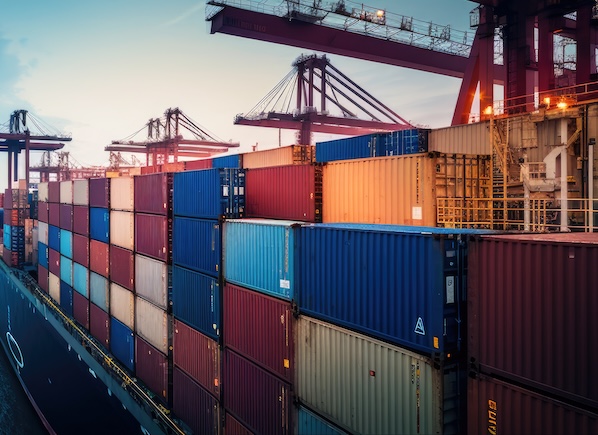
Container ship carrying container boxes import export dock with quay crane. Business commercial trade global cargo freight shipping logistic and transportation worldwide oversea concept. Generative AI
Economic Updates
Philippines Trade Update: Wider deficit on strong imports
DOWNLOAD
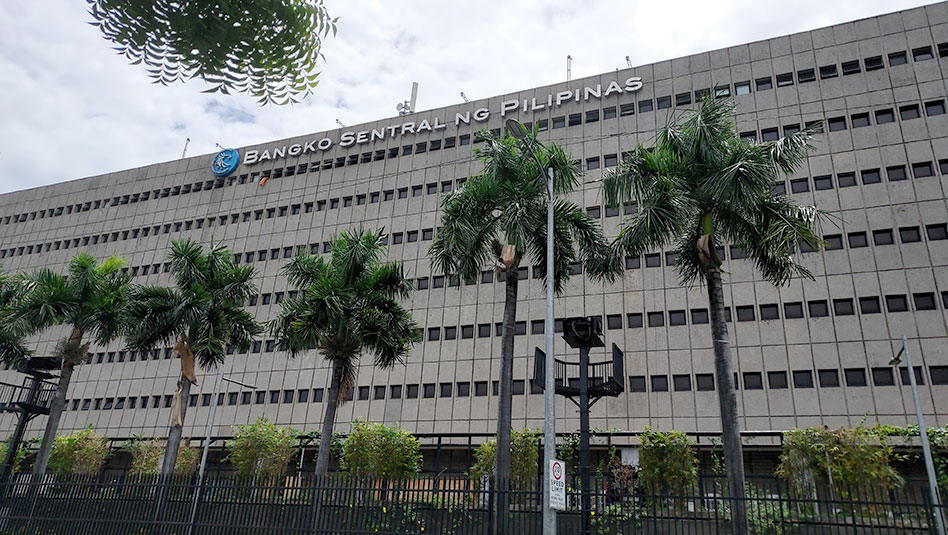
Frick collection with palm trees 
Economic Updates
Policy Rate Updates: Policy rate updates to reassure 
DOWNLOAD
Man using his smartphone
Reports
Fed to cut just once 
DOWNLOAD
View all Reports
Metrobank.com.ph How To Sign Up
Follow us on our platforms.

How may we help you?

TOP SEARCHES
  • Where to put my investments
  • Reports about the pandemic and economy
  • Metrobank
  • Webinars
  • Economy
TRENDING ARTICLES
  • Investing for Beginners: Following your PATH
  • On government debt thresholds: How much is too much?
  • Philippines Stock Market Outlook for 2022
  • Deficit spending remains unabated

Login

Access Exclusive Content
Login to Wealth Manager
Visit us at metrobank.com.ph How To Sign Up
Access Exclusive Content Login to Wealth Manager
Search
MODEL PORTFOLIO THE GIST
NEWS AND FEATURES
Global Philippines Fine Living
INSIGHTS
INVESTMENT STRATEGY
Economy Stocks Bonds Currencies
THE BASICS
Investment Tips Explainers Retirement
WEBINARS
2024 Mid-Year Economi Briefing, economic growth in the Philippines
2024 Mid-Year Economic Briefing: Navigating the Easing Cycle
June 21, 2024
Investing with Love
Investing with Love: A Mother’s Guide to Putting Money to Work
May 15, 2024
retirement-ss-3
Investor Series: An Introduction to Estate Planning
September 1, 2023
View All Webinars
DOWNLOADS
Container ship carrying container boxes import export dock with quay crane. Business commercial trade global cargo freight shipping logistic and transportation worldwide oversea concept. Generative AI
Economic Updates
Philippines Trade Update: Wider deficit on strong imports
March 27, 2026 DOWNLOAD
Frick collection with palm trees 
Economic Updates
Policy Rate Updates: Policy rate updates to reassure 
March 26, 2026 DOWNLOAD
Man using his smartphone
Reports
Fed to cut just once 
March 19, 2026 DOWNLOAD
View all Reports

Archives: Business World Article

Airfares to soar in April as fuel surcharges more than double

Airfares to soar in April as fuel surcharges more than double

Airfares are set to surge in April, after the Civil Aeronautics Board (CAB) raised the passenger fuel surcharge to Level 8 for the first half of April, the highest level in two years.

In an advisory on Tuesday, the CAB said it will implement a Level 8 fuel surcharge for flight tickets booked from April 1 to 15, up from Level 4 this month.

This is the highest level imposed by the CAB since the Level 6 in August 2024. However, the peak surcharge was recorded at Level 12 in August 2022.

At Level 8, airlines are allowed to impose a fuel surcharge ranging from PHP 253 to PHP 787 for domestic flights, significantly higher than the PHP 117 to PHP 342 fuel surcharge under the current Level 4.

For international flights from the Philippines, the Level 8 fuel surcharge may range from PHP 835.05 to PHP 6,208.98, more than doubling from PHP 385.70 to PHP 2,867.82 under Level 4.

Fuel surcharges are variable fees collected by the airline on top of the base fare to offset the volatility of jet fuel costs. It is adjusted based on movements in jet fuel prices using the Mean of Platts Singapore benchmark.

For airlines collecting the surcharge in foreign currency, the applicable conversion rate is PHP 58.11 to the dollar, CAB said.

President Ferdinand R. Marcos, Jr. on Monday evening announced that CAB has shortened its one-month review of the fuel surcharge to just 15 days to allow the regulator to quickly adjust rates if jet fuel prices change.

This is the first time that CAB is implementing a 15-day price monitoring and implementation cycle for the imposition of fuel surcharge for domestic and international flights.

“The shorter cycle of 15-days during this extraordinary period of high volatility in fuel prices shall allow faster response to market changes, reducing the lag between actual fuel costs and applicable fuel surcharge,” CAB said in an advisory.

It said that the move will help cushion the impact of volatile fuel prices and rising costs.

“The more gradual and incremental implementation of fuel surcharge to be collected from passengers can be a way of softening the impact of higher fuel surcharge increases, and enable faster reduction when fuel prices decline,” CAB said.

CAB said it will announce the next applicable level of fuel surcharge at least three days before its effectivity. This interim measure will remain in place until global oil prices stabilize, it added.

According to monitoring by the International Air Transport Association, jet fuel prices climbed 11.2% week on week to USD 175 per barrel as of March 13. On a yearly basis, jet fuel prices surged by 94.4%, data from the airline trade association showed.

“We acknowledge the recent announcement by the CAB setting the interim fuel surcharge to Level 8. We understand that any increase in travel costs may affect passengers,” AirAsia Philippines said in a statement.

The low-cost carrier said it will continue to implement operational efficiency measures to help offset the impact of rising costs on travelers. BusinessWorld also sought comments from Philippine Airlines and Cebu Pacific but has yet to receive a response by the deadline.

Mr. Marcos also earlier directed the Civil Aviation Authority of the Philippines to reduce passenger service charge, or the terminal fee, landing and take-off fees and other airport-related fees as the ongoing war between US-Israel and Iran continues to drive up global oil prices.

Meanwhile, Clark International Airport operator LIPAD Corp. said it may trim its passenger forecast for the year if the war in the Middle East continues.

LIPAD Chief Executive Officer Noel F. Manankil told reporters that it is expecting a 15% increase in its total passenger volume for 2026 to 3.1 million mainly driven by the transfer of turboprops from Ninoy Aquino International Airport.

“We are hopeful the mix would be 50:50 (international and domestic). Last year, I think we closed 60:40 in favor of international passengers,” Mr. Manankil said.

Since the conflict ensued, which led to cancellation of flights to Middle East, he said LIPAD is expecting a reduction of 20,000 passengers a month, or about 120,000 passengers in six months.

LIPAD logged a total of 2.75 million passengers in 2025, 15% higher than the 2.40 million in 2024. — A. E.O. Jose

Peso rebounds as oil prices ease on Strait of Hormuz transit signs

Peso rebounds as oil prices ease on Strait of Hormuz transit signs

The Philippine peso snapped a two-day slide on Tuesday as oil prices eased following reports that some vessels had begun passing through the Strait of Hormuz, tempering inflation concerns.

It closed at PHP 59.80 a dollar, strengthening by seven centavos from its record low of PHP 59.87 on Monday, according to Bankers Association of the Philippines data posted on its website.

It opened slightly firmer at PHP 59.777 and traded from PHP 59.65 to PHP 59.88 during the session. Dollar turnover rose to USD 1.88 billion from USD 1.81 billion a day earlier.

“The dollar-peso closed lower from its all-time high amid improving risk-off sentiment after oil prices corrected, dragging the dollar,” a trader said by phone.

The rebound came as crude prices pulled back after earlier gains driven by supply fears linked to the Middle East conflict.

The partial resumption of ship movements through the Strait of Hormuz — a critical global oil chokepoint — helped ease concerns over prolonged supply disruptions.

“The peso recovered from record lows on optimism that some ships are already able to pass through the Strait of Hormuz,” another trader said in an e-mailed reply to questions.

Still, broader market sentiment remained fragile. The dollar index, which tracks the US currency against six peers, stood at 100.05, up 0.19% and about 2.5% higher since the escalation of the US-Iran war in late February, according to a Reuters report.

Fighting between the two sides has shown little sign of easing, with the conflict entering its third week and continuing to threaten energy supply routes.

Efforts to fully reopen the Strait have so far fallen short, keeping oil markets volatile and inflation risks elevated.

Traders expect the peso to remain sensitive to developments in the conflict.

The currency is expected to move from PHP 59.60 to PHP 60 a dollar on Wednesday, with another trader projecting a narrower range of PHP 59.65 to PHP 59.90. — A.M.C. Sy

PSEi rises on bargain-hunting, Wall Street cues

PSEi rises on bargain-hunting, Wall Street cues

Philippine shares rebounded on Tuesday as investors picked up beaten-down stocks after three straight days of losses, taking cues from gains on Wall Street.

The benchmark Philippine Stock Exchange Index rose 0.32% or 19.46 points to close at 6,026.01, while the broader all-share index gained 0.24% or 8.06 points to 3,349.75.

“The local market bounced back as investors hunted for bargains following three straight days of decline,” Japhet Louis O. Tantiangco, research manager at Philstocks Financial, Inc., said in a Viber message.

He added that investors tracked Wall Street’s overnight advance, although trading remained subdued.

“Many investors stayed on the sidelines amid lingering uncertainties related to the conflict in the Middle East,” he added.

Luis A. Limlingan, head of sales at Regina Capital Development Corp., said sentiment improved as global markets rose and oil prices showed signs of easing, but caution persisted.

“The market remained cautious amid hints of a possible rate hike, with investors staying selective in buying,” he said.

US stocks climbed sharply on Monday, driven by gains in artificial intelligence-related shares, providing a positive lead for regional markets.

Most sectoral indexes in Manila closed higher. Services led the gains, climbing 1.03% to 2,750.51, followed by holding firms, which rose 0.54% to 4,654.33. Industrials added 0.22% to 8,676.22, while mining and oil edged up 0.18% to 17,171.37.

On the other hand, property stocks declined 0.86% to 1,981.25, while financials slipped 0.08% to 1,921.39.

Among index members, JG Summit Holdings, Inc. was the top gainer, rising 3.59% to PHP 26. DigiPlus Interactive Corp. was the biggest loser, falling 3.89% to PHP 17.30.

Market breadth was negative, with losers beating winners 95 to 92, while 53 stocks were unchanged.

Turnover thinned to PHP 7.44 billion from PHP 9.53 billion in the previous session, with 1.06 billion shares traded. Net foreign selling widened to PHP 563.22 million from PHP 400.15 million a day earlier. — A.G.C. Magno

DoE: Diesel may hit PHP 115 per liter

DoE: Diesel may hit PHP 115 per liter

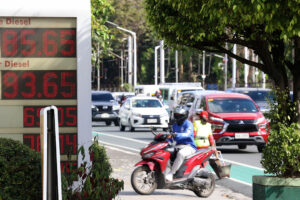
Diesel prices could reach up to PHP 115 per liter this week at gasoline stations within Metro Manila and nearby areas as a fresh wave of big-time price increases is set to be implemented amid the Middle East conflict.

Energy Secretary Sharon S. Garin confirmed that diesel costs could go beyond PHP 100 per liter this week.

“It’s possible. Actually, our estimate is that it could reach PHP 115,” she told reporters in a mix of Filipino and English.

Starting Tuesday, March 17, gasoline prices will increase by PHP 12.90 to PHP 16.60 per liter, diesel by PHP 20.40 to PHP 23.90 per liter, and kerosene by PHP 6.90 to PHP 8.90 per liter.

Based on the monitoring of the Department of Energy (DoE), gasoline prices may go as high as PHP 91.60 per liter while diesel may surge to PHP 114.90 per liter. Kerosene prices may jump to PHP 143.79 per liter.

Some oil companies, including Shell Pilipinas Corp., Petron Corp., Total (Philippines) Corp., Seaoil Philippines, Inc., Flying V, and Jetti Petroleum, Inc., have agreed to stagger the implementation of the increase in two to three tranches within the week.

The latest price adjustments mark the 12th consecutive weekly increase for diesel and kerosene prices, and 10th straight week for gasoline.

“Today, we set a record. We have two of the highest jumps in oil prices. And (fuel prices) are also at the most expensive,” Ms. Garin said.

Local pump prices remain elevated amid the ongoing US-Israel war with Iran, which led to the closure of the Strait of Hormuz, a chokepoint for one-fifth of the world’s oil.

As a net importer of crude oil, the Philippines is vulnerable to global crude price swings.

Around 98% of the country’s crude imports are sourced from the Middle East. The remaining 2% is imported from Brunei and Malaysia.

Adequate supply

Ms. Garin assured that the Philippines has enough supply that could last until end of April.

“The most important (thing) for today is that we have supply. There is no need to cause panic among our people,” she said.

Ms. Garin said that the government is negotiating for additional supply of fuel from other countries, including South Korea, Thailand, Singapore, and Japan.

The DoE has also tapped state-run Philippine National Oil Co. to search for alternative suppliers for stockpile.

Meanwhile, Ms. Garin said the country’s remaining oil refiner, Petron, is negotiating with Russia for supply of crude oil as the US eased sanctions on the latter.

“We’re waiting for that on what is the progress and talks on procuring from Russia, but we have already done the work,” she said.

Ms. Garin said she is in favor of revisiting the oil deregulation law, but to a certain extent.

“I do believe this system is only effective during good times. If prices are favorable for everyone, then things are fine. But in bad times, it does not work very effectively,” she said.

Enacted in 1998, the law allows oil companies to set and adjust pump prices based on global oil prices and other market factors, instead of awaiting government approval.

“In times like this, there has to be a certain control. Not because we want to limit profit or competition that is there, but we want also to protect the interest of the public,” Ms. Garin said.

The Energy chief also assured the country has a stable supply of electricity, but the consumption should be managed.

In a statement on Monday, consumer group ILAW Pilipinas urged the government to implement immediate measures that could help cushion consumers from price shocks, including the suspension or reduction of local taxes and tariffs on fuel and electricity.

“A potential increase in electricity prices shows how quickly international conflicts can translate into higher costs for households and small businesses,” said ILAW Pilipinas Youth Convenor Francine Pradez. — Sheldeen Joy Talavera, Reporter

Cash remittances jump by 3.5% in January

Cash remittances jump by 3.5% in January

Money sent home by Filipinos abroad climbed by 3.5% year on year in January as a weak peso boosted foreign exchange gains, preliminary Bangko Sentral ng Pilipinas (BSP) data showed.

Cash remittances, or money coursed through banks from overseas Filipino workers (OFWs), rose to USD 3.02 billion in the first month of the year from USD 2.918 billion logged in January 2025.

However, the 3.5% growth was the slowest annual growth seen in three months or since 3% in October last year.

Month on month, cash remittances slid by 14.3% from the record-high USD 3.522 billion in December.

“The United States remained the top source of cash remittances to the Philippines in January 2026, followed by Singapore and Saudi Arabia,” the BSP said in a statement on Monday.

Filipinos in the United States sent most money home with 40.2% of the total, followed by Singapore (7.6%), Saudi Arabia (6.7%), Japan (5.8%), the United Kingdom (4.6%), the United Arab Emirates (3.7%), Canada (3%), Taiwan (2.9%), Qatar (2.8%) and Hong Kong (2.5%).

Cash remittances from land-based workers grew by 3.5% to USD 2.413 billion in January from USD 2.331 billion in the same month in 2025.

On the other hand, remittances from sea-based migrant workers rose by 3.5% to USD 607.777 million from USD 587.024 million last year.

Personal remittances likewise went up by an annual 3.5% to USD 3.358 billion in January from USD 3.243 billion a year ago. These include both cash coursed through banks and informal channels and in-kind remittances.

“The year‑on‑year increase reflects steady overseas employment conditions and sustained income flows from key host countries such as the United States, Singapore, and Saudi Arabia, which continue to anchor remittance growth,” Union Bank of the Philippines Chief Economist Ruben Carlo O. Asuncion said via Viber.

Mr. Asuncion noted that the month-on-month decline is not worrisome as remittance inflows usually normalize in January following the holiday-driven surge in December.

“Remittances typically peak during the holidays due to year‑end bonuses and one‑off transfers, then normalize in January, so this pullback is expected and not a cause for concern,” Mr. Asuncion said.

Meanwhile, Jonathan L. Ravelas, a senior adviser at Reyes Tacandong & Co., attributed the annual rise in remittances to the weaker peso and robust overseas employment, allowing Filipinos abroad to earn well.

“The pullback from December is largely seasonal after the holiday surge, but the key point is remittances are still higher than a year ago, showing OFWs’ income remains resilient,” he said in a Viber message. “A weaker peso and steady overseas employment continue to support flows.”

In January, the peso traded between PHP 58 and PHP 59 to the dollar, averaging PHP 59.1622 versus the greenback during the month, according to BSP data.

In the coming months, the peso’s performance and geopolitical developments will determine the flow of remittances into the country, Mr. Asuncion noted.

“Remittance flows in the coming months will depend on labor market conditions in major host economies, exchange rate movements, and broader global growth and geopolitical developments that may affect hiring and wages for overseas Filipinos,” he said.

The peso has depreciated amid the escalating war in the Middle East, with the market anticipating a potential plunge to the PHP 60-per-dollar level this week as the greenback continues to strengthen.

On Monday, the local unit plunged to an all-time low of PHP 59.87 against the greenback, falling by 13.50 centavos from the previous record finish of PHP 59.735 logged on Friday, Bankers Association of the Philippines data showed.

For Mr. Ravelas, remittances growth will likely remain positive this year unless the Middle East war intensifies to threaten OFW jobs in the region or disrupt payment flows.

“Looking ahead, the Middle East conflict adds uncertainty and could cause month‑to‑month volatility, but unless it leads to widespread job losses or payment disruptions, full‑year remittance growth should stay positive,” he said.

“For households, the priority is to use remittances wisely — rebuild savings, reduce debt, and be cautious with spending given ongoing global risks,” he added.

The BSP projects cash remittances to climb by 3% to USD 36.6 billion by yearend. — Katherine K. Chan, Reporter

House approves bill allowing Marcos to suspend or cut excise tax on fuel

House approves bill allowing Marcos to suspend or cut excise tax on fuel

The House of Representatives on Monday passed on final reading a bill authorizing President Ferdinand R. Marcos, Jr. to suspend or cut excise tax collections on fuel products, a move that promises to give some relief to motorists reeling from surging pump prices.

During plenary session, 247 lawmakers voted in favor of House Bill No. 8418, which seeks to give the President the power to temporarily halt or reduce the excise tax rates on fuel during national and global emergencies for no more than six months.

Three were against the bill, which Mr. Marcos certified as urgent to hasten its passage through Congress.

“This measure is a direct response to the ongoing crisis in the Middle East, which has a direct impact on fuel prices and the cost of basic goods in the Philippines,” Majority Floor Leader and Ilocos Norte Rep. Ferdinand Alexander “Sandro” A. Marcos III said in a statement.

“We need to enact this into law to provide immediate relief to our people.”

The bill’s approval comes as the Iran war stretched into its third week with no end in sight, with Washington and Tehran showing no desire to strike a deal to end the conflict.

The Philippines imposes an excise tax of PHP 10 per liter on gasoline, PHP 6 per liter on diesel and PHP 5 per liter on kerosene under the 2017 Tax Reform for Acceleration and Inclusion law. It previously allowed the government to suspend the collection of excise tax on fuel when world oil prices reach USD 80 per barrel for three straight months, but that provision lapsed six years ago.

Under the bill, the President may now suspend or cut the collection of excise taxes on fuel if the average Dubai crude oil based on Mean of Platts Singapore benchmark reaches or exceeds USD 80 per barrel for a month.

But the Development Budget Coordination Committee must give a recommendation before the President can cut or suspend excise taxes on fuel, a key revenue stream for the government.

Any order suspending or reducing excise taxes due to emergencies or calamities must be certified by the Energy secretary, confirming that pump prices have surged “extraordinarily” as a result of the calamity, the bill said.

“The suspension may be applied to specific petroleum products and may be implemented either as a full suspension or partial reduction,” it said.

Under the bill, any suspension or cut in the fuel excise tax rate could be extended beyond six months through a joint congressional resolution, but cannot last longer than a year.

The bill also requires the President to submit to Congress within 15 days of issuing such an order a “factual basis” for halting or cutting the excise tax of petrol, including estimates of foregone revenue and the impact on inflation, fuel prices and economic activity, with monthly reports to follow.

Under the bill, the President may only suspend or reduce excise tax collections on fuel products until Dec. 31, 2028.

Jonathan L. Ravelas, a senior adviser at Reyes Tacandong & Co., said giving the President the power to suspend or cut the excise tax on fuel is not advisable.

“Cutting the excise tax means less revenue,” he said in a Viber message, recommending the government opt for a targeted subsidy program for the transport and food sectors instead to rein in surging prices. “A portion of excise tax collections helps pay for targeted aid.”

Department of Economy, Planning, and Development Secretary Arsenio M. Balisacan earlier said revenue losses from the suspension of excise taxes on petrol could reach PHP 43.3 billion if the suspension lasts three months, and PHP 106 billion if extended until September.

Biofuels bill

Meanwhile, the House also approved on second reading House Bill No. 8469, which seeks to temporarily suspend the mandatory blending of biofuel on gasoline and diesel to help ease soaring pump prices.

A measure certified as urgent by Mr. Marcos, the bill allows the president to suspend the use of locally sourced biofuels for up to a year if blended gasoline and diesel are at least 5% more expensive than pure fuels.

“The mandatory blending of locally sourced biofuels can lead to a situation where blended fuel becomes more expensive than pure gasoline or diesel, exacerbating the financial burden of the vulnerable,” Palawan Rep. Jose C. Alvarez, who sponsored the bill, told the House floor.

The 2006 biofuels law required all fuels for use in motor engines to be blended with plant-based renewable fuels, and since 2012 gasoline have been sold with a 10% bioethanol mix.

“The Biofuels Act was enacted to reduce the country’s reliance on imported fossil fuels, to support our local agriculture sector and to promote cleaner and more sustainable energy sources,” Mr. Alvarez said.

Noel M. Baga, co‑convener of the Center for Energy Research and Policy, said the government could adopt several measures to lower fuel costs, including declaring a state of calamity to allow the imposition of price ceilings.

“The government can address the ongoing oil crisis through both immediate and long-term measures,” he said in a Facebook Messenger chat. — Kenneth Christiane L. Basilio, Reporter

Peso dips to record as oil surges, fails to hit PHP 60 as BSP intervenes

Peso dips to record as oil surges, fails to hit PHP 60 as BSP intervenes

The Philippine peso slid to a record low against the dollar on Monday, closing at PHP 59.87, as rising oil prices and expectations of tighter US monetary policy weighed on the currency.

Intervention by the Bangko Sentral ng Pilipinas (BSP) prevented the peso from breaching the PHP 60-a-dollar mark.

Data from the Bankers Association of the Philippines showed the peso fell 13.5 centavos from Friday’s close of PHP 59.735, which was previously its record low. Year to date, the local currency has weakened by PHP 1.08 or 1.8% from PHP 58.79 at the end of 2025.

The peso opened Monday slightly stronger at PHP 59.71 a dollar, touching an intraday best of PHP 59.70 and low of PHP 59.95. Dollar turnover fell to USD 1.805 billion from USD 2.228 billion on Friday, reflecting cautious trading amid global uncertainty.

“The dollar-peso traded higher, peaking at PHP 59.95 on persistent demand for safe-haven assets due to the ongoing Middle East conflict and rising oil prices,” a trader said. “BSP intervention limited further dollar rallies.”

BSP Governor Eli M. Remolona, Jr. told Bloomberg News the central bank had intervened to defend the peso. “Since the dollar is down, I assume some intervention can push the peso back below PHP 60,” he said

The BSP has said it steps in only to prevent currency depreciation from becoming inflationary.

Market analysts cited multiple factors behind the peso’s weakness, including the escalating war in the Middle East, higher crude oil prices and reduced expectations for US monetary easing.

The peso was also pressured by reduced expectations of monetary easing by the US Federal Reserve because of the war, Michael L. Ricafort, chief economist at Rizal Commercial Banking Corp.

Traders anticipate continued volatility in the near term. One trader expects the peso to continue its slide on Tuesday to PHP 59.50 to PHP 59.95 a dollar.

Another foresees sideways trading as markets react to potential hawkish signals from the Federal Reserve, projecting a range of PHP 59.70 to PHP 59.95. Mr. Ricafort sees the peso trading at PHP 59.75 to PHP 59.95.

The peso’s decline highlights the sensitivity of the Philippine currency to global geopolitical shocks, energy prices, and shifts in US monetary policy. BSP intervention appears to have temporarily limited losses, but analysts say sustained support may be required if external pressures persist.

Investors are likely to remain cautious, particularly given the uncertainty in oil markets and the potential for further safe-haven flows toward the dollar, which could continue to pressure the peso in the coming sessions. — Aaron Michael C. Sy

Philippine stocks slide as peso hits record low

Philippine stocks slide as peso hits record low

Philippine shares fell for a third straight session on Monday as investors stayed cautious, with the peso sinking to a record low of PHP 59.87 against the dollar amid surging oil prices and the Middle East war.

The Philippine Stock Exchange index (PSEi) dropped 0.86% or 52.39 points to close at 6,006.55, while the broader all-share index fell 1.19% or 40.42 points to 3,341.69.

“The PSEi ended barely above the 6,000 mark, extending last week’s sell-off amid cautious sentiment, driven by elevated oil prices and the ongoing Middle East tensions,” Luis A. Limlingan, head of sales at Regina Capital Development Corp., said via Viber.

“The market remained pessimistic even after the central bank stepped in to support the peso, keeping traders defensive and wary of further downside if key support levels give way in the near term,” he added.

Investors are closely watching local economic implications of the Middle East war, including rising fuel and energy costs and a weaker peso, which could stoke inflation, Japhet Louis O. Tantiangco, research manager at Philstocks Financial, Inc., said in a Viber message.

Bangko Sentral ng Pilipinas (BSP) Governor Eli M. Remolona, Jr. said the central bank intervened in the foreign exchange market to prevent the peso from breaching PHP 60 a dollar.

Most sectoral indexes ended lower. Mining and oil dropped 4.58% to 17,140.16; industrials fell 2.57% to 8,656.64; property declined 1.29% to 1,998.51; holding firms slid 1.02% to 4,629.17; and financials eased 0.64% to 1,922.95. On the other hand, services gained 0.16% to 2,722.37.

Losers beat winners, 153 to 53, with 53 stocks unchanged. International Container Terminal Services, Inc. led gainers with a 1.46% rise, followed by DMCI Holdings, Inc. at 0.41%. DigiPlus Interactive Corp. was the worst performer, plunging 5.66% to PHP 18.

Value turnover fell to PHP 9.53 billion, with 3.29 billion shares traded, down from PHP 13.91 billion and 887.43 million shares last Friday.

Net foreign selling eased to PHP 400.15 million from PHP 3.66 billion in the previous session, suggesting some cautious inflows amid the broader market decline.

The combination of record peso depreciation and higher global energy costs continues to weigh on investor sentiment, leaving market participants defensive and selective in their trades. — Alexandria Grace C. Magno

Philippines’ current account gap narrows to USD 16.3B in 2025

Philippines’ current account gap narrows to USD 16.3B in 2025

Strong exports growth and remittance inflows led the Philippines’ current account deficit to narrow at end-2025, the Bangko Sentral ng Pilipinas (BSP) reported.

Central bank data showed that the country’s current account posted a USD 16.291-billion gap last year, 12.3% narrower than the USD 18.565-billion deficit seen in 2024.

This was equivalent to -3.3% of Philippine gross domestic product (GDP).

However, the year-end balance was wider than the BSP’s projected USD 15.5-billion deficit or -3.2% of GDP for the year.

In the fourth quarter alone, the country’s current account deficit narrowed by 49.5% to USD 2.471 billion (-1.8% of GDP) from USD 4.894 billion (-3.8% of GDP) in the same year-ago period.

“This was supported by an improved trade-in-goods balance on the back of robust export growth as well as higher income receipts from overseas Filipinos, consistent with record full-year cash remittances in 2025,” the BSP said in a statement released late on Friday.

Preliminary data from the Philippine Statistics Authority showed that the country’s trade gap stood at a four-year low of USD 49.17 billion last year, down 9.5% from the USD 54.33-billion deficit in 2024.

This came as goods exports grew by 15.2% to USD 84.41 billion, well above the BSP’s projected 9% growth to USD 60 billion.

In the October-to-December period, the country’s trade in goods balance posted a USD 16.1-billion deficit, narrowing by 14% from the USD 18.7-billion gap seen in the fourth quarter of 2024, “as export growth substantially outpaced the modest uptick in imports.”

Exports rose by 23.8% to USD 15.8 billion from USD 12.8 billion a year earlier due to increased shipments of electronic products, machinery and transport equipment, BSP data showed.

Meanwhile, goods imports stood at USD 31.9 billion, up 1.3% year on year from USD 31.5 billion.

“The uptick was driven primarily by higher outlays for telecommunication equipment and electrical machinery, consistent with ongoing upgrades in the country’s information and communications technology infrastructure,” the central bank said.

The central bank also noted that remittances boosted household consumption last year, which helped cushion the current account against external pressures.

In 2025, remittances from Filipinos abroad climbed by 3.3% year on year to hit a record high of USD 35.634 billion from USD 34.493 billion in 2024, according to separate BSP data.

“At the same time, the business process outsourcing (BPO) sector remained a reliable source of services export earnings, with sustained industry expansion and firm global demand for digital and outsourcing services helping offset softer receipts in other services segments during the year,” the BSP added.

Higher receipts from BPOs brought the net trade-in-services up by 2% to USD 4.1 billion in the fourth quarter from USD 4 billion a year ago.

On the other hand, net receipts in primary income plunged by an annual 46.5% to USD 765 million in the fourth quarter from USD 1.4 billion previously, while net receipts in the secondary income account were up 4.5% to USD 8.8 billion from USD 8.4 billion.

The current account measures the country’s trade in goods and services, as well as primary and secondary income.

Primary income refers to flows of labor and financial resources between resident and nonresident institutional units, while secondary income accounts for transfers between the country and abroad, such as remittances from overseas Filipino workers.

For 2026, the central bank expects the current account deficit to narrow to USD 15.3 billion or -3% of GDP. — Katherine K. Chan

NG debt service bill hits PHP 2.1T in 2025

NG debt service bill hits PHP 2.1T in 2025

The national government (NG) debt service payments jumped to PHP 2.1 trillion in 2025, surpassing the government’s own program which signals mounting fiscal pressures.

Data from the Bureau of the Treasury showed that NG’s debt repayments rose by 4.08% in 2025 from the PHP 2.02 trillion recorded in 2024. It also exceeded the PHP 2.05-trillion full-year program for debt payments by 2.6%.

Debt service refers to payments made by the NG on its domestic and foreign debt.

More than half, or the bulk, or 58.91% of total debt payments came from amortization payments.

Principal payments slipped by 1.46% to PHP 1.24 trillion in 2025 from PHP 1.26 trillion in the previous year. This was 3% higher than the PHP 1.2-trillion program for the year.

Amortization on domestic debt dipped by 0.26% annually to PHP 1.015 trillion in 2025 from PHP 1.018 trillion in 2024.

Principal payments on foreign debt went down by 6.53% to PHP 223.669 billion last year from PHP 239.293 billion in 2024.

On the other hand, interest payments went up by 13.2% to PHP 864.139 billion in 2025 from PHP 763.313 billion in 2024. It was 1.9% higher than the PHP 848.031-billion program for the full year.

Interest paid on domestic debt went up by 17.6% to PHP 634.846 billion in 2025 from PHP 539.829 billion in 2024.

Broken down, PHP 416.77 billion went to interest payments for fixed-rate Treasury bonds, PHP 162.74 billion for retail Treasury bonds, and PHP 44.97 billion for Treasury bills.

For external debt, interest payments went up by 2.6% to PHP 229.293 billion in 2025 from PHP 223.484 billion in the year prior.

December debt service

In December alone, debt repayments increased by 18.6% to PHP 78.642 billion from PHP 66.3 billion in the same month in 2024.

Month on month, debt repayments fell by 12.6% from PHP 89.97 billion in November.

Amortization payments surged by 80.4% to PHP 15.01 billion in December last year from PHP 8.32 billion in December 2024.

Amortization on domestic debt totaled PHP 6.25 billion in December. There were no payments made on domestic debt in December 2024.

Meanwhile, principal payments on foreign debt went up by 5.22% to PHP 8.754 billion in December from PHP 8.32 billion a year prior.

On the other hand, interest payments increased by 9.75% to PHP 63.63 billion in December from PHP 57.98 billion in the same month in 2024.

Interest paid on domestic debt increased by 11.59% to PHP 41.779 billion from PHP 37.44 billion in 2024.

Broken down, interest payments on retail Treasury bonds stood at PHP 19.18 billion, fixed-rate Treasury bonds at PHP 17.47 billion, and Treasury bills at PHP 3.76 billion.

Interest payments on external debt jumped by 6.41% year on year to PHP 21.86 billion in December from PHP 20.54 billion in 2024.

“The rise in debt service reflects more expensive borrowing from higher rates and heavier repayments,” Reyes Tacandong & Co. Senior Adviser Jonathan L. Ravelas said in a Viber message.

“In 2026, pressures should stay high but may stabilize if rates ease — so the priority is smart debt management: lock in better rates, extend maturities, and borrow only for growth‑driving projects,” he added.

Rizal Commercial Banking Corp. Chief Economist Michael L. Ricafort said the higher debt servicing reflects increased NG outstanding debt in recent years.

For the coming months, he said that the country can expect to make bigger debt payments.

“Geopolitical risks, especially in the Middle East since Feb. 28, which led to higher global crude oil prices, could lead to higher inflation and interest rates, which could lead to higher interest payments and debt servicing costs,” he said in a Viber message.

“A higher US dollar-peso exchange rate… would lead to a higher peso equivalent of foreign debts that, in turn, would lead to higher principal servicing costs of foreign debts,” he added. — Justine Irish D. Tabile, Senior Reporter

Posts navigation

Older posts
Newer posts

Recent Posts

  • Investment Ideas: April 1, 2026
  • Metrobank US-Iran Risk Index: Signals of an end
  • Eye on Earnings: Demand for connection supports telcos
  • Inflation Preview: March madness
  • Investment Ideas: March 31, 2026

Recent Comments

No comments to show.

Archives

  • April 2026
  • March 2026
  • February 2026
  • January 2026
  • December 2025
  • November 2025
  • October 2025
  • September 2025
  • August 2025
  • July 2025
  • June 2025
  • May 2025
  • April 2025
  • March 2025
  • February 2025
  • January 2025
  • December 2024
  • November 2024
  • October 2024
  • September 2024
  • August 2024
  • July 2024
  • June 2024
  • May 2024
  • April 2024
  • March 2024
  • February 2024
  • January 2024
  • December 2023
  • November 2023
  • October 2023
  • September 2023
  • August 2023
  • July 2023
  • June 2023
  • May 2023
  • April 2023
  • March 2023
  • February 2023
  • January 2023
  • December 2022
  • November 2022
  • October 2022
  • September 2022
  • August 2022
  • July 2022
  • June 2022
  • May 2022
  • March 2022
  • December 2021
  • October 2021

Categories

  • Bonds
  • BusinessWorld
  • Currencies
  • Economy
  • Equities
  • Estate Planning
  • Explainer
  • Featured Insight
  • Fine Living
  • How To
  • Investment Tips
  • Markets
  • Portfolio Picks
  • Rates & Bonds
  • Retirement
  • Reuters
  • Spotlight
  • Stocks
  • Uncategorized

You are leaving Metrobank Wealth Insights

Please be aware that the external site policies may differ from our website Terms And Conditions and Privacy Policy. The next site will be opened in a new browser window or tab.

Cancel Proceed
Get in Touch

For inquiries, please call our Metrobank Contact Center at (02) 88-700-700 (domestic toll-free 1-800-1888-5775) or send an e-mail to customercare@metrobank.com.ph

Metrobank is regulated by the Bangko Sentral ng Pilipinas
Website: https://www.bsp.gov.ph

Quick Links
The Gist Webinars Wealth Manager Explainers
Markets
Currencies Rates & Bonds Equities Economy
Wealth
Investment Tips Fine Living Retirement
Portfolio Picks
Bonds Stocks
Others
Contact Us Privacy Notice Terms of Use
© 2026 Metrobank. All rights reserved.

Access this content:

If you are an existing investor, log in first to your Metrobank Wealth Manager account. ​

If you wish to start your wealth journey with us, click the “How To Sign Up” button. ​

Login HOW TO SIGN UP