MODEL PORTFOLIO
THE GIST
NEWS AND FEATURES
Global Philippines Fine Living
INSIGHTS
INVESTMENT STRATEGY
Economy Stocks Bonds Currencies
THE BASICS
Investment Tips Explainers Retirement
WEBINARS
2024 Mid-Year Economi Briefing, economic growth in the Philippines
2024 Mid-Year Economic Briefing: Navigating the Easing Cycle
June 21, 2024
Investing with Love
Investing with Love: A Mother’s Guide to Putting Money to Work
May 15, 2024
retirement-ss-3
Investor Series: An Introduction to Estate Planning
September 1, 2023
View All Webinars
DOWNLOADS
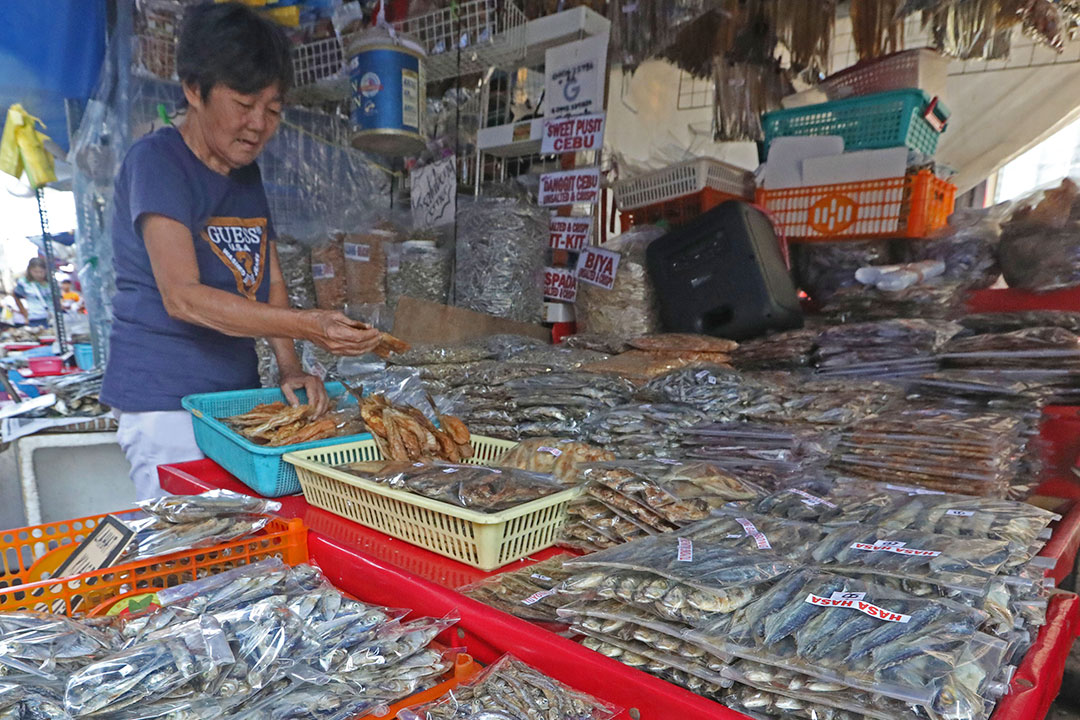
grocery-2-aa
Inflation Update: Target breached
DOWNLOAD
Container ship carrying container boxes import export dock with quay crane. Business commercial trade global cargo freight shipping logistic and transportation worldwide oversea concept. Generative AI
Economic Updates
Philippines Trade Update: Wider deficit on strong imports
DOWNLOAD
Frick collection with palm trees 
Economic Updates
Policy Rate Updates: Policy rate updates to reassure 
DOWNLOAD
View all Reports
Metrobank.com.ph How To Sign Up
Follow us on our platforms.

How may we help you?

TOP SEARCHES
  • Where to put my investments
  • Reports about the pandemic and economy
  • Metrobank
  • Webinars
  • Economy
TRENDING ARTICLES
  • Investing for Beginners: Following your PATH
  • On government debt thresholds: How much is too much?
  • Philippines Stock Market Outlook for 2022
  • Deficit spending remains unabated

Login

Access Exclusive Content
Login to Wealth Manager
Visit us at metrobank.com.ph How To Sign Up
Access Exclusive Content Login to Wealth Manager
Search
MODEL PORTFOLIO THE GIST
NEWS AND FEATURES
Global Philippines Fine Living
INSIGHTS
INVESTMENT STRATEGY
Economy Stocks Bonds Currencies
THE BASICS
Investment Tips Explainers Retirement
WEBINARS
2024 Mid-Year Economi Briefing, economic growth in the Philippines
2024 Mid-Year Economic Briefing: Navigating the Easing Cycle
June 21, 2024
Investing with Love
Investing with Love: A Mother’s Guide to Putting Money to Work
May 15, 2024
retirement-ss-3
Investor Series: An Introduction to Estate Planning
September 1, 2023
View All Webinars
DOWNLOADS
grocery-2-aa
Inflation Update: Target breached
April 7, 2026 DOWNLOAD
Container ship carrying container boxes import export dock with quay crane. Business commercial trade global cargo freight shipping logistic and transportation worldwide oversea concept. Generative AI
Economic Updates
Philippines Trade Update: Wider deficit on strong imports
March 27, 2026 DOWNLOAD
Frick collection with palm trees 
Economic Updates
Policy Rate Updates: Policy rate updates to reassure 
March 26, 2026 DOWNLOAD
View all Reports

Archives: Business World Article

Peso up after manufacturing, GIR data

Peso up after manufacturing, GIR data

The peso recovered against the dollar on Thursday on improved manufacturing data and as the Philippines’ gross international reserves (GIR) remained ample.

The local currency closed at PHP 56.79 versus the dollar on Thursday, strengthening by 15 centavos from Wednesday’s PHP 56.94 finish, data from the Bankers Association of the Philippines’ website showed.

The local unit opened Thursday’s session at PHP 56.85 per dollar. Its intraday best was at PHP 56.77, while its weakest showing was at PHP 56.97 against the greenback.

Dollars traded went up to USD 1.45 billion on Thursday from USD 1.36 billion recorded on Wednesday.

The peso strengthened against the dollar on Thursday on better manufacturing and “decent” GIR data, Rizal Commercial Banking Corp. Chief Economist Michael L. Ricafort said in a Viber message.

Preliminary results of the Monthly Integrated Survey of Selected Industries (MISSI) showed factory output, as measured by the volume of production index (VoPI), rose by 5.7% year on year in July. This was higher than the revised 3.4% in June and 3.6% in July last year.

July’s VoPI growth was the fastest in two months or since 7.1% in May.

On a monthly basis, July’s VoPI expanded by 3.8% from June’s revised 2.9% contraction. Adjusting for seasonality factors, manufacturing output increased by 3%, a turnaround from 2.1% decline in June.

Year to date, factory output averaged 5.2% in the first seven months of the year.

Meanwhile, the Philippines’ GIR stood at USD 99.8 billion as of end-August, slipping by 0.2% from the USD 100 billion as of end-July.

Still, the dollar reserves went up by 2.4% from the USD 97.44 billion as of end-August 2022.

Mr. Ricafort added that the BSP could have entered the market to prevent the peso from closing at the USD 57-per-dollar level.

For Thursday, the peso may range from PHP 56.70 to PHP 56.90 per dollar, he said.

Meanwhile, the US dollar was loitering close to its highest point since March against major peers, and touched a fresh 10-month top versus the Japanese yen, the traditional global funding currency where interest rates remain ultra-low, Reuters reported.

The dollar index — which measures the currency against six developed-market peers, including the yen and euro — ticked up 0.07% to 104.93. It jumped to the highest since March 15 on Wednesday at 105.03.

The dollar earlier reached its strongest level since Nov. 4 versus the yen at 147.875.

The currency pair tends to move in step with long-term Treasury yields, which stood at 4.29% on Thursday after pushing to their highest since Aug. 23 at 4.306% in the previous session.

The euro, meanwhile, dropped by 0.1% to USD 1.0716, following its dip to a three-month trough of $1.0703 on Wednesday.

Elsewhere, the People’s Bank of China continued its bid to shore up the yuan by again setting strong official midpoints for the currency.

Despite those efforts, the yuan continues to hover on the weaker side of the closely watched 7.3 per dollar level in offshore trading, last changing hands at 7.3332. It sank to the lowest since early November at 7.3490 in the middle of last month, undercut by a rapidly deteriorating property sector and the risk of spillover into broader markets.

The Australian dollar, which often trades as a proxy for China, its top trading partner, eased 0.26% to $0.6366, keeping it close to this week’s 10-month low. — AMCS with Reuters

PSEi drops to 6,100 level amid inflation concerns

PSEi drops to 6,100 level amid inflation concerns

The main index fell to the 6,100 level anew on Thursday due to inflation concerns and increased selling pressure.

The Philippine Stock Exchange index (PSEi) went down by 58.62 points or 0.93% to end at 6,183.07 on Thursday, while the broader all shares index dropped by 21.26 points or 0.63% to close at 3,346.99.

“Stocks declined due to mounting concerns related to inflationary pressures, with a particular focus on the vulnerability of the Philippines in the face of the prevailing global food situation,” AB Capital Securities, Inc. Vice-President Jovis L. Vistan said in a Viber message.

“The market took a breather after three days of gains, with selling pressure bringing the index back below 6,200. Data from Europe, China, and the US dampened sentiment,” China Bank Capital Corp. Managing Director Juan Paolo E. Colet said in a Viber message.

Philippine headline inflation accelerated to 5.3% in August from 4.7% in July.

Still, it settled within the Bangko Sentral ng Pilipinas’ (BSP) 4.8-5.6% forecast for the month.

For the first eight months, inflation averaged at 6.6%, still above the BSP’s 5.6% forecast and 2-4% target for the year.

“Additionally, the strength of the US dollar against Asian currencies has had a notable impact on the Philippine peso, exacerbating the country’s economic challenges,” Mr. Vistan said.

The dollar index — which measures the currency against six developed-market peers, including the yen and euro — ticked up 0.07% to 104.93, Reuters reported. It jumped to the highest since March 15 on Wednesday at 105.03.

The peso closed at PHP 56.76 per dollar on Thursday, rising by 15 centavos from its PHP 56.94 finish — a near nine-month low — on Wednesday.

“The stronger than expected ISM (Institute for Supply Management) services index for August, which reached 54.4, its highest since February 2023, signaled strong US economic activity and led some investors to scale back expectations of the path of the Federal Reserve’s interest rate cuts next year,” Mr. Colet added.

Most sectoral indices closed lower on Thursday. Holding firms declined by 88.57 points or 1.46% to 5,938.71; property fell by 28.16 points or 1.09% to 2,544.33; financials went down by 19.58 points or 1.07% to 1,800.42; mining and oil dropped by 54.21 points or 0.53% to 10,081.85; and industrials lost 18.03 points or 0.2% to end at 8,816.64.

Meanwhile, services rose by 6.56 points or 0.43% to 1,524.07.

Value turnover went up to PHP 3.85 billion on Thursday with 322.39 million shares changing hands from the PHP 3.84 billion with 459.94 million issues seen on Wednesday.

Decliners outnumbered advancers, 96 to 62, while 50 names closed unchanged.

Net foreign selling rose to PHP 720.31 million on Thursday from PHP 663.89 million on Wednesday.

For Friday, Mr. Vistan placed the PSEi’s support at 6,100 and resistance at 6,300. — SJT with Reuters

BSP picks technology for central bank digital currency pilot run

BSP picks technology for central bank digital currency pilot run

The Bangko Sentral ng Pilipinas (BSP) has designated Hyperledger Fabric as the distributed ledger technology for Project Agila, its wholesale Central Bank Digital Currency (CBDC) pilot project that was previously known as Project CBDCPh.

“With the goal of further enhancing the efficiency and safety of the national payment system, we will use learnings from the project as input for crafting BSP’s wholesale CBDC project roadmap,” BSP Governor Eli M. Remolona, Jr. said in a statement.

Hyperledger Fabric was chosen through a “rigorous” process that included system demonstrations, walkthrough procedures, and a scoring system, covering the systems’ access, security, 24/7 availability, interoperability, and programmability, the BSP said.

The technology will allow data and transactions to be recorded, shared, and synchronized across a distributed network of different participants.

“This would be a useful mechanism for testing Project Agila’s use-case scenario of enabling inter-institutional fund transfers even during off-business hours (i.e., evenings, weekends, and holidays) or when PhilPaSSplus is unavailable,” the central bank said.

There are six financial institutions participating in the pilot project: BDO Unibank, Inc., China Banking Corp., Land Bank of the Philippines, Rizal Commercial Banking Corp., Union Bank of the Philippines, and Maya Philippines, Inc.

Meanwhile, observing financial institutions for the succeeding stages are Citibank N. A. Manila, China Bank Savings, Wealth Development Bank Corp., and SeaBank Philippines, Inc.

Following the selection of the technology for Project Agila, participants will now test the use of wholesale CBDC technology alongside PhilPaSSplus in a sandbox environment.

Project Agila will allow the BSP and participating financial institutions to familiarize themselves with CBDC technology solutions, which could enhance the Philippines’ large-value payment system, the central bank said.

“By the end of Project Agila, the pilot participants are expected to have a clearer understanding of CBDC technology and assess the capability of wholesale CBDCs to foster advancements in the large-value payment system,” Mr. Remolona said.

“The results of the assessment are seen to guide the BSP and the industry on a possible launch of wholesale CBDCs in the Philippines,” he added.

The International Monetary Fund and the Bank for International Settlements Innovation Hub also collaborated with the BSP on the technical, risk management, and governance aspects of the pilot project.

CBDCs are issued as central bank liabilities. Since 2021, the BSP has been reviewing use cases for wholesale CBDCs, as well as the potential risks and use of CBDC payments among financial institutions.

The BSP earlier said it sees opportunities from CBDCs, such as being an additional option for monetary policy action, boosting competition and innovation among financial industry players, and improved financial inclusion. — K.B. Ta-asan

Economists hike inflation forecasts

Economists hike inflation forecasts

Faster-than-expected Philippine inflation rate in August has prompted several economists to raise their forecasts for this year and 2024.

Inflation unexpectedly accelerated for the first time in seven months in August, as food and transport costs rose. Headline inflation quickened to 5.3% in August from 4.7% in July, ending six months of decline.

Nomura Global Markets Research raised its Philippine inflation projection to 5.9% for this year from 5.3% previously. It also hiked its 2024 inflation forecast to 3.6% from 3.1%.

GlobalSource Partners also upwardly adjusted its inflation forecast to 5.8% for this year from 5.5% given in August.

Pantheon Macroeconomics hiked its inflation projection to 5.6% (from 5.4% previously) for 2023 and 2.8% (from 2.6%) for 2024.

Also, Citigroup, Inc. raised its inflation expectation for this year to 5.6% from 5.4% previously. It hiked its 2024 inflation forecast to 3.1% from 2.9% previously but kept its 3.3% projection for 2025.

The BSP currently sees inflation averaging at 5.6% for this year before easing to 3.2% for 2024.

Nomura Chief Association of Southeast Asian Nations (ASEAN) Economist Euben Paracuelles said in a note that risks to food inflation have materialized early.

In August, food inflation alone quickened to 8.2% from 6.3% in July amid a spike in rice and vegetable prices.

“We expect upward pressure on food prices to intensify in the coming months owing to the ongoing El Niño phenomenon and the lagged effects of rising international food prices, which are likely to be exacerbated by increased protectionism among food exporters,” he said.

The El Niño weather event is expected to strengthen towards the latter part of the year and persist until the first quarter of 2024.

Citi said inflation expectations have risen due to elevated food prices, but inflation should return to the BSP’s 2-4% target band by the fourth quarter.

Nomura also raised its core inflation forecast to 6.4% from 6.2% previously, amid likely spillovers from high food and fuel prices. However, it noted that second-round effects may be more limited due to weakening demand. 

Core inflation, which excludes volatile prices of food and fuel, eased to 6.1% in August, from 6.7% in July, but above 4.6% in the same month last year.

Nalin Chutchotitham, economist for the Philippines at Citigroup, Inc., said in a note on Wednesday that the country is still vulnerable to rice inflation.

Rice inflation accelerated to 8.7% in August from 4.2% in July, its sixth straight month of increase. It was also its fastest pace since the 9% print in November 2018 when the country experienced a shortage of rice.

Ms. Chutchotitham said recent typhoons and El Niño could impact rice supply in the second half and up until next year.

“The government said it will allow more imports to ensure adequate supply, but the private sector appears to be waiting for global prices to stabilize before securing more imports,” she added.

Rice price cap
Analysts said the recently imposed price cap on rice may help alleviate inflationary pressures.

“Government measures such as the price ceiling on rice and a possible reduction in import tariffs should help ease these pressures, but likely only temporarily owing to the lack of fiscal space,” Nomura’s Mr. Paracuelles said.

The government on Tuesday began implementing a price ceiling of PHP 41 per kilogram for regular milled rice and PHP 45 per kilogram for well-milled rice, as it sought to combat price manipulation and hoarding.

“The authorities are hoping to nip this renewed upward pressure in the bud… (rice) is a staple in the Philippines and, together with vegetables, was mainly to blame for the latest leap in prices,” Pantheon Chief Emerging Asia Economist Miguel Chanco said in a Sept. 6 report.

He noted that September inflation data would show if the price ceiling is effective in relieving upward pressures or if it will “inadvertently lead to widespread shortages.”

“Nevertheless, the longer-term outlook for food inflation appears benign, as it is yet to reflect fully the more subdued gains globally, which leads by roughly half a year. The action in food prices last month masked big crosscurrents in oil-sensitive components,” he added.

GlobalSource analyst Marie Christine Teng in a note on Sept. 5 said that the price ceiling will be able to arrest the rapid increase in prices.”

“However, forecasts suggest that rice stocks will still be tight even as the country heads into another El Niño weather disturbance later this year. Hence, prices may stay high, especially if import costs remain higher than the price caps,” she added.

Policy
Meanwhile, analysts said the BSP is unlikely to end its policy pause despite the quicker August inflation.

“In terms of monetary policy, we maintain our forecast that BSP will leave its policy rate unchanged at 6.25% over the next few months, although we see a rising risk of BSP resuming its hiking,” Mr. Paracuelles said.

The Monetary Board last month paused for a third straight meeting, keeping its key policy rate at a near-16 year high of 6.25%. From May 2022 to March 2023, the central bank hiked benchmark interest rates by 425 basis points (bps).

Pantheon Macroeconomics’ Mr. Chanco said that the recent inflation print is “unlikely to have a bearing on the BSP’s current pause.”

Citi’s Ms. Chutchotitham said that she does not expect further rate hikes from the BSP amid easing core inflation, weak second-quarter growth, and the government’s efforts to bring down rice prices.

“We continue to expect no change in the policy rate through early 2024. The BSP had cautioned about upside risks to inflation, but several factors would support the BSP’s continued pause,” she added.

Mr. Paracuelles said the central bank may be encouraged to resume its tightening cycle if core inflation stops declining.

“For now, despite the weakening growth outlook, BSP will likely maintain its hawkish rhetoric, underscoring that it remains vigilant against inflation risks and that it will continue to pledge its readiness to act if conditions warrant,” he added.

The Monetary Board is set to meet on September 21. — Keisha B. Ta-asan

Exports likely posted modest uptick in July

Exports likely posted modest uptick in July

Philippine exports likely posted a modest growth in July, despite sluggish global demand, according to economists and business groups.

Danilo C. Lachica, president of the Semiconductor and Electronics Industries in the Philippines Foundation, Inc. (SEIPI), said electronics exports are recovering but “maybe not at the same level as last year’s July year-to-date.”

In a text message, Mr. Lachica said electronics exports are still recovering from the 15% contraction in the first quarter.

ING Bank N.V. Manila Senior Economist Nicholas Antonio T. Mapa said there may have been modest gains in exports in July.

“However, global trade remains sluggish on soft demand and thus any gains may be limited,” Mr. Mapa said in a Viber message.

The Philippine Statistics Authority is scheduled to release international merchandise trade statistics for July on Friday (September 8).

The trade gap reached USD 27.96 billion in the first six months of 2023, narrower than the USD 29.84-billion deficit a year ago. This as exports declined by an annual 9.3% to USD 34.94 billion, while imports fell by 8% to USD 62.9 billion.

“Both exports and imports recently corrected higher in recent months. Exports are already up from near three-year lows a few months ago and recently among seven-month highs,” Rizal Commercial Banking Corp. Chief Economist Michael L. Ricafort said in a Viber message.

He noted the exports were earlier weighed by the risk of a recession in the United States.

The Development Budget Coordination Committee’s 2023 exports and imports growth assumptions are set at 1% and 2%, respectively.

Meanwhile, Confederation of Wearable Exporters of the Philippines Executive Director Maritess Jocson-Agoncillo said the decline in garments exports could continue for the rest of the year.

She noted all four sectors of the wearable industry — apparel, textile, travel goods, and footwear — contracted by 22% in the first semester.

“We have been seeing the trend since the start of the year where we are hitting a double-digit negative growth which is not very good. The market has slowed down and we even have major brands that have pulled out,” Ms. Jocson-Agoncillo said in a phone interview.

However, she said the industry is expected to start exporting this month the product lines for spring and summer 2024.

“But even if it picks up, (our industry’s) growth can only be a single-digit thing because we had a double-digit decline,” Ms. Jocson-Agoncillo said.

Meanwhile, Philippine Exporters Confederation, Inc. President Sergio R. Ortiz-Luis, Jr. said exports will likely be an improvement from last year’s figures.

“I think at the end of the year it will have an improvement even if it is coming at a high base and despite the many supply chain disruptions. It will surpass 2022 business level but not so much,” Mr. Ortiz-Luis said in a phone interview.

For 2022, exports rose by 5.6% to USD 78.84 billion from a year earlier, while imports grew by 17.3% to USD 137.16 billion. This brought the full-year trade balance to a record USD 58.32-billion deficit.

ING’s Mr. Mapa said exports may contract by yearend as demand fades.

The lower risk of a recession in the US may help support further recovery in exports, Mr. Ricafort said.

“The US dollar/peso (exchange rate) being among nine-month highs would help make Philippine exports cheaper or more price competitive from the point of view of international buyers, a factor that could help support further pickup in exports,” he said. — By Justine Irish D. Tabile, Reporter

Marcos secures USD22M in investment pledges from Indonesian companies

Marcos secures USD22M in investment pledges from Indonesian companies

Philippine President Ferdinand R. Marcos, Jr. secured USD 22 million (PHP 1.3 billion) in investment pledges from Indonesian companies in the animal health, artificial intelligence (AI) and digital sectors, according to the Presidential Palace.

Mr. Marcos met with top executives of Indonesian companies on the sidelines of the Association of Southeast Asian Nations (ASEAN) Summit in Jakarta.

In a statement, the Palace said PT Vaksindo Satwa Nusantara is planning to invest $2 million as it works with Univet Nutrition and Animal Healthcare Company Philippines (UNAHCO, Inc.) on veterinary vaccines. The company, known as Indonesia’s first animal vaccine maker, is expected to provide the Philippines with an avian influenza vaccine.

Mr. Marcos also met with executives of PT WIR Asia Tbk, described as the first metaverse company in Indonesia. WIR’s subsidiary PT Mata Nilai Republik is planning to invest $20 million in the Philippines in the next five years.

The President also met with executives of satellite company Pasifik Satelit Nusantara (PSN). PSN last year signed a memorandum of understanding (MOU) with WIT Philippines, Inc., which would involve the launch of a satellite by December that would help improve digital connectivity in the country.

Mr. Marcos’ business meetings were led by the Department of Trade and Industry (DTI) through the Philippine Trade and Investment Center-Jakarta.

“The meetings were a follow-up to the President’s state visit to Indonesia, aimed to forge strategic linkages and partnerships between the Philippines and Indonesia in key sectors, such as agriculture, specifically animal vaccine manufacturing, digital technology, and innovation,” the DTI said in a statement.

Separately, the Palace said the Philippine private sector had signed a deal with its Southeast Asian counterparts to improve ties in agriculture and small business development, as the region seeks to promote economic integration.

The memorandum of understanding signed by members of the ASEAN-Business Advisory Council (BAC) aims to jointly conduct studies and mentorship opportunities for potential agriculture, agriculture technology, food security, agri-preneurship business models and value chain development among small, medium, and large farmers, enterprises, and government entities.

The development of trade and investment opportunities in various agricultural commodities including rubber, rice, corn, fruits, vegetables, and other agricultural services is expected under the joint cooperation, the DTI said.

Separate MOUs were signed for each cooperation with Thailand, Brunei, Singapore, Laos, Cambodia, Vietnam, Myanmar, and Indonesia through their respective ASEAN-BAC representatives.

The Philippines was represented by ASEAN-BAC Philippines Chairman Jose Ma. Concepcion III, a member of Mr. Marcos’ Private Sector Advisory Council.

“All member states also agreed to jointly promote effective strategies in addressing climate change and ensure a sustainable agribusiness environment,” the Palace said.

Speaking at the ASEAN-BAC roundtable dialogue, Mr. Marcos said the Philippines seeks to deepen economic ties with ASEAN countries through the Regional Comprehensive Economic Partnership (RCEP).

“It is a catalyst that is seen to bring in even more collaboration amongst ASEAN member states,” he said. “We are positive that RCEP will further deepen economic integration and significantly contribute to the economic growth of the region.”

RCEP, which covers nearly a third of the global population and about 30% of its global gross domestic product, took effect locally on June 2. Participating countries include the members of ASEAN, Australia, China, Japan, New Zealand, and South Korea.

The trade deal is heavily supported by China, whose trade with member countries, according to a May 2022 analysis from China Briefing, accounted for 30.4% of Beijing’s total foreign trade value.

Critics of RCEP have already warned that the trade deal would only make the Philippines heavily reliant on imports from China and prevent the Southeast Asian nation from pursuing trade diversification. — K.A.T. Atienza

Term deposit yields drop as gov’t works to stem inflation

Term deposit yields drop as gov’t works to stem inflation

Yields on the Bangko Sentral ng Pilipinas’ (BSP) term deposits went down on Wednesday as the government implements measures to help lower prices after inflation picked up in August.

The central bank’s term deposit facility (TDF) fetched bids amounting to PHP 311.766 billion on Wednesday, above the PHP 260 billion on the auction block as well as PHP 279.725 billion seen a week ago for a PHP 280-billion offer.

Broken down, tenders for the seven-day papers reached PHP 167.276 billion, higher than the PHP 160 billion auctioned off by the central bank but lower than PHP 170.616 billion in bids seen the previous week.

Banks asked for yields ranging from 6.498% to 6.6%, lower than the 6.56% to 6.6% band seen a week ago. This caused the average rate of the one-week deposits to decline by 0.69 basis point (bp) to 6.5833% from 6.6359% previously.

Meanwhile, bids for the 14-day term deposits amounted to PHP 144.49 billion, higher than the PHP 100-billion offering and the PHP 109.109 billion in tenders for a PHP 120-billion offer seen on August 30.

Accepted rates were from 6.5% to 6.605%, slightly narrower than the 6.57% to 6.62% margin recorded a week ago. With this, the average rate for the two-week deposits inched down by 1.12 bps to 6.5872% from the 6.5984% logged in the prior auction.

The BSP has not auctioned off 28-day term deposits for more than two years to give way to its weekly offerings of securities with the same tenor.

The term deposits and the 28-day bills are used by the central bank to mop up excess liquidity in the financial system and to better guide market rates.

TDF yields were lower on Wednesday as the temporary ceiling for rice prices took effect this week, which could help bring down inflation, Rizal Commercial Banking Corp. Chief Economist Michael L. Ricafort said in a Viber message.

Malacañang last week issued an executive order imposing a nationwide price ceiling of PHP 41 per kilogram for regular milled rice and PHP 45 per kilogram for well-milled rice effective on Tuesday.

TDF yields were also lower “amid proposals to reduce the import tariffs on rice from 35% to help further reduce local rice prices from imported sources,” Mr. Ricafort said.

The National Economic and Development Authority (NEDA) is looking into a “temporary and calibrated” reduction in tariffs for rice to help lower domestic prices, NEDA Secretary Arsenio M. Balisacan said on Tuesday.

Headline inflation accelerated for the first time in seven months in August, amid a spike in the prices of rice, vegetables and fuel, the Philippine Statistics Authority (PSA) said on Tuesday.

Preliminary data from the PSA showed the consumer price index (CPI) quickened to 5.3% in August from 4.7% in July, but slower than the 6.3% clip a year ago.

This was above the 4.9% median estimate in a BusinessWorld poll conducted last week. However, it settled within the Bangko Sentral ng Pilipinas’ (BSP) 4.8-5.6% forecast range for the month.

For the first eight months, the CPI averaged 6.6%, still above the BSP’s 5.6% forecast and 2-4% target for the year.

The BSP has kept benchmark rates steady at its last three meetings as it expects inflation to return to its target path within the year.

It has raised borrowing costs by 425 bps from May 2022 to March 2023 to curb inflation. — Keisha B. Ta-asan

Peso sinks to near 9-month low as US dollar maintains strength

Peso sinks to near 9-month low as US dollar maintains strength

The peso depreciated to a near nine-month low on Wednesday as the dollar gained ground amid rising US bond yields and global oil prices.

The local currency closed at PHP 56.94 versus the dollar on Wednesday, declining by 14 centavos from Tuesday’s PHP 56.80 finish, data from the Bankers Association of the Philippines’ website showed.

This was the peso’s worst finish since it closed at PHP 57.375 per dollar on November 22, 2022.

The local unit opened Wednesday’s session weaker from Tuesday’s close at PHP 56.90 per dollar. Its intraday best was at PHP 56.80, while its worst showing was at PHP 56.99 against the greenback.

Dollars traded went down to USD 1.36 billion on Wednesday from the USD 1.52 billion on Tuesday.

The peso declined amid broad dollar strength after US bond yields and oil prices rose on Wednesday, ING Bank N.V. Manila Senior Economist Nicholas Antonio T. Mapa said in a Viber message.

“The peso weakened as global crude oil prices continued to rally after Saudi Arabia and Russia maintained supply restrictions,” a trader said in an e-mail.

The dollar held close to a six-month peak as jitters over China and global growth weighed on risk appetite, while the yen strengthened as Japan’s top currency diplomat sent a warning about the currency after it earlier dropped to a 10-month low, Reuters reported.

The yen strengthened by as much as 0.4% to 147.02 per US dollar after Japan’s top currency diplomat, Masato Kanda, said they won’t rule out options if speculative moves persist, the strongest warning since mid-August.

By 0813 GMT, it stood at 147.47 per dollar, compared with 147.82 earlier in the session, which was its lowest since Nov. 4.

The Asian currency has hovered around the key 145-per-dollar level for the past few weeks, leading traders to keep a wary eye on signs of intervention by Tokyo.

Against a basket of currencies, the dollar was at 104.77, not far off the six-month high of 104.90 touched on Tuesday. Economic data from China and Europe on Tuesday fanned some fears of slowing global growth, pushing investors to scramble for the greenback.

The yield on the benchmark US 10-year Treasury note rose nine basis points to 4.26% after reaching 4.268%, its highest since Aug. 25.

Meanwhile, oil prices surged more than 1% in the previous session, as markets worried about a supply shortage after Saudi Arabia and Russia extended their voluntary supply cuts to the end of the year.

“This development could mean inflation stays higher for longer which could mean central banks have less room to maneuver,” Mr. Mapa said.

For Thursday, the peso could trade depending on the dollar’s movement, he said.

Meanwhile, the trader said the peso could strengthen as the dollar might weaken on potentially strong European gross domestic product data.

The trader sees the peso moving between P56.80 and P57 per dollar on Thursday. — AMCS with Reuters

Philippine shares rise further on increased buying

Philippine shares rise further on increased buying

Philippine shares continued to climb on Wednesday amid increased buying and as the market awaits the release of US data that could affect the next move of the US Federal Reserve.

The Philippine Stock Exchange index (PSEi) rose by 16.69 points or 0.26% to end at 6,241.69 on Wednesday, while the broader all shares index went up by 8.11 points or 0.24% to close at 3,368.25.

“Investors are slowly buying into the market as we see buying pressure at this level. It’s not that significant yet due to the low value turnover as compared to months before,” Mercantile Securities Corp. Head Trader Jeff Radley C. See said.

Value turnover went up to PHP 3.84 billion on Wednesday with 459.94 million shares changing hands from the PHP 3.41 billion with 437.48 million issues seen on Tuesday.

“Philippine shares still managed to eke out modest gains despite rising oil prices after Saudi Arabia and Russia extended their voluntary supply cuts… On Wednesday, investors await the release of the Beige book, as well as economic data releases on the US trade deficit and services industry,” Regina Capital Development Corp. Head of Sales Luis A. Limlingan said in a Viber message.

Saudi Arabia and Russia on Tuesday said they would extend voluntary oil cuts to the end of the year, despite a rally in the oil market and analyst expectations of tight supply in the fourth quarter, Reuters reported.

Oil prices rose sharply following the news, with Brent rising above $90 a barrel for the first time since November, despite steady increases in Iranian and Venezuelan oil exports as the market believes the United States is not enforcing sanctions as stringently as in previous years.

The Saudi and Russian voluntary cuts are on top of the April cut agreed by several OPEC+ (Organization of the Petroleum Exporting Countries and its allies) producers, which extends to the end of 2024.

Mr. See added that the market is monitoring Metro Pacific Investments Corp.’s (MPIC) delisting plans.

Most sectoral indices went up on Wednesday. Holding firms rose by 42.83 points or 0.71% to 6,027.28; services gained 6.29 points or 0.41% to end at 1,517.51; industrials went up by 15.02 points or 0.17% to 8,834.67; and financials climbed by 1.17 points or 0.06% to 1,820.

Meanwhile, mining and oil fell by 109.85 points or 1.07% to 10,136.06 and property declined by 8.52 points or 0.33% to 2,572.49.

Decliners outnumbered advancers, 95 to 91, while 40 names closed unchanged.

Net foreign selling declined to PHP 663.89 million on Wednesday from PHP 669.21 million on Tuesday.

MPIC is one of the three key Philippine units of Hong Kong-based First Pacific, the others being Philex Mining Corp. and PLDT Inc.

Hastings Holdings, Inc., a unit of PLDT Beneficial Trust Fund subsidiary MediaQuest Holdings, Inc., has a majority share in BusinessWorld through the Philippine Star Group, which it controls. — SJT with Reuters

Inflation accelerates in August for 1st time in 7 months

Inflation accelerates in August for 1st time in 7 months

Headline inflation accelerated for the first time in seven months in August, amid a spike in the prices of rice, vegetables and fuel, the Philippine Statistics Authority (PSA) said on Tuesday.

Preliminary data from the PSA showed the consumer price index (CPI) quickened to 5.3% in August from 4.7% in July, but slower than the 6.3% clip a year ago.

This was above the 4.9% median estimate in a BusinessWorld poll conducted last week. However, it settled within the Bangko Sentral ng Pilipinas’ (BSP) 4.8-5.6% forecast range for the month.

Inflation rates in the Philippines

August also marked the 17th consecutive month that inflation surpassed the BSP’s 2-4% target range.

At 5.3%, last month’s inflation print was the fastest in two months, or since the 5.4% in June. Stripping out seasonality factors, month-on-month inflation inched up 1.1% in August. 

For the first eight months of 2023, inflation averaged 6.6%, still above the BSP’s 5.6% full-year projection.

Core inflation, which excludes volatile prices of food and fuel, further eased to 6.1% year on year in August. This was lower than the 6.7% seen in July, but above the 4.6% in August last year. 

“Higher prices for oil and key agricultural commodities drove inflation during the month,” the BSP said in a statement.

National Statistician Claire Dennis S. Mapa said inflation was mainly driven by the faster annual increase in the heavily weighted index for food and nonalcoholic beverages to 8.1% in August from 6.3% in the previous month.

Food inflation alone quickened to 8.2% in August from 6.3% in July.

Rice inflation surged to 8.7% in August from 4.2% in July due to tight supply. This was the fastest pace since the 9% print in November 2018 when the country experienced another rice shortage. August also marked the sixth straight month of increase or since 2.2% in February.

Mr. Mapa noted that an increase in rice prices typically signals rising inflation since rice accounts for 8.9% of the total CPI basket for all income households and 17.9% for the bottom 30%.
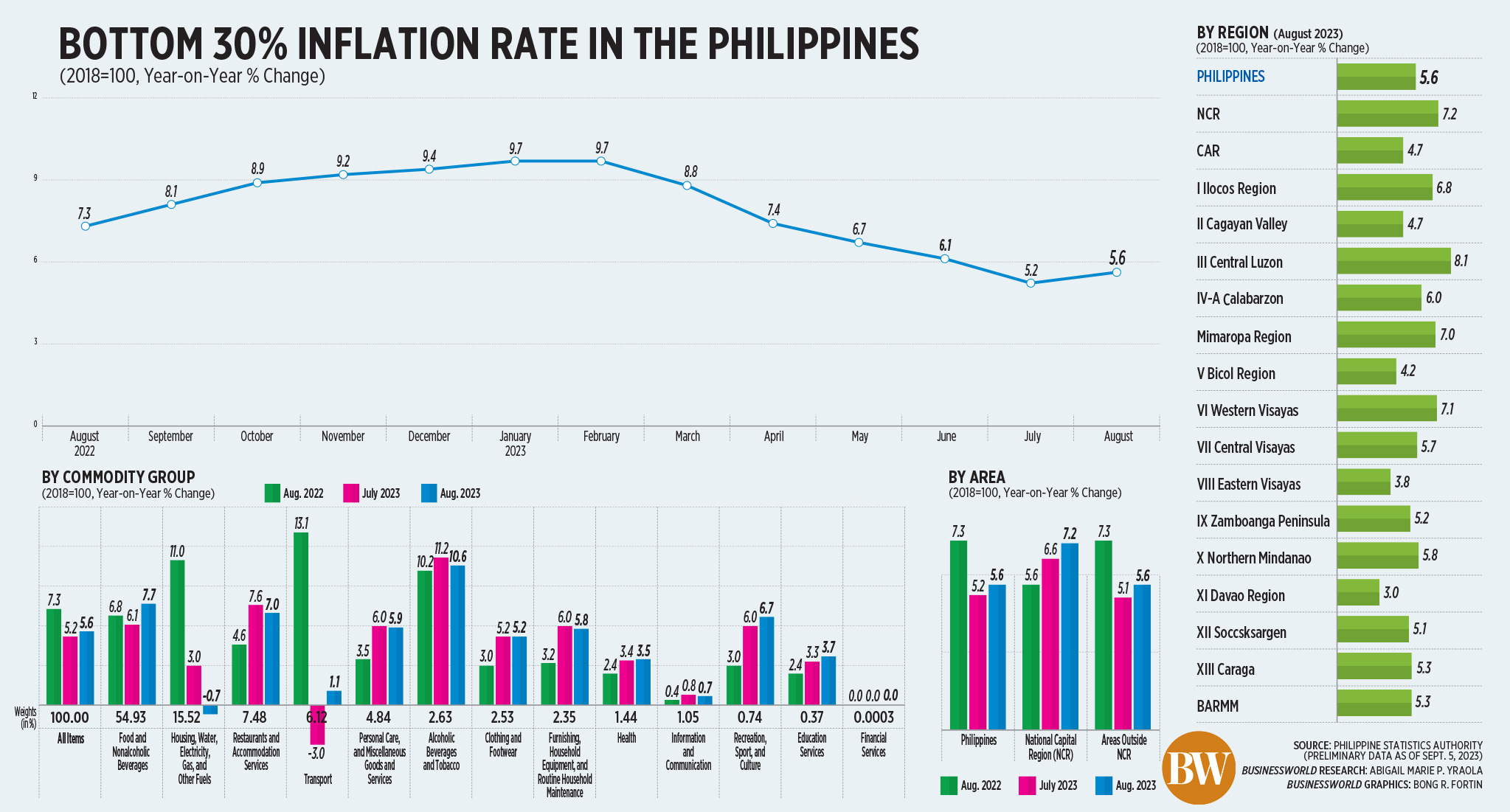
Bottom 30% inflation rate in the Philippines

Meanwhile, inflation for vegetables, tubers, plantains, cooking bananas and pulses climbed to 31.9% in August from 21.8% a month prior. This was the fastest since 33% in February.

Mr. Mapa said recent typhoons have caused agricultural damage, which drove up prices of vegetables and rice, especially in Central Luzon.

Bank of the Philippine Islands (BPI) Lead Economist Emilio S. Neri, Jr. said the inflation trend in the next few months will largely depend on food supply.

“The upcoming harvest season for rice may help in stabilizing the price of the commodity. However, local production can only cover around 85% of rice consumption and the country needs to import the rest from abroad,” he said in a note.

Mr. Neri said retail prices may stay elevated in the near term, as global rice prices are at a 12-year high. There may be uncertainties as well on the ability of other countries to supply rice amid the El Niño weather event.

ING Bank N.V. Manila Senior Economist Nicholas Antonio T. Mapa in a note said the uptick in August inflation was a reversal from the steady downtrend in inflation in the last six months.

“With supply shocks to important food items and imported energy, we could see a resumption of price pressures building up,” he said.

The government on Tuesday began implementing a nationwide price ceiling on regular and well-milled rice as part of efforts to address rising prices of the national staple.

How much did each commodity group contribute to August inflation?

Fuel prices
“Another threat we are looking at is the consistent increases in fuel prices (in recent months). If pump prices continue to rise, other commodity items may be affected,” PSA’s Mr. Mapa said.

PSA data showed transport inflation quickened to 0.2% in August from -4.7% in July, ending three months of decline.

In August alone, oil firms hiked fuel prices by PHP 5.90 per liter for gasoline, PHP 9.90 per liter for diesel and PHP 10 per liter for kerosene.

Meanwhile, the inflation rate for the bottom 30% of income households rose to 5.6% in August from 5.2% in July. However, it was slower than the 7.3% print in August 2022.

From January to August, inflation averaged 7.4% for the bottom 30%.

In the National Capital Region (NCR), inflation inched up to 5.9% from 5.6% in July. Inflation in areas outside NCR accelerated to 5.2% in August from 4.4% in July.

Policy outlook
The BSP said inflation may remain elevated in the coming months due to the impact of supply shocks on food prices as well as the increase in global oil prices.

Despite the uptick in August, the central bank said it still projects inflation to decelerate to within the 2-4% target by the fourth quarter.

“The BSP stands ready to adjust the monetary policy stance as necessary to prevent the further broadening of price pressures as well as the emergence of additional second order effects in view of the persistent upside risks to the inflation outlook,” the BSP said.

The BSP has kept the key rate steady at 6.25% at its last three meetings. It has raised borrowing costs by 425 basis points (bps) from May 2022 to March 2023 to curb inflation.

According to the BSP, the balance of risks to the inflation outlook remains on the upside due to the potential impact of additional transport fare increases, higher-than-expected minimum wage hikes in other regions, and supply constraints for key food items.

It also cited the El Niño weather phenomenon and the likely knock-on effects of higher toll rates on prices of agricultural products as upside risks to the inflation outlook.

The impact of a weaker-than-expected economic recovery globally remains as the primary downside risk.

“The August upside surprise now has BSP on notice although we doubt one data point will be enough for Governor Eli M. Remolona, Jr. to flip back into tightening mode,” ING’s Mr. Mapa said.

Should inflation for rice, electricity and transportation accelerate further, he said that Mr. Remolona will not hesitate to raise rates to get a hold of inflation expectations.

Finance Secretary Benjamin E. Diokno said that the government is “resolute” in mitigating the impact of inflation on the public.

“While we are seeing a slight uptick, our inflation rate assumption of 5% to 6% for full-year 2023 remains doable,” he said in a separate statement.

With the higher-than-expected August print, Pantheon Chief Emerging Asia Economist Miguel Chanco said they have raised their average inflation forecasts to 5.6% for this year and 2.8% for 2024 from 5.4% and 2.6% previously.

“A return to the BSP’s target range in the fourth quarter still is very much in the cards, from our perspective, given the favorable food base effects from the fourth quarter last year,” Mr. Chanco said in an e-mail.

“We continue to believe that the BSP will cut its benchmark rate by 50 bps in the fourth quarter in order to take pressure off the economy, though the risks to this forecast are now more skewed to the upside,” he added.

For BPI’s Mr. Neri, rate cuts are still premature due to the likelihood of inflation remaining above target in the next six months.

“It should be noted that inflation has been above the target of the BSP for almost two years already. A longer period of above-target inflation may affect the BSP’s credibility as an inflation targeting central bank, which in turn may limit their ability to control inflation,” he said.

“Inflation can easily bounce back given these conditions. With the trade and current account deficit of the Philippines at substantial level, the BSP may find it difficult to decouple its monetary policy from that of the US,” he added.

The next meeting of the Federal Open Market Committee is scheduled for Sept. 19-20, while the BSP’s next policy meeting is on Sept. 21. — By Keisha B. Ta-asan, Reporter


Posts navigation

Older posts
Newer posts

Recent Posts

  • Metrobank US-Iran Risk Index: Fragile ceasefire 
  • Investment Ideas: April 10, 2026 
  • Metrobank US-Iran Risk Index: A new hope
  • A guide for your peso bond portfolio amid higher for longer rates
  • Investment Ideas: April 8, 2026

Recent Comments

No comments to show.

Archives

  • April 2026
  • March 2026
  • February 2026
  • January 2026
  • December 2025
  • November 2025
  • October 2025
  • September 2025
  • August 2025
  • July 2025
  • June 2025
  • May 2025
  • April 2025
  • March 2025
  • February 2025
  • January 2025
  • December 2024
  • November 2024
  • October 2024
  • September 2024
  • August 2024
  • July 2024
  • June 2024
  • May 2024
  • April 2024
  • March 2024
  • February 2024
  • January 2024
  • December 2023
  • November 2023
  • October 2023
  • September 2023
  • August 2023
  • July 2023
  • June 2023
  • May 2023
  • April 2023
  • March 2023
  • February 2023
  • January 2023
  • December 2022
  • November 2022
  • October 2022
  • September 2022
  • August 2022
  • July 2022
  • June 2022
  • May 2022
  • March 2022
  • December 2021
  • October 2021

Categories

  • Bonds
  • BusinessWorld
  • Currencies
  • Economy
  • Equities
  • Estate Planning
  • Explainer
  • Featured Insight
  • Fine Living
  • How To
  • Investment Tips
  • Markets
  • Portfolio Picks
  • Rates & Bonds
  • Retirement
  • Reuters
  • Spotlight
  • Stocks
  • Uncategorized

You are leaving Metrobank Wealth Insights

Please be aware that the external site policies may differ from our website Terms And Conditions and Privacy Policy. The next site will be opened in a new browser window or tab.

Cancel Proceed
Get in Touch

For inquiries, please call our Metrobank Contact Center at (02) 88-700-700 (domestic toll-free 1-800-1888-5775) or send an e-mail to customercare@metrobank.com.ph

Metrobank is regulated by the Bangko Sentral ng Pilipinas
Website: https://www.bsp.gov.ph

Quick Links
The Gist Webinars Wealth Manager Explainers
Markets
Currencies Rates & Bonds Equities Economy
Wealth
Investment Tips Fine Living Retirement
Portfolio Picks
Bonds Stocks
Others
Contact Us Privacy Notice Terms of Use
© 2026 Metrobank. All rights reserved.

Access this content:

If you are an existing investor, log in first to your Metrobank Wealth Manager account. ​

If you wish to start your wealth journey with us, click the “How To Sign Up” button. ​

Login HOW TO SIGN UP