


MODEL PORTFOLIO
THE GIST
NEWS AND FEATURES
Global Philippines Fine Living
INSIGHTS
INVESTMENT STRATEGY
Economy Stocks Bonds Currencies
THE BASICS
Investment Tips Explainers Retirement
WEBINARS
2024 Mid-Year Economi Briefing, economic growth in the Philippines
2024 Mid-Year Economic Briefing: Navigating the Easing Cycle
June 21, 2024
Investing with Love
Investing with Love: A Mother’s Guide to Putting Money to Work
May 15, 2024
retirement-ss-3
Investor Series: An Introduction to Estate Planning
September 1, 2023
View All Webinars
DOWNLOADS
grocery-2-aa
Inflation Update: Target breached
DOWNLOAD
Container ship carrying container boxes import export dock with quay crane. Business commercial trade global cargo freight shipping logistic and transportation worldwide oversea concept. Generative AI
Economic Updates
Philippines Trade Update: Wider deficit on strong imports
DOWNLOAD
Frick collection with palm trees 
Economic Updates
Policy Rate Updates: Policy rate updates to reassure 
DOWNLOAD
View all Reports
Metrobank.com.ph How To Sign Up
Follow us on our platforms.

How may we help you?

TOP SEARCHES
  • Where to put my investments
  • Reports about the pandemic and economy
  • Metrobank
  • Webinars
  • Economy
TRENDING ARTICLES
  • Investing for Beginners: Following your PATH
  • On government debt thresholds: How much is too much?
  • Philippines Stock Market Outlook for 2022
  • Deficit spending remains unabated

Login

Access Exclusive Content
Login to Wealth Manager
Visit us at metrobank.com.ph How To Sign Up
Access Exclusive Content Login to Wealth Manager
Search
MODEL PORTFOLIO THE GIST
NEWS AND FEATURES
Global Philippines Fine Living
INSIGHTS
INVESTMENT STRATEGY
Economy Stocks Bonds Currencies
THE BASICS
Investment Tips Explainers Retirement
WEBINARS
2024 Mid-Year Economi Briefing, economic growth in the Philippines
2024 Mid-Year Economic Briefing: Navigating the Easing Cycle
June 21, 2024
Investing with Love
Investing with Love: A Mother’s Guide to Putting Money to Work
May 15, 2024
retirement-ss-3
Investor Series: An Introduction to Estate Planning
September 1, 2023
View All Webinars
DOWNLOADS
grocery-2-aa
Inflation Update: Target breached
April 7, 2026 DOWNLOAD
Container ship carrying container boxes import export dock with quay crane. Business commercial trade global cargo freight shipping logistic and transportation worldwide oversea concept. Generative AI
Economic Updates
Philippines Trade Update: Wider deficit on strong imports
March 27, 2026 DOWNLOAD
Frick collection with palm trees 
Economic Updates
Policy Rate Updates: Policy rate updates to reassure 
March 26, 2026 DOWNLOAD
View all Reports

Archives: Business World Article

PH plans sukuk issue by yearend

PH plans sukuk issue by yearend

The Philippine government is looking to issue Islamic bonds, also known as sukuk bonds, by yearend or in the first quarter, National Treasurer Rosalia V. de Leon said.

This would mark the Philippines’ debut in the Islamic bond market, as the government looks to fund its budget deficit.

“As for the timing, we’ve been told that there would have to be a 12-week preparatory lead time that would be needed, so hopefully we can do this before the end of the year or if ever, it would have to slip to the first quarter of 2024,” Ms. De Leon said during the Philippine Economic Briefing in Dubai on Tuesday.

She said that the government is now consulting potential underwriters for the details of the issuance, including its structure, which may be a “hybrid Wakalah, Ijara or Murabaha.”

“In terms of the tenor size, I think the sweet spot would be between the long (tenors of) five and the 10-year (bonds) because this would also be something that would be catering to our small investors and at the same time also to the institutional investors,” she said.

Ms. De Leon did not give the offer size for the planned sukuk bonds. In July, Finance Secretary Benjamin E. Diokno told Bloomberg that the government was eyeing to raise USD 1 billion from the sukuk bond deal.

Bangko Sentral ng Pilipinas (BSP) Assistant Governor Arifa A. Ala said that the sukuk issuance is a “good complement” for the central bank’s efforts to promote Islamic banking in the country.

“Having sukuk bonds being issued by the National Government will send a strong signal that the Philippines is now ready to accept applicants (and) new players in the Islamic banking system,” she added.

Ms. De Leon also reaffirmed the government’s plan to offer US dollar-denominated retail Treasury bonds within the month.

“Even in terms of the tenor, we’re looking at the belly of the curve, so that would be a long five. The other feature is that the tax would be assumed by the government, that means the full coupon would be going to our Filipino investors. That’s something we hope to launch (by) the end of the month,” she added.

The government is planning to offer USD 5 billion worth of bonds this year, the national treasurer said.

“We’re looking at another billion-dollar issuance and maybe this time around, if we make it to the 12-week preparation time, then we’ll be issuing a sukuk structure bond as the remaining issuance from the Republic for the rest of the year,” she added.

Maharlika Fund
Meanwhile, the economic team presented the country’s first sovereign wealth fund, the Maharlika Investment Fund (MIF), to potential investors in Dubai.

“During this visit to Dubai, we’ve been in touch with sovereign wealth funds, but even with infrastructure funds and potential co-investors, looking into joint ventures,” Ms. De Leon said.

“We’ve been able to present a list of our infrastructure flagship projects and how these would complement their own priorities.”

In July, President Ferdinand R. Marcos, Jr. signed into law the Maharlika Investment Fund Act of 2023, which creates the MIF.

The sovereign wealth fund will be managed by the Maharlika Investment Corp. (MIC), which will have authorized capital stock of P500 billion.

“It’s intended to be an additional funding source. We’ll probably graduate to upper middle-income status within two years and will no longer be entitled to concessional loans. This is in preparation for that,’ Mr. Diokno said.

The Finance chief said that the Philippines must ramp up investments in projects that will improve physical and digital connectivity, as well as boost the country’s transition to clean energy. — Luisa Maria Jacinta C. Jocson, Reporter


AMRO trims 2023 PH growth outlook

AMRO trims 2023 PH growth outlook

Philippine gross domestic product (GDP) growth is likely to fall slightly below the government’s target this year, the ASEAN+3 Macroeconomic Research Office (AMRO) said.

“The Philippines’ economic growth is projected to moderate to 5.9% in 2023 due to high base effects and weaker external demand, before edging up to 6.5% in 2024 as external demand recovers,” AMRO Group Head and Principal Economist Runchana Pongsaparn said in a statement on Tuesday.

Mr. Pongsaparn was part of the AMRO team that visited Manila from Aug. 29 to Sept. 8. for its annual consultation.

“Meanwhile, domestic demand is expected to remain robust supported by continued improvement in labor market conditions, lower inflation, robust overseas remittances, and higher government infrastructure spending,” he said.

The think tank’s latest 2023 GDP forecast is lower than the 6.2% it gave in its Regional Economic Outlook Report in July. It also falls below the government’s 6-7% GDP target.

AMRO kept its Philippine growth forecast for 2024 unchanged at 6.5% amid an expected recovery in external demand. This is at the lower end of the government’s 6.5-8% target for next year.

The think tank noted the Philippine economy continued to show strong growth momentum in the first half of 2023. Philippine GDP expanded by a weaker-than-expected 4.3% in the second quarter, bringing the first semester growth to 5.3%.

“Growth was supported by resilient domestic demand with a strong recovery in the labor market despite weaker external demand. Notwithstanding a widening current account deficit, external position remains sound with sufficient international reserve buffer and low external debt,” AMRO said.

AMRO also said Philippine full-year inflation will likely settle at 5.5% this year before slowing further to 3.8% in 2024.

“Despite some moderation, inflationary pressure will likely remain elevated as reflected in the high level of core inflation, due to a positive output gap and the second-round effects induced by increases in the minimum wages and expectations of persistently high inflation,” it added.

Meanwhile, AMRO flagged risks to the Philippines’ growth outlook such as elevated inflation, local supply shocks, an economic slowdown in major trading partners and global financial market volatility.

“The long-term growth potential is largely affected by the scarring effects of the pandemic, the pace of infrastructure development, geopolitical risks, and the economic losses from natural disasters, which are being exacerbated by climate change,” it said.

Among AMRO’s policy recommendations to boost growth include upskilling the workforce, implementation of policies to attract investments and promote exports of goods and services. The government can also improve the Philippines’ competitiveness through infrastructure investment and digitalization, it added.

For the medium and long term, AMRO said “fiscal policy should balance between restoring fiscal buffer and supporting sustainable growth and development.”

The think tank said close coordination between regulators will be crucial in identifying and mitigating financial stability risks that may arise from nonfinancial firms.

“Meanwhile, the authorities should continue to improve the liquidity management framework, develop the bond and repo markets, and continue to expand financial inclusion, to enhance the system’s resilience to shocks and promote market activities,” it added. — Luisa Maria Jacinta C. Jocson

Central bank ready to act as price pressures persist

Central bank ready to act as price pressures persist

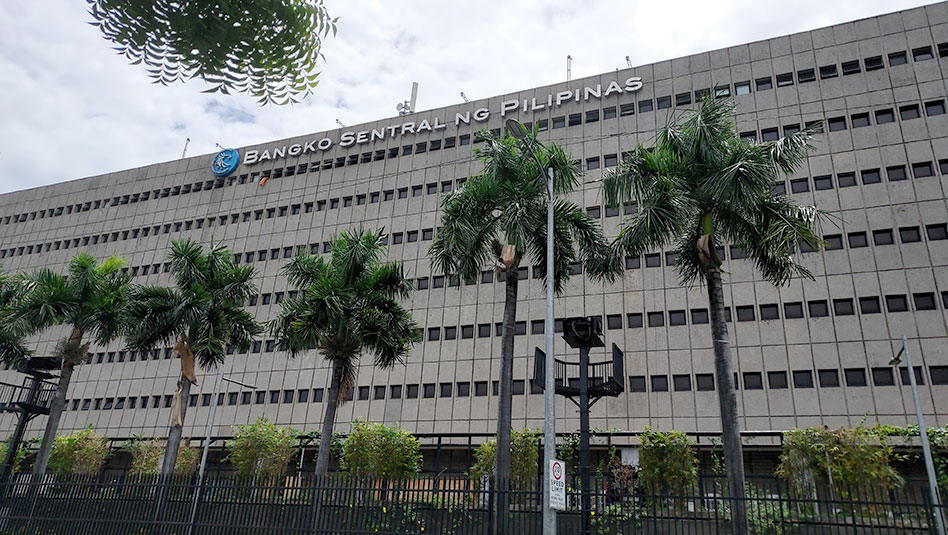
The Bangko Sentral ng Pilipinas (BSP) stands ready to act as necessary to address any risk to inflation, which is still seen to fall within the 2-4% target range by fourth quarter this year, an official said.

BSP Deputy Governor Francisco G. Dakila, Jr. said inflation will fall within the 2-4% target range in the fourth quarter, barring unprecedented supply shocks. 

“Nevertheless, we continue to see that the risks to the inflation outlook have remained tilted towards the upside both for this year and for next year,” he said during the Philippine Economic Briefing in Dubai on Tuesday.

“The BSP remains ready to respond as necessary to any risks that threaten the achievement of the inflation target.”

Inflation accelerated for the first time in seven months in August, as food and transport costs surged. Inflation rose to 5.3% in August, marking the 17th consecutive month that inflation surpassed the BSP’s 2-4% target.

For the January-to-August period, inflation averaged 6.6%, still above the central bank’s 5.6% full-year forecast.

Mr. Dakila said August inflation was largely due to weather-related disturbances in the country, which drove up the prices of food items such as rice, vegetables, and fish.

“In the absence of further supply shocks, risks continue to lean towards the upside over the near term. Hence, the case for vigilance remains,” he said.

Mr. Dakila said the BSP would like to see inflation go back to within the 2-4% target band before any policy easing is considered due to the need to anchor inflation expectations.

The Monetary Board has paused for a third straight meeting in August, keeping its key policy rate at a near-16 year high 6.25%. From May 2022 to March 2023, the central bank hiked benchmark interest rates by 425 basis points (bps).

“On the BSP’s part, the Monetary Board is set to convene and decide on the policy stance next week, on Sept. 21. As always, our focus remains on ensuring price stability conducive to sustainable and non-inflationary growth,” Mr. Dakila, adding that it will also take into consideration the US Federal Reserve’s next move.

However, Mr. Dakila noted that “the situation is now very different compared from where we were last year, when inflation is still in an upward trajectory.”

“Right now, the focus of the Monetary Board will be on domestic situations. The impact of external factors will be less compared to last year,” he said, adding that the peso has stabilized this year.

The Fed’s next meeting is on Sept. 19 to 20. It hiked borrowing costs by 25 bps at its meeting in July, bringing the Fed funds rate to 5.25-5.5% — its highest level in 22 years. — Keisha B. Ta-asan

BOI-approved investments hit P800 billion

BOI-approved investments hit P800 billion

The Board of Investments (BOI) has already approved PHP 800 billion worth of investments as of early September, surpassing last year’s level, Trade Secretary Alfredo E. Pascual said.

Mr. Pascual told reporters on Monday that the BOI’s year-to-date investment approvals have already exceeded the PHP 729 billion in investments it greenlit in 2022.

The Trade chief said the BOI appears to be on track to reach its revised PHP 1.5-trillion full-year target.

“I am confident that this target could be achieved. There is even a possibility that it could be surpassed,” he told reporters in mixed English and Filipino.

The BOI raised its target for investment approvals this year by 50% to PHP 1.5 trillion from the original PHP 1 trillion.

Mr. Pascual had also said the Philippines is aiming to be a top-two destination within the Association of Southeast Asian Nations for foreign direct investments.

“But the more immediate and reliable barometer is the entry of investments in the BOI,” he said. — J.I.D. Tabile

Gov’t partially awards seven-year bonds

Gov’t partially awards seven-year bonds

The government made a partial award of the reissued seven-year Treasury bonds (T-bonds) it offered on Tuesday as its average rate was lower than secondary market levels amid signals from the Bangko Sentral ng Pilipinas (BSP) that inflation might remain elevated until next year.

The Bureau of the Treasury (BTr) raised just PHP 9.877 billion via the reissued seven-year bonds it auctioned off on Tuesday, below the PHP 30-billion program, despite total bids reaching PHP 57.792 billion, almost twice the amount on offer.

The bonds, which have a remaining life of six years and 10 months, were awarded at an average rate of 6.37%, with accepted yields ranging from 6.365% to 6.373%.

The average rate of the reissued bonds was 4.2 basis points (bps) higher than the 6.328% quoted for the papers when they were first offered on July 26, 2022. Still, this was 0.5 bp below the 6.375% coupon for the series.

The average rate was 5.5 bps lower than the 6.425% quoted for the seven-year bond and 12.6 bps below the 6.496% seen for the same bond series at the secondary market before Tuesday’s auction, based on PHP Bloomberg Valuation Service Reference Rates data provided by the Treasury.

“The Auction Committee partially awarded the reissued seven-year Treasury Bonds at today’s auction. With a remaining term of six years and 10 months, the bond series 07-70 was awarded at an average rate of 6.370%,” the BTr said in a statement on Tuesday.

“The auction was 1.9 times oversubscribed as total submitted bids amounted to PHP 57.8 billion. With its decision, the Committee raised PHP 9.9 billion out of the PHP 30 billion offering, bringing the total outstanding volume for the series to PHP 34.7 billion,” it added.

The government made a partial award of its T-bond offer as rates were below comparable secondary market yields after the BSP chief said inflation could only return within the target range by the first quarter of 2024, Rizal Commercial Banking Corp. Chief Economist Michael L. Ricafort said in a Viber message.

BSP Governor Eli M. Remolona, Jr. last week said he expects inflation to be back within their 2-4% target range early next year amid lingering price risks.

He added that the BSP could upwardly revise its full-year inflation forecast of 5.6% for 2023 at their Sept. 21 policy meeting.

Headline inflation picked up to a two-month high of 5.3% in August from 4.7% in July, marking the 17th consecutive month that the consumer price index (CPI) was above the BSP’s 2-4% target.

Still, this was below the 6.3% print in August 2022, and was within the BSP’s 4.8-5.6% forecast for the month.

For the first eight months, the CPI averaged 6.6%, above the central bank’s full-year forecast of 5.6%.

The partial award came due to caution ahead of the release of August US CPI data on Wednesday, a trader said in an e-mail.

The BTr wants to raise PHP 180 billion from the domestic market this month or PHP 60 billion via Treasury bills and PHP 120 billion via T-bonds.

The government borrows from local and foreign sources to help fund its budget deficit, which is capped at 6.1% of gross domestic product this year. — A.M.C. Sy

Stocks inch down on weak volume before US CPI

Stocks inch down on weak volume before US CPI

Stocks dropped on Tuesday amid weak trading volume as investors stayed on the sidelines ahead of the release of August US consumer inflation data, which could influence the US Federal Reserve’s policy decision this month.

The Philippine Stock Exchange index (PSEi) went down by 3.54 points or 0.05% to end at 6,230.20 on Tuesday, while the broader all shares index dropped by 4.02 points or 0.12% to close at 3,359.43.

“Market continues to trade sideways with low volume as investors await the economic reports this week by the US government. The result of the reports will give the clearer picture whether the Fed will continue to increase or make a pause on the interest rate,” Mercantile Securities Corp. Head Trader Jeff Radley C. See said in a Viber message.

Value turnover went up to PHP 3.97 billion on Tuesday with 535.63 million shares changing hands from the PHP 3.62 billion with 639.89 million issues seen on Monday.

“The market was initially trading in the green boosted by the anticipation that the Federal Reserve will keep its policy rates unchanged,” Philstocks Financial, Inc. Research Analyst Claire T. Alviar likewise said in a Viber message.

August US consumer price index (CPI) data will be released on Wednesday.

The US CPI rose 0.2% in July, matching June’s gain. On an annual basis, the CPI advanced by 3.2%.

The Fed will hold its policy meeting on Sept. 19-20.

The US central bank raised borrowing costs by 25 basis points (bps) in July, bringing its target rate to a range between 5.25% and 5.5%.

It has hiked rates by 525 bps since it began its tightening cycle in March last year.

“The local bourse experienced a slight dip… as investors took profits on the last minute following its two-day rally. Also, the sentiment was further dampened by the lower FDI (foreign direct investments) net inflows recorded in June,” Ms. Alviar added.

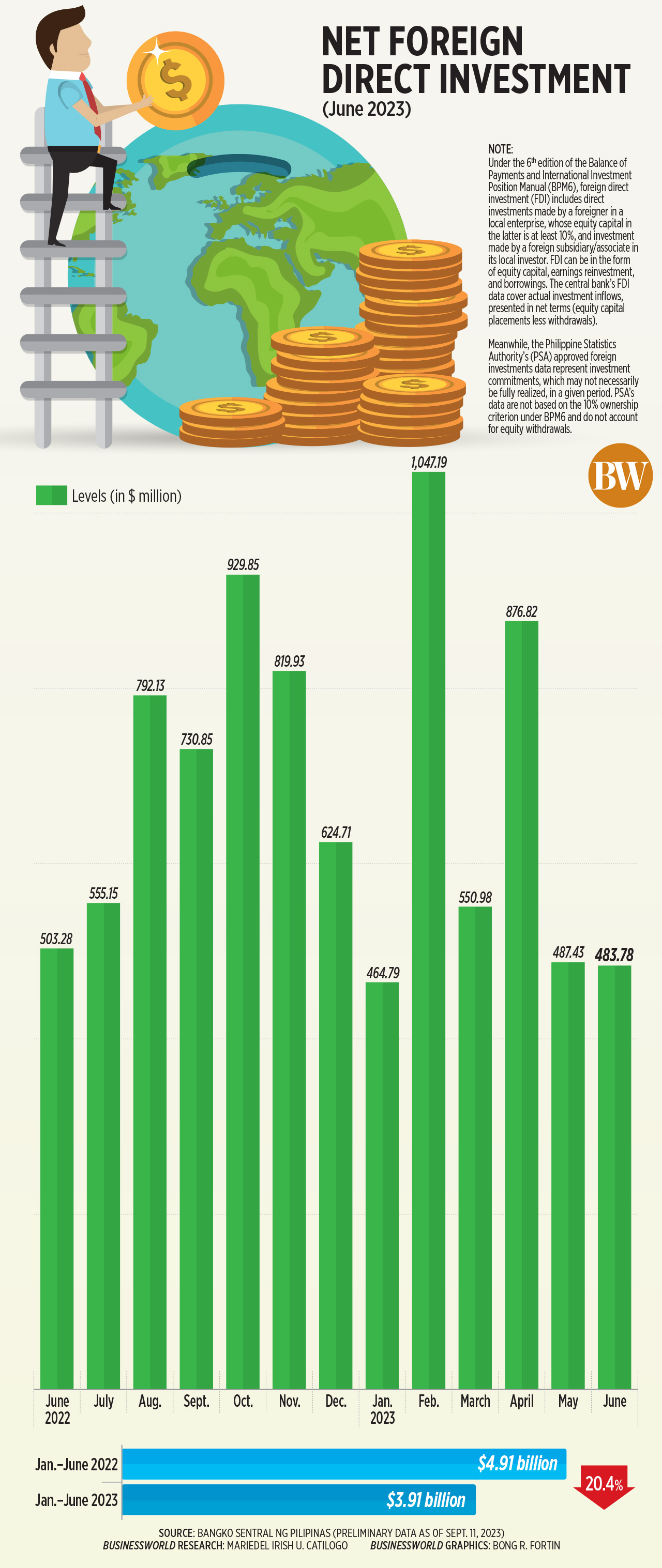
FDI net inflows declined by 3.9% to USD 484 million in June from $503 million in the same month in 2022, central bank data released on Monday showed. This was also 0.6% lower than the $487-million FDI net inflows in May.

For the first half of the year, FDI net inflows dropped by 20.4% to $3.9 billion from $4.9 billion a year ago.

Sectoral indices were split on Tuesday. Services dropped by 15.38 points or 1% to 1,522.72; holding firms declined by 31.77 points or 0.53% to 5,948.01; and property went down by 2.44 points or 0.09% to 2,583.69.

Meanwhile, mining and oil rose by 122.17 points or 1.19% to 10,389.13; financials climbed by 15.27 points or 0.85% to 1,803.53; and industrials went up by 30.71 points or 0.34% to 8,940.87.

Decliners outnumbered advancers, 95 to 79, while 61 names closed unchanged.

Net foreign selling rose to PHP 961.49 million on Tuesday from PHP 504.93 million on Monday. — S.J. Talavera

FDI inflows fall to 5-month low in June

FDI inflows fall to 5-month low in June

Foreign direct investment (FDI) net inflows to the Philippines dropped to the lowest in five months in June, as investors worry over slowing economic growth, elevated inflation, and high interest rates.   

Data released by the Bangko Sentral ng Pilipinas (BSP) on Monday showed FDI net inflows declined by 3.9% to USD 484 million in June from USD 503 million in the same month in 2022. This was also 0.6% lower than the USD 487-million FDI net inflows in May.

The June figure was the lowest monthly net inflows of FDI in five months or since USD 465 million in January.

Net Foreign Direct InvestmentThe BSP attributed the decline in FDI net inflows to the decrease in nonresidents’ net investments in equity capital and their reinvestment of earnings, which offset the growth in investments in debt instruments. 

BSP data showed nonresidents’ net investments in equity capital (other than reinvestment of earnings) fell by 11.8 % to USD 111 million in June from USD 126 million in the same month last year. 

Broken down, equity capital placements slipped by 8% to USD 132 million, while withdrawals increased by 20% to USD 21 million.

Reinvestment of earnings also slumped by 26.8% year on year to USD 89 million in June from USD 122 million in the same month in 2022. 

The equity placements were mainly from Japan, the United States, and Singapore. These were invested mostly in manufacturing, real estate, and information and communication industries.

Investments in equity and investment fund shares also declined by 19.2% to USD 200 million in June from USD 248 million in June 2022.

On the other hand, nonresidents’ net investments in debt instruments of local affiliates jumped by 11% to USD 283 million in June from USD 255 million a year ago.

“Concerns about global growth as well as anxiety over slowing growth in the Philippines may have prompted investors to hold back on investing at this time,” ING Bank N.V. Manila Senior Economist Nicholas Antonio T. Mapa said in a Viber message.

Philippine gross domestic product (GDP) grew by a weaker-than-expected 4.3% in the second quarter, lower than 6.4% a quarter prior and 7.5% in the second quarter of 2022. In the first half, GDP growth averaged 5.3%.

“Equity and reinvestment of earnings were down (in June) indicating a slow pickup for fresh FDI, and less money being plowed back into the economy from existing firms,” Mr. Mapa said. 

Rizal Commercial Banking Corp. Chief Economist Michael L. Ricafort in a note said elevated inflation and high borrowing costs continue to weigh on FDIs as these raised the cost of investments.

The central bank maintained its key policy rate at 6.25% at its meeting in June.

For the first half of the year, FDI net inflows dropped by 20.4% to USD 3.9 billion from USD 4.9 billion a year ago.

BSP data showed foreign investments in debt instruments declined by 24.6% year on year to USD 2.71 billion in the January-to-June period from USD 3.59 billion a year prior.

Investments in equity and investment fund shares also slid by 8.8% to USD 1.2 billion during the six-month period.

Net foreign investments in equity capital fell by 7.3% to USD 744 million. Equity capital placements inched up by 3.5% to USD 923 million, while withdrawals doubled to USD 180 million.

Most of these placements were from Japan, Germany, the United States, and Singapore.

Reinvestment of earnings fell by 11.2% to USD 459 million in the six-month period from USD 517 million in the comparable period in 2022. 

“Given heightened uncertainty regarding the global economy, the Philippines may need to convince investors that second-quarter GDP was an aberration. Unless this is done, given our outlook for domestic growth, we could see FDI remain subdued in the coming months,” Mr. Mapa said. 

Economic managers have said GDP needs to grow by 6.6% in the second semester to be able to reach the government’s 6-7% full-year target.

Mr. Ricafort said the free trade agreement (FTA) signed between the Philippines and South Korea earlier this month could boost trade, investments, employment, and overall economic growth.

The Philippine Economic Zone Authority earlier said it expects South Korea to become a top-four source of FDIs into the country, following the recently signed FTA. 

Eventual policy rate cuts, especially in 2024, would also help reduce borrowing costs for investments, Mr. Ricafort added. 

The BSP expects FDI net inflows at USD 9 billion by end-2023 and at USD 11 billion by end-2024. — Keisha B. Ta-asan

ANZ hikes inflation forecast for PH

ANZ hikes inflation forecast for PH

ANZ Research raised its inflation forecast for the Philippines this year and next year, as it expects inflation to remain above the central bank’s 2-4% target band in the fourth quarter.

In a note, ANZ Research economist Debalika Sarkar and Chief Economist Sanjay Mathur said Philippine inflation is now projected to average 6% this year from 5.3% previously. The 2024 projection is 3.5% from 3%.   

If realized, 2023 inflation will be higher than the 5.8% average last year and the 5.6% forecast of the Bangko Sentral ng Pilipinas (BSP). It would also mark the second straight year that inflation exceeds the BSP’s 2-4% target band.

“The trajectory underlying our revised forecast implies that inflation will stay above the BSP’s 4% tolerance level even in the fourth quarter of 2023 and may return to the target band in the first quarter of 2024,” ANZ Research said.   

Last week, BSP Governor Eli M. Remolona, Jr. said in an interview with BusinessWorld that inflation may return to the 2-4% target range in the first quarter next year, and not in the fourth quarter of 2023 as previously forecasted.   

August inflation unexpectedly accelerated for the first time in seven months, amid a spike in food and transport costs. Headline inflation quickened to 5.3% in August from 4.7% in July.

For the first eight months of the year, inflation averaged 6.6%. This is still higher than the central bank’s revised 5.6% inflation forecast for this year.

ANZ Research said more than half of August inflation came from the sharp rise in the heavily weighted index for food and nonalcoholic beverages.

“The acceleration in food prices was broad-based, reflecting a supply shock from seasonal typhoon activity and the impact of India’s restriction on rice exports,” it said.   

ANZ noted the acceleration of transport inflation is an “early sign of risks stemming from rising global oil prices.” Transport inflation rose to 0.2% in August from -4.7% in July.

The research firm noted that high oil and food prices may also affect inflation expectations, raising the risk of second-round effects.

Meanwhile, ANZ Research said recently implemented rice price ceilings offer temporary relief for consumers, as it can bring down prices of regular rice and well-milled rice by 34% and 24%, respectively.  

“However, price ceilings can stoke inflationary pressure or create shortages if not supported by complementary measures such as adequate monetary support to retailers, farmgate price regulations and/or a reduction of the rice import tariffs from its current 35%,” it said.   

On Sept. 5, the government began implementing a price ceiling for rice nationwide amid a spike in prices and reports of hoarding by cartels.

“In short, the Philippines’ inflation battle is not yet over. Even if rice price caps alleviate some pressure and second-round effects are not accounted for, full-year 2023 inflation is likely to exceed our (previous) baseline forecast of 5.3%,” ANZ Research said.

Meanwhile, Moody’s Analytics said the biggest worry for Philippine inflation is the El Niño weather phenomenon, which can further impact agricultural produce and keep food prices elevated for longer.   

Higher train fares may also put upward pressure on inflation, it said.

“Despite that, we expect inflation to ease over the coming months and touch the higher bound of BSP’s 2% to 4% target by the end of the year,” Moody’s said.   

“Unless inflation across food and energy proves to be stickier than expected, the central bank is likely to hold rates steady for the rest of the year and cut rates from the first quarter of 2024. We look for inflation to average 5.7% in 2023,” it added.   

For ANZ Research, the reversal in August inflation will weigh on monetary policy.   

“For now, we maintain the view that the BSP will hold the policy rate at 6.25% and that a cut is unlikely even in 2024. Our earlier view was the BSP would be able to start cutting the policy rate from the second quarter of 2024,” it said. — Keisha B. Ta-asan

T-bills fully awarded at mostly lower rates on strong demand

T-bills fully awarded at mostly lower rates on strong demand

The government made a full award of the Treasury bills (T-bills) it offered on Monday at mostly lower rates amid strong demand and the peso’s recent recovery against the dollar.

The Bureau of the Treasury (BTr) raised PHP 15 billion as planned via the T-bills it auctioned off on Monday as total bids reached PHP 51.814 billion, or more than thrice the amount on offer.

Broken down, the Treasury made a full PHP 5-billion award of the 91-day T-bills as tenders for the tenor reached PHP 14.715 billion. The three-month paper was quoted at an average rate of 5.575%, 2.3 basis points (bps) above the 5.552% seen last week, with accepted rates ranging from 5.543% to 5.59%.

The government also raised PHP 5 billion as planned from the 182-day securities as bids for the tenor reached PHP 15.983 billion. The average rate for the six-month T-bill was at 5.96%, down by 0.6 bp from 5.966% seen last week, with accepted rates at 5.938% to 5.974%.

Lastly, the BTr borrowed the programmed PHP 5 billion via the 364-day debt papers as demand for the tenor stood at PHP 21.116 billion. The average rate of the one-year T-bill inched down by 0.8 bp to 6.19% from the 6.198% quoted last week. Accepted yields were from 6.15% to 6.2%.

At the secondary market before Monday’s auction, the 91-, 182- and 364-day T-bills were quoted at 5.6553%, 5.9867%, and 6.193%, respectively, based on PHP Bloomberg Valuation Reference Rates data provided by the Treasury.

“The Auction Committee fully awarded bids for Treasury bills (T-bills) at today’s auction. The 91-, 182-, and 364-day T-bills fetched average rates of 5.575%, 5.96% and 6.19%, respectively, all lower than secondary market rates,” the BTr said in a statement on Monday.

“The auction was 3.5 times oversubscribed, attracting PHP 51.8 billion in total tenders. With its decision, the Committee raised the full program of PHP 15 billion for the auction,” it added.

T-bill yields mostly declined as the peso rebounded after it hit a near nine-month low last week, Rizal Commercial Banking Corp. Chief Economist Michael L. Ricafort said in a Viber message.

“The lower T-bill rates awarded today moved in line with the recent recovery of the peso,” a trader likewise said in an e-mail.

The peso hit a near nine-month low of PHP 56.94 per dollar on Sept. 5, but has since rebounded.

On Friday, the local unit closed at PHP 56.63 versus the dollar, strengthening by 16 centavos from Thursday’s PHP 56.79 finish, data from the Bankers Association of the Philippines’ website showed.

On Tuesday, it will offer PHP 30 billion in reissued seven-year Treasury bonds (T-bonds) with a remaining life of six years and 10 months.

The BTr wants to raise PHP 180 billion from the domestic market this month or PHP 60 billion via T-bills and PHP 120 billion via T-bonds.

The government borrows from local and foreign sources to help fund its budget deficit, which is capped at 6.1% of gross domestic product this year. — A.M.C. Sy

PH bond market’s growth slows in second quarter

PH bond market’s growth slows in second quarter

The Philippine bond market’s growth slowed in the second quarter versus the previous three-month period, the Asian Development Bank (ADB) said on Monday.

Outstanding local currency (LCY) bonds grew by 1.3% quarter-on-quarter (q-o-q) to P11.7 trillion or $207 billion in the April-to-June period, slower than the 3.1% expansion seen in the first quarter, the ADB’s ​​Asia Bond Monitor report for September 2023 showed.

The Philippine bond market’s growth was the slowest among the seven markets in the emerging East Asia region that expanded last quarter, with the other three recording contractions. Korea’s bond market posted the fastest quarter-on-quarter growth at 2.6%, while Vietnam’s contracted by 4.5%.

Year on year, the Philippine bond market grew by 8.3%.

“In Q2 2023, total LCY bonds outstanding increased on expansions in both the corporate and government bond markets,” the ADB said.

Treasury and other government bonds grew by 2.3% quarter-on-quarter to $175 billion, accounting for 82.4% of the Philippines’ total outstanding debt stock, as issuances exceeded maturities. This was slower than the 3.4% growth seen in the first quarter.

Meanwhile, central bank securities contracted by 15.8% to $8 billion, reversing the 15.8% increase seen in the first quarter, amid a drop in issuances due to easing inflation. These made up 4% of the total stock.

Lastly, the corporate bond market grew by 1.2% to $29 billion, comprising 13.6% of the total debt stock, “due to the large volume of issuances during the quarter, a reversal from the 2.2% q-o-q contraction in the first quarter of 2023.”

“The Philippine corporate bond market remained dominated by the property, banking, and holding firms sectors, which accounted for a collective share of 81% of total corporate bonds outstanding at the end of Q2 2023,” the ADB said.

Meanwhile, total LCY bond issuance contracted by 19.2% quarter on quarter, it said.

“During the quarter, a contraction of 39% q-o-q in the issuance of Treasury and other government bonds was mainly driven by a relatively high base in the preceding quarter brought about by the Government of the Philippines’ issuance of retail Treasury bonds in February amounting to P283.7 billion.” the ADB said.

“Issuance of central bank securities, which comprised 70.7% of total issuance in Q2 2023, contracted 11.2% q-o-q as inflation continued a downtrend for six consecutive months. After a contraction of 81.7% q-o-q in the first quarter of 2023, corporate bond issuance rebounded in Q2 2023 with an expansion of 117.6% q-o-q due to a relatively low base in the previous quarter,” it added.

Meanwhile, emerging East Asian’s bond market grew by 2% quarter on quarter to $23.15 trillion in the April-to-June period, slower than the 2.2% increase seen in the first quarter.

“Government bonds accounted for 62.0% of the region’s total LCY bond stock at the end of June. Association of Southeast Asian Nations markets comprised a collective share of 9.1% of the regional LCY bond total with aggregate LCY bonds outstanding of $2.1 trillion at the end of June,” the ADB said.

Year on year, the emerging East Asian region’s bond market expanded by 7.9%.

“The risk outlook for regional financial conditions is generally balanced. On the upside, softening inflation in the region has led most regional central banks to move toward the end of their monetary tightening cycles… However, the inflation path remains uncertain. Elevated price pressures together with a robust economic performance and strong job market in the US could support further monetary tightening,” the ADB said.

“On the downside, higher interest rates could challenge regional public and private borrowers with vulnerable balance sheets and weak governance… However, vulnerabilities have been present among both public and private sector borrowers since 2022, due to rising borrowing costs and tightened financial conditions,” it added. — AMCS

Posts navigation

Older posts
Newer posts

Recent Posts

  • Metrobank US-Iran Risk Index: Fragile ceasefire 
  • Investment Ideas: April 10, 2026 
  • Metrobank US-Iran Risk Index: A new hope
  • A guide for your peso bond portfolio amid higher for longer rates
  • Investment Ideas: April 8, 2026

Recent Comments

No comments to show.

Archives

  • April 2026
  • March 2026
  • February 2026
  • January 2026
  • December 2025
  • November 2025
  • October 2025
  • September 2025
  • August 2025
  • July 2025
  • June 2025
  • May 2025
  • April 2025
  • March 2025
  • February 2025
  • January 2025
  • December 2024
  • November 2024
  • October 2024
  • September 2024
  • August 2024
  • July 2024
  • June 2024
  • May 2024
  • April 2024
  • March 2024
  • February 2024
  • January 2024
  • December 2023
  • November 2023
  • October 2023
  • September 2023
  • August 2023
  • July 2023
  • June 2023
  • May 2023
  • April 2023
  • March 2023
  • February 2023
  • January 2023
  • December 2022
  • November 2022
  • October 2022
  • September 2022
  • August 2022
  • July 2022
  • June 2022
  • May 2022
  • March 2022
  • December 2021
  • October 2021

Categories

  • Bonds
  • BusinessWorld
  • Currencies
  • Economy
  • Equities
  • Estate Planning
  • Explainer
  • Featured Insight
  • Fine Living
  • How To
  • Investment Tips
  • Markets
  • Portfolio Picks
  • Rates & Bonds
  • Retirement
  • Reuters
  • Spotlight
  • Stocks
  • Uncategorized

You are leaving Metrobank Wealth Insights

Please be aware that the external site policies may differ from our website Terms And Conditions and Privacy Policy. The next site will be opened in a new browser window or tab.

Cancel Proceed
Get in Touch

For inquiries, please call our Metrobank Contact Center at (02) 88-700-700 (domestic toll-free 1-800-1888-5775) or send an e-mail to customercare@metrobank.com.ph

Metrobank is regulated by the Bangko Sentral ng Pilipinas
Website: https://www.bsp.gov.ph

Quick Links
The Gist Webinars Wealth Manager Explainers
Markets
Currencies Rates & Bonds Equities Economy
Wealth
Investment Tips Fine Living Retirement
Portfolio Picks
Bonds Stocks
Others
Contact Us Privacy Notice Terms of Use
© 2026 Metrobank. All rights reserved.

Access this content:

If you are an existing investor, log in first to your Metrobank Wealth Manager account. ​

If you wish to start your wealth journey with us, click the “How To Sign Up” button. ​

Login HOW TO SIGN UP