


MODEL PORTFOLIO
THE GIST
NEWS AND FEATURES
Global Philippines Fine Living
INSIGHTS
INVESTMENT STRATEGY
Economy Stocks Bonds Currencies
THE BASICS
Investment Tips Explainers Retirement
WEBINARS
2024 Mid-Year Economi Briefing, economic growth in the Philippines
2024 Mid-Year Economic Briefing: Navigating the Easing Cycle
June 21, 2024
Investing with Love
Investing with Love: A Mother’s Guide to Putting Money to Work
May 15, 2024
retirement-ss-3
Investor Series: An Introduction to Estate Planning
September 1, 2023
View All Webinars
DOWNLOADS
Container ship carrying container boxes import export dock with quay crane. Business commercial trade global cargo freight shipping logistic and transportation worldwide oversea concept. Generative AI
Economic Updates
Philippines Trade Update: Wider deficit on strong imports
DOWNLOAD
Frick collection with palm trees 
Economic Updates
Policy Rate Updates: Policy rate updates to reassure 
DOWNLOAD
Man using his smartphone
Reports
Fed to cut just once 
DOWNLOAD
View all Reports
Metrobank.com.ph How To Sign Up
Follow us on our platforms.

How may we help you?

TOP SEARCHES
  • Where to put my investments
  • Reports about the pandemic and economy
  • Metrobank
  • Webinars
  • Economy
TRENDING ARTICLES
  • Investing for Beginners: Following your PATH
  • On government debt thresholds: How much is too much?
  • Philippines Stock Market Outlook for 2022
  • Deficit spending remains unabated

Login

Access Exclusive Content
Login to Wealth Manager
Visit us at metrobank.com.ph How To Sign Up
Access Exclusive Content Login to Wealth Manager
Search
MODEL PORTFOLIO THE GIST
NEWS AND FEATURES
Global Philippines Fine Living
INSIGHTS
INVESTMENT STRATEGY
Economy Stocks Bonds Currencies
THE BASICS
Investment Tips Explainers Retirement
WEBINARS
2024 Mid-Year Economi Briefing, economic growth in the Philippines
2024 Mid-Year Economic Briefing: Navigating the Easing Cycle
June 21, 2024
Investing with Love
Investing with Love: A Mother’s Guide to Putting Money to Work
May 15, 2024
retirement-ss-3
Investor Series: An Introduction to Estate Planning
September 1, 2023
View All Webinars
DOWNLOADS
Container ship carrying container boxes import export dock with quay crane. Business commercial trade global cargo freight shipping logistic and transportation worldwide oversea concept. Generative AI
Economic Updates
Philippines Trade Update: Wider deficit on strong imports
March 27, 2026 DOWNLOAD
Frick collection with palm trees 
Economic Updates
Policy Rate Updates: Policy rate updates to reassure 
March 26, 2026 DOWNLOAD
Man using his smartphone
Reports
Fed to cut just once 
March 19, 2026 DOWNLOAD
View all Reports

Archives: Business World Article

S&P slashes PH growth forecast

S&P slashes PH growth forecast

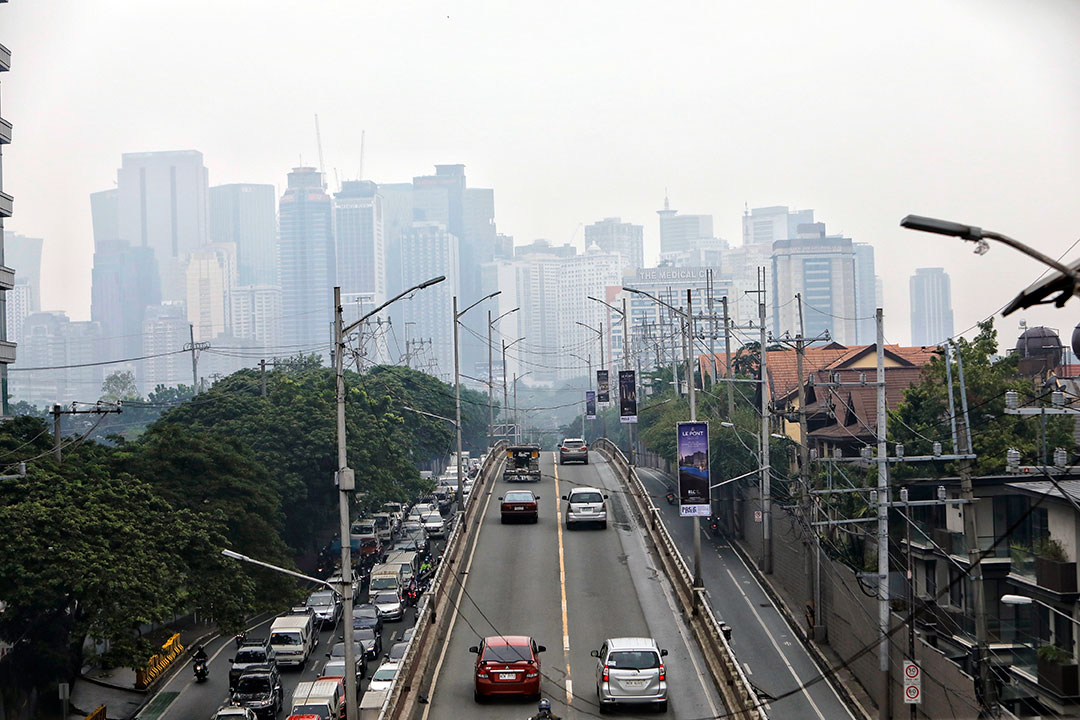
The Philippine economy will likely expand by just 5.2% this year as high inflation and the lagged impact of the central bank’s aggressive monetary tightening dampen growth, S&P Global Ratings said.   

The debt watcher’s latest Philippine gross domestic product (GDP) growth estimate for this year is lower than its 5.9% forecast given in June.

This is also below the government’s growth target of 6-7% for 2023, and much slower than the 7.6% GDP expansion in 2022.

“Growth this year will be weaker than in 2022, but our outlook remains broadly favorable,” S&P said in a report. “We lowered (our forecasts) for Hong Kong, the Philippines, Singapore, Thailand and, notably, Vietnam.”

S&P’s lower forecast comes after Philippine GDP grew by a weaker-than-expected 4.3% in the second quarter. In the first half, GDP expanded by 5.3%.

For 2024, S&P raised its GDP projection to 6.1% from 5.9% previously. However, it lowered its growth forecast for 2025 to 6.2% from 6.6%.

Meanwhile, the credit rater expects inflation to average 5.8% this year, in line with the Bangko Sentral ng Pilipinas’ (BSP) revised full-year forecast.   

It also sees inflation easing to 3.2% in 2024, slightly below the BSP’s 3.5% forecast.

According to S&P, core inflation has eased in Asia-Pacific economies, including the Philippines. But recent spikes in international prices of oil and food, especially rice, were reflected in the higher headline inflation in August.

“A fuller picture of the effect will emerge in coming months, depending on the evolution of global prices and government policies (an export ban on rice in India, the world’s largest rice exporter, contributed significantly to the increase in rice prices in Asia),” it said.

The debt watcher also noted that the El Niño weather pattern may likely persist until 2024, which will lead to weaker agricultural activity in the region and potentially higher food prices.

Headline inflation quickened for the first time in seven months in August to 5.3% from 4.7% in July. Meanwhile, core inflation further eased to 6.1% year on year in August from 6.7% in July.

“The recent rise in oil and food prices hasn’t yet led to a renewed worsening of external deficit trends in the Asian economies that ran current account deficits in 2022: India, New Zealand, the Philippines, and Thailand. Earlier declines in oil and commodity prices helped to reduce those deficits,” S&P said.

In the first semester, the country’s current account deficit stood at $8.2 billion (-4% of GDP), 32.2% lower than the $12.1-billion deficit (-6.1% of GDP) in the same period last year.

The BSP projects the current account deficit to reach $11.1 billion (-2.5% of GDP) for this year, before narrowing to $10.3 billion (-2.1% of GDP) in 2024.

“In New Zealand, the Philippines, and Thailand, rising tourism revenues are also making a difference. However, the new rise in oil and food prices will put pressure on the external deficit data in coming months,” the credit rater said.

Bank of the Philippine Islands (BPI) Lead Economist Emilio S. Neri, Jr. said the Philippines cannot rule out the debt watcher’s lower growth outlook for this year.

“We are a bit more optimistic than S&P though: while we think that making up for public sector underspending in the second quarter will be an uphill climb, we are likely to see improvements in government spending in the second half of 2023 to bring growth to the 5.5% to 6% range,” Mr. Neri said in a Viber message.

Aside from higher interest rates, he noted that growth has also been dampened by persistent inflation, government underspending and possible erosion of investor confidence due to geopolitical issues.

George N. Manzano, an economist at the University of Asia and the Pacific, said it will not be easy for the Philippines to achieve its 6-7% GDP growth target this year.

“The economy has to grow by 6.6-6.7% in the second half to hit the lower bound 6% government target,” he said.

“At the rate that inflation is increasing, with the food and energy prices, it may hamper demand and investment, especially if the BSP will hike interest rates further in the year. Thus, the burden will be on government spending to spur growth,” he added.

Last week, the BSP kept its key interest rate for a fourth straight meeting at 6.25%. From May 2022 to March 2023, the Monetary Board raised borrowing costs by 425 basis points (bps).

In the report, S&P expects the BSP’s policy rate to reach 6.5% this year. This assumes that the Monetary Board may still hike by 25 bps in the fourth quarter.

By end-2024, S&P expects the Monetary Board to cut its key rate to 5.75%.

The credit watcher also noted that they do not see any policy easing in the near term due to challenges in inflation and uncertainties from the US Federal Reserve.

“Most Asia-Pacific central banks consider the recent currency weakening as manageable but given renewed increases in global energy and food prices, they would be reluctant to see large currency depreciation stoke so-called imported inflation,” it said.

BSP Governor Eli M. Remolona, Jr. earlier said that the Monetary Board may raise policy rates again at its next meetings on Nov. 16 and Dec. 14 if inflationary pressures persist. — By Keisha B. Ta-asan, Reporter

Retail dollar bond offer to start on Wednesday

Retail dollar bond offer to start on Wednesday

The government is set to launch on Wednesday the first dollar-denominated bond offering targeting retail investors under the Marcos administration.

In a notice on its website, the Bureau of the Treasury (BTr) said it will hold a price-setting auction for the five-and-a-half-year onshore retail dollar bonds (RDB) on Sept. 27.

The bonds will also be offered to the public starting Sept. 27 until Oct. 6.

The issue date is set for Oct. 11. The bonds will mature on April 11, 2029.

The BTr set the minimum issue size at USD 200 million, although Finance Secretary Benjamin E. Diokno earlier said the government will try to raise $1 billion from the RDB offering.

“I think initially (the size is) USD 1 billion, but the demand for the offering is too big. Maybe we can upsize,” Mr. Diokno said on Friday.

This would be the Philippines’ second RDB issuance but the first one under President Ferdinand R. Marcos, Jr. The first offering raised USD 1.6 billion in 2021, under the Duterte administration.

“The RDBs shall be issued in scripless form and will be sold during the public offer period in minimum denominations of USD 200 (around P11,400) and multiples of USD 100 (PHP 5,700) after,” the BTr said.

To encourage more investors, the RDBs will be exempted from taxes, such as the final withholding tax on coupon payment and documentary stamp tax on original issue.

Rizal Commercial Banking Corp. Chief Economist Michael L. Ricafort said the yields for RDBs could range from 5.2% to 5.4%, similar to previously issued offshore dollar bonds in the secondary market.

“The relatively higher interest rates/yields for the RDBs could be attractive for retail investors and could lead to strong demand given the low minimum amount to enjoy the higher interest rates, especially if the investors hold the bonds until maturity to prevent market risk and enjoy the relatively higher coupon/interest rate income,” he said in a Viber message.

China Banking Corp. Chief Economist Domini S. Velasquez said she expects decent demand for the RBDs as “its rate will be higher than what we have seen in recent years.”

“The relatively small amount to enter the RDB market will prompt retail investors to take advantage of the issuance,” she said in a Viber message.

Security Bank Corp. Chief Economist Robert Dan J. Roces said the timing of the RDBs aligns with market conditions.

“The flexible tenor options, lower minimum denomination, and plans for Sukuk bonds should make these offerings more attractive to a broad range of investors,” Mr. Roces said in a Viber message.

Investors can order and purchase the new subscriptions to the RDBs through the BTr Online Ordering Facility on its website and settle through electronic payment facilities of China Banking Corp., Land Bank of the Philippines. (LANDBANK), and Metrobank via First Metro Securities Brokerage Corp.

Other online channels for the RDBs include Bonds.ph, and the mobile banking apps of Overseas Filipino Bank and LANDBANK.

The BTr is also targeting to launch Sukuk bonds within the fourth quarter this year. Mr. Diokno said that the Sukuk bonds will likely have an offer size of USD 1 billion. This would also mark the Philippine government’s first issuance in the Islamic bond market.

This year, the government’s borrowing plan is set at USD 2.207 trillion, consisting of PHP 1.654 trillion from domestic sources and PHP 553.5 billion from foreign sources. — A.M.C.Sy

PH financial resources further rise at end-July

PH financial resources further rise at end-July

The total resources of the Philippines’ financial system further rose at end-July, preliminary data from the Bangko Sentral ng Pilipinas (BSP) showed.

Resources of banks and nonbank financial institutions increased by 6.7% to PHP 28.796 trillion in the first seven months of the year, from PHP 27 trillion in the same period in 2022.

However, the growth in total resources is slower than the 7.7% recorded a month ago.

These financial resources are held by banks and nonbank financial institutions. These include funds and assets such as deposits, capital, as well as bonds or debt securities.

“The growth in the total assets/resources in the financial system and of banks is similar to the growth in loans; but still faster/better than the economic growth as consistently seen in recent years,” Rizal Commercial Banking Corp. Chief Economist Michael L. Ricafort said in a Viber message.

Earlier BSP data showed outstanding loans of big banks grew by 7.7% to PHP 11 trillion in July from PHP 10.21 trillion a year ago. This was slower than the 7.8% seen in June.

“The sustained growth in bank loans may also be attributed and consistent with the continued growth in deposits, as supported by the economic reopening narrative,” Mr. Ricafort said.

He said the sustained growth in the net income of banks has contributed to the increase in the financial system’s total resources. 

The Philippine banking system’s combined net profit climbed by 27.7% to PHP 182.764 billion in the first half of the year, from PHP 143.122 billion in the same period in 2022, separate BSP data showed.

“However, the slower growth in the total assets/resources of banks and nonbanks could be partly attributed to higher prices/inflation and higher interest rates,” he said.

To tame inflation, the Monetary Board hiked borrowing costs by 425 basis points from May 2022 to March 2023.

Based on data from the BSP, banking resources rose by 7.5% to PHP 23.763 trillion at end-July from PHP 22.095 trillion a year prior. Banks include universal and commercial banks, thrift banks, as well as rural and cooperative banks.

Broken down, the total banking resources held by universal and commercial banks stood at PHP 22.338 trillion as of end-July, up by 7.5% from PHP 20.775 trillion a year ago.

Thrift banks held PHP 1.018 trillion of total resources, increasing by 7.7% from PHP 945 billion a year ago.

The total resources of rural and cooperative banks climbed by 8.8% to P408 billion as of end-July from just P375 billion in the same period in 2022.

Meanwhile, the resources of nonbanking financial institutions inched up by 2.6% to PHP 5.033 trillion from PHP 4.906 trillion as of end-July 2022.

Nonbank financial institutions include investment houses, finance companies, security dealers, pawnshops and lending companies. 

Institutions such as nonstock savings and loan associations, credit card companies, private insurance firms, the Social Security System and the Government Service Insurance System are also considered nonbanks.

The financial system’s total resources stood at PHP 28.806 trillion in 2022, up by 9.3% from a year prior. — Keisha B. Ta-asan

Gov’t awards T-bills with higher rates

Gov’t awards T-bills with higher rates

The government made a full award of the Treasury bills (T-bills) it offered on Monday with higher rates due to hawkish signals from both the local and the US central banks.

The Bureau of the Treasury (BTr) raised PHP 15 billion as planned via the T-bills as total bids reached PHP 40.202 billion, or more than twice the amount on offer.

Broken down, the Treasury made a full PHP 5-billion award of the 91-day T-bills as tenders for the tenor reached PHP 10.045 billion. The three-month paper was quoted at an average rate of 5.595%, 4.3 basis points (bps) above the 5.552% seen last week when accepted rates ranged from 5.5% to 5.624%

The government also raised PHP 5 billion as planned from the 182-day securities as bids for the tenor reached PHP 16.28 billion. The average rate for the six-month T-bill was at 5.968%, up by 2.9 bps from 5.939% seen last week, with accepted rates at 5.945% to 5.988%.

Lastly, the BTr borrowed the programmed PHP 5 billion via the 364-day debt paper as demand for the tenor stood at PHP 13.877 billion. The average rate of the one-year T-bill rose by 4.6 bps to 6.119% from the 6.073% quoted last week. Accepted yields were from 6.085% to 6.199%.

At the secondary market before Monday’s auction, the 91-, 182- and 364-day T-bills were quoted at 5.6102%, 5.9444%, and 6.0960%, respectively, based on PHP Bloomberg Valuation Reference Rates data provided by the Treasury.

“The Auction Committee fully awarded bids for Treasury bills (T-bills) at today’s auction. The 91-, 182-, and 364-day T-bills fetched average rates of 5.595%, 5.968% and 6.119%, respectively. The auction was 2.7 times oversubscribed, attracting PHP 40.2 billion in total tenders,” the BTr said in a statement on Monday.

“With its decision, the Committee raised the full program of PHP 15 billion for the auction,” it added.

The T-bill rates moved up on Monday due to hawkish signals from both the US Federal Reserve and the Bangko Sentral ng Pilipinas (BSP), said Rizal Commercial Banking Corp. Chief Economist Michael L. Ricafort in a Viber message.

“Tendered rates moved up following the hawkish rhetoric of various Federal Reserve officials last week, bolstering views of elevated US policy rates for a prolonged period of time,” a trader likewise said in an e-mail.

The Fed last week kept its policy rate unchanged at a range between 5.25% and 5.5% during its policy meeting.

It has hiked rates by a cumulative 525 bps since it began its tightening cycle in March last year.

Meanwhile, BSP Governor Eli M. Remolona said in an interview with Bloomberg TV that the central bank might raise its benchmark rate again at its next meeting on Nov. 16 and hinted at the possibility of future rate hikes.

“We’re not convinced it would be the last one. It won’t be the last hike in the cycle,” he said. “We’re still in a hawkish stance.”

The Monetary Board on Thursday maintained its policy rate at 6.25% for a fourth straight meeting.

Interest rates on the overnight deposit and lending facilities were also left unchanged at 5.75% and 6.75%, respectively.

The BSP has raised borrowing costs by 425 bps from May 2022 to March 2023.

On Tuesday, the BTr will offer PHP 30 billion in reissued three-year Treasury bonds (T-bonds) with a remaining life of two years and 11 months.

The BTr wants to raise PHP 180 billion from the domestic market this month or P60 billion via T-bills and PHP 120 billion via T-bonds.

The government borrows from local and foreign sources to help fund its budget deficit, which is capped at 6.1% of gross domestic product this year. — Aaron Michael C. Sy

PHP inches up against USD on hawkish BSP signals

PHP inches up against USD on hawkish BSP signals

The peso slightly gained against the dollar on Monday due to hawkish signals from the Bangko Sentral ng Pilipinas (BSP).

The local currency closed at PHP 56.785 versus the dollar on Monday, strengthening by a centavo from Friday’s PHP 56.795 finish, data from the Bankers Association of the Philippines’ website showed.

The local unit opened Monday’s session at PHP 56.795 per dollar. Its intraday best was at PHP 56.735, while its weakest showing was at PHP 56.81 against the greenback.

Dollars traded went down to USD 904.9 million on Monday from USD 994.31 million on Friday.

The peso slightly strengthened amid signals from the central bank that there could be another rate hike at the Monetary Board’s (MB) Nov. 16 meeting, said Rizal Commercial Banking Corp. Chief Economist Michael L. Ricafort in a Viber message.

BSP Governor Eli M. Remolona, Jr. said in an interview with Bloomberg TV that the central bank might raise its benchmark rate again at its meeting in November and hinted at the possibility of future rate hikes.

“We’re not convinced it would be the last one. It won’t be the last hike in the cycle,” he said. “We’re still in a hawkish stance.”

The Monetary Board on Thursday maintained its policy rate at 6.25% for a fourth straight meeting.

Interest rates on the overnight deposit and lending facilities were also left unchanged at 5.75% and 6.75%, respectively.

The BSP has raised borrowing costs by 425 bps from May 2022 to March 2023.

Mr. Ricafort added that recent gains at the local stock market to one-week highs also supported the peso.

For Tuesday, Mr. Ricafort sees the peso ranging from PHP 56.68 to PHP 56.88 per dollar. — Aaron Michael C. Sy

PSEi advances on bargain-hunting; SM shares rise

PSEi advances on bargain-hunting; SM shares rise

Philippine stocks climbed on Monday as investors saw bargain-hunting opportunities while awaiting changes to the composite index that will take effect on Tuesday.

The Philippine Stock Exchange index (PSEi) gained 0.48% or 30.05 points to end at 6,172.84. The broader all-share index shed 0.24% or 8.20 points to 3,325.15.

“The market got another lift on the back of sustained bargain-hunting,” China Bank Capital Corp. Managing Director Juan Paolo E. Colet said in a Viber message. “Daily value turnover also spiked to more than P8 billion as institutions positioned for the changes to the PSE composite index.”

The stock rally remained prone to selling pressure “especially since we continue to see net selling by foreign investors,” he added.

Philstocks Financial, Inc. Research Analyst Claire T. Alviar said the bourse advanced “as investors continued to buy shares given the undervaluation of the PSEi.”

Value turnover went up to PHP 8.48 billion, with 1.79 billion shares changing hands. Value turnover on Friday was PHP 4.63 billion involving 1.09 billion shares.

Analysts said the higher value turnover was driven by the changes in the PSE’s composite index. Last week, the PSE announced changes to its indices effective Sept. 26.

The PSE took out Aboitiz Power Corp. and Metro Pacific Investments Corp. from the main index, replacing them with Bloomberry Resorts Corp. and Century Pacific Food, Inc.

SM Investments Corp.’s share price advance of 2.92% had helped lift the bourse given its substantial weight on the PSEi, Ms. Alviar said.

“SM is cheap from a fundamental perspective, and the technicals look promising, so we saw bargain-hunting emerge in that stock,” Mr. Colet said.

Almost all sectoral indices rose on Monday, except mining and oil, which dropped by 0.02% or 2.67 points to 10,384.79.

Holding companies climbed by 0.8% or 46.91 points to 5,861.86; property went up by 0.51% or 13.01 points to 2,565.98; financials gained 0.35% or 6.29 points to 1,794.52; services rose by 0.22% or 3.39 points to 1,491.93; and industrials increased by 0.2% or 18.33 points to 8,824.15.

Decliners outnumbered advancers 89 to 85, while 47 shares were unchanged.

Net foreign selling went up to PHP 316.23 million from PHP 57.56 million on Friday. —Sheldeen Joy Talavera, Reporter

Budget deficit widens in August

Budget deficit widens in August

The National Government’s (NG) budget deficit widened to PHP 133 billion in August as revenues declined, data from the Department of Finance (DoF) showed.

The fiscal gap ballooned to PHP 133 billion in August from PHP 72 billion a year ago.

Month on month, the budget deficit nearly tripled from the PHP 47.8-billion gap in July.

“This is due to the 6.6% contraction in government receipts alongside a 10% growth in expenditures,” DoF Secretary Benjamin E. Diokno said in a press briefing on Friday.

In August, government revenues dropped by 6.58% to PHP 310.6 billion from PHP 332.4 billion in the same month a year ago.

Tax revenues decreased by an annual 5.82% to PHP 291.7 billion, as collections by the Bureau of Internal Revenue (BIR) slid by 6.73% to PHP 213.5 billion and the Bureau of Customs’ (BoC) revenue fell by 4.92% to PHP 75 billion.

Meanwhile, nontax revenues slipped by 17.05% to PHP 18.8 billion, mainly due to the 29.41% decline in revenues from other offices to PHP 12.6 billion. On the other hand, the Bureau of the Treasury’s (BTr) revenue jumped by 27.8% to PHP 6.3 billion.     

Mr. Diokno said that the slump in revenue collection in August was due to the suspension of work due to heavy rains.

“I think their collection days were reduced because of the inclement weather… They will make it up for the following months,” he said.

“For nontax (revenues), it might be the same because if there’s no office, there’s no collection. For the BoC, if you can’t go to the shipments, you can’t collect.”

Mr. Diokno noted the decline in Customs collections was mainly due to easing oil prices. The agency’s monthly collections have been lower year on year since June.

“Number one, the price of oil is declining and then it turns out consumption of oil has also gone down. So, both in terms of quantity and price, it has gone down…but I’m not concerned about the collection of Customs. They’re still way ahead, year to date, if you can see,” he said.

Meanwhile, state spending rose by 9.66% to PHP 443.6 billion in August from PHP 404.5 billion a year earlier.

Primary expenditures, or spending net of interest payments, went up by 7.27% to PHP 400.9 billion in August. Interest payments climbed by 38.65% to PHP 42.7 billion.

8-month gap
In the first eight months of the year, the budget deficit narrowed by 12.06% to PHP 732.5 billion from PHP 833 billion in the same period a year ago.

Eight-month revenues jumped by an annual 9.03% to PHP 2.58 trillion. This accounted for over two-thirds or 69% of the PHP 3.729-trillion program for the full year.

Tax collection rose by 8.15% to P2.31 trillion as of end-August. BIR collections went up by 9.43% to P1.71 trillion, which represents 65% of the agency’s PHP 2.64-trillion collection target for 2023.

Meanwhile, Customs collections inched up by 3.99% to PHP 581.5 billion, which made up 67% of its PHP 874.2-billion program this year.

Nontax revenues climbed by 17.06% to PHP 274.6 billion, driven by a 22.62% surge in BTr revenue to PHP 150.1 billion and an 11.01% increase in revenue from other offices to PHP 124.5 billion.

Expenditures as of end-August rose by 3.54% to PHP 3.31 trillion from P3.2 trillion in the same period a year earlier. This was 63% of the full-year spending program of P5.228 trillion.

Primary expenditures inched higher by 2.26% to PHP 2.93 trillion while interest payments increased by 14.29% to PHP 388.7 billion.

“Higher prices/inflation and higher interest rates that raised borrowing/financing costs could have been a drag on tax revenue collections amid reduced business and consumer spending,” Rizal Commercial Banking Corp. Chief Economist Michael L. Ricafort said.

Headline inflation accelerated for the first time in seven months to 5.3% in August from 4.7% in July. For the first eight months, inflation averaged 6.6%.

“Higher prices could have also bloated some of the government’s expenditures. Higher US and global interest rates since 2022 could have also led to higher debt servicing costs of government Thus, all these factors led to wider budget deficit for the National Government,” Mr. Ricafort said.

The government set its deficit ceiling at PHP 1.499 trillion this year, equivalent to 6.1% of gross domestic product.

When asked if the NG’s budget deficit may likely fall below ceiling this year, Mr. Diokno said: “It turns out to be like that, because we will collect more, and spending will be less.” — By Luisa Maria Jacinta C. Jocson, Reporter

PH to launch dollar RTB offer this week

PH to launch dollar RTB offer this week

The government is planning to launch US dollar-denominated retail Treasury bonds (RTB) on Tuesday, Finance Secretary Benjamin E. Diokno said.

“We will launch the Retail Dollar Bonds 2 on Sept. 26,” Mr. Diokno said in a press briefing on Friday.

The Philippines’ last US-denominated RTB offer was in 2021, when it raised almost USD 1.6 billion.

Mr. Diokno said there will be a two-week offer for the RTBs.

“The minimum is just USD 200. And the tax, the government will be the one to pay. It’s tax-free, so it’s a good investment,” he said in mixed English and Filipino.

Mr. Diokno said they may consider increasing the offer size after seeing more interest from the public.

“I think initially it’s USD 1 billion, but the demand for the offering is too big. Maybe we can upsize,” he said.

The government earlier said it was targeting an offer size of USD 2 billion for the retail dollar bond offering.

Bureau of the Treasury Deputy Treasurer and Officer-in-Charge Sharon P. Almanza said the dollar retail bonds will either have a tenor of five years or 10 years.

“We’re looking at either five or 10 (year bonds), but most likely on the long five,” she added, noting that the offer will also be priced as a Republic of the Philippines (ROP) issuance.

Even if the retail dollar bond offer is upsized, Ms. Almanza said that there will be no need to adjust the government’s borrowing plan.

“The RTB is considered domestic, although of course its dollar denominated. For the domestic, we’re still about to raise 30%, so I don’t think we’ll be exceeding. If ever, we’ll be adjusting the (peso-denominated) Treasury bond issuances,” she added.

This year, the government’s borrowing plan is set at USD 2.207 trillion, consisting of PHP 1.654 trillion from domestic sources and PHP 553.5 billion from foreign sources.

From the January-to-July period, gross borrowings rose by 24.8% to PHP 1.55 trillion. Of this, gross domestic debt jumped by 28.4% to PHP 1.17 trillion.

The BTr is also targeting to launch Sukuk bonds within the fourth quarter this year. Mr. Diokno said that the Sukuk bonds will likely have an offer size of USD 1 billion.

“These are Islamic issuances that will diversify the government’s sources of financing, widen our investor base, and boost investments in physical and digital connectivity,” he added.

This would also mark the Philippine government’s first issuance in the Islamic bond market. — Luisa Maria Jacinta C. Jocson

Upside risks may prompt BSP to tighten policy in Q4

Upside risks may prompt BSP to tighten policy in Q4

Supply shocks to inflation and a weaker peso against the dollar may prompt the Bangko Sentral ng Pilipinas (BSP) to resume monetary tightening in the fourth quarter, according to analysts.

The future policy decisions of the US Federal Reserve may also push the BSP to start cutting policy rates in the second half of 2024.

Last week, the BSP maintained key interest rates for a fourth straight meeting on Sept. 21 but signaled it might resume tightening later this year if inflation pressures persist.

The Monetary Board kept its target reverse repurchase (RRP) rate at 6.25%, the highest in nearly 16 years. Interest rates on the overnight deposit and lending facilities were also left unchanged at 5.75% and 6.75%, respectively.

The Monetary Board hiked interest rates by 425 basis points (bps) from May 2022 to March 2023.

Security Bank Corp. Chief Economist Robert Dan J. Roces said a hawkish pause suggests that the BSP will continue to consider multiple factors before adjusting policy rates, such as inflation, the exchange rate, and economic growth. 

“We think that the question of another hike this year is an increasingly close call, owing to the supply-side nature of the current inflation trend. A weak peso and a Fed hike will be the catalysts,” he said in a Viber message.

In an interview with Bloomberg TV on Friday morning, BSP Governor Eli M. Remolona, Jr. said a possible rate hike at its next policy review on Nov. 16 may not be the last amid risks to inflation. The Monetary Board’s last meeting is on Dec. 14.

“We’re not convinced it would be the last one. It won’t be the last hike in the cycle,” he said. “We’re still in a hawkish stance.”

Mr. Remolona said that if inflation last month had been worse, the Monetary Board would have hiked rates last Thursday.

“If the inflation numbers had been just a bit worse, we might have gone for a hike this time. Nonetheless, the vote was unanimous, but the numbers were pretty close between hiking and not hiking,” he said.

August inflation unexpectedly rose to 5.3% from 4.7% in July, bringing the year-to-date average to 6.6%. It also marked the 17th consecutive month that inflation breached the 2-4% target. 

This prompted the BSP to raise its full-year inflation forecast to 5.8%, from 5.4% previously. It also revised its forecast for 2024 to 3.5%, from 3.3% previously, but maintained its 2025 forecast at 3.4%.

Mr. Remolona earlier said the BSP still projects inflation to return to the 2-4% target by November in the absence of further supply-side shocks.

“We continue to expect the BSP to hike its policy rate by 25 bps to 6.5% in the fourth quarter of 2023 if domestic rice prices spike again after the price cap is lifted by end-September,” HSBC ASEAN economist Aris Dacanay said in a note. 

Prices of rice have spiked amid short supply, prompting the government to impose a price ceiling on regular milled and well-milled rice at P41 and P45, respectively.

“Whether rice will be inflationary or not will depend on how much the tariff rate on rice is reduced after the cap is lifted, a proposal is currently being debated amongst policy makers. In other words, we think monetary policy will be dependent on what the fiscal policy will be in the coming months,” Mr. Dacanay said.

Finance Secretary Benjamin E. Diokno earlier proposed to temporarily reduce the 35% rice import tariff rates to 0-10% in order to tame prices.

According to Mr. Dacanay, if the tariff rate is cut to 10% or less, rice prices may become disinflationary, and there would be less reason for the central bank to hike rates.

“But if the tariff rate is reduced insufficiently, rice will be inflationary. This may trigger the BSP to hike its policy rate to support the peso and tamp down any second-round effects from occurring,” he said. 

For her part, China Banking Corp. Chief Economist Domini S. Velasquez said the recent supply shocks on inflation can still be addressed by non-monetary measures.

“Hopefully, the start of the harvest season for rice should help bring down prices in the coming months. Well-targeted subsidies to the transport sector could also further mitigate the effect of elevated oil prices globally,” she said in a Viber message. 

In a note, BMI Country Risk & Industry Research said that while they are keeping their forecast for the BSP to keep policy rates steady through the rest of the year, a 25-bp rate hike is on the table. 

“The US Federal Reserve has not completely ruled out the possibility of further tightening — a key risk that we have been highlighting. We think that the BSP will hike in lockstep with the Fed to maintain its external stability,” it said.

The peso has depreciated by 2.1% in the year-to-date against the greenback and is currently trending towards its one year low of PHP 59.50.

Mr. Dacanay said the peso is under pressure of almost breaching the assumption parameter of the PHP 54-PHP 57 level against the dollar of the Development Budget Coordination Committee.

The local unit closed at PHP 56.795 per dollar on Friday, strengthening by six centavos from its PHP 56.855 finish previously.

According to Mr. Roces, the slower-than-expected economic growth in the second quarter puts more pressure on the central bank to stimulate economic activity.

“Sluggish growth will make inflation management even more challenging, thus we expect the BSP to seek a balance of the need to stimulate economic activity with the goal of price stability,” he said. 

The Philippine economy expanded by 4.3% in the second quarter, the slowest in two years. For the first half, economic growth averaged 5.3%, below the government’s 6-7% target.

Mr. Roces expects the BSP’s hawkish hold to continue for the rest of the year.

“We still expect the policy rate to remain at 6.25% until the end of the year, seeing inflation to fall within target by late 2023 and average 5.6% for the year,” he added. — Keisha B. Ta-asan, Reporter

SEC identifies qualified projects for ‘blue bonds’ 

SEC identifies qualified projects for ‘blue bonds’ 

Projects and activities to be funded via the issuance of “blue bonds” should support specific items under the United Nations Sustainable Development Goals (UN SDGs), the corporate regulator said.

In newly released guidelines, the Securities and Exchange Commission (SEC) said initiatives using proceeds from the offering of blue bonds — or instruments that support water management and ocean protection, among others — should contribute to SDGs 6 and/or 14.

The two UN goals respectively aim to ensure the availability and sustainable management of water and sanitation, and conserve and sustainably use the oceans, seas and marine resources for sustainable development.

On Sept. 21, the corporate regulator issued Memorandum Circular (MC) No. 15, which contains the guidelines on eligible blue projects and activities for the issuance of blue bonds in the Philippines. 

According to the SEC, proceeds from blue bonds should only be used to finance or refinance new and/or existing “blue” initiatives. These include ecosystem management and natural resources restoration of coastal, marine, river, lake, and other marine- or water-based ecosystems, sustainable fisheries management, and sustainable aquaculture. 

The SEC said the contribution of the projects to the SDGs should be assessed and quantified “if possible” by the issuer of the blue bonds.

“Quantifiable performance measures include greenhouse gas emissions reduced or avoided, ocean-based renewable power generation or energy savings, water savings, plastic waste reduced or avoided, and wastewater treated or avoided, among others,” the SEC said.

As blue bonds are a subset of green bonds and sukuk, the SEC said the issuers of blue bonds should also comply with MC No. 12 series of 2018 or the guidelines for the issuance of ASEAN green bonds under the ASEAN green bonds standards in the Philippines. 

“The guidelines are based on the blue finance guidance framework developed by the International Finance Corp. and the green and blue bond framework of the Asian Development Bank,” the SEC said. 

“The issuance of blue bonds must also comply with sections 8 and 12 of Republic Act No. 8799, or the Securities Regulation Code, on the registration of securities,” it added. — Revin Mikhael D. Ochave

Posts navigation

Older posts
Newer posts

Recent Posts

  • Investment Ideas: April 1, 2026
  • Metrobank US-Iran Risk Index: Signals of an end
  • Eye on Earnings: Demand for connection supports telcos
  • Inflation Preview: March madness
  • Investment Ideas: March 31, 2026

Recent Comments

No comments to show.

Archives

  • April 2026
  • March 2026
  • February 2026
  • January 2026
  • December 2025
  • November 2025
  • October 2025
  • September 2025
  • August 2025
  • July 2025
  • June 2025
  • May 2025
  • April 2025
  • March 2025
  • February 2025
  • January 2025
  • December 2024
  • November 2024
  • October 2024
  • September 2024
  • August 2024
  • July 2024
  • June 2024
  • May 2024
  • April 2024
  • March 2024
  • February 2024
  • January 2024
  • December 2023
  • November 2023
  • October 2023
  • September 2023
  • August 2023
  • July 2023
  • June 2023
  • May 2023
  • April 2023
  • March 2023
  • February 2023
  • January 2023
  • December 2022
  • November 2022
  • October 2022
  • September 2022
  • August 2022
  • July 2022
  • June 2022
  • May 2022
  • March 2022
  • December 2021
  • October 2021

Categories

  • Bonds
  • BusinessWorld
  • Currencies
  • Economy
  • Equities
  • Estate Planning
  • Explainer
  • Featured Insight
  • Fine Living
  • How To
  • Investment Tips
  • Markets
  • Portfolio Picks
  • Rates & Bonds
  • Retirement
  • Reuters
  • Spotlight
  • Stocks
  • Uncategorized

You are leaving Metrobank Wealth Insights

Please be aware that the external site policies may differ from our website Terms And Conditions and Privacy Policy. The next site will be opened in a new browser window or tab.

Cancel Proceed
Get in Touch

For inquiries, please call our Metrobank Contact Center at (02) 88-700-700 (domestic toll-free 1-800-1888-5775) or send an e-mail to customercare@metrobank.com.ph

Metrobank is regulated by the Bangko Sentral ng Pilipinas
Website: https://www.bsp.gov.ph

Quick Links
The Gist Webinars Wealth Manager Explainers
Markets
Currencies Rates & Bonds Equities Economy
Wealth
Investment Tips Fine Living Retirement
Portfolio Picks
Bonds Stocks
Others
Contact Us Privacy Notice Terms of Use
© 2026 Metrobank. All rights reserved.

Access this content:

If you are an existing investor, log in first to your Metrobank Wealth Manager account. ​

If you wish to start your wealth journey with us, click the “How To Sign Up” button. ​

Login HOW TO SIGN UP