





MODEL PORTFOLIO
THE GIST
NEWS AND FEATURES
Global Philippines Fine Living
INSIGHTS
INVESTMENT STRATEGY
Economy Stocks Bonds Currencies
THE BASICS
Investment Tips Explainers Retirement
WEBINARS
2024 Mid-Year Economi Briefing, economic growth in the Philippines
2024 Mid-Year Economic Briefing: Navigating the Easing Cycle
June 21, 2024
Investing with Love
Investing with Love: A Mother’s Guide to Putting Money to Work
May 15, 2024
retirement-ss-3
Investor Series: An Introduction to Estate Planning
September 1, 2023
View All Webinars
DOWNLOADS
Container ship carrying container boxes import export dock with quay crane. Business commercial trade global cargo freight shipping logistic and transportation worldwide oversea concept. Generative AI
Economic Updates
Philippines Trade Update: Wider deficit on strong imports
DOWNLOAD
Frick collection with palm trees 
Economic Updates
Policy Rate Updates: Policy rate updates to reassure 
DOWNLOAD
Man using his smartphone
Reports
Fed to cut just once 
DOWNLOAD
View all Reports
Metrobank.com.ph How To Sign Up
Follow us on our platforms.

How may we help you?

TOP SEARCHES
  • Where to put my investments
  • Reports about the pandemic and economy
  • Metrobank
  • Webinars
  • Economy
TRENDING ARTICLES
  • Investing for Beginners: Following your PATH
  • On government debt thresholds: How much is too much?
  • Philippines Stock Market Outlook for 2022
  • Deficit spending remains unabated

Login

Access Exclusive Content
Login to Wealth Manager
Visit us at metrobank.com.ph How To Sign Up
Access Exclusive Content Login to Wealth Manager
Search
MODEL PORTFOLIO THE GIST
NEWS AND FEATURES
Global Philippines Fine Living
INSIGHTS
INVESTMENT STRATEGY
Economy Stocks Bonds Currencies
THE BASICS
Investment Tips Explainers Retirement
WEBINARS
2024 Mid-Year Economi Briefing, economic growth in the Philippines
2024 Mid-Year Economic Briefing: Navigating the Easing Cycle
June 21, 2024
Investing with Love
Investing with Love: A Mother’s Guide to Putting Money to Work
May 15, 2024
retirement-ss-3
Investor Series: An Introduction to Estate Planning
September 1, 2023
View All Webinars
DOWNLOADS
Container ship carrying container boxes import export dock with quay crane. Business commercial trade global cargo freight shipping logistic and transportation worldwide oversea concept. Generative AI
Economic Updates
Philippines Trade Update: Wider deficit on strong imports
March 27, 2026 DOWNLOAD
Frick collection with palm trees 
Economic Updates
Policy Rate Updates: Policy rate updates to reassure 
March 26, 2026 DOWNLOAD
Man using his smartphone
Reports
Fed to cut just once 
March 19, 2026 DOWNLOAD
View all Reports

Archives: Business World Article

Philippines sells USD611 million in RDBs

Philippines sells USD611 million in RDBs

The Philippines government on Wednesday raised USD 611.2 million (PHP 34.8 billion) at an auction of its second onshore retail dollar bonds (RDBs).

Tenders at the rate-setting auction hit USD 636.2 million, slightly above the USD 636 million on offer at the Bureau of the Treasury’s first retail dollar bond sale under President Ferdinand R. Marcos, Jr.

The amount raised was higher than the minimum issue size of USD 200 million, but lower than the USD 1 billion mentioned by Finance Secretary Benjamin E. Diokno last week.

It was also below the USD 1.593 billion raised at the first retail dollar bond auction in 2021 under then President Rodrigo R. Duterte.

The five-and-a-half-year bonds fetched a coupon rate of 5.75%, 350 basis points (bps) higher than the 2.25% set for the 10-year retail dollar bonds and 437.5 bps higher than the five-year bonds offered in October 2021.

The debt was awarded at rates ranging from 5% to 5.75%, bringing the average to 5.509%.

While the bond sale is small compared with the USD 3-billion overseas notes that the government sold in January, individuals are becoming a reliable source of funding for the Philippines. The country raised PHP 283.117 billion from the sale of peso retail bonds in February.

“The Philippines continues to enjoy a favorable credit rating, which should help with the pricing,” Nicholas Antonio T. Mapa, a senior economist at ING Bank N.V. Manila, said in a Viber message. “In the current environment with market still having ample liquidity, investors will be looking for alternative outlets to deploy funds.”

The retail dollar bonds’ coupon rate was 54.7 bps lower than the five-year debt paper quoted at 6.2967% in the secondary market on Wednesday, based on the PHP Bloomberg Valuation Reference Rates published on the Philippine Dealing System’s website.

The coupon rate is still higher than the yields of the previously issued offshore dollar bonds in the secondary market, Rizal Commercial Banking Corp. Chief Economist Michael L. Ricafort said in a Viber message.

He added that this could attract more investors, with the final amount potentially breaching the USD 1-billion mark that the government could try to raise.

The offer period for the dollar-denominated debt is from Sept. 27 to Oct. 6, while settlement is on Oct. 11. The bonds will mature on April 11, 2029.

Authorized selling agents for the RDBs are BDO Capital and Investment Corp., Bank of the Philippine Islands, China Banking Corp., Development Bank of the Philippines and First Metro Investment Corp. (FMIC).

Also joining them are HSBC, Metropolitan Bank and Trust Co., Philippine National bank, Security Bank Corp., Land Bank of the Philippines and Union Bank of the Philippines, Inc.

The government plans to borrow PHP 2.208 trillion this year, consisting of PHP 1.654 trillion from domestic and PHP 553.5 billion from foreign sources. — Aaron Michael C. Sy
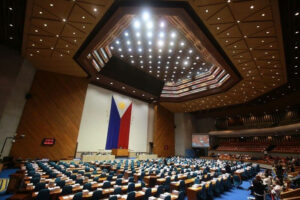

House OKs 2024 budget bill

House OKs 2024 budget bill

The Philippine House of Representatives on Wednesday night approved on third and final reading the PHP 5.786-trillion national budget for next year.

The 2024 budget is 9.5% higher than this year’s budget and is equivalent to 21.7% of the country’s gross domestic product (GDP).

Lawmakers approved House Bill 8980 or the General Appropriations bill on second and third reading on the same day after President Ferdinand R. Marcos, Jr. Certified the measure as urgent.

“We are confident that every centavo reflects the overarching targets to usher economic transformation towards inclusivity and sustainability and is in line with the administration’s medium-term fiscal framework, the eight-point socioeconomic agenda and the Philippine Development Plan (PDP),” Speaker Ferdinand Martin G. Romualdez told the plenary before its adjournment.

Congressmen earlier created a small committee to resolve individual amendments to the bill.

The Senate is still holding hearings on the budgets of the different agencies and expects to approve the measure on final reading by November.

In her turno en contra speech, Deputy Minority Leader and Party-list Rep. France L. Castro said the proposed budget has “no substantial difference from the budgets of the previous years,” noting insufficient appropriations for food, labor and social services.

Assistant Minority Leader and Party-list Rep. Arlene D. Brosas, who voted no to the bill, cited the budget’s “selective agenda.”

Committee on appropriations Chairman and Party-list Rep. Elizaldy S. Co. earlier said the House would realign the combined P650-million confidential and intelligence funds of the Office of the Vice President and Department of Education to the budgets of intelligence and security forces amid rising tensions with China.

Among the agencies that will benefit from the intelligence funds are the National Intelligence Coordinating Agency (NICA), National Security Council (NSA), Philippine Coast Guard (PCG) and Bureau of Fisheries and Aquatic Resources.

The Senate also committed to reallocate confidential and intelligence funds to relevant security agencies. — Beatriz Marie D. Cruz, Reporter

Philippine Q3 growth may hit 5.2% — report

Philippine Q3 growth may hit 5.2% — report

The Philippine economy would probably expand by as much as 5.2% in the third quarter — still below the government’s target — after posting its slowest growth in more than two years a quarter earlier, according to First Metro Investment Corp. (FMIC) and the University of the Asia and the Pacific (UA&P).

“We still see sufficient strength in the economy to get a 5-5.2% year-on-year third-quarter gross domestic product (GDP) growth,” they said in a report.

FMIC and UA&P’s previous forecast was for full-year GDP to hit the lower end of the government’s 6-7% goal. Second-quarter GDP grew by a weaker-than-expected 4.3%, bringing the first-half growth to 5.3%.

Growth in the third quarter would be driven by state and consumer spending and improved jobs, according to the report.

“Elevated National Government spending in the third quarter should provide the stimulus for the quarter, even as we expect a strong rebound in employment and consumer spending starting September,” FMIC and UA&P said.

“We expect a strong rebound in employment by September as firms gear up for the Christmas season, especially in those sectors lashed by the rain,” they added.

FMIC and UA&P said fourth-quarter growth would probably exceed 6% amid a rebound in consumer spending and growth in the industry, manufacturing and service sectors.

“The industry sector expansion will be broad-based, although manufacturing will take the lead,” they said. “The service sector should see domestic and foreign tourism drive trade, transportation and storage, and accommodations and food services starting September.”

“We still see full-year GDP growth at a respectable 5.5% despite the global slowdown,” they added.

FMIC and UA&P expect inflation to remain elevated until October before settling within the Bangko Sentral ng Pilipinas’ (BSP) target by November.

“The inflation outlook has become cloudy,” they said in the report. “We still expect headline inflation to go below BSPs’ 4% target ceiling by November even though we may expect elevated crude oil prices until November.”

Inflation quickened to 5.3% in August — the 17th straight month that it breached the central bank’s 2-4% target — after easing for the past six months. Inflation in the first eight months averaged 6.6%, above the BSP’s 5.8% full-year forecast.

This week, oil companies cut pump prices by 20 centavos a liter for gasoline and diesel, and by 50 centavos a liter for kerosene. This ended the 11-week streak of price increases since July.

Some lawmakers have proposed to suspend taxes on petroleum products amid high pump prices.

“Food prices will likely decelerate as rice harvests come to markets in late September and October, at the same time when we are beginning to see Thai rice prices easing from their August peak,” according to the FMIC and UA&P report.

President Ferdinand R. Marcos, Jr. earlier this month imposed a price ceiling on regular and well-milled rice amid spiraling prices. — Luisa Maria Jacinta C. Jocson, Reporter

TDF yields drop on hawkish Fed, BSP bets

TDF yields drop on hawkish Fed, BSP bets

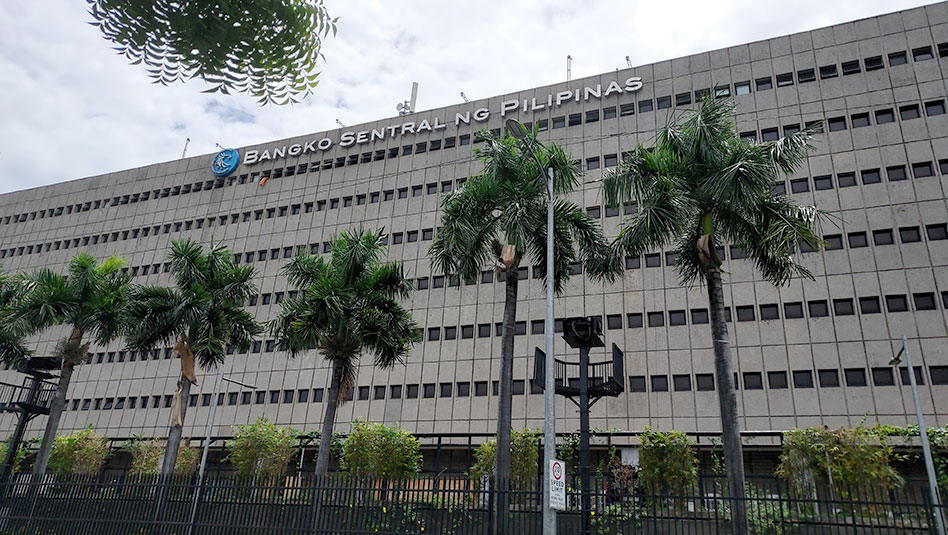
Yields on the central bank’s term deposits went down on Wednesday amid hawkish signals from the Bangko Sentral ng Pilipinas (BSP) and the US Federal Reserve.

The term deposit facility (TDF) of the BSP fetched bids amounting to PHP 421.104 billion on Wednesday, well above the PHP 350-billion offering but lower than the PHP 434.066 billion in tenders for the PHP 300-billion offer a week ago.

Broken down, tenders for the seven-day papers reached PHP 231.567 billion, higher than the PHP 200 billion auctioned off by the central bank but lower than the PHP 263.423 billion in bids for a PHP 180-billion offering seen the previous week.

Banks asked for yields ranging from 6.37% to 6.4895%, slimmer than the 6.3% to 6.515% band seen a week ago. This caused the average rate of the one-week deposits to decrease by 1.27 basis points (bps) to 6.4449% from 6.4576% previously.

Meanwhile, bids for the 14-day term deposits amounted to PHP 189.537 billion, above the PHP 150-billion offering and the PHP 170.643 billion in tenders for the PHP 120-billion offer on Sept. 20.

Accepted rates for the tenor were from 6.39% to 6.4913%, narrower than the 6.3275% to 6.525% margin seen a week ago. With this, the average rate for the two-week deposits slipped by 2.14 bps to 6.4649% from the 6.4863% logged in the prior auction.

The BSP has not auctioned off 28-day term deposits for more than two years to give way to its weekly offerings of securities with the same tenor.

The term deposits and the 28-day bills are used by the central bank to mop up excess liquidity in the financial system and to better guide market rates.

Term deposit yields went down due to hawkish signals from both the BSP and the Fed, Rizal Commercial Banking Corp. Chief Economist Michael L. Ricafort said in a Viber message.

BSP Governor Eli M. Remolona, Jr. told Bloomberg on Monday that he is open to an off-cycle rate hike before their Nov. 18 meeting and also ruled out cuts in the near term.

The central bank kept rates unchanged for a fourth straight meeting last week, but signaled it might resume tightening at its meeting in November if inflation pressures persist.

The Monetary Board kept its target reverse repurchase rate at 6.25%. Interest rates on the overnight deposit and lending facilities were also left unchanged at 5.75% and 6.75%, respectively.

Meanwhile, Chicago Fed President Austan Goolsbee said on Monday that inflation staying entrenched above the central bank’s 2% target remains a bigger risk than tight Fed policy slowing the economy more than needed, Reuters reported.

Minneapolis Fed President Neel Kashkari said more rate hikes are likely needed given the surprising resilience of the US economy.

The Fed last week kept its target rate unchanged at the 5.25% to 5.5% range.

It has hiked rates by a cumulative 525 bps since it began its tightening cycle in March last year. — AMCS with Reuters

Peso inches up before US economic data

Peso inches up before US economic data

The peso inched up versus the dollar on Wednesday on expectations of a weak US durable goods report overnight.

The local currency closed at PHP 56.95 versus the dollar on Wednesday, rising by half a centavo from Tuesday’s PHP 56.955 finish, data from the Bankers Association of the Philippines’ website showed.

The local unit opened Wednesday’s session stronger at PHP 56.90 per dollar. Its intraday best was at PHP 56.87, while its weakest showing was at PHP 56.98 against the greenback.

Dollars traded rose to USD 1.35 billion on Wednesday from the USD 1.06 billion on Tuesday.

“The peso appreciated slightly ahead of a potentially downbeat US durable goods report,” a trader said in an e-mail.

The US Census Bureau was scheduled to release the data overnight.

The peso inched up on Wednesday after President Ferdinand R. Marcos, Jr. rejected a proposal to temporarily reduce tariffs on imported rice and the ceiling on rice prices, which could have helped stabilize inflation, Rizal Commercial Banking Corp. Chief Economist Michael L. Ricafort likewise said in a Viber message.

Mr. Marcos turned down his economic managers’ proposal as he said that projections show that world rice prices would go down.

The National Economic and Development Authority (NEDA) had proposed to cut the tariff rates to as low as 0% from 35%.

During the Tuesday meeting, NEDA Secretary Arsenio M. Balisacan and Agriculture undersecretaries Leocadio Sebastian and Mercedita Sombilla “agreed that it was not the right time to lower tariff rates because of the downtrend in rice prices in the world market,” the presidential palace said.

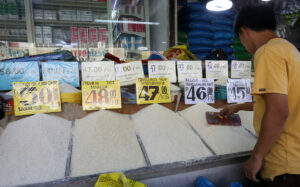
At the meeting, the President said the executive order that set a price cap of PHP 45 a kilo for well-milled rice and PHP 41 for regular milled rice would remain in effect.

Headline inflation rose to 5.3% in August from 4.7% in July.

Year to date, inflation averaged 6.6%, still well above the central bank’s 2-4% target for the year.

For Thursday, the trader sees the peso moving between PHP 56.80 and PHP 57 per dollar, while Mr. Ricafort sees it ranging from PHP 56.78 to PHP 56.98.

Meanwhile, the dollar scaled a 10-month high against its major peers on Wednesday, pushing the euro and sterling to 6-month lows and keeping the yen deep in intervention territory, as the prospect of higher-for-longer US rates gripped markets, Reuters reported.

The euro was last 0.1% lower at USD 1.0567, after hitting a six-month low of USD 1.0555 earlier in the session. The single currency is on track to lose more than 3% for the quarter, its worst quarterly performance in a year.

Sterling was also down 0.1% at USD 1.2149 after hitting a six-month trough of USD 1.2135 earlier on Wednesday, and was headed for a quarterly loss of more than 4%.

The US dollar index, meanwhile, peaked at a 10-month high of 106.32.

Fed officials have in recent days flagged the possibility that the central bank would need to raise interest rates further, after it kept rates steady last week but stiffened its hawkish monetary policy stance. — AMCS with Reuters

PSE index extends rally on improved sentiment

PSE index extends rally on improved sentiment

Philippine shares continued to climb on Wednesday as investors picked up bargains and amid improved market sentiment.

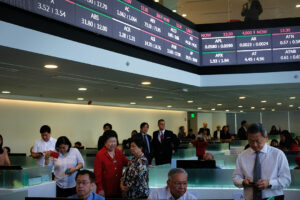
The Philippine Stock Exchange index (PSEi) went up by 110.74 points or 1.76% to end at 6,374.68 on Wednesday, while the broader all shares index rose by 51.50 points or 1.53% to 3,412.88.

“The local bourse surged by 110.74 points (1.76%) to 6,374.68, thanks to continued buying of local investors amid optimism towards the fourth quarter. Investors are also taking the opportunity to buy shares at bargain levels,” Philstocks Financial, Inc. Research Analyst Claire T. Alviar said in a Viber message.

“Today’s upward market movement can be attributed primarily to a substantial rebalancing event that triggered changes in index composition, closely watched by investors,” Seedbox Securities, Inc. Equity Trader Moses Frando said in a social media message on Tuesday.

Effective Tuesday, Bloomberry Resorts Corp. and Century Pacific Food, Inc. became part of the main index, replacing Aboitiz Power Corp. and Metro Pacific Investments Corp.

He added that sentiment improved as the Securities and Exchange Commission (SEC) said it supported a proposed measure lowering the stock transaction tax.

The SEC on Tuesday said it supports House Bill (HB) No. 9277, which seeks to lower the stock transaction tax to 0.1% from the current rate of 0.6%.

The measure also aims to reduce the tax dividends of foreign nonresidents to 10% from 25%.

HB 9277, which is pending at the committee level, is a substitute bill to HB 8958 filed by Albay Rep. Jose Ma. Clemente S. Salceda on Aug. 23. HB 8958 also proposed lower taxes on stock transactions to encourage greater participation of local and foreign investors in the Philippine capital market.

“The market displayed robust activity, marked by a strong rally that propelled the PSEi to close at its resistance level of 6,374. This resulted in a surge of interest among investors looking for undervalued opportunities…,” Mr. Frando added.

Value turnover went down to PHP 6.73 billion on Wednesday with 764.54 million shares changing hands from the PHP 35.16 billion with 6.41 billion shares seen on Tuesday.

All sectoral indices rose on Wednesday. Financials gained 41.55 points or 2.27% to end at 1,864.86; holding firms went up by 105.98 points or 1.78% to 6,058.11; industrials rose by 119.68 points or 1.34% to 9,042.69; services climbed by 18.77 points or 1.25% to 1,516.82; property increased by 30.53 points or 1.17% to 2,637.75; and mining and oil added 60.84 points or 0.58% to close at 10,506.67.

Advancers outnumbered decliners, 118 versus 74, while 42 shares closed unchanged.

Net foreign selling declined to PHP 301.32 million on Wednesday from PHP 15.20 billion on Tuesday. — SJT

Marcos rejects proposal to cut rice tariffs

Marcos rejects proposal to cut rice tariffs

Philippine President Ferdinand R. Marcos, Jr. has turned down his economic managers’ proposal to temporarily cut duties on rice imports amid spiraling prices.

In a Palace press release after his meeting with his Cabinet, Mr. Marcos said “it was not the right time to lower the tariff rates because the projection of world rice prices is that it will go down.”

The National Economic Development Authority (NEDA) had proposed to cut the tariff rates to as low as 0% from 35%.

During the Tuesday meeting, NEDA Secretary Arsenio A. Balisacan and Agriculture Undersecretaries Leocadio Sebastian and Mercedita Sombilla “agreed that it was not the right time to lower tariff rates because of the downtrend of rice prices in the world market,” the presidential palace said.

At the meeting, the President said the executive order that set a price cap of PHP 45 a kilo for well-milled rice and PHP 41 for regular milled rice would remain in effect.

“Let’s study it carefully,” he said in Filipino, referring to his order that took effect on Sept. 5.

Mr. Marcos has been saying that the country has enough supply of rice, blaming smugglers and hoarders for increasing prices.

Philippine palay output hit 4.25 million metric tons (MT) in the second quarter from 4.2 million MT a year earlier. — Kyle Aristophere T. Atienza

PHL economy likely to bounce back in 2024

PHL economy likely to bounce back in 2024

PHILIPPINE economic growth is expected to return to above 6% in 2024 as the impact of elevated inflation and high borrowing costs likely eases, analysts said.

“As the impact of inflation and rates dissipates next year, growth will likely return to above 6% in the medium term, still buoyed by strong underlying domestic demand and favorable demographics,” S&P Global Ratings Senior Economist Vincent Conti said in an e-mail.

S&P Global Ratings raised its 2024 GDP projection to 6.1% from 5.9% previously. However, this is still short of the government’s 6.5-8% target for 2024.

Economic growth may be stronger in 2024 due to a better outlook for inflation and monetary policy, University of Asia and the Pacific Senior Economist Cid L. Terosa said in an e-mail.

“I expect inflation to be within the 3.5% to 4% range next year. As inflation becomes tamer, we expect monetary easing to follow suit,” Mr. Terosa said.

The Bangko Sentral ng Pilipinas (BSP) last week raised its 2024 inflation forecast to 3.5% from 3.3% previously. Still, this is within the central bank’s 2-4% target range.

“Economic growth next year will be driven by better prices, business, and investor environments. I am optimistic that the Philippines can achieve at least 6% growth next year. The odds of achieving a 6.6-8% growth rate next year appear to be moderately high,” he said.

For this year, Mr. Terosa said it would be hard for the Philippines to achieve its 6-7% growth target. He expects GDP to grow by 5-5.7% this year.

“With a lower than 6% growth rate this year, the Philippines may not be able to achieve high middle-income status in the next two years. We need to grow by 6% for two to three consecutive years to have a clear shot at high middle-income status,” he said.

The government is targeting to reach upper middle-income status by 2025. The Philippines is currently classified as a lower middle-income country with a gross national income per capita at USD 3,950 in 2022.

S&P Global Ratings had also slashed its Philippine GDP forecast to just 5.2% this year, slower than the 5.9% forecast given in June. This after GDP expanded by 4.3% in the second quarter, its slowest growth in two years.

“We see this as a reflection of the simultaneous impact on household wealth and disposable incomes from the maturation of post-pandemic dissaving coupled with high inflation and the resulting rate hikes,” Mr. Conti said.

The BSP’s Monetary Board hiked borrowing costs by 425 basis points (bps) from May 2022 to March 2023. It opted to leave interest rates unchanged for a fourth straight time last week.

“These were also happening at the same time as fiscal consolidation, and together, these weigh on private investor sentiments,” Mr. Conti said.

Meanwhile, Philippine Exporters Confederation, Inc. President Sergio R. Ortiz-Luis, Jr. said it may be hard for the Philippines to meet its 2023 and 2024 growth targets amid dampened investor sentiment.

In a phone interview, Mr. Ortiz-Luis said aside from elevated inflation and uncertainties in food and fuel prices, investors are concerned with higher-than-expected wage increases.

“The Senate is still threatening to pass the PHP 150 minimum wage increase by December. So, our investors, even the local ones, adopted a wait-and-see approach,” he said in mixed English and Filipino. 

In March, Senate President Juan Miguel F. Zubiri filed a bill seeking to increase the minimum wage for all daily wage earners by PHP 150.

Finance Secretary Benjamin E. Diokno and National Economic and Development Authority Secretary Arsenio M. Balisacan have warned against the proposed wage hike as this may stoke inflation.

Mr. Ortiz-Luis also cited the government’s suspension of 22 reclamation projects in Manila Bay earlier in August. All projects are under review for their environmental and social impact.

He noted that a lot of investors have decided to look for partners in Vietnam and Taiwan instead of the Philippines. – Keisha B. Ta-asan, Reporter

Gov’t rejects all bids for reissued 3-year T-bonds

Gov’t rejects all bids for reissued 3-year T-bonds

THE GOVERNMENT rejected all bids for the reissued three-year Treasury bonds (T-bonds) it offered on Tuesday due to weak demand and as investors asked for higher yields ahead of the retail dollar bond (RDB) auction.

The Bureau of the Treasury (BTr) did not accept offers for its auction of PHP 30 billion in reissued three-year T-bonds, which have a remaining life of two years and 11 months.

The bond offering was undersubscribed, with bids for the tenor reaching just PHP 27.643 billion.

Had the Treasury accepted all tenders, the issue’s average rate would have been at 6.482%, 23.2 basis points (bps) higher than the 6.25% coupon for the issue and 26 bps above its 6.222% average rate when it was first offered on Sept. 5.

This was also 27.4 bps higher than the 6.208% quoted for the three-year bond and 30.1 bps above the 6.181% seen for the same bond series at the secondary market before Tuesday’s auction, based on PHP Bloomberg Valuation Service Reference Rates data provided by the Treasury.

“The total outstanding volume for the series currently stands at PHP 21.2 billion,” the BTr said in a statement on Tuesday.

The Treasury rejected all bids for the reissued bonds as investors asked for high rates and as the offer went undersubscribed, a trader said in a phone interview.

The BTr did not make an award as demand was weak due to the government’s upcoming RDB offer on Wednesday, Rizal Commercial Banking Corp. Chief Economist Michael L. Ricafort said in a Viber message.

The government will hold a price-setting auction for the five-and-a-half-year onshore RDBs on Sept. 27, with a minimum issue size of $200 million.

The bonds will be offered to the public from Sept. 27 to Oct. 6.

The issue date is set on Oct. 11, and the bonds will mature on April 11, 2029.

Rates rose partly due to elevated US Treasury yields, Mr. Ricafort added.

The BTr wants to raise PHP 180 billion from the domestic market this month, or PHP 60 billion via Treasury bills and PHP 120 billion via T-bonds.

The government borrows from local and foreign sources to help fund its budget deficit, which is capped at 6.1% of gross domestic product this year. — AMCS

PHL stocks rise on BSP chief’s hawkish comments

PHL stocks rise on BSP chief’s hawkish comments

PHILIPPINE STOCKS climbed further on Tuesday following hawkish comments from the central bank chief and amid excess liquidity due to Metro Pacific Investments Corp.’s (MPIC) tender offer.

The Philippine Stock Exchange index (PSEi) went up by 91.10 points or 1.47% to end at 6,263.94 on Tuesday, while the broader all shares index rose by 36.23 points or 1.09% to 3,361.38.

“Shares on the Philippine Stock Exchange climbed as banks rally after central bank Governor Eli Remolona said he’s open to an unscheduled interest rate increase before the November meeting,” Globalinks Securities and Stocks, Inc. Head of Sales Trading Toby Allan C. Arce said in a Viber message.

“The local bourse bucked the trend across the region as most Asian stocks sank as the prospect of higher US rates and persistent concerns over a Chinese economic slowdown kept investors wary of regional markets,” Mr. Arce added.

Bangko Sentral ng Pilipinas (BSP) Governor Eli M. Remolona, Jr. told Bloomberg on Monday that he is open to an off-cycle rate hike before their Nov. 18 meeting and also ruled out cuts in the near term.

The central bank kept rates unchanged for a fourth straight meeting last week, but signaled it might resume tightening at its next meeting in November if inflation pressures persist.

The Monetary Board kept its target reverse repurchase rate at 6.25%. Interest rates on the overnight deposit and lending facilities were also left unchanged at 5.75% and 6.75%, respectively.

Investors also saw opportunities from MPIC’s tender offer, Unicapital Securities, Inc. Senior Equity Research Analyst Carlos Angelo O. Temporal said in a Viber message.

“The index ended higher by 1.48%, notably outperforming other markets in the region, and this is likely attributable to the allocation of the extra liquidity brought about by MPI’s tender offer across the market as today marks the cross date for the transaction,” Mr. Temporal said on Tuesday.

In July, MPIC said the tender offer price went up to P5.20 per share from P4.63 per share initially offered by the consortium, which is backed by First Pacific Co. Ltd., GT Capital Holdings, Inc., and Mitsui & Co. Ltd.

Last week, MPIC told the local bourse that the tender offer had closed, with cross date scheduled on Sept. 26 and settlement date on Sept. 28.

All sectoral indices went up on Tuesday. Property rose by 41.24 points or 1.6% to 2,607.22; financials climbed by 28.79 points or 1.6% to 1,823.31; holding firms increased by 90.27 points or 1.54% to 5,952.13; industrials went up by 98.86 points or 1.12% to 8,923.01; mining and oil added 61.04 points or 0.58% to end at 10,445.83; and services inched up by 6.12 points or 0.41% to 1,498.05.

Value turnover surged to P35.16 billion on Tuesday with 6.41 billion shares changing hands from the P8.48 billion with 1.79 billion shares seen on Monday.

Advancers outnumbered decliners, 115 versus 59, while 53 shares closed unchanged.

Net foreign selling rose to P15.20 billion on Tuesday from P316.23 million on Monday. — SJT

Posts navigation

Older posts
Newer posts

Recent Posts

  • Investment Ideas: April 1, 2026
  • Metrobank US-Iran Risk Index: Signals of an end
  • Eye on Earnings: Demand for connection supports telcos
  • Inflation Preview: March madness
  • Investment Ideas: March 31, 2026

Recent Comments

No comments to show.

Archives

  • April 2026
  • March 2026
  • February 2026
  • January 2026
  • December 2025
  • November 2025
  • October 2025
  • September 2025
  • August 2025
  • July 2025
  • June 2025
  • May 2025
  • April 2025
  • March 2025
  • February 2025
  • January 2025
  • December 2024
  • November 2024
  • October 2024
  • September 2024
  • August 2024
  • July 2024
  • June 2024
  • May 2024
  • April 2024
  • March 2024
  • February 2024
  • January 2024
  • December 2023
  • November 2023
  • October 2023
  • September 2023
  • August 2023
  • July 2023
  • June 2023
  • May 2023
  • April 2023
  • March 2023
  • February 2023
  • January 2023
  • December 2022
  • November 2022
  • October 2022
  • September 2022
  • August 2022
  • July 2022
  • June 2022
  • May 2022
  • March 2022
  • December 2021
  • October 2021

Categories

  • Bonds
  • BusinessWorld
  • Currencies
  • Economy
  • Equities
  • Estate Planning
  • Explainer
  • Featured Insight
  • Fine Living
  • How To
  • Investment Tips
  • Markets
  • Portfolio Picks
  • Rates & Bonds
  • Retirement
  • Reuters
  • Spotlight
  • Stocks
  • Uncategorized

You are leaving Metrobank Wealth Insights

Please be aware that the external site policies may differ from our website Terms And Conditions and Privacy Policy. The next site will be opened in a new browser window or tab.

Cancel Proceed
Get in Touch

For inquiries, please call our Metrobank Contact Center at (02) 88-700-700 (domestic toll-free 1-800-1888-5775) or send an e-mail to customercare@metrobank.com.ph

Metrobank is regulated by the Bangko Sentral ng Pilipinas
Website: https://www.bsp.gov.ph

Quick Links
The Gist Webinars Wealth Manager Explainers
Markets
Currencies Rates & Bonds Equities Economy
Wealth
Investment Tips Fine Living Retirement
Portfolio Picks
Bonds Stocks
Others
Contact Us Privacy Notice Terms of Use
© 2026 Metrobank. All rights reserved.

Access this content:

If you are an existing investor, log in first to your Metrobank Wealth Manager account. ​

If you wish to start your wealth journey with us, click the “How To Sign Up” button. ​

Login HOW TO SIGN UP