MODEL PORTFOLIO
THE GIST
NEWS AND FEATURES
Global Philippines Fine Living
INSIGHTS
INVESTMENT STRATEGY
Economy Stocks Bonds Currencies
THE BASICS
Investment Tips Explainers Retirement
WEBINARS
2024 Mid-Year Economi Briefing, economic growth in the Philippines
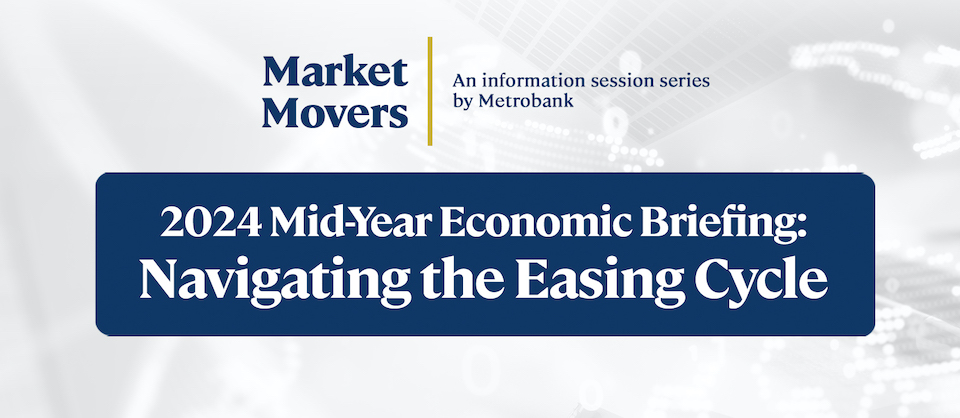
2024 Mid-Year Economic Briefing: Navigating the Easing Cycle
June 21, 2024
Investing with Love
Investing with Love: A Mother’s Guide to Putting Money to Work
May 15, 2024
retirement-ss-3
Investor Series: An Introduction to Estate Planning
September 1, 2023
View All Webinars
DOWNLOADS
Container ship carrying container boxes import export dock with quay crane. Business commercial trade global cargo freight shipping logistic and transportation worldwide oversea concept. Generative AI
Economic Updates
Philippines Trade Update: Wider deficit on strong imports
DOWNLOAD
Frick collection with palm trees 
Economic Updates
Policy Rate Updates: Policy rate updates to reassure 
DOWNLOAD
Man using his smartphone
Reports
Fed to cut just once 
DOWNLOAD
View all Reports
Metrobank.com.ph How To Sign Up
Follow us on our platforms.

How may we help you?

TOP SEARCHES
  • Where to put my investments
  • Reports about the pandemic and economy
  • Metrobank
  • Webinars
  • Economy
TRENDING ARTICLES
  • Investing for Beginners: Following your PATH
  • On government debt thresholds: How much is too much?
  • Philippines Stock Market Outlook for 2022
  • Deficit spending remains unabated

Login

Access Exclusive Content
Login to Wealth Manager
Visit us at metrobank.com.ph How To Sign Up
Access Exclusive Content Login to Wealth Manager
Search
MODEL PORTFOLIO THE GIST
NEWS AND FEATURES
Global Philippines Fine Living
INSIGHTS
INVESTMENT STRATEGY
Economy Stocks Bonds Currencies
THE BASICS
Investment Tips Explainers Retirement
WEBINARS
2024 Mid-Year Economi Briefing, economic growth in the Philippines
2024 Mid-Year Economic Briefing: Navigating the Easing Cycle
June 21, 2024
Investing with Love
Investing with Love: A Mother’s Guide to Putting Money to Work
May 15, 2024
retirement-ss-3
Investor Series: An Introduction to Estate Planning
September 1, 2023
View All Webinars
DOWNLOADS
Container ship carrying container boxes import export dock with quay crane. Business commercial trade global cargo freight shipping logistic and transportation worldwide oversea concept. Generative AI
Economic Updates
Philippines Trade Update: Wider deficit on strong imports
March 27, 2026 DOWNLOAD
Frick collection with palm trees 
Economic Updates
Policy Rate Updates: Policy rate updates to reassure 
March 26, 2026 DOWNLOAD
Man using his smartphone
Reports
Fed to cut just once 
March 19, 2026 DOWNLOAD
View all Reports

Archives: Business World Article

September inflation likely within 5.3%-6.1% range — BSP

September inflation likely within 5.3%-6.1% range — BSP

Philippine annual inflation in September is expected to settle within the range of 5.3% to 6.1%, the central bank said on Friday, ahead of the data release next week.

Higher prices of fuel, electricity, and key agricultural commodities, as well as peso depreciation are the primary sources of upward price pressures in September, the Bangko Sentral ng Pilipinas (BSP) said in a statement.

Lower prices of rice and meat could contribute to downward price pressures for the month, it said.

Headline inflation in August quickened for the first time in seven months to 5.3% due largely to an uptick in food and transport costs, keeping pressure on the central bank to maintain its hawkish policy stance.

On Thursday, BSP Governor Eli M. Remolona doubled down on his hawkish signals, saying there was “a little bit of scope” for an off-cycle interest rate hike “depending on the numbers”.

Last week, he said a hike was on the table at the BSP’s rate-setting meeting in November.

The BSP on Sept. 21 kept its Target Reverse Repurchase Rate steady at 6.25%, for a fourth straight meeting, after a series of hikes from May last year to March this year to curb inflationary pressures.

“Going forward, the BSP will continue to monitor developments affecting the outlook for inflation and growth in line with its data dependent approach to monetary policy formulation,” it said in Friday’s statement. — Reuters

T-bill rates may go up on hawkish BSP bets

T-bill rates may go up on hawkish BSP bets

Rates of Treasury bills (T-bills) could climb this week on expectations that the Bangko Sentral ng Pilipinas (BSP) would raise borrowing costs before its November policy meeting.

The Bureau of the Treasury (BTr) will auction off PHP 15 billion in T-bills on Monday, or PHP 5 billion each in 91-, 182- and 364-day papers.

The government will not auction off Treasury bonds (T-bonds) this week to give way to its ongoing offering of retail dollar bonds (RDBs), which is set to end on Oct. 6. The RDBs will be issued on Oct. 11.

The government raised an initial USD 611.2 million (PHP 34.8 billion) from the onshore RDBs at the rate-setting auction last week, higher than the minimum issue size of USD 200 million. The five-and-a-half-year bonds fetched a coupon rate of 5.75% with rates ranging from 5% to 5.75%, bringing the average to 5.509%.

T-bill yields may track the increases seen at the secondary market last week amid hawkish BSP bets, Rizal Commercial Banking Corp. Chief Economist Michael L. Ricafort said in a Viber message.

At the secondary market on Friday, the 91-, 182-, and 364-day T-bills went up by 9.47 basis points (bps), 3.84 bps, and 9.81 bps week on week to end at 5.7049%, 5.9828%, and 6.1941%, respectively, based on PHP BVAL Reference Rates data published on the Philippine Dealing System’s website.

BSP Governor Eli M. Remolona, Jr. told Bloomberg last week that he is open to an off-cycle rate hike before their Nov. 16 meeting and ruled out cuts in the near term.

The central bank last month kept its policy rate unchanged at 6.25% for a fourth straight meeting. However, officials signaled they might resume tightening at their next review if inflation pressures persist.

Yields at the secondary market rose as the BSP said headline inflation could have picked up in September, Mr. Ricafort added.

Philippine annual inflation in September is expected to settle within the range of 5.3% to 6.1%, the central bank said on Friday.

Higher prices of fuel, electricity, and key agricultural commodities, as well as peso depreciation are the primary sources of upward price pressures in September, the BSP said in a statement.

Meanwhile, a BusinessWorld poll of 17 analysts yielded a median estimate of 5.4% for September inflation, near the low end of the BSP’s forecast.

If realized, the consumer price index (CPI) would be faster than the 5.3% seen in August, but lower than the 6.9% in the same month last year.

This would also be the 18th straight month that inflation would breach the central bank’s 2-4% target for the year.

The Philippine Statistics Authority will release September CPI data on Oct. 5, Thursday.

US inflation data released on Friday could also affect T-bill yields, a trader said in an e-mail.

Data showed the US personal consumption expenditures (PCE) price index, excluding the volatile food and energy components, increased 3.9% on an annual basis for August, the first time in over two years it had fallen below 4%, Reuters reported.

The Fed tracks the PCE price indexes for its 2% inflation target.

Last week, the BTr raised PHP 15 billion as planned from T-bills as total bids reached PHP 40.202 billion, or more than twice the amount on offer. 

Broken down, the Treasury made a full PHP 5-billion award of the 91-day T-bills as tenders for the tenor reached PHP 10.045 billion. The average rate of the three-month paper went up by 4.3 bps to 5.595%, with accepted rates ranging from 5.5% to 5.624%

The government also raised PHP 5 billion as planned from the 182-day securities as bids for the tenor reached PHP 16.28 billion. The average rate for the six-month T-bill was at 5.968%, up by 2.9 bps from the previous week, with accepted rates at 5.945% to 5.988%.

Lastly, the BTr borrowed the programmed PHP 5 billion via the 364-day debt paper as demand for the tenor stood at PHP 13.877 billion. The average rate of the one-year T-bill rose by 4.6 bps to 6.119%. Accepted yields were from 6.085% to 6.199%.

The Treasury wants to raise PHP 150 billion from the domestic market this month, or PHP 60 billion via T-bills and PHP 90 billion via T-bonds.

The government borrows from local and foreign sources to help fund its budget deficit, which is capped at 6.1% of gross domestic product this year. — with Reuters

Peso may rise before September inflation data

Peso may rise before September inflation data

The peso could strengthen against the dollar this week ahead of the release of September inflation data and as the Bangko Sentral ng Pilipinas (BSP) chief said they would consider an off-cycle rate increase.

The local unit closed at PHP 56.575 per dollar on Friday, strengthening by 40.50 centavos from its PHP 56.98 finish on Thursday, data from the Bankers Association of the Philippines showed.

Week on week, the peso strengthened by 22 centavos from its PHP 56.795 per dollar finish on Sept. 22.

The local currency opened Friday’s session at PHP 56.75 against the dollar, which was also its weakest showing. Its intraday best was at Php 56.52 versus the greenback.

Dollars exchanged rose to USD 1.19 billion on Friday from USD 980.6 million on Thursday.

The peso strengthened on Friday as the dollar generally slid against other currencies and lower global crude oil prices, Rizal Commercial Banking Corp. Chief Economist Michael L. Ricafort said in a Viber message.

For this week, the peso could strengthen due to hawkish signals from the central bank and before the release of September inflation data on Thursday, Mr. Ricafort said.

BSP Governor Eli M. Remolona, Jr. told Bloomberg last week that he is open to an off-cycle rate hike before their Nov. 18 meeting and ruled out cuts in the near term.

Meanwhile, a BusinessWorld poll of 17 analysts yielded a median estimate of 5.4% for September inflation, near the low end of the BSP’s 5.3-6.1% estimate.

If realized, September inflation would be faster than the 5.3% seen in August, but lower than the 6.9% in the same month last year.

For this week, the peso could range from PHP 56.30 to PHP 56.80 per dollar, Mr. Ricafort said.

PSE index may hit 6,400 level on bargain hunting

PSE index may hit 6,400 level on bargain hunting

The main index is expected to climb and hit the 6,400 level this week on bargain hunting ahead of the release of September inflation data.

The Philippine Stock Exchange index (PSEi) went down by 64.28 points or 1% to close at 6,321.24 on Friday, while the broader all shares index shed 18.38 points or 0.53% to 3,400.83.

Week on week, the PSEi gained 178.45 points or 2.91% from its close of 6,142.79 on Sept. 22.

For this week, analysts expect Philippine shares to climb, although trading would be driven by the release of key economic data.

“The PSEi may rise to around 6,400 and then enter a tight consolidation phase within the range of 6,300 to 6,400 as it builds momentum,” Seedbox Securities, Inc. Equity Trader Jayniel Carl S. Manuel said in an e-mail.

“The recent unsustainable rally, coupled with a drop on the final day of September’s trading, has raised concerns in the market, which may lead to a consolidation phase aimed at establishing a more stable foundation for growth,” Mr. Manuel added.

The PSEi’s current trading level could still attract investors to pick up cheap stocks, which could push the market higher, he said.

“Despite last week’s rally, the local market remains at attractive levels as its price to earnings ratio as of Sept. 29 is at 13.61x, below its 2018-2022 average of 19.08x. As to whether the bargain hunting will continue [this] week may depend on the upcoming data,” Philstocks Financial, Inc. Senior Research Analyst Japhet Louis O. Tantiangco said in a Viber message.

“Investors are expected to watch out for the upcoming September inflation data as this would give clues on the Philippines’ consumer price situation as well as on the BSP’s (Bangko Sentral ng Pilipinas) policy outlook,” Mr. Tantiangco said.

August inflation data will be released on Oct. 5, Thursday.

A BusinessWorld poll of 17 analysts yielded a median estimate of 5.4% for September headline inflation, close to the lower end of the central bank’s 5.3% to 6.1% forecast for the month.

If realized, this would be faster than the 5.3% print in August but lower than the 6.9% seen last year.

A faster inflation print would drag the market lower “due to the negative implications on our economic performance and the resulting possibility of the BSP tightening further,” Mr. Tantiangco said.

“Higher market interest rates are particularly damaging to high-growth sectors such as consumer discretionary. As a consequence, such sectors are expected to remain volatile, ushering in potential uncertainty,” Globalinks Securities and Stocks, Inc. Head of Sales Trading Toby Allan C. Arce said in a Viber message.

Mr. Tantiangco added that investors are also waiting for the release of S&P Global Philippines Manufacturing Purchasing Manager’s Index data on Monday and August labor market data on Friday.

For this week, he placed the PSEi’s support and resistance between 6,150 and 6,600. — SJT

BSP to lower RRR ‘when time is right’

BSP to lower RRR ‘when time is right’

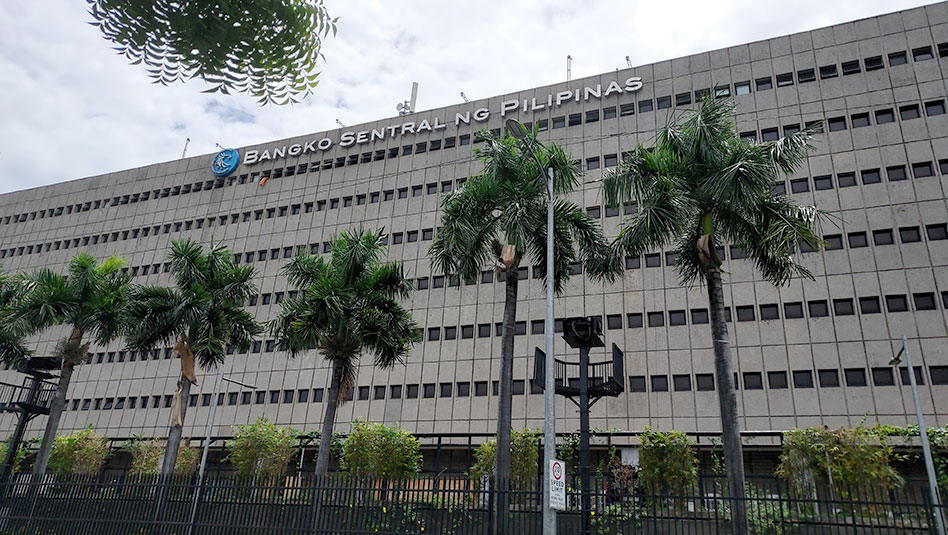
The Bangko Sentral ng Pilipinas (BSP) is looking to further reduce banks’ reserve requirement ratio (RRR) when the time is right, possibly as early as 2024, its governor said on Thursday.

“For 2023, (yes), it’s off the table. Maybe the soonest would be 2024,” BSP Governor Eli M. Remolona, Jr. told reporters late on Thursday when asked when the central bank would consider RRR cuts.

“When the time is right, we will try to lower the RRR even more, but the time is not yet right,” he said.

The RRR is the portion of reserves that banks must hold onto rather than lending out.

In June, the BSP slashed the ratio for big banks and nonbank financial institutions with quasi-banking functions by 250 basis points (bps) to 9.5%. The BSP has brought down the RRR for big banks to a single-digit level this year from a high of 20% in 2018. 

“I think it’s not low enough, 9.5% puts us among the highest in Asia, among our neighbors,” Mr. Remolona said.

Asked about the possible terminal rate, Mr. Remolona said that the central bank is still studying this.

“The reason we had such a high reserve requirement is when we were still very old school it was a way to control money supply, nobody does that anymore… Right now, it’s just a distortion in financial intermediation, it drives a wedge between lending rates and deposit rates unnecessarily,” he added.

Last week, the Monetary Board extended its hawkish policy pause for a fourth straight meeting, keeping the key interest rate at 6.25% — the highest in nearly 16 years. 

The BSP has raised borrowing costs by 425 bps from May 2022 to March 2023 to tame inflation. 

Meanwhile, Mr. Remolona said the high interest rates do not appear to have impacted economic growth so far this year.

“In our estimate, it hasn’t yet affected GDP growth, but what we try to do is balance supply and demand. In our own models, the outcome is 0%, which means we are just at the right level,” he said.

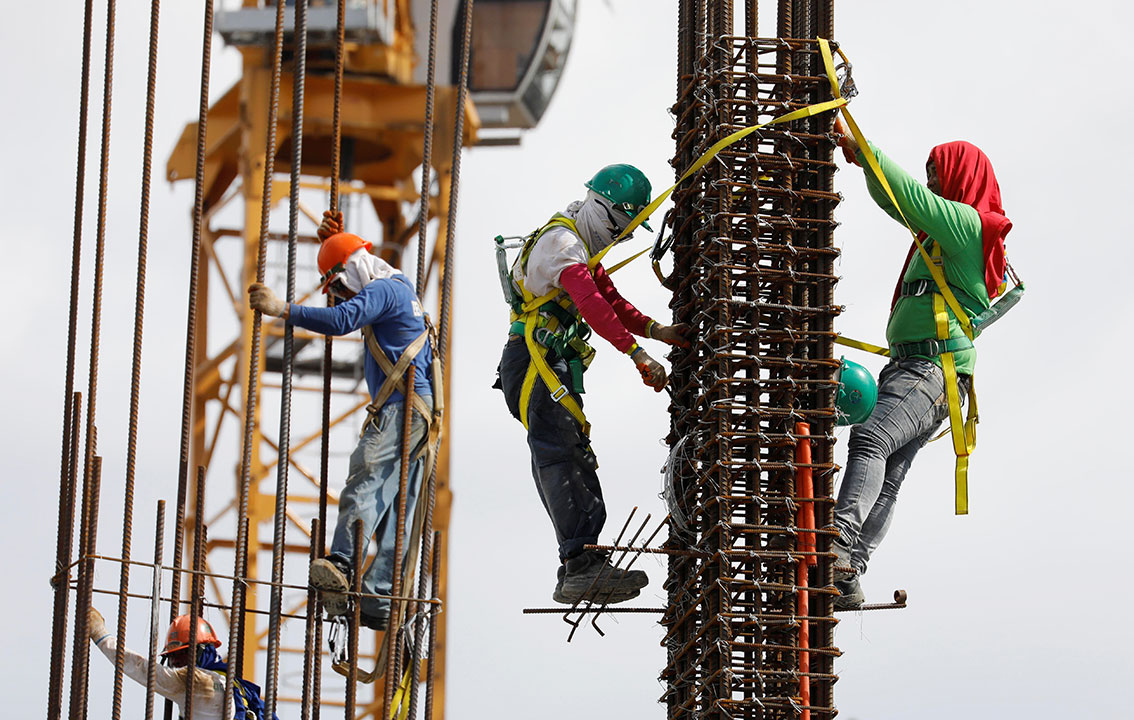
The Philippine economy grew by a weaker-than-expected 4.3% in the second quarter, its slowest growth in more than two years, reflecting the impact of weaker consumption and government underspending.

For the first half of the year, GDP growth averaged by 5.3%, below the government’s 6-7% full-year target. — Luisa Maria Jacinta C. Jocson

NEDA chief expects better Q3 growth

NEDA chief expects better Q3 growth

Economic growth likely rebounded in the third quarter as the government addressed underspending, National Economic and Development Authority (NEDA) Secretary Arsenio M. Balisacan said.

Asked if third-quarter gross domestic product (GDP) would be better than the second-quarter print, Mr. Balisacan told reporters on Wednesday: “That’s what we’re expecting.”

Philippine GDP expanded by 4.3% in the April-to-June period, the slowest in two years. This was weaker than the 6.4% growth in the first quarter and 7.5% in the same period last year.

The disappointing second-quarter growth was mainly attributed to weaker consumption and a decline in government spending. Government spending contracted by 7.1% in April to June, a reversal of the 6.2% growth in the first quarter and 10.9% a year ago.

“The contribution (to the economy) that we were expecting from government spending did not fully materialize in the second quarter, it can be recovered in the third or fourth quarter. It was not completely lost,” Mr. Balisacan said.

Government agencies have been flagged for their low budget utilization in the first half of the year. Data from the Budget department showed that the cash utilization rate of government agencies hit 93% as of end-August, behind the year-earlier pace of 95%.

Budget Secretary Amenah F. Pangandaman earlier said that the economy could have expanded by 5.3% in the second quarter if not for underspending.

Agencies have been ordered to submit catch-up spending plans to address low utilization. Mr. Balisacan also said that the economic team has been reporting the state of these catch-up plans to the President.

The NEDA chief is unfazed by recent growth downgrades by multilateral lenders and institutions, saying this is expected amid continued global headwinds.

“Let me just put in context that the reduced growth forecast by the Asian Development Bank (ADB) and other institutions is true for almost every country because of what they’re seeing in the global market. There are still quite upside risks there. It’s not just us,” he said.

The ADB recently lowered its Philippine GDP growth forecast to 5.7% this year from 6%; while the ASEAN+3 Macroeconomic Research Office cut its projection to 5.9% from 6.2% previously. The Organisation for Economic Co-operation and Development trimmed its GDP outlook to 5.6% from 5.7% earlier.

“If you look at the first-half growth of the country, we are still better than most countries in Asia, particularly in our ASEAN (Association of Southeast Asian Nations) region. Our first half is very respectable. I think that if we come close to that first-half (figure), we should be okay,” Mr. Balisacan added.

For the first half, GDP growth averaged 5.3%, lower than the government’s 6-7% target.

“As I said earlier, we need to grow 6.6% (in the second half) to achieve the lower growth (target), but even if that’s a little lower, I’d still be happy considering what has happened in the world and you can see that such performance will still make us quite a respectable country,” he said.

Mr. Balisacan said inflation remains the government’s biggest challenge.

“That’s why we (the economic team) are so focused on addressing the inflation issue because that high inflation as we all know reduces domestic demand, so we are incessantly monitoring the situation,” he said.

Inflation quickened to 5.3% in August from 4.7% in July. This marked the 17th straight month inflation breached the Bangko Sentral ng Pilipinas’ (BSP) 2-4% target band.

Headline inflation averaged 6.6% in the first eight months, still above the BSP’s revised 5.8% full-year forecast.

The Philippine Statistics Authority is set to release preliminary third-quarter GDP data on Nov. 9. — Luisa Maria Jacinta C. Jocson

PH to expand by 5% this year — ANZ

PH to expand by 5% this year — ANZ

ANZ Research slashed its Philippine gross domestic product (GDP) growth forecast to 5% this year as economic activity is “losing steam much faster than anticipated.”

“We have revised down our 2023 full-year GDP growth forecast to 5% from 5.8%. The second-quarter 2023 outcome was weaker than anticipated and prospects are subdued,” it said in its latest Asia Economic Outlook.

The ANZ’s growth forecast is way below the government’s 6-7% growth target for this year.

This comes after Philippine GDP growth slowed to 4.3% in the second quarter from 6.4% in the first quarter and 7.5% in the same period in 2022. In the first half, GDP expansion averaged 5.3%.

“Private consumption growth should continue to moderate on the back of slower growth in remittances and an uninspiring pattern of job creation,” ANZ said.

Household spending, which accounts for three-fourths of GDP, grew by 5.5% in the second quarter. This was the slowest pace of private consumption growth since the 4.8% contraction in the first quarter of 2021.

Based on ANZ’s forecasts, private consumption is expected to jump by 5.3% this year, easing from 8.3% seen in 2022.

ANZ noted that most of the new jobs being created are in agriculture and sales, which typically have low wages.

“More importantly, the flow of funds data suggests households are dissaving. The only tangible support to household consumption has been credit. Consumption credit has been rising in double digits and is also reflected in sturdy auto sales and consumer goods imports,” it said.

However, credit growth is unlikely to be sustained amid high interest rates and tighter bank lending standards, it added.

The Bangko Sentral ng Pilipinas (BSP) has raised interest rates by 425 basis points (bps) to a near 16-year high of 6.25% to tame inflation.

“Overall, the outlook for household consumption is best reflected in the moderation in consumer confidence,” ANZ said.

Many corporates are also not planning to invest and expand this year, ANZ said, citing “insufficient demand” as a key business constraint.

The outlook for exports “remains muddy,” it said, giving a 2.5% growth forecast for this year, much slower than the 10.9% growth in 2022.

“Our GDP growth forecasts for key markets for Philippines’ exports suggest weaker demand in 2024. Admittedly, the tech cycle is now reviving but the strength of the rebound is yet to be established. The competitiveness of the Philippines’ electronics industry is also debatable,” ANZ said.

Meanwhile, the Philippine economy is expected to rebound in the next two years, with ANZ giving a 5.6% GDP growth forecast for 2024 and 6% in 2025. These forecasts are below the government’s 6.5-8% growth goals for both years.

Cut unlikely in 2024
Meanwhile, ANZ expects the Bangko Sentral ng Pilipinas (BSP) to maintain the pause in its tightening cycle for the rest of the year.

“Our view is that the BSP will hold the policy rate at 6.25% and that a cut is unlikely even in 2024,” it added.

On Monday, BSP Governor Eli M. Remolona, Jr. said that he is open to an off-cycle interest rate hike before the Monetary Board’s Nov. 16 meeting.

“The acceleration in August inflation will ensure a hawkish policy stance, albeit further rate rises are unlikely. In our view, the BSP will likely monitor the effectiveness of the rice price cap and the secondary impact of higher food and energy prices before initiating another rate hike,” ANZ said.

ANZ noted the outlook for inflation has deteriorated due to the spike in food and energy prices.

Inflation accelerated for the first time in seven months in August to 5.3%, bringing the eight-month average to 6.6%.

“While the intensity of the emerging El Niño or the effectiveness of the recently imposed rice price ceiling are yet to be established, the momentum in headline (inflation) suggests it will fall back into the central bank’s target range of 2-4% only in Q1 2024, compared with our earlier expectation of Q4 2023,” ANZ said.

ANZ sees inflation averaging 6% this year, still above the central bank’s 2-4% target and 5.8% full-year forecast. For 2024, it sees inflation settling at 3.5%.

Meanwhile, ANZ said the government is on track to meet its deficit target this year. The government set its deficit ceiling at PHP 1.499 trillion this year, equivalent to 6.1% of GDP.

“Fiscal consolidation will continue over the coming years but likely at a slower pace than projected. The government’s growth and revenue estimates look ambitious, particularly when the growth drivers are weak,” it added.

As of end-June, the National Government’s deficit-to-GDP ratio stood at 4.8%, lower than 6.5% in the same period in 2022. — Luisa Maria Jacinta C. Jocson


Gov’t to borrow P150B from domestic market in Oct.

Gov’t to borrow P150B from domestic market in Oct.

The National Government (NG) plans to borrow PHP 150 billion from the domestic market in October, the Bureau of the Treasury (BTr) said on Thursday.

The October borrowing plan is 16.67% lower than the PHP 180-billion program for September, but higher than the actual PHP 121.064 billion raised by the government this month.

The government plans to borrow PHP 60 billion from T-bills and PHP 120 billion via T-bonds in September, the BTr said.

Broken down, the government will offer PHP 5 billion each in 91-day, 182-day, and 364-day T-bills on Oct. 2, 9, 16, and 23.

For the long-term tenors, the BTr will offer PHP 30 billion in five-year T-bonds on Oct. 10 and PHP 30 billion in seven-year bonds on Oct. 17.

It will also auction off PHP 30 billion in 10-year T-bonds on Oct. 24.

The lower borrowing plan for October could have been due to the lower amount of government bond maturities during the month versus September and August, Rizal Commercial Banking Corp. Chief Economist Michael L. Ricafort said in a Viber message.

Meanwhile, rates for the T-bills and bonds to be offered next month could be steady due to elevated US Treasury yields recently, he added.

“Excess liquidity in the financial system could still support demand for government securities, but could be offset by [the] lower amount of maturing government bonds in October/4Q 2023,” he said.

The BTr set a lower October borrowing plan likely to give way to its retail dollar bond (RDB) issuance, China Banking Corp. Chief Economist Domini S. Velasquez said in a Viber message.

The government raised an initial USD 611.2 million (PHP 34.8 billion) at the rate-setting auction of its second onshore RDBs on Wednesday, more than three times the minimum issue size of USD 200 million.

The five-and-a-half-year bonds fetched a coupon rate of 5.75%.

The BTr could potentially raise more than USD 1 billion via the RDBs as investors view it as an alternative to local government securities, Mr. Ricafort said.

Hawkish signals from the Philippine central bank and inflation likely remaining above 5% this month could also contribute to elevated returns for the government securities, Ms. Velasquez added.

BSP Governor Eli M. Remolona, Jr. told Bloomberg on Monday that he is open to an off-cycle rate hike before their Nov. 18 meeting and ruled out cuts in the near term.

The central bank kept its benchmark rate unchanged for a fourth straight meeting at 6.25% last week.

However, officials signaled they might resume tightening at their next meeting if inflation pressures persist.

The NG’s gross domestic borrowing program this year is set at PHP 1.654 trillion, composed of PHP 54.1 billion in T-bills and PHP 1.6 trillion in T-bonds.

The government borrows from local and external sources to help fund a budget deficit capped at 6.1% of the gross domestic product this year. — A.M.C. Sy

Peso drops to new 10-month low

Peso drops to new 10-month low

The peso dropped to a new 10-month low against the dollar on Thursday due to market worries over possibilities of a US government shutdown.

The local currency closed at P56.98 versus the dollar on Thursday, weakening by three centavos from Wednesday’s P56.95 finish, data from the Bankers Association of the Philippines’ website showed.

This was the peso’s weakest finish in over 10 months or since its PHP 57.375-per-dollar finish on Nov. 22, 2022.

The local unit opened Thursday’s session stronger at PHP 56.888 per dollar, which was also its intraday best. Its weakest showing was its close of PHP 56.98 against the greenback.

Dollars traded went down to USD 980.6 million on Thursday from USD 1.35 billion on Wednesday, Bankers Association of the Philippines data showed.

“The peso weakened anew due to renewed market worries over the possibility of a US government shutdown over the weekend,” a trader said in an e-mail.

The peso was also dragged down by the dollar’s continued strength and high global crude oil prices recently, Rizal Commercial Banking Corp. Chief Economist Michael L. Ricafort likewise said in a Viber message.

For Friday, the trader said the peso could depreciate further ahead of potentially stronger US producer inflation data.

The trader sees the peso moving between PHP 56.80 and PHP 57 per dollar on Friday, while Mr. Ricafort sees it ranging from PHP 56.85 to PHP 56.99. — AMCS

Shares up on window dressing, increased buying

Shares up on window dressing, increased buying

PHILIPPINE SHARES rose further on Thursday on month-end window dressing and as buying activity was boosted by increased liquidity following changes to the composition of the main index.

The Philippine Stock Exchange index (PSEi) went up by 10.84 points or 0.17% to end at 6,385.52 on Thursday, while the broader all shares index rose by 6.33 points or 0.18% to 3,419.21.

“It’s been a remarkable run for the local market so far as it posted its sixth straight day of gains on the strength of a mix of window dressing, technical buying, and institutional portfolio adjustments,” China Bank Capital Corp. Managing Director Juan Paolo E. Colet said in a Viber message.

The removal of the Aboitiz Power Corp. (AP) and Metro Pacific Investments Corp. (MPIC) from the main index resulted in excess liquidity, which boosted activity in the market, Mr. Colet added.

Effective Tuesday, Bloomberry Resorts Corp. and Century Pacific Food, Inc. became part of the PSEi, replacing MPIC and AP.

The local bourse continued to climb on “bargain hunting and as investors recalibrated their portfolios following the PSEi’s off-cycle rebalancing,”

Regina Capital Development Corp. Head of Sales Luis A. Limlingan said in a Viber message.

The market was boosted by investors redeploying proceeds from the MPIC tender offer, China Bank Securities Corp. Research Associate Lance U. Soledad likewise said in an e-mail.

Last week, MPIC told the local bourse that its tender offer had closed, with the cross date on Sept. 26 and settlement date on Sept. 28.

In July, MPIC said the tender offer price went up to P5.20 per share from P4.63 per share initially offered by the consortium, which is backed by First Pacific Co. Ltd., GT Capital Holdings, Inc., and Mitsui & Co. Ltd.

Sectoral indices were split on Thursday. Services rose by 17.47 points or 1.15% to 1,534.29; holding firms climbed by 24.04 points or 0.39% to 6,082.15; and mining and oil went up by 19.90 points or 0.18% to 10,526.57.

Meanwhile, property dropped by 5.96 points or 0.22% to 2,631.79; financials declined by 2.31 points or 0.12% to 1,862.55; and industrials went down by 3.93 points or 0.04% to 9,038.76.

Value turnover decreased to P5.17 billion on Thursday with 777.99 million shares changing hands from the P6.73 billion with 764.54 million shares seen on Wednesday.

Advancers outnumbered decliners, 113 versus 76, while 59 shares closed unchanged.

Net foreign buying stood at P194.03 million on Thursday versus the P301.32 million in net selling seen on Wednesday.

For Friday, Mr. Limlingan said investors will take their cue from US gross domestic product and housing data that were set to be released overnight.

MPIC is one of the three key Philippine units of Hong Kong-based First Pacific, the others being Philex Mining Corp. and PLDT Inc.

Hastings Holdings, Inc., a unit of PLDT Beneficial Trust Fund subsidiary MediaQuest Holdings, Inc., has a majority share in BusinessWorld through the Philippine Star Group, which it controls. — SJT

Posts navigation

Older posts
Newer posts

Recent Posts

  • Investment Ideas: April 1, 2026
  • Metrobank US-Iran Risk Index: Signals of an end
  • Eye on Earnings: Demand for connection supports telcos
  • Inflation Preview: March madness
  • Investment Ideas: March 31, 2026

Recent Comments

No comments to show.

Archives

  • April 2026
  • March 2026
  • February 2026
  • January 2026
  • December 2025
  • November 2025
  • October 2025
  • September 2025
  • August 2025
  • July 2025
  • June 2025
  • May 2025
  • April 2025
  • March 2025
  • February 2025
  • January 2025
  • December 2024
  • November 2024
  • October 2024
  • September 2024
  • August 2024
  • July 2024
  • June 2024
  • May 2024
  • April 2024
  • March 2024
  • February 2024
  • January 2024
  • December 2023
  • November 2023
  • October 2023
  • September 2023
  • August 2023
  • July 2023
  • June 2023
  • May 2023
  • April 2023
  • March 2023
  • February 2023
  • January 2023
  • December 2022
  • November 2022
  • October 2022
  • September 2022
  • August 2022
  • July 2022
  • June 2022
  • May 2022
  • March 2022
  • December 2021
  • October 2021

Categories

  • Bonds
  • BusinessWorld
  • Currencies
  • Economy
  • Equities
  • Estate Planning
  • Explainer
  • Featured Insight
  • Fine Living
  • How To
  • Investment Tips
  • Markets
  • Portfolio Picks
  • Rates & Bonds
  • Retirement
  • Reuters
  • Spotlight
  • Stocks
  • Uncategorized

You are leaving Metrobank Wealth Insights

Please be aware that the external site policies may differ from our website Terms And Conditions and Privacy Policy. The next site will be opened in a new browser window or tab.

Cancel Proceed
Get in Touch

For inquiries, please call our Metrobank Contact Center at (02) 88-700-700 (domestic toll-free 1-800-1888-5775) or send an e-mail to customercare@metrobank.com.ph

Metrobank is regulated by the Bangko Sentral ng Pilipinas
Website: https://www.bsp.gov.ph

Quick Links
The Gist Webinars Wealth Manager Explainers
Markets
Currencies Rates & Bonds Equities Economy
Wealth
Investment Tips Fine Living Retirement
Portfolio Picks
Bonds Stocks
Others
Contact Us Privacy Notice Terms of Use
© 2026 Metrobank. All rights reserved.

Access this content:

If you are an existing investor, log in first to your Metrobank Wealth Manager account. ​

If you wish to start your wealth journey with us, click the “How To Sign Up” button. ​

Login HOW TO SIGN UP