




MODEL PORTFOLIO
THE GIST
NEWS AND FEATURES
Global Philippines Fine Living
INSIGHTS
INVESTMENT STRATEGY
Economy Stocks Bonds Currencies
THE BASICS
Investment Tips Explainers Retirement
WEBINARS
2024 Mid-Year Economi Briefing, economic growth in the Philippines
2024 Mid-Year Economic Briefing: Navigating the Easing Cycle
June 21, 2024
Investing with Love
Investing with Love: A Mother’s Guide to Putting Money to Work
May 15, 2024
retirement-ss-3
Investor Series: An Introduction to Estate Planning
September 1, 2023
View All Webinars
DOWNLOADS
Container ship carrying container boxes import export dock with quay crane. Business commercial trade global cargo freight shipping logistic and transportation worldwide oversea concept. Generative AI
Economic Updates
Philippines Trade Update: Wider deficit on strong imports
DOWNLOAD
Frick collection with palm trees 
Economic Updates
Policy Rate Updates: Policy rate updates to reassure 
DOWNLOAD
Man using his smartphone
Reports
Fed to cut just once 
DOWNLOAD
View all Reports
Metrobank.com.ph How To Sign Up
Follow us on our platforms.

How may we help you?

TOP SEARCHES
  • Where to put my investments
  • Reports about the pandemic and economy
  • Metrobank
  • Webinars
  • Economy
TRENDING ARTICLES
  • Investing for Beginners: Following your PATH
  • On government debt thresholds: How much is too much?
  • Philippines Stock Market Outlook for 2022
  • Deficit spending remains unabated

Login

Access Exclusive Content
Login to Wealth Manager
Visit us at metrobank.com.ph How To Sign Up
Access Exclusive Content Login to Wealth Manager
Search
MODEL PORTFOLIO THE GIST
NEWS AND FEATURES
Global Philippines Fine Living
INSIGHTS
INVESTMENT STRATEGY
Economy Stocks Bonds Currencies
THE BASICS
Investment Tips Explainers Retirement
WEBINARS
2024 Mid-Year Economi Briefing, economic growth in the Philippines
2024 Mid-Year Economic Briefing: Navigating the Easing Cycle
June 21, 2024
Investing with Love
Investing with Love: A Mother’s Guide to Putting Money to Work
May 15, 2024
retirement-ss-3
Investor Series: An Introduction to Estate Planning
September 1, 2023
View All Webinars
DOWNLOADS
Container ship carrying container boxes import export dock with quay crane. Business commercial trade global cargo freight shipping logistic and transportation worldwide oversea concept. Generative AI
Economic Updates
Philippines Trade Update: Wider deficit on strong imports
March 27, 2026 DOWNLOAD
Frick collection with palm trees 
Economic Updates
Policy Rate Updates: Policy rate updates to reassure 
March 26, 2026 DOWNLOAD
Man using his smartphone
Reports
Fed to cut just once 
March 19, 2026 DOWNLOAD
View all Reports

Archives: Business World Article

Short selling to start on Oct. 23

Short selling to start on Oct. 23

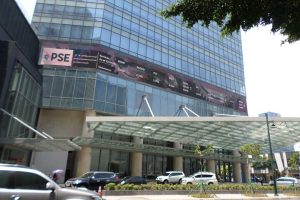
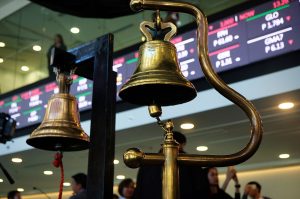
The Philippine Stock Exchange, Inc. (PSE) will launch the short selling of securities on Oct. 23 in a bid to bolster trading in the domestic market.

“PSE is set to launch short selling within the month. More specifically, we are targeting Oct. 23 given that all regulatory approvals were received for this initiative,” PSE President and Chief Executive Officer Ramon S. Monzon said during a forum organized by the local market operator in Taguig City on Wednesday.

His statement comes after the PSE announced on Oct. 2 that short-selling guidelines are to take effect immediately following the regulatory approval of provisions relating to securities borrowing and lending (SBL). Short selling could only function if an SBL program is in place.

The PSE describes short selling as a “trading strategy” that involves the selling of a borrowed security with the intention of buying it back later at a lower price. Short selling allows investors to hedge against the downside risk of an investment.

Eligible securities for short selling are all PSE index, PSE MidCap, and PSE Dividend Yield constituent companies and exchange-traded funds.

The trading strategy is practiced in Southeast Asian countries such as Singapore, Hong Kong, Malaysia, Thailand, and Indonesia.

Short-selling guidelines were approved by the PSE in 2018 but were not implemented because of pending approvals from the Securities and Exchange Commission and the Bureau of Internal Revenue. The market operator is banking on short selling to attract foreign investors and drive market activity.

PNB Securities, Inc. President Manuel Antonio G. Lisbona told BusinessWorld via mobile phone that the upcoming launch of short selling gives another option for market participants to earn.

“By allowing short selling, the PSE provides a way for stock market participants to make money in a bear market,” he said.

However, Mr. Lisbona cautioned investors to first be familiar with short-selling rules, “particularly the uptick rule, which means that a short sale order cannot be executed at the ‘bid’ but posted at the ‘ask’ price.”

“More importantly, the potential loss on short selling is theoretically infinite, therefore there should be good risk management practices in place like stop-loss orders,” he added.

April Lynn Lee-Tan, COL Financial Group, Inc. chief equity strategist, said via mobile phone that short selling could boost the market’s value turnover.

“The addition of new products should help improve value turnover, although not immediately. At least investors have more options to capitalize on opportunities, depending on market conditions,” she said.

China Bank Capital Corp. Managing Director Juan Paolo E. Colet said the launch of short selling is a “positive development” for the domestic stock market and will boost market activity and liquidity.

“I expect this product to attract more investors, including foreign long/short funds, and expand the investment strategies available to market participants,” Mr. Colet told BusinessWorld via mobile phone.

“Retail investors should be particularly careful as they can suffer potentially significant losses if they do not properly manage their short sales,” he added.

Rizal Commercial Banking Corp. Chief Economist Michael L. Ricafort said the entry of short selling would align the country’s stock market trading standards with developed countries.

“This gives the investing public the flexibility to sell shares of stock from borrowed stocks, somewhat aligning with the stock market trading standards in developed countries, thereby would also hope to attract more foreign investors in the local stock market,” Mr. Ricafort said.

“This is also part of the measures to further develop the local capital markets, as aligned with global best practices that help the local market mature further,” he added.

Meanwhile, Mr. Monzon identified PSE initiatives to improve the local market such as the proposed changes to the board lot amendment, which would allow for more accessible and affordable stock investing for more retail investors. It is planned for implementation by the first quarter of next year.

“For financial inclusion, we have recently proposed a rule revision that will change the board lot amendment to enable retail investors to invest as low as P100 in the stock market,” Mr. Monzon said.

“We’re amending our rules and changing this board lots to accommodate the expected influx of retail investors from GCash,” he added.

The PSE has previously partnered with electronic wallet GCash and AB Capital to launch GStocks, which is an in-app platform that allows users to invest in Philippine equities. GStocks is set for a nationwide launch on Oct. 19.

Mr. Monzon added that the PSE is eyeing cross-border trading both for Philippine securities and shares of overseas listed companies via the depositary receipt (DR). The initiative’s target implementation date is in the fourth quarter of 2024.

“These DRs will enable local investors to further diversify their portfolios. The DR will have underlying shares of foreign publicly listed companies at a 1:1 ratio,” Mr. Monzon said.

“This initiative is also expected to generate additional liquidity in our market as issuers from other exchanges create DRs with Philippine-listed companies as the underlying asset,” he added.

Mr. Monzon also said that the PSE is planning to introduce derivatives. The target implementation is by the second quarter of 2025.

“A derivative is a financial instrument [whose] value is based on the price movement of an underlying asset that can be used by investors to manage risk in their portfolios,” Mr. Monzon said.

He said investors could use derivatives to hedge against the risk of market fluctuations “and enhance transparency and liquidity in the market by providing market-based pricing information.”

Mr. Monzon also disclosed that volume-weighted average price (VWAP) and algorithmic trading are set to be implemented by the first quarter of next year.

VWAP trading uses volume-weighted average price in the execution of transactions through the PSE trading facility while algorithmic trading uses electronic trading platforms for entering orders to the PSE. — By Revin Mikhael D. Ochave, Reporter

PSEi’s rise to 7,000-level still possible — analysts

PSEi’s rise to 7,000-level still possible — analysts

 The Philippine Stock Exchange index (PSEi) could still recover to the 7,000 level, analysts said, citing expectations for strong earnings in the last two quarters of the year.

After reaching as low as 6,000 last month, trading could still improve if inflation could ease by the end of the year, they added.

On Wednesday, the PSEi went down by 7.79 points or 0.12% to end at 6,298.20.

Year to date, the index declined by 268.19 points or 4.08% from its 6,566.39 finish on Dec. 29, 2022.

The PSEi could end at 7,200 by the end of the year as economic and earnings growth is expected to continue, China Bank Securities Corp. Research Director Rastine Mackie D. Mercado said in an e-mail.

“We see value in many stocks across industries as many are trading at valuations below their historical averages despite the outlook for sustained earnings growth,” he said.

“We also hope to see more net foreign buying after a long period of consecutive daily net foreign selling [from] August to September,” he added.

Domestic market sentiment could also improve if inflation slows down despite upside risks, as well as less hawkish stances from the US Federal Reserve and the Bangko Sentral ng Pilipinas (BSP), Mr. Mercado said.

A positive outlook for third-quarter earnings could also boost the PSEi, he added.

Sectors that could continue to drive the PSEi are banking, consumer, and power due to elevated interest rates and still-high inflation, Regina Capital Development Corp. Head of Sales Luis A. Limlingan said in a Viber message.

“The index has potential to recover towards the 7,000 level should the macroeconomic picture improve,” he said.

However, recovering to the 7,000 level by yearend could be difficult as inflation has yet to reach the BSP’s 2-4% target, and interest rates are likely to remain elevated in the long term, BDO Capital President Eduardo V. Francisco told BusinessWorld on Sept. 20.

“If inflation goes down and is managed with the rice [price] caps, and also GDP (gross domestic product) kicks up because the government steps up its spending, [the PSEi could go up] 4%, because some are projecting just 3%. Then at least that will keep the stock market index above 6,000. It’s the general economic sentiment,” he said in a mix of English and Filipino. — Aaron Michael C. Sy

Term deposit yields decline on strong demand

Term deposit yields decline on strong demand

Yields on the term deposits of the Bangko Sentral ng Pilipinas (BSP) went down on Wednesday on strong demand and as inflation is expected to return to the 2-4% target in the coming months.

The central bank’s term deposit facility (TDF) attracted bids amounting to PHP 443.4 billion on Wednesday, above the PHP 380-billion offering and the PHP 421.104 billion in tenders for the PHP 350-billion offer a week ago.

Broken down, tenders for the seven-day papers reached PHP 241.415 billion, higher than the PHP 210 billion auctioned off by the central bank and the PHP 231.567 billion in bids for a PHP 200-billion offer seen the previous week.

Banks asked for yields ranging from 6.4% to 6.469%, narrower than the 6.37% to 6.4895% band seen a week ago. This caused the average rate of the one-week deposits to inch down by 0.67 basis point (bp) to 6.4382% from 6.4449% previously.

Meanwhile, bids for the 14-day term deposits amounted to PHP 201.985 billion, higher than the PHP 170-billion offering and the PHP 189.537 billion in tenders for a PHP 150-billion offer on Sept. 27.

Accepted rates were from 6.4% to 6.475%, slightly tighter than the 6.39% to 6.4913% margin recorded a week ago. With this, the average rate for the two-week deposits declined by 1.06 bps to 6.4543% from 6.4649% logged in the prior auction.

The BSP has not auctioned off 28-day term deposits for almost three years to give way to its weekly offerings of securities with the same tenor.

The term deposits and the 28-day bills are used by the central bank to mop up excess liquidity in the financial system and to help guide market rates.

TDF yields eased for a fifth straight week amid higher demand, which reflects excess liquidity in the financial system, Rizal Commercial Banking Corp. Chief Economist Michael L. Ricafort said in a Viber message.

The lower TDF yields also followed the recent decline in the yield on the overnight reverse repurchase (RRP) facility of the BSP, which stood at 6.143% on Oct. 4, lower than the target RRP rate of 6.25%, he noted.

Latest data from the central bank showed liquidity, as measured by M3, grew by 6.8% year on year to about PHP 16.5 trillion in August. This is faster than the 5.7% expansion in July.

Mr. Ricafort added that the temporary price cap for regular and well-milled rice, which was lifted on Wednesday, helped stabilize rice prices and overall inflation.

Thus, “headline inflation could still reach the BSP’s inflation target of 2-4% by the fourth quarter or the first quarter of 2024 on higher base effects… despite the recent higher prices of rice and oil,” he said.

Inflation may have quickened to 5.4% in September, a BusinessWorld poll of 17 analysts showed.

The Philippine Statistics Authority will release the September inflation data today (Oct. 5).

The central bank sees inflation returning within its 2-4% annual target by November. — K.B. Ta-asan

Peso up on drop in oil prices, dollar

Peso up on drop in oil prices, dollar

The peso rose against the greenback on Wednesday after global oil prices went down to three-week lows and the dollar slightly eased against other major currencies.

The local currency closed at PHP 56.71 versus the dollar on Wednesday, strengthening by seven centavos from Tuesday’s PHP 56.78 finish, data from the Bankers Association of the Philippines’ website showed.

The local unit opened Wednesday’s session weaker at PHP 56.82 per dollar. Its intraday best was at PHP 56.67, while its worst showing was at PHP 56.85 against the greenback.

Dollars traded went up to USD 1.53 billion on Wednesday from the USD 932.2 million on Tuesday.

The peso rose against the dollar on Wednesday due to lower global crude oil prices recently, Rizal Commercial Banking Corp. Chief Economist Michael L. Ricafort said in a Viber message.

Oil prices lingered among three-week lows on Wednesday with the NYMEX crude oil benchmark at around USD 88 per barrel compared with the high of USD 95.03 seen on Sept. 28, Mr. Ricafort said.

The peso also appreciated after the US dollar weakened slightly against other major currencies since reaching 10-month highs recently, he added.

The US dollar likewise eased against the Japanese yen but still remained above 149 yen a dollar due to a potential intervention from the Bank of Japan, Mr. Ricafort added.

“The peso appreciated ahead of a likely softer US private employment report overnight,” a trader added in an e-mail.

For Thursday, the trader said the peso could strengthen further against the dollar as September inflation could have picked up.

This could prompt the Bangko Sentral ng Pilipnas (BSP) to implement a rate hike at its Nov. 18 meeting, the trader added.

The trader sees the peso moving between PHP 56.55 and PHP 56.80 a dollar on Thursday, while Mr. Ricafort expects it to range from PHP 56.60 to PHP 56.80.

Peso may weaken further
Meanwhile, the peso could trade at the PHP 57-a-dollar level until the third quarter of 2024 amid elevated inflation, although a hawkish BSP could provide support to the currency, MUFG Global Markets Research said in a report.

“We forecast gradual weakness in the peso against the US dollar at PHP 57.30 in three months and PHP 57.50 in 12 months… Risks to our peso forecasts come from oil, rice, and the US dollar,” it said.

“Latest high frequency data shows that rice prices have moderated in September following the imposition of the price ceiling. However, risks to inflation are still tilted to the upside, including further increases in global food and energy prices, coupled with potential hikes in jeepney fares and minimum wages,” it added. 

MUFG Global Markets Research expects the peso to end the first quarter of 2024 at PHP 57.50 and to stay at that level until the third quarter of 2024.

It previously saw the peso closing at PHP 56.20 per dollar at end-2023, PHP 55.50 by the end of the first quarter of 2024, and P55.20 in the second quarter.

The central bank expects inflation to return to its 2-4% annual target next month, barring any supply shocks, BSP Governor Eli M. Remolona earlier said.

Still, the peso could be supported by a hawkish central bank, MUFG Global Markets Research said, adding they expect another rate increase from the BSP if inflation risks grow.

Meanwhile, they expect the BSP to cut borrowing costs by 50 basis points in the second half of 2024.

Mr. Remolona earlier said they are open to hiking rates outside of their scheduled policy meetings, ruling out easing in the near term.

The peso could also be supported by a narrowing current account deficit and improved foreign direct investments next year, MUFG Global Markets Research added. — AMCS

PSEi drops in cautious trade before inflation data

PSEi drops in cautious trade before inflation data

Shares dropped on Wednesday as the market stayed on the sidelines ahead of the release of September inflation data, which could affect the Bangko Sentral ng Pilipinas’ (BSP) next policy decision.

The benchmark Philippine Stock Exchange index (PSEi) went down by 7.79 points or 0.12% to end at 6,298.20 on Wednesday, while the broader all shares index dropped by 7.06 points or 0.2% to 3,398.56.

“Many were on the sidelines, with the market value turnover registering at PHP 4.68 billion. Investors were waiting for inflation as this would be crucial data for the decision of the Bangko Sentral ng Pilipinas regarding the interest rates,” Philstocks Financial, Inc. Research Analyst Claire T. Alviar said in a Viber message.

Value turnover went down to PHP 4.68 billion on Wednesday with 733.61 million shares changing hands from the PHP 5.94 billion with 858.83 million shares seen on Tuesday.

The market traded sideways before the release of September inflation data on Thursday, Regina Capital Development Corp. Head of Sales Luis A. Limlingan likewise said in a Viber message.

“Perhaps they want to see the actual figure before taking any positions in the market,” he said.

A BusinessWorld poll of 17 analysts yielded a median estimate of 5.4% for September inflation, near the low end of the 5.3-6.1% forecast of the BSP for the month.

If realized, September inflation would faster than the 5.3% print in August but would be lower than the 6.9% in the same month in 2022.

This would also mark the 18th straight month that inflation exceeded the BSP’s 2-4% annual target.

Shares closed lower after US job openings data indicated the labor market is still strong and bond yields marched higher, Mr. Limlingan added.

US job openings unexpectedly increased in August amid a surge in demand for workers in the professional and business services sector, pointing to a still-tight labor market that could compel the US Federal Reserve to raise interest rates next month, Reuters reported.

Job openings, a measure of labor demand, were up 690,000 to 9.610 million on the last day of August. That was the most in just over two years. Data for July was revised higher to show 8.920 million job openings instead of the previously reported 8.827 million. Economists polled by Reuters had forecast 8.800 million job openings in August.

Almost all sectoral indices dropped. Mining and oil fell by 302.40 points or 2.72% to 10,786.26; industrials dropped by 37.74 points or 0.41% to 8,986.73;  financials decreased by 4.98 points or 0.27% to 1,839.69; holding firms went down by 13.68 points or 0.22% to 5,981.62; and services slipped by 1.78 points or 0.11% to 1,515.67.

Meanwhile, property rose by 21.17 points or 0.81% to 2,619.15.

Decliners outnumbered advancers, 111 versus 72, while 53 shares closed unchanged.

Net foreign selling dropped to PHP 669.83 million on Wednesday from PHP 881.06 million on Tuesday. — SJT with Reuters

AMRO sees PHL as fastest-growing economy in the region

AMRO sees PHL as fastest-growing economy in the region

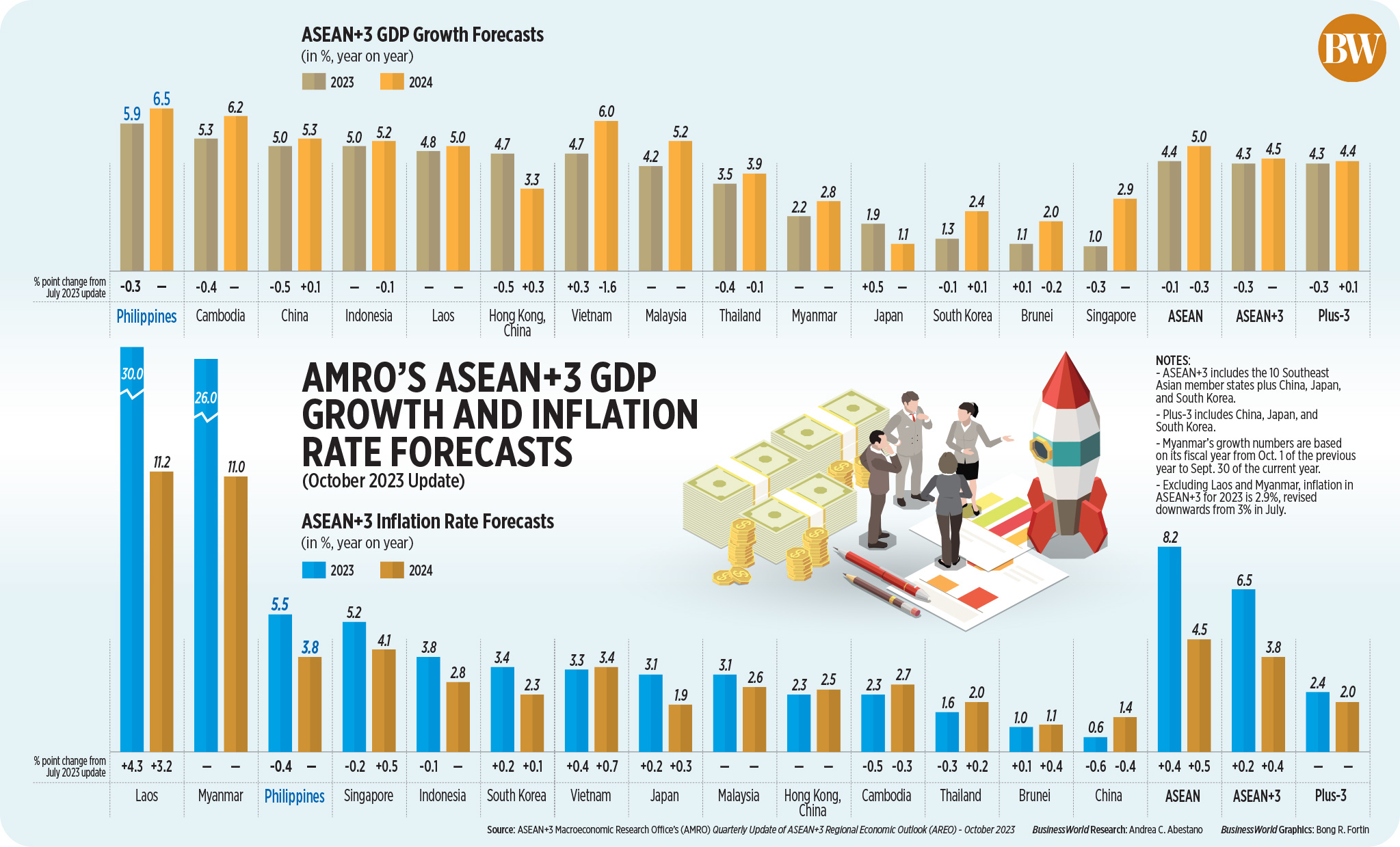
The Philippines is projected to be the fastest-growing economy in the region for this year and the next, the ASEAN+3 Macroeconomic Research Office (AMRO) said.

“For the Philippines, the second-quarter (growth) turned out to be weaker than we expected, but we are still quite bullish on the Philippines compared to the consensus,” AMRO Chief Economist Hoe Ee Khor said in a virtual briefing on its Regional Economic Outlook Update on Wednesday.

AMRO expects the Philippines’ gross domestic product (GDP) to grow by 5.9% this year, the fastest among ASEAN+3 economies. This is lower than the 6.2% forecast given in July.

AMRO's ASEAN+3 GDP growth and inflation rate forecasts

“The Philippines has surprised us (these) last two years because domestic demand has been quite strong and is holding up quite well despite the increase in interest rates, and we think this will continue,” Mr. Khor added.

AMRO’s growth forecast for the Philippines is above the regional consensus. It expects ASEAN+3 growth to average 4.3% this year, lower than the 4.6% it gave earlier. The region is composed of the 10-member Association of Southeast Asian Nations (ASEAN) plus China, Japan and South Korea.

For the ASEAN region, AMRO also trimmed its forecast to 4.4% from 4.5% previously, “largely unchanged, buttressed in part by strong private sector spending and continuing recovery in tourism.”

For 2024, AMRO expects Philippine GDP to expand by 6.5%, which is still the fastest growth in the region. It is also the lower end of the government’s 6.5-8% target.

The think tank projects ASEAN+3 to grow by 4.5% and ASEAN by 5% next year.

Mr. Khor said economic growth next year will be robust, reflecting “an improvement in external demand.”

“Gradual adjustment in its property sector should help augment growth in China, with positive spillover effects across the ASEAN+3. Stronger tourism flows will be supplemented by the expected pickup in manufacturing exports. However, the weaker pace in global growth will keep a lid on the speed of the region’s expansion,” AMRO said.

Elevated inflation
Meanwhile, Mr. Khor noted that inflation in the Philippines has “come off faster than expected.” It sees inflation averaging 5.5% this year, below the Bangko Sentral ng Pilipinas’ (BSP) revised 5.8% full-year forecast.

“Inflation is coming off, although because of the recent increase in food prices, headline inflation picked up a bit. That’s going to be a drag on growth… otherwise, domestic demand is quite strong, and it’s being supported by remittance inflows,” Mr. Khor said.

Next year, AMRO sees Philippine inflation further easing to 3.8%, although above the BSP’s 3.5% 2024 forecast.

“We still expect inflation next year to be lower than this year… so that will be below (or) within the inflation target band of the central bank,” Mr. Khor said.

AMRO identified risks that could continue to stoke inflation in the region, such as rising global commodity prices, a possible recession in the US and Europe, and the slowdown in China.

“The overall balance of risk to the outlook has shifted, with the risk of higher inflation becoming more salient. While the risk of financial spillovers from tighter US monetary policy has subsided somewhat since the (July) update, the risk of a surge in global energy and food prices has heightened,” AMRO said.

Mr. Khor expects the BSP to hold policy rates higher for longer in order to contain stubborn inflation.

“I think even the (BSP governor) has expressed that (interest rates) will have to stay high until inflation comes down to meeting the target band. And, he has not ruled out the increase, if necessary,” Mr. Khor said.

BSP Governor Eli M. Remolona, Jr. earlier signaled that a policy rate hike in the fourth quarter this year is not off the table. He has also hinted at the possibility of an off-cycle hike.

“I think it’s important for central banks in the region to be clear in the objective to bring down inflation… how much longer (it’s) going to stay will very much depend on what happens,” Mr. Khor said.

From May 2022 to March 2023, the Monetary Board hiked borrowing costs by 425 basis points. It left interest rates unchanged at a near 16-year high of 6.25% for a fourth straight time last month.

The BSP is set to have its next policy-setting meeting this year on Nov. 16. — By Luisa Maria Jacinta C. Jocson, Reporter

IMF cuts Philippine growth outlook

IMF cuts Philippine growth outlook

The International Monetary Fund (IMF) slashed its growth forecast for the Philippines this year, saying a “higher for longer policy rate” might be needed to address persistent inflation.

The multilateral lender lowered its Philippine gross domestic product (GDP) growth projection to 5.3% from its 6.2% estimate in July.

This is well below the government’s 6-7% goal, and significantly slower than the 7.6% expansion in 2022.

“The Philippine economy has emerged strongly from the pandemic but has since confronted a confluence of global shocks,” IMF Mission Chief to the Philippines Shanaka Jayanath Peiris said at a press briefing on Tuesday after ending the Article IV consultation mission.

He said the Philippine GDP outlook for this year was lowered after second-quarter growth slowed to 4.3% “due to a weak global economy and tightened policy settings.”

The second-quarter GDP expansion was the slowest in over two years. In the first half, GDP growth averaged 5.3%.

The IMF said it raised its 2024 growth projection for the Philippines to 6% from 5.5%, due to the anticipated “acceleration in public spending and improved external demand for Philippine exports.”

Still, this is well below the government’s 6.5-8% GDP growth target for next year.

“The main downside risks to the outlook include persistently high global and domestic inflation that could necessitate a further tightening of monetary policy, an abrupt global slowdown putting downward pressure on goods and service exports, an intensification in geopolitical tensions, and depreciation pressures stemming from capital outflows under volatile market conditions,” Mr. Peiris said.

He noted that upside risks include a “more resilient US economy and a rebound in domestic demand supported by an easing of financial conditions.”

‘Higher for longer’
The IMF expects inflation to rise to about 6% this year before declining to 3.5% in 2024, Mr. Peiris said.

The 2023 inflation forecast is higher than the 5.8% full-year estimate of the Bangko Sentral ng Pilipinas (BSP). The BSP also sees inflation to hit 3.5% next year.

The IMF projects inflation to return to the 2-4% target by the first quarter of next year.

“However, core inflation remains elevated and inflation risks are tilted to the upside, including higher commodity prices that could lead to second-round effects,” Mr. Peiris said.

“Thus, a higher-for-longer policy rate path is warranted until inflation firmly falls within the target range alongside a tightening bias to anchor inflation expectations.”

The BSP raised borrowing costs by 425 basis points from May 2022 to March 2023, bringing the benchmark interest rate to 6.25%, the highest in nearly 16 years. The Monetary Board has since paused its tightening.

Meanwhile, the IMF sees the current account deficit narrowing to -3% of GDP in 2023 and -2.6% in 2024 from -4.5% in 2022.

The BSP projects the current account deficit to reach USD 11.1 billion (-2.5% of GDP) this year.

The current account deficit will be “supported by lower commodity prices, a pickup of electronic exports, and an acceleration in service exports,” Mr. Peiris said.

The Philippine banking sector remains well-capitalized and liquid, but higher interest rates remain a risk, he said.

“The higher interest rate environment underscores the importance of strengthening systemic risk monitoring and financial supervision, expanding the macroprudential toolkit, as well as calibrating it to counter vulnerabilities stemming from sectoral exposures and linkages between financial conglomerates and nonfinancial corporates,” Mr. Peiris said.

The IMF also told the Philippines to step up efforts against money laundering and terrorist financing so it can be removed from the Financial Action Task Force’s “gray list.”

The Philippines has been included in the global “dirty money” watchdog’s gray list of countries subjected to increased monitoring since June 2021.

Fiscal policy
Meanwhile, Mr. Peiris said the government’s fiscal consolidation plan is on track, reflecting strong revenue performance and lower current spending.

He also noted that the government’s pace of consolidation is “appropriate” enough to bring the debt-to-GDP ratio to below 60% by 2025.

As of end June, the government debt as a share of GDP stood at 61%, slightly above the 60% threshold considered by multilateral lenders to be manageable for developing economies.

However, the government can still ramp up revenue-generating measures, Mr. Peiris said.

“An even more ambitious revenue mobilization strategy could finance more social spending to achieve poverty reduction goals and to respond to natural disasters while keeping the deficit path unchanged,” he added.

Mr. Peiris noted that key reforms such as the military and uniformed personnel (MUP) pension system reform and the budget modernization bill are “critical and should be complemented by ongoing efforts to strengthen the oversight of government-owned and -controlled corporations.”

“The renewed emphasis on financing the country’s infrastructure gaps through public-private partnerships (PPPs) is well placed and the new PPP Code is welcome in this regard. The reform of the mining fiscal regime and Mining Act provides an opportunity to enact a progressive and unified tax system, and a competitive investment regime,” he added. — Keisha B. Ta-asan

Central bank deploys more coin deposit machines across Luzon

Central bank deploys more coin deposit machines across Luzon

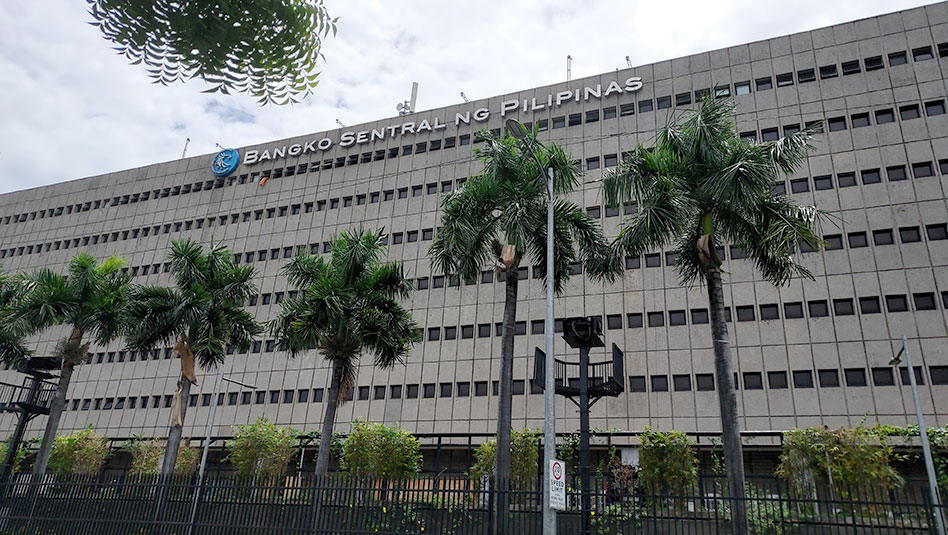
The Bangko Sentral ng Pilipinas (BSP) has deployed more coin deposit machines (CoDMs) across Luzon, bringing the total to 19, closer to its target of 25 units this year.

The BSP said on its website that it has deployed a total of 19 units in different retail establishments across Metro Manila and nearby provinces.

These units are located in SM City Taytay, SM City Grand Central, SM City Marilao, SM City Fairview, SM City North Edsa, SM City San Lazaro, SM Megamall, SM City Bicutan, SM Bacoor, SM Southmall, SM Sucat, and SM Hypermarket FTI.

More machines were also deployed in Robinsons Place Metro East, Robinsons Place Novaliches, as well as Robinsons Galleria.

The BSP has collected over PHP 87.4 million worth of coins since the launch of its CoDMs in June, it said.

Over 20,000 transactions were recorded in the past three months. The coins deposited into the machines were mostly credited to customers’ e-wallets, while the rest was exchanged for shopping vouchers, the central bank said.

The BSP began deploying CoDM units in June this year in partnership with Filinvest Lifemalls Corp., Robinsons Supermarket Corp., and SM Retail, Inc. Two units were initially deployed at the SM Mall of Asia, one in Robinsons Place Ermita, and one in Festival Mall in Muntinlupa City.    

The value of coins deposited in CoDMs may be credited to the depositor’s e-wallet account or converted into a shopping voucher for over-the-counter transactions.

All denominations of the BSP Coin Series and New Generation Currency Coins Series are accepted by the CoDM. Unfit and demonetized coins, foreign currency, and foreign objects are rejected by the machine and returned to the depositor.

BSP Deputy Director of the Greater Manila Regional Office Jann Ryan D. Jose said in a television interview last month that the machines were launched to help improve the circulation of the currency.

“Based on data as of April 2023, about 39 billion pieces of coins are in circulation. About 19 billion pieces of these coins are lower denominated currency such as centavos,” he said in Filipino. “So, there’s a lot of coins in circulation, but they are not being circulated properly.” 

He added that the public must be careful about using the coin deposit machines, as some foreign objects can cause the units to jam. 

“If we want the BSP to extend [the time for the project], we should use the machines properly and regularly use our coins. We’re encouraging all Filipinos to further support the BSP’s coin recirculation programs,” he said.

Mr. Jose added that the project will run for two years, and the BSP will assess the effectiveness of the machines in recirculating currency. — K.B. Ta-asan

Peso drops further on strong US data

Peso drops further on strong US data

The peso dropped further against the dollar on Tuesday amid upbeat US manufacturing data and hawkish signals from US central bank officials.

The local currency closed at PHP 56.78 versus the dollar on Tuesday, weakening by a half centavo from Monday’s PHP 56.775 finish, data from the Bankers Association of the Philippines’ website showed.

The local unit opened Tuesday’s session weaker at PHP 56.825 per dollar. Its intraday best was at PHP 56.78, while its worst showing was at PHP 56.93 against the greenback.

Dollars traded went down to USD 932.2 million on Tuesday from the USD 1.15 billion on Monday.

“The peso weakened slightly as the upbeat US manufacturing PMI (purchasing managers’ index) report for September dampened views of a near-term recession,” a trader said in an e-mail.

US manufacturing took a step further towards recovery in September as production picked up and employment rebounded, according to a survey on Monday that also showed prices paid for inputs by factories falling considerably, Reuters reported.

The Institute for Supply Management said that its manufacturing PMI increased to 49 last month, the highest reading since November 2022, from 47.6 in August.

The peso weakened against the dollar on Tuesday due to hawkish signals from US Federal Reserve officials, Rizal Commercial Banking Corp. Chief Economist Michael L. Ricafort said in a Viber message.

Fed officials said monetary policy will need to stay restrictive for “some time” to bring inflation back down to the central bank’s 2% target, Reuters reported.

Expectations of faster inflation in September also dragged down the peso, Mr. Ricafort added.

A BusinessWorld poll of 17 analysts yielded a median estimate of 5.4% for September inflation, near the low end of the Bangko Sentral ng Pilipinas’ 5.3-6.1% forecast for the month.

The Philippine Statistics Authority will release September inflation data on Thursday.

For Wednesday, the trader said the peso could strengthen ahead of likely weaker US private employment data.

The trader and Mr. Ricafort see the peso moving between PHP 56.70 and PHP 56.90 per dollar on Wednesday. — AMCS with Reuters

Philippine shares rebound on last-minute buying

Philippine shares rebound on last-minute buying

Philippine shares rose anew on Tuesday on last-minute buying before the recomposition of the main index and the release of September inflation data.

The Philippine Stock Exchange index (PSEi) went up by 1.46 points or 0.02% to end at 6,305.99 on Tuesday, while the broader all shares index rose by 6.50 points or 0.19% to 3,405.62.

“The PSEi inched up on market-on-close buying after trading in the red for the most part of the day’s session. The move was helped by a surge in trades of UBP and NIKL as institutional funds prepared for the changes to the PSE benchmark index that will take effect on Wednesday,” China Bank Capital Corp. Managing Director Juan Paolo E. Colet said in a Viber message.

Effective on Wednesday, Nickel Asia Corp. (NIKL) will become part of the composite index, replacing Union Bank of the Philippines, Inc. (UBP).

“The market being bought up at the close was likely due to bargain hunting, with the index trying to establish a stronger base at around the 6,300 levels before pushing higher,” Globalinks Securities and Stocks, Inc. Head of Sales Trading Toby Allan C. Arce said in a Viber message.

Market sentiment remained weak amid expectations of faster inflation last month, he said.

“There is still an air of uncertainty ahead of the release of September inflation. The results will determine the central bank’s policy decisions come November. Better-than-expected figures are likely to improve investor sentiment,” Mr. Arce added.

September consumer price index (CPI) data will be released on Oct. 5, Thursday.

A BusinessWorld poll of 17 analysts yielded a median estimate of 5.4% for September inflation, near the low end of the 5.3-6.1% forecast of the Bangko Sentral ng Pilipinas (BSP) for the month.

If realized, the September CPI would be faster than the 5.3% print in August but would be lower than the 6.9% in the same month in 2022.

The reading would also mark the 18th straight month of inflation exceeding the BSP’s 2-4% annual target.

The central bank will hold its next policy meeting on Nov. 16. BSP Governor Eli M. Remolona, Jr. has said they are open to an off-cycle rate increase before that review.

Sectoral indices were split on Tuesday. Mining and oil climbed by 343.28 points or 3.19% to 11,088.66; industrials went up by 81.03 points or 0.9% to 9,024.47; and services rose by 7.55 points or 0.5% to 1,517.45.

Meanwhile, holding firms fell by 28.41 points or 0.47% to 5,995.30; financials dropped by 7.71 points or 0.41% to 1,844.67; and property declined by 2.02 points or 0.07% to 2,597.98.

Value turnover went up to PHP 5.94 billion on Tuesday with 858.83 million shares changing hands from the PHP 3.86 billion with 591.37 million shares seen on Monday.

Decliners outnumbered decliners, 103 versus 94, while 50 shares closed unchanged.

Net foreign selling rose to PHP 881.06 million on Tuesday from PHP 402 million seen on Monday. — SJT

Posts navigation

Older posts
Newer posts

Recent Posts

  • Investment Ideas: April 1, 2026
  • Metrobank US-Iran Risk Index: Signals of an end
  • Eye on Earnings: Demand for connection supports telcos
  • Inflation Preview: March madness
  • Investment Ideas: March 31, 2026

Recent Comments

No comments to show.

Archives

  • April 2026
  • March 2026
  • February 2026
  • January 2026
  • December 2025
  • November 2025
  • October 2025
  • September 2025
  • August 2025
  • July 2025
  • June 2025
  • May 2025
  • April 2025
  • March 2025
  • February 2025
  • January 2025
  • December 2024
  • November 2024
  • October 2024
  • September 2024
  • August 2024
  • July 2024
  • June 2024
  • May 2024
  • April 2024
  • March 2024
  • February 2024
  • January 2024
  • December 2023
  • November 2023
  • October 2023
  • September 2023
  • August 2023
  • July 2023
  • June 2023
  • May 2023
  • April 2023
  • March 2023
  • February 2023
  • January 2023
  • December 2022
  • November 2022
  • October 2022
  • September 2022
  • August 2022
  • July 2022
  • June 2022
  • May 2022
  • March 2022
  • December 2021
  • October 2021

Categories

  • Bonds
  • BusinessWorld
  • Currencies
  • Economy
  • Equities
  • Estate Planning
  • Explainer
  • Featured Insight
  • Fine Living
  • How To
  • Investment Tips
  • Markets
  • Portfolio Picks
  • Rates & Bonds
  • Retirement
  • Reuters
  • Spotlight
  • Stocks
  • Uncategorized

You are leaving Metrobank Wealth Insights

Please be aware that the external site policies may differ from our website Terms And Conditions and Privacy Policy. The next site will be opened in a new browser window or tab.

Cancel Proceed
Get in Touch

For inquiries, please call our Metrobank Contact Center at (02) 88-700-700 (domestic toll-free 1-800-1888-5775) or send an e-mail to customercare@metrobank.com.ph

Metrobank is regulated by the Bangko Sentral ng Pilipinas
Website: https://www.bsp.gov.ph

Quick Links
The Gist Webinars Wealth Manager Explainers
Markets
Currencies Rates & Bonds Equities Economy
Wealth
Investment Tips Fine Living Retirement
Portfolio Picks
Bonds Stocks
Others
Contact Us Privacy Notice Terms of Use
© 2026 Metrobank. All rights reserved.

Access this content:

If you are an existing investor, log in first to your Metrobank Wealth Manager account. ​

If you wish to start your wealth journey with us, click the “How To Sign Up” button. ​

Login HOW TO SIGN UP