MODEL PORTFOLIO
THE GIST
NEWS AND FEATURES
Global Philippines Fine Living
INSIGHTS
INVESTMENT STRATEGY
Economy Stocks Bonds Currencies
THE BASICS
Investment Tips Explainers Retirement
WEBINARS
2024 Mid-Year Economi Briefing, economic growth in the Philippines
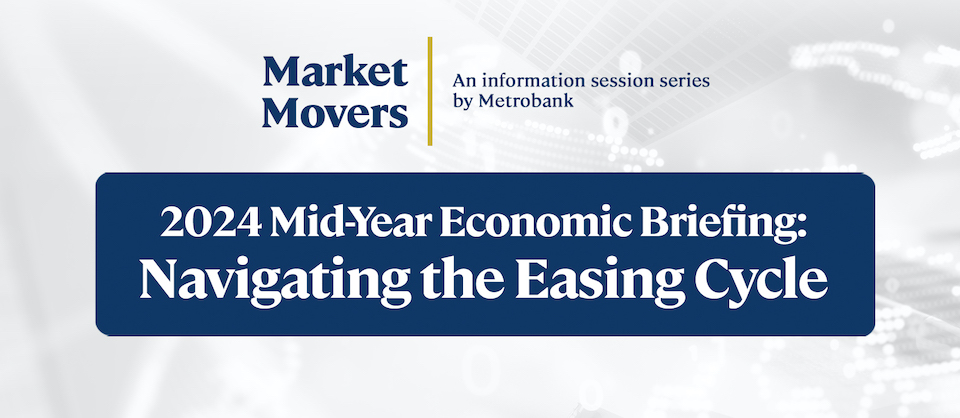
2024 Mid-Year Economic Briefing: Navigating the Easing Cycle
June 21, 2024
Investing with Love
Investing with Love: A Mother’s Guide to Putting Money to Work
May 15, 2024
retirement-ss-3
Investor Series: An Introduction to Estate Planning
September 1, 2023
View All Webinars
DOWNLOADS
Container ship carrying container boxes import export dock with quay crane. Business commercial trade global cargo freight shipping logistic and transportation worldwide oversea concept. Generative AI
Economic Updates
Philippines Trade Update: Wider deficit on strong imports
DOWNLOAD
Frick collection with palm trees 
Economic Updates
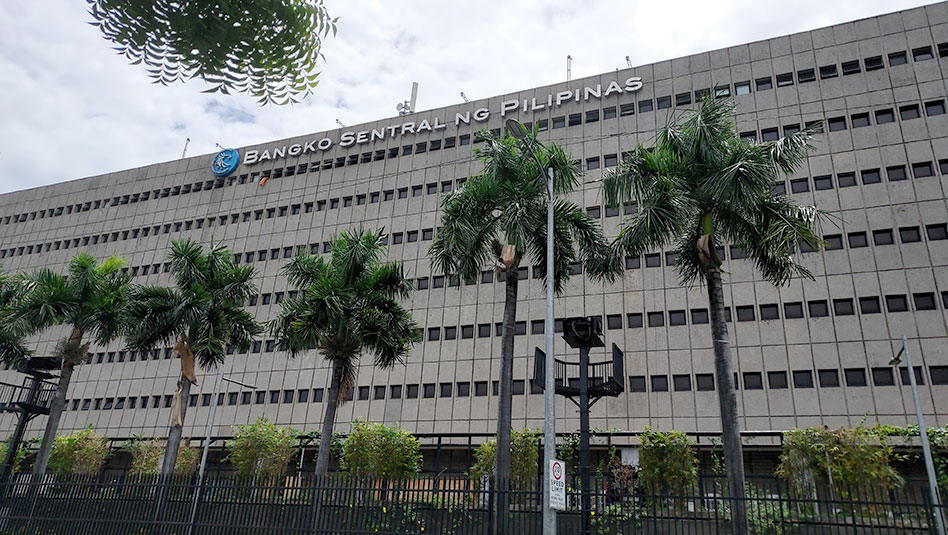
Policy Rate Updates: Policy rate updates to reassure 
DOWNLOAD
Man using his smartphone
Reports
Fed to cut just once 
DOWNLOAD
View all Reports
Metrobank.com.ph How To Sign Up
Follow us on our platforms.

How may we help you?

TOP SEARCHES
  • Where to put my investments
  • Reports about the pandemic and economy
  • Metrobank
  • Webinars
  • Economy
TRENDING ARTICLES
  • Investing for Beginners: Following your PATH
  • On government debt thresholds: How much is too much?
  • Philippines Stock Market Outlook for 2022
  • Deficit spending remains unabated

Login

Access Exclusive Content
Login to Wealth Manager
Visit us at metrobank.com.ph How To Sign Up
Access Exclusive Content Login to Wealth Manager
Search
MODEL PORTFOLIO THE GIST
NEWS AND FEATURES
Global Philippines Fine Living
INSIGHTS
INVESTMENT STRATEGY
Economy Stocks Bonds Currencies
THE BASICS
Investment Tips Explainers Retirement
WEBINARS
2024 Mid-Year Economi Briefing, economic growth in the Philippines
2024 Mid-Year Economic Briefing: Navigating the Easing Cycle
June 21, 2024
Investing with Love
Investing with Love: A Mother’s Guide to Putting Money to Work
May 15, 2024
retirement-ss-3
Investor Series: An Introduction to Estate Planning
September 1, 2023
View All Webinars
DOWNLOADS
Container ship carrying container boxes import export dock with quay crane. Business commercial trade global cargo freight shipping logistic and transportation worldwide oversea concept. Generative AI
Economic Updates
Philippines Trade Update: Wider deficit on strong imports
March 27, 2026 DOWNLOAD
Frick collection with palm trees 
Economic Updates
Policy Rate Updates: Policy rate updates to reassure 
March 26, 2026 DOWNLOAD
Man using his smartphone
Reports
Fed to cut just once 
March 19, 2026 DOWNLOAD
View all Reports

Archives: Business World Article

Peso up vs dollar on dovish Fed comments

Peso up vs dollar on dovish Fed comments

The peso rebounded against the dollar on Tuesday due to dovish hints from US Federal Reserve officials.

The local currency closed at PHP 56.82 versus the dollar on Tuesday, strengthening by 13 centavos from Monday’s PHP 56.95 finish, data from the Bankers Association of the Philippines’ website showed.

The local unit opened Tuesday’s session at PHP 56.90 per dollar. Its intraday best was at PHP 56.82, while its weakest showing was at PHP 56.92.

Dollars traded went down to USD 1.05 billion on Tuesday from USD 1.25 billion on Monday.

“The peso strengthened amid dovish signals by some Fed officials who urged caution over further US policy rate hikes,” a trader said in an e-mail.

Top-ranking Fed officials indicated that rising yields on long-term US Treasury bonds, which directly influence financing costs for households and businesses, could steer the Fed from further increases in its short-term policy rate, Reuters reported

The Fed kept its target rate unchanged at the 5.25% to 5.5% range at its Sept. 19-20 meeting.

It has hiked rates by a cumulative 525 basis points since it began its tightening cycle in March last year.

The Federal Open Market Committee will next meet from Oct. 31 to Nov. 1 to review policy. 

The dollar’s weakness boosted the peso, Rizal Commercial Banking Corp. Chief Economist Michael L. Ricafort added in a Viber message.

The dollar was steady on Tuesday and below recent highs as comments by US Federal Reserve officials dampened rate hike expectations, although investors kept an eye on the conflict between Israel and the Palestinian Islamist group Hamas, Reuters reported.

The dollar index, which tracks the greenback against six peers, was last up less than 0.1% at 106.05. It remained below last week’s 11-month high of 107.34 and traded at roughly the same position as a week earlier.

For Wednesday, the trader and Mr. Ricafort see the peso moving between PHP 56.70 and PHP 56.90 per dollar. — with Reuters

Shares inch up on bargain hunting, trade data

Shares inch up on bargain hunting, trade data

PHILIPPINE SHARES edged higher on Tuesday on bargain hunting and as the country’s trade deficit narrowed in August.

The Philippine Stock Exchange index went up by 11.91 points or 0.19% to end at 6,264.07 on Tuesday, while the broader all shares index rose by 6.22 points or 0.18% to 3,386.27.

“Stocks staged a modest rebound as investors engaged in bargain-hunting. This effectively countered the prevailing bearish sentiments linked to the Israel conflict,” AB Capital Securities, Inc. Vice-President Jovis L. Vistan said in a Viber message.

Investor sentiment was “boosted by the narrower trade deficit recorded in August,” Philstocks Financial, Inc. Research Analyst Claire T. Alviar said in a Viber message.

“Many investors, however, remained on the sidelines, with the net market value turnover posting at P4.17 billion,” Ms. Alviar said.

Value turnover went down to P4.54 billion on Tuesday with 688.96 million shares changing hands from the P5.71 billion with 771.49 million shares seen on Monday.

The Philippines’ trade-in-goods deficit shrank by 31.5% in August to $4.13 billion from the $6.03-billion gap in the same period last year, preliminary data from the Philippine Statistics Authority released on Tuesday showed.

The value of merchandise exports rose by 4.2% year on year to $6.70 billion in August.

Meanwhile, the value of imported goods declined by 13.1% year on year to $10.83 billion.

On the other hand, global stocks snapped higher on Tuesday, in line with a retreat in bond yields after US Federal Reserve officials signaled the recent yield surge could justify caution on interest rates, while oil eased, but violence in the Middle East made for nervy trading, Reuters reported.

The MSCI All-World index rose for a fifth day, up 0.5%, after having hit five-month lows last week, thanks in part to a 1.4% rise in Europe’s STOXX 600.

But investors were closely watching military clashes between Israel and the Palestinian Islamist group Hamas, after the latter unleashed a surprise assault at the weekend in which hundreds were killed and many abducted.

The Israeli military has since said it called up an unprecedented 300,000 reservists and was imposing a total blockade on the Gaza Strip, raising expectations of a possible ground assault.

At home, the majority of the sectoral indices rose on Tuesday. Mining and oil climbed by 133.42 points or 1.21% to 11,074.08; property went up by 15.08 points or 0.58% to 2,616.11; financials increased by 10.12 points or 0.55% to 1,818.99; and services gained 7.96 points or 0.52% to end at 1,520.11.

Meanwhile, holdings firms fell by 25.02 points or 0.42% to 5,934.34 and industrials declined by 3.71 points or 0.04% to 8,907.88.

Advancers outnumbered decliners, 96 versus 77, while 50 shares closed unchanged.

Net foreign selling went down to P275.32 million on Tuesday from P2.98 billion on Monday. — SJT with Reuters

SEC plan to hike fees comes under fire

SEC plan to hike fees comes under fire

Eleven business groups and associations opposed the Securities and Exchange Commission’s (SEC) proposal to increase its fees and charges, calling it “anti-business” and “unnecessary.”

The business groups, led by the Philippine Chamber of Commerce and Industry (PCCI) and Management Association of the Philippines (MAP) said the SEC should review, “if not totally scrap” the proposed increase in fees, saying it is detrimental to the economy.

“Consistent with the ease of doing business law, we then strongly recommend that SEC submit this proposed policy to the Anti-Red Tape Authority (ARTA) for a Regulatory Impact Assessment (RIA) to check against harmful impacts to business and the economy,” they said in a joint statement, adding there is a need for stakeholder consultations.

The business groups objected to “unreasonable, if not ‘obscene’ fees and charges,” such as the proposal to charge corporate issuers one-fourth of 1% of total indebtedness when creating bonded indebtedness.

“Using 2022 numbers, SEC’s fees would amount to PHP 1.27 billion on the total bond issuances of PHP 508 billion for that year,” the groups said.

The business groups also opposed the proposed fee on the total transactions cleared and settled in the previous year by Securities Clearing Corp. of the Philippines and Philippine Depository Trust Corp. at 0.1 basis point (bp) and 0.05 bp, respectively.

Based on the transactions in 2022, the groups said this would mean PHP 14.51 million and PHP 7.25 million in additional friction cost for stock market investors.

According to the business groups, the current fee collections of the SEC far exceed the cost of its operations.

“Proof of this includes the purchase of its own building in Makati commercial business district reportedly costing about PHP 2.5 billion, in addition to about 90 commercial parking slots estimated at about PHP 1 million per slot,” they said.

The business groups also cited the case of Philippine Association of Stock Transfer and Registry Agencies, Inc. versus Court of Appeals in which the Supreme Court held that “fee increases that have far-reaching effects on the capital market should be frowned upon.”

They also cited the case of First Philippine Holdings Corp. (FPHC) versus SEC in 2020 when the Supreme Court declared the fees imposed by the SEC for application of amended articles of incorporation as invalid and unreasonable for being arbitrary.

The current fee proposal by the SEC is even higher than the relevant fees struck down by the Supreme Court in the case of FPHC, they added.

“Fees that far exceed the costs of regulation are beyond the authority and power of the SEC to impose,” they said.

The business groups also noted the SEC’s proposal to impose “unconscionable” increases on fees may discourage new investments in the country.

“The increased cost of doing business will also hurt small and medium enterprises covered by SEC due to the ripple effects of the fee increases,” they added.

Sought for comment, the SEC is yet to respond as of press time.

Aside from the PCCI and MAP, the statement was also signed by the Philippine Retailers Association, Philippine Franchise Association, Chamber of Thrift Banks, Philippine Exporters Confederation, Inc., Federation of Filipino Chinese Chambers of Commerce and Industry, Inc., Employers Confederation of the Philippines, Philippine Association of Legitimate Service Contractors, Stratbase ADR Institute for Strategic and International Studies, and Philippine Food Processors and Exporters Organization, Inc. —  Justine Irish D. Tabile

BSP likely to resume tightening as upside risks materialize

BSP likely to resume tightening as upside risks materialize

The implementation of higher minimum wages and jeepney fares this month may further stoke inflation, giving the Bangko Sentral ng Pilipinas (BSP) more reason to resume monetary tightening next month, GlobalSource Partners said.

GlobalSource country analyst Diwa C. Guinigundo said on Monday that the PHP 1 provisional increase in jeepney fares, which took effect nationwide on Sunday, “could have further inflationary consequences, not the least of which is the possible upset of inflation expectations.”

“In addition, what could further lead to elevated inflation print is the wage order that mandates a PHP 40 increase in the daily minimum wage of workers in private establishments in Central Luzon, a major contributor to both output and inflation dynamics,” Mr. Guinigundo said in an Oct. 9 brief.

Regional wage boards also approved a PHP 30 increase in the daily minimum wage in Cagayan Valley and PHP 35 for the Soccsksargen (South Cotabato, Cotabato, Sultan Kudarat, Sarangani, and General Santos City) regions. All wage orders will take effect on Oct. 16.

A PHP 40 increase in the daily minimum wage in the National Capital Region (NCR) took effect on July 16.

“All these will bolster our initial view that while the BSP could choose to keep its hawkish stance by maintaining its policy rate at 6.25% against its latest (inflation) forecasts of 5.8% and 3.5% for 2023 and 2024, respectively, these are mounting motivations for an ultimate resumption of monetary tightening,” Mr. Guinigundo said.

The Monetary Board has kept the benchmark interest rate at 6.25% since March. It has hiked borrowing costs by 425 basis points (bps) since May 2022 in a bid to tame inflation.

However, headline inflation accelerated for a second straight month to 6.1% in September from 5.3% in August amid a spike in food and transport costs. This brought the nine-month inflation average to 6.6%.

“With all of these upside risks materializing, and the fact that the 3.5% forecast for 2024 is uncomfortably inching towards the high end of the 2-4% target, we are now inclined to see a possible resumption of monetary tightening starting next month,” Mr. Guinigundo, a former central bank deputy governor, said.

“To avoid market jitters, baby steps are likely, but sustained.”

Even before the release of September inflation data, BSP Governor Eli M. Remolona, Jr. has signaled the possibility of an off-cycle rate hike before the Monetary Board’s November meeting.

However, Mr. Guinigundo said weak economic growth could prompt the BSP to pull back on further rate hikes.

“This will be an unpopular decision. But the Philippines’ gross domestic product (GDP) continues to grow while demand pressures remain given the elevated readings of core inflation. Hence, a proactive monetary policy does not necessarily destroy business activities but could actually inspire them,” he added.

The economy grew by a weaker-than-expected 4.3% in the second quarter, its slowest growth in more than two years. Economic managers earlier said GDP would need to grow by 6.6% in the second half in order to meet the lower end of the government’s 6-7% target.

Finance Secretary Benjamin E. Diokno and National Economic and Development Authority (NEDA) Secretary Arsenio M. Balisacan earlier said that there is no more need for further monetary tightening.

Mr. Balisacan said that raising interest rates could hurt consumers and the economy, while Mr. Diokno said that the BSP has “done enough” in terms of monetary tightening.

Third-quarter GDP data will be released on Nov. 9. The Monetary Board’s next policy-setting meeting is on Nov. 16. — Luisa Maria Jacinta C. Jocson

Wider Middle East conflict may send oil prices skyrocketing, say analysts

Wider Middle East conflict may send oil prices skyrocketing, say analysts

A wide conflict in the Middle East could send global oil prices skyrocketing, adding to concerns over inflation, analysts said.

“A conflict involving Israel and Palestine, while not directly linked to oil production, could still have broad implications for the oil market due to the region’s geopolitical significance. If the conflict escalates and draws in oil-producing Middle Eastern states, oil prices could skyrocket,” Security Bank Corp. Chief Economist Robert Dan J. Roces said in a Viber message.

“This surge would have a cascading effect on global economies, potentially triggering a third wave of inflation,” he added.

Oil prices surged more than 2% on Monday, as military clashes between Israel and Hamas ignited fears of a wider conflict in the Middle East (Related story “Middle East conflict adds risks to global outlook”).

Brent crude was up by USD 2.28 or 2.7% to USD 86.86 a barrel by 0859 GMT, while US West Texas Intermediate (WTI) crude was at USD 85.23 a barrel, up by USD 2.44 or nearly 3%. Both benchmarks spiked by more than USD 4 a barrel earlier in the session.

The surge in oil prices reversed last week’s downtrend — the largest weekly decline since March — in which Brent fell about 11% and WTI retreated more than 8% as a darkening macroeconomic outlook intensified concerns about global demand.

“If the crisis escalates either by affecting other economies or if other economies get involved, we will likely see higher oil prices as Israel is very near oil-producing nations,” China Banking Corp. Chief Economist Domini S. Velasquez said in a Viber message.

Mr. Roces noted that the positioning of global superpowers in the conflict “could either mitigate or exacerbate oil supply concerns.”

Raymond T. Zorrilla, senior vice-president for external affairs of Phoenix Petroleum Philippines, Inc., said that since Israel is a marginal oil producer, recent developments may have “little” direct impact on oil supply.

“However, given the ensuing tension there might be a risk that the conflict could spread resulting in prolonged tension eventually impacting supply and pricing,” he said in a Viber message.

Mr. Roces said that rising oil prices would impact input costs and fuel inflationary pressures.

Headline inflation quickened to 6.1% in September, the fastest print in five months. This brought the nine-month average inflation to 6.6%, above the central bank’s 5.8% full-year forecast.

In September, gasoline inflation accelerated by 3% while diesel inflation rose by 3.8%. Fuels and lubricants for personal transport equipment account for 2.4% of the consumer price index (CPI) basket.

“In response, central banks may again tighten monetary policies, such as raising interest rates, to combat rising inflation, which could have its own set of economic consequences,” Mr. Roces added.

Apart from oil prices, Ms. Velasquez noted that remittance inflows into the Philippines may also be impacted.

“Remittances from the Middle East might also get affected especially if it becomes too dangerous for overseas Filipinos,” she said.

Saudi Arabia is the country’s third-biggest source of remittances.

Rizal Commercial Banking Corp. Chief Economist Michael L. Ricafort also noted the possibility of Iran’s involvement in the conflict.

“The Israel-Hamas war over the weekend partly weighed on global market sentiment amid geopolitical risks that could involve Iran, which is a major global oil producer and finances and supports Hamas,” he said in a Viber message.

“All told, the conflict is in its early stages, and at this point market reactions seem to be knee jerk. Nonetheless, this has the risk of complicating economic conditions globally and as such we must monitor this closely.” — By Luisa Maria Jacinta C. Jocson, Reporter

Gov’t partially awards T-bills as rates rise

Gov’t partially awards T-bills as rates rise

The government made a partial award of the Treasury bills (T-bills) it auctioned off on Monday at higher rates as strong US jobs data could support the US Federal Reserve’s hawkish policy stance.

The Bureau of the Treasury (BTr) raised just PHP 12.518 billion via the T-bills it auctioned off on Monday, short of the P15-billion program, even as total bids reached PHP 22.564 billion, above the amount on offer.

Broken down, the Treasury borrowed only PHP 4.788 billion via the 91-day T-bills even as tenders for the tenor reached PHP 6.898 billion, above the PHP 5-billion plan. The three-month paper was quoted at an average rate of 5.806%, 10.8 basis points (bps) above the 5.698% seen for a full award last week. Accepted rates ranged from 5.74% to 5.875%

The government raised just PHP 4.41 billion from the 182-day securities, short of the PHP 5-billion program, despite bids for the tenor reaching PHP 7.646 billion. The average rate for the six-month T-bill was at 6.115%, up by 9.2 bps from 6.023% quoted for last week’s full award, with accepted rates at 6% to 6.175%.

Lastly, the BTr awarded PHP 3.32 billion in 364-day debt papers, below the PHP 5-billion plan, despite demand for the tenor reaching PHP 8.02 billion. The average rate of the one-year T-bill rose by 9 bps to 6.305% from the 6.215% quoted for last week’s partial award. Accepted yields were from 6.275% to 6.325%.

At the secondary market before Monday’s auction, the 91-, 182- and 364-day T-bills were quoted at 5.7119%, 6.0106%, and 6.2438%, respectively, based on PHP Bloomberg Valuation Reference Rates data provided by the Treasury.

“The higher T-bill rates today reflected the movement from the stronger-than-expected US nonfarm payrolls report last Friday,” a trader said in an e-mail on Monday.

US Treasury yields rose after the data release as a strong economy may support the Fed’s “higher for longer” stance, Rizal Commercial Banking Corp. Chief Economist Michael L. Ricafort said in a Viber message.

A blowout US jobs report on Friday sparked a delayed rally on Wall Street as the data revealed a strong economy with moderating inflation that helped set aside fears of higher interest rates that caused bond yields to soar, Reuters reported.

September’s job numbers were almost double the 170,000 forecast of economists polled by Reuters and shocked a market trying to understand how the US Federal Reserve will address a strong economy and its mission to lower rates to its 2% target.

Nonfarm payrolls increased by 336,000 jobs last month, the Labor department said, while data for August was revised higher to show 227,000 jobs were added instead of the previously reported 187,000.

The yield on the benchmark 10-year Treasury note jumped more than 13 basis points within a half hour after the report’s release to a fresh 16-year high of 4.8874%, adding to this month’s steep sell-off.

Bond yields later eased a bit from early highs and the three major US stock indexes rallied as stock investors saw moderating wage growth as decelerating inflation further.

Futures traders raised the probability of the Fed hiking rates in November to 29.2%, up from 23.7% before the data’s release, according to CME Group’s FedWatch Tool.

The Fed kept its key rate unchanged at the 5.25% to 5.5% range at its Sept. 19-20 meeting.

It has hiked rates by a cumulative 525 bps since it began its tightening cycle in March last year.

The Federal Open Market Committee will hold its next policy review on Oct. 31 to Nov. 1.

On Tuesday, the BTr will offer PHP 30 billion in reissued 10-year Treasury bonds with a remaining life of five years and three months.

The Treasury wants to raise PHP 150 billion from the domestic market this month, or PHP 60 billion via T-bills and PHP 90 billion via T-bonds.

The government borrows from local and foreign sources to help fund its budget deficit, which is capped at 6.1% of gross domestic product this year. — AMCS with Reuters

Peso sinks on safe-haven dollar demand

Peso sinks on safe-haven dollar demand

The peso sank near the PHP 57 level on Monday due to safe-haven demand for the dollar amid conflict in the Middle East.

The local currency closed at PHP 56.95 versus the dollar on Monday, sinking by 33 centavos from Friday’s PHP 56.62 finish, data from the Bankers Association of the Philippines’ website showed.

The local unit opened Monday’s session weaker at PHP 56.75 per dollar, which was also its intraday best. Meanwhile, its worst showing was at PHP 56.98 against the greenback.

Dollars traded went up to USD 1.25 billion on Monday from  USD 1.08 billion on Friday.

“The peso weakened significantly on safe-haven demand after the breakout of the Israeli-Palestinian conflict over the weekend,” a trader said in an e-mail.

The peso dropped as the conflict caused global crude oil prices to rise, Rizal Commercial Banking Corp. Chief Economist Michael L. Ricafort said in a Viber message.

Israel pounded the Palestinian enclave of Gaza on Sunday, killing hundreds of people in retaliation for one of the bloodiest attacks in its history when Islamist group Hamas killed 700 Israelis and abducted dozens more, Reuters reported.

The danger of disruptions to supply was enough to drive Brent up USD 3.14 to USD 87.72 a barrel, while US crude climbed USD 3.28 to USD 86.07 per barrel.

The dollar was generally stronger on Monday on safe-haven demand due to the conflict, Mr. Ricafort said.

The dollar index was last 0.33% higher at 106.57.

For Tuesday, the trader said the peso could recover due to profit taking.

The trader sees the peso moving between PHP 56.75 and PHP 56.95 per dollar on Tuesday, while Mr. Ricafort expects it to trade from PHP 56.78 to PHP 56.98. — AMCS with Reuters

PSEi drops on tightening, geopolitical concerns

PSEi drops on tightening, geopolitical concerns

The main index dropped on Monday as investors stayed on the sidelines amid concerns over potential rate hikes and geopolitical issues.

The Philippine Stock Exchange index (PSEi) declined by 7.79 points or 0.12% to end at 6,252.16 on Monday, while the broader all shares index added 0.78 points or 0.02% to 3,380.05.

“Shares on the Philippine Stock Exchange pared earlier losses but still closed in the red, as sentiment is weighed down by the likelihood of further monetary tightening after headline inflation quickened in September,” Globalinks Securities and Stocks, Inc. Head of Sales Trading Toby Allan C. Arce said in a Viber message.

Headline inflation quickened to 6.1% in September from 5.3% in August, data released last week showed.

For the first nine months, the consumer price index averaged 6.6%, well above the Bangko Sentral ng Pilipinas’ (BSP) 5.8% forecast and 2-4% target for the year.

Following the data release, the BSP said it “stands ready to resume monetary policy tightening as necessary to prevent the renewed broadening of price pressures.”

The Monetary Board will hold its next policy meeting on Nov. 16.

The BSP has kept its policy rate at 6.25% for four straight meetings after it hiked borrowing costs by 425 basis points from May last year to March this year to tame inflation.

Sentiment was affected by the conflict in the Middle East, Unicapital Securities, Inc. Senior Equity Research Analyst Carlos Angelo O. Temporal said in a Viber message.

“The local bourse ended in the red as investors remained on the sidelines, assessing concerns about the ongoing Middle East conflict that has erupted over the weekend. This geopolitical tension presents an upside risk to global inflation due to its potential impact on oil prices,” Mr. Temporal said.

Israel pounded the Palestinian enclave of Gaza on Sunday, killing hundreds of people in retaliation for one of the bloodiest attacks in its history when Islamist group Hamas killed 700 Israelis and abducted dozens more, Reuters reported.

At home, the majority of sectoral indices went up on Monday. Mining and oil climbed by 99.37 points or 0.91% to 10,940.66; services increased by 6.15 points or 0.4% to 1,512.15; industrials went up by 28.81 points or 0.32% to 8,911.59; and property rose by 3.76 points or 0.14% to 2,601.03.

Meanwhile, financials fell by 15.68 points or 0.85% to 1,808.87 and holding firms went down by 15.12 points or 0.25% to 5,959.36.

Value turnover went up to PHP 5.71 billion on Monday with 771.49 million shares changing hands from PHP 3.86 billion with 730.18 million shares seen on Friday.

Advancers outnumbered decliners, 94 versus 86, while 56 shares closed unchanged.

Net foreign selling rose to PHP 2.98 billion on Monday from PHP 150.99 million on Friday. — SJT with Reuters

‘Much better’ growth seen in 2nd half

‘Much better’ growth seen in 2nd half

The Philippine economy is expected to perform “much better” in the second half of 2023, as the government ramps up spending, Finance Secretary Benjamin E. Diokno said.

“The second half of growth will be faster than the first half. Because historically also, the fourth quarter is where most infrastructure projects are done,” he said in a press briefing on Friday.

In the second quarter, the Philippine economy grew by 4.3% — its slowest growth in over two years, due to weaker household consumption and a contraction in government spending.

This brought first-half gross domestic product (GDP) to 5.3%, still below the government’s 6-7% target.

National Economic and Development Authority (NEDA) Secretary Arsenio M. Balisacan in a separate briefing on Friday said that attaining the 6% growth was still “very much doable.”

Economic managers earlier said Philippine GDP would need to expand by 6.6% in the second half to meet the lower end of the government target.

The Philippine Statistics Authority (PSA) is scheduled to release third-quarter GDP data on Nov. 9.

“To help improve economic growth, the Philippine government is expediting its public spending, particularly on infrastructure projects, by directing its agencies to put into action their catch-up plans. These plans aim to enhance budget execution efficiency for the remainder of the year,” the DoF said in a data sheet provided to journalists on Friday.

In the second quarter, government spending contracted by 7.1%, a reversal of the 6.2% growth in the first quarter and 10.9% a year ago, amid agencies’ low budget utilization.

As of end-August, the cash utilization rate of government agencies stood at 93%, behind the year-earlier pace of 95%.

Finance Undersecretary Zeno Ronald R. Abenoja said that with the implementation of these catch-up plans, government spending is projected to improve by the end of the year.

“Of course, there will still be a lot of uncertainty, but certainly the trajectory is a significant improvement from the performance as of the middle of this year,” he added.

Several departments presented their catch-up plans and estimated disbursement rates during the Economic Development Group (EDG) meeting on Oct. 4. These included the Department of Public Works and Highways (DPWH), Department of Transportation (DoTr), Department of Health, Department of Social and Welfare and Development, Department of Agriculture, and the National Irrigation Administration.

“The agencies that were requested to present are those with the biggest allocation of budget, but less than 40% utilization rate based on their latest available data for 2023,” the DoF said.

The DoF said the DPWH “appears to perform well with its catch-up plans and disbursement target that is three-fourths higher than its historical performance in the past five years,” but it was still asked to present since it plays a key role in public construction.

According to the agencies, challenges to efficient spending include seasonality in project implementation, procurement, implementation and payment issues.

“One issue, for example, involves procurement. The documentation requirements, how they define the terms of the procurement. So, a better design of the terms of the procurement will help ensure that the process will proceed as planned,” Mr. Abenoja said.

He noted that the government will be “close” to hitting its spending target this year.

“We think we’ll be close to what was initially planned. So, that’s the commitment that was provided by the different agencies,” he added.

Data from the Bureau of Treasury (BTr) showed that state expenditures as of end-August rose by 3.54% to PHP 3.31 trillion. This accounted for 63% of the full-year spending program of PHP 5.228 trillion.

According to the DoF, the government is ramping up infrastructure spending, reflecting efforts “to enhance the quality of spending in the midst of fiscal consolidation while remaining supportive of growth.”

Data from the Department of Budget and Management (DBM) showed that expenditures for infrastructure and other capital outlays rose by 44.1% to PHP 111 billion in July from PHP 77 billion in the same month a year ago.

Month on month, infrastructure spending was also up by 7.1% from the PHP 119.4 billion in June.

“This was primarily credited to the larger capital expenditures of the DPWH for its various infrastructure projects nationwide,” the DBM said.

It also recorded “sizable” disbursements in railway projects of the DoTr, funding for the Department of Education’s computerization program, and the construction, repair, and rehabilitation of court buildings and offices of the Judiciary.

In the seven-month period, infrastructure spending increased by 12.9% to PHP 618.2 billion from PHP 547.5 billion in the same period in 2022.

The DBM said this was due to “progress billings and payments made for ongoing and completed infrastructure projects of the DPWH, as well as direct payments made by development partners for the foreign-assisted rail transport projects of the DoTr.”

The government is planning to spend 5-6% of GDP annually on infrastructure. This year, it targets to spend 5.3% of GDP on infrastructure, equivalent to PHP 1.29 trillion. — Luisa Maria Jacinta C. Jocson


GIR falls to 7-month low as of end-September

GIR falls to 7-month low as of end-September

The Philippines’ dollar reserves fell to a seven-month low as of end-September due to the National Government’s payment of foreign debt obligations and the drop in gold prices in the global market.

Data released by the Bangko Sentral ng Pilipinas (BSP) on Friday evening showed gross international reserves (GIR) stood at USD 98.69 billion as of end-September, slipping by 0.8% from USD 99.57 billion as of end-August. It marked the lowest in seven months or since USD 98.22 billion in February.

However, the dollar reserves rose by 6.1% from USD 93 billion as of end-September 2022.

“The month-on-month decrease in the GIR level reflected mainly the National Government’s (NG) payments of its foreign currency debt obligations and the downward adjustments in the value of BSP’s gold holdings due to the decrease in the price of gold in the international market,” the BSP said in a statement.

As of end-September, the dollar reserves were enough to cover 5.7 times the country’s short-term external debt based on original maturity and 3.6 times based on residual maturity.

It is also equivalent to 7.3 months’ worth of imports of goods and payments of services and primary income.

Ample foreign exchange buffers protect the country from market volatility and serve as a guarantee for the economy’s ability to pay its debts in the event of an economic downturn.

The month-on-month increase in foreign exchange (FX) holdings was due to the BSP’s possible intervention in FX operations in September, Rizal Commercial Banking Corp. Chief Economist Michael L. Ricafort said in an e-mail note.

The BSP intervenes in the foreign exchange market to smoothen the volatility.

“The peso came under pressure of late, tracking regional weakness as the US dollar reigned due to expectations for further rate hikes by the Fed,” ING Bank N.V. Manila Senior Economist Nicholas Antonio T. Mapa said in a Viber message.

In September alone, the local unit closed at P56.575 against the dollar on Sept. 29, stronger by only two centavos from its P56.595 finish on Aug. 31.

“Despite this pressure, GIR levels remain sizable, downplaying concerns that GIR is now being ‘depleted,’” Mr. Mapa said.

Based on BSP data, foreign currency deposits rose by 28.4% to USD 827.4 million in September from USD 644.6 million in August. However, it fell by 49.5% from USD 1.64 billion a year earlier.

Meanwhile, buffers in the form of gold were valued at USD 9.79 billion, lower by 4.3% from USD 10.23 billion as of end-August, but still up by 17.5% from USD 8.33 billion a year earlier.

The BSP’s foreign investments stood at USD 83.53 billion as of end-September, slipping by 0.7% from USD 84.13 billion a month earlier. Year on year, it rose by 6.1% from USD 78.71 billion a year ago.

According to the BSP, net international reserves dipped by 0.8% to USD 98.7 billion as of end-September from USD 99.5 billion a month prior.

Net international reserves are the difference between the BSP’s reserve assets (GIR) and reserve liabilities such as short-term foreign debt, and credit and loans from the International Monetary Fund (IMF).

The country’s reserve position in the IMF slid by 1.6% to USD 778.1 million as of end-September from USD 790.4 million as of end-August. However, it rose by 8.7% from USD 716 million as of end-September 2022.       

Special drawing rights (SDRs) — or the amount the country can tap from the IMF — stood at USD 3.77 billion, unchanged from the previous month. It jumped by 4.7% from USD 3.6 billion a year earlier.

“Still relatively high GIR levels… would continue to provide structural support/buffer/cushion for the peso exchange rate, especially greater protection versus any speculative attacks, going forward,” Mr. Ricafort said.

Mr. Ricafort also noted that in the coming months, the country’s dollar reserves could be supported by the sustained growth in remittances, exports, investments, and revenues from foreign tourism and business process outsourcing firms.

“We could see more seasonal inflows related to remittances on top of the foreign borrowing of the government to augment. However, the peso will likely still remain pressed as the dollar is still expected to be strong on the outlook for Fed,” Mr. Mapa said.

“GIR could continue to edge lower as long as the dollar stays strong, but we don’t expect reserves to be depleted anytime soon,” he added.

Last month, the BSP lowered its GIR projection for this year to USD 99.5 billion, down from the previous forecast of USD 100 billion.

The BSP kept its 2024 dollar reserves forecast at USD 102 billion. — By Keisha B. Ta-asan, Reporter

Posts navigation

Older posts
Newer posts

Recent Posts

  • Investment Ideas: April 1, 2026
  • Metrobank US-Iran Risk Index: Signals of an end
  • Eye on Earnings: Demand for connection supports telcos
  • Inflation Preview: March madness
  • Investment Ideas: March 31, 2026

Recent Comments

No comments to show.

Archives

  • April 2026
  • March 2026
  • February 2026
  • January 2026
  • December 2025
  • November 2025
  • October 2025
  • September 2025
  • August 2025
  • July 2025
  • June 2025
  • May 2025
  • April 2025
  • March 2025
  • February 2025
  • January 2025
  • December 2024
  • November 2024
  • October 2024
  • September 2024
  • August 2024
  • July 2024
  • June 2024
  • May 2024
  • April 2024
  • March 2024
  • February 2024
  • January 2024
  • December 2023
  • November 2023
  • October 2023
  • September 2023
  • August 2023
  • July 2023
  • June 2023
  • May 2023
  • April 2023
  • March 2023
  • February 2023
  • January 2023
  • December 2022
  • November 2022
  • October 2022
  • September 2022
  • August 2022
  • July 2022
  • June 2022
  • May 2022
  • March 2022
  • December 2021
  • October 2021

Categories

  • Bonds
  • BusinessWorld
  • Currencies
  • Economy
  • Equities
  • Estate Planning
  • Explainer
  • Featured Insight
  • Fine Living
  • How To
  • Investment Tips
  • Markets
  • Portfolio Picks
  • Rates & Bonds
  • Retirement
  • Reuters
  • Spotlight
  • Stocks
  • Uncategorized

You are leaving Metrobank Wealth Insights

Please be aware that the external site policies may differ from our website Terms And Conditions and Privacy Policy. The next site will be opened in a new browser window or tab.

Cancel Proceed
Get in Touch

For inquiries, please call our Metrobank Contact Center at (02) 88-700-700 (domestic toll-free 1-800-1888-5775) or send an e-mail to customercare@metrobank.com.ph

Metrobank is regulated by the Bangko Sentral ng Pilipinas
Website: https://www.bsp.gov.ph

Quick Links
The Gist Webinars Wealth Manager Explainers
Markets
Currencies Rates & Bonds Equities Economy
Wealth
Investment Tips Fine Living Retirement
Portfolio Picks
Bonds Stocks
Others
Contact Us Privacy Notice Terms of Use
© 2026 Metrobank. All rights reserved.

Access this content:

If you are an existing investor, log in first to your Metrobank Wealth Manager account. ​

If you wish to start your wealth journey with us, click the “How To Sign Up” button. ​

Login HOW TO SIGN UP