


MODEL PORTFOLIO
THE GIST
NEWS AND FEATURES
Global Philippines Fine Living
INSIGHTS
INVESTMENT STRATEGY
Economy Stocks Bonds Currencies
THE BASICS
Investment Tips Explainers Retirement
WEBINARS
2024 Mid-Year Economi Briefing, economic growth in the Philippines
2024 Mid-Year Economic Briefing: Navigating the Easing Cycle
June 21, 2024
Investing with Love
Investing with Love: A Mother’s Guide to Putting Money to Work
May 15, 2024
retirement-ss-3
Investor Series: An Introduction to Estate Planning
September 1, 2023
View All Webinars
DOWNLOADS
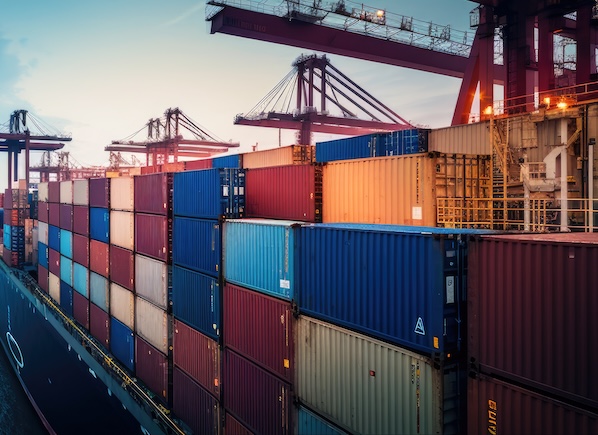
Container ship carrying container boxes import export dock with quay crane. Business commercial trade global cargo freight shipping logistic and transportation worldwide oversea concept. Generative AI
Economic Updates
Philippines Trade Update: Wider deficit on strong imports
DOWNLOAD
Frick collection with palm trees 
Economic Updates
Policy Rate Updates: Policy rate updates to reassure 
DOWNLOAD
Man using his smartphone
Reports
Fed to cut just once 
DOWNLOAD
View all Reports
Metrobank.com.ph How To Sign Up
Follow us on our platforms.

How may we help you?

TOP SEARCHES
  • Where to put my investments
  • Reports about the pandemic and economy
  • Metrobank
  • Webinars
  • Economy
TRENDING ARTICLES
  • Investing for Beginners: Following your PATH
  • On government debt thresholds: How much is too much?
  • Philippines Stock Market Outlook for 2022
  • Deficit spending remains unabated

Login

Access Exclusive Content
Login to Wealth Manager
Visit us at metrobank.com.ph How To Sign Up
Access Exclusive Content Login to Wealth Manager
Search
MODEL PORTFOLIO THE GIST
NEWS AND FEATURES
Global Philippines Fine Living
INSIGHTS
INVESTMENT STRATEGY
Economy Stocks Bonds Currencies
THE BASICS
Investment Tips Explainers Retirement
WEBINARS
2024 Mid-Year Economi Briefing, economic growth in the Philippines
2024 Mid-Year Economic Briefing: Navigating the Easing Cycle
June 21, 2024
Investing with Love
Investing with Love: A Mother’s Guide to Putting Money to Work
May 15, 2024
retirement-ss-3
Investor Series: An Introduction to Estate Planning
September 1, 2023
View All Webinars
DOWNLOADS
Container ship carrying container boxes import export dock with quay crane. Business commercial trade global cargo freight shipping logistic and transportation worldwide oversea concept. Generative AI
Economic Updates
Philippines Trade Update: Wider deficit on strong imports
March 27, 2026 DOWNLOAD
Frick collection with palm trees 
Economic Updates
Policy Rate Updates: Policy rate updates to reassure 
March 26, 2026 DOWNLOAD
Man using his smartphone
Reports
Fed to cut just once 
March 19, 2026 DOWNLOAD
View all Reports

Archives: Business World Article

Maharlika fund’s rules finalized, says Marcos

Maharlika fund’s rules finalized, says Marcos

THE PHILIPPINE government has finalized the implementing rules and regulations (IRR) for its first-ever sovereign wealth fund, less than a month after it was suspended to supposedly improve the fund’s organizational structure.

“The IRR of the Maharlika Investment Fund (MIF) has been finalized. Upon approval, we’ll swiftly establish the corporate structure, getting the MIF up and running,” President Ferdinand R. Marcos, Jr. said in a Palace statement on Monday.

The Palace did not provide other details on the changes to the IRR.

In an order dated Oct. 12, Mr. Marcos ordered the suspension of the IRR of the law that created the MIF. The letter was addressed to the Bureau of the Treasury as well as the heads of the Land Bank of the Philippines (LANDBANK) and the Development Bank of the Philippines (DBP).

The suspension came after the LANDBANK and DBP had already remitted P50 billion and P25 billion, respectively, for the initial funding of the sovereign wealth fund as required under the law.

Executive Secretary Lucas P. Bersamin had said Mr. Marcos had wanted to carefully study the IRR “to ensure that the purpose of the fund will be realized for the country’s development with safeguards in place for transparency and accountability.”

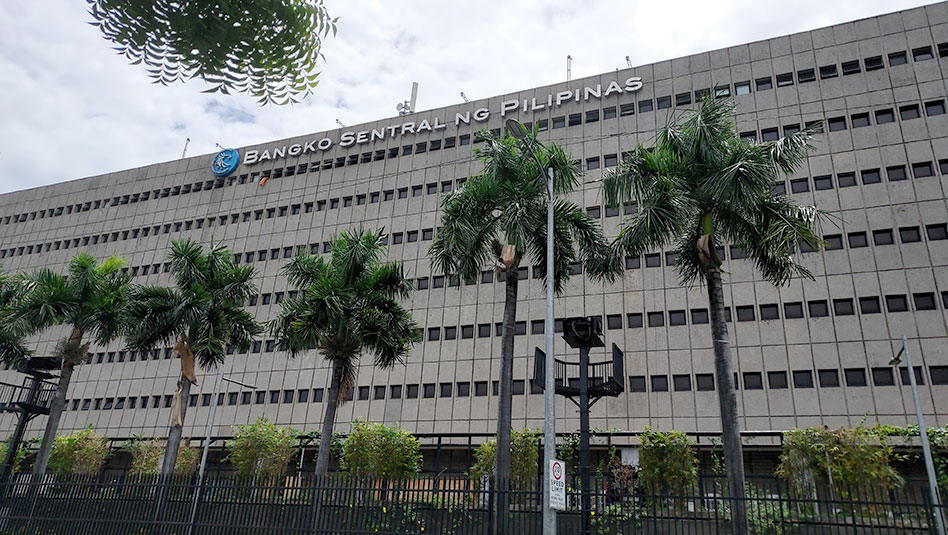
Concerns over the financial stability of the two state banks swirled after they sought regulatory relief from the Bangko Sentral ng Pilipinas’ capitalization requirements after remitting their contributions.

“We would like to see provisions which broaden transparency and accountability in managing the fund, while allowing fund managers the agility and flexibility to maximize fund return,” public investment analyst Terry L. Ridon said in a Facebook Messenger chat.

Mr. Ridon said Malacañang should have included “a little bit more details” on the exact changes in the IRR and avoid letting the public second-guess the developing plans regarding the fund “considering that it’s a flagship economic program.”

“It is critical for us to see who gets to sit in the inaugural MIF board because that would spell this administration’s commitment to effective stewardship of our resources and MIF’s promised contribution to national development,” Emy Ruth Gianan, who teaches economics at the Polytechnic University of the Philippines, said via Messenger.

She said it is notable that the MIF “remains active in the public eye.”

Economists earlier told BusinessWorld that the suspension may be aimed at allowing the President to have greater say on the choice of the Maharlika Investment Corp.’s top executives.

They also flagged the original IRR’s lack of guidance on how foreign or local private investors can participate or invest in the fund.

Despite the suspension of the rules, Mr. Marcos last month vowed the MIF will be operational before the end of the year.

“We are still committed to having it operational before the end of the year,” he said in his departure speech before leaving Manila for a meeting between Southeast Asian and Gulf leaders in Saudi Arabia in October.

Finance Secretary Benjamin E. Diokno had pitched the investment opportunities in the MIF during a meeting with top Saudi business leaders in October.

“To achieve this, Maharlika aims to attract capital from both domestic and global equity investors, including large funds here in the Middle East seeking to diversify its portfolio in fast-growing emerging markets like the Philippines,” Mr. Diokno was quoted as saying in a statement last month.

Investments in the MIF would be used to ramp up the implementation of the country’s high-impact infrastructure flagship projects estimated to be worth around $153 billion.

“The fund also presents exciting opportunities for green and blue investments, ESG (environmental, social, and corporate governance) linked fixed-income instruments, and cutting-edge technologies with the advent of artificial intelligence and cloud computing,” he said. — Kyle Aristophere T. Atienza


Interest rates already at ‘highest level’ — Diokno

Interest rates already at ‘highest level’ — Diokno

THE MONETARY BOARD will likely pause at its Nov. 16 meeting as policy rates have “reached the highest level,” Finance Secretary Benjamin E. Diokno said.

Analysts also noted that there is less pressure now for the Bangko Sentral ng Pilipinas (BSP) to hike at the next meeting after the US Federal Reserve kept interest rates steady last week, although domestic inflation remains a key concern.

“I think we have reached the highest level… given the decline in inflation, there’s no justification for higher interest rates,” Mr. Diokno told reporters on the sidelines of an event on Monday. “I think it will be a hold next week, that’s why (Governor Eli M. Remolona, Jr.) decided on an off-cycle hike.”

The BSP is scheduled to have its second-to-the-last rate-setting meeting on Nov. 16. Last month, the Monetary Board raised borrowing costs by 25 basis points (bps) in an off-cycle move, bringing the benchmark interest rate to a 16-year high of 6.5%.

Mr. Diokno said that the current policy rate is already the “maximum.”

“Our prospects next year are good, hopefully the (Israel-Hamas) war will not worsen, although the impact of this is just remote. And oil prices are falling, and the peso is strengthening so the impact of that is good,” he added.

Mr. Diokno and National Economic and Development Authority (NEDA) Secretary Arsenio M. Balisacan earlier cautioned against further monetary tightening due to its long-term impact on economic growth.

However, the Finance chief noted that third-quarter economic growth “definitely will be better than the second quarter” because of ramped-up infrastructure expenditures and slower inflation.

The Philippines’ gross domestic product (GDP) grew by a weaker-than-expected 4.3% in the second quarter, partly due to the 7.1% contraction in government spending.

A BusinessWorld poll of 18 economists and analysts last week yielded a median GDP growth estimate of 4.9% for the third quarter. Third-quarter GDP data will be released on Thursday (Nov. 9).

Mr. Diokno said the lower end of the government’s 6-7% GDP growth target is also still doable.

“We have to grow by 6.6% for the second half so let’s see. But even a 5.9% growth, that’s good enough, we’re still the fastest growing in this part of the world,” he added.

FED PAUSE

Meanwhile, Makoto Tsuchiya, an economist at Oxford Economics, said the Fed’s policy decision may allow the BSP to pause rather than hike on Nov. 16.   

“(The Fed pause) lessens the need for the BSP to pay attention to the interest differential and the exchange rate weakness,” Mr. Tsuchiya said in an e-mail.   

“But at the same time, I think the BSP is more concerned about domestic inflation rather than the currency movement at this particular point in time, although it is true that weaker currency could eventually lead to higher domestic prices through imported inflation,” he added.

The US central bank kept borrowing costs unchanged at 5.25-5.5% for the second straight meeting last week. This was after it hiked policy rates by 525 basis points (bps) from March 2022 to July 2023.   

In a Viber message, Security Bank Corp. Chief Economist Robert Dan J. Roces said the Fed pause, a likely last rate hike from the BSP, and remittance inflows during the holiday season may support the peso in the coming months.   

BPI Lead Economist Emilio S. Neri, Jr. said the BSP will consider not just the Fed decision, but October inflation and third-quarter GDP growth to “check if monetary settings need a follow through adjustment immediately or can be held steady until their meeting.”

A BusinessWorld poll of 13 analysts conducted this week yielded a median estimate of 5.7% for October inflation, well within the 5.1-5.9% forecast of the BSP. If realized, October inflation would be slower than 6.1% in September and 7.7% in the same month last year. The local statistics agency will release the inflation data today (Nov. 7).   

“We may be in a different boat than those of the US, and the BSP has left the door open for another 25-bp hike in November,” Mr. Roces said.   

However, slower core inflation in October and weaker-than-expected GDP data for the third quarter could prompt the BSP to pause.

Mr. Remolona earlier said there is a good chance that the Monetary Board would keep the key policy rate at 6.5% at its next meeting.

“We currently expect the US Fed to start cutting the policy rate in the third quarter. We think the BSP can cut the rate earlier in the second quarter, if domestic inflation declines as we expect in the latest baseline,” Mr. Tsuchiya said.   

“However, we think the risk is tilted towards a longer pause, especially given recent price volatility and higher-for-longer stance from the US.

The BSP sees average inflation at 5.8% for 2023, before easing to 3.5% in 2024 and 3.4% in 2025. However, officials said the BSP would revise its inflation forecasts on Nov. 16. – Luisa Maria Jacinta C. Jocson and Keisha B. Ta-asan, Reporters

PHL Sukuk bond offer may exceed USD 1-B target

PHL Sukuk bond offer may exceed USD 1-B target

THE PHILIPPINES’ maiden Sukuk bond offering is still pushing through within the fourth quarter and could possibly exceed its USD 1-billion target offer size, Finance Secretary Benjamin E. Diokno said.

“It will still push through. We are finalizing the papers, it will still be in end-November,” he told reporters in mixed English and Filipino on the sidelines of an event on Monday.

Earlier, the Department of Finance (DoF) said it was targeting to raise around $1 billion from the Islamic bonds, which will have a minimum denomination of at least USD 200,000.

Asked if demand will likely exceed the target size of $1 billion, Mr. Diokno said: “I think so. There’s a lot of petrodollars.”

Mr. Diokno said that the government will proceed with the offering despite fears of a regional spillover from the Israel-Hamas war in Gaza.

At least six banks will be tapped as the underwriters for the issuance.

Former National Treasurer Rosalia V. de Leon earlier said that the government was studying the potential structure of the bonds, which could either be “hybrid Wakala, Ijarah or Murabaha.”

This is expected to be the government’s last global bond issuance for the year.

Last month, the Philippine government raised USD 1.26 billion from the first retail dollar bond sale under the Marcos administration. This was much higher than the minimum issue size of USD 200 million but below the USD 1.6 billion raised during the Philippines’ maiden retail dollar bond auction in 2021.

The dollar-denominated five-and-a-half-year bonds fetched a coupon rate of 5.75% and were awarded at rates ranging from 5% to 5.75%, bringing the average to 5.509%.

This year, the government plans to borrow PHP 2.207 trillion, consisting of PHP 1.654 trillion from domestic and PHP 553.5 billion from foreign sources.

The Treasury earlier planned to raise USD 5 billion (around PHP 283 billion) from global bonds this year. In January, the Philippines raised USD 3 billion from its first US dollar bond issuance for the year. — Luisa Maria Jacinta C. Jocson

Japan, Korea, and India offer to fund Philippine railway projects

Japan, Korea, and India offer to fund Philippine railway projects

THE PHILIPPINE government is considering official development assistance (ODA) from Japan, South Korea, and India to fund three major railway projects after it dropped China as funding source. 

“There are three projects to be funded by China — Bicol’s South Long-Haul, Mindanao Railway, and Subic-Clark Railway. Maybe this year the contract will be fully terminated. If it will not be funded by China, it will be funded by another ODA,” Transportation Secretary Jaime J. Bautista told reporters on the sidelines of a forum organized by the Economic Journalists Association of the Philippines on Monday.

Last month, Mr. Bautista said that the Philippines is withdrawing its request for ODA from China for three railway projects, citing “lack of progress” on financing.

“[We are] working with other countries. We are exploring this, but we cannot give details yet. The alternative funding may come from ODA — South Korea, Japan, and India,” he said.

Aside from ODA, the Philippines may also seek funding from the World Bank, Asian Development Bank (ADB) and the Japan International Cooperation Agency, Mr. Bautista said.

Finance Secretary Benjamin E. Diokno said funding for phase 1 of the Mindanao railway project could be finalized by the first quarter of 2024.

“It could be official development assistance, (like from) Japan. India has also shown interest… We are looking now. It could be a combination of Japan and the ADB,” Mr. Diokno told reporters at a separate event.

The Finance chief said the government will still pursue the Mindanao Railway project since feasibility studies have already been completed.

Phase 1 of the Mindanao railway project, estimated to cost P83 billion, would stretch from Tagum in Davao del Norte to Digos City in Davao del Sur. It is expected to accommodate 122,000 passengers per day and cut travel time between Tagum and Digos from three hours to one.

Asked if the Mindanao railway can be financed through the Maharlika Investment Fund (MIF), Mr. Diokno said this was a possibility, but it would not be fully financed by the sovereign wealth fund.

Aside from the Mindanao railway, the government has also pulled its request for ODA from China to fund the P50-billion Subic-Clark railway and the Philippine National Railway’s PHP 142-billion South Long Haul railway.

“The negotiations have been slow. It’s not moving, so we have to explore other sources,” Mr. Diokno said.

President Ferdinand R. Marcos, Jr. last year ordered Transport officials to renegotiate loan deals with China that began during the Duterte administration in 2018. However, these loan agreements were “withdrawn” after China did not act on the funding request.

Despite the delays in funding, Mr. Bautista said they still expect to complete these railway projects by the end of 2028.

“We need to get the funding first; funding is one of the challenges because we already have the design. Due to the delays, we may need to get approval for the change of cost because maybe it will be higher, we’ll study that. We are working on it,” he said. — Ashley Erika O. Jose and Luisa Maria Jacinta C. Jocson

BTr makes partial award of T-bill offering

BTr makes partial award of T-bill offering

THE BUREAU of the Treasury (BTr) partially awarded the Treasury bills (T-bills) it auctioned off on Monday, with rates mostly rising as investors awaited the release of third-quarter gross domestic product (GDP) growth data and amid expectations that borrowing costs will be steady.

The government raised PHP 13.22 billion via the T-bills it auctioned off on Monday, short of the PHP 15-billion program, even as total bids reached PHP 32.316 billion or double the amount on offer.

Broken down, the Treasury made a full PHP 5-billion award of the 91-day T-bills, with tenders for the tenor reaching PHP 14.79 billion. The three-month paper was quoted at an average rate of 6.352%, 0.9 basis point (bp) above the 6.343% seen last week. Accepted rates ranged from 6.334% to 6.374%.

Meanwhile, the government borrowed only PHP 4.5 billion through the 182-day securities, short of the PHP 5-billion program, despite bids for the paper reaching PHP 7.176 billion. The average rate for the six-month T-bill stood at 6.536%, up by 7.4 bps from the 6.462% quoted last week, with accepted yields ranging from 6.495% to 6.55%.

The government raised just PHP 3.72 billion via the 364-day debt papers, short of the PHP 5-billion plan, despite bids reachingPHP billion. The average rate of the one-year T-bill inched down by 0.1 bp to 6.591% from the 6.592% fetched last week. Accepted yields were from 6.57% to 6.6%.

Yields fetched for the 91- and 182- day T-bills were “unusually” higher than secondary market levels, Rizal Commercial Banking Corp. Chief Economist Michael L. Ricafort said in a Viber message.

At the secondary market on Monday, the 91-, 182-, and 364-day T-bills were quoted at 6.1710%, 6.3968%, and 6.5828%, respectively, based on PHP BVAL Reference Rates data published on the Philippine Dealing System’s website.

“The higher T-bill rates today reflected local optimism ahead of the Philippine GDP report this week,” a trader said in an e-mail on Monday.

A BusinessWorld poll of 18 economists and analysts last week yielded a median estimate of 4.9% for GDP growth in the July-September period.

If realized, this would be faster than the preliminary 4.3% growth recorded in the second quarter, but slower than 7.7% in the July-September period a year ago.

This would bring the nine-month average GDP expansion to 5.2%, still below the government’s 6-7% full-year growth target.

The Philippine Statistics Authority (PSA) will release third-quarter GDP data on Thursday.

The BTr partially awarded the T-bills on Monday due to the higher yields after Finance Secretary Benjamin E. Diokno said the central bank might be done with its tightening cycle, Mr. Ricafort said.

The Bangko Sentral ng Pilipinas (BSP) is likely to keep benchmark interest rates steady at its meeting on Nov. 16 following the off-cycle increase implemented last month and amid slowing inflation, Finance Secretary and Monetary Board member Benjamin E. Diokno said on Monday.

The BSP on Oct. 26 hiked its policy rate by 25 bps to a fresh 16-year high of 6.5% in an out-of-cycle move and signaled that it is ready to deliver “follow-through policy action” if necessary to bring inflation back its 2-4% target. Since May 2022, the central bank has hiked its key rate by a cumulative 450 bps.

On Tuesday, the BTr will offer PHP 30 billion in reissued seven-year Treasury bonds (T-bonds) with a remaining life of six years and eight months.

The BTr plans to borrow PHP 225 billion from the domestic market this month, or PHP 7 billion via T-bills and PHP 150 billion via T-bonds.

The government borrows from local and foreign sources to help fund its budget deficit, which is capped at 6.1% of gross domestic product this year. — A.M.C. Sy

PHL banking system remains stable in the 1st half on strong earnings, ample capital

PHL banking system remains stable in the 1st half on strong earnings, ample capital

THE PHILIPPINE banking system remained stable and robust in the first half, posting higher income, sufficient capital and liquidity buffers amid a high-interest rate environment and inflationary pressures.

The financial system sustained its robust performance and supported economic activity, the Bangko Sentral ng Pilipinas (BSP) said in a report on the Philippine financial system for the first semester.

“The overall key performance indicators of the Philippine financial system and the domestic banking system show that this sector continues to be a source of strength for the Philippines, capable of meeting the demands of a growing digital and sustainable economy,” BSP Governor Eli M. Remolona, Jr. said in a statement. 

The banking sector had a strong balance sheet, profitable business operations, enough capital and liquidity buffers, as well as ample provisions for losses, the BSP said.

Banks’ assets rose by 9.1% to PHP 23.3 trillion in June, faster than the 7.8% growth recorded last year. By banking group, universal and commercial banks (U/KBs) had the largest share of assets at 93.9%.

For the January-June period, banks’ net profit increased by 27.7% to PHP 182.8 billion, faster than the 16.7% growth in the same period last year.

Banks’ interest income surged by 48.4% year on year. Loans to private firms (P221.6 billion), households (P129.9 billion), as well as investments in securities (P130.3 billion), generated bulk of banks’ interest income. 

Overall return on equity and return on assets improved to 12.8% (from 9.6%) and 1.6% (from 1.2%), respectively.

The banking sector remained profitable as revenues from lending and investing activities boosted earnings.

Total investments reached PHP 6.6 trillion in the first semester, 9.2% higher year on year. Around 60% or PHP 4 trillion of the banking system’s investments were debt securities measured at amortized cost.

“Amid growing resources, deposits and earnings, Philippine banks remain well-capitalized and highly liquid, with a capital adequacy ratio and key liquidity ratios exceeding the BSP regulatory and international standards,” the BSP said.

As of March, the capital adequacy ratios (CARs) of the banking system were at 16% and 16.6% on solo and consolidated bases, respectively. All banking groups also maintained high capital ratios.

The consolidated CAR of the U/KB industry stood at 16.4%. The CARs of stand-alone thrift banks (TBs), rural and cooperative banks (RCBs), and digital banks (DGBs) reached 20.8%, 21.3%, and 20%, respectively.

The risk-based capital ratio of a bank, expressed as a percentage of qualifying capital to risk-weighted assets, should not be less than 10% for both solo and consolidated basis. 

“Based on the results of the latest stress test exercises, the banking system’s post-shock CAR would remain above the regulatory minima under assumed scenarios, including a possible shock in the property market. The BSP conducts regular and ad hoc stress tests as part of its enhanced surveillance toolkit,” the BSP said. 

Philippine banks had a stronger capital position in the first semester, with equity growing by 11% to P2.9 trillion as of end-June, beating the 2.7% expansion a year ago, the BSP said. 

U/KBs held the largest share of the banking system’s total capital at 91.7% (PHP 2.6 trillion). The remaining amount was held by TBs, RCBs, and DGBs at 5.3% (PHP 152.3 billion), 2.5% (PHP 72.2 billion), and 0.4% (PHP 11.6 billion), respectively.

The BSP noted that banks were able to maintain sufficient buffers to meet liquidity and funding requirements. 

Preliminary data showed the U/KB industry’s solo liquidity coverage ratio stood at 183.1% as of June, while its net stable funding ratio hit 139.1% as of March. Both are well above the 100% minimum threshold set by the central bank.

The ratio of deposits to loans also stood at 143.1% in the first half, a tad lower than 144.5% from the same period a year ago, but still well above 100%, central bank data showed. 

“Moving forward, the BSP is steadfast in ensuring that the Philippine financial system is safe and sound in keeping with its financial stability mandate,” the BSP said. 

“In this regard, the BSP will continue to collaborate and closely work with relevant stakeholders in the adoption of key financial sector reforms aimed at ensuring institutional stability, promoting responsible innovation, and advancing sustainability in the financial system,” it added. 

As of June, there were a total of 490 banks with 12,845 branches and other offices, 2,064 nonbank financial institutions with 22,440 branches, and one offshore banking unit. — Keisha B. Ta-asan

Stocks up on peso’s rise before key data releases

Stocks up on peso’s rise before key data releases

PHILIPPINE SHARES climbed on Monday after the peso closed at the P55-per-dollar level for the first time in three months and as the market awaits the release of inflation and gross domestic product (GDP) data this week.

The Philippine Stock Exchange index (PSEi) went up by 88.76 points or 1.48% to close at 6,078.03 on Monday, while the broader all shares index rose by 29.10 points or 0.89% to end at 3,292.15.

“The PSEi has risen for the third consecutive time as the peso strengthened against the dollar, now trading below the P56 level. This is driven by diminishing expectations of another US Federal Reserve rate hike following last week’s rate pause,” Unicapital Securities, Inc. Senior Equity Research Analyst Carlos Angelo O. Temporal said.

The peso closed at P55.91 a dollar on Monday, rising by 19 centavos from Friday’s P56.10 finish, data from the Bankers Association of the Philippines’ website showed.

This was the peso’s best close in more than three months or since it finished at P55.74 on Aug. 4.

“Following the holiday break last week, the local bourse surged… due to the strong Philippine manufacturing PMI (purchasing managers’ index) data and a drop in US long-term Treasury yields,” Philstocks Financial, Inc. Research Analyst Claire T. Alviar said in a Viber message.

“Upcoming economic data releases including but not limited to inflation rate and GDP growth rate, which are both expected to be better than the previous report helped lift the market,” Ms. Alviar added.

The Philippine Statistics Authority will release October inflation data on Tuesday and the third-quarter GDP report on Thursday.

A BusinessWorld poll of 13 analysts yielded a median estimate of 5.7% for October headline inflation, within the 5.1-5.9% forecast of the Bangko Sentral ng Pilipinas.

Meanwhile, a separate poll of 17 economists and analysts last week yielded a median estimate of 4.9% for third quarter GDP growth, faster than the preliminary 4.3% expansion recorded in the second quarter.

If realized, this would bring the nine-month GDP growth average to 5.2%, still below the government’s 6-7% full-year target.

Almost all sectoral indices went up on Monday, except for industrials, which declined by 2.50 points or 0.02% to 8,495.78.

Holding firms climbed by 126.43 points or 2.2% to 5,853.91; property went up by 43.68 points or 1.71% to 2,590.31; financials rose by 17.55 points or 1.03% to 1,721.71; services increased by 13.72 points or 0.92% to 1,490.66; and mining and oil added 87.12 points or 0.88% to end at 9,894.27.

Value turnover went up to P4.02 billion on Monday with 323.74 million shares changing hands from the P3.76 billion with 301.35 million issues seen on Friday.

Advancers narrowly outnumbered decliners, 87 versus 86, while 51 shares closed unchanged.

Net foreign selling went down to P172.65 million on Monday from P506.65 million on Friday. — S.J. Talavera

Stocks up on peso’s rise before key data releases

Stocks up on peso’s rise before key data releases

PHILIPPINE SHARES climbed on Monday after the peso closed at the P55-per-dollar level for the first time in three months and as the market awaits the release of inflation and gross domestic product (GDP) data this week.

The Philippine Stock Exchange index (PSEi) went up by 88.76 points or 1.48% to close at 6,078.03 on Monday, while the broader all shares index rose by 29.10 points or 0.89% to end at 3,292.15.

“The PSEi has risen for the third consecutive time as the peso strengthened against the dollar, now trading below the P56 level. This is driven by diminishing expectations of another US Federal Reserve rate hike following last week’s rate pause,” Unicapital Securities, Inc. Senior Equity Research Analyst Carlos Angelo O. Temporal said.

The peso closed at P55.91 a dollar on Monday, rising by 19 centavos from Friday’s P56.10 finish, data from the Bankers Association of the Philippines’ website showed.

This was the peso’s best close in more than three months or since it finished at P55.74 on Aug. 4.

“Following the holiday break last week, the local bourse surged… due to the strong Philippine manufacturing PMI (purchasing managers’ index) data and a drop in US long-term Treasury yields,” Philstocks Financial, Inc. Research Analyst Claire T. Alviar said in a Viber message.

“Upcoming economic data releases including but not limited to inflation rate and GDP growth rate, which are both expected to be better than the previous report helped lift the market,” Ms. Alviar added.

The Philippine Statistics Authority will release October inflation data on Tuesday and the third-quarter GDP report on Thursday.

A BusinessWorld poll of 13 analysts yielded a median estimate of 5.7% for October headline inflation, within the 5.1-5.9% forecast of the Bangko Sentral ng Pilipinas.

Meanwhile, a separate poll of 17 economists and analysts last week yielded a median estimate of 4.9% for third quarter GDP growth, faster than the preliminary 4.3% expansion recorded in the second quarter.

If realized, this would bring the nine-month GDP growth average to 5.2%, still below the government’s 6-7% full-year target.

Almost all sectoral indices went up on Monday, except for industrials, which declined by 2.50 points or 0.02% to 8,495.78.

Holding firms climbed by 126.43 points or 2.2% to 5,853.91; property went up by 43.68 points or 1.71% to 2,590.31; financials rose by 17.55 points or 1.03% to 1,721.71; services increased by 13.72 points or 0.92% to 1,490.66; and mining and oil added 87.12 points or 0.88% to end at 9,894.27.

Value turnover went up to P4.02 billion on Monday with 323.74 million shares changing hands from the P3.76 billion with 301.35 million issues seen on Friday.

Advancers narrowly outnumbered decliners, 87 versus 86, while 51 shares closed unchanged.

Net foreign selling went down to P172.65 million on Monday from P506.65 million on Friday. — S.J. Talavera

Philippines finalizes rules on sovereign wealth fund

Philippines finalizes rules on sovereign wealth fund

President Ferdinand R. Marcos, Jr. on Monday said his government has finalized rules for the Philippines’ first sovereign wealth fund and that authorities aimed to get the fund operating swiftly.

Mr. Marcos last month suspended the implementation of the Maharlika Investment Fund (MIF) to ensure transparency and accountability in the fund’s management.

“Upon our approval, we’ll swiftly establish the corporate structure, getting the MIF up and running,” Mr. Marcos said on Facebook.

The government plans to start the fund’s operations by year-end. 

The fund, signed into law in July, has been touted by Mr. Marcos as a key plank for economic growth and infrastructure development.

Under the law, the fund would issue P500 billion (USD 8.96 billion) worth of preferred and common shares which the government, state-run firms, and banks can purchase.

The Philippines is relatively late in setting up a sovereign wealth fund in the region, with neighboring Indonesia launching its fund in 2021, and Singapore long having established one.

The sovereign wealth fund of neighbor Malaysia, 1Malaysia Development Berhad, was engulfed in a multi-billion-dollar graft scandal. — Reuters

GDP likely grew 4.9% in Q3 — poll

GDP likely grew 4.9% in Q3 — poll

Philippine economic growth likely picked up in the third quarter amid a recovery in government spending, although elevated inflation and high interest rates may have dampened household consumption, analysts said.

A BusinessWorld poll of 18 economists and analysts last week yielded a median gross domestic product (GDP) growth estimate of 4.9% for the July-September period, a tad faster than the preliminary 4.3% growth recorded in the second quarter.

However, this pace would be slower than 7.7% in the July-September period a year ago.

Analysts’ Q3 2023 GDP estimates

If realized, this would bring the nine-month average GDP expansion to 5.2%, still below the government’s 6%-7% full-year target. 

The Philippine Statistics Authority (PSA) is set to release third-quarter GDP data on Nov. 9.

Analysts said that a recovery in government spending and steady household consumption likely drove the GDP growth in the July-to-September period. However, the pace of economic expansion may have been tempered by persistent inflation and high borrowing costs.

“A catch-up in government spending should have provided some lift to overall GDP. However, household consumption and private investment likely provided much weight, limiting how much the overall figure can be lifted,” Aris Dacanay, Association of Southeast Asian Nations (ASEAN) economist at HSBC Global Research, said in an e-mail.

Nicholas Antonio T. Mapa, senior economist at ING Bank N.V. Manila, gave a 4.2% GDP growth forecast for the third quarter due to the expected “modest rebound” in government spending.

“But capital formation could slide deeper into negative territory. Consumption should still be positive but the weight of elevated prices and rising household debt amidst a high interest rate landscape could be a drag on all important household spending,” Mr. Mapa said in an e-mail.

Latest Treasury data showed state spending rose by 4.12% to PHP 3.82 trillion in the nine months to September from PHP 3.67 trillion a year ago.

“However, growth in public construction may be dampened by weaker activities on the private side given the high interest rate environment,” Domini S. Velasquez, chief economist at China Banking Corp.  said in an e-mail.

The slower-than-expected second-quarter GDP growth was partly attributed to the 7.1% contraction in government spending. Household consumption also grew at a weaker pace of 5.5% during the second quarter from 8.5% a year ago.

On the expenditure side, private consumption historically accounts for about three-fourths (75%) of the Philippine economy, while government spending contributes a little over a tenth.

Pantheon Macroeconomics Chief Emerging Asia economist Miguel Chanco estimated that economic growth further slowed to an annual 3.1% in the third quarter as private consumption deteriorated partly due to unfavorable base effects.

“Moreover, total investment probably will shrink for the first time since the coronavirus disease 2019-hit years, albeit only modestly. Net trade should provide more support to growth, however perversely, as it will be flattered by a pullback in imports, which is statistically growth-positive,” he said in an e-mail.

Mr. Chanco expects government spending to have grown above 2% in the third quarter, reversing the sharp contraction in the previous quarter.

“I expect momentum sequentially, quarter on quarter, to remain fairly weak and subdued, as private consumption continues to struggle with poor balance sheets (inadequate savings, a lot more debt than in recent years),” he said, noting that labor demand is beginning to stagnate, and remittance growth is slowing.

Ms. Velasquez said services likely drove growth on the supply side “with strong gains in transportation, accommodation, food service activities, and arts and recreation.”

“Manufacturing likely saw some increased demand in preparation for the holidays. Meanwhile, we remain pessimistic about agriculture as strong typhoons hit the country in July-August and El Niño continues to pose a risk on production,” she said.

Makoto Tsuchiya, assistant economist at Oxford Economics, said he expects the economy to have expanded by 4.3% in the July-to-September period due to base effects after a sequential decline in the second quarter.

“We expect a statistical bounce-back, but it won’t be a significant improvement given the surrounding macroeconomic conditions. The external demand continues to suffer, although the end of the IT cycle downturn likely lent some support to the electronics exports,” Mr. Tsuchiya said.

High rates
Meanwhile, economists warned the Bangko Sentral ng Pilipinas’ (BSP) aggressive policy tightening may hurt GDP growth for the rest of the year.

“The lagged impact of past monetary tightening will continue to constrain domestic demand, particularly weighing on business investment. These headwinds are likely to intensify towards the end of the year and into 2024,” Mr. Tsuchiya said.

The BSP resumed monetary tightening in an off-cycle 25-basis-point (bp) rate hike in October, bringing the policy rate to a new 16-year high of 6.5%. Since May 2022, the central bank has hiked rates by a cumulative 450 bps.

This as headline inflation quickened for a second straight month to 6.1% in September. Inflation averaged 6.6% from January to September, still above the BSP’s 5.8% forecast for 2023.

“Clouds are darkening above Philippine’s 2023 outlook. For starters, households will struggle as inflation remains above the BSP’s 2-4% target rate and interest rate stays high through the rest of 2023. That broad weakness in demand will also cap private investment,” Moody’s Analytics economist Sarah Tan said in an e-mail.

Ms. Tan said she expects government spending to improve in the last quarter, and net exports to see modest gains. The Philippine economy will likely expand 5.2% in 2023, slower than the 7.6% print in 2022 but “will once again outperform its regional peers this year,” she added.

Ms. Velasquez said increased activities during the holiday season will likely provide support to the economy.

“The fourth quarter and full-year growth will still likely fall short of the government’s 6-7% target. Our full-year growth forecast for 2023 is around 5.2%. We think the economy will fare better in 2024 as inflation and interest rates go down,” she said. — Lourdes O. Pilar

Posts navigation

Older posts
Newer posts

Recent Posts

  • Investment Ideas: April 1, 2026
  • Metrobank US-Iran Risk Index: Signals of an end
  • Eye on Earnings: Demand for connection supports telcos
  • Inflation Preview: March madness
  • Investment Ideas: March 31, 2026

Recent Comments

No comments to show.

Archives

  • April 2026
  • March 2026
  • February 2026
  • January 2026
  • December 2025
  • November 2025
  • October 2025
  • September 2025
  • August 2025
  • July 2025
  • June 2025
  • May 2025
  • April 2025
  • March 2025
  • February 2025
  • January 2025
  • December 2024
  • November 2024
  • October 2024
  • September 2024
  • August 2024
  • July 2024
  • June 2024
  • May 2024
  • April 2024
  • March 2024
  • February 2024
  • January 2024
  • December 2023
  • November 2023
  • October 2023
  • September 2023
  • August 2023
  • July 2023
  • June 2023
  • May 2023
  • April 2023
  • March 2023
  • February 2023
  • January 2023
  • December 2022
  • November 2022
  • October 2022
  • September 2022
  • August 2022
  • July 2022
  • June 2022
  • May 2022
  • March 2022
  • December 2021
  • October 2021

Categories

  • Bonds
  • BusinessWorld
  • Currencies
  • Economy
  • Equities
  • Estate Planning
  • Explainer
  • Featured Insight
  • Fine Living
  • How To
  • Investment Tips
  • Markets
  • Portfolio Picks
  • Rates & Bonds
  • Retirement
  • Reuters
  • Spotlight
  • Stocks
  • Uncategorized

You are leaving Metrobank Wealth Insights

Please be aware that the external site policies may differ from our website Terms And Conditions and Privacy Policy. The next site will be opened in a new browser window or tab.

Cancel Proceed
Get in Touch

For inquiries, please call our Metrobank Contact Center at (02) 88-700-700 (domestic toll-free 1-800-1888-5775) or send an e-mail to customercare@metrobank.com.ph

Metrobank is regulated by the Bangko Sentral ng Pilipinas
Website: https://www.bsp.gov.ph

Quick Links
The Gist Webinars Wealth Manager Explainers
Markets
Currencies Rates & Bonds Equities Economy
Wealth
Investment Tips Fine Living Retirement
Portfolio Picks
Bonds Stocks
Others
Contact Us Privacy Notice Terms of Use
© 2026 Metrobank. All rights reserved.

Access this content:

If you are an existing investor, log in first to your Metrobank Wealth Manager account. ​

If you wish to start your wealth journey with us, click the “How To Sign Up” button. ​

Login HOW TO SIGN UP