MODEL PORTFOLIO
THE GIST
NEWS AND FEATURES
Global Philippines Fine Living
INSIGHTS
INVESTMENT STRATEGY
Economy Stocks Bonds Currencies
THE BASICS
Investment Tips Explainers Retirement
WEBINARS
2024 Mid-Year Economi Briefing, economic growth in the Philippines
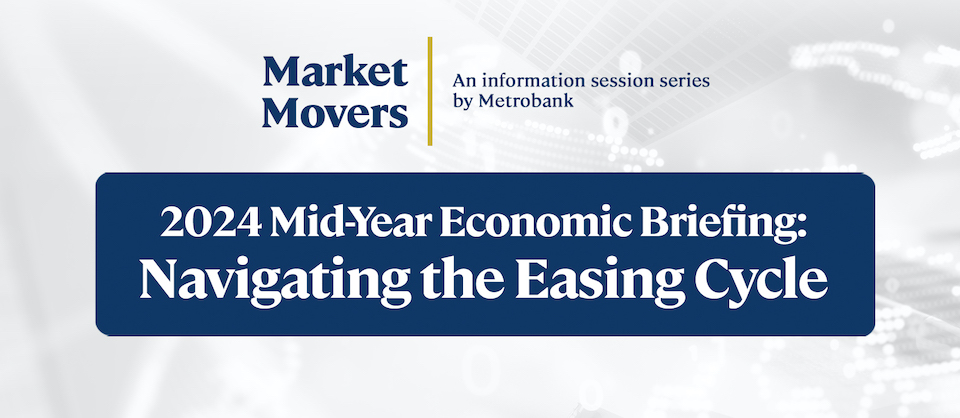
2024 Mid-Year Economic Briefing: Navigating the Easing Cycle
June 21, 2024
Investing with Love
Investing with Love: A Mother’s Guide to Putting Money to Work
May 15, 2024
retirement-ss-3
Investor Series: An Introduction to Estate Planning
September 1, 2023
View All Webinars
DOWNLOADS
Container ship carrying container boxes import export dock with quay crane. Business commercial trade global cargo freight shipping logistic and transportation worldwide oversea concept. Generative AI
Economic Updates
Philippines Trade Update: Wider deficit on strong imports
DOWNLOAD
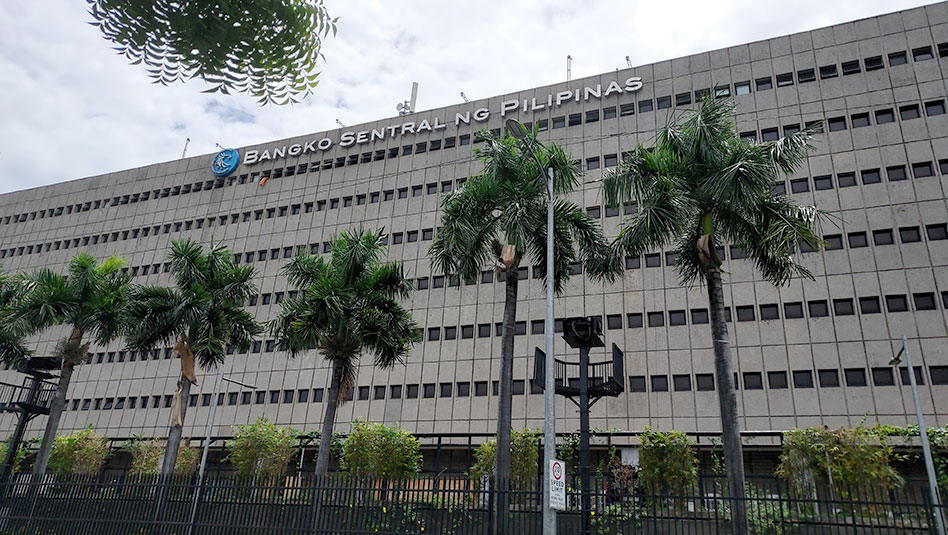
Frick collection with palm trees 
Economic Updates
Policy Rate Updates: Policy rate updates to reassure 
DOWNLOAD
Man using his smartphone
Reports
Fed to cut just once 
DOWNLOAD
View all Reports
Metrobank.com.ph How To Sign Up
Follow us on our platforms.

How may we help you?

TOP SEARCHES
  • Where to put my investments
  • Reports about the pandemic and economy
  • Metrobank
  • Webinars
  • Economy
TRENDING ARTICLES
  • Investing for Beginners: Following your PATH
  • On government debt thresholds: How much is too much?
  • Philippines Stock Market Outlook for 2022
  • Deficit spending remains unabated

Login

Access Exclusive Content
Login to Wealth Manager
Visit us at metrobank.com.ph How To Sign Up
Access Exclusive Content Login to Wealth Manager
Search
MODEL PORTFOLIO THE GIST
NEWS AND FEATURES
Global Philippines Fine Living
INSIGHTS
INVESTMENT STRATEGY
Economy Stocks Bonds Currencies
THE BASICS
Investment Tips Explainers Retirement
WEBINARS
2024 Mid-Year Economi Briefing, economic growth in the Philippines
2024 Mid-Year Economic Briefing: Navigating the Easing Cycle
June 21, 2024
Investing with Love
Investing with Love: A Mother’s Guide to Putting Money to Work
May 15, 2024
retirement-ss-3
Investor Series: An Introduction to Estate Planning
September 1, 2023
View All Webinars
DOWNLOADS
Container ship carrying container boxes import export dock with quay crane. Business commercial trade global cargo freight shipping logistic and transportation worldwide oversea concept. Generative AI
Economic Updates
Philippines Trade Update: Wider deficit on strong imports
March 27, 2026 DOWNLOAD
Frick collection with palm trees 
Economic Updates
Policy Rate Updates: Policy rate updates to reassure 
March 26, 2026 DOWNLOAD
Man using his smartphone
Reports
Fed to cut just once 
March 19, 2026 DOWNLOAD
View all Reports

Archives: Business World Article

Stocks dip as cautious investors await key events

Stocks dip as cautious investors await key events

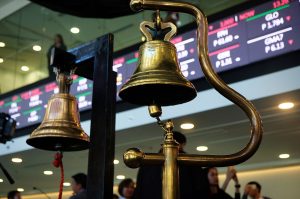
Philippine shares closed lower on Monday on negative market sentiment amid concerns overseas including Moody’s Investors Service’s downgrade of its outlook on the United States’ credit rating.

The benchmark Philippine Stock Exchange index (PSEi) went down by 45.75 points or 0.74% to close at 6,116.14 on Monday, while the broader all shares index lost 21.34 points or 0.64% to end at 3,295.52.

“Stocks experienced a modest decline after testing a critical resistance point at the 6,200 level. The latter was marked by the resistance of a downward trend line and the 50-day simple moving average,” AB Capital Securities, Inc. Vice-President Jovis L. Vistan said in a Viber message.

“The market sentiment was further influenced by global concerns, triggered by Moody’s Investors Service’s decision to downgrade its outlook on the credit rating of the US,” Mr. Vistan added.

China Bank Securities Corp. Research Director Rastine Mackie D. Mercado said the index’s drop was likely due to continued profit taking after last week’s surge and while investors stay cautious ahead of the scheduled Morgan Stanley Capital International index review results on Tuesday.

“Despite today’s move, prospects of a follow-through rally remain in play, especially as today’s downtick was accompanied by the lowest value turnover for the year,” Mr. Mercado said in an e-mail.

Meanwhile, Philstocks Financial, Inc. Research Analyst Claire T. Alviar said that investors were in “a wait-and-see mode” anticipating key events such as the US inflation data, the key rate meeting of the Bangko Sentral ng Pilipinas, and the upcoming meeting between US President Joseph Biden and Chinese President Xi Jinping.

“Market participation was notably subdued, with a net market value turnover of only PHP 1.29 [billion]. At least for this year, this was the lowest recorded net value turnover,” Ms. Alviar said.

Value turnover went down to PHP 1.37 billion on Monday with 285.31 million shares changing hands from the PHP 2.76 billion with 311.90 million issues seen on Friday.

All sectoral indices dropped on Monday. Mining and oil went down by 137.09 points or 1.41% to 9,556.04; services sank by 19.13 points or 1.27% to 1,476.87; property decreased by 23.53 points or 0.89% to 2,604.58; financials lost 13.01 points or 0.73% to 1,751.38; industrials shed 34.49 points or 0.39% to 8,608.23; and holdings firms dipped by 22.98 points or 0.39% to 5,855.02.

Decliners outnumbered advancers, 106 versus 57, while 52 shares closed unchanged.

Net foreign selling went up to PHP 270.92 million on Monday from PHP 62.12 million recorded on Friday.

“If the market posts an uptick tomorrow, then we may see the index push higher towards the 6,300 level,” Mr. Mercado said.

Mr. Vistan placed the PSEi’s support at 6,000 and resistance at 6,200. — Sheldeen Joy Talavera

BSP to hold steady on rates — poll

BSP to hold steady on rates — poll

The Bangko Sentral ng Pilipinas (BSP) is widely expected to keep benchmark interest rates steady at its meeting on Thursday, after inflation eased to a three-month low in October.

In a BusinessWorld poll of 18 analysts held last week, 15 analysts said they expect the Monetary Board to maintain the target reverse repurchase (RRP) rate at 6.5%, the highest in 16 years.

On the other hand, three economists said the Monetary Board may hike policy rates by 25 basis points (bps) to 6.75% at the Nov. 16 meeting amid stronger-than-expected gross domestic product (GDP) growth in the third quarter.

Analysts' Expectations on Policy Rates (November 2023)HSBC Global Research economist for ASEAN Aris Dacanay said there is no “urgent” need for the BSP to tighten policy after its off-cycle 25-bp hike in October.

“To the surprise of many including the BSP itself, headline inflation decelerated faster than expectations in October, which we think fortifies the decision to pause,” he said in an e-mail.

Headline inflation fell to a three-month low of 4.9% in October from 6.1% in September. It was significantly slower than the 5.7% median estimate in a BusinessWorld poll and the 5.1-5.9% forecast of the BSP.

However, October marked the 19th straight month that inflation breached the central bank’s 2-4% target. For the 10-month period, inflation averaged 6.4%.

“One of the main reasons behind the off-cycle hike last month was BSP’s concern over inflation expectation de-anchoring, and the October CPI print should take some edge off on the price front,” Makoto Tsuchiya, an economist from Oxford Economics, likewise said in an e-mail.

Security Bank Corp. Chief Economist Robert Dan J. Roces said the slowdown in October inflation gives the BSP some room to adopt a wait-and-see approach, “balancing the need to support economic growth while remaining vigilant about potential upside risks to inflation.”

HSBC’s Mr. Dacanay said there is no need to hike policy rates to support the peso, as it has strengthened significantly against the dollar after the US Federal Reserve’s pause.

The US central bank kept borrowing costs unchanged at 5.25-5.5% for the second straight time earlier this month. This was after it hiked policy rates by 525 bps from March 2022 to July 2023.   

The local unit closed at P55.96 per dollar on Friday, weakening by seven centavos from its P55.89 finish previously. Week on week, the peso gained 14 centavos from its P56.10 close on Nov. 3.

“Unless new supply shocks emerge, we believe domestic interest rates are restrictive enough given the general downtrend in fixed capital formation growth,” Philippine National Bank economist Alvin Joseph A. Arogo said in an e-mail.

“Therefore, we do not see the need for additional hikes, albeit the current policy rate level should be maintained for a long period,” he said.

The Philippine economy grew by 5.9% in the third quarter, faster than 4.3% in the second quarter but slower than 7.7% a year ago.

“Third-quarter GDP growth, while better than expected, still fell short of the government’s target even as we have yet to feel the full impact of the BSP’s previous rate hikes,” China Banking Corp. Chief Economist Domini S. Velasquez said.

Year to date, GDP averaged 5.5%, still below the government’s 6-7% full-year target. The economy would need to grow by 7.2% in the fourth quarter in order to achieve the lower end of the government’s goal. 

“The third-quarter GDP shows that private investments are already mildly contracting so that’s directly influenced by interest rates,” Sun Life Financial economist Patrick M. Ella said in an e-mail.

In the third quarter, gross capital formation, which is the investment component of the economy, contracted by 1.6%. This was a reversal of the 18.2% expansion a year ago and 0.3% in the second quarter.

Meanwhile, Nalin Chutchotitham, an economist for the Philippines from Citigroup, Inc., said the BSP may hike its policy rate by 25 bps at this week’s meeting.

“While October inflation has surprised on the downside, one month of decline may not give the BSP enough comfort when the third-quarter GDP outturn was much more robust than the BSP’s forecast (4.5%),” she said.

The BSP’s inflation forecast for 2024 was at 4.7% before the release of the October data.

“This suggests there remains a significant risk that inflation could overshoot target for the third consecutive year, despite BSP’s rate hike on Oct. 26,” Ms. Chutchotitham said.

However, Ms. Velasquez said upside risks to inflation remain on the supply side and could be addressed with nonmonetary interventions.

“Most of the supply-side shocks to inflation experienced in August and September did not seem to escalate to second-order effects as previously feared,” she said.

Nicholas Antonio T. Mapa, senior economist at ING Bank N.V. Manila, said the GDP data and elevated inflation forecasts for 2024 may lead to two more rate hikes before yearend.

“We expect BSP to hike next week at the Nov. 16 meeting before raising rates to 7% at the December meeting with BSP predicting 2024 inflation will average 4.7% year on year,” he said.

Rate cuts in 2024?
Mr. Dacanay said that if the BSP will pause this week, the tone would still likely be hawkish given that inflation has been above the 2-4% target for 19 straight months. 

For Mr. Tsuchiya, the BSP will likely start cutting rates in the second quarter of next year, but future policy decisions of the US Federal Reserve and heightened inflation volatility may keep the Monetary Board more cautious.

“With the current outlook suggesting that inflationary pressures could be moderating, it appears reasonable to predict that the BSP might commence policy easing by the second half of 2024, assuming the economic conditions continue to stabilize, and inflation remains contained,” Mr. Roces said. 

Union Bank of the Philippines, Inc. Chief Economist Ruben Carlo O. Asuncion said it make take time for inflation to go back to 2-4% target range so the BSP may start rate cuts by the middle of or the third quarter of 2024.

“Until then, we wait for more data,” he said.

Meanwhile, Mr. Arogo said headline inflation may remain above 4% until the third quarter of 2024, which may indicate that the Monetary Board will only cut borrowing costs in the fourth quarter next year. 

After Thursday’s meeting, the BSP will have its last policy review this year on Dec. 14. — By Keisha B. Ta-asan, Reporter


Fitch affirms PHL rating at ‘BBB’

Fitch affirms PHL rating at ‘BBB’

Fitch Ratings affirmed the Philippines’ investment grade rating and maintained its “stable” outlook, citing the economy’s strong medium-term growth prospects. 

The debt watcher in a rating action commentary dated Nov. 10 said it affirmed the Philippines’ long-term foreign currency issuer default rating at “BBB,” a notch above the minimum investment grade.

A “BBB” rating indicates low default risk and reflects the economy’s adequate capacity to pay debt.

Fitch also kept the outlook on the rating at “stable,” which means it is likely to be maintained rather than lowered or upgraded over the next 18-24 months. It had earlier revised the outlook to “stable,” from “negative” last May.

“The ‘BBB’ rating and ‘stable outlook’ reflect the Philippines’ strong medium-term growth prospects, which support gradual reduction in government debt/GDP (gross domestic product) over the medium term, after substantial increases in recent years,” the credit rater said.

However, the rating is held back by the Philippines’ weak scores in the World Bank Governance Indicators, “some of which, in Fitch’s view, may overstate relative weaknesses for creditworthiness.”

“Relatively low GDP per head also weighs on the rating, despite gradual increases over the years. The economy’s size supports the ratings but is not a strength compared with some similarly rated regional peers,” Fitch added.

Fitch said Philippine GDP growth will likely be above 6% over the medium term, stronger than the 3% median for economies with a “BBB” rating. This will be “supported by large investments in infrastructure and reforms to foster trade and investment, including through public-private partnerships (PPPs),” it added.

The Philippine economy expanded by 5.9% in the July-to-September period, faster than the 4.3% growth in the second quarter but slower than the 7.7% expansion in the same quarter in 2022. For the first nine months of the year, economic growth averaged 5.5%, still below the government’s 6-7% full-year target.

Inflation a risk
However, inflation may remain sticky in the medium term, Fitch Ratings said. Inflation is expected to moderate to 3.5% by 2025, near the upper end of the 2-4% target of the Bangko Sentral ng Pilipinas (BSP).

“Inflationary pressures persist and pose a risk to these forecasts,” it added.

Headline inflation eased to 4.9% in October from 6.1% in September and 7.7% in October 2022. Year to date, inflation averaged 6.4%. This is still above the BSP’s 5.8% baseline forecast for the full year.

“We continue to view the central bank’s inflation-targeting framework and flexible exchange rate regime as credible,” Fitch said.

The Monetary Board raised rates by 25 basis points at an off-cycle meeting last month, bringing the benchmark rate to a fresh 16-year high of 6.5%. It is widely expected to keep rates steady at its meeting on Thursday.

“We welcome Fitch’s recognition of the work being done by the central bank to bring inflation back to within the target range,” BSP Governor Eli M. Remolona, Jr. said in a statement late Saturday.   

“The BSP will remain data dependent in managing inflation expectations in an effort to avoid the second-round effects of supply shocks,” he added.

Fitch also said the Philippines’ current account (CA) deficit is expected to narrow to $10 billion (-2% of GDP) by 2025 from $18 billion (-4.5% of GDP) in 2022.

“Structural CA deficits will likely persist in the medium term, even as the commodity shock subsides, on strong domestic demand and the infrastructure build-out. The Philippines’ CA surpluses before 2019 largely reflected underinvestment, in our view,” it said. 

In the second quarter, the CA deficit reached $3.6 billion (-3.4% of GDP), which was lower than the $8-billion shortfall a year ago, due to a narrower trade in goods deficit. This brought the first-semester CA deficit at $8.2 billion (-4% of GDP), lower than the $12.1-billion deficit (-6.1% of GDP) recorded in the same period last year.

The debt watcher said the CA deficits will be financed by long-term external borrowings and foreign direct investments.

“We believe the CA deficits will continue to be comfortably financed by long-term external borrowing and FDI. CA deficits are leading to a gradual buildup of net external debt, which we expect to turn positive in 2025, from a creditor position of 6% of GDP in 2022 and 11% in 2019, but the Philippines will compare somewhat favorably with the ‘BBB’ median,” it said.

Meanwhile, Fitch said the government’s projection of a fiscal deficit of 4.1% of GDP by 2025 is mainly hinged on “spending efficiency gains, capital spending reductions, and modest new tax measures, none of which we expect will be realized fully.”

“We see limited potential for the government to outperform its revenue forecasts in the absence of bolder tax reforms, and the government would likely use any excess revenue to accelerate spending, as in recent years. Overall budget balance outturns have tended to be close to targets in recent history,” it added.

Meanwhile, Fitch sees the National Government’s (NG) debt-to-GDP ratio hitting about 61% and the general government’s debt-to-GDP ratio declining to 54% by 2025. 

“This is broadly in line with our projections for the ‘BBB’ median, although the Philippines used to have lower debt levels than the median. Strong nominal GDP growth and narrowing fiscal deficits contribute to a steady downward path for government debt-to-GDP over the medium term,” it added.

The NG’s debt-to-GDP ratio improved to 60.2% at the end of the third quarter, lower than 61% at the end of the second quarter. However, it is still slightly above the 60% threshold considered by multilateral lenders to be manageable for developing economies.

The government is targeting to bring down the ratio to below 60% by 2025.

Economic managers are determined to secure an “A” sovereign credit rating before the end of the Marcos administration.

The Philippines currently falls short of the “A” rating across three major debt watchers, with Moody’s Investors Service rating the country at “Baa2,” S&P Global Ratings at “BBB+,” and Fitch Ratings at “BBB.”

All three have assigned a “stable outlook” for the Philippines, indicating that no rating changes may occur in the next 12 to 18 months. — Keisha B. Ta-asan

Rates of Treasury bills, bonds seen to track secondary mart

Rates of Treasury bills, bonds seen to track secondary mart

Rates of Treasury bills (T-bills) and bonds (T-bonds) on offer this week could follow the movements of secondary market yields amid hawkish signals from the US Federal Reserve.

The Bureau of the Treasury (BTr) will auction off PHP 15 billion in T-bills on Monday, or PHP 5 billion each in 91-, 182- and 364-day papers.

On Tuesday, it will offer PHP 30 billion in reissued 10-year Treasury bonds (T-bonds) with a remaining life of nine years and nine months.

Rates on the T-bills could increase, while T-bond yields could dip, following the movements seen at the secondary market due to hawkish signals from the US central bank, Rizal Commercial Banking Corp. Chief Economist Michael L. Ricafort said in a Viber message.

At the secondary market on Friday, the 91-, 182-, and 364-day T-bill rates went up by 1.35 basis points (bps), 6.14 bps, and 0.89 bp week on week to end at 6.1845%, 6.4582%, and 6.5917%, respectively, based on PHP Bloomberg Valuation Service Reference Rates data published on the Philippine Dealing System’s website.

Meanwhile, the rate for the 10-year bond dropped by 25.62 bps to end at 6.7416% on Friday.

The Fed kept its benchmark interest rate steady at the 5.25%-5.5% range for a second straight time during its Oct. 31-Nov. 1 meeting.

It has hiked rates by a cumulative 525 bps since it began its tightening cycle in March last year.

The US central bank will next meet on Dec. 12-13 to review policy.

A trader added in an e-mail that the government securities market has been “quiet” since the release of October inflation on Tuesday.

The trader expects the rate for the 10-year bond to range from 6.7% to 6.8%.

Headline inflation for October eased to 4.9% from 6.1% in September and 7.7% in October 2022. This was also below the 5.1-5.9% forecast of the Bangko Sentral ng Pilipinas (BSP) for the month.

October inflation was the slowest pace in three months or since the 4.7% in July, but marked the 19th straight month that inflation breached the central bank’s 2-4% target.

Last week, the government raised PhP 13.22 billion via the T-bills it auctioned off on Monday, short of the PHP 15-billion program, even as total bids reached PHP 32.316 billion or double the amount on offer.

Broken down, the Treasury made a full PHP 5-billion award of the 91-day T-bills, with tenders for the tenor reaching PHP 14.79 billion. The average rate for the three-month paper rose by 0.9 bp to 6.352%. Accepted rates ranged from 6.334% to 6.374%.

Meanwhile, the government borrowed only PHP 4.5 billion through the 182-day securities, short of the PHP 5-billion program, despite bids for the paper reaching PHP 7.176 billion. The average rate for the six-month T-bill stood at 6.536%, up by 7.4 bps, with accepted yields ranging from 6.495% to 6.55%.

The government raised just PHP 3.72 billion via the 364-day debt papers, short of the PHP 5-billion plan, despite bids reaching P10.35 billion. The average rate of the one-year T-bill inched down by 0.1 bp to 6.591%. Accepted yields were from 6.57% to 6.6%.

Meanwhile, the reissued 10-year bonds to be offered on Tuesday were last auctioned off on Oct. 24, where the government raised PHP 30 billion as planned for an average rate of 6.954%.

The government plans to borrow PHP 225 billion from the domestic market this month or PHP 75 billion via T-bills and PHP 150 billion via T-bonds.

The government borrows from local and foreign sources to help fund its budget deficit, which is capped at 6.1% of gross domestic product this year. — Aaron Michael C. Sy

Metrobank expects ‘strong’ growth in credit card billings

Metrobank expects ‘strong’ growth in credit card billings

Metropolitan Bank & Trust Co. (Metrobank) is expecting “strong” growth in credit card billings next year, as customer sentiment is expected to be resilient despite elevated interest rates and inflation.

“We’re quite confident actually. When we were doing our planning session for 2024, and using our ending projection for 2023 as our launch point, the targets for 2024 reflect our confidence in how we’re going to perform for the next year,” Metrobank Head of Usage Miguel L. Beltran told reporters on Thursday.

Head of Credit Card Product and Segment Strategy Melissa Samson said the lender will continue to strategize credit card deals and rewards around travel and dining next year.

“Again, that reflects the level of confidence we have. We’re a very data-driven group so we’re really focusing our energy on certain things that we know are gonna hold and we’re really trying to fight for our market share,” Mr. Beltran said.

He added that the lender’s confidence going into 2024 stems from the economy’s continued recovery and resilient consumer spending despite prices seen remaining elevated next year.

“Inflation this year is not at its best,” Mr. Beltran said, adding that growth is still seen in consumer spending.

“So I think we’re a little bit more resilient when it comes to certain market forces,” he said.

“I’m just giving you the trend that we’re observing. With the numbers that we’re seeing and the assumptions for next year, we feel like it will still continue,” he added.

Ms. Samson said Metrobank has an active credit card portfolio valued at P1.4 billion, making it the third-most active credit card provider or servicer in the Credit Card Association of the Philippines.

Metrobank saw its net income rise by 38.7% to PHP 10.89 billion in the third quarter as the growth in its revenues outpaced its expenses.

Its shares dipped by 85 centavos or 1.6% to end at P52.40 apiece on Friday. — Aaron Michael C. Sy

Peso may trade sideways ahead of BSP meeting

Peso may trade sideways ahead of BSP meeting

The peso may trade sideways against the dollar this week as the market expects the Bangko Sentral ng Pilipinas (BSP) to hold its key rate unchanged at its Nov. 16 meeting.

The local unit closed at PHP 55.96 per dollar on Friday, weakening by seven centavos from its PHP 55.89 finish on Thursday, based on Bankers Association of the Philippines data.

Week on week, it gained 14 centavos from its PHP 56.10 close on Nov. 3.

The peso opened Friday’s session at PHP 56.03 against the dollar, which was also its weakest showing. Its intraday best was at PHP 55.92 versus the greenback.

Dollars exchanged went down to USD 951.7 million on Friday from USD 1.33 billion on Thursday.

The peso weakened against the dollar on Friday after Fed Chair Jerome H. Powell said the US central bank will continue to move carefully and will not hesitate to raise rates when needed, Rizal Commercial Banking Corp. Chief Economist Michael L. Ricafort said in a Viber message.

“[The] peso weakened following hawkish remarks from Fed Chair Powell,” Security Bank Corp. Chief Economist Robert Dan J. Roces likewise said in a Viber message.

The Fed kept its benchmark interest rate steady at the 5.25%-5.5% range for a second straight time during its Oct. 31-Nov. 1 meeting.

It has hiked rates by a cumulative 525 basis points (bps) since it began its tightening cycle in March last year.

The US central bank will next meet on Dec. 12-13 to review policy.

Mr. Ricafort said the hawkish signals from Mr. Powell resulted in a generally stronger dollar and higher US Treasury yields on Friday.

For this week, the peso could move sideways but will depend on the BSP’s move at its Nov. 16 meeting, Mr. Roces said.

The BSP is widely expected to match the Fed’s move last week, Mr. Ricafort noted.

The Monetary Board implemented an off-cycle 25-bp rate hike on Oct. 26, ahead of its Nov. 16 meeting, bringing its benchmark policy rate to 6.5%.

It has raised interest rates by 450 bps since May 2022 to temper inflation.

Mr. Roces expects the peso to move between PHP 56.60 and PHP 56 per dollar this week, while Mr. Ricafort sees it ranging from PHP 55.70 to PHP 56.20. — Aaron Michael C. Sy

Market seen to take cue from BSP, US inflation

Market seen to take cue from BSP, US inflation

 Stock market investors are expected to keep a close eye on the Bangko Sentral ng Pilipinas (BSP) policy meeting this week, as well as the release of the US October inflation data.

On Friday, the benchmark Philippine Stock Exchange index (PSEi) went down by 26.33 points or 0.42% to close at 6,161.89, while the broader all shares index shed 12.52 points or 0.37% to end at 3,316.86.

Week on week, the PSEi fell by 172.62 points or 2.88% from its close of 5,989.27 on Nov. 3.

“The PSEi saw a limited pullback on Friday despite posting a steep six-day ascent, which to us indicates improving market optimism on resilient earnings, and better-than-expected economic data,” China Bank Securities Corp. Research Associate Lance U. Soledad said in an e-mail.

This week, Mr. Soledad said that the market “could be poised to test higher resistance levels” depending on the results of key events such as the release of the US inflation data and the BSP policy meeting.

“After last week’s strong rebound fueled by positive surprises in local inflation and GDP (gross domestic product) prints, investors will look at this week’s release of US October inflation data and the policy meeting of the BSP to determine the direction of stocks,” China Bank Capital Corp. Managing Director Juan Paolo E. Colet said in a Viber message.

US consumer price index data is scheduled for release on Tuesday while the BSP will hold its key policy rate meeting on Thursday.

The central bank hiked borrowing costs by 25 basis points (bps) in an off-cycle move last month, bringing the key rate to a fresh 16-year high of 6.5%. The BSP has raised policy rates by 450 bps since May 2022.

A BusinessWorld poll conducted last week showed that 15 of 18 analysts expect the Monetary Board to keep benchmark interest rates unchanged at 6.5% during its Nov. 16 meeting.

On the other hand, three analysts see the BSP raising borrowing costs by 25 bps to 6.75%

“The market found grace this week from favorable macro-economic data that gave enough escape velocity to shortly make a trip to 6,200. Sustainability will be called into question; more positive surprises in data [plus] reallocation and window dressing come December should help with this regard,” online brokerage 2TradeAsia.com said in its report on Friday.

2TradeAsia.com placed the PSEi’s support at 6,000 and resistance at 6,300 while Mr. Colet put the index’s support and resistance at between 6,050 and 6,250. — Sheldeen Joy Talavera

PSEi rises after better-than-expected GDP growth

PSEi rises after better-than-expected GDP growth

Philippine stocks continued to climb on Thursday as faster-than-expected gross domestic product (GDP) growth in the third quarter boosted market sentiment.

The benchmark Philippine Stock Exchange index (PSEi) went up by 33.19 points or 0.53% to close at 6,188.22 on Thursday, while the broader all shares index rose by 11.87 points or 0.35% to end at 3,329.38.

“The index notched its fifth straight session of gains this month as traders reacted to the stronger-than-expected Philippine third-quarter GDP print,” China Bank Capital Corp. Managing Director Juan Paolo E. Colet said in a Viber message.

The PSEi’s rise was “fueled by investor enthusiasm over the impressive third-quarter GDP figures,” AB Capital Securities, Inc. Vice-President Jovis L. Vistan likewise said in a Viber message.

“Leading up to the GDP report, the market had been establishing a support base, with a gradual alleviation of selling pressure. The prevailing sentiment is marked by reduced apprehension, particularly as geopolitical concerns appear to have been successfully contained, easing initial fears of the war spreading to other Arab nations,” Mr. Vistan added.

Philippine GDP grew by 5.9% in the third quarter, faster than the 4.3% expansion seen in the second quarter, but slower than the 7.7% in the same period a year ago, data released by the Philippine Statistics Authority (PSA) on Thursday showed.

The third-quarter print was well above the 4.9% median GDP growth estimate of 18 economists in a BusinessWorld poll conducted last week.

The agriculture, forestry, and fishing, industry, and services sectors posted increases in the period to contribute to overall growth, the PSA said.

For the first nine months, economic growth averaged 5.5%, still below the government’s 6-7% full-year target.

“Sustained net foreign buying also helped push prices higher. Daily value turnover was below average as many institutional investors prefer to wait for the release of US October inflation data next week,” Mr. Colet added.

Net foreign buying went up to PHP 171.26 million on Thursday from PHP 98.33 million on Wednesday.

Meanwhile, value turnover climbed to PHP 4.63 billion on Thursday with 418.81 million shares changing hands from the PHP 3.76 billion with 341.53 million issues seen on Wednesday.

Most sectoral indices fell on Thursday. Mining and oil dropped by 78.68 points or 0.8% to 9,746.06; services went down by 2.02 points or 0.13% to 1,489.55; financials declined by 0.36 point or 0.02% to 1,773.25; and industrials slipped by 0.15 point to 8,679.69.

Meanwhile, property climbed by 45.87 points or 1.75% to 2,663.08, and holding firms increased by 44.50 points or 0.76% to 5,893.73.

Decliners outnumbered advancers, 96 versus 85, while 46 shares closed unchanged. — SJT

FDI net inflows slip in August

FDI net inflows slip in August
REUTERS

By Keisha B. Ta-asan, Reporter

The country’s net inflows of foreign direct investments (FDI) slid in August as elevated inflation and high-interest rates continued to dampen investor sentiment.

Data released by the Bangko Sentral ng Pilipinas (BSP) on Friday showed FDI net inflows inched down by 1% to $789 million from $797 million a year earlier. However, it rose 4.8% from the $753 million in July.

Despite the year-on-year decline, August saw the biggest monthly FDI inflow in four months or since the $877 million in April.

“The continued FDI net inflows reflect the country’s strong macroeconomic fundamentals. Nonetheless, the recorded slowdown may be due largely to investor concerns following the sustained uncertainty surrounding the global economy,” the BSP said.

The BSP mainly attributed the overall decline of FDIs to the contraction in non-residents’ net investments in debt instruments.

Non-residents’ investment in debt instruments, consisting mainly of inter-company borrowings between foreign direct investors and their units in the country, fell 7.8% year on year to $537 million in August from $582 previously.

However, this was offset by the growth of foreigners’ investments in equity capital (other than reinvestment of earnings), which rose 13.3% to $36 million from $31 million in August 2022.

Equity capital placements surged 171.6% to $216 million, while withdrawals skyrocketed by 275% to $181 million in August.

The equity placements were mainly from Japan, the United States, and Singapore. Investments were placed mostly in manufacturing, wholesale and retail trade, and information and communication industries.

Reinvestment of earnings also climbed 21.4% to $217 million year on year in August. Equity and investment fund shares expanded 20.2% to $253 million.

For the first eight months, total FDI net inflows dropped 12.9% to $5.45 billion from $6.26 billion a year earlier.

Foreign investments in debt instruments went down 14.2% year on year to $3.82 billion. Investments in equity and investment fund shares also declined 9.7% to $1.63 billion.

Net foreign investments in equity capital shrank 13.1% to $844 million. This, as equity capital placements rose 8.4% to $1.22 billion, but withdrawals surged 142% to $376 million.

Most of these placements were from Japan, the United States, Singapore, and Germany during the January to August period.

Reinvestment of earnings slipped 5.8% to $790 million in the first eight months.

Rizal Commercial Banking Corp. Chief Economist Michael L. Ricafort said FDIs might have been dragged by elevated inflation and high-interest rates globally, which made investments more expensive.

Headline inflation accelerated to 5.3% in August from 4.7% in July, the first time in seven months. It marked the 17th consecutive month that inflation surpassed the BSP’s 2-4% target range.

Meanwhile, the BSP kept the benchmark interest rate steady at a 16-year high of 6.25% during its August policy meeting.

The BSP raised borrowing costs by 425 basis points (bps) from May 2022 to March 2023 to tame inflation.

Easing inflation in the coming months could prompt the central bank to start cutting borrowing costs in 2024, Mr. Ricafort said. This could help reduce financing costs, leading to a likely increase in FDIs later on.

Measures to further reopen the economy may also continue to boost investments, especially as the Philippines is still seen to be among the fastest-growing economies in the region, he said.

“Other reform measures to ease foreign ownership limits as already signed into law, such as the amendments to the Public Services Act, Foreign Investments Act, Retail Trade Liberalization Act, 100% foreign ownership of renewable power projects, among others, would all further encourage and attract more FDIs into the country,” he added.

The central bank projects FDI net inflows to reach $8 billion this year and $10.5 billion in 2024.

BSP sees above-target inflation in 2023, 2024

BSP sees above-target inflation in 2023, 2024

Philippine inflation may average 6.2% this year and 4.7% in 2024 based on the risk-adjusted forecasts of the Bangko Sentral ng Pilipinas (BSP).

Monetary Board (MB) member Romeo L. Bernardo said the risk-adjusted inflation forecasts show above-target inflation for 2023 and 2024.

“For 2023, inflation is seen to settle at 6.2% from our previous September 21 baseline forecast of 5.8%, while average inflation in 2024 will likely reach 4.7% against the baseline of 3.5%,” he said in an economic forum hosted by Security Bank Corp. on Thursday,

Mr. Bernardo delivered the speech on behalf of BSP Governor Eli M. Remolona Jr., who was out of the country.

Results of the BSP’s survey of external forecasters showed analysts see inflation at 6.1% this year before easing to 4.1% in 2024, he said. The survey was conducted from Oct. 9 to 20, with 25 respondents. 

“The latest risk-adjusted forecasts are higher than 2023 and 2024 compared with the baseline forecast in the Sept. 21, 2023 policy meeting due mainly to the higher-than-expected inflation outturn in September, the higher inflation nowcast for October, the approved P1 provisional jeepney fare increase, and the estimated impact of the moderate El Niño conditions on prices,” Mr. Bernardo said.

The staff risk-adjusted forecast for 2023 was made before the release of the October inflation data.

Headline inflation fell to a three-month low of 4.9% in October from 6.1% in September. It was significantly slower than the 5.7% median estimate in a BusinessWorld poll last week and the 5.1-5.9% forecast of the BSP.

However, October marked the 19th straight month that inflation breached the central bank’s 2-4% target. For the 10-month period, inflation averaged 6.4%.

“The balance of risks to the inflation outlook continues to lean significantly toward the upside due mainly to the potential impact of higher transport charges, electricity rates, international oil prices, and minimum wage adjustments in areas outside (Metro Manila),” Mr. Bernardo said.

Worried about persistent inflationary pressures, the Monetary Board hiked borrowing costs by 25 basis points (bps) in an off-cycle move, bringing the key rate to a fresh 16-year high of 6.5%. The BSP has raised policy rates by 450 bps since May 2022.     

The BSP’s next policy-setting meeting is scheduled for Nov. 16.

Mr. Bernardo said gross domestic product (GDP) would likely moderate over the next few quarters amid waning pent-up demand and tighter financial conditions. 

“The impact of policy rate adjustments takes six to seven quarters. The growth impact of policy rate adjustments, which started in the second quarter of 2022, is projected to peak in the second half of 2024,” he said.

The Philippine economy grew by 5.9% in the third quarter, faster than 4.3% in the second quarter but slower than 7.7% a year earlier.

From January to September, GDP growth averaged 5.5%, still below the 6-7% target of the government. 

“Monetary policy settings will remain tighter for longer until inflationary expectations are reanchored,” Mr. Bernardo said. “The BSP is prepared for further follow-through action as necessary to bring inflation back to a target-consistent path.” 

He also said the BSP continues to call for nonmonetary government measures, which are crucial in addressing supply-side pressures on inflation. — By Keisha B. Ta-asan, Reporter

Posts navigation

Older posts
Newer posts

Recent Posts

  • Peso GS Weekly: Risk relief drives curve‑wide rally
  • Metrobank US-Iran Risk Index: Dire straits
  • Investment Ideas: April 6, 2026
  • Investment Ideas: April 1, 2026
  • Metrobank US-Iran Risk Index: Signals of an end

Recent Comments

No comments to show.

Archives

  • April 2026
  • March 2026
  • February 2026
  • January 2026
  • December 2025
  • November 2025
  • October 2025
  • September 2025
  • August 2025
  • July 2025
  • June 2025
  • May 2025
  • April 2025
  • March 2025
  • February 2025
  • January 2025
  • December 2024
  • November 2024
  • October 2024
  • September 2024
  • August 2024
  • July 2024
  • June 2024
  • May 2024
  • April 2024
  • March 2024
  • February 2024
  • January 2024
  • December 2023
  • November 2023
  • October 2023
  • September 2023
  • August 2023
  • July 2023
  • June 2023
  • May 2023
  • April 2023
  • March 2023
  • February 2023
  • January 2023
  • December 2022
  • November 2022
  • October 2022
  • September 2022
  • August 2022
  • July 2022
  • June 2022
  • May 2022
  • March 2022
  • December 2021
  • October 2021

Categories

  • Bonds
  • BusinessWorld
  • Currencies
  • Economy
  • Equities
  • Estate Planning
  • Explainer
  • Featured Insight
  • Fine Living
  • How To
  • Investment Tips
  • Markets
  • Portfolio Picks
  • Rates & Bonds
  • Retirement
  • Reuters
  • Spotlight
  • Stocks
  • Uncategorized

You are leaving Metrobank Wealth Insights

Please be aware that the external site policies may differ from our website Terms And Conditions and Privacy Policy. The next site will be opened in a new browser window or tab.

Cancel Proceed
Get in Touch

For inquiries, please call our Metrobank Contact Center at (02) 88-700-700 (domestic toll-free 1-800-1888-5775) or send an e-mail to customercare@metrobank.com.ph

Metrobank is regulated by the Bangko Sentral ng Pilipinas
Website: https://www.bsp.gov.ph

Quick Links
The Gist Webinars Wealth Manager Explainers
Markets
Currencies Rates & Bonds Equities Economy
Wealth
Investment Tips Fine Living Retirement
Portfolio Picks
Bonds Stocks
Others
Contact Us Privacy Notice Terms of Use
© 2026 Metrobank. All rights reserved.

Access this content:

If you are an existing investor, log in first to your Metrobank Wealth Manager account. ​

If you wish to start your wealth journey with us, click the “How To Sign Up” button. ​

Login HOW TO SIGN UP