



MODEL PORTFOLIO
THE GIST
NEWS AND FEATURES
Global Philippines Fine Living
INSIGHTS
INVESTMENT STRATEGY
Economy Stocks Bonds Currencies
THE BASICS
Investment Tips Explainers Retirement
WEBINARS
2024 Mid-Year Economi Briefing, economic growth in the Philippines
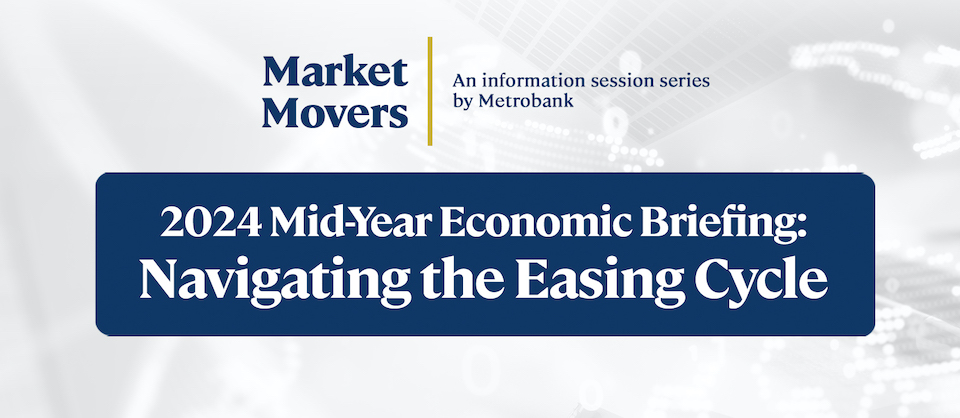
2024 Mid-Year Economic Briefing: Navigating the Easing Cycle
June 21, 2024
Investing with Love
Investing with Love: A Mother’s Guide to Putting Money to Work
May 15, 2024
retirement-ss-3
Investor Series: An Introduction to Estate Planning
September 1, 2023
View All Webinars
DOWNLOADS
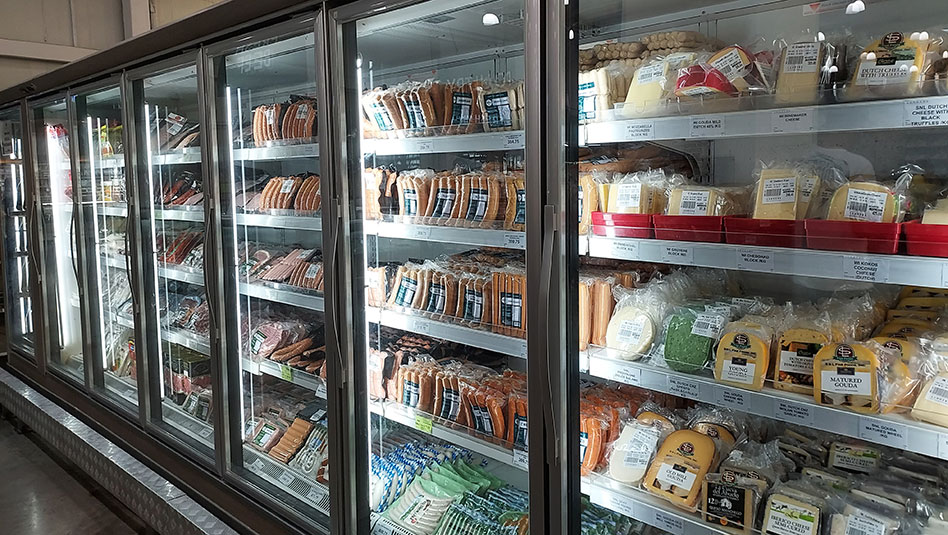
grocery-2-aa
Inflation Update: Target breached
DOWNLOAD
Container ship carrying container boxes import export dock with quay crane. Business commercial trade global cargo freight shipping logistic and transportation worldwide oversea concept. Generative AI
Economic Updates
Philippines Trade Update: Wider deficit on strong imports
DOWNLOAD
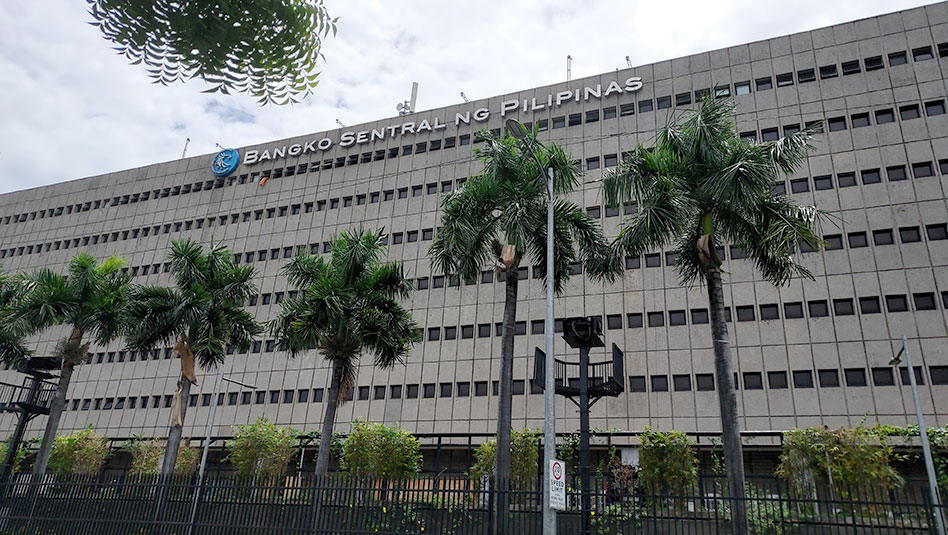
Frick collection with palm trees 
Economic Updates
Policy Rate Updates: Policy rate updates to reassure 
DOWNLOAD
View all Reports
Metrobank.com.ph How To Sign Up
Follow us on our platforms.

How may we help you?

TOP SEARCHES
  • Where to put my investments
  • Reports about the pandemic and economy
  • Metrobank
  • Webinars
  • Economy
TRENDING ARTICLES
  • Investing for Beginners: Following your PATH
  • On government debt thresholds: How much is too much?
  • Philippines Stock Market Outlook for 2022
  • Deficit spending remains unabated

Login

Access Exclusive Content
Login to Wealth Manager
Visit us at metrobank.com.ph How To Sign Up
Access Exclusive Content Login to Wealth Manager
Search
MODEL PORTFOLIO THE GIST
NEWS AND FEATURES
Global Philippines Fine Living
INSIGHTS
INVESTMENT STRATEGY
Economy Stocks Bonds Currencies
THE BASICS
Investment Tips Explainers Retirement
WEBINARS
2024 Mid-Year Economi Briefing, economic growth in the Philippines
2024 Mid-Year Economic Briefing: Navigating the Easing Cycle
June 21, 2024
Investing with Love
Investing with Love: A Mother’s Guide to Putting Money to Work
May 15, 2024
retirement-ss-3
Investor Series: An Introduction to Estate Planning
September 1, 2023
View All Webinars
DOWNLOADS
grocery-2-aa
Inflation Update: Target breached
April 7, 2026 DOWNLOAD
Container ship carrying container boxes import export dock with quay crane. Business commercial trade global cargo freight shipping logistic and transportation worldwide oversea concept. Generative AI
Economic Updates
Philippines Trade Update: Wider deficit on strong imports
March 27, 2026 DOWNLOAD
Frick collection with palm trees 
Economic Updates
Policy Rate Updates: Policy rate updates to reassure 
March 26, 2026 DOWNLOAD
View all Reports

Archives: Business World Article

Maharlika fund to invest in airports, power projects

Maharlika fund to invest in airports, power projects

THE MAHARLIKA Investment Fund (MIF) is looking to deploy a portion of its capital to invest in airports and power projects that will bring long-term profits, its top official said on Wednesday.

Rafael Jose D. Consing, Jr., the newly appointed president and chief executive officer (CEO) of the Maharlika Investment Corp. (MIC), said  the sovereign wealth fund will not be investing in the stock market and instead will focus on building real assets.

“The Maharlika Investment Fund will play a pivotal role in shaping the Philippines’ future, fostering sustainable growth and development across key sectors: tourism infrastructure, agro-urbanism, energy security, and digital infrastructure,” he said during his first press conference.

“Through these strategic investments, the MIF will transform the Philippines into a thriving hub of tourism, agriculture, energy, and digital innovation, driving economic prosperity, social progress, and environmental sustainability for generations to come.”

President Ferdinand R. Marcos, Jr. on Monday appointed Mr. Consing, the executive director of the Office of the Presidential Adviser for Investment and Economic Affairs, as MIC president and CEO. Under this role, he will manage and invest the initial and future contributions to the Philippines’ first sovereign strategic development fund.

He will have to establish a diversified portfolio of investments and other assets that align with the Maharlika fund’s objectives.

Mr. Consing, a former chief financial officer and compliance officer at International Container Terminal Services Inc (ICTSI), said the  MIC will be looking at investing in 38 infrastructure projects that have been approved by the NEDA.

He also said four airports have been identified as potential projects of the MIC. These airports include the Bulacan International Airport, Laoag International Airport, the Ninoy Aquino International Airport (NAIA) and the Laguindingan International Airport.

The MIC is also looking at investing in roads, bridges and tollroad projects.

“We will have to undertake those studies and see which of those would deliver the most immediate impact, the one that’s immediately needed, and third, the one that’s actually going to have the most impact in terms of socioeconomic development and generating, hopefully, commerce in those areas,” Mr. Consing said.

He said the MIC also intends to raise more capital from foreign investors, sovereign wealth funds, and other pension funds through roadshows.

Under the law creating the MIF, state banks Land Bank of the Philippines (LANDBANK) and Development Bank of the Philippines (DBP) are required to contribute PHP 50 billion and PHP 25 billion, respectively, to the initial capital of the fund. The MIC has an authorized capital stock of PHP 500 billion.

“The way to be able to (raise a capital stock of PHP 500 billion) is through government contributions, which they have done, and for us to be able to identify which other assets they can contribute to the fund,” Mr. Consing said.

He cited the Agus Pulangi Hydropower Plants Rehabilitation Project (APRP) and the Caliraya-Botocan-Kalayaan (CBK) hydroelectric power plant as government assets that can be rehabilitated and redeveloped before being sold.

“What we’d like to do is to be able to convince the government to allow us for (those assets) to be contributed into Maharlika. We will assist in its rehabilitation through a technical partner, perhaps,” he said. “Once you have been able to achieve that level of optimal capacity, then we will start monetizing these assets.”

Meanwhile, Mr. Consing hopes the MIC Board positions will be filled in the next 30 to 60 days.

“First is we will hire a world-class professional and management team hired on the basis of what they call three Is: integrity, intelligence, and initiative. In that order,” he said.

Mr. Consing also said the board members must also be “rigorous and transparent.”

Mr. Marcos and Finance Secretary Benjamin E. Diokno have both assured that the fund will be operational before yearend. — Keisha B. Ta-asan
As inflation cools, Fed seen cutting rates in May

As inflation cools, Fed seen cutting rates in May

COOLING INFLATION will allow the US Federal Reserve to forgo any more interest rate hikes and indeed to start cutting rates by May, traders bet on Tuesday, after a US government report showed consumer prices for October were unchanged compared with the prior month.

The report, which showed the consumer price index (CPI) rose just 3.2% from a year earlier, after rising 3.7% in September, “looked pretty good,” Chicago Federal Reserve Bank President Austan Goolsbee said at the Detroit Economic Club.

And while he said he wants to see further progress, particularly on housing inflation, the drop in CPI inflation from around 6.3% in January looks on track to be the fastest one-year peacetime decline in more than 40 years, he said.

Mr. Goolsbee didn’t update his view on the appropriate rate path on Tuesday, though even before Tuesday’s data he was not among Fed policy makers advocating for further policy tightening.

Prices of futures contracts that settle to the Fed’s target rate were pricing in only about a 5% chance the Fed will raise its policy rate any higher than the current 5.25% to 5.5% range, down from 28% prior to the Labor department report.

Core inflation, which excludes energy and food, rose 4% from a year earlier, the slowest pace in more than two years, the report showed. While still well above the Fed’s 2% target, the trend downward may give Fed policy makers more confidence that policy is tight enough to do the job.

“You can say goodbye to the rate hiking era,” said Brian Jacobsen, chief economist at Annex Wealth Management.

JPMorgan economist Michael Feroli, in a note to clients, said already low odds of a December rate hike have been further diminished by the CPI data, and he noted the numbers could also affect central bank forecasts due for release at the next Federal Open Market Committee (FOMC) meeting.

Mr. Feroli said with data pointing to fourth-quarter inflation moving under where the Fed thought it would be at the September FOMC and unemployment a touch higher, “it may be tough for them to justify offsetting a dovish hold with more hawkish dots.”

At the September Fed meeting Fed officials had penciled in one more increase in the federal funds rate, an increase they are now quite unlikely to deliver.

Meanwhile, the Fed is now seen as more likely than not to deliver its first rate cut in May, and end 2024 with the short-term benchmark rate a full percentage point lower than today, based on rate futures pricing.

The Fed last raised rates in July, but Fed Chair Jerome H. Powell as recently as last week said he would not hesitate to raise rates further should it be needed to beat inflation back.

Tuesday’s data lessens the pressure for further tightening, but US central bankers aren’t likely to take a victory lap yet, according to Nationwide Chief Economist Kathy Bostjancic.

“The Fed for now will maintain its tightening bias, erring on the side of caution,” she wrote. — Reuters

Peso rises as Fed seen done with hikes

Peso rises as Fed seen done with hikes

THE PESO appreciated against the dollar on Wednesday due to expectations that the US Federal Reserve will pause at its next meeting after lower-than-expected US consumer inflation last month.

The local unit closed at PHP 55.825 per dollar on Wednesday, strengthening by 23.5 centavos from its PHP 56.06 finish on Tuesday, based on Bankers Association of the Philippines data.

This was the peso’s best close in more than three months or since its PHP 55.74-per-dollar finish on Aug. 4.

The peso opened Wednesday’s session at PHP 55.78 against the dollar. Its intraday best was at PHP 55.70, while its weakest showing was at PHP 55.865 versus the greenback.

Dollars exchanged rose to USD 1.48 billion on Wednesday from USD 1.43 billion on Tuesday.

The peso rose against the dollar on Wednesday due to expectations of a pause by the Fed in their next meeting as US consumer inflation was slower than expected in October, Rizal Commercial Banking Corp. Chief Economist Michael L. Ricafort said in a Viber message.

The better US consumer price index (CPI) report for October could also support a rate cut in 2024 by the Fed, Mr. Ricafort said.

US consumer prices were unchanged in October as Americans paid less for gasoline, and the annual rise in underlying inflation was the smallest in two years, bolstering the view that the Federal Reserve was probably done raising interest rates, Reuters reported.

Combined with data this month showing job and wage growth cooling in October, the data reinforced expectations the economy could avoid a dreaded recession.

The unchanged reading in the consumer price index, the first in more than a year, followed a 0.4% rise in September.

In the 12 months through October, the CPI climbed 3.2% after rising 3.7% in September.

Economists polled by Reuters had forecast the CPI would gain 0.1% on the month and increase 3.3% on a year-on-year basis.

The US central bank kept its benchmark interest rate steady at the 5.25%-5.5% range for a second straight time during its Oct. 31-Nov. 1 meeting.

It has hiked rates by a cumulative 525 basis points since it began its tightening cycle in March last year.

The Federal Open Market Committee will next meet on Dec. 12-13 to review policy.

The peso was also supported by a generally weaker dollar and lower US Treasury yields, Mr. Ricafort added.

The dollar index, which measures the currency against a basket of peers, last stood at 104.14, not far from Tuesday’s two-month low of 103.98, Reuters reported.

For Thursday, Mr. Ricafort sees the peso ranging from PHP 55.75 to PHP 55.95 per dollar. — AMCS with Reuters

Shares rebound with US inflation flat in October

Shares rebound with US inflation flat in October

PHILIPPINE SHARES rebounded on Wednesday, tracking the rise in Asian markets, following the release of data showing that US consumer inflation was flat last month.

The Philippine Stock Exchange index (PSEi) went up by 60.25 points or 0.98% to close at 6,171.13 on Wednesday, while the broader all shares index gained 21.44 points or 0.65% to end at 3,307.72.

“Following three consecutive days of market decline, the local bourse bounced… due to positive sentiment stemming from the slowdown in the US October inflation rate, providing hope among investors that the Federal Reserve might halt its interest rate hikes,” Philstocks Financial, Inc. Research Analyst Claire T. Alviar said in a Viber message.

“The index rose in line with Asian bourses as the market drew strength from the lower-than-expected US October inflation print,” China Bank Capital Corp. Managing Director Juan Paolo E. Colet likewise said in a Viber message.

Asian stocks surged to two-month highs on Wednesday in anticipation of stimulus in China and an end to rate hikes in the United States, while the dollar nursed steep losses suffered in the wake of a benign US inflation report, Reuters reported.

MSCI’s broadest index of Asia-Pacific shares outside Japan was up 2.3% by the mid-session break in Hong Kong, hitting its highest since mid-September and on track for its largest daily gain since January.

US headline consumer prices were flat in October, against expectations for a 0.1% rise, data showed on Tuesday. Core consumer price index, at 0.2%, also came in below a forecast of 0.3%.

“Investors have also started to anticipate that the BSP (Bangko Sentral ng Pilipinas) will keep rates steady in its policy meeting on Thursday,” Mr. Colet added.

A BusinessWorld poll conducted last week showed 15 of 18 analysts expect the BSP’s policy-setting Monetary Board to keep benchmark interest rates unchanged this week.

On the other hand, three analysts see the BSP raising borrowing costs by 25 basis points (bps).

The BSP last month raised benchmark borrowing costs by 25 bps in an off-cycle move, bringing its policy rate to a 16-year high of 6.5%. The central bank has raised policy rates by 450 bps since May 2022.

Most sectoral indices rose on Wednesday. Property climbed by 38.90 points or 1.48% to 2,658.56; holding firms went up by 77.95 points or 1.32% to 5,954.40; services rose by 17.44 points or 1.18% to 1,484.29; mining and oil increased by 37 points or 0.38% to 9,543.52; and financials inched up by 6.46 points or 0.37% to 1,743.49.

Meanwhile, industrials dropped by 5.67 points or 0.06% to end at 8,567.08.

Value turnover went up to PHP 4.52 billion on Wednesday with 447.762 million shares changing hands from the PHP 2.87 billion with 361.55 million issues seen on Tuesday.

Decliners and advancers were split at 84 each, while 47 issues closed unchanged.

Net foreign selling went up to PHP 147.18 million on Wednesday from PHP 107.76 million on Tuesday. — S.J. Talavera

Foreign investment pledges surge in Q3

Foreign investment pledges surge in Q3

Foreign investment pledges approved by investment promotion agencies (IPAs) more than doubled in the third quarter from the same period a year ago, the Philippine Statistics Authority (PSA) reported on Tuesday.

Total foreign investment commitments surged by 109% to PHP 27.3 billion in the July-to-September period from the PHP 13.05-billion haul a year ago.

The growth in foreign investment pledges was the fastest in two quarters or since the 4,455.6% surge in the first quarter of 2023.

Quarter on quarter, foreign investment commitments slumped by 54% from PHP 59.09 billion in the second quarter.

Singapore was the biggest source of approved investment commitments, contributing nearly half at PHP 13.04 billion. This was followed by Taiwan and the United Kingdom with pledges amounting to PHP 3.63 billion (13.3% share) and PHP 3.06 billion (11.2% share), respectively.

Analysts said the annual increase in pledges in the third quarter reflected the government’s efforts to attract more foreign investors.

“This may have come from the push of the government to continue to attract foreign capital into the country. The plan is for more foreign pledges to come in and the hope is for this to come into full fruition,” Union Bank of the Philippines, Inc. Chief Economist Ruben Carlo O. Asuncion said in a Viber message.

China Banking Corp. Chief Economist Domini S. Velasquez said recent economic reforms and trade deals may have helped boost the country’s attractiveness to foreign businesses.

“The year-on-year increase in approved foreign investments likely reflected the impact of the government’s liberalization reforms and trade agreements which have opened up the country to more foreign participation,” she said in a Viber message.

On the other hand, Ms. Velasquez attributed the 54% quarter-on-quarter drop in pledges to the “challenging macroeconomic conditions” here and abroad.

“The weaker-than-expected second-quarter gross domestic product (GDP) performance may have also had a negative impact on investor sentiment,” she said.

Philippine GDP grew by a weaker-than-expected 4.3% in the second quarter, slowing from 6.4% in the first quarter and 7.5% in the same period in 2022. This was the weakest growth print since 2011.

“It’s good that foreign investment pledges grew in the third quarter year on year. Nonetheless, we still saw a decline in real investment from the last third-quarter GDP print release. We still are on the lookout for actualization of these pledges in the immediate future and help contribute to GDP growth soon,” Mr. Asuncion said.

Only seven out of 13 IPAs reported foreign investment pledges for the third quarter. IPAs are authorized by law to provide tax and nontax benefits to investors building new enterprises or expanding current ones in priority sectors.

The Philippine Economic Zone Authority accounted for 67.1% of total approved foreign investment commitments in the third quarter with PHP 18.33 billion.

Other IPAs that recorded pledges include Subic Bay Metropolitan Authority (PHP 4.11 billion), Board of Investments (PHP 3.74 billion), Clark Development Corp. (PHP 968.17 million), Zamboanga City Special Economic Zone Authority (PHP 112.31 million), Authority of the Freeport Area of Bataan (PHP 35.25 million), and Cagayan Economic Zone Authority (PHP 4.97 million).

More than half (60%) or PHP 16.43 billion of the approved foreign pledges will go to the manufacturing industry, while PHP 4.28 billion will be allotted for administrative and support service activities, and PHP 4.22 billion for real estate activities.

Meanwhile, Calabarzon (Cavite, Laguna, Batangas, Rizal, and Quezon) cornered the bulk of foreign investment commitments in the third quarter with PHP 14.56 billion.

Central Luzon accounted for 22.4% with PHP 6.13 billion, while Central Visayas made up 14.2% with PHP 3.87 billion.

Meanwhile, total combined investment pledges of foreign and Filipino nationals fell by 47.6% to PHP 83.5 billion in the third quarter from PHP 159.38 billion last year.

Investment commitments by Filipinos accounted for 67% of the total with PHP 56.19 billion.

Should the commitments of both foreign and local investors materialize, these projects are expected to generate a total of 22,571 jobs. This is 20.7% lower than the 28,485 expected employment from investment pledges seen in the third quarter of 2022.

Ms. Velasquez said there is a potential for foreign investments to improve in the next few months, as third-quarter GDP growth showed the economy’s resilience.

The Philippine economy grew by 5.9% in the third quarter, bringing the year-to-date average to 5.5%. The government is targeting 6% to 7% GDP growth this year.

“We also expect economic conditions to become more favorable for investments, especially next year. The jump in public infrastructure this year, and planned infrastructure spending in the medium term, will likely provide a ‘crowding in’ environment for investors,” she said.

PSA data on foreign investment commitments, which have yet to materialize, differ from actual foreign direct investments tracked by the Bangko Sentral ng Pilipinas for the balance of payments. The central bank’s monitoring goes beyond the projects and includes other items such as reinvested earnings and lending to Philippine units via their debt instruments. — A.C. Abestano

Banking industry’s net income climbs by 10% as of end-September

Banking industry’s net income climbs by 10% as of end-September

The Philippine banking industry’s profits climbed by 10.4% as of end-September, driven by higher interest income and lower losses on financial assets, according to central bank data.

Preliminary data from the Bangko Sentral ng Pilipinas (BSP) showed banks’ cumulative net income rose to PHP 270.352 billion in the January-to-September period from PHP 244.876 billion last year.

As of end-September, banks’ net interest income jumped by 20.4% to PHP 663.240 billion from PHP 550.666 billion last year.

The Philippine banking industry wrote off PHP 457.88 million worth of bad debts in the nine- month period, plunging by 80.1% from PHP 2.3 billion a year ago.

Meanwhile, non-interest income declined by 21.3% to PHP 165.406 billion as of end-September from PHP 210.21 billion in the same period in 2022.

“The banking sector has shown remarkable resilience in the face of a high interest rate environment, supported by the strong demand from businesses and consumers,” China Banking Corp. Chief Economist Domini S. Velasquez said in a Viber message. 

The Monetary Board has kept the benchmark interest rate at a near 16-year high of 6.25% from March until October this year. It raised the policy rate by 25 basis points to 6.5% in an off-cycle move on Oct. 26.

The banking industry’s continued double-digit income growth can also be attributed to the pickup in economic activities, which supported loan demand, higher interest income, and better asset quality, Rizal Commercial Banking Corp. Chief Economist Michael L. Ricafort said.

The BSP earlier said that outstanding loans by big banks grew by 6.5% year on year to PHP 11.17 trillion in September. However, this was slower than the 7.2% growth logged in August.

The pace in September was the slowest in 21 months or since the 4.8% expansion recorded in December 2021. September also marked the sixth straight month of easing loan growth.

On the other hand, the banking industry’s nonperforming loan (NPL) ratio eased for the fourth straight month in September. The NPL ratio stood at a six-month low of 3.4%, easing from 3.42% seen in both August 2023 and September 2022.

The sustained recovery in many pandemic-hit industries also spurred more financial transactions, which led to higher earnings for banks, Mr. Ricafort said.

BSP data showed the total operating income of Philippine lenders grew by 8.9% to PHP 828.647 billion from PHP 760.877 billion in the comparable year-ago period.

Earnings from fees and commissions increased by 15.7% to PHP 103.396 billion as of September, from PHP 89.36 billion in the same period in 2022.

The industry’s trading income inched up by 0.8% to PHP 17.23 billion in the first nine months from PHP 17.09 billion a year prior.

Non-interest expenses of banks, including compensation and fringe benefits, taxes and licenses, fees and commissions, and administrative expenses rose by an annual 12.2% to PHP 462.601 billion.

The industry’s losses on financial assets dropped by 6.49% to PHP 58.92 billion as of end-September.

Provisions for credit losses fell by 15.1% to PHP 66.19 billion.

Meanwhile, banks’ total loan portfolio grew by 7.6% to PHP 13.05 trillion as of end-September from PHP 12.12 trillion a year earlier.

Deposit liabilities stood at PHP 18.28 trillion, up by 9.3% year on year.

The industry’s total assets rose by 8.9% to PHP 23.99 trillion as of September.

Despite high interest rates, Ms. Velasquez said the businesses and consumers have benefited from sustained economic growth.

“However, it is important to note that a prolonged period of high interest rates may eventually lead to a slowdown in loan demand, which could impact the performance of the banking system in the upcoming year,” she added.

The BSP is scheduled to have a policy meeting on Thursday. Most analysts expect the Monetary Board to hold policy rates steady due to the slower-than-expected October inflation print.

Headline inflation eased to 4.9% in October from 6.1% a month prior. This brought the year-to-date average to 6.4%, still above the BSP’s 5.8% baseline forecast.

However, easing inflation and possible interest rate cuts in 2024 could lead to more trading and other investment gains for banks and other financial institutions, Mr. Ricafort said.

“Further economic reopening and recovery would continue to sustain the growth in the loans/credit, investments, and in other banking products and services,” he added. — Keisha B. Ta-asan, Reporter

High interest rates pose risk to PH growth in 2024

High interest rates pose risk to PH growth in 2024

The Philippines may find it challenging to achieve the government’s growth target of 6.5-8% next year, as tighter-for-longer policy rates may continue to dampen investment activity.

BMI Country Risk & Industry Research, a unit of Fitch Solutions, said the Bangko Sentral ng Pilipinas (BSP) may deliver one more rate hike this year before it starts cutting borrowing costs in the second half of 2024.

“Our current expectation is for the benchmark policy rate to be raised by an additional 25 basis points (bps) in the upcoming November meeting due to concerns over price stability,” BMI said.

The research firm said the robust third-quarter growth provided room for the BSP to continue tightening.

The Philippines grew by 5.9% in the third quarter from 4.3% in the second quarter. However, this was slower than 7.7% a year earlier. For the first nine months, economic growth averaged 5.5%, still below the government’s 6-7% full-year target.

After the better-than-expected third-quarter print, BMI raised its Philippine growth forecast to 5.7% this year from 5.3% previously. It sees the Philippines expanding by 6.2% in 2024, which is below the government’s 6.5-8% target.

“Subsequently, we think that the BSP will only cut rates in the second half of 2024, in line with our expectations for the US Federal Reserve,” BMI said, adding that the monetary cycles of the BSP and the US Fed have been closely linked since 2001.

The US central bank kept borrowing costs unchanged at 5.25-5.5% for the second straight meeting earlier this month. This was after it hiked policy rates by 525 bps from March 2022 to July 2023.

“A quick return to loosening before the Fed could not only de-anchor inflation expectations but exacerbate weakness in the peso. This means that restrictive financial conditions will continue to weigh on domestic activity for at least the first half of the year,” BMI said.

The Monetary Board is widely expected to keep the key interest rate steady at 6.5% at its policy meeting on Thursday, according to 15 of 18 analysts in a BusinessWorld poll conducted last week.

The BSP raised borrowing costs by 25 bps in an off-cycle move last month, bringing the key rate to a fresh 16-year high of 6.5%. The BSP has raised interest rates by 450 bps since May 2022 to fight inflation.

Meanwhile, Jean Olivia De Castro, head of fixed income at Manulife Investment Management and Trust Corp., said the BSP will keep rates steady for the rest of 2023.

However, high inflation and elevated interest rates may continue to be challenging for growth, she added.

“Despite a rebound in the third quarter, growth in household consumption has been steadily declining every quarter since last year as high inflation erodes households’ purchasing power,” she said in a note.

Household consumption grew by 5% in the third quarter, slowing from 5.5% in the previous quarter and 8% a year ago.

Meanwhile, gross capital formation declined by 1.6% in the third quarter, ending nine straight quarters of growth. This was a reversal of the 18.2% expansion a year ago and 0.3% in the second quarter.

Ms. De Castro said high policy rates discouraged the private sector from borrowing and dampened private investments.

“As we don’t expect the macroeconomic backdrop to change drastically over the next quarter, there remain downside risks to growth in the next few quarters,” she said.

Also, BMI said a global slowdown may lead to lesser demand for Philippine goods and services.

“Our global team is forecasting the world economy to expand by just 2.1% in 2024 compared to 2.6% in 2023. Crucially, the US and mainland China, which are the Philippines’ major trading partners, are set for a slowdown,” it said.

BMI said China may slow to 4.7% in 2024 from a likely 5.2% growth this year, while the US may enter a shallow recession next year.

“Both countries account for about 30% of Philippine total merchandise exports. This makes it exceedingly difficult for Philippine trade to stage a turnaround next year,” it added.

In the first nine months of the year, exports dropped by an annual 6.6% to USD 54.54 billion.

Despite the challenges, the Philippines is still seen to be one of the top performers in the region in terms of economic growth.

Mark Canizares, head of equities at Manulife Investment Management, said consumer spending remained stable despite elevated inflation.

Private consumption also sets the Philippines apart from regional neighbors that rely more on trade and tourism.

“In addition, the recent deceleration of inflation, as seen in November, and peaking interest rates could boost the Philippine economic growth trajectory into 2024,” Mr. Canizares said.

Easing inflation may also provide support for private consumption, BMI said.

“We continue to expect inflationary pressures to recede over the coming months. Our base forecast is for headline inflation to reach 4.7% by end-2023 before settling within the BSP target range of 2-4% in 2024,” BMI said. — Keisha B. Ta-asan

Gov’t awards in full its reissued Treasury bonds

Gov’t awards in full its reissued Treasury bonds

The government made a full award of the reissued Treasury bonds (T-bonds) it offered on Tuesday at a higher average rate than its last awarding as the Bangko Sentral ng Pilipinas (BSP) is expected to hold rate steady at its meeting on Thursday.

The Bureau of the Treasury (BTr) raised PHP 30 billion as planned via the reissued 10-year bonds it auctioned off on Tuesday as total bids reached PHP 65.928 billion or more than twice the offered volume.

The bonds, which have a remaining life of nine years and nine months, were awarded at an average rate of 6.781%, with accepted yields ranging from 6.748% to 6.8%.

The average rate of the reissued bonds was 17.3 basis points (bps) lower than the 6.954% quoted for the papers when they were last offered on Oct. 24.

Still, this was 15.6 bps above the 6.625% coupon for the series.

The average yield was also 3.8 bps higher than the 6.743% quoted for the 10-year bond and 4.2 bps above the 6.739% seen for the same bond series at the secondary market before Tuesday’s auction, based on PHP Bloomberg Valuation Service Reference Rates data provided by the Treasury.

The full PHP 30-billion award brought the total outstanding volume of the series to PHP 120 billion, the BTr said in a statement on Tuesday.

The full award and average rate were in line with market expectations as the BSP is expected to hold its key rate steady at its Thursday meeting, a trader said via phone interview.

A BusinessWorld poll of 18 analysts held last week showed that 15 analysts expect the Monetary Board to maintain the target reverse repurchase (RRP) rate at a 16-year high of 6.5%.

Meanwhile, the three remaining economists said the Monetary Board might hike policy rates by 25 bps to 6.75% at the Nov. 16 meeting.

The Monetary Board implemented an off-cycle 25-bp rate hike on Oct. 26, ahead of its scheduled meeting. It has raised interest rates by 450 bps since May 2022 to temper inflation.

Easing inflation and a stronger peso recently also support the expectations of a pause by the BSP, Rizal Commercial Banking Corp. Chief Economist Michael L. Ricafort said in a Viber message.

Headline inflation for October eased to 4.9% from 6.1% in September and 7.7% in October 2022. This was also below the BSP’s 5.1-5.9% forecast for the month.

October inflation was the slowest pace in three months or since the 4.7% in July, but marked the 19th straight month that inflation breached the central bank’s 2-4% target.

Meanwhile, the peso closed at PHP 56.06 per dollar on Tuesday, unchanged from Monday, based on Bankers Association of the Philippines data.

Year to date, it has declined by 30.5 centavos or 0.55% from its PHP 55.755 per dollar close on Dec. 29, 2022.

The local currency has remained above the PHP 56 per dollar level since early August but has recently strengthened to the PHP 55 per dollar level when it first closed at PHP 55.91 on Nov. 6.

The BTr plans to borrow PHP 225 billion from the domestic market this month, or PHP 75 billion via T-bills and PHP 150 billion via T-bonds.

The government borrows from local and foreign sources to help fund its budget deficit, which is capped at 6.1% of gross domestic product this year. — Aaron Michael C. Sy

Peso steady ahead of US CPI

Peso steady ahead of US CPI

The peso was steady against the dollar on Tuesday due to market caution ahead of the release of the US consumer inflation report for October.

The peso opened Tuesday’s session at PHP 56.04 against the dollar. Its intraday best was at PHP 56.02, while its weakest showing was at PHP 56.14 versus the greenback.

Dollars exchanged rose to USD 1.43 billion on Tuesday from $1.18 billion on Monday.

The peso was unmoved on Tuesday as the US consumer price index (CPI) for October is expected to ease, Rizal Commercial Banking Corp. Chief Economist Michael L. Ricafort said in a Viber message.

“The peso closed unchanged as market participants remained cautious ahead of the US consumer inflation report,” a trader likewise said in an e-mail.

Mr. Ricafort added that the peso was unmoved amid a generally weaker dollar and easing US Treasury yields.

This was offset by higher global crude oil prices, he added.

The peso was also supported by the seasonal increase in remittances and hawkish signals from the Bangko Sentral ng Pilipinas (BSP), Mr. Ricafort said.

A BusinessWorld poll conducted last week showed that 15 out of 18 analysts expect the Monetary Board to maintain the target reverse repurchase (RRP) rate at a 16-year high of 6.5%.

Meanwhile, the three remaining economists said the Monetary Board might hike policy rates by 25 basis points (bps) to 6.75% at the Nov. 16 meeting.

The Monetary Board implemented an off-cycle 25-bp rate hike on Oct. 26, ahead of its scheduled meeting. It has raised interest rates by 450 bps since May 2022 to temper inflation.

For Wednesday, the trader said the peso could strengthen against the dollar ahead of a likely softer US producer inflation report.

Both the trader and Mr. Ricafort expect the peso to move between PHP 55.95 and PHP 56.15 per dollar on Wednesday. — Aaron Michael C. Sy

PH stocks drop as investors await US inflation data

PH stocks drop as investors await US inflation data

Philippine shares continued to decline on Tuesday as investors stayed on the sidelines, awaiting the release of the US inflation report and further dampened by slowed bank lending growth.

The benchmark Philippine Stock Exchange index (PSEi) went down by 5.26 points or 0.08% to close at 6,110.88 on Tuesday, while the broader All Shares Index shed 9.24 points or 0.28% to end at 3,286.28.

“Shares on the Philippine Stock Exchange edged lower as investors cautiously await the release of US inflation data, aware that a big miss in either direction could have major implications for the Federal Reserve’s interest rate plans over the next few months,” Globalinks Securities and Stocks, Inc. Head of Sales Trading Toby Allan C. Arce said in a Viber message.

Philstocks Financial, Inc. Research Analyst Claire T. Alviar likewise said in a Viber message that shares dropped as cautious investors awaited the US inflation report, as well as the meeting between US President Joseph R. Biden and Chinese President Xi Jinping.

“On the local front, the slowdown in bank lending this September somehow dampened the sentiment,” Ms. Alviar said.

Outstanding loans issued by big banks rose by 6.5% year on year to PHP 11.17 trillion in September, based on preliminary data from the Bangko Sentral ng Pilipinas (BSP) released on Monday.

The growth in November is slower than the 7.2% figure in August and was the slowest in 21 months, or since the 4.8% recorded in December 2021. September was also the sixth straight month that loan growth eased.

Meanwhile, Mr. Arce said that investors are also expected to monitor the BSP’s policy meeting on Thursday.

“But the market has likely already priced in the BSP standing pat on rates. Still, investors are keeping an eye on that,” he said.

The central bank raised borrowing costs by 25 basis points (bps) in an off-cycle move last month, bringing the key rate to a fresh 16-year high of 6.5%. The BSP has raised policy rates by 450 bps since May 2022.

A BusinessWorld poll conducted last week showed that 15 out of 18 analysts expect the Monetary Board to keep benchmark interest rates unchanged at 6.5% during its Nov. 16 meeting.

On the other hand, three analysts see the BSP raising borrowing costs by 25 bps to 6.75%.

Almost all sectoral indices dropped on Tuesday. Financials went down by 14.35 points or 0.81% to 1,737.03; services dropped by 10.02 points or 0.67% to 1,466.85; mining and oil lost 49.52 points or 0.51% to 9,506.52; and industrials sank by 35.48 points or 0.41% to 8,572.75.

Meanwhile, property climbed by 15.08 points or 0.57% to 2,619.66, and holding firms increased by 21.43 points or 0.36% to 5,876.45.

Value turnover went up to PHP 2.87 billion on Tuesday, with 361.55 million shares changing hands, compared to the PHP 1.37 billion with 285.31 million issues seen on Monday.

Decliners outnumbered advancers, 104 versus 63, while 45 shares closed unchanged.

Net foreign selling went down to PHP 107.76 million on Tuesday from PHP 270.92 million recorded on Monday. — By Sheldeen Joy Talavera, Reporter

Posts navigation

Older posts
Newer posts

Recent Posts

  • Metrobank US-Iran Risk Index: A new hope
  • A guide for your peso bond portfolio amid higher for longer rates
  • Investment Ideas: April 8, 2026
  • Inflation Update: The case to tighten
  • Investment Ideas: April 7, 2026

Recent Comments

No comments to show.

Archives

  • April 2026
  • March 2026
  • February 2026
  • January 2026
  • December 2025
  • November 2025
  • October 2025
  • September 2025
  • August 2025
  • July 2025
  • June 2025
  • May 2025
  • April 2025
  • March 2025
  • February 2025
  • January 2025
  • December 2024
  • November 2024
  • October 2024
  • September 2024
  • August 2024
  • July 2024
  • June 2024
  • May 2024
  • April 2024
  • March 2024
  • February 2024
  • January 2024
  • December 2023
  • November 2023
  • October 2023
  • September 2023
  • August 2023
  • July 2023
  • June 2023
  • May 2023
  • April 2023
  • March 2023
  • February 2023
  • January 2023
  • December 2022
  • November 2022
  • October 2022
  • September 2022
  • August 2022
  • July 2022
  • June 2022
  • May 2022
  • March 2022
  • December 2021
  • October 2021

Categories

  • Bonds
  • BusinessWorld
  • Currencies
  • Economy
  • Equities
  • Estate Planning
  • Explainer
  • Featured Insight
  • Fine Living
  • How To
  • Investment Tips
  • Markets
  • Portfolio Picks
  • Rates & Bonds
  • Retirement
  • Reuters
  • Spotlight
  • Stocks
  • Uncategorized

You are leaving Metrobank Wealth Insights

Please be aware that the external site policies may differ from our website Terms And Conditions and Privacy Policy. The next site will be opened in a new browser window or tab.

Cancel Proceed
Get in Touch

For inquiries, please call our Metrobank Contact Center at (02) 88-700-700 (domestic toll-free 1-800-1888-5775) or send an e-mail to customercare@metrobank.com.ph

Metrobank is regulated by the Bangko Sentral ng Pilipinas
Website: https://www.bsp.gov.ph

Quick Links
The Gist Webinars Wealth Manager Explainers
Markets
Currencies Rates & Bonds Equities Economy
Wealth
Investment Tips Fine Living Retirement
Portfolio Picks
Bonds Stocks
Others
Contact Us Privacy Notice Terms of Use
© 2026 Metrobank. All rights reserved.

Access this content:

If you are an existing investor, log in first to your Metrobank Wealth Manager account. ​

If you wish to start your wealth journey with us, click the “How To Sign Up” button. ​

Login HOW TO SIGN UP