


MODEL PORTFOLIO
THE GIST
NEWS AND FEATURES
Global Philippines Fine Living
INSIGHTS
INVESTMENT STRATEGY
Economy Stocks Bonds Currencies
THE BASICS
Investment Tips Explainers Retirement
WEBINARS
2024 Mid-Year Economi Briefing, economic growth in the Philippines
2024 Mid-Year Economic Briefing: Navigating the Easing Cycle
June 21, 2024
Investing with Love
Investing with Love: A Mother’s Guide to Putting Money to Work
May 15, 2024
retirement-ss-3
Investor Series: An Introduction to Estate Planning
September 1, 2023
View All Webinars
DOWNLOADS
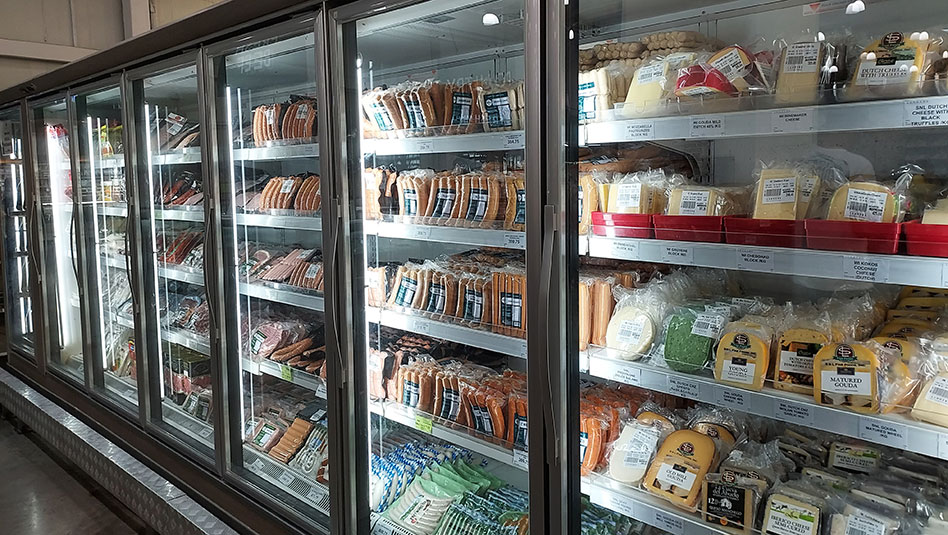
grocery-2-aa
Inflation Update: Target breached
DOWNLOAD
Container ship carrying container boxes import export dock with quay crane. Business commercial trade global cargo freight shipping logistic and transportation worldwide oversea concept. Generative AI
Economic Updates
Philippines Trade Update: Wider deficit on strong imports
DOWNLOAD
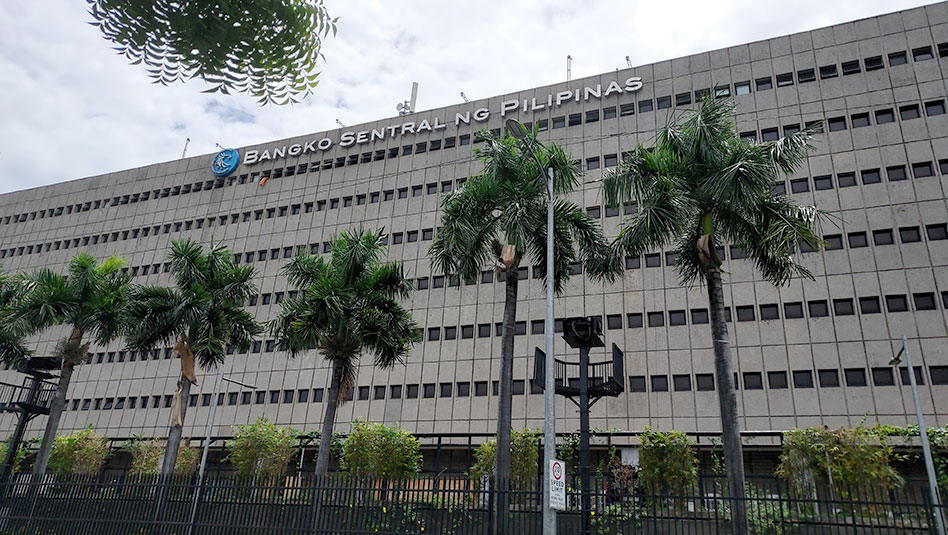
Frick collection with palm trees 
Economic Updates
Policy Rate Updates: Policy rate updates to reassure 
DOWNLOAD
View all Reports
Metrobank.com.ph How To Sign Up
Follow us on our platforms.

How may we help you?

TOP SEARCHES
  • Where to put my investments
  • Reports about the pandemic and economy
  • Metrobank
  • Webinars
  • Economy
TRENDING ARTICLES
  • Investing for Beginners: Following your PATH
  • On government debt thresholds: How much is too much?
  • Philippines Stock Market Outlook for 2022
  • Deficit spending remains unabated

Login

Access Exclusive Content
Login to Wealth Manager
Visit us at metrobank.com.ph How To Sign Up
Access Exclusive Content Login to Wealth Manager
Search
MODEL PORTFOLIO THE GIST
NEWS AND FEATURES
Global Philippines Fine Living
INSIGHTS
INVESTMENT STRATEGY
Economy Stocks Bonds Currencies
THE BASICS
Investment Tips Explainers Retirement
WEBINARS
2024 Mid-Year Economi Briefing, economic growth in the Philippines
2024 Mid-Year Economic Briefing: Navigating the Easing Cycle
June 21, 2024
Investing with Love
Investing with Love: A Mother’s Guide to Putting Money to Work
May 15, 2024
retirement-ss-3
Investor Series: An Introduction to Estate Planning
September 1, 2023
View All Webinars
DOWNLOADS
grocery-2-aa
Inflation Update: Target breached
April 7, 2026 DOWNLOAD
Container ship carrying container boxes import export dock with quay crane. Business commercial trade global cargo freight shipping logistic and transportation worldwide oversea concept. Generative AI
Economic Updates
Philippines Trade Update: Wider deficit on strong imports
March 27, 2026 DOWNLOAD
Frick collection with palm trees 
Economic Updates
Policy Rate Updates: Policy rate updates to reassure 
March 26, 2026 DOWNLOAD
View all Reports

Archives: Business World Article

Rates on bond offers likely to track secondary market levels

Rates on bond offers likely to track secondary market levels

Rates of the tokenized papers and Treasury bonds (T-bonds) on offer this week could to track secondary market movements after the Bangko Sentral ng Pilipinas (BSP) kept borrowing costs steady last week.

The government canceled the auction of PHP 15 billion in Treasury bills (T-bills) scheduled on Monday and will instead hold its maiden offer of tokenized bonds, from which it aims to raise at least PHP 10 billion.

On Tuesday, the Bureau of the Treasury (BTr) will offer PHP 30 billion in reissued 20-year T-bonds that have a remaining life of 15 years and two months.

The one-year tokenized Treasury bonds to be auctioned off on Monday could fetch yields matching secondary market levels, Rizal Commercial Banking Corp. Chief Economist Michael L. Ricafort said in a Viber message, with demand expected to be high.

Meanwhile, T-bond rates could track the drop in comparable secondary market yields after the central bank left benchmark borrowing costs unchanged at its review on Thursday, Rizal Commercial Banking Corp. Chief Economist Michael L. Ricafort said in a Viber message.

Secondary market rates dropped following the decline in US Treasury yields due to a weaker labor market and easing inflation in the world’s largest economy, a trader said in an e-mail.

The trader expects the rates of T-bonds to be offered on Tuesday to range from 6.6% to 6.7%.

At the secondary market on Friday, the one-year benchmark tenor was quoted at 6.4916%, based on PHP Bloomberg Valuation Service Reference Rates data published on the Philippine Dealing System’s website.

Meanwhile, the 20-year bond saw its rate go down by 14.19 basis points (bps) week on week to end at 6.7486%, while the yield on the same bond series being traded at the secondary market stood at 6.7919%, the same data showed.

The BSP last week left benchmark interest rates unchanged after inflation eased in October, but reiterated that they could resume tightening if needed.

The Monetary Board on Thursday kept its policy rate steady at 6.5%, as expected by 15 of 18 analysts in a BusinessWorld poll. Interest rates on the central bank’s overnight deposit and lending facilities were also maintained at 6% and 7%, respectively.

This was the central bank’s first policy meeting after it hiked rates by 25 bps in an off-cycle move on Oct. 26.

The BSP has raised benchmark rates by a total of 450 bps since May 2022.

BSP Deputy Governor Francisco G. Dakila, Jr. said after last week’s meeting that keeping borrowing costs steady would allow previous hikes to work their way through the economy.

However, he said they are ready to resume tightening as necessary to make sure inflation returns to the 2-4% annual target.

The Monetary Board will hold its last meeting for the year on Dec. 14.

Last week, the government raised PHP 15 billion as planned via the T-bills it auctioned off as total bids reached PHP 46.441 billion or more than thrice the amount on offer.

Broken down, the Treasury made a full PHP 5-billion award of the 91-day T-bills, with tenders for the tenor reaching PHP 20.133 billion. The average rate of the three-month paper fell by 22.9 bps to 6.123%. Accepted rates ranged from 6.024% to 6.197%.

The government likewise borrowed the programmed PHP 5 billion from the 182-day securities, as bids for the paper reached PHp 10.732 billion. The average rate for the six-month T-bill stood at 6.513%, down by 2.3 bps, with accepted yields ranging from 6.45% to 6.549%.

The government also raised just PHp 5 billion as planned via the 364-day debt papers, with bids reaching PHP 15.576 billion. The average rate of the one-year T-bill went down by 3.1 bps to 6.56%. Accepted yields were from 6.54% to 6.585%.

Meanwhile, the reissued 10-year bonds to be offered on Tuesday were last auctioned off on Nov. 28, 2019, where the government raised just PHP 12.271 billion out of the PHP 20-billion program at an average rate of 5.341%.

The government plans to borrow PHP 225 billion from the domestic market this month or PHP 75 billion via T-bills and PHP 150 billion via T-bonds.

The government borrows from local and foreign sources to help fund its budget deficit, which is capped at 6.1% of gross domestic product this year. — AMCS


Peso to sustain strength as BSP remains hawkish

Peso to sustain strength as BSP remains hawkish

The peso could remain strong and stay at the PHP 55 level this week as hawkish signals from the central bank could support the currency.

The local unit closed at a fresh three-month high of PHP 55.67 per dollar on Friday, strengthening by 12 centavos from its PHP 55.79 finish on Thursday, based on Bankers Association of the Philippines data.

This was its best close in more than three months or since its PHP 55.52-per-dollar finish on Aug. 3.

Week on week, it gained 29 centavos from its PHP 55.96 close on Nov. 10.

The peso opened Friday’s session stronger at PHP 55.68 against the dollar. Its weakest showing was at PHP 55.69, while its intraday best was at PHP 55.62 versus the greenback.

Dollars exchanged went down to USD 1.18 billion on Friday from USD 1.28 billion on Thursday.

The peso strengthened on Friday amid a generally weaker dollar and lower global crude oil prices, Rizal Commercial Banking Corp. Chief Economist Michael L. Ricafort said in a Viber message.

The local currency also found support from the seasonal increase in remittances as the holiday season nears, Mr. Ricafort said.

The dollar posted its second-steepest weekly decline versus other major currencies this year on Friday, while the yen strengthened sharply, and the dollar traded below 150 yen, as concerns grow about the weakening global economic outlook, Reuters reported.

Cooler-than-expected US inflation data on Tuesday and Wednesday hastened market expectations for how soon the Federal Reserve will cut rates. Such a move would weaken a major dollar support and could come as early as next year’s first quarter.

The dollar index, which measures the greenback against six other major currencies, slid to lows last seen on Sept. 1, while the yield on benchmark 10-year Treasury notes fell to a two-month low of 4.379%.

The dollar index fell 0.49% on the day, hitting a low of 103.85 that increased the greenback’s decline over the past five days to almost 1.8% — its biggest weekly drop since mid-July.

For this week, hawkish signals from the Bangko Sentral ng Pilipinas (BSP) could continue to prop up the peso, he added.

The BSP last week kept benchmark interest rates unchanged after inflation eased in October, but left the door open to more hikes if needed.

The Monetary Board on Thursday kept its policy rate steady at 6.5%, as expected by 15 of 18 analysts in a BusinessWorld poll. Interest rates on the central bank’s overnight deposit and lending facilities were also maintained at 6% and 7%, respectively.

This was the central bank’s first policy meeting after a 25-basis-point (bp) off-cycle rate hike on Oct. 26, which brought the target repurchase rate to its highest since mid-2007.

Since it began its tightening cycle in May 2022, the BSP has raised borrowing costs by a total of 450 bps.

BSP Deputy Governor Francisco G. Dakila, Jr. said keeping rates steady would allow previous tightening to continue to work their way through the economy, but said they are ready to resume hiking rates as needed to make sure inflation returns to the 2-4% annual target.

The Monetary Board will hold its last meeting for the year on Dec. 14.

For this week, Mr. Ricafort expects the peso to range from P55.40 to P55.90 per dollar. — AMCS with Reuters

PSEi may go up on peso’s rise, investor optimism

PSEi may go up on peso’s rise, investor optimism

Philippine shares may climb further this week, with the peso gaining strength versus the dollar and an improving economic outlook.

The Philippine Stock Exchange index (PSEi) rose by 20.41 points or 0.33% to 6,211.89 on Friday, while the broader all shares index climbed by 10.28 points or 0.31% to 3,324.77.

Week on week, the PSEi went up by 50 points or 0.81% from its finish of 6,161.89 on Nov. 10.

“The local market had a good run last week, supported primarily by the slowdown in the US’ October inflation and the anticipated pause in the BSP’s (Bangko Sentral ng Pilipinas) monetary tightening. In the process, the market was able to get past its 10-day, 20-day, and 50-day exponential moving averages,” Philstocks Financial, Inc. Senior Research Analyst Japhet Louis O. Tantiangco said in a Viber message.

US consumer prices were unchanged in October as Americans paid less for gasoline, and the annual rise in underlying inflation was the smallest in two years, bolstering the view that the US Federal Reserve was probably done raising interest rates, Reuters reported.

The unchanged reading in the consumer price index (CPI), the first in more than a year, followed a 0.4% rise in September.

In the 12 months through October, the CPI climbed 3.2% after rising 3.7% in September.

Meanwhile, a separate report from the Labor department’s Bureau of Labor Statistics on Wednesday showed the producer price index (PPI) for final demand declined 0.5% in October, the largest decrease since April 2020. The PPI rose 0.4% in September.

In the 12 months through October, the PPI increased 1.3% after rising 2.2% in September.

On the other hand, the BSP on Thursday kept its policy rate steady at 6.5%, as expected by 15 of 18 analysts in a BusinessWorld poll. Interest rates on the central bank’s overnight deposit and lending facilities were also maintained at 6% and 7%, respectively.

For this week, the market could get a boost from the peso’s rise against the greenback, Mr. Tantiangco said.

“The local currency has been strengthening against the United States dollar while oil prices in the global market have been downwardly biased. Sustaining these positive developments may help the local market in next week’s trading,” he said.

On Friday, the peso rose by 12 centavos to PHP 55.67 per dollar from to PHP 55.79 on Thursday, based on Bankers Association of the Philippines data. Week on week, the local unit climbed by 29 centavos from its PHP 55.96 finish on Nov. 10.

For its part, online brokerage 2TradeAsia.com sees the PSEi’s immediate support at 6,000-6,100 and resistance is at 6,300-6,400. 

“Economic indicators are stabilizing, corporate fundamentals are showing resilience — this partly needs much more market volume for enough critical mass to get past the current trading band,” 2TradeAsia.com said in a report. — RMDO with Reuters

BSP keeps policy rate steady at 6.5%

BSP keeps policy rate steady at 6.5%

The Bangko Sentral ng Pilipinas (BSP) left policy rates unchanged on Thursday as inflation eased in October, but reiterated it was prepared to resume tightening if needed.

At its policy meeting on Thursday, the Monetary Board kept its benchmark interest rate steady at 6.5% as expected by 15 of 18 analysts in a BusinessWorld poll last week.

Interest rates on the overnight deposit and lending facilities were also maintained at 6% and 7%, respectively.

This was the first Monetary Board meeting after a 25-basis-point (bp) off-cycle rate hike on Oct. 26, which brought the policy rate to the highest since mid-2007.

Since it began its aggressive monetary tightening cycle in May 2022, the BSP has raised borrowing costs by a total of 450 bps.

BSP Deputy Governor Francisco G. Dakila, Jr. said keeping rates steady would allow previous tightening to continue to work their way through the economy.

“The Monetary Board continues to deem it necessary to keep monetary policy settings sufficiently tight until a sustained downtrend in inflation becomes fully evident and inflation expectations are firmly anchored,” he said at a press briefing on Thursday. “Guided by incoming data, the BSP remains prepared to resume monetary policy tightening as necessary to steer inflation towards a target-consistent path, in line with its price stability mandate.”

Mr. Dakila said the latest projections show the inflation outlook has moderated over the policy horizon.

Headline inflation slowed to 4.9% in October from 6.1% in September and 7.7% in October 2022. This was the slowest pace in three months. Still, inflation breached the 2-4% target for the 19th straight month in October. For the 10-month period, inflation averaged 6.4%.

BSP Governor Eli M. Remolona, Jr. said the Philippines is not “out of the woods” yet despite the slowdown in October inflation.

“We’re not out of the woods but we’re within striking distance of our 2-4% target range. For 2024, I think we will, for most of the year, be between 2-4%. But maybe around April to July, (inflation) will approach the (2-4%) ceiling and maybe even exceed the ceiling,” Mr. Remolona said during the Philippine economic briefing in San Francisco, California on Wednesday ahead of the policy meeting in Manila.

“But for most of the year, inflation should be between 2-4%,” he added.

The BSP lowered its risk-adjusted inflation forecast for 2023 to 6.1% (from 6.2% in October), to 4.4% (from 4.7%) for 2024, and to 3.4% (from 3.5%) for 2025.

On the other hand, the BSP’s baseline inflation forecast stood at 6% in 2023 and at 3.7% in 2024, higher than the 5.8% and 3.5% previously given in September, respectively. But the BSP trimmed its 2025 inflation forecast to 3.2% from 3.4%. 

Despite the policy pause and slowing inflation, the balance of risks to the inflation outlook are still leaning significantly towards the upside, BSP Department of Economic Research Officer-in-Charge Dennis D. Lapid said.

“Key upside risks are associated with the potential impact of higher transport charges, electricity rates, and international oil prices, as well as of higher-than-expected minimum wage adjustments in areas outside the National Capital Region,” he said. 

But the impact of a slower-than-expected global economy and government interventions to mitigate the effects of the El Niño weather phenomenon could prompt the BSP to reduce its inflation forecasts.

However, Mr. Dakila noted the rebound in gross domestic product (GDP) expansion in the third quarter shows the economy’s medium-term growth prospects remain intact, even as pent-up demand wanes.

Philippine GDP expanded by 5.9% in the July-to-September period, faster than the 4.3% growth in the second quarter but slower than the 7.7% expansion in the same quarter in 2022.

For the first nine months of the year, economic growth averaged 5.5%, still below the government’s 6-7% full-year target.

“The BSP will also continue to assess how firms and households are responding to tighter monetary policy conditions, especially as credit growth continues to moderate,” Mr. Dakila said. 

No cuts yet
Meanwhile, HSBC ASEAN economist Aris Dacanay said with the peso still below the PHP 57-a-dollar level and a slower-than-expected October inflation, there was no urgent need for the BSP to hike following the off-cycle move last month.

After the BSP’s policy decision, the peso closed at PHP 55.79 on Thursday, strengthening by 3.5 centavos from its PHp 55.825 finish on Wednesday. Year to date, it depreciated by 3.5 centavos or 0.06% from its PHP 55.755 close on Dec. 29, 2022.

“The off-cycle move was for the central bank to give itself legroom in case the Fed hiked in November, which it did not. Global rice and oil prices are also off their peaks (albeit still elevated), which also gives the BSP some room to breathe,” he said in a note. 

Mr. Dacanay said the BSP may keep the key policy rate at 6.5% at its last meeting next month, but noted the Philippines is still sensitive to inflation shocks. 

“We continue to believe that rate cuts are off the table until the third quarter of 2024, when inflation is credibly well within the BSP’s 2-4% target band and when the Fed begins cutting rates,” he said. 

Mr. Dacanay said headline inflation may pick up in the first quarter of next year before returning to the 2-4% target in the third quarter of 2024. 

“This expected inflation flare up should keep the BSP on its toes and prevent the BSP from cutting rates before the second half of 2024 unless authorities extend Executive Order 10,” he said, referring to the order reducing import duties on pork, rice and corn.

“With the current account in the Philippines still wider than pre-pandemic levels, we expect the BSP to follow the easing cycle of the Fed to help support the peso and prevent ‘imported inflation’ from complicating the outlook,” he added. 

In a Viber message, China Banking Corp. Chief Economist Domini S. Velasquez said policy rates may have already reached its peak as the inflation outlook improves.

“However, we still maintain our view that the BSP might hold its target policy rate at 6.5% until the fourth quarter next year given that inflation will likely print above the target until the second half of the year,” she said. 

Meanwhile, Pantheon Macroeconomics Chief Emerging Asia Economist Miguel Chanco said inflation may still return to the 2-4% target before the end of the year, which would close the door to further rate increases.

“We continue to believe that average inflation will drop sharply next year to 2.8%, from an estimated 6% this year, thanks primarily to a sustained moderation in food inflation,” he said. 

This would give the Monetary Board “the space to unwind one of Asia’s most aggressive tightening cycles; our current base case is for 100 bps worth of cuts in 2024,” Mr. Chanco added.

The BSP’s last policy meeting for the year is scheduled for Dec. 14. — Keisha B. Ta-asan, Reporter

BTr eyes PHP10B from maiden offering of tokenized T-bonds

BTr eyes PHP10B from maiden offering of tokenized T-bonds

The Bureau of the Treasury seeks to raise PHP 10 billion from the Philippines’ maiden offering of peso-denominated tokenized Treasury bonds (TTBs).

In a notice on Thursday, the BTr said it will offer the bonds to qualified institutional buyers  on Nov. 20 (Monday) and will be issued on Nov. 22.

The TTBs are one-year fixed-rate government securities that pay semi-annual coupons and will be issued in the form of digital tokens.

“The country’s first-ever TTBs will be made available to eligible investors in minimum denominations of PHP 10 million and in increments of PHP 1 million thereafter, similar to conventional government securities offers,” the Treasury said.

The digital tokens will be maintained in the BTr’s Distributed Ledger Technology (DLT) Registry. The BTr will have a dual registry structure, with the DLT Registry running in parallel with the National Registry of Scripless Securities (NRoSS). The NRoSS will serve as the primary registry.

“As part of the National Government’s Government Securities (GS) Digitalization Roadmap, the maiden issuance of TTBs aims to provide the proof of concept for the wider use of DLT in the government bond market,” the Treasury said.

It noted the TTB offering would jumpstart government’s efforts to democratize investment through digital technology by reducing settlement risk and friction costs and leading to “a financially inclusive local bond market.”

“This will level up the government securities infrastructure to become more digital and further develop the capital markets with the latest technology using the distributed ledger technology as a new/alternative registry for government securities,” Rizal Commercial Banking Corp. Chief Economist Michael L. Ricafort said in a Viber message.

Mr. Ricafort said this would give the investing public more alternatives to GS investments, while also adapting the latest technology in investment infrastructure.

Bank of the Philippine Islands Lead Economist Emilio S. Neri, Jr. said in a Viber message said the market could be highly receptive to an “innovative” offering such as the TTBs.

The bookbuilding exercise for TTBs will start at 9 a.m. on Nov. 20. Bids should be submitted no later than 12:30 p.m., while the notice of award will be released not later than 2 p.m. on the same day.

The issue managers are Land Bank of the Philippines and Development Bank of the Philippines.

In September, the BTr Deputy Treasurer Erwin D. Sta. Ana said they were conducting an internal study on the tokenized bonds with inputs from government financial institutions to potentially implement tokenization for retail bonds and attract more digital investors.

“We’d like to roll it out first to the institutional investors and then later on, to harness what this technology offers, which is to further enable fractional shares in terms of onboarding more digital investors,” he said. — Aaron Michael C. Sy

PH firms seen unprepared for AI

PH firms seen unprepared for AI

Only 17% of organizations in the Philippines are ready to utilize and deploy artificial intelligence (AI), with the majority of them expressing concerns about the impact of not adopting these technology advances, a study released on Wednesday said.

In a report issued by Cisco, the technology firm said that about 44% of the organizations in the country are considered chasers or those that are moderately prepared; 35% are followers or those with limited preparedness and about 4% are laggards or those that are not prepared to leverage AI technologies at all.

The report noted that almost all or about 97% of businesses recognized the urgency of adopting AI technologies while its adoption has been slower in the past years.

“AI has so much propensity to help across the business. There’s so many different aspects around how AI can help,” said Carl Solder, Cisco chief technology officer for  Australia and New Zealand.

AI-powered technology will greatly contribute to boosting the digital economy as it is seen to help raise evenues for businesses, Mr. Solder said.

He said driving better levels of proficiency through the use of artificial intelligence is “ultimately going to translate into better customer experiences, better levels of productivity for those organizations, which is hopefully going to drive better levels of profitability and revenue as well.”

The Philippines’ digital economy is projected to reach a value of as high as USD 150 billion by 2030 as the e-commerce boom continues, according to a recent report by Google, Temasek Holdings, and Bain & Company.

According to the report, the country is expected to reach between USD 80 billion and USD 150 billion in gross merchandise value by the end of the decade.

While AI-powered technology is considered revolutionary in the digital landscape, this advancement also comes with great threats amid cybersecurity attacks getting more sophisticated.

Mr. Solder said that while there is a danger in utilizing AI as it can be leveraged to create new forms of compromise, many organizations will benefit from it to also combat any cyber threats in the digital space.

“Analyzing inspecting and understanding and learning about all those new threats then it’s about building the software tool sets on top of that and leveraging the power of artificial intelligence to scan and look across the network in order to identify potential attack vectors, maybe anomalous behavior that might be happening,” he said. — Ashley Erika O. Jose

Most Filipinos prefer to save money than borrow to fund large purchases

Most Filipinos prefer to save money than borrow to fund large purchases

Only 21% of Filipinos plan to borrow or use credit to make purchases in the coming months, based on a study from TransUnion Philippines. 

“The decision to avoid the future use of credit is indicative of a conservative financial mindset, where it isn’t always understood and seen as an opportunity for economic mobility,” TransUnion Philippines President and Chief Executive Officer Pia Arellano said in a statement.

“This coincides with a longstanding stigma across our nation surrounding credit, as it’s often viewed as a gateway to bad unmanageable debt and financial irresponsibility,” Ms. Arellano added.

Based on TransUnion Philippines’ Credit Perception Index (CPI) study, about 79% of respondents said they considered themselves to have a strong understanding of their finances.

About 72% said they can easily afford their daily necessities. But half (51%) of the respondents often find themselves with limited money at the end of every month.

“In terms of their expectations on how their finances will change in the future, most respondents indicated a desire to save more, as they expect their household incomes to rise,” TransUnion Philippines said.

“However, few respondents had plans to borrow or use credit to make purchases in the future. In fact, 21% reported plans to do so in the next three months, 21% in the next year, and 24% in the next five years,” it added.

Meanwhile, more than half of the respondents (57%) are open to learning more innovative ways of transacting.

About 41% said they are comfortable paying for big purchases either with one-time payments or through installments.   

Most respondents (90%) said they would be open to use more credit-based products in the future if they are informed about how credit influences loan approvals and job applications.

“This presents an opportunity for the formal financial sector to bridge any misperceptions that Filipinos might have about responsible credit use through credit education,” TransUnion Philippines said.

The study also revealed that banks and other financial institutions are not the most preferred sources for credit information among the Gen Z and millennials, even as they are seen to be credible.

Family and friends were the most preferred sources for credit information among the Gen Z (66%) and millennials (69%).

On the other hand, banks and financial institutions were the most preferred source of information of credit products among Gen X (71%) and boomers (79%).

“For younger generations who are just beginning to build wealth, the formal financial sector must focus its efforts on educating Filipinos about how the responsible use of credit can help them achieve their goals in life. Alongside the promotion of good financial habits, the responsible use of credit can help more Filipinos enjoy economic mobility by enabling them to access opportunities for better lives,” Ms. Arellano said.

Across generations, most Filipinos consider themselves lower middle class, TransUnion Philippines said.

The study showed the majority (71%) of respondents consider themselves to be middle class. Most respondents from Gen Z (45%), millennials (49%), Gen X (51%), and boomers (48%) identified themselves part of the lower middle class.

According to TransUnion Philippines, this may be attributed to views on personal wealth, as more than a third of the population (39%) see themselves as having low total wealth. — Keisha B. Ta-asan

Stocks rise on BSP decision, Wall Street’s climb

Stocks rise on BSP decision, Wall Street’s climb

Philippine stocks closed higher on Thursday to track Wall Street’s performance overnight and before the Bangko Sentral ng Pilipinas’ (BSP) policy decision announcement.

The Philippine Stock Exchange Index (PSEi) rose by 20.35 points or 0.33% to end at 6,191.48, while the broader all shares index climbed by 6.77 points or 0.2% to close at 3,314.49.

“The PSEi has experienced another uptick despite regional decline in Asia, fueled by the market’s anticipation of a Bangko Sentral ng Pilipinas rate pause, which was announced after market’s close,” Unicapital Securities, Inc. Senior Equity Research Analyst Carlos Angelo O. Temporal said in a Viber message.

“Now that BSP rates are nearly settled, the market was better able to acknowledge the slightly positive outcomes of the concluding earnings season,” Mr. Temporal added.   

On Thursday, the BSP kept its policy rate at 6.5% amid easing inflation, as expected by 15 of 18 analysts in a BusinessWorld poll last week. Interest rates on the central bank’s overnight deposit and lending facilities were also maintained at 6% and 7%, respectively.

Headline inflation fell to a three-month low of 4.9% in October from 6.1% in September.

However, this marked the 19th straight month that inflation breached the central bank’s 2-4% target. For the 10-month period, inflation averaged 6.4%.

Philstocks Financial, Inc. Research and Engagement Officer Mikhail Philippe Q. Plopenio said the local bourse was boosted by US markets’ performance.

“Investors took positive cues from Wall Street’s overnight performance amid the decline of the US’ producer price index for October by 0.5%,” Mr. Plopenio said in a Viber message.

US stocks closed slightly higher on Wednesday, as fresh inflation data reinforced investor hopes that the US Federal Reserve is done raising interest rates, Reuters reported.

The Dow Jones Industrial Average rose 163.51 points or 0.47% to 34,991.21; the S&P 500 gained 7.18 points or 0.16% at 4,502.88; and the Nasdaq Composite added 9.45 points or 0.07% at 14,103.84.

Back home, most sectoral indices rose on Thursday. Financials climbed by 10.34 points or 0.59% to 1,753.83; industrials went up by 38.92 points or 0.45% to 8,606; services increased by 4.27 points or 0.28% to 1,488.56; property inched up by 4.59 points or 0.17% to 2,663.15; and holding firms improved by 7.90 points or 0.13% to 5,962.30. 

Meanwhile, mining and oil dropped by 32.16 points or 0.33% to 9,511.36. 

Value turnover stood at PHP 3.9 billion with 411.32 million issues changing hands, lower than the PHP 4.52 billion and 447.76 million shares seen on Wednesday.

Advancers beat decliners, 88 versus 81, while 48 issues ended unchanged.

Net foreign buying stood at PHP 484.46 million on Thursday versus the PHP 147.18 million in net selling seen on Wednesday. —  R.M.D. Ochave with Reuters

Central bank looking to lower transaction fees for remittances

Central bank looking to lower transaction fees for remittances

THE BANGKO SENTRAL ng Pilipinas (BSP) is looking to lower transaction fees for remittances through its partnership with other central banks under the Bank for International Settlements’ (BIS) Nexus Project.

BSP Governor Eli M. Remolona, Jr. said the central bank is working with its Association of Southeast Asian Nations (ASEAN) peers to develop the Nexus payment system.

“From then on, because this system is designed to be interoperable across banks around the world, we hope to go global and, in the process, reduce the fees for remittances,” Mr. Remolona said during the Philippine economic briefing held in San Francisco, California on Thursday.

“Right now, it costs about 5% to send money to the Philippines when it comes to retail payments. We want to bring it down to 3%, and eventually bring it down to 1%,” he added.

Under the United Nations’ sustainable development goals, countries aim to reduce transaction costs to below 3% and eliminate remittance corridors with costs higher than 5% by 2030.

Based on a June report from the World Bank, sending remittances cost an average of 6.2% of the amount sent globally in the second quarter. Digital services accounted for 30% of all services remittance prices worldwide during the period.

Cash remittances from overseas Filipino workers (OFWs) jumped by 2.6% to $2.91 billion in September from $2.84 billion in the same month last year, latest BSP data showed. This was the highest in two months or since $2.99 billion in July.

For the first nine months of the year, money sent home by OFWs grew by 2.8% year on year to $24.49 billion from $23.83 billion in the same period in 2022. 

Nexus, which is a prototype developed by the BIS Innovation Hub Singapore Centre with the central banks of Italy, Malaysia and Singapore, connects payment system operators from several economies.

Meanwhile, Mr. Remolona said the BSP is making efforts to boost the Philippine banking system, including working on an open finance framework that would allow lenders more access to consumer data.

With the open finance framework, banks would be able to access more analytical platforms, he said. In turn, they can expand their operations into other financial services.

The PH Open Finance Pilot is a collaborative initiative of volunteer financial institutions to explore the use of application programming interface technologies to enhance financial products and services.

The central bank hopes streamlining open finance will be useful in know your customer and credit underwriting processes. It is expected to boost financial inclusion in the country.

DIGITAL BANKS
Mr. Remolona added that the BSP may give the six digital banks currently operating in the country a few more years to “prove themselves” before opening up the sector to new players. 

“The digital banks seem to be doing very well when it comes to deposits. Online deposits seem easy enough. The hard part is the asset side, how do they make loans online. That’s a struggle,” he said.

“For now, we have six licenses. We might give them a few more years to prove themselves and we may open it up,” the BSP chief added.

The central bank capped the number of digital banking licenses to six in 2021 to monitor the development of the sector, ensure competition, and boost its own capacity to regulate these kinds of lenders.

The six online lenders operating in the Philippines are Tonik Digital Bank, Inc.; GOtyme of the Gokongwei Group and Singapore-based Tyme; Maya Bank of Voyager Innovations, Inc.; Overseas Filipino Bank, a subsidiary of Land Bank of the Philippines; UNObank of DigibankASIA Pte. Ltd.; and UnionDigital of Union Bank of the Philippines, Inc.

The BSP wants to digitize 50% of retail transactions and increase the number of Filipino adults with bank accounts to 70% by the end of this year. — Keisha B. Ta-asan

Remittances jump by 2.6% in Sept.

Remittances jump by 2.6% in Sept.

CASH REMITTANCES from overseas Filipino workers (OFWs) jumped by 2.6% in September amid steady demand for healthcare and maritime workers abroad.

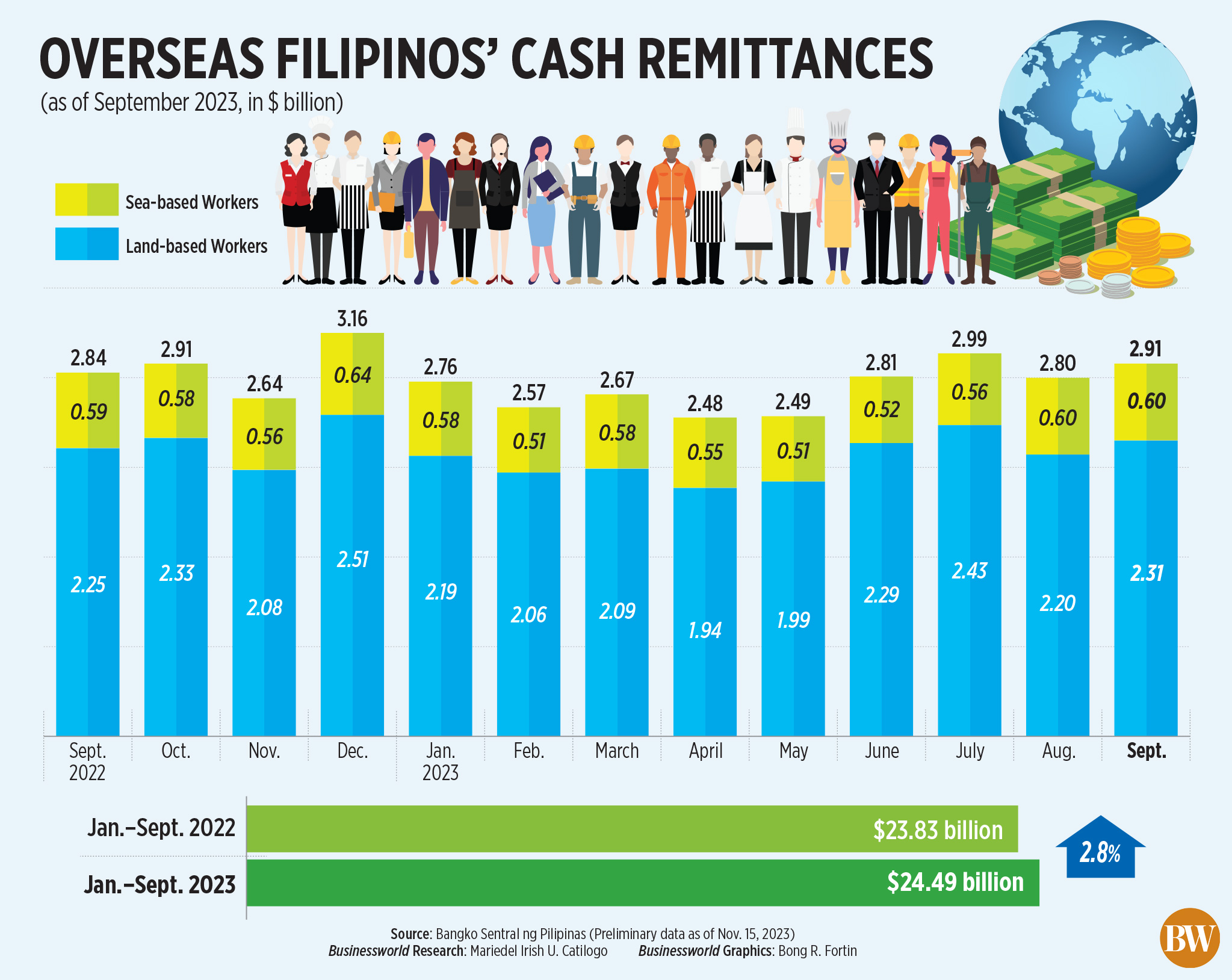
Data released by the Bangko Sentral ng Pilipinas (BSP) on Wednesday showed cash remittances coursed through banks rose by 2.6% to USD 2.91 billion in September from USD 2.84 billion in the same month last year.   

The amount of cash sent home by OFWs was the highest in two months or since USD 2.99 billion in July.   

Overseas Filipinos' cash remittances

However, the pace of cash remittance growth was a tad slower than 2.7% in August and 3.8% in September last year.

“The growth in cash remittances in September 2023 was due to increased receipts from both land- and sea-based workers,” the BSP said in a statement.   

Land-based OFWs sent home USD 2.31 billion in September, up by 3% from USD 2.25 billion in the same month last year. Remittances from sea-based workers went up by 0.9% to USD 600 million from a year ago.       

Security Bank Corp. Chief Economist Robert Dan J. Roces said in a Viber message that the sustained demand for OFWs has resulted in a consistent flow of remittances.

“First, there has been a continuous demand for OFWs in various sectors, particularly in industries such as healthcare, information technology, and maritime,” he said.   

Mr. Roces also noted the government and the private sector’s efforts to boost the efficiency and accessibility of remittance services through digital channels have helped make it easier for OFWs to send money home.

“These factors, combined, have resulted in the overall increase in cash remittances, albeit at a slightly slower pace compared to previous years,” Mr. Roces said.   

For the first nine months of the year, cash remittances jumped 2.8% year on year to USD 24.49 billion from USD 23.83 billion in the same period in 2022.    

Inflows from the United States, Saudi Arabia, and Singapore largely contributed to the growth in cash remittances during the January-to-September period.     

Nearly half or 41.5% of the overall remittances came from OFWs in the United States. Other major sources of cash remittances include Singapore (6.9%), Saudi Arabia (6%), Japan (5%), the United Kingdom (4.8%), and the United Arab Emirates (4.1%). 

Remittances from the top 10 countries accounted for 79.9% of the nine-month total. 

Meanwhile, personal remittances, which contain inflows in kind, rose by 2.6% year on year to USD 3.23 billion in September. This was slightly slower than the 2.8% growth in August, and the 4% increase in September last year.

This brought personal remittances 2.8% higher to USD 27.24 billion in the January-to-September period from USD 26.49 billion a year ago. 

Rizal Commercial Banking Corp. Chief Economist Michael L. Ricafort said elevated inflation in the Philippines may have prompted migrant workers to send more money home to help their families cope with rising prices.

In September, headline inflation went up to 6.1% from 5.3% a month prior. September marked the 18th straight month inflation breached the BSP’s 2-4% target this year. 

Mr. Roces said sustained inflows from remittances may continue to prop up the peso in the coming months. 

However, Mr. Ricafort said the Israel-Hamas war may reduce the demand for OFWs in Israel and nearby countries.

“Israel’s economy could slow down amid reduced tourism business amid flight/tour cancellations to Tel-Aviv, Israel/Holy Land amid risk of missile attacks from Hamas recently,” he said.   

“There are many Filipino caregivers, domestic helpers/workers, and other service/tourism workers in Israel and in nearby/neighboring Middle Eastern countries. There would be minimal adverse effects on the economy, provided there are no evacuations or repatriation of OFWs back to the country, as seen in recent years,” he said. 

The BSP expects remittances to grow by 3% this year. – Keisha B. Ta-asan, Reporter

Posts navigation

Older posts
Newer posts

Recent Posts

  • Metrobank US-Iran Risk Index: A new hope
  • A guide for your peso bond portfolio amid higher for longer rates
  • Investment Ideas: April 8, 2026
  • Inflation Update: The case to tighten
  • Investment Ideas: April 7, 2026

Recent Comments

No comments to show.

Archives

  • April 2026
  • March 2026
  • February 2026
  • January 2026
  • December 2025
  • November 2025
  • October 2025
  • September 2025
  • August 2025
  • July 2025
  • June 2025
  • May 2025
  • April 2025
  • March 2025
  • February 2025
  • January 2025
  • December 2024
  • November 2024
  • October 2024
  • September 2024
  • August 2024
  • July 2024
  • June 2024
  • May 2024
  • April 2024
  • March 2024
  • February 2024
  • January 2024
  • December 2023
  • November 2023
  • October 2023
  • September 2023
  • August 2023
  • July 2023
  • June 2023
  • May 2023
  • April 2023
  • March 2023
  • February 2023
  • January 2023
  • December 2022
  • November 2022
  • October 2022
  • September 2022
  • August 2022
  • July 2022
  • June 2022
  • May 2022
  • March 2022
  • December 2021
  • October 2021

Categories

  • Bonds
  • BusinessWorld
  • Currencies
  • Economy
  • Equities
  • Estate Planning
  • Explainer
  • Featured Insight
  • Fine Living
  • How To
  • Investment Tips
  • Markets
  • Portfolio Picks
  • Rates & Bonds
  • Retirement
  • Reuters
  • Spotlight
  • Stocks
  • Uncategorized

You are leaving Metrobank Wealth Insights

Please be aware that the external site policies may differ from our website Terms And Conditions and Privacy Policy. The next site will be opened in a new browser window or tab.

Cancel Proceed
Get in Touch

For inquiries, please call our Metrobank Contact Center at (02) 88-700-700 (domestic toll-free 1-800-1888-5775) or send an e-mail to customercare@metrobank.com.ph

Metrobank is regulated by the Bangko Sentral ng Pilipinas
Website: https://www.bsp.gov.ph

Quick Links
The Gist Webinars Wealth Manager Explainers
Markets
Currencies Rates & Bonds Equities Economy
Wealth
Investment Tips Fine Living Retirement
Portfolio Picks
Bonds Stocks
Others
Contact Us Privacy Notice Terms of Use
© 2026 Metrobank. All rights reserved.

Access this content:

If you are an existing investor, log in first to your Metrobank Wealth Manager account. ​

If you wish to start your wealth journey with us, click the “How To Sign Up” button. ​

Login HOW TO SIGN UP