


MODEL PORTFOLIO
THE GIST
NEWS AND FEATURES
Global Philippines Fine Living
INSIGHTS
INVESTMENT STRATEGY
Economy Stocks Bonds Currencies
THE BASICS
Investment Tips Explainers Retirement
WEBINARS
2024 Mid-Year Economi Briefing, economic growth in the Philippines
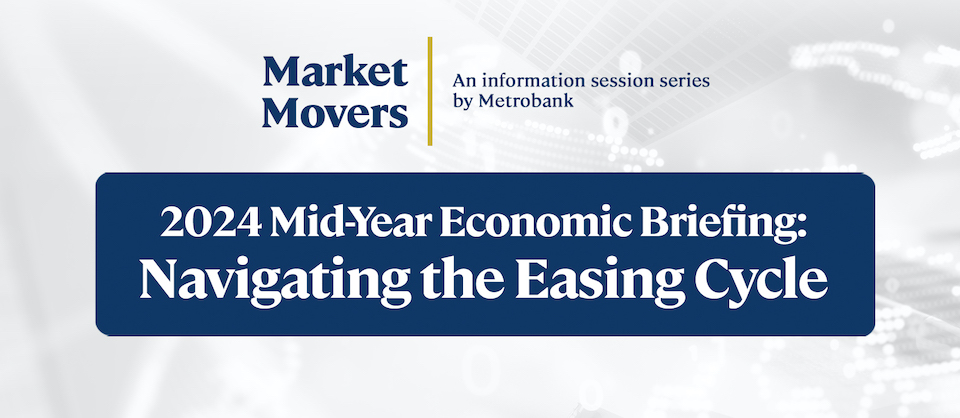
2024 Mid-Year Economic Briefing: Navigating the Easing Cycle
June 21, 2024
Investing with Love
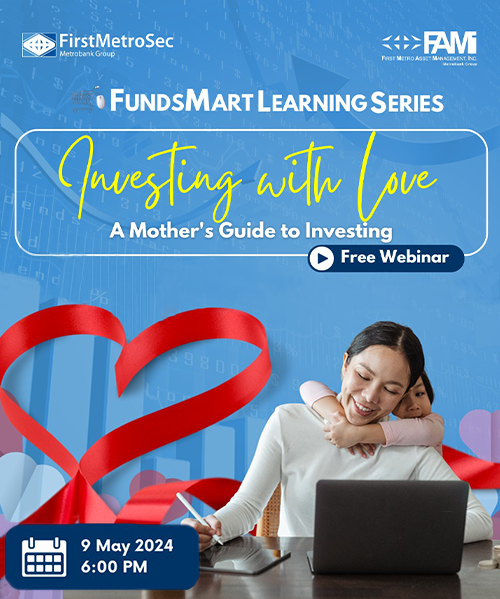
Investing with Love: A Mother’s Guide to Putting Money to Work
May 15, 2024
retirement-ss-3
Investor Series: An Introduction to Estate Planning
September 1, 2023
View All Webinars
DOWNLOADS
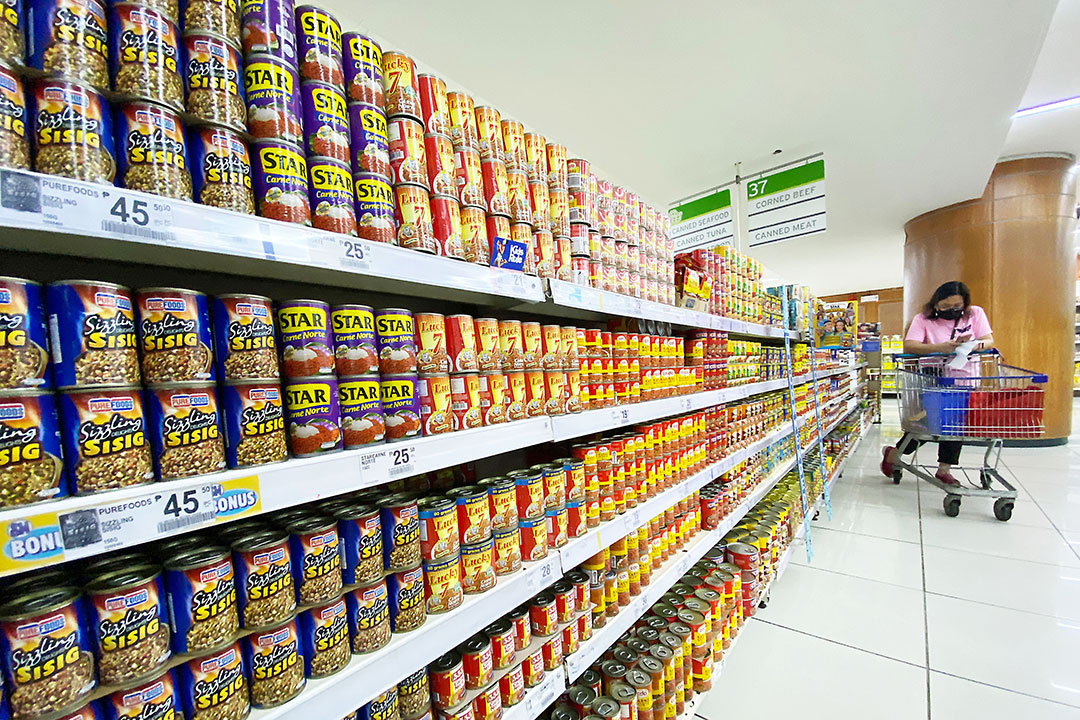
grocery-2-aa
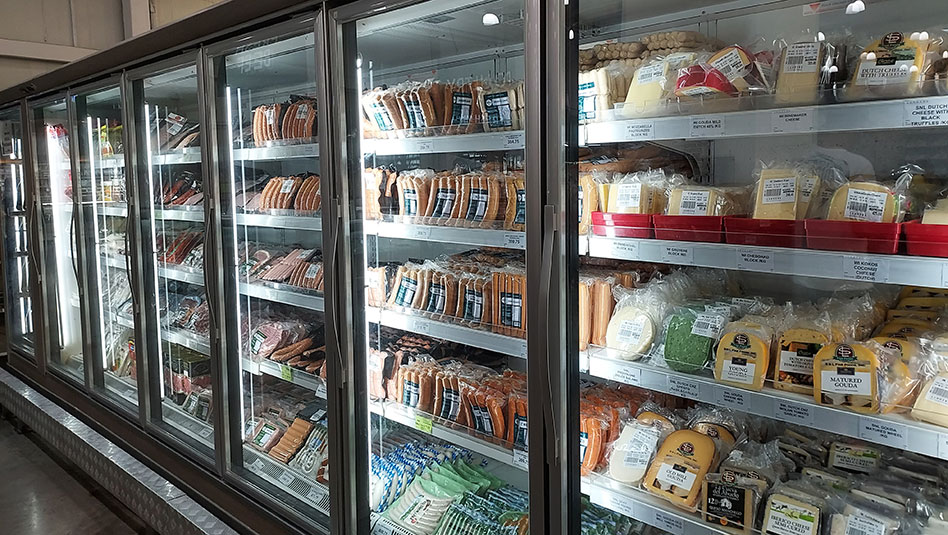
Inflation Update: Target breached
DOWNLOAD
Container ship carrying container boxes import export dock with quay crane. Business commercial trade global cargo freight shipping logistic and transportation worldwide oversea concept. Generative AI
Economic Updates
Philippines Trade Update: Wider deficit on strong imports
DOWNLOAD
Frick collection with palm trees 
Economic Updates
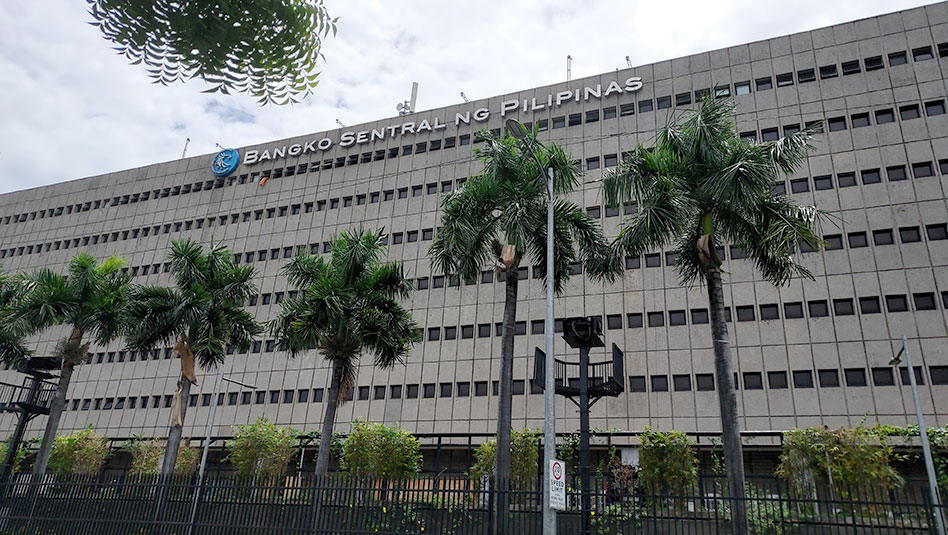
Policy Rate Updates: Policy rate updates to reassure 
DOWNLOAD
View all Reports
Metrobank.com.ph How To Sign Up
Follow us on our platforms.

How may we help you?

TOP SEARCHES
  • Where to put my investments
  • Reports about the pandemic and economy
  • Metrobank
  • Webinars
  • Economy
TRENDING ARTICLES
  • Investing for Beginners: Following your PATH
  • On government debt thresholds: How much is too much?
  • Philippines Stock Market Outlook for 2022
  • Deficit spending remains unabated

Login

Access Exclusive Content
Login to Wealth Manager
Visit us at metrobank.com.ph How To Sign Up
Access Exclusive Content Login to Wealth Manager
Search
MODEL PORTFOLIO THE GIST
NEWS AND FEATURES
Global Philippines Fine Living
INSIGHTS
INVESTMENT STRATEGY
Economy Stocks Bonds Currencies
THE BASICS
Investment Tips Explainers Retirement
WEBINARS
2024 Mid-Year Economi Briefing, economic growth in the Philippines
2024 Mid-Year Economic Briefing: Navigating the Easing Cycle
June 21, 2024
Investing with Love
Investing with Love: A Mother’s Guide to Putting Money to Work
May 15, 2024
retirement-ss-3
Investor Series: An Introduction to Estate Planning
September 1, 2023
View All Webinars
DOWNLOADS
grocery-2-aa
Inflation Update: Target breached
April 7, 2026 DOWNLOAD
Container ship carrying container boxes import export dock with quay crane. Business commercial trade global cargo freight shipping logistic and transportation worldwide oversea concept. Generative AI
Economic Updates
Philippines Trade Update: Wider deficit on strong imports
March 27, 2026 DOWNLOAD
Frick collection with palm trees 
Economic Updates
Policy Rate Updates: Policy rate updates to reassure 
March 26, 2026 DOWNLOAD
View all Reports

Archives: Business World Article

Treasury fully awards reissued 20-year bonds

Treasury fully awards reissued 20-year bonds

The government made a full award of the reissued Treasury bonds (T-bonds) it offered on Tuesday at an average rate below secondary market levels as central banks here and abroad kept borrowing costs steady.

The Bureau of the Treasury (BTr) raised PHP 20 billion as planned via the reissued 20-year bonds it offered on Tuesday as total bids reached PHP 71.303 billion or more than twice the volume on the auction block.

The bonds, which have a remaining life of 15 years and two months, were awarded at an average rate of 6.593%, with accepted yields ranging from 6.483% to 6.65%.

The average rate of the reissued bonds surged by 125.2 basis points (bps) from the 5.341% quoted for the papers when they were last awarded on Nov. 26, 2019.

Still, this was 15.7 bps below the 6.75% coupon for the series.

The average yield was likewise 18.4 bps lower than the 6.777% quoted for the 15-year bond and 19.9 bps below the 6.792% seen for the same bond series at the secondary market before Tuesday’s auction, based on PHP Bloomberg Valuation Service Reference Rates data provided by the Treasury.

The bond’s average rates was lower than secondary market levels as the Bangko Sentral ng Pilipinas (BSP) and the US Federal Reserve continue to keep their benchmark rates unchanged, Rizal Commercial Banking Corp. Chief Economist Michael L. Ricafort said in a Viber message.

Demand for the reissued notes was “unusually” high compared with bond auctions in recent months, he noted.

The BSP last week left benchmark interest rates unchanged after inflation eased in October, but reiterated that they could resume tightening if needed.

The Monetary Board on Thursday kept its policy rate steady at 6.5%, as expected by 15 of 18 analysts in a BusinessWorld poll. Interest rates on the central bank’s overnight deposit and lending facilities were also maintained at 6% and 7%, respectively.

This was the central bank’s first policy meeting after it hiked rates by 25 bps in an off-cycle move on Oct. 26.

The BSP has raised benchmark rates by a total of 450 bps since May 2022.

The policy-setting Monetary Board will hold its last meeting for the year on Dec. 14.

Meanwhile, the Fed kept its target rate steady at the 5.25%-5.5% range for a second straight meeting during its Oct. 31-Nov. 1 review.

It has hiked rates by a cumulative 525 bps since it began its tightening cycle in March 2022.

The US central bank will meet on Dec. 12-13 to review policy anew.

Still, the bonds fetched an average rate higher than what was quoted for the previous award as investors awaited the release of minutes of the Fed’s latest meeting.

The BTr plans to borrow PHP 225 billion from the domestic market this month, or PHP 75 billion via T-bills and PHP 150 billion via T-bonds.

The government borrows from local and foreign sources to help fund its budget deficit, which is capped at 6.1% of gross domestic product this year. — A.M.C. Sy

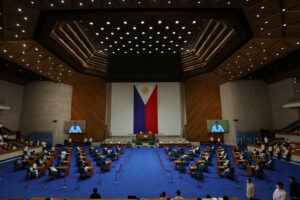
PSEi rebounds after Wall Street climb, BoP data

PSEi rebounds after Wall Street climb, BoP data

Philippine shares rebounded on Tuesday as investors took cues from US markets’ performance and the release of October external payments data.

The Philippine Stock Exchange index climbed by 25.20 points or 0.4% to finish at 6,208.83 on Tuesday, while the broader all shares index increased by 9.28 points or 0.28% to close at 3,314.60. 

“The index returned above the 6,200 level as a relatively benign market environment, an overnight rally in US shares, and a favorable auction of 20-year US Treasuries spurred bargain hunting in local equities,” China Bank Capital Corp. Managing Director Juan Paolo E. Colet said in a Viber message. 

Wall Street’s three major stock averages closed higher on Monday, with Nasdaq’s 1% rally leading the charge, as heavyweight Microsoft hit a record high after it hired prominent artificial intelligence executives, Reuters reported.

The Dow Jones Industrial Average rose 203.76 points or 0.58% to 35,151.04; the S&P 500 gained 33.36 points or 0.74% at 4,547.38; and the Nasdaq Composite added 159.05 points or 1.13% at 14,284.53.

“The local bourse gained… following the US markets overnight amid the signs of a slowdown in the US inflation. The positive sentiment was further fueled by the recorded surplus in the Philippines’ balance of payments (BoP) in October, indicating potential support for the peso, which has been gaining strength recently against the US dollar,” Philstocks Financial, Inc. Research Analyst Claire T. Alviar added in a Viber message. 

The Philippines’ country’s BoP surplus widened to USD 1.5 billion in October from USD 711 million in the same month a year ago, data released by the Bangko Sentral ng Pilipinas (BSP) on Monday showed.

For the first 10 months, the BoP position stood at a USD 3.2-billion surplus, a turnaround from the USD 7.1-billion deficit in the same period a year ago.

The BSP expects the country’s BoP position to end the year at a USD 127-million deficit.

Sectoral indices were mixed on Tuesday. Financials went up by 17.54 points or 1.01% to 1,751.42; industrials climbed by 83.05 points or 0.95% to 8,760.74; and services increased by 14.01 points or 0.93% to 1,507.42.

Meanwhile, property fell 18.64 points or 0.7% to 2,640.56; mining and oil dropped 4.57 points or 0.04% to 9,446.33; and holding firms declined by 1.91 points or 0.03% to 5,939.74. 

Value turnover rose to PHP 3.91 billion on Tuesday with 422.56 million issues changing hands, from the PHP 3.73 billion with 690.86 million issued recorded on Monday. 

Declines edged out advancers, 86 versus 80, while 43 issues closed unchanged.    

Net foreign buying stood at PHP 120.35 million on Tuesday, a turnaround from the PHP 105.9 million in net selling recorded on Monday. 

“The 6,200 to 6,250 area is a strong resistance zone, so we need to see more buying at these levels to build a case for a fresh rally,” Mr. Colet said. — R.M.D. Ochave with Reuters

House committee OK’s amendments to CREATE law

House committee OK’s amendments to CREATE law

By Beatriz Marie D. Cruz, Reporter

A HOUSE of Representatives committee on Tuesday approved a bill that would allow companies inside economic zones and freeports to enjoy duty-free privileges and value-added tax exemptions on imports and local purchases as part of the Marcos government’s push to make the Philippine tax incentive system more globally competitive.

The measure will amend the Corporate Recovery and Tax Incentives for Enterprises (CREATE) Act, which restricts the so-called zero-rating on value-added tax (VAT) on local purchases to the sale of goods and services directly used in a project or activity of a registered exporter.

The CREATE MORE (CREATE to Maximize Opportunities for Reinvigorating the Economy) bill also empowers the President to modify, craft and grant incentive packages, without the recommendation of the Fiscal Incentives Review Board.

“The President has instructed us to get this done, and the (House) leadership is trying to approve it by end of this month,” Committee on Ways and Means Chairman and Albay Rep. Jose Ma. Clemente S. Salceda said in a statement.

The CREATE MORE bill seeks to introduce a “simplified and streamlined” tax refund system for registered business enterprises.

Under the bill, domestic and export companies, even those inside ecozones and freeports, would continue to enjoy duty exemptions, VAT exemption on importation, and the VAT zero-rating of local purchases as provided in their respective investment promotion agency (IPA) registrations.

“Registered export enterprises shall enjoy nonincome tax incentives, such as duty exemption on importation of capital equipment, raw materials, spare parts or accessories, VAT exemption on importation and VAT zero-rating on local purchases, as long as the registered export enterprise maintains 70% of the total annual production as export sale and continues to be registered in good standing with the IPA,” according to the bill.

The measure also seeks to reduce the corporate income tax to 20% for those under the enhanced deduction regime from 20-25%.

Under the measure, the information technology and business process outsourcing sector will be allowed to “conduct business under alternative work arrangements.”

“These revisions are meant to help attract more foreign investments into the country by simplifying the investment incentives, making them more comprehensive and consistent, as well as better aligned with the investment incentives of other neighboring ASEAN (Association of Southeast Asian Nations)/Asian countries,” Rizal Commercial Banking Corp. Chief Economist Michael L. Ricafort said in a Facebook Messenger chat.

Semiconductor and Electronics Industries in the Philippines Foundation, Inc. President Danilo C. Lachica said the measure should include “provisions to mitigate high operating costs (power, logistics, process cooling water and labor).”

Assistant Minority Leader and Gabriela Party-list Rep. Arlene D. Brosas, who opposed the measure, said it would only benefit large corporations that will enjoy the tax cuts.

“The current CREATE Law already offers significant tax incentives to large corporations, decreasing their tax obligations. Despite this, the proposed CREATE MORE bill seeks additional amplification of these benefits, suggesting an insufficiency in the current incentives,” she said in a statement.

Ms. Brosas said the bill’s provision giving the President the power to grant incentive packages “raises concerns about potential cronyism and preferential treatment among large businesses affiliated with the President.”

CREATE was signed in 2021 to reduce tax and amend the incentive system to support businesses recovering from the pandemic.

GLOBAL MINIMUM TAX
Meanwhile, Mr. Salceda said the Department of Finance (DoF) and other stakeholders should propose their own amendments that would then be discussed when the bill reaches the plenary.

He said the bill amending the CREATE law should also account for the possible impact of the global minimum corporate tax.

“We need to prepare for when countries accede to this regime… Among all ASEAN-6 economies, only the Philippines has not made significant progress in implementing the rules. But it will come. And when it does, it could affect our tax incentive system,” he said.

In 2021, more than 130 countries agreed to enforce a global minimum tax under an Organisation for Economic Co-operation and Development deal. A global minimum tax rate of 15% will be imposed on profits of multinational enterprises, regardless of where these were generated.

“Those who are under the income tax holiday or special corporate income tax regime of 5% might be required to pay a top-up tax in their home countries. When that happens, our tax breaks will be quite ineffective in promoting foreign investments,” Mr. Salceda said. “So, we have to imagine new nontax incentives such as infrastructure and market promotion that make doing business here easier and more profitable.”

The lawmaker said the Philippines should consider a tax incentive regime that complies with the global minimum tax but can still attract foreign investors.

“I am personally thinking of a tax regime where we impose a 15% corporate income tax rate, plus enhanced deductions for 25 years,” he said.

PH sells PHP15B of tokenized T-bonds

PH sells PHP15B of tokenized T-bonds

The Bureau of the Treasury (BTr) on Monday raised PHP 15 billion from the first-ever sale of tokenized Treasury bonds (TTBs).

In a statement, the BTr said the maiden offering of one-year tokenized bonds had a coupon rate of 6.5%.

“The BTr saw strong demand from qualified institutional investors for the TTBs, with the size of the book reaching PHP 31.426 billion, more than three times the target issue size of PHP 10 billion,” it said.

“This allowed the BTr to upsize the issue to PHP 15 billion at 6.5%, aligned with the prevailing 1-year secondary market rates despite the non-tradability of the TTBs,” it added.

At the secondary market on Friday, the one-year benchmark tenor dropped by 10.01 basis points (bps) week on week to end at 6.4916%, based on PHP Bloomberg Valuation Service Reference Rates data published on the Philippine Dealing System’s website.

The TTBs are fixed-rate government securities that pay semi-annual coupon. It will be issued in the form of digital tokens to be maintained in the BTr’s Distributed Ledger Technology Registry. Settlement is scheduled on Nov. 22.

The Treasury offered the tokenized bonds to institutional buyers at minimum denominations of P10 million, with increments of P1 million.

The issue managers for the TTBs are Land Bank of the Philippines and Development Bank of the Philippines.

“The bond tokenization program is anchored on the National Government’s long-term vision of a financially inclusive domestic capital market. Through streamlining settlement procedures and minimizing friction costs, this initiative is a huge leap towards our end goal of democratizing investment and empowering our small investors,” Finance Secretary Benjamin E. Diokno said in a statement.

Bangko Sentral ng Pilipinas  Governor Eli M. Remolona, Jr. said the BTr’s initiative to tokenize T-bonds would expand investment options for Filipinos.

“Right now, the focus is on institutional investors but hopefully, we can expand this project to retail investors over time,” Mr. Remolona said.

The strong demand for the TTBs was a “good signal” of market interest on tokenized bonds, Rizal Commercial Banking Corp. Chief Economist Michael L. Ricafort noted in a Viber message.

The high demand was also due to the declining interest rates and bond yields since November, which was a result of expectations that the US Federal Reserve might start its easing cycle in 2024.

The US central bank kept its benchmark interest rate steady at the 5.25%-5.5% range for a second straight time during its Oct. 31-Nov. 1 meeting.

It has hiked rates by a cumulative 525 bps since it began its tightening cycle in March last year. The Federal Open Market Committee will next meet on Dec. 12-13 to review policy.

The Treasury had canceled the auction of 91-day, 182-day and 364-day Treasury bills scheduled on Monday to make way for the tokenized bonds. 

Meanwhile, the BTr also awarded the top 10 Government Securities Eligible Dealers (GSED) Market Makers for 2024.

The banks were BDO Unibank, Inc., Bank of the Philippine Islands, China Banking Corp., Citibank N.A., Development Bank of the Philippines, First Metro Investment Corp., Land Bank of the Philippines, Philippine National Bank, Union Bank of the Philippines, Inc., and the Metropolitan Bank and Trust Co. (Metrobank).

Metrobank was recognized as the top GSED-Market Maker. — Aaron Michael C. Sy

DTI seeks to relax public bidding requirements for startups

DTI seeks to relax public bidding requirements for startups

The Department of Trade and Industry (DTI) wants procurement eligibility requirements to be relaxed to allow startups to participate in bidding for government contracts.

DTI Undersecretary for the Competitiveness and Innovation Group Rafaelita M. Aldaba said that the amendment of the Government Procurement Reform Act will play a big role in addressing the challenges faced by startups that want to participate in public biddings. She noted many startups have difficulty in passing eligibility requirements.

“Given the existing difficulties of startups to participate in government biddings, it’s almost impossible for them. Hence, it is important that we are able to amend the procurement law while taking into consideration that we have these startups and they’re not comparable to large companies,” she said on the sidelines of the opening ceremony of the Philippine Startup Week 2023.

Ms. Aldaba said large companies have their own legal teams that can prepare all the necessary requirements and documents to be able to participate in public biddings.

Under the implementing rules and regulations (IRR) of the Republic Act (RA) 9184 or the Government Procurement Reform Act, parties interested in joining the public bidding should submit a statement of their single largest completed contract to the Bid and Awards Committee and statement of all ongoing government and private contracts, among others.

“The startups are in a different situation. They are not big earners and it’s the first time for them to be participating in government procurements so, it’s almost impossible for them to produce all the necessary documents that are required by the government for huge companies that are participating,” the DTI official said.

The IRR also states that bidders must submit financial documents such as audited financial statements and computation of their net financial contracting capacity.

Ms. Aldaba said that the government should be the first to procure products and services from startups as this is how it is actually being done in other countries.

“There are a lot of new platforms being introduced by startups which can be utilized by the government for as long as we’re able really to come up with a more flexible system that would enable us to procure from these new startups that are entering the market,” she said.

“You can just imagine the revenue impact and the economic impact that can be created if we’re able to support the products coming from our startup community,” she added.

Rizal Commercial Banking Corp. Chief Economist Michael L. Ricafort said revisions to the bidding requirements will allow more small and medium enterprises (SMEs) and startups to qualify for public biddings.

“Some SMEs and startups could lack the scale such as capitalization, structure, track record, among others, when it comes to complying with the requirements of the law,” Mr. Ricafort said in a Viber message.

“There is a need to be more responsive to the latest developments and provide a more level playing field for more supplies, while also ensuring compliance with financial, quality, performance, and other quality standards,” he added.

Foundation of Economic Freedom President Calixto V. Chikiamco said that it is high time now to amend the law not only to attract more participation from smaller companies but also to improve competition in public bidding.

“It is high time that the government amend the procurement law, specifically the Filipino first provisions which mandate that the government is obligated to give the contract to a Filipino company even if its bid is 20% above a competing bid from a foreign supplier,” said Mr. Chikiamco in a Viber message.

He said the provision should be amended to favor Filipino suppliers but only if their bid is the same as that of a competing foreign supplier.

“The amendment is necessary in order for the government to save money and elicit more competition in public bids,” he added.

The amendments to the Government Procurement Reform Act are part of the priority measures of the Legislative-Executive Development Advisory Council.

The House Committee on Revision of Laws last week approved its version of the bill, which also calls for broader use of electronic processes and preferential treatment for domestic suppliers.

According to Ms. Aldaba, the amendments that the department is pushing for are also present in Senate Bill (SB) No. 2426 or the proposed Tatak Pinoy (Proudly Filipino) Strategy Act authored by Senator Juan Edgardo M. Angara.

The bill seeks to raise the competitiveness of Philippine products made by small companies through giving domestic products the priority for government procurement.

“We are also discussing with Senator Angara the possibility of amending some of the provisions [of the RA 9118] through the Tatak Pinoy Bill,” Ms. Aldaba said.

“Hopefully, we will be able to really come up with some solutions that would support the participation of startups in government procurement through the Tatak Pinoy bill,” she added.

The Senate approved the Tatak Pinoy bill on the third reading on Nov. 6, while the House has yet to approve its version of the measure.

The Philippine startup ecosystem is currently valued at $3.5 billion and is projected to double by the end of the Marcos administration.

“We are expecting it to grow. In the next five years, we want it to double and reach $10 billion by the end of the Marcos administration,” Ms. Aldaba said. — By Justine Irish D. Tabile, Reporter

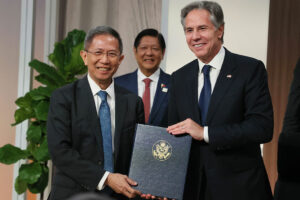
Marcos’ US trip yields USD672M in investment commitments

Marcos’ US trip yields USD672M in investment commitments

The Philippines secured USD 672.3 million in investment pledges during President Ferdinand R. Marcos, Jr.’s weeklong trip to the United States, according to his office.

The pledges cover telecommunications, artificial intelligence (AI) for weather forecasting, semiconductor and electronics, pharmaceutical and healthcare, and renewable energy, Malacañang said in a statement.

The Palace said Mr. Marcos secured USD 400 million worth of investment commitments for the telecommunications sector alone.

“President Marcos also secured significant commitments in technological advancements across key priority sectors in the Philippines, which include the deployment of the first two internet MicroGEO satellites dedicated to the Philippines,” it said.

The semiconductor sector also received USD 250 million in investment pledges.

“An additional investment of USD 1 billion for the semiconductor industry is up for discussion with US companies. The Philippines and the US have also agreed to work towards strengthening the Philippines’ semiconductor supply chain,” the Palace said.

Last week, the US State department announced that Washington will collaborate with the Philippines “to explore opportunities to grow and diversify the global semiconductor ecosystem” under the US CHIPS Act’s International Technology Security and Innovation Fund, a USD 52-billion subsidy program for US semiconductor manufacturers and research.

The initial phase will involve a comprehensive assessment of the Philippines’ semiconductor ecosystem and regulatory framework, as well as workforce and infrastructure needs.

Meanwhile, the pharmaceutical and healthcare sector got USD 20 million in investment commitments.

During his trip, Mr. Marcos witnessed the signing of a deal between Ayala Healthcare Holdings, Inc. (AC Health) and Varian Medical Systems to make cancer care more accessible to Filipino patients at the country’s first specialty oncology hospital. AC Health is nearing the completion of the Healthway Cancer Care Center in Taguig City.

The Philippines’ Lloyd Laboratories, Inc. and US-based Difgen Pharmaceuticals LLC, meanwhile, signed a deal covering the filing of abbreviated new drug applications and the marketing of jointly developed pharmaceutical products within the United States.

Lloyd Laboratories will also invest up to USD 20 million to build and operate the first US Food and Drug Administration-approved manufacturing facility in the Philippines.

The Philippines also secured investment commitments worth USD 2 million on AI for weather forecasting, and USD 300,000 for renewable energy.

The Department of Science and Technology signed a deal with US-based company Atmo to develop Asia’s largest AI-driven weather forecasting program for the Philippines, which faces challenges from climate change.

The Palace on Sunday said the Department of Information and Communications Technology had been ordered to work with satellite internet service Starlink to boost internet connectivity in the country.

Among the key partnerships secured by Mr. Marcos during his trip is an agreement that would pave the way for Washington to export nuclear technology and materials to the Philippines.

US-based Ultra Safe Nuclear Corp. and Manila Electric Co. (Meralco) signed a memorandum of agreement for a pre-feasibility study on the potential use of micro-modular reactors in the Philippines.

Mr. Marcos said economic partnerships are a key component of Philippines-US relations.

“That encompasses not only security concerns, but also economic concerns because the thinking in this day is that you cannot be strong and you cannot be able to defend yourself if you are economically weak,” he told reporters in Honolulu, Hawaii on Sunday.

As part of his weeklong trip to the US, Mr. Marcos attended the Asia-Pacific Economic Cooperation Economic Leaders’ Meeting and other events in San Francisco. He also visited Los Angeles and Hawaii. — K.A.T. Atienza

Peso climbs further as inflation concerns ease

Peso climbs further as inflation concerns ease

The peso appreciated to a new three-month high against the dollar on Monday amid easing inflation concerns here and in the United States.

The local unit closed at PHP 55.55 per dollar on Monday, strengthening by 12 centavos from its PHP 55.67 finish on Friday, based on Bankers Association of the Philippines data.

This was the peso’s best close in more than three months or since its PHP 55.52-per-dollar finish on Aug. 3.

The peso opened Monday’s session at PHP 55.54 against the dollar. Its intraday best was at PHP 55.45, while its weakest showing was at PHP 55.56 versus the greenback.

Dollars exchanged went up to USD 1.51 billion on Monday from USD 1.18 billion on Friday.

“The peso appreciated amid easing local and global inflationary concerns following the softer inflation reports for October,” a trader said in an e-mail.

Philippine headline inflation fell to a three-month low of 4.9% in October from 6.1% in September. For the 10-month period, inflation averaged 6.4%.

Meanwhile, US consumer prices were unchanged in October as Americans paid less for gasoline, and the annual rise in underlying inflation was the smallest in two years, bolstering the view that the US Federal Reserve was probably done raising interest rates, Reuters reported.

The unchanged reading in the consumer price index (CPI), the first in more than a year, followed a 0.4% rise in September. In the 12 months through October, the CPI climbed 3.2% after rising 3.7% in September.

The peso tracked the dollar’s decline against other currencies due to dovish Fed bets following the CPI data, Rizal Commercial Banking Corp. Chief Economist Michael L. Ricafort said in a Viber message.

The dollar slid to a two-month low on Monday, extending a downtrend from last week as traders reaffirmed their belief that US rates have peaked and turned their attention to when the Federal Reserve could begin cutting rates, Reuters reported.

The dollar index in Asia trade bottomed out at 103.53, its weakest level since Sept. 1, extending its nearly 2% decline from last week.

For Tuesday, the peso could rise further ahead of the release of minutes of the Fed’s latest meeting, which markets expect to reinforce their expectations that the US central bank is done hiking rates, the trader said.

The trader sees the peso moving between PHP 55.40 and PHP 55.65 per dollar on Tuesday, while Mr. Ricafort expects it to end at PHP 55.45 to PHP 55.65. — AMCS with Reuters

Stocks drop on profit taking, lack of fresh leads

Stocks drop on profit taking, lack of fresh leads

Philippine stocks closed in the red on Monday as local investors opted to pocket their gains from the market’s recent rally amid a lack of positive catalysts.   

The benchmark Philippine Stock Exchange index (PSEi) dropped by 28.26 points or 0.45% to end at 6,183.63 while the broader all shares index fell by 19.45 points or 0.58% to close at 3,305.32. 

Local shares ended in negative territory on Monday as traders “seized the opportunity to lock in profits following the market’s runup since the beginning of November,” AB Capital Securities, Inc. Vice-President Jovis L. Vistan said in a Viber message.

“The susceptibility to profit-taking was heightened by the recent rally’s insufficient volume for it to sustain its upward momentum. On a fundamental basis, the prospect of a potential peak in both inflation and interest rates may indicate the groundwork for a near-term market bottom,” Mr. Vistan added.

The Bangko Sentral ng Pilipinas (BSP) is likely done hiking rates this year, with analysts expecting a pause in their policy meeting next month amid easing inflation.

The Monetary Board is expected to keep its policy rate at a 16-year high of 6.5% at their Dec. 14 meeting, the last review for the year, analysts said.

The BSP kept its key policy rate unchanged at its Nov. 16 meeting, following the 25-basis-point off-cycle rate hike on Oct. 26.   

Inflation fell to a three-month low of 4.9% in October from 6.1% in September and 7.7% in the same month a year ago. Still, inflation went above the BSP’s 2-4% target band for the 19th straight month.

Year to date, inflation stood at 6.4%.

The lack of trading drivers caused the market to decline, Philstocks Financial, Inc. Research Analyst Claire T. Alviar said in a Viber message.

The majority of sectoral indices closed lower on Monday. Holdings firm went down by 69.35 points or 1.15% to 5,941.65; financials declined by 16.68 points or 0.95% to 1,733.88; mining and oil retreated by 60.77 points or 0.63% to 9,450.90; and industrials decreased by 7.10 points or 0.08% to 8,677.69. 

Meanwhile, services climbed by 6.25 points or 0.42% to 1,493.41 and property rose by 1.92 points or 0.07% to end at 2,659.20.

Value turnover reached PHP 3.73 billion on Monday with 690.86 million issues changing hands, lower than the PHP 4.93 billion with 461.72 million issues recorded on Friday.

Decliners outnumbered advancers, 119 versus 66, while 42 names closed unchanged.

Net foreign selling rose to PHP 105.9 million on Monday from PHP 61.66 million on Friday.

“With the downside risk considered limited, support is seen around the 6,100 level, while immediate resistance is at 6,300,” Mr. Vistan said. — Revin Mikhael D. Ochave

Inflation expectations decline slightly

Inflation expectations decline slightly

Private sector economists’ inflation expectations have declined slightly, as they now expect average inflation to settle at the upper end of the Bangko Sentral ng Pilipinas’ (BSP) target band by next year.

Results from the BSP’s survey of external forecasters in November showed that the average inflation forecast of analysts for 2024 was slightly lowered to 4% from 4.1% previously. This is within the BSP’s 2-4% target band. 

On the other hand, the mean inflation forecast for 2023 and 2025 was kept at 6.1% and 3.5%, respectively.

“Analysts expect inflation to remain elevated but gradually tread the path towards the target range, with risks to the inflation outlook still significantly skewed to the upside due mainly to supply-side shocks and second-round effects,” the BSP said in its Monetary Policy Report for November.

The BSP cited upside risks such as higher oil and food prices due to the impact of weather disturbances and geopolitical tensions, as well as elevated transport and utility costs.

In October, inflation eased to 4.9% from 6.1% in September, its slowest pace in three months. However, it still marked the 19th straight month that inflation breached the 2-4% central bank target band.

This brought average inflation in the first 10 months to 6.4%, still above the BSP’s 6% full-year forecast.

At its Nov. 16 policy meeting, the BSP raised its baseline inflation forecast to 6% in 2023 (from 5.8% in September) and to 3.7% in 2024 (from 3.5%), but cut its 2025 inflation estimate to 3.2% (from 3.4%).

“A few analysts cited the weaker-than-expected global economic growth, recent deceleration of global oil prices, and improvement in domestic food supply owing to non-monetary government interventions (e.g., food importation) as possible downside risks to the inflation outlook,” the BSP said.

The survey also showed that the majority of the analysts expect the BSP to maintain the policy rate at the current level until the first quarter of 2024.

The BSP kept its benchmark interest rate steady at a 16-year high of 6.5% at its policy meeting last week. Since it began its aggressive monetary tightening cycle in May 2022, the BSP has raised borrowing costs by a total of 450 basis points (bps).

“By end-2024, most analysts anticipate the BSP to reduce the key policy rate by a range of 50 bps to 200 bps and expect further easing of about 25 bps to 200 bps in 2025,” it added.

Targets
Meanwhile, the BSP said Philippine economic growth from this year to 2025 could miss the government’s targets.

“Projected gross domestic product (GDP) growth could settle below the Development Budget Coordination Committee’s target of 6-7% for 2023 and 6.5-8% for 2024 and 2025,” the central bank said.

“The estimated growth path reflects primarily the impact of subdued global economic conditions as well as the lagged impact of the policy rate adjustments,” it added.

However, the BSP noted that its full-year GDP forecasts from 2023 to 2025 were revised higher from the previous Monetary Policy Report due to the improved growth in the third quarter driven by accelerated government spending.

The Philippine economy grew by 5.9% in the third quarter, faster 4.3% in the second quarter but slower than 7.7% a year ago.

For the first nine months, economic growth averaged 5.5%, still below the government’s 6-7% full-year target. To reach the lower end of its goal, the economy would need to grow by 7.2% in the fourth quarter.

“This could be offset partly by the impact of higher real policy rate as well as the estimated impact on agriculture of El Niño weather conditions,” the BSP said.

The latest advisory from the state weather bureau showed that a moderate-to-strong El Niño is present in the tropical Pacific and is expected to continue until the second quarter of 2024. — By Luisa Maria Jacinta C. Jocson, Reporter

BSP seen to keep rates unchanged at Dec. meeting

BSP seen to keep rates unchanged at Dec. meeting

The Bangko Sentral ng Pilipinas (BSP) may continue to keep borrowing costs at a 16-year high of 6.5% at its last policy meeting next month, analysts said.   

Security Bank Corp. Chief Economist Robert Dan J. Roces said easing global rice and oil prices have given the BSP more flexibility to pause at last week’s meeting.

The BSP kept its key policy rate unchanged at the Nov. 16 meeting, following the 25-basis-point (bp) off-cycle rate hike on Oct. 26.   

“Despite this, the BSP maintains a hawkish stance, emphasizing the likelihood of rising inflation and indicating readiness to increase rates, if necessary,” he said in a Viber message.

“We expect the BSP to maintain a hawkish pause of the policy rate at 6.5% in its final meeting,” he said, referring to the Monetary Board’s Dec. 14 meeting.

But the higher-than-expected growth in the third quarter gave the central bank room to further tighten in case inflationary pressures flare up, Mr. Roces added.

Ryota Abe, an economist at Sumitomo Mitsui Banking Corp. (SMBC), said the BSP may keep rates steady at the Dec. 14 meeting.   

“The cumulative effect of past rate hikes has had an impact on the economy, and maintaining the current policy rate will gradually increase its effectiveness,” he said in a note.

Since inflation has been stabilizing lately, Mr. Abe said there are concerns about “the adverse effects on the domestic economy.”

The Philippine economy grew by 5.9% in the third quarter from 4.3% seen a quarter ago. Still, this is slower than the 7.7% growth in the third quarter of 2022.

In the first nine months of the year, growth averaged 5.5%, still below the 6-7% full-year target of the government. 

While the BSP has maintained its future policy decisions will be data-dependent, Mr. Abe noted the focus has shifted towards the economy. The BSP’s next move would depend on the November inflation data, which will be released on Dec. 5.

“Consumers’ sense of high prices has not yet been resolved, and the risk of further stickiness of inflation cannot be ignored as upward price pressures arising from supply-side factors trigger secondary price increases, which is what BSP fears. BSP has no choice but to continue its hawkish monetary policy for the time being,” he said.

Inflation fell to a three-month low of 4.9% in October from 6.1% in September and 7.7% in the same month a year ago. Still, inflation went above the BSP’s 2-4% target band for the 19th straight month. Year to date, inflation stood at 6.4%. 

Meanwhile, Euben Paracuelles, senior economist at Nomura Global Markets Research, said the key rate may remain unchanged at 6.5% over the next several months.

“This is supported by our forecast that inflation will decline to 3.8% in 2024 from 6.2% in 2023,” he said. 

“However, because of the uncertainty and various factors contributing to inflation risks, we think BSP will continue to err on the side of caution and maintain its hawkish rhetoric for a while, still pledging that it remains ready to resume hiking as needed,” he added.

At its last meeting, the BSP lowered its risk-adjusted inflation forecast for 2023 to 6.1% (from 6.2% in October), to 4.4% (from 4.7%) for 2024, and to 3.4% (from 3.5%) for 2025. 

The BSP raised its baseline inflation forecast to 6% in 2023 (from 5.8% in September) and to 3.7% in 2024 (from 3.5%), but trimmed its 2025 inflation estimate to 3.2% (from 3.4%).

On the other hand, the Philippine central bank could still tighten monetary policy one more time before the year ends.

ANZ Research said despite the policy pause on Thursday, the BSP kept its tightening bias and left the door open for more rate hikes this year. 

“Our current policy rate forecasts continue to reflect a 25-bp hike at the December meeting and a hold at least until end-2024,” ANZ said in a note authored by economists Debalika Sarkar and Sanjay Mathur. 

“We will, however, revisit our forecasts after the release of the November 2023 inflation print in early December,” it added.

In a note, Citi economist for the Philippines Nalin Chutchotitham said the BSP may still hike by 25 bps to 6.75% this year to anchor inflation expectations.

“We still see potential increases in electricity fares leading to higher costs on goods, while the strong employment and wage hikes likely continue to support robust domestic demand expansion,” she said.

Ms. Chutchotitham also sees no rate cut in the first half of 2024. — By Keisha B. Ta-asan, Reporter

Posts navigation

Older posts
Newer posts

Recent Posts

  • Metrobank US-Iran Risk Index: A new hope
  • A guide for your peso bond portfolio amid higher for longer rates
  • Investment Ideas: April 8, 2026
  • Inflation Update: The case to tighten
  • Investment Ideas: April 7, 2026

Recent Comments

No comments to show.

Archives

  • April 2026
  • March 2026
  • February 2026
  • January 2026
  • December 2025
  • November 2025
  • October 2025
  • September 2025
  • August 2025
  • July 2025
  • June 2025
  • May 2025
  • April 2025
  • March 2025
  • February 2025
  • January 2025
  • December 2024
  • November 2024
  • October 2024
  • September 2024
  • August 2024
  • July 2024
  • June 2024
  • May 2024
  • April 2024
  • March 2024
  • February 2024
  • January 2024
  • December 2023
  • November 2023
  • October 2023
  • September 2023
  • August 2023
  • July 2023
  • June 2023
  • May 2023
  • April 2023
  • March 2023
  • February 2023
  • January 2023
  • December 2022
  • November 2022
  • October 2022
  • September 2022
  • August 2022
  • July 2022
  • June 2022
  • May 2022
  • March 2022
  • December 2021
  • October 2021

Categories

  • Bonds
  • BusinessWorld
  • Currencies
  • Economy
  • Equities
  • Estate Planning
  • Explainer
  • Featured Insight
  • Fine Living
  • How To
  • Investment Tips
  • Markets
  • Portfolio Picks
  • Rates & Bonds
  • Retirement
  • Reuters
  • Spotlight
  • Stocks
  • Uncategorized

You are leaving Metrobank Wealth Insights

Please be aware that the external site policies may differ from our website Terms And Conditions and Privacy Policy. The next site will be opened in a new browser window or tab.

Cancel Proceed
Get in Touch

For inquiries, please call our Metrobank Contact Center at (02) 88-700-700 (domestic toll-free 1-800-1888-5775) or send an e-mail to customercare@metrobank.com.ph

Metrobank is regulated by the Bangko Sentral ng Pilipinas
Website: https://www.bsp.gov.ph

Quick Links
The Gist Webinars Wealth Manager Explainers
Markets
Currencies Rates & Bonds Equities Economy
Wealth
Investment Tips Fine Living Retirement
Portfolio Picks
Bonds Stocks
Others
Contact Us Privacy Notice Terms of Use
© 2026 Metrobank. All rights reserved.

Access this content:

If you are an existing investor, log in first to your Metrobank Wealth Manager account. ​

If you wish to start your wealth journey with us, click the “How To Sign Up” button. ​

Login HOW TO SIGN UP