MODEL PORTFOLIO
THE GIST
NEWS AND FEATURES
Global Philippines Fine Living
INSIGHTS
INVESTMENT STRATEGY
Economy Stocks Bonds Currencies
THE BASICS
Investment Tips Explainers Retirement
WEBINARS
2024 Mid-Year Economi Briefing, economic growth in the Philippines
2024 Mid-Year Economic Briefing: Navigating the Easing Cycle
June 21, 2024
Investing with Love
Investing with Love: A Mother’s Guide to Putting Money to Work
May 15, 2024
retirement-ss-3
Investor Series: An Introduction to Estate Planning
September 1, 2023
View All Webinars
DOWNLOADS
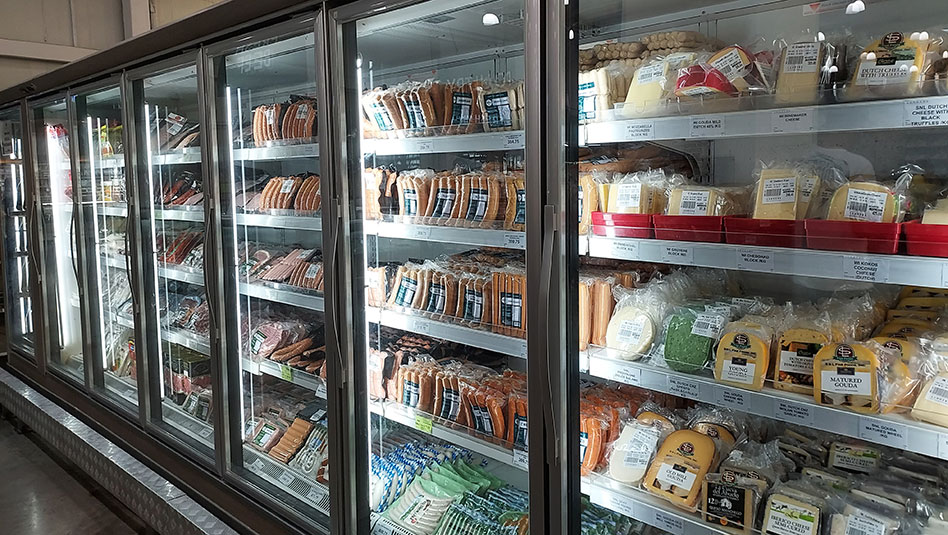
grocery-2-aa
Inflation Update: Target breached
DOWNLOAD
Container ship carrying container boxes import export dock with quay crane. Business commercial trade global cargo freight shipping logistic and transportation worldwide oversea concept. Generative AI
Economic Updates
Philippines Trade Update: Wider deficit on strong imports
DOWNLOAD
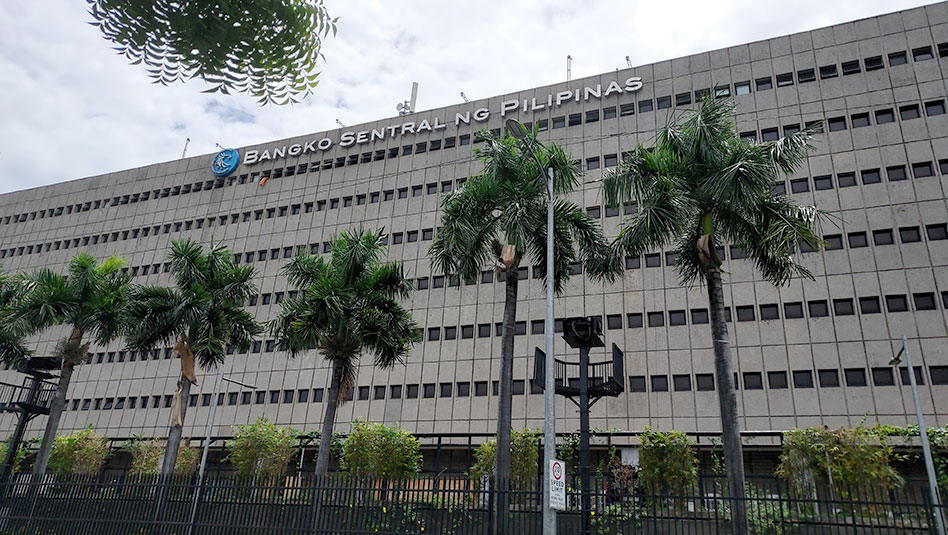
Frick collection with palm trees 
Economic Updates
Policy Rate Updates: Policy rate updates to reassure 
DOWNLOAD
View all Reports
Metrobank.com.ph How To Sign Up
Follow us on our platforms.

How may we help you?

TOP SEARCHES
  • Where to put my investments
  • Reports about the pandemic and economy
  • Metrobank
  • Webinars
  • Economy
TRENDING ARTICLES
  • Investing for Beginners: Following your PATH
  • On government debt thresholds: How much is too much?
  • Philippines Stock Market Outlook for 2022
  • Deficit spending remains unabated

Login

Access Exclusive Content
Login to Wealth Manager
Visit us at metrobank.com.ph How To Sign Up
Access Exclusive Content Login to Wealth Manager
Search
MODEL PORTFOLIO THE GIST
NEWS AND FEATURES
Global Philippines Fine Living
INSIGHTS
INVESTMENT STRATEGY
Economy Stocks Bonds Currencies
THE BASICS
Investment Tips Explainers Retirement
WEBINARS
2024 Mid-Year Economi Briefing, economic growth in the Philippines
2024 Mid-Year Economic Briefing: Navigating the Easing Cycle
June 21, 2024
Investing with Love
Investing with Love: A Mother’s Guide to Putting Money to Work
May 15, 2024
retirement-ss-3
Investor Series: An Introduction to Estate Planning
September 1, 2023
View All Webinars
DOWNLOADS
grocery-2-aa
Inflation Update: Target breached
April 7, 2026 DOWNLOAD
Container ship carrying container boxes import export dock with quay crane. Business commercial trade global cargo freight shipping logistic and transportation worldwide oversea concept. Generative AI
Economic Updates
Philippines Trade Update: Wider deficit on strong imports
March 27, 2026 DOWNLOAD
Frick collection with palm trees 
Economic Updates
Policy Rate Updates: Policy rate updates to reassure 
March 26, 2026 DOWNLOAD
View all Reports

Archives: Business World Article

PH financial resources up 7.9% at end-September

PH financial resources up 7.9% at end-September

The Philippine financial system’s total resources continued to rise at end-September, based on preliminary data from the Bangko Sentral ng Pilipinas (BSP).

Resources of banks and nonbank financial institutions grew by 7.9% to PHP 29.855 trillion in the first nine months of the year from PHP 27.647 trillion in the same period in 2022.

Banks and nonbank financial firms hold resources that include funds and assets such as deposits, capital, and bonds or debt securities.

BSP data showed banking resources rose by 8.7% to PHP 24.705 trillion at end-September from PHp 22.722 trillion a year prior. Banks include universal and commercial banks, thrift banks, as well as rural and cooperative banks.

Broken down, total resources held by universal and commercial banks stood at PHP 23.228 trillion as of September, up by 8.8% from PHP 21.356 trillion a year ago.

Thrift banks held PHP 1.068 trillion of total resources, increasing by 9.5% from PHP 975 billion a year ago, while the resources of rural and cooperative banks climbed by 4.6% to PHP 408 billion year on year.

Meanwhile, the resources of nonbank financial institutions went up by 4.6% to PHP 5.151 trillion from PHP 4.926 trillion a year prior.

Nonbank financial institutions include investment houses, finance companies, security dealers, pawnshops and lending companies. Institutions such as nonstock savings and loan associations, credit card companies, private insurance firms, the Social Security System and the Government Service Insurance System are also considered nonbanks.

The financial system’s total resources stood at PHP 28.806 trillion in 2022, up by 9.3% from a year prior. — Keisha B. Ta-asan

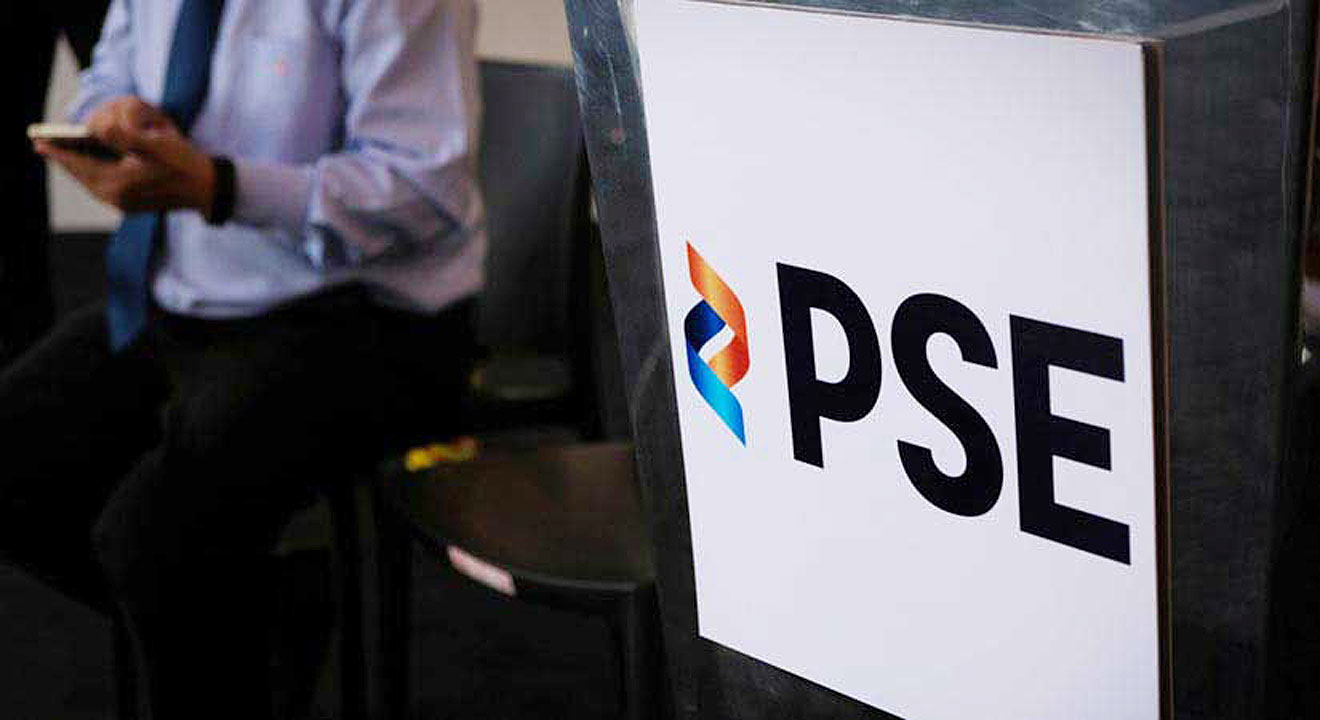
PSE index snaps two-day climb on profit taking

PSE index snaps two-day climb on profit taking

Local stocks declined and snapped their two-day rise on Thursday as investors pocketed their gains amid a lack of trading drivers.

The Philippine Stock Exchange index (PSEi) went down by 6.98 points or 0.11% to close at 6,246.20, while the broader all shares decreased by 2.03 points or 0.06% to finish at 3,328.01.

The local bourse closed weaker due to profit taking, Philstocks Financial, Inc. Research and Engagement Officer Mikhail Philippe Q. Plopenio said in a Viber message.

“This Thursday, the local market dropped by 6.98 points (0.11%) to 6,246.20 as the lack of a positive catalyst caused investors to take profits. The bourse made gains intraday, rising to 6,259.66 before sellers prevailed,” Mr. Plopenio said. 

“Also, the lack of a positive catalysts, together with ongoing economic concerns both at home and offshore, caused many to remain on the sidelines,” he added.

The local bourse dropped amid bets on the US Federal Reserve’s next move, Rizal Commercial Banking Corp. Chief Economist Michael L. Ricafort said in a Viber message.

“The PSEi corrected slightly lower after rising for two straight days on some profit-taking activities, locking in some gains ahead of the US Thanksgiving Holiday and also after the latest Fed minutes that hinted the need to proceed carefully in Fed rate decision, especially in ensuring the achievement of the inflation target,” Mr. Ricafort said.

US Federal Reserve officials agreed at their last policy meeting that they would proceed “carefully” and only raise interest rates if progress in controlling inflation faltered, the minutes of the Oct. 31-Nov. 1 gathering showed on Tuesday, Reuters reported.

Inflation has been slowing — consumer prices did not rise at all on a month-to-month basis in October — and while the Fed has not declared its fight against rapid price increases over, the tenor of the discussion has been shifting towards a focus on how long to keep the policy rate in the current 5.25%-5.5% range.

At home, sectoral indices were split on Thursday. Services retreated by 9.96 points or 0.65% to 1,511.63; holding firms declined by 19.92 points or 0.33% to 5,947.70; and financials went down by 4.60 points or 0.26% to 1,747.16.

On the other hand, property rose by 11.16 points or 0.42% to 2,658.52; mining and oil climbed by 38.71 points or 0.4% to 9,665.69; and industrials went up by 34.46 points or 0.38% to 8,947.49. 

“Among the index members, Monde Nissin Corp. was at the top, climbing 3.54% to P8.48. JG Summit Holdings, Inc. lost the most, dropping 1.94% to PHP 37.90,” Philstocks Financial’s Mr. Plopenio said.

Value turnover went down to PHP 2.33 billion on Thursday with 453.55 million shares switching hands, from the PHP 4.01 billion with 296.08 million issues seen the previous trading day.

Decliners outnumbered advancers, 91 against 74, while 48 names ended unchanged.

Net foreign buying went down to PHP 85.63 million on Thursday from PHP 1.02 billion on Wednesday. — R.M.D. Ochave with Reuters

Philippines’ GSP+ extended by 4 years

Philippines’ GSP+ extended by 4 years

Philippine privileges under the European Union’s (EU) Generalized Scheme of Preferences Plus (GSP+) will be extended by another four years, according to the European Union Ambassador to the Philippines Luc Veron.

“There is no decision to be had, this is just a report on the monitoring (submitted) to the legislators which are the EU Parliament and Council… There is no change, so it is extended,” Mr. Veron told reporters on the sidelines of the Pilipinas Conference on Wednesday. 

He said that the EU Commission on Tuesday sent its report and monitoring to the European legislators on a number of countries that are benefiting from GSP+ including the Philippines.

“We are generally very happy with the data that we have with the Philippine government on the monitoring of the GSP+ and we hope that will continue that way,” Mr. Veron said.

The Philippines participates in the EU’s GSP+, a special incentive arrangement for low and lower middle-income countries. It grants the country zero duties on 6,274 locally made products.

The current arrangement is set to expire by end-2023. With the four-year extension, the Philippine participation in the GSP+ scheme will run through 2027.

Under the scheme, the Philippines is required to uphold commitments to 27 international conventions on human rights, labor, good governance and climate action.

A joint staff working document from the European Commission stated that it is important to provide continuity and legal certainty for GSP beneficiaries and business.

“The EU GSP’s incentive-based approach of engagement has proven successful, and it should, therefore, continue,” the EU Commission said in its report to the legislators.

“In view of the upcoming expiry of the GSP regulation at the end of 2023 and the still ongoing negotiations for a new regulation, the Commission has proposed an extension of the current rules, which was welcomed by the European Parliament and the Council,” it said.

Mr. Veron said the EU will continue with the current scheme because there was no consensus on the revisions among legislators.

“There was an ambition on the part of the legislators in the EU to revise the GSP regulation but there was no agreement [made] among legislators. So, the proposal by the European Commission was to roll over the current legislation for another four years,” he added.

“So therefore, the same rules will apply for the next four years. It’s very important [to note] that the 27 conventions that the Filipinos signed up for will form the basis of the next phase of monitoring of the situation here in the Philippines,” he added.

Department of Trade and Industry Secretary Alfredo E. Pascual said that the extension of the trading scheme will be important to Filipino businesses.

“[The extension] will maintain those who are benefiting from it, like our tuna exporters because EU has a high tariff on tuna, around 20-30%,” said Mr. Pascual in mixed English and Filipino.

“If the GSP+ is not renewed, our tuna exporters will pay the tariffs… so they will become uncompetitive from those other sources of tuna going to the EU countries,” he said.

Mr. Pascual said the DTI will encourage businesses who currently enjoy the benefits of GSP+ to expand their exports to the EU while the preferential tariff rates are still in place.

Makati Business Club Chairman Edgar O. Chua also supported the extension of the trading scheme, saying that “this one is advantageous to the country because this enables access to the market.”

Meanwhile, Mr. Veron said that the Philippines and the European Union are on track to complete the preliminary phase of a free trade agreement (FTA) by the end of this year.

“The European Commission has a mandate to negotiate an FTA with the Philippines… However, negotiations have been suspended in 2017, for various reasons,” he said.

Mr. Veron said that what is taking place now is that both countries are looking up different chapters that would form part of the FTA.

“If we want a very efficient negotiation, we need to know on which chapter we are going to negotiate and basically what is visible and what is less visible, so as to determine the level of ambition of our FTA,” Mr. Veron said.

The EU and the Philippines first launched negotiations for an FTA in 2015, but these have been stalled since 2017. Negotiations were put on hold due to issues on intellectual property rights and data exclusivity, among others.

In August, President Ferdinand R. Marcos, Jr. and European Commission President Ursula von der Leyen announced both sides are exploring the resumption of negotiations for an FTA.

Multilateral lenders optimistic on Philippine growth despite headwinds

Multilateral lenders optimistic on Philippine growth despite headwinds

Multilateral lenders expect the Philippines to be one of the fastest-growing economies in the region amid the looming global slowdown, but emphasized the need to boost labor productivity, infrastructure competitiveness, and climate resilience to ensure growth remains robust.

At the BusinessWorld Forecast 2024 economic forum on Wednesday, World Bank Country Director for Brunei, Malaysia, Philippines and Thailand Ndiamé Diop said he is optimistic about the country’s growth prospects despite global headwinds.

“The Philippines have all (the) structural drivers that are very favorable and that’s why we’re quite optimistic about this. But given the state of the global economy, even 5.6% is a really decent growth rate. And I think if the global economy improves going forward, the ceiling grows even higher,” he said.

In October, the World Bank cut its gross domestic product (GDP) growth forecast for the Philippines to 5.6% from the 6% projection given in June. It also trimmed its growth forecast for the Philippines to 5.8% for 2024 from 5.9% previously. These are below the government’s 6-7% target for this year and 6.5-8% in 2024.

Asian Development Bank (ADB) Country Director for the Philippines Pavit Ramachandran said Philippine economic growth is at the “top of the leaderboard” in Southeast Asia.

In the third quarter, the Philippines’ 5.9% gross domestic product (GDP) growth in the third quarter was ahead of Vietnam (5.3%), Indonesia (4.9%), and Malaysia (3.3%).

However, the ADB trimmed its Philippine growth outlook to 5.7% this year from the 6% projection it gave in April. For 2024, the ADB expects the Philippines to be the fastest-growing economy in Southeast Asia with a 6.2% growth projection.

“The economy has largely remained resilient, notwithstanding global uncertainties, geopolitical tensions, economic headwinds, interest rates, inflation,” Mr. Ramachandran said.

“And a lot of (growth) is still very much anchored on domestic demand, household consumption and fixed investment both public and private investment in construction, remaining one of the biggest growth drivers,” he added.

However, the Philippines still needs to improve infrastructure competitiveness, enhance productivity and investments, nurture its demographic dividend, and intensify climate action.

Infrastructure development is also a hindrance to the Philippines’ competitiveness, ADB’s Mr. Ramachandran said.

“The Philippines still has some ways to go in terms of infrastructure provision, access, delivery and quality,” he said.

Citing a 2019 report, he said the Philippines ranked 96th out of 141 countries in terms of infrastructure competitiveness. The country lags in quality of road infrastructure and efficiency of rail networks.

Meanwhile, World Bank’s Mr. Diop said that climate change will impact the Philippines’ economic output “quite significantly.”

“The range of the outcomes is wide because of the uncertainty, but we do know that without adaptation measures and intervention measures, climate change would actually impact the process of generating possibilities, growth in the Philippines,” he added.

Meanwhile, International Monetary Fund (IMF) Representative to the Philippines Ragnar Gudmundsson said domestic demand can be bolstered if inflationary pressures subside.

He said decisive monetary tightening by the Bangko Sentral ng Pilipinas (BSP), a lower-than-expected minimum wage hike for Metro Manila earlier in July, and nonmonetary measures helped mitigate some of the recent inflationary pressures.

The BSP has raised borrowing costs by 450 basis points from May 2022 to October 2023, bringing the key rate to a 16-year high of 6.5%.

“Inflation is projected to gradually approach the BSP’s (2-4%) target in early 2024, even though frequent supply shocks cloud the disinflation trajectory,” he said.

The IMF expects inflation to rise to about 6% this year before declining to 3.5% in 2024.

It also sees Philippine GDP growth to hit 5.3% in 2023, before accelerating to 6% in 2024.

Property recovery
Jon Canto, managing partner of McKinsey & Company’s Philippine office, said the real estate sector has rebounded since the pandemic but slower than overall GDP growth.

“Philippine real estate has shown resiliency in the past few years. Growth is expected to return to pre-pandemic levels in 2024 driven by sustained demand across sector,” he said in a presentation at the BusinessWorld Forecast 2024 economic forum.

Megaworld Corp. Executive Vice-President for Sales and Marketing Noli D. Hernandez said the Philippine real estate sector has been doing very well despite rising inflation.

“In Megaworld, for example, we have seen a sustained and substantial growth in our residential segment. This is mainly because of the fast completion of projects, which was caused by an accelerated pace of construction activities on all fronts,” he said.

Federal Land President William Thomas F. Mirasol said he is optimistic the positive economic momentum will carry through 2024.

“The challenge now is how can Philippine real estate be an engine for growth for everyone. Our shared vision of all of us here can be made more fruitful, how all together we can build better and create a dynamic industry for every Filipino to benefit from,” he added.

Meanwhile, BusinessWorld Publishing Corp. Chief Executive Officer Miguel G. Belmonte said there is a need to build resilient supply chains that are “agile, flexible, and capable of adapting to changing circumstances.”

“We must always steel ourselves against disruption and be able to adapt and innovate when the situation calls for it. Embracing agility will enable us to weather storms, seize emerging trends, and thrive in turbulent times,” he added.

Mr. Belmonte also emphasized the importance of harnessing data and technology to plan ahead.

“Embracing data-driven decision making is no longer a luxury. It is a necessity. Even though we must look inward to improve our operations, we cannot forget to look onward. Globalization has connected businesses across borders like never before, especially with the impetus rise of the global digital economy,” he said. — By Keisha B. Ta-asan, Reporter


PSE chief expects at least 4 IPOs in 2024

PSE chief expects at least 4 IPOs in 2024

Local bourse operator the Philippine Stock Exchange, Inc. (PSE) expects at least four initial public offerings (IPOs) next year, its top official said.

“As of now, we have about four big IPOs in line (for next year),” PSE President and Chief Executive Officer Ramon S. Monzon said during the BusinessWorld Forecast 2024 economic forum at the Grand Hyatt Manila in Taguig City on Wednesday.

The PSE had earlier targeted 14 IPOs for 2023, but only three IPOs were conducted this year. Renewable energy holding firm Alternergy Holdings Corp. held its IPO in March, followed by IT-product retailer Upson International Corp. in April, and renewable energy developer Repower Energy Development Corp. in July.   

Mr. Monzon hinted that the PSE is eagerly anticipating a big IPO of a real estate investment trust (REIT) next year.

“Next year, we are… hopeful that the biggest REIT IPO will finally take place. We’ve been talking to them,” he said.

The Sy-led SM Prime Holdings, Inc. earlier planned to raise around $1 billion by listing its REIT this year.

However, SM Prime in August decided to defer what could have been the largest REIT offering in the country until market conditions improve, citing headwinds such as high interest rates and elevated inflation.

Mr. Monzon told BusinessWorld that he expects companies in the mining, industrial, and food sectors to push through with their IPO next year.

“We have one from mining. We have another one with Lucio Co and his industrial warehouses, and we have a food company that wants to list,” he said.

Mr. Monzon confirmed that Australian-Canadian mining firm OceanaGold is planning to list its local unit, OceanaGold Philippines, Inc. (OGPI), as required under its 25-year Financial or Technical Assistance Agreement (FTAA) with the Philippine government.    

OGPI is engaged in the operation of the Didipio gold and copper mine in Nueva Vizcaya. OceanaGold announced in July 2021 that its FTAA with the government had been renewed.   

In July, Mr. Monzon disclosed that Mr. Co’s Cosco Capital was preparing for a REIT IPO worth as much as PHP 30 billion before the end of the year. The planned REIT IPO has a portfolio that includes industrial land.

“There were many companies that deferred their IPOs for next year,” Mr. Monzon said.

Several companies have pushed back their planned IPOs to 2024. This includes Citicore Renewable Energy, property developer Ovialand, Inc., and Razon-led Prime Infrastructure Capital, Inc.   

This year, several companies delisted from the local bourse, namely Metro Pacific Investments Corp., Eagle Cement Corp., Unioil Resources & Holdings Co., Inc., and PICOP Resources, Inc.

The tally of delisted companies is set to increase with the upcoming delisting of construction material supplier Holcim Philippines, Inc. on Nov. 27. — By Revin Mikhael D. Ochave, Reporter

Yields on central bank’s term deposits increase

Yields on central bank’s term deposits increase

Yields on the term deposits auctioned off by the Bangko Sentral ng Pilipinas (BSP) inched higher on Wednesday following the release of minutes of the US Federal Reserve’s latest policy meeting. 

Demand for the BSP’s term deposit facility (TDF) reached PHP 333.647 billion on Wednesday, higher than the PHP 330 billion on the auction block and PHP 305.484 billion in bids logged last week.

Broken down, the seven-day deposits attracted tenders amounting to PHP 194.346 billion, lower than the PHP 200-billion offering but above the PHP 179.794 billion in bids recorded the prior week.

Rates for the one-week papers ranged from 6.6% to 6.75%, higher than the 6.55% to 6.7399% range last week. This brought the average rate for the tenor to 6.6786%, inching up by 3.13 basis points (bps) from 6.6473% seen on Nov. 15.

For the 14-day deposits, tenders hit PHP 139.301 billion, above the PHP 130-billion offering and the PHP 125.69 billion in bids last week.

Accepted yields were from 6.6% to 6.7680%, narrower than the 6.585% to 6.775% range in the previous week. This brought the average rate of the two-week deposits to 6.6896%, up by 1.97 bps from the 6.6699% logged a week ago. 

The central bank has not auctioned off 28-day term deposits for three years to give way to its weekly offering of securities with the same tenor.

The term deposits and the 28-day bills are used by the BSP to mop up excess liquidity in the financial system and to better guide market rates.

TDF yields were higher on Wednesday following the release of minutes of the Fed’s policy meeting on Oct. 31 to Nov. 1, Rizal Commercial Banking Corp. Chief Economist Michael L. Ricafort said in a Viber message.

US Federal Reserve officials agreed at their last policy meeting that they would proceed “carefully” and only raise interest rates if progress in controlling inflation faltered, the minutes of the Oct. 31-Nov. 1 gathering showed on Tuesday, Reuters reported.

“All participants agreed that the Committee was in a position to proceed carefully,” according to the minutes, which appeared to show support for more rate hikes dissipating within the US central bank’s Federal Open Market Committee, and the baseline shifting to one in which its benchmark overnight interest rate remains steady absent a bad inflation surprise.

Inflation has been slowing — consumer prices did not rise at all on a month-to-month basis in October — and while the Fed has not declared its fight against rapid price increases over, the tenor of the discussion has been shifting towards a focus on how long to keep the policy rate in the current 5.25%-5.5% range.

Mr. Ricafort also attributed the rise in TDF yields to some pickup in local and world rice prices, as they expect the El Niño weather phenomenon to affect the crop until the first quarter next year.

The BSP earlier said the El Niño weather event could dampen water resources and agricultural productivity in the first half next year, which could affect inflation next year.

During its Nov. 16 policy meeting, the BSP raised its baseline inflation forecast to 6% in 2023 from 5.8% in September and to 3.7% in 2024 from 3.5%, but trimmed its 2025 inflation estimate to 3.2% from 3.4%.

Headline inflation fell to a three-month low of 4.9% in October from 6.1% in September. It was significantly slower than the 5.7% median estimate in a BusinessWorld poll and the 5.1-5.9% forecast of the central bank. However, October marked the 19th straight month that inflation breached the central bank’s 2-4% target.

For the first 10 months, inflation averaged 6.4%. — Keisha B. Ta-asan

Peso drops vs dollar

Peso drops vs dollar

The peso declined against the dollar on Wednesday amid expectations that the world’s biggest oil exporters will continue to keep production low.

The local unit closed at PHP 55.45 per dollar on Wednesday, weakening by six centavos from its PHP 55.39 finish on Tuesday, based on Bankers Association of the Philippines data.

The peso opened Wednesday’s session weaker at PHP 55.50 against the dollar. Its intraday best was at PHP 55.44, while its worst showing was at PHP 55.62 versus the greenback.

Dollars exchanged went down to USD 1.21 billion on Wednesday from USD 1.6 billion on Tuesday.

The peso depreciated against the dollar on Wednesday due to higher global crude oil prices recently despite a four-day ceasefire agreement between Israel and Hamas, Rizal Commercial Banking Corp. Chief Economist Michael L. Ricafort said in a Viber message.

“The peso weakened as global crude prices moved higher amid views that OPEC+ (Organization of the Petroleum Exporting Countries and their allies including Russia) will remain committed to its cut in production quotas,” a trader said in an e-mail.

Crude prices pared earlier losses to settle nearly flat as investors looked ahead to Sunday’s scheduled OPEC+ meeting, Reuters reported.

US crude dipped by 0.08% to settle at USD 77.77 per barrel, while Brent settled at USD 82.45 per barrel, up by 0.16% on the day.

The peso declined amid dovish signals from the US Federal Reserve after the release of the minutes of its last meeting, Mr. Ricafort said.

Fed officials agreed at their last policy meeting that they would proceed “carefully” and only raise interest rates if progress in controlling inflation faltered, the minutes of the Oct. 31-Nov. 1 gathering showed on Tuesday, Reuters reported.

The US central bank kept its benchmark interest rate steady at the 5.25%-5.5% range for a second straight time during this month’s meeting. It has hiked rates by 525 basis points since it began its tightening cycle in March 2022.

The Federal Open Market Committee will next meet on Dec. 12-13 to review policy.

For Thursday, the trader said the peso could depreciate further amid expectations of strong US jobs data. The trader expects the peso to move between PHP 55.35 and PHP 55.60 per dollar, while Mr. Ricafort sees it ranging from PHP 55.35 to PHP 55.55. — AMCS with Reuters

Shares up on positive sentiment, foreign buying

Shares up on positive sentiment, foreign buying

Philippine shares climbed on Wednesday amid an improved economic outlook and strong foreign buying. 

The benchmark Philippine Stock Exchange index rose by 44.35 points or 0.71% to 6,253.18, while the broader all shares index increased by 15.44 points or 0.46% to 3,330.04.

“The local bourse gained by 44.35 points (0.71%) to 6,253.18, thanks to strong foreign buying, recording a net inflow of PHP 1.02 billion. Moreover, Oxford Economics’ upward adjustment of the Philippines’ economic growth forecast from 4.5% to 5% helped lift the market,” Philstocks Financial, Inc. Research Analyst Claire T. Alviar said in a Viber message. 

Oxford Economics recently said that it expects Philippine gross domestic product (GDP) to grow by 5% this year, faster than its previous projection of 4.5%. 

Philippine GDP expanded 5.9% in the third quarter, faster than 4.3% in the second quarter but slower than 7.7% a year earlier.

For the first nine months, economic growth averaged 5.5%, still below the government’s 6-7% full-year target.

Meanwhile, net foreign buying ballooned to PHP 1.02 billion on Wednesday from PHP 120.35 million on Tuesday. 

“The local bourse has maintained its upward trajectory, still propelled by the recent positive developments in macroeconomic factors, including easing inflation in both the US and the Philippines, along with favorable third quarter earnings results,” Unicapital Securities, Inc. Senior Equity Research Analyst Carlos Angelo O. Temporal said in a Viber message. 

Philippine headline inflation fell to a three-month low of 4.9% in October from 6.1% in September. For the 10-month period, inflation averaged 6.4%.

Meanwhile, the US consumer price index (CPI) was unchanged in October for the first time in more than a year following a 0.4% rise in September. On an annual basis, the CPI rose by 3.2% after going up by 3.7% in September.

All sectoral indices ended higher on Wednesday. Mining and oil surged by 180.65 points or 1.91% to 9,626.98; industrials went up by 152.29 points or 1.73% to 8,913.03; services climbed by 14.17 points or 0.94% to 1,521.59; holding firms rose by 27.88 points or 0.46% to 5,967.62; property improved by 6.80 points or 0.25% to end at 2,647.36; and financials increased by 0.34 point or 0.01% to 1,751.76. 

“Within the index members, consumer foods’ stocks Universal Robina Corp. and Monde Nissin Corp. were at the top, gaining by 5.36% and 4.73%, respectively. However, Metropolitan Bank and Trust Co. had the biggest loss, dropping by 1.52%,” Ms. Alviar said.

Value turnover reached PHP 4.01 billion on Wednesday with 296.08 million issues switching hands, higher than the PHP 3.91 billion with 422.56 million shares recorded the previous trading day.

Advancers beat decliners, 93 versus 77, while 48 issues closed unchanged. — RMDO

BSP: El Niño to weigh on inflation through 1st half

BSP: El Niño to weigh on inflation through 1st half

The impact of the El Niño weather event may persist throughout the first half of 2024, which could lead to higher prices of power, imported rice and food items, the Bangko Sentral ng Pilipinas (BSP) said.

The BSP in its November Monetary Policy Report said El Niño could dampen water resources and agricultural productivity next year amid expected dry spells and droughts in some parts of the country.

“The impact of El Niño is quantified through several channels including higher electricity rates due to dry weather conditions, higher domestic crop prices owing to lower production, and higher international rice prices due to lower global production and the implementation of export restrictions,” the central bank said.

“These factors are assumed to persist in the first half of 2024 and contribute to the inflation forecast for the year,” it added.

During the Nov. 16 policy meeting, the BSP raised its baseline inflation forecast to 6% in 2023 (from 5.8% in September) and to 3.7% in 2024 (from 3.5%) but trimmed its 2025 inflation estimate to 3.2% (from 3.4%).

Electricity rates could rise in the fourth quarter to the second quarter of 2024 due to the warm and dry weather conditions from El Niño, according to the BSP.

“A substantial increase in demand for power which could not be supported by power supply reserves could lead to a declaration of yellow or red alerts in the transmission grids, resulting in higher generation charges from the Wholesale Electricity Spot Market (WESM) and independent power producers (IPP),” the central bank said.

Local electric cooperatives may also have to use more expensive alternative sources of power generation amid the expected drop in output from hydropower plants. 

“A 3% month-on-month increase in electricity prices is assumed for the period January to June 2024. This is based on the average increase in the overall electricity rate during the El Niño episode in 2018-2019,” the BSP said. 

Meanwhile, temperature shocks may have a significant negative effect on rice and corn, which accounted for about 8.9% and 0.5% of the consumer price index (CPI) basket, respectively.

El Niño could also lead to stronger demand for rice globally, particularly for imports from Vietnam and Thailand. However, the global rice supply is also vulnerable to El Niño and possible trade restrictions.

“With much of the increase having taken place in the first half of the year due to the combined factors of strong demand and tight supply conditions as well as concerns over El Niño conditions in most of Asia’s rice producers, rice prices on average are seen to be higher. Higher rice prices are assumed starting January 2024,” the BSP said.

China Banking Corp. Chief Economist Domini S. Velasquez in a Viber message said there would be some tightness in food supply through mid-2024 due to El Niño.

“We think that one of the reasons that the BSP continues to remain hawkish is because of the continued threat to food supply/prices in the near term,” she said.

The BSP kept its benchmark interest rate steady at a 16-year high of 6.5% at its policy meeting last week. Since it began its aggressive monetary tightening cycle in May 2022, the BSP has raised borrowing costs by a total of 450 basis points.

Ms. Velasquez noted that historically, prices of food have increased during El Niño or La Niña episodes. Since the current El Niño episode has been expected, she said governments should implement appropriate measures to mitigate the impact.

“Across Asia, countries have been bracing themselves for El Niño’s impact. In fact, in Thailand, the Thais are encouraged to conserve water,” she added.

Federation of Free Farmers National Manager Raul Q. Montemayor said rice crops would need large amounts of water in the planting season between now and February 2024. Farmers would also heavily rely on irrigation during the dry season.

“El Niño may affect the availability of irrigation water if there is insufficient rain, given that irrigation ranks next to potable water use and electricity generation in terms of priority,” he said.  “By March next year, farmers will start harvesting and little rain at this time would be ideal since harvested stocks will not have to be dried much.”

In the BMI Southeast Asia El Niño Exposure Index released in July, the Philippines ranked sixth most vulnerable to El Niño-induced inflationary pressures among 13 countries.

National Economic and Development Authority Secretary Arsenio M. Balisacan earlier said a “slight El Niño” could cause agricultural production to decline by 1-2%.

The Philippines experienced its worst El Niño episode in 1998, when the economy contracted by 0.5% as agricultural production fell by 7%. — By Keisha B. Ta-asan, Reporter

BIR surpasses October collection target

BIR surpasses October collection target

The Bureau of Internal Revenue (BIR) collected PHP 274.429 billion in October, surpassing its target for the month by 8.57%.

The October tally also jumped by 46.94% from PHP 186.759 billion in actual collections a year earlier.

“With the intensification of the bureau’s tax enforcement activities, specifically on the campaign against sellers and buyers of fake receipts, and with the continuous streamlining and digitization of the BIR’s core services, we hope to encourage all noncompliant taxpayers to comply fully with the provisions and requirements of the tax laws,” BIR Commissioner Romeo D. Lumagui, Jr. said in a statement on Tuesday.

In the 10-month period, BIR revenues rose by 11.1% to PHP 2.132 trillion from PHP 1.919 trillion a year ago.

The agency’s collection from January to October already accounted for about 80% of its full-year target.

The BIR is targeting to collect PHP 2.64 trillion this year, which is 13% higher than its collection of PHP 2.34 trillion in 2022.

Mr. Lumagui said the agency would likely reach or even surpass its collection target for the year.

Rizal Commercial Banking Corp. Chief Economist Michael L. Ricafort said the improvement in tax collection was due to the recovery of businesses and other economic activities that led to increased sales, spending and employment.

“Intensified tax collections based on existing tax laws also improved BIR tax revenue collections, as part of fiscal reform measures,” he said in a Viber message.

The BIR has been studying ways to expand its tax base, including using a digital platform.

Last month, it released the final draft of its proposed creditable withholding tax policy for gross remittances of electronic marketplace operators to online sellers. 

Under the draft, a withholding tax of 1% will be imposed on one-half of the gross remittances by domestic e-marketplace operators to online merchants for goods or services sold through their facility.

Earlier, BIR Assistant Commissioner Jethro M. Sabariaga said the agency’s collection for the remainder of the year is expected to be driven by household consumption and government spending.

The BIR collects about 70% of government revenue. — Luisa Maria Jacinta C. Jocson

Posts navigation

Older posts
Newer posts

Recent Posts

  • Metrobank US-Iran Risk Index: A new hope
  • A guide for your peso bond portfolio amid higher for longer rates
  • Investment Ideas: April 8, 2026
  • Inflation Update: The case to tighten
  • Investment Ideas: April 7, 2026

Recent Comments

No comments to show.

Archives

  • April 2026
  • March 2026
  • February 2026
  • January 2026
  • December 2025
  • November 2025
  • October 2025
  • September 2025
  • August 2025
  • July 2025
  • June 2025
  • May 2025
  • April 2025
  • March 2025
  • February 2025
  • January 2025
  • December 2024
  • November 2024
  • October 2024
  • September 2024
  • August 2024
  • July 2024
  • June 2024
  • May 2024
  • April 2024
  • March 2024
  • February 2024
  • January 2024
  • December 2023
  • November 2023
  • October 2023
  • September 2023
  • August 2023
  • July 2023
  • June 2023
  • May 2023
  • April 2023
  • March 2023
  • February 2023
  • January 2023
  • December 2022
  • November 2022
  • October 2022
  • September 2022
  • August 2022
  • July 2022
  • June 2022
  • May 2022
  • March 2022
  • December 2021
  • October 2021

Categories

  • Bonds
  • BusinessWorld
  • Currencies
  • Economy
  • Equities
  • Estate Planning
  • Explainer
  • Featured Insight
  • Fine Living
  • How To
  • Investment Tips
  • Markets
  • Portfolio Picks
  • Rates & Bonds
  • Retirement
  • Reuters
  • Spotlight
  • Stocks
  • Uncategorized

You are leaving Metrobank Wealth Insights

Please be aware that the external site policies may differ from our website Terms And Conditions and Privacy Policy. The next site will be opened in a new browser window or tab.

Cancel Proceed
Get in Touch

For inquiries, please call our Metrobank Contact Center at (02) 88-700-700 (domestic toll-free 1-800-1888-5775) or send an e-mail to customercare@metrobank.com.ph

Metrobank is regulated by the Bangko Sentral ng Pilipinas
Website: https://www.bsp.gov.ph

Quick Links
The Gist Webinars Wealth Manager Explainers
Markets
Currencies Rates & Bonds Equities Economy
Wealth
Investment Tips Fine Living Retirement
Portfolio Picks
Bonds Stocks
Others
Contact Us Privacy Notice Terms of Use
© 2026 Metrobank. All rights reserved.

Access this content:

If you are an existing investor, log in first to your Metrobank Wealth Manager account. ​

If you wish to start your wealth journey with us, click the “How To Sign Up” button. ​

Login HOW TO SIGN UP