


MODEL PORTFOLIO
THE GIST
NEWS AND FEATURES
Global Philippines Fine Living
INSIGHTS
INVESTMENT STRATEGY
Economy Stocks Bonds Currencies
THE BASICS
Investment Tips Explainers Retirement
WEBINARS
2024 Mid-Year Economi Briefing, economic growth in the Philippines
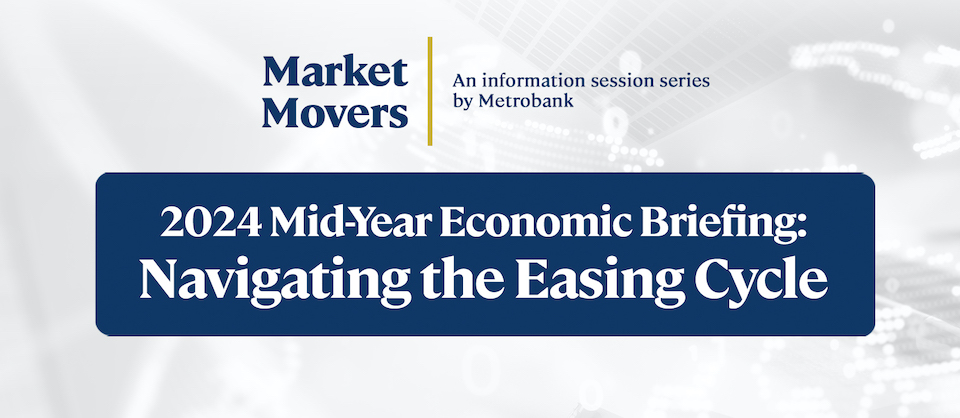
2024 Mid-Year Economic Briefing: Navigating the Easing Cycle
June 21, 2024
Investing with Love
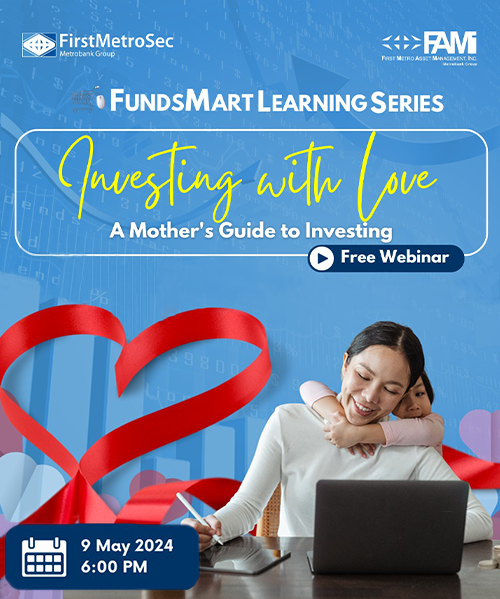
Investing with Love: A Mother’s Guide to Putting Money to Work
May 15, 2024
retirement-ss-3
Investor Series: An Introduction to Estate Planning
September 1, 2023
View All Webinars
DOWNLOADS
grocery-2-aa
Inflation Update: Target breached
DOWNLOAD
Container ship carrying container boxes import export dock with quay crane. Business commercial trade global cargo freight shipping logistic and transportation worldwide oversea concept. Generative AI
Economic Updates
Philippines Trade Update: Wider deficit on strong imports
DOWNLOAD
Frick collection with palm trees 
Economic Updates
Policy Rate Updates: Policy rate updates to reassure 
DOWNLOAD
View all Reports
Metrobank.com.ph How To Sign Up
Follow us on our platforms.

How may we help you?

TOP SEARCHES
  • Where to put my investments
  • Reports about the pandemic and economy
  • Metrobank
  • Webinars
  • Economy
TRENDING ARTICLES
  • Investing for Beginners: Following your PATH
  • On government debt thresholds: How much is too much?
  • Philippines Stock Market Outlook for 2022
  • Deficit spending remains unabated

Login

Access Exclusive Content
Login to Wealth Manager
Visit us at metrobank.com.ph How To Sign Up
Access Exclusive Content Login to Wealth Manager
Search
MODEL PORTFOLIO THE GIST
NEWS AND FEATURES
Global Philippines Fine Living
INSIGHTS
INVESTMENT STRATEGY
Economy Stocks Bonds Currencies
THE BASICS
Investment Tips Explainers Retirement
WEBINARS
2024 Mid-Year Economi Briefing, economic growth in the Philippines
2024 Mid-Year Economic Briefing: Navigating the Easing Cycle
June 21, 2024
Investing with Love
Investing with Love: A Mother’s Guide to Putting Money to Work
May 15, 2024
retirement-ss-3
Investor Series: An Introduction to Estate Planning
September 1, 2023
View All Webinars
DOWNLOADS
grocery-2-aa
Inflation Update: Target breached
April 7, 2026 DOWNLOAD
Container ship carrying container boxes import export dock with quay crane. Business commercial trade global cargo freight shipping logistic and transportation worldwide oversea concept. Generative AI
Economic Updates
Philippines Trade Update: Wider deficit on strong imports
March 27, 2026 DOWNLOAD
Frick collection with palm trees 
Economic Updates
Policy Rate Updates: Policy rate updates to reassure 
March 26, 2026 DOWNLOAD
View all Reports

Archives: Business World Article

Local shares retreat as investors pocket profits

Local shares retreat as investors pocket profits

Philippine shares declined on Wednesday as investors pocketed their gains from the market’s strong performance recently.

The Philippine Stock Exchange index (PSEi) retreated by 44.43 points or 0.7% to finish at 6,265.14 on Wednesday, while the broader all shares index fell by 19.02 points or 0.56% to close at 3,339.68. 

“The market is down on profit taking after the recent multi-week rally and ahead of the Morgan Stanley Capital International (MSCI) rebalancing implementation by month-end,” First Metro Investment Corp. Head of Research Cristina S. Ulang said in a Viber message. 

“The local bourse dropped by 44.43 points to 6,265.14 as investors took some gains after two consecutive days of market rally,” Philstocks Financial, Inc. Research Analyst Claire T. Alviar likewise said in a Viber message.

Bets on the US Federal Reserve’s next policy mood also affected trading, she added.

“Overseas, sentiment was further weighed down by Fed Governor Michelle Bowman’s statement that more rate hikes may be necessary to keep policy sufficiently restrictive to bring inflation down to the 2% target,” Ms. Alviar said.

Fed Governor Michelle Bowman said the central bank will likely need to raise borrowing costs further in order to bring inflation back down to its target, Reuters reported.

Meanwhile, Fed Governor Christopher Waller flagged the possibility of lowering the Fed policy rate in the months ahead if inflation continues to come down. Mr. Waller also said he was “increasingly confident” the current interest rate setting would prove adequate to lower inflation to the Fed’s 2% target.

The Fed this month kept its target rate at the 5.25%-5.5% range for the second consecutive meeting.

It will hold its last review for the year on Dec. 12-13.

Back home, the majority of sectoral indices ended in the red on Wednesday. Property declined by 86.13 points or 3.09% to 2,694.05; industrials dropped by 44.44 points or 0.5% to 8,763.75; financials decreased by 3.94 points or 0.22% to 1,742.31; and holding firms went down by 1.33 points or 0.02% to 6,006.29.

“The property sector had the largest loss, dropping by 3.10%, largely influenced by the 4.27% decline of SM Prime Holdings, Inc. Meanwhile, San Miguel Corp. was at the top, increasing by 1.89%,” Philstocks Financial’s Ms. Alviar said. 

On the other hand, mining and oil rose by 60.19 points or 0.62% to 9,741.16 and services went up by 4.04 points or 0.26% to 1,525.12. 

Value turnover went up to PHP 5.75 billion on Wednesday with 449.96 million shares changing hands from the PHP 5.34 billion with 382.74 million issues traded the previous day.

Decliners outnumbered advancers, 106 against 70, while 34 names closed unchanged.

Net foreign buying dropped to PHP 202.33 million on Wednesday from PHP 670.36 million on Tuesday. — RMDO with Reuters

Senate OK’s PHP5.77-T nat’l budget

Senate OK’s PHP5.77-T nat’l budget

The Philippine Senate on Tuesday approved on final reading its version of the bill on the proposed PHP 5.768-trillion national budget, as senators focused on boosting the budgets of defense agencies to ensure national security.

In a 21-0-1 vote, senators approved the appropriation measure, which was certified as urgent, on second and third reading on the same day.

The proposed 2024 national budget is 9.5% higher than this year’s budget, and is equivalent to 21.7% of the country’s gross domestic product.

Senator Juan Edgardo M. Angara, who chairs the Senate Finance Committee, said the Senate’s version would significantly increase the allocations for the Department of National Defense, the Armed Forces of the Philippines, and the Philippine Coast Guard to bolster national security, amid worsening tensions with China. He did not provide details.

“More funds were included in the budgets of the Philippine Army, Air Force, Navy and the General Headquarters to purchase much-needed equipment, set up the needed infrastructure, and conduct the necessary capability enhancements and trainings and the Philippine Coast Guard,” he said.

Senators increased the Department of Science and Technology’s budget by PHP 1 billion and gave the Department of Education (DepEd) an additional PHP 50 million to boost local mental health programs in schools, Mr. Angara said.

He added that senators approved a request from the National Economic and Development Authority to establish an innovations revolving fund to provide grants for innovation programs and projects.

Representatives from the Senate and the House will now meet in a Bicameral Conference Committee to reconcile conflicting provisions of their respective budget bills.

At a news briefing on Tuesday, Finance Secretary Benjamin E. Diokno said Mr. Marcos is likely to sign the 2024 national budget before he leaves for Japan in mid-December.

Mr. Marcos will be in Japan to attend the 50th anniversary of the Association of Southeast Asian Nations-Japan Friendship and Cooperation Commemorative Summit.

During Tuesday’s plenary session, Senate Minority Leader Aquilino Martin D. Pimentel III abstained from voting noting that he disapproved of President Ferdinand R. Marcos, Jr.’s certification of the measure as urgent.

“I will not object anymore. I will just make a manifestation of my continuing objection to the use of a presidential certification for the budget when I do not see any emergency or calamity right before us, which will be addressed by the certification,” he said.

In September, he urged Mr. Marcos not to overuse the power to certify bills as urgent and to reserve the exercise of it for times of calamity.

Mr. Angara did not mention augmentations to the confidential and intelligence funds of state agencies.

Earlier this month, Vice-President and Education Secretary  Sara Z. Duterte-Carpio said her office would no longer pursue its request for PHP 500 million in confidential funds next year “because it is seen to be divisive.” 

She also said that DepEd would forgo its request for PHP 150 million in confidential funds next year, asking senators to realign the amount to the country’s learning recovery program, which includes capacity training programs for teachers among others.

Congressmen last month stripped several agencies including the Office of the Vice-President of their confidential funds, transferring PHP 1.23 billion worth of these to security agencies. — JVDO

Rising prices, slow LGU spending seen as threats to PH growth outlook

Rising prices, slow LGU spending seen as threats to PH growth outlook

Rising food prices, a stronger-than-expected El Niño, sluggish local government spending and high interest rates are among the domestic threats to the Philippines’ growth target for next year, the Finance department said on Tuesday.

At a Palace briefing, Finance Secretary Benjamin E. Diokno said possible “elevated prices due to inadequate food supply” is a major domestic risk to the government’s 6.5%-8% gross domestic product (GDP) growth target for 2024.

He noted that a stronger-than-expected El Niño, which may last until June 2024, and the spread of highly infectious animal diseases could tighten food supply.

The “limited” absorptive capacity of local government units (LGU) and some government corporations is also a threat to the growth goal, he added.

Mr. Diokno also cited cooling pent-up demand and the impact of interest rate hikes as risks to the economic outlook.

The Bangko Sentral ng Pilipinas (BSP) has hiked borrowing costs by 450 basis points since May 2022 to tame inflation.

Headline inflation eased to a three-month low of 4.9% in October but exceeded the BSP’s 2-4% target for the 19th straight month. Year to date, inflation averaged 6.4%.

Mr. Diokno said the BSP expects inflation to ease to the 2-4% target range by the first quarter of 2024.

“It might increase again but it will end up at the midpoint between the 2-4% target range by 2024 and 2025,” he said. “That means inflation is going to be managed well. It will be within the target range for the next two years.”

Earlier this month, the BSP raised its baseline inflation forecast to 6% in 2023 (from 5.8% in September) and to 3.7% in 2024 (from 3.5%) but cut its 2025 inflation estimate to 3.2% (from 3.4%).

Despite the risks to the outlook, Mr. Diokno said the government is confident its 6.5%-8% growth target for 2024 to 2028 is achievable.

“What are we doing to do [to achieve] that? Number one, we should continue our anti-inflation drive because lower inflation means more purchasing power for consumers,” he said.

The Finance chief said the government will “rigorously implement government spending catch-up plans in the last quarter 2023 and avoid underspending in the first semester of 2024 through efficient budget execution.”

A recovery in government spending helped the economy grow by a faster-than-expected 5.9% in the third quarter.

For the first nine months, economic growth averaged 5.5%, still below the government’s 6-7% full-year target. The economy will need to grow by 7.2% in the fourth quarter to hit the low end of the government’s target.

Mr. Diokno pointed out the Philippines’ 5.5% GDP growth in the January-to-September period outpaced China’s 5.2%, and Indonesia’s 5.1%.

“If you can see, Asia is the fastest-growing region in the world; we are the fastest-growing economy in the fastest-growing region in the world,” he said.

Mr. Diokno said the economy also faces external risks such as geopolitical and trade tensions, a property crisis and the latest pneumonia outbreak in China, as well as a possible US recession.

EO 10 extension pushed
Meanwhile, the Finance department continues to lobby for the extension of the reduced most-favored nation tariff rates for rice, corn, and pork under Executive Order (EO) No. 10. The lower tariff rates are in force until Dec. 31.

To address supply issues, the government is also considering the use of remote sensing technology such as satellites for corn and rice production, Mr. Diokno said. “Through the use of technology, the government will fast track the response to address the impact of adverse weather conditions and the implementation of the El Niño mitigation and adaptation plan.”

He said the government will continue to provide subsidies to vulnerable sectors such as farmers and transport workers.

“What is important is targeted intervention, targeted subsidy for those who will be affected by the inflation,” he said. “So, these are usually the farmers, the fisherfolks and the transport sector.”

At the same briefing, Mr. Diokno said the Philippines hopes to benefit from the relocation of major production activities of foreign manufacturers and other businesses from China, which has been beset by economic challenges including a property crisis that has shaken investor confidence.

Companies that have moved their supply chains out of China have chosen Vietnam and Indonesia, he noted. “Maybe, we will be included in that grouping,” he said, referring to the so-called VIP group.

Global corporate tax
Meanwhile, Mr. Diokno said it may be too early for the Philippines to adopt the 15% global minimum corporate tax being pushed by the Organisation for Economic Co-operation and Development (OECD).

“It’s too early to go to mid-15%. But that’s a good floor,” he said. “You will have to weigh whether you can really afford the 15% rate.”

Under the new rules pushed by the OECD, companies paying below 15% in a low-tax jurisdiction will face a top-up levy either in that jurisdiction or in their home country starting in 2024.

Albay Rep. Jose Ma. Clemente S. Salceda, House Ways and Means Committee chair, said proposed changes to the Corporate Recovery and Tax Incentives for Enterprises law should also consider the possible impact of the 15% global minimum corporate tax, which other countries have adopted.

Mr. Diokno said that in any event, an investor will go to a country not only because of the tax regime but also for the economic opportunities. — Kyle Aristophere T. Atienza

Growth seen to slow in Q4

Growth seen to slow in Q4

The Philippines is unlikely to hit its growth target of 6-7% this year as economic activity may slow in the fourth quarter.

The Bank of America (BofA) Global Research raised its Philippine gross domestic product (GDP) growth forecast to 5.4% this year from 4.8% previously.   

“We place 2023 GDP growth at 5.4%, up from 4.8% previously, and still implies slightly slower growth in the fourth quarter of 2023,” the bank said in a report dated Nov. 9.

If realized, this would be slower than the 7.6% growth recorded in 2022.

“We think the surge in government spending seen in the third quarter may not extend into the fourth quarter given the constraint posed by the budget and the fiscal deficit,” it added.

The Philippine economy grew by 5.9% in the third quarter from the 4.3% in the second quarter. For the first nine months, economic growth averaged 5.5%.

The economy will need to grow by 7.2% year on year in the fourth quarter to reach the low end of the government’s 6-7% target.

At the same time, the BofA Global Research raised its Philippine GDP forecast for 2024 to 5.4% from 5% previously. This is also below the government’s 6.5-8% target.

The bank trimmed its Philippine inflation forecasts following the lower-than-expected inflation print in October.

It now sees inflation averaging 6% this year (from 6.1% previously) and at 3.3% in 2024 (from 3.5%).

Annual headline inflation slowed to a three-month low of 4.9% in October from 6.1% in September. But it still marked the 19th straight month that inflation breached the central bank’s 2-4% target band. For the 10-month period, inflation averaged 6.4%.   

BofA Global Research expects the BSP to maintain the key interest rate at 6.5% this year, before cutting by 100 basis points (bps) to 5.5% in 2024. 

High rates
Meanwhile, the ASEAN+3 Macroeconomic Research Office (AMRO) said the BSP can keep the key policy rate at its current level as inflation is expected to further ease.

“According to AMRO’s baseline projections, the output gap is expected to remain positive while inflation should gradually return to its target band in 2024, which suggests that the current tightened monetary policy stance is appropriate,” AMRO said in its latest Annual Consultation Report.

“The policy rate can be maintained at the current level to keep monetary policy tight, as it is above the neutral rate and the projected decline in inflation will keep the policy rate positive in real terms,” it added.

At its policy meeting earlier this month, the BSP kept its target reverse repurchase rate at 6.5%, the highest in 16 years.

Since May 2022, the Monetary Board has raised borrowing costs by a total of 450 bps.

The Monetary Board will have its last policy meeting for the year on Dec. 14.

AMRO’s model showed that the central bank’s current policy rate of 6.5% is “appropriate” based on the think tank’s growth and inflation forecasts for this year.

“The BSP’s monetary policy tightening between 2022 and October 2023 has been timely and necessary, as inflation was also demand-driven according to AMRO’s findings,” it added.

However, AMRO also said that if inflation remains elevated and above the target range for a prolonged period, there may be a need for additional monetary tightening.

“However, the decision should take into account the delayed transmission of past tightening, and the impact of additional rate hikes on financial stability — in particular, the financial health of vulnerable borrowers such as households and MSMEs (micro, small, and medium enterprises),” it said.

“In a different risk scenario, if downside risks were to result in a sharp and persistent economic slowdown in the coming quarters, monetary policy easing in coordination with a reallocation of budgetary funds to support vulnerable groups could be warranted. In that way, fiscal policy can provide support without derailing the fiscal consolidation plan,” it added.

The central bank said inflation could fall within the 2-4% target in the first quarter of 2024. However, BSP Governor Eli M. Remolona, Jr. earlier said inflation may pick up again to above 4% from March to July next year.

The think tank said that the government’s policy mix should be “flexible and data dependent.”

“Authorities should be vigilant in monitoring the evolving economic situation under high uncertainties, particularly with respect to price and growth developments,” it added.

It also recommended an “all-of-government approach” to address supply-side factors and help bring down inflation. Targeted subsidies may also be implemented to help lower-income groups cope with rising prices.

Also, AMRO said that the BSP can use macroprudential tools to strengthen financial stability.

“Additional macroprudential tools such as the debt-service-ratio may also be considered to ensure appropriate lending standards in light of more intensive competition in the consumer loan segment. In view of high nonperforming loan ratios which are pandemic-related, banks are encouraged to help households and MSMEs in distress to restructure their debts,” it said. — Keisha B. Ta-asan and Luisa Maria Jacinta C. Jocson

Gov’t makes full award of T-bills as yields drop on strong demand

Gov’t makes full award of T-bills as yields drop on strong demand

The government fully awarded the Treasury bills (T-bills) it auctioned off on Tuesday as yields fell across the board amid easing inflationary worries here and abroad.

The Bureau of the Treasury (BTr) raised PHP 10 billion as planned via the T-bills it offered on Tuesday as total bids reached PHP 72.215 billion, more than seven times the amount on the auction block.

Broken down, the Treasury made a full PHP 3-billion award of the 91-day T-bills, with tenders for the tenor reaching PHP 25.615 billion. The three-month paper was quoted at an average rate of 4.753%, 137 basis points (bps) below the 6.123% seen for the PHP 5-billion award made for the tenor on Nov. 13. Accepted rates ranged from 4.72% to 4.78%.

The government likewise borrowed the programmed PHP 3 billion through the 182-day securities, as bids for the paper reached PHP 22.38 billion. The average rate for the six-month T-bill stood at 5.181%, down by 133.2 bps from the 6.513% quoted for the previous awarding worth PHP 5 billion, with accepted yields ranging from 5.11% to 5.27%.

Lastly, the BTr raised PHP 4 billion as planned via the 364-day debt papers, with bids reaching PHP 24.22 billion. The average rate of the one-year T-bill went down by 83.3 bps to 5.727% from the 6.56% fetched for the PHP 5 billion borrowed two weeks ago. Accepted yields were from 5.59% to 5.75%.

The government did not auction off T-bills last week to make way for its maiden offering of one-year tokenized bonds, from which it raised PHP 15 billion at a coupon rate of 6.5%.

At the secondary market on Tuesday, the 91-, 182-, and 364-day T-bills were quoted at 5.7399, 5.9376%, and 6.2694%, respectively, based on PHP BVAL Reference Rates data published on the Philippine Dealing System’s website.

“The lower rates tendered today reflected easing inflationary concerns locally and globally,” a trader said in an e-mail on Tuesday.

Philippine headline inflation eased to 4.9% in October from 6.1% in September. This brought the 10-month average to 6.4%, still above the Bangko Sentral ng Pilipinas’ 2-4% target and 6% forecast for the year.

Meanwhile, the US consumer price index (CPI) was unchanged in October for the first time in more than a year and followed a 0.4% rise in September. Year on year, the CPI rose by 3.2%, slower than 3.7% the prior month.

T-bill yields were significantly lower than secondary market levels after global oil prices declined to four-month lows recently, Rizal Commercial Banking Corp. Chief Economist Michael L. Ricafort said in a Viber message.

On Tuesday, US crude eased 0.13% to USD 74.76 per barrel and Brent was back below USD 80, with oil prices swaying between gains and losses ahead of Organization of the Petroleum Exporting Countries’ meeting later this week, Reuters reported.

Slower US inflation fanned dovish expectations for the US Federal Reserve, which caused global yields, including local rates, to go down, Mr. Ricafort added.

Traders hunkered down on bets that the Federal Reserve could start cutting interest rates in the first half of next year, Reuters reported.

Traders are now eyeing US core personal consumption expenditures price index — the Fed’s preferred measure of inflation — this week for more confirmation that inflation in the world’s largest economy is slowing.

The US central bank kept its target rate steady at the 5.25%-5.5% range for a second straight time during its Oct. 31-Nov. 1 meeting.

It has hiked borrowing costs by a cumulative 525 bps since it began its tightening cycle in March last year.

The Federal Open market Committee will next meet on Dec. 12-13 to review their policy stance.

On Wednesday, the BTr will offer PHP 20 billion in reissued seven-year Treasury bonds with a remaining life of five years and 10 months.

The government borrows from local and foreign sources to help fund its budget deficit, which is capped at 6.1% of gross domestic product this year. — AMCS

BSP allows trust firms to join auctions

BSP allows trust firms to join auctions

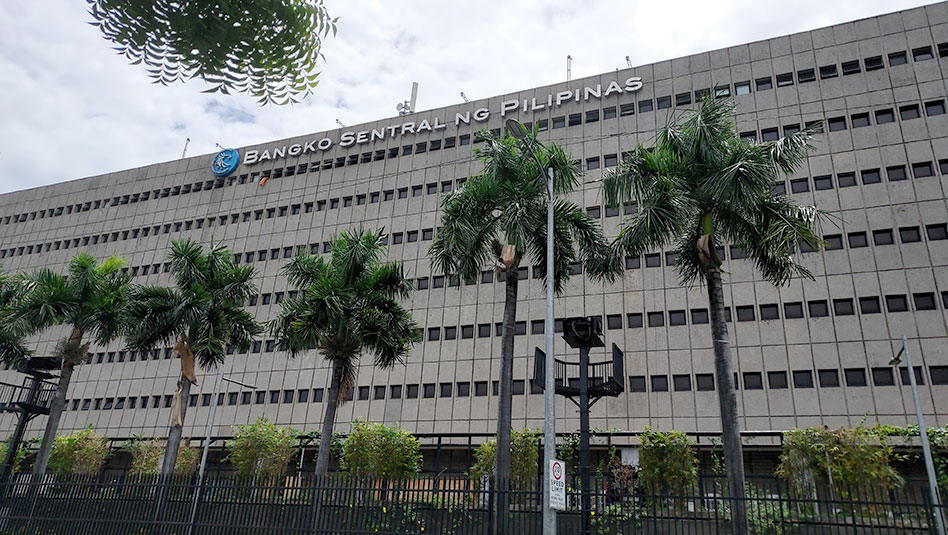
The Bangko Sentral ng Pilipinas (BSP) is now allowing trust entities to participate in the auctions of central bank securities, it said in a circular.

BSP securities in the primary and secondary markets are now available to all counterparties, namely universal and commercial banks, digital banks, thrift banks, quasi-banks and trust entities, according to a circular signed by BSP Governor Eli M. Remolona Jr. on Nov. 24.

The circular amends sections of the Manual of Regulations for Banks and the Manual of Regulations for Non-Bank Financial Institutions.

The amendments were made to allow “the participation of trust entities, which are trust departments of banks and stand-alone trust corporations, to access the primary market of the Bangko Sentral Issued Securities,” the central bank said.

“The issuance of Bangko Sentral Securities is a part of the monetary operations of the Bangko Sentral to manage short-term liquidity in the financial system and guide market interest rates,” it added.

Previously, trust firms were only allowed to participate in secondary market trading of BSP securities and could not join the auctions.

The BSP offers both bills and bonds, but only universal and commercial banks, thrift lenders, and nonbanks with quasi functions were initially allowed to participate in auctions of central bank securities.

A trust entity provides services involving a trustor-trustee relationship for the management of funds or properties to its clients.

BSP securities are considered high-quality liquid assets for the computation of liquidity coverage ratio, net stable funding ratio, and minimum liquidity ratio.

Based on BSP data, trust entities traded a total of PHP 1.8 trillion in BSP securities in the secondary market last year. Outstanding holdings of trust entities stood at PHp 135.5 billion in 2022. — K.B. Ta-asan

Stocks up on easing oil prices, window dressing

Stocks up on easing oil prices, window dressing

Local shares closed higher on Tuesday as investor sentiment was buoyed by easing global oil prices and window dressing before the end of the month.

The benchmark Philippine Stock Exchange index rose by 40.07 points or 0.63% to end at 6,309.57, while the broader all shares climbed by 10.48 points or 0.31% to close at 3,358.70.

“Philippine shares continued their upward momentum, making a challenge towards the 6,400 level, as investors gear up for the last month and prepare for some window dressing before November closes,” Regina Capital Development Corp. Head of Sales Luis A. Limlingan said in a Viber message. 

The local bourse ended in positive territory amid easing global oil prices, Philstocks Financial, Inc. Research Analyst Claire T. Alviar said in a Viber message.

“The local bourse gained by 40.07 points to 6,309.57 thanks to the easing of oil prices amid the temporary truce between Israel and Hamas, coupled with the potential cut in oil supply by OPEC+ (Organization of the Petroleum Exporting Countries and its allies),” Ms. Alviar said.   

“Easing oil prices could support the growth of the Philippines, especially in the last quarter of the year,” she added.

OPEC+, which includes OPEC countries and other countries such as Russia, is scheduled to have an online ministerial meeting on Thursday to discuss production targets for next year.

On Tuesday, US crude eased 0.13% to $74.76 per barrel and Brent was back below $80, with oil prices swaying between gains and losses ahead of OPEC+ meeting later this week, Reuters reported.

At home, as of Tuesday, year-to-date price adjustments stood at PHP 12.30 per liter for gasoline, PHP 6.00 per liter for diesel, and PHP 1.74 per liter for kerosene.

The majority of the sectoral indices closed higher on Tuesday. Property increased by 90.30 points or 3.35% to 2,780.18; holding firms went up by 31.34 points or 0.52% to 6,007.62; mining and oil climbed by 20.67 points or 0.21% to 9,680.97; and financials rose by 0.53 point or 0.03% to 1,746.25. 

Meanwhile, industrials declined by 118.13 points or 1.32% to 8,808.19, and services inched down by 0.21 point or 0.01% to 1,521.08. 

“The property sector surged the most, advancing by 3.36%, largely influenced by the 4.46% gain of SM Prime Holdings, Inc. and the 3.68% increase of Ayala Land, Inc., positioning them at the top among the index members. Meanwhile, Universal Robina Corp. was at the bottom, losing by 3.39%,” Ms. Alviar said.

Value turnover rose to PHP 5.34 billion on Tuesday with 382.74 million issues changing hands from the PHP 2.68 billion with 445.73 million issues recorded on Friday.

Decliners beat advancers, 106 to 79, while 39 names ended unchanged. 

Net foreign buying reached PHP 670.36 million on Tuesday versus the PHP 123.04 million in selling seen on Friday.

Philippine financial markets were closed on Monday due to a public holiday for Bonifacio Day. — R.M.D. Ochave with Reuters

PH launches Sukuk bond offering

PH launches Sukuk bond offering

The Bureau of the Treasury (BTr) on Monday launched its first-ever offering of Sukuk bonds as it mandated banks for the sale of “benchmark-sized” 5.5-year papers, a document showed.

The Sukuk bonds will be dollar-denominated and will be a “benchmark-sized” issue of at least $500 million with a tenor of 5.5 years.

The government named Citigroup, Inc., Deutsche Bank, Dubai Islamic Bank, HSBC, MUFG, and Standard Chartered Bank as joint bookrunners and joint lead managers. The banks were also mandated to arrange a series of fixed-income investor calls in Asia, Europe, Middle East and the United States starting Monday.

“This will potentially be the Republic’s maiden Sukuk issue after conducting a Philippine economic briefing in Dubai last September, with a target of diversifying the investor base towards Middle Eastern and Islamic countries,” the document read.

In July, Finance Secretary Benjamin E. Diokno said the government was eyeing to raise $1 billion from the sale of Sukuk bonds.

The BTr said the certificates will be issued by Republic of the Philippines (ROP) Sukuk Trust, a special purpose trust formed under Philippine law and administered by the Land Bank of the Philippines – Trust Banking Group.

“The certificates are expected to be rated ‘Baa2’ by Moody’s, ‘BBB+’ by S&P, and ‘BBB’ by Fitch,” it said.

Sukuk or Islamic bonds are certificates that represent a proportional undivided ownership right in tangible assets, or pool of tangible assets and other types of assets. These assets could be in a specific project or investment activity that is Shari’ah-compliant.

Unlike usual bonds, Sukuk bond issuances must adhere to Shari’ah principles and must be structured to prohibit elements like interest (riba), uncertainty (gharar), and investments in businesses that deal with prohibited goods or services (haram).

Sought for comment, Rizal Commercial Banking Corp. Chief Economist Michael L. Ricafort said the returns for the Sukuk bonds could match the rate for the benchmark US dollar-denominated bonds in the secondary market.

“Since this is new/debut issuance there could be some market excitement that would lead to higher bids/demand,” he said in a Viber message.

“Investor returns should be similar or better to be higher than comparable benchmark bonds and other alternative investments in the financial markets to attract more investor interest/demand,” he added.

A 2023 report from the Islamic Financial Services Board showed Sukuk dominated the Islamic capital market segment in 2022, accounting for 25.6% ($829.7 billion) of the $3.2-trillion global Islamic financial services industry last year.

This year, the Philippine government’s borrowing plan is set at P2.207 trillion, consisting of P1.654 trillion from domestic sources and P553.5 billion from foreign sources. — A.M.C. Sy

S&P hikes 2023 GDP outlook for Philippines

S&P hikes 2023 GDP outlook for Philippines

S&P Global Ratings raised its gross domestic product (GDP) growth forecast for the Philippines to 5.4% this year but lowered its projection for next year to 5.9%.

At the same time, it expects the Bangko Sentral ng Pilipinas (BSP) to deliver one more rate hike this year, before cutting borrowing costs by 75 basis points (bps) in 2024 and by 175 bps in 2025.   

In its economic outlook report for Asia-Pacific Q1 2024, the debt watcher revised upwards its GDP forecast for the Philippines to 5.4% from 5.2% it gave in September. Still, this is below the 6-7% government target.   

Meanwhile, S&P lowered its 2024 projection to 5.9% from 6.1% previously. The credit rater also sees Philippine GDP to hit 6.2% in 2025 and 6.4% in 2026.   

The forecasts from 2024 to 2026 are all below the government’s 6.5-8% growth target over the medium term.   

“Asia-Pacific economies outside of China remain resilient. Growth this year and in 2024 should be the strongest in emerging market economies with solid domestic demand: India, Indonesia, Malaysia, and the Philippines,” it said.

The Philippine economy grew by 5.9% in the third quarter, faster than the 4.3% growth in the second quarter. For the first nine months of the year, economic growth averaged 5.5%, still below the government’s 6-7% full-year target.   

According to S&P, the purchasing managers’ indices (PMIs) in the Asia-Pacific region showed manufacturing activity continued to expand in October.   

“In Southeast Asia, the manufacturing PMI mostly exceeded 50 in October, including in the Philippines, where it has jumped since September,” the credit rater said.   

The S&P Global Philippines Manufacturing PMI climbed to 52.4 in October from 50.6 in September. This was the second straight month of improvement in operating conditions and its fastest upturn in seven months.

A PMI reading above the 50 mark denotes improvement in operating conditions, while a reading below 50 signals deterioration.

Inflation has also continued to ease in the region despite recent spikes in energy and food prices, S&P Global Ratings said.    

“There are some food price risks on the horizon in Asia due to the prolonged El Niño event. However, the impact of recent increases in international prices of oil and food has so far generally remained modest,” it said.

In the report, S&P sees Philippine inflation averaging 5.9% this year, lower than the BSP’s 6% baseline forecast. Inflation is seen to ease to 3.4% in 2024, 3.2% in 2025, and 3% for 2026.   

It noted that lingering inflation risks may still keep central banks in the region occupied, including the BSP.   

The debt watcher said the BSP’s key interest rate may stand at 6.75% by end-2023, indicating that the Monetary Board may deliver one more 25-bp rate hike at its December meeting.    

S&P noted the BSP may slash rates by 75 bps to 6% in 2024, before cutting further by 175 bps to 4.25% in 2025. The central bank is also expected to trim rates by 25 bps to 4% by end-2026.   

“With core inflation continuing to ease, the region’s central banks are unlikely to have to tighten monetary policy again. Still, given the pressure from higher-for-longer US interest rates, we expect no meaningful falls in policy rates for the next six months,” S&P said.   

Earlier this month, the BSP kept the key policy rate steady at a 16-year high of 6.5%. Including its off-cycle move in October, the BSP has hiked borrowing costs by 450 basis points since May 2022. 

Meanwhile, the US Federal Reserve kept the target Fed fund rate unchanged at 5.25-5.5% at its meeting this month. The US central bank has raised 525 bps from March 2022 to June 2023.   

The Monetary Board will meet on Dec. 14 to discuss policy, its last meeting for the year. — Keisha B. Ta-asan

PSE chief says raising PHP200B at local stock market next year will depend on REIT listing

PSE chief says raising PHP200B at local stock market next year will depend on REIT listing

Capital raising at the Philippine Stock Exchange (PSE) may not reach PHP 200 billion next year, the bourse operator’s top official said.

“Hindi natin kaya ang PHP 200 billion (We cannot hit PHP 200 billion),” PSE President and Chief Executive Officer Ramon S. Monzon told reporters when asked about capital raising next year.

“It would depend if the planned SM Prime Holdings, Inc.’s real estate investment trust (REIT) will push through because that could be big,” he said on the sidelines of a forum in Makati City last week.

“I expect that to be about USD 1 billion. We hope that it happens. We’ll see,” he added. 

Sy-led SM Investments Corp. (SMIC) said in August that it had deferred the record USD 1-billion REIT initial public offering (IPO) of its real estate unit SM Prime after assessing market conditions such as interest rates, inflation, and foreign exchange rates.   

Meanwhile, Mr. Monzon said that capital raising this year is expected to reach up to PHP 110 billion. 

“We’ll end this year [with] about PHP 105 to PHP 110 billion,” he said.

The PSE recently disclosed that the total capital raised as of September this year was at PHP 91.88 billion. More than half or 58.4% of the capital came from follow-on offerings, followed by private placements at 21.9%, stock rights offerings at 15%, and IPOs at 4.7%.

However, Mr. Monzon’s year-end projection is far from the expected PHP 160 billion announced by the market operator in January.

The local stock market logged PHP 110.29 billion in capital raised from primary and secondary shares last year, down 53% from the PHP 234.48 billion raised in 2021.

Mr. Monzon previously said that the local bourse expects at least four IPOs next year from SM’s planned REIT and other companies engaged in sectors such as mining, industrial, and food. 

The PSE recorded a 19% jump in its nine-month net income to PHP 575.65 million from PHP 480.07 million last year led by a 210.7% climb in its investment income to PHP 128.76 million. — Revin Mikhael D. Ochave

Posts navigation

Older posts
Newer posts

Recent Posts

  • Metrobank US-Iran Risk Index: A new hope
  • A guide for your peso bond portfolio amid higher for longer rates
  • Investment Ideas: April 8, 2026
  • Inflation Update: The case to tighten
  • Investment Ideas: April 7, 2026

Recent Comments

No comments to show.

Archives

  • April 2026
  • March 2026
  • February 2026
  • January 2026
  • December 2025
  • November 2025
  • October 2025
  • September 2025
  • August 2025
  • July 2025
  • June 2025
  • May 2025
  • April 2025
  • March 2025
  • February 2025
  • January 2025
  • December 2024
  • November 2024
  • October 2024
  • September 2024
  • August 2024
  • July 2024
  • June 2024
  • May 2024
  • April 2024
  • March 2024
  • February 2024
  • January 2024
  • December 2023
  • November 2023
  • October 2023
  • September 2023
  • August 2023
  • July 2023
  • June 2023
  • May 2023
  • April 2023
  • March 2023
  • February 2023
  • January 2023
  • December 2022
  • November 2022
  • October 2022
  • September 2022
  • August 2022
  • July 2022
  • June 2022
  • May 2022
  • March 2022
  • December 2021
  • October 2021

Categories

  • Bonds
  • BusinessWorld
  • Currencies
  • Economy
  • Equities
  • Estate Planning
  • Explainer
  • Featured Insight
  • Fine Living
  • How To
  • Investment Tips
  • Markets
  • Portfolio Picks
  • Rates & Bonds
  • Retirement
  • Reuters
  • Spotlight
  • Stocks
  • Uncategorized

You are leaving Metrobank Wealth Insights

Please be aware that the external site policies may differ from our website Terms And Conditions and Privacy Policy. The next site will be opened in a new browser window or tab.

Cancel Proceed
Get in Touch

For inquiries, please call our Metrobank Contact Center at (02) 88-700-700 (domestic toll-free 1-800-1888-5775) or send an e-mail to customercare@metrobank.com.ph

Metrobank is regulated by the Bangko Sentral ng Pilipinas
Website: https://www.bsp.gov.ph

Quick Links
The Gist Webinars Wealth Manager Explainers
Markets
Currencies Rates & Bonds Equities Economy
Wealth
Investment Tips Fine Living Retirement
Portfolio Picks
Bonds Stocks
Others
Contact Us Privacy Notice Terms of Use
© 2026 Metrobank. All rights reserved.

Access this content:

If you are an existing investor, log in first to your Metrobank Wealth Manager account. ​

If you wish to start your wealth journey with us, click the “How To Sign Up” button. ​

Login HOW TO SIGN UP