



MODEL PORTFOLIO
THE GIST
NEWS AND FEATURES
Global Philippines Fine Living
INSIGHTS
INVESTMENT STRATEGY
Economy Stocks Bonds Currencies
THE BASICS
Investment Tips Explainers Retirement
WEBINARS
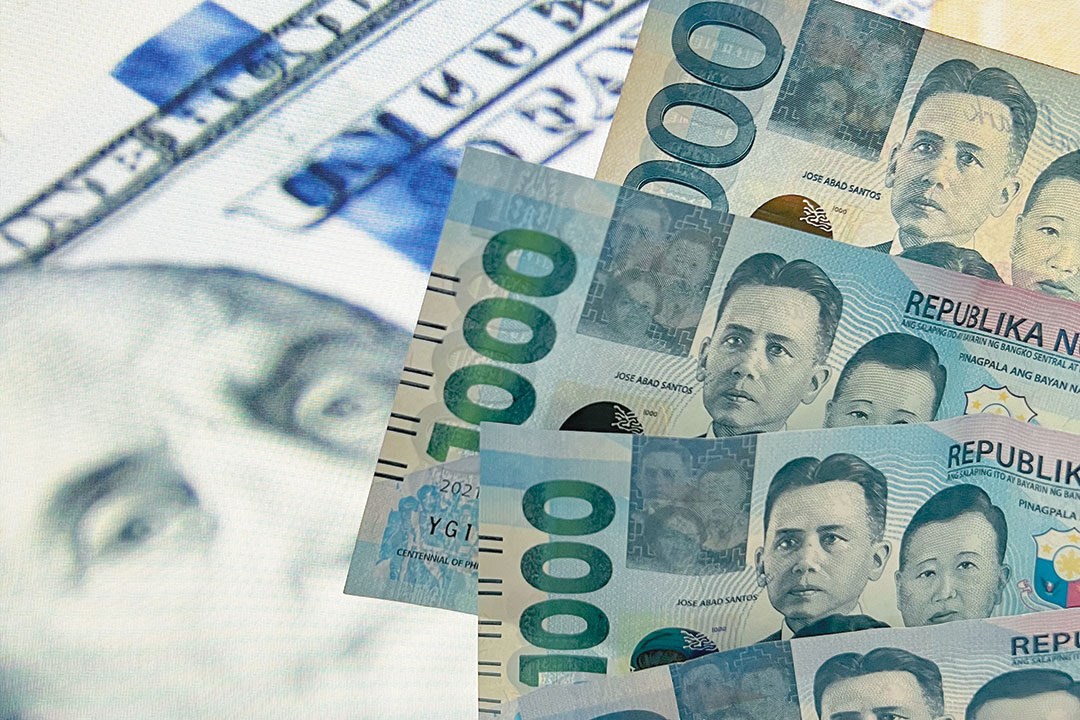
2024 Mid-Year Economi Briefing, economic growth in the Philippines
2024 Mid-Year Economic Briefing: Navigating the Easing Cycle
June 21, 2024
Investing with Love
Investing with Love: A Mother’s Guide to Putting Money to Work
May 15, 2024
retirement-ss-3
Investor Series: An Introduction to Estate Planning
September 1, 2023
View All Webinars
DOWNLOADS
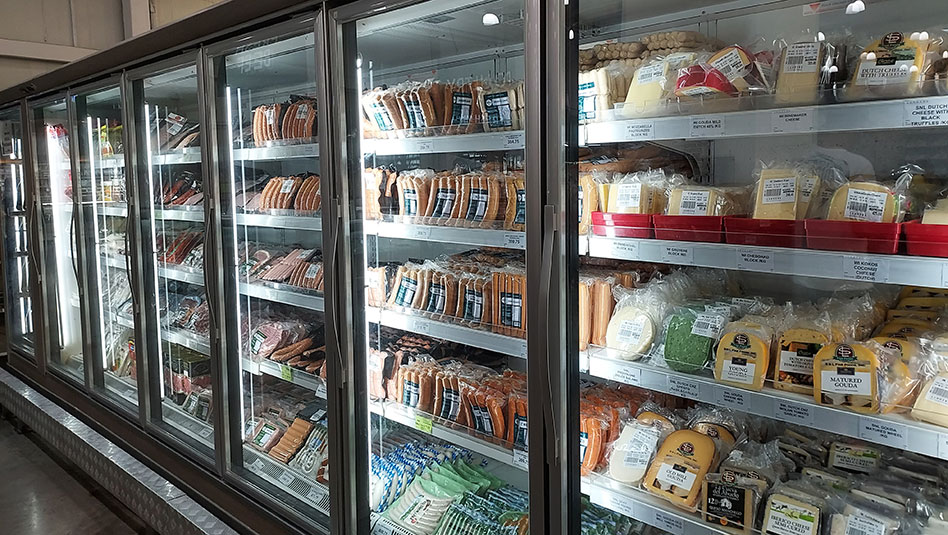
grocery-2-aa
Inflation Update: Target breached
DOWNLOAD
Container ship carrying container boxes import export dock with quay crane. Business commercial trade global cargo freight shipping logistic and transportation worldwide oversea concept. Generative AI
Economic Updates
Philippines Trade Update: Wider deficit on strong imports
DOWNLOAD
Frick collection with palm trees 
Economic Updates
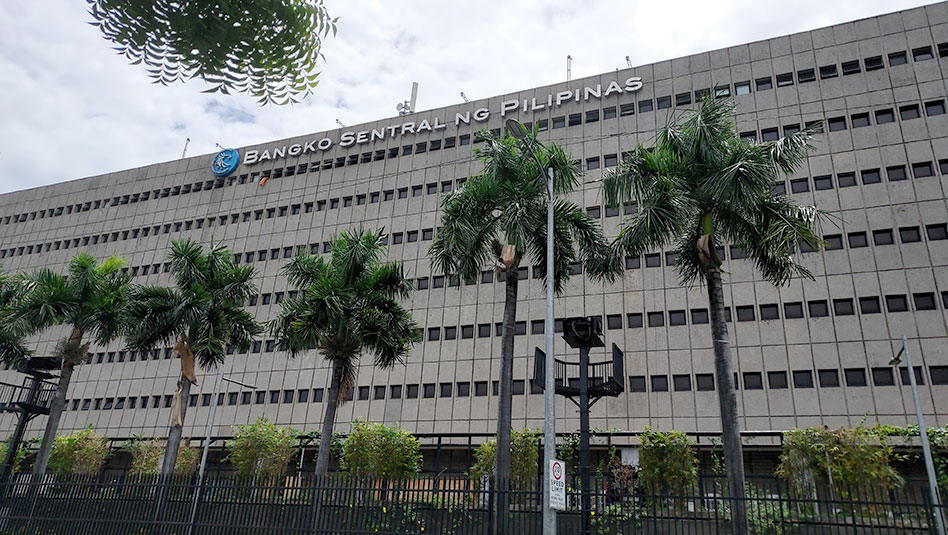
Policy Rate Updates: Policy rate updates to reassure 
DOWNLOAD
View all Reports
Metrobank.com.ph How To Sign Up
Follow us on our platforms.

How may we help you?

TOP SEARCHES
  • Where to put my investments
  • Reports about the pandemic and economy
  • Metrobank
  • Webinars
  • Economy
TRENDING ARTICLES
  • Investing for Beginners: Following your PATH
  • On government debt thresholds: How much is too much?
  • Philippines Stock Market Outlook for 2022
  • Deficit spending remains unabated

Login

Access Exclusive Content
Login to Wealth Manager
Visit us at metrobank.com.ph How To Sign Up
Access Exclusive Content Login to Wealth Manager
Search
MODEL PORTFOLIO THE GIST
NEWS AND FEATURES
Global Philippines Fine Living
INSIGHTS
INVESTMENT STRATEGY
Economy Stocks Bonds Currencies
THE BASICS
Investment Tips Explainers Retirement
WEBINARS
2024 Mid-Year Economi Briefing, economic growth in the Philippines
2024 Mid-Year Economic Briefing: Navigating the Easing Cycle
June 21, 2024
Investing with Love
Investing with Love: A Mother’s Guide to Putting Money to Work
May 15, 2024
retirement-ss-3
Investor Series: An Introduction to Estate Planning
September 1, 2023
View All Webinars
DOWNLOADS
grocery-2-aa
Inflation Update: Target breached
April 7, 2026 DOWNLOAD
Container ship carrying container boxes import export dock with quay crane. Business commercial trade global cargo freight shipping logistic and transportation worldwide oversea concept. Generative AI
Economic Updates
Philippines Trade Update: Wider deficit on strong imports
March 27, 2026 DOWNLOAD
Frick collection with palm trees 
Economic Updates
Policy Rate Updates: Policy rate updates to reassure 
March 26, 2026 DOWNLOAD
View all Reports

Archives: Business World Article

PH raises USD1B from Sukuk bonds

PH raises USD1B from Sukuk bonds

The Bureau of the Treasury has raised USD 1 billion from the sale of 5.5-year Sukuk bonds, it said on Thursday, citing high demand.

The amount was twice the benchmark size of at least USD 500 million and matched the target mentioned by Finance Secretary Benjamin E. Diokno in July.

“The transaction is expected to be settled on Dec. 6,” the Treasury bureau said in a statement.

“The pricing of the Sukuk bonds turned out to be cheaper compared with US Treasury yields,” Michael L. Ricafort, chief economist at Rizal Commercial Banking Corp., said in a Viber message. “This could be favorable to investors because they would have access to relatively higher returns amid easing rates.”

The issuance also benefits the government due to the lower rates, he said.

The notes will have a so-called Ijara and Wakala structure with a Commodity Murabaha aspect, it said.

Under the Sukuk al-Ijara, the security will represent a contract that signifies ownership of assets. This means the debt may be traded on the market and is subject to risks related to the ability of a lessee to pay their dues, as well as to market risks related to pricing.

A Sukuk al-Murabaha is the sale of goods at a price that includes the base purchase price plus a margin of profit for the seller.

Murabaha, also referred to as cost-plus financing, is an Islamic financing structure where the seller and buyer agree to the cost and markup of an asset.

The markup takes the place of interest, which is illegal in Islamic law. Murabaha is not an interest-bearing loan but is an acceptable form of credit sale under Islamic law. A Sukuk al-Murabaha certificate cannot be traded on the secondary market.

The Sukuk bonds issued by the BTr were met with high demand as bids reached nearly five times the offer, the Treasury said. It set the profit at 5.045%.

“The success of our inaugural Sukuk issuance affirms the republic’s significant standing in the international capital markets and underscores investors’ conviction in our financial inclusion agenda,” Mr. Diokno said in a statement.

“We hope this transaction will create positive momentum for Islamic banking and finance in the Philippines, and we look forward to the active participation of all stakeholders,” he added.

After the Treasury launched the Sukuk offering, Fitch Ratings, Moody’s Investors Service and S&P Global Ratings rated the bonds “BBB,” “Baa2,” and “BBB+,” matching their ratings for Philippine sovereign debt.

The net proceeds from the Sukuk bonds will complete the government’s external funding target that will be used for general purposes, including budgetary support.

Sukuk or Islamic bonds are certificates that represent a proportional undivided ownership right in tangible assets, or a pool of tangible assets. These assets could be in a specific project or investment activity that is Sha-ri’ah-compliant.

Unlike usual bonds, Sukuk bond issuances must adhere to Islamic principles and must be structured to prohibit elements such interest, uncertainty and investments in businesses that deal with prohibited goods or services.

A 2023 report from the Islamic Financial Services Board showed Sukuk dominated the Islamic capital market segment in 2022, accounting for 25.6% (USD 829.7 billion) of the USD 3.2-trillion global Islamic financial service industry last year.

This year, the Philippine government’s borrowing plan was set at P2.207 trillion, consisting of PHP 1.654 trillion from domestic sources and P553.5 billion from foreign sources. — Aaron Michael C. Sy

Philippines drops three places in global digital competitiveness index

Philippines drops three places in global digital competitiveness index

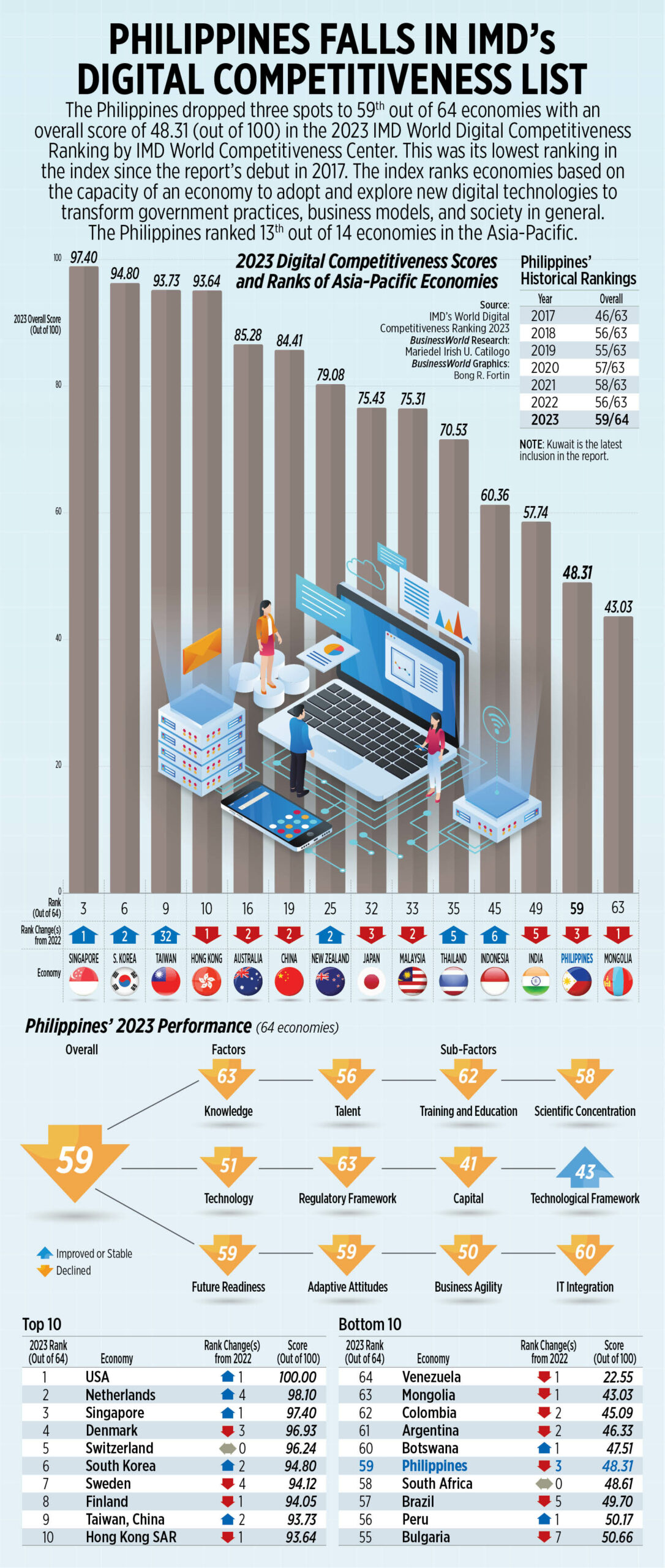
The Philippines dropped three spots in the global digital competitiveness index of the World Competitiveness Center of Swiss-based International Institute for Management Development (IMD), finishing at the bottom of its South-east Asian peers.

The country fell to 59th out of 64 economies, scoring 48.31 in IMD’s 2023 World Digital Competitiveness Ranking.

This was the Philippines’ lowest ranking since the index started in 2017. It was also among the lowest scorers at 13th place in the Asia-Pacific region, just ahead of Mongolia.

Singapore ranked the highest in the region with 97.4 points, followed by South Korea (94.8) and Taiwan (93.73). The three ranked third, sixth and ninth globally.

The index measures a country’s capacity to adopt and explore new digital technologies to transform government practices, business models and society in general.

It measures a country’s capacity in three key factors: knowledge or the quality of human capital, excellence of technological infrastructure and future readiness.

The Philippines ranked 63rd in the knowledge factor, 59th in future readiness and 51st in technology.

“In terms of technology, other countries are simply moving much faster than we are, thus we continue to slip in the ranks,” Jamil Paolo Francisco, executive director of the Asian Institute of Management Rizalino S. Navarro Poli-cy Center for Competitiveness, said in an e-mail.

“We need to cultivate a regulatory environment that supports innovation and adoption of new digital technologies, including artificial intelligence (AI) to serve the needs of our industries and workers,” he said. “We can also use these new technologies to improve the efficiency of government services and promote transparency.”

The country continued to lag its peers because of its “rigidity in adopting digital technologies,” Jose Caballero, senior economist at the IMD World Competitiveness Center, said in an e-mailed reply to questions.

“Looking at the three levels of readiness — adaptive attitudes, IT integration and business agility — the Philippines’ performance is deficient, which leads to a limited adoption of digital technologies,” he said.

He added that the drop in the country’s ranking was spurred by declines in all digital factors particularly in training and education, regulatory framework and IT integration.

The country’s sluggish performance in indicators related to institutional efficiency, such as the impact of its immigration laws (from 31st to 38th) and the institutional support for the development and application of technology (from 46th to 53rd) were concerns, Mr. Caballero said.

To improve its adaptability, the Philippines should focus on the development of its knowledge infrastructure.

“This is assessed through talent availability, training and education, and scientific concentration,” he said. “Strengthening aspects of talent development and education could enable greater overall digital adaptability.”

In its report, IMD said among the major weaknesses of the Philippines is the number of Filipino women with degrees, its regulatory framework for starting a business and enforcement of contracts.

Its strengths include its female researchers, investment in telecommunications, high-tech exports and attitude toward globalization and public-private partnerships.

Cybersecurity focus

Arturo Bris, director of IMD’s World Competitiveness Center, said the findings of this year’s World Digital Competitiveness Ranking provided a glimpse of how countries are approaching digital transformation in the age of artificial intelligence.

“While we measure no specific AI indicators, the technology sits silently at the core of several of the subfactors that we quantify — talent, regulatory and technological frameworks and adaptive attitudes and business agility,” he said in a separate statement.

There was an increased focus on cybersecurity, with only 5% of 4,000 executives saying that they had not implemented new cybersecurity measures in the past year.

“Cybersecurity becomes a clear example of the need to assess AI’s trade-offs and to take a very deliberate approach towards using it optimally,” Mr. Bris said. “Countries cannot do this in isolation but need to lean on regional if not global institutions to do so.”

Ronald Gustilo, national campaigner at Digital Pinoys, cited the need to improve the government’s response rate against cybercrimes.

“As many Filipinos fall victim to online scams and other cybercrimes, the government’s response rate and the implementation of programs that will equip the public against these schemes fall short,” he said in a Viber message.

Mr. Gustilo said the country’s dismal performance in the index could be attributed to Filipinos’ low level of understanding of the internet.

“The government should implement programs that will enrich the public’s knowledge of the internet. There is a compelling need to institutionalize digital literacy in basic and secondary education,” he added.

The Philippines was 62nd in training and education, which is under knowledge and measures a country’s employee training, education spending, higher education achievements and pupil-teacher ratio in tertiary education.

The three-notch drop in the country’s ranking might be partly attributed to rising prices, increased the cost of living and production costs, said Michael L. Ricafort, chief economist at Rizal Commercial Banking Corp.

“Due to higher interest rates since last year, the increased financing and borrowing costs weighed on investments and the creation of new jobs,” he said in a Viber message.

He said the government should address the concerns of foreign investors to boost foreign direct investments (FDI). These include high electricity prices, the sanctity of contracts and effective dispute resolution mechanisms, ease of doing business, infrastructure and institutions.

“FDIs facilitate the transfer of new and improved technology to the country, on top of creating more jobs and other business and economic opportunities,” he said. — By Justine Irish D. Tabile, Reporter

Peso weakens vs dollar

Peso weakens vs dollar

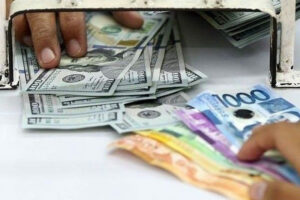
The peso dropped versus the dollar on Thursday due to mixed signals from US Federal Reserve officials.

The local unit closed at PHP 55.485 per dollar on Thursday, down by 9.5 centavos from its PHP 55.39 finish on Wednesday, based on Bankers Association of the Philippines data.

The peso opened Thursday’s session weaker at PHP 55.45 against the dollar. Its intraday best was at PHP 55.37, while its worst showing was at PHP 55.51 versus the greenback.

Dollars exchanged went up to USD 1.27 billion on Thursday from $1.1 billion on Wednesday.

The peso weakened on Thursday due to mixed signals from Fed officials, Rizal Commercial Banking Corp. Chief Economist Michael L. Ricafort said in a Viber message.

While US central bank officials on Wednesday sent mixed messages, investors still focused on comments made on Tuesday by Fed Governor Christopher Waller, an influential and previously hawkish voice at the bank. Mr. Waller had said rate cuts could begin in months if inflation keeps easing, Reuters reported.

Fed Chair Jerome H. Powell is also due to speak on Friday and expected to offer crucial insights into the Fed’s policy approach ahead of their December meeting.

The peso was dragged down by a stronger dollar and rising global crude oil prices, Mr. Ricafort added.

“The peso weakened after the significant upward revision in the third-quarter US GDP (gross domestic product) growth from 4.9% to 5.2%,” a trader said via text.

For Friday, the trader said the peso could appreciate against the dollar ahead of a likely softer US producer inflation report.

The trader expects the peso to move between PHP 55.35 and P55.60 per dollar, while Mr. Ricafort sees it ranging from PHP 55.35 to PHP 55.55. — AMCS with Reuters

PH stocks drop further amid MSCI rebalancing

PH stocks drop further amid MSCI rebalancing

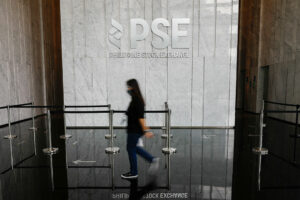
Philippine stocks closed the month lower due to continued profit taking and window dressing, and amid the last day of the Morgan Stanley Capital International (MSCI) rebalancing.

The Philippine Stock Exchange index (PSEi) retreated by 41.41 points or 0.66% to close at 6,223.73 on Thursday, while the broader all shares index fell by 11.85 points or 0.35% to finish at 3,327.83.

“The local market gapped down at the open and saw continuing weakness for the day given continued profit-taking activities amidst the last day of MSCI rebalancing and possible month-end window dressing,” China Bank Securities Corp. Research Associate Lance U. Soledad said in an e-mail.

“Moreover, buying appetite may have also remained tepid ahead of the release of October US personal consumption expenditure price index data later tonight,” he added.

The PSEi ended lower on Thursday as investors tweaked their portfolios amid the MSCI rebalancing, Regina Capital Development Corp. Head of Sales Luis A. Limlingan likewise said in a Viber message.

“Oil prices ascended after investors shifted their focus to the OPEC+ meeting aimed at determining output policy,” Mr. Limlingan added. OPEC+ or the Organization of the Petroleum Exporting Countries and their allies including Russia were set to hold an online ministerial meeting overnight.

Oil prices traded steadily after rising more than $1 on Wednesday ahead of expected production cuts by the OPEC+ group, Reuters reported.

US crude pared losses to gain 0.23% to USD 78.04 per barrel and Brent was down 0.18% at USD 82.95.

“This Thursday, the local market dropped… as investors continued with their profit taking. Concerns over China’s economy, which is one of the Philippines’ major trading partners, also weighed on sentiment. This came following its November official manufacturing PMI (purchasing managers’ index) data, which stood at 49.4, indicating a contraction, and its non-manufacturing PMI which registered 50.2, declining from the prior month’s 50.6,” Philstocks Financial, Inc. Research and Engagement Officer Mikhail Philippe Q. Plopenio said in a Viber message.

The majority of sectoral indices closed lower on Thursday. Holding firms declined by 95.49 points or 1.59% to 5,910.80; industrials dropped by 75.73 points or 0.86% to 8,688.02; mining and oil fell by 73.56 points or 0.75% to 9,667.60; and services went down by 9.68 points or 0.63% to 1,515.44.

On the other hand, property climbed by 28.98 points or 1.07% to 2,723.03 and financials rose by 0.22 point or 0.01% to 1,742.53.

Value turnover rose to PHP 7.9 billion on Thursday with 396.25 million shares changing hands from the PHP 5.75 billion with 449.96 million issues traded the previous day.

Decliners outnumbered advancers, 89 compared to 79, while 49 names ended unchanged.

Net foreign selling stood at PHP 320.3 million on Thursday, versus the PHP 202.33 million in net buying seen on Wednesday. — R.M.D. Ochave with Reuters

S&P affirms PHL’s ‘BBB+’ rating

S&P affirms PHL’s ‘BBB+’ rating

S&P Global Ratings affirmed the Philippines’ investment grade rating on Wednesday, citing the economy’s “above-average” growth potential.

“The ratings on the Philippines reflect the country’s above-average economic growth potential, which should drive constructive development outcomes and underpin broader credit metrics,” it said in a statement.

The rating company also kept its “stable” outlook for the economy. “The ‘stable’ outlook reflects our expectation that the Philippine economy will maintain healthy growth rates and the fiscal performance will materially improve over the next 24 months.”

National Government fiscal performanceFinance Secretary Benjamin E. Diokno said the government of President Ferdinand R. Marcos, Jr. would pursue fiscal consolidation and introduce policies to strengthen the country’s economic position. 

“In a sea of downgrades, the international rating agencies continue to affirm their confidence in the Philippine economy’s macroeconomic fundamentals,” he said in a statement. “We continue to pursue the Road to A.”

The “BBB+” sovereign rating is a notch below the “A”-level grade targeted by the government, while a “stable” outlook means the rating is likely to be kept in the next six months to two years.

The debt watcher also kept its A-2 short-term credit rating for the Philippines. It last affirmed its credit rating for the country in November 2022 with the same “stable” outlook.

S&P said economic recovery in the Philippines remained robust after the pandemic, but near-term global risks persist.

The Philippine economy is expected to grow by 5.4% in 2023, slower than 7.6% in 2022 and the 6-7% target this year. The rating company said the slowdown “mainly reflects the impact of external macroeconomic developments and a high base.”

The Philippine economy grew by 5.9% in the third quarter, faster than 4.3% in the second quarter. For the nine months to September, economic output averaged 5.5%, still below the government’s 6-7% goal.

Elevated inflation will likely constrain private consumption, S&P said.

Headline inflation dropped to a three-month low of 4.9% in October from 6.1% in September. This brought the year-to-date average to 6.4%, still above the central bank’s 6% forecast.

October marked the 19th straight month that inflation breached the central bank’s 2-4% target.

A global economic slowdown, including in the country’s biggest trading partners such as China and the US, will also drag Philippine growth.

Fiscal gap
“Nonetheless, economic growth in the Philippines should be well above the average for peers at a similar level of development, on a 10-year weighted average per capita basis,” S&P said, adding that the country has a strong record of high and stable growth. 

Philippine gross domestic product (GDP) per capita could rise to $3,903 this year and $4,273 next year. Real GDP per capita growth could average about 4.4% each year over 2023-2026, it said.

“Solid household and corporate balance sheets and sizable remittance inflows underpin the Philippine economy’s positive medium-term trajectory,” S&P said. “Ongoing efforts to address infrastructure gaps, and improvements in the business climate through regulatory and tax reforms should also support growth in economic productivity.”

The country’s fiscal deficit may also narrow to 3.8% of GDP this year from 4.4% last year.

“We believe the normalization of economic growth in the Philippines after a strong recovery over the past two years will help to lower the general government deficit to 3.8% of GDP in 2023, from 4.4% the year before,” it said.

But restoring the fiscal and debt settings to pre-pandemic levels could be challenging over the next 12 to 24 months due to elevated inflation, tight monetary policies in developed countries and supply-chain disruptions.

The credit rater forecasts the general state deficit to average at 2.7% of GDP in the next three years, and the net general state debt to gradually come down to about 41% by 2026 as fiscal consolidation takes hold.

The government of Mr. Marcos seeks to reduce the National Government deficit-to-GDP ratio to 3% by 2028 under its medium-term fiscal framework.

Meanwhile, S&P scored the Philippines banking industry a 5, with 1 being the highest country risk assessment and 10 the lowest.

“The banking sector benefits from stable macroeconomic and employment conditions. In our opinion, the sector’s asset quality will stay broadly stable over the next two years,” it said.

But a moderate increase in nonperforming loans is likely amid higher interest rates and inflation.

The Bangko Sentral ng Pilipinas (BSP) left its key interest rate at a 16-year high of 6.5% on Nov. 16. The Monetary Board raised borrowing costs by 450 basis points from May 2022 to October 2023 to tame inflation. 

“With inflation showing signs of gradually declining in recent months, interest rate hikes may slow down or pause,” S&P said.

“We regard the BSP’s ability to support sustainable growth while attenuating economic or financial shocks to be broadly neutral to our rating,” it said. “This reflects the central bank’s sound record in keeping inflation low and its history of independence.”

The Philippines falls short of the “A” rating from three major debt watchers, with a “Baa2” from Moody’s Investors Service, “BBB+” from S&P and “BBB” from Fitch Ratings.

All three have assigned a “stable” outlook for the Philippines. — By Keisha B. Ta-asan, Reporter

Philippine October budget gap shrinks

Philippine October budget gap shrinks

The Philippine government’s budget deficit shrank in October as revenue growth outpaced spending, the Bureau of the Treasury (BTr) said, easing the pressure to borrow to pay for its debt.

The fiscal gap narrowed by 65.27% to PHP 34.4 billion from PHP 99.1 billion a year ago, the Treasury said in its cash operations report.

“This was underscored by a notable 33.56% rise in revenue collections outpacing government expenditure growth of 8.32%,” it said. Government revenues rose to PHP 385.8 billion from PHP 288.9 billion a year earlier.

Tax revenues rose by more than a third to PHP 354.7 billion, driven by a 46.94% surge in Bureau of Internal Revenue (BIR) collections to PHP 274.4 billion and a 3.83% increase in Bureau of Customs (BoC) revenue to PHP 77.9 billion.

The Treasury bureau attributed the BIR’s revenue growth to the remittance of third-quarter value-added tax returns, which became due on Oct. 25.

“The jump in revenues more than offset the increase in expenditures,” China Banking Corp. Chief Economist Domini S. Velasquez said in a Viber message. “We have seen this trend in the previous months, and we will likely end the year not breaching the government’s deficit target.”

Nontax revenues went up by more than a fifth to PHP 31.1 billion, as Treasury income climbed by more than a quarter to PHP 16.8 billion.

“The favorable outcome for the period was primarily bolstered by the increased earnings on National Government (NG) deposits, BTr’s managed funds and the NG’s share from the Philippine Amusement and Gaming Corp. (PAGCOR) income,” the Treasury said.

Revenue from other offices, privatization proceeds and fees and charges rose by 17.25% to PHP 14.3 billion.

Meanwhile, state spending went up by 8.32% to PHP 420.2 billion from a year earlier.

Spending by the Public Works, Defense and Transportation departments boosted overall expenditures, the Treasury bureau said.

It also said larger interest payments, as well as maintenance and other operating expenses, particularly spending on village and youth council elections contributed to overall expenditures.

“However, the growth of disbursements was weighed down by the lower national tax allotment shares of local government units and the timing of subsidy releases to government corporations,” it added.

Spending net of interest payments inched up by 1.83% to PHP 361.2 billion, while interest payments ballooned by 77.74% to PHP 59 billion.

In the 10 months to October, the budget gap narrowed by 8.45% to PHP 1.018 trillion from a year earlier. This was equivalent to 67.88% of the full-year PHP 1.499-trillion deficit program.

Revenues increased by 9.41% to PHP 3.224 trillion, which was already 86% of the target for the year.

Tax revenues, which accounted for 89.84% of total collection, went up by 9.18% to PHP 2.896 trillion.

BIR revenue rose by 11.11% to 2.133 trillion, while Customs collections were 3.47% higher at PHP 738.3 billion.

Meanwhile, nontax revenues rose by 11.5% to PHP 327.6 billion as BTr income jumped by 22.31% to PHP 174.8 billion.

“The BTr’s year-to-date income already exceeded the PHP 58.3 billion full-year program by almost threefold. The higher year-to-date collection was driven mainly by dividend remittances, interest income from BTr’s managed funds, NG share from PAGCOR and Manila International Airport Authority profit, as well as government service income,” it added.

Revenues from other offices inched higher by 1.25% to PHP 152.8 billion.

Economic reopening also led to more business activities that helped boost tax collections, Michael L. Ricafort, chief economist at Rizal Commercial Banking Corp., said in a Viber message.

Meanwhile, government expenditures rose by 4.52% to PHP 4.242 trillion in the 10 months to October from year ago. The amount was already 81.12% of this year’s spending plan.

Spending net of interest payments went up by 2.69% to PHP 3.722 trillion, while interest payments climbed by 19.84% to PHP 519.1 billion.

Ms. Velasquez said there is still a need to reform the tax system amid low revenue and tax effort ratios.

“New taxes and higher tax rates, as well as intensified tax collections under existing tax laws would further improve fiscal performance in terms of narrower budget deficits, reduced borrowings and slower increment in overall debt,” Mr. Ricafort said.

The National Government’s revenue effort declined to 16.47% at the end of the third quarter from 17.06% a year ago, while the tax effort dropped to 14.57% from 15.34%.

The revenue and tax efforts refer to the share of revenue and tax collections, respectively, in the gross domestic product (GDP).

The government’s deficit-to-GDP ratio was at 5.71% at the end of September. This year, the government has set a budget deficit ceiling of PHP 1.499 trillion, equivalent to 6.1% of GDP. — By Luisa Maria Jacinta C. Jocson, Reporter

Bangko Sentral likely to cut benchmark rates by Q2

Bangko Sentral likely to cut benchmark rates by Q2

The Bangko Sentral ng Pilipinas (BSP) may start cutting interest rates as early as the second quarter of next year amid easing inflation, according to an economist.

“There’s some chance that the BSP might start cutting rates by the second quarter,” University of Asia and the Pacific (UA&P) economist Victor A. Abola told an online forum hosted by UA&P and the Business Economics Club on Wednesday.

Inflation might continue to go down within the 2-4% target of the Philippine central bank in the first quarter, he added.

The BSP kept borrowing costs steady on Nov. 16 amid easing inflationary pressures. This was after the Monetary Board hiked the key rate by 25 basis points (bps) in an off-cycle move three weeks earlier, bringing it to a 16-year high of 6.5%.

The central bank on Nov. 16 said policy settings must be kept sufficiently tight until a sustained downtrend in inflation becomes more evident and inflation expectations are anchored.

“The BSP made a mistake in raising it in the first place because that was before the (October) inflation data were released, where we saw a big downward shift in inflation,” Mr. Abola said.

Headline inflation fell to 4.9% in October from 6.1% in September. It marked the 19th straight month that inflation breached the BSP’s 2-4% target. For the 10-month period, inflation averaged 6.4%.

BSP Governor Eli M. Remolona, Jr. earlier said the Philippines is not “out of the woods” yet despite the slowdown in October inflation.

He said inflation might only return to 2-4% briefly in the first quarter before picking up to above target again in April to July.

Mr. Abola said inflation might average 6.2% this year before easing to 4.2% in 2024. Both projections are still above the 2-4% target and higher than the BSP’s inflation forecast of 6% in 2023 and 3.7% in 2024.

The policy outlook would largely depend on inflation numbers next year, Michael L. Ricafort, chief economist at Rizal Commercial Banking Corp. said in a Viber message.

“If oil prices continue the declining trend especially if the Israel-Hamas war does not spread in the Middle East, and if local weather conditions are relatively better with no major storms and damage from El Niño, the BSP could start cutting policy rates in 2024,” he said.

But worsening war in the Middle East could result in higher oil prices, while damage from typhoons and the El Niño phenomenon could lead to higher food prices.

If inflation worsened next year, a “more hawkish/restrictive monetary policy could be needed to better anchor inflation and inflation expectations toward the BSP’s target of 2-4%,” Mr. Ricafort said. 

The central bank’s policy decisions next year would also depend on the exchange rate and future moves of the US Federal Reserve, Luis A. Limlingan, head of research at Regina Capital Development Corp., said in a  Viber message.

“We think that the BSP would possibly start cutting rates in 2024 so long as inflation falls within the acceptable range of 2-4% preferably, closer to 2%,” he added. 

Mr. Remolona earlier said the Monetary Board was not considering any rate cuts this year and policy decisions would remain data-dependent.

The Monetary Board is set to hold its last rate-setting meeting of the year on Dec. 14. — Keisha B. Ta-asan

Term deposit yields mixed amid hawkish signals from BSP chief

Term deposit yields mixed amid hawkish signals from BSP chief

Yields on the central bank’s term deposits ended mixed on Wednesday amid hawkish signals from the Bangko Sentral ng Pilipinas (BSP) chief as they want to keep rates higher for longer to keep inflation expectations anchored. 

The BSP’s term deposit facility (TDF) fetched bids amounting to PHP 295.971 billion on Wednesday, below the PHP 300 billion on the auction block as well as the PHP 333.647 billion in tenders for a PHP 330-billion offer seen a week ago.

Broken down, tenders for the seven-day papers reached PHP 164.686 billion, lower than the PHP 180 billion auctioned off by the central bank and the PHP 194.346 billion in bids for a PHP 200-billion offering seen the previous week.

Banks asked for yields ranging from 6.62% to 6.75%, a slightly narrower margin than the 6.6% to 6.75% band seen a week ago. This caused the average rate of the one-week deposits to increase by 0.89 basis point (bp) to 6.6875% from 6.6786% previously.

Meanwhile, bids for the 14-day term deposits amounted to PHP 131.285 billion, higher than the PHP 120-billion offering but below the PHP 139.301 billion in tenders seen on Nov. 22 for the PHP 130 billion on the auction block.

Accepted rates for the tenor were from 6.6% to 6.735%, slimmer than the 6.6% to 6.768% margin seen a week ago. With this, the average rate for the two-week deposits slipped by 0.1 bp to 6.6886% from 6.6896% logged in the prior auction.

The BSP has not auctioned off 28-day term deposits for three years to give way to its weekly offerings of securities with the same tenor.

The term deposits and the 28-day bills are used by the BSP to mop up excess liquidity in the financial system and to better guide market rates.

TDF yields ended mixed on Wednesday amid hawkish signals from the BSP, Rizal Commercial Banking Corp. Chief Economist Michael L. Ricafort said in a Viber message.

BSP Governor Eli M. Remolona, Jr. on Friday said their policy stance will remain “hawkish for a while,” noting the Monetary Board could still resume tightening to keep inflation expectations anchored.

At its Nov. 16 meeting, the BSP kept its policy rate at a 16-year high of 6.5% amid easing inflation following an off-cycle hike of 25 bps last month.

The Monetary Board has raised borrowing costs by 450 bps since it began its tightening cycle in May 2022.

It will hold its last policy review for this year on Dec. 14.

Headline inflation dropped to a three-month low of 4.9% in October from 6.1% in September. This brought the 10-month average to 6.4%, still above the BSP’s 6% forecast and 2-4% target for the year.

Mr. Ricafort said a stronger peso exchange rate against the dollar and low global crude oil prices would help ease inflationary pressures, which could prompt the BSP to pause at next month’s meeting.

“Another positive factor is that the markets priced in Fed rate cuts by about 100 basis points in 2024 that could be matched locally,” he added. 

The US Federal Reserve kept its target rate unchanged at 5.25-5.5% at its Oct. 31-Nov. 1 meeting.

The US central bank has raised 525 bps from March 2022 to June 2023. — K.B. Ta-asan

Gov’t fully awards bonds

Gov’t fully awards bonds

The government made a full award of the reissued Treasury bonds (T-bonds) it auctioned off on Wednesday with lower rates amid expectations that borrowing costs here and in the United States will remain steady for the rest of the year.

The Bureau of the Treasury (BTr) raised PHP 20 billion as planned via the reissued seven-year bonds it offered on Wednesday as total bids reached PHP 60.266 billion, or more than thrice the amount on the auction block.

The bonds, which have a remaining life of five years and 10 months, were awarded at an average rate of 6.099%, with accepted yields ranging from 6.045% to 6.120%.

The average rate of the reissued bonds dropped by 36.9 basis points (bps) from 6.468% quoted for the papers when they were last awarded on Aug. 8. This was also 90.1 bps below the 7% coupon for the series.

The average yield was likewise 12 bps lower than the 6.219% quoted for the six-year bond and 6.5 bps below the 6.164% seen for same bond series traded at the secondary market before Wednesday’s auction, based on PHP Bloomberg Valuation Service Reference Rates data provided by the Treasury.

“The lower awarded rates today reflected both easing inflationary concerns and waning prospects of a December policy rate hike from both the Federal Reserve and the Bangko Sentral ng Pilipinas (BSP),” a trader said in an e-mail on Wednesday.

The BSP on Nov. 16 kept its policy rate at a 16-year high of 6.5% after inflation eased in October. The pause came after the central bank raised rates by 25 bps in an off-cycle move on Oct. 26.

The Monetary Board has hiked borrowing costs by 450 bps since May 2022 to temper inflation.

It will hold its last meeting for the year on Dec. 14.

Meanwhile, the Fed kept its target rate steady at the 5.25%-5.5% range for a second straight time during its Oct. 31-Nov. 1 meeting.

It has hiked rates by a cumulative 525 bps since it began its tightening cycle in March 2022.

The Federal Open Market Committee will next meet on Dec. 12-13 to review policy.

T-bond yields declined amid lower global crude oil prices recently, Rizal Commercial Banking Corp. Chief Economist Michael L. Ricafort said in a Viber message.

Brent crude futures steadied at $81.63 a barrel ahead of a crucial meeting of the Organization of the Petroleum Exporting Countries and its allies on Thursday to decide output policy in the next months, Reuters reported.

Tuesday’s auction was the BTr’s last offering for November. Overall, the government raised PHP 150.97 billion out of its PHP 225-billion domestic borrowing program for the month.

The government borrows from local and external sources to help fund a budget deficit capped at 6.1% of the gross domestic product this year. — AMCS with Reuters

Peso inches higher against dollar amid dovish Fed hints

Peso inches higher against dollar amid dovish Fed hints

The peso appreciated slightly against the dollar on Wednesday amid dovish hints from a US Federal Reserve official.

The local unit closed at PHP 55.39 per dollar on Wednesday, inching up by a centavo from its PHP 55.40 finish on Tuesday, based on Bankers Association of the Philippines data.

The peso opened Wednesday’s session sharply stronger at PHP 55.29 against the dollar. Its intraday best was at PHP 55.28, while its weakest showing was at PHP 55.40 versus the greenback.

Dollars traded went down to USD 1.097 billion on Wednesday from USD 1.24 billion on Tuesday.

The peso rose against the dollar after a Fed official hinted that they may pause at their next meeting, Rizal Commercial Banking Corp. Chief Economist Michael L. Ricafort said in a Viber message.

“The peso appreciated slightly after Fed official Waller hinted at the possibility of policy rate cuts if US inflation declined favorably toward the Fed’s 2% target,” a trader likewise said in an e-mail.

Fed Governor Christopher Waller flagged the possibility of lowering the Fed policy rate in the months ahead if inflation continues to come down. Mr. Waller also said he was “increasingly confident” the current interest rate setting would prove adequate to lower inflation to the Fed’s 2% target, Reuters reported. 

The US central bank this month kept its target rate at the 5.25%-5.5% range for the second consecutive meeting.

It has hiked rates by a cumulative 525 basis points since it began its tightening cycle in March 2022.

The Fed hold its last policy meeting for this year on Dec. 12-13.

The peso was supported by a generally weaker dollar and lower US Treasury yields recently, Mr. Ricafort said.

The US dollar slid across the board to hit a more than three-month low against its major peers on Wednesday, Reuters reported.

The dollar tumbled to a more than three-month low against a basket of currencies at 102.46, as bets grow that the Federal Reserve could begin cutting rates early next year.

For Wednesday, the trader said the peso could depreciate against the dollar ahead of the US gross domestic product report.

The trader sees the peso moving between PHP 55.30 and PHP 55.50 per dollar, while Mr. Ricafort sees it ranging from PHP 55.25 to PHP 55.45. — AMCS with Reuters

Posts navigation

Older posts
Newer posts

Recent Posts

  • Metrobank US-Iran Risk Index: A new hope
  • A guide for your peso bond portfolio amid higher for longer rates
  • Investment Ideas: April 8, 2026
  • Inflation Update: The case to tighten
  • Investment Ideas: April 7, 2026

Recent Comments

No comments to show.

Archives

  • April 2026
  • March 2026
  • February 2026
  • January 2026
  • December 2025
  • November 2025
  • October 2025
  • September 2025
  • August 2025
  • July 2025
  • June 2025
  • May 2025
  • April 2025
  • March 2025
  • February 2025
  • January 2025
  • December 2024
  • November 2024
  • October 2024
  • September 2024
  • August 2024
  • July 2024
  • June 2024
  • May 2024
  • April 2024
  • March 2024
  • February 2024
  • January 2024
  • December 2023
  • November 2023
  • October 2023
  • September 2023
  • August 2023
  • July 2023
  • June 2023
  • May 2023
  • April 2023
  • March 2023
  • February 2023
  • January 2023
  • December 2022
  • November 2022
  • October 2022
  • September 2022
  • August 2022
  • July 2022
  • June 2022
  • May 2022
  • March 2022
  • December 2021
  • October 2021

Categories

  • Bonds
  • BusinessWorld
  • Currencies
  • Economy
  • Equities
  • Estate Planning
  • Explainer
  • Featured Insight
  • Fine Living
  • How To
  • Investment Tips
  • Markets
  • Portfolio Picks
  • Rates & Bonds
  • Retirement
  • Reuters
  • Spotlight
  • Stocks
  • Uncategorized

You are leaving Metrobank Wealth Insights

Please be aware that the external site policies may differ from our website Terms And Conditions and Privacy Policy. The next site will be opened in a new browser window or tab.

Cancel Proceed
Get in Touch

For inquiries, please call our Metrobank Contact Center at (02) 88-700-700 (domestic toll-free 1-800-1888-5775) or send an e-mail to customercare@metrobank.com.ph

Metrobank is regulated by the Bangko Sentral ng Pilipinas
Website: https://www.bsp.gov.ph

Quick Links
The Gist Webinars Wealth Manager Explainers
Markets
Currencies Rates & Bonds Equities Economy
Wealth
Investment Tips Fine Living Retirement
Portfolio Picks
Bonds Stocks
Others
Contact Us Privacy Notice Terms of Use
© 2026 Metrobank. All rights reserved.

Access this content:

If you are an existing investor, log in first to your Metrobank Wealth Manager account. ​

If you wish to start your wealth journey with us, click the “How To Sign Up” button. ​

Login HOW TO SIGN UP